Latest videos

We explore the recipes of artist Frida Kahlo, whose work celebrated Mexico's history, vivid colors, and it's FOOD. On the menu: 1) Chiles Stuffed with Cheese aka Chiles Rellenos 2) White Rice with Plantains 3) Nopales Salad 4) Tequila.
To support our channel, visit: http://www.patreon.com/artassignment.
Thanks to our Grandmaster of the Arts Indianapolis Homes Realty, and all of our patrons, especially Lynn Gordon, Patrick Hanna, and Constance Urist.
Subscribe for new episodes of The Art Assignment every other Thursday!
--
Follow us elsewhere for the full Art Assignment experience:
Tumblr: http://theartassignment.com
Response Tumblr: http://all.theartassignment.com
Twitter: http://twitter.com/artassignment
Instagram: http://instagram.com/theartassignment/
Facebook: http://www.facebook.com/theartassignment
and don't forget Reddit!: http://www.reddit.com/r/TheArtAssignment

Pre-order our book YOU ARE AN ARTIST (which includes new assignments!) here: http://bit.ly/2kplj2h In which we explore sunny Los Angeles and take in its enormous range of art offerings, from the eclectic campus at LACMA to an incredible exhibit at Hauser Wirth & Schimmel. It's all worth the drive.
Featuring:
Ramen Yamadaya
Hammer Museum
Susanne Vielmetter Los Angeles Projects
Honor Fraser Gallery
Coolhaus
Nuestro Mexico Restaurant
Buck Owens Crystal Palace
Los Angeles County Museum of Art
The Broad Museum
Wurstküche
Hauser Wirth & Schimmel
Don't forget to subscribe for new episodes of The Art Assignment every Thursday!
---
Follow us elsewhere for the full Art Assignment experience!
Tumblr: http://theartassignment.com
Response Tumblr: http://all.theartassignment.com
Twitter: http://twitter.com/artassignment
Instagram: http://instagram.com/theartassignment/
Facebook: http://www.facebook.com/theartassignment
and don't forget Reddit!: http://www.reddit.com/r/TheArtAssignment

Pre-order our book YOU ARE AN ARTIST (which includes new assignments!) here: http://bit.ly/2kplj2h We spent a week in Grand Rapids absorbing everything that was ArtPrize 2015, the world’s largest art competition. Here’s a taste of what we found.
Many thanks to Kevin Buist for talking to us about the event!
Learn more about ArtPrize: http://www.artprize.org/
---
Follow us elsewhere for the full Art Assignment experience!
Tumblr: http://theartassignment.com
Response Tumblr: http://all.theartassignment.com
Twitter: http://twitter.com/artassignment
Instagram: http://instagram.com/theartassignment/
Facebook: http://www.facebook.com/theartassignment
and don't forget Reddit!: http://www.reddit.com/r/TheArtAssignment/

Pre-order our book YOU ARE AN ARTIST (which includes new assignments!) here: http://bit.ly/2kplj2h
This week we meet with Jon Rubin, a Pittsburgh based artist whose practice often focuses on cultural exchange, pushing us to imagine other people and their lives more complexly. For his assignment, he asks you to do the same by bridging the gap between you and your neighbor.
INSTRUCTIONS - HERETHERE
1. Tell a neighbor that you’re participating in an art project and that you want to film one of their rooms
2. Record (in landscape!) through that room from left to right, being as slow and stable as possible.
3. Make sure to have an object or wall in the foreground of the in point and out point
4. Upload your best take using #theartassignment
5. Fame and glory (your work might be in a future episode)
Find out more about The Art Assignment and how to submit your response: http://theartassignment.com/
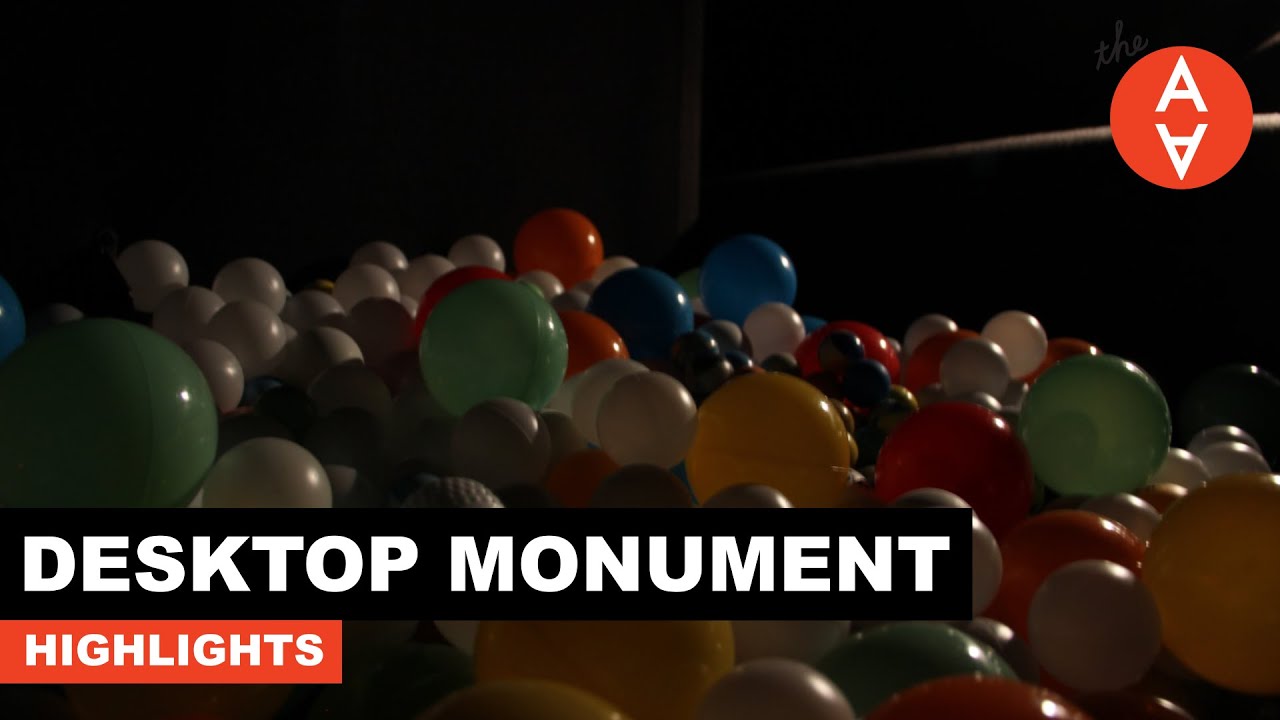
Pre-order our book YOU ARE AN ARTIST (which includes new assignments!) here: http://bit.ly/2kplj2h This week we're talking about your Desktop Monuments! Your responses to Lee Boroson's assignment to capture the feeling of monumentality with miniature models have been fantastic -- keep submitting your responses with #theartassignment!
Watch the original assignment: https://youtu.be/EX9FiewKqI0
Featured in this video:
yes4poe: http://yes4poe.tumblr.com/post..../100405125312/canyon
Erin Carlson: http://hyperponderating.tumblr.....com/post/1017066017
lyriclorelei: http://lyriclorelei.tumblr.com..../post/110834727675/d
ljm792: https://www.youtube.com/watch?v=EX9FiewKqI0&lc=z12ksnkhdwqdwzy2i230zxnhbwqnipxgu04
Tessa: http://space-munchies.tumblr.com/post/100316250647
unnestedmatryoshka: http://unnestedmatryoshka.tumb....lr.com/post/10017888 / http://unnestedmatryoshka.tumb....lr.com/post/10017903
Kiley: http://princess-of-the-ooo-for....ests.tumblr.com/post
minnesbeta: http://minnesbeta.tumblr.com/p....ost/113417385789/the / http://minnesbeta.tumblr.com/p....ost/113417573184/the
Paralian - https://www.youtube.com/watch?v=EX9FiewKqI0&lc=z12lexuzsku3cznqh04cdftjuuqsstmxj4c
--
Follow us elsewhere for the full Art Assignment experience!
Tumblr: http://theartassignment.com
Response Tumblr: http://all.theartassignment.com
Twitter: http://twitter.com/artassignment
Instagram: http://instagram.com/theartassignment/
Facebook: http://www.facebook.com/theartassignment
and don't forget Reddit!: http://www.reddit.com/r/TheArtAssignment/

Pre-order our book YOU ARE AN ARTIST (which includes new assignments!) here: http://bit.ly/2kplj2h
In which we meet Cambodian artist Sopheap Pich and receive the assignment to make an IMPRINT. We filmed with Sopheap at Indianapolis Fabrications while he was in town installing a new work for the Indianapolis Museum of Art.
INSTRUCTIONS - Imprint
1. Choose an object you find interesting
2. Cut it, making a flat surface
3. Dip the cut surface in paint
4. Press it on to a piece of paper repeatedly to make an imprint
5. Upload to you social media platform of choice using #theartassignment
6. Fame and glory (your work may be featured in the future video)
Find out more about The Art Assignment and how to submit your response: http://theartassignment.com/

Pre-order our book YOU ARE AN ARTIST (which includes new assignments!) here: http://bit.ly/2kplj2h We continue our stay at Mildred's Lane and talk to it's Director and Ambassador of Entanglement J. Morgan Puett about it's origins, it's goals and how her installation art practice influences her vision for the site.
Learn more about J. Morgan Puett and Mildred's Lane:
http://www.jmorganpuett.com/
http://www.mildredslane.com/
---
Follow us elsewhere for the full Art Assignment experience!
Tumblr: http://theartassignment.com
Response Tumblr: http://all.theartassignment.com
Twitter: http://twitter.com/artassignment
Instagram: http://instagram.com/theartassignment/
Facebook: http://www.facebook.com/theartassignment
and don't forget Reddit!: http://www.reddit.com/r/TheArtAssignment/

You've likely seen this glassy-eyed late 19th Century barmaid before, but what can we make of this painting today? Let's explore Edouard Manet's A Bar at the Folies-Bergère. You can go to https://wix.com/go/ArtAssignment to get started on your website!
Thanks to our Grandmasters of the Arts Vincent Apa and Indianapolis Homes Realty, and all of our patrons, especially Bronze Bond, Patrick Hanna, M12 Studio, and Constance Urist. To support our channel, visit: http://www.patreon.com/artassignment.
Subscribe for new episodes of The Art Assignment every other Thursday!
--
Follow us elsewhere for the full Art Assignment experience:
Tumblr: http://theartassignment.com
Response Tumblr: http://all.theartassignment.com
Twitter: http://twitter.com/artassignment
Instagram: http://instagram.com/theartassignment/
Facebook: http://www.facebook.com/theartassignment
and don't forget Reddit!: http://www.reddit.com/r/TheArtAssignment

Pre-order our book YOU ARE AN ARTIST (which includes new assignments!) here: http://bit.ly/2kplj2h Today's episode has been sponsored by Squarespace. For more information, visit http://www.squarespace.com/artassignment.
We accepted J. Morgan Puett's art assignment and gathered some friends together to host our own Scramble Scrabble Dinner.
Watch the assignment and host your own dinner! Document it and share it with us: https://youtu.be/JwNpuYOdFHk
Download a pdf of detailed instructions here: http://bit.ly/1VQCiCi
And don't forget to subscribe for new episodes of The Art Assignment every Thursday!
---
Follow us elsewhere for the full Art Assignment experience!
Tumblr: http://theartassignment.com
Response Tumblr: http://all.theartassignment.com
Twitter: http://twitter.com/artassignment
Instagram: http://instagram.com/theartassignment/
Facebook: http://www.facebook.com/theartassignment
and don't forget Reddit!: http://www.reddit.com/r/TheArtAssignment/

Pre-order our book YOU ARE AN ARTIST (which includes new assignments!) here: http://bit.ly/2kplj2h This week we gathered some friends and challenged ourselves to an art assignment marathon - how many assignments can we complete in a day?
Try an assignment and share your experience with #theartassignment!
Caption Contest: https://www.youtube.com/watch?v=ORAwNMs1ie4
Fake Flyer: https://www.youtube.com/watch?v=hk29r3SEDJ8
Constructed Landscape: https://www.youtube.com/watch?v=MfAtcLKFiGo
Blow Up: https://www.youtube.com/watch?v=_LKl36tuHwA
Copy a Copy a Copy: https://www.youtube.com/watch?v=TMvUmCYb8XM
News Photographer: https://www.youtube.com/watch?v=APRRQ7z75x0
Body in Place: https://www.youtube.com/watch?v=jZ7LVHLdYuE
Don't forget to subscribe for new episodes of The Art Assignment every Thursday!
---
Follow us elsewhere for the full Art Assignment experience!
Tumblr: http://theartassignment.com
Response Tumblr: http://all.theartassignment.com
Twitter: http://twitter.com/artassignment
Instagram: http://instagram.com/theartassignment/
Facebook: http://www.facebook.com/theartassignment
and don't forget Reddit!: http://www.reddit.com/r/TheArtAssignment/
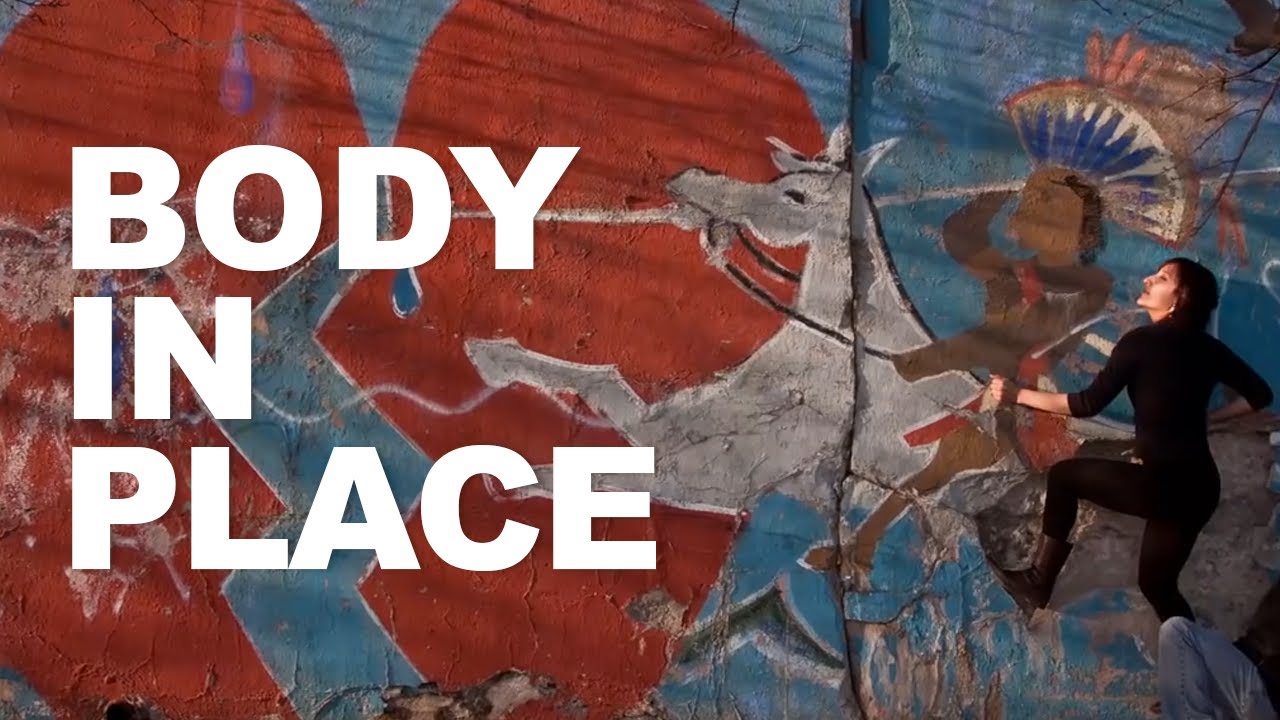
Pre-order our book YOU ARE AN ARTIST (which includes new assignments!) here: http://bit.ly/2kplj2h
This week we meet with Maria Gaspar, an artist deeply invested in her community on the west side of Chicago. For her assignment, she asks you to engage with your community by adding yourself to the picture.
INSTRUCTIONS - Body in Place
1. Choose a location that is visible to you but seemingly invisible to others
2. Think about this location and what it represents
3. Use your body to create an intervention that creates a new story of that location
4. Take a photo + upload using #theartassignment
5. Fame and glory (Your work might be in a future episode)
Learn more about Maria's work: https://mariagaspar.com/
Find out more about The Art Assignment and how to submit your response: http://theartassignment.com/

Have you heard of Italian Baroque artist Artemisia Gentilschi? Find out why her popularity, and that of other artists, has risen dramatically since the 1970s. And vote for America's favorite novel here!: https://to.pbs.org/2Jes2X5.
Chart the frequency of mention of any artist, maker, genius, et al, through the Google Books Ngram Viewer: https://books.google.com/ngrams
Thanks to our Grandmasters of the Arts Indianapolis Homes Realty and Vincent Apa (we'll get you in the credits next time!), and all of our patrons, especially Patrick Hanna, M12 Studio, Robert Rupp, and Constance Urist. To support our channel, visit: http://www.patreon.com/artassignment.
Learn more about PBS's The Great American Read: https://to.pbs.org/2IXQuZE
Subscribe for new episodes of The Art Assignment every other Thursday!
--
Follow us elsewhere for the full Art Assignment experience:
Tumblr: http://theartassignment.com
Response Tumblr: http://all.theartassignment.com
Twitter: http://twitter.com/artassignment
Instagram: http://instagram.com/theartassignment/
Facebook: http://www.facebook.com/theartassignment
and don't forget Reddit!: http://www.reddit.com/r/TheArtAssignment

Are artists really more tortured than the rest of us? Let's consider this myth and the studies that assess whether there might be a link between creativity and mental illness. If you need help with mental and/or substance use disorders, contact SAMHSA’s National Helpline: 1-800-662-HELP (4357) - Free, confidential, 24/7, 365-day-a-year treatment referral and information service: https://www.samhsa.gov/.
Thanks to our Grandmasters of the Arts Vincent Apa and Indianapolis Homes Realty, and all of our patrons, especially Bronze Bond, Patrick Hanna, M12 Studio, Jane Quale, and Constance Urist. To support our channel, visit: http://www.patreon.com/artassignment.
Studies:
Karolinska Institutet, 2013: https://www.ncbi.nlm.nih.gov/pubmed/23063328
Karolinska Institutet, 2011: https://www.ncbi.nlm.nih.gov/pubmed/21653945
Buffalo State, 2017: https://www.sciencedirect.com/....science/article/pii/
Johns Hopkins University, 1990: https://www.ncbi.nlm.nih.gov/pubmed/2258762
Centers for Disease Control, 2016: https://www.cdc.gov/mmwr/volum....es/65/wr/mm6525a1.ht
Articles:
Kay Redfield Jamison’s “Manic- Depressive Illness and Creativity”: https://pdfs.semanticscholar.o....rg/a0e3/238fd584c4d1
“The Real Link Between Creativity and Mental Illness”: https://blogs.scientificameric....an.com/beautiful-min
Critique of Redfield Jamison findings: https://scottbarrykaufman.com/....wp-content/uploads/2
“The relationship between measures of creativity and schizotypy”: https://www.psychologytoday.co....m/files/attachments/
The latest research on creativity and the arts, June 2014: http://www.apa.org/monitor/201....4/06/arts-creativity
Subscribe for new episodes of The Art Assignment every other Thursday!
--
Follow us elsewhere for the full Art Assignment experience:
Tumblr: http://theartassignment.com
Response Tumblr: http://all.theartassignment.com
Twitter: http://twitter.com/artassignment
Instagram: http://instagram.com/theartassignment/
Facebook: http://www.facebook.com/theartassignment
and don't forget Reddit!: http://www.reddit.com/r/TheArtAssignment

Pre-order our book YOU ARE AN ARTIST (which includes new assignments!) here: http://bit.ly/2kplj2h
In which we visit artist Lee Boroson in his summer studio in upstate New York, where he was hard at work on his exhibition at Massachusetts Museum of Contemporary Art, which opened this week! Boroson assigns us to create a desktop monument.
INSTRUCTIONS - Desktop Monument
1. Find an image online of a natural setting you have never visited
2. Use the image to create a desktop monument
3. Upload it using #theartassignment
4. Fame and Glory (your work might be featured in a future episode)
Find out more about The Art Assignment and how to submit your response: http://theartassignment.com/

Pre-order our book YOU ARE AN ARTIST (which includes new assignments!) here: http://bit.ly/2kplj2h
In which we feature some of the best and most interesting responses to Robyn O'Neil's Art Assignment to draw a psychological landscape: http://youtu.be/qwOXumLJgGg.
Many thanks to all of you who have submitted responses, and we hope you continue to make psychological landscapes and share them with us. Extra special thanks to those of you whose responses we feature in this video:
Beatrice: http://lisolachenonce.tumblr.c....om/post/88255591434/
Linda and Dee: http://particlesofwords.com/20....14/04/26/art-assignm
Noncommittal Writing: http://forgetisawyou.tumblr.co....m/post/83922743158/a
Leo Quinn: http://web.stagram.com/p/70589....7416284688870_440765
Sylvia Chin: https://www.facebook.com/photo.php?fbid=10152087341267012&set=o.436933256394748&type=1&theater
Andrew Orr: https://twitter.com/solthree/s....tatus/45947330804897
The Political (Sur)reality: http://summited.tumblr.com/pos....t/85085877361/art-as
Meg Gilbert: https://www.youtube.com/watch?v=6_NQsJjipvg
http://anonymousprisonerofthel....abyrinth.tumblr.com/
Hannah Scharton: http://web.stagram.com/p/70831....5052051082987_331301
Ana: http://web.stagram.com/p/70584....1904991279319_536771
Things I Wish I had Done But Didn't Do: http://the-interrabang.tumblr.....com/post/84395812871
Saranna00: https://www.youtube.com/watch?v=x-Fah8rRZno&list=PLrqNvF6-PBuOB9YWiT8qcXl6iEBS8vERC
Juliet: http://pluviomancy.tumblr.com/....post/84359160085/the
Kenton Visser: http://kentonblogs.tumblr.com/....post/85286714257/anh

Pre-order our book YOU ARE AN ARTIST (which includes new assignments!) here: http://bit.ly/2kplj2h
We’re at Mildred’s Lane, a 96-acre site in rural Pennsylvania founded by J. Morgan Puett. Mildred’s Lane is an experiment in living - it's a space where Morgan and her friends collaborate on projects, practice creative domestication, and pay closer attention to every aspect of daily life. Her assignment asks you to do the same by playing a game of Scramble Scrabble Dinner.
INSTRUCTIONS - SCRAMBLE SCRABBLE DINNER
1) Find a nice cloth and sharpie pens for writing.
2) Gather 2 - 6 people. Each player writes their name on the cloth and makes a list from the letters of their name of food items and ways of preparing food.
3) Play a scrabble game with each player taking turns playing a word from their list, rotating the cloth as you go.
4) Keep adding words until you have a combination of ingredients and ways of preparation and all agree a dish is formed. Avoid the expected and embrace oddity. Sketch the dishes as they emerge.
5) Gather your ingredients and make the meal. Prepare and present it artfully.
6) Document the process with photos, video, drawings, or however you like, and share them on your social media platform of choice with #theartassignment.
Find out more about The Art Assignment and how to submit your response: http://theartassignment.com/

Pre-order our book YOU ARE AN ARTIST (which includes new assignments!) here: http://bit.ly/2kplj2h
Ai Weiwei has been called an iconoclast, a radical, a voice for the voiceless, and was once named the most powerful artist in the world. Who is Ai Weiwei? And why is he considered one of the most renowned artists of our time?
----
Follow us elsewhere for the full Art Assignment experience:
Website: http://www.theartassignment.com
Instagram: http://instagram.com/theartassignment/
Extra Credit Group: http://www.facebook.com/groups/artass...
tumblr: http://theartassignment.tumblr.com/
All responses tumblr: http://all.theartassignment.com
Twitter: http://twitter.com/artassignment
Facebook: http://www.facebook.com/theartassignment
and maybe Reddit?: http://www.reddit.com/r/TheArtAssignment

This photograph of young farmers on their way to a dance was taken in Germany in 1914 by August Sander. Except they weren't farmers. And the dance they were on their way to was World War I. To learn more about Sun Basket, go to http://getSunbasket.com/Art
Guest host John Green delves into the real story behind this iconic photograph.
To support our channel, visit: http://www.patreon.com/artassignment.
Thanks to our Grandmaster of the Arts Vincent Apa, and all of our patrons, especially Yakira Dixon, Patrick Hanna, Nichole Hicks, David Moore, Jane Quale, and Constance Urist.
Subscribe for new episodes of The Art Assignment every other Thursday!
--
Follow us elsewhere for the full Art Assignment experience:
Tumblr: http://theartassignment.com
Response Tumblr: http://all.theartassignment.com
Twitter: http://twitter.com/artassignment
Instagram: http://instagram.com/theartassignment/
Facebook: http://www.facebook.com/theartassignment
and don't forget Reddit!: http://www.reddit.com/r/TheArtAssignment

Pre-order our book YOU ARE AN ARTIST (which includes new assignments!) here: http://bit.ly/2kplj2h
We visit Assaf Evron in Chicago to consider how photography can help us see the familiar places we visit everyday differently.
INSTRUCTIONS - Blow Up
1. Go to a public place that you pass daily and take a photo, not too close and not too far
2. Download the photo to a computer and look at it for 3 minutes
3. Return to the location and take detail photos of things you noticed while looking at the original
4. Upload your photos and description with #theartassignment
5. Fame and glory (your work might be in a future episode)
Learn more about Assaf's work: https://www.assafevron.com/
Find out more about The Art Assignment and how to submit your response: http://theartassignment.com/

Was your Art History class an endless succession of names and dates and movements? Art History doesn't have to be that way! We discuss new (and much more compelling) approaches the study of art. Learn more about Civilizations on PBS and how you can watch!: http://www.pbs.org/civilizations/home/
Also check out John Berger's Ways of Seeing (I know, I mispronounced it, it's Berger like merger): https://www.youtube.com/watch?v=0pDE4VX_9Kk
To support our channel, visit: http://www.patreon.com/artassignment.
Thanks to our Grandmaster of the Arts Indianapolis Homes Realty, and all of our patrons, especially Lawrence Abrahamson, Patrick Hanna, M12 Studio, Robert Rupp, and Constance Urist.
Subscribe for new episodes of The Art Assignment every other Thursday!
--
Follow us elsewhere for the full Art Assignment experience:
Tumblr: http://theartassignment.com
Response Tumblr: http://all.theartassignment.com
Twitter: http://twitter.com/artassignment
Instagram: http://instagram.com/theartassignment/
Facebook: http://www.facebook.com/theartassignment
and don't forget Reddit!: http://www.reddit.com/r/TheArtAssignment

Pre-order our book YOU ARE AN ARTIST (which includes new assignments!) here: http://bit.ly/2kplj2h
Are you overwhelmed by the plethora of art and art-related activities going on in the world? We’re here to help! Here are some ideas for how to learn about what’s going on in the world of contemporary art.
Find out more about The Art Assignment and how to submit your response: http://theartassignment.com/

Pre-order our book YOU ARE AN ARTIST (which includes new assignments!) here: http://bit.ly/2kplj2h Over the past 3 years, 60 artists have offered art assignments, and thousands of artworks have been made in response. Here's a brief glimpse of what we've all made together over the course of this series so far. So KEEP ASSIGNMENTING!
If you'd like to join a group that does assignments together, sets deadlines, and engages in fascinating discussion, go to: www.facebook.com/groups/artassignmentextracredit/
Subscribe for new episodes of The Art Assignment every other Thursday!
--
Follow us elsewhere for the full Art Assignment experience:
Tumblr: http://theartassignment.com
Response Tumblr: http://all.theartassignment.com
Twitter: http://twitter.com/artassignment
Instagram: http://instagram.com/theartassignment/
Facebook: http://www.facebook.com/theartassignment
and don't forget Reddit!: http://www.reddit.com/r/TheArtAssignment

Pre-order our book YOU ARE AN ARTIST (which includes new assignments!) here: http://bit.ly/2kplj2h This week Sarah shares some of the excellent responses to Bang on a Can's assignment to Find Your Band. Keep submitting your responses with #theartassignment!
Watch the Find Your Band assignment: https://youtu.be/_jTqNfLmtHk
Featured in this video:
Sophie: http://ohthewhomanity.tumblr.c....om/post/97711748384/
Jenn N: https://youtu.be/qBbGysIm_so
Yearwithfear: http://yearwithfear.tumblr.com..../post/102253888075/t
The Collective: https://youtu.be/JGfnffp_6cI
Geeksdanz: https://youtu.be/wgDhrGKEAKQ
Y2Ksnowglobe: http://y2ksnowglobe.tumblr.com..../post/97672574457/th
Empty Disco: https://youtu.be/aJfnWxIGPic
Dakota Hommes: http://dakotahommes.tumblr.com..../post/97358535925/i-
Dan Jones: https://youtu.be/F6KFxd3D7ww
--
Follow us elsewhere for the full Art Assignment experience!
Tumblr: http://theartassignment.com
Response Tumblr: http://all.theartassignment.com
Twitter: http://twitter.com/artassignment
Instagram: http://instagram.com/theartassignment/
Facebook: http://www.facebook.com/theartassignment
and don't forget Reddit!: http://www.reddit.com/r/TheArtAssignment/

What art that brings you comfort right now? What art do you want to be thinking about? In this episode, we make a book of art by Alec Soth, Miyoko Ito, Giorgio Morandi, Vija Celmins, Sam Gilliam, Sheila Hicks, and Wayne Thiebaud. Make your own art book and share it with #youareanartist.
Order You Are an Artist here: https://bitly.com/2kplj2h.
Thanks to our Grandmasters of the Arts Divide By Zero Collection and David Golden, and to all of our patrons, especially Anthony Chivetta, Rich Clarey, Iain Eudailey, Tom Forwood, Patrick Hanna, Andrew Huynh, Eve Leonard, David Moore, Jane Quale, Gabriel Civita Ramirez, Andrew Sheeler, Boris Silantiev, Josh Thomas, Constance Urist, and Roberta Zaphiriou. To support our channel, visit: http://www.patreon.com/artassignment.
Subscribe for new episodes of The Art Assignment every other Thursday, and follow us elsewhere for the full Art Assignment experience:
Twitter: http://twitter.com/artassignment
Instagram: http://instagram.com/theartassignment/
Facebook group: https://www.facebook.com/group....s/artassignmentextra

Should art be beautiful? Revisit ancient philosophers' thoughts on beauty and consider why we might be skeptical of beauty today.
To support our channel, visit: http://www.patreon.com/artassignment.
Thanks to our Grandmaster of the Arts Indianapolis Homes Realty, and all of our patrons, especially Lawrence Abrahamson, Patrick Hanna, M12 Studio, Barbara Nohinek, Robert Rupp, and Constance Urist.
Subscribe for new episodes of The Art Assignment every other Thursday!
--
Follow us elsewhere for the full Art Assignment experience:
Tumblr: http://theartassignment.com
Response Tumblr: http://all.theartassignment.com
Twitter: http://twitter.com/artassignment
Instagram: http://instagram.com/theartassignment/
Facebook: http://www.facebook.com/theartassignment
and don't forget Reddit!: http://www.reddit.com/r/TheArtAssignment