Latest videos
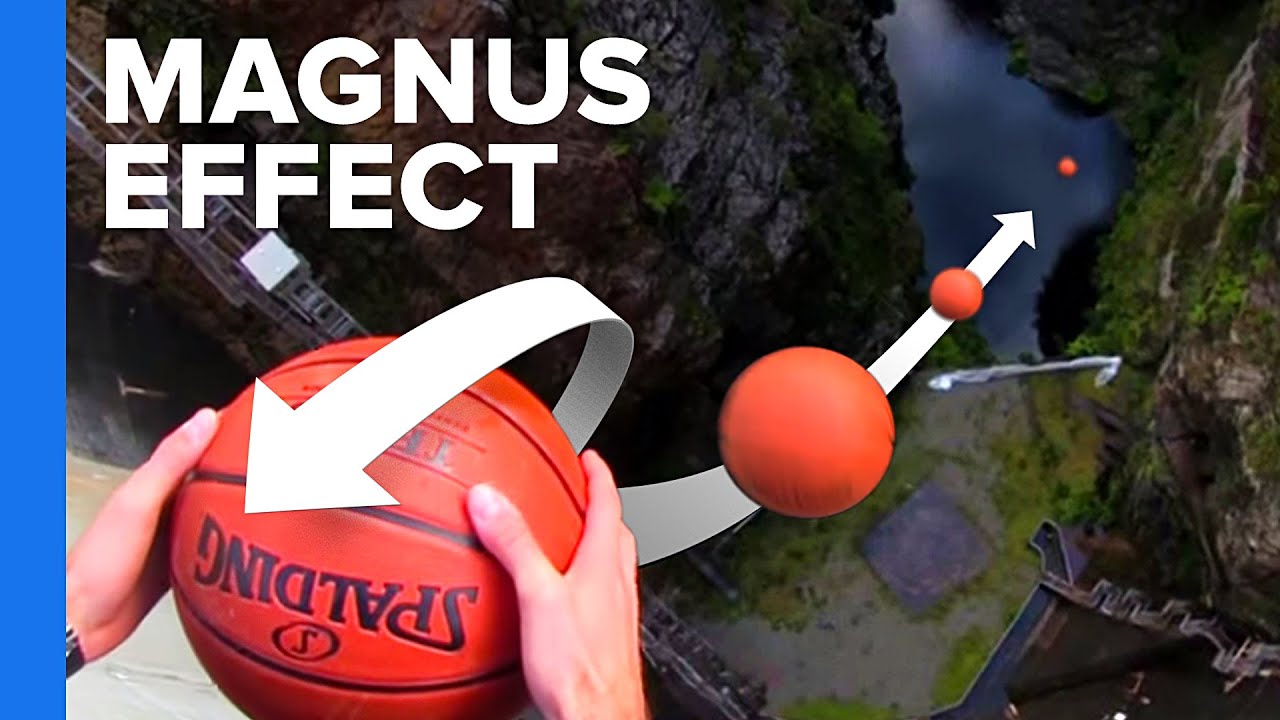
How far would a basketball with backspin go?
Rotor wing experimental aircraft: https://youtu.be/Ra8y6gGotwY
E-ship 1: https://youtu.be/qJ7haGqXs_E
Corner kick by Kyle: https://youtu.be/YIPO3W081Hw
How Ridiculous World Record Basket: https://youtu.be/H9SF2YIKRY8

I actually have many, many more questions and answers so if you want to see them, like this video and let me know in the comments and I will edit them. Thank you for your support! I wouldn't have gotten this far without you.
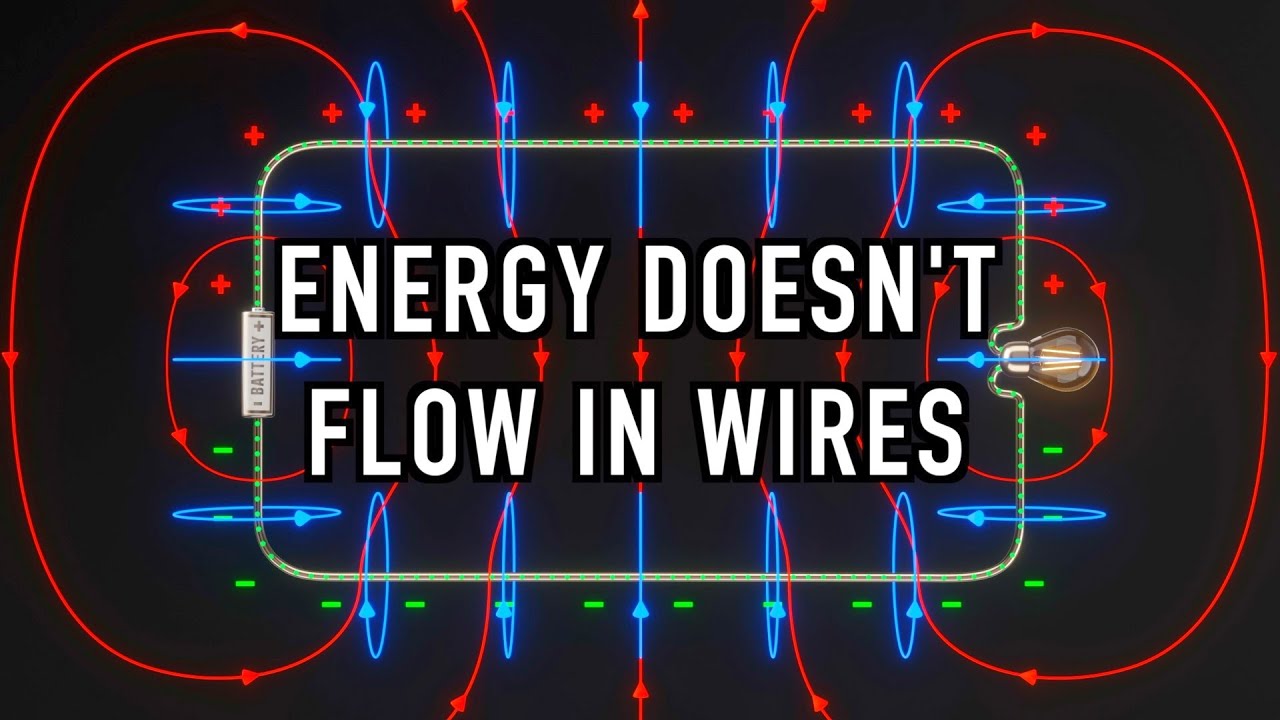
The misconception is that electrons carry potential energy around a complete conducting loop, transferring their energy to the load. This video was sponsored by Caséta by Lutron. Learn more at https://Lutron.com/veritasium
Further analysis of the large circuit is available here: https://ve42.co/bigcircuit
Special thanks to Dr Geraint Lewis for bringing up this question in the first place and discussing it with us. Check out his and Dr Chris Ferrie’s new book here: https://ve42.co/Universe2021
Special thanks to Dr Robert Olsen for his expertise. He quite literally wrote the book on transmission lines, which you can find here: https://ve42.co/Olsen2018
Special thanks to Dr Richard Abbott for running a real-life experiment to test the model.
Huge thanks to all of the experts we talked to for this video -- Dr Karl Berggren, Dr Bruce Hunt, Dr Paul Stanley, Dr Joe Steinmeyer, Ian Sefton, and Dr David G Vallancourt.
▀▀▀
References:
A great video about the Poynting vector by the Science Asylum: https://youtu.be/C7tQJ42nGno
Sefton, I. M. (2002). Understanding electricity and circuits: What the text books don’t tell you. In Science Teachers’ Workshop. -- https://ve42.co/Sefton
Feynman, R. P., Leighton, R. B., & Sands, M. (1965). The feynman lectures on physics; vol. Ii, chapter 27. American Journal of Physics, 33(9), 750-752. -- https://ve42.co/Feynman27
Hunt, B. J. (2005). The Maxwellians. Cornell University Press.
Müller, R. (2012). A semiquantitative treatment of surface charges in DC circuits. American Journal of Physics, 80(9), 782-788. -- https://ve42.co/Muller2012
Galili, I., & Goihbarg, E. (2005). Energy transfer in electrical circuits: A qualitative account. American journal of physics, 73(2), 141-144. -- https://ve42.co/Galili2004
Deno, D. W. (1976). Transmission line fields. IEEE Transactions on Power Apparatus and Systems, 95(5), 1600-1611. -- https://ve42.co/Deno76
▀▀▀
Special thanks to Patreon supporters: Luis Felipe, Anton Ragin, Paul Peijzel, S S, Benedikt Heinen, Diffbot, Micah Mangione, Juan Benet, Ruslan Khroma, Richard Sundvall, Lee Redden, Sam Lutfi, MJP, Gnare, Nick DiCandilo, Dave Kircher, Edward Larsen, Burt Humburg, Blake Byers, Dumky, Mike Tung, Evgeny Skvortsov, Meekay, Ismail Öncü Usta, Crated Comments, Anna, Mac Malkawi, Michael Schneider, Oleksii Leonov, Jim Osmun, Tyson McDowell, Ludovic Robillard, Jim buckmaster, fanime96, Ruslan Khroma, Robert Blum, Vincent, Marinus Kuivenhoven, Alfred Wallace, Arjun Chakroborty, Joar Wandborg, Clayton Greenwell, Michael Krugman, Cy 'kkm' K'Nelson,Ron Neal
Written by Derek Muller and Petr Lebedev
Animation by Mike Radjabov and Ivy Tello
Filmed by Derek Muller and Emily Zhang
Footage of the sun by Raquel Nuno
Edited by Derek Muller
Additional video supplied by Getty Images
Music from Epidemic Sound
Produced by Derek Muller, Petr Lebedev and Emily Zhang
A trip to #Mars involves radiation, muscle and bone loss, intermediate axis theorem and liquids.
Check out Mars on National Geographic, Monday Nov 12 at 9/8c
#sponsored
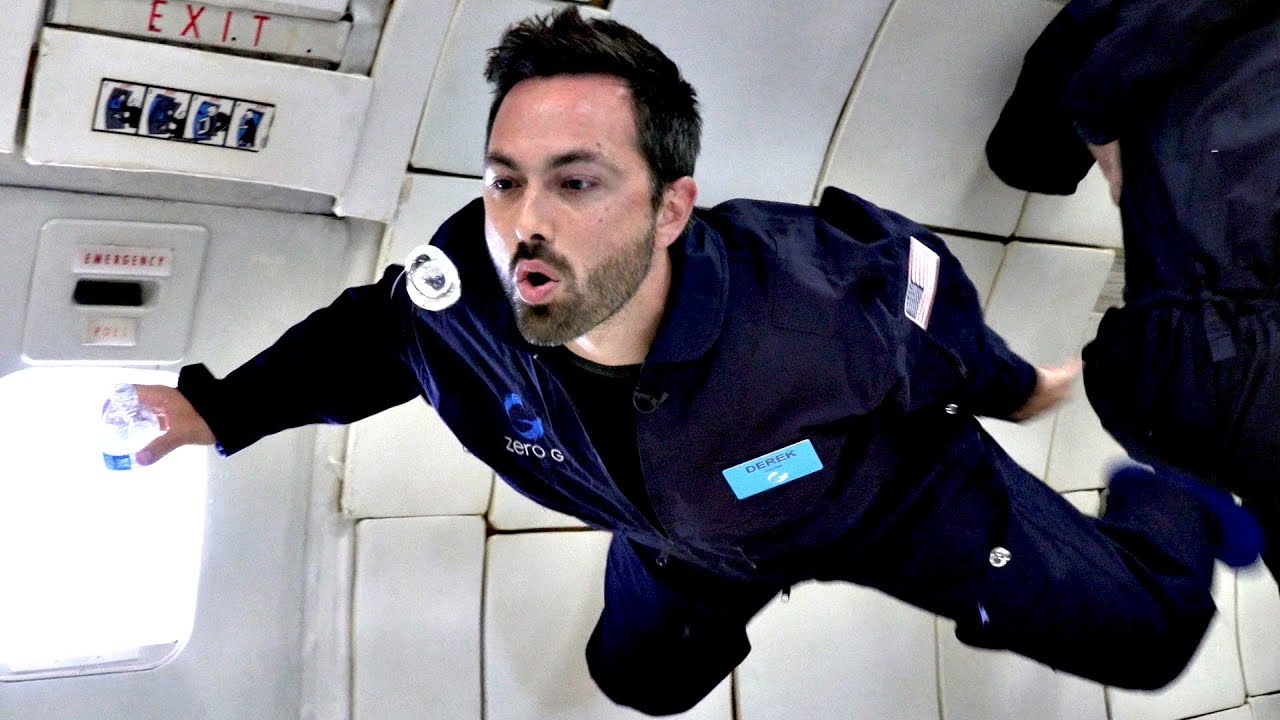
When I got offered the chance to fly in another #zeroG plane, I jumped at the chance. Do you know how hard it is when you are thrust into low-gravity, like the 37% of Earth's gravity of Mars, and you have to remember what you were going to say in a 30 second window as blood floods your head? It's pretty hard. It would be even harder to actually travel to Mars. It would take about 8 months in microgravity during which time your muscles and bones would weaken substantially, even if you exercise for hours a day like the astronauts on the space station. And your heart is a muscle too so it weakens as well. Before I contemplated these rates of muscle and bone loss, I thought the major challenge with a round trip journey to Mars would be the logistics of spacecraft and having enough fuel to get back. But with the weakening of the human body, it's an open question whether anyone would really want to come back.
Filmed by Steve Boxall
Music from Epidemic Sound: http://epidemicsound.com

Bayes' theorem explained with examples and implications for life.
Check out Audible: http://ve42.co/audible
Support Veritasium on Patreon: http://ve42.co/patreon
I didn't say it explicitly in the video, but in my view the Bayesian trap is interpreting events that happen repeatedly as events that happen inevitably. They may be inevitable OR they may simply be the outcome of a series of steps, which likely depend on our behaviour. Yet our expectation of a certain outcome often leads us to behave just as we always have which only ensures that outcome. To escape the Bayesian trap, we must be willing to experiment.
Special thanks to Patreon supporters:
Tony Fadell, Jeff Straathof, Donal Botkin, Zach Mueller, Ron Neal, Nathan Hansen, Saeed Alghamdi
Useful references:
The Signal and the Noise, Nate Silver
The Theory That Would Not Die: How Bayes’ Rule Cracked the Enigma Code, Hunted Down Russian Submarines, and Emerged Triumphant from Two Centuries of Controversy, by Sharon Bertsch McGrayne
Bayes' theorem or rule (there are many different versions of the same concept) has fascinated me for a long time due to its uses both in mathematics and statistics, and to solve real world problems. Bayesian inference has been used to crack the Enigma Code and to filter spam email. Bayes has also been used to locate the wreckage from plane crashes deep beneath the sea.
Music from http://epidemicsound.com "Flourishing Views 3"

Visit https://brilliant.org/Veritasium/ to get started learning STEM for free, and the first 200 people will get 20% off their annual premium subscription. Digital computers have served us well for decades, but the rise of artificial intelligence demands a totally new kind of computer: analog.
Thanks to Mike Henry and everyone at Mythic for the analog computing tour! https://www.mythic-ai.com/
Thanks to Dr. Bernd Ulmann, who created The Analog Thing and taught us how to use it. https://the-analog-thing.org
Moore’s Law was filmed at the Computer History Museum in Mountain View, CA.
Welch Labs’ ALVINN video: https://www.youtube.com/watch?v=H0igiP6Hg1k
▀▀▀
References:
Crevier, D. (1993). AI: The Tumultuous History Of The Search For Artificial Intelligence. Basic Books. – https://ve42.co/Crevier1993
Valiant, L. (2013). Probably Approximately Correct. HarperCollins. – https://ve42.co/Valiant2013
Rosenblatt, F. (1958). The Perceptron: A Probabilistic Model for Information Storage and Organization in the Brain. Psychological Review, 65(6), 386-408. – https://ve42.co/Rosenblatt1958
NEW NAVY DEVICE LEARNS BY DOING; Psychologist Shows Embryo of Computer Designed to Read and Grow Wiser (1958). The New York Times, p. 25. – https://ve42.co/NYT1958
Mason, H., Stewart, D., and Gill, B. (1958). Rival. The New Yorker, p. 45. – https://ve42.co/Mason1958
Alvinn driving NavLab footage – https://ve42.co/NavLab
Pomerleau, D. (1989). ALVINN: An Autonomous Land Vehicle In a Neural Network. NeurIPS, (2)1, 305-313. – https://ve42.co/Pomerleau1989
ImageNet website – https://ve42.co/ImageNet
Russakovsky, O., Deng, J. et al. (2015). ImageNet Large Scale Visual Recognition Challenge. – https://ve42.co/ImageNetChallenge
AlexNet Paper: Krizhevsky, A., Sutskever, I., Hinton, G. (2012). ImageNet Classification with Deep Convolutional Neural Networks. NeurIPS, (25)1, 1097-1105. – https://ve42.co/AlexNet
Karpathy, A. (2014). Blog post: What I learned from competing against a ConvNet on ImageNet. – https://ve42.co/Karpathy2014
Fick, D. (2018). Blog post: Mythic @ Hot Chips 2018. – https://ve42.co/MythicBlog
Jin, Y. & Lee, B. (2019). 2.2 Basic operations of flash memory. Advances in Computers, 114, 1-69. – https://ve42.co/Jin2019
Demler, M. (2018). Mythic Multiplies in a Flash. The Microprocessor Report. – https://ve42.co/Demler2018
Aspinity (2021). Blog post: 5 Myths About AnalogML. – https://ve42.co/Aspinity
Wright, L. et al. (2022). Deep physical neural networks trained with backpropagation. Nature, 601, 49–555. – https://ve42.co/Wright2022
Waldrop, M. M. (2016). The chips are down for Moore’s law. Nature, 530, 144–147. – https://ve42.co/Waldrop2016
▀▀▀
Special thanks to Patreon supporters: Kelly Snook, TTST, Ross McCawley, Balkrishna Heroor, 65square.com, Chris LaClair, Avi Yashchin, John H. Austin, Jr., OnlineBookClub.org, Dmitry Kuzmichev, Matthew Gonzalez, Eric Sexton, john kiehl, Anton Ragin, Benedikt Heinen, Diffbot, Micah Mangione, MJP, Gnare, Dave Kircher, Burt Humburg, Blake Byers, Dumky, Evgeny Skvortsov, Meekay, Bill Linder, Paul Peijzel, Josh Hibschman, Mac Malkawi, Michael Schneider, jim buckmaster, Juan Benet, Ruslan Khroma, Robert Blum, Richard Sundvall, Lee Redden, Vincent, Stephen Wilcox, Marinus Kuivenhoven, Clayton Greenwell, Michael Krugman, Cy 'kkm' K'Nelson, Sam Lutfi, Ron Neal
▀▀▀
Written by Derek Muller, Stephen Welch, and Emily Zhang
Filmed by Derek Muller, Petr Lebedev, and Emily Zhang
Animation by Ivy Tello, Mike Radjabov, and Stephen Welch
Edited by Derek Muller
Additional video/photos supplied by Getty Images and Pond5
Music from Epidemic Sound
Produced by Derek Muller, Petr Lebedev, and Emily Zhang

There is an entire branch of math simply devoted to knots – and it has changed the world. We’ll rope you in. Head to https://brilliant.org/veritasium to start your free 30-day trial, and the first 200 people get 20% off an annual premium subscription.
Special thanks to our Patreon supporters! Join the community to help us keep our videos free, forever:
https://ve42.co/PatreonDEB
▀▀▀
Huge thanks to Prof. Colin Adams for his excellent help guiding us through the world of knots.
Many thanks to Prof. Doug Smith, Dorian Raymer, Prof. David Leigh, and Prof. Dorothy Buck for helping us understand applications of knot theory.
Many thanks to Prof. Dan Silver & Prof. Jim Hoste for speaking with us about the history and tabulation of knots.
If you want to learn more about knots and play with them yourself, check out:
The amazing KnotPlot tool — https://knotplot.com/. Thanks to Rob Scharein for providing technical help as well!
A table of knots and all their invariants — https://knotinfo.math.indiana.edu/
The Knot Atlas for general info on knots — http://katlas.org/wiki/Main_Page
▀▀▀
Knot Theory Video References – https://ve42.co/KnotTheoryRefs
Images & Video:
Alexander Cutting the Gordian Knot by Donato Creti via Fine Art America - https://ve42.co/GordianCut
Indus Valley tablet via Quora - https://ve42.co/IndusValley
Pages from the Book of Kells via National Trust of Scotland - https://ve42.co/BookOfKells
Medieval Celtic designs from @thebookofkellsofficial via Instagram - https://ve42.co/KellsInsta
Chinese knotwork by YWang9174 via Wikimedia Commons - https://ve42.co/Panchang
Quipu cords by Pi3.124 via Wikimedia Commons - https://ve42.co/Quipu
Borromeo heraldry via Terre Borromeo - https://ve42.co/Borromeo
Birman/Jones letter via Celebratio Mathematica - https://ve42.co/JonesBirman
Molecular trefoil knot by M stone via Wikimedia Commons - https://ve42.co/TrefoilMolecule
X-ray structure of trefoil knot by Ll0103 via Wikimedia Commons - https://ve42.co/XrayTrefoil
Bacteria animation from Your Body's Molecular Machines by Drew Berry via the Walter and Eliza Hall Institute of Medical Research - http://wehi.tv
Topoisomerase and knots from Orlandini et al. Synergy of topoisomerase. PNAS, vol. 116, no. 17, 2019, pp. 8149–8154. – https://ve42.co/Orlandini2019
KnotProt 2.0: A database of proteins with knots and slipknots - https://ve42.co/Knotprot
▀▀▀
Special thanks to our Patreon supporters:
Anton Ragin, Balkrishna Heroor, Bernard McGee, Bill Linder, Burt Humburg, Dave Kircher, Diffbot, Evgeny Skvortsov, Gnare, Jesse Brandsoy, John H. Austin, Jr., john kiehl, Josh Hibschman, Juan Benet, KeyWestr, Lee Redden, Marinus Kuivenhoven, Mario Bottion, MaxPal, Meekay, meg noah, Michael Krugman, Orlando Bassotto, Paul Peijzel, Richard Sundvall, Sam Lutfi, Stephen Wilcox, Tj Steyn, TTST, Ubiquity Ventures
▀▀▀
Directed by Emily Zhang
Written by Emily Zhang and Derek Muller
Edited by Trenton Oliver
Animated by Fabio Albertelli, Ivy Tello, Jakub Misiek, and Mike Radjabov
Filmed by Derek Muller, Raquel Nuno, and Emily Zhang
Produced by Emily Zhang, Han Evans, and Derek Muller
Thumbnail by Ignat Berbeci and Mike Radjabov
Additional video/photos supplied by Getty Images and Pond5
Music from Epidemic Sound

How do sewing machines actually work? Get your first month of KiwiCo FREE at https://www.kiwico.com/veritasium
If you’re looking for a molecular modeling kit, head to https://ve42.co/SnatomsV to try Snatoms – a kit I invented where the atoms snap together magnetically.
▀▀▀
A huge thanks to Prof. Andy Ruina for suggesting this video topic, guiding us in the research, and giving deeply insightful notes.
Massive thanks to Noah Johnson and Tina Vines for teaching Derek how to chain-stitch, and letting us shoot with your embroidery machine! Please check out https://www.instagram.com/stitchrite and https://www.instagram.com/tina_vines if you're interested in seeing more of their gorgeous chain stitch embroidery.
Thanks to Denny Stanley and the whole crew at Las Vegas Props for building the large replica model of the sewing machine. https://www.vegasprops.net
▀▀▀
References:
Parton, J. (1870). History of the Sewing-machine. Howe Machine Company, No. 38, N. Charles St.. -- https://ve42.co/Patron1870
Gregory, J. M. (2006). A History of the Sewing Machine to 1880. Transactions of the Newcomen Society, 76(1), 127-144. -- https://ve42.co/Gregory2006
How America Spends Money: 100 Years In the Life of the Family Budget, The Atlantic -- https://ve42.co/Budget1
Buckman, J. (2016). Unraveling the Threads: The Life, Death and Resurrection of the Singer Sewing Machine Company, America’s First Multi-National Corporation. Dog Ear Publishing.
Lewton, F. L. (1930). The servant in the house: a brief history of the sewing machine (Vol. 3056). US Government Printing Office. -- https://ve42.co/Lewton1930
▀▀▀
Special thanks to our Patreon supporters:
Adam Foreman, Anton Ragin, Balkrishna Heroor, Bernard McGee, Bill Linder, Burt Humburg, Chris Harper, Dave Kircher, Diffbot, Evgeny Skvortsov, Gnare, John H. Austin, Jr., john kiehl, Josh Hibschman, Juan Benet, KeyWestr, Lee Redden, Marinus Kuivenhoven, Max Paladino, Meekay, meg noah, Michael Krugman, Orlando Bassotto, Paul Peijzel, Richard Sundvall, Sam Lutfi, Stephen Wilcox, Tj Steyn, TTST, Ubiquity Ventures
▀▀▀
Directed by Petr Lebedev
Written by Petr Lebedev, Derek Muller, Felicity Nelson
Edited by Trenton Oliver
Animated by Mike Radjabov, Fabio Albertelli and Jakub Misiek
Filmed by Derek Muller, Raquel Nuno, Gene Nagata and Taylor Cody
Additional Research by Gregor Čavlović
Produced by Petr Lebedev, Han Evans, and Derek Muller
Additional video/photos supplied by Getty Images and Storyblocks
Music from Epidemic Sound
What are these electric blue ponds in the middle of the Utah desert? And why do they keep changing color?
Join Derek Muller (Veritasium) as he looks into the weird, bizarre, and seemingly inexplicable images found on Google Earth to discover what on Earth they actually are. It’s a travel vlog, documentary, and science show wrapped into one. It’s Pindrop.
0:00 Intro
0:29 Electric Blue Ponds
2:13 Finding The Truth
5:47 Importance Of Potash
8:41 Potash From Rocks
14:04 Safer Ways To Mine
15:02 Droning
17:28 Potash The Savior

Want more awesome HD slow-mo? http://www.youtube.com/watch?v=uiyMuHuCFo4
Slinky not long enough? Click here: http://www.youtube.com/watch?v=JsytnJ_pSf8
How does a slinky fall when extended by its own weight and then released? We discover the surprising answer using a slow motion camera that records 300 frames per second. Answer link: http://www.youtube.com/watch?v=oKb2tCtpvNU
For a great explanation, check out Rhett Allain's analysis here: http://www.wired.com/wiredscie....nce/2011/09/modeling

How were the first computers made? Head to https://brilliant.org/veritasium to start your free 30-day trial, and the first 200 people get 20% off an annual premium subscription.
A huge thanks to David Lovett for showing me his awesome relay and vacuum tube based computers. Check out his YouTube channel @UsagiElectric
▀▀▀
References:
Herring, C., & Nichols, M. H. (1949). Thermionic emission. Reviews of modern physics, 21(2), 185. – https://ve42.co/Herring1949
Goldstine, H. H., & Goldstine, A. (1946). The electronic numerical integrator and computer (eniac). Mathematical Tables and Other Aids to Computation, 2(15), 97-110. – https://ve42.co/ENIAC
Shannon, C. E. (1938). A symbolic analysis of relay and switching circuits. Electrical Engineering, 57(12), 713-723. – https://ve42.co/Shannon38
Boole, G. (1847). The mathematical analysis of logic. Philosophical Library. – https://ve42.co/Boole1847
The world’s first general purpose computer turns 75 – https://ve42.co/ENIAC2
Dylla, H. F., & Corneliussen, S. T. (2005). John Ambrose Fleming and the beginning of electronics. Journal of Vacuum Science & Technology A: Vacuum, Surfaces, and Films, 23(4), 1244-1251. – https://ve42.co/Dylla2005
Stibitz, G. R. (1980). Early computers. In A History of Computing in the Twentieth Century (pp. 479-483). Academic Press.
ENIAC’s Hydrogen Bomb Calculations – https://ve42.co/ENIAC3
▀▀▀
Special thanks to our Patreon supporters:
Emil Abu Milad, Tj Steyn, meg noah, Bernard McGee, KeyWestr, Amadeo Bee, TTST, Balkrishna Heroor, John H. Austin, Jr., john kiehl, Anton Ragin, Benedikt Heinen, Diffbot, Gnare, Dave Kircher, Burt Humburg, Blake Byers, Evgeny Skvortsov, Meekay, Bill Linder, Paul Peijzel, Josh Hibschman, Mac Malkawi, Juan Benet, Ubiquity Ventures, Richard Sundvall, Lee Redden, Stephen Wilcox, Marinus Kuivenhoven, Michael Krugman, Cy ‘kkm’ K’Nelson, Sam Lutfi.
▀▀▀
Written by Petr Lebedev, Derek Muller and Kovi Rose
Edited by Trenton Oliver
Animated by Mike Radjabov, Ivy Tello and Fabio Albertelli
Filmed by Derek Muller & Raquel Nuno
Additional video/photos supplied by Getty Images & Pond5
Music from Epidemic Sound
Produced by Derek Muller, Petr Lebedev, & Emily Zhang
Thumbnail by Ignat Berbeci

How does order spontaneously arise out of chaos? This video is sponsored by Kiwico — go to https://www.kiwico.com/Veritasium50 for 50% off your first month of any crate.
An enormous thanks to Prof. Steven Strogatz — this video would not have been possible without him. Much of the script-writing was inspired and informed by his wonderful book Sync, and his 2004 TED talk. He is a giant in this field, and has literally written the book on chaos, complexity, and synchronization. It was hard to find a paper in this field that Steven (or one of his students) didn't contribute to. His Podcast "The Joy of X" is wonderful — please listen and subscribe wherever you get your podcasts https://www.quantamagazine.org/tag/the-joy-of-x
Nicky Case's Amazing Firefly Interactive — https://ncase.me/fireflies
Great Kuramoto Model Interactive — https://www.complexity-explora....bles.org/explorables
References:
Strogatz, S. H. (2012). Sync: How order emerges from chaos in the universe, nature, and daily life. Hachette UK. — https://ve42.co/Sync
Strogatz, S. H. (2000). From Kuramoto to Crawford: exploring the onset of synchronization in populations of coupled oscillators. Physica D: Nonlinear Phenomena, 143(1-4), 1-20. — https://ve42.co/Strogatz2000
Goldsztein, G. H., Nadeau, A. N., & Strogatz, S. H. (2021). Synchronization of clocks and metronomes: A perturbation analysis based on multiple timescales. Chaos: An Interdisciplinary Journal of Nonlinear Science, 31(2), 023109. — https://ve42.co/Goldsztein
The Broughton Suspension Bridge and the Resonance Disaster — https://ve42.co/Broughton
Bennett, M., Schatz, M. F., Rockwood, H., & Wiesenfeld, K. (2002). Huygens's clocks. Proceedings of the Royal Society of London. Series A: Mathematical, Physical and Engineering Sciences, 458(2019), 563-579. — https://ve42.co/Bennett2002
Pantaleone, J. (2002). Synchronization of metronomes. American Journal of Physics, 70(10), 992-1000. — https://ve42.co/Pantaleone2002
Kuramoto, Y. (1975). Self-entrainment of a population of coupled non-linear oscillators. In International symposium on mathematical problems in theoretical physics (pp. 420-422). Springer, Berlin, Heidelberg. -- https://ve42.co/Kuramoto1975
Great video by Minute Earth about Tidal Locking and the Moon — https://ve42.co/MinuteEarth
Strogatz, S. H., Abrams, D. M., McRobie, A., Eckhardt, B., & Ott, E. (2005). Crowd synchrony on the Millennium Bridge. Nature, 438(7064), 43-44. — https://ve42.co/Strogatz2005
Zhabotinsky, A. M. (2007). Belousov-zhabotinsky reaction. Scholarpedia, 2(9), 1435. — https://ve42.co/Zhabotinsky2007
Flavio H Fenton et al. (2008) Cardiac arrhythmia. Scholarpedia, 3(7):1665. — https://ve42.co/Cardiac
Cherry, E. M., & Fenton, F. H. (2008). Visualization of spiral and scroll waves in simulated and experimental cardiac tissue. New Journal of Physics, 10(12), 125016. — https://ve42.co/Cherry2008
Tyson, J. J. (1994). What everyone should know about the Belousov-Zhabotinsky reaction. In Frontiers in mathematical biology (pp. 569-587). Springer, Berlin, Heidelberg. — https://ve42.co/Tyson1994
Winfree, A. T. (2001). The geometry of biological time (Vol. 12). Springer Science & Business Media. — https://ve42.co/Winfree2001
The Manim Community Developers. (2021). Manim – Mathematical Animation Framework (Version v0.13.1) [Computer software]. https://www.manim.community/
Special thanks to Patreon supporters: Mac Malkawi, Oleksii Leonov, Michael Schneider, Jim Osmun, Tyson McDowell, Ludovic Robillard, jim buckmaster, fanime96, Juan Benet, Ruslan Khroma, Robert Blum, Richard Sundvall, Lee Redden, Vincent, Lyvann Ferrusca, Alfred Wallace, Arjun Chakroborty, Joar Wandborg, Clayton Greenwell, Pindex, Michael Krugman, Cy 'kkm' K'Nelson, Sam Lutfi, Ron Neal
Written by Derek Muller and Petr Lebedev
Animation by Fabio Albertelli and Jakub Misiek
Simulations and 3D Animation by Jonny Hyman
Filmed by Derek Muller and Raquel Nuno
Edited by Derek Muller
Additional video supplied by Getty Images
Thumbnail by Ignat Berbeci
More footage from NASA's Scientific Visualization Studio
100 metronome video from https://www.youtube.com/watch?v=suxu1bmPm2g
Intro animation by Jorge Cham
Thanks for the BZ footage from SteinbockGroup: https://www.youtube.com/watch?v=IJn1ssZEyns and
NileRed https://youtu.be/LL3kVtc-4vY
Animation of waves in the heart from The Virtual Heart/ EM Cherry/ FH Fenton — https://ve42.co/Cardiac and https://ve42.co/Cherry2008
Chemical materials and protocol provided by Mike Morris and the UCI Chemistry Outreach Program https://www.chem.uci.edu/~jsno....wick/outreach/UCI_Ou
Thanks to Alie Ward for title/thumbnail consultation
Thanks to Dr Juliette Becker and Dr James O'Donoghue for the planetary science help
Music from Jonny Hyman, Epidemic Sound https://epidemicsound.com "Seaweed" "Deeper Than The Ocean" "Ripple Effect"
Music also from Artlist https://artlist.com "Children of Mystery"
Thumbnail by Ignat Berbeci
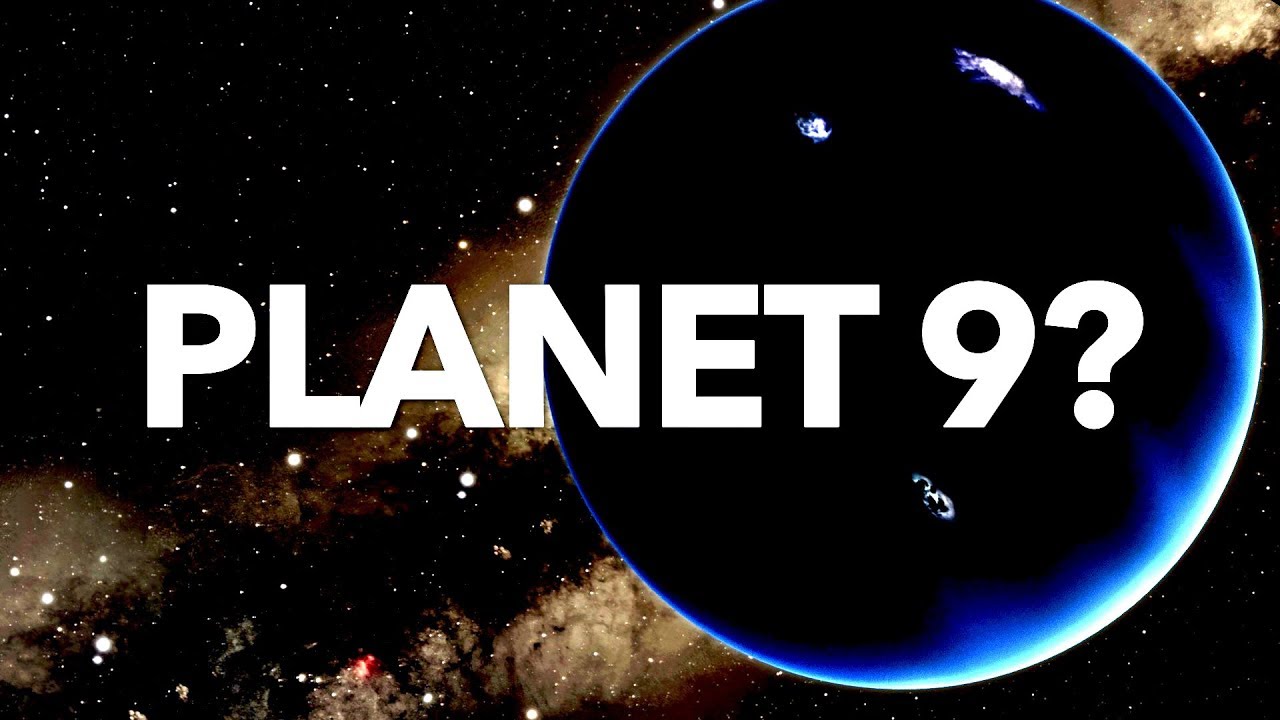
A planet has been predicted to orbit the sun with a period of 10,000 years, a mass 5x that of Earth on a highly elliptical and inclined orbit. What evidence supports the existence of such a strange object at the edge of our solar system?
Huge thanks to:
Prof. Konstantin Batygin, Caltech
Prof. David Jewitt, UCLA
I had heard about Planet 9 for a long time but I wondered what sort of evidence could support the bold claim: a planet at the very limits of our ability to detect one, so far out that its period is over 60 times that of Neptune. The planet 9 hypothesis helps explain clustering of orbits of distant Kuiper belt objects. It also explains how some of these objects have highly inclined orbits - up to 90 degrees relative to the plane of the solar system. Some are orbiting in reverse. Plus their orbits are removed from the orbit of Neptune, the logical option for a body that could have ejected them out so far. The fact that the perihelion is so far out suggests another source of gravity was essential for their peculiar orbits.
Special Thanks to Patreon Supporters:
Alfred Wallace, Arjun Chakroborty, Bryan Baker, Chris Vargas, Chuck Lauer Vose, DALE HORNE, Donal Botkin, Eric Velazquez, halyoav, James Knight, Jasper Xin, Joar Wandborg, Kevin Beavers, kkm, Leah Howard, Lyvann Ferrusca, Michael Krugman, Mohammed Al Sahaf, Noel Braganza, Pindex, Ron Neal, Sam Lutfi, Stan Presolski, Tige Thorman
Music from http://epidemicsound.com "Observations - From Now On" "Magnified XY"

Everyone loves laminar flow but turbulent flow is the real MVP.
A portion of this video was sponsored by Cottonelle. Purchase Cottonelle Flushable Wipes and try them for yourself: https://bit.ly/2WJm9Hq
Special thanks to:
Prof. Beverley McKeon and team https://www.mckeon.caltech.edu
Destin from Smarter Every Day https://www.youtube.com/smartereveryday
Nicole Sharp from FYFD https://ve42.co/fyfd
Pavol Dobryakov turbulent simulations: https://paveldogreat.github.io..../WebGL-Fluid-Simulat
I got into turbulent flow via chaos. The transition to turbulence sometimes involves a period doubling. Turbulence itself is chaotic motion, it is unpredictable and sensitively dependent on initial conditions. What surprised me is all the ways turbulent flow is useful to us. It is diffusive, meaning it causes mixing. This is useful in jet engines or rocket nozzles (which Destin studies) and is important to achieve in microfluidic devices, which are so small that turbulent flow is actually difficult to achieve. Turbulent flow can energize a boundary layer, which is important to maintain flow attachment over a wing, maintaining lift and delaying stall. Similarly a turbulent boundary layer over a golf ball reduces pressure drag allowing golf balls to fly further. This is the reason for the dimples on golf balls. Flow transitioning to turbulence in the wake of a bluff body can create periodic vortex shedding. This beautiful phenomenon can be seen in the von Kàrmàn vortex street in clouds viewed from space. Turbulence is everywhere, in the air currents in a room, in your aorta, in the breaths you exhale, in oil pipelines and water pipes, in the flow over cars and ships and planes. Animals have evolved for it (like dead fish swimming up stream) and we have engineered our environment, our planes and golf balls for it. Laminar flow may be nice to look at (which is why we use it in decorative fountains) but turbulent flow does the real lifting.
Animations by:
Jonny Hyman (Sun, Jupiter, Reynolds, airfoil, Earth time-lapse)
Research and writing:
AJ Fillo and Derek Muller. AJ also created the wind tunnel golf ball shots
Filmed by:
Daniel Bydlowski and Derek Muller
Additional footage:
Images of Jupiter courtesy of NASA
Turbulence in air currents by the Physics Girl, Dan Walsh, and Grant Sanderson https://youtu.be/N7d_RWyOv20
https://youtu.be/_UoTTq651dE
Music:
illBird "Shaffuru" https://youtu.be/5rkt53fNMgc
From EpidemicSound https://epidemicsound.com "Seaweed" "Colorful Animation 4"
Kevin MacLeod https://incompetech.com "Sneaky Adventure"

Have your voice heard at the UN Climate Summit in NYC, September 23: http://bit.ly/WhyNotVe
Interview filming by Chris Cassella: http://bit.ly/ScienceAlertVe

What is the longest drinking straw that you can actually drink out of? Well in this video, we put the theory to the test. We started off with a one metre long straw made out of drinking straws taped together. We moved on to two pieces of plastic tubing, each 6 metres in length with different diameters. Then we tried a 10.5 metre tube over a cliff's edge. The maximum we achieved was about 7 metres though theoretically up to 10.3 metres is possible if a perfect vacuum is created.

A short a cappella tribute to experimentalists. It is sung while performing three simple experiments with household items: Mentos dropped in diet Coke, a tea bag emptied and burned, and a ping pong ball floating in the air stream of a hair dryer.
Scientists are being inspired by nature to design the next generation of security devices. Arrays of nanoscale holes create beautiful reflected colours that are almost impossible to forge. This video was supported by TechNyou - check out their series on logical fallacies: http://bit.ly/WBsD31
Soon these nanoscale security devices could replace holograms. They are many times more reflective than holograms, and although the structures are smaller scale, they are lower aspect ratio and therefore easy to manufacture in bulk.
The electron wiggle simulation is from PhET, the best physics simulations ever: http://phet.colorado.edu
Special thanks to Thomas from Copenhagen who showed me around the city including the science museum where he assisted with the soap bubble demonstration.
Clint Landrock is the Chief Technology Officer for Nanotech Securities: http://www.nanosecurity.ca
Music is "Firefly in a Fairytale" by Gareth Coker

A quantum computer in the next decade could crack the encryption our society relies on using Shor's Algorithm. Head to https://brilliant.org/veritasium to start your free 30-day trial, and the first 200 people get 20% off an annual premium subscription.
The topic is especially relevant in the wake of Willow, the quantum computing chip unveiled by Google in December 2024.
#quantumcomputing
▀▀▀
A huge thank you to those who helped us understand this complex field and ensure we told this story accurately - Dr. Lorenz Panny, Prof. Serge Fehr, Dr. Dustin Moody, Prof. Benne de Weger, Prof. Tanja Lange, PhD candidate Jelle Vos, Gorjan Alagic, and Jack Hidary.
A huge thanks to those who helped us with the math behind Shor’s algorithm - Prof. David Elkouss, Javier Pagan Lacambra, Marc Serra Peralta, and Daniel Bedialauneta Rodriguez.
▀▀▀
References:
Joseph, D., et al. (2022). Transitioning organizations to post-quantum cryptography. Nature, 605(7909), 237-243. - https://ve42.co/Joseph2022
Bernstein, D. J., & Lange, T. (2017). Post-quantum cryptography. Nature, 549(7671), 188-194. - https://ve42.co/Bernstein2017
An Insight, An Idea with Sundar Pichai - Quantum Computing, Wold Economic Forum via YouTube - https://ve42.co/QCWEFyt
Migrating to Post-Quantum Cryptography, The White House - https://ve42.co/PQCWhiteHouse
Kotas, W. A. (2000). A brief history of cryptography. University of Tennessee - https://ve42.co/Kotas2000
Hellman, M. (1976). New directions in cryptography. IEEE transactions on Information Theory, 22(6), 644-654. - https://ve42.co/Hellman1976
Rivest, R. L., Shamir, A., & Adleman, L. (1978). A method for obtaining digital signatures and public-key cryptosystems. Communications of the ACM, 21(2), 120-126. - https://ve42.co/Rivest1978
Kak, A. (2023). Lecture 12: Public-Key Cryptography and the RSA Algorithm - https://ve42.co/Kak2023
Calderbank, M. (2007). The RSA Cryptosystem: History, Algorithm, Primes. University of Chicago. - https://ve42.co/Calderbank2007
Cryptographic Key Length Recommendation, Keylength - https://ve42.co/KeyLength
Coppersmith, D. (2002). An approximate Fourier transform useful in quantum factoring. arXiv preprint quant-ph/0201067. - https://ve42.co/Coppersmith2002
Quantum Fourier Transform, Qiskit - https://ve42.co/Qiskit
Shor, P. W. (1994, November). Algorithms for quantum computation: discrete logarithms and factoring. In Proceedings 35th annual symposium on foundations of computer science (pp. 124-134). IEEE. - https://ve42.co/Shor1994
Shor’s algorithm, Wikipedia - https://ve42.co/ShorWiki
Euler’s totient function, Wikipedia - https://ve42.co/EulerWiki
Asfaw, A. (2020). Shor’s Algorithm Lecture Series, Qiskit Summer School - https://ve42.co/ShorYT
How Quantum Computers Break Encryption, minutephysics via YouTube - https://ve42.co/PQCmpyt
Breaking RSA Encryption - an Update on the State-of-the-Art, QuintessenceLabs - https://ve42.co/QuintessenceLabs
O'Gorman, J., & Campbell, E. T. (2017). Quantum computation with realistic magic-state factories. Physical Review A, 95(3), 032338. - https://ve42.co/OGorman2017
Gidney, C., & Ekerå, M. (2021). How to factor 2048 bit RSA integers in 8 hours using 20 million noisy qubits. Quantum, 5, 433. - https://ve42.co/Gidney2021
2021 Quantum Threat Timeline Report, Global Risk Institute - https://ve42.co/QuantumRisk
The IBM Quantum Development Roadmap, IBM - https://ve42.co/IBMQC
Post-Quantum Cryptography, Computer Security Resource Center (NIST) - https://ve42.co/CSRCPQC
Alagic, G., et al. (2022). Status report on the third round of the NIST post-quantum cryptography standardization process. US Department of Commerce, NIST. - https://ve42.co/Alagic2022
Thijs, L. (2015). Lattice cryptography and lattice cryptanalysis - https://ve42.co/Thijs2015
▀▀▀
Special thanks to our Patreon supporters:
Tj Steyn, Meg Noah, Bernard McGee, KeyWestr, Elliot Miller, Jerome Barakos, M.D., Amadeo Bee, TTST, Balkrishna Heroor, Chris LaClair, John H. Austin, Jr., Eric Sexton, john kiehl, Anton Ragin, Diffbot, Gnare, Dave Kircher, Burt Humburg, Blake Byers, Evgeny Skvortsov, Meekay, Bill Linder, Paul Peijzel, Josh Hibschman, Mac Malkawi, Juan Benet, Ubiquity Ventures, Richard Sundvall, Lee Redden, Stephen Wilcox, Marinus Kuivenhoven, Michael Krugman, Cy 'kkm' K'Nelson, Sam Lutfi.
▀▀▀
Written by Casper Mebius & Derek Muller
Edited by Trenton Oliver
Filmed by Raquel Nuno
Animated by Ivy Tello & Mike Radjabov
Additional video/photos supplied by Getty Images & Pond5
Music from Epidemic Sound & Jonny Hyman
Produced by Derek Muller, Petr Lebedev, & Emily Zhang
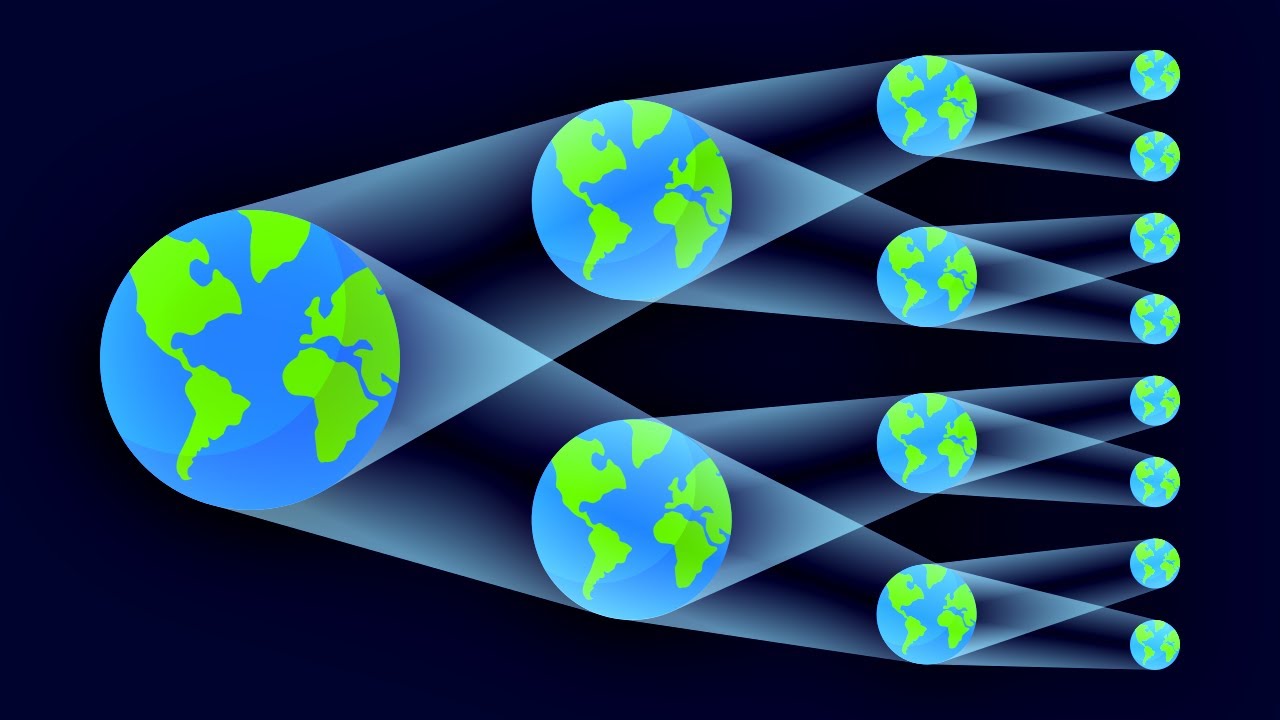
The most elegant interpretation of quantum mechanics is the universe is constantly splitting
A portion of this video was sponsored by Norton. Get up to 60% off the first year (annually billed) here: https://bit.ly/32SM0yd or use promo code VERITASIUM
Special thanks to:
Prof. Sean Carroll https://www.preposterousuniverse.com
His book, a major source for this video is 'Something Deeply Hidden: Quantum Worlds and The Emergence of Spacetime'
Code for solving the Schrödinger equation by Jonny Hyman available here: https://github.com/jonnyhyman/QuantumWaves
I learned quantum mechanics the traditional 'Copenhagen Interpretation' way. We can use the Schrödinger equation to solve for and evolve wave functions. Then we invoke wave-particle duality, in essence things we detect as particles can behave as waves when they aren't interacting with anything. But when there is a measurement, the wave function collapses leaving us with a definite particle detection. If we repeat the experiment many times, we find the statistics of these results mirror the amplitude of the wave function squared. Hence the Born rule came into being, saying the wave function should be interpreted statistically, that our universe at the most fundamental scale is probabilistic rather than deterministic. This did not sit well with scientists like Einstein and Schrödinger who believed there must be more going on, perhaps 'hidden variables'.
In the 1950's Hugh Everett proposed the Many Worlds interpretation of quantum mechanics. It is so logical in hindsight but with a bias towards the classical world, experiments and measurements to guide their thinking, it's understandable why the founders of quantum theory didn't come up with it. Rather than proposing different dynamics for measurement, Everett suggests that measurement is something that happens naturally in the course of quantum particles interacting with each other. The conclusion is inescapable. There is nothing special about measurement, it is just the observer becoming entangled with a wave function in a superposition. Since one observer can experience only their own branch, it appears as if the other possibilities have disappeared but in reality there is no reason why they could not still exist and just fail to interact with the other branches. This is caused by environmental decoherence.
Schrodinger's cat animation by Ivy Tello
Wave functions, double slit and entanglement animation by Jonny Hyman
Filming of opening sequence by Casey Rentz
Special thanks to Mithuna Y, Raquel Nuno and Dianna Cowern for feedback on the script
Music from https://epidemicsound.com "Experimental 1" "Serene Story 2" "Seaweed" "Colorful Animation 4"

The nutrient content of food is declining. Is it because of soil depletion, selective breeding, or... something else?
Watch my new documentary, VITAMANIA: http://ve42.co/vita
I came across this story as I was making the film Vitamania. When you ask sellers of vitamins why you should take vitamin supplements even if you eat a healthy diet, they will say because our food doesn't contain all the nutrients it once did. This is supposedly due to soil depletion, cold storage, food ripening off the vine, and global transport of out-of-season foods. And to an extent this is true. Foods contain the greatest amount of nutrients if they are eaten soon after they are harvested. An unexpected source of nutrient decline is the increasing amount of carbon dioxide in the atmosphere. It causes plants to grow faster and bulk up on carbs but at the expense of other nutrients, so in percentage terms the amount of nutrients are actually declining. For now this decline is modest so supplementing with vitamin pills is probably unnecessary for most people with a healthy diet but it may be a concern in future.
Thanks to Kate Pappas & Chris Kamen for writing, producing and filming this video with me
Edited by Lucy McCallum
Sound mix by Wayne Hyett
Fact Checking by Calvin Lee and Claire Smith
Thanks to the Collingwood Children’s Farm and Glenn Fitzgerald from the University of Melbourne & Agriculture Victoria
Further Reading:
https://www.sciencedirect.com/....science/article/pii/
https://www.ncbi.nlm.nih.gov/p....ubmed/15637215/?ncbi
http://soils.wisc.edu/facstaff..../barak/poster_galler
https://www.politico.com/agend....a/story/2017/09/13/f
http://www.abc.net.au/news/201....8-05-24/scientists-w

Europa Clipper is looking for signs of alien life in a very deadly place. Head to http://80000hours.org/veritasium to start planning a career that can help change the world for the better.
A massive thank you to Dr. Robert Pappalardo for his expertise and time.
A huge thank you to Gretchen McCartney and Cynthia B. Phillips at NASA JPL for their help.
For more on hydrothermal vents, check out NaturalWorldFacts on YouTube - @NaturalWorldFacts
00:00 ATTEMPT NO LANDING.
01:06 Jupiter’s deadly radiation belts
03:56 Europa’s secret
06:15 Why Europa isn’t completely frozen
08:03 Effects of tidal flexing
09:13 Why alien life could exist
10:39 How Europa Clipper detects signs of life
11:34 Why not Enceladus?
13:01 Europa Clipper’s instruments
15:13 Launch date and first results
▀▀▀
Special thanks to our Patreon supporters! Join the community to help us keep our videos free, forever: https://ve42.co/PatreonDE
Adam Foreman, Albert Wenger, Anton Ragin, Ayush Agrawal, Balkrishna Heroor, Bertrand Serlet, Bill Linder, Blake Byers, Bruce, Dave Kircher, David Johnston, Evgeny Skvortsov, Garrett Mueller, Gnare, gpoly, I. H., Jack Cuprill, John H. Austin, Jr., john kiehl, Juan Benet, KeyWestr, Kirill Shore, Kyi, Lee Redden, Marinus Kuivenhoven, Matthias Wrobel, Meekay, meg noah, Michael Krugman, Orlando Bassotto, Paul Peijzel, Reed Spilmann, Richard Sundvall, Sam Lutfi, Shiroyasha, Tj Steyn, TTST, Ubiquity Ventures and wolfee
If you’re looking for a molecular modeling kit, try Snatoms, a kit I invented where the atoms snap together magnetically - https://ve42.co/SnatomsV
▀▀▀
References:
Europa Clipper via Wikipedia - https://ve42.co/ECWiki
Magnetosphere of Jupiter via Wikipedia - https://ve42.co/JupiterMagWiki
Europa Clipper (2024) via Nasa.gov - https://ve42.co/ECNasa
Extraterrestrial Cycloids - Why Are They on Europa? via minutephysics on YouTube - https://ve42.co/MinPhysCycloid
Hand, K. P. & Carlson, R. W. (2015). Europa’s surface color suggests an ocean rich with sodium chloride. Geophysical research letters - https://ve42.co/Carlson2015
Dalton, J. B. et al. (2003). Near-Infrared Detection of Potential Evidence for Microscopic Organisms on Europa. Astrobiology - https://ve42.co/Dalton2003
Europa Clipper: Exploring Jupiter's Ocean World (2024, May 24) via Youtube - https://ve42.co/PappalardoLec
Carr, M., Belton, M., Chapman, C. et al. (1998). Evidence for a subsurface ocean on Europa. Nature 391, 363–365 - https://ve42.co/Carr1998
New Findings Support Prospect of Life on Jupiter’s Moon Europa (2024) via Nasa.gov - https://ve42.co/NasaEuropaLife
Meitzler, R., Jun, I., Blase, R. et al. (2023). Investigating Europa’s Radiation Environment with the Europa Clipper Radiation Monitor. Space Sci Rev 219, 61 - https://ve42.co/Meitzler2023
#europaclipper
Images & Video:
2010: The Year We Make Contact - https://ve42.co/2010Contact
CGI animations via NASA - https://ve42.co/NasaCGI
NASA Eyes on the Solar System - https://ve42.co/NasaEyes
Jupiter's magnetosphere via Chandra X-Ray Center - https://ve42.co/JupiterMagChandra
Io's Volcanoes via BBC Earth Science - https://ve42.co/IoBBCEarth
Clipper ships via Wikipedia - https://ve42.co/ClipperShipWiki
Various moon images via NASA - https://ve42.co/NasaMoons
Hydrothermal vent animation from NaturalWorldFacts - https://ve42.co/NWFVentAnims
Hydrothermal vent footage by Monterey Bay Aquarium Research Institute - https://ve42.co/ARIVent
Snotbot footage from VICE News - https://ve42.co/SnotBotVice
Plate tectonics on Europa by Noah Kroese - https://ve42.co/KroeseTectonics
JUICE CGI animations via ESA - https://ve42.co/JUICECGIESA
Arthur C. Clarke photo via ITU Pictures under the CC 2.0 license - https://ve42.co/ClarkePhoto
▀▀▀
Directed by Gregor Čavlović
Written by Gregor Čavlović and Derek Muller
Edited by Jack Saxon
Animated by Mike Radjabov, Fabio Albertelli, and Jack Saxon
Illustrated by Jakub Misiek
Filmed by Derek Muller, Petr Lebedev and Gregor Čavlović
Additional research by Gabriel Strong
Produced by Derek Muller, Gregor Čavlović, Rob Beasley Spence, Tori Brittain, Luke Lewis, Barbara Abraul, Gabriel Strong, Petr Lebedev, and Casper Mebius
Thumbnail contributions by Ren Hurley, Peter Sheppard, and Jakub Misiek
Additional video/photos supplied by Getty Images and Storyblocks
Music from Epidemic Sound

This video is about stuff: light bulbs, printers, phones and why they aren't better. Go to https://NordVPN.com/veritasium and use code VERITASIUM to get a 2-year plan plus 1 additional month with a huge discount. It’s risk free with Nord’s 30 day money-back guarantee!
References:
The Man in the White Suit — https://ve42.co/Suit
London, B. (1932). Ending the depression through planned obsolescence. — https://ve42.co/London32
Slade, G. (2009). Made to break: Technology and obsolescence in America. Harvard University Press — https://ve42.co/madetobreak
Krajewski, M. (2014). The great lightbulb conspiracy. IEEE spectrum, 51(10), 56-61. — https://ve42.co/Phoebus
Planet Money, The Phoebus Cartel - https://ve42.co/PMobs
The Light Bulb Conspiracy - https://youtu.be/e9xmn228HM0
Special thanks to Patreon supporters: Mac Malkawi, Oleksii Leonov, Michael Schneider, Jim Osmun, Tyson McDowell, Ludovic Robillard, jim buckmaster, fanime96, Juan Benet, Ruslan Khroma, Robert Blum, Richard Sundvall, Lee Redden, Vincent, Lyvann Ferrusca, Alfred Wallace, Arjun Chakroborty, Joar Wandborg, Clayton Greenwell, Pindex, Michael Krugman, Cy 'kkm' K'Nelson, Sam Lutfi, Ron Neal
Written by Derek Muller and Petr Lebedev
Animation by Ivy Tello
Filmed by Derek Muller and Raquel Nuno
Edited by Derek Muller
Video supplied by Getty Images
Music by Jonny Hyman and from https://epidemicsound.com"Aquatic Planet", "Rhythm of Dreams", "Tread Lightly", "Unexpected Visitors", "Curved Mirrors" "Drunken Lullaby" "Fluorescent Lights"
Thumbnail by Raquel Nuno and Karri Denise
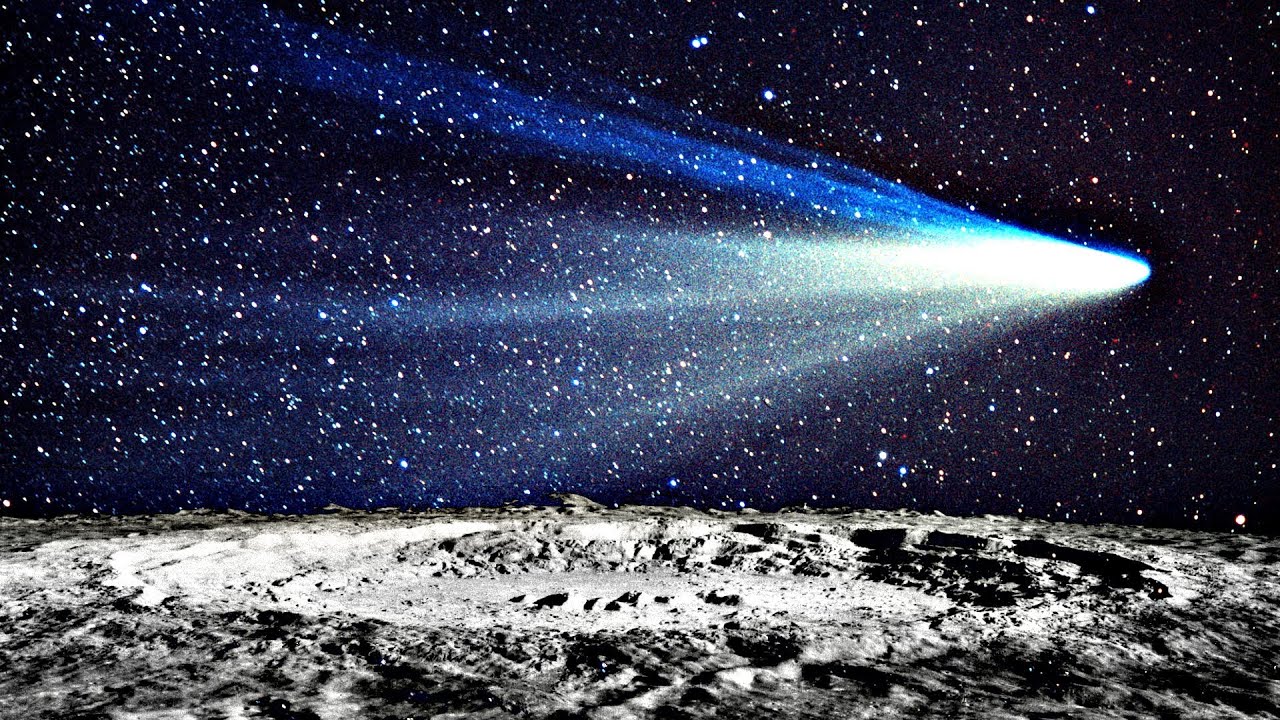
Physics of contraptions meant to go faster than light.
Audible: http://bit.ly/AudibleVe
My video about the problem with Facebook: http://bit.ly/PwFB
Special thanks to MinutePhysics for visual effects and Prof. Geraint Lewis for revisions to earlier drafts of this video.

This video is sponsored by Brilliant. The first 200 people to sign up via https://brilliant.org/veritasium get 20% off a yearly subscription.
Special thanks to:
Bruce Sherwood, Ruth Chabay, Aaron Titus, and Steve Spicklemore
https://matterandinteractions.org
VPython simulation: http://tinyurl.com/SurfaceCharge
Thanks to Ansys for help with the simulations: https://www.ansys.com/products..../electronics/ansys-h
Huge thanks to Richard Abbott from Caltech for all his modeling
Electrical Engineering YouTubers:
Electroboom: https://www.youtube.com/c/Electroboom
Alpha Phoenix: https://www.youtube.com/c/AlphaPhoenixChannel
eevblog: https://www.youtube.com/c/EevblogDave
Ben Watson: https://www.youtube.com/channe....l/UCgZUVIEtBnnBpFWJu
Big Clive: https://www.youtube.com/c/Bigclive
Z Y: https://www.youtube.com/user/ZongyiYang
NYU Quantum Technology Lab
https://www.youtube.com/channe....l/UCk7io8SN3ZwKvkpnM
Dr. Ben Miles
https://www.youtube.com/channe....l/UCUeZBocfxALSUdOgN
Further analysis of the large circuit is available here: https://ve42.co/bigcircuit
Special thanks to Dr Geraint Lewis for bringing up this question in the first place and discussing it with us. Check out his and Dr Chris Ferrie’s new book here: https://ve42.co/Universe2021
▀▀▀
References:
A great video about the Poynting vector by the Science Asylum: https://youtu.be/C7tQJ42nGno
Sefton, I. M. (2002). Understanding electricity and circuits: What the text books don’t tell you. In Science Teachers’ Workshop. -- https://ve42.co/Sefton
Feynman, R. P., Leighton, R. B., & Sands, M. (1965). The feynman lectures on physics; vol. Ii, chapter 27. American Journal of Physics, 33(9), 750-752. -- https://ve42.co/Feynman27
Hunt, B. J. (2005). The Maxwellians. Cornell University Press.
Müller, R. (2012). A semiquantitative treatment of surface charges in DC circuits. American Journal of Physics, 80(9), 782-788. -- https://ve42.co/Muller2012
Galili, I., & Goihbarg, E. (2005). Energy transfer in electrical circuits: A qualitative account. American journal of physics, 73(2), 141-144. -- https://ve42.co/Galili2004
Deno, D. W. (1976). Transmission line fields. IEEE Transactions on Power Apparatus and Systems, 95(5), 1600-1611. -- https://ve42.co/Deno76
▀▀▀
Special thanks to Patreon supporters: Inconcision, Kelly Snook, TTST, Ross McCawley, Balkrishna Heroor, Chris LaClair, Avi Yashchin, John H. Austin, Jr., OnlineBookClub.org, Dmitry Kuzmichev, Matthew Gonzalez, Eric Sexton, john kiehl, Anton Ragin, Diffbot, Micah Mangione, MJP, Gnare, Dave Kircher, Burt Humburg, Blake Byers, Dumky, Evgeny Skvortsov, Meekay, Bill Linder, Paul Peijzel, Josh Hibschman, Mac Malkawi, Michael Schneider, jim buckmaster, Juan Benet, Ruslan Khroma, Robert Blum, Richard Sundvall, Lee Redden, Vincent, Stephen Wilcox, Marinus Kuivenhoven, Clayton Greenwell, Michael Krugman, Cy 'kkm' K'Nelson, Sam Lutfi, Ron Neal
▀▀▀
Written by Derek Muller
Edited by Derek Muller
Filmed by Trenton Oliver and Petr Lebedev
Animation by Mike Radjabov and Ivy Tello
Additional video/photos supplied by Getty Images
Music from Epidemic Sound and Jonny Hyman
Thumbnail by Ignat Berbeci
Produced by Derek Muller, Petr Lebedev, and Emily Zhang