Najnoviji video zapisi

Here is another video you may be interested.
可能也對這段影片也感興趣:
About Airport |Vocabulary | https://youtu.be/iymO5jLqC3k
About Aeroplane |Vocabulary | https://youtu.be/PTdlgMtUDyA
-----------------------------------------------------------------------------------
Please SUBSCRIBE to our channel, LIKE, and SHARE to encourage us to share more useful and interesting knowledge.
請訂閱我們的頻道、點讚、分享,鼓勵我們分享更多有用又有趣的知識。
-----------------------------------------------------------------------------------
Welcome to watch our videos
歡迎觀看我們所創作的的其他影片
1)Basic Conversation 會話
https://www.youtube.com/playli....st?list=PLPoPxSDq_eP
2) Grammar 語法
https://www.youtube.com/playli....st?list=PLPoPxSDq_eP
3)English Speaking
https://www.youtube.com/playli....st?list=PLPoPxSDq_eP
4)Funny Jokes 笑話
https://www.youtube.com/playli....st?list=PLPoPxSDq_eP
5)Vocabulary 詞彙
https://www.youtube.com/playli....st?list=PLPoPxSDq_eP
6)English Idioms 英語成語
https://www.youtube.com/playli....st?list=PLPoPxSDq_eP
7)Revision Exercise 重温練習
https://www.youtube.com/playli....st?list=PLPoPxSDq_eP
8)Fun Games 趣遊戲味
https://www.youtube.com/playli....st?list=PLPoPxSDq_eP
9) Tongue Twister 繞口令
https://www.youtube.com/playli....st?list=PLPoPxSDq_eP
10)Writing a composition 作文
https://www.youtube.com/playli....st?list=PLPoPxSDq_eP

Thanks for watching.
Remember to mark your calendars and join us next Saturday for our story-telling session. We can't wait to see you there!
Please subscribe our channel.
To accelerate your learning, join our patreon @learnfast101 now.
-----------------------------------------------------------------------------------
Please SUBSCRIBE to our channel, LIKE, and SHARE to encourage us to share more useful and interesting knowledge.
請訂閱我們的頻道、點讚、分享,鼓勵我們分享更多有用又有趣的知識。
-----------------------------------------------------------------------------------
Welcome to watch our videos
歡迎觀看我們所創作的的其他影片
1)Basic Conversation 會話
https://www.youtube.com/playli....st?list=PLPoPxSDq_eP
2) Grammar 語法
https://www.youtube.com/playli....st?list=PLPoPxSDq_eP
3)English Speaking
https://www.youtube.com/playli....st?list=PLPoPxSDq_eP
4)Funny Jokes 笑話
https://www.youtube.com/playli....st?list=PLPoPxSDq_eP
5)Vocabulary 詞彙
https://www.youtube.com/playli....st?list=PLPoPxSDq_eP
6)English Idioms 英語成語
https://www.youtube.com/playli....st?list=PLPoPxSDq_eP
7)Revision Exercise 重温練習
https://www.youtube.com/playli....st?list=PLPoPxSDq_eP
8)Fun Games 趣遊戲味
https://www.youtube.com/playli....st?list=PLPoPxSDq_eP
9) Tongue Twister 繞口令
https://www.youtube.com/playli....st?list=PLPoPxSDq_eP
10)Writing a composition 作文
https://www.youtube.com/playli....st?list=PLPoPxSDq_eP
11) Story Telling 聽故事
https://youtube.com/playlist?l....ist=PLPoPxSDq_ePLrcK

-----------------------------------------------------------------------------------
Please SUBSCRIBE to our channel, LIKE, and SHARE to encourage us to share more useful and interesting knowledge.
請訂閱我們的頻道、點讚、分享,鼓勵我們分享更多有用又有趣的知識。
-----------------------------------------------------------------------------------
Welcome to watch our videos
歡迎觀看我們所創作的的其他影片
1)Basic Conversation 會話
https://www.youtube.com/playli....st?list=PLPoPxSDq_eP
2) Grammar 語法
https://www.youtube.com/playli....st?list=PLPoPxSDq_eP
3)English Speaking
https://www.youtube.com/playli....st?list=PLPoPxSDq_eP
4)Funny Jokes 笑話
https://www.youtube.com/playli....st?list=PLPoPxSDq_eP
5)Vocabulary 詞彙
https://www.youtube.com/playli....st?list=PLPoPxSDq_eP
6)English Idioms 英語成語
https://www.youtube.com/playli....st?list=PLPoPxSDq_eP
7)Revision Exercise 重温練習
https://www.youtube.com/playli....st?list=PLPoPxSDq_eP
8)Fun Games 趣遊戲味
https://www.youtube.com/playli....st?list=PLPoPxSDq_eP
9) Tongue Twister 繞口令
https://www.youtube.com/playli....st?list=PLPoPxSDq_eP
10)Writing a composition 作文
https://www.youtube.com/playli....st?list=PLPoPxSDq_eP
-----------------------------------------------------------------------------------
Please SUBSCRIBE to our channel, LIKE, and SHARE to encourage us to share more useful and interesting knowledge.
請訂閱我們的頻道、點讚、分享,鼓勵我們分享更多有用又有趣的知識。
-----------------------------------------------------------------------------------

Talking about Programmer | English Speaking | #programmer #job #billgates #linux #apple #openai #kid
Here are some videos about JOB. 還有其他關於職業的影片:
Jobs | Vocabulary|https://youtu.be/NYDTEtmwwoE
What do you want to be when you grow up? |English Speaking | https://youtu.be/0fcaGFUJ2Ps
-----------------------------------------------------------------------------------
Please SUBSCRIBE to our channel, LIKE, and SHARE to encourage us to share more useful and interesting knowledge.
請訂閱我們的頻道、點讚、分享,鼓勵我們分享更多有用又有趣的知識。
-----------------------------------------------------------------------------------
Welcome to watch our videos
歡迎觀看我們所創作的的其他影片
1)Basic Conversation 會話
https://www.youtube.com/playli....st?list=PLPoPxSDq_eP
2) Grammar 語法
https://www.youtube.com/playli....st?list=PLPoPxSDq_eP
3)English Speaking
https://www.youtube.com/playli....st?list=PLPoPxSDq_eP
4)Funny Jokes 笑話
https://www.youtube.com/playli....st?list=PLPoPxSDq_eP
5)Vocabulary 詞彙
https://www.youtube.com/playli....st?list=PLPoPxSDq_eP
6)English Idioms 英語成語
https://www.youtube.com/playli....st?list=PLPoPxSDq_eP
7)Revision Exercise 重温練習
https://www.youtube.com/playli....st?list=PLPoPxSDq_eP
8)Fun Games 趣遊戲味
https://www.youtube.com/playli....st?list=PLPoPxSDq_eP
9) Tongue Twister 繞口令
https://www.youtube.com/playli....st?list=PLPoPxSDq_eP
10)Writing a composition 作文
https://www.youtube.com/playli....st?list=PLPoPxSDq_eP

-----------------------------------------------------------------------------------
Please SUBSCRIBE to our channel, LIKE, and SHARE to encourage us to share more useful and interesting knowledge.
請訂閱我們的頻道、點讚、分享,鼓勵我們分享更多有用又有趣的知識。
-----------------------------------------------------------------------------------
Welcome to watch our videos
歡迎觀看我們所創作的的其他影片
1)Basic Conversation 會話
https://www.youtube.com/playli....st?list=PLPoPxSDq_eP
2) Grammar 語法
https://www.youtube.com/playli....st?list=PLPoPxSDq_eP
3)English Speaking
https://www.youtube.com/playli....st?list=PLPoPxSDq_eP
4)Funny Jokes 笑話
https://www.youtube.com/playli....st?list=PLPoPxSDq_eP
5)Vocabulary 詞彙
https://www.youtube.com/playli....st?list=PLPoPxSDq_eP
6)English Idioms 英語成語
https://www.youtube.com/playli....st?list=PLPoPxSDq_eP
7)Revision Exercise 重温練習
https://www.youtube.com/playli....st?list=PLPoPxSDq_eP
8)Fun Games 趣遊戲味
https://www.youtube.com/playli....st?list=PLPoPxSDq_eP
9) Tongue Twister 繞口令
https://www.youtube.com/playli....st?list=PLPoPxSDq_eP
10)Writing a composition 作文
https://www.youtube.com/playli....st?list=PLPoPxSDq_eP
-----------------------------------------------------------------------------------
Please SUBSCRIBE to our channel, LIKE, and SHARE to encourage us to share more useful and interesting knowledge.
請訂閱我們的頻道、點讚、分享,鼓勵我們分享更多有用又有趣的知識。
-----------------------------------------------------------------------------------

歡迎收看《English Speaking系列》
English Speaking_Introduce your school👉https://www.youtube.com/watch?v=DPfvjdEI7Dw
English Speaking_Back to school👉https://www.youtube.com/watch?v=NSv5QyPmhpw
English Speaking_Good manners👉https://www.youtube.com/watch?v=HGME2UCt6-M&t=29s
English Speaking_Talking about daily routines
👉https://youtu.be/Np8mJ1uw8c8
歡迎收看《Cooking系列》
Make fresh juice👉https://www.youtube.com/watch?v=VFOo2RW_qoI
歡迎收看《Shorts系列》
Tongue twister_whether vs weather👉https://youtube.com/shorts/_3yjqCC4ASA
Read with me_Irregular verbs Part A👉https://youtube.com/shorts/OfA0FlrxVy8
Read with me_Irregular verbs Part B👉https://youtube.com/shorts/GV9iXpKMUAk
歡迎收看《Fun Games系列》
Quiz Time👉https://youtu.be/k7cTb77sh1Q
Quiz Time 👉https://www.youtube.com/watch?v=QGwhG4Mk_Ow&t=5s
Quiz Time 👉https://www.youtube.com/watch?v=xDUJPNRh3mA
歡迎收看其他《Basic conversation系列》
Basic conversation Fun Lesson_Different languages👉https://youtu.be/mCJPRD7pahw
Basic conversation Lesson 7_Apply for a library card and borrow books
👉https://www.youtube.com/watch?v=5XCmL9clkQY
Basic conversation Lesson 6_Ordering food 👉https://youtu.be/xaJKiHn6vuc
Basic conversation Lesson 5_Visiting friends 👉https://youtu.be/5TkeC8iirVA
Basic conversation Lesson 4_Making phone calls 👉https://youtu.be/B2CUxLSK5CU
Basic conversation Lesson 3_Types of weather 👉https://youtu.be/ivyo-t50qnw
Basic conversation Lesson 2_Days in a week 👉https://youtu.be/fAtrVak5qLo
Basic conversation Lesson 1_Greetings 👉https://youtu.be/hl_foOF6EjY
歡迎收看《Vocabulary詞匯系列》
Famous Landmarks_國家名勝地點👉https://youtu.be/-_rRauEiDic
Colour_顏色👉Part 2https://youtu.be/78xUTO1My_E
Furniture in the living room_客廳內傢俱名稱👉https://www.youtube.com/watch?v=smN7hHwHL1g
2D shapes_平面形狀的名稱👉https://www.youtube.com/watch?v=P4wT5wmqIRY
Jobs_職業名稱👉https://www.youtube.com/watch?v=NYDTE...
Hairstyle_不同髮型的英文名稱👉https://www.youtube.com/watch?v=PU_BB2Kvj_w
Solar System_太陽系👉https://www.youtube.com/watch?v=Qwwczge-_ks
Tableware_餐具名稱👉https://www.youtube.com/watch?v=rm4FNlRQZxE
Hats_帽子的名稱👉https://www.youtube.com/watch?v=Pl3g8JgXeGc
Egg_蛋的不同煮法名稱 👉https://www.youtube.com/watch?v=alwVK7zoplc
National Flags_國家及國旗 👉https://youtu.be/tBwHd6XHfE0
The 12 Chinese Zodiac_12生肖 👉https://youtu.be/ii8djvnF-pk
Fruit_水果名稱 👉https://youtu.be/ozwI9sk-bo4
Stationery_文具名稱 👉https://youtu.be/jsjwHTaWfkg
Colour_顏色 Part 1 👉https://youtu.be/AiiGKUEuWx4
歡迎收看《停課不停學系列》
👉停課不停學系列:Number 1-10 https://youtu.be/wVn_0fY5i1o
👉停課不停學系列:Fruit https://youtu.be/C3jy63nGhgA
👉停課不停學系列:Transportation in HK https://youtu.be/5qQX0ymwwqo
👉停課不停學系列:Vegetables https://m.youtube.com/watch?v=iu1OnlmqRI4
👉停課不停學系列:Sports https://youtu.be/eF_Dv6owlM8
👉停課不停學系列:Relaxing activities
https://www.youtube.com/watch?v=ROv7OlyXe0A
歡迎收看《Writing a composition系列》
👉Writing a composition_At the beach https://www.youtube.com/watch?v=WcERiNMpb9s
歡迎大家收看《小一叩門面試》系列
👉School Interview_Part 1:Talking about yourself
https://www.youtube.com/watch?v=wWTwr2o4_uo
👉小一叩門:不能不看題目背後的真正意義
https://m.youtube.com/watch?v=msqXn02v8tw
👉小一叩門:面試陷阱
https://m.youtube.com/watch?v=OrTx4B_cnkw
-----------------------------------------------------------------------------------
Please SUBSCRIBE to our channel, LIKE, and SHARE to encourage us to share more useful and interesting knowledge.
請訂閱我們的頻道、點讚、分享,鼓勵我們分享更多有用又有趣的知識。
-----------------------------------------------------------------------------------
Welcome to watch our videos
歡迎觀看我們所創作的的其他影片
1)Basic Conversation 會話
https://www.youtube.com/playli....st?list=PLPoPxSDq_eP
2) Grammar 語法
https://www.youtube.com/playli....st?list=PLPoPxSDq_eP
3)English Speaking
https://www.youtube.com/playli....st?list=PLPoPxSDq_eP
4)Funny Jokes 笑話
https://www.youtube.com/playli....st?list=PLPoPxSDq_eP
5)Vocabulary 詞彙
https://www.youtube.com/playli....st?list=PLPoPxSDq_eP
6)English Idioms 英語成語
https://www.youtube.com/playli....st?list=PLPoPxSDq_eP
7)Revision Exercise 重温練習
https://www.youtube.com/playli....st?list=PLPoPxSDq_eP
8)Fun Games 趣遊戲味
https://www.youtube.com/playli....st?list=PLPoPxSDq_eP
9) Tongue Twister 繞口令
https://www.youtube.com/playli....st?list=PLPoPxSDq_eP
10)Writing a composition 作文
https://www.youtube.com/playli....st?list=PLPoPxSDq_eP

-----------------------------------------------------------------------------------
Please SUBSCRIBE to our channel, LIKE, and SHARE to encourage us to share more useful and interesting knowledge.
請訂閱我們的頻道、點讚、分享,鼓勵我們分享更多有用又有趣的知識。
-----------------------------------------------------------------------------------
Welcome to watch our videos
歡迎觀看我們所創作的的其他影片
1)Basic Conversation 會話
https://www.youtube.com/playli....st?list=PLPoPxSDq_eP
2) Grammar 語法
https://www.youtube.com/playli....st?list=PLPoPxSDq_eP
3)English Speaking
https://www.youtube.com/playli....st?list=PLPoPxSDq_eP
4)Funny Jokes 笑話
https://www.youtube.com/playli....st?list=PLPoPxSDq_eP
5)Vocabulary 詞彙
https://www.youtube.com/playli....st?list=PLPoPxSDq_eP
6)English Idioms 英語成語
https://www.youtube.com/playli....st?list=PLPoPxSDq_eP
7)Revision Exercise 重温練習
https://www.youtube.com/playli....st?list=PLPoPxSDq_eP
8)Fun Games 趣遊戲味
https://www.youtube.com/playli....st?list=PLPoPxSDq_eP
9) Tongue Twister 繞口令
https://www.youtube.com/playli....st?list=PLPoPxSDq_eP
10)Writing a composition 作文
https://www.youtube.com/playli....st?list=PLPoPxSDq_eP
11) Story Telling 聽故事
https://youtube.com/playlist?l....ist=PLPoPxSDq_ePLrcK

Thanks for watching.
Please subscribe our channel.
To accelerate your learning, join our patreon @learnfast101 now.
-----------------------------------------------------------------------------------
Please SUBSCRIBE to our channel, LIKE, and SHARE to encourage us to share more useful and interesting knowledge.
請訂閱我們的頻道、點讚、分享,鼓勵我們分享更多有用又有趣的知識。
-----------------------------------------------------------------------------------
Welcome to watch our videos
歡迎觀看我們所創作的的其他影片
1)Basic Conversation 會話
https://www.youtube.com/playli....st?list=PLPoPxSDq_eP
2) Grammar 語法
https://www.youtube.com/playli....st?list=PLPoPxSDq_eP
3)English Speaking
https://www.youtube.com/playli....st?list=PLPoPxSDq_eP
4)Funny Jokes 笑話
https://www.youtube.com/playli....st?list=PLPoPxSDq_eP
5)Vocabulary 詞彙
https://www.youtube.com/playli....st?list=PLPoPxSDq_eP
6)English Idioms 英語成語
https://www.youtube.com/playli....st?list=PLPoPxSDq_eP
7)Revision Exercise 重温練習
https://www.youtube.com/playli....st?list=PLPoPxSDq_eP
8)Fun Games 趣遊戲味
https://www.youtube.com/playli....st?list=PLPoPxSDq_eP
9) Tongue Twister 繞口令
https://www.youtube.com/playli....st?list=PLPoPxSDq_eP
10)Writing a composition 作文
https://www.youtube.com/playli....st?list=PLPoPxSDq_eP
11) Story Telling 聽故事
https://youtube.com/playlist?l....ist=PLPoPxSDq_ePLrcK
Here are some videos about JOB. 還有其他關於職業的影片:
Jobs | Vocabulary|https://youtu.be/NYDTEtmwwoE
What do you want to be when you grow up? |English Speaking | https://youtu.be/0fcaGFUJ2Ps
Talking about Programmer | English Speaking | https://youtu.be/ZfAnwQujSX8
-----------------------------------------------------------------------------------
Please SUBSCRIBE to our channel, LIKE, and SHARE to encourage us to share more useful and interesting knowledge.
請訂閱我們的頻道、點讚、分享,鼓勵我們分享更多有用又有趣的知識。
-----------------------------------------------------------------------------------
Welcome to watch our videos
歡迎觀看我們所創作的的其他影片
1)Basic Conversation 會話
https://www.youtube.com/playli....st?list=PLPoPxSDq_eP
2) Grammar 語法
https://www.youtube.com/playli....st?list=PLPoPxSDq_eP
3)English Speaking
https://www.youtube.com/playli....st?list=PLPoPxSDq_eP
4)Funny Jokes 笑話
https://www.youtube.com/playli....st?list=PLPoPxSDq_eP
5)Vocabulary 詞彙
https://www.youtube.com/playli....st?list=PLPoPxSDq_eP
6)English Idioms 英語成語
https://www.youtube.com/playli....st?list=PLPoPxSDq_eP
7)Revision Exercise 重温練習
https://www.youtube.com/playli....st?list=PLPoPxSDq_eP
8)Fun Games 趣遊戲味
https://www.youtube.com/playli....st?list=PLPoPxSDq_eP
9) Tongue Twister 繞口令
https://www.youtube.com/playli....st?list=PLPoPxSDq_eP
10)Writing a composition 作文
https://www.youtube.com/playli....st?list=PLPoPxSDq_eP
11) Story Telling 聽故事
https://youtube.com/playlist?l....ist=PLPoPxSDq_ePLrcK
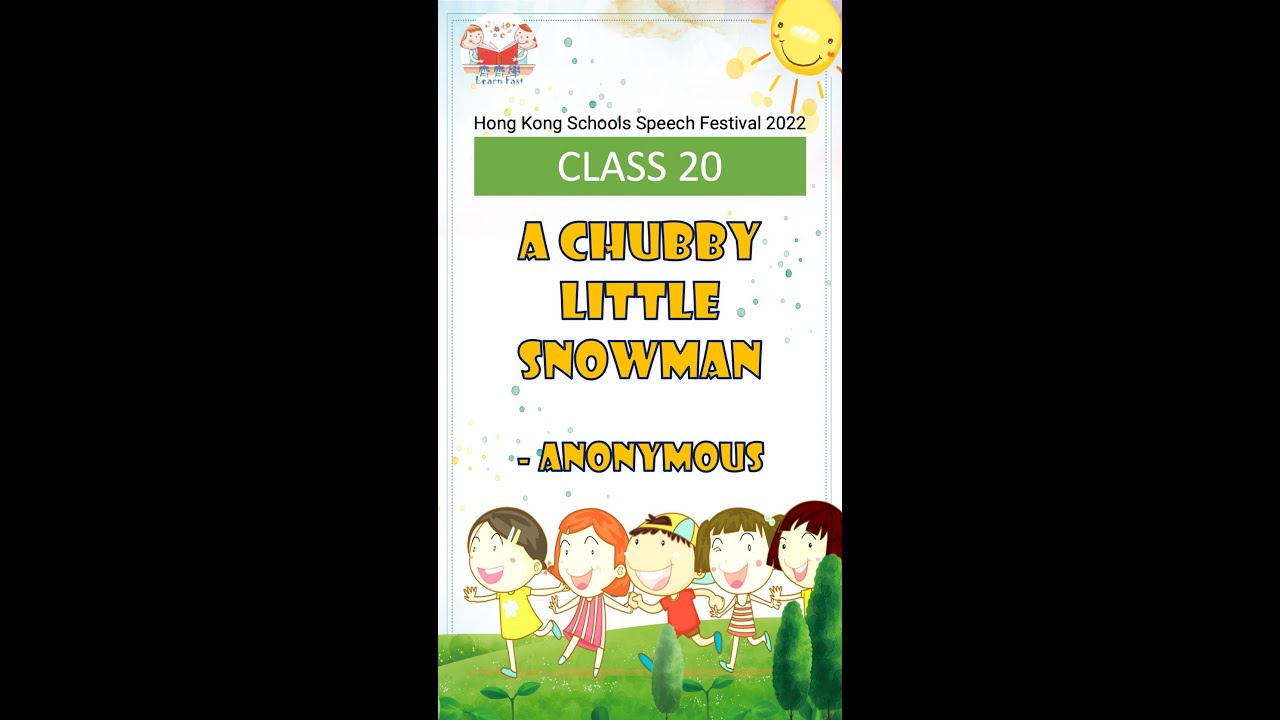
Hong Kong Schools Speech Festival 2022
Girls Solo-verse speaking Non-open Syllabus for Primary 1 to 2
Class 20 A chubby Little Snowman - Anonymous
A chubby little snowman
Had a carrot nose;
Along came a rabbit
And what do you suppose?
That hungry little bunny,
Looking for his lunch,
ATE the snowman’s carrot nose…
Nibble, nibble, CRUNCH!

#tonguetwisters #shorts
Give papa a cup of proper coffee in a copper coffee cup.
Quiz Time 05
Q1: What colour is the skin of a polar bear?
Q2: How long can swifts fly without stopping?
Q3: What kind of animal usually wash food before eating?
📍📍歡迎收看《English Speaking系列》📍📍
Talking about different festivals
👉https://youtu.be/7XWE_QB0qEk
Introduce your school
👉https://www.youtube.com/watch?v=DPfvjdEI7Dw
Back to school
👉https://www.youtube.com/watch?v=NSv5QyPmhpw
Good manners_actions
👉https://youtu.be/_Swu0JtZke0
Good manners
👉https://www.youtube.com/watch?v=HGME2UCt6-M&t=29s
Talking about daily routines
👉https://youtu.be/Np8mJ1uw8c8
📍📍歡迎收看《Grammar系列》📍📍
Lesson4_common mistakes
👉https://youtu.be/A7Yz6eEcYPs
Lesson3_irregular verbs_part2
👉https://youtu.be/vE6AnyrYDZQ
Lesson2_irregular verbs_part 1
👉https://youtu.be/C_p_r053MeQ
Lesson1_Opposite words
👉https://youtu.be/ftz3u46E0Zo
📍📍歡迎收看《Cooking系列》📍📍
Make fresh juice
👉https://www.youtube.com/watch?v=VFOo2RW_qoI
📍📍歡迎收看《Shorts系列》📍📍
Funny jokes 3
👉https://youtube.com/shorts/VJe4DCE9lLs
Funny joke 2
👉https://youtube.com/shorts/2ouEf37QtdQ
Funny joke 1
👉https://youtube.com/shorts/OJ2-YEfl2uw
Tongue twister_birdie vs turdie vs pie
👉https://youtube.com/shorts/yvOv4EVm6Xc
Tongue twister_scream vs ice cream
👉https://youtube.com/shorts/KBi79AOOPow
Tongue twister_fuzzy vs wuzzy
👉https://youtube.com/shorts/pwGPW_cWdxc
Tongue twister_whether vs weather
👉https://youtube.com/shorts/_3yjqCC4ASA
Read with me_Irregular verbs Part A
👉https://youtube.com/shorts/OfA0FlrxVy8
Read with me_Irregular verbs Part B
👉https://youtube.com/shorts/GV9iXpKMUAk
📍📍歡迎收看《Fun Games系列》📍📍
Make a guess
👉https://youtu.be/J0E2LF9_chU
Quiz Time
👉https://youtu.be/M4JrGzedjH0
Quiz Time
👉https://youtu.be/k7cTb77sh1Q
Quiz Time
👉https://www.youtube.com/watch?v=QGwhG4Mk_Ow&t=5s
Quiz Time
👉https://www.youtube.com/watch?v=xDUJPNRh3mA
📍📍歡迎收看《Basic conversation系列》📍📍
Basic conversation Lesson 8_Talking about your best friend
👉https://youtu.be/NknxeVxhP7A
Basic conversation Fun Lesson_Different languages
👉https://youtu.be/mCJPRD7pahw
Basic conversation Lesson 7_Apply for a library card and borrow books
👉https://www.youtube.com/watch?v=5XCmL9clkQY
Basic conversation Lesson 6_Ordering food
👉https://youtu.be/xaJKiHn6vuc
Basic conversation Lesson 5_Visiting friends
👉https://youtu.be/5TkeC8iirVA
Basic conversation Lesson 4_Making phone calls
👉https://youtu.be/B2CUxLSK5CU
Basic conversation Lesson 3_Types of weather
👉https://youtu.be/ivyo-t50qnw
Basic conversation Lesson 2_Days in a week
👉https://youtu.be/fAtrVak5qLo
Basic conversation Lesson 1_Greetings
👉https://youtu.be/hl_foOF6EjY
📍📍歡迎收看其他《Vocabulary詞匯系列》📍📍
Animals on land_陸地動物
👉https://youtu.be/XxZXjGkJkCQ
Animals in the sea_海洋動物
👉https://youtu.be/gN7GsS6cCeg
Parts of the body_身體部份名稱
👉https://youtu.be/GviCG650sng
Theme Park facilities_主題公園設施
👉https://youtu.be/RiP4etv1ANs
Famous Landmarks_國家名勝地標名稱
👉https://youtu.be/-_rRauEiDic
Colour_顏色
👉Part 2https://youtu.be/78xUTO1My_E
Furniture in the living room_客廳內傢俱名稱
👉https://www.youtube.com/watch?v=smN7hHwHL1g
2D shapes_平面形狀的名稱
👉https://www.youtube.com/watch?v=P4wT5wmqIRY
Jobs_職業名稱
👉https://www.youtube.com/watch?v=NYDTE...
Hairstyle_不同髮型的英文名稱
👉https://www.youtube.com/watch?v=PU_BB2Kvj_w
Solar System_太陽系
👉https://www.youtube.com/watch?v=Qwwczge-_ks
Tableware_餐具名稱
👉https://www.youtube.com/watch?v=rm4FNlRQZxE
Hats_帽子的名稱
👉https://www.youtube.com/watch?v=Pl3g8JgXeGc
Egg_蛋的不同煮法名稱
👉https://www.youtube.com/watch?v=alwVK7zoplc
National Flags_國家及國旗
👉https://youtu.be/tBwHd6XHfE0
The 12 Chinese Zodiac_12生肖
👉https://youtu.be/ii8djvnF-pk
Fruit_水果名稱
👉https://youtu.be/ozwI9sk-bo4
Stationery_文具名稱
👉https://youtu.be/jsjwHTaWfkg
Colour_顏色 Part 1
👉https://youtu.be/AiiGKUEuWx4
📍📍歡迎收看《停課不停學系列》 📍📍
Number 1-10
👉https://youtu.be/wVn_0fY5i1o
Fruit
👉https://youtu.be/C3jy63nGhgA
Transportation in HK
👉https://youtu.be/5qQX0ymwwqo
Vegetables
👉https://m.youtube.com/watch?v=iu1OnlmqRI4
Sports
👉https://youtu.be/eF_Dv6owlM8
Relaxing activities
👉https://www.youtube.com/watch?v=ROv7OlyXe0A
📍📍歡迎收看《Writing a composition系列》 📍📍
👉School Picnic Day
https://youtu.be/GNXyS84JrQo
At the beach
👉https://www.youtube.com/watch?v=WcERiNMpb9s
📍📍歡迎收看《小一叩門面試》系列 📍📍
👉School Interview_Part 1:Talking about yourself
https://www.youtube.com/watch?v=wWTwr2o4_uo
👉小一叩門:不能不看題目背後的真正意義
https://m.youtube.com/watch?v=msqXn02v8tw
👉小一叩門:面試陷阱
https://m.youtube.com/watch?v=OrTx4B_cnkw
#tonguetwisters #shorts
Whether the weather be fine or whether the weather be not, whether the weather be cold or whether the weather be hot, we’ll weather the weather whatever the weather, whether we like it or not.
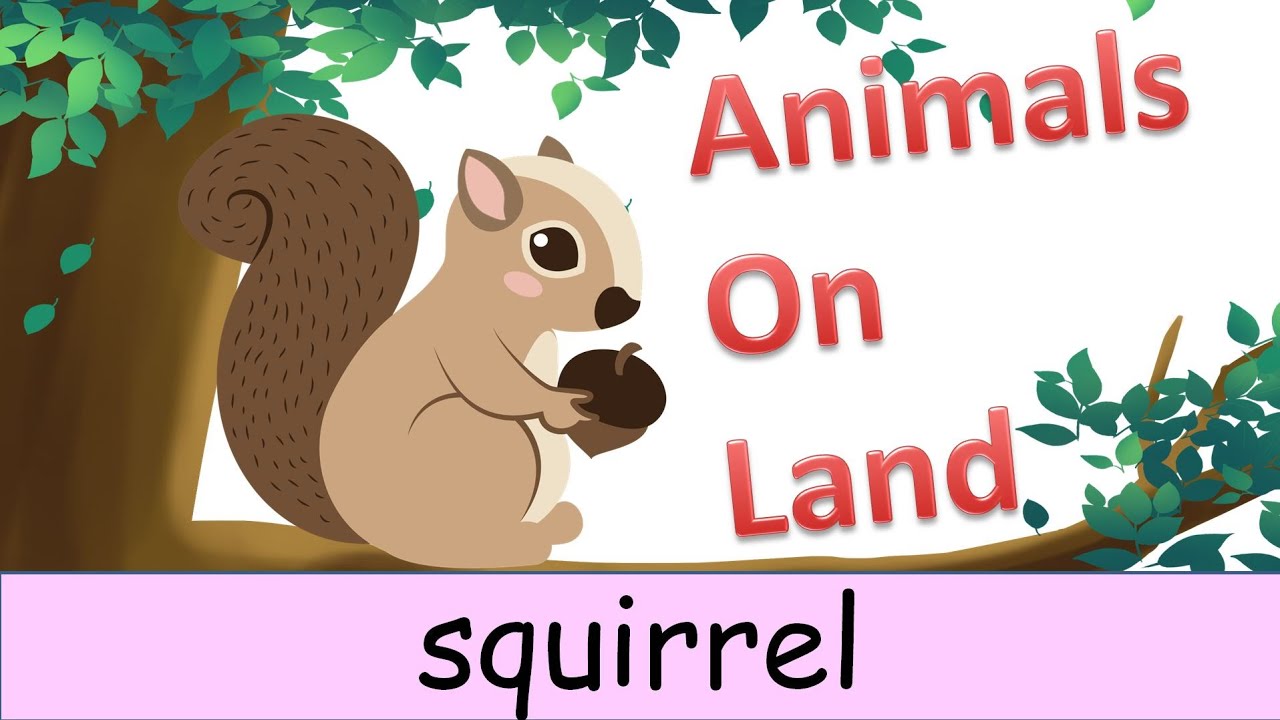
📍📍歡迎收看《English Speaking系列》📍📍
Talking about different festivals
👉https://youtu.be/7XWE_QB0qEk
Introduce your school
👉https://www.youtube.com/watch?v=DPfvjdEI7Dw
Back to school
👉https://www.youtube.com/watch?v=NSv5QyPmhpw
Good manners_actions
👉https://youtu.be/_Swu0JtZke0
Good manners
👉https://www.youtube.com/watch?v=HGME2UCt6-M&t=29s
Talking about daily routines
👉https://youtu.be/Np8mJ1uw8c8
📍📍歡迎收看《Grammar系列》📍📍
Lesson4_common mistakes
👉https://youtu.be/A7Yz6eEcYPs
Lesson3_irregular verbs_part2
👉https://youtu.be/vE6AnyrYDZQ
Lesson2_irregular verbs_part 1
👉https://youtu.be/C_p_r053MeQ
Lesson1_Opposite words
👉https://youtu.be/ftz3u46E0Zo
📍📍歡迎收看《Cooking系列》📍📍
Make fresh juice
👉https://www.youtube.com/watch?v=VFOo2RW_qoI
📍📍歡迎收看《Shorts系列》📍📍
Funny jokes 5
👉https://youtube.com/shorts/7Rq0v77lq3Q
Funny jokes 3
👉https://youtube.com/shorts/VJe4DCE9lLs
Funny joke 2
👉https://youtube.com/shorts/2ouEf37QtdQ
Funny joke 1
👉https://youtube.com/shorts/OJ2-YEfl2uw
Tongue twister_birdie vs turdie vs pie
👉https://youtube.com/shorts/yvOv4EVm6Xc
Tongue twister_scream vs ice cream
👉https://youtube.com/shorts/KBi79AOOPow
Tongue twister_fuzzy vs wuzzy
👉https://youtube.com/shorts/pwGPW_cWdxc
Tongue twister_whether vs weather
👉https://youtube.com/shorts/_3yjqCC4ASA
Read with me_Irregular verbs Part A
👉https://youtube.com/shorts/OfA0FlrxVy8
Read with me_Irregular verbs Part B
👉https://youtube.com/shorts/GV9iXpKMUAk
📍📍歡迎收看《Fun Games系列》📍📍
Make a guess
👉https://youtu.be/J0E2LF9_chU
Quiz Time
👉https://youtu.be/M4JrGzedjH0
Quiz Time
👉https://youtu.be/k7cTb77sh1Q
Quiz Time
👉https://www.youtube.com/watch?v=QGwhG4Mk_Ow&t=5s
Quiz Time
👉https://www.youtube.com/watch?v=xDUJPNRh3mA
📍📍歡迎收看《Basic conversation系列》📍📍
Basic conversation Lesson 9_How can I help you
👉https://youtu.be/6Nx1dXLeQMU
Basic conversation Lesson 8_Talking about your best friend
👉https://youtu.be/NknxeVxhP7A
Basic conversation Fun Lesson_Different languages
👉https://youtu.be/mCJPRD7pahw
Basic conversation Lesson 7_Apply for a library card and borrow books
👉https://www.youtube.com/watch?v=5XCmL9clkQY
Basic conversation Lesson 6_Ordering food
👉https://youtu.be/xaJKiHn6vuc
Basic conversation Lesson 5_Visiting friends
👉https://youtu.be/5TkeC8iirVA
Basic conversation Lesson 4_Making phone calls
👉https://youtu.be/B2CUxLSK5CU
Basic conversation Lesson 3_Types of weather
👉https://youtu.be/ivyo-t50qnw
Basic conversation Lesson 2_Days in a week
👉https://youtu.be/fAtrVak5qLo
Basic conversation Lesson 1_Greetings
👉https://youtu.be/hl_foOF6EjY
📍📍歡迎收看其他《Vocabulary詞匯系列》📍📍
Animals on land_陸地動物
👉https://youtu.be/XxZXjGkJkCQ
Animals in the sea_海洋動物
👉https://youtu.be/gN7GsS6cCeg
Parts of the body_身體部份名稱
👉https://youtu.be/GviCG650sng
Theme Park facilities_主題公園設施
👉https://youtu.be/RiP4etv1ANs
Famous Landmarks_國家名勝地標名稱
👉https://youtu.be/-_rRauEiDic
Colour_顏色
👉Part 2https://youtu.be/78xUTO1My_E
Furniture in the living room_客廳內傢俱名稱
👉https://www.youtube.com/watch?v=smN7hHwHL1g
2D shapes_平面形狀的名稱
👉https://www.youtube.com/watch?v=P4wT5wmqIRY
Jobs_職業名稱
👉https://www.youtube.com/watch?v=NYDTE...
Hairstyle_不同髮型的英文名稱
👉https://www.youtube.com/watch?v=PU_BB2Kvj_w
Solar System_太陽系
👉https://www.youtube.com/watch?v=Qwwczge-_ks
Tableware_餐具名稱
👉https://www.youtube.com/watch?v=rm4FNlRQZxE
Hats_帽子的名稱
👉https://www.youtube.com/watch?v=Pl3g8JgXeGc
Egg_蛋的不同煮法名稱
👉https://www.youtube.com/watch?v=alwVK7zoplc
National Flags_國家及國旗
👉https://youtu.be/tBwHd6XHfE0
The 12 Chinese Zodiac_12生肖
👉https://youtu.be/ii8djvnF-pk
Fruit_水果名稱
👉https://youtu.be/ozwI9sk-bo4
Stationery_文具名稱
👉https://youtu.be/jsjwHTaWfkg
Colour_顏色 Part 1
👉https://youtu.be/AiiGKUEuWx4
📍📍歡迎收看《停課不停學系列》 📍📍
Number 1-10
👉https://youtu.be/wVn_0fY5i1o
Fruit
👉https://youtu.be/C3jy63nGhgA
Transportation in HK
👉https://youtu.be/5qQX0ymwwqo
Vegetables
👉https://m.youtube.com/watch?v=iu1OnlmqRI4
Sports
👉https://youtu.be/eF_Dv6owlM8
Relaxing activities
👉https://www.youtube.com/watch?v=ROv7OlyXe0A
📍📍歡迎收看《Writing a composition系列》 📍📍
👉School Picnic Day
https://youtu.be/GNXyS84JrQo
At the beach
👉https://www.youtube.com/watch?v=WcERiNMpb9s
📍📍歡迎收看《小一叩門面試》系列 📍📍
👉School Interview_Part 1:Talking about yourself
https://www.youtube.com/watch?v=wWTwr2o4_uo
👉小一叩門:不能不看題目背後的真正意義
https://m.youtube.com/watch?v=msqXn02v8tw
👉小一叩門:面試陷阱
https://m.youtube.com/watch?v=OrTx4B_cnkw
Thanks for watching.
Remember to mark your calendars and join us next Saturday for our story-telling session. We can't wait to see you there!
Please subscribe our channel.
To accelerate your learning, join our patreon @learnfast101 now.
-----------------------------------------------------------------------------------
Please SUBSCRIBE to our channel, LIKE, and SHARE to encourage us to share more useful and interesting knowledge.
請訂閱我們的頻道、點讚、分享,鼓勵我們分享更多有用又有趣的知識。
-----------------------------------------------------------------------------------
Welcome to watch our videos
歡迎觀看我們所創作的的其他影片
1)Basic Conversation 會話
https://www.youtube.com/playli....st?list=PLPoPxSDq_eP
2) Grammar 語法
https://www.youtube.com/playli....st?list=PLPoPxSDq_eP
3)English Speaking
https://www.youtube.com/playli....st?list=PLPoPxSDq_eP
4)Funny Jokes 笑話
https://www.youtube.com/playli....st?list=PLPoPxSDq_eP
5)Vocabulary 詞彙
https://www.youtube.com/playli....st?list=PLPoPxSDq_eP
6)English Idioms 英語成語
https://www.youtube.com/playli....st?list=PLPoPxSDq_eP
7)Revision Exercise 重温練習
https://www.youtube.com/playli....st?list=PLPoPxSDq_eP
8)Fun Games 趣遊戲味
https://www.youtube.com/playli....st?list=PLPoPxSDq_eP
9) Tongue Twister 繞口令
https://www.youtube.com/playli....st?list=PLPoPxSDq_eP
10)Writing a composition 作文
https://www.youtube.com/playli....st?list=PLPoPxSDq_eP
11) Story Telling 聽故事
https://youtube.com/playlist?l....ist=PLPoPxSDq_ePLrcK
Fluffing a Duck Kevin MacLeod (incompetech.com)
Licensed under Creative Commons: By Attribution 3.0 License
http://creativecommons.org/licenses/by/3.0/
Music promoted by https://www.chosic.com/free-music/all/

If you are interested in how the old type of rotary telephone work, there’s a video that shows you how it works.
https://www.youtube.com/watch?v=XkuirEweZvM
📍📍歡迎收看《English Speaking系列》📍📍
Talking about your neighbourhood
👉https://youtu.be/pVZsqtQ2pMA
Talking about different festivals
👉https://youtu.be/7XWE_QB0qEk
Introduce your school
👉https://www.youtube.com/watch?v=DPfvjdEI7Dw
Back to school
👉https://www.youtube.com/watch?v=NSv5QyPmhpw
Good manners_actions
👉https://youtu.be/_Swu0JtZke0
Good manners
👉https://www.youtube.com/watch?v=HGME2UCt6-M&t=29s
Talking about daily routines
👉https://youtu.be/Np8mJ1uw8c8
📍📍歡迎收看《Grammar系列》📍📍
Lesson 5_irregular verbs_part3
👉https://youtu.be/2gGmVYQW_0k
Lesson4_common mistakes
👉https://youtu.be/A7Yz6eEcYPs
Lesson3_irregular verbs_part2
👉https://youtu.be/vE6AnyrYDZQ
Lesson2_irregular verbs_part 1
👉https://youtu.be/C_p_r053MeQ
Lesson1_Opposite words
👉https://youtu.be/ftz3u46E0Zo
📍📍歡迎收看《Cooking系列》📍📍
Make fresh juice
👉https://www.youtube.com/watch?v=VFOo2RW_qoI
📍📍歡迎收看《Shorts系列》📍📍
Funny jokes 5
👉https://youtube.com/shorts/7Rq0v77lq3Q
Funny jokes 3
👉https://youtube.com/shorts/VJe4DCE9lLs
Funny joke 2
👉https://youtube.com/shorts/2ouEf37QtdQ
Funny joke 1
👉https://youtube.com/shorts/OJ2-YEfl2uw
Tongue twister_whose/shoes/choose
👉https://youtube.com/shorts/S9Rrw_scQ8o
Tongue twister_birdie vs turdie vs pie
👉https://youtube.com/shorts/yvOv4EVm6Xc
Tongue twister_scream vs ice cream
👉https://youtube.com/shorts/KBi79AOOPow
Tongue twister_fuzzy vs wuzzy
👉https://youtube.com/shorts/pwGPW_cWdxc
Tongue twister_whether vs weather
👉https://youtube.com/shorts/_3yjqCC4ASA
Read with me_Irregular verbs Part A
👉https://youtube.com/shorts/OfA0FlrxVy8
Read with me_Irregular verbs Part B
👉https://youtube.com/shorts/GV9iXpKMUAk
📍📍歡迎收看《Fun Games系列》📍📍
Make a guess
👉https://youtu.be/J0E2LF9_chU
Quiz Time
👉https://youtu.be/M4JrGzedjH0
Quiz Time
👉https://youtu.be/k7cTb77sh1Q
Quiz Time
👉https://www.youtube.com/watch?v=QGwhG4Mk_Ow&t=5s
Quiz Time
👉https://www.youtube.com/watch?v=xDUJPNRh3mA
📍📍歡迎收看《Basic conversation系列》📍📍
Basic conversation Lesson 9_How can I help you
👉https://youtu.be/6Nx1dXLeQMU
Basic conversation Lesson 8_Talking about your best friend
👉https://youtu.be/NknxeVxhP7A
Basic conversation Fun Lesson_Different languages
👉https://youtu.be/mCJPRD7pahw
Basic conversation Lesson 7_Apply for a library card and borrow books
👉https://www.youtube.com/watch?v=5XCmL9clkQY
Basic conversation Lesson 6_Ordering food
👉https://youtu.be/xaJKiHn6vuc
Basic conversation Lesson 5_Visiting friends
👉https://youtu.be/5TkeC8iirVA
Basic conversation Lesson 4_Making phone calls
👉https://youtu.be/B2CUxLSK5CU
Basic conversation Lesson 3_Types of weather
👉https://youtu.be/ivyo-t50qnw
Basic conversation Lesson 2_Days in a week
👉https://youtu.be/fAtrVak5qLo
Basic conversation Lesson 1_Greetings
👉https://youtu.be/hl_foOF6EjY
📍📍歡迎收看其他《Vocabulary詞匯系列》📍📍
Animals on land_陸地動物
👉https://youtu.be/XxZXjGkJkCQ
Animals in the sea_海洋動物
👉https://youtu.be/gN7GsS6cCeg
Parts of the body_身體部份名稱
👉https://youtu.be/GviCG650sng
Theme Park facilities_主題公園設施
👉https://youtu.be/RiP4etv1ANs
Famous Landmarks_國家名勝地標名稱
👉https://youtu.be/-_rRauEiDic
Colour_顏色
👉Part 2https://youtu.be/78xUTO1My_E
Furniture in the living room_客廳內傢俱名稱
👉https://www.youtube.com/watch?v=smN7hHwHL1g
2D shapes_平面形狀的名稱
👉https://www.youtube.com/watch?v=P4wT5wmqIRY
Jobs_職業名稱
👉https://www.youtube.com/watch?v=NYDTE...
Hairstyle_不同髮型的英文名稱
👉https://www.youtube.com/watch?v=PU_BB2Kvj_w
Solar System_太陽系
👉https://www.youtube.com/watch?v=Qwwczge-_ks
Tableware_餐具名稱
👉https://www.youtube.com/watch?v=rm4FNlRQZxE
Hats_帽子的名稱
👉https://www.youtube.com/watch?v=Pl3g8JgXeGc
Egg_蛋的不同煮法名稱
👉https://www.youtube.com/watch?v=alwVK7zoplc
National Flags_國家及國旗
👉https://youtu.be/tBwHd6XHfE0
The 12 Chinese Zodiac_12生肖
👉https://youtu.be/ii8djvnF-pk
Fruit_水果名稱
👉https://youtu.be/ozwI9sk-bo4
Stationery_文具名稱
👉https://youtu.be/jsjwHTaWfkg
Colour_顏色 Part 1
👉https://youtu.be/AiiGKUEuWx4
📍📍歡迎收看《停課不停學系列》 📍📍
Number 1-10
👉https://youtu.be/wVn_0fY5i1o
Fruit
👉https://youtu.be/C3jy63nGhgA
Transportation in HK
👉https://youtu.be/5qQX0ymwwqo
Vegetables
👉https://m.youtube.com/watch?v=iu1OnlmqRI4
Sports
👉https://youtu.be/eF_Dv6owlM8
Relaxing activities
👉https://www.youtube.com/watch?v=ROv7OlyXe0A
📍📍歡迎收看《Writing a composition系列》 📍📍
👉School Picnic Day
https://youtu.be/GNXyS84JrQo
At the beach
👉https://www.youtube.com/watch?v=WcERiNMpb9s
📍📍歡迎收看《小一叩門面試》系列 📍📍
👉School Interview_Part 1:Talking about yourself
https://www.youtube.com/watch?v=wWTwr2o4_uo
👉小一叩門:不能不看題目背後的真正意義
https://m.youtube.com/watch?v=msqXn02v8tw
👉小一叩門:面試陷阱
https://m.youtube.com/watch?v=OrTx4B_cnkw

Here is another video you may be interested.
可能也對這段影片也感興趣:
Writing a Composition | School Picnic| https://youtu.be/GNXyS84JrQo
-----------------------------------------------------------------------------------
Please SUBSCRIBE to our channel, LIKE, and SHARE to encourage us to share more useful and interesting knowledge.
請訂閱我們的頻道、點讚、分享,鼓勵我們分享更多有用又有趣的知識。
-----------------------------------------------------------------------------------
Welcome to watch our videos
歡迎觀看我們所創作的的其他影片
1)Basic Conversation 會話
https://www.youtube.com/playli....st?list=PLPoPxSDq_eP
2) Grammar 語法
https://www.youtube.com/playli....st?list=PLPoPxSDq_eP
3)English Speaking
https://www.youtube.com/playli....st?list=PLPoPxSDq_eP
4)Funny Jokes 笑話
https://www.youtube.com/playli....st?list=PLPoPxSDq_eP
5)Vocabulary 詞彙
https://www.youtube.com/playli....st?list=PLPoPxSDq_eP
6)English Idioms 英語成語
https://www.youtube.com/playli....st?list=PLPoPxSDq_eP
7)Revision Exercise 重温練習
https://www.youtube.com/playli....st?list=PLPoPxSDq_eP
8)Fun Games 趣遊戲味
https://www.youtube.com/playli....st?list=PLPoPxSDq_eP
9) Tongue Twister 繞口令
https://www.youtube.com/playli....st?list=PLPoPxSDq_eP
10)Writing a composition 作文
https://www.youtube.com/playli....st?list=PLPoPxSDq_eP
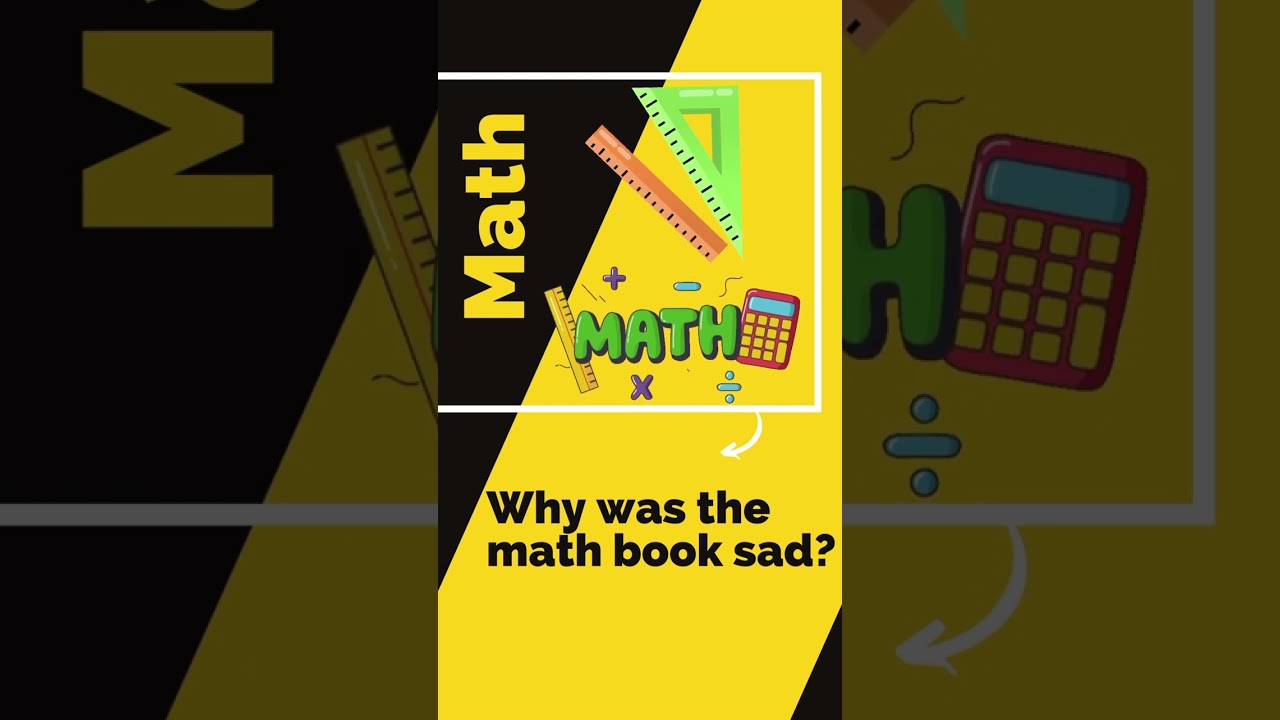
Funny Joke 11
Why was the math book sad?
Have Fun~
📍📍歡迎收看《English Speaking系列》📍📍
Talking about different festivals
👉https://youtu.be/7XWE_QB0qEk
Introduce your school
👉https://www.youtube.com/watch?v=DPfvjdEI7Dw
Back to school
👉https://www.youtube.com/watch?v=NSv5QyPmhpw
Good manners_actions
👉https://youtu.be/_Swu0JtZke0
Good manners
👉https://www.youtube.com/watch?v=HGME2UCt6-M&t=29s
Talking about daily routines
👉https://youtu.be/Np8mJ1uw8c8
📍📍歡迎收看《Grammar系列》📍📍
Lesson4_common mistakes
👉https://youtu.be/A7Yz6eEcYPs
Lesson3_irregular verbs_part2
👉https://youtu.be/vE6AnyrYDZQ
Lesson2_irregular verbs_part 1
👉https://youtu.be/C_p_r053MeQ
Lesson1_Opposite words
👉https://youtu.be/ftz3u46E0Zo
📍📍歡迎收看《Cooking系列》📍📍
Make fresh juice
👉https://www.youtube.com/watch?v=VFOo2RW_qoI
📍📍歡迎收看《Shorts系列》📍📍
Funny jokes 5
👉https://youtube.com/shorts/7Rq0v77lq3Q
Funny jokes 3
👉https://youtube.com/shorts/VJe4DCE9lLs
Funny joke 2
👉https://youtube.com/shorts/2ouEf37QtdQ
Funny joke 1
👉https://youtube.com/shorts/OJ2-YEfl2uw
Tongue twister_birdie vs turdie vs pie
👉https://youtube.com/shorts/yvOv4EVm6Xc
Tongue twister_scream vs ice cream
👉https://youtube.com/shorts/KBi79AOOPow
Tongue twister_fuzzy vs wuzzy
👉https://youtube.com/shorts/pwGPW_cWdxc
Tongue twister_whether vs weather
👉https://youtube.com/shorts/_3yjqCC4ASA
Read with me_Irregular verbs Part A
👉https://youtube.com/shorts/OfA0FlrxVy8
Read with me_Irregular verbs Part B
👉https://youtube.com/shorts/GV9iXpKMUAk
📍📍歡迎收看《Fun Games系列》📍📍
Make a guess
👉https://youtu.be/J0E2LF9_chU
Quiz Time
👉https://youtu.be/M4JrGzedjH0
Quiz Time
👉https://youtu.be/k7cTb77sh1Q
Quiz Time
👉https://www.youtube.com/watch?v=QGwhG4Mk_Ow&t=5s
Quiz Time
👉https://www.youtube.com/watch?v=xDUJPNRh3mA
📍📍歡迎收看《Basic conversation系列》📍📍
Basic conversation Lesson 9_How can I help you
👉https://youtu.be/6Nx1dXLeQMU
Basic conversation Lesson 8_Talking about your best friend
👉https://youtu.be/NknxeVxhP7A
Basic conversation Fun Lesson_Different languages
👉https://youtu.be/mCJPRD7pahw
Basic conversation Lesson 7_Apply for a library card and borrow books
👉https://www.youtube.com/watch?v=5XCmL9clkQY
Basic conversation Lesson 6_Ordering food
👉https://youtu.be/xaJKiHn6vuc
Basic conversation Lesson 5_Visiting friends
👉https://youtu.be/5TkeC8iirVA
Basic conversation Lesson 4_Making phone calls
👉https://youtu.be/B2CUxLSK5CU
Basic conversation Lesson 3_Types of weather
👉https://youtu.be/ivyo-t50qnw
Basic conversation Lesson 2_Days in a week
👉https://youtu.be/fAtrVak5qLo
Basic conversation Lesson 1_Greetings
👉https://youtu.be/hl_foOF6EjY
📍📍歡迎收看其他《Vocabulary詞匯系列》📍📍
Animals on land_陸地動物
👉https://youtu.be/XxZXjGkJkCQ
Animals in the sea_海洋動物
👉https://youtu.be/gN7GsS6cCeg
Parts of the body_身體部份名稱
👉https://youtu.be/GviCG650sng
Theme Park facilities_主題公園設施
👉https://youtu.be/RiP4etv1ANs
Famous Landmarks_國家名勝地標名稱
👉https://youtu.be/-_rRauEiDic
Colour_顏色
👉Part 2https://youtu.be/78xUTO1My_E
Furniture in the living room_客廳內傢俱名稱
👉https://www.youtube.com/watch?v=smN7hHwHL1g
2D shapes_平面形狀的名稱
👉https://www.youtube.com/watch?v=P4wT5wmqIRY
Jobs_職業名稱
👉https://www.youtube.com/watch?v=NYDTE...
Hairstyle_不同髮型的英文名稱
👉https://www.youtube.com/watch?v=PU_BB2Kvj_w
Solar System_太陽系
👉https://www.youtube.com/watch?v=Qwwczge-_ks
Tableware_餐具名稱
👉https://www.youtube.com/watch?v=rm4FNlRQZxE
Hats_帽子的名稱
👉https://www.youtube.com/watch?v=Pl3g8JgXeGc
Egg_蛋的不同煮法名稱
👉https://www.youtube.com/watch?v=alwVK7zoplc
National Flags_國家及國旗
👉https://youtu.be/tBwHd6XHfE0
The 12 Chinese Zodiac_12生肖
👉https://youtu.be/ii8djvnF-pk
Fruit_水果名稱
👉https://youtu.be/ozwI9sk-bo4
Stationery_文具名稱
👉https://youtu.be/jsjwHTaWfkg
Colour_顏色 Part 1
👉https://youtu.be/AiiGKUEuWx4
📍📍歡迎收看《停課不停學系列》 📍📍
Number 1-10
👉https://youtu.be/wVn_0fY5i1o
Fruit
👉https://youtu.be/C3jy63nGhgA
Transportation in HK
👉https://youtu.be/5qQX0ymwwqo
Vegetables
👉https://m.youtube.com/watch?v=iu1OnlmqRI4
Sports
👉https://youtu.be/eF_Dv6owlM8
Relaxing activities
👉https://www.youtube.com/watch?v=ROv7OlyXe0A
📍📍歡迎收看《Writing a composition系列》 📍📍
👉School Picnic Day
https://youtu.be/GNXyS84JrQo
At the beach
👉https://www.youtube.com/watch?v=WcERiNMpb9s
📍📍歡迎收看《小一叩門面試》系列 📍📍
👉School Interview_Part 1:Talking about yourself
https://www.youtube.com/watch?v=wWTwr2o4_uo
👉小一叩門:不能不看題目背後的真正意義
https://m.youtube.com/watch?v=msqXn02v8tw
👉小一叩門:面試陷阱
https://m.youtube.com/watch?v=OrTx4B_cnkw

Here are other videos about Jobs. 還有其他有關「職業名稱」的影片:
Jobs | Vocabulary|https://youtu.be/NYDTEtmwwoE
-----------------------------------------------------------------------------------
Please SUBSCRIBE to our channel, LIKE, and SHARE to encourage us to share more useful and interesting knowledge.
請訂閱我們的頻道、點讚、分享,鼓勵我們分享更多有用又有趣的知識。
-----------------------------------------------------------------------------------
Welcome to watch our videos
歡迎觀看我們所創作的的其他影片
1)Basic Conversation 會話
https://www.youtube.com/playli....st?list=PLPoPxSDq_eP
2) Grammar 語法
https://www.youtube.com/playli....st?list=PLPoPxSDq_eP
3)English Speaking
https://www.youtube.com/playli....st?list=PLPoPxSDq_eP
4)Funny Jokes 笑話
https://www.youtube.com/playli....st?list=PLPoPxSDq_eP
5)Vocabulary 詞彙
https://www.youtube.com/playli....st?list=PLPoPxSDq_eP
6)English Idioms 英語成語
https://www.youtube.com/playli....st?list=PLPoPxSDq_eP
7)Revision Exercise 重温練習
https://www.youtube.com/playli....st?list=PLPoPxSDq_eP
8)Fun Games 趣遊戲味
https://www.youtube.com/playli....st?list=PLPoPxSDq_eP
9) Tongue Twister 繞口令
https://www.youtube.com/playli....st?list=PLPoPxSDq_eP
10)Writing a composition 作文
https://www.youtube.com/playli....st?list=PLPoPxSDq_eP

Here are some other videos talking about routine that you may be interested in.
Daily Routine | English Speaking|https://youtu.be/Np8mJ1uw8c8
Daily routines of a housewife|English Speaking | https://youtu.be/fxVWykl7JKQ
-----------------------------------------------------------------------------------
Please SUBSCRIBE to our channel, LIKE, and SHARE to encourage us to share more useful and interesting knowledge.
請訂閱我們的頻道、點讚、分享,鼓勵我們分享更多有用又有趣的知識。
-----------------------------------------------------------------------------------
Welcome to watch our videos
歡迎觀看我們所創作的的其他影片
1)Basic Conversation 會話
https://www.youtube.com/playli....st?list=PLPoPxSDq_eP
2) Grammar 語法
https://www.youtube.com/playli....st?list=PLPoPxSDq_eP
3)English Speaking
https://www.youtube.com/playli....st?list=PLPoPxSDq_eP
4)Funny Jokes 笑話
https://www.youtube.com/playli....st?list=PLPoPxSDq_eP
5)Vocabulary 詞彙
https://www.youtube.com/playli....st?list=PLPoPxSDq_eP
6)English Idioms 英語成語
https://www.youtube.com/playli....st?list=PLPoPxSDq_eP
7)Revision Exercise 重温練習
https://www.youtube.com/playli....st?list=PLPoPxSDq_eP
8)Fun Games 趣遊戲味
https://www.youtube.com/playli....st?list=PLPoPxSDq_eP
9) Tongue Twister 繞口令
https://www.youtube.com/playli....st?list=PLPoPxSDq_eP
10)Writing a composition 作文
https://www.youtube.com/playli....st?list=PLPoPxSDq_eP

Here is another video talking about 3 easy tips of tidying up.
以下是一段關影片是給小孩的簡單整理術:
3 Easy Tidying Up Tips | Basic Conversation|https://youtu.be/GoGC6Z6Uwrs
3 Easy Tidying Up Tips | 給小孩的簡單整理術|https://youtube.com/shorts/rQg_4FLhIk8
-----------------------------------------------------------------------------------
Please SUBSCRIBE to our channel, LIKE, and SHARE to encourage us to share more useful and interesting knowledge.
請訂閱我們的頻道、點讚、分享,鼓勵我們分享更多有用又有趣的知識。
-----------------------------------------------------------------------------------
Welcome to watch our videos
歡迎觀看我們所創作的的其他影片
1)Basic Conversation 會話
https://www.youtube.com/playli....st?list=PLPoPxSDq_eP
2) Grammar 語法
https://www.youtube.com/playli....st?list=PLPoPxSDq_eP
3)English Speaking
https://www.youtube.com/playli....st?list=PLPoPxSDq_eP
4)Funny Jokes 笑話
https://www.youtube.com/playli....st?list=PLPoPxSDq_eP
5)Vocabulary 詞彙
https://www.youtube.com/playli....st?list=PLPoPxSDq_eP
6)English Idioms 英語成語
https://www.youtube.com/playli....st?list=PLPoPxSDq_eP
7)Revision Exercise 重温練習
https://www.youtube.com/playli....st?list=PLPoPxSDq_eP
8)Fun Games 趣遊戲味
https://www.youtube.com/playli....st?list=PLPoPxSDq_eP
9) Tongue Twister 繞口令
https://www.youtube.com/playli....st?list=PLPoPxSDq_eP
10)Writing a composition 作文
https://www.youtube.com/playli....st?list=PLPoPxSDq_eP

-----------------------------------------------------------------------------------
Please SUBSCRIBE to our channel, LIKE, and SHARE to encourage us to share more useful and interesting knowledge.
請訂閱我們的頻道、點讚、分享,鼓勵我們分享更多有用又有趣的知識。
-----------------------------------------------------------------------------------
📍📍Welcome to watch our videos📍📍
歡迎觀看我們所創作的的其他影片
1)Basic Conversation 會話
https://www.youtube.com/playli....st?list=PLPoPxSDq_eP
2) Grammar 語法
https://www.youtube.com/playli....st?list=PLPoPxSDq_eP
3)English Speaking
https://www.youtube.com/playli....st?list=PLPoPxSDq_eP
4)Funny Jokes 笑話
https://www.youtube.com/playli....st?list=PLPoPxSDq_eP
5)Vocabulary 詞彙
https://www.youtube.com/playli....st?list=PLPoPxSDq_eP
6)English Idioms 英語成語
https://www.youtube.com/playli....st?list=PLPoPxSDq_eP
7)Revision Exercise 重温練習
https://www.youtube.com/playli....st?list=PLPoPxSDq_eP
8)Fun Games 趣遊戲味
https://www.youtube.com/playli....st?list=PLPoPxSDq_eP
9) Tongue Twister 繞口令
https://www.youtube.com/playli....st?list=PLPoPxSDq_eP
10)Writing a composition 作文
https://www.youtube.com/playli....st?list=PLPoPxSDq_eP

📍📍歡迎收看《English Speaking系列》📍📍
Talking about different festivals
👉https://youtu.be/7XWE_QB0qEk
Introduce your school
👉https://www.youtube.com/watch?v=DPfvjdEI7Dw
Back to school
👉https://www.youtube.com/watch?v=NSv5QyPmhpw
Good manners_actions
👉https://youtu.be/_Swu0JtZke0
Good manners
👉https://www.youtube.com/watch?v=HGME2UCt6-M&t=29s
Talking about daily routines
👉https://youtu.be/Np8mJ1uw8c8
📍📍歡迎收看《Grammar系列》📍📍
Lesson4_common mistakes
👉https://youtu.be/A7Yz6eEcYPs
Lesson3_irregular verbs_part2
👉https://youtu.be/vE6AnyrYDZQ
Lesson2_irregular verbs_part 1
👉https://youtu.be/C_p_r053MeQ
Lesson1_Opposite words
👉https://youtu.be/ftz3u46E0Zo
📍📍歡迎收看《Cooking系列》📍📍
Make fresh juice
👉https://www.youtube.com/watch?v=VFOo2RW_qoI
📍📍歡迎收看《Shorts系列》📍📍
Funny jokes 5
👉https://youtube.com/shorts/7Rq0v77lq3Q
Funny jokes 3
👉https://youtube.com/shorts/VJe4DCE9lLs
Funny joke 2
👉https://youtube.com/shorts/2ouEf37QtdQ
Funny joke 1
👉https://youtube.com/shorts/OJ2-YEfl2uw
Tongue twister_birdie vs turdie vs pie
👉https://youtube.com/shorts/yvOv4EVm6Xc
Tongue twister_scream vs ice cream
👉https://youtube.com/shorts/KBi79AOOPow
Tongue twister_fuzzy vs wuzzy
👉https://youtube.com/shorts/pwGPW_cWdxc
Tongue twister_whether vs weather
👉https://youtube.com/shorts/_3yjqCC4ASA
Read with me_Irregular verbs Part A
👉https://youtube.com/shorts/OfA0FlrxVy8
Read with me_Irregular verbs Part B
👉https://youtube.com/shorts/GV9iXpKMUAk
📍📍歡迎收看《Fun Games系列》📍📍
Make a guess
👉https://youtu.be/J0E2LF9_chU
Quiz Time
👉https://youtu.be/M4JrGzedjH0
Quiz Time
👉https://youtu.be/k7cTb77sh1Q
Quiz Time
👉https://www.youtube.com/watch?v=QGwhG4Mk_Ow&t=5s
Quiz Time
👉https://www.youtube.com/watch?v=xDUJPNRh3mA
📍📍歡迎收看《Basic conversation系列》📍📍
Basic conversation Lesson 9_How can I help you
👉https://youtu.be/6Nx1dXLeQMU
Basic conversation Lesson 8_Talking about your best friend
👉https://youtu.be/NknxeVxhP7A
Basic conversation Fun Lesson_Different languages
👉https://youtu.be/mCJPRD7pahw
Basic conversation Lesson 7_Apply for a library card and borrow books
👉https://www.youtube.com/watch?v=5XCmL9clkQY
Basic conversation Lesson 6_Ordering food
👉https://youtu.be/xaJKiHn6vuc
Basic conversation Lesson 5_Visiting friends
👉https://youtu.be/5TkeC8iirVA
Basic conversation Lesson 4_Making phone calls
👉https://youtu.be/B2CUxLSK5CU
Basic conversation Lesson 3_Types of weather
👉https://youtu.be/ivyo-t50qnw
Basic conversation Lesson 2_Days in a week
👉https://youtu.be/fAtrVak5qLo
Basic conversation Lesson 1_Greetings
👉https://youtu.be/hl_foOF6EjY
📍📍歡迎收看其他《Vocabulary詞匯系列》📍📍
Animals on land_陸地動物
👉https://youtu.be/XxZXjGkJkCQ
Animals in the sea_海洋動物
👉https://youtu.be/gN7GsS6cCeg
Parts of the body_身體部份名稱
👉https://youtu.be/GviCG650sng
Theme Park facilities_主題公園設施
👉https://youtu.be/RiP4etv1ANs
Famous Landmarks_國家名勝地標名稱
👉https://youtu.be/-_rRauEiDic
Colour_顏色
👉Part 2https://youtu.be/78xUTO1My_E
Furniture in the living room_客廳內傢俱名稱
👉https://www.youtube.com/watch?v=smN7hHwHL1g
2D shapes_平面形狀的名稱
👉https://www.youtube.com/watch?v=P4wT5wmqIRY
Jobs_職業名稱
👉https://www.youtube.com/watch?v=NYDTE...
Hairstyle_不同髮型的英文名稱
👉https://www.youtube.com/watch?v=PU_BB2Kvj_w
Solar System_太陽系
👉https://www.youtube.com/watch?v=Qwwczge-_ks
Tableware_餐具名稱
👉https://www.youtube.com/watch?v=rm4FNlRQZxE
Hats_帽子的名稱
👉https://www.youtube.com/watch?v=Pl3g8JgXeGc
Egg_蛋的不同煮法名稱
👉https://www.youtube.com/watch?v=alwVK7zoplc
National Flags_國家及國旗
👉https://youtu.be/tBwHd6XHfE0
The 12 Chinese Zodiac_12生肖
👉https://youtu.be/ii8djvnF-pk
Fruit_水果名稱
👉https://youtu.be/ozwI9sk-bo4
Stationery_文具名稱
👉https://youtu.be/jsjwHTaWfkg
Colour_顏色 Part 1
👉https://youtu.be/AiiGKUEuWx4
📍📍歡迎收看《停課不停學系列》 📍📍
Number 1-10
👉https://youtu.be/wVn_0fY5i1o
Fruit
👉https://youtu.be/C3jy63nGhgA
Transportation in HK
👉https://youtu.be/5qQX0ymwwqo
Vegetables
👉https://m.youtube.com/watch?v=iu1OnlmqRI4
Sports
👉https://youtu.be/eF_Dv6owlM8
Relaxing activities
👉https://www.youtube.com/watch?v=ROv7OlyXe0A
📍📍歡迎收看《Writing a composition系列》 📍📍
👉School Picnic Day
https://youtu.be/GNXyS84JrQo
At the beach
👉https://www.youtube.com/watch?v=WcERiNMpb9s
📍📍歡迎收看《小一叩門面試》系列 📍📍
👉School Interview_Part 1:Talking about yourself
https://www.youtube.com/watch?v=wWTwr2o4_uo
👉小一叩門:不能不看題目背後的真正意義
https://m.youtube.com/watch?v=msqXn02v8tw
👉小一叩門:面試陷阱
https://m.youtube.com/watch?v=OrTx4B_cnkw
英語版本:
Day of What! What! What! | https://youtu.be/DDsQR0x6Xzk
-----------------------------------------------------------------------------------
Thanks for watching.
Please subscribe our channel.
To accelerate your learning, join our patreon @learnfast101 now.
-----------------------------------------------------------------------------------
Please SUBSCRIBE to our channel, LIKE, and SHARE to encourage us to share more useful and interesting knowledge.
請訂閱我們的頻道、點讚、分享,鼓勵我們分享更多有用又有趣的知識。
-----------------------------------------------------------------------------------
Welcome to watch our videos
歡迎觀看我們所創作的的其他影片
1)Basic Conversation 會話
https://www.youtube.com/playli....st?list=PLPoPxSDq_eP
2) Grammar 語法
https://www.youtube.com/playli....st?list=PLPoPxSDq_eP
3)English Speaking
https://www.youtube.com/playli....st?list=PLPoPxSDq_eP
4)Funny Jokes 笑話
https://www.youtube.com/playli....st?list=PLPoPxSDq_eP
5)Vocabulary 詞彙
https://www.youtube.com/playli....st?list=PLPoPxSDq_eP
6)English Idioms 英語成語
https://www.youtube.com/playli....st?list=PLPoPxSDq_eP
7)Revision Exercise 重温練習
https://www.youtube.com/playli....st?list=PLPoPxSDq_eP
8)Fun Games 趣遊戲味
https://www.youtube.com/playli....st?list=PLPoPxSDq_eP
9) Tongue Twister 繞口令
https://www.youtube.com/playli....st?list=PLPoPxSDq_eP
10)Writing a composition 作文
https://www.youtube.com/playli....st?list=PLPoPxSDq_eP