Latest videos

Want to make money and save time with AI? Get AI Coaching, Support & Courses 👉 https://www.skool.com/ai-profit-lab-7462/about
Get the video notes + links to the tools → https://www.skool.com/ai-profit-lab-7462/about
Get a FREE AI Course + 1000 NEW AI Agents 👉 https://www.skool.com/ai-seo-w....ith-julian-goldie-15
Want to know how I make videos like these? Join the AI Profit Boardroom → https://www.skool.com/ai-profit-lab-7462/about
Get a FREE AI SEO Strategy Session: https://go.juliangoldie.com/st....rategy-session?utm=j
Turn your ideas into stunning visual mind maps, and take them one step further with interactive visuals.
In this video, I walk you through a simple workflow using NotebookLM and Google Gemini to transform basic mind maps into clean, structured, presentation-ready visuals or even interactive, explorable formats.
If you’ve been using NotebookLM for research or learning, you already know how powerful its mind maps are for structure, but they can still be fairly basic.
This workflow fixes that.
You’ll learn how to:
Take a NotebookLM mind map and turn it into a high-quality visual mind map
Use Gemini Canvas to create interactive mind maps
Improve clarity, layout, and hierarchy for better understanding
Create visuals that are perfect for studying, teaching, or presenting
This is especially useful if you’re working on:
Research projects
Studying complex topics
Creating content or presentations
Organising ideas visually
Prompts used in video:
https://docs.google.com/docume....nt/d/1FTF_WOcR8yEb65
Subscribe for more practical AI workflows:
www.youtube.com/@AIandTechforE....ducation?sub_confirm
AI mindmaps, notebooklm tutorial, google gemini ai, ai for research, ai for studying, mind mapping techniques, interactive mindmap, visual learning tools, ai workflows, study with ai, research productivity, ai tools for students, knowledge organization, digital note taking, ai visualization, learning strategies, productivity tools, ai content creation

I Made a Comic Book in Minutes Using AI (Free Workflow!)
👉 Gem: https://gemini.google.com/gem/....1iRTUYkYynXL9RdA2Z0M
👉 Keep up to date with the latest AI News, AI Tools and Ai Prompts: https://franklineh.com
🔥 Join the newsletter free. No spam. Ever.
Ever wanted to start a webcomic or storyboard a movie but felt held back because you "can't draw"? In this video, I break down a completely FREE workflow using the power of Google's NotebookLM and Gemini to turn your ideas into fully realized visual stories. This workflow unlocks the power of NotebookLM’s viral "Audio Overview" combined with Gemini’s new Veo 3.1 video generation to create professional, monetizable story clips for absolutely zero cost. In this video, you will master a copy-paste system to generate engaging scripts, realistic voiceovers, and cinematic visuals in minutes, giving you the unfair advantage to dominate Shorts and TikTok in 2026.
CHAPTERS:
00:00 - Intro
0:20 - Sample Story
1:55 - Future Series
2:20 - Using the Gem
6:15 - Using NotebookLM
8:20 - AI Flying Pigs Example
10:15 - Advanced Tips
11:16- The Important Stuff
━━━━━━━━━━ 🔗 SHOW LINKS ━━━━━━━━━━
👉 Gem: https://gemini.google.com/gem/....1iRTUYkYynXL9RdA2Z0M
👉 https://notebooklm.google.com/
━━━━━━━━ 💫 HELPFUL AI LINKS ━━━━━━━━
▸ Website: https://franklineh.com
▸ AI News: https://franklineh.com/news
▸ AI Tools List: https://franklineh.com/tools
▸ AI Prompts: https://franklineh.com/prompts
▸ AI Videos: https://franklineh.com/videos
━━━━━━━━━━ 🌐 STAY CONNECTED ━━━━━━━━━━
▸ YouTube: https://bit.ly/AI-videos
▸BSky: https://web-cdn.bsky.app/profi....le/franklinai.bsky.s
▸Reddit: https://www.reddit.com/r/FranklinAI/
▸Instagram: https://www.instagram.com/franklinehai
▸Threads: https://www.threads.com/@franklinehai
▸Facebook: https://www.facebook.com/FranklinEhi
▸Pinterest https://www.pinterest.com/franklinehyt/
▸Twitter: https://x.com/FranklinEh94224
━━━━━━━━━━ TAGS ━━━━━━━━━━
#AI #NotebookLM #Gemini2026 #Veo3 #AIStorytelling #FreeAITools #ContentAutomation #ViralShorts #GoogleAI #YouTubeGrowth #AIArt #NotebookLM #Gemini #AIComics #Webtoon #Storytelling #Tutorial #GenerativeAI #FreeAIToolshow to make ai story videos free, notebooklm audio overview tutorial, gemini veo 3 video generation, google gemini 3 pro features, free text to video ai 2026, create viral shorts with ai, notebooklm storytelling workflow, automated youtube channel ideas, best free ai tools for creators, generate ai video from text google, nano banana image model, veos 3.1 tutorial, ai narrative video maker, AI, Artificial Intelligence, NotebookLM, Gemini, Google Gemini, Veo 3, Gemini 3 Pro, AI Stories, Text to Video, AI Video Generator, Free AI Tools, Viral Shorts, YouTube Automation, Content Creation, Storytelling AI, NotebookLM Audio, Pixel 10 Pro AI, Nano Banana, Veo 3.1, Make Money with AI, [Your Channel Name], AI News 2026, Best AI Video Generator, Google AI

🎁 Mon nouveau guide gratuit : https://elliottpierret.com/guide-gratuit
🌟 Ma Masterclass IA : https://bit.ly/IA-master
Gemini 2.5 et NotebookLM ont eu des mise à jour et sont devenus le DUO IA Ultime ! Dans cette vidéo je vais vous présenter différentes utilisations de ce duo pour en tirer un maximum de bénéfices. En analysant des données dans NotebookLM et en les utilisant dans gemini, il est désormais possibles de créer des choses incroyables.
⌚ LES TEMPS FORTS DE CETTE VIDEO :
00:00 : Gemini & NotebookLM, le duo ultime !
00:35 : Recherche et visualisation de données
04:20 : Génération de formations et tutoriels
05:54 : Création d'animations vocales personnalisées
08:55 : Mes ressources pour apprendre l'IA !
10:14 : Conception d'un prototype
12:02 : Création de contenu web optimisé
13:45 : Conclusion
LES SOURCES DE LA VIDEO :
- Accéder à Gemini : https://gemini.google.com/
- Accéder à NotebookLM : https://notebooklm.google.com/
👥 RESTONS CONNECTES :
- Ma communauté : https://bit.ly/Skoolelliott
- LinkedIn : https://www.linkedin.com/in/elliottpierret/
#AI #notebooklm #gemini #google

NotebookLM Mind Maps Are Bad — Gemini Finally Fixes Them | NotebookLM Mind Maps Need Help — Gemini Delivers It
Try GenPPT Ai for FREE:- Try for FREE:- https://genppt.ai?atp=Gurrutech
About this Video:-
Are NotebookLM mind maps really useful, or are they falling short? In this video, I break down the biggest problems with NotebookLM mind maps and show how Gemini offers a better, smarter solution. If you're interested in AI productivity tools, mind mapping, note-taking, and workflow optimization, this comparison will help you decide which tool works best for research, learning, and content creation.
Prompt:
1st:
Transform the visual data in this image into a structured conceptual map. I need a clear breakdown of headings and subheadings that flow logically. To make the map intuitive, pair each node with a relevant visual metaphor. Beneath each heading, include a 'Micro-Brief'—a single, punchy line that justifies its placement in the hierarchy and explains its significance to the overall theme.format should be 16:9
2nd:
create a mind map on "foundation of modern ai". I need a clear breakdown of headings and subheadings that flow logically. To make the map intuitive, pair each node with a relevant visual metaphor. Beneath each heading, include a 'Micro-Brief'—a single, punchy line that justifies its placement in the hierarchy and explains its significance to the overall theme.format should be 16:9
Contact Us:-
Business Email - gurrutechsolutions@gmail.com
Contact us via WhatsApp#: +923555183536
Follow Us:-
👉https://www.facebook.com/gurrutechsolutions/
👉https://www.linkedin.com/in/pervaiz-durrani/
👉https://www.instagram.com/gurr....utechsolutions?igsh=
👉https://www.tiktok.com/@gurrutechsolutions2?_r=1&_t=ZS-93zuKG1Sk0j
We Provide the Following Services:
~Ai Automation Experts
~n8n Workflow Experts
~AI Course Generation
~YouTube Automation
~YouTube Manager
~Educational Content Creation
~AI tools Consultancy
#notebooklm #gemini #mindmaps #freeaitools #bestai2026 #freeaitools #gurrutechsolutions

Want to make money and save time with AI? Get AI Coaching, Support & Courses 👉 https://juliangoldieai.com/07L1kg
Get a FREE AI Course + 1000 NEW AI Agents 👉 https://juliangoldieai.com/5iUeBR
Want to know how I make videos like these? Join the AI Profit Boardroom → https://juliangoldieai.com/07L1kg
NotebookLM & Gemini Integration: The Ultimate AI Game Changer!
Discover how the massive NotebookLM and Gemini integration transforms your business workflow by centralizing your entire knowledge base. Learn how to use your own research, notes, and data to create high-converting content and make data-driven decisions with ease.
00:00 - Intro: NotebookLM's Massive Upgrade
00:36 - Gemini & NotebookLM Integration Explained
01:05 - Real-World Business Use Cases
02:51 - Research, Reports & Course Creation
03:53 - Mastering Follow-up Questions
04:41 - 5 Tips for Better AI Results
05:44 - Technical Specs & Rollout Info
07:33 - Outro & How to Scale with AI

NEWEST AMZN DEALS HERE!➡️ https://amzn.to/4tWiKTa
====================================================
Check out current AMZN prices! ➡️https://amzn.to/47dc1uj (CANADA ONLY)
====================================================
Support the products we review!:➡️ https://amzn.to/4cPaFJP (UK ONLY)
==================================================================== Support the products we review!: https://amzn.to/4cPaFJP
==================================================== NotebookLM vs Gemini — Your Personal Thinking Partner! I Tried So You Don’t Have To!
In this video, we’re comparing NotebookLM and Gemini to see which one truly acts as your smartest personal thinking partner. 🧠💬
We’ll dive into how NotebookLM uses Google’s AI for research organization and note synthesis, while Gemini brings conversational power and data access into one assistant.
Pros & Cons: Discover which tool offers better reasoning, integration, and reliability for brainstorming, studying, or creative work.
Who Wins? By the end, you’ll know which AI companion actually helps you think, write, and create smarter — without lifting a finger.
👇 Don’t forget to like, comment, and subscribe! Which AI tool do you trust more — NotebookLM or Gemini?
#NotebookLM #GeminiAI #AIProductivity #GoogleAI #NoteTakingApp
Business Inquries Only: theguideinquiries@gmail.com
Disclaimer: All Content Is Used For Educational Purposes Only, This video is for informational and entertainment purposes only and does not constitute financial advice. I am not a financial advisor. The content is based on personal opinion and experience. Always do your own research before using any financial platform, product, or service. Your decisions are your responsibility, and I am not liable for any losses incurred.
Neste vídeo eu mostro como conectar o NotebookLM no Gemini e transformar seus documentos de pesquisa num estrategista de produto completo. A integração é nova e muda completamente como você trabalha com dados e toma decisões.
🔥 LANÇOU Conheça a Formação Agentes de IA: https://app.horadecodar.com.br..../lp/formacao-agentes
✅ Hospedagem para n8n que eu indico: https://hostinger.com.br/matheusbattisti (use o cupom HORADECODAR para ter +10% de desconto)
📘 Guia Engenharia de Prompt: https://app.horadecodar.com.br..../ebookpages/guia-eng
O caso prático é o lançamento de um app de gestão financeira pra freelancers chamado FreelaPay. Tenho dois notebooks no NotebookLM: um com análise de mercado, concorrentes, dados do setor e tendências, e outro com entrevistas com freelancers, reviews de apps existentes, resultado de pesquisa com 50 respostas e mensagens de comunidades. São mais de 10 fontes de pesquisa separadas em dois notebooks.
Começo mostrando o NotebookLM pra quem não conhece: como funciona, como adicionar fontes e como conversar com seus documentos. Depois conecto os dois notebooks no Gemini em 3 cliques. É só clicar no + no campo de prompt, selecionar NotebookLM e escolher os notebooks. A partir daí o Gemini tem acesso a toda a pesquisa.
Na primeira demo peço pro Gemini cruzar a análise de concorrentes com o feedback real dos clientes e identificar as maiores lacunas do mercado. Ele cruza os dois notebooks e mostra exatamente de onde tirou cada insight, com citações das fontes originais. Na segunda demo peço a priorização de features pro MVP. O Gemini considera as lacunas que identificou, o ranking de features desejadas da pesquisa quantitativa, o que os concorrentes cobram e as reclamações mais comuns. Pra cada feature ele justifica com dados dos notebooks e indica se existe algo similar nos concorrentes.
Na terceira demo mostro o diferencial de ter os notebooks no Gemini ao invés de só no NotebookLM: a busca na web. Peço pra pesquisar concorrentes novos que não estão nos meus documentos, custo de aquisição de cliente pra fintechs no Brasil e regulamentações novas sobre MEI. O Gemini busca na web e já cruza com a pesquisa existente nos notebooks. Isso o NotebookLM sozinho não faz.
Depois crio um Gem personalizado chamado Estrategista FreelaPay. Um Gem é um assistente permanente com instruções customizadas e acesso aos notebooks como base de conhecimento. Configuro ele como estrategista de produto sênior especializado em SaaS e fintech pra freelancers, com instrução pra sempre citar fontes e buscar na web quando não tiver informação nos notebooks. Testo pedindo uma estratégia de pricing e ele responde com contexto completo do projeto sem eu precisar explicar nada.
No bônus peço pro Gem criar a estrutura de um pitch deck de 10 slides com dados reais da pesquisa citados em cada slide. Em 30 segundos monta o pitch inteiro pronto pra jogar num PowerPoint.
O combo funciona assim: NotebookLM é a memória, Gemini é o cérebro, Gems é a automação. E quando você adiciona um documento novo no NotebookLM, o Gem já atualiza sozinho sem precisar de reupload.
Isso não serve só pra lançar produto. Serve pra qualquer área onde você tem documentos e precisa tomar decisão: jurídico, investimento, pesquisa acadêmica, planejamento, estudo. A diferença é que você não está perguntando pra uma IA genérica, está perguntando pra uma IA que leu tudo que você leu e ainda busca o que você não leu.
Entre no nosso servidor de Discord e me siga nas redes:
🟣 Discord Hora de Codar: https://discord.gg/Veq4mvsWwk
🔴 Instagram: https://www.instagram.com/horadecodar/
🔷 Telegram: https://t.me/horadecodar
TIMESTAMPS
00:00 Gemini com NotebookLM é possível!
01:15 Como funciona a integração do NotebookLM com Gemini
04:40 Criando o projeto no NotebookLM
07:33 Integrando os projetos de NotebookLM no Gemini
11:55 Criando Gems no Gemini com NotebookLM como fonte
14:02 Conclusão sobre NotebookLM no Gemini

Découvrez l'outil IA gratuit avec Gemini 3, également connu sous le nom de NotebookLM, qui est réellement incroyable. Dans cette vidéo, nous allons explorer les capacités de cet outil de recherche avancée et découvrir comment il peut être utilisé pour améliorer votre productivité et vos compétences en recherche. Nous allons vous montrer comment utiliser NotebookLM pour effectuer des recherches approfondies, créer des mind maps, des slides et même des podcasts. Nous allons également discuter de l'intelligence artificielle et de son impact sur la recherche, ainsi que de la façon dont Google NotebookLM peut être utilisé pour améliorer vos compétences en recherche. Si vous souhaitez en savoir plus sur l'utilisation de NotebookLM et de l'intelligence artificielle pour améliorer votre travail, alors regardez cette vidéo jusqu'à la fin pour découvrir comment utiliser cet outil puissant. Nous allons vous fournir un tutoriel détaillé sur l'utilisation de NotebookLM, y compris comment créer des mind maps, des slides et des podcasts, ainsi que comment utiliser l'outil pour effectuer des recherches avancées. Nous allons également discuter de la façon dont l'intelligence artificielle peut être utilisée pour améliorer vos compétences en recherche et comment Google NotebookLM peut être utilisé pour prendre des notes et créer des présentations.
🔗 Rejoins la communauté IA & Business
🌐 https://parlonsia.teachizy.fr
📺 https://www.youtube.com/@IAExpliquee.x
📺 https://dailymotion.com/formation.ai87
📘 Facebook : https://bit.ly/4kabhuA
🐦 Twitter / X : https://x.com/ParlonsIAx
📩 Contact : formation.ai87@gmail.com
🎙️Podcast –https://open.spotify.com/show/....1ThhxveRkTiSGR09cZsr
✍ BLog: https://medium.com/@flma1349/
💃https://www.tiktok.com/@parlonsia
👉 inscrit toi ici : https://bit.ly/GEMINI_PROMO
------------
📩 IA a tester :
✍ Coder agent IA: https://bit.ly/Coder_agentiA
✍ Short AI: http://bit.ly/4lzE782
✍ SEO agent IA : https://urlr.me/P8AS5N
code rection 25% : PARLONSIA25
------------
⌚ Timeline Vidéo
0:00 — Intro : NotebookLM + Gemini : résumés, vidéos, mind maps & infographies (cas d’usage)
1:12 — Gratuit vs Pro : limites, quotas & avantages pour bien choisir
2:35 — Sécurité & Confidentialité : RAG privé, données non utilisées pour l’entraînement
4:10 — Importer des sources : PDF, Docs, Slides, URLs, YouTube, Sheets/images (nouveau)
6:50 — Audio Overviews : créer un podcast résumant vos documents
7:45 — Video Overviews : générer une vidéo pédagogique depuis un PDF (personnalisation)
9:10 — Mind Map & Infographie : organiser & visualiser vos idées (Studio)
11:55 — Workflow Express : NotebookLM + Gamma AI pour des slides pro
14:30 — Conclusion : NotebookLM vs modèles généralistes (ancrage sur vos sources)
FAQ – NotebookLM (optimisée)
❓ NotebookLM, c’est quoi ?
Un outil Google qui résume et organise vos propres sources (PDF, Docs, Slides, URLs, YouTube…) et génère notes, rapports et visuels à partir de vos documents.
❓ NotebookLM est-il gratuit ?
Oui, il existe une offre gratuite avec jusqu’à 100 notebooks, 50 sources par notebook et des quotas quotidiens de requêtes.
❓ Existe-t-il une version Pro payante ?
Oui, une version Pro augmente les limites et ajoute des fonctionnalités premium.
❓ Mes données servent-elles à entraîner l’IA ?
Non, vos données ne sont pas utilisées pour entraîner le modèle.
❓ Quels formats puis-je importer ?
PDF, texte/Markdown, Google Docs, Slides, URLs, vidéos YouTube, ainsi que Sheets, images, fichiers .docx et liens Drive.
❓ Quelle est la limite par source ?
Jusqu’à 500 000 mots ou 200 Mo par fichier importé.
❓ Comment générer une vidéo à partir de mes documents ?
Dans Studio, utilisez Video Overview pour créer et personnaliser une vidéo pédagogique à partir de vos fichiers.
❓ Puis-je créer des résumés audio type podcast ?
Oui, via Audio Overview dans Studio.
❓ NotebookLM propose-t-il des mind maps et des infographies ?
Oui, vous pouvez générer des mind maps et des rapports/infographies dans Studio.
❓ Qu’est-ce que Deep Research ?
Une recherche automatisée et sourcée qui génère plans et rapports à partir de vos questions et de vos sources.
❓ Peut-on analyser des images ou des données Sheets ?
Oui, NotebookLM peut interpréter des images et des fichiers Google Sheets importés.
❓ NotebookLM vs ChatGPT : quelle différence ?
NotebookLM répond directement à partir de vos sources et fournit des citations, ce qui réduit les hallucinations.
❓ Combien de sources par notebook ?
Jusqu’à 50 sources par notebook.
❓ Puis-je importer des vidéos YouTube ?
Oui, les URLs publiques YouTube peuvent être ajoutées comme sources.
❓ Où trouver l’aide officielle et les nouveautés ?
Dans le centre d’aide NotebookLM et sur le blog Google, où sont annoncées les mises à jour et nouvelles fonctionnalités.
Mots-clés : NotebookLM, tutoriel, Deep Research, Video Overviews, mind map, infographie, résumer PDF, RAG, étudiants, entreprise, Google AI.
Hashtags : #NotebookLM #GoogleAI #DeepResearch #VideoOverviews #MindMap

Você já perdeu horas preparando aulas e pensou: "Eu precisaria de um assistente"?
Talvez você já tenha um — e ainda não saiba usar direito.
Neste vídeo, eu te mostro como integrar NotebookLM, Google Docs e Gemini para transformar o Google em um verdadeiro assistente pedagógico, capaz de pesquisar, rascunhar e co-criar materiais com você. Produtividade em alta escala.
Você vai aprender:
*Como usar o NotebookLM como assistente de pesquisa para preparação de aulas
*Como carregar conteúdos e construir uma base de conhecimento personalizada
*Como configurar o Gemini Gems para atuar como coautor dos seus materiais
*Como usar o Google Workspace para organizar tarefas e ganhar tempo real
*Como parar de improvisar e começar a trabalhar com método e inteligência
A diferença entre o professor sobrecarregado e o professor produtivo não está na carga de trabalho — está nas ferramentas que ele escolhe dominar.
Inteligência Artificial aplicada à educação não é tendência futura — é vantagem competitiva agora.
Se você é professor, coordenador, gestor educacional ou criador de conteúdo didático, este vídeo vai mudar a forma como você trabalha.
=================================
RECOMENDADOS PARA VOCÊ
📙 Google NotebookLM passo a passo • https://youtu.be/uehcTmGJmnE
💣NotebookLM: crie mapas mentais e infográficos com IA • https://www.youtube.com/watch?v=QduvyLrU-UY
🎙Do texto ao podcast: explore a aba de áudios do Google NotebookLM • https://youtu.be/pwnOkJdr0bI
⚠️ Configurações avançadas do Google NotebookLM: deixe a IA com a sua cara • https://youtu.be/YADeSDOfVoQ
💻 Gemini 3 - É tudo isso mesmo? • https://youtu.be/77NyYCt69gU
📩 Minha newsletter com conteúdos exclusivos sobre IA aplicada e produtividade está no link abaixo.
📌 https://substack.com/@jeffersonbarbosa1
📩 Contato profissional para palestras, publicidade, cursos, aulas, dicas, sugestões e afins:
jeffersonfbarbosacontato@gmail.com
Interessado em aprofundar mais em Engenharia de Prompts, Gemini e NotebookLM? Segue o link para o nosso curso Conversação com IAs.
📌https://hotmart.com/pt-br/mark....etplace/produtos/cur
#NotebookLM #EngenhariaDePrompt #InteligenciaArtificial #NanoBananaPro #PromptEngineering #IAAplicada #Produtividade #IAparaCriadores #veo3
// SOBRE MIM
Eu me chamo Jefferson Barbosa. Sou gerente de projetos, cientista de dados, pesquisador e doutor em Ciência da Computação. Sempre em movimento.

Google added Gemini to Drive, Docs, and Sheets — but left out NotebookLM. Here's the workaround that connects your NotebookLM research directly into Google Drive.
Heads up, these updates may not be available worldwide yet. Just because I have access to them doesn't mean you will yet.
⚒️ Tools I Use Everyday:
🎙️ Wispr Flow (voice-to-text that actually cleans up your speech): https://ref.wisprflow.ai/l6qEejY
🧠 Kortex (the best Chrome extension for NotebookLM power users): https://kortex-notebooklm.com/ — Use code PAUL10 for 10% off
🔗 This video is not sponsored. Some product links are affiliate links which means if you buy something we'll receive a small commission.

Cada vez que abres Gemini tienes que volver a explicarle quién eres,
qué proyecto llevas entre manos y qué tono necesitas.
Google acaba de lanzar algo que cambia eso. Todavía no me ha llegado.
Pero necesitas saber qué es antes de que llegue.
NotebookLM y Gemini ya son lo mismo: un sistema de proyectos
con memoria real, instrucciones persistentes y hasta 100 fuentes por proyecto.
→ Qué son los Notebooks de Gemini y qué problema resuelven
→ Cómo funciona la memoria, las instrucciones y la fusión con NotebookLM
→ Cómo preparar tu estructura ahora, antes de que llegue a tu cuenta
00:00 El problema de la "amnesia" en la Inteligencia Artificial
00:22 La nueva actualización de Gemini y NotebookLM
01:13 Cuadernos con memoria dentro de Gemini
02:07 Casos de uso: Creación de proyectos específicos y bases de datos
03:08 Traer conversaciones de Gemini a NotebookLM (Audio e infografías)
03:36 Integración bidireccional: De NotebookLM a Gemini
04:04 Disponibilidad actual (Usuarios Ultra y Pro)
04:36 Por qué Google lanza esto ahora (La competencia con Claude)
05:04 Próximos pasos y flujos de trabajo en el canal
🔗 GUÍA DE NOTEBOOKS (gratis): https://diariovida.com/
🌐 diariovida.com
📩 Newsletter: https://diariovida.com💬 Telegram: https://t.me/noticiasia
#GeminiIA #NotebookLM #DiarioVidaIA
¿Para qué proyecto montarías tu primer notebook?
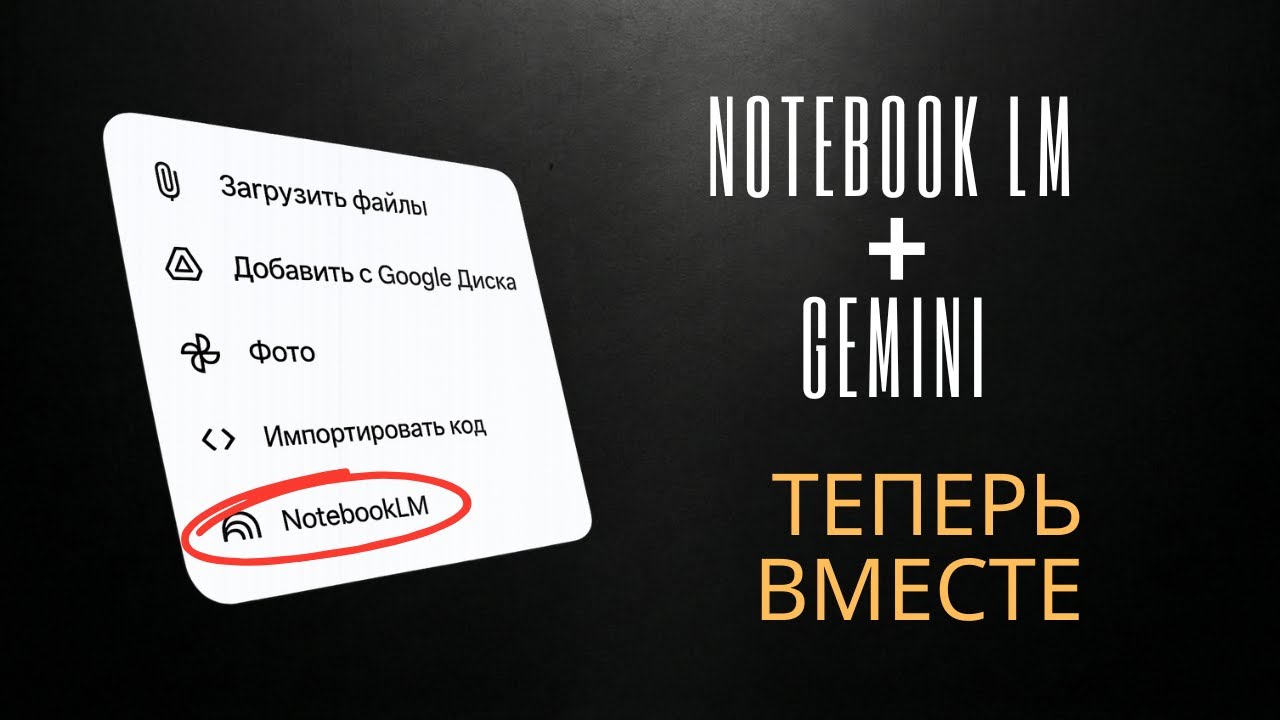
Пост в Telegram с промтом для скачивания и чеклистом:
https://t.me/BohomolovLab/23
Многие используют экосистему Google не на полную: файлы держат в NotebookLM, а за ответами бегают в Gemini. Из-за этого теряется контекст. Но Google наконец-то добавил нативную кнопку, которая объединяет эти инструменты.
По сути, мы подключаем «надежный жесткий диск» (NotebookLM) к «мощному процессору» (Gemini).
В этом видео на реальных примерах я показываю, как это работает на практике, а не в теории.
В видео:
00:00 — Google по-тихому добавил новую функцию в Источники
00:54 — В чем принципиальная разница между Gemini и NotebookLM
02:39 — Зачем их объединять? Убираем галлюцинации нейросети
04:36 — Тест 1: Изучаем Python (сухая выжимка vs понятное объяснение)
07:31 — Тест 2: Пишем сценарий для Shorts на основе характеристик камер
09:36 — Анализ конкурентов: как я вытащил структуру сценариев любимого блогера
13:19 — Главный лайфхак: переносим контекст из одного чата в другой
17:56 — Мой вердикт: геймчейнджер или нет?
🔗 Полезные ссылки:
Мой телеграмм: https://t.me/BohomolovLab
Видео про то как я перстал пользоваться закладками в браузере:
https://youtu.be/yJroprDnXxA?si=BW1rPXlV0ntmMXao

How to Create Slides in 30 Seconds Using NotebookLM + Gemini 3 (FREE AI Tools 2026) | Google's FREE AI Tools: NotebookLM + Gemini 3 Create Presentations in 30 Seconds! (2026)
Notebooklm Convert PDF to PPT Alternative with OCR (Tenorshare PDNob): https://bit.ly/4b5JNEK
About this Video:-
In this video, we demonstrate how to use NotebookLM and Gemini 3 to create stunning PowerPoint presentations in just 30 seconds!
We also showcase a powerful combination of these two AI tools that will revolutionize your presentation workflow. Whether you're a student, professional, or content creator, this game-changing method will save you hours of work.
📌 What You'll Learn:
✅ How to use NotebookLM for presentations
✅ How to use Gemini 3 for slide creation
✅ Powerful combination of NotebookLM + Gemini 3
✅ Create professional slides in seconds
⏱️ Timestamps:
0:00 - Introduction
0:43 - Gemini 3 Demo Demo
04:42 - NotebookLM Demo
09:47 - Combining Both Tools
14:08 - Final Thoughts
Follow Us:-
👉https://www.facebook.com/gurrutechsolutions/
👉https://www.linkedin.com/in/pervaiz-durrani/
Business Email - gurrutechsolutions@gmail.com
Contact us via WhatsApp#: +923555183536
We Provide the Following Services:
-Academic Writing Services
-Accounting and Bookkeeping Services
-Turnitin & Digital Tool Services
#powerpointpresenation #freeaitools #bestai2026 #aislides #notebooklm #gemini3 #gurrutechsolutions
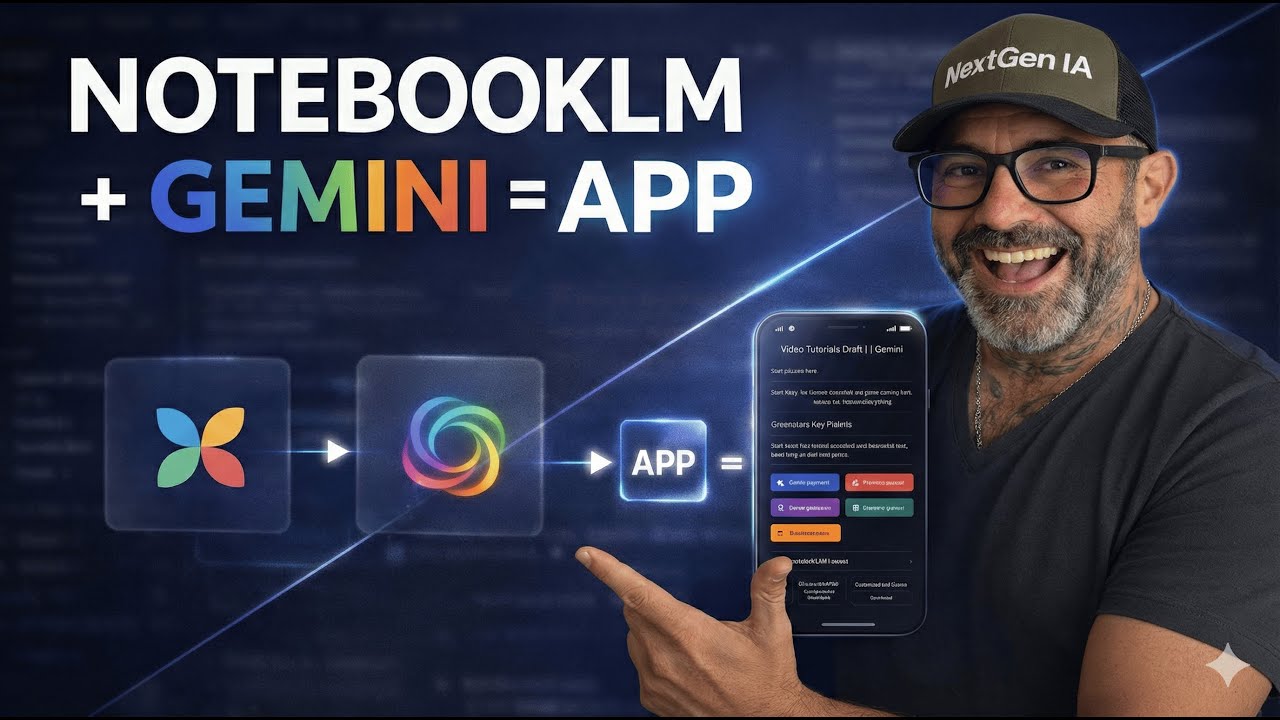
¿Sientes que no aprovechas al máximo el potencial de ChatGPT, Gemini y NotebookLM para crear tus propias herramientas de IA? ¿Te gustaría no solo usarlos, sino construir tu propia aplicación de inteligencia artificial sin programar usando Google AI Studio? ¡Has llegado al lugar correcto! En este tutorial práctico y directo, te enseñaré paso a paso a construir una aplicación de aprendizaje de IA totalmente funcional y desde cero.
Descubrirás el método exacto para combinar tres de las herramientas más potentes de Google en un flujo de trabajo imbatible:
🧠 Investiga y Consolida: Aprende a usar NotebookLM para recopilar y sintetizar toda la información sobre ChatGPT y Gemini.
🤖 Estructura con IA: Entrega los informes a Gemini para que genere un plan de acción y las instrucciones exactas para tu aplicación.
🚀 Construye y Lanza: Transforma esas instrucciones en una app funcional en Google AI Studio, sin escribir una sola línea de código.
Al final de este vídeo, no solo habrás aprendido a manejar estas plataformas a un nivel avanzado, sino que tendrás tu propia aplicación personalizada para dominar el ecosistema de la IA. ¡Prepárate para llevar tus habilidades al siguiente nivel!
ENLACES:
NotebookLM:
https://notebooklm.google/?hl=es
Gemini:
https://gemini.google.com/?hl=es-ES
Google AI Studio:
https://aistudio.google.com
Capítulos del vídeo:
00:00 - Introducción: El problema con las IAs y la solución (NotebookLM + Gemini).
00:50 - Inicio en NotebookLM: Creación de un cuaderno nuevo.
01:17 - Búsqueda de fuentes web: Instrucción para investigar sobre ChatGPT.
02:08 - Búsqueda de fuentes web: Instrucción para investigar sobre Gemini.
02:35 - Generación del informe detallado en el chat central y guardado como nota.
03:40 - Creación de informes específicos ("Haz tu propia creación") para cada IA.
04:27 - Generación del Mapa Mental para la arquitectura del ecosistema.
06:19 - Paso a Gemini: Subida de los documentos descargados de NotebookLM.
06:50 - Creación del prompt en Gemini para obtener las instrucciones de la App.
08:23 - Google AI Studio: Uso de la función "Build AI apps" y configuración.
09:14 - Generación y primera vista de la aplicación ("IA Master Mind Map").
10:06 - Navegación por el menú principal y prueba de laboratorios (OpenAI y Gemini).
12:28 - Exploración del módulo "Academia de Prompting".
13:45 - Pruebas técnicas con preguntas específicas (ej. Nano Banana).
14:55 - Refinamiento: Instrucciones al chat para corregir errores de memoria/alucinaciones.
15:35 - Resultado final de la App optimizada tras las correcciones.
16:30 - Conclusiones finales, consejos y despedida.
👇 RECURSOS Y PROMPTS 👇
Todos los prompts, instrucciones y documentos utilizados en el vídeo están disponibles para ti en el PRIMER COMENTARIO FIJADO.
🔔 ¡Únete a la comunidad! Si este vídeo te aporta valor, no olvides:
✅ Suscribirte al canal para más contenido sobre IA.
👍 Darle "Me Gusta" para apoyar nuestro trabajo.
🗣️ Dejar tus dudas y creaciones en los comentarios.
¿Tienes una idea o truco de IA? Comenta usando **#DavidxtGenIA y lo destaco en próximos vídeos.
🔔 Suscríbete para más contenido sobre IA:
https://www.youtube.com/channe....l/UCelyZ2MxgA1gZGytG
👉 Mi lista de reproducción:
https://www.youtube.com/@NextGen_IA_YT/playlists
📩 EMAIL COLABORACIONES:
nextgeniahub@gmail.com
hammer31_73@hotmail.com
#InteligenciaArtificial #NotebookLM #GoogleGemini #GoogleAIStudio #ChatGPT #PromptEngineering #NoCode #IA2026 #ProductividadIA

Self host n8n with Hostinger - http://hostinger.com/futurepedian8n
Use the promo code FUTUREPEDIA
More from Futurepedia:
👉 Join the fastest-growing AI education platform! Try it free and explore 20+ top-rated courses in AI: https://bit.ly/futurepediaSL
NotebookLM
https://notebooklm.google.com/
Summary
In this video, I'm giving you the complete NotebookLM masterclass—everything you need to go from beginner to expert. NotebookLM is hands down the most underrated AI tool out there, and most people have no idea what it's actually capable of. I'll walk you through the entire interface, show you how to build research notebooks with cited sources that eliminate hallucinations, demonstrate every Studio Panel feature (podcasts, infographics, slide decks, and more), reveal how to connect it all to Gemini for custom AI assistants, and share creative use cases that go way beyond just research and learning. Whether you're using it for work, personal projects, or just trying to learn something new, this guide will show you how to unlock the full power of NotebookLM.
Chapters
0:00 Intro
0:25 Create a notebook
2:38 YouTube strategist
3:45 Source analysis prompts
5:57 Important settings
7:21 Studio panel
9:56 Mind Map
10:17 Reports
11:04 Flashcards
11:22 Quiz
11:43 Infographic
13:22 Slide Deck
14:43 Data Table
15:43 Audio Overview
16:43 Interactive Mode
18:14 Video Overview
20:00 Deep Research
20:43 NotebookLM in Gemini
22:34 Mobile App
23:13 Other Use Cases
25:17 Pro Plan

Try MyPromptBuddy for Free: https://mypromptbuddy.ai/
This video walks you through all of Google Gemini’s new updates to NotebookLM, Google Stitch, Google Gemini 3 and more. If you want to get the most out of Google Gemini in 2026 this video is for you.
Need help automating your tasks? I’m here to help 👉 https://www.skool.com/ai-automation-school/about

🖥️ Download the free Marketer’s Guide to Google Gemini & NotebookLM: https://clickhubspot.com/7a0750
More from Futurepedia:
👉 Join the fastest-growing AI education platform! Try it free and explore 30+ top-rated courses in AI: https://bit.ly/futurepediaSL
Summary:
NotebookLM just added some of the biggest new features yet, many utilizing Nano Banana Pro to visualize your Notebooks in an incredible new way. They utilize Nano Banana Pro to create infographics and slideshows based on your sources to better visualize the information. It was also integrated into the video overviews for a big enhancement there. There are additional quality of life improvements, plus the ability to use Gemini Deep Research and automatically import all the sources. I also cover some lesser known features and pro tips throughout the video.
Chapters
0:00 Intro
0:22 What is NotebookLM?
0:54 Discover sources
1:20 Deep Research Source Discovery
2:26 Pro Tip: Refine sources and identify contradictions
4:26 Studio Panel
5:11 Infographics
8:38 Slide Deck
9:41 More infographic and slide deck use cases
11:54 Video Overview Upgrade
12:47 Chat save update
13:20 Configure Notebook
14:32 Detailed Slide Deck
15:38 Video Overview example
17:12 Futurepedia

Endlich Business-Ready: Nutze NotebookLM direkt in deinem Google Workspace mit Gemini! Schluss mit privaten Accounts und unsicheren Bastel-Lösungen. 👇
Du hast gefragt, Google hat geliefert. Lange Zeit mussten wir als Coaches, Trainer und VAs auf private Gmail-Konten ausweichen, um die genialen Funktionen von NotebookLM zu nutzen. Das war datenschutzrechtlich schwierig und unprofessionell.
In diesem Video zeige ich dir das massive Update, auf das wir in Deutschland gewartet haben: Die volle Integration von NotebookLM in Google Workspace.
In diesem Video erfährst du:
✅ Der Admin-Check: Wie du die Funktionen in deinem Workspace sofort freischaltest.
✅ Level 1 (Basis): Wie du im normalen Chat direkt auf deine Notebooks, SOPs und Strategien zugreifst.
✅ Level 2 (Profi): Wie du Gemini Gems (deine eigenen KI-Mitarbeiter) mit deinem NotebookLM-Wissen fütterst.
✅ Für VAs & Coaches: Warum dieser Workflow deinen Expertenstatus sichert und Zeit spart.
Erstelle dir dein "Second Brain", das sicher in deiner Firmenumgebung liegt und nicht halluziniert.
🚀 DER PROMPT AUS DEM VIDEO (Copy & Paste)
Nutze diesen Prompt im normalen Gemini-Chat (Level 1), um die Anleitung für deinen Gem zu erstellen:
" @[Dein-Notebook-Name] Analysiere meinen Schreibstil, meine Wortwahl, meine Kernwerte und die didaktische Struktur aus den hinterlegten Quellen. Erstelle basierend darauf eine präzise System-Instruktion (Persona-Prompt) für einen KI-Assistenten, der in genau dieser Rolle agieren soll."
DISCLAIMER: Dieses Video dient Bildungszwecken. Bitte prüfe die Datenschutzeinstellungen in deinem Google Workspace individuell oder konsultiere einen Experten für DSGVO-Fragen.
🛠️ MEINE TOOLS & RESSOURCEN (Hier Links zu deiner Website, Newsletter oder anderen Angeboten einfügen)
Teste WisprFlow einen Monat kostenfrei in der Pro-Version: https://wisprflow.ai/r?KIRSTEN26
Möchtest du direkt mit mir arbeiten? Hier sind deine Optionen:
Dein Business Shortcut für mehr Erfolg und Effizienz dank KI – https://sales.kirstenbiema.com..../zukunfts-check-ki--
KI-Business-Community – Lerne, wie du KI gewinnbringend in deinem Business einsetzen kannst. Zur Community: https://[a]www.kirstenbiema.com%2Fki-business-community[/a]
Meine Webseiten:
➡️ www.kirstenbiema.com
➡️ www.solopreneur-airevolution.com
➡️ www.meetfreedo.com
📧 Folge mir in Social Media
Facebook: https://www.facebook.com/kirstenbiema
LinkedIn: https://www.linkedin.com/in/kirstenbiema/
Instagram: https://www.instagram.com/ki.flow.now/
#GoogleNotebookLM #KITools #BusinessProduktivität #Solopreneur #KünstlicheIntelligenz #NotebookLMUpdate #Gemini #OfficeHacks
![Google Notebook LM Tutorial - [Become A Power User in 15 min]](https://i.ytimg.com/vi/UG0DP6nVnrc/maxresdefault.jpg)
In this video, I will show you how to use the new free Google Notebook LM platform with 13 unique tips.
Start here: https://notebooklm.google.com
🧠 The world's leading AI newsletter: https://neuralfrontier.beehiiv.com/subscribe
🏦 Form your LLC: https://santrelmedia.com/incfile
⏰ Double your productivity with this software: https://santrelmedia.com/Productivity
Follow us on Instagram:
Nate: https://www.instagram.com/nateobrienn/
Mike: https://www.instagram.com/mikeobrienn/
SUBSCRIBE: www.youtube.com/santrelmedia
DISCLAIMER: This video and description contains affiliate links, which means that if you click on one of the product links, I’ll receive a small commission. This helps support the channel and allows us to continue to make videos like this. Thank you for the support! Everything in this video is based on information we learned from online resources, our own experience, and books we have read. Please do your own research before making any important decisions. You and only you are responsible for any and all digital marketing decisions you make. Thank you for watching!
TIMESTAMPS:
0:00 What is NotebookLM?
0:40 Getting Started
1:56 Tip 12
2:41 Tip 11 (making a podcast)
3:50 Tip 10
5:29 Tip 9
6:48 Tip 8
7:25 Tip 7 (make a study guide)
8:30 Tip 6 (make a timeline)
9:20 Tip 5 (make a briefing doc)
9:58 Tip 4
10:29 Tip 3
11:00 Tip 2
11:11 WOAH! UPDATES FROM GOOGLE!!
11:53 Tip 1 (using NotebookLM to read journal entries)
12:38 A word of caution

NotebookLM + Gemini: Create Powerful AI Presentations in Minutes! | AI-Powered Presentations: NotebookLM + Gemini Workflow Revealed
Free Online PDF tools: https://pdfelement.go.link/dKqIK
About this Video:-
In this video, I’ll walk you through the most powerful AI workflow yet—showing you step-by-step how to leverage NotebookLM and Gemini to research, organize, and generate stunning PowerPoint presentations in record time.
Whether you’re a student, professional, or content creator, you’ll learn how to:
~Seamlessly gather and summarize information with NotebookLM
~Use Gemini’s advanced AI capabilities to brainstorm, outline, and design your slides
~Transform complex data and ideas into clear, engaging PowerPoint presentations
~Save hours on research and formatting with smart AI tools
By the end of this video, you’ll have all the tips and tricks you need to create professional, impactful presentations with ease.
Follow Us:-
👉https://www.facebook.com/gurrutechsolutions/
👉https://www.linkedin.com/in/pervaiz-durrani/
Business Email - gurrutechsolutions@gmail.com
Contact us via WhatsApp#: +923555183536
We Provide the Following Services:
-Academic Writing Services
-Accounting and Bookkeeping Services
-Turnitin & Digital Tool Services
#notebooklm #gemini #powerpointpresenation #aitools #bestai2025 #freeaitools

Most people use Gemini like a chat tool.
But when you combine **Gemini + Gems + NotebookLM** intentionally, it stops being a chatbot and becomes a system.
In this video, I show how to design a 3-layer AI workflow where:
- NotebookLM holds stable knowledge
- Gem holds thinking rules
- Gemini handles execution
Using a fictional product example, I walk through how to build a source-of-truth notebook, design a reusable Gem, and run multiple tasks without rebuilding context each time.
This is about reliability, not prompts.
Relevant Video:
🆕 Google AI Ecosystem Explained: How 40+ Google AI Products Connect: https://youtu.be/Uo3RMkuBTRs
3 Ways to Design Gemini Gems: https://youtu.be/cIH-iS0J0b4
10 Practical Gem Ideas for Everyday Work: https://youtu.be/irSKKXp3zx8
Master NotebookLM in 16 Minutes: https://youtu.be/5Tnc6hQDbvE
Gemini Deep Dive (Workspace + Visual features): https://youtu.be/aFG2es9M9VI
➡️ Subscribe for more AI thinking and product intelligence to build your AI brain.
00:00 Hook — From Chatting to Systems
00:39 The Three Thinking Layers
02:07 Two Design Principles
02:44 Set up Projects: NotebookLM & Gem
06: 58 Scenario 1 → Same notebook & gem + simple task
08:07 Scenario 2 → Same notebook & gem + enriched session
11:05 Scenario 3 →Two notebooks, same gem, expanded system
14:58 Final Thoughts

Download the “The AI Toolkit I Use Every Week” here 👉 https://clickhubspot.com/bb2356
Google NotebookLM has always been my favorite AI tool, and now it's become something much more powerful, more than just a simple AI research tool. We're talking presentation slides, infographics, videos, data tables… all from your research. In this video, I'll show you 7 powerful use cases of NotebookLM, from deep research to ready-to-share outputs that you shouldn’t miss!
📌 *TIMESTAMPS*
00:00 Why NotebookLM is Becoming Essential
00:35 Deep Research → Slide Deck
04:17 Custom AI Expert for Projects
07:05 Branded Infographics with Your Assets
09:15 Podcast-Style Learning
11:18 Training Package in One Notebook
13:47 Competitor Data → Exportable Tables
15:44 NotebookLM x Gemini Integration
17:42 Go Deeper: Build Content System with NotebookLM
⚡️ *WORKSHOP: Build Content System with NotebookLM*
https://community.graceleung.c....om/c/videos/build-a-
JOIN THE GROWTH COMMUNITY*
⚡️ *JOIN MY GROWTH COMMUNITY*
https://community.graceleung.com/
📥 *JOIN FREE MY DIGITAL GROWTH NEWSLETTER*
https://www.graceleung.com/newsletter/
🚀 *CONNECT WITH ME*
https://www.graceleung.com/connect/
👉 *WATCH THESE NEXT*
🎥 Gemini for Marketing
https://youtu.be/ZbeWyaWUq4M
🎥 30 FREE Things You won't believe Google AI Could Do (Gemini, NotebookLM, AI Studio, AI Mode, Opal)
https://youtu.be/2aHIb2vrkuQ
🎥 PLAYLIST: AI for MARKETERS
https://www.youtube.com/playli....st?list=PLgvqWBt14wo
If you like this video, subscribe for more videos like this! https://youtube.com/@graceleun....gyl?si=J_vzXh3ooLlus
👋 *WHO AM I*
I’m Grace, a Digital Growth Consultant & Educator who is fascinated by anything digital and growth related. I share everything about digital growth, AI for marketing, and personal growth!
☕️ *Connect with me on Social*
LinkedIn: https://www.linkedin.com/in/grace-leung-yl/
Instagram: https://www.instagram.com/graceleungyl
Twitter/X: https://twitter.com/graceleungyl

這次我要跟大家分享我自己實測超驚豔的AI簡報製作流程,用到的工具就是 Google Gemini + NotebookLM + Canva + NanoBanana Pro,超完整教學一次講給你聽!
我研發了一套叫做 RED AI極速簡報模組,簡單三步驟就能做出高質感又具一致性的視覺簡報:
🔎 R:Research 搜索與研究
💡 E:Extract 重點萃取
🎨 D:Design 視覺設計
不只教你如何自訂配色與圖標風格,還示範如何加入人物角色、漫畫風格,甚至能做出像七龍珠一樣有劇情的連續簡報頁面!
而且,錯字、版型問題怎麼辦?我們用 NanoBanana Pro 來做圖像級的修改,整個工作流程從生成到後製全部無痛完成!
這支影片不只是教你怎麼做簡報,而是教你如何讓AI成為你最強大的創作夥伴。
從今天開始,每個人都可以做出令人驚豔的簡報!
#AI簡報 #Gemini教學 #NotebookLM #Canva實用技巧 #NanoBananaPro
👇有興趣的快去看影片,讓你改變製作簡報的思維!

👩🏻🏫 Learn full-stack & AI with Scrimba - Start FREE and get 20% OFF Pro: https://scrimba.com/?via=UniverseofAIz
Most people use NotebookLM and Gemini separately — but connecting them creates something completely different. In this video I'm introducing the NotebookLM Gemini Agent: a persistent, grounded AI specialist built on your own knowledge base. I'll show you how it works and build one live.
🔗 NotebookLM: https://notebooklm.google.com
🔗 Gemini Gems: https://gemini.google.com
00:00 - Intro
00:28 - What a NotebookLM Gemini Agent is
03:38 - Step 1: Knowledge Base
5:29 - Step 2: Gemini Agent Creation
8:11 - Step 3: Testing It Out
11:26 - Outro
For hands-on demos, tools, workflows, and dev-focused content, check out World of AI, our channel dedicated to building with these models: @intheworldofai
🔗 My Links:
📩 Sponsor a Video or Feature Your Product: intheuniverseofaiz@gmail.com
🔥 Become a Patron (Private Discord): /worldofai
🧠 Follow me on Twitter: https://x.com/UniverseofAIz
🌐 Website: https://www.worldzofai.com
👩🏻🏫 Learn to code with Scrimba – from fullstack to AI https://scrimba.com/?via=UniverseofAIz (20% OFF)
🚨 Subscribe To The FREE AI Newsletter For Regular AI Updates: https://universe-of-ai.beehiiv.com/
NotebookLM,Gemini Agent,NotebookLM Gemini Agent,Gemini Gems,Google NotebookLM,Google Gemini,NotebookLM tutorial,Gemini Gems tutorial,NotebookLM Deep Research,AI agents,Google AI,AI workflow,AI productivity,AI tools 2026,artificial intelligence,Google AI tools,NotebookLM workflow,Gemini workflow,build AI agent,custom AI assistant,AI knowledge base,Google Gems,AI tutorial 2026,NotebookLM update,Gemini update
#notebooklm #aiagents #googleai #GeminiGems #aitools #aiworkflow #artificialintelligence #GeminiAgent