Latest videos

This finance video tutorial explains how to calculate the compound interest on an annual, quarterly, and monthly basis.
Logarithms - The Easy Way! https://www.youtube.com/watch?v=kqVpPSzkTYA
Log to Exponential Form:
https://www.youtube.com/watch?v=f0C1KL7GkqY
Change of Base Formula:
https://www.youtube.com/watch?v=FFm-zaFW_X4
Change of Base Log Problem:
https://www.youtube.com/watch?v=p7hD9VdXv9U
Properties of Logarithms:
https://www.youtube.com/watch?v=Jtv9Lnf7Zw8
____________________________________
Expanding Logarithmic Expressions:
https://www.youtube.com/watch?v=OIz-5MyJA3g
Condensing Logarithmic Expressions:
https://www.youtube.com/watch?v=luRrOlsB4cY
Natural Logarithms:
https://www.youtube.com/watch?v=daUlTsnCNRQ
Solving Exponential Equations:
https://www.youtube.com/watch?v=9tutJ5xrRwg
Exponential Equations - Quadratic Form:
https://www.youtube.com/watch?v=yNgmVu0R_T8
_______________________________________
Solving Logarithmic Equations:
https://www.youtube.com/watch?v=fnhFneOz6n8
Graphing Logarithmic Functions:
https://www.youtube.com/watch?v=-nptxS9rZNA
Graphing Exponential Functions:
https://www.youtube.com/watch?v=DASfP8KAyvs
Compound Interest Word Problems:
https://www.youtube.com/watch?v=Hn0eLcOSQGw
Logarithms Practice Problems:
https://www.youtube.com/watch?v=7DVbQKI600k
_______________________________________
Final Exams and Video Playlists:
https://www.video-tutor.net/
Full-Length Videos and Worksheets:
https://www.patreon.com/MathSc....ienceTutor/collectio
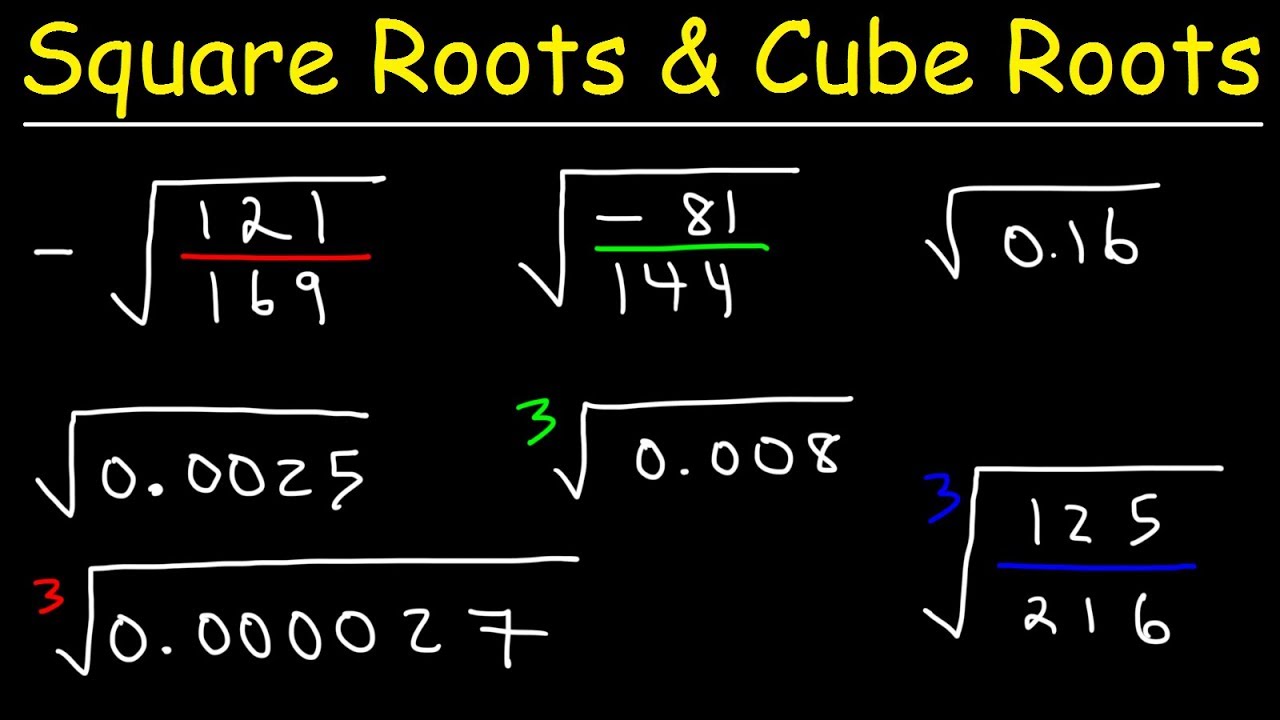
This algebra video tutorial provides a basic introduction into square roots and cube roots. It explains how to determine the square roots of negative numbers, and imaginary numbers. It also explains how to determine the cube root of positive and negative numbers as well. In addition, it mentions how to calculate the square root and cube root of certain decimal numbers. This algebra video tutorial contains plenty of examples and practice problems.
Square Roots and Cube Roots:
https://www.youtube.com/watch?v=IWzPle0KDPo
Simplifying Radical Expressions:
https://www.youtube.com/watch?v=U7AXF75rC00
Multiplying Radical Expressions:
https://www.youtube.com/watch?v=i0TMNeOwpSg
Adding & Subtracting Radicals:
https://www.youtube.com/watch?v=83wXAgwcWH0
Simplifying Cube Root Expressions:
https://www.youtube.com/watch?v=VdUNTsf14qs
__________________________________
Rationalizing The Denominator:
https://www.youtube.com/watch?v=5j8a75aHaSE
Multiplying Radicals With Different Indices:
https://www.youtube.com/watch?v=onOQMAcnj8U
How To Solve Radical Equations:
https://www.youtube.com/watch?v=0gicD4STzpg
Solving Equations With Cube Roots:
https://www.youtube.com/watch?v=mg8aS58vsN8
Solving Complex Radical Equations:
https://www.youtube.com/watch?v=laEeUSZr83s
____________________________________
How To Graph Radical Functions:
https://www.youtube.com/watch?v=8t9_IXFzH_M
Domain of Radical Functions:
https://www.youtube.com/watch?v=fOlon31vEU4
How To Graph Cube Root Functions:
https://www.youtube.com/watch?v=qxR6p_xDnho
Radical Expressions - Test Review:
https://www.youtube.com/watch?v=wOcc5EoOojE
____________________________________
Final Exams and Video Playlists:
https://www.video-tutor.net/
Full-Length Videos and Worksheets:
https://www.patreon.com/MathSc....ienceTutor/collectio
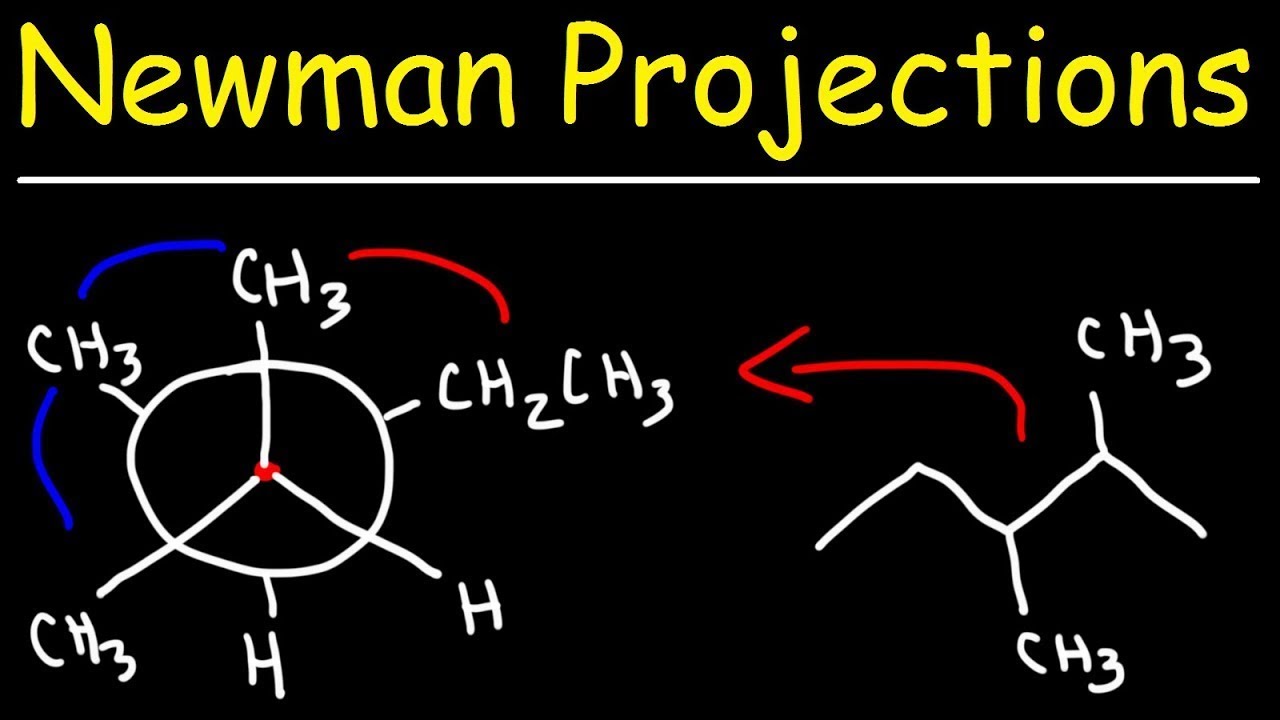
This organic chemistry video tutorial provides a basic introduction into newman projections. It explains how to draw the newman projections of ethane, butane, and 2,3-dimethylpentane. It explains how to draw the eclipsed and staggered conformations of ethane as well as the gauche and anti conformations of butane. It explains how to use conformational analysis to determine which conformation is most stable.
Access The Full 1 Hour Video:
https://www.patreon.com/MathScienceTutor
Direct Link to The Full Video:
https://bit.ly/3itPNy2
PDF Worksheet - 8 Practice Problems:
https://bit.ly/3X5l35t
Organic Chemistry PDF Worksheets:
https://www.video-tutor.net/orgo-chem.html
_______________________________________
Join The YouTube Membership Program:
https://bit.ly/46xaQTR
Full 1 Hour Video on YouTube:
https://www.youtube.com/watch?v=mXKkn8IghPU

This physics video tutorial provides a basic introduction into relative velocity problems in one dimension. It explains the concept of the frame of reference and how it's used to determine the relative velocity of an object with another regardless if the two items are traveling in the same direction or in the opposite direction. This video contains a few examples of car and train problems traveling in the same direction and in the opposite direction toward each other. It provides all of the formulas and equations needed to calculate the relative velocity.
Full 55 Minute Video:
https://www.patreon.com/MathScienceTutor
Direct Link to The Full Video:
https://bit.ly/3jTERKn
PDF Worksheet - 7 Questions:
https://bit.ly/3X23fYE
Physics PDF Worksheets:
https://www.video-tutor.net/ph....ysics-basic-introduc
______________________________
Join The Program:
https://bit.ly/46xaQTR
Full Video on YouTube:
https://www.youtube.com/watch?v=DuyWdHMeY5g
Relative Velocity Formulas + Notes:
https://www.video-tutor.net/re....lative-velocity-phys
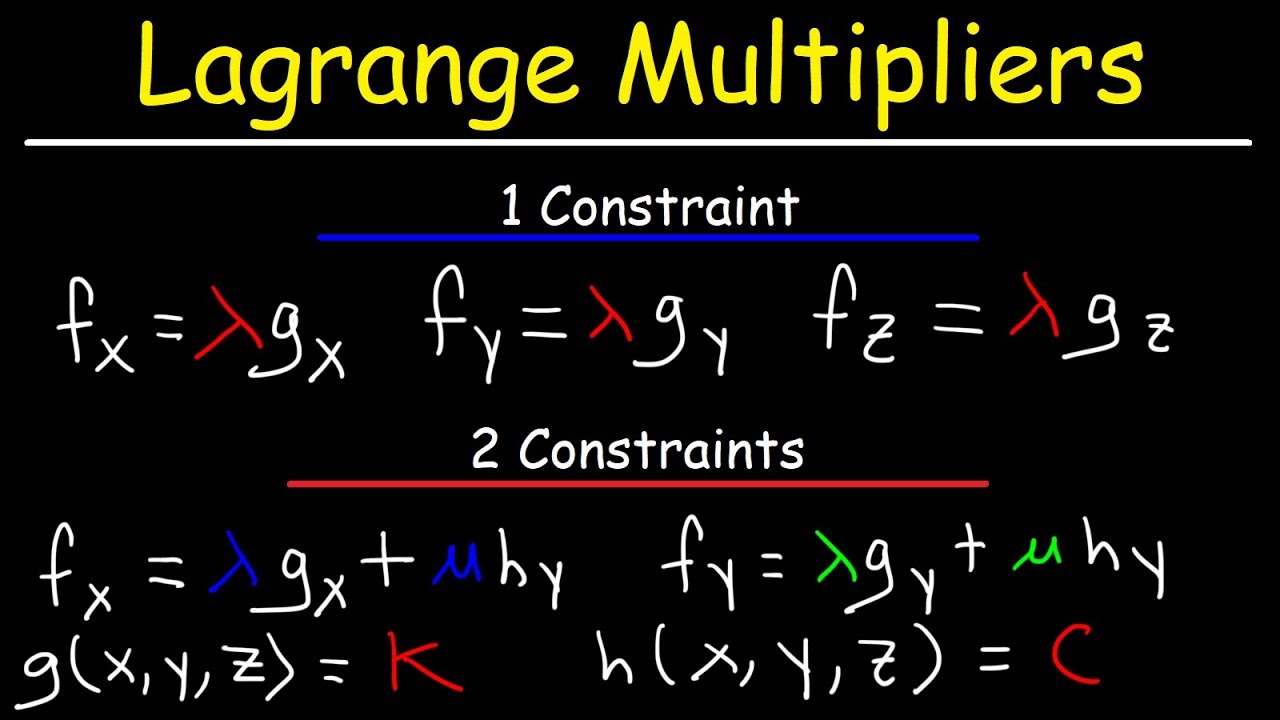
This calculus 3 video tutorial provides a basic introduction into lagrange multipliers. It explains how to find the maximum and minimum values of a function with 1 constraint and with 2 constraints.
Lines & Planes - Intersection: https://www.youtube.com/watch?v=_W3aVWsMp14
Angle Between Two Planes:
https://www.youtube.com/watch?v=7G07dPSlWbY
Distance Between Point and Plane:
https://www.youtube.com/watch?v=zWMTTRJ0l4w
Chain Rule - Partial Derivatives:
https://www.youtube.com/watch?v=XipB_uEexF0
Implicit Partial Differentiation:
https://www.youtube.com/watch?v=OBELQIPH5xY
________________________________
Directional Derivatives:
https://www.youtube.com/watch?v=CnVes9TdnPo
Limits of Multivariable Functions:
https://www.youtube.com/watch?v=E1lMMBpz8YM
Double Integrals:
https://www.youtube.com/watch?v=BJ_0FURo9RE
Local Extrema & Critical Points:
https://www.youtube.com/watch?v=UID893EosM8
Absolute Extrema - Max & Min:
https://www.youtube.com/watch?v=Hg38kfK5w4E
________________________________
Lagrange Multipliers:
https://www.youtube.com/watch?v=5-CUqogfPLY
Triple Integrals:
https://www.youtube.com/watch?v=7iy83x8bv6o
2nd Order - Differential Equations:
https://www.youtube.com/watch?v=uI2xt8nTOlQ
Undetermined Coefficients:
https://www.youtube.com/watch?v=P3fc6v191mA
Variation of Parameters:
https://www.youtube.com/watch?v=Ik3YW1JGr_A
________________________________
Final Exams and Video Playlists:
https://www.video-tutor.net/
Full-Length Videos and Worksheets:
https://www.patreon.com/MathSc....ienceTutor/collectio
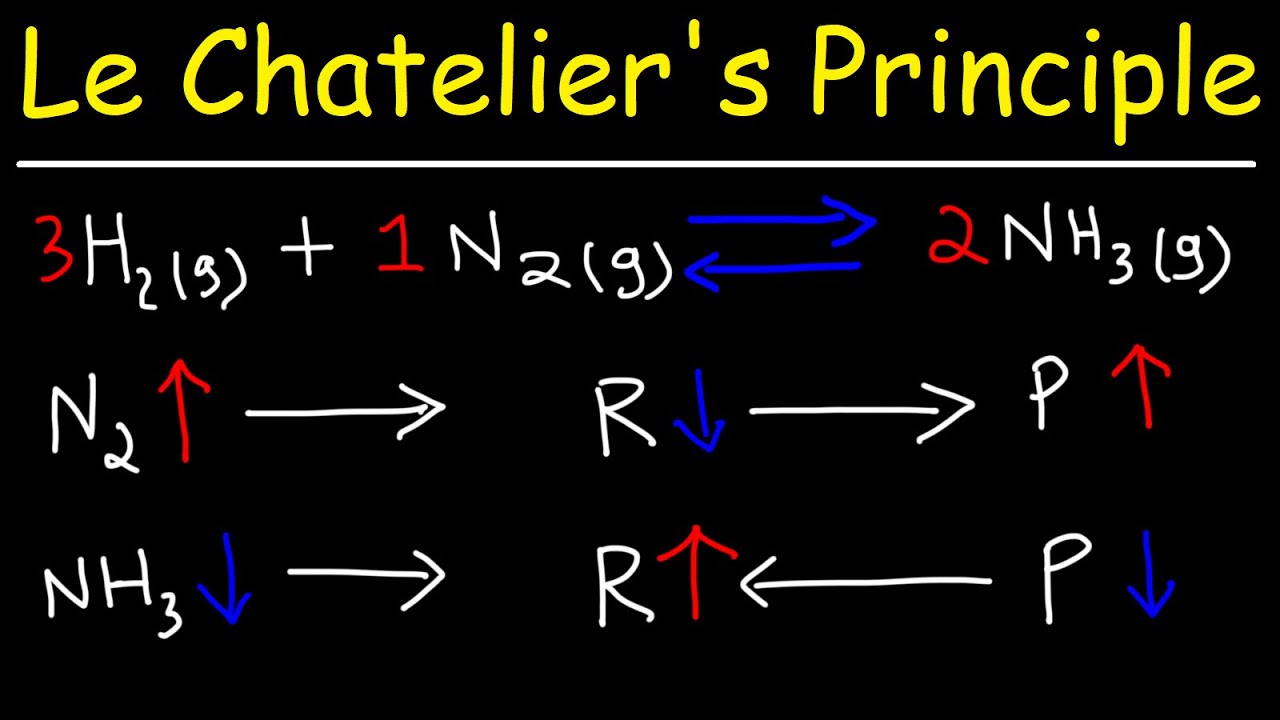
This chemistry video tutorial provides a basic introduction into Le Chatelier's Principle of chemical equilibrium. It explains how to determine which direction the reaction will shift if the concentrations of the reactants or the products increase in value. It discusses the effect of adding a catalyst or an inert gas on the position of equilibrium. It also discusses the effect of changing the volume and pressure on equilibrium.
Get The Full 1 Hour 10 Min Video:
https://www.patreon.com/MathScienceTutor
PDF Worksheet With 7 Questions:
https://bit.ly/3Gn3ve6
Direct Link to The Full Video:
https://bit.ly/3XadZVa
Chemistry PDF Worksheets:
https://www.video-tutor.net/ch....emistry-basic-introd
_____________________________
Full 1 Hour Video on YouTube:
https://www.youtube.com/watch?v=FCar3eoanXU
Join The YouTube Membership Program:
https://bit.ly/46xaQTR

This organic chemistry video tutorial provides a basic introduction into aldehydes and ketones.
Here is a list of topics:
1. Reduction of Aldehydes and Ketones With NaBH4
2. Reduction of Esters and Acid Chlorides With LiAlH4
3. Reduction of Acid Chlorides to Aldehydes Using LiAl(OR)3H
4. Reduction of Carboxylic Acids to Primary Alcohols
5. Reduction of Amides to Amines Using LiAlH4
6. Reduction of Ketones to Alcohols Using Catalytic Hydrogenation With a Raney Nickel Catalyst
7. Reduction of Imines and Nitriles to Amines
8. Reaction of Aldehydes and Ketones With a Grignard Reagent
9. Formation of Imines With Primary Amines
10. Formation of Enamines With Secondary Amines
11. Reductive Amination of Ketones Using NaBH3CN
12. Reactivity of Aldehydes and Ketones
13. Formation of Hydrates From Aldehydes
14. Hemiacetal and Acetal Formation
15. Protecting Groups Using Acetals
16. Chemioselective Reactions
17. Formation of Thioacetals
18. Clemmensen Reduction of Ketones to Alkanes
19. Wolff Kisher Reduction of Ketones to Alkanes
20. Oxidation of Aldehydes to Carboxylic Acids Using The Tollens Reagent
21. Cyanohydrin Formation Reaction Mechanism
22. Wittig Reaction Mechanism
23. Baeyer Villager Oxidation Reaction
24. Direct Addition vs Conjugate Addition of alpha beta unsaturated ketones
Subscribe:
https://www.youtube.com/channe....l/UCEWpbFLzoYGPfuWUM
Access to Premium Videos:
https://www.patreon.com/MathScienceTutor
https://www.facebook.com/MathScienceTutoring/
New Organic Chemistry Playlist
https://www.youtube.com/watch?v=6unef5Hz6SU&index=1&list=PL0o_zxa4K1BXP7TUO7656wg0uF1xYnwgm&t=0s
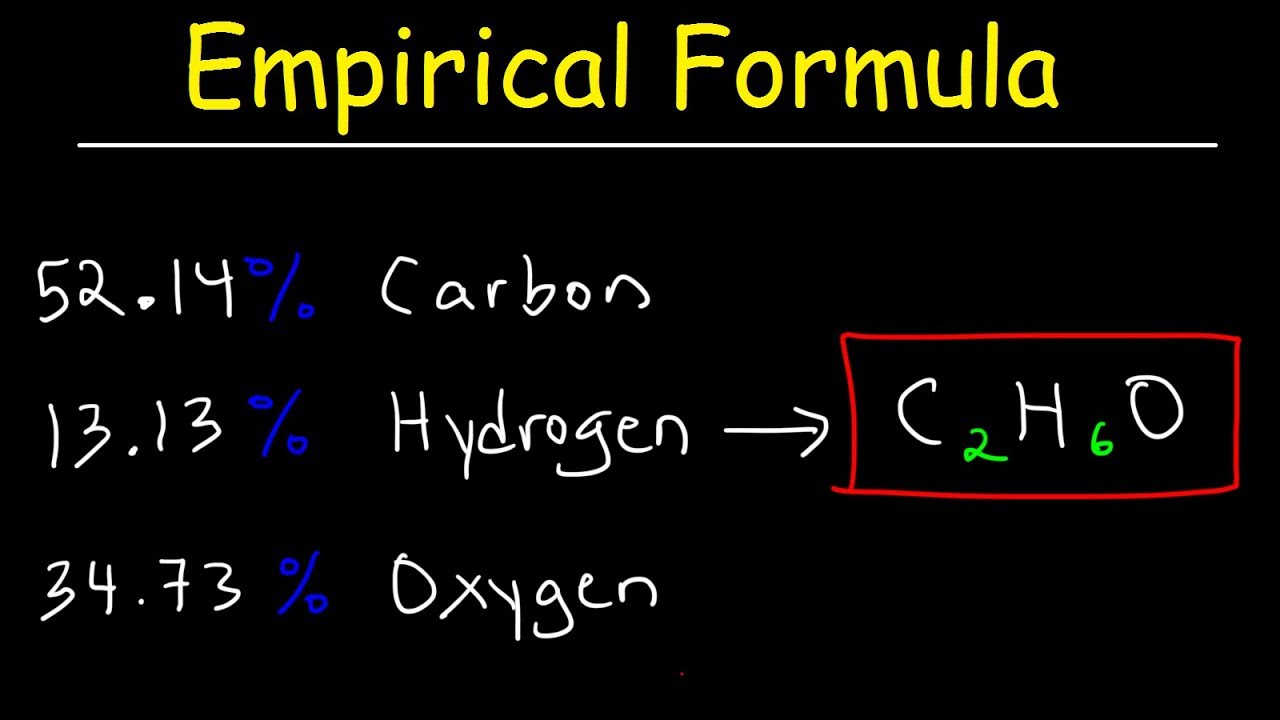
This chemistry video tutorial explains how to find the empirical formula given the mass in grams or from the percent composition of each element in a compound. If you're given the mass percent, you can simply treat it as if you were given the mass in grams. This video explains how to find the molecular formula given the molar mass of the compound. You can do this once you have the empirical formula. This video explains all of it. It has plenty of practice problems and examples for you to master this lesson.
Introduction to Moles:
https://www.youtube.com/watch?v=EowJsC7phzw
How To Calculate The Molar Mass:
https://www.youtube.com/watch?v=c_zHROisdP4
How To Convert Grams to Moles:
https://www.youtube.com/watch?v=irYPta9G_sw
How To Convert Moles to Grams:
https://www.youtube.com/watch?v=Bj3fr5pEn7U
Moles to Atoms Conversion:
https://www.youtube.com/watch?v=mpHQZ1PrkUI
Grams to Molecules Conversion:
https://www.youtube.com/watch?v=Ch16s4kYH1Q
_________________________________
Grams to Atoms:
https://www.youtube.com/watch?v=RFCtPjZ4Vzk
Moles, Atoms, & Grams Conversions:
https://www.youtube.com/watch?v=i1EPgeu_fJ8
How To Balance Chemical Equations:
https://www.youtube.com/watch?v=iUARzSxcKzk
Stoichiometry - Basic Introduction:
https://www.youtube.com/watch?v=7Cfq0ilw7ps
Avogadro's Number:
https://www.youtube.com/watch?v=74-X94OP2XI
_________________________________
Limiting Reactant Problems:
https://www.youtube.com/watch?v=IWtkhAv4RTo
Excess Reactant Problems:
https://www.youtube.com/watch?v=-7UloVZFG00
Theoretical & Percent Yield:
https://www.youtube.com/watch?v=hhEfqa_x7RQ
Percent Yield - More Examples:
https://www.youtube.com/watch?v=w1njGAkc8og
Percent Error:
https://www.youtube.com/watch?v=JbEo46uV6d4
_________________________________
Percent Composition By Mass:
https://www.youtube.com/watch?v=bGmbyztdCHE
Empirical Formula Problems:
https://www.youtube.com/watch?v=JeSSucG-CVw
Empirical Formula - Hydrated Compounds:
https://www.youtube.com/watch?v=gl_QAO5y9Ig
Combustion Analysis:
https://www.youtube.com/watch?v=uvR7zNJ1KoI
Stoichiometry Practice Test:
https://www.youtube.com/watch?v=mP2Yg8alyR0
_______________________________________
Final Exams and Video Playlists:
https://www.video-tutor.net/
Full-Length Videos and Worksheets:
https://www.patreon.com/MathSc....ienceTutor/collectio
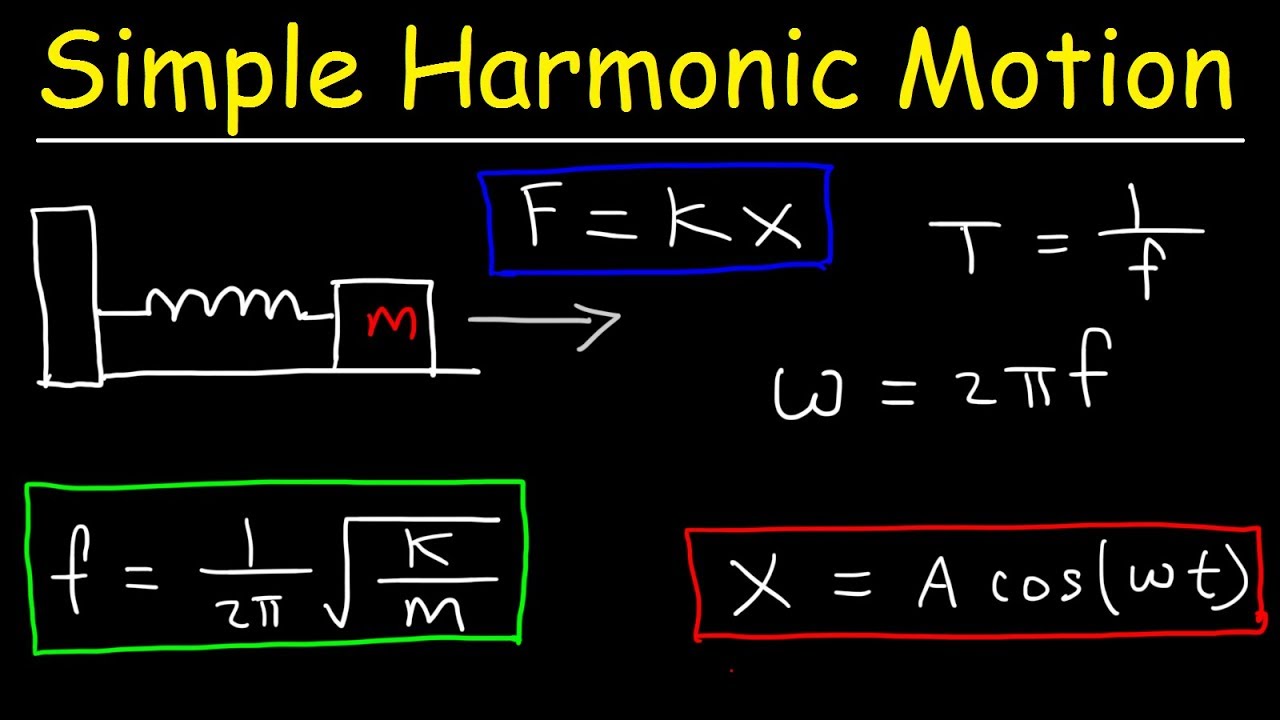
This physics video tutorial provides a basic introduction into how to solve simple harmonic motion problems in physics. It explains how to calculate the frequency, period, spring constant and the angular frequency of a mass-spring system. It also explains how to find the amplitude and frequency from a displacement cosine equation.
Intro to Pressure:
https://www.youtube.com/watch?v=kkq8ruV8_Jw
Fluid Pressure Review:
https://www.youtube.com/watch?v=nUKUzpRgdbY
Simple Harmonic Motion:
https://www.youtube.com/watch?v=_Gnke2x3vT8
Energy In a Simple Harmonic Oscillator:
https://www.youtube.com/watch?v=QvnmfBqdVIQ
Simple Harmonic Motion Review:
https://www.youtube.com/watch?v=iubb3eFBQ9U
The Simple Pendulum:
https://www.youtube.com/watch?v=1Q15fgz-lUk
_______________________________
The Physical Pendulum:
https://www.youtube.com/watch?v=scIVIhChL1I
Mechanical Waves Problems:
https://www.youtube.com/watch?v=qm1hDJrIYwE
Wave Speed on a String:
https://www.youtube.com/watch?v=vEzftaDL7fM
Standing Waves on a String:
https://www.youtube.com/watch?v=-8nn8hb0H8o
Speed of Sound In Matter:
https://www.youtube.com/watch?v=kr4nOru3JZU
Sound Intensity Physics Problems:
https://www.youtube.com/watch?v=6ZQYALZqZNQ
_______________________________
Sound Intensity Level:
https://www.youtube.com/watch?v=twppI9Eizp8
Beat Frequency:
https://www.youtube.com/watch?v=M-OMq4QsPfY
Standing Waves In Organ Pipes:
https://www.youtube.com/watch?v=7eyYNNUojEc
Doppler Effect Physics Problems:
https://www.youtube.com/watch?v=WiTQxNaKAYA
Sound Waves Review:
https://www.youtube.com/watch?v=yVBtcAEHLfU
Physics PDF Worksheets:
https://www.video-tutor.net/ph....ysics-basic-introduc
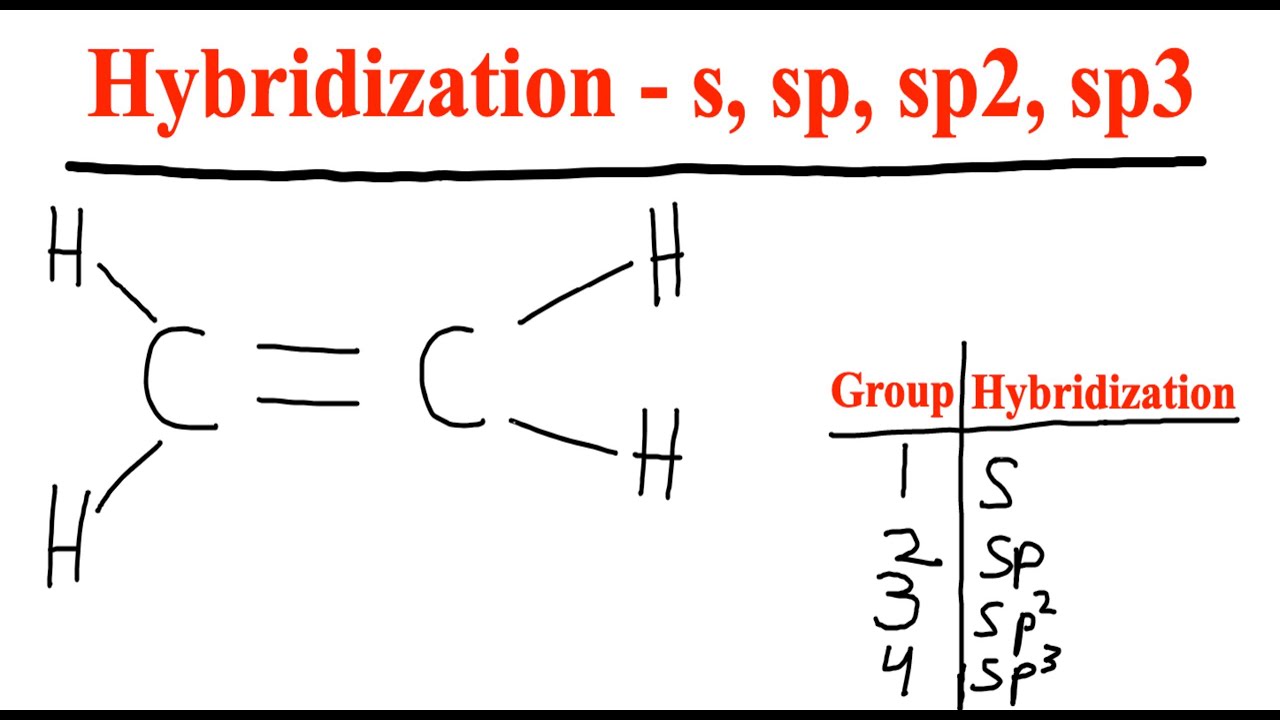
This video is about figuring out how to determine the hybridization of each element in its structure. Orbital hybridization is the concept of mixing atomic orbitals into new hybrid orbitals suitable for the pairing of electrons to form chemical bonds in valence bond theory.
Twitter: https://twitter.com/MoreLearnTutor?lang=en

This algebra 2 video tutorial explains how to use the binomial theorem to foil and expand binomial expressions using pascal's triangle and combinations. This video also shows you how to find the nth term and its coefficient using a simple formula / equation.
Intro to Statistics:
https://www.youtube.com/watch?v=XZo4xyJXCak
Probability - Basic Intro:
https://www.youtube.com/watch?v=SkidyDQuupA
Binomial Theorem:
https://www.youtube.com/watch?v=s19dWIHficY
Permutations and Combinations:
https://www.youtube.com/watch?v=XJnIdRXUi7A
Factorials Explained!
https://www.youtube.com/watch?v=pxh__ugRKz8
__________________________________
Parametric Equations:
https://www.youtube.com/watch?v=97pe-QlSGqA
Ellipses - Conic Sections:
https://www.youtube.com/watch?v=OPSCKXXvWiM
Hyperbolas - Conic Sections:
https://www.youtube.com/watch?v=Iu-4-fizlD4
Parabolas - Conic Sections:
https://www.youtube.com/watch?v=KYgmOTLbuqE
__________________________________
Arithmetic Sequences:
https://www.youtube.com/watch?v=XZJdyPkCxuE
Geometric Sequences:
https://www.youtube.com/watch?v=zRKZ0-kOUZM
The Fibonacci Sequence:
https://www.youtube.com/watch?v=mVO2dcuR7P0
Mathematical Induction:
https://www.youtube.com/watch?v=tHNVX3e9zd0
Induction Divisibility:
https://www.youtube.com/watch?v=8J7Bft3BN0g
__________________________________
Final Exams and Video Playlists:
https://www.video-tutor.net/
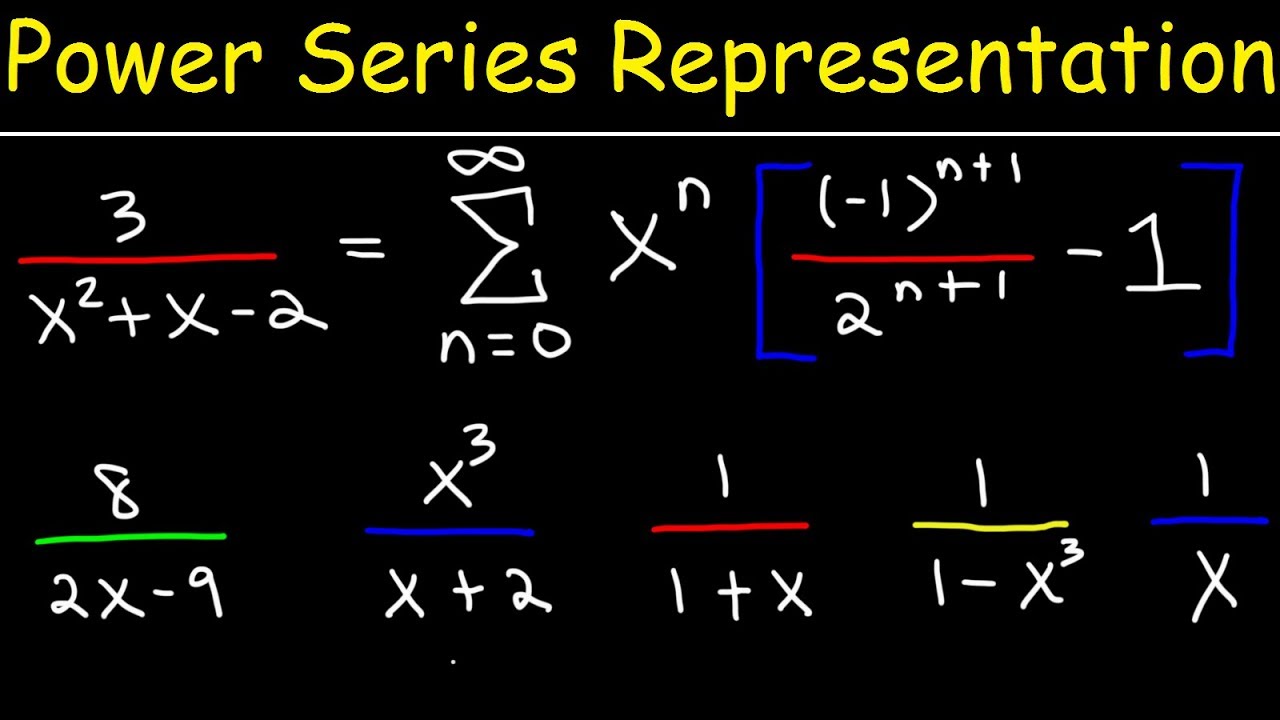
This calculus 2 video tutorial provides a basic introduction into the representation of functions as power series. It explains how to represent a function as a power series centered at 0 and centered at some value c. It also explains how to approximate function values using geometric power series. This video also explains how to find the radius of convergence and the interval of convergence of a geometric power series. To write a power series from a function, you need to write the function in the form of the formula for the infinite sum of a geometric series. To find the interval of convergence, find the common ratio represented by some variable expression of x and set it less than 1 and solve the inequality. This video also includes examples and practice problems of adding and subtracting power series as well as using partial fraction decomposition.
Series Tests - Practice Problems:
https://www.youtube.com/watch?v=0YeON4p0ogw
Taylor & Maclaurin Polynomials:
https://www.youtube.com/watch?v=urPIxvNBXF0
Taylor's Remainder Theorem:
https://www.youtube.com/watch?v=lY0LzJXTgeo
Power Series - Interval Convergence:
https://www.youtube.com/watch?v=EGni2-m5yxM
Power Series - Derivatives & Integrals:
https://www.youtube.com/watch?v=nD6hai32ykQ
___________________________________
Power Series - Function Representation:
https://www.youtube.com/watch?v=54yldObvvwY
Finding The Power Series:
https://www.youtube.com/watch?v=PmHaNjDBh_c
Power Series - Representation By Integration:
https://www.youtube.com/watch?v=0HyM3nM87mk
Power Series - Representation By Natural Logs:
https://www.youtube.com/watch?v=A6JdlY52NFg
Taylor & Maclaurin Series:
https://www.youtube.com/watch?v=LDBnS4c7YbA
Binomial Series:
https://www.youtube.com/watch?v=V1AKAkGJlN8
____________________________________
Parametric Equations:
https://www.youtube.com/watch?v=97pe-QlSGqA
Calculus Final Exam and Video Playlists:
https://www.video-tutor.net/
Full-Length Videos and Worksheets:
https://www.patreon.com/MathSc....ienceTutor/collectio
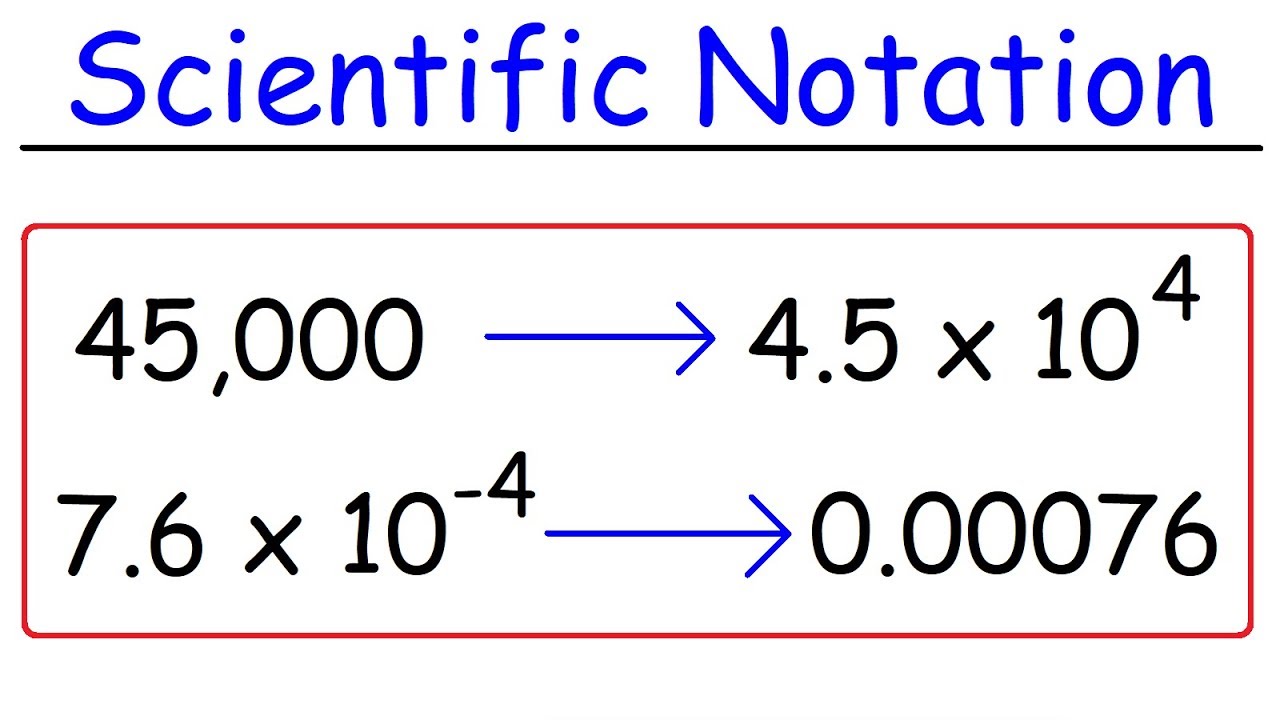
This video tutorial provides a basic introduction into scientific notation. It explains how to convert a number from scientific notation to standard form and how to convert a number from standard form to scientific notation. This video contains plenty of examples and practice problems.
Scientific Notation - A Fast Review:
https://www.youtube.com/watch?v=ZtB0vJMGve4
Scientific Notation - Addition & Subtraction:
https://www.youtube.com/watch?v=XHds0Uf1zHA
Scientific Notation - Multiplication & Division:
https://www.youtube.com/watch?v=yX6Mq9whsX0
Scientific Notation - More Example Problems:
https://www.youtube.com/watch?v=_BtzXojuM1o
Scientific Notation - Decimal Square Root:
https://www.youtube.com/watch?v=fK67eDWmtrs
___________________________________
Significant Figures - A Fast Review:
https://www.youtube.com/watch?v=l2yuDvwYq5g
Percent Uncertainty:
https://www.youtube.com/watch?v=b881nOem4vg
Unit Conversion Mega Review:
https://www.youtube.com/watch?v=eK8gXP3pImU
Top 50 Mathematical Symbols:
https://www.youtube.com/watch?v=SkhiZCtegXE
How To Calculate Your GPA:
https://www.youtube.com/watch?v=qYHsThZWydY
___________________________________
General Chemistry - For Beginners:
https://www.youtube.com/watch?v=-KfG8kH-r3Y
Organic Chemistry - Basic Introduction:
https://www.youtube.com/watch?v=B_ketdzJtY8
Physics - Basic Introduction:
https://www.youtube.com/watch?v=b1t41Q3xRM8
Algebra For Beginners:
https://www.youtube.com/watch?v=MHeirBPOI6w
Calculus 1 - Intro to Limits:
https://www.youtube.com/watch?v=YNstP0ESndU
___________________________________
SAT Math Part 1:
https://www.youtube.com/watch?v=fTGuTEQCsZY
ACT Math Test Prep:
https://www.youtube.com/watch?v=SsA7rZ8kczM
GRE Math Test Prep:
https://www.youtube.com/watch?v=z6lbrzaCbdk
Final Exams and Video Playlists:
https://www.video-tutor.net/
Full-Length Videos and Worksheets:
https://www.patreon.com/MathSc....ienceTutor/collectio

This chemistry video tutorial explains how to balance combustion reactions. It contains plenty of examples and practice problems on balancing combustion reactions. A combustion reaction involves reacting a hydrocarbon such as an alkane or alcohol in the presence of oxygen gas to produce carbon dioxide and water.
Introduction to Moles:
https://www.youtube.com/watch?v=EowJsC7phzw
How To Calculate The Molar Mass:
https://www.youtube.com/watch?v=c_zHROisdP4
How To Convert Grams to Moles:
https://www.youtube.com/watch?v=irYPta9G_sw
How To Convert Moles to Grams:
https://www.youtube.com/watch?v=Bj3fr5pEn7U
Moles to Atoms Conversion:
https://www.youtube.com/watch?v=mpHQZ1PrkUI
Grams to Molecules Conversion:
https://www.youtube.com/watch?v=Ch16s4kYH1Q
_________________________________
Grams to Atoms:
https://www.youtube.com/watch?v=RFCtPjZ4Vzk
Moles, Atoms, & Grams Conversions:
https://www.youtube.com/watch?v=i1EPgeu_fJ8
How To Balance Chemical Equations:
https://www.youtube.com/watch?v=iUARzSxcKzk
Stoichiometry - Basic Introduction:
https://www.youtube.com/watch?v=7Cfq0ilw7ps
Avogadro's Number:
https://www.youtube.com/watch?v=74-X94OP2XI
_________________________________
Limiting Reactant Problems:
https://www.youtube.com/watch?v=IWtkhAv4RTo
Excess Reactant Problems:
https://www.youtube.com/watch?v=-7UloVZFG00
Theoretical & Percent Yield:
https://www.youtube.com/watch?v=hhEfqa_x7RQ
Percent Yield - More Examples:
https://www.youtube.com/watch?v=w1njGAkc8og
Percent Error:
https://www.youtube.com/watch?v=JbEo46uV6d4
_________________________________
Percent Composition By Mass:
https://www.youtube.com/watch?v=bGmbyztdCHE
Empirical Formula Problems:
https://www.youtube.com/watch?v=JeSSucG-CVw
Empirical Formula - Hydrated Compounds:
https://www.youtube.com/watch?v=gl_QAO5y9Ig
Combustion Analysis:
https://www.youtube.com/watch?v=uvR7zNJ1KoI
Stoichiometry Practice Test:
https://www.youtube.com/watch?v=mP2Yg8alyR0
_______________________________________
Final Exams and Video Playlists:
https://www.video-tutor.net/
Full-Length Videos and Worksheets:
https://www.patreon.com/MathSc....ienceTutor/collectio
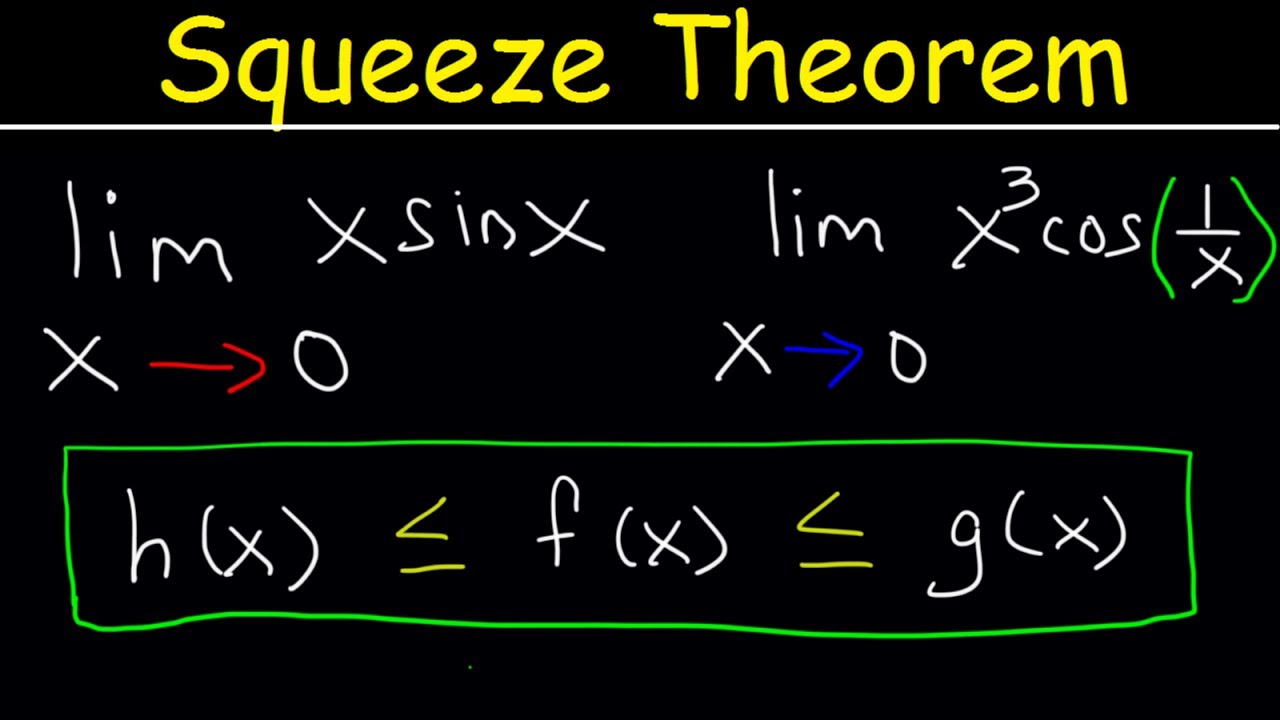
This calculus video tutorial explains the squeeze theorem with trig functions like sin and cos (1/x). It explains the definition of the theorem and how to evaluate functions and limits with inequalities.
Introduction to Limits: https://www.youtube.com/watch?v=YNstP0ESndU
How To Evaluate Limits From a Graph:
https://www.youtube.com/watch?v=7Q2HwTHcxA0
Evaluating Limits By Factoring:
https://www.youtube.com/watch?v=fOrOeZA-vdY
Limits of Rational Functions :
https://www.youtube.com/watch?v=M2BgBG2Su94
Limits of Radical Functions:
https://www.youtube.com/watch?v=qay5HvT1UK8
Limits of Trigonometric Functions:
https://www.youtube.com/watch?v=HbtuSC_WOW0
___________________________________
How To Find The Limit at Infinity:
https://www.youtube.com/watch?v=NmLljBAg82o
Infinite Limits + Vertical Asymptotes:
https://www.youtube.com/watch?v=xvFqomOpLrs
Limits at Infinity With Radicals:
https://www.youtube.com/watch?v=1hyoTeWg6Bs
Limits of Absolute Value Functions:
https://www.youtube.com/watch?v=wFeh4ByT0xs
Limits of Composite Functions:
https://www.youtube.com/watch?v=KjL9cWHzeIc
The Squeeze Theorem:
https://www.youtube.com/watch?v=lVIb9iJ-rRI
____________________________________
Limits and Logarithms:
https://www.youtube.com/watch?v=fHzmQmcvheI
Limits of Exponential Functions:
https://www.youtube.com/watch?v=pcUXo7XbRaM
Piecewise Functions - Limits:
https://www.youtube.com/watch?v=JrYmEo6hoiU
3 Step Continuity Test:
https://www.youtube.com/watch?v=WT7oxiiFYt8
Continuity and Differentiability:
https://www.youtube.com/watch?v=fml0-ELYLaE
Limits - Test Review:
https://www.youtube.com/watch?v=6e4Wtgc43KQ
_____________________________________
Final Exams and Video Playlists:
https://www.video-tutor.net/
Full-Length Videos and Worksheets:
https://www.patreon.com/MathSc....ienceTutor/collectio
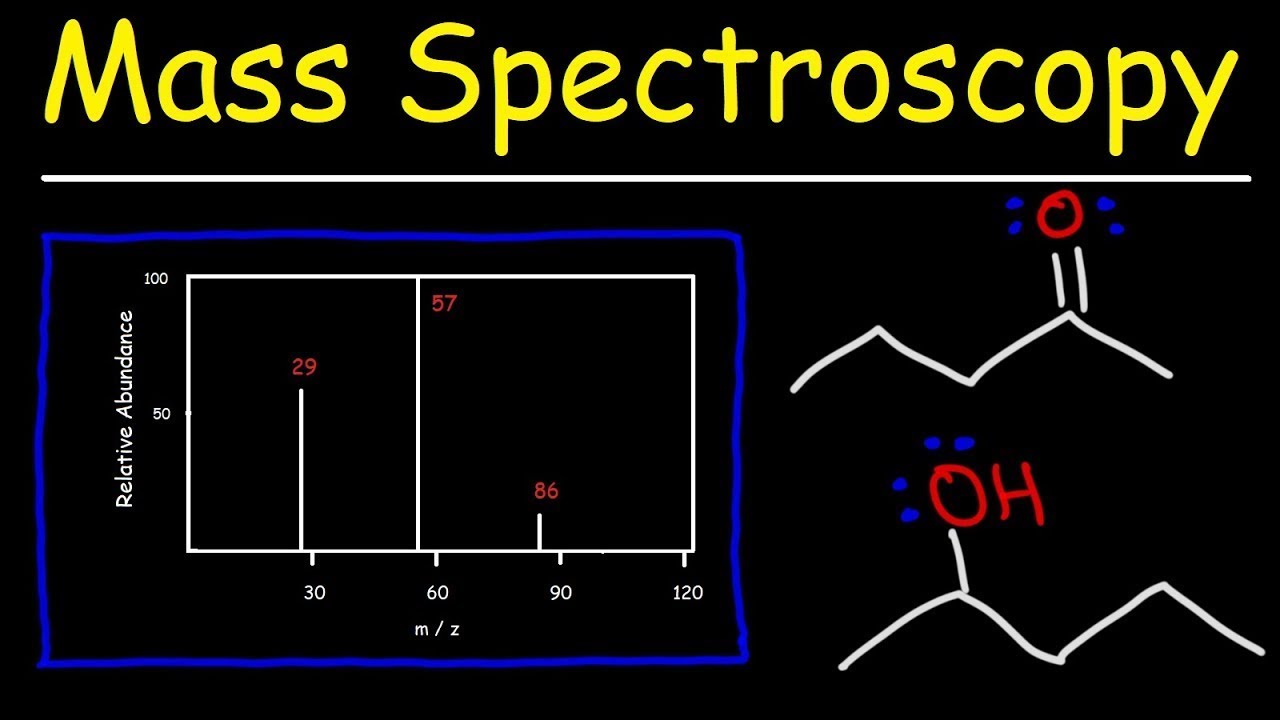
This organic chemistry video tutorial provides a basic introduction into mass spectrometry. It explains how to match the correct molecular fragments with the corresponding m/z peaks in the mass spectrum. It discusses the difference between the base peak and the parent peak.
Access The Full 38 Minute Video on Patreon:
https://www.patreon.com/MathScienceTutor
Direct Link to The Full Video on Patreon:
https://bit.ly/38cqkAF
Full 38 Minute Video on YouTube:
https://www.youtube.com/watch?v=euk2Tg1WBA8
Join My YouTube Membership Program:
https://www.youtube.com/channe....l/UCEWpbFLzoYGPfuWUM

This organic chemistry video explains how to calculate enantiomeric excess given the grams of the R and S stereoisomers.
Full 7 Hour Organic Chemistry Exam 2 Video: https://www.patreon.com/MathScienceTutor
Direct Link To The Full Video - Part 1:
https://bit.ly/3JSz8xR
Direct Link to The Full Video - Part 2:
https://bit.ly/3JQAucE
Download The Exam - 85 Test Questions:
https://bit.ly/3GaWI7V
____________________________
Exam 2 - Part 1 on YouTube:
https://www.youtube.com/watch?v=S2AYGVEHglw
Exam 2 - Part 2 on YouTube:
https://www.youtube.com/watch?v=erWiya-rvWs
Organic Chemistry 1 Exam 2 Playlist:
https://bit.ly/3PKEApB
Organic Chemistry PDF Worksheets:
https://www.video-tutor.net/orgo-chem.html

Carnot Heat Engines, Efficiency, Refrigerators, Pumps, Entropy, Thermodynamics - Second Law, Physics
This physics tutorial video shows you how to solve problems associated with heat engines, carnot engines, efficiency, work, heat, refrigerators, heat pumps and entropy. It discusses the concepts of the first and second law of thermodynamics. This video contains plenty of examples and practice problems.
Carnot Cycle:
ttps://www.youtube.com/watch?v=Qi3m9sD5w-A
Otto Cycle:
https://www.youtube.com/watch?v=vAeMmSRdQYY
Refrigerators and Heat Pumps:
https://www.youtube.com/watch?v=sKfgz6JLQRI
Entropy:
https://www.youtube.com/watch?v=Bdn3u2OHvKE
Physics 1C Final Exam Review:
https://www.youtube.com/watch?v=HPuo0R7ijJQ
_______________________________
Physics 2 - Basic Introduction:
https://www.youtube.com/watch?v=rHgKLIYcZOI
Electric Charge - Physics:
https://www.youtube.com/watch?v=VD009jiZreo
Conservation of Electric Charge:
https://www.youtube.com/watch?v=OSUvXC1pACA
Coulomb's Law and Electric Force:
https://www.youtube.com/watch?v=kCp5yYjo9zE
Electric Fields:
https://www.youtube.com/watch?v=V9RLc9EX1so
Electric Dipole Moment:
https://www.youtube.com/watch?v=Mt9Rn2Ek0SU
_______________________________
Electric Flux:
https://www.youtube.com/watch?v=q1eor6oIuUo
Gauss Law Problems:
https://www.youtube.com/watch?v=IS1hyHBh3QQ
Electric Potential:
https://www.youtube.com/watch?v=LzKMQByFSLc
Equipotential Lines:
https://www.youtube.com/watch?v=j_Cy891cmIY
The Electron Volt:
https://www.youtube.com/watch?v=DjQl4J-jePc
Electric Potential Energy:
https://www.youtube.com/watch?v=KoZ61FujkRk
Physics PDF Worksheets:
https://www.video-tutor.net/ph....ysics-basic-introduc
This algebra 2 / precalculus video tutorial explains how to graph quadratic functions in standard form and vertex form. It shows you how to find the equation of the axis of symmetry, the maximum and minimum values, and how to graph using transformations.
How To Solve Simple Quadratic Equations:
https://www.youtube.com/watch?v=-KWsS2FZVTA
Solving Quadratic Equations By Factoring:
https://www.youtube.com/watch?v=qeByhTF8WEw
How To Factor Difficult Quadratic Equations:
https://www.youtube.com/watch?v=VG1luiL_INQ
Solving QE By Completing The Square:
https://www.youtube.com/watch?v=WOb25i8FBBw
Solving Equations In Quadratic Form:
https://www.youtube.com/watch?v=eWjixwGK3YM
Sum and Products - Quadratic Equations:
https://www.youtube.com/watch?v=kBSj35rik8w
_______________________________________
How To Calculate The Discriminant:
https://www.youtube.com/watch?v=6fU9ZgwbU74
Standard Form to Vertex Form:
https://www.youtube.com/watch?v=pf9LkX8hpTQ
Graphing Quadratic Functions:
https://www.youtube.com/watch?v=H8OQtxSRe_k
How To Find The Axis of Symmetry:
https://www.youtube.com/watch?v=tyzd4VujaqY
Graphing Quadratic Functions - Vertex Form:
https://www.youtube.com/watch?v=OHH7fX_M8Ns
Graphing QF in Standard Form:
https://www.youtube.com/watch?v=uYNKJWFYh7k
___________________________________________
Writing Quadratic Equations:
https://www.youtube.com/watch?v=SB6eCyG4GEA
Maximum and Minimum Word Problems:
https://www.youtube.com/watch?v=d5YktqR-4FU
Systems of Quadratic Equations:
https://www.youtube.com/watch?v=rq5AjFs95qw
Systems of Nonlinear Equations:
https://www.youtube.com/watch?v=JPdLEaxlnZQ
Quadratic Inequalities:
https://www.youtube.com/watch?v=_gWjLKsFOPE
Quadratic Equations - Test Review:
https://www.youtube.com/watch?v=fFFA7Q4eVuY
___________________________________________
Final Exams and Video Playlists:
https://www.video-tutor.net/
Full-Length Videos and Worksheets:
https://www.patreon.com/MathSc....ienceTutor/collectio

This physics video tutorial explains the concept of static equilibrium - translational & rotational equilibrium where everything is at rest and there's no motion. This video contains plenty of examples and practice problems.
Static Equilibrium:
https://www.youtube.com/watch?v=qGvFAl5CK_c
Elasticity and Hooke's Law:
https://www.youtube.com/watch?v=HALbtyDUjp0
Tensile Stress:
https://www.youtube.com/watch?v=c6ndD5kTkP4
Elastic Modulus:
https://www.youtube.com/watch?v=qQZRTBRJbl4
Bulk Modulus:
https://www.youtube.com/watch?v=ugxgSIGIHrg
___________________________
Volume Unit Conversion:
https://www.youtube.com/watch?v=ylehgnMC1gw
Specific Gravity & Density of Mixtures:
https://www.youtube.com/watch?v=ZcJGFZt-NO4
Will It Sink or Float?
https://www.youtube.com/watch?v=4fwZM6cqyzk
Intro to Pressure & Fluids:
https://www.youtube.com/watch?v=kkq8ruV8_Jw
Atmospheric Pressure Problems:
https://www.youtube.com/watch?v=tYd_CYpNpeY
____________________________
The Gallon Crusher:
https://www.youtube.com/watch?v=abXVQZlFPJg
Absolute Pressure Vs Gauge Pressure:
https://www.youtube.com/watch?v=XCiBaFp8L_M
Water Pressure Vs Gauge Pressure:
https://www.youtube.com/watch?v=12K_aP1KPFk
Full-Length Videos and Worksheets:
https://www.patreon.com/MathSc....ienceTutor/collectio
Physics PDF Worksheets:
https://www.video-tutor.net/ph....ysics-basic-introduc
Here is a list of topics:
1. Static Equilibrium Problems
2. Balancing a Seesaw - Lever Problem - Using Forces and Torques
3. Torque equals force times lever arm / moment arm
4. Positive and Negative Torques - Clockwise vs Counterclockwise rotation
5. Hanging Sign Tension Problem - Finding the tension in the two cables at two different angles
6. Hanging sign attached to a beam problem - how to calculate the horizontal and vertical components of the force exerted by the hinge and pivot point
7. Hanging sign attached to a beam at an angle - determining the tension force in the cable
8. Ladder Problem - How to find the force exerted by the wall on the ladder and the horizontal and vertical components of the force exerted by the ground / floor on the ladder.
9. Ladder problem with man on top. How to determine the coefficient of static friction that prevents the ladder from sliding down - Normal force and static frictional force calculations.

This chemistry video tutorial explains how to predict the products of acid base neutralization reactions. It explains how to balance the chemical equation, write the total ionic equation, identify the spectator ions and write the net ionic equations. It discusses what to do when strong acids and weak acids are present. Weak acids should not be separated into ions in the ionic equation due to partial ionization. This video contains plenty of examples and practice problems.
Stoichiometry Practice Test:
https://www.youtube.com/watch?v=mP2Yg8alyR0
Solute, Solvent, & Solution:
https://www.youtube.com/watch?v=MDHlaTHbEgM
Strong & Weak Electrolytes:
https://www.youtube.com/watch?v=2U2DBWWo6nc
Molarity Practice Problems:
https://www.youtube.com/watch?v=o_iETsDSvkg
Ion Concentration In Solutions:
https://www.youtube.com/watch?v=H5S4TRAzXhQ
Dilution Problems:
https://www.youtube.com/watch?v=FPidlCmymVg
___________________________________
Types of Chemical Reactions:
https://www.youtube.com/watch?v=iIJD8RNLpS0
Solubility Rules:
https://www.youtube.com/watch?v=LnGIKtx_udE
Predicting The Products of Reactions:
https://www.youtube.com/watch?v=MYmrWHzT1oI
Activity Series of Metals:
https://www.youtube.com/watch?v=VatDpKMJ-BU
Will This Reaction Occur?
https://www.youtube.com/watch?v=ACSKrg2RBmY
Predicting Products of SR Reactions:
https://www.youtube.com/watch?v=s4OFBa7Uans
___________________________________
Double Replacement Reactions:
https://www.youtube.com/watch?v=d8vWIGf2mGE
Net Ionic Equations:
https://www.youtube.com/watch?v=0jhNouV9TNo
Writing Chemical Equations From Words:
https://www.youtube.com/watch?v=npyvZSBqyc0
Solution Stoichiometry:
https://www.youtube.com/watch?v=Ab3wfKjaWWQ
Molarity & Dilution Problems:
https://www.youtube.com/watch?v=-4E6rOkiw2I
Acid Base Neutralization Reactions:
https://www.youtube.com/watch?v=UfTJrAPjeys
____________________________________
Acid Base Titration Problems:
https://www.youtube.com/watch?v=HJvALCcKYAc
Mixture Problems:
https://www.youtube.com/watch?v=e2FAAMlAJ3c
Calculating Oxidation Numbers:
https://www.youtube.com/watch?v=j0hI-a6EWWo
Oxidation and Reduction Reactions:
https://www.youtube.com/watch?v=dF5lB7gRtcA
Balancing Redox Reactions:
https://www.youtube.com/watch?v=fdbrhQAM9Gw
Ideal Gas Law Problems:
https://www.youtube.com/watch?v=iaZ96KaQ44c
___________________________________
Final Exams and Video Playlists:
https://www.video-tutor.net/
Full-Length Videos and Worksheets:
https://www.patreon.com/MathSc....ienceTutor/collectio

This physics video tutorial provides a basic introduction into center of mass. It explains how to find the center of mass in typical physics problems. This video contains a few examples of finding the center of mass of a system of masses along the x-direction and along the y-direction. In addition, it explains how to find where to place a massive load on a truck to move the truck's center of mass to the middle of the truck.
Impulse and Momentum:
https://www.youtube.com/watch?v=hODlmGK7pl8
Conservation of Momentum:
https://www.youtube.com/watch?v=Fp7D5D8Bqjc
Rocket Propulsion:
https://www.youtube.com/watch?v=kvAf-Xouj8s
Inelastic Collisions:
https://www.youtube.com/watch?v=C1XuwHLacao
Impulse Momentum Theorem:
https://www.youtube.com/watch?v=1WIECGg71WY
____________________________
Force-Time Graphs:
https://www.youtube.com/watch?v=Bv9ry123zck
Ballistic Pendulum Problem:
https://www.youtube.com/watch?v=PUNKqLkELbQ
Elastic Collisions:
https://www.youtube.com/watch?v=CFbo_nBdBco
2D Collision Problems:
https://www.youtube.com/watch?v=9YRgHikdcqs
Impulse & Momentum Test Review:
https://www.youtube.com/watch?v=FfaEbqmvKQA
_____________________________
Center of Mass - Calculus:
https://www.youtube.com/watch?v=SWu_i-19Rn0
Intro to Rotational Motion:
https://www.youtube.com/watch?v=WQ9AH2S8B6Y
Full-Length Videos and Worksheets:
https://www.patreon.com/MathSc....ienceTutor/collectio
Physics PDF Worksheets:
https://www.video-tutor.net/ph....ysics-basic-introduc
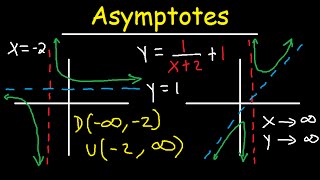
This math video tutorial shows you how to find the horizontal, vertical and slant / oblique asymptote of a rational function. This video is for students who might be taking algebra 1 or 2, precalculus or calculus in high school or those who might be taking college algebra in an university. This video contains plenty of notes, examples, and practice problems for you to master the concepts.
Fundamental Theorem of Algebra:
https://www.youtube.com/watch?v=cAfRgqEOURw
Rational Expressions - Basic Intro:
https://www.youtube.com/watch?v=0Gq3uw2p6fA
Simplifying Rational Expressions:
https://www.youtube.com/watch?v=uVpsz-xpnPo
Multiplying Rational Expressions:
https://www.youtube.com/watch?v=RROSgr4oXjU
Dividing Rational Expressions:
https://www.youtube.com/watch?v=rMVOdIDNjpA
______________________________________
Adding & Subtracting Rational Expressions:
https://www.youtube.com/watch?v=WWwG2uh4OUE
Rational Expressions - Unlike Denominators:
https://www.youtube.com/watch?v=1KGVwaUhR-s
Simplifying Complex Rational Expressions:
https://www.youtube.com/watch?v=ifDEetTq8bM
How To Solve Rational Equations:
https://www.youtube.com/watch?v=1fR_9ke5-n8
Rational Equations - Extraneous Solutions:
https://www.youtube.com/watch?v=PvMYq9JD724
_____________________________________
Horizontal and Slant Asymptotes:
https://www.youtube.com/watch?v=kvhpu1TkSjI
Finding Rational Functions Given 2 Points:
https://www.youtube.com/watch?v=ODs3t1vX1GY
Rational Functions - X and Y Intercepts:
https://www.youtube.com/watch?v=ebpEDR4-Q3Y
Graphing Advanced Rational Functions:
https://www.youtube.com/watch?v=GxynsEIvjRA
Rational Inequalities:
https://www.youtube.com/watch?v=gfnVHwhEe6U
________________________________________
Final Exams and Video Playlists:
https://www.video-tutor.net/
Full-Length Videos and Worksheets:
https://www.patreon.com/MathSc....ienceTutor/collectio
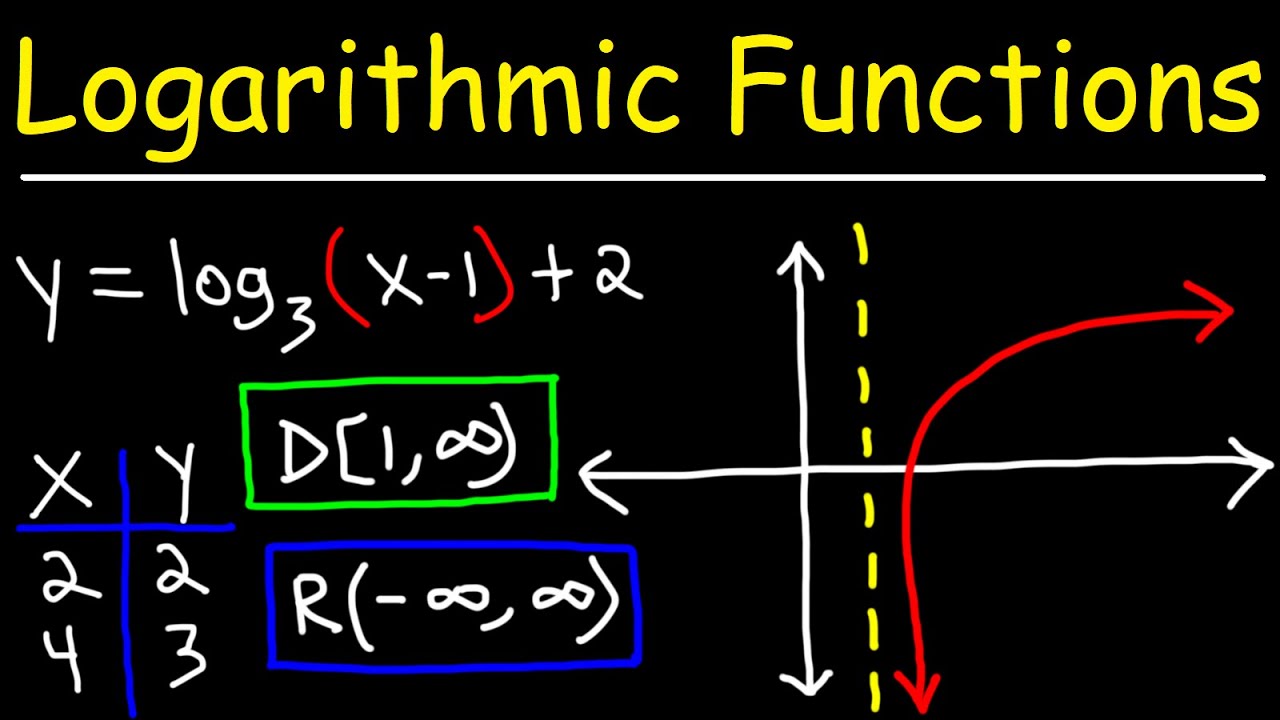
This algebra video tutorial explains how to graph logarithmic functions using transformations and a data table. It explains how to identify the vertical asymptote as well as the domain and range of the logarithmic function in interval notation.
Logarithms - The Easy Way!
https://www.youtube.com/watch?v=kqVpPSzkTYA
Log to Exponential Form:
https://www.youtube.com/watch?v=f0C1KL7GkqY
Change of Base Formula:
https://www.youtube.com/watch?v=FFm-zaFW_X4
Change of Base Log Problem:
https://www.youtube.com/watch?v=p7hD9VdXv9U
Properties of Logarithms:
https://www.youtube.com/watch?v=Jtv9Lnf7Zw8
____________________________________
Expanding Logarithmic Expressions:
https://www.youtube.com/watch?v=OIz-5MyJA3g
Condensing Logarithmic Expressions:
https://www.youtube.com/watch?v=luRrOlsB4cY
Natural Logarithms:
https://www.youtube.com/watch?v=daUlTsnCNRQ
Solving Exponential Equations:
https://www.youtube.com/watch?v=9tutJ5xrRwg
Exponential Equations - Quadratic Form:
https://www.youtube.com/watch?v=yNgmVu0R_T8
_______________________________________
Solving Logarithmic Equations:
https://www.youtube.com/watch?v=fnhFneOz6n8
Graphing Logarithmic Functions:
https://www.youtube.com/watch?v=-nptxS9rZNA
Graphing Exponential Functions:
https://www.youtube.com/watch?v=DASfP8KAyvs
Compound Interest Word Problems:
https://www.youtube.com/watch?v=Hn0eLcOSQGw
Logarithms Practice Problems:
https://www.youtube.com/watch?v=7DVbQKI600k
_______________________________________
Final Exams and Video Playlists:
https://www.video-tutor.net/
Full-Length Videos and Worksheets:
https://www.patreon.com/MathSc....ienceTutor/collectio
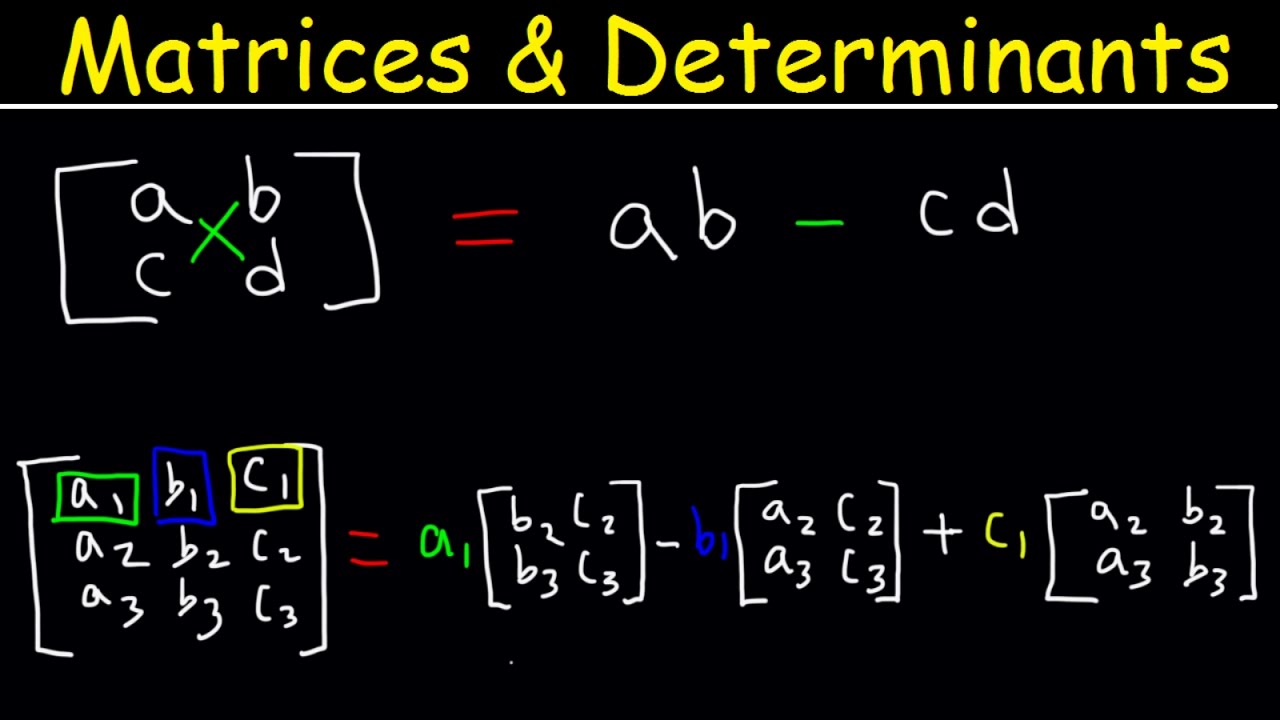
This precalculus video tutorial explains how to find the determinant of 3x3 matrices and 2x2 matrices.
Introduction to Matrices: https://www.youtube.com/watch?v=yRwQ7A6jVLk
Adding and Subtracting Matrices:
https://www.youtube.com/watch?v=QXUbFzEd3Ww
Scalar Multiplication of Matrices:
https://www.youtube.com/watch?v=iJERwUVuwtY
Solving Matrix Equations:
https://www.youtube.com/watch?v=UHhvcj0doaA
Multiplying Matrices:
https://www.youtube.com/watch?v=vzt9c7iWPxs
__________________________________
Gaussian Elimination & Row Echelon Form:
https://www.youtube.com/watch?v=eDb6iugi6Uk
Gauss Jordan Elimination:
https://www.youtube.com/watch?v=eYSASx8_nyg
Gaussian Elimination With 4 Variables:
https://www.youtube.com/watch?v=4VAXv6yRULU
Inverse of a 2x2 Matrix:
https://www.youtube.com/watch?v=aiBgjz5xbyg
Inverse of a 3x3 Matrix:
https://www.youtube.com/watch?v=Fg7_mv3izR0
__________________________________
Determinant of 2x2 and 3x3 Matrix:
https://www.youtube.com/watch?v=3ROzG6n4yMc
Determinant of 4x4 Matrix:
https://www.youtube.com/watch?v=fWzUwrt1Z0s
Cramer's Rule - 2x2 Linear System:
https://www.youtube.com/watch?v=vXqlIOX2itM
Cramer's Rule - 3x3 Linear System:
https://www.youtube.com/watch?v=Ot87qLTODdQ
___________________________________
Final Exams and Video Playlists:
https://www.video-tutor.net/
Full-Length Videos and Worksheets:
https://www.patreon.com/MathSc....ienceTutor/collectio