সর্বশেষ ভিডিও
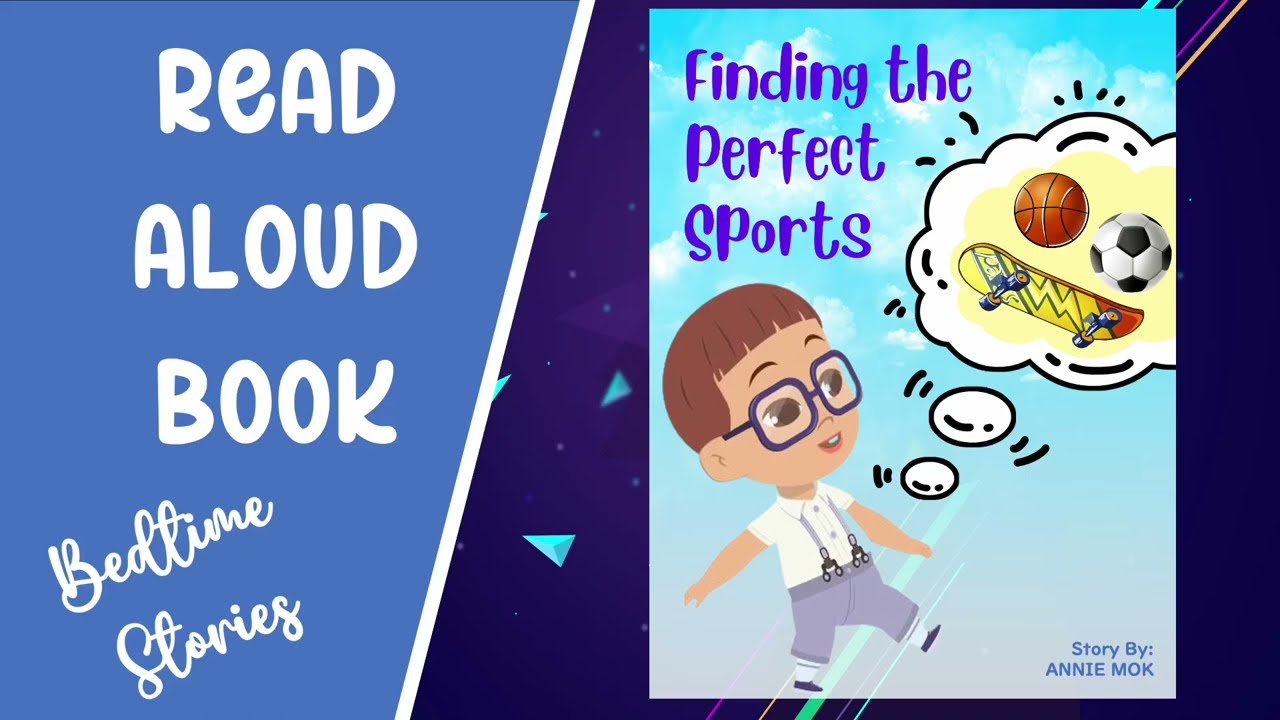
Thanks for watching.
Remember to mark your calendars and join us next Saturday for our story-telling session. We can't wait to see you there!
Please subscribe our channel.
To accelerate your learning, join our patreon @learnfast101 now.
-----------------------------------------------------------------------------------
Please SUBSCRIBE to our channel, LIKE, and SHARE to encourage us to share more useful and interesting knowledge.
請訂閱我們的頻道、點讚、分享,鼓勵我們分享更多有用又有趣的知識。
-----------------------------------------------------------------------------------
Welcome to watch our videos
歡迎觀看我們所創作的的其他影片
1)Basic Conversation 會話
https://www.youtube.com/playli....st?list=PLPoPxSDq_eP
2) Grammar 語法
https://www.youtube.com/playli....st?list=PLPoPxSDq_eP
3)English Speaking
https://www.youtube.com/playli....st?list=PLPoPxSDq_eP
4)Funny Jokes 笑話
https://www.youtube.com/playli....st?list=PLPoPxSDq_eP
5)Vocabulary 詞彙
https://www.youtube.com/playli....st?list=PLPoPxSDq_eP
6)English Idioms 英語成語
https://www.youtube.com/playli....st?list=PLPoPxSDq_eP
7)Revision Exercise 重温練習
https://www.youtube.com/playli....st?list=PLPoPxSDq_eP
8)Fun Games 趣遊戲味
https://www.youtube.com/playli....st?list=PLPoPxSDq_eP
9) Tongue Twister 繞口令
https://www.youtube.com/playli....st?list=PLPoPxSDq_eP
10)Writing a composition 作文
https://www.youtube.com/playli....st?list=PLPoPxSDq_eP
11) Story Telling 聽故事
https://youtube.com/playlist?l....ist=PLPoPxSDq_ePLrcK
Fluffing a Duck Kevin MacLeod (incompetech.com)
Licensed under Creative Commons: By Attribution 3.0 License
http://creativecommons.org/licenses/by/3.0/
Music promoted by https://www.chosic.com/free-music/all/

If you are interested in how the old type of rotary telephone work, there’s a video that shows you how it works.
https://www.youtube.com/watch?v=XkuirEweZvM
📍📍歡迎收看《English Speaking系列》📍📍
Talking about your neighbourhood
👉https://youtu.be/pVZsqtQ2pMA
Talking about different festivals
👉https://youtu.be/7XWE_QB0qEk
Introduce your school
👉https://www.youtube.com/watch?v=DPfvjdEI7Dw
Back to school
👉https://www.youtube.com/watch?v=NSv5QyPmhpw
Good manners_actions
👉https://youtu.be/_Swu0JtZke0
Good manners
👉https://www.youtube.com/watch?v=HGME2UCt6-M&t=29s
Talking about daily routines
👉https://youtu.be/Np8mJ1uw8c8
📍📍歡迎收看《Grammar系列》📍📍
Lesson 5_irregular verbs_part3
👉https://youtu.be/2gGmVYQW_0k
Lesson4_common mistakes
👉https://youtu.be/A7Yz6eEcYPs
Lesson3_irregular verbs_part2
👉https://youtu.be/vE6AnyrYDZQ
Lesson2_irregular verbs_part 1
👉https://youtu.be/C_p_r053MeQ
Lesson1_Opposite words
👉https://youtu.be/ftz3u46E0Zo
📍📍歡迎收看《Cooking系列》📍📍
Make fresh juice
👉https://www.youtube.com/watch?v=VFOo2RW_qoI
📍📍歡迎收看《Shorts系列》📍📍
Funny jokes 5
👉https://youtube.com/shorts/7Rq0v77lq3Q
Funny jokes 3
👉https://youtube.com/shorts/VJe4DCE9lLs
Funny joke 2
👉https://youtube.com/shorts/2ouEf37QtdQ
Funny joke 1
👉https://youtube.com/shorts/OJ2-YEfl2uw
Tongue twister_whose/shoes/choose
👉https://youtube.com/shorts/S9Rrw_scQ8o
Tongue twister_birdie vs turdie vs pie
👉https://youtube.com/shorts/yvOv4EVm6Xc
Tongue twister_scream vs ice cream
👉https://youtube.com/shorts/KBi79AOOPow
Tongue twister_fuzzy vs wuzzy
👉https://youtube.com/shorts/pwGPW_cWdxc
Tongue twister_whether vs weather
👉https://youtube.com/shorts/_3yjqCC4ASA
Read with me_Irregular verbs Part A
👉https://youtube.com/shorts/OfA0FlrxVy8
Read with me_Irregular verbs Part B
👉https://youtube.com/shorts/GV9iXpKMUAk
📍📍歡迎收看《Fun Games系列》📍📍
Make a guess
👉https://youtu.be/J0E2LF9_chU
Quiz Time
👉https://youtu.be/M4JrGzedjH0
Quiz Time
👉https://youtu.be/k7cTb77sh1Q
Quiz Time
👉https://www.youtube.com/watch?v=QGwhG4Mk_Ow&t=5s
Quiz Time
👉https://www.youtube.com/watch?v=xDUJPNRh3mA
📍📍歡迎收看《Basic conversation系列》📍📍
Basic conversation Lesson 9_How can I help you
👉https://youtu.be/6Nx1dXLeQMU
Basic conversation Lesson 8_Talking about your best friend
👉https://youtu.be/NknxeVxhP7A
Basic conversation Fun Lesson_Different languages
👉https://youtu.be/mCJPRD7pahw
Basic conversation Lesson 7_Apply for a library card and borrow books
👉https://www.youtube.com/watch?v=5XCmL9clkQY
Basic conversation Lesson 6_Ordering food
👉https://youtu.be/xaJKiHn6vuc
Basic conversation Lesson 5_Visiting friends
👉https://youtu.be/5TkeC8iirVA
Basic conversation Lesson 4_Making phone calls
👉https://youtu.be/B2CUxLSK5CU
Basic conversation Lesson 3_Types of weather
👉https://youtu.be/ivyo-t50qnw
Basic conversation Lesson 2_Days in a week
👉https://youtu.be/fAtrVak5qLo
Basic conversation Lesson 1_Greetings
👉https://youtu.be/hl_foOF6EjY
📍📍歡迎收看其他《Vocabulary詞匯系列》📍📍
Animals on land_陸地動物
👉https://youtu.be/XxZXjGkJkCQ
Animals in the sea_海洋動物
👉https://youtu.be/gN7GsS6cCeg
Parts of the body_身體部份名稱
👉https://youtu.be/GviCG650sng
Theme Park facilities_主題公園設施
👉https://youtu.be/RiP4etv1ANs
Famous Landmarks_國家名勝地標名稱
👉https://youtu.be/-_rRauEiDic
Colour_顏色
👉Part 2https://youtu.be/78xUTO1My_E
Furniture in the living room_客廳內傢俱名稱
👉https://www.youtube.com/watch?v=smN7hHwHL1g
2D shapes_平面形狀的名稱
👉https://www.youtube.com/watch?v=P4wT5wmqIRY
Jobs_職業名稱
👉https://www.youtube.com/watch?v=NYDTE...
Hairstyle_不同髮型的英文名稱
👉https://www.youtube.com/watch?v=PU_BB2Kvj_w
Solar System_太陽系
👉https://www.youtube.com/watch?v=Qwwczge-_ks
Tableware_餐具名稱
👉https://www.youtube.com/watch?v=rm4FNlRQZxE
Hats_帽子的名稱
👉https://www.youtube.com/watch?v=Pl3g8JgXeGc
Egg_蛋的不同煮法名稱
👉https://www.youtube.com/watch?v=alwVK7zoplc
National Flags_國家及國旗
👉https://youtu.be/tBwHd6XHfE0
The 12 Chinese Zodiac_12生肖
👉https://youtu.be/ii8djvnF-pk
Fruit_水果名稱
👉https://youtu.be/ozwI9sk-bo4
Stationery_文具名稱
👉https://youtu.be/jsjwHTaWfkg
Colour_顏色 Part 1
👉https://youtu.be/AiiGKUEuWx4
📍📍歡迎收看《停課不停學系列》 📍📍
Number 1-10
👉https://youtu.be/wVn_0fY5i1o
Fruit
👉https://youtu.be/C3jy63nGhgA
Transportation in HK
👉https://youtu.be/5qQX0ymwwqo
Vegetables
👉https://m.youtube.com/watch?v=iu1OnlmqRI4
Sports
👉https://youtu.be/eF_Dv6owlM8
Relaxing activities
👉https://www.youtube.com/watch?v=ROv7OlyXe0A
📍📍歡迎收看《Writing a composition系列》 📍📍
👉School Picnic Day
https://youtu.be/GNXyS84JrQo
At the beach
👉https://www.youtube.com/watch?v=WcERiNMpb9s
📍📍歡迎收看《小一叩門面試》系列 📍📍
👉School Interview_Part 1:Talking about yourself
https://www.youtube.com/watch?v=wWTwr2o4_uo
👉小一叩門:不能不看題目背後的真正意義
https://m.youtube.com/watch?v=msqXn02v8tw
👉小一叩門:面試陷阱
https://m.youtube.com/watch?v=OrTx4B_cnkw

Here is another video you may be interested.
可能也對這段影片也感興趣:
Writing a Composition | School Picnic| https://youtu.be/GNXyS84JrQo
-----------------------------------------------------------------------------------
Please SUBSCRIBE to our channel, LIKE, and SHARE to encourage us to share more useful and interesting knowledge.
請訂閱我們的頻道、點讚、分享,鼓勵我們分享更多有用又有趣的知識。
-----------------------------------------------------------------------------------
Welcome to watch our videos
歡迎觀看我們所創作的的其他影片
1)Basic Conversation 會話
https://www.youtube.com/playli....st?list=PLPoPxSDq_eP
2) Grammar 語法
https://www.youtube.com/playli....st?list=PLPoPxSDq_eP
3)English Speaking
https://www.youtube.com/playli....st?list=PLPoPxSDq_eP
4)Funny Jokes 笑話
https://www.youtube.com/playli....st?list=PLPoPxSDq_eP
5)Vocabulary 詞彙
https://www.youtube.com/playli....st?list=PLPoPxSDq_eP
6)English Idioms 英語成語
https://www.youtube.com/playli....st?list=PLPoPxSDq_eP
7)Revision Exercise 重温練習
https://www.youtube.com/playli....st?list=PLPoPxSDq_eP
8)Fun Games 趣遊戲味
https://www.youtube.com/playli....st?list=PLPoPxSDq_eP
9) Tongue Twister 繞口令
https://www.youtube.com/playli....st?list=PLPoPxSDq_eP
10)Writing a composition 作文
https://www.youtube.com/playli....st?list=PLPoPxSDq_eP
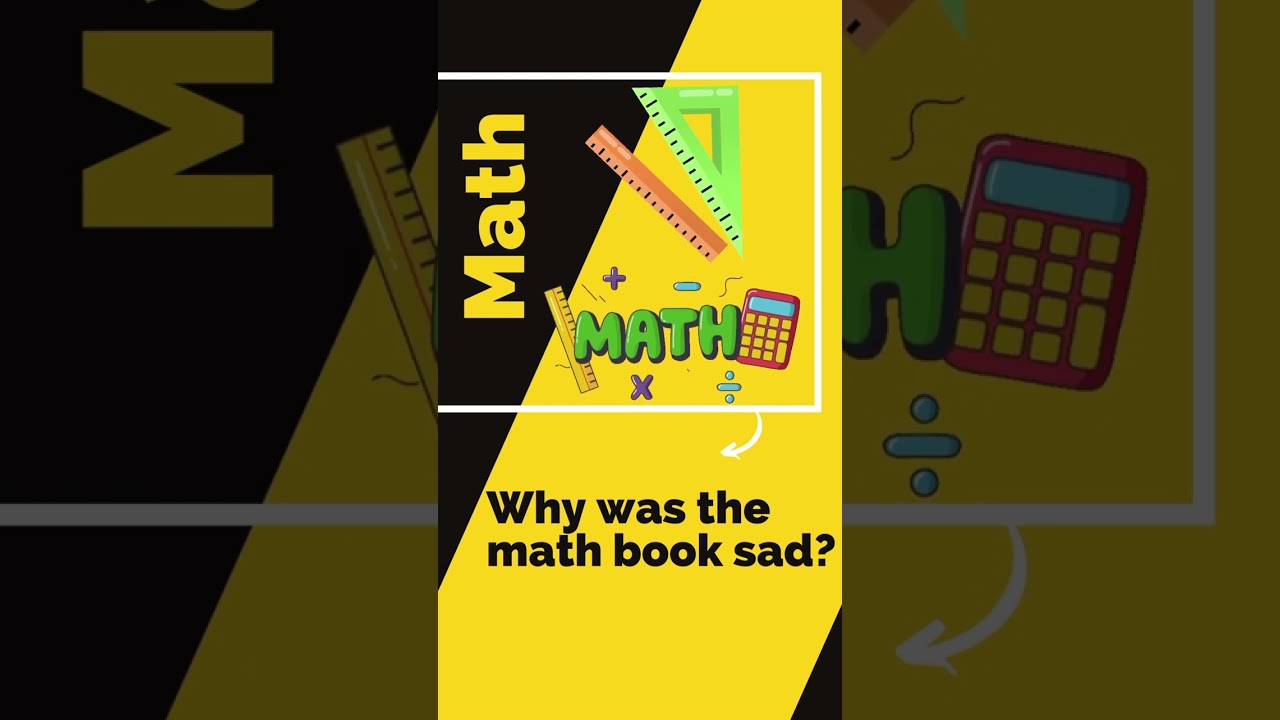
Funny Joke 11
Why was the math book sad?
Have Fun~
📍📍歡迎收看《English Speaking系列》📍📍
Talking about different festivals
👉https://youtu.be/7XWE_QB0qEk
Introduce your school
👉https://www.youtube.com/watch?v=DPfvjdEI7Dw
Back to school
👉https://www.youtube.com/watch?v=NSv5QyPmhpw
Good manners_actions
👉https://youtu.be/_Swu0JtZke0
Good manners
👉https://www.youtube.com/watch?v=HGME2UCt6-M&t=29s
Talking about daily routines
👉https://youtu.be/Np8mJ1uw8c8
📍📍歡迎收看《Grammar系列》📍📍
Lesson4_common mistakes
👉https://youtu.be/A7Yz6eEcYPs
Lesson3_irregular verbs_part2
👉https://youtu.be/vE6AnyrYDZQ
Lesson2_irregular verbs_part 1
👉https://youtu.be/C_p_r053MeQ
Lesson1_Opposite words
👉https://youtu.be/ftz3u46E0Zo
📍📍歡迎收看《Cooking系列》📍📍
Make fresh juice
👉https://www.youtube.com/watch?v=VFOo2RW_qoI
📍📍歡迎收看《Shorts系列》📍📍
Funny jokes 5
👉https://youtube.com/shorts/7Rq0v77lq3Q
Funny jokes 3
👉https://youtube.com/shorts/VJe4DCE9lLs
Funny joke 2
👉https://youtube.com/shorts/2ouEf37QtdQ
Funny joke 1
👉https://youtube.com/shorts/OJ2-YEfl2uw
Tongue twister_birdie vs turdie vs pie
👉https://youtube.com/shorts/yvOv4EVm6Xc
Tongue twister_scream vs ice cream
👉https://youtube.com/shorts/KBi79AOOPow
Tongue twister_fuzzy vs wuzzy
👉https://youtube.com/shorts/pwGPW_cWdxc
Tongue twister_whether vs weather
👉https://youtube.com/shorts/_3yjqCC4ASA
Read with me_Irregular verbs Part A
👉https://youtube.com/shorts/OfA0FlrxVy8
Read with me_Irregular verbs Part B
👉https://youtube.com/shorts/GV9iXpKMUAk
📍📍歡迎收看《Fun Games系列》📍📍
Make a guess
👉https://youtu.be/J0E2LF9_chU
Quiz Time
👉https://youtu.be/M4JrGzedjH0
Quiz Time
👉https://youtu.be/k7cTb77sh1Q
Quiz Time
👉https://www.youtube.com/watch?v=QGwhG4Mk_Ow&t=5s
Quiz Time
👉https://www.youtube.com/watch?v=xDUJPNRh3mA
📍📍歡迎收看《Basic conversation系列》📍📍
Basic conversation Lesson 9_How can I help you
👉https://youtu.be/6Nx1dXLeQMU
Basic conversation Lesson 8_Talking about your best friend
👉https://youtu.be/NknxeVxhP7A
Basic conversation Fun Lesson_Different languages
👉https://youtu.be/mCJPRD7pahw
Basic conversation Lesson 7_Apply for a library card and borrow books
👉https://www.youtube.com/watch?v=5XCmL9clkQY
Basic conversation Lesson 6_Ordering food
👉https://youtu.be/xaJKiHn6vuc
Basic conversation Lesson 5_Visiting friends
👉https://youtu.be/5TkeC8iirVA
Basic conversation Lesson 4_Making phone calls
👉https://youtu.be/B2CUxLSK5CU
Basic conversation Lesson 3_Types of weather
👉https://youtu.be/ivyo-t50qnw
Basic conversation Lesson 2_Days in a week
👉https://youtu.be/fAtrVak5qLo
Basic conversation Lesson 1_Greetings
👉https://youtu.be/hl_foOF6EjY
📍📍歡迎收看其他《Vocabulary詞匯系列》📍📍
Animals on land_陸地動物
👉https://youtu.be/XxZXjGkJkCQ
Animals in the sea_海洋動物
👉https://youtu.be/gN7GsS6cCeg
Parts of the body_身體部份名稱
👉https://youtu.be/GviCG650sng
Theme Park facilities_主題公園設施
👉https://youtu.be/RiP4etv1ANs
Famous Landmarks_國家名勝地標名稱
👉https://youtu.be/-_rRauEiDic
Colour_顏色
👉Part 2https://youtu.be/78xUTO1My_E
Furniture in the living room_客廳內傢俱名稱
👉https://www.youtube.com/watch?v=smN7hHwHL1g
2D shapes_平面形狀的名稱
👉https://www.youtube.com/watch?v=P4wT5wmqIRY
Jobs_職業名稱
👉https://www.youtube.com/watch?v=NYDTE...
Hairstyle_不同髮型的英文名稱
👉https://www.youtube.com/watch?v=PU_BB2Kvj_w
Solar System_太陽系
👉https://www.youtube.com/watch?v=Qwwczge-_ks
Tableware_餐具名稱
👉https://www.youtube.com/watch?v=rm4FNlRQZxE
Hats_帽子的名稱
👉https://www.youtube.com/watch?v=Pl3g8JgXeGc
Egg_蛋的不同煮法名稱
👉https://www.youtube.com/watch?v=alwVK7zoplc
National Flags_國家及國旗
👉https://youtu.be/tBwHd6XHfE0
The 12 Chinese Zodiac_12生肖
👉https://youtu.be/ii8djvnF-pk
Fruit_水果名稱
👉https://youtu.be/ozwI9sk-bo4
Stationery_文具名稱
👉https://youtu.be/jsjwHTaWfkg
Colour_顏色 Part 1
👉https://youtu.be/AiiGKUEuWx4
📍📍歡迎收看《停課不停學系列》 📍📍
Number 1-10
👉https://youtu.be/wVn_0fY5i1o
Fruit
👉https://youtu.be/C3jy63nGhgA
Transportation in HK
👉https://youtu.be/5qQX0ymwwqo
Vegetables
👉https://m.youtube.com/watch?v=iu1OnlmqRI4
Sports
👉https://youtu.be/eF_Dv6owlM8
Relaxing activities
👉https://www.youtube.com/watch?v=ROv7OlyXe0A
📍📍歡迎收看《Writing a composition系列》 📍📍
👉School Picnic Day
https://youtu.be/GNXyS84JrQo
At the beach
👉https://www.youtube.com/watch?v=WcERiNMpb9s
📍📍歡迎收看《小一叩門面試》系列 📍📍
👉School Interview_Part 1:Talking about yourself
https://www.youtube.com/watch?v=wWTwr2o4_uo
👉小一叩門:不能不看題目背後的真正意義
https://m.youtube.com/watch?v=msqXn02v8tw
👉小一叩門:面試陷阱
https://m.youtube.com/watch?v=OrTx4B_cnkw

Here are other videos about Jobs. 還有其他有關「職業名稱」的影片:
Jobs | Vocabulary|https://youtu.be/NYDTEtmwwoE
-----------------------------------------------------------------------------------
Please SUBSCRIBE to our channel, LIKE, and SHARE to encourage us to share more useful and interesting knowledge.
請訂閱我們的頻道、點讚、分享,鼓勵我們分享更多有用又有趣的知識。
-----------------------------------------------------------------------------------
Welcome to watch our videos
歡迎觀看我們所創作的的其他影片
1)Basic Conversation 會話
https://www.youtube.com/playli....st?list=PLPoPxSDq_eP
2) Grammar 語法
https://www.youtube.com/playli....st?list=PLPoPxSDq_eP
3)English Speaking
https://www.youtube.com/playli....st?list=PLPoPxSDq_eP
4)Funny Jokes 笑話
https://www.youtube.com/playli....st?list=PLPoPxSDq_eP
5)Vocabulary 詞彙
https://www.youtube.com/playli....st?list=PLPoPxSDq_eP
6)English Idioms 英語成語
https://www.youtube.com/playli....st?list=PLPoPxSDq_eP
7)Revision Exercise 重温練習
https://www.youtube.com/playli....st?list=PLPoPxSDq_eP
8)Fun Games 趣遊戲味
https://www.youtube.com/playli....st?list=PLPoPxSDq_eP
9) Tongue Twister 繞口令
https://www.youtube.com/playli....st?list=PLPoPxSDq_eP
10)Writing a composition 作文
https://www.youtube.com/playli....st?list=PLPoPxSDq_eP

Here are some other videos talking about routine that you may be interested in.
Daily Routine | English Speaking|https://youtu.be/Np8mJ1uw8c8
Daily routines of a housewife|English Speaking | https://youtu.be/fxVWykl7JKQ
-----------------------------------------------------------------------------------
Please SUBSCRIBE to our channel, LIKE, and SHARE to encourage us to share more useful and interesting knowledge.
請訂閱我們的頻道、點讚、分享,鼓勵我們分享更多有用又有趣的知識。
-----------------------------------------------------------------------------------
Welcome to watch our videos
歡迎觀看我們所創作的的其他影片
1)Basic Conversation 會話
https://www.youtube.com/playli....st?list=PLPoPxSDq_eP
2) Grammar 語法
https://www.youtube.com/playli....st?list=PLPoPxSDq_eP
3)English Speaking
https://www.youtube.com/playli....st?list=PLPoPxSDq_eP
4)Funny Jokes 笑話
https://www.youtube.com/playli....st?list=PLPoPxSDq_eP
5)Vocabulary 詞彙
https://www.youtube.com/playli....st?list=PLPoPxSDq_eP
6)English Idioms 英語成語
https://www.youtube.com/playli....st?list=PLPoPxSDq_eP
7)Revision Exercise 重温練習
https://www.youtube.com/playli....st?list=PLPoPxSDq_eP
8)Fun Games 趣遊戲味
https://www.youtube.com/playli....st?list=PLPoPxSDq_eP
9) Tongue Twister 繞口令
https://www.youtube.com/playli....st?list=PLPoPxSDq_eP
10)Writing a composition 作文
https://www.youtube.com/playli....st?list=PLPoPxSDq_eP

Here is another video talking about 3 easy tips of tidying up.
以下是一段關影片是給小孩的簡單整理術:
3 Easy Tidying Up Tips | Basic Conversation|https://youtu.be/GoGC6Z6Uwrs
3 Easy Tidying Up Tips | 給小孩的簡單整理術|https://youtube.com/shorts/rQg_4FLhIk8
-----------------------------------------------------------------------------------
Please SUBSCRIBE to our channel, LIKE, and SHARE to encourage us to share more useful and interesting knowledge.
請訂閱我們的頻道、點讚、分享,鼓勵我們分享更多有用又有趣的知識。
-----------------------------------------------------------------------------------
Welcome to watch our videos
歡迎觀看我們所創作的的其他影片
1)Basic Conversation 會話
https://www.youtube.com/playli....st?list=PLPoPxSDq_eP
2) Grammar 語法
https://www.youtube.com/playli....st?list=PLPoPxSDq_eP
3)English Speaking
https://www.youtube.com/playli....st?list=PLPoPxSDq_eP
4)Funny Jokes 笑話
https://www.youtube.com/playli....st?list=PLPoPxSDq_eP
5)Vocabulary 詞彙
https://www.youtube.com/playli....st?list=PLPoPxSDq_eP
6)English Idioms 英語成語
https://www.youtube.com/playli....st?list=PLPoPxSDq_eP
7)Revision Exercise 重温練習
https://www.youtube.com/playli....st?list=PLPoPxSDq_eP
8)Fun Games 趣遊戲味
https://www.youtube.com/playli....st?list=PLPoPxSDq_eP
9) Tongue Twister 繞口令
https://www.youtube.com/playli....st?list=PLPoPxSDq_eP
10)Writing a composition 作文
https://www.youtube.com/playli....st?list=PLPoPxSDq_eP

-----------------------------------------------------------------------------------
Please SUBSCRIBE to our channel, LIKE, and SHARE to encourage us to share more useful and interesting knowledge.
請訂閱我們的頻道、點讚、分享,鼓勵我們分享更多有用又有趣的知識。
-----------------------------------------------------------------------------------
📍📍Welcome to watch our videos📍📍
歡迎觀看我們所創作的的其他影片
1)Basic Conversation 會話
https://www.youtube.com/playli....st?list=PLPoPxSDq_eP
2) Grammar 語法
https://www.youtube.com/playli....st?list=PLPoPxSDq_eP
3)English Speaking
https://www.youtube.com/playli....st?list=PLPoPxSDq_eP
4)Funny Jokes 笑話
https://www.youtube.com/playli....st?list=PLPoPxSDq_eP
5)Vocabulary 詞彙
https://www.youtube.com/playli....st?list=PLPoPxSDq_eP
6)English Idioms 英語成語
https://www.youtube.com/playli....st?list=PLPoPxSDq_eP
7)Revision Exercise 重温練習
https://www.youtube.com/playli....st?list=PLPoPxSDq_eP
8)Fun Games 趣遊戲味
https://www.youtube.com/playli....st?list=PLPoPxSDq_eP
9) Tongue Twister 繞口令
https://www.youtube.com/playli....st?list=PLPoPxSDq_eP
10)Writing a composition 作文
https://www.youtube.com/playli....st?list=PLPoPxSDq_eP

📍📍歡迎收看《English Speaking系列》📍📍
Talking about different festivals
👉https://youtu.be/7XWE_QB0qEk
Introduce your school
👉https://www.youtube.com/watch?v=DPfvjdEI7Dw
Back to school
👉https://www.youtube.com/watch?v=NSv5QyPmhpw
Good manners_actions
👉https://youtu.be/_Swu0JtZke0
Good manners
👉https://www.youtube.com/watch?v=HGME2UCt6-M&t=29s
Talking about daily routines
👉https://youtu.be/Np8mJ1uw8c8
📍📍歡迎收看《Grammar系列》📍📍
Lesson4_common mistakes
👉https://youtu.be/A7Yz6eEcYPs
Lesson3_irregular verbs_part2
👉https://youtu.be/vE6AnyrYDZQ
Lesson2_irregular verbs_part 1
👉https://youtu.be/C_p_r053MeQ
Lesson1_Opposite words
👉https://youtu.be/ftz3u46E0Zo
📍📍歡迎收看《Cooking系列》📍📍
Make fresh juice
👉https://www.youtube.com/watch?v=VFOo2RW_qoI
📍📍歡迎收看《Shorts系列》📍📍
Funny jokes 5
👉https://youtube.com/shorts/7Rq0v77lq3Q
Funny jokes 3
👉https://youtube.com/shorts/VJe4DCE9lLs
Funny joke 2
👉https://youtube.com/shorts/2ouEf37QtdQ
Funny joke 1
👉https://youtube.com/shorts/OJ2-YEfl2uw
Tongue twister_birdie vs turdie vs pie
👉https://youtube.com/shorts/yvOv4EVm6Xc
Tongue twister_scream vs ice cream
👉https://youtube.com/shorts/KBi79AOOPow
Tongue twister_fuzzy vs wuzzy
👉https://youtube.com/shorts/pwGPW_cWdxc
Tongue twister_whether vs weather
👉https://youtube.com/shorts/_3yjqCC4ASA
Read with me_Irregular verbs Part A
👉https://youtube.com/shorts/OfA0FlrxVy8
Read with me_Irregular verbs Part B
👉https://youtube.com/shorts/GV9iXpKMUAk
📍📍歡迎收看《Fun Games系列》📍📍
Make a guess
👉https://youtu.be/J0E2LF9_chU
Quiz Time
👉https://youtu.be/M4JrGzedjH0
Quiz Time
👉https://youtu.be/k7cTb77sh1Q
Quiz Time
👉https://www.youtube.com/watch?v=QGwhG4Mk_Ow&t=5s
Quiz Time
👉https://www.youtube.com/watch?v=xDUJPNRh3mA
📍📍歡迎收看《Basic conversation系列》📍📍
Basic conversation Lesson 9_How can I help you
👉https://youtu.be/6Nx1dXLeQMU
Basic conversation Lesson 8_Talking about your best friend
👉https://youtu.be/NknxeVxhP7A
Basic conversation Fun Lesson_Different languages
👉https://youtu.be/mCJPRD7pahw
Basic conversation Lesson 7_Apply for a library card and borrow books
👉https://www.youtube.com/watch?v=5XCmL9clkQY
Basic conversation Lesson 6_Ordering food
👉https://youtu.be/xaJKiHn6vuc
Basic conversation Lesson 5_Visiting friends
👉https://youtu.be/5TkeC8iirVA
Basic conversation Lesson 4_Making phone calls
👉https://youtu.be/B2CUxLSK5CU
Basic conversation Lesson 3_Types of weather
👉https://youtu.be/ivyo-t50qnw
Basic conversation Lesson 2_Days in a week
👉https://youtu.be/fAtrVak5qLo
Basic conversation Lesson 1_Greetings
👉https://youtu.be/hl_foOF6EjY
📍📍歡迎收看其他《Vocabulary詞匯系列》📍📍
Animals on land_陸地動物
👉https://youtu.be/XxZXjGkJkCQ
Animals in the sea_海洋動物
👉https://youtu.be/gN7GsS6cCeg
Parts of the body_身體部份名稱
👉https://youtu.be/GviCG650sng
Theme Park facilities_主題公園設施
👉https://youtu.be/RiP4etv1ANs
Famous Landmarks_國家名勝地標名稱
👉https://youtu.be/-_rRauEiDic
Colour_顏色
👉Part 2https://youtu.be/78xUTO1My_E
Furniture in the living room_客廳內傢俱名稱
👉https://www.youtube.com/watch?v=smN7hHwHL1g
2D shapes_平面形狀的名稱
👉https://www.youtube.com/watch?v=P4wT5wmqIRY
Jobs_職業名稱
👉https://www.youtube.com/watch?v=NYDTE...
Hairstyle_不同髮型的英文名稱
👉https://www.youtube.com/watch?v=PU_BB2Kvj_w
Solar System_太陽系
👉https://www.youtube.com/watch?v=Qwwczge-_ks
Tableware_餐具名稱
👉https://www.youtube.com/watch?v=rm4FNlRQZxE
Hats_帽子的名稱
👉https://www.youtube.com/watch?v=Pl3g8JgXeGc
Egg_蛋的不同煮法名稱
👉https://www.youtube.com/watch?v=alwVK7zoplc
National Flags_國家及國旗
👉https://youtu.be/tBwHd6XHfE0
The 12 Chinese Zodiac_12生肖
👉https://youtu.be/ii8djvnF-pk
Fruit_水果名稱
👉https://youtu.be/ozwI9sk-bo4
Stationery_文具名稱
👉https://youtu.be/jsjwHTaWfkg
Colour_顏色 Part 1
👉https://youtu.be/AiiGKUEuWx4
📍📍歡迎收看《停課不停學系列》 📍📍
Number 1-10
👉https://youtu.be/wVn_0fY5i1o
Fruit
👉https://youtu.be/C3jy63nGhgA
Transportation in HK
👉https://youtu.be/5qQX0ymwwqo
Vegetables
👉https://m.youtube.com/watch?v=iu1OnlmqRI4
Sports
👉https://youtu.be/eF_Dv6owlM8
Relaxing activities
👉https://www.youtube.com/watch?v=ROv7OlyXe0A
📍📍歡迎收看《Writing a composition系列》 📍📍
👉School Picnic Day
https://youtu.be/GNXyS84JrQo
At the beach
👉https://www.youtube.com/watch?v=WcERiNMpb9s
📍📍歡迎收看《小一叩門面試》系列 📍📍
👉School Interview_Part 1:Talking about yourself
https://www.youtube.com/watch?v=wWTwr2o4_uo
👉小一叩門:不能不看題目背後的真正意義
https://m.youtube.com/watch?v=msqXn02v8tw
👉小一叩門:面試陷阱
https://m.youtube.com/watch?v=OrTx4B_cnkw
英語版本:
Day of What! What! What! | https://youtu.be/DDsQR0x6Xzk
-----------------------------------------------------------------------------------
Thanks for watching.
Please subscribe our channel.
To accelerate your learning, join our patreon @learnfast101 now.
-----------------------------------------------------------------------------------
Please SUBSCRIBE to our channel, LIKE, and SHARE to encourage us to share more useful and interesting knowledge.
請訂閱我們的頻道、點讚、分享,鼓勵我們分享更多有用又有趣的知識。
-----------------------------------------------------------------------------------
Welcome to watch our videos
歡迎觀看我們所創作的的其他影片
1)Basic Conversation 會話
https://www.youtube.com/playli....st?list=PLPoPxSDq_eP
2) Grammar 語法
https://www.youtube.com/playli....st?list=PLPoPxSDq_eP
3)English Speaking
https://www.youtube.com/playli....st?list=PLPoPxSDq_eP
4)Funny Jokes 笑話
https://www.youtube.com/playli....st?list=PLPoPxSDq_eP
5)Vocabulary 詞彙
https://www.youtube.com/playli....st?list=PLPoPxSDq_eP
6)English Idioms 英語成語
https://www.youtube.com/playli....st?list=PLPoPxSDq_eP
7)Revision Exercise 重温練習
https://www.youtube.com/playli....st?list=PLPoPxSDq_eP
8)Fun Games 趣遊戲味
https://www.youtube.com/playli....st?list=PLPoPxSDq_eP
9) Tongue Twister 繞口令
https://www.youtube.com/playli....st?list=PLPoPxSDq_eP
10)Writing a composition 作文
https://www.youtube.com/playli....st?list=PLPoPxSDq_eP

📍📍歡迎收看《English Speaking系列》📍📍
Talking about different festivals
👉https://youtu.be/7XWE_QB0qEk
Introduce your school
👉https://www.youtube.com/watch?v=DPfvjdEI7Dw
Back to school
👉https://www.youtube.com/watch?v=NSv5QyPmhpw
Good manners_actions
👉https://youtu.be/_Swu0JtZke0
Good manners
👉https://www.youtube.com/watch?v=HGME2UCt6-M&t=29s
Talking about daily routines
👉https://youtu.be/Np8mJ1uw8c8
📍📍歡迎收看《Grammar系列》📍📍
Lesson4_common mistakes
👉https://youtu.be/A7Yz6eEcYPs
Lesson3_irregular verbs_part2
👉https://youtu.be/vE6AnyrYDZQ
Lesson2_irregular verbs_part 1
👉https://youtu.be/C_p_r053MeQ
Lesson1_Opposite words
👉https://youtu.be/ftz3u46E0Zo
📍📍歡迎收看《Cooking系列》📍📍
Make fresh juice
👉https://www.youtube.com/watch?v=VFOo2RW_qoI
📍📍歡迎收看《Shorts系列》📍📍
Funny jokes 5
👉https://youtube.com/shorts/7Rq0v77lq3Q
Funny jokes 3
👉https://youtube.com/shorts/VJe4DCE9lLs
Funny joke 2
👉https://youtube.com/shorts/2ouEf37QtdQ
Funny joke 1
👉https://youtube.com/shorts/OJ2-YEfl2uw
Tongue twister_birdie vs turdie vs pie
👉https://youtube.com/shorts/yvOv4EVm6Xc
Tongue twister_scream vs ice cream
👉https://youtube.com/shorts/KBi79AOOPow
Tongue twister_fuzzy vs wuzzy
👉https://youtube.com/shorts/pwGPW_cWdxc
Tongue twister_whether vs weather
👉https://youtube.com/shorts/_3yjqCC4ASA
Read with me_Irregular verbs Part A
👉https://youtube.com/shorts/OfA0FlrxVy8
Read with me_Irregular verbs Part B
👉https://youtube.com/shorts/GV9iXpKMUAk
📍📍歡迎收看《Fun Games系列》📍📍
Make a guess
👉https://youtu.be/J0E2LF9_chU
Quiz Time
👉https://youtu.be/M4JrGzedjH0
Quiz Time
👉https://youtu.be/k7cTb77sh1Q
Quiz Time
👉https://www.youtube.com/watch?v=QGwhG4Mk_Ow&t=5s
Quiz Time
👉https://www.youtube.com/watch?v=xDUJPNRh3mA
📍📍歡迎收看《Basic conversation系列》📍📍
Basic conversation Lesson 9_How can I help you
👉https://youtu.be/6Nx1dXLeQMU
Basic conversation Lesson 8_Talking about your best friend
👉https://youtu.be/NknxeVxhP7A
Basic conversation Fun Lesson_Different languages
👉https://youtu.be/mCJPRD7pahw
Basic conversation Lesson 7_Apply for a library card and borrow books
👉https://www.youtube.com/watch?v=5XCmL9clkQY
Basic conversation Lesson 6_Ordering food
👉https://youtu.be/xaJKiHn6vuc
Basic conversation Lesson 5_Visiting friends
👉https://youtu.be/5TkeC8iirVA
Basic conversation Lesson 4_Making phone calls
👉https://youtu.be/B2CUxLSK5CU
Basic conversation Lesson 3_Types of weather
👉https://youtu.be/ivyo-t50qnw
Basic conversation Lesson 2_Days in a week
👉https://youtu.be/fAtrVak5qLo
Basic conversation Lesson 1_Greetings
👉https://youtu.be/hl_foOF6EjY
📍📍歡迎收看其他《Vocabulary詞匯系列》📍📍
Animals on land_陸地動物
👉https://youtu.be/XxZXjGkJkCQ
Animals in the sea_海洋動物
👉https://youtu.be/gN7GsS6cCeg
Parts of the body_身體部份名稱
👉https://youtu.be/GviCG650sng
Theme Park facilities_主題公園設施
👉https://youtu.be/RiP4etv1ANs
Famous Landmarks_國家名勝地標名稱
👉https://youtu.be/-_rRauEiDic
Colour_顏色
👉Part 2https://youtu.be/78xUTO1My_E
Furniture in the living room_客廳內傢俱名稱
👉https://www.youtube.com/watch?v=smN7hHwHL1g
2D shapes_平面形狀的名稱
👉https://www.youtube.com/watch?v=P4wT5wmqIRY
Jobs_職業名稱
👉https://www.youtube.com/watch?v=NYDTE...
Hairstyle_不同髮型的英文名稱
👉https://www.youtube.com/watch?v=PU_BB2Kvj_w
Solar System_太陽系
👉https://www.youtube.com/watch?v=Qwwczge-_ks
Tableware_餐具名稱
👉https://www.youtube.com/watch?v=rm4FNlRQZxE
Hats_帽子的名稱
👉https://www.youtube.com/watch?v=Pl3g8JgXeGc
Egg_蛋的不同煮法名稱
👉https://www.youtube.com/watch?v=alwVK7zoplc
National Flags_國家及國旗
👉https://youtu.be/tBwHd6XHfE0
The 12 Chinese Zodiac_12生肖
👉https://youtu.be/ii8djvnF-pk
Fruit_水果名稱
👉https://youtu.be/ozwI9sk-bo4
Stationery_文具名稱
👉https://youtu.be/jsjwHTaWfkg
Colour_顏色 Part 1
👉https://youtu.be/AiiGKUEuWx4
📍📍歡迎收看《停課不停學系列》 📍📍
Number 1-10
👉https://youtu.be/wVn_0fY5i1o
Fruit
👉https://youtu.be/C3jy63nGhgA
Transportation in HK
👉https://youtu.be/5qQX0ymwwqo
Vegetables
👉https://m.youtube.com/watch?v=iu1OnlmqRI4
Sports
👉https://youtu.be/eF_Dv6owlM8
Relaxing activities
👉https://www.youtube.com/watch?v=ROv7OlyXe0A
📍📍歡迎收看《Writing a composition系列》 📍📍
👉School Picnic Day
https://youtu.be/GNXyS84JrQo
At the beach
👉https://www.youtube.com/watch?v=WcERiNMpb9s
📍📍歡迎收看《小一叩門面試》系列 📍📍
👉School Interview_Part 1:Talking about yourself
https://www.youtube.com/watch?v=wWTwr2o4_uo
👉小一叩門:不能不看題目背後的真正意義
https://m.youtube.com/watch?v=msqXn02v8tw
👉小一叩門:面試陷阱
https://m.youtube.com/watch?v=OrTx4B_cnkw
Here are other videos about self #introduction. 還有其他有關「#自我介紹」的影片:
Simple Self Introduction |https://youtu.be/2r2pYz3kD-k
Boy's Self introduction |https://youtube.com/shorts/2PTpU8AJLGQ
Girl's Self Introduction | https://youtube.com/shorts/iA3bZK3ttbg
Sakura's Self Introduction in Japanese |https://youtu.be/U28FL4p82Eo
Ashley self introudction |https://youtu.be/lF-ZiRv_61E
-----------------------------------------------------------------------------------
Please SUBSCRIBE to our channel, LIKE, and SHARE to encourage us to share more useful and interesting knowledge.
請訂閱我們的頻道、點讚、分享,鼓勵我們分享更多有用又有趣的知識。
Patreon | @LEARNFAST101 |patreon.com/LearnFast101
-----------------------------------------------------------------------------------
Welcome to watch our videos
歡迎觀看我們所創作的的其他影片
1)Basic Conversation 會話
https://www.youtube.com/playli....st?list=PLPoPxSDq_eP
2) Grammar 語法
https://www.youtube.com/playli....st?list=PLPoPxSDq_eP
3)English Speaking
https://www.youtube.com/playli....st?list=PLPoPxSDq_eP
4)Funny Jokes 笑話
https://www.youtube.com/playli....st?list=PLPoPxSDq_eP
5)Vocabulary 詞彙
https://www.youtube.com/playli....st?list=PLPoPxSDq_eP
6)English Idioms 英語成語
https://www.youtube.com/playli....st?list=PLPoPxSDq_eP
7)Revision Exercise 重温練習
https://www.youtube.com/playli....st?list=PLPoPxSDq_eP
8)Fun Games 趣遊戲味
https://www.youtube.com/playli....st?list=PLPoPxSDq_eP
9) Tongue Twister 繞口令
https://www.youtube.com/playli....st?list=PLPoPxSDq_eP
10)Writing a composition 作文
https://www.youtube.com/playli....st?list=PLPoPxSDq_eP

#Englishgrammar #温習 #revision #tense #must #mustnot
-----------------------------------------------------------------------------------
Please SUBSCRIBE to our channel, LIKE, and SHARE to encourage us to share more useful and interesting knowledge. 請訂閱我們的頻道、點讚、分享,鼓勵我們分享更多有用又有趣的知識。
-----------------------------------------------------------------------------------
Welcome to watch our videos 歡迎觀看我們所創作的其他影片
1)Basic Conversation 會話 https://www.youtube.com/playli....st?list=PLPoPxSDq_eP
2) Grammar 語法 https://www.youtube.com/playli....st?list=PLPoPxSDq_eP
3)English Speaking https://www.youtube.com/playli....st?list=PLPoPxSDq_eP
4)Funny Jokes 笑話 https://www.youtube.com/playli....st?list=PLPoPxSDq_eP
5)Vocabulary 詞彙 https://www.youtube.com/playli....st?list=PLPoPxSDq_eP
6)English Idioms 英語成語 https://www.youtube.com/playli....st?list=PLPoPxSDq_eP
7)Revision Exercise 重温練習 https://www.youtube.com/playli....st?list=PLPoPxSDq_eP
8)Fun Games 趣遊戲味 https://www.youtube.com/playli....st?list=PLPoPxSDq_eP
9) Tongue Twister 繞口令 https://www.youtube.com/playli....st?list=PLPoPxSDq_eP
10)Writing a composition 作文 https://www.youtube.com/playli....st?list=PLPoPxSDq_eP
-----------------------------------------------------------------------------------
Please SUBSCRIBE to our channel, LIKE, and SHARE to encourage us to share more useful and interesting knowledge. 請訂閱我們的頻道、點讚、分享,鼓勵我們分享更多有用又有趣的知識。
-----------------------------------------------------------------------------------
Daily revision 20_must / mustn't _BGM info
Candy by Sakura Girl | https://soundcloud.com/sakuragirl_official Music promoted by https://www.chosic.com/free-music/all/ Creative Commons CC BY 3.0 https://creativecommons.org/licenses/by/3.0/

What should you do if there is an earthquake?|https://youtu.be/loN7T261hH8
-----------------------------------------------------------------------------------
Please SUBSCRIBE to our channel, LIKE, and SHARE to encourage us to share more useful and interesting knowledge.
請訂閱我們的頻道、點讚、分享,鼓勵我們分享更多有用又有趣的知識。
-----------------------------------------------------------------------------------
Welcome to watch our videos
歡迎觀看我們所創作的的其他影片
1)Basic Conversation 會話
https://www.youtube.com/playli....st?list=PLPoPxSDq_eP
2) Grammar 語法
https://www.youtube.com/playli....st?list=PLPoPxSDq_eP
3)English Speaking
https://www.youtube.com/playli....st?list=PLPoPxSDq_eP
4)Funny Jokes 笑話
https://www.youtube.com/playli....st?list=PLPoPxSDq_eP
5)Vocabulary 詞彙
https://www.youtube.com/playli....st?list=PLPoPxSDq_eP
6)English Idioms 英語成語
https://www.youtube.com/playli....st?list=PLPoPxSDq_eP
7)Revision Exercise 重温練習
https://www.youtube.com/playli....st?list=PLPoPxSDq_eP
8)Fun Games 趣遊戲味
https://www.youtube.com/playli....st?list=PLPoPxSDq_eP
9) Tongue Twister 繞口令
https://www.youtube.com/playli....st?list=PLPoPxSDq_eP
10)Writing a composition 作文
https://www.youtube.com/playli....st?list=PLPoPxSDq_eP

Grammar Lesson7 | Uncountable nouns with quantifiers #grammar #uncountablenouns #英語語法 #量詞 #learnfast
📍歡迎收看《Revision Exercise系列》📍
Exercise 3_Prepositions of place
👉https://youtu.be/ExYRxnoHzMs
Exercise 2_Question Words
👉https://youtu.be/jyBpWyIsObg
Exercise 1_Tenses
👉https://youtu.be/ScD4qTywcZw
📍📍歡迎收看《English Speaking系列》📍📍
Talking about your neighbourhood
👉https://youtu.be/pVZsqtQ2pMA
Talking about different festivals
👉https://youtu.be/7XWE_QB0qEk
Introduce your school
👉https://www.youtube.com/watch?v=DPfvjdEI7Dw
Back to school
👉https://www.youtube.com/watch?v=NSv5QyPmhpw
Good manners_actions
👉https://youtu.be/_Swu0JtZke0
Good manners
👉https://www.youtube.com/watch?v=HGME2UCt6-M&t=29s
Talking about daily routines
👉https://youtu.be/Np8mJ1uw8c8
📍歡迎收看《Grammar系列》📍
Lesson 7_Uncountable nouns_quantifiers
👉https://youtu.be/pFSxA4egs8o
Lesson 6_opposite words
👉https://youtu.be/OqULbwKTVwk
Lesson 5_irregular verbs_part3
👉https://youtu.be/2gGmVYQW_0k
Lesson4_common mistakes
👉https://youtu.be/A7Yz6eEcYPs
Lesson3_irregular verbs_part2
👉https://youtu.be/vE6AnyrYDZQ
Lesson2_irregular verbs_part 1
👉https://youtu.be/C_p_r053MeQ
Lesson1_Opposite words
👉https://youtu.be/ftz3u46E0Zo
📍📍歡迎收看《Cooking系列》📍📍
Make fresh juice
👉https://www.youtube.com/watch?v=VFOo2RW_qoI
📍📍歡迎收看《Shorts系列》📍📍
Funny jokes 5
👉https://youtube.com/shorts/7Rq0v77lq3Q
Funny jokes 3
👉https://youtube.com/shorts/VJe4DCE9lLs
Funny joke 2
👉https://youtube.com/shorts/2ouEf37QtdQ
Funny joke 1
👉https://youtube.com/shorts/OJ2-YEfl2uw
Tongue twister_whose/shoes/choose
👉https://youtube.com/shorts/S9Rrw_scQ8o
Tongue twister_birdie vs turdie vs pie
👉https://youtube.com/shorts/yvOv4EVm6Xc
Tongue twister_scream vs ice cream
👉https://youtube.com/shorts/KBi79AOOPow
Tongue twister_fuzzy vs wuzzy
👉https://youtube.com/shorts/pwGPW_cWdxc
Tongue twister_whether vs weather
👉https://youtube.com/shorts/_3yjqCC4ASA
Read with me_Irregular verbs Part A
👉https://youtube.com/shorts/OfA0FlrxVy8
Read with me_Irregular verbs Part B
👉https://youtube.com/shorts/GV9iXpKMUAk
📍📍歡迎收看《Fun Games系列》📍📍
Make a guess
👉https://youtu.be/J0E2LF9_chU
Quiz Time
👉https://youtu.be/M4JrGzedjH0
Quiz Time
👉https://youtu.be/k7cTb77sh1Q
Quiz Time
👉https://www.youtube.com/watch?v=QGwhG4Mk_Ow&t=5s
Quiz Time
👉https://www.youtube.com/watch?v=xDUJPNRh3mA
📍📍歡迎收看《Basic conversation系列》📍📍
Basic conversation Lesson 9_How can I help you
👉https://youtu.be/6Nx1dXLeQMU
Basic conversation Lesson 8_Talking about your best friend
👉https://youtu.be/NknxeVxhP7A
Basic conversation Fun Lesson_Different languages
👉https://youtu.be/mCJPRD7pahw
Basic conversation Lesson 7_Apply for a library card and borrow books
👉https://www.youtube.com/watch?v=5XCmL9clkQY
Basic conversation Lesson 6_Ordering food
👉https://youtu.be/xaJKiHn6vuc
Basic conversation Lesson 5_Visiting friends
👉https://youtu.be/5TkeC8iirVA
Basic conversation Lesson 4_Making phone calls
👉https://youtu.be/B2CUxLSK5CU
Basic conversation Lesson 3_Types of weather
👉https://youtu.be/ivyo-t50qnw
Basic conversation Lesson 2_Days in a week
👉https://youtu.be/fAtrVak5qLo
Basic conversation Lesson 1_Greetings
👉https://youtu.be/hl_foOF6EjY
📍📍歡迎收看其他《Vocabulary詞匯系列》📍📍
Animals on land_陸地動物
👉https://youtu.be/XxZXjGkJkCQ
Animals in the sea_海洋動物
👉https://youtu.be/gN7GsS6cCeg
Parts of the body_身體部份名稱
👉https://youtu.be/GviCG650sng
Theme Park facilities_主題公園設施
👉https://youtu.be/RiP4etv1ANs
Famous Landmarks_國家名勝地標名稱
👉https://youtu.be/-_rRauEiDic
Colour_顏色
👉Part 2https://youtu.be/78xUTO1My_E
Furniture in the living room_客廳內傢俱名稱
👉https://www.youtube.com/watch?v=smN7hHwHL1g
2D shapes_平面形狀的名稱
👉https://www.youtube.com/watch?v=P4wT5wmqIRY
Jobs_職業名稱
👉https://www.youtube.com/watch?v=NYDTE...
Hairstyle_不同髮型的英文名稱
👉https://www.youtube.com/watch?v=PU_BB2Kvj_w
Solar System_太陽系
👉https://www.youtube.com/watch?v=Qwwczge-_ks
Tableware_餐具名稱
👉https://www.youtube.com/watch?v=rm4FNlRQZxE
Hats_帽子的名稱
👉https://www.youtube.com/watch?v=Pl3g8JgXeGc
Egg_蛋的不同煮法名稱
👉https://www.youtube.com/watch?v=alwVK7zoplc
National Flags_國家及國旗
👉https://youtu.be/tBwHd6XHfE0
The 12 Chinese Zodiac_12生肖
👉https://youtu.be/ii8djvnF-pk
Fruit_水果名稱
👉https://youtu.be/ozwI9sk-bo4
Stationery_文具名稱
👉https://youtu.be/jsjwHTaWfkg
Colour_顏色 Part 1
👉https://youtu.be/AiiGKUEuWx4
📍📍歡迎收看《停課不停學系列》 📍📍
Number 1-10
👉https://youtu.be/wVn_0fY5i1o
Fruit
👉https://youtu.be/C3jy63nGhgA
Transportation in HK
👉https://youtu.be/5qQX0ymwwqo
Vegetables
👉https://m.youtube.com/watch?v=iu1OnlmqRI4
Sports
👉https://youtu.be/eF_Dv6owlM8
Relaxing activities
👉https://www.youtube.com/watch?v=ROv7OlyXe0A
📍📍歡迎收看《Writing a composition系列》 📍📍
👉School Picnic Day
https://youtu.be/GNXyS84JrQo
At the beach
👉https://www.youtube.com/watch?v=WcERiNMpb9s
📍📍歡迎收看《小一叩門面試》系列 📍📍
👉School Interview_Part 1:Talking about yourself
https://www.youtube.com/watch?v=wWTwr2o4_uo
👉小一叩門:不能不看題目背後的真正意義
https://m.youtube.com/watch?v=msqXn02v8tw
👉小一叩門:面試陷阱
https://m.youtube.com/watch?v=OrTx4B_cnkw

Here are some other videos you may interested in:
Back to school | English Speaking|https://youtu.be/NSv5QyPmhpw
Back to school | Shorts | https://youtube.com/shorts/fshuRbBzoKI
-----------------------------------------------------------------------------------
Please SUBSCRIBE to our channel, LIKE, and SHARE to encourage us to share more useful and interesting knowledge.
請訂閱我們的頻道、點讚、分享,鼓勵我們分享更多有用又有趣的知識。
-----------------------------------------------------------------------------------
Welcome to watch our videos
歡迎觀看我們所創作的的其他影片
1)Basic Conversation 會話
https://www.youtube.com/playli....st?list=PLPoPxSDq_eP
2) Grammar 語法
https://www.youtube.com/playli....st?list=PLPoPxSDq_eP
3)English Speaking
https://www.youtube.com/playli....st?list=PLPoPxSDq_eP
4)Funny Jokes 笑話
https://www.youtube.com/playli....st?list=PLPoPxSDq_eP
5)Vocabulary 詞彙
https://www.youtube.com/playli....st?list=PLPoPxSDq_eP
6)English Idioms 英語成語
https://www.youtube.com/playli....st?list=PLPoPxSDq_eP
7)Revision Exercise 重温練習
https://www.youtube.com/playli....st?list=PLPoPxSDq_eP
8)Fun Games 趣遊戲味
https://www.youtube.com/playli....st?list=PLPoPxSDq_eP
9) Tongue Twister 繞口令
https://www.youtube.com/playli....st?list=PLPoPxSDq_eP
10)Writing a composition 作文
https://www.youtube.com/playli....st?list=PLPoPxSDq_eP
-----------------------------------------------------------------------------------
Please SUBSCRIBE to our channel, LIKE, and SHARE to encourage us to share more useful and interesting knowledge.
請訂閱我們的頻道、點讚、分享,鼓勵我們分享更多有用又有趣的知識。
-----------------------------------------------------------------------------------

📍📍歡迎收看《English Speaking系列》📍📍
Talking about different festivals
👉https://youtu.be/7XWE_QB0qEk
Introduce your school
👉https://www.youtube.com/watch?v=DPfvjdEI7Dw
Back to school
👉https://www.youtube.com/watch?v=NSv5QyPmhpw
Good manners_actions
👉https://youtu.be/_Swu0JtZke0
Good manners
👉https://www.youtube.com/watch?v=HGME2UCt6-M&t=29s
Talking about daily routines
👉https://youtu.be/Np8mJ1uw8c8
📍📍歡迎收看《Grammar系列》📍📍
Lesson4_common mistakes
👉https://youtu.be/A7Yz6eEcYPs
Lesson3_irregular verbs_part2
👉https://youtu.be/vE6AnyrYDZQ
Lesson2_irregular verbs_part 1
👉https://youtu.be/C_p_r053MeQ
Lesson1_Opposite words
👉https://youtu.be/ftz3u46E0Zo
📍📍歡迎收看《Cooking系列》📍📍
Make fresh juice
👉https://www.youtube.com/watch?v=VFOo2RW_qoI
📍📍歡迎收看《Shorts系列》📍📍
Funny jokes 5
👉https://youtube.com/shorts/7Rq0v77lq3Q
Funny jokes 3
👉https://youtube.com/shorts/VJe4DCE9lLs
Funny joke 2
👉https://youtube.com/shorts/2ouEf37QtdQ
Funny joke 1
👉https://youtube.com/shorts/OJ2-YEfl2uw
Tongue twister_birdie vs turdie vs pie
👉https://youtube.com/shorts/yvOv4EVm6Xc
Tongue twister_scream vs ice cream
👉https://youtube.com/shorts/KBi79AOOPow
Tongue twister_fuzzy vs wuzzy
👉https://youtube.com/shorts/pwGPW_cWdxc
Tongue twister_whether vs weather
👉https://youtube.com/shorts/_3yjqCC4ASA
Read with me_Irregular verbs Part A
👉https://youtube.com/shorts/OfA0FlrxVy8
Read with me_Irregular verbs Part B
👉https://youtube.com/shorts/GV9iXpKMUAk
📍📍歡迎收看《Fun Games系列》📍📍
Make a guess
👉https://youtu.be/J0E2LF9_chU
Quiz Time
👉https://youtu.be/M4JrGzedjH0
Quiz Time
👉https://youtu.be/k7cTb77sh1Q
Quiz Time
👉https://www.youtube.com/watch?v=QGwhG4Mk_Ow&t=5s
Quiz Time
👉https://www.youtube.com/watch?v=xDUJPNRh3mA
📍📍歡迎收看《Basic conversation系列》📍📍
Basic conversation Lesson 9_How can I help you
👉https://youtu.be/6Nx1dXLeQMU
Basic conversation Lesson 8_Talking about your best friend
👉https://youtu.be/NknxeVxhP7A
Basic conversation Fun Lesson_Different languages
👉https://youtu.be/mCJPRD7pahw
Basic conversation Lesson 7_Apply for a library card and borrow books
👉https://www.youtube.com/watch?v=5XCmL9clkQY
Basic conversation Lesson 6_Ordering food
👉https://youtu.be/xaJKiHn6vuc
Basic conversation Lesson 5_Visiting friends
👉https://youtu.be/5TkeC8iirVA
Basic conversation Lesson 4_Making phone calls
👉https://youtu.be/B2CUxLSK5CU
Basic conversation Lesson 3_Types of weather
👉https://youtu.be/ivyo-t50qnw
Basic conversation Lesson 2_Days in a week
👉https://youtu.be/fAtrVak5qLo
Basic conversation Lesson 1_Greetings
👉https://youtu.be/hl_foOF6EjY
📍📍歡迎收看其他《Vocabulary詞匯系列》📍📍
Animals on land_陸地動物
👉https://youtu.be/XxZXjGkJkCQ
Animals in the sea_海洋動物
👉https://youtu.be/gN7GsS6cCeg
Parts of the body_身體部份名稱
👉https://youtu.be/GviCG650sng
Theme Park facilities_主題公園設施
👉https://youtu.be/RiP4etv1ANs
Famous Landmarks_國家名勝地標名稱
👉https://youtu.be/-_rRauEiDic
Colour_顏色
👉Part 2https://youtu.be/78xUTO1My_E
Furniture in the living room_客廳內傢俱名稱
👉https://www.youtube.com/watch?v=smN7hHwHL1g
2D shapes_平面形狀的名稱
👉https://www.youtube.com/watch?v=P4wT5wmqIRY
Jobs_職業名稱
👉https://www.youtube.com/watch?v=NYDTE...
Hairstyle_不同髮型的英文名稱
👉https://www.youtube.com/watch?v=PU_BB2Kvj_w
Solar System_太陽系
👉https://www.youtube.com/watch?v=Qwwczge-_ks
Tableware_餐具名稱
👉https://www.youtube.com/watch?v=rm4FNlRQZxE
Hats_帽子的名稱
👉https://www.youtube.com/watch?v=Pl3g8JgXeGc
Egg_蛋的不同煮法名稱
👉https://www.youtube.com/watch?v=alwVK7zoplc
National Flags_國家及國旗
👉https://youtu.be/tBwHd6XHfE0
The 12 Chinese Zodiac_12生肖
👉https://youtu.be/ii8djvnF-pk
Fruit_水果名稱
👉https://youtu.be/ozwI9sk-bo4
Stationery_文具名稱
👉https://youtu.be/jsjwHTaWfkg
Colour_顏色 Part 1
👉https://youtu.be/AiiGKUEuWx4
📍📍歡迎收看《停課不停學系列》 📍📍
Number 1-10
👉https://youtu.be/wVn_0fY5i1o
Fruit
👉https://youtu.be/C3jy63nGhgA
Transportation in HK
👉https://youtu.be/5qQX0ymwwqo
Vegetables
👉https://m.youtube.com/watch?v=iu1OnlmqRI4
Sports
👉https://youtu.be/eF_Dv6owlM8
Relaxing activities
👉https://www.youtube.com/watch?v=ROv7OlyXe0A
📍📍歡迎收看《Writing a composition系列》 📍📍
👉School Picnic Day
https://youtu.be/GNXyS84JrQo
At the beach
👉https://www.youtube.com/watch?v=WcERiNMpb9s
📍📍歡迎收看《小一叩門面試》系列 📍📍
👉School Interview_Part 1:Talking about yourself
https://www.youtube.com/watch?v=wWTwr2o4_uo
👉小一叩門:不能不看題目背後的真正意義
https://m.youtube.com/watch?v=msqXn02v8tw
👉小一叩門:面試陷阱
https://m.youtube.com/watch?v=OrTx4B_cnkw

-----------------------------------------------------------------------------------
Please SUBSCRIBE to our channel, LIKE, and SHARE to encourage us to share more useful and interesting knowledge.
請訂閱我們的頻道、點讚、分享,鼓勵我們分享更多有用又有趣的知識。
-----------------------------------------------------------------------------------
📍📍Welcome to watch our videos📍📍
歡迎觀看我們所創作的的其他影片
1)Basic Conversation 會話
https://www.youtube.com/playli....st?list=PLPoPxSDq_eP
2) Grammar 語法
https://www.youtube.com/playli....st?list=PLPoPxSDq_eP
3)English Speaking
https://www.youtube.com/playli....st?list=PLPoPxSDq_eP
4)Funny Jokes 笑話
https://www.youtube.com/playli....st?list=PLPoPxSDq_eP
5)Vocabulary 詞彙
https://www.youtube.com/playli....st?list=PLPoPxSDq_eP
6)English Idioms 英語成語
https://www.youtube.com/playli....st?list=PLPoPxSDq_eP
7)Revision Exercise 重温練習
https://www.youtube.com/playli....st?list=PLPoPxSDq_eP
8)Fun Games 趣遊戲味
https://www.youtube.com/playli....st?list=PLPoPxSDq_eP
9) Tongue Twister 繞口令
https://www.youtube.com/playli....st?list=PLPoPxSDq_eP
10)Writing a composition 作文
https://www.youtube.com/playli....st?list=PLPoPxSDq_eP
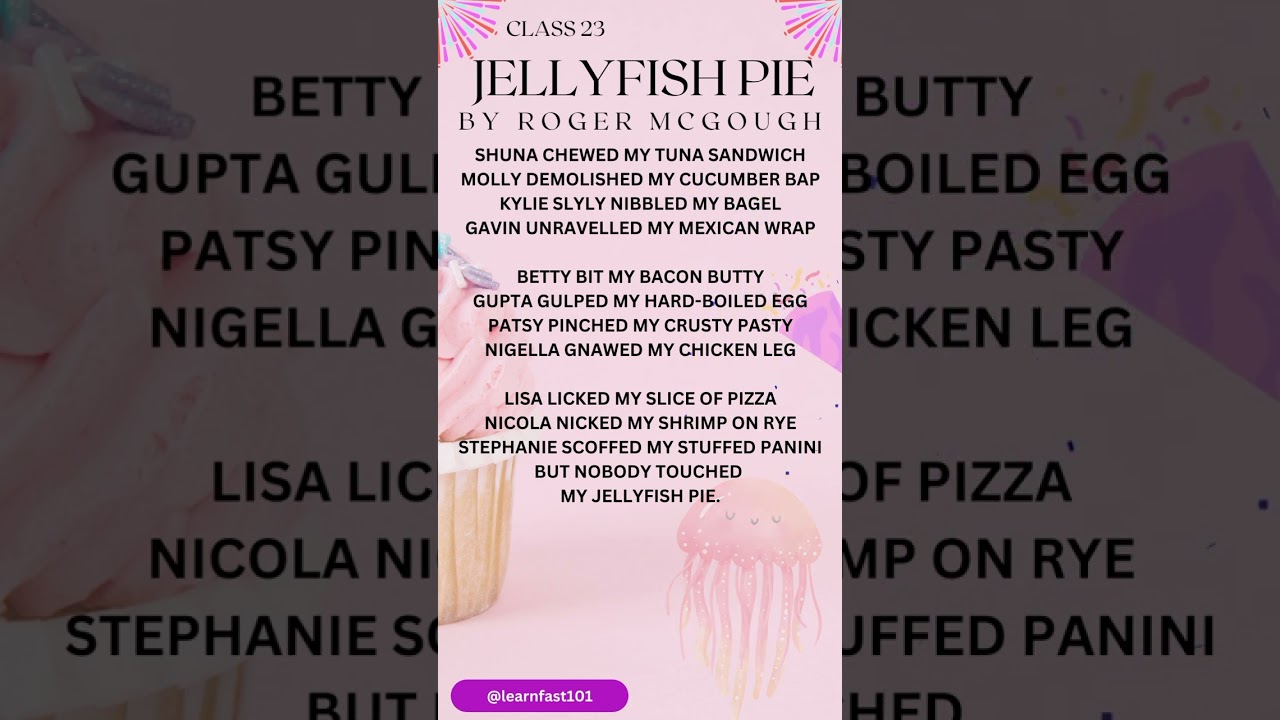
Jellyfish Pie, Roger McGough | HK Speech Festival 2023 | #shorts #speechfestival #class23 #jellyfish
Explainations on Poems | https://youtu.be/C5BxW0CIeug
-----------------------------------------------------------------------------------
Please SUBSCRIBE to our channel, LIKE, and SHARE to encourage us to share more useful and interesting knowledge.
請訂閱我們的頻道、點讚、分享,鼓勵我們分享更多有用又有趣的知識。
-----------------------------------------------------------------------------------
Welcome to watch our videos
歡迎觀看我們所創作的的其他影片
1)Basic Conversation 會話
https://www.youtube.com/playli....st?list=PLPoPxSDq_eP
2) Grammar 語法
https://www.youtube.com/playli....st?list=PLPoPxSDq_eP
3)English Speaking
https://www.youtube.com/playli....st?list=PLPoPxSDq_eP
4)Funny Jokes 笑話
https://www.youtube.com/playli....st?list=PLPoPxSDq_eP
5)Vocabulary 詞彙
https://www.youtube.com/playli....st?list=PLPoPxSDq_eP
6)English Idioms 英語成語
https://www.youtube.com/playli....st?list=PLPoPxSDq_eP
7)Revision Exercise 重温練習
https://www.youtube.com/playli....st?list=PLPoPxSDq_eP
8)Fun Games 趣遊戲味
https://www.youtube.com/playli....st?list=PLPoPxSDq_eP
9) Tongue Twister 繞口令
https://www.youtube.com/playli....st?list=PLPoPxSDq_eP
10)Writing a composition 作文
https://www.youtube.com/playli....st?list=PLPoPxSDq_eP
-----------------------------------------------------------------------------------
Please SUBSCRIBE to our channel, LIKE, and SHARE to encourage us to share more useful and interesting knowledge.
請訂閱我們的頻道、點讚、分享,鼓勵我們分享更多有用又有趣的知識。
-----------------------------------------------------------------------------------

Vocabulary | #Fruit #水果名稱
#pomegranate #石榴
#fig #無花果
#grapefruit #柚子
#avocado #牛油果
#plum #李子 #布冧
#longan #龍眼
#coconut #椰子
#kiwano #刺角瓜 #火參果 #窩瓜
#peach #桃
#startfruit #楊桃
#lemon #檸檬
#lychee #荔枝
#pineapple #菠蘿
#pear #梨子
📍📍歡迎收看《English Speaking系列》📍📍
Talking about different festivals
👉https://youtu.be/7XWE_QB0qEk
Introduce your school
👉https://www.youtube.com/watch?v=DPfvjdEI7Dw
Back to school
👉https://www.youtube.com/watch?v=NSv5QyPmhpw
Good manners_actions
👉https://youtu.be/_Swu0JtZke0
Good manners
👉https://www.youtube.com/watch?v=HGME2UCt6-M&t=29s
Talking about daily routines
👉https://youtu.be/Np8mJ1uw8c8
📍📍歡迎收看《Grammar系列》📍📍
Lesson4_common mistakes
👉https://youtu.be/A7Yz6eEcYPs
Lesson3_irregular verbs_part2
👉https://youtu.be/vE6AnyrYDZQ
Lesson2_irregular verbs_part 1
👉https://youtu.be/C_p_r053MeQ
Lesson1_Opposite words
👉https://youtu.be/ftz3u46E0Zo
📍📍歡迎收看《Cooking系列》📍📍
Make fresh juice
👉https://www.youtube.com/watch?v=VFOo2RW_qoI
📍📍歡迎收看《Shorts系列》📍📍
Funny jokes 3
👉https://youtube.com/shorts/VJe4DCE9lLs
Funny joke 2
👉https://youtube.com/shorts/2ouEf37QtdQ
Funny joke 1
👉https://youtube.com/shorts/OJ2-YEfl2uw
Tongue twister_birdie vs turdie vs pie
👉https://youtube.com/shorts/yvOv4EVm6Xc
Tongue twister_scream vs ice cream
👉https://youtube.com/shorts/KBi79AOOPow
Tongue twister_fuzzy vs wuzzy
👉https://youtube.com/shorts/pwGPW_cWdxc
Tongue twister_whether vs weather
👉https://youtube.com/shorts/_3yjqCC4ASA
Read with me_Irregular verbs Part A
👉https://youtube.com/shorts/OfA0FlrxVy8
Read with me_Irregular verbs Part B
👉https://youtube.com/shorts/GV9iXpKMUAk
📍📍歡迎收看《Fun Games系列》📍📍
Make a guess
👉https://youtu.be/J0E2LF9_chU
Quiz Time
👉https://youtu.be/M4JrGzedjH0
Quiz Time
👉https://youtu.be/k7cTb77sh1Q
Quiz Time
👉https://www.youtube.com/watch?v=QGwhG4Mk_Ow&t=5s
Quiz Time
👉https://www.youtube.com/watch?v=xDUJPNRh3mA
📍📍歡迎收看《Basic conversation系列》📍📍
Basic conversation Lesson 8_Talking about your best friend
👉https://youtu.be/NknxeVxhP7A
Basic conversation Fun Lesson_Different languages
👉https://youtu.be/mCJPRD7pahw
Basic conversation Lesson 7_Apply for a library card and borrow books
👉https://www.youtube.com/watch?v=5XCmL9clkQY
Basic conversation Lesson 6_Ordering food
👉https://youtu.be/xaJKiHn6vuc
Basic conversation Lesson 5_Visiting friends
👉https://youtu.be/5TkeC8iirVA
Basic conversation Lesson 4_Making phone calls
👉https://youtu.be/B2CUxLSK5CU
Basic conversation Lesson 3_Types of weather
👉https://youtu.be/ivyo-t50qnw
Basic conversation Lesson 2_Days in a week
👉https://youtu.be/fAtrVak5qLo
Basic conversation Lesson 1_Greetings
👉https://youtu.be/hl_foOF6EjY
📍📍歡迎收看其他《Vocabulary詞匯系列》📍📍
Animals on land_陸地動物
👉https://youtu.be/XxZXjGkJkCQ
Animals in the sea_海洋動物
👉https://youtu.be/gN7GsS6cCeg
Parts of the body_身體部份名稱
👉https://youtu.be/GviCG650sng
Theme Park facilities_主題公園設施
👉https://youtu.be/RiP4etv1ANs
Famous Landmarks_國家名勝地標名稱
👉https://youtu.be/-_rRauEiDic
Colour_顏色
👉Part 2https://youtu.be/78xUTO1My_E
Furniture in the living room_客廳內傢俱名稱
👉https://www.youtube.com/watch?v=smN7hHwHL1g
2D shapes_平面形狀的名稱
👉https://www.youtube.com/watch?v=P4wT5wmqIRY
Jobs_職業名稱
👉https://www.youtube.com/watch?v=NYDTE...
Hairstyle_不同髮型的英文名稱
👉https://www.youtube.com/watch?v=PU_BB2Kvj_w
Solar System_太陽系
👉https://www.youtube.com/watch?v=Qwwczge-_ks
Tableware_餐具名稱
👉https://www.youtube.com/watch?v=rm4FNlRQZxE
Hats_帽子的名稱
👉https://www.youtube.com/watch?v=Pl3g8JgXeGc
Egg_蛋的不同煮法名稱
👉https://www.youtube.com/watch?v=alwVK7zoplc
National Flags_國家及國旗
👉https://youtu.be/tBwHd6XHfE0
The 12 Chinese Zodiac_12生肖
👉https://youtu.be/ii8djvnF-pk
Fruit_水果名稱
👉https://youtu.be/ozwI9sk-bo4
Stationery_文具名稱
👉https://youtu.be/jsjwHTaWfkg
Colour_顏色 Part 1
👉https://youtu.be/AiiGKUEuWx4
📍📍歡迎收看《停課不停學系列》 📍📍
Number 1-10
👉https://youtu.be/wVn_0fY5i1o
Fruit
👉https://youtu.be/C3jy63nGhgA
Transportation in HK
👉https://youtu.be/5qQX0ymwwqo
Vegetables
👉https://m.youtube.com/watch?v=iu1OnlmqRI4
Sports
👉https://youtu.be/eF_Dv6owlM8
Relaxing activities
👉https://www.youtube.com/watch?v=ROv7OlyXe0A
📍📍歡迎收看《Writing a composition系列》 📍📍
👉School Picnic Day
https://youtu.be/GNXyS84JrQo
At the beach
👉https://www.youtube.com/watch?v=WcERiNMpb9s
📍📍歡迎收看《小一叩門面試》系列 📍📍
👉School Interview_Part 1:Talking about yourself
https://www.youtube.com/watch?v=wWTwr2o4_uo
👉小一叩門:不能不看題目背後的真正意義
https://m.youtube.com/watch?v=msqXn02v8tw
👉小一叩門:面試陷阱
https://m.youtube.com/watch?v=OrTx4B_cnkw

Thanks for watching.
Remember to mark your calendars and join us next Saturday for our story-telling session. We can't wait to see you there!
Please subscribe our channel.
To accelerate your learning, join our patreon @learnfast101 now.
-----------------------------------------------------------------------------------
Please SUBSCRIBE to our channel, LIKE, and SHARE to encourage us to share more useful and interesting knowledge.
請訂閱我們的頻道、點讚、分享,鼓勵我們分享更多有用又有趣的知識。
-----------------------------------------------------------------------------------
Welcome to watch our videos
歡迎觀看我們所創作的的其他影片
1)Basic Conversation 會話
https://www.youtube.com/playli....st?list=PLPoPxSDq_eP
2) Grammar 語法
https://www.youtube.com/playli....st?list=PLPoPxSDq_eP
3)English Speaking
https://www.youtube.com/playli....st?list=PLPoPxSDq_eP
4)Funny Jokes 笑話
https://www.youtube.com/playli....st?list=PLPoPxSDq_eP
5)Vocabulary 詞彙
https://www.youtube.com/playli....st?list=PLPoPxSDq_eP
6)English Idioms 英語成語
https://www.youtube.com/playli....st?list=PLPoPxSDq_eP
7)Revision Exercise 重温練習
https://www.youtube.com/playli....st?list=PLPoPxSDq_eP
8)Fun Games 趣遊戲味
https://www.youtube.com/playli....st?list=PLPoPxSDq_eP
9) Tongue Twister 繞口令
https://www.youtube.com/playli....st?list=PLPoPxSDq_eP
10)Writing a composition 作文
https://www.youtube.com/playli....st?list=PLPoPxSDq_eP
11) Story Telling 聽故事
https://youtube.com/playlist?l....ist=PLPoPxSDq_ePLrcK
#englishgrammar #study #tense #温習 #revision #questionwords #學英文 #英語語法 #英語初學者 #刻意練習
-----------------------------------------------------------------------------------
💛Please SUBSCRIBE to our channel, LIKE, and SHARE: @learnfast101
💛歡迎訂閱我們的頻道、點讚、分享: @learnfast101
-----------------------------------------------------------------------------------
今天的頻道主要溫習question words,考你10句日常問句的運用。只要花2分鐘,循環不停學英文,讓你輕鬆溫習英語文法不同的範疇。你會發現英文能力會不知不覺間神速進步!
-----------------------------------------------------------------------------------
Welcome to watch our videos 歡迎觀看我們所創作的其他影片
1)Basic Conversation 會話 https://www.youtube.com/playli....st?list=PLPoPxSDq_eP
2) Grammar 語法 https://www.youtube.com/playli....st?list=PLPoPxSDq_eP
3)English Speaking https://www.youtube.com/playli....st?list=PLPoPxSDq_eP
4)Funny Jokes 笑話 https://www.youtube.com/playli....st?list=PLPoPxSDq_eP
5)Vocabulary 詞彙 https://www.youtube.com/playli....st?list=PLPoPxSDq_eP
6)English Idioms 英語成語 https://www.youtube.com/playli....st?list=PLPoPxSDq_eP
7)Revision Exercise 重温練習 https://www.youtube.com/playli....st?list=PLPoPxSDq_eP
8)Fun Games 趣遊戲味 https://www.youtube.com/playli....st?list=PLPoPxSDq_eP
9) Tongue Twister 繞口令 https://www.youtube.com/playli....st?list=PLPoPxSDq_eP
10)Writing a composition 作文 https://www.youtube.com/playli....st?list=PLPoPxSDq_eP
-----------------------------------------------------------------------------------
Please SUBSCRIBE to our channel, LIKE, and SHARE to encourage us to share more useful and interesting knowledge. 請訂閱我們的頻道、點讚、分享,鼓勵我們分享更多有用又有趣的知識。
-----------------------------------------------------------------------------------
Daily revision 21_Question words_How/ How far? How long _BGM info
Candy by Sakura Girl | https://soundcloud.com/sakuragirl_official Music promoted by https://www.chosic.com/free-music/all/ Creative Commons CC BY 3.0 https://creativecommons.org/licenses/by/3.0/
Thanks for watching.
Remember to mark your calendars and join us next Saturday for our story-telling session. We can't wait to see you there!
Please subscribe our channel.
To accelerate your learning, join our patreon @learnfast101 now.
-----------------------------------------------------------------------------------
Please SUBSCRIBE to our channel, LIKE, and SHARE to encourage us to share more useful and interesting knowledge.
請訂閱我們的頻道、點讚、分享,鼓勵我們分享更多有用又有趣的知識。
-----------------------------------------------------------------------------------
Welcome to watch our videos
歡迎觀看我們所創作的的其他影片
1)Basic Conversation 會話
https://www.youtube.com/playli....st?list=PLPoPxSDq_eP
2) Grammar 語法
https://www.youtube.com/playli....st?list=PLPoPxSDq_eP
3)English Speaking
https://www.youtube.com/playli....st?list=PLPoPxSDq_eP
4)Funny Jokes 笑話
https://www.youtube.com/playli....st?list=PLPoPxSDq_eP
5)Vocabulary 詞彙
https://www.youtube.com/playli....st?list=PLPoPxSDq_eP
6)English Idioms 英語成語
https://www.youtube.com/playli....st?list=PLPoPxSDq_eP
7)Revision Exercise 重温練習
https://www.youtube.com/playli....st?list=PLPoPxSDq_eP
8)Fun Games 趣遊戲味
https://www.youtube.com/playli....st?list=PLPoPxSDq_eP
9) Tongue Twister 繞口令
https://www.youtube.com/playli....st?list=PLPoPxSDq_eP
10)Writing a composition 作文
https://www.youtube.com/playli....st?list=PLPoPxSDq_eP
11) Story Telling 聽故事
https://youtube.com/playlist?l....ist=PLPoPxSDq_ePLrcK
Fluffing a Duck Kevin MacLeod (incompetech.com)
Licensed under Creative Commons: By Attribution 3.0 License
http://creativecommons.org/licenses/by/3.0/
Music promoted by https://www.chosic.com/free-music/all/

📍📍歡迎收看《English Speaking系列》📍📍
Talking about different festivals
👉https://youtu.be/7XWE_QB0qEk
Introduce your school
👉https://www.youtube.com/watch?v=DPfvjdEI7Dw
Back to school
👉https://www.youtube.com/watch?v=NSv5QyPmhpw
Good manners_actions
👉https://youtu.be/_Swu0JtZke0
Good manners
👉https://www.youtube.com/watch?v=HGME2UCt6-M&t=29s
Talking about daily routines
👉https://youtu.be/Np8mJ1uw8c8
📍📍歡迎收看《Grammar系列》📍📍
Lesson4_common mistakes
👉https://youtu.be/A7Yz6eEcYPs
Lesson3_irregular verbs_part2
👉https://youtu.be/vE6AnyrYDZQ
Lesson2_irregular verbs_part 1
👉https://youtu.be/C_p_r053MeQ
Lesson1_Opposite words
👉https://youtu.be/ftz3u46E0Zo
📍📍歡迎收看《Cooking系列》📍📍
Make fresh juice
👉https://www.youtube.com/watch?v=VFOo2RW_qoI
📍📍歡迎收看《Shorts系列》📍📍
Funny jokes 5
👉https://youtube.com/shorts/7Rq0v77lq3Q
Funny jokes 3
👉https://youtube.com/shorts/VJe4DCE9lLs
Funny joke 2
👉https://youtube.com/shorts/2ouEf37QtdQ
Funny joke 1
👉https://youtube.com/shorts/OJ2-YEfl2uw
Tongue twister_birdie vs turdie vs pie
👉https://youtube.com/shorts/yvOv4EVm6Xc
Tongue twister_scream vs ice cream
👉https://youtube.com/shorts/KBi79AOOPow
Tongue twister_fuzzy vs wuzzy
👉https://youtube.com/shorts/pwGPW_cWdxc
Tongue twister_whether vs weather
👉https://youtube.com/shorts/_3yjqCC4ASA
Read with me_Irregular verbs Part A
👉https://youtube.com/shorts/OfA0FlrxVy8
Read with me_Irregular verbs Part B
👉https://youtube.com/shorts/GV9iXpKMUAk
📍📍歡迎收看《Fun Games系列》📍📍
Make a guess
👉https://youtu.be/J0E2LF9_chU
Quiz Time
👉https://youtu.be/M4JrGzedjH0
Quiz Time
👉https://youtu.be/k7cTb77sh1Q
Quiz Time
👉https://www.youtube.com/watch?v=QGwhG4Mk_Ow&t=5s
Quiz Time
👉https://www.youtube.com/watch?v=xDUJPNRh3mA
📍📍歡迎收看《Basic conversation系列》📍📍
Basic conversation Lesson 9_How can I help you
👉https://youtu.be/6Nx1dXLeQMU
Basic conversation Lesson 8_Talking about your best friend
👉https://youtu.be/NknxeVxhP7A
Basic conversation Fun Lesson_Different languages
👉https://youtu.be/mCJPRD7pahw
Basic conversation Lesson 7_Apply for a library card and borrow books
👉https://www.youtube.com/watch?v=5XCmL9clkQY
Basic conversation Lesson 6_Ordering food
👉https://youtu.be/xaJKiHn6vuc
Basic conversation Lesson 5_Visiting friends
👉https://youtu.be/5TkeC8iirVA
Basic conversation Lesson 4_Making phone calls
👉https://youtu.be/B2CUxLSK5CU
Basic conversation Lesson 3_Types of weather
👉https://youtu.be/ivyo-t50qnw
Basic conversation Lesson 2_Days in a week
👉https://youtu.be/fAtrVak5qLo
Basic conversation Lesson 1_Greetings
👉https://youtu.be/hl_foOF6EjY
📍📍歡迎收看其他《Vocabulary詞匯系列》📍📍
Animals on land_陸地動物
👉https://youtu.be/XxZXjGkJkCQ
Animals in the sea_海洋動物
👉https://youtu.be/gN7GsS6cCeg
Parts of the body_身體部份名稱
👉https://youtu.be/GviCG650sng
Theme Park facilities_主題公園設施
👉https://youtu.be/RiP4etv1ANs
Famous Landmarks_國家名勝地標名稱
👉https://youtu.be/-_rRauEiDic
Colour_顏色
👉Part 2https://youtu.be/78xUTO1My_E
Furniture in the living room_客廳內傢俱名稱
👉https://www.youtube.com/watch?v=smN7hHwHL1g
2D shapes_平面形狀的名稱
👉https://www.youtube.com/watch?v=P4wT5wmqIRY
Jobs_職業名稱
👉https://www.youtube.com/watch?v=NYDTE...
Hairstyle_不同髮型的英文名稱
👉https://www.youtube.com/watch?v=PU_BB2Kvj_w
Solar System_太陽系
👉https://www.youtube.com/watch?v=Qwwczge-_ks
Tableware_餐具名稱
👉https://www.youtube.com/watch?v=rm4FNlRQZxE
Hats_帽子的名稱
👉https://www.youtube.com/watch?v=Pl3g8JgXeGc
Egg_蛋的不同煮法名稱
👉https://www.youtube.com/watch?v=alwVK7zoplc
National Flags_國家及國旗
👉https://youtu.be/tBwHd6XHfE0
The 12 Chinese Zodiac_12生肖
👉https://youtu.be/ii8djvnF-pk
Fruit_水果名稱
👉https://youtu.be/ozwI9sk-bo4
Stationery_文具名稱
👉https://youtu.be/jsjwHTaWfkg
Colour_顏色 Part 1
👉https://youtu.be/AiiGKUEuWx4
📍📍歡迎收看《停課不停學系列》 📍📍
Number 1-10
👉https://youtu.be/wVn_0fY5i1o
Fruit
👉https://youtu.be/C3jy63nGhgA
Transportation in HK
👉https://youtu.be/5qQX0ymwwqo
Vegetables
👉https://m.youtube.com/watch?v=iu1OnlmqRI4
Sports
👉https://youtu.be/eF_Dv6owlM8
Relaxing activities
👉https://www.youtube.com/watch?v=ROv7OlyXe0A
📍📍歡迎收看《Writing a composition系列》 📍📍
👉School Picnic Day
https://youtu.be/GNXyS84JrQo
At the beach
👉https://www.youtube.com/watch?v=WcERiNMpb9s
📍📍歡迎收看《小一叩門面試》系列 📍📍
👉School Interview_Part 1:Talking about yourself
https://www.youtube.com/watch?v=wWTwr2o4_uo
👉小一叩門:不能不看題目背後的真正意義
https://m.youtube.com/watch?v=msqXn02v8tw
👉小一叩門:面試陷阱
https://m.youtube.com/watch?v=OrTx4B_cnkw

Here are other videos about self #introduction. 還有其他有關「#自我介紹」的影片:
Simple Self Introduction |https://youtu.be/2r2pYz3kD-k
Boy's Self introduction |https://youtube.com/shorts/2PTpU8AJLGQ
Sakura's Self Introduction in Japanese |https://youtu.be/U28FL4p82Eo
-----------------------------------------------------------------------------------
Please SUBSCRIBE to our channel, LIKE, and SHARE to encourage us to share more useful and interesting knowledge.
請訂閱我們的頻道、點讚、分享,鼓勵我們分享更多有用又有趣的知識。
-----------------------------------------------------------------------------------
Welcome to watch our videos
歡迎觀看我們所創作的的其他影片
1)Basic Conversation 會話
https://www.youtube.com/playli....st?list=PLPoPxSDq_eP
2) Grammar 語法
https://www.youtube.com/playli....st?list=PLPoPxSDq_eP
3)English Speaking
https://www.youtube.com/playli....st?list=PLPoPxSDq_eP
4)Funny Jokes 笑話
https://www.youtube.com/playli....st?list=PLPoPxSDq_eP
5)Vocabulary 詞彙
https://www.youtube.com/playli....st?list=PLPoPxSDq_eP
6)English Idioms 英語成語
https://www.youtube.com/playli....st?list=PLPoPxSDq_eP
7)Revision Exercise 重温練習
https://www.youtube.com/playli....st?list=PLPoPxSDq_eP
8)Fun Games 趣遊戲味
https://www.youtube.com/playli....st?list=PLPoPxSDq_eP
9) Tongue Twister 繞口令
https://www.youtube.com/playli....st?list=PLPoPxSDq_eP
10)Writing a composition 作文
https://www.youtube.com/playli....st?list=PLPoPxSDq_eP