Latest videos

PREMIERES! 👉 https://www.youtube.com/playli....st?list=PLLF_mZmNqOn
EUROPE - FUN FACTS FOR KIDS | Happy Learning 🇪🇺
Hello, Happy Learners! 🎉🌍 Welcome to a new video from Happy Learning. Today, we're going to travel through **Europe**. 🗺️✨ Yes, we're going to discover its countries, cultures, history, and many interesting facts! 🌟😊
Did you know that Europe is the second smallest continent in the world but has great cultural diversity? 🤔🌍🔍 Join us on this educational adventure and learn fascinating facts about this incredible continent. It will be a journey full of discoveries and fun! 😄🎉
Don't miss it! Give it a like 👍, subscribe 🔔, and share this video with all your friends. Let's learn and have fun together! 🚀😊
#Europe #HistoryForKids #Education #FunFacts #HappyLearning #LearningIsFun
Discover hundreds of unseen resources! Create your free account on [Happy Learning TV](https://my.happylearning.tv/) and learn in the most fun way.
Discover hundreds of unseen resources! Create your free account on https://my.happylearning.tv/ and learn in the most fun way.
#happylearning
#learning
#happy

🐙🦋 Welcome to Happy Learning’s live session on invertebrates and insects! In this exciting educational livestream, children will discover what invertebrates are, how they are classified, the role insects play in this group, and why they are essential for the balance of nature.
Natural Sciences in Primary School aim to help children understand the world around them by developing their curiosity and critical thinking through observation and experimentation. They learn about nature, living beings, the human body, energy and the environment, while also understanding the importance of caring for the planet.
📖 SUBJECT PLAYLISTS
🦖⛰️🐅 NATURAL SCIENCES for Primary School: https://www.youtube.com/playli....st?list=PLLF_mZmNqOn
👨🏫 SOCIAL SCIENCES for Primary School: https://www.youtube.com/playli....st?list=PLLF_mZmNqOn
➕✖️ MATH for Primary School Children: https://www.youtube.com/playli....st?list=PLLF_mZmNqOn
🤴🏰 HISTORY for Primary School Children: https://www.youtube.com/playli....st?list=PLLF_mZmNqOn
🌍⛰️ GEOGRAPHY for Primary School Children: https://www.youtube.com/playli....st?list=PLLF_mZmNqOn
🤝😊 Values and Emotions for Primary School Children: https://www.youtube.com/playli....st?list=PLLF_mZmNqOn v=KkCIIQyevjo&list=PL_Y3qbepMRoY7gwuwniiq11oMo6Ofe724
🌍 THE HAPPY LEARNING UNIVERSE
✅ Learn more about Happy Learning and our educational platform: https://happylearning.tv/en/
✅ Discover our social mission: https://happylearning.tv/en/nemesio-diez-foundation/
✅ Download the Happy Learning App:
- iOS: https://apps.apple.com/es/app/....happy-learning-tv/id
- Android: https://play.google.com/store/apps/details?id=tv.happylearning.canal&pli=1
🎓 ABOUT HAPPY LEARNING
Happy Learning is a social enterprise created by the Nemesio Diez Foundation, working to improve people's quality of life through education, health, sports and culture.
As a social company, our mission is to educate all children in the world in values and knowledge, to promote their holistic development and their commitment to society and the planet.
We offer educational resources to families, schools, hospitals and NGOs to ensure that children everywhere have access to a high-quality, comprehensive education.
At Happy Learning, we turn learning into an exciting adventure for primary school children. 🚀
We offer over 2,000 educational resources that combine fun and learning through animated videos, reading materials, interactive games and real-world activities.
📺 HAPPY LEARNING YOUTUBE CHANNEL
Welcome to Happy Learning! 🚀📚
The educational channel where learning is an adventure. Our goal is to spark curiosity and a love for knowledge in primary school children through fun and dynamic educational videos.
Discover the fascinating world of science with videos on Dinosaurs, the Solar System, Invertebrate Animals, Arachnids and much more. Travel back in time with history videos covering Prehistory, the Discovery of America or Ancient Egypt. Learn geography with content about The Earth and Its Movements, the Water Cycle and Parts of the Earth. Strengthen math skills with videos on Multiplication, Subtraction and Matter and Its Properties, and improve Spanish language understanding with lessons on Nouns, Sentences and Subject and Predicate.
Happy Learning transforms education into an exciting experience through animated videos, clear explanations and interactive activities. Perfect for children, parents and teachers seeking high-quality educational content.
🌟 Join our community of explorers!
Discover hundreds of never-before-seen resources! Create your free account at https://my.happylearning.tv/ and start learning in the most entertaining way.
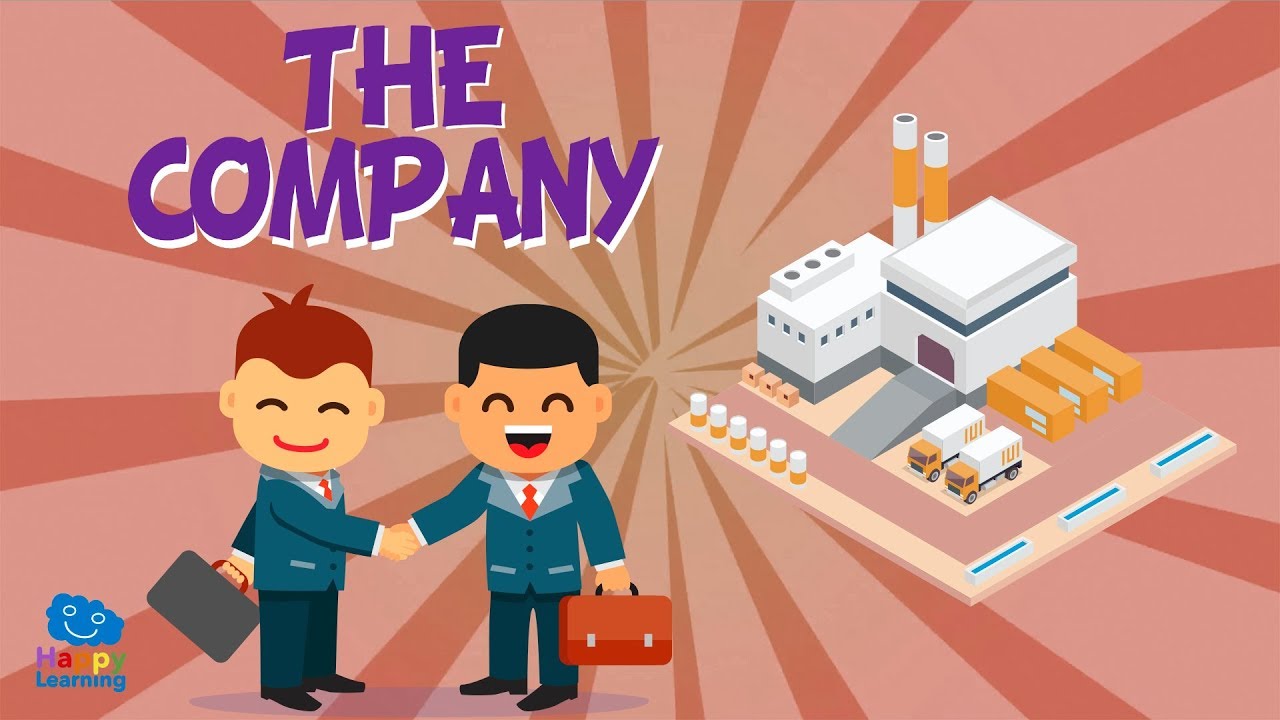
What are you waiting for? In this video we are going to know everything about the Company. As we always tell you, it is very important to know how the world works, to be a part of it.
▶SUBSCRIBE TO HAPPY LEARNING! http://bit.ly/HappyLearningTV
▶Web site: https://happylearning.tv/en/
▶Follow us on Facebook: https://www.facebook.com/HappyLearningTv
Recommended video: The Industrial Revolution
https://www.youtube.com/watch?v=Xh_Lk7kDrUI
Companies are organizations which dedicate themselves
to producing goods or services in exchange for a benefit,
or in other words, for money.
The goods are the products which the companies make.
Some companies make candy, clothes, books full of
stories, and there are companies which make cars. There
are loads of companies all dedicated in manufacturing all
sorts of different products!
If you look around you, all you see has been produced in a
company.
There are also companies which provide services, such as
the transport companies which take us from one place to
another, the hairdressers who don’t sell us anything but
cut our hair and brush it, giving us a service as well as
making us look preIy. Check out all these different hair
styles!
There are a great number of services offered by
companies.
To carry out these activities, companies need material and
human resources. The material resources are what the
companies need to manufacture or produce something.
For example, a bakery needs flour, ovens, utensils,
vehicles to deliver the bread to the clients etc, etc…
A company which produces fruit juice would need fruit, a
juice squeezer, refrigerators, packaging, and trucks for
transportation…
So as to create a product one needs many resources and
that is why we should never waste anything and we must
recycle the juice container for example.
The human resources are the people who work in the
companies. These people are the employees and
employers.
The employers are those who create a company, direct it
and make sure all is working correctly, besides they are
the ones who are risking their money.
The employees are the people who are working in the
company in exchange for a salary, from their pay sheet,
meaning money.
An enterprise´s spirit is one who plans projects and brings
them to life. If you want something, you can have it!
Well now we know what a company is all about. In the
next video we will learn more about different types of
companies.

ANCIENT EGYPT | Happy Learning 🏺📜🇪🇬
Hello, Happy Learners! 🎉🏺 Welcome to a new video from Happy Learning. Today we are going to travel back in time and discover the fascinating world of **Ancient Egypt**. 📜✨ Yes, we are going to learn about the pyramids, pharaohs, and life along the Nile! 🌟😊
Did you know that the Egyptians built the impressive pyramids thousands of years ago? 🤔🏛️🔍 Join us on this educational adventure and discover amazing facts and curiosities about this incredible civilization. It will be a journey to the past full of discoveries! 😄🎉
Don't miss it! Like 👍, subscribe 🔔, and share this video with all your friends. Let's learn and have fun together! 🚀😊
#AncientEgypt #HistoryForKids #Education #FunFacts #HappyLearning #LearningIsFun
Discover hundreds of unseen resources! Create your free account at [Happy Learning TV](https://my.happylearning.tv/) and learn in the most fun way.
#happylearning #learning #happy
Discover hundreds of unseen resources! Create your free account at https://my.happylearning.tv/ and learn in the most fun way.
#happylearning #learning #happy
Discover hundreds of unseen resources! Create your free account at https://my.happylearning.tv/ and learn in the most fun way.
#happylearning
#learning
#happy

Subscribe to Happy Learning: https://my.happylearning.tv/
More related videos:
Curiosities for kids:https://www.youtube.com/playli....st?list=PLLF_mZmNqOn
❤️ The human heart is the engine of our body, beating over 100,000 times a day. In this video, we’ll explain how this incredible muscle works and explore its most important parts.
🩺 What will you learn?
Heart anatomy: Discover how the atria, ventricles, and valves work together to keep blood flowing properly.
The circulatory system: Learn how arteries carry oxygen-rich blood, veins return it to the heart, and capillaries connect everything in a perfect circuit.
Fascinating facts: Did you know the human heart weighs around 450 grams? It’s one of the strongest and most vital muscles in your body!
Heart care tips: Keep your heart healthy by exercising, eating nutritious foods, and avoiding harmful habits like smoking.
🌍 This video is perfect for learning about the human body in a fun and educational way. Don’t miss the chance to understand more about this vital organ and how to keep it in great shape.
👉 Subscribe to Happy Learning and continue exploring the wonders of the human body. Let’s take care of our hearts! ❤️
Discover hundreds of never-before-seen resources! Create your free account at https://my.happylearning.tv/ and start learning in the most entertaining way.
Discover hundreds of never-before-seen resources! Create your free account at https://my.happylearning.tv/ and start learning in the most entertaining way.
What are you waiting for? Eclipses
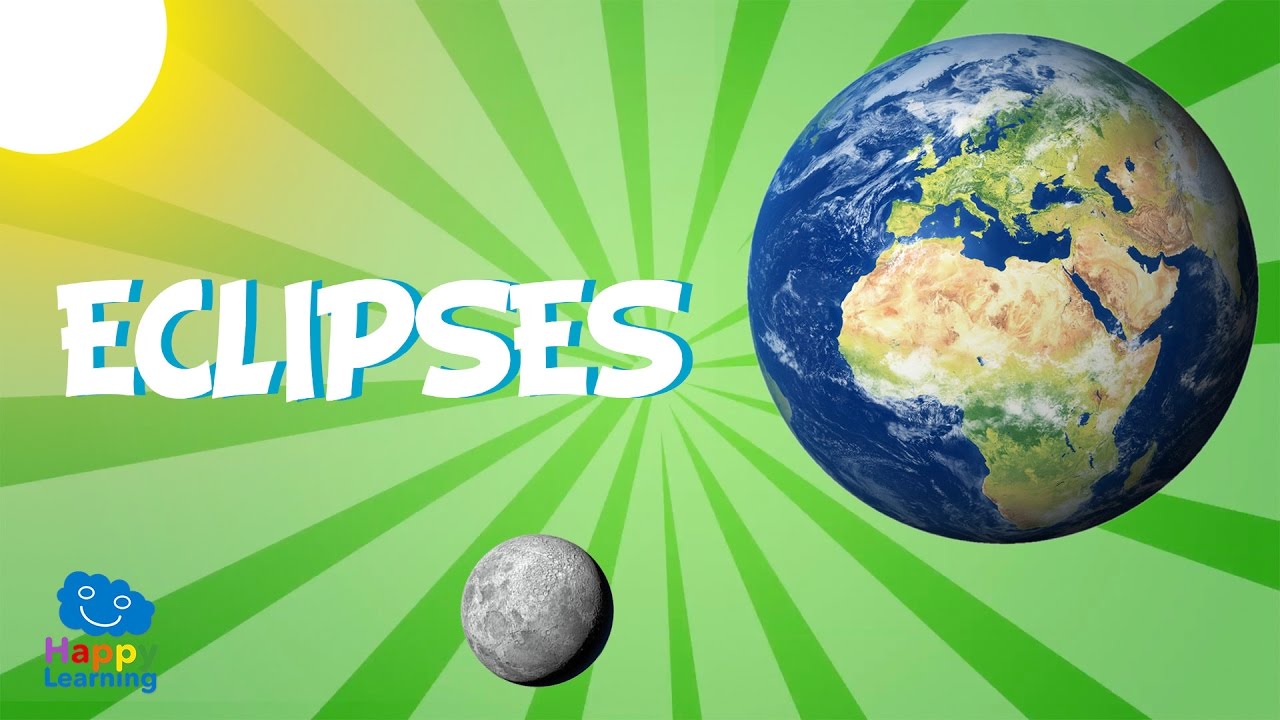
Hello friends. In this educational video for kids we are going to learn about eclipses. There are two types of eclipses, a solar eclipse and a lunar eclipse, but first of all, do you know what an eclipse is?
An eclipse occurs when an astronomical object is temporarily obscured. Sometimes the Earth is placed between the sun and the moon and other times the moon is situated between the Earth and the sun. These are eclipses… but let’s investigate it better.
The lunar eclipse is when the Earth is situated between the moon and the sun making the Earth block out the sun’s rays which would be shining on the moon, creating a shadow and darkening it. This phenomenon allows us to see the moon in a reddish color…almost as if it were bleeding.
Lunar eclipses are quite frequent and can be seen from any part of the world at night time. They last various hours and can be different types, though the most frequent ones are the partial lunar eclipse and the total lunar eclipse.
When there is an eclipse and it looks as if someone has taken a bite out of the moon, it is a partial eclipse, and when there is an eclipse and one can see the whole moon, it is a total eclipse. Easy don’t you think?
By the way, to observe a lunar eclipse one doesn’t need anything special, a normal telescope or binoculars would do.
Solar eclipses only occur when there is a new moon, and is seen when the moon is in between the Earth and the sun. The moon hides all the suns light or at least part of it.
Solar eclipses can be of different types: total, partial or annular.
A total solar eclipse is when the moon hides all of the suns light and the sun’s face disappears behind the moon. In the middle of the day, it would seem as if night has fallen. The sky darkens and stars appear. Many animals, think it’s night time and go to sleep, and nocturnal animals such as this owl, begin their day, actually their night, not understanding that in a short time the sun will reappear.
Partial solar eclipses occur when the moon comes between the Earth and the sun, but not completely, leaving part of the sun visible. The day becomes slightly darker and the sun resembles a cookie with a chunk missing.
An annular solar eclipse occurs when the moon hides only the middle part of the sun. It is seen as a black circle surrounding a bright ring. It looks like a ring, doesn’t it?
By the way and this is really important, it is very dangerous to observe solar eclipses without special eye protection. Please remember this as it is extremely harmful.
Well now we know a little bit more about eclipses…don’t you think it is fascinating learning new things?
Goodbye friends, we hope you enjoyed this educational video for children about eclipses. Don’t forget to subscribe to Happy Learning TV, so you don’t miss any of our videos.

NEW VIDEOS https://www.youtube.com/playli....st?list=PLLF_mZmNqOn
GEOLOGY https://www.youtube.com/playli....st?list=PLLF_mZmNqOn
🌍🌪️ Did you know the Earth is constantly moving? In this educational video for kids, you'll learn what earthquakes are, how they happen, and what role tectonic plates play. Discover how the Earth’s surface is shaped by movements deep within the planet. 🧭🌋
Geology in Primary School allows children to discover how the Earth was formed and how it changes over time. 🌍⛰️ Through our educational videos, they will explore types of rocks, minerals, volcanoes, earthquakes, and landforms, gaining an understanding of the geological processes that shape our planet.
With clear explanations and dynamic animations, Happy Learning makes geology fascinating and accessible, sparking curiosity about Earth science and its importance for the environment.
📖 SUBJECT PLAYLISTS
🦖⛰️🐅 NATURAL SCIENCES for Primary School: https://www.youtube.com/playli....st?list=PLLF_mZmNqOn
👨🏫 SOCIAL SCIENCES for Primary School: https://www.youtube.com/playli....st?list=PLLF_mZmNqOn
➕✖️ MATH for Primary School Children: https://www.youtube.com/playli....st?list=PLLF_mZmNqOn
🤴🏰 HISTORY for Primary School Children: https://www.youtube.com/playli....st?list=PLLF_mZmNqOn
🌍⛰️ GEOGRAPHY for Primary School Children: https://www.youtube.com/playli....st?list=PLLF_mZmNqOn
🤝😊 Values and Emotions for Primary School Children: https://www.youtube.com/playli....st?list=PLLF_mZmNqOn v=KkCIIQyevjo&list=PL_Y3qbepMRoY7gwuwniiq11oMo6Ofe724
🌍 THE HAPPY LEARNING UNIVERSE
✅ Learn more about Happy Learning and our educational platform: https://happylearning.tv/en/
✅ Discover our social mission: https://happylearning.tv/en/nemesio-diez-foundation/
✅ Download the Happy Learning App:
- iOS: https://apps.apple.com/es/app/....happy-learning-tv/id
- Android: https://play.google.com/store/apps/details?id=tv.happylearning.canal&pli=1
🎓 ABOUT HAPPY LEARNING
Happy Learning is a social enterprise created by the Nemesio Diez Foundation, working to improve people's quality of life through education, health, sports and culture.
As a social company, our mission is to educate all children in the world in values and knowledge, to promote their holistic development and their commitment to society and the planet.
We offer educational resources to families, schools, hospitals and NGOs to ensure that children everywhere have access to a high-quality, comprehensive education.
At Happy Learning, we turn learning into an exciting adventure for primary school children. 🚀
We offer over 2,000 educational resources that combine fun and learning through animated videos, reading materials, interactive games and real-world activities.
📺 HAPPY LEARNING YOUTUBE CHANNEL
Welcome to Happy Learning! 🚀📚
The educational channel where learning is an adventure. Our goal is to spark curiosity and a love for knowledge in primary school children through fun and dynamic educational videos.
Discover the fascinating world of science with videos on Dinosaurs, the Solar System, Invertebrate Animals, Arachnids and much more. Travel back in time with history videos covering Prehistory, the Discovery of America or Ancient Egypt. Learn geography with content about The Earth and Its Movements, the Water Cycle and Parts of the Earth. Strengthen math skills with videos on Multiplication, Subtraction and Matter and Its Properties, and improve Spanish language understanding with lessons on Nouns, Sentences and Subject and Predicate.
Happy Learning transforms education into an exciting experience through animated videos, clear explanations and interactive activities. Perfect for children, parents and teachers seeking high-quality educational content.
🌟 Join our community of explorers!

NEW VIDEOS https://www.youtube.com/playli....st?list=PLLF_mZmNqOn
ENVIRONMENTAL EDUCATION https://www.youtube.com/playli....st?list=PLLF_mZmNqOn
🌊🚯 Did you know that millions of tons of trash end up in the oceans every year? In this educational video for kids, you'll learn why it’s so important to protect the oceans from pollution, how marine life is affected, and what we can do every day to help the planet. 🐢🧼
Environmental education is key to helping children understand the importance of protecting the planet. Through our educational natural science videos, young learners explore topics like climate change, biodiversity, recycling, and ecosystem conservation.
📖 SUBJECT PLAYLISTS
🦖⛰️🐅 NATURAL SCIENCES for Primary School: https://www.youtube.com/playli....st?list=PLLF_mZmNqOn
👨🏫 SOCIAL SCIENCES for Primary School: https://www.youtube.com/playli....st?list=PLLF_mZmNqOn
➕✖️ MATH for Primary School Children: https://www.youtube.com/playli....st?list=PLLF_mZmNqOn
🤴🏰 HISTORY for Primary School Children: https://www.youtube.com/playli....st?list=PLLF_mZmNqOn
🌍⛰️ GEOGRAPHY for Primary School Children: https://www.youtube.com/playli....st?list=PLLF_mZmNqOn
🤝😊 Values and Emotions for Primary School Children: https://www.youtube.com/playli....st?list=PLLF_mZmNqOn v=KkCIIQyevjo&list=PL_Y3qbepMRoY7gwuwniiq11oMo6Ofe724
🌍 THE HAPPY LEARNING UNIVERSE
✅ Learn more about Happy Learning and our educational platform: https://happylearning.tv/en/
✅ Discover our social mission: https://happylearning.tv/en/nemesio-diez-foundation/
✅ Download the Happy Learning App:
- iOS: https://apps.apple.com/es/app/....happy-learning-tv/id
- Android: https://play.google.com/store/apps/details?id=tv.happylearning.canal&pli=1
🎓 ABOUT HAPPY LEARNING
Happy Learning is a social enterprise created by the Nemesio Diez Foundation, working to improve people's quality of life through education, health, sports and culture.
As a social company, our mission is to educate all children in the world in values and knowledge, to promote their holistic development and their commitment to society and the planet.
We offer educational resources to families, schools, hospitals and NGOs to ensure that children everywhere have access to a high-quality, comprehensive education.
At Happy Learning, we turn learning into an exciting adventure for primary school children. 🚀
We offer over 2,000 educational resources that combine fun and learning through animated videos, reading materials, interactive games and real-world activities.
📺 HAPPY LEARNING YOUTUBE CHANNEL
Welcome to Happy Learning! 🚀📚
The educational channel where learning is an adventure. Our goal is to spark curiosity and a love for knowledge in primary school children through fun and dynamic educational videos.
Discover the fascinating world of science with videos on Dinosaurs, the Solar System, Invertebrate Animals, Arachnids and much more. Travel back in time with history videos covering Prehistory, the Discovery of America or Ancient Egypt. Learn geography with content about The Earth and Its Movements, the Water Cycle and Parts of the Earth. Strengthen math skills with videos on Multiplication, Subtraction and Matter and Its Properties, and improve Spanish language understanding with lessons on Nouns, Sentences and Subject and Predicate.
Happy Learning transforms education into an exciting experience through animated videos, clear explanations and interactive activities. Perfect for children, parents and teachers seeking high-quality educational content.
🌟 Join our community of explorers!

NEW VIDEOS https://www.youtube.com/playli....st?list=PLLF_mZmNqOn
MORE HISTORY https://www.youtube.com/playli....st?list=PLLF_mZmNqOn
🏺🔺 How were the pyramids built? Who were the pharaohs? Why did Egyptians mummify their dead? In this educational video for kids, you’ll discover the secrets of Ancient Egypt, one of the most fascinating civilizations in history.
History in Primary School allows children to learn about and understand the past in order to make sense of the present and build the future. From Prehistory, Ancient Egypt, and the Roman Empire to the Middle Ages, discoveries, and revolutions, each video is designed to make learning dynamic and exciting.
Students will explore how societies have evolved, how inventions and advances have transformed the world, and why learning from history is essential to making better decisions.
📖 SUBJECT PLAYLISTS
🦖⛰️🐅 NATURAL SCIENCES for Primary School: https://www.youtube.com/playli....st?list=PLLF_mZmNqOn
👨🏫 SOCIAL SCIENCES for Primary School: https://www.youtube.com/playli....st?list=PLLF_mZmNqOn
➕✖️ MATH for Primary School Children: https://www.youtube.com/playli....st?list=PLLF_mZmNqOn
🤴🏰 HISTORY for Primary School Children: https://www.youtube.com/playli....st?list=PLLF_mZmNqOn
🌍⛰️ GEOGRAPHY for Primary School Children: https://www.youtube.com/playli....st?list=PLLF_mZmNqOn
🤝😊 Values and Emotions for Primary School Children: https://www.youtube.com/playli....st?list=PLLF_mZmNqOn v=KkCIIQyevjo&list=PL_Y3qbepMRoY7gwuwniiq11oMo6Ofe724
🌍 THE HAPPY LEARNING UNIVERSE
✅ Learn more about Happy Learning and our educational platform: https://happylearning.tv/en/
✅ Discover our social mission: https://happylearning.tv/en/nemesio-diez-foundation/
✅ Download the Happy Learning App:
- iOS: https://apps.apple.com/es/app/....happy-learning-tv/id
- Android: https://play.google.com/store/apps/details?id=tv.happylearning.canal&pli=1
🎓 ABOUT HAPPY LEARNING
Happy Learning is a social enterprise created by the Nemesio Diez Foundation, working to improve people's quality of life through education, health, sports and culture.
As a social company, our mission is to educate all children in the world in values and knowledge, to promote their holistic development and their commitment to society and the planet.
We offer educational resources to families, schools, hospitals and NGOs to ensure that children everywhere have access to a high-quality, comprehensive education.
At Happy Learning, we turn learning into an exciting adventure for primary school children. 🚀
We offer over 2,000 educational resources that combine fun and learning through animated videos, reading materials, interactive games and real-world activities.
📺 HAPPY LEARNING YOUTUBE CHANNEL
Welcome to Happy Learning! 🚀📚
The educational channel where learning is an adventure. Our goal is to spark curiosity and a love for knowledge in primary school children through fun and dynamic educational videos.
Discover the fascinating world of science with videos on Dinosaurs, the Solar System, Invertebrate Animals, Arachnids and much more. Travel back in time with history videos covering Prehistory, the Discovery of America or Ancient Egypt. Learn geography with content about The Earth and Its Movements, the Water Cycle and Parts of the Earth. Strengthen math skills with videos on Multiplication, Subtraction and Matter and Its Properties, and improve Spanish language understanding with lessons on Nouns, Sentences and Subject and Predicate.
Happy Learning transforms education into an exciting experience through animated videos, clear explanations and interactive activities. Perfect for children, parents and teachers seeking high-quality educational content.
🌟 Join our community of explorers!
Subscribe to Happy Learning: https://my.happylearning.tv/
More related videos: https://www.youtube.com/playli....st?list=PLLF_mZmNqOn
Curiosities for kids: https://www.youtube.com/playli....st?list=PLLF_mZmNqOn
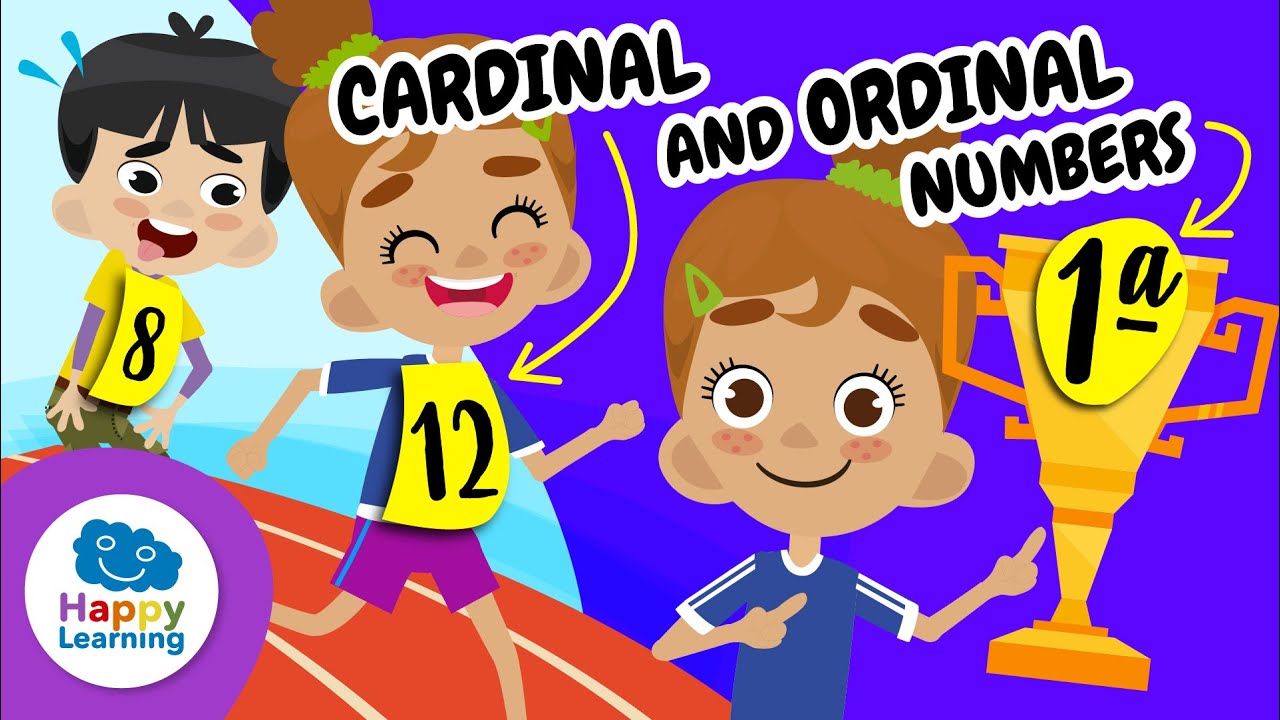
Do you know what cardinal and ordinal numbers are? Discover it in this fun educational video! Learn how we use cardinal numbers for counting and performing basic math operations like addition, subtraction, multiplication, and division. You'll also explore ordinal numbers, perfect for ordering and assigning positions within a group. See practical examples like balloon races, counting at a party, and much more. 🌟 Ideal for learning while playing and understanding the magic of numbers.
Discover hundreds of never-before-seen resources! Create your free account at https://my.happylearning.tv/ and start learning in the most entertaining way.

NEW VIDEOS https://www.youtube.com/playli....st?list=PLLF_mZmNqOn
NATURAL SCIENCE https://www.youtube.com/playli....st?list=PLLF_mZmNqOn
🌱🦁 Did you know that all living beings are connected through food? In this educational video for kids, you’ll learn what the food chain is, how it works, and why producers, consumers, and decomposers are essential for ecosystems. 🌍✨
Natural Sciences in Primary School aim to help children understand the world around them by developing their curiosity and critical thinking through observation and experimentation. They learn about nature, living beings, the human body, energy, and the environment, while also understanding the importance of caring for the planet.
📖 SUBJECT PLAYLISTS
🦖⛰️🐅 NATURAL SCIENCES for Primary School: https://www.youtube.com/playli....st?list=PLLF_mZmNqOn
👨🏫 SOCIAL SCIENCES for Primary School: https://www.youtube.com/playli....st?list=PLLF_mZmNqOn
➕✖️ MATH for Primary School Children: https://www.youtube.com/playli....st?list=PLLF_mZmNqOn
🤴🏰 HISTORY for Primary School Children: https://www.youtube.com/playli....st?list=PLLF_mZmNqOn
🌍⛰️ GEOGRAPHY for Primary School Children: https://www.youtube.com/playli....st?list=PLLF_mZmNqOn
🤝😊 Values and Emotions for Primary School Children: https://www.youtube.com/playli....st?list=PLLF_mZmNqOn v=KkCIIQyevjo&list=PL_Y3qbepMRoY7gwuwniiq11oMo6Ofe724
🌍 THE HAPPY LEARNING UNIVERSE
✅ Learn more about Happy Learning and our educational platform: https://happylearning.tv/en/
✅ Discover our social mission: https://happylearning.tv/en/nemesio-diez-foundation/
✅ Download the Happy Learning App:
- iOS: https://apps.apple.com/es/app/....happy-learning-tv/id
- Android: https://play.google.com/store/apps/details?id=tv.happylearning.canal&pli=1
🎓 ABOUT HAPPY LEARNING
Happy Learning is a social enterprise created by the Nemesio Diez Foundation, working to improve people's quality of life through education, health, sports and culture.
As a social company, our mission is to educate all children in the world in values and knowledge, to promote their holistic development and their commitment to society and the planet.
We offer educational resources to families, schools, hospitals and NGOs to ensure that children everywhere have access to a high-quality, comprehensive education.
At Happy Learning, we turn learning into an exciting adventure for primary school children. 🚀
We offer over 2,000 educational resources that combine fun and learning through animated videos, reading materials, interactive games and real-world activities.
📺 HAPPY LEARNING YOUTUBE CHANNEL
Welcome to Happy Learning! 🚀📚
The educational channel where learning is an adventure. Our goal is to spark curiosity and a love for knowledge in primary school children through fun and dynamic educational videos.
Discover the fascinating world of science with videos on Dinosaurs, the Solar System, Invertebrate Animals, Arachnids and much more. Travel back in time with history videos covering Prehistory, the Discovery of America or Ancient Egypt. Learn geography with content about The Earth and Its Movements, the Water Cycle and Parts of the Earth. Strengthen math skills with videos on Multiplication, Subtraction and Matter and Its Properties, and improve Spanish language understanding with lessons on Nouns, Sentences and Subject and Predicate.
Happy Learning transforms education into an exciting experience through animated videos, clear explanations and interactive activities. Perfect for children, parents and teachers seeking high-quality educational content.
🌟 Join our community of explorers!
Discover hundreds of never-before-seen resources! Create your free account at https://my.happylearning.tv/ and start learning in the most entertaining way.
What are you waiting for? In this video we are going to know everything about the Company. As we always tell you, it is very important to know how the world works, to be a part of it.
▶SUBSCRIBE TO HAPPY LEARNING! http://bit.ly/HappyLearningTV
▶Web site: https://happylearning.tv/en/
▶Follow us on Facebook: https://www.facebook.com/HappyLearningTv
Recommended video: The Industrial Revolution
https://www.youtube.com/watch?v=Xh_Lk7kDrUI
Companies are organizations which dedicate themselves
to producing goods or services in exchange for a benefit,
or in other words, for money.
The goods are the products which the companies make.
Some companies make candy, clothes, books full of
stories, and there are companies which make cars. There
are loads of companies all dedicated in manufacturing all
sorts of different products!
If you look around you, all you see has been produced in a
company.
There are also companies which provide services, such as
the transport companies which take us from one place to
another, the hairdressers who don’t sell us anything but
cut our hair and brush it, giving us a service as well as
making us look preIy. Check out all these different hair
styles!
There are a great number of services offered by
companies.
To carry out these activities, companies need material and
human resources. The material resources are what the
companies need to manufacture or produce something.
For example, a bakery needs flour, ovens, utensils,
vehicles to deliver the bread to the clients etc, etc…
A company which produces fruit juice would need fruit, a
juice squeezer, refrigerators, packaging, and trucks for
transportation…
So as to create a product one needs many resources and
that is why we should never waste anything and we must
recycle the juice container for example.
The human resources are the people who work in the
companies. These people are the employees and
employers.
The employers are those who create a company, direct it
and make sure all is working correctly, besides they are
the ones who are risking their money.
The employees are the people who are working in the
company in exchange for a salary, from their pay sheet,
meaning money.
An enterprise´s spirit is one who plans projects and brings
them to life. If you want something, you can have it!
Well now we know what a company is all about. In the
next video we will learn more about different types of
companies.

THE SOIL | FUN FACTS FOR KIDS | Happy Learning 🌍🪱🌱
Hello, Happy Learners! 🎉🌍 Welcome to a new video from Happy Learning. Today we are going to discover everything about **soil** and learn why it is so important for our life and nature. ✨🌱 Yes, we are going to explore how it forms, its different layers, and how it benefits us! 🌟
Did you know that soil is full of life, with millions of microorganisms and small animals? 🤔🪱🌿 And that without fertile soil, plants couldn't grow and we wouldn't have food? 🌍💡 Join us on this educational adventure and learn fascinating facts about soil in a fun and easy-to-understand way. 🧠😊🎉
Don't miss it! Like 👍, subscribe 🔔, and share this video with all your friends. Let's learn and have fun together! 🚀😊
#Soil #SoilFacts #Education #LearningThroughPlay #HappyLearning #Fun #LearningIsFun
Discover hundreds of unseen resources! Create your free account at https://my.happylearning.tv/ and learn in the most fun way.
#happylearning #learning #happy

Discover hundreds of never-before-seen resources! Create your free account at https://my.happylearning.tv/ and start learning in the most entertaining way.
NEW VIDEOS https://www.youtube.com/playli....st?list=PLLF_mZmNqOn
NATURAL SCIENCE https://www.youtube.com/playli....st?list=PLLF_mZmNqOn
🌱🦁 Did you know that all living beings are connected through food? In this educational video for kids, you’ll learn what the food chain is, how it works, and why producers, consumers, and decomposers are essential for ecosystems. 🌍✨
Natural Sciences in Primary School aim to help children understand the world around them by developing their curiosity and critical thinking through observation and experimentation. They learn about nature, living beings, the human body, energy, and the environment, while also understanding the importance of caring for the planet.
📖 SUBJECT PLAYLISTS
🦖⛰️🐅 NATURAL SCIENCES for Primary School: https://www.youtube.com/playli....st?list=PLLF_mZmNqOn
👨🏫 SOCIAL SCIENCES for Primary School: https://www.youtube.com/playli....st?list=PLLF_mZmNqOn
➕✖️ MATH for Primary School Children: https://www.youtube.com/playli....st?list=PLLF_mZmNqOn
🤴🏰 HISTORY for Primary School Children: https://www.youtube.com/playli....st?list=PLLF_mZmNqOn
🌍⛰️ GEOGRAPHY for Primary School Children: https://www.youtube.com/playli....st?list=PLLF_mZmNqOn
🤝😊 Values and Emotions for Primary School Children: https://www.youtube.com/playli....st?list=PLLF_mZmNqOn v=KkCIIQyevjo&list=PL_Y3qbepMRoY7gwuwniiq11oMo6Ofe724
🌍 THE HAPPY LEARNING UNIVERSE
✅ Learn more about Happy Learning and our educational platform: https://happylearning.tv/en/
✅ Discover our social mission: https://happylearning.tv/en/nemesio-diez-foundation/
✅ Download the Happy Learning App:
- iOS: https://apps.apple.com/es/app/....happy-learning-tv/id
- Android: https://play.google.com/store/apps/details?id=tv.happylearning.canal&pli=1
🎓 ABOUT HAPPY LEARNING
Happy Learning is a social enterprise created by the Nemesio Diez Foundation, working to improve people's quality of life through education, health, sports and culture.
As a social company, our mission is to educate all children in the world in values and knowledge, to promote their holistic development and their commitment to society and the planet.
We offer educational resources to families, schools, hospitals and NGOs to ensure that children everywhere have access to a high-quality, comprehensive education.
At Happy Learning, we turn learning into an exciting adventure for primary school children. 🚀
We offer over 2,000 educational resources that combine fun and learning through animated videos, reading materials, interactive games and real-world activities.
📺 HAPPY LEARNING YOUTUBE CHANNEL
Welcome to Happy Learning! 🚀📚
The educational channel where learning is an adventure. Our goal is to spark curiosity and a love for knowledge in primary school children through fun and dynamic educational videos.
Discover the fascinating world of science with videos on Dinosaurs, the Solar System, Invertebrate Animals, Arachnids and much more. Travel back in time with history videos covering Prehistory, the Discovery of America or Ancient Egypt. Learn geography with content about The Earth and Its Movements, the Water Cycle and Parts of the Earth. Strengthen math skills with videos on Multiplication, Subtraction and Matter and Its Properties, and improve Spanish language understanding with lessons on Nouns, Sentences and Subject and Predicate.
Happy Learning transforms education into an exciting experience through animated videos, clear explanations and interactive activities. Perfect for children, parents and teachers seeking high-quality educational content.
🌟 Join our community of explorers!

NEW VIDEOS https://www.youtube.com/playli....st?list=PLLF_mZmNqOn
THE UNIVERSE https://www.youtube.com/playli....st?list=PLLF_mZmNqOn
0:00 - Introduction
0:10 - The Sun
3:43 - The Sun and the planets
7:29 - The universe, stars and galaxies
10:44 - The year and the 4 seasons
15:00 - The Moon and its phases
19:29 - What is an asteroid?
☀️🌍 What is the Sun and why is it so important for life on Earth? In this educational video for primary school kids, you'll discover everything about our closest star—its composition, energy, role in the solar system, and how it affects all living beings. 🔆🪐
📖 SUBJECT PLAYLISTS
🦖⛰️🐅 NATURAL SCIENCES for Primary School: https://www.youtube.com/playli....st?list=PLLF_mZmNqOn
👨🏫 SOCIAL SCIENCES for Primary School: https://www.youtube.com/playli....st?list=PLLF_mZmNqOn
➕✖️ MATH for Primary School Children: https://www.youtube.com/playli....st?list=PLLF_mZmNqOn
🤴🏰 HISTORY for Primary School Children: https://www.youtube.com/playli....st?list=PLLF_mZmNqOn
🌍⛰️ GEOGRAPHY for Primary School Children: https://www.youtube.com/playli....st?list=PLLF_mZmNqOn
🤝😊 Values and Emotions for Primary School Children: https://www.youtube.com/playli....st?list=PLLF_mZmNqOn v=KkCIIQyevjo&list=PL_Y3qbepMRoY7gwuwniiq11oMo6Ofe724
🌍 THE HAPPY LEARNING UNIVERSE
✅ Learn more about Happy Learning and our educational platform: https://happylearning.tv/en/
✅ Discover our social mission: https://happylearning.tv/en/nemesio-diez-foundation/
✅ Download the Happy Learning App:
- iOS: https://apps.apple.com/es/app/....happy-learning-tv/id
- Android: https://play.google.com/store/apps/details?id=tv.happylearning.canal&pli=1
🎓 ABOUT HAPPY LEARNING
Happy Learning is a social enterprise created by the Nemesio Diez Foundation, working to improve people's quality of life through education, health, sports and culture.
As a social company, our mission is to educate all children in the world in values and knowledge, to promote their holistic development and their commitment to society and the planet.
We offer educational resources to families, schools, hospitals and NGOs to ensure that children everywhere have access to a high-quality, comprehensive education.
At Happy Learning, we turn learning into an exciting adventure for primary school children. 🚀
We offer over 2,000 educational resources that combine fun and learning through animated videos, reading materials, interactive games and real-world activities.
📺 HAPPY LEARNING YOUTUBE CHANNEL
Welcome to Happy Learning! 🚀📚
The educational channel where learning is an adventure. Our goal is to spark curiosity and a love for knowledge in primary school children through fun and dynamic educational videos.
Discover the fascinating world of science with videos on Dinosaurs, the Solar System, Invertebrate Animals, Arachnids and much more. Travel back in time with history videos covering Prehistory, the Discovery of America or Ancient Egypt. Learn geography with content about The Earth and Its Movements, the Water Cycle and Parts of the Earth. Strengthen math skills with videos on Multiplication, Subtraction and Matter and Its Properties, and improve Spanish language understanding with lessons on Nouns, Sentences and Subject and Predicate.
Happy Learning transforms education into an exciting experience through animated videos, clear explanations and interactive activities. Perfect for children, parents and teachers seeking high-quality educational content.
🌟 Join our community of explorers!

Learn with us what the hydrosphere is and in what states we can find water on Earth.

NEW VIDEOS https://www.youtube.com/playli....st?list=PLLF_mZmNqOn
LONG VIDEOS https://www.youtube.com/playli....st?list=PLLF_mZmNqOn
🐴✨ Did you know horses can sleep both standing up and lying down? In this educational video for kids, you’ll discover incredible facts and fun curiosities about horses and other animals.
You will learn how horses live, what they eat, their main characteristics, and the relationship they have had with humans throughout history. You will also discover surprising facts about other animals that will leave you amazed. 🐾🌍
📖 SUBJECT PLAYLISTS
🦖⛰️🐅 NATURAL SCIENCES for Primary School: https://www.youtube.com/playli....st?list=PLLF_mZmNqOn
👨🏫 SOCIAL SCIENCES for Primary School: https://www.youtube.com/playli....st?list=PLLF_mZmNqOn
➕✖️ MATH for Primary School Children: https://www.youtube.com/playli....st?list=PLLF_mZmNqOn
🤴🏰 HISTORY for Primary School Children: https://www.youtube.com/playli....st?list=PLLF_mZmNqOn
🌍⛰️ GEOGRAPHY for Primary School Children: https://www.youtube.com/playli....st?list=PLLF_mZmNqOn
🤝😊 Values and Emotions for Primary School Children: https://www.youtube.com/playli....st?list=PLLF_mZmNqOn v=KkCIIQyevjo&list=PL_Y3qbepMRoY7gwuwniiq11oMo6Ofe724
🌍 THE HAPPY LEARNING UNIVERSE
✅ Learn more about Happy Learning and our educational platform: https://happylearning.tv/en/
✅ Discover our social mission: https://happylearning.tv/en/nemesio-diez-foundation/
✅ Download the Happy Learning App:
- iOS: https://apps.apple.com/es/app/....happy-learning-tv/id
- Android: https://play.google.com/store/apps/details?id=tv.happylearning.canal&pli=1
🎓 ABOUT HAPPY LEARNING
Happy Learning is a social enterprise created by the Nemesio Diez Foundation, working to improve people's quality of life through education, health, sports and culture.
As a social company, our mission is to educate all children in the world in values and knowledge, to promote their holistic development and their commitment to society and the planet.
We offer educational resources to families, schools, hospitals and NGOs to ensure that children everywhere have access to a high-quality, comprehensive education.
At Happy Learning, we turn learning into an exciting adventure for primary school children. 🚀
We offer over 2,000 educational resources that combine fun and learning through animated videos, reading materials, interactive games and real-world activities.
📺 HAPPY LEARNING YOUTUBE CHANNEL
Welcome to Happy Learning! 🚀📚
The educational channel where learning is an adventure. Our goal is to spark curiosity and a love for knowledge in primary school children through fun and dynamic educational videos.
Discover the fascinating world of science with videos on Dinosaurs, the Solar System, Invertebrate Animals, Arachnids and much more. Travel back in time with history videos covering Prehistory, the Discovery of America or Ancient Egypt. Learn geography with content about The Earth and Its Movements, the Water Cycle and Parts of the Earth. Strengthen math skills with videos on Multiplication, Subtraction and Matter and Its Properties, and improve Spanish language understanding with lessons on Nouns, Sentences and Subject and Predicate.
Happy Learning transforms education into an exciting experience through animated videos, clear explanations and interactive activities. Perfect for children, parents and teachers seeking high-quality educational content.
🌟 Join our community of explorers!

Subscribe to Happy Learning: https://my.happylearning.tv/
More related videos: https://www.youtube.com/playli....st?list=PLLF_mZmNqOn
Curiosities for kids:https://www.youtube.com/playli....st?list=PLLF_mZmNqOn
🌍🐘 AFRICA: THE WONDERFUL CONTINENT | Fun Facts for Kids | Happy Learning
Hello, Happy Learners! 🎉🌍 Today we are going to explore one of the most fascinating continents on the planet: Africa. 🦁🌿 Did you know that Africa is home to a great diversity of animals, landscapes, and cultures? In this video, we will learn about its countries, its impressive deserts, jungles, and of course, the incredible animals that live there. 🦒🐘🦓
Discover fun facts about this continent full of history and natural wonders. Join us on this educational journey that will take you from the vast savannahs to the highest mountains in Africa. Get ready for lots of exciting discoveries! 😄🎉
Don’t forget to give us a like 👍, subscribe 🔔, and share this video with your friends. Let’s learn together! 🚀😊
#Africa #GeographyForKids #AnimalsOfAfrica #AfricanCulture #FunEducation #HappyLearning #LearningIsFun
Discover hundreds of never-before-seen resources! Create your free account at https://my.happylearning.tv/ and learn in the most fun way.
#happylearning
#learning
#happy

NEW VIDEOS https://www.youtube.com/playli....st?list=PLLF_mZmNqOn
MORE ANIMALS https://www.youtube.com/playli....st?list=PLLF_mZmNqOn
0:00 - Introduction
0:15 - Fun Facts About Birds
3:31 - Why Do Parrots Talk?
5:14 - Birds
9:45 - Eagles
13:34 - Questions and Answers About Birds
18:48 - Vertebrate Animals
🐦✨ Did you know some birds can fly thousands of kilometers without stopping or sleep while gliding through the air? In this educational video for kids, you’ll discover amazing facts about birds—how they fly, sing, build nests, and adapt to different environments.
Natural Sciences in Primary School aim to help children understand the world around them by developing their curiosity and critical thinking through observation and experimentation. They learn about nature, living beings, the human body, energy, and the environment, while also understanding the importance of taking care of the planet.
📖 SUBJECT PLAYLISTS
🦖⛰️🐅 NATURAL SCIENCES for Primary School: https://www.youtube.com/playli....st?list=PLLF_mZmNqOn
👨🏫 SOCIAL SCIENCES for Primary School: https://www.youtube.com/playli....st?list=PLLF_mZmNqOn
➕✖️ MATH for Primary School Children: https://www.youtube.com/playli....st?list=PLLF_mZmNqOn
🤴🏰 HISTORY for Primary School Children: https://www.youtube.com/playli....st?list=PLLF_mZmNqOn
🌍⛰️ GEOGRAPHY for Primary School Children: https://www.youtube.com/playli....st?list=PLLF_mZmNqOn
🤝😊 Values and Emotions for Primary School Children: https://www.youtube.com/playli....st?list=PLLF_mZmNqOn v=KkCIIQyevjo&list=PL_Y3qbepMRoY7gwuwniiq11oMo6Ofe724
🌍 THE HAPPY LEARNING UNIVERSE
✅ Learn more about Happy Learning and our educational platform: https://happylearning.tv/en/
✅ Discover our social mission: https://happylearning.tv/en/nemesio-diez-foundation/
✅ Download the Happy Learning App:
- iOS: https://apps.apple.com/es/app/....happy-learning-tv/id
- Android: https://play.google.com/store/apps/details?id=tv.happylearning.canal&pli=1
🎓 ABOUT HAPPY LEARNING
Happy Learning is a social enterprise created by the Nemesio Diez Foundation, working to improve people's quality of life through education, health, sports and culture.
As a social company, our mission is to educate all children in the world in values and knowledge, to promote their holistic development and their commitment to society and the planet.
We offer educational resources to families, schools, hospitals and NGOs to ensure that children everywhere have access to a high-quality, comprehensive education.
At Happy Learning, we turn learning into an exciting adventure for primary school children. 🚀
We offer over 2,000 educational resources that combine fun and learning through animated videos, reading materials, interactive games and real-world activities.
📺 HAPPY LEARNING YOUTUBE CHANNEL
Welcome to Happy Learning! 🚀📚
The educational channel where learning is an adventure. Our goal is to spark curiosity and a love for knowledge in primary school children through fun and dynamic educational videos.
Discover the fascinating world of science with videos on Dinosaurs, the Solar System, Invertebrate Animals, Arachnids and much more. Travel back in time with history videos covering Prehistory, the Discovery of America or Ancient Egypt. Learn geography with content about The Earth and Its Movements, the Water Cycle and Parts of the Earth. Strengthen math skills with videos on Multiplication, Subtraction and Matter and Its Properties, and improve Spanish language understanding with lessons on Nouns, Sentences and Subject and Predicate.
Happy Learning transforms education into an exciting experience through animated videos, clear explanations and interactive activities. Perfect for children, parents and teachers seeking high-quality educational content.
🌟 Join our community of explorers!

VITAL FUNCTIONS https://youtu.be/SKy_C2cr63M
PREMIERES! 👉 https://www.youtube.com/playli....st?list=PLLF_mZmNqOn
ANIMALS FUN FACTS! https://www.youtube.com/playli....st?list=PLLF_mZmNqOn
THE MEGALODON | Educational Videos for Children
Dive into the deep blue sea with Happy Learning as we embark on an exciting adventure to uncover the mysteries of the Megalodon! Join us on this educational journey to learn all about the ancient giant shark that once ruled the oceans. From its massive size to its fearsome teeth, we'll explore fascinating facts and discoveries about this incredible prehistoric predator. Get ready to be amazed and entertained as we delve into the world of the Megalodon. Subscribe to Happy Learning for more fun and educational videos that make learning an adventure!
Discover hundreds of never-before-seen resources! Create your free account at https://my.happylearning.tv/ and start learning in the most entertaining way.
NEW VIDEOS https://www.youtube.com/playli....st?list=PLLF_mZmNqOn
MORE ABOUT EARTH https://www.youtube.com/playli....st?list=PLLF_mZmNqOn
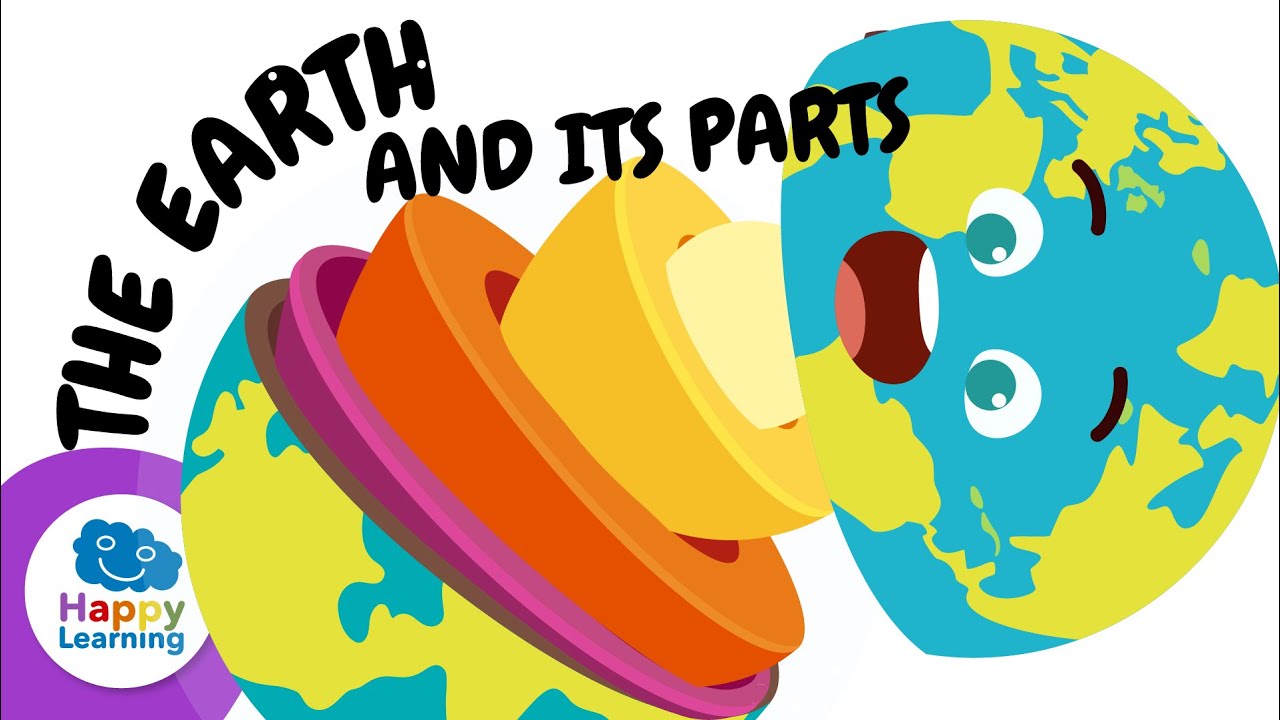
🌍✨ Did you know our planet is made up of different layers and mostly covered by water? In this educational video for children, you’ll learn how Earth is formed, what its main parts are, and why it’s so special in the Solar System.
Geography in Primary Education allows children to understand the world around them, learning about landscapes, climates, continents, oceans, and the relationship between nature and human societies.
Through our educational videos, they will explore landforms, rivers, countries, capitals, and ecosystems, discovering how humans interact with their environment. At Happy Learning, we make geography fun and accessible, sparking children’s curiosity to explore and discover the planet. 🌍✨
📖 SUBJECT PLAYLISTS
🦖⛰️🐅 NATURAL SCIENCES for Primary School: https://www.youtube.com/playli....st?list=PLLF_mZmNqOn
👨🏫 SOCIAL SCIENCES for Primary School: https://www.youtube.com/playli....st?list=PLLF_mZmNqOn
➕✖️ MATH for Primary School Children: https://www.youtube.com/playli....st?list=PLLF_mZmNqOn
🤴🏰 HISTORY for Primary School Children: https://www.youtube.com/playli....st?list=PLLF_mZmNqOn
🌍⛰️ GEOGRAPHY for Primary School Children: https://www.youtube.com/playli....st?list=PLLF_mZmNqOn
🤝😊 Values and Emotions for Primary School Children: https://www.youtube.com/playli....st?list=PLLF_mZmNqOn v=KkCIIQyevjo&list=PL_Y3qbepMRoY7gwuwniiq11oMo6Ofe724
🌍 THE HAPPY LEARNING UNIVERSE
✅ Learn more about Happy Learning and our educational platform: https://happylearning.tv/en/
✅ Discover our social mission: https://happylearning.tv/en/nemesio-diez-foundation/
✅ Download the Happy Learning App:
- iOS: https://apps.apple.com/es/app/....happy-learning-tv/id
- Android: https://play.google.com/store/apps/details?id=tv.happylearning.canal&pli=1
🎓 ABOUT HAPPY LEARNING
Happy Learning is a social enterprise created by the Nemesio Diez Foundation, working to improve people's quality of life through education, health, sports and culture.
As a social company, our mission is to educate all children in the world in values and knowledge, to promote their holistic development and their commitment to society and the planet.
We offer educational resources to families, schools, hospitals and NGOs to ensure that children everywhere have access to a high-quality, comprehensive education.
At Happy Learning, we turn learning into an exciting adventure for primary school children. 🚀
We offer over 2,000 educational resources that combine fun and learning through animated videos, reading materials, interactive games and real-world activities.
📺 HAPPY LEARNING YOUTUBE CHANNEL
Welcome to Happy Learning! 🚀📚
The educational channel where learning is an adventure. Our goal is to spark curiosity and a love for knowledge in primary school children through fun and dynamic educational videos.
Discover the fascinating world of science with videos on Dinosaurs, the Solar System, Invertebrate Animals, Arachnids and much more. Travel back in time with history videos covering Prehistory, the Discovery of America or Ancient Egypt. Learn geography with content about The Earth and Its Movements, the Water Cycle and Parts of the Earth. Strengthen math skills with videos on Multiplication, Subtraction and Matter and Its Properties, and improve Spanish language understanding with lessons on Nouns, Sentences and Subject and Predicate.
Happy Learning transforms education into an exciting experience through animated videos, clear explanations and interactive activities. Perfect for children, parents and teachers seeking high-quality educational content.
🌟 Join our community of explorers!
WHO INVENTED THE PRINTING PRESS? Great inventions that changed history | Educational Videos for Kids
Thanks to this great invent, we have currently many books!
Discover hundreds of never-before-seen resources! Create your free account at https://my.happylearning.tv/ and start learning in the most entertaining way.
What are you waiting for? Eclipses
Hello friends. In this educational video for kids we are going to learn about eclipses. There are two types of eclipses, a solar eclipse and a lunar eclipse, but first of all, do you know what an eclipse is?
An eclipse occurs when an astronomical object is temporarily obscured. Sometimes the Earth is placed between the sun and the moon and other times the moon is situated between the Earth and the sun. These are eclipses… but let’s investigate it better.
The lunar eclipse is when the Earth is situated between the moon and the sun making the Earth block out the sun’s rays which would be shining on the moon, creating a shadow and darkening it. This phenomenon allows us to see the moon in a reddish color…almost as if it were bleeding.
Lunar eclipses are quite frequent and can be seen from any part of the world at night time. They last various hours and can be different types, though the most frequent ones are the partial lunar eclipse and the total lunar eclipse.
When there is an eclipse and it looks as if someone has taken a bite out of the moon, it is a partial eclipse, and when there is an eclipse and one can see the whole moon, it is a total eclipse. Easy don’t you think?
By the way, to observe a lunar eclipse one doesn’t need anything special, a normal telescope or binoculars would do.
Solar eclipses only occur when there is a new moon, and is seen when the moon is in between the Earth and the sun. The moon hides all the suns light or at least part of it.
Solar eclipses can be of different types: total, partial or annular.
A total solar eclipse is when the moon hides all of the suns light and the sun’s face disappears behind the moon. In the middle of the day, it would seem as if night has fallen. The sky darkens and stars appear. Many animals, think it’s night time and go to sleep, and nocturnal animals such as this owl, begin their day, actually their night, not understanding that in a short time the sun will reappear.
Partial solar eclipses occur when the moon comes between the Earth and the sun, but not completely, leaving part of the sun visible. The day becomes slightly darker and the sun resembles a cookie with a chunk missing.
An annular solar eclipse occurs when the moon hides only the middle part of the sun. It is seen as a black circle surrounding a bright ring. It looks like a ring, doesn’t it?
By the way and this is really important, it is very dangerous to observe solar eclipses without special eye protection. Please remember this as it is extremely harmful.
Well now we know a little bit more about eclipses…don’t you think it is fascinating learning new things?
Goodbye friends, we hope you enjoyed this educational video for children about eclipses. Don’t forget to subscribe to Happy Learning TV, so you don’t miss any of our videos.

THE HEMISPHERES OF THE EARTH AND THEIR CURIOSITIES | Happy Learning 🌏🌎🧐
🌟 Hello, little explorers! 🧭 Have you ever wondered what the Earth's hemispheres are? 🤔 In this exciting episode of Happy Learning, we will discover together how our planet is divided into the northern and southern hemispheres 🌍🔄. We will learn about the equator, the seasons, and much more! 🌞❄️🍂🌸
With super cool animations and easy-to-understand explanations, this video is perfect for all kids to learn about the hemispheres in a very fun way 🌈✨. Get ready for an educational adventure full of incredible discoveries! 🚀🎉
Discover hundreds of never-before-seen resources! Create your free account at Happy Learning TV and learn in the most enjoyable way.
#HappyLearning #Hemispheres #GeographyForKids #EducationForKids #FunAndLearning #PlanetEarth #NorthernHemisphere #SouthernHemisphere #Seasons #Equator #KidsLearning #YouTubeKids
Don't miss it! 🚀🎈
Discover hundreds of never-before-seen resources! Create your free account at https://my.happylearning.tv/ and learn in the most enjoyable way.
#happylearning
#learning
#happy