Latest videos

Subscribe to Happy Learning: https://my.happylearning.tv/
More related videos: https://www.youtube.com/playli....st?list=PLLF_mZmNqOn
Curiosities for kids:https://www.youtube.com/playli....st?list=PLLF_mZmNqOn
Learn Fruits in Spanish | Happy Learning 🍎🍌🍇
Welcome to a new Happy Learning video! Today, we are going to learn the names of fruits in Spanish in a fun and easy way. 🍓🍉 On this journey through the world of fruits, you’ll discover how to say "manzana" for apple 🍎, "plátano" for banana 🍌, "uva" for grape 🍇, and many more. Plus, you’ll learn some useful phrases so you can talk about your favorite fruits in Spanish. It’s so much fun! 🌟
We’ll also explore what the fruits look like inside and out, their bright colors, and best of all, how to pronounce them correctly in Spanish! 🗣️🍍 With a little practice, you’ll become an expert at naming fruits in Spanish in no time. Ready to begin? Let’s go, and don’t forget to repeat each word with us! 🥭🍑
Discover hundreds of never-before-seen resources! Create your free account at https://my.happylearning.tv/ and start learning in the most entertaining way.

Discover hundreds of never-before-seen resources! Create your free account at https://my.happylearning.tv/ and start learning in the most entertaining way.
What are you waiting for? MATHS IS EASY PEASY with Happy Learning
💭Who has practiced and now knows their 4 x tables??
👇Tell us if it helped you in the comments below!!
👉SUBSCRIBE TO HAPPY LEARNING! http://bit.ly/HappyLearningTV
👉Web site: https://happylearning.tv/en/
👉Follow us on Facebook: https://www.facebook.com/HappyLearningTv
Recommended Video: 3 Times Table Song: Easy Peasy Maths
--------------
Hello Happy Friends, Welcome to a new Happy Learning Video!
Today, we're going to learn the 3 times table!
1 X 4 = 4
2 X 4 = 8
3 X 4 = 12
4 X 4 = 16
5 X 4 = 20
6 X 4 = 24
7 X 4 = 28
8 X 4 = 32
9 X 4 = 36
10 X 4 = 40
One more time!

Subscribe to Happy Learning: https://my.happylearning.tv/
Welcome, young explorers! 🚀🌍 In this educational video, we will travel over 5000 years back in time to uncover the secrets of Ancient Egypt, one of the most fascinating civilizations in history. 🌞🏜️
Join us to learn about:
🔹 The Pharaohs 👑: the powerful kings of Ancient Egypt, like the famous Tutankhamun.
🔹 The Nile River 🚤: the “highway of life” that allowed this civilization to grow and thrive.
🔹 The Pyramids 🏗️: the magnificent tombs that still leave us amazed to this day.
🔹 The Mummies 🏺🖌️: the process of mummification and how the Egyptians believed in life after death.
🔹 Incredible Inventions 🔑🎲: did you know that the Egyptians invented toothbrushes, makeup, board games, and even locks and keys?
You’ll also meet the mysterious gods of Ancient Egypt, with human bodies and animal heads, such as Ra, Anubis, and Bastet. Discover how they lived, what they ate, and how they cared for their beloved pets. 🐱🐶
Did you know they played board games like Senet, similar to chess? 🧩 You’ll be amazed at everything they invented and how they lived thousands of years ago!
Get ready to learn in a fun, simple, and visual way all about this incredible civilization. 🌟📝
Don’t forget to give us a like 👍, subscribe to the channel, and share the video with your friends! 🧒🎥
More related videos:
Curiosities for kids:https://www.youtube.com/playli....st?list=PLLF_mZmNqOn
Discover hundreds of never-before-seen resources! Create your free account at https://my.happylearning.tv/ and start learning in the most entertaining way.
THE MOON | Fun Facts for Kids | Happy Learning 🌕🚀🌟
🌟 Hello, little astronauts! 🚀 Have you ever wondered why the Moon shines at night? 🌌 In this amazing episode of Happy Learning, we will explore the most fascinating facts about the Moon 🌕. Did you know the Moon has huge mountains and craters? 🏔️🌋 We will discover how they were formed, why it changes shape, and many other surprising facts! 🌜✨
With awesome animations and easy-to-understand explanations, this video is perfect for all kids who want to learn more about our wonderful satellite 🌍🛰️. Get ready for a lunar journey full of fun and learning! 🎉🔭
Discover hundreds of never-before-seen resources! Create your free account at [Happy Learning TV](https://my.happylearning.tv/) and learn in the most enjoyable way.
#HappyLearning #Moon #FunFacts #EducationForKids #FunAndLearning #AstronomyForKids #SpaceExplorers #YouTubeKids
Don't miss it! 🚀🎈
Discover hundreds of never-before-seen resources! Create your free account at https://my.happylearning.tv/ and start learning in the most entertaining way.

EVERYTHING YOU NEED TO KNOW about THE ANIMAL KINGDOM | Happy Learning 🐷🐒🐞🦎🦅
🌟 Hello, little explorers! 🧭🦒 Are you ready for a wild adventure? In this episode of Happy Learning, we are going to discover the amazing world of the animal kingdom 🌍🐾. We will learn about different types of animals, their habitats, and many incredible curiosities! 🐘🐦
Additionally, this video is made in sign language so that we can all learn together 👋👂. With super cool animations and easy-to-understand explanations, this video is perfect for learning about animals in a very fun way 🌈🎉. Don’t miss it! 🚀🎈
Discover hundreds of never-before-seen resources! Create your free account on [Happy Learning TV](https://my.happylearning.tv/) and learn in the most enjoyable way.
#HappyLearning #AnimalKingdom #EducationForKids #FunAndLearning #SignLanguage #Inclusion #ScienceForKids #KidsLearning #YouTubeKids
Don’t miss it! 🚀🎈
Discover hundreds of never-before-seen resources! Create your free account on https://my.happylearning.tv/ and learn in the most enjoyable way.
#happylearning
#learning
#happy
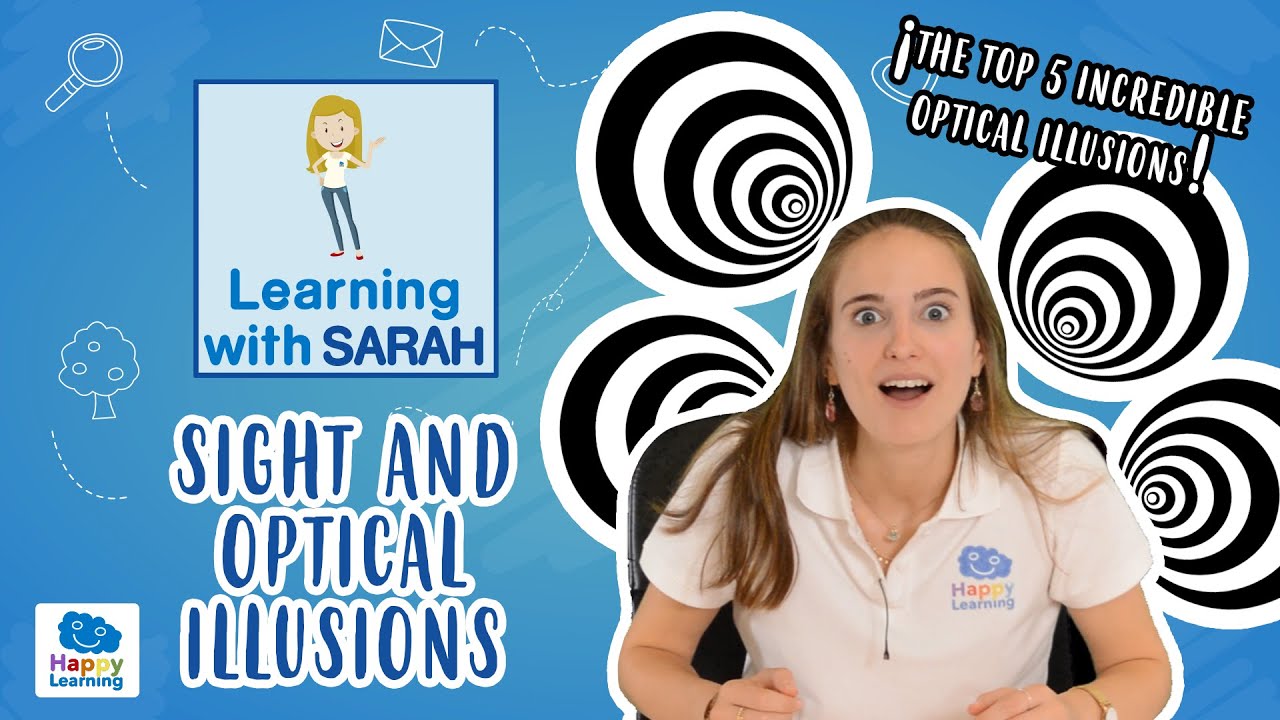
Discover hundreds of never-before-seen resources! Create your free account at https://my.happylearning.tv/ and start learning in the most entertaining way.
What are you waiting for? We’re going to look at some of the top 5 most shocking optical illusions.
They are amazing!
👉SUBSCRIBE TO HAPPY LEARNING! http://bit.ly/HappyLearningTV
👉Web site: https://happylearning.tv/en/
👉Follow us on Facebook: https://www.facebook.com/HappyLearningTv
_________________________
Hello Happy friends!
Are you ready to learn?
I’m Sarah, and today, we’re going to talk about our sight and optical illusions.
Do you know what an optical illusion is?
Human beings, are visual beings. That means, that we identify almost anything with our sight, It’s our most important sense.
The light entering our eyes, goes directly to our brain, through electrical signals, and this is where they are transformed into real images, which is what we really see.
Although, at times, our brain can trick us!
It make us see things, that aren’t really what we think they look like, and these are, optical illusions.
Today. We’re going to look at some of the top 5 most shocking optical illusions.
They are amazing!
Look at this image!
Do you think that the horizontal lines are straight and parallel to each other?
I don’t think so!
I think there’s even some that are curved!
But, if we get rid of the black squares…
We can verify that they are completely straight and parallel to each other.
It’s honestly mind-blowing!
Let’s take a look at the second optical illusion.
Which one of the middle circles do you think is bigger?
Mmm… I think its the left one.
But… They are exactly the same!
It’s incredible!
Let’s see the next one!
Look at this image.
What animal can you see here?
If you’ve seen a duck, you’re right!
But you could have also seen, a jumping rabbit! Look!
And now, look at this image
What does the square look like?
Is it like this? Or like this?
I’m sure it’s the curved one!
Let’s make sure!
Hmm… It’s actually not… Let’s see…
It’s the straight lined one! We’ve been tricked by our brains once again!
And now, to finish off, we’re going to see my favorite optical illusion.
How many animals can you see?
I can see an elephant, a horse, a dog, a cat, and a mouse!
Can you see any more?
Hmmm… Wait! I see a gorilla!
I love optical illusions! I find them so much fun!
Goodbye happy friends! See you next time!
I hope you’re always ready to learn!
Goodbye!

Subscribe to Happy Learning: https://my.happylearning.tv/
More related videos: https://www.youtube.com/playli....st?list=PLLF_mZmNqOn
Curiosities for kids:https://www.youtube.com/playli....st?list=PLLF_mZmNqOn
Marine mammals are fascinating and full of incredible facts! Did you know that the blue whale is the largest animal in the world and that its heart is as big as a car? Or that dolphins sleep with one eye open and can recognize each other by their own names?
In this Happy Learning video, we explore surprising facts about ocean creatures and the importance of protecting marine life. Learn with us and discover the wonders of life underwater.
Don’t forget to subscribe for more fun and educational videos!
Discover hundreds of never-before-seen resources! Create your free account at https://my.happylearning.tv/ and start learning in the most entertaining way.

PREMIERES! 👉 https://www.youtube.com/playli....st?list=PLLF_mZmNqOn
Types of Insects (Educational Videos for Children)
Welcome to the fascinating life of insects! In this educational video, we will explore the colourful and diverse world of insects. From worker ants to fluttering butterflies, we will learn about their unique characteristics, habitats and roles in nature. Join us on this exciting adventure full of discovery and learning - subscribe for more educational videos about the wonders of life in nature!
Discover hundreds of never-before-seen resources! Create your free account at https://my.happylearning.tv/ and start learning in the most entertaining way.

LEARNING WITH SARAH RIDDLE WITH TOOTHPICKS | Happy Learning ❓🧐
Hello, Happy Learners! 🎉🔍 Welcome to a new video from Happy Learning. Today, Sarah will guide us through some fascinating **matchstick riddles**! ✨🧩 Get ready to challenge your mind and have loads of fun with these tricky puzzles. 🌟😊
Did you know that matchstick riddles are a great way to boost your problem-solving skills and creativity? 🤔🪙🔍 Join Sarah in this educational adventure and discover some of the most interesting and fun riddles out there. It's going to be a journey full of brain teasers and excitement! 😄🎉
Don't miss it! Give it a like 👍, subscribe 🔔, and share this video with all your friends. Let's learn and have fun together! 🚀😊
#MatchstickRiddles #BrainTeasers #ChildhoodEducation #Curiosities #HappyLearning #learningisfun

Do you know how harmful palm oil is for the planet? Discover with us the consequences it causes and how it affects the Earth.
Discover hundreds of never-before-seen resources! Create your free account at https://my.happylearning.tv/ and start learning in the most entertaining way.
What are you waiting for? Wow! Plants are so important for us!
?? Why do we need plants?
Write your answers in the comments!
👉SUBSCRIBE TO HAPPY LEARNING! http://bit.ly/HappyLearningTV
👉Web site: https://happylearning.tv/en/
👉Follow us on Facebook: https://www.facebook.com/HappyLearningTv
Recommended video: Photosynthesis
https://youtu.be/UPBMG5EYydo
----
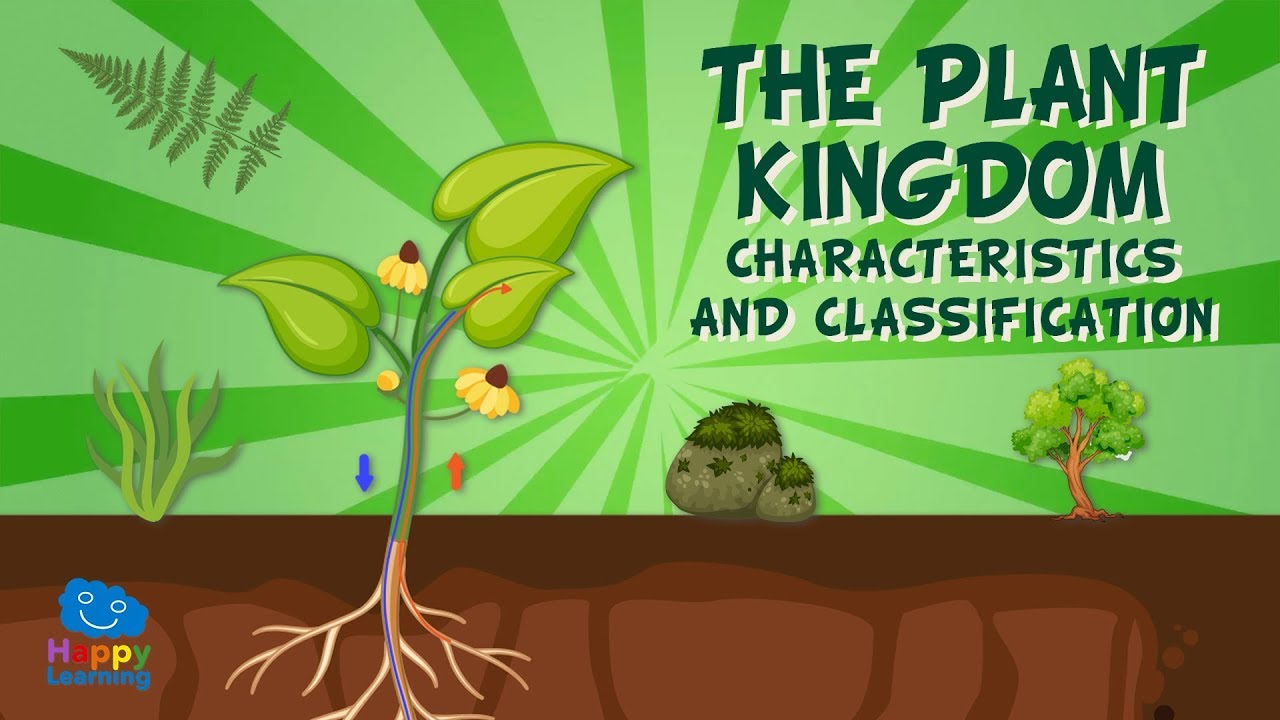
In this video, we will learn how plants feed and how they are classified into four groups: algae, mosses, ferns and phanerogams.
Hello friends! Welcome to a new Happy Learning video.
Today, we are going to learn about the importance of plants, their main characteristics and also, their classification. Presenting… The plant kingdom!
You already know that plants can’t move from one place to another, as you can see in these images, the great majority are held to the ground by roots, but they fulfill the vital functions of all living things: they are born, they grow, reproduce and die.
As you can see in these images, there are many types of plants, but… Do you know how many types there are? Well, according to scientists there are approximately 9 million different species. Some are gigantic, like this tree, that’s capable of producing shade for 100 people, at the same time! Others are tiny, like this miniscule flower… but although they may be different, they all have something in common… they are able to make their own food.
Plants don’t feed off other living creatures, like animals do, but they make their own food, thanks to photosynthesis, a process that transforms sunlight and inorganic matter in their surrounding, into food.
Photosynthesis is super important for plants, but for all living things too! Because in that process they release oxygen into the world… and without oxygen, none of us would be here today watching this video. Are plants important or what?
Plants were one of the first forms of life that appeared on earth, thanks to their capacity not to depend on other living creatures to survive.
Their most predominant colour is green, and this colour is called chlorophyll, an essential substance to perform photosynthesis.
PLANT CLASSIFICATION
As we said, there are many types of plants, and we can classify them in four large groups to get to know them better: algae, mosses, ferns and phanerogams.
Algae don’t have roots, stems or leaves. They live in water, both in rivers and seas, and they are the simplest plants.
Mosses are also simple plants. They live on solid ground but need a lot of humidity. They don’t have roots to absorb water in the ground because they live in very humid and bleak places.
Ferns are higher plants and their body is divided into roots, which is where they absorb water from the soil, stem, which is where the water circulates, and leaves, that grow upwards from the stem.
Phanerogams, despite their name, are the most common plants, because they reproduce through their flowers. They are higher plants and their bodies are divided into roots, stem and leaves. Trees are an example that belong to this group.
Well, now we know a bit more about plants and their importance towards all other living things. So you know that we need to take care of them, and respect them.
Goodbye friends! And don’t forget to subscribe to Happy Learning Tv!

Discover hundreds of never-before-seen resources! Create your free account at https://my.happylearning.tv/ and start learning in the most entertaining way.
What are you waiting for? Learning with Sarah, you'll find this out and much more by learning with Sarah...
IT'S EASY PEASY 😉
-
👉SUBSCRIBE TO HAPPY LEARNING! http://bit.ly/HappyLearningTV
👉Web site: https://happylearning.tv/en/
👉Follow us on Facebook: https://www.facebook.com/HappyLearningTv
Recommended video: 🎮Q&A GAME: VITAL FUNCTIONS
https://youtu.be/nIuVvyxnBfQ
------------
Hello Happy friends!
Are you ready to learn?
I’m Sarah, and today, we’re going to solve a very curious mathematical riddle.
But don’t think it’s going to be about adding, subtracting, multiplying or dividing.
No, no, maths isn’t just that!
We also use maths to develop our creativity, and solve problems that we come across every day.
I’m going to show you a little riddle called the ants crossing crossing a bridge, and we’re going to see how to solve it!
It’s nighttime, and four ants are being followed by a hungry anteater.
Suddenly, they come up to an old narrow bridge!
One of them, has a light on its head so they’re able to see, and she realises, that the bridge is so old, only two ants can cross at a time, so they will only be able to cross individually, or in pairs.
And they always need the light, because otherwise, they can’t see!
The anteater will take 17 minutes to get to where the ants are, to eat them all! What can our ant friends do to save themselves?
Let’s see, you’re the slowest, and you’re going to take 10 minutes to cross the bridge.
You’re going to take 5, you’ll take 2, and because I’m the fastest, I will take 1 minute.
And we only have one light!
And the anteater is going to take 17 minutes to get here, what shall we do?
These little ants need our help, let’s get our thinking caps on!
But if you need a little more time, pause the video.
Have you figured it out?
Let’s take a look!
If two ants go together, they will take the same time as the slowest ant.
So the best idea is that and 1 and 2 go together.
They’ve spent 2 minutes crossing.
Now, ant 1 will cross back with the light, and she will take another minute.
That means, in total they’ve taken 3 minutes.
Who should cross the bridge now?
Ant 1, will give the lamp to ant 5, and this one crosses the bridge with ant 10.
If we add these 10 minutes, to the 3 we had before, we’ve taken 13 minutes.
Now, the ant that goes back with the lamp is ant number 2, who takes 2 minutes.
So they’ve taken a total of 15 minutes, and the anteater is about to arrive!
So, the ants we’ve got left are the ones that take 1 and 2 minutes.
How long will they take?
Of course! it’s two minutes!
And if we add them to the 15 minutes we had before, we’ve reached a total of 17 minutes!
Yes! we’ve saved our little ants! And it’s all thanks to our maths!
The truth is, maths are so much fun, and so helpful!
Goodbye happy friends! See you next time!
I hope you’re always ready to learn!
Goodbye!

🎉 NEW Videos: https://www.youtube.com/playli....st?list=PLLF_mZmNqOn
🕵️♀️ Amazing Things for Kids: https://www.youtube.com/playli....st?list=PLLF_mZmNqOn
Subscribe to Happy Learning: https://my.happylearning.tv/
Travel to the world of the smartest animals! In this educational video for primary school kids, you'll meet the top 5 most intelligent animals on the planet: the pig, the raven, the elephant, the dolphin, and the chimpanzee. Discover their incredible abilities, how they communicate, how smart they are, and why they are so amazing. Learn also how humans interact with these animals and how they help us in many areas of life. 🐖🦅🐘🐬🦧
Primary Science aims to help kids understand the animal world and its amazing skills, promoting curiosity, critical thinking, and empathy for all living beings. With clear explanations and visual examples, we foster respect for nature and its protection.
Curiosities for kids:https://www.youtube.com/playli....st?list=PLLF_mZmNqOn
Discover hundreds of never-before-seen resources! Create your free account at https://my.happylearning.tv/ and start learning in the most entertaining way.

NEW VIDEOS https://www.youtube.com/playli....st?list=PLLF_mZmNqOn
🦖⛰️🐅 NATURAL SCIENCES for Primary School: https://www.youtube.com/playli....st?list=PLLF_mZmNqOn
🌍🦉 How do living beings interact within an ecosystem? In this educational video for primary school children, you'll discover how animals, plants, fungi, and microorganisms relate to one another and to their environment. Learn about food chains, ecological balance, and the importance of every species in keeping nature healthy. 🌱🦊
Natural Sciences in Primary School aim to help children understand the world around them by developing their curiosity and critical thinking through observation and experimentation. They learn about nature, living beings, the human body, energy, and the environment, while also understanding the importance of taking care of the planet.
📖 SUBJECT PLAYLISTS
🦖⛰️🐅 NATURAL SCIENCES for Primary School: https://www.youtube.com/playli....st?list=PLLF_mZmNqOn
👨🏫 SOCIAL SCIENCES for Primary School: https://www.youtube.com/playli....st?list=PLLF_mZmNqOn
➕✖️ MATH for Primary School Children: https://www.youtube.com/playli....st?list=PLLF_mZmNqOn
🤴🏰 HISTORY for Primary School Children: https://www.youtube.com/playli....st?list=PLLF_mZmNqOn
🌍⛰️ GEOGRAPHY for Primary School Children: https://www.youtube.com/playli....st?list=PLLF_mZmNqOn
🤝😊 Values and Emotions for Primary School Children: https://www.youtube.com/playli....st?list=PLLF_mZmNqOn v=KkCIIQyevjo&list=PL_Y3qbepMRoY7gwuwniiq11oMo6Ofe724
🌍 THE HAPPY LEARNING UNIVERSE
✅ Learn more about Happy Learning and our educational platform: https://happylearning.tv/en/
✅ Discover our social mission: https://happylearning.tv/en/nemesio-diez-foundation/
✅ Download the Happy Learning App:
- iOS: https://apps.apple.com/es/app/....happy-learning-tv/id
- Android: https://play.google.com/store/apps/details?id=tv.happylearning.canal&pli=1
🎓 ABOUT HAPPY LEARNING
Happy Learning is a social enterprise created by the Nemesio Diez Foundation, working to improve people's quality of life through education, health, sports and culture.
As a social company, our mission is to educate all children in the world in values and knowledge, to promote their holistic development and their commitment to society and the planet.
We offer educational resources to families, schools, hospitals and NGOs to ensure that children everywhere have access to a high-quality, comprehensive education.
At Happy Learning, we turn learning into an exciting adventure for primary school children. 🚀
We offer over 2,000 educational resources that combine fun and learning through animated videos, reading materials, interactive games and real-world activities.
📺 HAPPY LEARNING YOUTUBE CHANNEL
Welcome to Happy Learning! 🚀📚
The educational channel where learning is an adventure. Our goal is to spark curiosity and a love for knowledge in primary school children through fun and dynamic educational videos.
Discover the fascinating world of science with videos on Dinosaurs, the Solar System, Invertebrate Animals, Arachnids and much more. Travel back in time with history videos covering Prehistory, the Discovery of America or Ancient Egypt. Learn geography with content about The Earth and Its Movements, the Water Cycle and Parts of the Earth. Strengthen math skills with videos on Multiplication, Subtraction and Matter and Its Properties, and improve Spanish language understanding with lessons on Nouns, Sentences and Subject and Predicate.
Happy Learning transforms education into an exciting experience through animated videos, clear explanations and interactive activities. Perfect for children, parents and teachers seeking high-quality educational content.
🌟 Join our community of explorers!

NEW VIDEOS https://www.youtube.com/playli....st?list=PLLF_mZmNqOn
MORE GEOGRAPGY https://www.youtube.com/playli....st?list=PLLF_mZmNqOn
🌎✨ America is a continent full of natural wonders, cultures, and incredible landscapes. In this educational video for children, you’ll discover why America is one of the most fascinating continents on Earth.
Geography in Primary Education allows children to understand the world around them, learning about landscapes, climates, continents, oceans, and the relationship between nature and human societies.
Through our educational videos, they will explore landforms, rivers, countries, capitals, and ecosystems, discovering how humans interact with their environment.
📖 SUBJECT PLAYLISTS
🦖⛰️🐅 NATURAL SCIENCES for Primary School: https://www.youtube.com/playli....st?list=PLLF_mZmNqOn
👨🏫 SOCIAL SCIENCES for Primary School: https://www.youtube.com/playli....st?list=PLLF_mZmNqOn
➕✖️ MATH for Primary School Children: https://www.youtube.com/playli....st?list=PLLF_mZmNqOn
🤴🏰 HISTORY for Primary School Children: https://www.youtube.com/playli....st?list=PLLF_mZmNqOn
🌍⛰️ GEOGRAPHY for Primary School Children: https://www.youtube.com/playli....st?list=PLLF_mZmNqOn
🤝😊 Values and Emotions for Primary School Children: https://www.youtube.com/playli....st?list=PLLF_mZmNqOn v=KkCIIQyevjo&list=PL_Y3qbepMRoY7gwuwniiq11oMo6Ofe724
🌍 THE HAPPY LEARNING UNIVERSE
✅ Learn more about Happy Learning and our educational platform: https://happylearning.tv/en/
✅ Discover our social mission: https://happylearning.tv/en/nemesio-diez-foundation/
✅ Download the Happy Learning App:
- iOS: https://apps.apple.com/es/app/....happy-learning-tv/id
- Android: https://play.google.com/store/apps/details?id=tv.happylearning.canal&pli=1
🎓 ABOUT HAPPY LEARNING
Happy Learning is a social enterprise created by the Nemesio Diez Foundation, working to improve people's quality of life through education, health, sports and culture.
As a social company, our mission is to educate all children in the world in values and knowledge, to promote their holistic development and their commitment to society and the planet.
We offer educational resources to families, schools, hospitals and NGOs to ensure that children everywhere have access to a high-quality, comprehensive education.
At Happy Learning, we turn learning into an exciting adventure for primary school children. 🚀
We offer over 2,000 educational resources that combine fun and learning through animated videos, reading materials, interactive games and real-world activities.
📺 HAPPY LEARNING YOUTUBE CHANNEL
Welcome to Happy Learning! 🚀📚
The educational channel where learning is an adventure. Our goal is to spark curiosity and a love for knowledge in primary school children through fun and dynamic educational videos.
Discover the fascinating world of science with videos on Dinosaurs, the Solar System, Invertebrate Animals, Arachnids and much more. Travel back in time with history videos covering Prehistory, the Discovery of America or Ancient Egypt. Learn geography with content about The Earth and Its Movements, the Water Cycle and Parts of the Earth. Strengthen math skills with videos on Multiplication, Subtraction and Matter and Its Properties, and improve Spanish language understanding with lessons on Nouns, Sentences and Subject and Predicate.
Happy Learning transforms education into an exciting experience through animated videos, clear explanations and interactive activities. Perfect for children, parents and teachers seeking high-quality educational content.
🌟 Join our community of explorers!

Subscribe to Happy Learning: https://my.happylearning.tv/
More related videos: https://www.youtube.com/playli....st?list=PLLF_mZmNqOn
Curiosities for kids:https://www.youtube.com/playli....st?list=PLLF_mZmNqOn
Discover hundreds of never-before-seen resources! Create your free account at https://my.happylearning.tv/ and start learning in the most entertaining way.
THE CIRCULATORY SYSTEM | Educational Videos for Children
In this Happy Learning video, we are going to learn about one of the most important systems in our body: the circulatory system! 💓🩸 This system is responsible for carrying blood throughout our body, like a big highway full of life. 🚗🛣️ Did you know that blood transports the oxygen we need to breathe and the nutrients that give us energy? It's like a super delivery service that never stops! 📦🚚 All of this is possible thanks to the heart, which acts as a powerful pump. Every time it beats, it pushes blood through the blood vessels, making sure oxygen reaches every corner of our body. It’s amazing!
In this video, we will learn how the heart, arteries, veins, and capillaries work together to keep us healthy and strong. 💪❤️ You will also discover what happens when we exercise: our heart beats faster to deliver more oxygen to the muscles. It’s a fascinating system that never rests! 🌟 So get ready to explore in a fun way how this magical network works through our body. Your heart and circulatory system are true silent heroes that work day and night for you!
Discover hundreds of unseen resources! Create your free account at https://my.happylearning.tv/ and learn in the most fun way.
#happylearning
#learning
#happy
PREMIERES! 👉 https://www.youtube.com/playli....st?list=PLLF_mZmNqOn
Learn how to classify the different nutrients and the benefits they bring to our body.

Things you didn't know about THE GROUND | Natural Sciences for Children | Happy Learning
The ground is part of our life, always under our feet, it is what sustains us and something to which we rarely give importance but which is with all of us throughout our lives. It is in our cities, in the countryside, in the jungle, in the rivers, in our schools and in our homes.
Do you want to learn when to be formed? How is? Fun facts? Well, stay in this incredible Happy Learning video because you will learn this and much more. Are you ready?
Discover hundreds of never-before-seen resources! Create your free account at https://my.happylearning.tv/ and learn in the most fun way.
#ground
#natural Sciences
#fact
#happylearning

Discover hundreds of never-before-seen resources! Create your free account at https://my.happylearning.tv/ and start learning in the most entertaining way.
What are you waiting for? Spanish video for children. Today we are going to learn more vocabulary in spanish, clothes and accesories. How to speak spanish? in this videos you´ll find all the vocabulary in spanish for children.
zapatos (shoes), camisa (shirt), pantalones cortos(shorts), botas (boots), pantalones (trousers), bolso (bag), falda (skirt), calcetines (socks), camiseta (t-shirt), jersey (sweater), cinturón (belt), corbata (tie)
▶SUBSCRIBE TO HAPPY LEARNING! http://bit.ly/HappyLearningTV
▶Follow us on Twitter: https://twitter.com/HappyLearningTv
▶Follow us on Facebook: https://www.facebook.com/HappyLearningTv

PREMIERES! 👉 https://www.youtube.com/playli....st?list=PLLF_mZmNqOn
MATH FOR SCHOOL KIDS https://www.youtube.com/playli....st?list=PLLF_mZmNqOn
Discover hundreds of never-before-seen resources! Create your free account at https://my.happylearning.tv/ and start learning in the most entertaining way.
What are you waiting for? We measure Angles with... a protractor! Have you ever used one before? Here's how!
💭Have you used a protractor?
Maths is fun and easy peasy with Happy learning!
👇 Answer in the comments below
👉SUBSCRIBE TO HAPPY LEARNING! http://bit.ly/HappyLearningTV
👉Web site: https://happylearning.tv/en/
👉Follow us on Facebook: https://www.facebook.com/HappyLearningTv
Recommended Video: Polyhedrons
https://youtu.be/gIRsXiTKfDo
--------------
Hello friends! Welcome to a new Happy Learning video.
Look at these images, do you know what we are looking at?
Exactly! They are angles! And today, we are going to learn many things about them.
An angle is the space between two intersecting lines or surfaces that emerge from the same point called vertex.
If you look around, we are surrounded by angles, like the ones a clock’s handles or an ice-cream cone makes.
The unit of measure of the angles is the degree, and the most important angle of all, is this one… it’s called a right angle and it measures 90 degrees. The tiny zero you can see on the right upper part of the number 90 is the symbol that represents all angles.
We say that a right angle is the most important one because it is the one that is used to compare all of the other angles.
The angles that are smaller than a right angle are called acute angles, and they measure less than 90 degrees. like… all of these…
And the angles that are bigger than a right angle are called obtuse angles and measure more than 90 degrees… like all of these…
To know the degrees that an angle measures, we need to use this instrument… which is called a protractor.
So, to know the degrees that an angle measures, we need to place the straight part of the protractor over one of the sides of the angle, making the vertex and the central point of the protractor meet. After this, we need to look at the protractor line that coincides with the other side of the angle and look at what number it says. These are the degrees that this angle measures. Easy peasy huh?
Let’s practice! We said that a right angle is 90 degrees… Let’s see… We’ll get the protractor and… Indeed! a right angle is 90 degrees, we haven’t fooled you huh?
Now let’s measure this angle, let’s see how much it measures. 45 degrees! it’s an acute angle, because it is smaller than a right angle.
And now, we’re going to check out how much this other angle measures… It measures 120 degrees, of course! it’s an obtuse angle because it measures more than 90 degrees.
Imagine that instead of it being 120 degrees it measures… 180! Do you know what this angle is called? Well it’s called a straight angle.
Hey! and what about if it measures 360 degrees?
Well that’s a complete or full angle, it’s complete as can be. A circumference measures 360 degrees. What a discovery!!!
Measuring angles is easy peasy… and fun! Don’t you think?
Bye friends! And don’t forget to suscribe to Happy Learning Tv!

Subscribe to Happy Learning: https://my.happylearning.tv/
More related videos: https://www.youtube.com/playli....st?list=PLLF_mZmNqOn
Curiosities for kids:https://www.youtube.com/playli....st?list=PLLF_mZmNqOn
WHY DID DINOSAURS BECOME EXTINCT? | Dinosaurs For Kids | Happy Learning
Hello, friends of Happy Learning! 🦖🌍 Today we’re traveling back in time, all the way to the era of the dinosaurs! 🦕✨ Did you know that these enormous and fascinating animals disappeared millions of years ago? In this video, we’ll explain why dinosaurs became extinct. 🌋💥 We’ll talk about a giant asteroid that crashed into Earth, causing huge changes in the climate and environment. We’ll also learn how volcanic eruptions 🌋 and other factors made it impossible for the dinosaurs to survive. It’s an incredible story full of mysteries and discoveries! Come and discover how these giants of the past met their end and how Earth changed forever. You’ll be amazed by everything that happened!
Discover hundreds of never-before-seen resources! Create your free account at https://my.happylearning.tv/ and learn in the most fun way possible.
#happylearning
#learning
#happy
Discover hundreds of never-before-seen resources! Create your free account at https://my.happylearning.tv/ and start learning in the most entertaining way.
What are you waiting for? Have you ever wondered where we obtain everything we need? 🤔
Food🥕🥝🥦🍗... Clothes... 👚🛍️👔
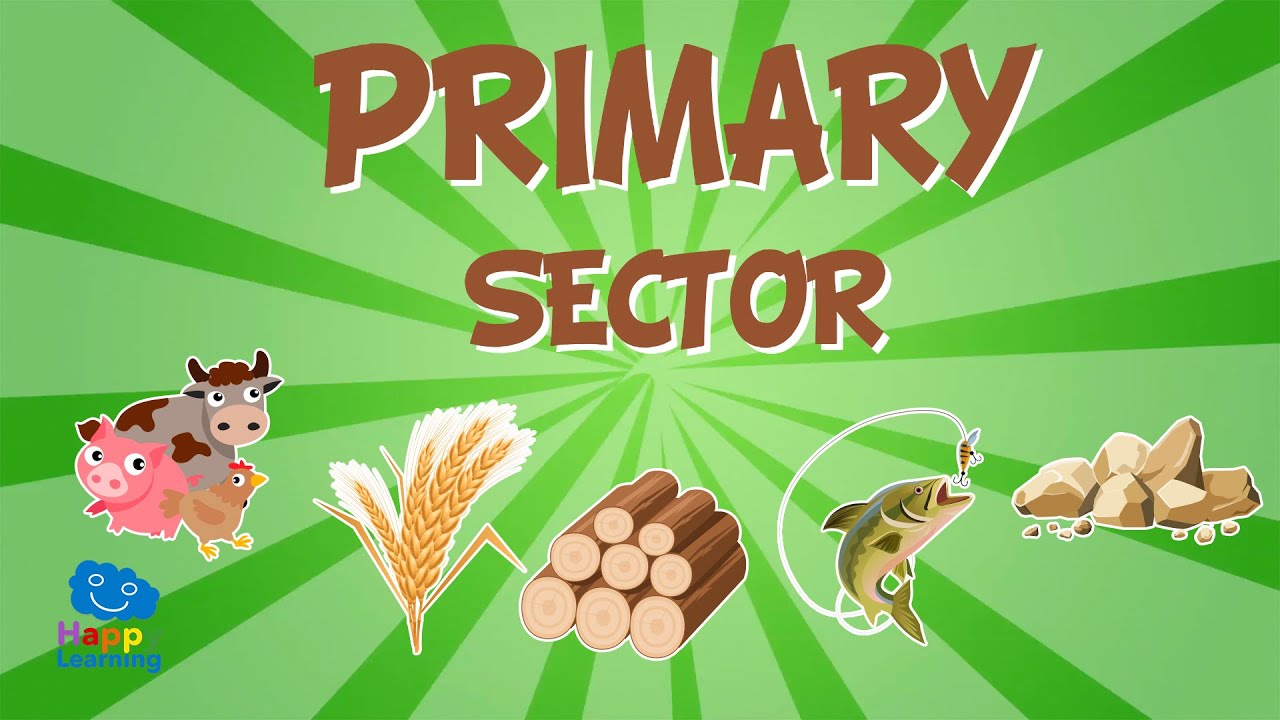
Today We're going to learn about Primary Sector!!!
How does it all work?! Well it's easy peasy 😉
👉SUBSCRIBE TO HAPPY LEARNING! http://bit.ly/HappyLearningTV
👉Web site: https://happylearning.tv/en/
👉Follow us on Facebook: https://www.facebook.com/HappyLearningTv
Recommended video: Jobs and their classification
https://youtu.be/GuzmULmcU0E
-----
Hello Friends!
Welcome to a new Happy Learning Video!
We already know that jobs are divided into three sectors. Primary or production sector, Secondary or manufacturing sector and the tertiary or service sector. Today, we’re going to get to know a little more about the first one of them. Today, we’re going to work in the primary sector. Primary sector jobs, are those that obtain primary sources directly from nature. Farming, agriculture, forestry, fishing and mining all belong to (the primary sector) (this sector). Let’s get to know a little more about each of these occupations.Farming consists of breeding livestock, animals!. And a livestock farmer, is the person who does this job.There are two types of farming: intensive and extensive farming. In intensive farming, animals live in farms and stables, with a farmer in charge of feeding and looking after them. In extensive farming, animals live in natural, open air terrains and this is where the farmer goes to take care and protect them. There are four types of livestock: cattle farming, like these cows, sheep farming like these sheep, pig farming, like these pigs or poultry farming, like these hens. Agriculture consists of the cultivation of land, to obtain vegetable products! And a crop farmer is the person who has this occupation. The first thing a crop farmer does, is plough the land by moving it around, then seeds are planted and after the necessary time, the fruits are harvested, which means collected, once they have ripened. There are two types of cropping: dry farming and irrigation farming. Dry farming grows only with rainwater, like wheat or almonds. Irrigation farming is watered artificially because crops need more water than dry farming, like tomatoes or rice. Forestry consists of the cultivation, care, and exploitation of woodland and hills. Thanks to forestry, products such as wood or firewood are collected. But it also helps to investigate on how to protect nature, something completely fundamental for all living things and in order for the whole planet to have a good environmental quality.Fishing consists of the catching of fish and other aquatic animals in rivers, lakes and at sea. Fishing that takes place in rivers is called river fishing and if it’s at sea, we call it sea fishing. Sea fishing has two types: deep sea fishing and shallow sea fishing.Deep sea fishing is done by (great) big boats, far away from the coast, with refrigerated chambers, since they spend a lot of time at sea, they need to freeze their prey so they don’t go bad. Shallow sea fishing is done by smaller boats and come to the coast. They usually leave every day that the weather enables them (fisherman) to. Within fishing and during the last decades, aquaculture has emerged, which consists of the production of algae of aquatic animals in tanks called fish farms… It’s like agriculture and farming, but under water!Mining consists on the collection of mineral resources from the floor and subfloor and the miners are those who perform this job. There is a great variety of minerals. there are metallic minerals like iron or gold, non-metallic minerals like marble or granite, and energetic or combustible minerals like oil, gas or coal coal. These last ones are the most important ones, but also the ones that contaminate the most. Now we’ve got to know the primary sector. Now’s the time to reflect. Imagine there was overexploitation of fishing… and the seas and rivers are left with no fish, in some places, this is already happening… Imagine for a moment, that we cut down all trees in our country and with them, many animals that depend on them. This is also happening in many countries. It’s fundamental that everyone that works in the primary sector respects nature so its primary sources aren’t depleted and their work is sustainable. But we all also need to take care and defend nature, only this way we will achieve a better world.
Goodbye Happy Friends! And don’t forget to subscribe to Happy Learning Tv

Explore the fascinating world of sound with our latest video! Uncover the secrets of sound qualities, how we perceive them, and their impact on our daily lives.
🌟 Welcome to a magical world of fun sounds! 🌈 Join us as we discover what sound is and how it travels through the air. 🎶 Embark on this exciting adventure full of games and surprises to learn about the incredible music that surrounds us every day! Don't miss out! 🚀✨ Hit play and dive into the magic of sound with guaranteed fun! 🎉👂 #LearnWithSounds #FunForKids #ExploreAndDiscover 🎈🔊

NEW VIDEOS https://www.youtube.com/playli....st?list=PLLF_mZmNqOn
MATTER, FORCE AND ENERGY https://www.youtube.com/playli....st?list=PLLF_mZmNqOn
💡🌞 What is light, and why is it so important for life? In this educational video for kids, you'll discover the different types of light, how it travels, what reflection and refraction are, and how light affects the way we see the world. 🌈👁️
Natural Sciences in Primary School aim to help children understand the world around them by developing their curiosity and critical thinking through observation and experimentation. They learn about nature, living beings, the human body, energy, and the environment, while also understanding the importance of caring for the planet.
📖 SUBJECT PLAYLISTS
🦖⛰️🐅 NATURAL SCIENCES for Primary School: https://www.youtube.com/playli....st?list=PLLF_mZmNqOn
👨🏫 SOCIAL SCIENCES for Primary School: https://www.youtube.com/playli....st?list=PLLF_mZmNqOn
➕✖️ MATH for Primary School Children: https://www.youtube.com/playli....st?list=PLLF_mZmNqOn
🤴🏰 HISTORY for Primary School Children: https://www.youtube.com/playli....st?list=PLLF_mZmNqOn
🌍⛰️ GEOGRAPHY for Primary School Children: https://www.youtube.com/playli....st?list=PLLF_mZmNqOn
🤝😊 Values and Emotions for Primary School Children: https://www.youtube.com/playli....st?list=PLLF_mZmNqOn v=KkCIIQyevjo&list=PL_Y3qbepMRoY7gwuwniiq11oMo6Ofe724
🌍 THE HAPPY LEARNING UNIVERSE
✅ Learn more about Happy Learning and our educational platform: https://happylearning.tv/en/
✅ Discover our social mission: https://happylearning.tv/en/nemesio-diez-foundation/
✅ Download the Happy Learning App:
- iOS: https://apps.apple.com/es/app/....happy-learning-tv/id
- Android: https://play.google.com/store/apps/details?id=tv.happylearning.canal&pli=1
🎓 ABOUT HAPPY LEARNING
Happy Learning is a social enterprise created by the Nemesio Diez Foundation, working to improve people's quality of life through education, health, sports and culture.
As a social company, our mission is to educate all children in the world in values and knowledge, to promote their holistic development and their commitment to society and the planet.
We offer educational resources to families, schools, hospitals and NGOs to ensure that children everywhere have access to a high-quality, comprehensive education.
At Happy Learning, we turn learning into an exciting adventure for primary school children. 🚀
We offer over 2,000 educational resources that combine fun and learning through animated videos, reading materials, interactive games and real-world activities.
📺 HAPPY LEARNING YOUTUBE CHANNEL
Welcome to Happy Learning! 🚀📚
The educational channel where learning is an adventure. Our goal is to spark curiosity and a love for knowledge in primary school children through fun and dynamic educational videos.
Discover the fascinating world of science with videos on Dinosaurs, the Solar System, Invertebrate Animals, Arachnids and much more. Travel back in time with history videos covering Prehistory, the Discovery of America or Ancient Egypt. Learn geography with content about The Earth and Its Movements, the Water Cycle and Parts of the Earth. Strengthen math skills with videos on Multiplication, Subtraction and Matter and Its Properties, and improve Spanish language understanding with lessons on Nouns, Sentences and Subject and Predicate.
Happy Learning transforms education into an exciting experience through animated videos, clear explanations and interactive activities. Perfect for children, parents and teachers seeking high-quality educational content.
🌟 Join our community of explorers!

THINGS YOU DIDN'T KNOW ABOUT BEES 🐝 | HAPPY LEARNING 🍯
Hello little friends! 🌟 Are you ready for a super fun journey with Happy Learning? Today, we're going to dive into the magical world of bees! 🐝 Did you know that bees are like nature's superheroes? They not only make delicious honey, but they also help flowers grow and make the world more beautiful!
In this episode, we're going to discover lots of cool things about bees together. Did you know they can communicate by dancing? Yes, it's like they're at a bee party! And they're super smart, always knowing where they are thanks to the sun.
And here's a secret for you: a little bee can visit a thousand flowers in just one day! It's amazing! And to make a bit of honey, they have to fly a lot, lot, lot!
So get ready for an adventure full of surprises, with awesome pictures and super interesting facts about these fuzzy little friends that make our world more beautiful. Let's have fun learning about bees together! 🍯🌼 #HappyLearning #Bees #Nature #Curiosities 🐝✨
Discover hundreds of never-before-seen resources! Create your free account at https://my.happylearning.tv/ and learn in the most enjoyable way.
#happylearning
#learning
#happy
#bees
#honey