Top videos

In this video we start a new series on sport science basics.
These videos are designed to help you learn the basics of statistics, data, and sport science analysis so that you are able to answer your related questions. In the first video we will work through calculating descriptive statistics on our dataset.
► Support DSMStrength HERE: https://www.buymeacoffee.com/DSMStrength
►Purchase The Athlete Dashboard HERE: https://tinyurl.com/DSMLTDash
SUBSCRIBE TO DSMSTRENGTH: https://bit.ly/3xRrNH7
[Books I Love] Support the Channel
►Periodization: http://amzn.to/2mOiBDA
►Strength Coach Guide to Excel http://amzn.to/2xAEZ4p
►Strength Coach Playbook: http://amzn.to/2mY9crI
►Principles and Practice of Resistance Training: http://amzn.to/2mM1Jf6
►High Performance Training for Sport: http://amzn.to/2mqWb74
[Connect with Me]
►See all Strength Coach Tutorials: http://bit.ly/2mLU5Bf
►Check our website: http://www.dsmstrength.com
[Social Media]
►Instagram: https://www.instagram.com/dsmstrength
►Twitter: https://twitter.com/dsmstrength
►Facebook Page: https://www.facebook.com/dsmstrength

WEBSITE: http://www.teachertube.com/math
An animated movie on the development of numbers throughout history.

Courses on Khan Academy are always 100% free. Start practicing—and saving your progress—now: https://www.khanacademy.org/ma....th/ap-calculus-ab/ab
Understanding that the derivative is just the slope of a curve at a point (or the slope of the tangent line)
Practice this yourself on Khan Academy right now: https://www.khanacademy.org/e/skill-check--tangent-lines?utm_source=YTdescription&utm_medium=YTdescription&utm_campaign=YTdescription
Watch the next lesson: https://www.khanacademy.org/math/differential-calculus/taking-derivatives/derivative_intro/v/tangent-slope-as-limiting-value-of-secant-slope-example-1?utm_source=YT&utm_medium=Desc&utm_campaign=DifferentialCalculus
Missed the previous lesson?
https://www.khanacademy.org/math/differential-calculus/taking-derivatives/secant-line-slope-tangent/v/approximating-equation-of-tangent-line-word-problem-1?utm_source=YT&utm_medium=Desc&utm_campaign=DifferentialCalculus
Differential calculus on Khan Academy: Limit introduction, squeeze theorem, and epsilon-delta definition of limits.
About Khan Academy: Khan Academy is a nonprofit with a mission to provide a free, world-class education for anyone, anywhere. We believe learners of all ages should have unlimited access to free educational content they can master at their own pace. We use intelligent software, deep data analytics and intuitive user interfaces to help students and teachers around the world. Our resources cover preschool through early college education, including math, biology, chemistry, physics, economics, finance, history, grammar and more. We offer free personalized SAT test prep in partnership with the test developer, the College Board. Khan Academy has been translated into dozens of languages, and 100 million people use our platform worldwide every year. For more information, visit www.khanacademy.org, join us on Facebook or follow us on Twitter at @khanacademy. And remember, you can learn anything.
For free. For everyone. Forever. #YouCanLearnAnything
Subscribe to KhanAcademy’s Differential Calculus channel:
https://www.youtube.com/channe....l/UCNLzjGl1HBdZrHXo4
Subscribe to KhanAcademy: https://www.youtube.com/subscr....iption_center?add_us
Please like, comment, share and subscribe so you don't miss out on any of my other videos:
https://www.youtube.com/c/LearnEnglishWithMiss
youtube.com/watch?v=VGFTWfudJ-s
https://www.youtube.com/c/Medi....tateYourMind101/feat
https://www.youtube.com/channe....l/UC8kFmHtpr16dr9G16
https://www.youtube.com/channe....l/UCp83p8h-dYf7H-HiG ####################################################################################################################################################
https://www.youtube.com/c/Lear....ningIsFunWithMiss?su 🌎🌎🌎🌎🌎🌎🌎🌎🌎🌎🌎🌎🌎🌎🌎🌎🌎🌎🌎🌎🌎🌎🌎🌎🌎🌎🌎🌎🌎🌎🌎🌎🌎🌎🌎🌎🌎🌎🌎🌎🌎🌎🌎🌎
Fair Use Act Disclaimer
This site is for educational purposes only!!
**FAIR USE**
Copyright Disclaimer under section 107 of the Copyright Act 1976, allowance is made for “fair use” for purposes such as criticism, comment, news reporting, teaching, scholarship, education and research.
Fair use is a use permitted by copyright statute that might otherwise be infringing.
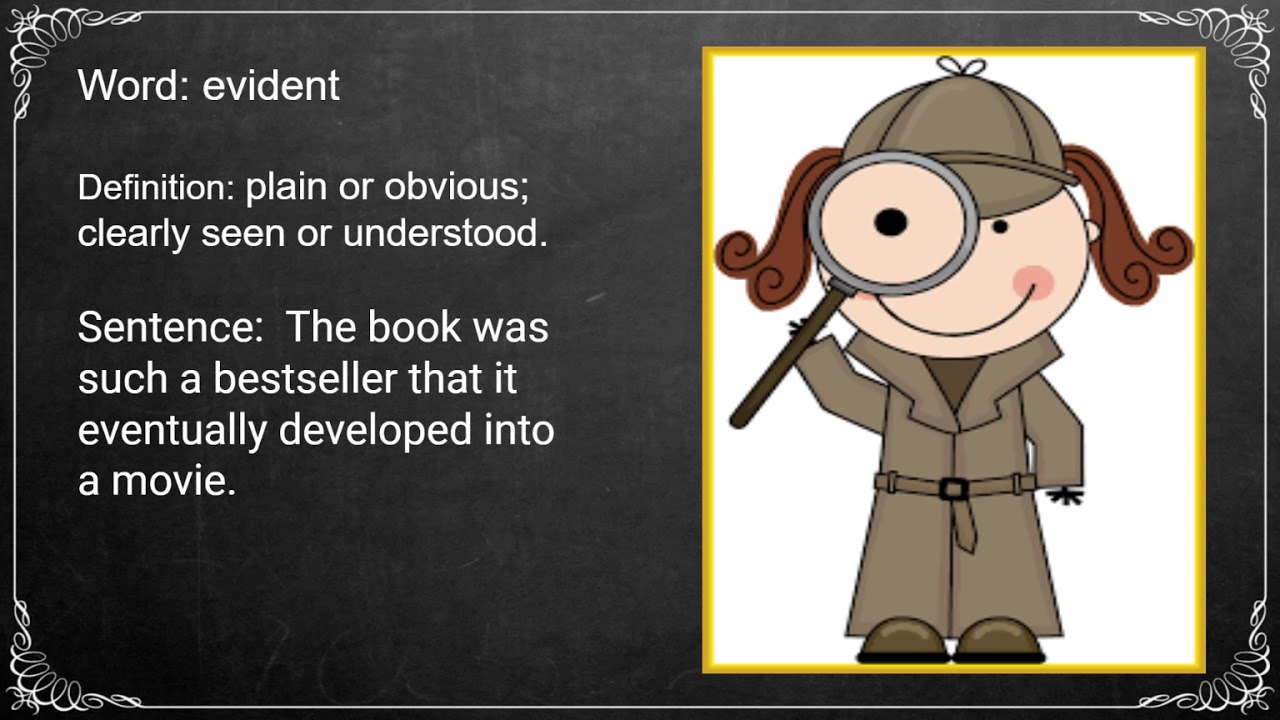
Vocabulary Words Practice With Pictures and Sentences | Spelling Bee Words, Vocabulary Words Lesson
#vocabulary #vocabularywords #vocabularywordspractice #vocabularywordspicturewithwords #vocabularywordpictureswithsentencs #vocabularywordspictureswithsentencesanddefinitions #learningdifferentwords #lerningwordmeanings #learningdifferentwordmeanings #englishwords #learningdifferentenglishwords #englishwordsforall #englishwordsforall #englishwordsforkids
Please watch my other video:
https://www.youtube.com/watch?v=3ZVUU...
Please visit my channel, and remember to like, share, subscribe and comment, thanks a million. English Lesson Videos, Spoken English and Learning To Speak English Lesson Videos, Online Learning, Online Teaching, Online Reading, Online Writing
#english #learnenglish #vocabulary #englishteacher #ielts #s #love #learning #grammar #education #ingles #language #englishlanguage #englishlearning #englishvocabulary #learn #teacher #englishgrammar #instagram #learningenglish #toefl #studyenglish #ingl #englishclass #englishtips #study #esl #idioms #ingilizce #bhfyp
#learnenglish #english #vocabulary #englishteacher #ielts #studyenglish #englishvocabulary #grammar #englishtips #speakenglish #englishlanguage #englishgrammar #englishlearning #learning #ingles #learningenglish #s #englishclass #toefl #learnenglishonline #esl #aprenderingles #idioms #education #learn #language #englishonline #englishcourse #vocab #bhfyp
#english
#usa
#spanish
#love
#america
#learnenglish
#travel
#language
#newyork
#french
#esl
#instagood
#england
#nyc
#france
#education
#losangeles
#studyenglish
#art
#vocabulary
#california
#germany
#school
#photography
#happy
#london
#music
#learn
#fun
#teacher &&&&&&&&&&&&&&&&&&&&&&&&&&&&&&&&&&&&&&&&&&&&&&&&&&&&&&&&&&&&&&&&&&
Please visit my other channels:
Learning Is Fun With Miss
Learn English With Miss
Meditate Your Mind101
Please remember to like, share, comment and subscribe, thanks a million:
Educational Disclaimer:
Copyright Disclaimer under section 107 of the Copyright Act 1976, allowance is made for “fair use” for purposes such as criticism, comment, news reporting, teaching, scholarship, education and research. *&*&*&*&*&*&*&*&*&*&*&*&*&*&*&*&*&*&*&*&*&*&*&*&*&*&*&*&*&*&*&*&*&*&*&*&
#edchat
#K12
#learning
#edleadership
#edtech
#engchat
#literacy
#scichat
#mathchat
#edreform
#lrnchat (social media and education)
#edchat.
#blendchat (blended learning)
#mlearning.
#elearning.
#ipadchat.
#pbl/#pblchat (project-based learning)
#passiondriven.
Follow along with Ashely and Mia as they teach you about indefinite pronouns.
We hope you are enjoying this video! For more in-depth learning, check out Miacademy.co (https://www.parents.miacademy.co/), an online learning platform with lessons and practice games that go along with our videos. Use coupon code VIDEOSPECIAL for a discount. Good for homeschoolers, Parents, Teachers, or anyone with kids in grades K-8.
Miacademy also offers many hands-on learning activities including a business simulation, writing in the Miacademy weekly, and creating artwork. Teaching social skills is also one of the key values at Miacademy. On the site, kids can interact safely in a moderated environment and share their artwork, videos, and ideas with each other.

✨ Welcome to today’s LIVE Math Class! ✨
In this session, we’ll dive into the Introduction to Fractions – the basics you need to understand before mastering more advanced math concepts.
📌 What you’ll learn today:
What are fractions?
Numerator & Denominator explained
Types of fractions (proper, improper, mixed)
Real-life examples for easy understanding
🎯 Perfect for students of all levels (Class 5–8) who want to build a strong foundation in fractions.
👉 Stay till the end for practice questions & tips to score high in exams!
🔔 Don’t forget to LIKE, SHARE & SUBSCRIBE for more live math classes.
_______________________________________________________________
#MathClass
#LiveMath
#MathTutorial
#Mathematics
#LearnMath
#MathHelp
#MathematicsLive
#MathematicsClass
#MathematicsTutorial
#MathematicsHelp
#MathEducation
#MathematicsEducation
#Algebra
#Geometry
#Calculus
#Statistics
#Trigonometry
#STEMeducation
#OnlineMathClass
#youtubemathclass
#shortsfeed
#shorts
________________________________________________________________________
Practice App:
To get FREE study material, download our ME AND MATH PRACTICE APP:
(For Android):
https://play.google.com/store/....apps/details?id=com.
(For iOS):
https://apps.apple.com/app/id6470185406
For web:
www.practice.meandmath.com
This physics video tutorial explains how to solve problems associated with the latent heat of fusion of ice and the latent heat of vaporization of ice. It contains problems associated with specific heat capacity, calorimetry, and heat transfer problems. It discusses the heating curve of water, the increase of kinetic energy during a temperature change process and the increase in potential energy during the phase change process. This video contains plenty of examples and heat transfer practice problems. It discusses phase changes such as freezing, melting, vaporization, condensation and the heat exchange that occurs during those times.
Linear Expansion of Solids:
https://www.youtube.com/watch?v=dWzX3hBYxdk
Temperature Conversions:
https://www.youtube.com/watch?v=6qiYcyhI158
Thermal Stress and Strain:
https://www.youtube.com/watch?v=FwOsoeOvZzo
Heat Energy - Unit Conversions:
https://www.youtube.com/watch?v=Pwr_yzR4kA4
Molar Heat Capacity:
https://www.youtube.com/watch?v=Vr3FJLxpdrU
Calorimetry Problems:
https://www.youtube.com/watch?v=BGcDUybbTW0
_______________________________
Specific Heat Capacity Problems:
https://www.youtube.com/watch?v=ePm_N6RgLfk
Final Temperature Calorimetry Problems:
https://www.youtube.com/watch?v=lxMwyxvSqgk
Conduction, Convection, and Radiation:
https://www.youtube.com/watch?v=bRZwzy0xvhM
Heat Current and Temperature Gradient:
https://www.youtube.com/watch?v=62nNz3mFr6U
Thermal Conductivity and Stefan Boltzmann's Law:
https://www.youtube.com/watch?v=LR5bYxC4syI
______________________________
Boyle's Law Practice Problems:
https://www.youtube.com/watch?v=v8r_AU_TlPg
How Does a Bike Pump Work?
https://www.youtube.com/watch?v=I0b_i6-HLBA
Charles Law:
https://www.youtube.com/watch?v=uZ2d79NFx2w
Gay Lussac's Law:
https://www.youtube.com/watch?v=RszgzH_2A9k
Final Exams and Video Playlists:
https://www.video-tutor.net/
Physics PDF Worksheets:
https://www.video-tutor.net/physics-basic-introduction.html

Master Prompt to Convert Pdf to Handwritten Note in Gemini and NoteBooklm Free
Aaj ki is video mein main aapko dikhaunga ek MASTER PROMPT jiska use karke aap
📄 kisi bhi PDF ko handwritten notes mein convert kar sakte ho — bilkul FREE mein 🔥
Chahe aap:
📚 Student ho
✍️ Competitive exam ki tayari kar rahe ho
🧠 Short notes banana chahte ho
📑 Long PDF ko easy handwritten form mein chahte ho
👉 Gemini AI aur NotebookLM Free ke through aap:
✔ PDF se handwritten-style notes bana sakte ho
✔ Notes ko NotebookLM / Google Slides / PDF format mein export kar sakte ho
✔ Pages ka control rakh sakte ho (100 pages PDF → 10–15 handwritten pages)
✔ Exam-ready, clean aur readable notes pa sakte ho
🔥 Is Video Mein Aap Seekhenge:
Master Prompt ka exact use
Gemini mein handwritten notes kaise generate kare
NotebookLM Free ka best use
Long PDFs ko short handwritten notes mein kaise convert kare
Free tools se professional notes banana
💡 Best For:
Students | Teachers | UPSC | SSC | NEET | JEE | School | College | Self Study
📌 Video ko LIKE 👍 karein
📌 Friends ke saath SHARE 🔁 karein
📌 Channel ko SUBSCRIBE 🔔 karein – aise aur AI hacks ke liye
Things i used
Nikon d5300 -https://amzn.to/2YHUUww
Boya Mic -https://amzn.to/2PdLaXD
Tripod -https://amzn.to/35hwHj4
ringlight -https://amzn.to/2taScDY
#youtubeseo
#youtubeseokaisekare
Our some other videos Playlist -
Our Social Links-
Youtube - https://www.youtube.com/channe....l/UCYQkMvhBUIHUjPjOj
Facebook- https://.facebook.com/abhishek2411
Twitter- https://twitter.com/iamytguruji
instagram- https://www.instagram.com/ytgurujiofficial/

#Shorts
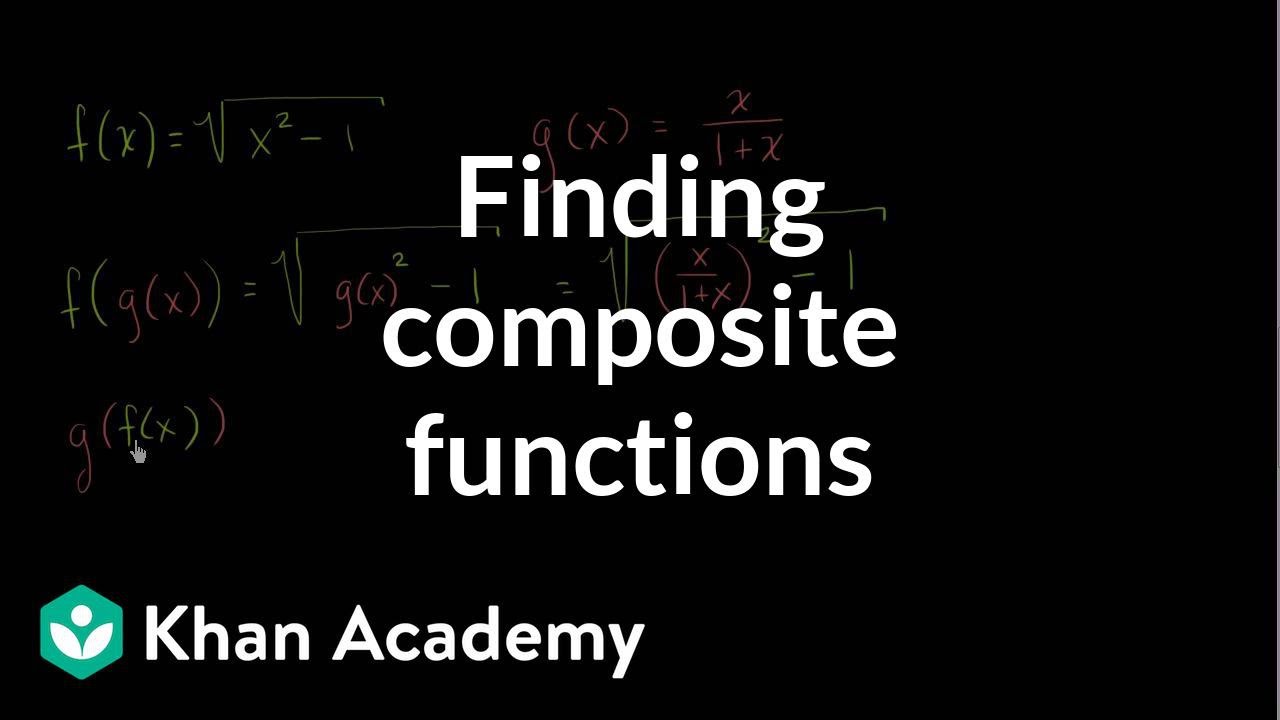
Watch the next lesson: https://www.khanacademy.org/math/algebra2/functions_and_graphs/composing-functions/v/evaluating-composite-functions-example-1?utm_source=YT&utm_medium=Desc&utm_campaign=AlgebraII
Missed the previous lesson?
https://www.khanacademy.org/math/algebra2/functions_and_graphs/composing-functions/v/function-composition?utm_source=YT&utm_medium=Desc&utm_campaign=AlgebraII
Algebra II on Khan Academy: Your studies in algebra 1 have built a solid foundation from which you can explore linear equations, inequalities, and functions. In algebra 2 we build upon that foundation and not only extend our knowledge of algebra 1, but slowly become capable of tackling the BIG questions of the universe. We'll again touch on systems of equations, inequalities, and functions...but we'll also address exponential and logarithmic functions, logarithms, imaginary and complex numbers, conic sections, and matrices. Don't let these big words intimidate you. We're on this journey with you!
About Khan Academy: Khan Academy offers practice exercises, instructional videos, and a personalized learning dashboard that empower learners to study at their own pace in and outside of the classroom. We tackle math, science, computer programming, history, art history, economics, and more. Our math missions guide learners from kindergarten to calculus using state-of-the-art, adaptive technology that identifies strengths and learning gaps. We've also partnered with institutions like NASA, The Museum of Modern Art, The California Academy of Sciences, and MIT to offer specialized content.
For free. For everyone. Forever. #YouCanLearnAnything
Subscribe to Khan Academy’s Algebra II channel:
https://www.youtube.com/channe....l/UCsCA3_VozRtgUT7wW
Subscribe to Khan Academy: https://www.youtube.com/subscr....iption_center?add_us

Reading tutorial | Reading Lesson | Teacher Aya Online Tutor.
Enjoy watching!

Teach In Two

Do you know the difference between herbivores, carnivores, and omnivores? Do you know which one you are? In this video for kids, you will learn all about the three diets that animals (and even a few plants!) follow. You will also learn what exactly these three words mean.
One of the main characteristics that distinguishes the type of diet an animal will follow is the teeth. Herbivores only eat plants. These animals tend to have dull or no canine teeth and big, flat side and back teeth. They use their molars to crush and grind the plants they consume. Examples include sheep, cows, giraffes, rats, and grasshoppers. You could consider herbivores vegetarians!
Carnivores, on the other hand, only eat meat. They have long and sharp canine teeth next to their front teeth. They also have sharp cheek teeth called carnassials that help them cut up meat in their mouths. Carnivorous animals include lions, spiders, sharks, wolves, dragonflies, and the Venus fly-trap (which is actually a plant).
Finally, that leaves us with omnivores, which eat both plants and animals. Humans are omnivores because we consume both types of food. Omnivores have a combination of flat teeth and sharp teeth because they eat both plants and animals. Apart from humans, other omnivores include lizards, turtles, apes, catfish, and bears.
We hope you and your student(s) enjoyed learning about the diets of different animals! If you want to learn even more, head over to our website and download one of our many free lesson plans, full of activities, worksheets, and more!
https://learnbright.org/lesson....s/science/herbivores
https://learnbright.org/lesson....s/science/food-chain
What you will learn in Herbivores, Carnivores, and Omnivores for Kids:
0:00 Introduction to the three diets
1:10 What the suffix -vore means and what herbi-, carni-, and omni- mean
2:09 Traits of herbivores
3:27 Examples of herbivores
3:48 Traits of carnivores
5:06 Examples of carnivores
5:35 Traits of omnivores
6:39 Examples of omnivores
7:04 Quiz time
Thank you for watching and learning with us! We’re constantly releasing new content and videos, so click that “Subscribe” button and you’ll get notified.
Find and Follow Us Online:
Facebook: https://www.facebook.com/LearnBright/
Instagram: https://instagram.com/LearnBrightEducation
Pinterest: https://pinterest.com/LearnBrightEducation
YouTube: @LearnBright
Website: https://learnbright.org/
*Teachers and Parents! Did you know? In addition to these great videos, we have also created a library of high-quality and engaging lessons for your elementary aged student(s). Visit us, sign up for a free account, and instantly you'll have access to thousands of lesson plans, learning materials, teaching instructions, activities, and assignments that your kids will really enjoy! We hope to see you soon!
Browse our entire collection of Science lesson plans: https://learnbright.org/lessons/?filter_subject=science
#herbivores
#carnivores
#omnivores


The female reproductive system is a complex and intricate network of organs and structures responsible for the creation of new life. Its primary functions include the production and release of eggs, fertilization, pregnancy, and childbirth.
Click the join or thanks button to get involved in making science more interesting and available to every human being!
Support us on Patreon:
https://www.patreon.com/FreeMedEducation
Help us making Education Universal:
https://www.Launchgood.com/educationforeverychild
We believe that learning should be accessible, engaging, and inspiring for all. Our aim is to empower learners of all ages and backgrounds to explore the wonders of science, and to ignite a lifelong passion for learning. With our state-of-the-art resources and captivating animations, we're bringing education to life! Join us and let's create a brighter, more connected world through the power of learning.
Follow our Social Media:
Facebook: https://www.facebook.com/freeAnimatedEducation
CREDITS:
Director: Ramadhan Istabaq
Supervisor: Ramadhan Istabaq
Researcher: Ramadhan Istabaq
Storyboard Artist: Bima Bhirawa
Illustrator: Ibrahim Pyke
Animator: Dhienno Adhar
SFx Designer: Rafly Moravia
Narrator: Ross Hill
#FreeAnimatedEducation #female #reproduction #reproductivesystem #womb

Another YouTube #shorts from Dr. Joe! Subscribe for more fun science stories.
Some animals' entire life spans flash by in a matter of hours or days. These guys live short but remarkable lives.
Join us on Patreon!
https://patreon.com/itsokaytobesmart
Instagram
http://www.instagram.com/DrJoeHanson
http://www.instagram.com/okaytobesmart
Facebook
https://www.facebook.com/itsokaytobesmartpbs/

12 FREE Secular Homeschool Curriculum Websites K-12.
Here is my new compilation of 10 websites that offer free curricula in mathematics, language arts, sciences, social sciences, art, music and more. Some concentrate in preschoolers or early childhood education, others run the gamut from preK through high school. I’ve come across dozens of these sites, however, my number one criteria for inclusion in this list is a secular perspective, and second, each site must be worth our while.
See entire list with links in my blog:
http://www.raisingaselfreliant....child.com/2013/10/16
♡ Follow me ♡
Website: http://www.raisingaselfreliantchild.com
Facebook - https://www.facebook.com/RaisingASelfReliantChild
YouTube - https://www.youtube.com/user/r....asreliantchild?sub_c
Google+ - https://plus.google.com/u/0/b/....10715869441748570339
Twitter - https://twitter.com/rasreliantchild
Pinterest - https://www.pinterest.com/rasreliantchild/

Explore all of the projects KiwiCo has to offer at https://www.kiwico.com/besmart and use our code BESMART for 50% off your first monthly crate.
Take the PBS Digital Studios annual survey: https://to.pbs.org/2025SurveyBeSmart
↓↓↓ More info and sources below ↓↓↓
Think traits like eye color or tongue-rolling are simple genetics? Think again. From Mendel’s peas to modern DNA science, let’s talk about why most human traits aren’t just “dominant” or “recessive.” Eye color, red hair, earlobes, even cilantro—genetics is way messier (and cooler) than you learned in school.
-----------
High fives to all our Brain Trust Patrons:
Baerbel Winkler
Brent Lopez
dani bowman
David Johnston
Ed Eyden
Eric Meer
Holly, Brett, and Ashe Bullion
Jaap Westera
Karen Haskell
Marcus Pingel
Mike and Patty Loftis
Olivia Ruiz
Reuben Brewer
SUBSCRIBE so you don’t miss a video! ►► http://bit.ly/iotbs_sub
Join us on Patreon!
https://patreon.com/itsokaytobesmart
Instagram
http://www.instagram.com/DrJoeHanson
http://www.instagram.com/okaytobesmart
Facebook
https://www.facebook.com/itsokaytobesmartpbs/
Merch
https://store.dftba.com/collec....tions/its-okay-to-be

9. O projeto de um estádio de futebol em Jupi terá um custo de R$ 100.000,00. Sabendo que 4 empresas ficaram responsáveis pela construção do estádio e que o valor pago a cada empresa é inversamente proporcional aos números 1,2,3 e 4, quanto receberá, em reais, a empresa que ganhará mais no pagamento dos R$ 100.000,00?
a) 12.000,00
b) 16.000,00
c) 24.000,00
d) 48.000,00

#Shorts