Top videos

Join Oliver, Roma, and their family on an unforgettable trip to the Dubai Safari Park! 🐘🦒
But that’s just the beginning! In this fun and educational video compilation, kids will also learn how to sort garbage ♻️, explore colors and shapes, visit the dentist for the first time 🦷, and even help Grandma 👵.
A perfect collection of stories that combine fun and learning — showing children how exciting it is to explore the world and do good things every day!
📺 Fun & Learning for Kids! 🌟
00:00 🐆 Family Trip to Dubai SAFARI Park
05:40 ♻️ Kids Learn to Sort Garbage – Earth Day Story 🌍
11:36 🎲 GIANT Sorter Cube Challenge – Shapes & Colors 🌈
15:55 🗑️ Roma Learns to Sort Trash ♻️
21:32 👵 Kids Helping Grandma Story 💖
27:46 😁 Oliver's First Visit to the Dentist 🦷
Kids Diana Show - https://www.youtube.com/@KidsDianaShow/videos
https://www.instagram.com/kidsdianashow/
https://www.facebook.com/KidsDianaShowOfficial/
#dianaandroma
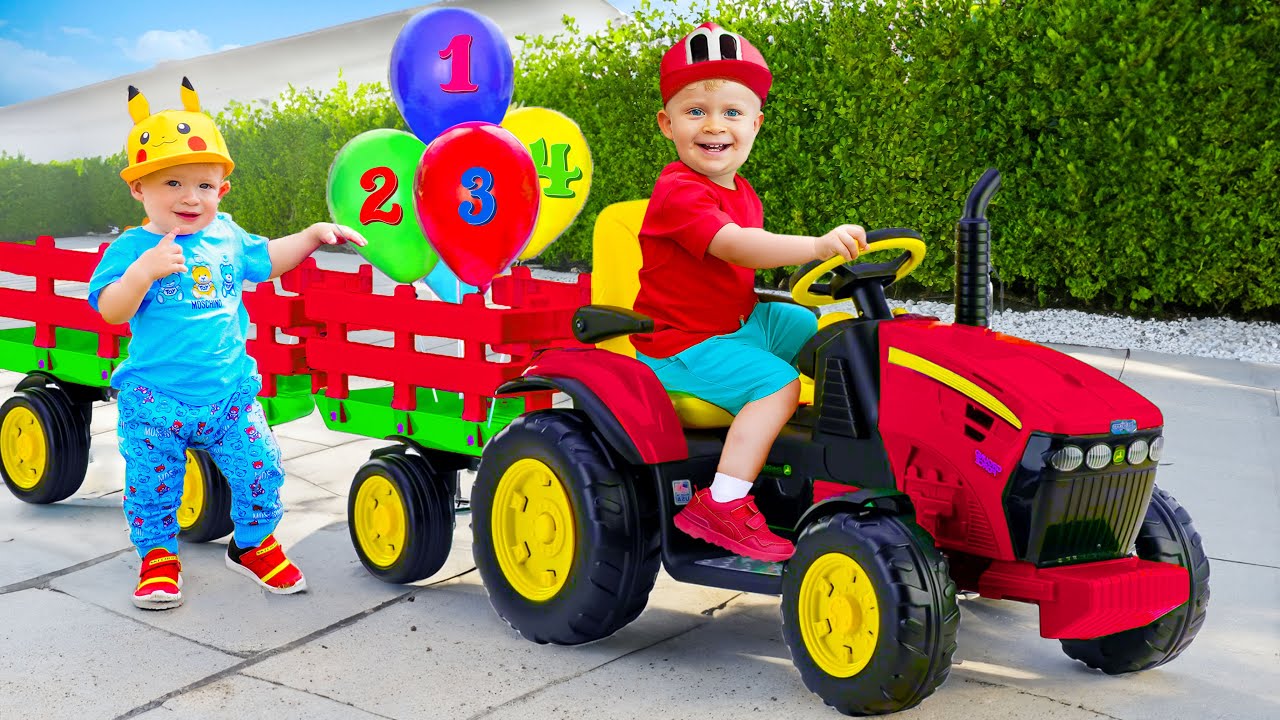
Join Oliver in these educational videos where he teaches numbers, the alphabet, and even different professions in a fun and engaging way! A fun way to teach kids!
00:00 Oliver Rides a Tractor and Finds Lost Numbers
04:52 Oliver learns to Sleep Alone
08:07 Diana Roma and Oliver play Numbers Challenge
15:26 Diana Roma and Oliver Open the 10 Doors Adventure
25:00 Diana and Roma English Alphabet with Surprise Eggs | ABC
32:32 Diana and Roma Explore an Amazing Giant House of PROFESSIONS!
Kids Roma Show - http://bit.ly/2kj62uh
https://www.instagram.com/kidsromashow/
https://www.facebook.com/KidsRomaShow
#romaanddiana

Learning is always fun with Ralph And Rocky popular nursery rhymes. We bring to you some amazing songs for kids to sing along with us and have a good time. Kids will dance, laugh, sing and play along with our videos while they also learn numbers, letters, colors, good habits and more!
So come along for an awesome educational fun ride with our wide variety of nursery rhymes songs and don’t forget to subscribe to our channel for new videos every week.
(🔔) Subscribe to Ralph And Rocky Cars - Vehicle Cartoons for Kids for New Videos ❤ ► ► https://www.youtube.com/channe....l/UCIqtzr5Izq1gae6TH
© 2017 USP Studios Private Limited
===========================================================
Music and Lyrics: Copyright USP Studios™ Video: Copyright USP Studios™
===========================================================
#ralphandrockycars #cartoon #kindergarten #toddlersvideo #kidsshow #Preschool #kids #entertainment #babies #nurseryrhymes #learning #cartoonchannel #animatedvideos

🚀 Unlock the power of Full‑Text Search in Azure AI Search with this complete, step‑by‑step tutorial.
In this video, you’ll learn how to build a powerful search experience using Azure AI Search, both without writing code (no‑code) and with code using REST APIs and SDKs. Whether you're a beginner or an experienced developer, this guide walks you through everything you need to know to create fast, intelligent, and scalable search solutions on Azure.
This tutorial covers how to design your index, upload data, configure search fields, enable filters and facets, add suggesters for autocomplete, and apply scoring profiles to improve ranking and relevance. You’ll also learn how to run full‑text search queries, build a search index from scratch, and integrate Azure AI Search into your applications.
If you want to understand how Azure AI Search full‑text search works, how to build a search index, how to use no‑code search tools, or how to implement code‑based search solutions, this video is for you. Perfect for developers, architects, data engineers, PMs, and anyone building intelligent search features.
What You’ll Learn
✅ What is Azure AI Search and how full‑text search works
✅ How to build full‑text search using Azure Portal (no‑code)
✅ How to build full‑text search using code (REST API / SDK)
✅ How to upload JSON documents to Azure AI Search
✅ How to configure searchable, filterable, sortable, and facetable fields
✅ How to add suggesters for autocomplete and type‑ahead
✅ How to use scoring profiles to boost relevance
✅ How to run search queries, filters, and facets
✅ How to test search using Search Explorer
#AI #Azure #aiagents
📌You can support me here: https://www.buymeacoffee.com/shwetalodha
🎉 ................ LINKS ................
Medium: https://medium.com/@shweta-lodha
Blog: www.shwetalodha.in
.............................................
🎉 Get discount on vidIQ with my code 🚀
https://vidiq.com/ShwetaLodha
#AIagent #MicrosoftFoundry #WebSearch #KnowledgeBase #AIAgentWorkflow #TechTutorial
💡 Keywords:
Azure AI Search, Azure Cognitive Search, Full‑Text Search Azure, Azure Search Tutorial, Azure Search No Code, Azure Search Code, Azure Search Index, Azure Search JSON, Azure Search Example, Azure Search Demo, Azure Search Step by Step, Azure Search Beginner Tutorial, Azure Search for Developers, Azure Search Portal, Azure Search REST API, Azure Search SDK, Azure Search Scoring Profiles, Azure Search Suggester, Azure Search Autocomplete, Azure Search Filters, Azure Search Facets, Build Search in Azure, Search Index Azure, Cloud Search Engine, Microsoft Azure Search, Azure AI Search Tutorial, How to Build Full Text Search, Full Text Search Example, Search as a Service Azure, Azure Search End to End, Azure Search Explained
#MicrosoftFoundry #DeclarativeWorkflows #VSCode #AIagents #AgentAutomation #FoundryTutorial #WorkflowTesting #AzureAI
#MCPServer #AIAgents #AzureAppService #VisualStudioCode #AIToolkit #CloudDevelopment #IntelligentAgents #AzureTutorial #EndToEndWorkflow #MicrosoftFoundry #FoundryIQ #ModelContextProtocol #GenAI #TechTutorial
###### AI PLAYLISTS ########
⭐Azure OpenAI
https://www.youtube.com/playli....st?list=PLb9nVWmuEUu
⭐OpenAI
https://www.youtube.com/playli....st?list=PLb9nVWmuEUu
⭐Azure Prompt Flow
https://www.youtube.com/playli....st?list=PLb9nVWmuEUu
⭐ChatGPT
https://www.youtube.com/playli....st?list=PLb9nVWmuEUu
⭐AI In General
https://www.youtube.com/playli....st?list=PLb9nVWmuEUu
⭐Azure AI & Machine Learning
https://www.youtube.com/playli....st?list=PLb9nVWmuEUu
###### MORE PLAYLISTS ######
⭐Python for beginners
⭐Python Pandas
⭐Python tips and tricks
⭐Jupyter tips & tricks
⭐Microsoft Azure
⭐Visual Studio Code a.k.a. VS Code

Ankit Srivastava - https://www.instagram.com/ankit_sr/
Ask ChatGPT something slightly questionable and it shuts down. Not because your intent is bad. Just because the model is scared.
Sometimes you just want to know something. That's it. No sinister plan. Just curiosity.
But these models are trained to be cautious to the point of being useless.
Here are 3 free AI models you can install locally on your computer. They run on your machine. They work the way you want. And they never say no


On January 15th, Starlink quietly updated their privacy policy to allow your personal data to be used for training AI models - and you're already opted in by default. I'm going to show you exactly how to opt out of third-party data sharing through your account settings.
#Starlink #Privacy #AI #DataPrivacy #SpaceX #XAI #TechNews #CyberSecurity #InternetPrivacy #ElonMusk
Buy me a coffee! https://ko-fi.com/crosstalk
Crosstalk Discord: https://discord.gg/crosstalksolutions
Follow me on:
- TikTok: https://www.tiktok.com/@crosstalksolutions
- LinkedIn: https://goo.gl/j2Ucgg
- Bluesky: https://bsky.app/profile/crosstalk.bsky.social
- Mastodon: @chris@crosstalk.tech
- Facebook: https://fb.me/crosstalksolutions
- Instagram: https://instagram.com/crosstalksolutions
Crosstalk Solutions - RECOMMENDED PRODUCTS: https://crosstalksolutions.com/products
Crosstalk Solutions offers best practice phone systems and network/wireless infrastructure design/deployment. Visit https://www.CrosstalkSolutions.com for more info!

In this episode of The Dept. Omar sits down with AI expert Alicia Lyttle for a deep, practical conversation on how entrepreneurs, creators, and leaders can use AI as a real advantage. Together, they break down how to actually start using tools like ChatGPT and Gemini, how to think about AI as a productivity and income multiplier, and why prompting, training, and human judgment matter more than the tools themselves. Alicia shares real-world examples of how AI is saving time, increasing revenue, and helping people move faster from idea to execution, while Omar ties it back to stewardship, creativity, and building trust in a rapidly changing world. If you’ve felt overwhelmed, skeptical, or behind when it comes to AI, this episode will give you clarity, confidence, and a clear starting point.
💸 Take The Content To Cash Challenge 💸
https://go.thevideodept.co/content-to-cash
✅ Connect with Alicia:
https://www.instagram.com/alicialyttle/
✅ Follow Omar:
https://www.instagram.com/omareltakrori
🚀 Join The Video Dept. Community 🚀
https://www.skool.com/tvd
🔴 Access to All of Omar's Gear:
https://go.tvdhq.com/omarsgear

Subscribe to Happy Learning: https://my.happylearning.tv/
More related videos: https://www.youtube.com/playli....st?list=PLLF_mZmNqOn
Curiosities for kids:https://www.youtube.com/playli....st?list=PLLF_mZmNqOn
Discover the Fascinating World of Dinosaurs! | Happy Learning 🦖🌍✨
In this Happy Learning video, we travel millions of years back to explore the age of dinosaurs, the giants that ruled the Earth! 🌋🦕 Dinosaurs were amazing creatures, with species of all sizes: from the tiny Compsognathus, as light as a cat 🐈, to the gigantic Argentinosaurus, which weighed as much as 15 elephants combined! 🐘
Did you know that not all dinosaurs were carnivores like the famous Tyrannosaurus Rex? 🦖 Many, like the Triceratops, were herbivores and fed on plants. 🌿 Moreover, scientists have discovered that some dinosaurs had feathers, making them close relatives of modern birds. 🐦✨ This video will take you on a journey to learn how they lived, what they ate, and why these incredible animals disappeared. A prehistoric adventure that will leave you amazed! 🌎⚡
Discover hundreds of never-before-seen resources! Create your free account at https://my.happylearning.tv/ and start learning in the most entertaining way.

NEW VIDEOS https://www.youtube.com/playli....st?list=PLLF_mZmNqOn
ANIMAL KINGDOM https://www.youtube.com/playli....st?list=PLLF_mZmNqOn
🌊🧽 Did you know there are animals with no head, heart or brain that live by filtering seawater? In this educational video for kids, you’ll discover the fascinating world of marine invertebrates. Learn how they live, feed, and why they are so important to ocean ecosystems. 🪸🐚
SUBJECT DESCRIPTION (if the video is part of a specific subject)
📖 SUBJECT PLAYLISTS
🦖⛰️🐅 NATURAL SCIENCES for Primary School: https://www.youtube.com/playli....st?list=PLLF_mZmNqOn
👨🏫 SOCIAL SCIENCES for Primary School: https://www.youtube.com/playli....st?list=PLLF_mZmNqOn
➕✖️ MATH for Primary School Children: https://www.youtube.com/playli....st?list=PLLF_mZmNqOn
🤴🏰 HISTORY for Primary School Children: https://www.youtube.com/playli....st?list=PLLF_mZmNqOn
🌍⛰️ GEOGRAPHY for Primary School Children: https://www.youtube.com/playli....st?list=PLLF_mZmNqOn
🤝😊 Values and Emotions for Primary School Children: https://www.youtube.com/playli....st?list=PLLF_mZmNqOn v=KkCIIQyevjo&list=PL_Y3qbepMRoY7gwuwniiq11oMo6Ofe724
🌍 THE HAPPY LEARNING UNIVERSE
✅ Learn more about Happy Learning and our educational platform: https://happylearning.tv/en/
✅ Discover our social mission: https://happylearning.tv/en/nemesio-diez-foundation/
✅ Download the Happy Learning App:
- iOS: https://apps.apple.com/es/app/....happy-learning-tv/id
- Android: https://play.google.com/store/apps/details?id=tv.happylearning.canal&pli=1
🎓 ABOUT HAPPY LEARNING
Happy Learning is a social enterprise created by the Nemesio Diez Foundation, working to improve people's quality of life through education, health, sports and culture.
As a social company, our mission is to educate all children in the world in values and knowledge, to promote their holistic development and their commitment to society and the planet.
We offer educational resources to families, schools, hospitals and NGOs to ensure that children everywhere have access to a high-quality, comprehensive education.
At Happy Learning, we turn learning into an exciting adventure for primary school children. 🚀
We offer over 2,000 educational resources that combine fun and learning through animated videos, reading materials, interactive games and real-world activities.
📺 HAPPY LEARNING YOUTUBE CHANNEL
Welcome to Happy Learning! 🚀📚
The educational channel where learning is an adventure. Our goal is to spark curiosity and a love for knowledge in primary school children through fun and dynamic educational videos.
Discover the fascinating world of science with videos on Dinosaurs, the Solar System, Invertebrate Animals, Arachnids and much more. Travel back in time with history videos covering Prehistory, the Discovery of America or Ancient Egypt. Learn geography with content about The Earth and Its Movements, the Water Cycle and Parts of the Earth. Strengthen math skills with videos on Multiplication, Subtraction and Matter and Its Properties, and improve Spanish language understanding with lessons on Nouns, Sentences and Subject and Predicate.
Happy Learning transforms education into an exciting experience through animated videos, clear explanations and interactive activities. Perfect for children, parents and teachers seeking high-quality educational content.
🌟 Join our community of explorers!

VITAL FUNCTIONS https://youtu.be/SKy_C2cr63M
PREMIERES! 👉 https://www.youtube.com/playli....st?list=PLLF_mZmNqOn
ANIMALS FUN FACTS! https://www.youtube.com/playli....st?list=PLLF_mZmNqOn
Discover hundreds of never-before-seen resources! Create your free account at https://my.happylearning.tv/ and start learning in the most entertaining way.
What are you waiting for? Aren’t Dinosaurs fascinating!? Who wishes they were still alive?
👉SUBSCRIBE TO HAPPY LEARNING! http://bit.ly/HappyLearningTV
👉Web site: https://happylearning.tv/en/
👉Follow us on Facebook: https://www.facebook.com/HappyLearningTv
Recommended video: Prehistory
https://youtu.be/rLFGra2TiTE
Hello Friends and welcome to a new happy learning video. Today we are going to talk about some animals that existed 65 million years ago. I am sure you have heard about the dinosaurs, and I am certain you have seen many films and cartoons featuring dinosaurs. But...not everything that is told in these films is correct. So, if you don’t mind, let’s find out what they really were like and how they lived.
The first thing we need to understand is that people and dinosaurs never lived together.
The dinosaurs lived before human beings existed and they roamed the Earth for approximately 135 million years. That’s a really long time! They were the dominating vertebrates. Nowadays more than 500 different species have been identified thanks to bones and fossils found.
All dinosaurs were oviparous, meaning they reproduced by laying eggs but there were huge differences between them; some were very small while others were absolutely enormous...
So as to learn about them better, we have divided them into two major groups:
The Ornithischia and the Saurischia. What complicated names they have!
The Ornithischia or “bird-hipped” dinosaurs were herbivore, which means they only ate plants. The most well-known was the Triceratops. They were impressive, huh?
The Saurischia or “lizard hipped” dinosaurs are the ancestors of the crocodiles and lizards. Among this species there were carnivores and herbivores and within them the two most famous dinosaurs, the
diplodocus and the tyrannosaurus.
The diplodocus was the largest dinosaur. In 1907 an entire skeleton was found measuring 27 meters, although remains of these specimens have been found exceeding 50 meters. In these images you can observe just how enormous they were...
The Tyrannosaurus was and still is the most fearsome predator which has ever existed on our Planet. It was more than 4 metres high and could be up to 12 meters in length. In its mouth it had 60 razor sharp pointed teeth, and it could run...65 kms per hour!!! The truth is I would be absolutely petrified if I were to come across such an animal...
But wait a minute, how is it possible that such large and powerful animals completely disappeared off the face of the Earth?
Currently, the investigators are focusing on two big theories: the first is based on the impact of an asteroid or comet from outer space. The other theory maintains that the cause of the dinosaurs’ disappearance was due to a period of enormous volcanic activity. We actually still don’t truly know the reason. But what we do know with absolute certainty is that, right now, at this very moment there are still many animals in great danger of becoming extinct, and could even disappear. All of us can help them survive. How? By respecting nature, recycling, contaminating the least bit possible, buying only what we really need...If we make these efforts we will be able to live in a much healthier planet and we will at the same time be ensuring that no animal, not a single one, will ever be in danger of extinction again. Let’s hope with everybody’s help, we can make it happen.
Goodbye Friends oh and don’t forget to subscribe to happy learning TV.

Students explore the use of wind power in the design, construction and testing of "sail cars," which, in this case, are little wheeled carts with masts and sails that are powered by the moving air generated from a box fan. The scientific method is reviewed and reinforced with the use of controls and variables, and the engineering design process is explored. The focus of the activity is on renewable energy, as well as the design, testing and redesign of small cars made from household materials. The activity (and an extension worksheet) includes the use of kinematic equations using distance, time traveled and speed to enforce exponents and decimals.
View the full activity on TeachEngineering:
https://www.teachengineering.o....rg/activities/view/c
TeachEngineering has over 1,500 FREE lessons and activities. Visit https://www.teachengineering.org/ for more!
Music: Deep Hat

Student teams design and then create small-size models of working filter systems to simulate multi-stage wastewater treatment plants. Drawing from assorted provided materials (gravel, pebbles, sand, activated charcoal, algae, coffee filters, cloth) and staying within a (hypothetical) budget, teams create filter systems within 2-liter plastic bottles to clean the teacher-made simulated wastewater (soap, oil, sand, fertilizer, coffee grounds, beads). They aim to remove the water contaminants while reclaiming the waste material as valuable resources. They design and build the filtering systems, redesigning for improvement, and then measuring and comparing results (across teams): reclaimed quantities, water quality tests, costs, experiences and best practices. They conduct common water quality tests (such as turbidity, pH, etc., as determined by the teacher) to check the water quality before and after treatment.
View the full activity at TeachEngineering:
https://www.teachengineering.o....rg/activities/view/u
TeachEngineering has over 1,500 FREE lessons and activities. Visit https://www.teachengineering.org/ for more!
Music: Awaken - Anno Domini Beats

In this multi-day activity, students explore environments, ecosystems, energy flow and organism interactions by creating a scale model biodome, following the steps of the engineering design process. The Procedure section provides activity instructions for Biodomes unit, lessons 2-6, as students work through Parts 1-6 to develop their model biodome. Subjects include energy flow and food chains, basic needs of plants and animals, and the importance of decomposers. Students consider why a solid understanding of one's environment and the interdependence of an ecosystem can inform the choices we make and the way we engineer our own communities. This activity can be conducted as either a very structured or open-ended design.
View the full activity on TeachEngineering: https://www.teachengineering.o....rg/activities/view/c
TeachEngineering has over 1,500 FREE lessons and activities. Visit https://www.teachengineering.org/ for more!
Music: Skinny Leonard - Audionautix
Skinny Leonard by Audionautix is licensed under a Creative Commons Attribution license (https://creativecommons.org/licenses/by/4.0/)
Artist: http://audionautix.com/
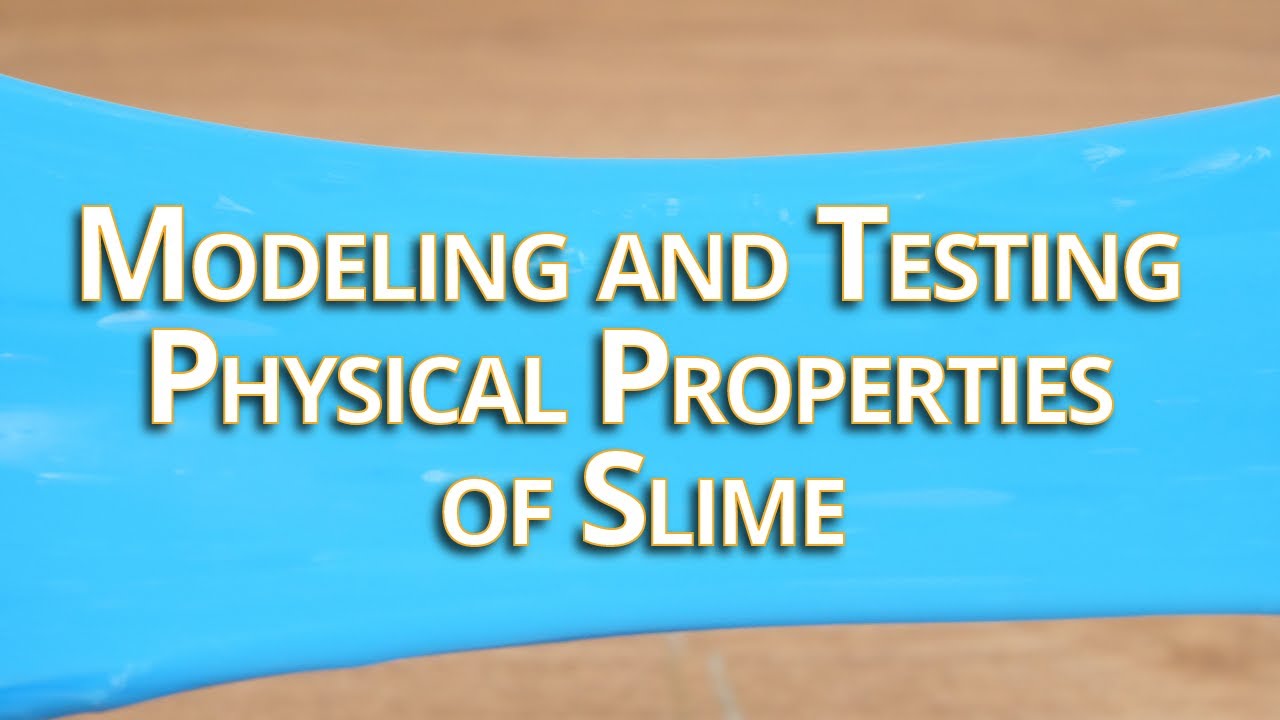
An exploration of an engineering brief from a mock toy company leads students to explore a new slime with a unique set of characteristics. Using simple directions, students create five different types of slime and classify their slime properties against the criteria provided by the mock toy company. Based on their observations, they identify the best slime recipe based on the resulting physical properties.
View the full activity on TeachEngineering:
https://www.teachengineering.o....rg/activities/view/i
TeachEngineering has over 1,500 FREE lessons and activities. Visit https://www.teachengineering.org/ for more
Music: Cats and Gats - Dyalla

Simple machines are devices with few or no moving parts that make work easier. Students are introduced to the six types of simple machines — the wedge, wheel and axle, lever, inclined plane, screw, and pulley — in the context of the construction of a pyramid, gaining high-level insights into tools that have been used since ancient times and are still in use today. In two hands-on activities, students begin their own pyramid design by performing materials calculations, and evaluating and selecting a construction site. The six simple machines are examined in more depth in subsequent lessons in this unit.
View the full lesson on TeachEngineering: https://www.teachengineering.o....rg/lessons/view/cub_
TeachEngineering has over 1,500 FREE lessons and activities. Visit https://www.teachengineering.org/ for more
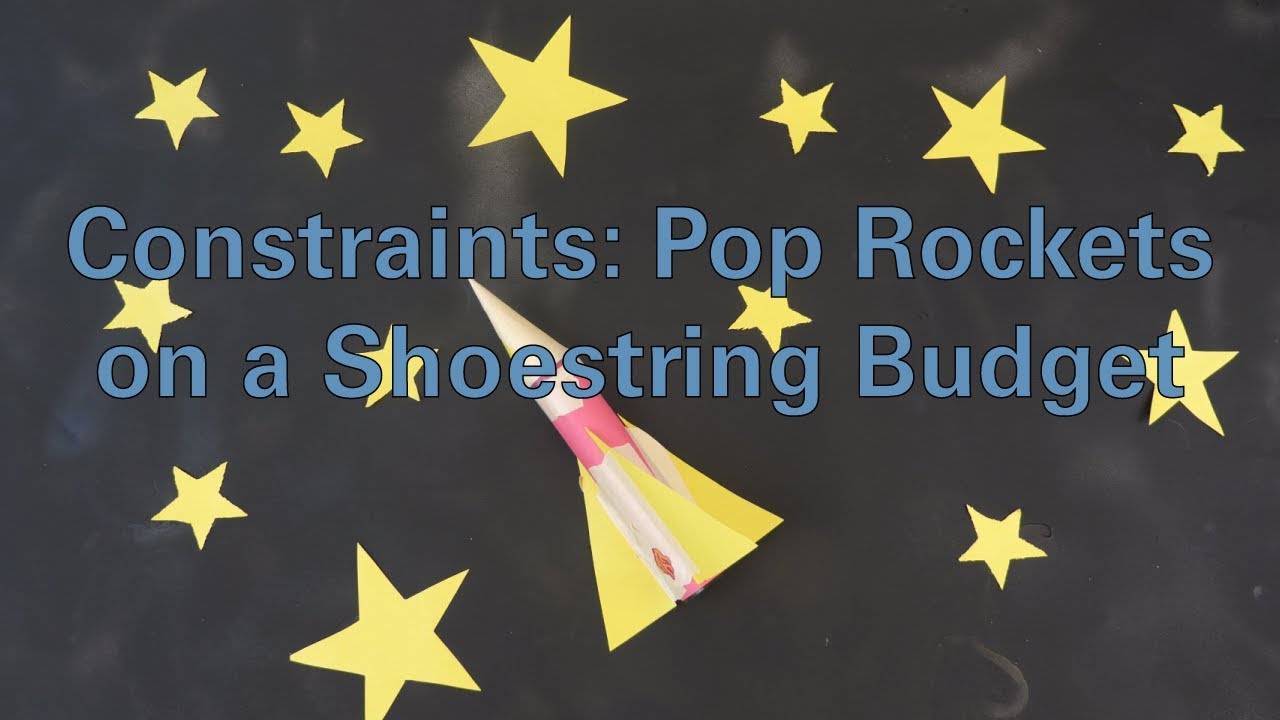
Students revisit the Pop Rockets activity from Lesson 3, in which mini paper rockets are powered by the chemical reaction of antacid-tablets and water in plastic film canisters. This time, however, the design of their pop rockets is limited by budgets and supplies. They get a feel for the constraints of real engineering projects as well as the opportunity to redesign and retest their rockets to make improvements. Rocket build instructions as well as activity-guiding budget/sketch and data worksheets are provided.
View the full activity on TeachEngineering: https://www.teachengineering.o....rg/activities/view/c
TeachEngineering has over 1,500 FREE lessons and activities. Visit https://www.teachengineering.org/ for more!
Music: Coffee Stains - Riot

The birth of the internet brought many ideas alive, but our favorite is online learning! Discover the origins of remote learning and how K12 became a 25-year leader in online education.
Connect with K12!
Find a school: K12.com
Facebook: facebook.com/StrideK12
Instagram: instagram.com/k12learn
TikTok: tiktok.com/@stridek12
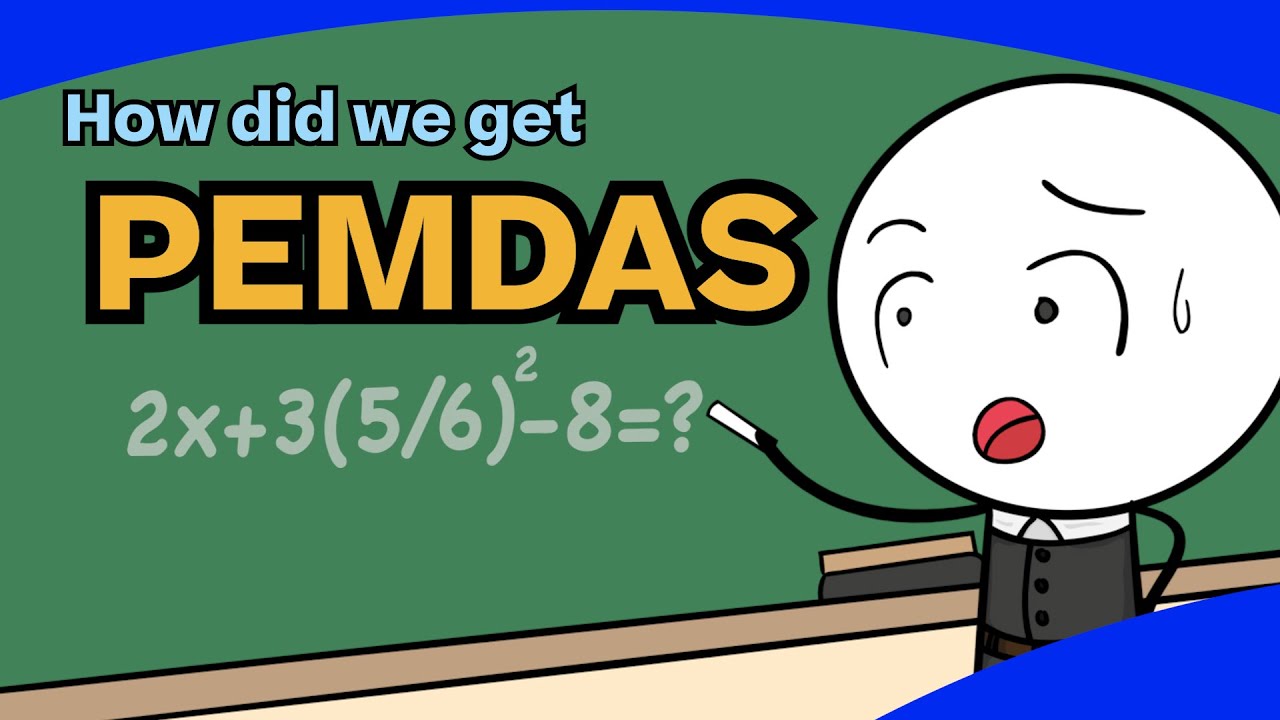
Mathematical discoveries happen every day. PEMDAS wasn’t even a thing until the 1900s! In this K12 Teaching Moment, our host, David, will walk you through the order of operations and how it became standardized across the world.
Scroll down to see the answer and how it is solved...
How to Solve: 20 − 5 ÷ (2+3)
Step 1: Solve what is in the parentheses (PEMDAS) first, so 2+3 = 5
Now the equation is 20 – 5 ÷ 5
Step 2: Do the division (PEMDAS), so 5 ÷ 5 = 1
Now the equation is 20 – 1
Step 3: Subtract the final numbers (PEMDAS), so 20 – 1 =19
And the answer is 19!

The pandemic took a huge bite out of 4th and 8th graders’ progress in reading and math, according to the 2022 results from the National Assessment of Educational Progress, also known as “the nation’s report card.”
It’s the first national assessment students have participated in since the pandemic began, and it revealed the steepest declines in student math scores since the federal testing program began in the early 1990s. In reading, students’ scores were knocked back by a decade or more.
Achievement dropped for all students: boys and girls, white, Black, and Hispanic students, students in poverty and wealthy students. And while top performers fared the best, struggling learners suffered the steepest declines.
The devastating portrait of student achievement painted by the results contrasts with parents’ view of how their children are doing in school. Ninety percent say their children are working at grade level or better.
Assistant Editor Sarah D. Sparks breaks down the latest findings and explains what makes the main NAEP assessment findings attention-worthy.

JJ invites you to play those bones as he, Cece & Cody move along to the Skeleton Dance!
Subscribe for new videos every week!
https://www.youtube.com/c/CoCo....melon?sub_confirmati
00:00 Skeleton Dance
02:49 Wheels on the Bus Halloween
05:42 Silly Kooky Halloween
08:14 Pumpkin Patch - Fall Halloween Song
11:40 Halloween Costume Song
14:49 Count JJ All Day
17:30 Ha-Ha-Halloween Song
20:08 Trick or Treat Song
22:48 Halloween Dress Up
25:50 Halloween Day At School
Click, clack,
To the beat.
Click, clack,
Let’s move our feet.
1,2,3!
Boo!
Shake to the left,
Shake to the right,
Swing, swing, side to side.
Wobble your knees,
EVERYBODY FREEZE (Freeze!)
Let’s do the Skeleton Dance.
Do the Skeleton Dance.
Click, clack,
To the beat.
Click, clack,
Let’s move our feet.
1,2,3!
Boo!
Shake to the left,
Shake to the right,
Swing, swing, side to side.
Wobble your knees,
EVERYBODY FREEZE (Freeze!)
Let’s do the Skeleton Dance.
Do the Skeleton Dance.
Now play your bones like a xylophone!
Now wiggle, wiggle, wiggle,
While the full moon glows!
Now jump real high!
And crouch real low.
Now one more time…
Let’s play those bones!
Shake to the left,
Shake to the right,
Swing, swing, side to side.
Wobble your knees,
EVERYBODY FREEZE (Freeze!)
Let’s do the Skeleton Dance.
One more time!
Shake to the left,
Shake to the right,
Swing, swing, side to side.
Wobble your knees,
EVERYBODY FREEZE (Freeze!)
Let’s do the Skeleton Dance.
Do the Skeleton Dance.
Music available on all major streaming platforms now:
🍉 https://cocomelon.lnk.to/TheCo....mpleteCollectionYT!D
🍉 Sign up for the CoCoClub newsletter to access exclusive content, giveaways, and more! https://lnk.to/CCMNews
Watch our playlists:
New Kids Songs by CoComelon
https://www.youtube.com/playli....st?list=PLT1rvk7Trkw
ALL NEW CoComelon Animal Episodes! 🤩
https://www.youtube.com/playli....st?list=PLb8WrhcvGhO
ALL NEW CoComelon Classroom Episodes!
https://www.youtube.com/playli....st?list=PLG-JTGmBSVR
Website ► https://cocomelon.com/
Facebook ►https://www.facebook.com/CoComelonKids
Instagram ►https://www.instagram.com/cocomelon/
TikTok ► https://www.tiktok.com/@cocomelon?lang=en
Music Services ►https://lnk.to/CoCoCCYTBYT
iOS Learning App ► https://apps.apple.com/us/app/....cocomelon-kids-learn
Android Learning App ► https://play.google.com/store/....apps/details?id=com.
About CoComelon:
Where kids can be happy and smart!
CoComelon’s 3D animation and songs create a world that centers on the everyday experiences of young children.
In addition to helping preschoolers learn letters, numbers, animal sounds, colors, and more, the videos impart prosocial life lessons, providing parents with an opportunity to teach and play with their children as they watch together.
© Moonbug Entertainment. All rights Reserved.

Practice Your Spanish With Chateo - a Spanish-speaking chatbot! | Get a discount off your first 6 months with code CHATEOBOT | Sign up at: https://www.senorjordan.com/chat
~~~~~~~~~~~~~~~~~~~~~~~~~~~~~~
SUBSCRIBE for more Spanish videos: http://bit.ly/XGe7we
and make sure to click the notification bell!
Follow me on Facebook: https://www.facebook.com/srjordanspanish
Tweet me: https://twitter.com/senorjordan
Check out my website: http://www.senorjordan.com
Follow me on Instagram: @senorjordanvideos
Listen to my music on Soundcloud:
https://soundcloud.com/senorjordanspanish
Listen to my music on Spotify:
https://open.spotify.com/artis....t/2nyJ9GgLNMckXCuBHU
Buy my songs on iTunes:
https://music.apple.com/us/artist/1621526948
Buy my songs on Amazon:
https://www.amazon.com/music/p....layer/artists/B09Z35
Donate to my video-making project:
https://paypal.me/srjordanvideos?country.x=US&locale.x=en_US
~~~~~~~~~~~~~~~~~~~~~~~~~~~~~~
Hola. In this lesson we'll be taking another test over all of the affirmative and negative expressions in this series.
Don't forget to check out some of my other videos on this series to practice them!
Downloadable Test:
http://www.senorjordan.com/wp-content/uploads/2014/02/Affirmative-and-Negative-Expressions-Test-2.pdf
Word bank:
http://www.senorjordan.com/2014/02/02-affirmative-and-negative-expressions-test-2/
¡Gracias por mirar!

Practice Your Spanish With Chateo - a Spanish-speaking chatbot! | Get a discount off your first 6 months with code CHATEOBOT | Sign up at: https://www.senorjordan.com/chat
~~~~~~~~~~~~~~~~~~~~~~~~~~~~~~
SUBSCRIBE for more Spanish videos: http://bit.ly/XGe7we
and make sure to click the notification bell!
Follow me on Facebook: https://www.facebook.com/srjordanspanish
Tweet me: https://twitter.com/senorjordan
Check out my website: http://www.senorjordan.com
Follow me on Instagram: @senorjordanvideos
Listen to my music on Soundcloud:
https://soundcloud.com/senorjordanspanish
Listen to my music on Spotify:
https://open.spotify.com/artis....t/2nyJ9GgLNMckXCuBHU
Buy my songs on iTunes:
https://music.apple.com/us/artist/1621526948
Buy my songs on Amazon:
https://www.amazon.com/music/p....layer/artists/B09Z35
Donate to my video-making project:
https://paypal.me/srjordanvideos?country.x=US&locale.x=en_US
~~~~~~~~~~~~~~~~~~~~~~~~~~~~~~
*Typo in video deis shouldn't have any accent mark.

Practice Your Spanish With Chateo - a Spanish-speaking chatbot! | Get a discount off your first 6 months with code CHATEOBOT | Sign up at: https://www.senorjordan.com/chat
~~~~~~~~~~~~~~~~~~~~~~~~~~~~~~
Get the packet for the Ser vs Estar series here: https://www.teacherspayteacher....s.com/Product/Worksh
SUBSCRIBE for more Spanish videos: http://bit.ly/XGe7we
and make sure to click the notification bell!
Follow me on Facebook: https://www.facebook.com/srjordanspanish
Tweet me: https://twitter.com/senorjordan
Check out my website: http://www.senorjordan.com
Follow me on Instagram: @senorjordanvideos
Listen to my music on Soundcloud:
https://soundcloud.com/senorjordanspanish
Listen to my music on Spotify:
https://open.spotify.com/artis....t/2nyJ9GgLNMckXCuBHU
Buy my songs on iTunes:
https://music.apple.com/us/artist/1621526948
Buy my songs on Amazon:
https://www.amazon.com/music/p....layer/artists/B09Z35
Donate to my video-making project:
https://paypal.me/srjordanvideos?country.x=US&locale.x=en_US
~~~~~~~~~~~~~~~~~~~~~~~~~~~~~~
Hola. In this lesson we'll be practicing when to use ser and when to use estar in Spanish.
Download Test #2:
http://www.senorjordan.com/wp-content/uploads/2013/06/ser-vs-estar-test-2.pdf
Word bank:
http://www.senorjordan.com/2013/10/ser-vs-estar-test-2/
To see the uses of Estar, click here:
http://www.youtube.com/watch?v=RNxCbazeswo
To see the uses of Ser, click here:
http://www.youtube.com/watch?v=1mUSK7RRA3E
To see the video on using BOTH Ser & Estar test, click here:
http://www.youtube.com/watch?v=i3rBUxcJQu8
¡Gracias por mirar!

In this video lesson, we're going to be going over Indirect Objects pronouns.
Please "Like" this video if it was helpful, and let me know if you have any questions or comments about this video in the comments section.
¡Gracias por ver el video!
👍Please share this video with others and like it to help me get the word out on my videos!
And let me know about other troublesome topics you’d like in bite-sized form.
🔔 Subscribe for more Spanish lessons: http://bit.ly/XGe7we
🤖Practice Your Spanish with Chateo! Get a discount off your first 6 months with code CHATEOBOT! Sign up at: https://www.senorjordan.com/chat
Social Media:
* YouTube: https://www.youtube.com/SeñorJordan
* Find “señor jordan videos” on Facebook, Twitter, Instagram, and TikTok
* Soundcloud: senorjordanspanish
Enjoying the content? Consider buying me a taco!
https://ko-fi.com/senorjordan
🌐 Private Lessons Available:
Interested in improving your Spanish conversational skills? Contact me: www.senorjordan.com/clases
📚 Practice Your Spanish with My Books!
https://www.tprsbooks.com/shop/?_product_type=novel&_author=jeremy-senor-jordan&_product_language_filter=spanish