Top videos

In this hands-on activity, students explore the phenomenon of static electricity by engaging in the science and engineering practices of asking questions and planning and carrying out investigations. Students enact a “human diagram” to model the Bohr model of an atom. Then, in pairs, they charge a comb (on hair) and use it to attract an O-shaped piece of cereal and then watch the cereal jump away when it touches the comb. They do the same with Styrofoam pellets, observing them pulling towards a charged comb, then leaping back to the table. Through these investigations, students explore the disciplinary core ideas of electric and magnetic forces, the crosscutting concept of cause and effect, and they make sense of static electricity and what’s going on at the atomic level.
View the full activity on TeachEngineering:
https://www.teachengineering.o....rg/activities/view/c
TeachEngineering has over 1,500 FREE lessons and activities. Visit https://www.teachengineering.org/ for more
Music - Educated Man


#mathematicstutorial Cancellation Method || Dividing Monomials || Multiplying Monomials

🎉 NEW Videos: https://www.youtube.com/playli....st?list=PLLF_mZmNqOn
🕵️♀️ Amazing Things for Kids: https://www.youtube.com/playli....st?list=PLLF_mZmNqOn
What is Air? | Educational Videos for Primary School Kids | @HappyLearningENG
Did you know that air is full of things we can’t see? In this video, we teach you all the secrets of air: what it’s made of, how it changes with temperature, and why it’s so important for life on Earth. Discover how air allows plants to perform photosynthesis, how a hot air balloon flies, and much more! You’ll also learn how air is essential for fire, sound, and the flight of birds. Don’t miss this adventure through air and its amazing characteristics!
Subscribe to Happy Learning: https://my.happylearning.tv/
Curiosities for kids:https://www.youtube.com/playli....st?list=PLLF_mZmNqOn
Discover hundreds of never-before-seen resources! Create your free account at https://my.happylearning.tv/ and start learning in the most entertaining way.

Discover hundreds of never-before-seen resources! Create your free account at https://my.happylearning.tv/ and start learning in the most entertaining way.
What are you waiting for? Let's discover what is happing above us... it's much more than just clouds and blue skies 🌞☔
👉SUBSCRIBE TO HAPPY LEARNING! http://bit.ly/HappyLearningTV
👉Web site: https://happylearning.tv/en/
👉Follow us on Facebook: https://www.facebook.com/HappyLearningTv
Recommended video: The Earth and its layers
https://youtu.be/bXdFBAk6MBM
-----
Hello friends! Welcome to a new Happy Learning video.
Today, we’re going to learn about The earth's atmosphere!
The layer of gas surrounding the Earth is called the atmosphere and is an essential element for life on Earth to exist!
It makes all living things be able to breathe, it protects us from rays originating from both the Sun and space, and it also prevents large changes in temperature during day and night.
The atmosphere isn’t homogenous, instead, it changes its composition according to its height, it becomes less and less dense, with less and less air.
Because of those differences, we divide the atmosphere in 5 layers called the troposphere, stratosphere, mesosphere, thermosphere and exosphere. We’re going to know more about each one of them!
The troposphere is the interior layer, the closest one to the earth’s surface. It reaches 12km in height and within it, is where the phenomenon we call the weather happens, the climate.
The stratosphere reaches an average height of 50km, although in some points it reaches 70!
Inside the stratosphere, we can find the ozone layer, which is essential fot life beacause it filters Ultraviolet Light coming from the sun. If it didn’t exist, these rays would end life on our planet.
The mesosphere is situated between 50 and 80 km over the earth’s surface. It’s the coldest layer in the atmosphere, it can reach less than 90 degrees below 0! It’s so cold!!!
The thermosphere, also called ionosphere, reaches 400 km! Within it, space shuttles travel around the earth and it’s also where the mysterious northen lights. They’re beautiful aren’t they??
The exosphere is the last layer in the atmosphere and is at a height between 400 and 2000
km! After this, no more gases exist, only the emptyness of space.
Now we know all about the atmosphere and its layers, but we can’t say goodbye without talking about pollution.
Human activity releases many gases that contaminate our atmosphere. Smoke from factories, cars, lots of the daily activities we do, are creating changes in the atmosphere’s composition. All this produces climate change, floods, acid rain that terminates woods… A polluted atmosphere puts the planet’s, and all living things’ health in danger. We need to take the necesary measures so we pollute as little as possible and take care of our planet and the atmosphere so we can carry on enjoying all of nature’s wonders.
Goodbye friends! And don’t forget to subscribe to Happy Learning, Tv.


Subscribe to Happy Learning: https://my.happylearning.tv/
More related videos: https://www.youtube.com/playli....st?list=PLLF_mZmNqOn
Curiosities for kids:https://www.youtube.com/playli....st?list=PLLF_mZmNqOn
🌍🐘 AFRICA: THE WONDERFUL CONTINENT | Fun Facts for Kids | Happy Learning
Hello, Happy Learners! 🎉🌍 Today we are going to explore one of the most fascinating continents on the planet: Africa. 🦁🌿 Did you know that Africa is home to a great diversity of animals, landscapes, and cultures? In this video, we will learn about its countries, its impressive deserts, jungles, and of course, the incredible animals that live there. 🦒🐘🦓
Discover fun facts about this continent full of history and natural wonders. Join us on this educational journey that will take you from the vast savannahs to the highest mountains in Africa. Get ready for lots of exciting discoveries! 😄🎉
Don’t forget to give us a like 👍, subscribe 🔔, and share this video with your friends. Let’s learn together! 🚀😊
#Africa #GeographyForKids #AnimalsOfAfrica #AfricanCulture #FunEducation #HappyLearning #LearningIsFun
Discover hundreds of never-before-seen resources! Create your free account at https://my.happylearning.tv/ and learn in the most fun way.
#happylearning
#learning
#happy

STATISTICS AND PROBABILITY 1.1

This video tutorial shows you how to use Makey Makey with Scratch and explains how a Makey Makey works as a circuit. We’ll explore some conductive materials that you can use and compatible devices. Educators, here’s a resource you can use with your group of learners: http://bit.ly/SurfSMakey1
--------------------------------------------------------------------------------------------------------------------------------
🔗🔗🔗 LINKS 🔗🔗🔗
➡️MAILING LIST: http://surfingscratcher.com/re....commends/downloads/s
➡️SparkFun Circuits: https://learn.sparkfun.com/tut....orials/what-is-a-cir
➡️Makey Makey Website: https://makeymakey.com
--------------------------------------------------------------------------------------------------------------------------------
🙏🙏🙏 SUPPORT 🙏🙏🙏
🛒Buy Makey Makey STEM PACK (contains 12): https://amzn.to/2o3jcmc
🛒Buy a single Makey Makey: https://amzn.to/2o1RrKW
🛒Kit with Copper Tape & Graphite Pencils: https://kit.co/surfingscratche....r/how-to-makey-makey
➡️PATREON: https://www.patreon.com/surfingscratcher
➡️MAILING LIST: http://bit.ly/SurfSubscribe
👕👚TEE I’M WEARING — : http://shrsl.com/1ua92
Surfing Scratcher receives a percentage of the purchase price when you make a purchase through some of these links.
--------------------------------------------------------------------------------------------------------------------------------
🛒🛒🛒SHOP 🛒🛒🛒
Educators and teachers, you can find unplugged lessons, resources and activities to purchase for this tutorial series on my website here:
➡️Educational Resources: https://www.surfingscratcher.com/shop/
➡️Browse my Teachers Pay Teachers Store: https://bit.ly/2Tq45lH
--------------------------------------------------------------------------------------------------------------------------------
👻👻👻 SOCIAL MEDIA 👻👻👻
➡️Scratch: https://scratch.mit.edu/users/surfingscratcher/
➡️Website: https://surfingscratcher.com
➡️Like my Facebook Page: https://bit.ly/2HnR1Gg
➡️Subscribe to my YouTube Channel: https://bit.ly/2TDtqI3
➡️Follow me on Instagram: https://bit.ly/2NWlxZe
➡️Follow me on Pinterest: https://bit.ly/2CdKIl5
--------------------------------------------------------------------------------------------------------------------------------
📝📝📝 VIDEO DESCRIPTION 📝📝📝
In this Makey Makey Basics tutorial, I’ll introduce new learners and educators to the Makey Makey device. We can connect the Makey Makey directly to the computer as it is essentially a keyboard or mouse. We can immediately start using the Makey Makey, by touching the ‘Earth’ connection and one of the input buttons. The reason this works is because electricity flows through us from the ground connection to the input button. We complete a circuit. A circuit is essentially a flow of energy. With this understanding, we are ready to test and explore some other conductive materials.
We’ll look at all things metallic, as they are fantastic conductors. These include copper tape, tinfoil and even a dense graphite pencil. We’ll look at fruit as well as water and play doh. Anything that conducts electricity will work. Some insulators (non-conductive materials) include wood, glass and plastic.
Makey Makey is compatible with all major operating systems: Mac, Windows, Linux, Google Chromebooks. It isn’t officially supported on mobile and tablet devices.
--------------------------------------------------------------------------------------------------------------------------------
❓🤔❓ WHAT IS SURFING SCRATCHER? ❓🤔❓
Surfing Scratcher wants to show learners, students, educators and teachers how to learn mathematics through coding games online with Scratch 3 programming projects. Whether you are a Scratch beginner, or you're an educator wondering how to use Scratch in your classroom or looking for lessons & resources for your classroom, Surfing Scratcher is here to help you on your journey.
--------------------------------------------------------------------------------------------------------------------------------
⏯ ⏯⏯PLAYLISTS ⏯ ⏯⏯
https://bit.ly/2J1q5i3
--------------------------------------------------------------------------------------------------------------------------------
#scratch #inventionliteracy #makeymakey

Do you know how many public utilities exist? Learn with us each of them in a fun way!

www.nerding.org
STEM Classes for Kids

Discover hundreds of never-before-seen resources! Create your free account at https://my.happylearning.tv/ and start learning in the most entertaining way.
What are you waiting for? Sing this song with us and improve your english.
Don´t forget to subscribe to Happy Learning.

Mortensen Math,Mathematics, Montessori Homeschool K-12 tutorial curriculum manipulative products, Algebra tutorial video, Montessori, Homeschool, K-12. Preschool,Calculus, Trigonometry, Fractions, Algebra, Addition Subtraction, Multiplication, Factoring
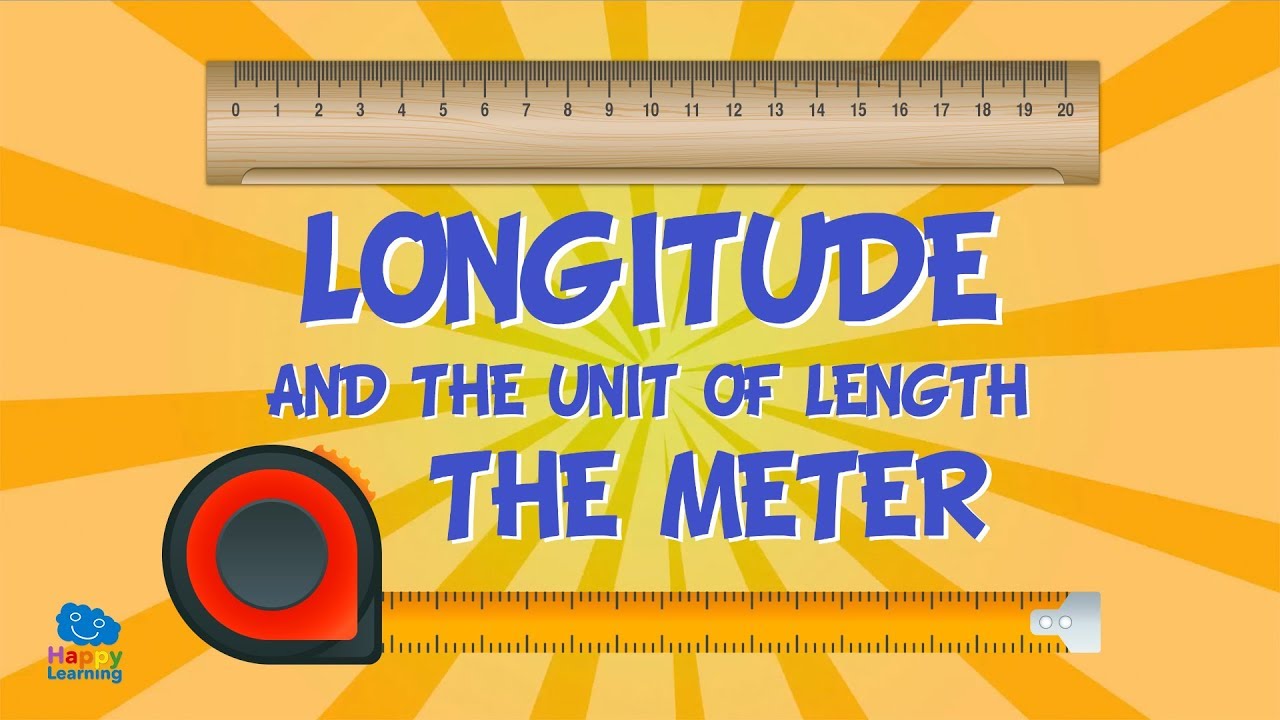
Discover hundreds of never-before-seen resources! Create your free account at https://my.happylearning.tv/ and start learning in the most entertaining way.
What are you waiting for? M, CM, DM, MM... What could all these stand for?
How tall are you? Let's get measuring
?? Do you know what we call a meter divided into 10 equal parts?
Answer in the comments Below!
👉SUBSCRIBE TO HAPPY LEARNING! http://bit.ly/HappyLearningTV
👉Web site: https://happylearning.tv/en/
👉Follow us on Facebook: https://www.facebook.com/HappyLearningTv
Recommended video: Circle and Circumference
https://youtu.be/GqNiWozlBWM
------
Hello friends! Welcome to a new Happy Learning video. Today, we are going to learn about the distance there is between one place and another. Or how we measure the height of a giraffe… Today, we are going to talk about what it is and how to measure longitude.
As we said before, longitude is the distance there is between two points, for example the distance between your house and school.
The most important unit of length is the meter and it is represented by the letter m, 100 m are 100 meters.
The meter measures distances but it also measures things such as the height and width.
This giraffe, for example is 5 meters long and this swimming pool is 25 meters long and 10 meters wide.
But what happens if what we want to measure is smaller than a meter? It’s easy peasy! We need to divide the meter in equal smaller parts.
If we divide a a meter in 10 equal parts… We call each of these little parts a decimetre and we represent it with the letters dm. A meter has 10 decimetres.
If we divide it in 100 equal parts, we call these units centimetres and we represent them with the letters c and m. A meter has one hundred centimetres.
And so, if we divide the meter into 1000 equal parts, we call these tiny parts millimetres and they are represented by two m’s. One meter has a thousand millimetres.
To measure these smaller units we use a ruler o a meter, which as you can see, divides each centimetre into 10 equal parts, in other words, in millimetres.
To measure larger distances than a meter, we use the kilometre, that is exactly 1000 meters.
For example, did you know how much distance there is between Spain and Mexico? Well there are 9025 kilometres and by plane, we take about 10 hours travelling this distance.
Well, now we’ve learnt the units to measure the longitude, but there’s something you need to bare in mind. Not all countries use the meter as a means of measuring longitude.
In England, and United States for example, the units used are yards and miles instead of meters and kilometres. A yard is equal to 914 centimetres and a mile is 1.609 meters.
It’s a bit strange that we don’t all measure in the same units, but that’s what the world is like.
Bye friends! And don’t forget to suscribe to Happy Learning Tv!

Math Curriculum Books, Algebra, Factoring Expressions, with Jerry Mortensen, Mortensen Math manipulative blocks, Kids Montessori K-12 Homeschooling Pre-school Kindergarten mathematics tutorial video.\
Math, Calculus, Trigonometry, Fractions, Algebra, Addition, Subtraction, Multiplication, Factoring
Algebra visualization with Mortensen Math.com manipulative colored blocks to visualizing algebraic expressions, visualizing mathematics, Montessori Homeschool k-12 preschool online curriculum on line video.
CONTACT US:
Toll Free USA Tel: 800+4plus4=8! [800-475-8748]
http://www.mortensenmathdirect.co
Learn about apostrophes.
We hope you are enjoying this video! For more in-depth learning, check out Miacademy.co (https://www.parents.miacademy.co/), an online learning platform with lessons and practice games that go along with our videos. Use coupon code VIDEOSPECIAL for a discount. Good for homeschoolers, Parents, Teachers, or anyone with kids in grades K-8.
Miacademy also offers many hands-on learning activities including a business simulation, writing in the Miacademy weekly, and creating artwork. Teaching social skills is also one of the key values at Miacademy. On the site, kids can interact safely in a moderated environment and share their artwork, videos, and ideas with each other.

Who is Mother Nature REALLY? In this episode of Crash Course Latin American Literature, we’ll uncover how representations of Latin American landscapes have often reflected shifting social and political concerns.
Introduction: Mama Nature 00:00
The Latin American Landscape 0:43
The Landscape of Independence 2:11
"La Vorágine" 3:38
Eco-horror 5:18
Ecopoetry 7:22
Review & Credits 8:37
Sources: https://docs.google.com/docume....nt/d/1eE7g4-k6PD7C6w
To learn more, check out these videos:
Geopolitical history of Latin America: War and Nation Building in Latin America: Crash Course World History 225 https://youtu.be/v6xi8_7Fy6Y?si=paRg7m_G3tMAX4vW
Indigenous relationships to the land: Why Land Matters to Native Americans: Ep 5 of Crash Course Native American History https://youtu.be/L3WcELWzNYg
Christopher Columbus: Columbus, Vasco da Gama, and Zheng He - 15th Century Mariners: Crash Course World History #21 https://youtu.be/NjEGncridoQ?si=hzKIJz7J5yy3MoOB
Nature in art: The Hidden Meanings in Nature Art: Crash Course Art History #9 https://youtu.be/Z21elmpg-W0?si=t2W2ml2a89DJdwgN
***
Support us for $5/month on Patreon to keep Crash Course free for everyone forever! https://www.patreon.com/crashcourse
Or support us directly: https://complexly.com/support
Join our Crash Course email list to get the latest news and highlights: https://mailchi.mp/crashcourse/email
Get our special Crash Course Educators newsletter: http://eepurl.com/iBgMhY
Thanks to the following patrons for their generous monthly contributions that help keep Crash Course free for everyone forever:
oranjeez, Jason Terpstra, Chelsea S, Alan Bridgeman, Roger Harms, DexcilaDou, Krystle Young, Allison Wood, Stephen Akuffo, Katrix , Gina Mancuso, Shruti S, Martin G. Diller, Matthew Fredericksen, Brandon Thomas, Breanna Bosso, Ken Davidian, UwU, Jennifer Wiggins-Lyndall, Samantha, David Fanska, Kristina D Knight, Andrew Woods, Elizabeth LaBelle, SpaceRangerWes, Matt Curls, Quinn Harden, EllenBryn, Johnathan Williams, Leah H., Laurel Stevens, Steve Segreto, Michael Maher, Liz Wdow, Toni Miles, Perry Joyce, Evan Nelson, Katie Hoban, Mitch Gresko, Kevin Knupp, Kyle & Katherine Callahan, Tanner Hedrick, Emily Beazley, Jack Hart, Rie Ohta, Dalton Williams, Scott Harrison, Barbara Pettersen, AThirstyPhilosopher ., Thomas Sully, Bernardo Garza, Jason Rostoker, Rizwan Kassim, Indija-ka Siriwardena, Emily T, Ian Dundore, Joseph Ruf, Alex Hackman, Thomas, Constance Urist, team dorsey, Stephen McCandless, Triad Terrace, Erminio Di Lodovico, Evol Hong, Luke Sluder, Eric Koslow, Katie Dean, Tandy Ratliff, Jennifer Killen, Jason Buster, Trevin Beattie, Wai Jack Sin, Caleb Weeks, Nathan Taylor, Siobhán, Les Aker, Barrett Nuzum, John Lee, Ken Penttinen, Sarah & Nathan Catchings, Pietro Gagliardi, ClareG, Duncan W Moore IV
__
Want to find Crash Course elsewhere on the internet?
Instagram - https://www.instagram.com/thecrashcourse/
Facebook - http://www.facebook.com/YouTubeCrashCourse
Bluesky - https://bsky.app/profile/thecr....ashcourse.bsky.socia
CC Kids: http://www.youtube.com/crashcoursekids

Most people struggle with AI because they treat it like a gadget, not a thinking partner. In this video, I break down why that happens and walk you through a clear 7-step system to master AI in just 30 days, even if you’re starting from complete zero. You’ll learn how to use the AIM and MAAP frameworks to structure your thinking, and how to write prompts that consistently produce high-quality, natural, and personalized outputs using Chain of Thought, Verifier, and Refinement patterns.
By the end, you won’t just “use” AI, you’ll think with it. You’ll be able to generate context-rich insights, communicate faster, and produce work that reflects your own voice and style. If you’ve ever felt like AI responses are generic or flat, this is your turning point.

In this video, you will learn how to create the music for your own song!
We hope you are enjoying this video! For more in-depth learning, check out Miacademy.co (https://www.parents.miacademy.co/), an online learning platform with lessons and practice games that go along with our videos. Use coupon code VIDEOSPECIAL for a discount. Good for homeschoolers, Parents, Teachers, or anyone with kids in grades K-8.
Miacademy also offers many hands-on learning activities including a business simulation, writing in the Miacademy weekly, and creating artwork. Teaching social skills is also one of the key values at Miacademy. On the site, kids can interact safely in a moderated environment and share their artwork, videos, and ideas with each other.

HOW TO LEARN & Master AI in 2026 ? (Complete Powerful 7-step ROADMAP) #ai #artificialintelligence #howtolearnai #learnai #masterai #aiexplained #aiforbeginners #ai2026 #tejasai #2026
Join Our Discord Server :- https://discord.gg/2abyjxr4v6
🚀 The COMPLETE AI Learning Roadmap for 2026 - From Zero to AI Expert
Stop wasting time on scattered tutorials and incomplete courses. Everyone tells you to "understand AI" and "use tools," but nobody shows you the EXACT step-by-step roadmap to actually master AI from scratch.
Today, I'm breaking down the complete 7-step roadmap that people sell for hundreds of dollars—absolutely FREE. This is the same path I'm using to learn AI, and it's proven, effective, and gives you a clear direction in the world's most powerful technology.
What You'll Learn:
✅ The exact 7-step roadmap to master AI systematically
✅ Why basics matter more than jumping into ChatGPT immediately
✅ Python essentials for AI (without becoming a coding expert)
✅ Machine Learning fundamentals explained in simple terms
✅ Deep Learning and Neural Networks demystified
✅ How to build real AI projects that showcase your skills
✅ Mastering Generative AI, LLMs, and modern tools
✅ Choosing your specialization and building a killer portfolio
🎯 The 7-Step AI Learning Roadmap:
Step 1: Master the Basics
Stop jumping around until your fundamentals are crystal clear. Understand what AI, Machine Learning, Neural Networks, Gen AI, Agentic AI, and LLMs actually mean—not just the buzzwords, but how they work and their real-world applications. A weak foundation = a collapsing empire.
Step 2: Learn Python - AI's Main Language
You don't need to become a Python expert. Just master the essentials: variables, if/else, loops, functions, lists, dictionaries, NumPy, and pandas. Think of Python as your paintbrush—simple to learn, powerful to use. Spend 2-3 weeks coding daily.
Step 3: Dive Into Machine Learning
This is where real AI learning begins. Understand supervised vs unsupervised learning, linear regression, classification, clustering, overfitting, and evaluation metrics. Work with real datasets—predict house prices, classify data, analyze patterns. Get your hands dirty.
Step 4: Deep Learning & Neural Networks
The advanced version of ML. Learn about neural networks, layers, CNNs, transformers, backpropagation, and training loops. Master PyTorch or TensorFlow. Build image classifiers and text models. This is where computers learn to see, hear, and understand like humans.
Step 5: Build Real Projects
Theory means nothing without practice. Build image classifiers, voice-to-text models, sentiment analyzers, fake news detectors, and recommendation systems. Projects transform knowledge into skill. Document everything—your portfolio is your proof.
Step 6: Master Gen AI, Tools & LLMs
Connect everything to modern Generative AI. Learn prompt engineering, embeddings, and how LLMs work. Use ChatGPT, Midjourney, Runway, and ElevenLabs. Build chatbots, PDF Q&A bots, and content generators using APIs. Join the cutting edge.
Step 7: Specialize & Build Your Portfolio
Pick your track: AI/ML Engineer, Data Scientist, or Gen AI Expert. Become irreplaceable in your niche. Build 5-10 projects showcasing your specialization. Share on GitHub, write blogs, create tutorials. Build in public.
💡 Key Takeaway:
AI isn't complicated—it just needs a clear roadmap. This journey takes months of consistent effort, not genius. You'll never feel "ready," but you don't need to know everything to create value. The time to start is NOW.
🔥 Why This Matters:
→ AI is transforming every industry—healthcare, finance, entertainment, education
→ 70% of AI professionals don't have CS backgrounds—they learned strategically
→ AI literacy will be as common as computer literacy soon
→ The opportunities today are unprecedented—but they won't last forever
→ Start messy, start imperfect, but START TODAY
👉 Ready to Transform Your Future?
Don't wait for the perfect starting point. The AI revolution is happening NOW. Start with one step, one project, one small action. Your future self is counting on you.
"AI isn't about being a genius. It's about consistency, patience, and showing up every single day."
Start your AI mastery journey today! 🚀
Related Topics :
how to learn AI, learn AI, AI for beginners, AI learning for beginners, AI step by step guide, artificial intelligence guide, learn AI without coding, AI crash course, master ai, learn ai in 2026, master ai in 2026, prompt engineering guide, generative AI tutorial, AI automation, AI skills, beginner AI tutorial, AI learning roadmap, master AI fast, AI tutorial 2026, learn artificial intelligence, AI roadmap for beginners, how to use AI daily, AI productivity hacks, AI beginner course, learn AI fast, AI explained, ai basics, how to use ai effectively, ai prompting tips, tejas ai, tejas_aiz, ai2026, 2026 etc.
- Tejas AI