Top videos

This video shows how you can create an unrolling circle in Geogebra, in other to explain the circumference of a circle.

Nesta aula iremos descobrir como visualizar equações e inequações no plano cartesiano, utilizando o Geogebra.
Aula de inequação modular citada no vídeo:
https://youtu.be/oOP32rNcOLg
Aula Anterior (Aula 02 - Como construir Gráficos):
https://youtu.be/GrdcTUrCIcw
Próxima Aula (Aula 04 - Função Inversa com o Geogebra):
https://youtu.be/qmYbOT4JPtg
Site:
https://professordouglasmaioli.com.br/
💻📱 Playlists do Canal:
Pré-Cálculo:
https://www.youtube.com/playli....st?list=PLrOyM49ctTx
Cálculo I:
https://www.youtube.com/playli....st?list=PLrOyM49ctTx
Análise Combinatória:
https://youtube.com/playlist?l....ist=PLrOyM49ctTx-RnT
Matemática Básica:
https://www.youtube.com/playli....st?list=PLrOyM49ctTx
Fundamentos Matemáticos para Computação (Matemática Discreta):
https://www.youtube.com/playli....st?list=PLrOyM49ctTx
Teoria dos Grafos (Com implementações em Python)
https://youtube.com/playlist?l....ist=PLrOyM49ctTx-xty
Introdução ao C++:
https://youtube.com/playlist?l....ist=PLrOyM49ctTx9ZSF
Estruturas de Dados:
https://youtube.com/playlist?l....ist=PLrOyM49ctTx_AMg
Seja um padrinho/madrinha desse Canal e ajude esse projeto crescer, levando ensino gratuito de qualidade cada vez mais longe:
https://www.padrim.com.br/Cana....lProfessorDouglasMai
Instagram: @professordouglasmaioli

🔫Download World War Doh for free (iOS and Android): https://go.worldwardoh.com/history and join my club: simplehistory
💰Tournament: Jam City is putting on a World War Doh tournament for $25,000, so download now and get good! More news to be provided in-game at a later date
🎯Apply to become a Creator Extraordinaire: If you are an established content creator or an aspiring one, click the link here to find out how to earn some SWEET rewards: https://www.worldwardoh.com/creator
Soviet snipers like Zaytsev started to specifically target German officers and this tactic soon took a devastating toll on the German Army’s morale and command structure.
Zaytsev had a number of pioneering tactics that allowed him to become one of the top snipers of world war two.
Become a Simple History member: https://www.youtube.com/simplehistory/join
Support us on Patreon: https://www.patreon.com/simplehistory
Copyright: DO NOT translate and re-upload our content on Youtube or other social media.
SIMPLE HISTORY MERCHANDISE
Get the Simple History books on Amazon:
https://www.amazon.com/Daniel-....Turner-%60/e/B00H5TY
T-Shirts
https://teespring.com/stores/s....imple-history-offici
Simple history gives you the facts, simple!
See the book collection here:
Amazon USA
http://www.amazon.com/Daniel-Turner/e/B00H5TYLAE/
Amazon UK
http://www.amazon.co.uk/Daniel....-Turner/e/B00H5TYLAE
https://www.facebook.com/Simpl....e-History-5494376751
https://twitter.com/SimpleHistoryYT
Credit:
Created by Daniel Turner
Script: Conan White
Narrator:
Chris Kane
https://vocalforge.com/
Sources:
https://pastebin.com/QKX2a8ZP
How many hats are in Peck's drawer? Learn how to count to two with Peck the Bird from Khan Academy Kids!
Visit us at http://www.khankids.org to learn more about Khan Academy Kids, a free educational app for preschool through 2nd grade.
Available on Apple, Google Play, and Amazon app stores:
➡️ http://khan.co/KhanKids-YT-Google
➡️ http://khan.co/KhanKids-YT-Apple
➡️ http://khan.co/KhanKids-YT-Amazon
You can also access other Counting 1-10 videos on our Counting playlist, here:
http://khan.co/KhanKids-Counting.
Subscribe to our channel for more videos like this.
Courses on Khan Academy are always 100% free. Start practicing—and saving your progress—now: https://www.khanacademy.org/ma....th/cc-sixth-grade-ma
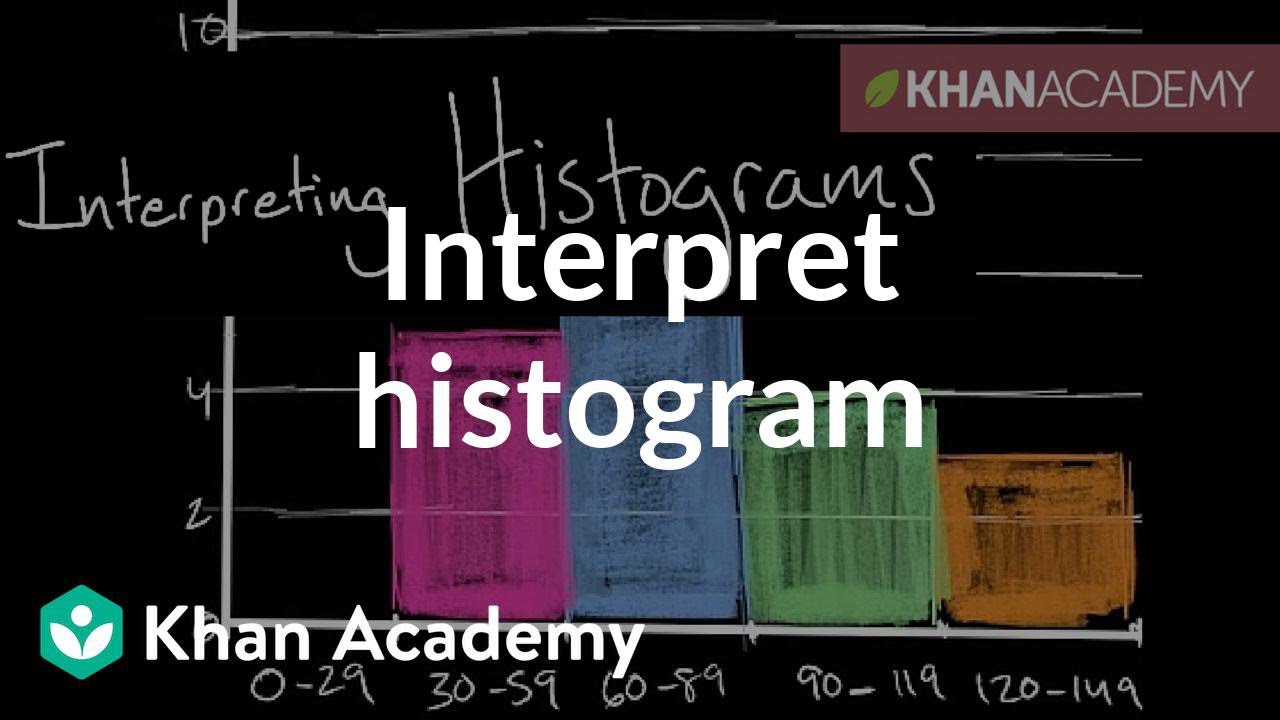
Learn how to read histograms, which summarize data by sorting it into buckets.
Practice this lesson yourself on KhanAcademy.org right now:
https://www.khanacademy.org/math/cc-sixth-grade-math/cc-6th-data-statistics/histograms/e/creating-histograms?utm_source=YT&utm_medium=Desc&utm_campaign=6thgrade
Watch the next lesson: https://www.khanacademy.org/math/cc-sixth-grade-math/cc-6th-data-statistics/mean-and-median/v/statistics-intro-mean-median-and-mode?utm_source=YT&utm_medium=Desc&utm_campaign=6thgrade
Missed the previous lesson? https://www.khanacademy.org/math/cc-sixth-grade-math/cc-6th-data-statistics/histograms/v/histograms-intro?utm_source=YT&utm_medium=Desc&utm_campaign=6thgrade
Grade 6th on Khan Academy: By the 6th grade, you're becoming a sophisticated mathemagician. You'll be able to add, subtract, multiply, and divide any non-negative numbers (including decimals and fractions) that any grumpy ogre throws at you. Mind-blowing ideas like exponents (you saw these briefly in the 5th grade), ratios, percents, negative numbers, and variable expressions will start being in your comfort zone. Most importantly, the algebraic side of mathematics is a whole new kind of fun! And if that is not enough, we are going to continue with our understanding of ideas like the coordinate plane (from 5th grade) and area while beginning to derive meaning from data! (Content was selected for this grade level based on a typical curriculum in the United States.)
About Khan Academy: Khan Academy offers practice exercises, instructional videos, and a personalized learning dashboard that empower learners to study at their own pace in and outside of the classroom. We tackle math, science, computer programming, history, art history, economics, and more. Our math missions guide learners from kindergarten to calculus using state-of-the-art, adaptive technology that identifies strengths and learning gaps. We've also partnered with institutions like NASA, The Museum of Modern Art, The California Academy of Sciences, and MIT to offer specialized content.
For free. For everyone. Forever. #YouCanLearnAnything
Subscribe to Khan Academy à ªs 6th grade channel:
https://www.youtube.com/channe....l/UCnif494Ay2S-PuYlD
Subscribe to Khan Academy: https://www.youtube.com/subscr....iption_center?add_us

¡Bienvenidos a un nuevo video de nuestro canal para aprender español! Hoy exploraremos cómo usar preposiciones y estructuras esenciales en español para comunicar ideas de manera más completa y precisa.
00:02 1️⃣ Preposiciones Comunes y su Uso
Las preposiciones son palabras clave para conectar ideas y expresar relaciones en español. En esta sección, aprenderemos a utilizar preposiciones de lugar, tiempo y medio. Observa los ejemplos prácticos que te ayudarán a usarlas en tus conversaciones.
Ejemplos:
¿Cómo vas al trabajo?
"🚲 Voy en bici."
"🚇 Él va en metro."
¿De quién es esta carta?
"📬 La carta es de mi amigo."
"👵👴 La carta es de mis abuelos."
Consejo: Practica con preposiciones como en, de, con, por, ante y frente a para expresar relaciones de lugar y pertenencia.
01:04 2️⃣ Verbos con Complemento Indirecto
En español, algunos verbos necesitan un complemento indirecto (me, te, le, nos, os, les) para indicar a quién va dirigida la acción. Esto es fundamental para expresar quién recibe o se beneficia de la acción en la oración.
Ejemplos:
"❓ ¿Me puedes explicar cómo funciona esto?"
"🎉 Te felicito por tu nuevo trabajo."
Consejo: Recuerda que estos complementos indirectos se usan para señalar la persona que recibe o beneficia de la acción.
01:54 3️⃣ Verbos con Dos Objetos (Directo e Indirecto)
Algunos verbos requieren tanto un objeto directo como un objeto indirecto. En estos casos, el complemento indirecto suele colocarse primero. Es una estructura útil para indicar qué persona recibe el objeto directo de la acción.
Ejemplos:
"📲 Te envié un mensaje" → mensaje = objeto directo, te = objeto indirecto
"📚 Dame el libro" → libro = objeto directo, me = objeto indirecto
Consejo: En español, usa me, te, le, nos, os, les como complementos indirectos para clarificar quién recibe la acción en frases con dos objetos.
03:43 4️⃣ Preguntas de “¿Dónde?” y Preposiciones de Lugar
Las preposiciones de lugar son esenciales para describir ubicaciones y responder a preguntas sobre el lugar. Aprender estas estructuras te ayudará a hablar de ubicaciones en español.
Ejemplos:
"¿Dónde está el perro? 🐶"
"Duerme 🛏️ debajo de la mesa."
"Está de pie frente a la 🔥 chimenea."
Consejo: Practica preposiciones de lugar como debajo de, frente a, al lado de para ubicar objetos o personas.
03:45 5️⃣ Preguntas de “¿Cuándo?” y Expresiones de Tiempo
Las expresiones de tiempo son importantes para indicar cuándo ocurren las acciones. Responder a preguntas de “¿cuándo?” es crucial para organizar eventos y rutinas.
Ejemplos:
"⏰ ¿Cuándo vuelves a casa?"
"Estaré allí en una hora."
"El 🚌 bus sale en 15 minutos."
Otros ejemplos:
"🏃♂️ Antes del desayuno, siempre salgo a correr."
"🎿 En invierno, voy a esquiar."
Consejo: Utiliza en, antes de, después de y días de la semana para hablar de momentos específicos.
04:35 🔄 Resumen
Hoy hemos repasado:
📍 Preposiciones comunes para expresar lugar y pertenencia.
👤 Complementos indirectos en verbos.
🗺️ Preposiciones de lugar para responder preguntas de “¿dónde?”.
🕒 Expresiones de tiempo para responder preguntas de “¿cuándo?”.
Practicad estas estructuras para mejorar vuestro español y construir frases más complejas y precisas.
¡No olvides suscribirte y activar la campanita 🔔 para no perderte nuevos videos!
WEBSITE: http://www.teachertube.com Basic geometric constructions copy segments copy angles etc.
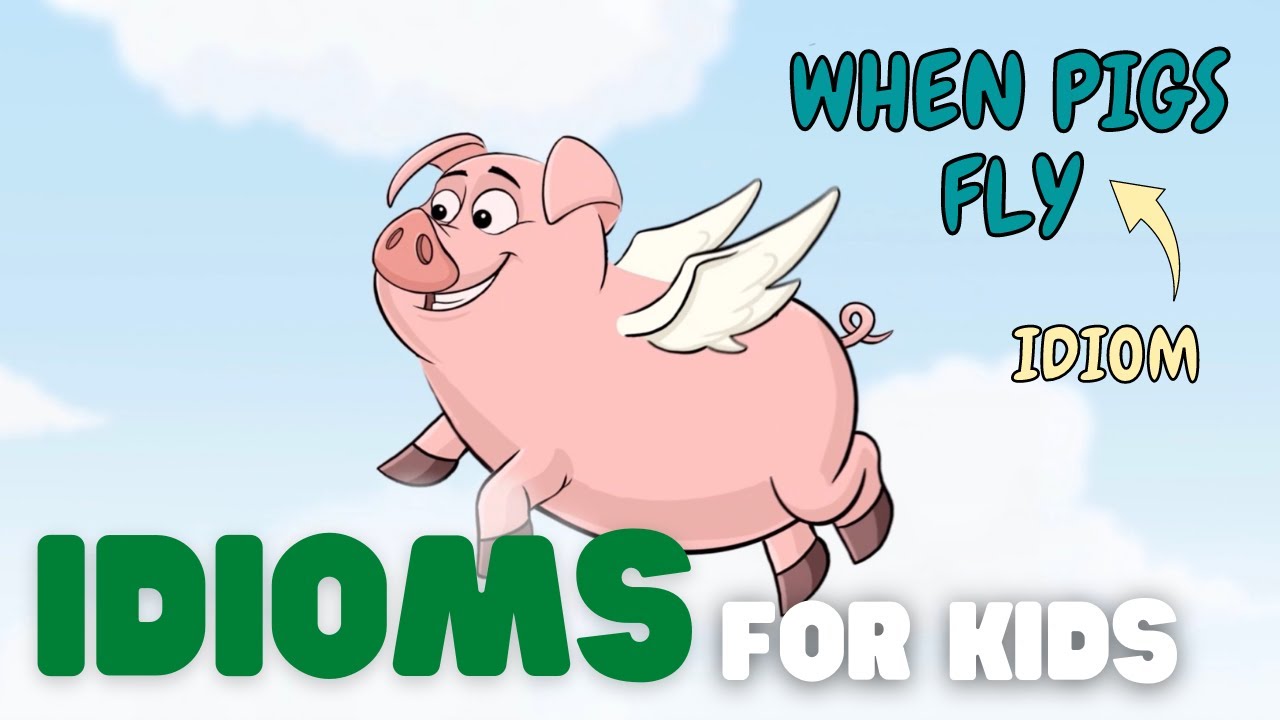
What is an idiom? These statements can often be a little confusing because they don't seem to make sense! In Idioms for Kids, your kids and students will learn what idioms are and how fun they can be to use. Idioms are considered a tool in figurative language to make something more interesting. Sometimes they use comparisons between very different things—like fish and visitors—to paint a picture for the hearer. Other times, they don't seem to make any sense at all. "When pigs fly" means that whatever you're describing will never happen, because pigs will never be able to fly. And to say "Break a leg!" means to wish someone good luck. Surely, breaking your leg is not good luck! As your kids will find out, idioms can often be rather strange.
This video also points out that idioms from one country may not make sense to people from another country. The phrases we use in America might not translate well for people who live in Australia or England, even though English is the common language among the three countries. Idioms make sense to the people that live in the country from which the phrase comes.
We hope you and your student(s) enjoyed learning about idioms! If you want some more examples, head over to our website and download one of our many free lesson plans about idioms that is full of activities, worksheets, and more!
https://learnbright.org/lesson....s/language-arts/idio
https://learnbright.org/lesson....s/language-arts/expl
What you will learn in Idioms for Kids:
0:00 Introduction to idioms
1:08 What is figurative language?
1:33 "Fish and visitors stink after three days" explanation
2:24 Examples of idioms
2:54 Definition of idiom
3:59 How idioms work around the world
5:12 How idioms can be used to express yourself
6:08 Where you can find idioms
Thank you for watching and learning with us! We’re constantly releasing new content and videos, so click that “Subscribe” button and you’ll get notified.
Find and Follow Us Online:
Facebook: https://www.facebook.com/LearnBright/
Instagram: https://instagram.com/LearnBrightEducation
Pinterest: https://pinterest.com/LearnBrightEducation
YouTube: @LearnBright
Website: https://learnbright.org/
*Teachers and Parents! Did you know? In addition to these great videos, we have also created a library of high quality and engaging lessons for your elementary aged student(s). Visit us and sign up for a free account, and you'll instantly have access to thousands of lesson plans, learning materials, teaching instructions, activities, and assignments that your kids will really enjoy! We hope to see you soon!
Browse our entire collection of Language Arts lesson plans: https://learnbright.org/lessons/?filter_subject=language-arts
#IdiomsForKids
#WhatIsAnIdiom
#FigurativeLanguage
Determining the amplitude and period of sine and cosine functions.
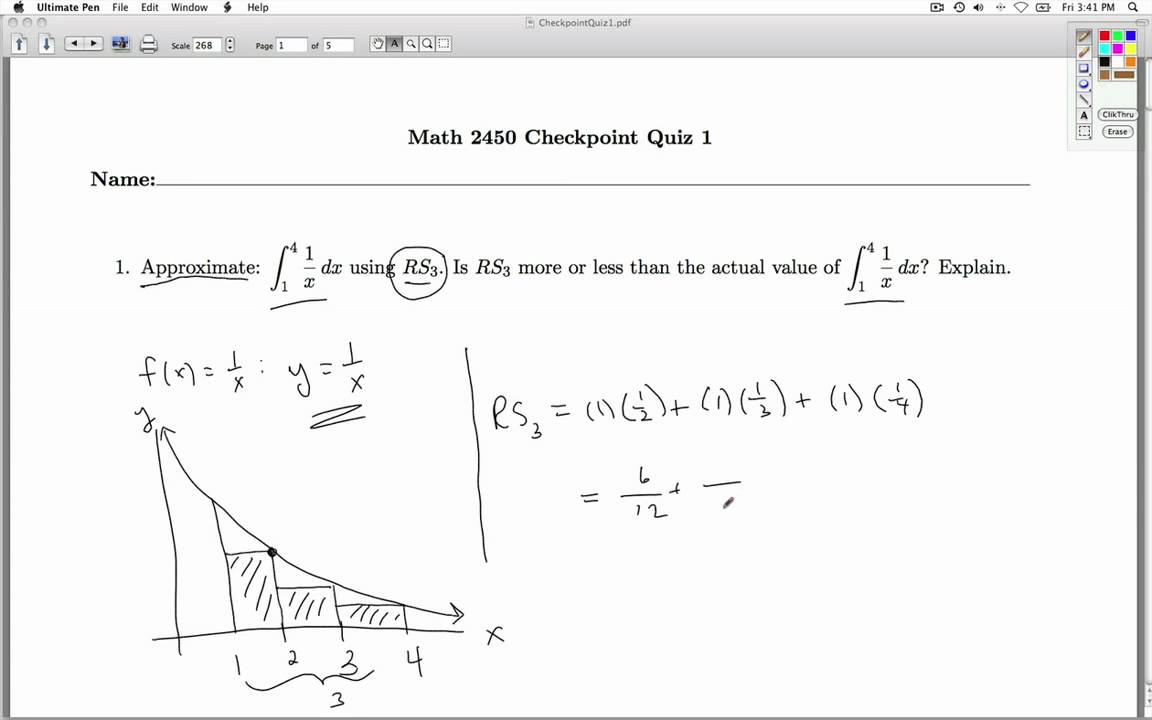
WEBSITE: http://www.teachertube.com Topics addressed approximating definite integrals using right endpoint sums definite integrals as areas antiderivatives The Fundamental Theorem of Calculus

In this video we learn about the four types of sentences. We learn about Statement Sentences, Question Sentences, Emotion Sentences, and Command Sentences. Each of these kinds of sentences is used in different situations and by the end of the video you'll know what each does and fell confidant you will use them right.
If after the video you'd like even more help learning about the four types of sentences then download our 100% free lesson plan here: https://learnbright.org/lesson....s/language-arts/sent
Thank you for watching and learning with us! We’re constantly releasing new content and videos so click that “Subscribe” button and you’ll notified.
Find and Follow Us Online:
Facebook: https://www.facebook.com/LearnBright/
Instagram: https://instagram.com/LearnBrightEducation
Pinterest: https://pinterest.com/LearnBrightEducation
YouTube: https://www.youtube.com/LearnBright
Website: https://learnbright.org/
*Teachers and Parents! Did you know? In addition to these great videos, we have also created a library of high quality and engaging lessons for your elementary aged student(s). Visit us, sign up for a free account, and instantly you'll have access to thousands of lesson plans, learning materials, teaching instructions, activities, and assignments that your kids will really enjoy! We hope to see you soon!
Browse our entire collection of Language Arts lesson plans: https://learnbright.org/lessons/?filter_subject=language-arts
#TypesOfSentences

For more episodes and free, supporting teachers' notes: https://www.bbc.co.uk/teach/cl....ass-clips-video/hist
In episode 3 we discover what happened to the city after the fire, the role of Christopher Wren in rebuilding the city and how we remember the fire today.
This short film is from the series The Great Fire of London.
It is designed to be a classroom resource suitable for teaching History at KS1 in England, Wales and Northern Ireland, and at 1st Level] in Scotland.
For more content like this, visit the BBC Teach website. Whether you're at home or at school, you can use BBC Teach for free. Our website is home to thousands of free curriculum-mapped videos, arranged by age-group and subject: https://www.bbc.co.uk/teach
Subscribe to the BBC Teach YouTube channel: https://www.youtube.com/bbctea....ch?sub_confirmation=
Get in touch via Facebook: https://www.facebook.com/BBCTeach/
Find more resources on BBC Bitesize: https://www.bbc.co.uk/bitesize

If you have ever asked "What is Kwanzaa?" or "How is Kwanzaa celebrated?" then this is the video for you! In this video about Kwanzaa for kids we explore the celebrations and traditions of Kwanzaa. Kwanzaa is a wonderful holiday celebration that starts on December 26th and runs to January 1st.
Throughout the video we take a look at and explain the 7 symbols of Kwanzaa, which are:
1. Kikombe Cha Umoja - The unity cup.
2. Kinara - The candle holder that holds 7 candles.
3. Mazao - Fruits, nuts, and vegetables.
4. Mishumaa Saba - the seven candles of kwanzaa.
5. Mkeka - a Place Mat
6. Vibunzi - an Ear of Corn
7. Zawadi - gifts given on January 1st.
Watch the video to learn the actions that are associated with each of the symbols.
We also teach about and explain the 7 principles of Kwanzaa which are:
1. Umoja (oo-MOH-ja) which means Unity Building.
2. Kujichagulia (koo-jee-chagoo-
LEE-yah) which means Self-determination.
3. Ujima (oo-JEE-mah) which means Collective work and
responsibility.
4. Ujamaa (oo-JAH-ma) which means Cooperative economics.
5. Nia (nee-AH) which means Sense of purpose.
6. Kuumba (koo-OOM-bah) which means Creativity.
7. Imani (ee-MAH-nee) which means Faith
Together, the tradition of the seven symbols and seven principles of Kwanzaa are values of African culture
which contribute to building and reinforcing community among African Americans.
From the first day of the celebration on December 26th when the black candle in the center of the Kinara is lit to the final day of the celebration on January 1st when the final candle is lit, millions of people every year
will be celebrating Kwanzaa, a special week honoring the values or African cultures and inspiring African
Americans throughout the United States.
We hope you all have a wonderful and Happy Kwanzaa.
If you'd like to learn even more about Kwanzaa then please visit us at: https://learnbright.org/lesson....s/social-studies/wha to download our free 12 page lesson plan "What is Kwanzaa?" In this lesson you will learn even more about the symbols and principles of Kwanzaa with neatly designed content pages, activities, worksheets and more!
Thank you for watching and learning with us! We’re constantly releasing new content and videos so click that “Subscribe” button and you’ll notified.
Find and Follow Us Online:
Facebook: https://www.facebook.com/LearnBright/
Instagram: https://instagram.com/LearnBrightEducation
Pinterest: https://pinterest.com/LearnBrightEducation
YouTube: https://www.youtube.com/LearnBright
Website: https://learnbright.org/
*Teachers and Parents! Did you know? In addition to these great videos, we have also created a library of high quality and engaging lessons for your elementary aged student(s). Visit us, sign up for a free account, and instantly you'll have access to thousands of lesson plans, learning materials, teaching instructions, activities, and assignments that your kids will really enjoy! We hope to see you soon!
Browse our entire collection of Social Studies lesson plans: https://learnbright.org/lessons/?filter_subject=social-studies
#ASL
#WhatIsKwanzaa
#Kwanzaa

Summer professional development is a fixture for educators and school districts, but there’s consensus that it shouldn’t be business as usual after a pandemic-disrupted school year. Education Week talked to teachers and principals about how they think this year’s PD can address crucial issues like students’ social-emotional learning needs, academics, and how to make sure teachers have a hand in shaping their training.
_________________________________________
Want more stories about schools across the nation, including the latest news, analysis, and unique perspectives on education issues? Visit www.edweek.org.
About Education Week:
Education Week is America’s most trusted source of independent K-12 education news, analysis, and opinion. Our comprehensive coverage of education policy takes the form of articles, photography, and video journalism.
Published by the nonprofit organization Editorial Projects in Education, Education Week has been providing award-winning coverage of the field for over 35 years.
Follow Education Week:
- Subscribe to our channel: https://www.youtube.com/user/e....ducationweek?sub_con
- Facebook: https://www.facebook.com/edweek
- Twitter: https://twitter.com/educationweek
- LinkedIn: https://www.linkedin.com/company/edweek/
- Instagram: https://www.instagram.com/educationweek/
To license video footage from Editorial Projects in Education, please contact Education Week Library at reprints@educationweek.org

Enlargement from a centre by a certain scale factor, built from scratch in less than one minute.
I'm using Geogebra Classic 5 on a PC, but this will work similarly on the mobile app, or in a browser.
In the US this is often called dilation rather than enlargement, and the command in US versions is actually 'dilate': https://wiki.geogebra.org/en/Dilate_Command

Thousands of parents and educators are turning to the kids’ learning app that makes real learning truly fun. Try Kids Academy with
3-day FREE TRIAL! https://bit.ly/2GuGyL2
It's Kids Academy and welcome back to our channel! Social studies for kids is an essential subject in their initial classes. The three very important lessons of social studies are recycling, civil rights and the right to vote. Let’s describe these concepts in simpler words for kids.
Recycling simply means converting waste material into something new that can be used effectively. There are many materials that are being recycled today including plastic bags, tin cans, bottles, thrown away paper, juice cartons, and many more. Recycling is important because it saves the earth from pollution and is an efficient use of energy.
Civil rights are the rights that are observed to protect the freedom of common people from the government, private individuals and social organizations. One of the very important rights given by civil rights is the right to vote.
Every person in a country, satisfying the legal requirements of nationality, has the right to vote and elect the political public representatives, mostly the president. Every person 18 years of age or older has the right to vote.
It is necessary for a kid to know their rights in a state, it enables them to have a better understanding of the law and defending themselves in times of need.
00:00 Start
00:05 - Recycling
04:27 - Civil Rights
09:16 - Vote (Voting for kids)
Subscribe to our channel: https://goo.gl/iG2Bdr
#TalentedAndGifted #LearnWithKidsAcademy
Kids Academy Talented and Gifted Program for kids aged 2-10:
*****
Connect with us on :
App Store: https://smart.link/59833db06a6b8
Google Play: https://smart.link/597210af6eb83
Our website: http://www.kidsacademy.mobi
Facebook: https://www.facebook.com/KidsAcademyC...
Twitter: https://twitter.com/KidsAcademyCo

Students work in teams of two to discover the relative positions of the Earth, Sun and Moon that produce the different phases of the Moon. Groups are each given a Styrofoam ball that they attach to a pencil so that it looks like a lollipop. In this acting-out model exercise, this ball on a stick represents the Moon, the students represent the Earth and a hanging lightbulb serves as the Sun. Students move the "Moon" around them to discover the different phases. They fill in the position of the Moon and its corresponding phase in a worksheet.
View the full activity on TeachEngineering:
https://www.teachengineering.o....rg/activities/view/d
TeachEngineering has over 1,500 FREE lessons and activities. Visit https://www.teachengineering.org/ for more
music - cosmos

Students use the engineering design process while learning about accessibility for people with physical disabilities in Egypt. Students are challenged to create a reusable prototype to help a wheelchair table tennis team pick up ping pong balls. Before building their prototypes, students research the trash and waste problem in Egypt, compiling a list of sustainable materials that can be used to build their devices. Students then individually brainstorm and plan at least two different devices before coming together in teams to develop one group prototype design. After building, testing, and improving their prototypes, student groups present their prototypes to the class.
View the full lesson on TeachEngineering:
https://www.teachengineering.o....rg/activities/view/u
TeachEngineering has over 1,900 FREE lessons and activities. Visit http://www.TeachEngineering.org for more!
Daily Beetle - Kevin MacLeod

ChatGPT is changing lives and there has been a lot of focus on how students are using it and teachers are combating it, but there has not been any focus on how teachers can leverage AI to make their jobs and lives earlier and less stressful.
Former Biology Professor turned tech and social media expert, Leslie Samuel wants to share how teachers can leverage AI instead of fighting against it.