Top videos

In this video, I show you 4 practice problems to ensure you have mastered the concept of comparing fractions with different denominators.
In this video we cover:
Quick review of comparing fractions with different denominators
Quick review of cross multiplication
4 practice problems that you can solve at your own pace and unpause to check against the answers
Improved math is a channel created to provide additional instruction on essential math concepts. I’m passionate about math and I know first-hand how important math concepts are in the real world.
Teachers, parents, guardians, homeschoolers, and students can use these videos to help reinforce math skills.
For more information on math topics or for free printable worksheets and answer sheets, you can also visit my website at improvedmath.com
https://www.youtube.com/c/ImprovedMath
https://improvedmath.com
https://www.tiktok.com/@improvedmath1?
https://www.pinterest.com/improvedmath/
Don’t forget to like, share, and subscribe!

Today we’re talking about heat transfer and the different mechanisms behind it. We’ll explore conduction, the thermal conductivity of materials, convection, boundary layers, and radiation.
Crash Course Engineering is produced in association with PBS Digital Studios: https://www.youtube.com/playli....st?list=PL1mtdjDVOoO
***
RESOURCES:
https://www.grc.nasa.gov/www/k....-12/airplane/thermo1
http://hyperphysics.phy-astr.g....su.edu/hbase/thermo/
http://coolcosmos.ipac.caltech.....edu/cosmic_classroo
http://hyperphysics.phy-astr.g....su.edu/hbase/thermo/
https://spaceplace.nasa.gov/beat-the-heat/en/
http://www.weather.gov/jetstream/heat
https://physics.info/conduction/
https://physics.info/convection/
https://physics.info/radiation/
http://thermopedia.com/content/781/
Çengel, Yunus A., and Michael A. Boles. Thermodynamics: An Engineering Approach. 8th ed., McGraw-Hill Education.
***
Crash Course is on Patreon! You can support us directly by signing up at http://www.patreon.com/crashcourse
Thanks to the following Patrons for their generous monthly contributions that help keep Crash Course free for everyone forever:
Mark Brouwer, Erika & Alexa Saur, Glenn Elliott, Justin Zingsheim, Jessica Wode, Eric Prestemon, Kathrin Benoit, Tom Trval, Jason Saslow, Nathan Taylor, Divonne Holmes à Court. Brian Thomas Gossett, Khaled El Shalakany, Indika Siriwardena, SR Foxley, Sam Ferguson, Yasenia Cruz, Eric Koslow, Caleb Weeks, Tim Curwick, D.A. Noe, Shawn Arnold, Ruth Perez, Malcolm Callis, Ken Penttinen, Advait Shinde, William McGraw, Andrei Krishkevich, Rachel Bright, Mayumi Maeda, Kathy & Tim Philip, Jirat, Eric Kitchen, Ian Dundore, Chris Peters
--
Want to find Crash Course elsewhere on the internet?
Facebook - http://www.facebook.com/YouTubeCrashCourse
Twitter - http://www.twitter.com/TheCrashCourse
Tumblr - http://thecrashcourse.tumblr.com
Support Crash Course on Patreon: http://patreon.com/crashcourse
CC Kids: http://www.youtube.com/crashcoursekids

This week Craig Benzine talks about what happens when a case makes it to the Supreme Court of the United States (or the SCOTUS). We're going to focus on court procedure today. We talk about how to petition to get your case heard, how written arguments, or briefs, are made, what actually happens on the courtroom floor, and of course the variety of ways the SCOTUS issues opinions on cases.
Produced in collaboration with PBS Digital Studios: http://youtube.com/pbsdigitalstudios
Support is provided by Voqal: http://www.voqal.org
All Flickr.com images are licensed under Creative Commons by Attribution 2.0
https://creativecommons.org/li....censes/by/2.0/legalc
Want to find Crash Course elsewhere on the internet?
Facebook - http://www.facebook.com/YouTubeCrashCourse
Twitter - http://www.twitter.com/TheCrashCourse
Tumblr - http://thecrashcourse.tumblr.com
Support Crash Course on Patreon: http://patreon.com/crashcourse
CC Kids: http://www.youtube.com/crashcoursekids

Build you first AI chatbot with Chatling for FREE! https://chatling.ai/?ref=aimaster
🚀 Become an AI Master – All-in-one AI Learning https://aimaster.me/pro
In this video, I’ll show you how to build a custom AI chatbot for your website in under 10 minutes – without touching a line of code! If your site feels outdated and you want to improve user experience, or if you're looking to automate customer support, boost lead generation, or enhance engagement, this quick chatbot tutorial has you covered. From setup to fine-tuning, I’ll walk you through all the steps: creating a bot, choosing the best model, customizing responses, and adding it seamlessly to your site. Perfect for beginners and pros alike – let’s upgrade your website’s user experience fast!

En este vídeo para aprender español, para niveles intermedios, veremos la acentuación en el idioma castellano. Primera parte.
La sílaba tónica: Es la sílaba que tiene la fuerza dentro de la pronunciación de una palabra.
Por ejemplo en "madera" la sílaba tónica es la "DE" : maDEra
Dependiendo del lugar donde se encuentra la sílaba tónica la palabra puede ser:
Aguda
Grave o llaba
Esdrújula
Sobreesdrújula
Las agudas son las palabras cuya última sílaba es tónica, por ejemplo: BaLÓN, PaRÍS, VirREY,
Las llanas o graves son las palabras cuya penúltima sílaba es tónica, por ejemplo: TREbol, MARmol, MAdera.
Las palabras esdrújulas son las que su tercera sílaba empezando de atrás es tónica, por ejemplo: elecTRÓnica, MurCIÉlago, MÉdico.
Las sobreesdrújulas son las palabras cuyas cuarta sílaba empezando de atrás es tónica, por ejemplo reGÁlamelo, CÓMpramelo.
El primer paso para aprender las reglas de acentuación es saber diferenciar entre los distintos tipos de palabras.
Una vez que sabemos clasificar las palabras entre agudas, graves y esdrújulas, la acentuación es muy sencilla.
En la siguiente entrega de las reglas de acentuación veremos cómo saber si las palabras llevan acento o no, pero es imprescindible que sepas clasificarlas.
Recuerda suscribirte a nuestro canal! 🔔
Courses on Khan Academy are always 100% free. Start practicing—and saving your progress—now: https://www.khanacademy.org/ec....onomics-finance-doma
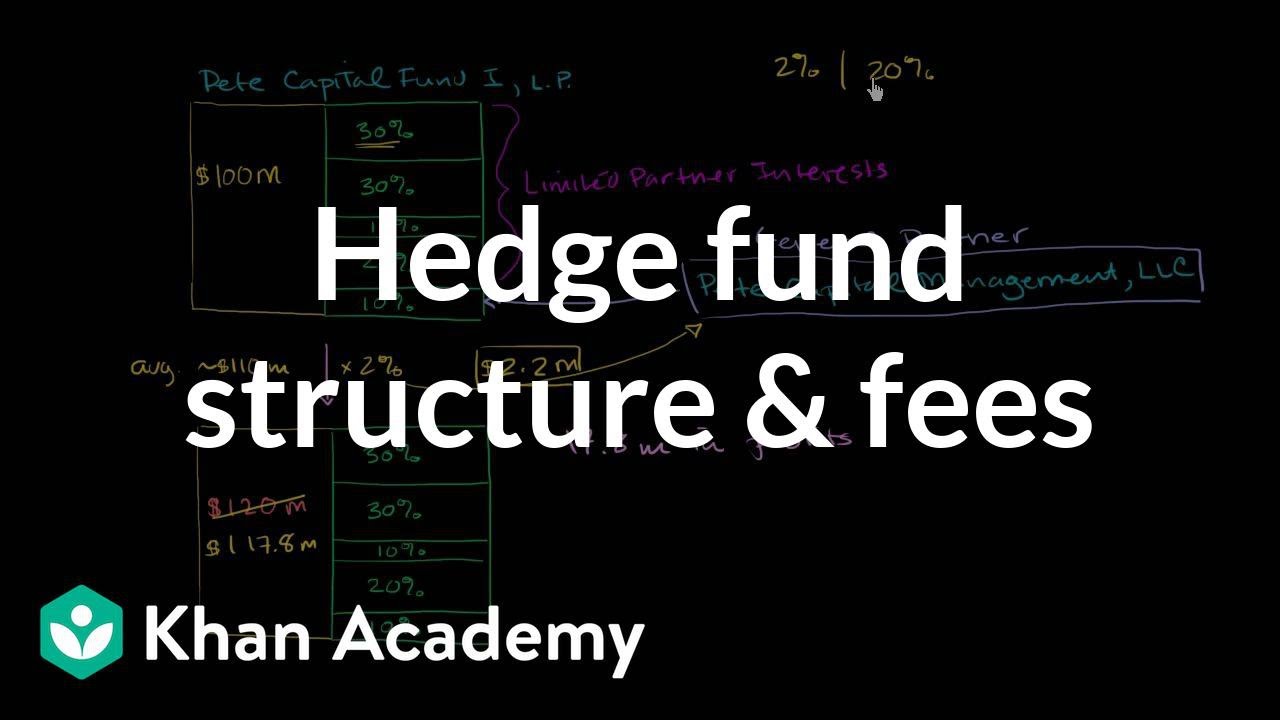
Understanding how hedge funds are structured and how the managers get paid. Created by Sal Khan.
Watch the next lesson:
https://www.khanacademy.org/economics-finance-domain/core-finance/investment-vehicles-tutorial/hedge-funds/v/are-hedge-funds-bad?utm_source=YT&utm_medium=Desc&utm_campaign=financeandcapitalmarkets
Missed the previous lesson? Watch here: https://www.khanacademy.org/economics-finance-domain/core-finance/investment-vehicles-tutorial/hedge-funds/v/hedge-funds-intro?utm_source=YT&utm_medium=Desc&utm_campaign=financeandcapitalmarkets
Finance and capital markets on Khan Academy: Hedge funds have absolutely nothing to do with shrubbery. Their name comes from the fact that early hedge funds (and some current ones) tried to "hedge" their exposure to the market (so they could, in theory, do well in an "up" or "down" market as long as they were good at picking the good companies). Today, hedge funds represent a huge class investment funds. They are far less regulated than, say, mutual funds. In exchange for this, they aren't allowed to market or take investments from "unsophisticated" investors. Some use their flexibility to mitigate risk, other use it to amplify it.
About Khan Academy: Khan Academy offers practice exercises, instructional videos, and a personalized learning dashboard that empower learners to study at their own pace in and outside of the classroom. We tackle math, science, computer programming, history, art history, economics, and more. Our math missions guide learners from kindergarten to calculus using state-of-the-art, adaptive technology that identifies strengths and learning gaps. We've also partnered with institutions like NASA, The Museum of Modern Art, The California Academy of Sciences, and MIT to offer specialized content.
For free. For everyone. Forever. #YouCanLearnAnything
Subscribe to Khan Academy’s Finance and Capital Markets channel: https://www.youtube.com/channe....l/UCQ1Rt02HirUvBK2D2
Subscribe to Khan Academy: https://www.youtube.com/subscr....iption_center?add_us

Practice Your Spanish With Chateo - a Spanish-speaking chatbot! | Get a discount off your first 6 months with code CHATEOBOT | Sign up at: https://www.senorjordan.com/chat
~~~~~~~~~~~~~~~~~~~~~~~~~~~~~~
SUBSCRIBE for more Spanish videos: http://bit.ly/XGe7we
and make sure to click the notification bell!
Follow me on Facebook: https://www.facebook.com/srjordanspanish
Tweet me: https://twitter.com/senorjordan
Check out my website: http://www.senorjordan.com
Follow me on Instagram: @senorjordanvideos
Listen to my music on Soundcloud:
https://soundcloud.com/senorjordanspanish
Listen to my music on Spotify:
https://open.spotify.com/artis....t/2nyJ9GgLNMckXCuBHU
Buy my songs on iTunes:
https://music.apple.com/us/artist/1621526948
Buy my songs on Amazon:
https://www.amazon.com/music/p....layer/artists/B09Z35
Donate to my video-making project:
https://paypal.me/srjordanvideos?country.x=US&locale.x=en_US
~~~~~~~~~~~~~~~~~~~~~~~~~~~~~~
¡Hola! In this video lesson we'll be talking about verbs that have a little change in the middle. We call these stem-changing verbs. This is a video on the third type of three.
Please "Like" this video if it was helpful.
Click the link below for word bank as well as charts:
http://www.senorjordan.com/2012/07/01-present-tense-stem-changing-verbs-e-i/
Thanks for watching!
*this is a re-do of a previous video because I had to correct a mistake
Practice Your Spanish With Chateo - a Spanish-speaking chatbot! | Get a discount off your first 6 months with code CHATEOBOT | Sign up at: https://www.senorjordan.com/chat
~~~~~~~~~~~~~~~~~~~~~~~~~~~~~~
SUBSCRIBE for more Spanish videos: http://bit.ly/XGe7we
and make sure to click the notification bell!
Follow me on Facebook: https://www.facebook.com/srjordanspanish
Tweet me: https://twitter.com/senorjordan
Check out my website: http://www.senorjordan.com
Follow me on Instagram: @senorjordanvideos
Listen to my music on Soundcloud:
https://soundcloud.com/senorjordanspanish
Listen to my music on Spotify:
https://open.spotify.com/artis....t/2nyJ9GgLNMckXCuBHU
Buy my songs on iTunes:
https://music.apple.com/us/artist/1621526948
Buy my songs on Amazon:
https://www.amazon.com/music/p....layer/artists/B09Z35
Donate to my video-making project:
https://paypal.me/srjordanvideos?country.x=US&locale.x=en_US
¡Hola mis alumnos cibernéticos! In this video lesson, we're practicing some of the vocabulary from the previous video on "la casa" (the house) and we're adding in the present tense of the verb vivir (to live). I hope you enjoy it!
Rate this video if it was helpful. Also feel free to leave any questions, comments or suggestions about this video below.
For more Spanish video lesson, word banks, verb conjugation sheets and more, check out http://www.senorjordan.com
¡Gracias!
All pictures in this video are royalty free either from:
• my drawing skills,
• http://www.freerangestock.com/ , or
• http://office.microsoft.com/en-us/images/?CTT=97
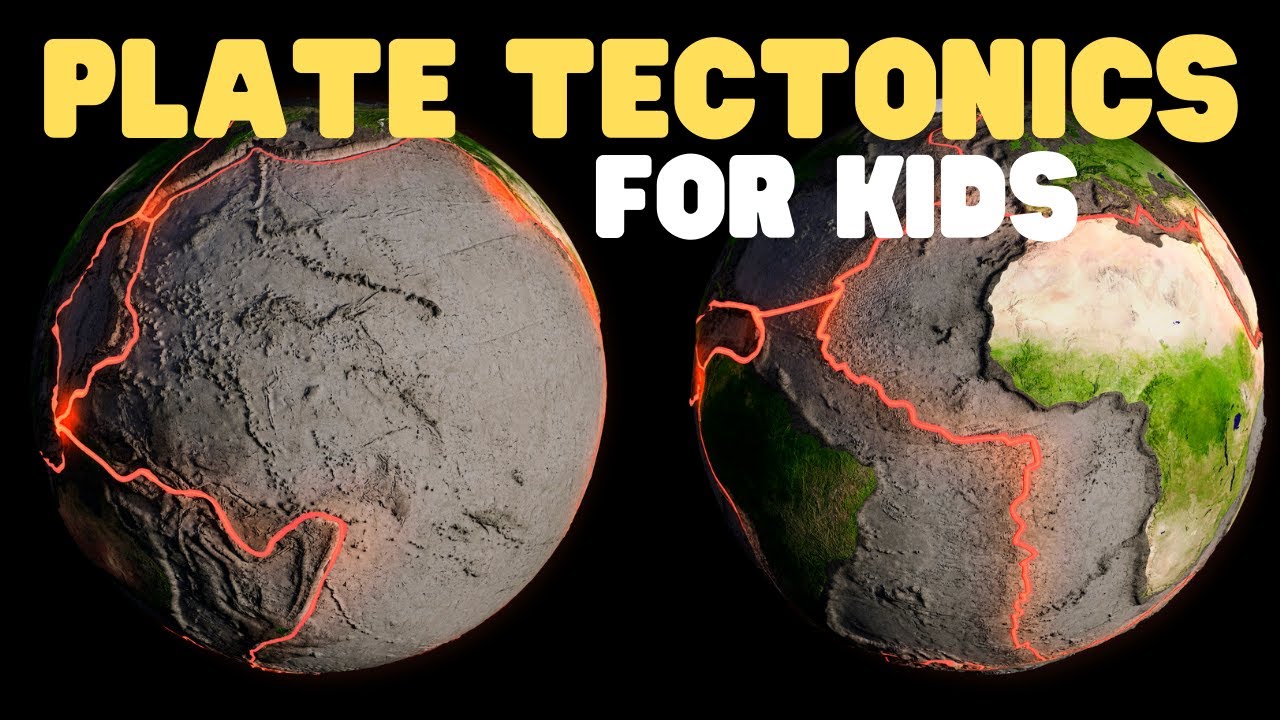
In this video we will explain plate tectonics for kids! Together we will learn about the two main types of tectonic plates, Oceanic and Continental. We also cover the 3 kinds of boundaries which are: Convergent, Divergent, and Transform. This helps us understand exactly how the plate tectonics move AND what happens when they do. We will also learn about Pangaea and how all of the plates were once together and over millions the plate tectonics have cause the continents to separate.
Don't just stop with this video. Visit us at https://learnbright.org/lesson....s/science/plate-tect and download your free 12 page lesson plane with more plate tectonics worksheets, activities and more!
Check out some of our other videos related to plate tectonics here:
Volcanoes: https://youtu.be/3Jxeh-yAXek
Earthquakes & Tsunamis: https://youtu.be/Q-v-G1iL67w
Thank you for watching and learning with us! We’re constantly releasing new content and videos, so click that “Subscribe” button and you’ll get notified.
Find and Follow Us Online:
Facebook: https://www.facebook.com/LearnBright/
Instagram: https://instagram.com/LearnBrightEducation
Pinterest: https://pinterest.com/LearnBrightEducation
YouTube: https://www.youtube.com/LearnBright
Website: https://learnbright.org/
*Teachers and Parents! Did you know? In addition to these great videos, we have also created a library of high quality and engaging lessons for your elementary aged student(s). Visit us, sign up for a free account, and instantly you'll have access to thousands of lesson plans, learning materials, teaching instructions, activities, and assignments that your kids will really enjoy! We hope to see you soon!
Browse our entire collection of Science lesson plans: https://learnbright.org/lessons/?filter_subject=science
#PlateTectonicsForKids
#TectonicPlates

Courses on Khan Academy are always 100% free. Start practicing—and saving your progress—now: https://www.khanacademy.org/ma....th/algebra/x2f8bb115
In 40 years, Imran will be 11 times as old as he is right now. How old is he right now?
Practice this lesson yourself on KhanAcademy.org right now:
https://www.khanacademy.org/math/algebra/solving-linear-equations-and-inequalities/age_word_problems_tut/e/age_word_problems?utm_source=YT&utm_medium=Desc&utm_campaign=AlgebraI
Watch the next lesson: https://www.khanacademy.org/math/algebra/solving-linear-equations-and-inequalities/age_word_problems_tut/v/ex-3-age-word-problem?utm_source=YT&utm_medium=Desc&utm_campaign=AlgebraI
Missed the previous lesson?
https://www.khanacademy.org/math/algebra/solving-linear-equations-and-inequalities/age_word_problems_tut/v/ex-1-age-word-problem?utm_source=YT&utm_medium=Desc&utm_campaign=AlgebraI
Algebra I on Khan Academy: Algebra is the language through which we describe patterns. Think of it as a shorthand, of sorts. As opposed to having to do something over and over again, algebra gives you a simple way to express that repetitive process. It's also seen as a "gatekeeper" subject. Once you achieve an understanding of algebra, the higher-level math subjects become accessible to you. Without it, it's impossible to move forward. It's used by people with lots of different jobs, like carpentry, engineering, and fashion design. In these tutorials, we'll cover a lot of ground. Some of the topics include linear equations, linear inequalities, linear functions, systems of equations, factoring expressions, quadratic expressions, exponents, functions, and ratios.
About Khan Academy: Khan Academy offers practice exercises, instructional videos, and a personalized learning dashboard that empower learners to study at their own pace in and outside of the classroom. We tackle math, science, computer programming, history, art history, economics, and more. Our math missions guide learners from kindergarten to calculus using state-of-the-art, adaptive technology that identifies strengths and learning gaps. We've also partnered with institutions like NASA, The Museum of Modern Art, The California Academy of Sciences, and MIT to offer specialized content.
For free. For everyone. Forever. #YouCanLearnAnything
Subscribe to Khan Academy’s Algebra channel:
https://www.youtube.com/channe....l/UCYZrCV8PNENpJt36V
Subscribe to Khan Academy: https://www.youtube.com/subscr....iption_center?add_us

In this reading lesson, children are expected to learn about the solar system and the different planets. This reading lesson is recommended for grade 2 and up level. Children are also expected to answer the questions correctly after reading this paragraph.
#teacherayaonlinetutor #solarsystem #readingcomprehension #teacherayaonlinetutor #dropeverythingangRead #practicereadingenglish #planets #triviaforkids #advancereadinglesson #paragraph

So what's with those small, plastic cards that adults use to buy stuff? In Financial Literacy—Debit and Credit, your students will discover the answer to that question. They will also realize that credit cards and debit cards are different, and each one can be helpful in different ways.
Credit cards and debit cards are both small, hard, plastic cards. But apart from that, they are quite difference. Credit cards, for instance, are not linked to a bank account, but debit cards are. That means you can use debit cards to pay for things with money you already have. Generally speaking, a debit card is directly linked to a checking account. Credit cards use money that is loaned. You can use it to buy something and pay for it later.
Credit card companies issue credit cards, and it's like a type of loan. You can pay back the loan according to the credit company's schedule. You usually have to make a minimum payment each month to reduce your debt. They can also charge interest if it takes you longer to pay the money back or if you don't pay the full amount back every month. However, if you pay your credit card bills in full every month, you won't be charged any interest.
We hope you and your student(s) enjoyed learning about these important skills! If you want even more information, head over to our website and download one of our many free lesson plans, full of activities, worksheets, and more!
https://learnbright.org/lesson....s/math/financial-lit
https://learnbright.org/lesson....s/math/introduction-
Thank you for watching and learning with us! We’re constantly releasing new content and videos, so click that “Subscribe” button and you’ll get notified.
What you will learn in Financial Literacy—Debit and Credit:
0:00 Introduction
1:11 Difference between debit and credit cards
2:11 How credit cards work
3:04 Example with Frankie Finance—credit card
4:13 Example—debit card
Find and Follow Us Online:
Facebook: https://www.facebook.com/LearnBright/
Instagram: https://instagram.com/LearnBrightEducation
Pinterest: https://pinterest.com/LearnBrightEducation
YouTube: @LearnBright
Website: https://learnbright.org/
*Teachers and Parents! Did you know? In addition to these great videos, we have also created a library of high-quality and engaging lessons for your elementary aged student(s). Visit us and sign up for a free account, and you'll instantly have access to thousands of lesson plans, learning materials, teaching instructions, activities, and assignments that your kids will really enjoy! We hope to see you soon!
Browse our entire collection of Math lesson plans:
https://learnbright.org/lessons/?filter_subject=math
#FinancialLiteracy
#FinancialLiteracyForKids
#Credit
#DebitCard

SUSCRIBETE AQUÍ: https://bit.ly/3B8CNXP
¡ATENCIÓN AMIGOS!
¡Llegó la App de El Reino Infantil! ¡Totalmente gratuita!, Descárgala AQUÍ:
Para Android: http://bit.ly/ElReinoInfantil-PlayStore
Para iOS: http://bit.ly/ElReinoInfantil-AppleStore
Descubre juegos y canciones de tus personajes favoritos y disfruta horas de contenido de manera segura y confiable.
¡No te lo pierdas! ¡Súmete a la diversión!
Suscríbete ► http://bit.ly/SuscribeteElReinoInfantil
Síguenos/Follow us:
Facebook ► https://www.facebook.com/ElReinoInfantil
Instagram► https://www.instagram.com/reino_infantil/
Twitter ► https://twitter.com/Reino_Infantil
¡Encuentra todos nuestros productos exclusivos aquí!
►http://bit.ly/ElReinoInfantilWEB
Para colaborar con todas las familias que deben quedarse en sus hogares debido a la situación mundial actual, llegó la App de Juegos de canciones del Zoo, especial para los más pequeños de la casa. Podrán acceder a todos los juegos de forma gratuita. Sin necesidad de Wifi ni Internet.
Resuelve rompecabezas, aprende los números, descubre los colores y conoce las formas a través de fascinantes y divertidos mini juegos animados.
Disponible para sistema operativo Android a través de este link:
http://bit.ly/App-JuegosDeZoo-Android
¡Próximamente disponible también en sistema IOS!
Título Original: El Marinero Baila
Autor/Compositor: Canción Popular
Intérprete: Los Ratones Juguetones
Discover everything a NUMBEROCK subscription has to offer!
FREE TRIAL LINK: https://learnmore.numberock.com/free-fnl.
»»-------------¤-------------««»»-------------¤-------------««
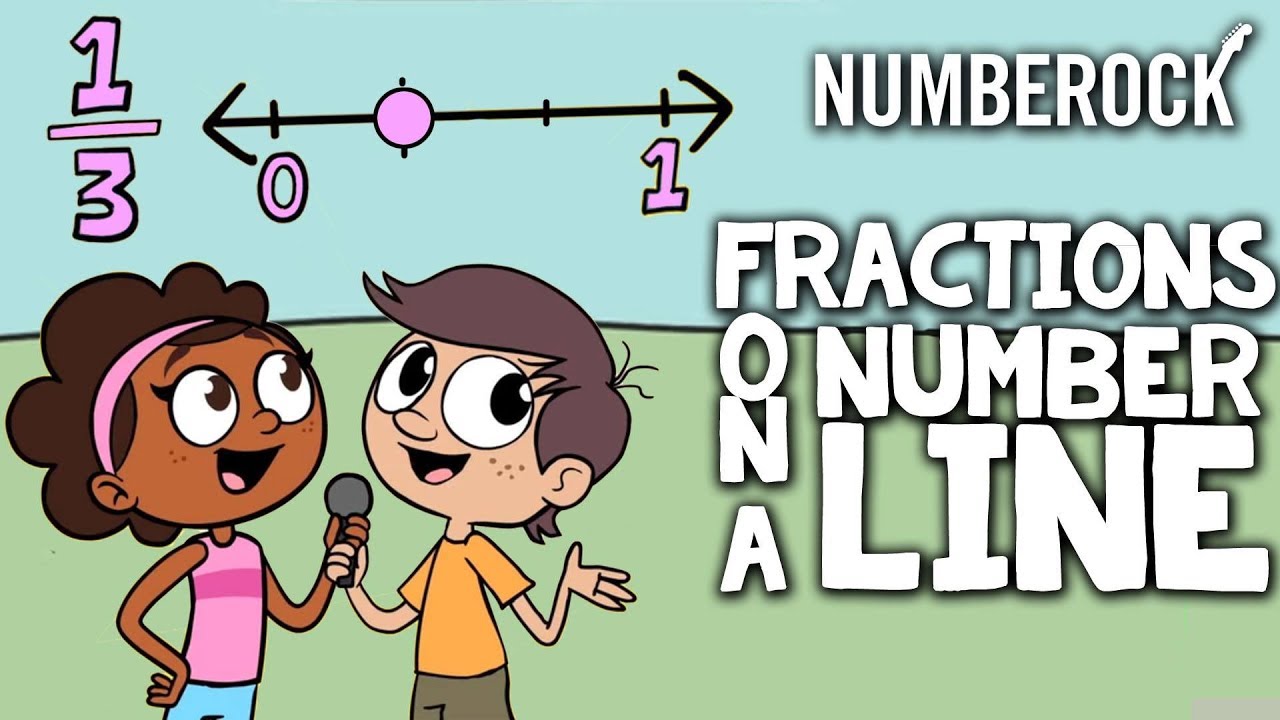
Thank you for watching our Fractions on a Number Line Song.
Newly Available for Website Subscribers:
1. Number Notes | Highly-visual math worksheets that integrate drawing and creative processes that make problem-solving and note-taking way more fun.
Research has shown that resources like these worksheets help students to integrate their artistic side with the mathematical side of their brain and as a result aides with long-term memory retention.
Our own research has shown us that teachers who try these activities love them! It seems to be a natural extension beyond song and video and into additional visual learning tools that when used in concert with our videos, cater to the many different types of learners that in your classroom - especially those non-mathy types.
Hope to see you at https://learnmore.numberock.com/free-fnl.

Fall 2017 The Educator Collaborative Gathering, Session 9 with Rachael Gabriel

Thousands of parents and educators are turning to the kids’ learning app that makes real learning truly fun. Try Kids Academy with
3-day FREE TRIAL! https://bit.ly/2GuGyL2
It's Kids Academy and welcome back to our channel! Social studies for kids is an essential subject in their initial classes. The three very important lessons of social studies are recycling, civil rights and the right to vote. Let’s describe these concepts in simpler words for kids.
Recycling simply means converting waste material into something new that can be used effectively. There are many materials that are being recycled today including plastic bags, tin cans, bottles, thrown away paper, juice cartons, and many more. Recycling is important because it saves the earth from pollution and is an efficient use of energy.
Civil rights are the rights that are observed to protect the freedom of common people from the government, private individuals and social organizations. One of the very important rights given by civil rights is the right to vote.
Every person in a country, satisfying the legal requirements of nationality, has the right to vote and elect the political public representatives, mostly the president. Every person 18 years of age or older has the right to vote.
It is necessary for a kid to know their rights in a state, it enables them to have a better understanding of the law and defending themselves in times of need.
00:00 Start
00:05 - Recycling
04:27 - Civil Rights
09:16 - Vote (Voting for kids)
Subscribe to our channel: https://goo.gl/iG2Bdr
#TalentedAndGifted #LearnWithKidsAcademy
Kids Academy Talented and Gifted Program for kids aged 2-10:
*****
Connect with us on :
App Store: https://smart.link/59833db06a6b8
Google Play: https://smart.link/597210af6eb83
Our website: http://www.kidsacademy.mobi
Facebook: https://www.facebook.com/KidsAcademyC...
Twitter: https://twitter.com/KidsAcademyCo

Students design and construct electromagnets that must pick up 10 staples. They begin with only minimal guidance, and after the basic concept is understood, are informed of the properties that affect the strength of that magnet. They conclude by designing their own electromagnets to complete the challenge of separating scrap steel from scrap aluminum for recycling, and share it with the class.
View the full activity on TeachEngineering:
https://www.teachengineering.o....rg/activities/view/v
TeachEngineering has over 1,500 FREE lessons and activities. Visit http://www.TeachEngineering.org for more!
Music: Sunday Spirit - Audionautix
Sunday Spirit by Audionautix is licensed under a Creative Commons Attribution license (https://creativecommons.org/licenses/by/4.0/)
Artist: http://audionautix.com/

#shorts
How Planets Rotate (Slow It Down to 0.25x to See 1 Hour in 1 Second)
The rotation periods of the planets cast to a single sphere. Rotations relative to background stars.
To measure a day is to count the amount of time it takes for a planet to completely spin around and make one full rotation. This is called a sidereal day. On Earth, a sidereal day is almost exactly 23 hours and 56 minutes.
We know how long an Earth day is, but how about the other planets in our solar system? How long does it take for those planets to spin one full rotation? And what is the best way to show the answer to this question?
The simple answer is:
Mercury: 58d 16h, 10.83 km/h
Venus: 243d 26m, 6.52 km/h
Earth: 23h 56m, 1574 km/h
Mars: 24h 36m, 866 km/h
Jupiter: 9h 55m, 45,583 km/h
Saturn: 10h 33m, 36,840 km/h
Uranus: 17h 14m, 14,794 km/h
Neptune: 16h, 9,719 km/h
In this dataset, it's possible to see all 8 planets on the sphere rotating at once and we have set Earth's ~24 hour day/rotation to happen in 60 seconds. Next to each planet's name, we have listed the time it takes for each planet to make one full rotation as well as the speed each planet moves at its equator. Jupiter, for example, makes one rotation in 9h 55m but moves 27 times faster than Earth at its equator, spinning at a whopping 45,583 km/h!
We have included two PIPs (picture in pictures) that can be toggled on for further explanation related to this concept. A PIP of the approximate sizes of the planets relative to each other and a PIP illustrating that if you viewed all the planets from the same point and at an angular diameter of 30 degrees - about ten feet from the sphere - each planet would appear to have a similar size.
Credit: Dr James O'Donoghue / NASA

To understand the challenges of satellite construction, student teams design and create model spacecraft to protect vital components from the harsh conditions found on Mercury and Venus. They use slices of butter in plastic eggs to represent the internal data collection components of the spacecraft. To discover the strengths and weaknesses of their designs, they test their unique thermal protection systems in a planet simulation test box that provides higher temperature and pressure conditions.
This engineering curriculum aligns to Next Generation Science Standards (NGSS).
View the full activity on TeachEngineering:
https://www.teachengineering.o....rg/activities/view/c
TeachEngineering has over 1,500 FREE lessons and activities. Visit https://www.teachengineering.org/ for more
Music: EDM Detection Mode
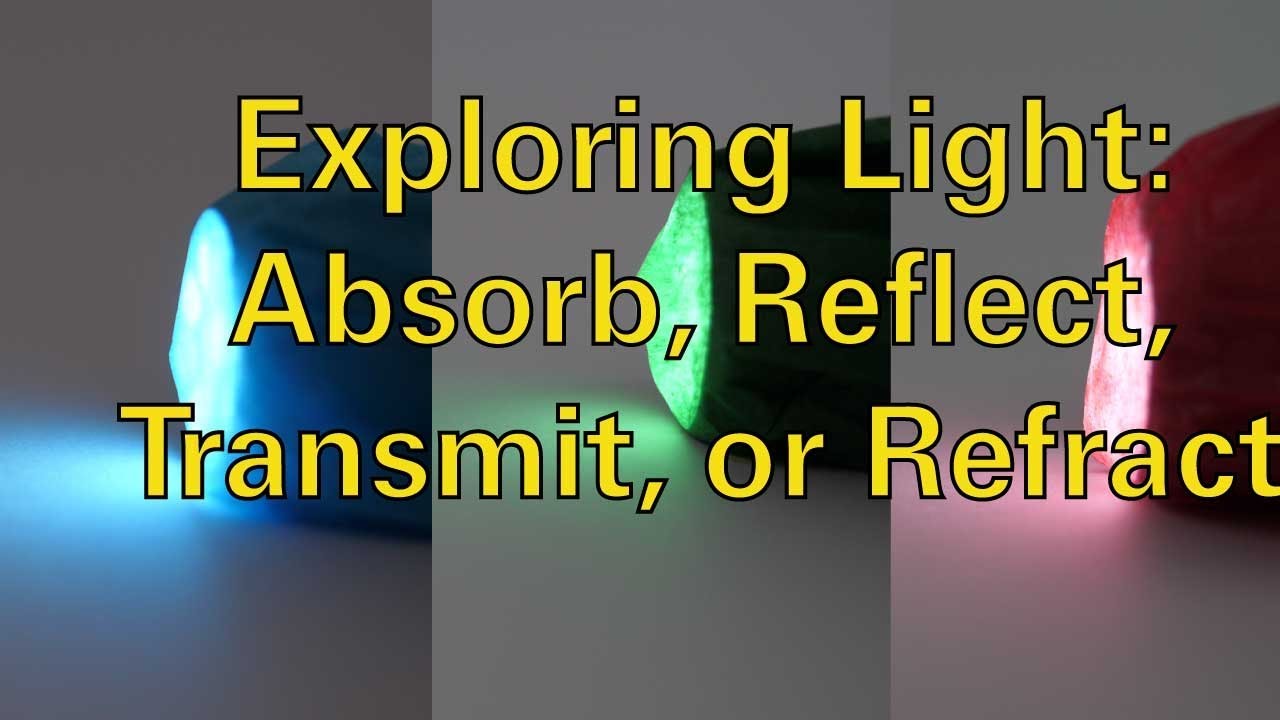
In a hands-on way, students explore light's properties of absorption, reflection, transmission and refraction through various experimental stations within the classroom. To understand absorption, reflection and transmission, they shine flashlights on a number of provided objects. To understand refraction, students create indoor rainbows. An understanding of the fundamental properties of light is essential to designing an invisible laser security system, the ongoing objective in this unit.
View the full activity at TeachEngineering:
https://www.teachengineering.o....rg/activities/view/v
TeachEngineering has over 1,500 FREE lessons and activities. Visit https://www.teachengineering.org/ for more!
Music: New Land - ALBIS