Top videos
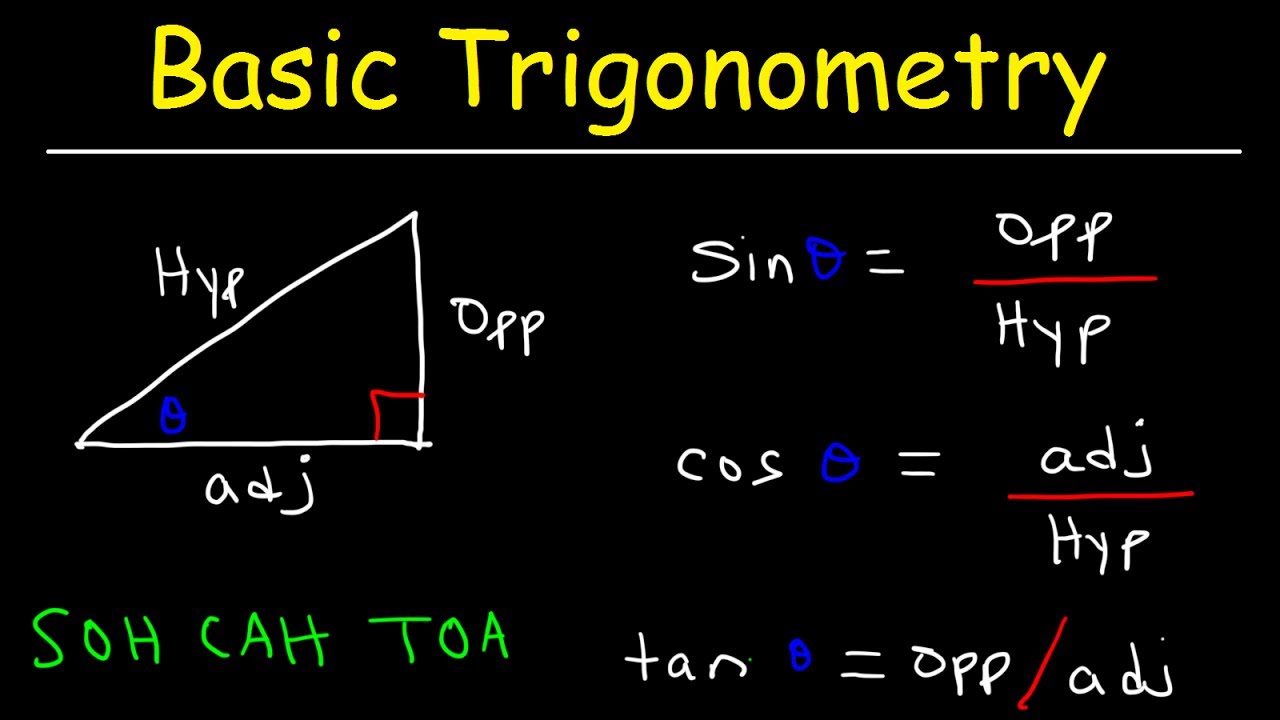
This math video tutorial provides a basic introduction into trigonometry. It covers trigonometric ratios such as sine, cosine, and tangent. It explains how to evaluate it using right triangle trigonometry and SOHCAHTOA. In addition, it explains how to solve the missing sides of triangles and how to find the missing angles using inverse trig functions. This video contains useful trigonometry lessons for beginners. it contains plenty of examples and practice problems.
Trigonometry - Basic Introduction:
https://www.youtube.com/watch?v=g8VCHoSk5_o
Introduction to Angles:
https://www.youtube.com/watch?v=oxhXz9_uyiM
Linear Speed and Angular Velocity:
https://www.youtube.com/watch?v=FgTvlGm9jgE
Clock to Angle Problems:
https://www.youtube.com/watch?v=LEHYr0XfSyI
______________________________________
Angle of Elevation Problems:
https://www.youtube.com/watch?v=uyKvSe6Ltgs
Evaluate Trig Functions - Reference Angles:
https://www.youtube.com/watch?v=V8LEHEzdU2U
How To Graph Trig Functions:
https://www.youtube.com/watch?v=fo_q9mEAFp4
Evaluating Inverse Trig Functions:
https://www.youtube.com/watch?v=jt7p-mCC0ng
Finding The Missing Side of a Triangle:
https://www.youtube.com/watch?v=tielQ3ejh70
Two Triangle Trigonometry Problems:
https://www.youtube.com/watch?v=OTP885mApV8
Bearings Vs Direction - Word Problems:
https://www.youtube.com/watch?v=jyi5zW8mavs
____________________________________________
Verifying Trig Identities:
https://www.youtube.com/watch?v=Rf05H8ogHLg
Full Length Exam Videos + Worksheets:
https://bit.ly/4990rzU
Final Exams and Video Playlists:
https://www.video-tutor.net/
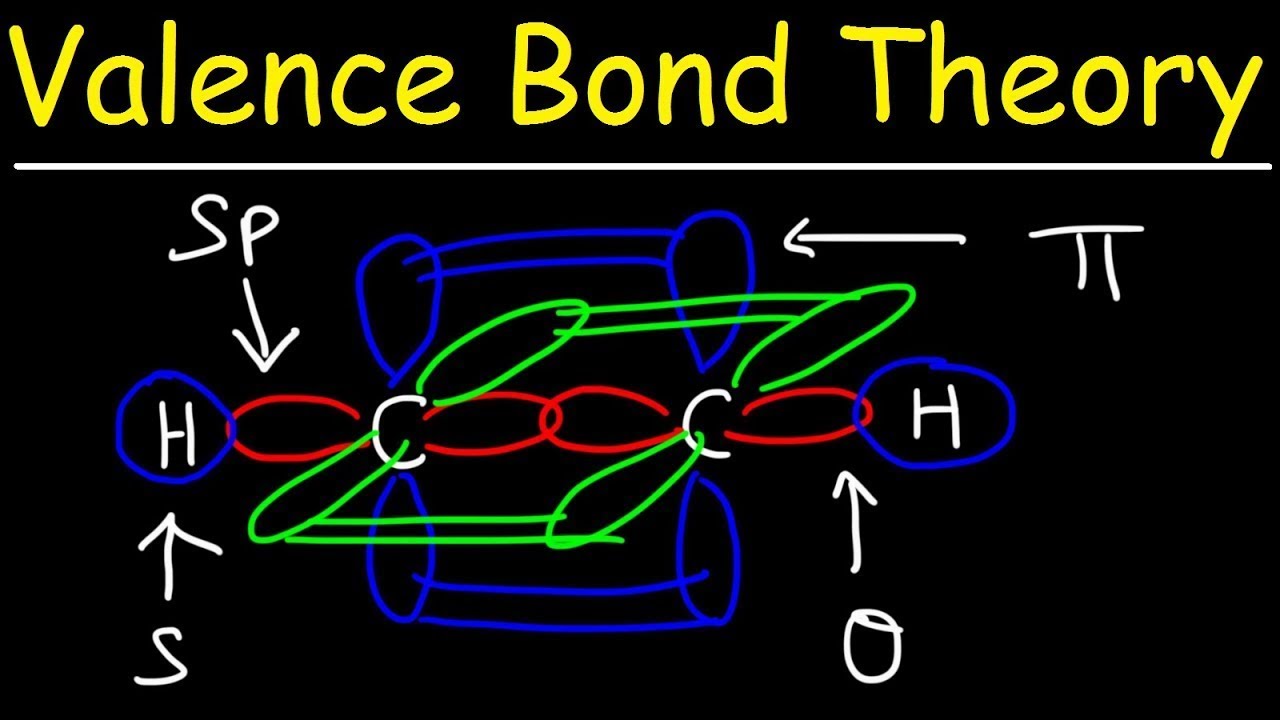
This organic chemistry video tutorial provides a basic introduction into valence bond theory and hybrid atomic orbitals. It explains how to find the hybridization of carbon atom such as sp, sp2, and sp3. it also explains how to describe the orbitals that overlap to form a covalent bond. In addition, it explains how to determine the number of sigma and pi bonds in a molecule.
Access The Full 33 Minute Video:
https://www.patreon.com/MathScienceTutor
Direct Link to The Full Video:
https://bit.ly/3X1ImNI
Organic Chemistry PDF Worksheets:
https://www.video-tutor.net/orgo-chem.html
________________________________________
Join The YouTube Membership Program:
https://bit.ly/46xaQTR
Full 33 Minute Video on YouTube:
https://www.youtube.com/watch?v=qyHMQXBkh50
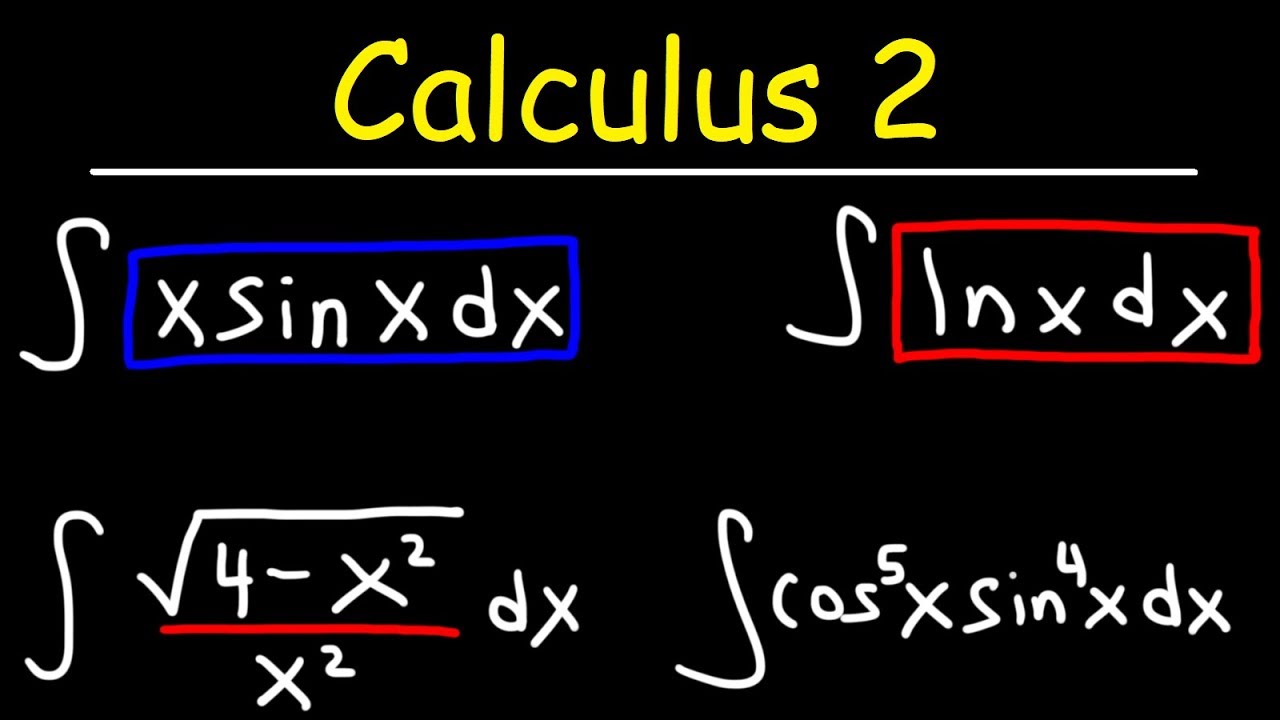
This calculus 2video tutorial provides an introduction into basic integration techniques such as integration by parts, trigonometric integrals, and integration by trigonometric substitution. It contains plenty of examples.
My Website: https://www.video-tutor.net
Patreon Donations: https://www.patreon.com/MathScienceTutor
Amazon Store: https://www.amazon.com/shop/th....eorganicchemistrytut
Subscribe:
https://www.youtube.com/channe....l/UCEWpbFLzoYGPfuWUM
Calculus Video Playlist:
https://www.youtube.com/watch?v=1xATmTI-YY8&t=25s&list=PL0o_zxa4K1BWYThyV4T2Allw6zY0jEumv&index=1
Disclaimer: Some of the links associated with this video may generate affiliate commissions on my behalf. As an amazon associate, I earn from qualifying purchases that you may make through such affiliate links.
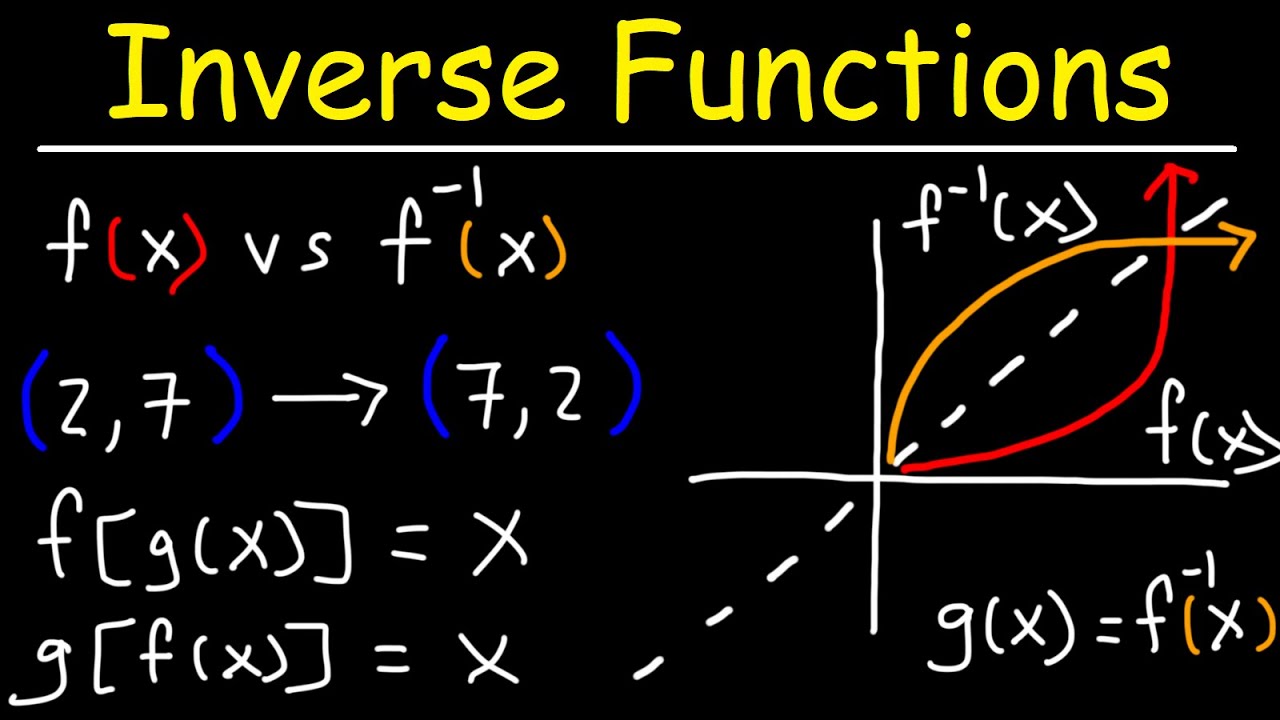
This algebra video tutorial provides a basic introduction into inverse functions. it explains how to find the inverse function by switching the x and y variables. It also explains how to prove if two functions are inverses of each by checking to see if the composite functions of f(g(x)) and g(f(x)) are equal to x. In addition, it explains how to graph the inverse function around the line y=x. Finally, it highlights the difference between the vertical line test and the horizontal line test as it relates to one to one functions and inverse functions. The vertical line test tells if a relation is a function. The horizontal line test tells you if the function is one to one and if the inverse relation is a function.
Introduction to Functions:
https://www.youtube.com/watch?v=DrEXTC6mIO8
Evaluating Functions:
https://www.youtube.com/watch?v=HyNie_PYgsY
Function Operations:
https://www.youtube.com/watch?v=3gaxVHVI4cI
Increasing and Decreasing Functions:
https://www.youtube.com/watch?v=Dyl7jPlJXOM
Relative Maximum & Minimum Values:
https://www.youtube.com/watch?v=GaltHJF6WyI
_____________________________________
Relations and Functions:
https://www.youtube.com/watch?v=wbBY2tTqXDA
Domain and Range From a Graph:
https://www.youtube.com/watch?v=KirGQOwjBVI
How To Find The Domain of a Function:
https://www.youtube.com/watch?v=djT6-YamHaA
Average Rate of Change of a Function:
https://www.youtube.com/watch?v=f_Q0qlwlclQ
The Difference Quotient of a Function:
https://www.youtube.com/watch?v=qQgVomi8lCc
_____________________________________
Evaluating Piecewise Functions:
https://www.youtube.com/watch?v=OYOXMyFKotc
Graphing Piecewise Functions:
https://www.youtube.com/watch?v=Uzw9tsGq2Pw
Composite Functions:
https://www.youtube.com/watch?v=ZFPkQkURSxk
How To Evaluate Composite Functions:
https://www.youtube.com/watch?v=6vQxIG4lJ3w
Composite Functions - Data Table:
https://www.youtube.com/watch?v=6vQxIG4lJ3w
Comp. of 3 Functions - Data Table:
https://www.youtube.com/watch?v=Ote1KvW6BXw
Decomposing Functions:
https://www.youtube.com/watch?v=NmfaC7etZms
_________________________________
Introduction to Inverse Functions:
https://www.youtube.com/watch?v=TN4ybFiuV3k
How To Find The Inverse of a Function:
https://www.youtube.com/watch?v=2zeYEx4eTdc
Verifying Inverse Functions:
https://www.youtube.com/watch?v=6QamgSPprjA
Horizontal Line Test - 1 to 1 Functions:
https://www.youtube.com/watch?v=6u9Qh1Vi_Qw
Vertical Line Test:
https://www.youtube.com/watch?v=Mxe2lX1htNk
Graphing Inverse Functions:
https://www.youtube.com/watch?v=ukEtad_aml4
Composite and Inverse Functions:
https://www.youtube.com/watch?v=GEgFmxxOJno
__________________________________
Even and Odd Functions:
https://www.youtube.com/watch?v=fKyBOLsqRlo
Transformations of Functions:
https://www.youtube.com/watch?v=Tmdrjs9xufc
Linear Functions:
https://www.youtube.com/watch?v=BtcKotD6Ni8
Functions and Graphs - Problems:
https://www.youtube.com/watch?v=kvU9sOzT2mk
Functions - Test Review:
https://www.youtube.com/watch?v=1xATmTI-YY8
______________________________________
Final Exams and Video Playlists:
https://www.video-tutor.net/
Full-Length Videos and Worksheets:
https://www.patreon.com/MathSc....ienceTutor/collectio

This chemistry video tutorial provides an introduction to moles. It explains the concept of moles and how it relates to mass in grams by the molar mass of a compound. it also explains how moles relate to atoms and molecules through avogadro's number.
Introduction to Moles: https://www.youtube.com/watch?v=EowJsC7phzw
How To Calculate The Molar Mass:
https://www.youtube.com/watch?v=c_zHROisdP4
How To Convert Grams to Moles:
https://www.youtube.com/watch?v=irYPta9G_sw
How To Convert Moles to Grams:
https://www.youtube.com/watch?v=Bj3fr5pEn7U
Moles to Atoms Conversion:
https://www.youtube.com/watch?v=mpHQZ1PrkUI
Grams to Molecules Conversion:
https://www.youtube.com/watch?v=Ch16s4kYH1Q
_________________________________
Grams to Atoms:
https://www.youtube.com/watch?v=RFCtPjZ4Vzk
Moles, Atoms, & Grams Conversions:
https://www.youtube.com/watch?v=i1EPgeu_fJ8
How To Balance Chemical Equations:
https://www.youtube.com/watch?v=iUARzSxcKzk
Stoichiometry - Basic Introduction:
https://www.youtube.com/watch?v=7Cfq0ilw7ps
Avogadro's Number:
https://www.youtube.com/watch?v=74-X94OP2XI
_________________________________
Limiting Reactant Problems:
https://www.youtube.com/watch?v=IWtkhAv4RTo
Excess Reactant Problems:
https://www.youtube.com/watch?v=-7UloVZFG00
Theoretical & Percent Yield:
https://www.youtube.com/watch?v=hhEfqa_x7RQ
Percent Yield - More Examples:
https://www.youtube.com/watch?v=w1njGAkc8og
Percent Error:
https://www.youtube.com/watch?v=JbEo46uV6d4
_________________________________
Percent Composition By Mass:
https://www.youtube.com/watch?v=bGmbyztdCHE
Empirical Formula Problems:
https://www.youtube.com/watch?v=JeSSucG-CVw
Empirical Formula - Hydrated Compounds:
https://www.youtube.com/watch?v=gl_QAO5y9Ig
Combustion Analysis:
https://www.youtube.com/watch?v=uvR7zNJ1KoI
Stoichiometry Practice Test:
https://www.youtube.com/watch?v=mP2Yg8alyR0
_______________________________________
Final Exams and Video Playlists:
https://www.video-tutor.net/
Full-Length Videos and Worksheets:
https://www.patreon.com/MathSc....ienceTutor/collectio

This biochemistry video tutorial focuses on lipids. It discusses the basic structure and functions of lipids such as fatty acids, triglycerides, phospholipids, terpenes, waxes, and eicosanoids which include prostaglandins, thromboxanes, and leukotrienes.
My Website: https://www.video-tutor.net
Patreon Donations: https://www.patreon.com/MathScienceTutor
Amazon Store: https://www.amazon.com/shop/th....eorganicchemistrytut
Subscribe:
https://www.youtube.com/channe....l/UCEWpbFLzoYGPfuWUM
Disclaimer: Some of the links associated with this video may generate affiliate commissions on my behalf. As an amazon associate, I earn from qualifying purchases that you may make through such affiliate links.

This chemistry video shows you how to balance chemical equations especially if you come across a fraction or an equation with polyatomic ions. The goal is to make the number of atoms equal on both sides of the reaction. This video contains plenty of examples and practice problems with answers / solutions which can help you on your next worksheet assignment.
Introduction to Moles:
https://www.youtube.com/watch?v=EowJsC7phzw
How To Calculate The Molar Mass:
https://www.youtube.com/watch?v=c_zHROisdP4
How To Convert Grams to Moles:
https://www.youtube.com/watch?v=irYPta9G_sw
How To Convert Moles to Grams:
https://www.youtube.com/watch?v=Bj3fr5pEn7U
Moles to Atoms Conversion:
https://www.youtube.com/watch?v=mpHQZ1PrkUI
Grams to Molecules Conversion:
https://www.youtube.com/watch?v=Ch16s4kYH1Q
_________________________________
Grams to Atoms:
https://www.youtube.com/watch?v=RFCtPjZ4Vzk
Moles, Atoms, & Grams Conversions:
https://www.youtube.com/watch?v=i1EPgeu_fJ8
How To Balance Chemical Equations:
https://www.youtube.com/watch?v=iUARzSxcKzk
Stoichiometry - Basic Introduction:
https://www.youtube.com/watch?v=7Cfq0ilw7ps
Avogadro's Number:
https://www.youtube.com/watch?v=74-X94OP2XI
_________________________________
Limiting Reactant Problems:
https://www.youtube.com/watch?v=IWtkhAv4RTo
Excess Reactant Problems:
https://www.youtube.com/watch?v=-7UloVZFG00
Theoretical & Percent Yield:
https://www.youtube.com/watch?v=hhEfqa_x7RQ
Percent Yield - More Examples:
https://www.youtube.com/watch?v=w1njGAkc8og
Percent Error:
https://www.youtube.com/watch?v=JbEo46uV6d4
_________________________________
Percent Composition By Mass:
https://www.youtube.com/watch?v=bGmbyztdCHE
Empirical Formula Problems:
https://www.youtube.com/watch?v=JeSSucG-CVw
Empirical Formula - Hydrated Compounds:
https://www.youtube.com/watch?v=gl_QAO5y9Ig
Combustion Analysis:
https://www.youtube.com/watch?v=uvR7zNJ1KoI
Stoichiometry Practice Test:
https://www.youtube.com/watch?v=mP2Yg8alyR0
_______________________________________
Final Exams and Video Playlists:
https://www.video-tutor.net/
Full-Length Videos and Worksheets:
https://www.patreon.com/MathSc....ienceTutor/collectio
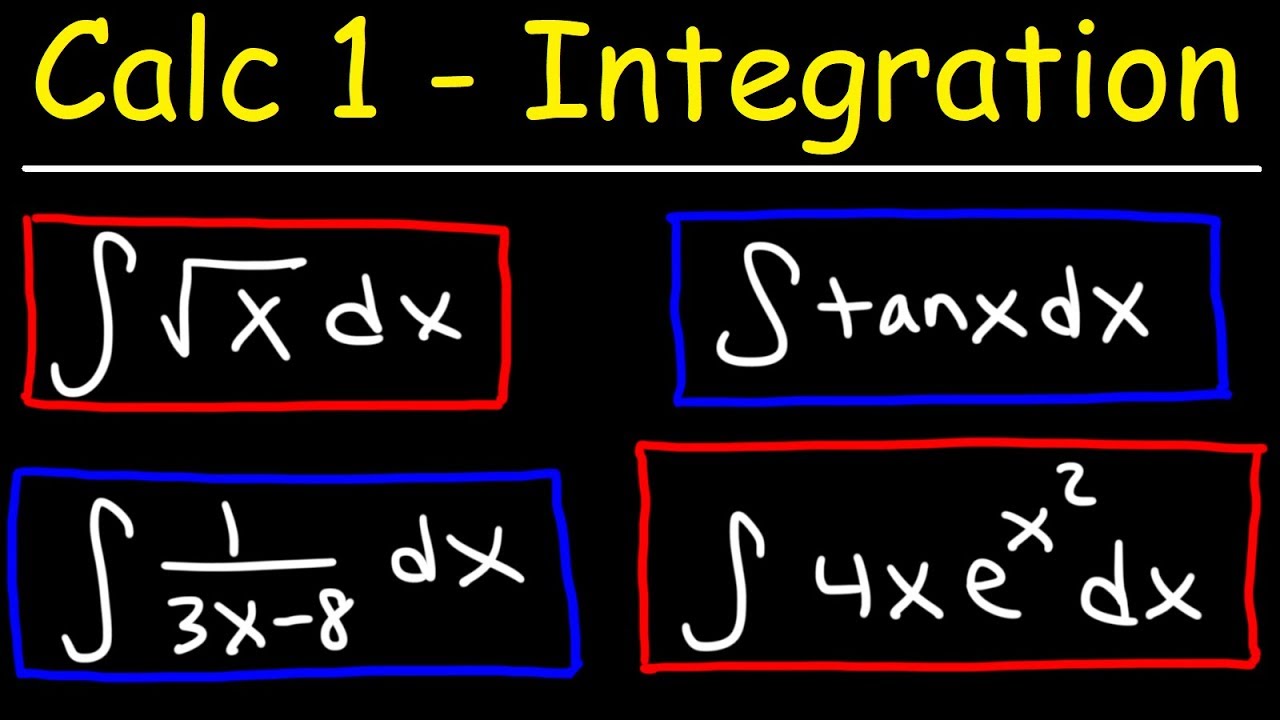
This calculus 1 video tutorial provides a basic introduction into integration. It explains how to find the antiderivative of many functions.
Full 1 Hour 13 Minute Video: https://www.patreon.com/MathScienceTutor
Direct Link to The Full Video:
https://bit.ly/3DUYLdO
_______________________________
Full 73 Minute Video on YouTube:
https://www.youtube.com/watch?v=HXbvkwvQG0U
Join The Membership Program:
https://bit.ly/46xaQTR
Here is a list of topics:
1. Power Rule of Integration
2. Antiderivative of Polynomial Functions
3. Integrating Square Root Functions
4. Antiderivatives of Rational Functions
5. Indefinite Integral of Exponential Functions
6. Integration By U-substitution
7. Definite Integral vs Indefinite Integral
8. Antiderivative of Trigonometric Functions
9. Integrating Logarithmic Functions
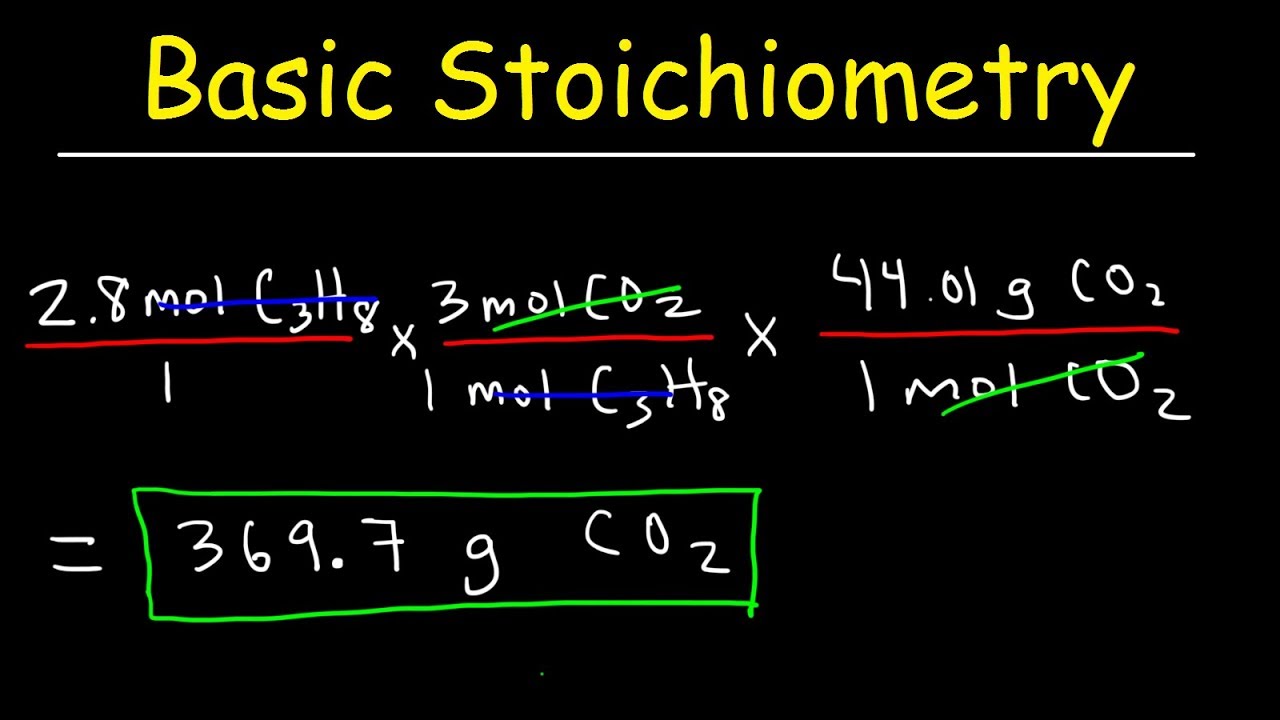
This chemistry video tutorial provides a basic introduction into stoichiometry. It contains mole to mole conversions, grams to grams and mole to gram dimensional analysis problems. It contains mole ratio practice problems as well as other examples. The molar ratio can be found using the cofficients of the balanced chemical equation. The conversion from moles to grams and grams to moles can be accomplished using the molar mass of the substance.
Introduction to Moles:
https://www.youtube.com/watch?v=EowJsC7phzw
How To Calculate The Molar Mass:
https://www.youtube.com/watch?v=c_zHROisdP4
How To Convert Grams to Moles:
https://www.youtube.com/watch?v=irYPta9G_sw
How To Convert Moles to Grams:
https://www.youtube.com/watch?v=Bj3fr5pEn7U
Moles to Atoms Conversion:
https://www.youtube.com/watch?v=mpHQZ1PrkUI
Grams to Molecules Conversion:
https://www.youtube.com/watch?v=Ch16s4kYH1Q
_________________________________
Grams to Atoms:
https://www.youtube.com/watch?v=RFCtPjZ4Vzk
Moles, Atoms, & Grams Conversions:
https://www.youtube.com/watch?v=i1EPgeu_fJ8
How To Balance Chemical Equations:
https://www.youtube.com/watch?v=iUARzSxcKzk
Stoichiometry - Basic Introduction:
https://www.youtube.com/watch?v=7Cfq0ilw7ps
Avogadro's Number:
https://www.youtube.com/watch?v=74-X94OP2XI
_________________________________
Limiting Reactant Problems:
https://www.youtube.com/watch?v=IWtkhAv4RTo
Excess Reactant Problems:
https://www.youtube.com/watch?v=-7UloVZFG00
Theoretical & Percent Yield:
https://www.youtube.com/watch?v=hhEfqa_x7RQ
Percent Yield - More Examples:
https://www.youtube.com/watch?v=w1njGAkc8og
Percent Error:
https://www.youtube.com/watch?v=JbEo46uV6d4
_________________________________
Percent Composition By Mass:
https://www.youtube.com/watch?v=bGmbyztdCHE
Empirical Formula Problems:
https://www.youtube.com/watch?v=JeSSucG-CVw
Empirical Formula - Hydrated Compounds:
https://www.youtube.com/watch?v=gl_QAO5y9Ig
Combustion Analysis:
https://www.youtube.com/watch?v=uvR7zNJ1KoI
Stoichiometry Practice Test:
https://www.youtube.com/watch?v=mP2Yg8alyR0
_______________________________________
Final Exams and Video Playlists:
https://www.video-tutor.net/
Full-Length Videos and Worksheets:
https://www.patreon.com/MathSc....ienceTutor/collectio

This organic chemistry video tutorial provides a basic introduction into naming organic compounds. It explains how to write the IUPAC nomenclature of alkanes. It covers the basic iupac rules such as numbering and writing the substituents in alphabetical order. It explains the importance of identifying the parent chain or the longest carbon chain as well as identifying the parent chain with highest number of substituents.
Access The Full 42 Minute Video:
https://www.patreon.com/MathScienceTutor
Direct Link to The Full Video:
https://bit.ly/3GURyOl
Organic Chemistry PDF Worksheets:
https://www.video-tutor.net/orgo-chem.html
_______________________________________
Join The YouTube Membership Program:
https://bit.ly/46xaQTR
Full 42 Minute Video on YouTube:
https://www.youtube.com/watch?v=tqn1drpHh4c
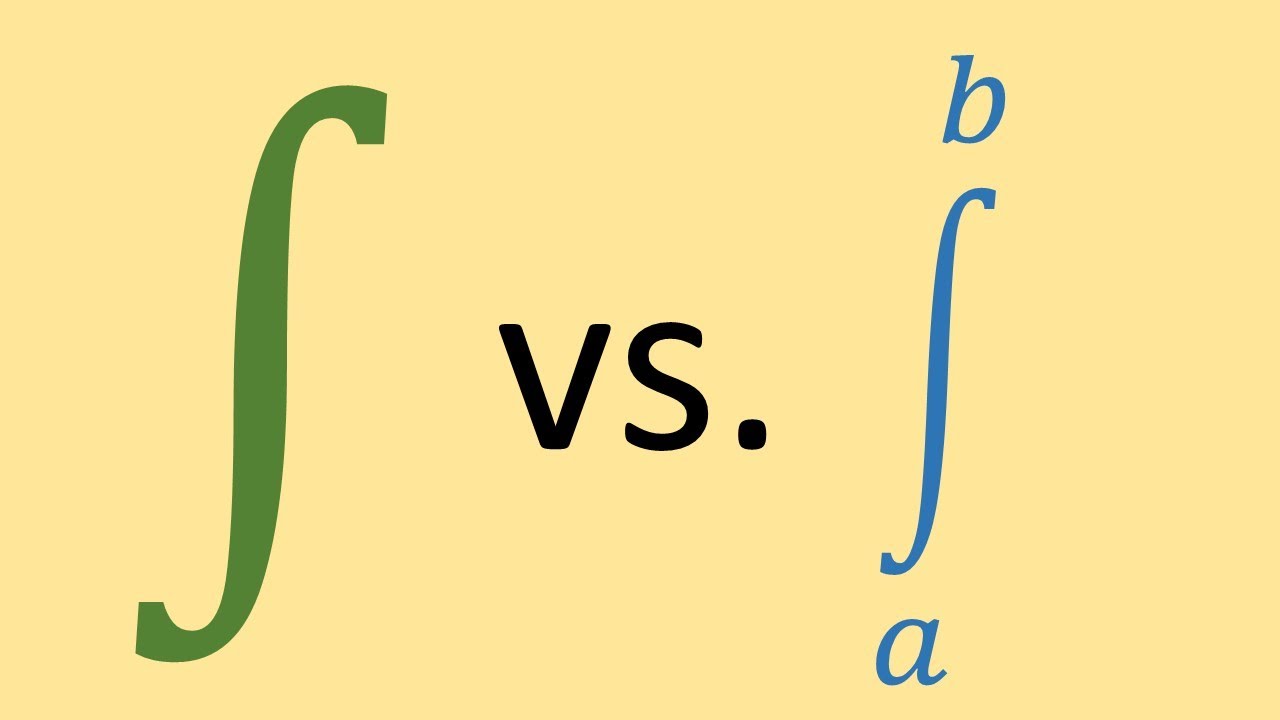
Indefinite and definite integral problems begin the same way but differ in how you interpret their results.
The result of an indefinite integral is a family of functions whereas a definite integral determines the area underneath the function you are integrating over the closed interval [a,b].
0:00 Introduction
0:21 Indefinite Integral
1:15 Definite Integral
2:53 Checking out examples on wolfram alpha
4:15 Review of definite vs indefinite integral results
#IndefiniteIntegral
#DefiniteIntegral
#AreaUnderCurve
#Calculus
#JoeCMath

Factor by grouping can be rather hard. Hopefully, after watching this video, you will feel a little more familiar with the process. It can be easy to mix up all of the different ways one can factor a quadratic expression, equation, or function.
Factor by grouping examples can be found in: "https://youtu.be/R-44aw7Wzv0"
#FactorByGrouping
#Process
#Algebra
0:00 Introduction
0:43 How to identify a, b, and c values
2:07 Splitting up the bx term
2:25 Factor by grouping example
6:21 Review of factor by grouping process
6:54 Takeaways
7:18 I'm Joe, and I'd like you to subscribe.
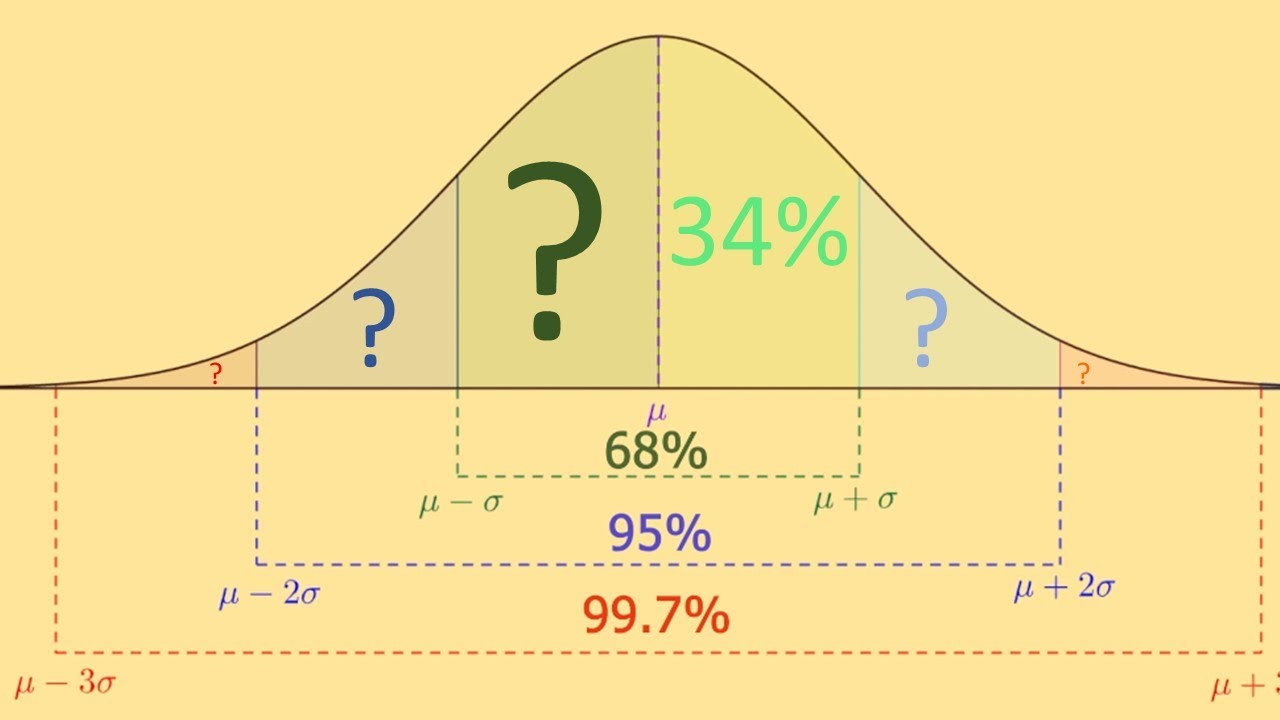
The 68 - 95 -99.7 Rule (Empirical Rule) lets us know approximately what percent of the normal distribution exists between the first, second, and third stand deviation of the mean, respectively.
Combining this information with the fact that the normal distribution is symmetric about the mean, we can calculate the percent of the distribution that falls between each standard deviation. This video reminds you how to come up with these percentages on the fly if all you can remember is the 68 - 95 -99.7 Rule (Empirical Rule).
Some images made using Geogebra.
0:00 Introduction
0:25 Percent between first standard deviation of the mean
0:57 Percent between second standard deviation of the mean
1:35 Percent between third standard deviation of the mean
2:01 Percent in tails to infinities
#standarddeviation
#normaldistribution
#joecmath
#statistics
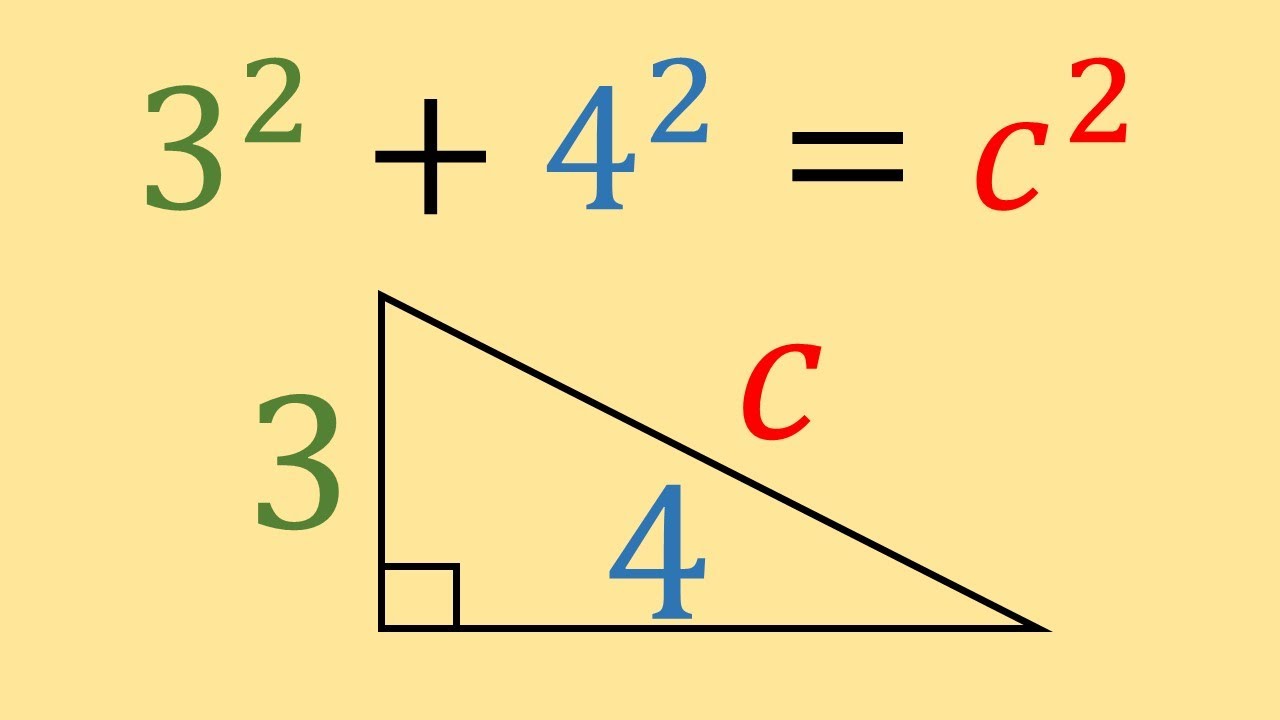
The Pythagorean Theorem relates the lengths of the sides of a right triangle with the following formula:
a^2+b^2=c^2
Where a and b are legs of the triangle and c is the hypotenuse.
#PythagoreanTheorem
#RightTriangle
#JoeCMath
#Trig
0:00 Intro
0:10 Define triangle sides and Pythagorean Theorem
0:50 Example 1
1:55 Example 2
3:23 Example 3
4:00 Example 4
4:48 3 types of problems and their solutions formula
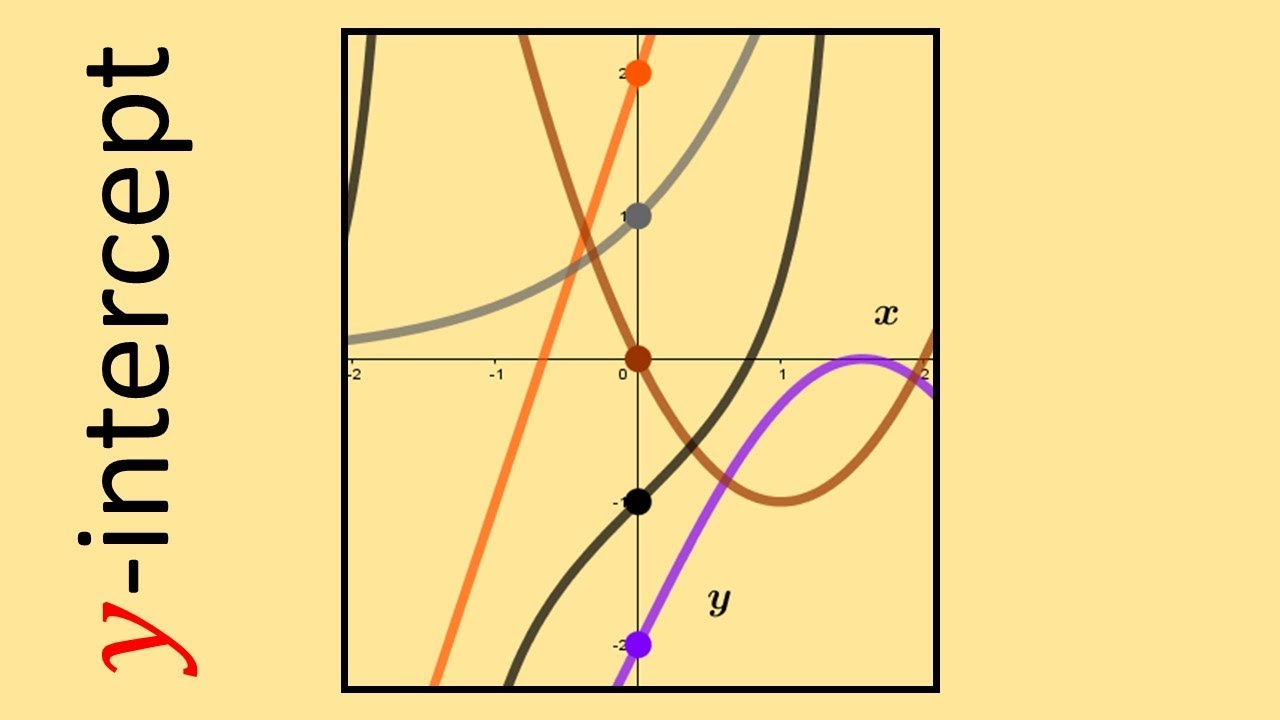
Finding the y-intercept of a function is easy if you are given the graph, but how do you find it if you are given only a function in a single variable?
Some images made using Geogebra.
#y-intercept
#Findy-int
#JoeCMath
#y-int
#verticalintercept
#yint
0:00 Introduction
0:08 Finding the y-intercept when given the graph
1:40 Steps to find the y-intercept of a function
2:45 What? No unnecessary math outro?
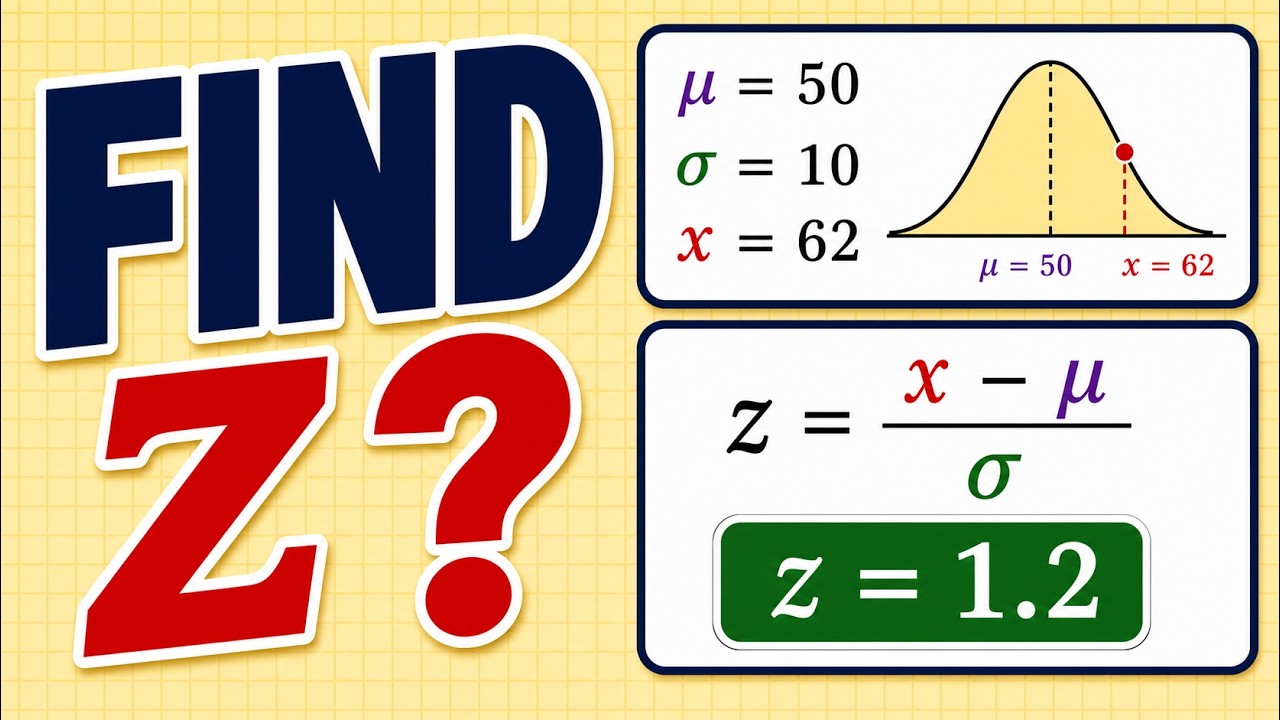
z-scores are helpful because they allow us to make inferences about any normal distribution by converting points or values of interest to a value, z, in the standard normal distribution (mean is zero and standard deviation is one).
We can use a z-table to look up z-scores and determine the percent of the distribution above or below the z-score and then relate it back to the distribution we start with.
Also, z-scores are a measure of how many standard distributions a number is away from the mean.
Images used in this video were created using GeoGebra.
0:00 The value of z-scores
0:47 Area under distribution example
2:39 Standard deviation measurement example
3:35 Summary of two topics in video
#zscore
#normaldistribution
#statistics
#joecmath

Thousands of parents and educators are turning to the kids’ learning app that makes real learning truly fun. Try Kids Academy with
3-day FREE TRIAL! https://bit.ly/2GuGyL2
Welcome back to the Kids Academy channel. Little Red Riding Hood is a classic bedtime story about the little girl and her trip from mother's house to granny. The story revolves around a girl called Little Red Riding Hood. The girl walks through the woods to deliver food to her sickly grandmother.
A Big Bad Wolf wants to eat the girl and the food in the basket. He secretly stalks her behind trees, bushes, shrubs, and patches of little and tall grass. He approaches Little Red Riding Hood, and she naively tells him where she is going. He suggests that the girl pick some flowers, which she does. In the meantime, he goes to the grandmother's house and gains entry by pretending to be the girl. He swallows the grandmother whole and waits for the girl, disguised as the grandma.
Smash like button and share this video!
Subscribe to our channel: https://goo.gl/iG2Bdr
Connect with us on :
Facebook: https://www.facebook.com/KidsAcademyC...
Twitter: https://twitter.com/KidsAcademyCo
App Store: https://smart.link/59833db06a6b8
Google Play: https://smart.link/5a1bea3272481
Our website: https://www.kidsacademy.mobi/
Once there was a sweet little girl. She was very pretty, and everyone loved her. She lived with her mother. Her mother gave her a lot of presents all the time. Once she made a little red riding hood from a piece of velvet. It was a very pretty hood and the little girl looked very pretty when she wore it. She loved the hood so much that she wore it all the time and did not wear anything else. As she always wore the red riding hood she was given the name of Little Red Riding Hood.
One day her mother baked some cakes for her mother. She gave the cakes to Little Red Riding Hood and asked her to deliver them to her grandmother’s. Her grandmother lived on the other side of the forest in another village. Her mother advised the Little Red Riding Hood to go on the straight path and do not wander in the forest as it was very dangerous to go in there alone.
Little Red Riding Hood took the cakes and started her journey to her grandmother’s house. While she was on her way and was passing through the woods, a wolf saw her. The wolf’s mouth filled with water and he wanted to eat her immediately. However, he was afraid of the woodcutters working nearby. Little Red Riding Hood was unaware of his wickedness and how dangerous he was. She was not all afraid of him. The wolf came up with a very cunning plan to eat Little Red Riding Hood.
He greeted Little Red Riding Hood and asked her where she was going. Little Red Riding Hood was very sweet, and she told him that he was going to her grandmother’s house who lived on the other side of the forest. The wolf was very cunning. He knew the shortcut way to the grandmother’s house. As soon as he knew that Little Red Riding Hood was going to her grandmother’s house, he ran as fast as he could to reach there before the little girl. Little Red Riding Hood, however, continued on her normal path.
As she was passing through the woods she saw some beautiful and very colorful flowers on the ground. She wanted to make her grandmother very happy, so she decided to make a bouquet of the flowers for her. She thought that her grandmother would feel very happy after seeing the flowers. She started picking flowers, however as she kept on picking up the flowers she kept on going further and further into the woods. She did not realize that she was going deep into the forest and it was very dangerous.
This gave the wolf even more time to reach the grandmother’s house before her. When the wolf reached the house, he knocked on the door. The grandmother was old and seemed sick. She couldn’t come to the door, so she asked from inside who was at the door. The clever wolf replied in Little Red Riding Hood voice that it was her grandchild, Little Red Riding Hood. The grandmother could not sense that it was someone else, she told him to come in as the door was not locked.
The wolf immediately entered the house and went straight to the grandmother’s bed and ate her up. Then he carried out the next part of his plan as he still wanted to eat Little Red Riding Hood. He took the grandmother’s clothes, wore her cap and laid down in her bed. He also dropped the curtains so that Little Red Riding Hood does not recognize him.
After some time, Little Red Riding Hood arrived at her grandmother’s house and knocked at the door. The wolf now used her grandmother’s voice to ask who was on the door. The sweet little girl replied that it was her and that she had brought the cakes and butter that her mother had made for her in the morning. The wolf very cleverly said to Little Red Riding Hood that the door was open, and she could come in. The little girl went into the house, not knowing the danger that laid ahead of her.
Subscribe to our channel: https://goo.gl/iG2Bdr
#kidsacademy #LearnWithKidsAcademy
Connect with us on :
App Store: https://apps.apple.com/app/apple-store/id543851593
Google Play: https://play.google.com/store/....apps/details?id=air.
Our website: http://www.kidsacademy.mobi
Instagram: https://www.instagram.com/kidsacademyco
Facebook: https://www.facebook.com/KidsAcademyCompany

It's Kids Academy, and welcome back to our channel! In this educational video for kids, we will learn letters e, f, g and h. Your child can easily memorise letters E to H using our examples. It's ideal for preschool and kindergarten. Stay tuned!
Subscribe to our channel: https://goo.gl/iG2Bdr
#kidsacademy #LearnWithKidsAcademy
Connect with us on :
App Store: https://apps.apple.com/app/apple-store/id543851593
Google Play: https://play.google.com/store/....apps/details?id=air.
Our website: http://www.kidsacademy.mobi
Instagram: https://www.instagram.com/kidsacademyco
Facebook: https://www.facebook.com/KidsAcademyCompany

It's Kids Academy, and welcome back to our channel! In this video, you will learn the letter D. This phonics lesson will teach your kids all about the letter D and its sound. Let's learn some words with the letter D and have fun! Enjoy your viewing!
Try Kids Academy now! Enjoy our special Cyber Week offer. The price was 75% higher! https://clck.ru/YuJaw
Subscribe to our channel: https://goo.gl/iG2Bdr
*****
Connect with us on :
App Store: https://smart.link/59833db06a6b8
Google Play: https://smart.link/597210af6eb83
Our website: http://www.kidsacademy.mobi
Facebook: https://www.facebook.com/KidsAcademyCompany
Twitter: https://twitter.com/KidsAcademyCo
Thousands of parents and educators are turning to the kids’ learning app that makes real learning truly fun. Try Kids Academy with
3-day FREE TRIAL! https://bit.ly/2GuGyL2
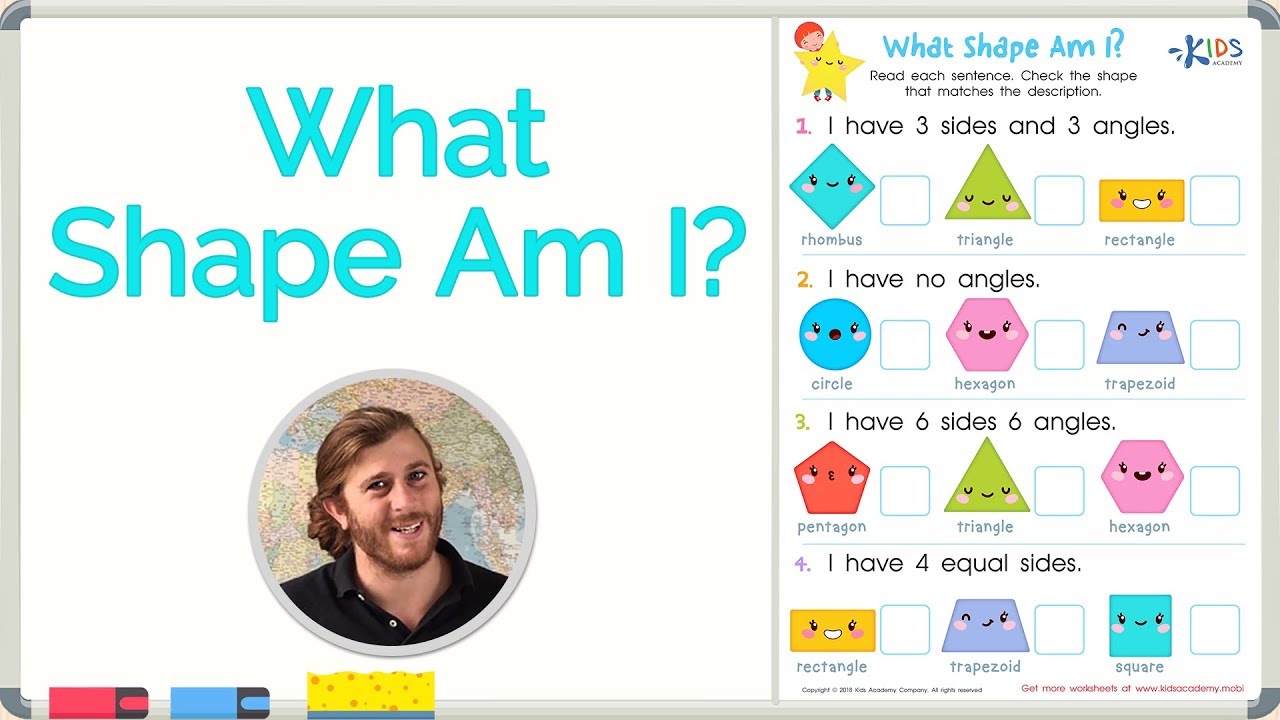
Learn Sides and Shapes | Math for Kids | Geometry | Kids Academy
A shape is defined as the form or the outline of an object. It can also be defined as the boundary of an object and the kind of pattern it follows. It is a basic property of every object just like its other properties like color, texture, size etc.
Different objects follow different patterns of these boundaries. These patterns have been given different names. Shapes for kids is a very important lesson, so we have made this educational video for kids.
For example, a pattern which has four equal sides is referred to as a square. A pattern with round is referred to a circle. Similarly, there are other shapes like a rectangle, triangle, cone etc. Each object is categized based on its shape. These shapes have been made for the understanding of man and to make a sense out of things. Every object in this universe has a shape just like earth is a sphere and a ball is a circle.
App Store: https://smart.link/59833db06a6b8
Google Play: https://smart.link/597210af6eb83
*****
Subscribe to our channel: https://goo.gl/iG2Bdr
Connect with us on :
Our site: https://www.kidsacademy.mobi/
Facebook: https://www.facebook.com/KidsAcademyCompany
Twitter: https://twitter.com/KidsAcademyCo
Thousands of parents and educators are turning to the kids’ learning app that makes real learning truly fun. Try Kids Academy with
3-day FREE TRIAL! https://bit.ly/2GuGyL2
Developing logic for kids is an essential skill because children who think logically are more likely to have successful learning experiences in school. Logical thinking allows children to make better decisions, solve problems and even think more creatively. A great way to develop logical thinking in your children is to encourage critical thinking. Teachers and parents that provide activities such as matching games, asking open-ended questions and discussing objects that fit together foster these critical thinking skills for their children and students. Activities that develop logic for kids are great exercise for the brain!
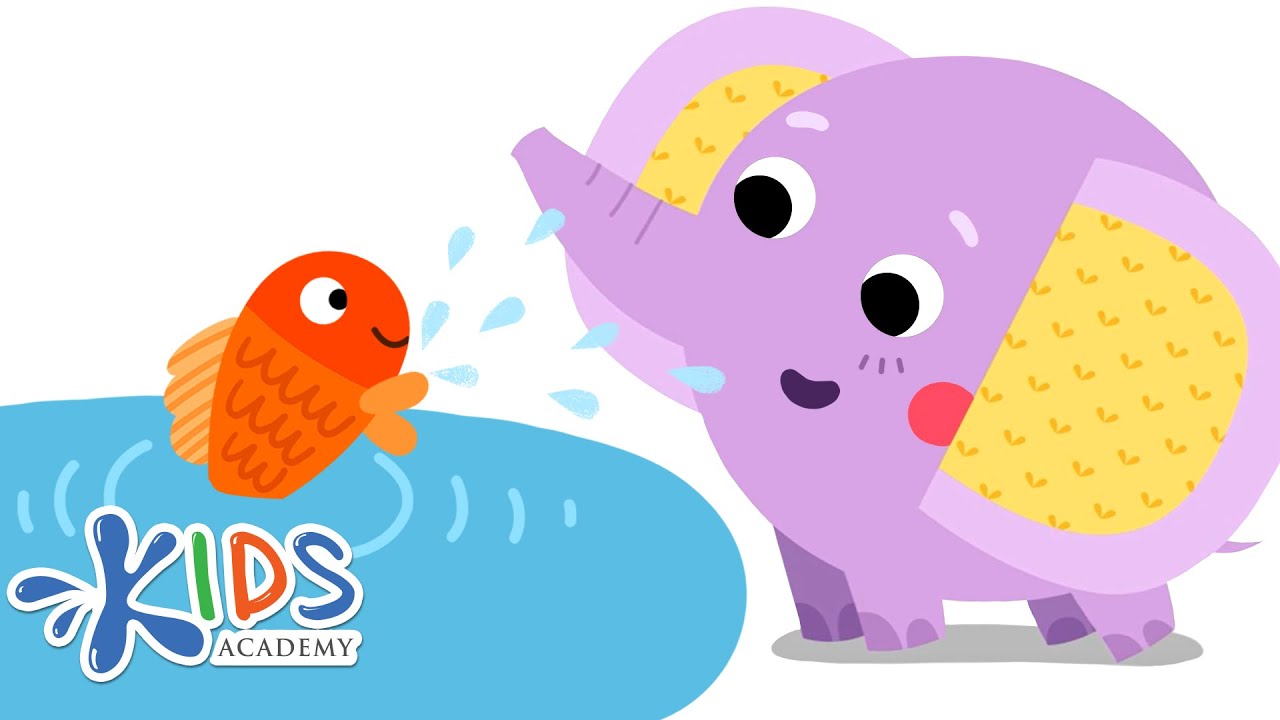
This video begins with an explanation of what “objects that fit together” means. The example of a fish and water is given. A fish and water go together because a fish lives in water. But a cat and water would not fit together because cats don’t like to be wet. Another example given is wheels and cars. As the video continues, more examples such as shirts and pants, heads and caps, trees and leaves and rain and umbrellas further explain this type of matching for kids. At the end, the video challenges students to think of more objects that fit together. Other examples could include:
• A lock and a key
• A computer and a mouse
• A toothbrush and toothpaste
• A dog and a bone
Use this video to increase critical thinking and develop logic for your students. Teachers can also extend learning by discussing why objects fit together. This adds the benefit of teaching children reasoning skills as well as furthering their speech and language development. Teachers and parents find that this video is appealing to young students because the length of the lesson is perfect for young students and the instruction is clear and child-friendly. The animation is fun and engaging and keeps early learners’ attention. This video is a great resource for classes of young learners.
Subscribe to our channel: https://goo.gl/iG2Bdr
#TalentedAndGifted #LearnWithKidsAcademy
Kids Academy Talented and Gifted Program for kids aged 2-10:
*****
Connect with us on :
App Store: https://smart.link/59833db06a6b8
Google Play: https://smart.link/597210af6eb83
Our website: http://www.kidsacademy.mobi
Facebook: https://www.facebook.com/KidsAcademyCompany
Twitter: https://twitter.com/KidsAcademyCo

Thousands of parents and educators are turning to the kids’ learning app that makes real learning truly fun. Try Kids Academy with
3-day FREE TRIAL! https://bit.ly/2GuGyL2
Learn colors for Kids | Red Color | Kids Academy
If your child has now reached that stage when he is supposed to start learning about colors and differentiating them then you need to start teaching him with the basics. You see, there are so many colors out there and you cannot expect your child to pick on all the colors at the same time, right? Well, this is the reason why the wiser thing to do is to first start with the basic colors that are red, blue, yellow and green.
These colors are easier to learn and well, this is where everyone takes the start. Now, speaking of teaching colors, let’s suppose you want to tell your child about the color “blue”. Now, what exact measures and steps will you take to make him understand which color is the “blue” color? Well, if you don’t know then here’s what you need to do. You need to use visuals to make your little one memorize the color blue.
You can use different DIY games, you can use different cloths and you can use different hand painting games to make your child understand which color is the blue color. Not only this, in fact, you now have the access to Youtube which is great because you can make your child watch some Youtube videos where there are animations and different tools used to teach kids about the blue color.
It’s important for you as a parent or a teacher to participate in different activities and come up with interesting games to play with the children. It’s all about initiating that one spark in your child to make him learn things and the same rule applies to you when you have to teach him about the color blue.
Subscribe to our channel: https://goo.gl/iG2Bdr
#TalentedAndGifted #LearnWithKidsAcademy
Kids Academy Talented and Gifted Program for kids aged 2-10:
*****
Connect with us on :
App Store: https://smart.link/59833db06a6b8
Google Play: https://smart.link/597210af6eb83
Our website: http://www.kidsacademy.mobi
Facebook: https://www.facebook.com/KidsAcademyC...
Twitter: https://twitter.com/KidsAcademyCo

Thousands of parents and educators are turning to the kids’ learning app that makes real learning truly fun. Try Kids Academy with
3-day FREE TRIAL! https://bit.ly/2GuGyL2
Teach your kids how to count by twos together with Cloee. Today Cloee is going to bake a yummy cherry pie. She needs 30 cherries for it. Let’s help Cloee and learn how to skip count to 30! Watch this catchy video together with your little ones and get the best of educational methods from behind the screen of laptops, phones or tablets.
Subscribe to our channel: https://goo.gl/iG2Bdr
Connect with us on :
Our website: https://www.kidsacademy.mobi
Facebook: https://www.facebook.com/KidsAcademyCompany
Twitter: https://twitter.com/KidsAcademyCo