Лучшие видеоролики

WEBSITE: http://www.teachertube.com Help students understand division and place value by modeling distribution of Kidspiration Base Ten Blocks into equal groups. Download a free trial of Kidspiration at www.inspiration.com/Freetrial/tt
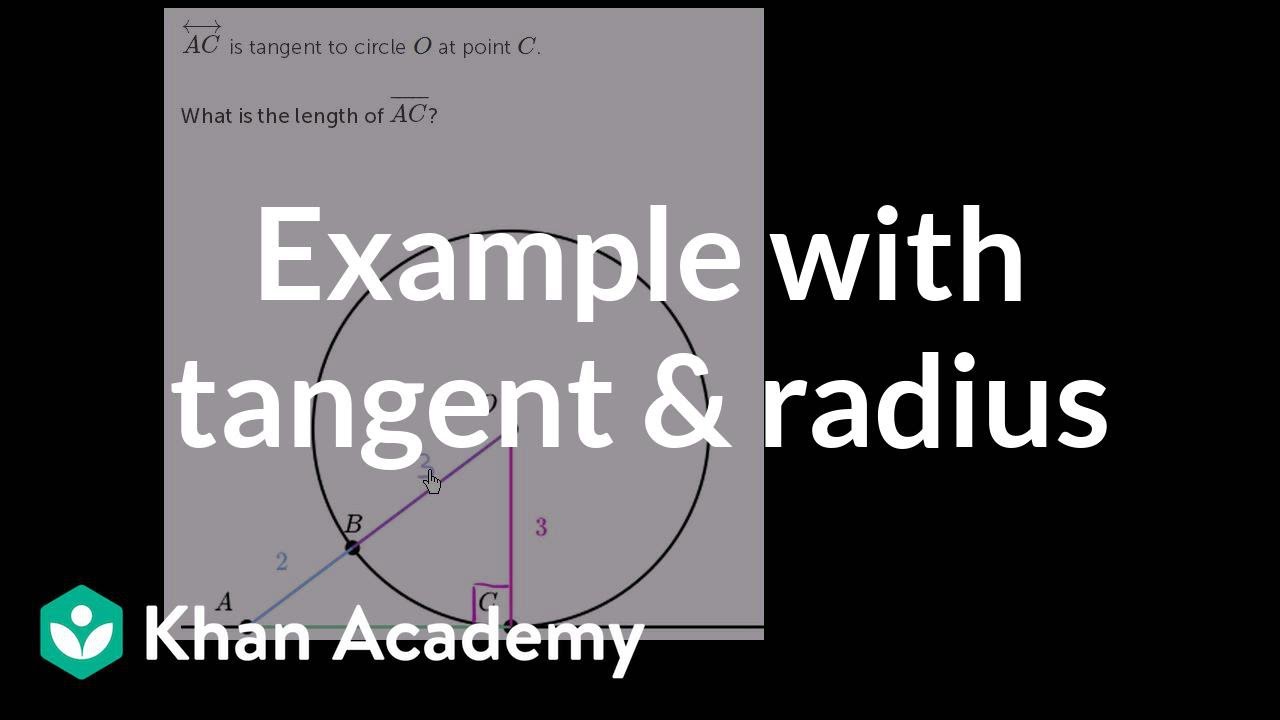
Practice this lesson yourself on KhanAcademy.org right now:
https://www.khanacademy.org/math/geometry/cc-geometry-circles/central-inscribed-circumscribed/e/central--inscribed--and-circumscribed-angles?utm_source=YT&utm_medium=Desc&utm_campaign=Geometry
Watch the next lesson: https://www.khanacademy.org/math/geometry/cc-geometry-circles/central-inscribed-circumscribed/v/hypotenuse-of-right-triangle-inscribed-in-circle?utm_source=YT&utm_medium=Desc&utm_campaign=Geometry
Missed the previous lesson?
https://www.khanacademy.org/math/geometry/cc-geometry-circles/central-inscribed-circumscribed/v/measure-of-circumscribed-angle?utm_source=YT&utm_medium=Desc&utm_campaign=Geometry
Geometry on Khan Academy: We are surrounded by space. And that space contains lots of things. And these things have shapes. In geometry we are concerned with the nature of these shapes, how we define them, and what they teach us about the world at large--from math to architecture to biology to astronomy (and everything in between). Learning geometry is about more than just taking your medicine ("It's good for you!"), it's at the core of everything that exists--including you. Having said all that, some of the specific topics we'll cover include angles, intersecting lines, right triangles, perimeter, area, volume, circles, triangles, quadrilaterals, analytic geometry, and geometric constructions. Wow. That's a lot. To summarize: it's difficult to imagine any area of math that is more widely used than geometry.
About Khan Academy: Khan Academy offers practice exercises, instructional videos, and a personalized learning dashboard that empower learners to study at their own pace in and outside of the classroom. We tackle math, science, computer programming, history, art history, economics, and more. Our math missions guide learners from kindergarten to calculus using state-of-the-art, adaptive technology that identifies strengths and learning gaps. We've also partnered with institutions like NASA, The Museum of Modern Art, The California Academy of Sciences, and MIT to offer specialized content.
For free. For everyone. Forever. #YouCanLearnAnything
Subscribe to Khan Academy’s Geometry channel:
https://www.youtube.com/channe....l/UCD3OtKxPRUFw8kzYl
Subscribe to Khan Academy: https://www.youtube.com/subscr....iption_center?add_us
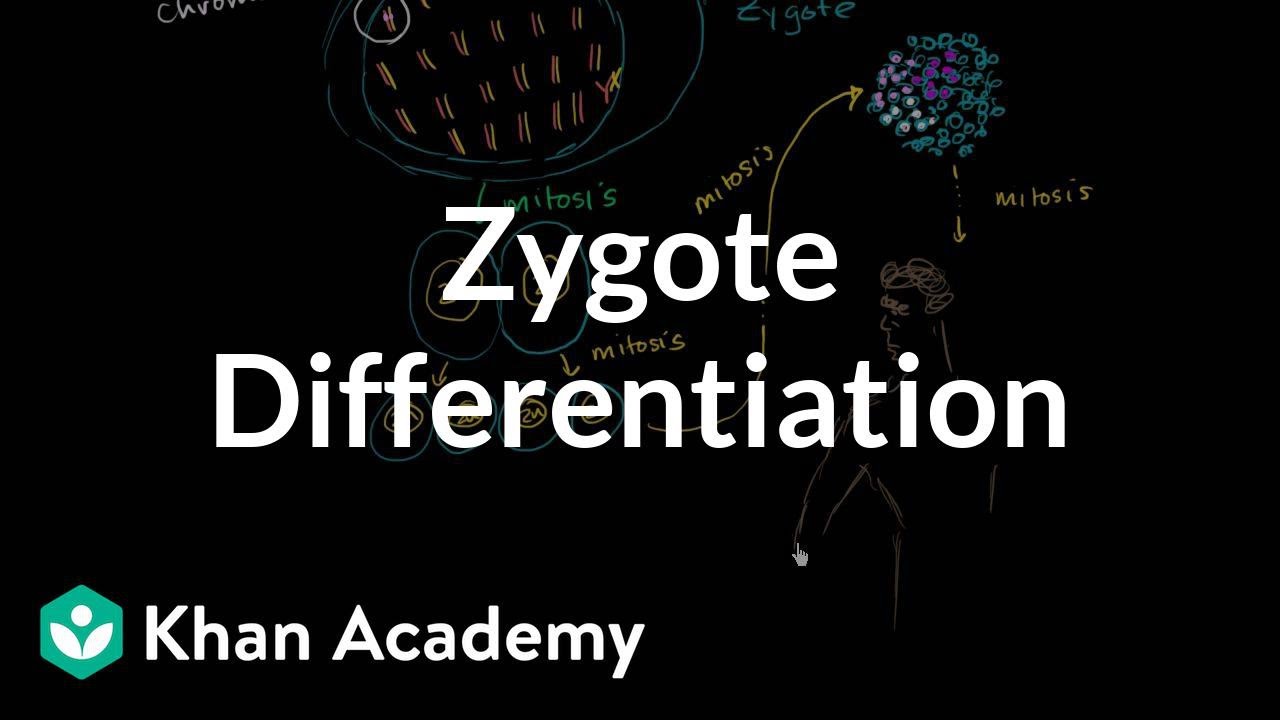
Learn how a zygote, the single cell produced by fertilization, divides by mitosis to produce all the tissues of the human body (including germ cells, which can undergo meiosis to make sperm and eggs). Created by Sal Khan.
Watch the next lesson: https://www.khanacademy.org/test-prep/mcat/cells/cellular-division/v/interphase?utm_source=YT&utm_medium=Desc&utm_campaign=mcat
Missed the previous lesson? https://www.khanacademy.org/test-prep/mcat/cells/cellular-division/v/fertilization-haploid-diploid-gamete-zygote-homologous?utm_source=YT&utm_medium=Desc&utm_campaign=mcat
MCAT on Khan Academy: Go ahead and practice some passage-based questions!
About Khan Academy: Khan Academy offers practice exercises, instructional videos, and a personalized learning dashboard that empower learners to study at their own pace in and outside of the classroom. We tackle math, science, computer programming, history, art history, economics, and more. Our math missions guide learners from kindergarten to calculus using state-of-the-art, adaptive technology that identifies strengths and learning gaps. We've also partnered with institutions like NASA, The Museum of Modern Art, The California Academy of Sciences, and MIT to offer specialized content.
For free. For everyone. Forever. #YouCanLearnAnything
Subscribe to Khan Academy’s MCAT channel: https://www.youtube.com/channe....l/UCDkK5wqSuwDlJ3_nl
Subscribe to Khan Academy: https://www.youtube.com/subscr....iption_center?add_us

Practice Your Spanish With Chateo - a Spanish-speaking chatbot! | Get a discount off your first 6 months with code CHATEOBOT | Sign up at: https://www.senorjordan.com/chat
~~~~~~~~~~~~~~~~~~~~~~~~~~~~~~
Listen to this song and others on the go on soundcloud!
https://soundcloud.com/senorjordanspanish
~~~~~~~~~~~~~~~~~~~~~~~~~~~~~~
SUBSCRIBE for more Spanish videos: http://bit.ly/XGe7we
and make sure to click the notification bell!
Follow me on Facebook: https://www.facebook.com/srjordanspanish
Tweet me: https://twitter.com/senorjordan
Check out my website: http://www.senorjordan.com
Follow me on Instagram: @senorjordanvideos
Listen to my music on Soundcloud:
https://soundcloud.com/senorjordanspanish
Listen to my music on Spotify:
https://open.spotify.com/artis....t/2nyJ9GgLNMckXCuBHU
Buy my songs on iTunes:
https://music.apple.com/us/artist/1621526948
Buy my songs on Amazon:
https://www.amazon.com/music/p....layer/artists/B09Z35
Donate to my video-making project:
https://paypal.me/srjordanvideos?country.x=US&locale.x=en_US
~~~~~~~~~~~~~~~~~~~~~~~~~~~~~~
*In the chart, the él/ella/usted form shouldn't have an accent mark on the "io" form since ver = vio and dar = dio.
(although in archaic Spanish, they did have accent marks!)
This is one of my most popular videos of all time! And I recently stumbled across the raw video, which I recorded in High Definition but didn't have a computer able to handle the editing of it as HD video at the time!
And I thought I would fix the sound and make it come through both speakers as well as polish the graphics a little bit!
So enjoy the video that you've probably already seen IN HD!
I didn't write it. It's pretty awesome though.
Rate this video if it was helpful!
For more free Spanish video lessons, word banks and verb conjugation charts, visit http://www.senorjordan.com
For extensive preterite sheet and song:
http://www.senorjordan.com/preterite-sheet/
Thanks for watching!
Courses on Khan Academy are always 100% free. Start practicing—and saving your progress—now: https://www.khanacademy.org/ec....onomics-finance-doma
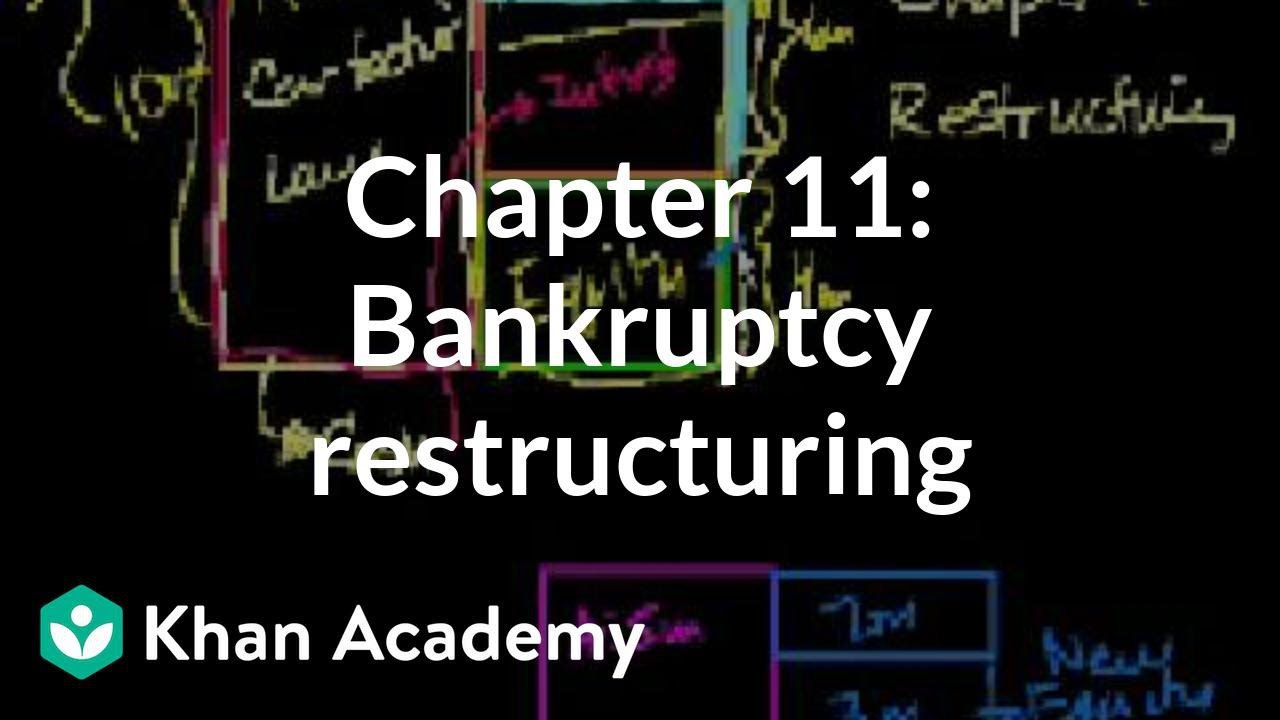
Chapter 11: Restructuring through a bankruptcy. Created by Sal Khan.
Watch the next lesson:
https://www.khanacademy.org/economics-finance-domain/core-finance/stock-and-bonds/dilution-tutorial/v/stock-dilution?utm_source=YT&utm_medium=Desc&utm_campaign=financeandcapitalmarkets
Missed the previous lesson? Watch here: https://www.khanacademy.org/economics-finance-domain/core-finance/stock-and-bonds/venture-capital-and-capital-markets/v/chapter-7-bankruptcy-liquidation?utm_source=YT&utm_medium=Desc&utm_campaign=financeandcapitalmarkets
Finance and capital markets on Khan Academy: This is an old set of videos, but if you put up with Sal's messy handwriting (it has since improved) and spotty sound, there is a lot to be learned here. In particular, this tutorial walks through starting, financing and taking public a company (and even talks about what happens if it has trouble paying its debts).
About Khan Academy: Khan Academy offers practice exercises, instructional videos, and a personalized learning dashboard that empower learners to study at their own pace in and outside of the classroom. We tackle math, science, computer programming, history, art history, economics, and more. Our math missions guide learners from kindergarten to calculus using state-of-the-art, adaptive technology that identifies strengths and learning gaps. We've also partnered with institutions like NASA, The Museum of Modern Art, The California Academy of Sciences, and MIT to offer specialized content.
For free. For everyone. Forever. #YouCanLearnAnything
Subscribe to Khan Academy’s Finance and Capital Markets channel: https://www.youtube.com/channe....l/UCQ1Rt02HirUvBK2D2
Subscribe to Khan Academy: https://www.youtube.com/subscr....iption_center?add_us

What is a fish? If you're not sure, in this video for kids, we will learn all about fish! We start by identifying the important characteristics of fish like being vertebrates, being cold-blooding, having gills, etc. We then look into the different classes of fish (Jawless, Bony, Cartilaginous) Last but not least we have fun as we learn about all different types of fish, different parts of the fish, what they eat, how they breath, where they live, and so much more.
If you enjoy this video we invite you to download our free 12 page lesson plan on fish for grades 1-3. This lesson plan is complete with worksheets, more fish content pages, quizzes, activities and more!
Download here: https://learnbright.org/lesson....s/science/types-of-f
Check out some of our other fish-related videos here:
Sharks: https://youtu.be/kl9qJMpoYqs
Thank you for watching and learning with us! We’re constantly releasing new content and videos, so click that “Subscribe” button and you’ll get notified.
Find and Follow Us Online:
Facebook: https://www.facebook.com/LearnBright/
Instagram: https://instagram.com/LearnBrightEducation
Pinterest: https://pinterest.com/LearnBrightEducation
YouTube: https://www.youtube.com/LearnBright
Website: https://learnbright.org/
*Teachers and Parents! Did you know? In addition to these great videos, we have also created a library of high quality and engaging lessons for your elementary aged student(s). Visit us, sign up for a free account, and instantly you'll have access to thousands of lesson plans, learning materials, teaching instructions, activities, and assignments that your kids will really enjoy! We hope to see you soon!
Browse our entire collection of Science lesson plans: https://learnbright.org/lessons/?filter_subject=science
#AllAboutFishForKids
#Fish #WhatIsAFish

WEBSITE: http://www.teachertube.com Developing Mathematical Thinkers DMT two digit subtraction strategies from the second grade team.

SUBSCRIBE for more Spanish videos: http://bit.ly/XGe7we
and make sure to click the notification bell!
Follow me on Facebook: https://www.facebook.com/srjordanspanish
Tweet me: https://twitter.com/senorjordan
Check out my website: http://www.senorjordan.com
Follow me on Instagram: @senorjordanvideos
Listen to my music on Soundcloud:
https://soundcloud.com/senorjordanspanish
Listen to my music on Spotify:
https://open.spotify.com/artis....t/2nyJ9GgLNMckXCuBHU
Buy my songs on iTunes:
https://music.apple.com/us/artist/1621526948
Buy my songs on Amazon:
https://www.amazon.com/music/p....layer/artists/B09Z35
Donate to my video-making project:
https://paypal.me/srjordanvideos?country.x=US&locale.x=en_US
~~~~~~~~~~~~~~~~~~~~~~~~~~~~~~
Here are some real tweets from Twitter to help you practice your Spanish!
Practice Your Spanish With Chateo - a Spanish-speaking chatbot! | Get a discount off your first 6 months with code CHATEOBOT | Sign up at: https://www.senorjordan.com/chat
~~~~~~~~~~~~~~~~~~~~~~~~~~~~~~
SUBSCRIBE for more Spanish videos: http://bit.ly/XGe7we
and make sure to click the notification bell!
Follow me on Facebook: https://www.facebook.com/srjordanspanish
Tweet me: https://twitter.com/senorjordan
Check out my website: http://www.senorjordan.com
Follow me on Instagram: @senorjordanvideos
Listen to my music on Soundcloud:
https://soundcloud.com/senorjordanspanish
Listen to my music on Spotify:
https://open.spotify.com/artis....t/2nyJ9GgLNMckXCuBHU
Buy my songs on iTunes:
https://music.apple.com/us/artist/1621526948
Buy my songs on Amazon:
https://www.amazon.com/music/p....layer/artists/B09Z35
Donate to my video-making project:
https://paypal.me/srjordanvideos?country.x=US&locale.x=en_US
~~~~~~~~~~~~~~~~~~~~~~~~~~~~~~
TeacherTube User: Asemonco
TeacherTube URL: http://www.teachertube.com/vie....wVideo.php?video_id=
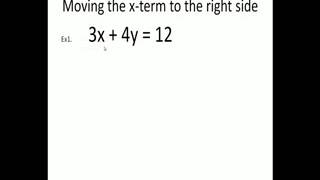
This is a math video lesson to help you with new math, math tricks, and or simple math questions you may have.

Adding and Subtracting Money - Math Lessons For Kids is a great resource for kids to start learning about money. Kids will start handling money at very young ages so it is important to help them learn how to add money and subtract money.
In this quick adding money overview video your child will learn how to deduct or add to the money in their piggy bank :)
You may also enjoy our detailed lesson plan with real-life problems, worksheets, practice sheets and more! You can find that here: https://learnbright.org/lesson....s/math/add-subtract-
Thank you for watching and learning with us! We’re constantly releasing new content and videos so click that “Subscribe” button and you’ll notified.
Find and Follow Us Online:
Facebook: https://www.facebook.com/LearnBright/
Instagram: https://instagram.com/LearnBrightEducation
Pinterest: https://pinterest.com/LearnBrightEducation
YouTube: https://www.youtube.com/LearnBright
Website: https://learnbright.org/
*Teachers and Parents! Did you know? In addition to these great videos, we have also created a library of high quality and engaging lessons for your elementary aged student(s). Visit us, sign up for a free account, and instantly you'll have access to thousands of lesson plans, learning materials, teaching instructions, activities, and assignments that your kids will really enjoy! We hope to see you soon!
Browse our entire collection of Math lesson plans:
https://learnbright.org/lessons/?filter_subject=math
#ASL
#AddingAndSubtractingMoney
#MoneyForKids
Courses on Khan Academy are always 100% free. Start practicing—and saving your progress—now: https://www.khanacademy.org/ma....th/multivariable-cal
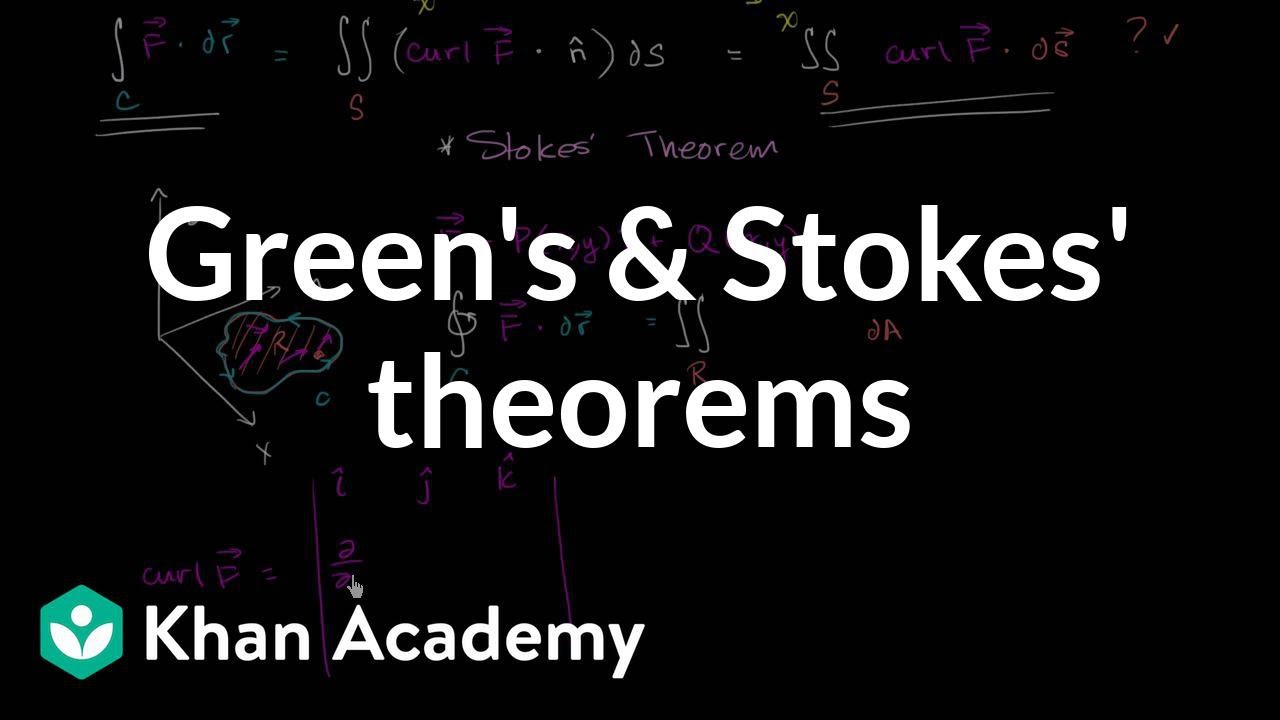
Seeing that Green's Theorem is just a special case of Stokes' Theorem
Watch the next lesson: https://www.khanacademy.org/math/multivariable-calculus/surface-integrals/stokes_theorem/v/orienting-boundary-with-surface?utm_source=YT&utm_medium=Desc&utm_campaign=MultivariableCalculus
Missed the previous lesson?
https://www.khanacademy.org/math/multivariable-calculus/surface-integrals/stokes_theorem/v/stokes-theorem-intuition?utm_source=YT&utm_medium=Desc&utm_campaign=MultivariableCalculus
Multivariable Calculus on Khan Academy: Think calculus. Then think algebra II and working with two variables in a single equation. Now generalize and combine these two mathematical concepts, and you begin to see some of what Multivariable calculus entails, only now include multi dimensional thinking. Typical concepts or operations may include: limits and continuity, partial differentiation, multiple integration, scalar functions, and fundamental theorem of calculus in multiple dimensions.
About Khan Academy: Khan Academy offers practice exercises, instructional videos, and a personalized learning dashboard that empower learners to study at their own pace in and outside of the classroom. We tackle math, science, computer programming, history, art history, economics, and more. Our math missions guide learners from kindergarten to calculus using state-of-the-art, adaptive technology that identifies strengths and learning gaps. We've also partnered with institutions like NASA, The Museum of Modern Art, The California Academy of Sciences, and MIT to offer specialized content.
For free. For everyone. Forever. #YouCanLearnAnything
Subscribe to KhanAcademy’s Multivariable Calculus channel:
https://www.youtube.com/channe....l/UCQQZDc22yCogOyx6D
Subscribe to KhanAcademy: https://www.youtube.com/subscr....iption_center?add_us
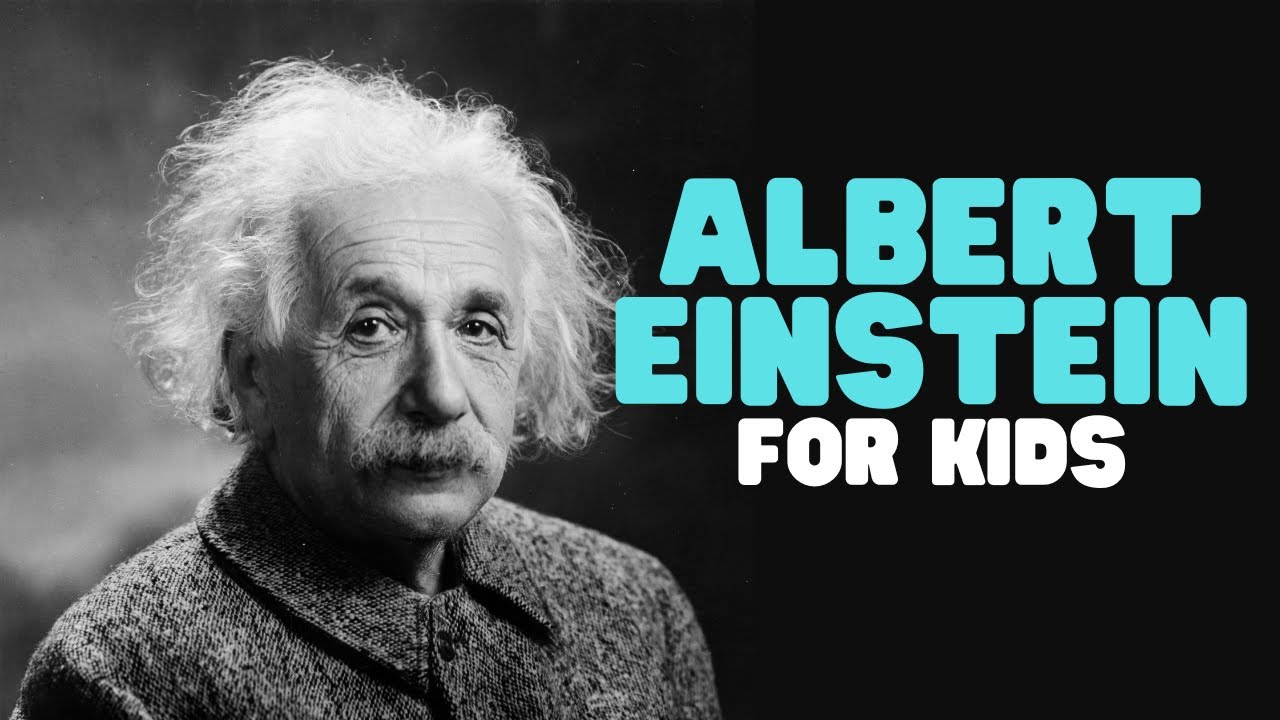
In this video about Albert Einstein for Kids we learn about one of the most famous scientists in history. Albert Einstein contributed to many scientific areas but one of his most important contribution to the world of physics and science is the Theory of Relativity. The theory changed how scientists observed the world and led to many modern inventions, including the nuclear bomb and nuclear energy. The theory explains how energy is related to mass.
One equation from the theory that you may have heard of is "E = mc2". The c represents the speed of light and never changes and is the fastest speed possible in the universe. E = energy, M = mass. His theory explains how time and distance may change when the different speed of an object or the observer is considered.
Believe it or not...Albert Einstein, like many people, struggled with education early in his life, he failed many tests and wasn't very organized, but he did not give up. He worked hard, became interested in math and science, and went on to become one of the most brilliant people in history. We all have learned and can continue to learn from the example of Albert Einstein.
In addition to this video we have created a free 11 page lesson plan with more learning content about Albert Einstein including worksheets and fun activities. Download our free comprehensive lesson plan here: https://learnbright.org/lesson....s/science/albert-ein
Video Quick Links:
0:00 Introduction to Albert Einstein
1:48 Albert's Introduction to Science
2:09 Moves to Italy at age 15... Graduates from Polytechnic Academy in Math and Physics
3:00 Starts first job as Patent Clerk, marries, and starts his family
4:00 Einstein was Jewish and in 1933 moves to the United States to avoid the Nazis
4:42 Theory of Relativity and modern inventions including nuclear energy
5:57 E = mc2
6:59 Speed is relative to the observer
7:38 How do Einsteins discoveries live on today?
8:03 Photon Discovery in 1905 and Nobel Prize in 1921
8:55 Einstein's Love of Music
9:13 Conclusion
Thank you for watching and learning with us! We’re constantly releasing new content and videos so click that “Subscribe” button and you’ll notified.
Find and Follow Us Online:
Facebook: https://www.facebook.com/LearnBright/
Instagram: https://instagram.com/LearnBrightEducation
Pinterest: https://pinterest.com/LearnBrightEducation
YouTube: https://www.youtube.com/LearnBright
Website: https://learnbright.org/
*Teachers and Parents! Did you know? In addition to these great videos, we have also created a library of high quality and engaging lessons for your elementary aged student(s). Visit us, sign up for a free account, and instantly you'll have access to thousands of lesson plans, learning materials, teaching instructions, activities, and assignments that your kids will really enjoy! We hope to see you soon!
Browse our entire collection of Social Studies lesson plans: https://learnbright.org/lessons/?filter_subject=social-studies
#AlbertEinstein
#EinsteinForKids
Courses on Khan Academy are always 100% free. Start practicing—and saving your progress—now: https://www.khanacademy.org/ma....th/statistics-probab
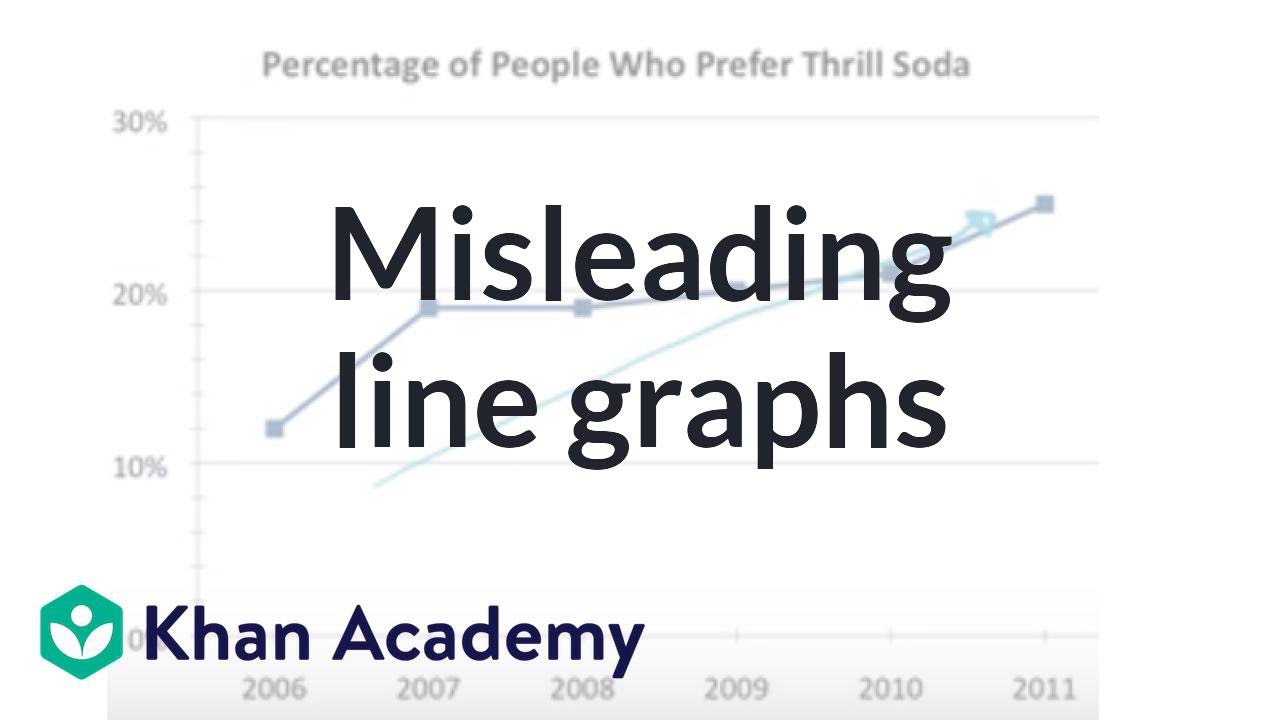
Misleading Line Graphs
Watch the next lesson: https://www.khanacademy.org/math/pre-algebra/applying-math-reasoning-topic/multistep-word-problems-tut/v/multistep-word-problems-example-1?utm_source=YT&utm_medium=Desc&utm_campaign=PreAlgebra
Missed the previous lesson?
https://www.khanacademy.org/math/pre-algebra/applying-math-reasoning-topic/reading_data/v/reading-pie-graphs-circle-graphs?utm_source=YT&utm_medium=Desc&utm_campaign=PreAlgebra
Pre-Algebra on Khan Academy: No way, this isn't your run of the mill arithmetic. This is Pre-algebra. You're about to play with the professionals. Think of pre-algebra as a runway. You're the airplane and algebra is your sunny vacation destination. Without the runway you're not going anywhere. Seriously, the foundation for all higher mathematics is laid with many of the concepts that we will introduce to you here: negative numbers, absolute value, factors, multiples, decimals, and fractions to name a few. So buckle up and move your seat into the upright position. We're about to take off!
About Khan Academy: Khan Academy offers practice exercises, instructional videos, and a personalized learning dashboard that empower learners to study at their own pace in and outside of the classroom. We tackle math, science, computer programming, history, art history, economics, and more. Our math missions guide learners from kindergarten to calculus using state-of-the-art, adaptive technology that identifies strengths and learning gaps. We've also partnered with institutions like NASA, The Museum of Modern Art, The California Academy of Sciences, and MIT to offer specialized content.
For free. For everyone. Forever. #YouCanLearnAnything
Subscribe to KhanAcademy’s Pre-Algebra channel:: https://www.youtube.com/channe....l/UCIMlYkATtXOFswVoC
Subscribe to KhanAcademy: https://www.youtube.com/subscr....iption_center?add_us

Here’s a quick video to help with the preterite of some -IR stem-changing verbs that change from (e-ie) and (e-i) in the present tense. The Preterite is a verb tense in Spanish used to talk about actions that happened in the past and have already ended. And stem-changing verbs have an additional change in their stem (or part before the -ar, -er, -ir).
Please like the video and share with others who could benefit. More Spanish lessons coming.
Request a topic you’d like for me to go over in a future video!
👍Please share this video with others and like it to help me get the word out on my videos!
And let me know about other troublesome topics you’d like in bite-sized form.
🔔 Subscribe for more Spanish lessons: http://bit.ly/XGe7we
Special Offer: Get a discount off your first 6 months with code CHATEOBOT! Sign up at: https://www.senorjordan.com/chat
Social Media:
* YouTube: https://www.youtube.com/SeñorJordan
* Find “señor jordan videos” on Facebook, Twitter, Instagram, and TikTok
* Soundcloud: senorjordanspanish
Enjoying the content? Consider buying me a taco!
https://ko-fi.com/senorjordan
🌐 Private Lessons Available:
Interested in improving your Spanish conversational skills? Contact me: www.senorjordan.com/clases
📚 Practice Your Spanish with My Books!
https://www.tprsbooks.com/shop/?_product_type=novel&_author=jeremy-senor-jordan&_product_language_filter=spanish
#spanish #SpanishHelp #SpanishLearning #FYP #foryourpage #senorjordan #senorjordanvideos #señorjordan #AprendeEspañol #ayudaenespañol #profesdeespañol #spanishteachers #PracticeSpanish #BasicSpanish #SpanishGrammar #Grammar #SimpleSpanish #español #SpanishLessons #FreeSpanish #SpanishMadeSimple #SpanishBite #Preterite #PastTense #IRverbs #StemChangers

Our 13 Original Colonies for Kids video is a fun and engaging way to introduce the history of the first 13 colonies to kids. We learn about the colonies, how they were found, formed, the people who settled there, food they grew and much more! After the video be sure to download our free comprehensive lesson plan about the colonies here: https://learnbright.org/lesson....s/social-studies/13-
What is something that you learned about the 13 colonies that you didn't know before?
Thank you for watching and learning with us! We’re constantly releasing new content and videos so click that “Subscribe” button and you’ll notified.
Find and Follow Us Online:
Facebook: https://www.facebook.com/LearnBright/
Instagram: https://instagram.com/LearnBrightEducation
Pinterest: https://pinterest.com/LearnBrightEducation
YouTube: https://www.youtube.com/LearnBright
Website: https://learnbright.org/
*Teachers and Parents! Did you know? In addition to these great videos, we have also created a library of high quality and engaging lessons for your elementary aged student(s). Visit us, sign up for a free account, and instantly you'll have access to thousands of lesson plans, learning materials, teaching instructions, activities, and assignments that your kids will really enjoy! We hope to see you soon!
Browse our entire collection of Social Studies lesson plans: https://learnbright.org/lessons/?filter_subject=social-studies
#13Colonies

The Digestive System for Kids | A fun engaging overview of what happens when we eat will teach you everything you need to know about your body's digestive system. Lots happens when you eat so come with us as we learn all about it!
You may have recently eaten breakfast or lunch, and had a productive morning in class, or enjoyed recess. Now, you’re either at home reading this or in the classroom.
But the inside of your body is hard at work taking all the food you have eaten and turning it into nutrients and energy. It is the digestive system of your body responsible for breaking down the food you eat. The process of food being broken down is called digestion. Digestion allows the body to receive the nutrients and the energy from the food you eat. During digestion, all of the food you eat is eventually turned into the building blocks and fuel you need to live life each day.
In this video we learn about Digestion, Saliva, your stomach, intestines and so much more! We hope you enjoy The Digestive System for Kids video!
Want more? Check out our comprehensive lesson plan here:
Digestive System Lesson Plan: https://learnbright.org/lesson....s/science/the-digest
Thank you for watching and learning with us! We’re constantly releasing new content and videos, so click that “Subscribe” button and you’ll get notified.
Find and Follow Us Online:
Facebook: https://www.facebook.com/LearnBright/
Instagram: https://instagram.com/LearnBrightEducation
Pinterest: https://pinterest.com/LearnBrightEducation
YouTube: https://www.youtube.com/LearnBright
Website: https://learnbright.org/
*Teachers and Parents! Did you know? In addition to these great videos, we have also created a library of high quality and engaging lessons for your elementary aged student(s). Visit us, sign up for a free account, and instantly you'll have access to thousands of lesson plans, learning materials, teaching instructions, activities, and assignments that your kids will really enjoy! We hope to see you soon!
Browse our entire collection of Science lesson plans: https://learnbright.org/lessons/?filter_subject=science
#ASL
#DigestiveSystem

What do you know about Zeus? Have you ever heard of satyr or centaur? In Greek Mythology for Kids, you will learn about many creatures and important gods and goddesses that the ancient Greeks created. Mythology is basically a way of telling stories. Native Americans, Egyptians, Romans, and many other cultures and religions have created myths. However, Ancient Greek mythology includes some of the most well-known stories.
Ancient Greece is the foundation for most western culture today. It lasted from 800 BC to 146 BC, which is when the Roman conquered Greece. The stories the Greeks developed are very popular, and they helped them explain the world around them. Because they didn't have access to the same level of science and technology that we do today, they couldn't explain natural phenomena like the sun rising and falling every day or the occasional thunderstorm.
To explain thunderstorms, for instance, the Greeks believed there was a god called Zeus that could control thunder and throw lightning bolts down from the sky. All the gods and goddesses had wildly exaggerated personalities and one or more magical powers. They were not considered good or bad. They used their powers for good, trickery, and adventure. Some gods were Titans, some were Olympians, and some were relatives of both.
Apart from the gods and goddesses, the ancient Greeks also came up with other interesting creatures and monsters. Cyclops, for example, was a monster with one eye. A centaur was a creature that was half horse and half man. Similarly, a satyr was half man and half goat. One of the most famous monsters was the gorgon called Medusa. Instead of hair on her head, she had snakes. The myth states that if someone looked directly into her eyes, they would immediately turn into stone.
We hope you and your student(s) enjoyed learning about George Washington Carver! If you want even more information, head over to our website and download one of our many free lesson plans, full of activities, worksheets, and more!
https://learnbright.org/lesson....s/reading/greek-myth
What you will learn in Greek Mythology for Kids:
0:00 What is mythology?
0:57 Ancient Greece and its influence on Western culture
1:37 The Greeks created stories to explain the world around them
2:30 Greek gods and goddesses (Titans vs. Olympians)
3:37 Hades, Poseidon, Athena, and Aphrodite
4:53 Creatures and monsters of Greek mythology
5:34 Medusa the gorgon
6:09 Review of the facts
Check out some of our other videos related to Greek history here:
Ancient Greece: https://youtu.be/Bfkp1QMhq-E
Ancient Greece for Kids: https://youtu.be/RchSJSJAbc0
Olympic History: https://youtu.be/xBsRx4wN_v4
Thank you for watching and learning with us! We’re constantly releasing new content and videos, so click that “Subscribe” button and you’ll get notified.
Find and Follow Us Online:
Facebook: https://www.facebook.com/LearnBright/
Instagram: https://instagram.com/LearnBrightEducation
Pinterest: https://pinterest.com/LearnBrightEducation
YouTube: @LearnBright
Website: https://learnbright.org/
*Teachers and Parents! Did you know? In addition to these great videos, we have also created a library of high-quality and engaging lessons for your elementary aged student(s). Visit us and sign up for a free account, and you'll instantly have access to thousands of lesson plans, learning materials, teaching instructions, activities, and assignments that your kids will really enjoy! We hope to see you soon!
Browse our entire collection of Social Studies lesson plans: https://learnbright.org/lessons/?filter_subject=social-studies
#ASL
#GreekMythologyForKids
#GreekMythology

It's true that dinosaurs disappeared thousands of years ago when a gigantic meteor struck and wiped them out. But what if we told you that one of them may have survived all these years and is currently living in Africa? This is what some residents of Congo claim, who report seeing a gigantic, scaly creature. In this video, we'll discuss this and other mysteries, as well as gather untold stories about extraordinary animals that once roamed the earth and continue to fascinate the modern world.
Animation is created by Bright Side.
----------------------------------------------------------------------------------------
Music from TheSoul Sound: https://thesoul-sound.com/
Check our Bright Side podcast on Spotify and leave a positive review! https://open.spotify.com/show/....0hUkPxD34jRLrMrJux4V
Subscribe to Bright Side: https://goo.gl/rQTJZz
----------------------------------------------------------------------------------------
Our Social Media:
Facebook: https://www.facebook.com/brightplanet/
Instagram: https://www.instagram.com/brightside.official
TikTok: https://www.tiktok.com/@bright....side.official?lang=e
Stock materials (photos, footages and other):
https://www.depositphotos.com
https://www.shutterstock.com
https://www.eastnews.ru
----------------------------------------------------------------------------------------
For more videos and articles visit: http://www.brightside.me
----------------------------------------------------------------------------------------
This video is made for entertainment purposes. We do not make any warranties about the completeness, safety and reliability. Any action you take upon the information in this video is strictly at your own risk, and we will not be liable for any damages or losses. It is the viewer's responsibility to use judgement, care and precaution if you plan to replicate.

This reading lesson will help kids read simple phrases.
#LETSREAD
#CATCHUP
#CVC
#simplephrases
#readingtutorial
#practicereading
#basicphrasesforgrade1
#readingenglishgrade1
#readingenglishgrade2
#readingenglishkinder
#readingenglishsentences
#practicereadingenglish
#englishfortoddlers
#englishforkids
#practicereadingenglishforbeginners
#readingsimplesentences
#sentencesstartingwithIhave
#grade1English
#KinderEnglish
#Grade2English
#practicereadingenglishphrases
#basicenglishphrases
#readinglessonforkids
#simplephrases