Top videos

Discover hundreds of never-before-seen resources! Create your free account at https://my.happylearning.tv/ and start learning in the most entertaining way.
What are you waiting for? Learning with Sarah, you'll find this out and much more by learning with Sarah...
IT'S EASY PEASY 😉
-
👉SUBSCRIBE TO HAPPY LEARNING! http://bit.ly/HappyLearningTV
👉Web site: https://happylearning.tv/en/
👉Follow us on Facebook: https://www.facebook.com/HappyLearningTv
Recommended video: 🎮Q&A GAME: VITAL FUNCTIONS
https://youtu.be/nIuVvyxnBfQ
------------
Hello Happy friends!
Are you ready to learn?
I’m Sarah, and today, we’re going to solve a very curious mathematical riddle.
But don’t think it’s going to be about adding, subtracting, multiplying or dividing.
No, no, maths isn’t just that!
We also use maths to develop our creativity, and solve problems that we come across every day.
I’m going to show you a little riddle called the ants crossing crossing a bridge, and we’re going to see how to solve it!
It’s nighttime, and four ants are being followed by a hungry anteater.
Suddenly, they come up to an old narrow bridge!
One of them, has a light on its head so they’re able to see, and she realises, that the bridge is so old, only two ants can cross at a time, so they will only be able to cross individually, or in pairs.
And they always need the light, because otherwise, they can’t see!
The anteater will take 17 minutes to get to where the ants are, to eat them all! What can our ant friends do to save themselves?
Let’s see, you’re the slowest, and you’re going to take 10 minutes to cross the bridge.
You’re going to take 5, you’ll take 2, and because I’m the fastest, I will take 1 minute.
And we only have one light!
And the anteater is going to take 17 minutes to get here, what shall we do?
These little ants need our help, let’s get our thinking caps on!
But if you need a little more time, pause the video.
Have you figured it out?
Let’s take a look!
If two ants go together, they will take the same time as the slowest ant.
So the best idea is that and 1 and 2 go together.
They’ve spent 2 minutes crossing.
Now, ant 1 will cross back with the light, and she will take another minute.
That means, in total they’ve taken 3 minutes.
Who should cross the bridge now?
Ant 1, will give the lamp to ant 5, and this one crosses the bridge with ant 10.
If we add these 10 minutes, to the 3 we had before, we’ve taken 13 minutes.
Now, the ant that goes back with the lamp is ant number 2, who takes 2 minutes.
So they’ve taken a total of 15 minutes, and the anteater is about to arrive!
So, the ants we’ve got left are the ones that take 1 and 2 minutes.
How long will they take?
Of course! it’s two minutes!
And if we add them to the 15 minutes we had before, we’ve reached a total of 17 minutes!
Yes! we’ve saved our little ants! And it’s all thanks to our maths!
The truth is, maths are so much fun, and so helpful!
Goodbye happy friends! See you next time!
I hope you’re always ready to learn!
Goodbye!

Discover hundreds of never-before-seen resources! Create your free account at https://my.happylearning.tv/ and start learning in the most entertaining way.
What are you waiting for? Puuuurrrr Let's get feline 🐈
💭 Can you tell me what cats tongues are full of?
👇Answer in the comments bellow!
-
👉SUBSCRIBE TO HAPPY LEARNING! http://bit.ly/HappyLearningTV
👉Web site: https://happylearning.tv/en/
👉Follow us on Facebook: https://www.facebook.com/HappyLearningTv
Recommended video: Why do Camels and Dromedaries have humps?
https://youtu.be/JPMnemG5en0
-------------
Fun facts about animals
The secret behind a cat’s tongue
Cats are very special mammal animals, and until not long ago, they had a secret in their tongue which we have finally discovered. They are very sleepy animals, they sleep 14 hours a day, but they are also very clean, since when they are awake they dedicate a long time to cleaning their bodies with their own tongues.
But we couldn’t understand how they could clean themselves perfectly by just licking. Some researchers have found out that cats tongues are covered in many tiny thorns called buds. These thorns have a hollow cavity, which cats use to fill with saliva and use it, as if it was a sponge with water and soap, to clean all of their bodies. That is, by licking themselves! Cats are very clean, and beautiful!
If you want to learn a lot more, take advantage of time and get excellent grades in a very fun way, subscribe to our TV Channel, Happy Learning TV… We teach by entertaining.
AND NOW…. LET’S SING!

VITAL FUNCTIONS https://youtu.be/SKy_C2cr63M
PREMIERES! 👉 https://www.youtube.com/playli....st?list=PLLF_mZmNqOn
ANIMALS FUN FACTS! https://www.youtube.com/playli....st?list=PLLF_mZmNqOn
SPIDERS🕷️ | Animals for Kids | Fun and Educational Spider Facts for kids
Educational video for children to learn interesting facts and characteristics about spiders. Spiders are invertebrate, carnivorous animals and they belong to the arachnid arthropods group. Their size depends a lot on the species, the biggest ones can weigh up to 7 oz. and measure 11 inches.
This video is a very useful and interesting resource for children, it explains the most important aspects of spiders, as well as a lot of fun facts about them. It is an excellent video for early childhood education.
Welcome to Happy Learning, where learning is fun and exciting! In this special video, we'll dive into the fascinating universe of spiders, those small arachnids that awaken our curiosity.
You'll discover what spiders are and how they differ from other insects. From jumping spiders to imposing tarantulas, each one has its own style and unique characteristics.
We'll take a close look at the parts of a spider's body and how they are adapted for hunting and survival in their environment. You'll also learn where spiders live, how they build their webs, and how they hunt their prey.
We'll debunk some misconceptions about spiders and learn interesting facts that will surprise you. You'll also discover why spiders are important for ecosystem balance and how they contribute to pest control.
And don't worry, we'll give you useful tips for living with them safely and respectfully.
Get ready for an adventure full of knowledge and fun as we explore the fascinating world of spiders at Happy Learning! Don't forget to subscribe for more exciting educational videos. Let's learn and enjoy! 🕷️📚🎉

In this activity, students gain first-hand experience with the mechanical advantage of pulleys. They set up different pulley systems, compare the theoretical and actual mechanical advantage of each and develop an understanding of error in experiments.
View the full lesson on TeachEngineering:
https://www.teachengineering.o....rg/activities/view/c
TeachEngineering has over 1,500 FREE lessons and activities. Visit https://www.teachengineering.org/ for more
Music - EDM Detection Mode By Kevin MacLeod

Using paper, paper clips and tape, student teams design flying/falling devices to stay in the air as long as possible and land as close as possible to a given target. Student teams use the steps of the engineering design process to guide them through the initial conception, evaluation, testing and re-design stages. The activity culminates with a classroom competition and scoring to evaluate how each team's design performed.
View the full activity at TeachEngineering:
https://www.teachengineering.o....rg/activities/view/n
TeachEngineering has over 1,500 FREE lessons and activities. Visit http://www.TeachEngineering.org for more!
Music: Inevitable - Diamond Ortiz
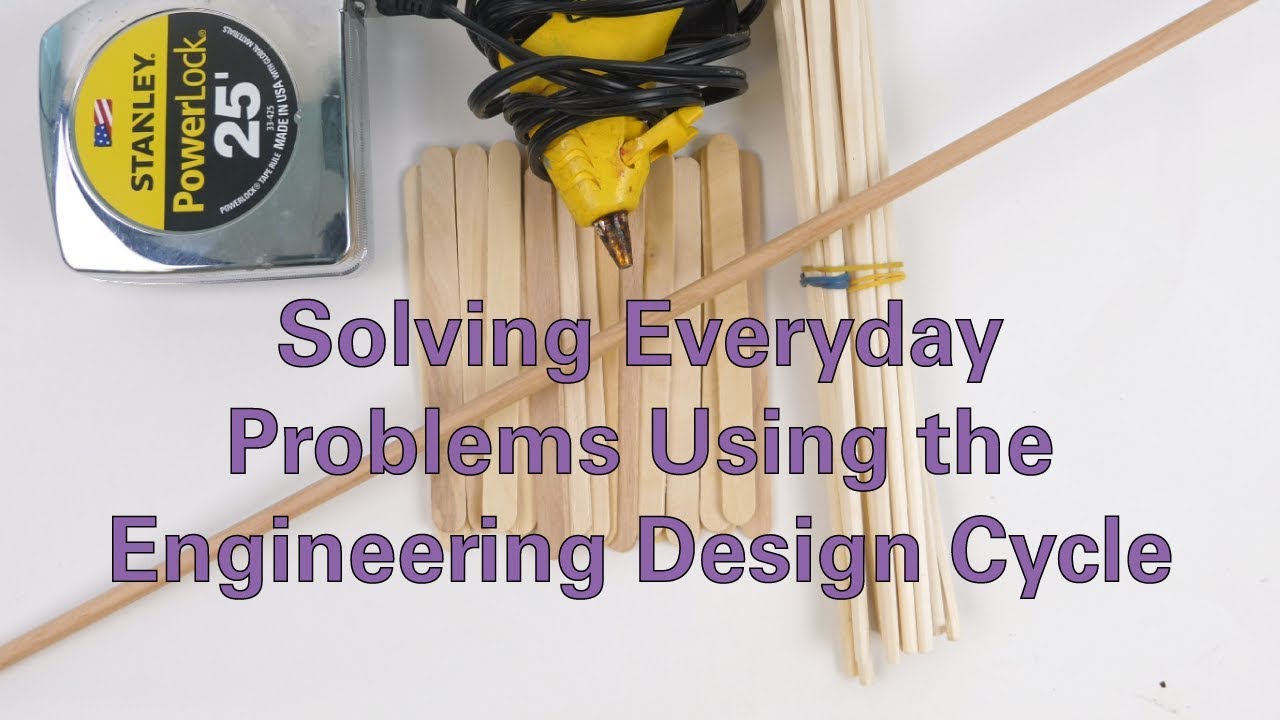
Students are introduced to two real-life problems that can be solved by using the engineering design process. For the first one, they follow along with a slide presentation that describes how a group of students built an organizer to help organize their teacher’s desk. The presentation introduces students to the key steps in the engineering design process. Next, in discussion groups, they read through a scenario in which middle school student Marisol struggles to keep her locker organized. They read the case study together, stopping and discussing at key points to share ideas and consider Marisol’s progress as she moves through the engineering design cycle to design and implement a solution. As an optional hands-on activity extension, students construct their own locker organizer using scrap materials. This introduction to the engineering design process sets up students to be able to conduct their own real-world design projects. A case study handout, group leader discussion sheet and slide presentation are provided.
View the full activity at TeachEngineering:
https://www.teachengineering.o....rg/activities/view/u
TeachEngineering has over 1,500 FREE lessons and activities. Visit https://www.teachengineering.org/ for more!
Music: Side Steppin' - Otis McDonald

Indiana has one of the largest voucher programs in the country with over 34,000 students receiving tax dollars to pay for private schools. With the Trump administration favoring school choice, many wonder if vouchers help or hurt education. Lisa Stark reports.
This video originally aired on PBS NewsHour on March 14, 2017. ____________________
Want more stories about schools across the nation, including the latest news and unique perspectives on education issues? Visit www.edweek.org.
About Education Week:
Education Week is America’s most trusted source of independent K-12 education news, analysis, and opinion. Our work serves to raise the level of understanding and discourse about education among school and district leaders, policymakers, researchers, teachers, and the public. Published by the nonprofit organization Editorial Projects in Education, Education Week has been providing award-winning coverage of the field for over 35 years.
Follow Education Week:
- Subscribe to our Channel: http://www.youtube.com/subscri....ption_center?add_use
- On Facebook at https://www.facebook.com/edweek/
- On Twitter at https://twitter.com/educationweek/
- On LinkedIn at https://www.linkedin.com/company/education-week
To license video footage from Editorial Projects in Education please contact the Education Week Library at library@epe.org.

This week, we're talking about theories of Myth. We'll look at the different ways mythology has been studied in the last couple of millenia, and talk about the diffeent ways people have interpreted myth, academically.
Crash Course is on Patreon! You can support us directly by signing up at http://www.patreon.com/crashcourse
Thanks to the following Patrons for their generous monthly contributions that help keep Crash Course free for everyone forever:
Mark, Les Aker, Bob Kunz, Mark Austin, William McGraw, Jeffrey Thompson, Ruth Perez, Jason A Saslow, Eric Prestemon, Malcolm Callis, Steve Marshall, Advait Shinde, Rachel Bright, Ian Dundore, Tim Curwick, Ken Penttinen, Dominic Dos Santos, Caleb Weeks, Frantic Gonzalez, Kathrin Janßen, Nathan Taylor, Yana Leonor, Andrei Krishkevich, Brian Thomas Gossett, Chris Peters, Kathy & Tim Philip, Mayumi Maeda, Eric Kitchen, SR Foxley, Tom Trval, Andrea Bareis, Moritz Schmidt, Jessica Wode, Daniel Baulig, Jirat
--
Want to find Crash Course elsewhere on the internet?
Facebook - http://www.facebook.com/YouTubeCrashCourse
Twitter - http://www.twitter.com/TheCrashCourse
Tumblr - http://thecrashcourse.tumblr.com
Support Crash Course on Patreon: http://patreon.com/crashcourse
CC Kids: http://www.youtube.com/crashcoursekids

Practice Your Spanish With Chateo - a Spanish-speaking chatbot! | Get a discount off your first 6 months with code CHATEOBOT | Sign up at: https://www.senorjordan.com/chat
~~~~~~~~~~~~~~~~~~~~~~~~~~~~~~
SUBSCRIBE for more Spanish videos: http://bit.ly/XGe7we
and make sure to click the notification bell!
Follow me on Facebook: https://www.facebook.com/srjordanspanish
Tweet me: https://twitter.com/senorjordan
Check out my website: http://www.senorjordan.com
Follow me on Instagram: @senorjordanvideos
Listen to my music on Soundcloud:
https://soundcloud.com/senorjordanspanish
Listen to my music on Spotify:
https://open.spotify.com/artis....t/2nyJ9GgLNMckXCuBHU
Buy my songs on iTunes:
https://music.apple.com/us/artist/1621526948
Buy my songs on Amazon:
https://www.amazon.com/music/p....layer/artists/B09Z35
Donate to my video-making project:
https://paypal.me/srjordanvideos?country.x=US&locale.x=en_US
~~~~~~~~~~~~~~~~~~~~~~~~~~~~~~

🚀 Become an AI Master – All-in-one AI Learning https://aimaster.me/pro
I found the best formula for ChatGPT Prompts. In this video we will take a detailed look at the new Chat GPT (Custom Instructions) feature, thanks to which the artificial intelligence will know who you are, how to address you, what to respond to and in what style. With the ChatGPT update, you can easily maximize your results when interacting with this AI tool. The best formula for ChatGPT on your screens!

🚀 Become an AI Master – All-in-one AI Learning https://aimaster.me/pro
Mass layoffs have begun thanks to these unknown AI Tools! Just recently Duolingo fired all translators and put AI in their place, which saved the company a huge amount of money. In this video we will see which professions are in danger of being replaced by artificial intelligence. Which professions will disappear? Is it worth looking for a new job today?
00:00 AI will take your job
00:20 Say goodbye to...
02:02 AI will do it better
03:20 Next job to go..
04:09 You don't wanna hear this
05:49 And them too..
06:56 Henry Ford's nightmare
08:31 Will get 100% replaced
09:54 Roads of the future
11:00 New way to order books
12:13 I don't want them to be replaced by AI
13:15 AI agents
14:19 Typing is not for human

Tutoriel présentant les outils de GeoGebra permettant de créer des points. Explication détaillées. Retrouver mes vidéos sur le site https://www.monclasseurdemaths.fr/

Welcome to a fun-filled learning adventure with Lucas & Friends! 🎉 This toddler learning video is designed for toddlers, babies, and young learners, teaching ABCs, numbers, colors, animal names, honesty, and more through fun baby songs and playful activities. 👧 Enjoy baby learning videos featuring popular nursery rhymes and have fun with toys like a train 🚂, car track 🚗 & ice cream cart🍦.
✨ In this learning video for toddlers, Lucas & Friends engage in activities that teach baby learning, kids' vocabulary, and toddler development in a fun way. Whether counting cars, jumping, or singing along, your child will develop essential skills in a playful learning environment. 🌱
🌟 Toddler and Baby Learning with Lucas & Friends Includes:
00:00 Wave and Dance Learning for Toddlers with Baby Songs - Learn to wave, say hello, and dance while playing with friends. Toddlers learning fun moves and social skills! 👋
01:12 Number Counting for Toddlers by Counting Cars - Build a car track and count the cars! Sing Five Little Cars, a fun baby song, while learning numbers. 🚗
04:27 ABC Song and Play for Baby Learning - Sing, play, and jump while learning ABC! A great educational video for toddlers to learn letters in a fun way. 🤩
06:02 Choo Choo Train Ride Adventure for Kids with Baby Songs - Lucas and Ruby ride their toy train, making sounds and enjoying an exciting adventure. Join them for a ride filled with fun baby songs and pretend play! 🚂
08:10 Ice Cream Party & Baby Songs for Kids Learning - Play pretend ice cream shop, sell treats to friends, and enjoy a real ice cream surprise! Toddlers learn through cheerful baby songs. 😋
12:04 Jump and Move Learning for Toddlers - Jump high and have fun with friends. Babies learning movement and enjoying a fun video for kids. 😆
14:01 Popular Nursery Rhymes, Baby Songs & Learning to Care for Others - Sing Miss Polly Had a Dolly and Twinkle Twinkle Little Star to make Baby feel better. Toddlers learn kindness and care through classic nursery rhymes and baby songs. An educational baby learning video with nursery rhymes and good manners. 🎵
17:18 Baby Learning Safety with Baby Songs - Learn to run fast and slow while playing with a toy cat. Toddlers learning to stay safe while having fun with joyful kids songs! 🏃♂️
19:38 Toddler Honesty Lesson for Kids - Uh-oh! A toy gets broken, and Lucas hides the truth. Mommy explains why honesty is important. Kids learning life lessons about being kind and truthful. 😊
24:48 Sleepy Time Routine with a Relaxing Lullaby - Help Baby tuck in the teddy bear and sing a soothing bedtime song. Babies learn bedtime routines with soothing music. 😴
27:38 Counting and Learning Colors with a Toy Train - A toy train is here! Count the wagons and find colors like red, blue, green, purple and yellow. Kids learn colors and numbers while enjoying fun baby songs. 🎨
29:20 - Bubble Party Fun Learning for Toddlers - It's a bubble party! Blow bubbles, pop them, and laugh with friends. Toddlers learning through play and fun activities! 😁
32:20 Coloring Eggs to Learn Colors with Baby Song - Color six eggs in red, blue, yellow, green, pink, and more! A great way for toddlers to learn colors through a fun surprise game. 🥚
36:25 Tracing Numbers 1 to 10 with Fun Baby Music - Trace numbers from 1 to 10 and meet fun animal friends! Kids learning numbers while having fun through baby songs and fun activities. ✏️
📌 This video is the perfect baby learning video experience for your toddler, packed with interactive kids songs, games, and activities that make learning fun and exciting. 🚀
🎯 Baby learning with Lucas & Friends videos for kids are great for:
✔ ️ Toddler Learning Video: Fun songs, dance, and play to teach important concepts.
✔ ️ Learn numbers, colors, ABC, animal names and good behavior.
✔ ️ Good Manners and Healthy Habits for kids.
✔ ️ Learning Through Games: Jumping, running, pretending, and more!
📚 This educational video for kids helps babies and toddlers develop important skills - speaking, counting, recognizing colors, and learning new words. 🎓 Whether it's learning colors, numbers, ABCs, nursery rhymes, or enjoying toys, this playful learning experience is perfect for babies, toddlers, and preschoolers. 🏅
⭐ Join Lucas & Friends in vibrant 4K learning adventure, packed with engaging activities for toddlers and preschoolers - perfect for kids aged 12 months and up! 👍 LIKE, SHARE & SUBSCRIBE for more educational toddler videos, baby learning videos, kids music, and fun learning content. Tap the bell icon to stay updated! 🔔
✨ Explore More Lucas & Friends Learning Fun! ✨
📱 Download free toddler learning educational apps
📚 Find educational books & storybooks for kids on Amazon
🛍️ Get official Lucas & Friends merchandise
Copyright © RV AppStudios
#babylearning #toddlerlearning #toddlerlearningvideos

This video shows the step-by-step process for converting scientific notation to standard form. Scientific notation creates a standard form to write numbers when they are really large or really small.
🔴 Subscribe for more free math tips and math tutorials: https://www.youtube.com/c/Impr....ovedMath?sub_confirm
In this video we cover:
Why scientific notation is used
How to convert numbers from scientific notation to standard form
The powers of ten
Improved math is a channel created to provide additional instruction on essential math concepts. I’m passionate about math and I know first-hand how important math concepts are in the real world.
Teachers, parents, guardians, homeschoolers, and students can use these videos to help reinforce math skills.
For more information on math topics or for free printable worksheets and answer sheets, you can also visit my website at improvedmath.com
https://www.youtube.com/c/ImprovedMath
https://improvedmath.com
https://www.tiktok.com/@improvedmath1?
https://www.pinterest.com/improvedmath/
Don’t forget to like, share, and subscribe!
#scientificnotation
#standardform
#exponents
#mathtips
#mathhelp
#homeschoolmath
#teachyourselfmath
#selfstudymath
#mathhelpvideos
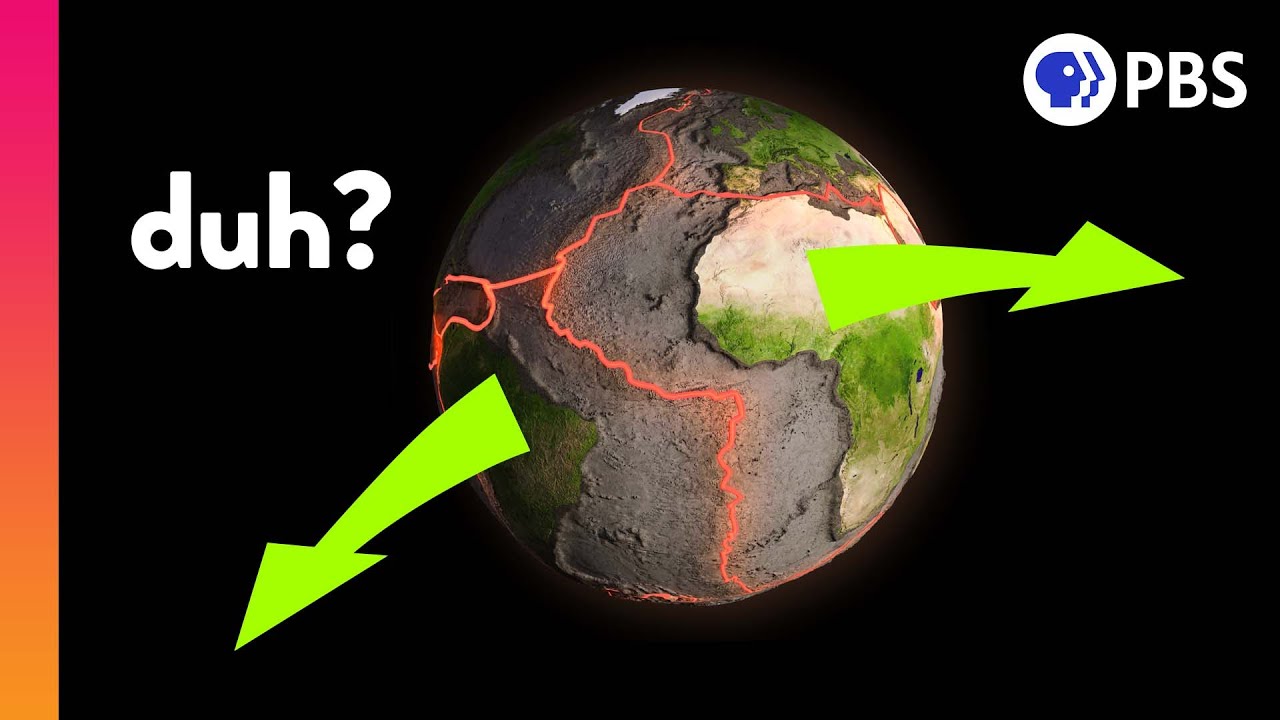
But did thee feel the Earth move?
We’re on PATREON! Support our show: https://www.patreon.com/itsokaytobesmart
↓ More info and sources below ↓
Why do Africa and South America fit together? Anyone who’s ever looked at a map can see that Earth’s continents are kind of like a jigsaw puzzle. The idea that continents are constantly moving and weren’t always in their current spots is a pretty obvious idea, right? You might be surprised to learn that geologists only accepted that idea recently in the past few decades, and it figuring out how plate tectonics and continental drift work required some pretty strange evidence.
-----------
LEARN MORE:
Some background on Alfred Wegener: http://www.ucmp.berkeley.edu/geology/techist.html
Lystrosaurus (ancient mammal relative): https://en.wikipedia.org/wiki/Lystrosaurus
Glossopteris (ancient fern): https://en.wikipedia.org/wiki/Glossopteris
The splitting of Africa: http://theconversation.com/spl....itting-africa-what-h
-----------
FOLLOW US:
Merch: https://store.dftba.com/collec....tions/its-okay-to-be
Facebook: http://www.facebook.com/itsokaytobesmart
Twitter: @okaytobesmart @DrJoeHanson
Tumblr: http://www.itsokaytobesmart.com
Instagram: @DrJoeHanson
Snapchat: YoDrJoe
-----------
It’s Okay To Be Smart is hosted by Joe Hanson, Ph.D.
Director: Joe Nicolosi
Writer: Shaena Montanari
Producer/editor/animator: Andrew Orsak
Producer: Stephanie Noone and Amanda Fox
Produced by PBS Digital Studios
Music via APM
Stock images from Shutterstock http://www.shutterstock.com
Pre-order our book YOU ARE AN ARTIST (which includes new assignments!) here: http://bit.ly/2kplj2h This week we're reunited with Oliver Blank, who shares his thoughts on the incredible response to his assignment and announces some exciting plans for the messages you left to the one who got away.
Listen to the preview and follow Oliver's podcast on SoundCloud for updates on future episodes: https://soundcloud.com/towga
Watch the original assignment: https://youtu.be/25oeWopdnBk
--
Follow us elsewhere for the full Art Assignment experience!
Tumblr: http://theartassignment.com
Response Tumblr: http://all.theartassignment.com
Twitter: http://twitter.com/artassignment
Instagram: http://instagram.com/theartassignment/
Facebook: http://www.facebook.com/theartassignment
and don't forget Reddit!: http://www.reddit.com/r/TheArtAssignment/

Visit https://www.abcmouse.com/learn/youtube to learn more about our award-winning online learning program for children 2-8!
🖌️🌈 Join Violet, the friendly paintbrush, as she helps her friends solve big feelings through art! In this episode, Violet meets three characters feeling sad, sick, and angry. With her magical brush, she draws creative solutions—like an ice cream cone, a bowl of soup, and a ladder—to help her friends feel better. 🎨😊 This fun-filled episode is a great way for kids to learn about emotions and problem-solving through art!
👉 Discover more fun learning songs and educational videos by subscribing to our YouTube channel at https://YouTube.com/ABCmouse.
And visit https://www.abcmouse.com/learn/youtube to find out more about our award-winning online learning program for children 2–8!
© Age of Learning, Inc. All rights reserved.

We created our first app ‘Universe in a Nutshell’, together with Tim Urban of Wait but Why!
Appstore: http://kgs.link/universe-app-ios
Google Playstore: http://kgs.link/universe-app-android
Sources & further reading:
https://sites.google.com/view/sourceslargeststar
Wait But Why:
https://waitbutwhy.com/
Video on Red Dwarfs:
https://www.youtube.com/watch?v=LS-VPyLaJFM&vl=pt
What is the largest star in the Universe? And why is it that large? And what ARE stars anyway?
OUR CHANNELS
▀▀▀▀▀▀▀▀▀▀▀▀▀▀▀▀▀▀▀▀▀▀▀▀▀▀
German Channel: https://kgs.link/youtubeDE
Spanish Channel: https://kgs.link/youtubeES
HOW CAN YOU SUPPORT US?
▀▀▀▀▀▀▀▀▀▀▀▀▀▀▀▀▀▀▀▀▀▀▀▀▀▀
This is how we make our living and it would be a pleasure if you support us!
Get Merch designed with ❤ from https://kgs.link/shop-129
Join the Patreon Bird Army 🐧 https://kgs.link/patreon
DISCUSSIONS & SOCIAL MEDIA
▀▀▀▀▀▀▀▀▀▀▀▀▀▀▀▀▀▀▀▀▀▀▀▀▀▀
Reddit: https://kgs.link/reddit
Instagram: https://kgs.link/instagram
Twitter: https://kgs.link/twitter
Facebook: https://kgs.link/facebook
Discord: https://kgs.link/discord
Newsletter: https://kgs.link/newsletter
OUR VOICE
▀▀▀▀▀▀▀▀▀▀▀▀▀▀▀▀▀▀▀▀▀▀▀▀▀▀
The Kurzgesagt voice is from
Steve Taylor: https://kgs.link/youtube-voice
OUR MUSIC ♬♪
▀▀▀▀▀▀▀▀▀▀▀▀▀▀▀▀▀▀▀▀▀▀▀▀▀▀
700+ minutes of Kurzgesagt Soundtracks by Epic Mountain:
Spotify: https://kgs.link/music-spotify
Soundcloud: https://kgs.link/music-soundcloud
Bandcamp: https://kgs.link/music-bandcamp
Youtube: https://kgs.link/music-youtube
Facebook: https://kgs.link/music-facebook
The Soundtrack of this video:
Soundcloud: https://bit.ly/2RutyqU
Bandcamp: https://bit.ly/35HmkIa
🐦🐧🐤 PATREON BIRD ARMY 🐤🐧🐦
▀▀▀▀▀▀▀▀▀▀▀▀▀▀▀▀▀▀▀▀▀▀▀▀▀▀
Many Thanks to our wonderful Patreons from http://kgs.link/patreon who support us every month and made this video possible:
Keanu Vestil, Xavier, Antonio Tavano, Scott James, Camfifty5, Michael, Paul Barth, Christian Puelacher, Katie Barton, Cole Bowden, Andreas Rautner, Sovos, Alejandro Uresti, couchy, Bill Hochberg, John Specht, Lander Verhack, Vlad Mustiață, Oliver Kurtz, Mischa Blazer, Josh Yelavich, Islam Mohamed, Robrecht Cannoodt, Kirsty, Greenleaves, Jayson Lamanca, Nithin Thaha, Tristan Jackson, Even_skjeih, Mo Alawami, Jonas Brandão, Lily McAdams, Alejandro Rodriguez, Isaac Overmyer, Cooper Norton, Biblion, Stephen Zappia, Bodo Nuber, Samhain, Kyle Goff, jota jodra, Marc Bornträger, Filip Leszczyński, Влад Кальченко, NexusValhalla, Aleksandar Zivancevic, Silas Zander, Tijn Flinterman, Shrutika Umralkar, Or Bairey-Sehayek, Terri-Ann dela Cruz, Choltikan Phothong, Collin Carey, Champ, Marcela Oliveira, rbtpzk, Jamie Grall, LAI Oscar, Ralf P., Kuba, Ryan Giles, JoghurtWiesel, Timster Ruu, John Highet, Walmyr Carvalho, Perry Williams, Aldo Vicente, Peter Paj, Vanny Khon, Olga, Theeraphong Gasparini, destroymyarrogance, Martin Pietrowski, Josip Haramija, Champ, Carlos, Davi & Nicholas

What happens when a super long slinky is dropped?

Droplets levitate on a bath of liquid nitrogen and are spontaneously self-propelled. Thanks Audible! Start a 30-day trial and your first audiobook is free. Go to https://audible.com/VERITASIUM or text VERITASIUM to 500500.
Special thanks to Dr. Anaïs Gauthier
Physics of Fluids: https://pof.tnw.utwente.nl/
Self-propulsion of inverse Leidenfrost drops on a cryogenic bath
Anaïs Gauthier, Christian Diddens, Rémi Proville, Detlef Lohse, and Devaraj van der Meer
PNAS January 22, 2019 116 (4) 1174-1179; published ahead of print January 22, 2019
https://www.pnas.org/content/116/4/1174
For a detailed description of the setup:
http://www.lps.ens.fr/~adda/pa....piers/Langmuir2016.p
And self-propulsion is also seen: http://www.lps.ens.fr/~adda/pa....piers/InvLeidenfrost
Other recent (hot) Leidenfrost experiments that might be interesting:
* Leidenfrost wheels: https://www.youtube.com/watch?v=glRGl-eYuXo
* Leidenfrost maze: https://www.youtube.com/watch?time_continue=174&v=vPZ7sx3EwUY
* Leidenfrost explosions: https://www.youtube.com/watch?v=z0sp3AjgUy4
Special thanks to Patreon supporters:
Donal Botkin, James M Nicholson, Michael Krugman, Nathan Hansen, Ron Neal, Stan Presolski, Terrance Shepherd
Thanks to Prof. Kevin McKeegan at UCLA for the liquid nitrogen
Filming by Raquel Nuno
Additional animations by Alan Chamberlain

It's time to learn about fun animals! In this animal learning video for kids, you will learn about dogs, owls, polar bears, turtles and more! I hope you enjoy these videos and that you have an AMAZING DAY!
Thanks for watching!
Daniel
"Homeschool Pop"
00:00 Introduction
0:22 Dogs
7:36 Owls
13:44 Elephants
19:47 Polar bears
27:54 Turtles
35:22 Rabbits
❤️ Homeschool Pop? Support my channel by clicking here: http://homeschoolpop.com
Music credits:
"Tech Live", "River Fire", "Doobly Doo", "Angel Share", "Teddy Bear Waltz"
Kevin MacLeod (incompetech.com)
Licensed under Creative Commons: By Attribution 3.0 License
http://creativecommons.org/licenses/by/3.0/
Photo credit:
Baby Siberian eagle-owls at the Screech Owl Sanctuary, St. Columb Major, Cornwall. P.D. Johnson. 25 May 2015 https://creativecommons.org/li....censes/by/2.0/deed.e
Thanks again for watching!
Daniel

Learn how to modify all aspects of your charts in this advanced Google Sheets tutorial. This tutorial covers Data Labels, Legends, Axis Changes, Axis Labels, Secondary Axis, Filter, Multiple Series, Compare Mode, Aggregate Columns & Rows, Gridlines, Trendlines and Much More.
About the Book:
Whether you are a student struggling to fulfill a math or science requirement, or you are embarking on a career change that requires a higher level of math competency, A Mind for Numbers offers the tools you need to get a better grasp of that intimidating but inescapable field. Engineering professor Barbara Oakley knows firsthand how it feels to struggle with math. She flunked her way through high school math and science courses, before enlisting in the army immediately after graduation. When she saw how her lack of mathematical and technical savvy severely limited her options—both to rise in the military and to explore other careers—she returned to school with a newfound determination to re-tool her brain to master the very subjects that had given her so much trouble throughout her entire life.
In A Mind for Numbers, Dr. Oakley lets us in on the secrets to effectively learning math and science—secrets that even dedicated and successful students wish they’d known earlier. Contrary to popular belief, math requires creative, as well as analytical, thinking. Most people think that there’s only one way to do a problem, when in actuality, there are often a number of different solutions—you just need the creativity to see them. For example, there are more than three hundred different known proofs of the Pythagorean Theorem. In short, studying a problem in a laser-focused way until you reach a solution is not an effective way to learn math. Rather, it involves taking the time to step away from a problem and allow the more relaxed and creative part of the brain to take over. A Mind for Numbers shows us that we all have what it takes to excel in math, and learning it is not as painful as some might think!
About the Author:
Barbara Oakley is a professor of engineering at Oakland University in Rochester, Michigan. She has received many awards for her teaching, including the coveted National Science Foundation New Century Scholar Award.
Get the book here: https://goo.gl/rLUHLC

YOU Belong in STEM Webinar Enhancing P-12 STEM Education for Students with Disabilities June 6, 2024
On June 6, 2024, our expert panelists shared their experiences to design and adapt STEM programming, utilize assistive technologies, and foster a supportive learning environment for students with disabilities. From leveraging student input when formulating inclusive tools to implementing Universal Design for Learning (UDL) principles, we delved into practical methods to engage and empower all learners in STEM subjects.

11TH GRADE VOCABULARY WORDS WEEK 1 #Shorts
Vocabulary represents one of the most important skills necessary for teaching and learning a language. It is the basis for the development of all the other skills: reading comprehension, listening comprehension, speaking, writing, spelling, and pronunciation.