Top videos

✅ ამ ვიდეოში წარმოგიდგენთ ფრაგმენტს მათემატიკის მასწავლებლებისთვის ჩატარებული ტრენინგიდან, სადაც დეტალურადაა განხილული პროგრამა Geogebra-ს შესწავლა-გამოყენება.
Geogebra-ს ბმული: https://www.geogebra.org/
ჩემი პროფილი Geogebra-ზე: https://www.geogebra.org/u/nanadabrun...
წესიერი მრავალკუთხედი: https://www.geogebra.org/m/z5jeu4sr
✅ თუ მოგეწონათ ვიდეო, მაშინ დაალაიქეთ 💕 და 🔺 Subscribe ღილაკზე დაწკაპებით გამოიწერეთ ჩემი არხი. 💕
კითხვები და მოსაზრებები დაწერეთ კომენტარებში. 🔻

Working out percentage discounts is easy, just use one or two of the tricks suggested in this math lesson.
To work out the discount subtract from one hundred percent, then use a mental break up technique to calculate the percentage discount. To donate to the tecmath channel: https://paypal.me/tecmath?locale.x=en_AU To donate to the tecmath channel: https://paypal.me/tecmath?locale.x=en_AU
To support tecmath on Patreon: https://www.patreon.com/tecmath
To buy tecmath mechandise: https://teespring.com/stores/tecmath-store

On this lesson, we will review the 4 types of slope of a line: positive slope, negative slope, zero slope, and undefined slope.
For more MashUp Math content, visit http://www.mashupmath.com and join our free mailing list! :)
This lesson answers the questions: What is slope? How do I find the slope of a function? What is a positive slope? What is a negative slope? What is a zero slope? What is an undefined slope?
Our lessons are perfect for flipped classroom math teachers and students. This lesson is aligned with the common core learning standards for math and the SAT math curriculum as well.
Be sure to join our mailing list at http://www.mashupmath.com

On this lesson, you will explore ratios and unit rates in math examples that apply to the real world AND you will learn to solve several examples and practice problems. Let's do this!
Join us as we explore, conceptualize, and evaluate unit rates using proportional relationships in real-world situations. For more MashUp Math content, visit http://www.mashupmath.com and join our free mailing list! :)
This lesson answers the questions: What is a unit rate? What is a unit price? How do I set up a proportion? How do I cross multiply? What is a ratio?
Be sure to join our mailing list at http://www.mashupmath.com

In this lesson, we will work through two measurement unit conversion practice problems: how to convert centimeters to meters (CM to M) and how to convert cups to quarts.
★ Want more FREE weekly math videos? Subscribe Now: http://bit.ly/1OVJnyh
★★ Why Math? Download YOUR Free eBook and sign-up for our FREE weekly newsletter: http://www.mashupmath.com/resources

Learn more about Pipedrive here! https://aff.trypipedrive.com/AIMaster
🚀 Become an AI Master – All-in-one AI Learning https://aimaster.me/pro
In this video I introduce you to the CRM I personally use—an intuitive, visual platform built by salespeople for salespeople. I’ll walk you through its Kanban-style dashboard, customizable pipelines, AI-driven lead scoring, and streamlined calendar features that keep your entire team in sync. Instead of burying you in menus, this CRM helps you focus on what matters most: closing deals and growing your business. You’ll see how easy it is to track leads, log activities, send emails, and collaborate seamlessly, all in one place.

In this lesson, you'll learn the division tables for the number 5 using strategies that make it easier. http://www.ilearn.com/multidev
iLearn provides professionally designed math instruction for all markets, including home, K-12, and college. Our instructional programs combine the best scientifically-designed curriculum with state-of-the art delivery systems.
Our specialty is providing easy-to-use, highly effective support, for students who have difficulty learning math. It’s the easiest and fastest way to understand math and master math procedures.
This video is one of over 800 lessons from iLearn on math topics ranging from kindergarten through high school math.
• Subscribe to our channel and have access to all of our lessons here on YouTube.
• Share this video with your friends via your favorite social site.
For free access to unlimited online practice and tests, along with free access to these lessons, go to:
http://www.ilearn.com/multidev
For more information, contact us at:
http://www.ilearn.com
1-877-789-2088 ext. 128 (toll free)
If you prefer to read, rather than watch this video, here’s the transcript:
Title: Division by 5 - Fast And Easy Math Learning Videos
In this lesson, you'll learn the basic facts for dividing by 5.
Dividing by 5 is the same as finding the missing factor when five is the other factor, which you already know how to do.
To find the answer to this problem, we ask the question, "What number do we multiply by 5 to get 20?"
You know that the answer to that question is 4.
So when we divide 20 by 5 the answer is 4.
Another example. 35 divided by 5.
The answer to the division problem is the same as for this missing factor problem.
What number do we multiply by 5 to get 35?
We multiply by 7.
So when we divide 35 by 5 the answer is 7.
Here's a quick reminder for solving these problems.
When the number you're dividing into ends in 0, the answer is two times the number of tens.
When the number you're dividing into ends in 5, the answer is two times the number of tens plus one more.
http://www.ilearn.com/multidev
https://youtu.be/X20N8MGH5Gg

This tutorial explains the slope intercept form of a line. It explains how to use the y-intercept and the slope to graph a line. It provides two examples, which show how to sketch a line in slope intercept form.
Join this channel to get access to perks:
https://www.youtube.com/channe....l/UCn2SbZWi4yTkmPUj5
:)

Learn More at mathantics.com
Visit http://www.mathantics.com for more Free math videos and additional subscription based content!
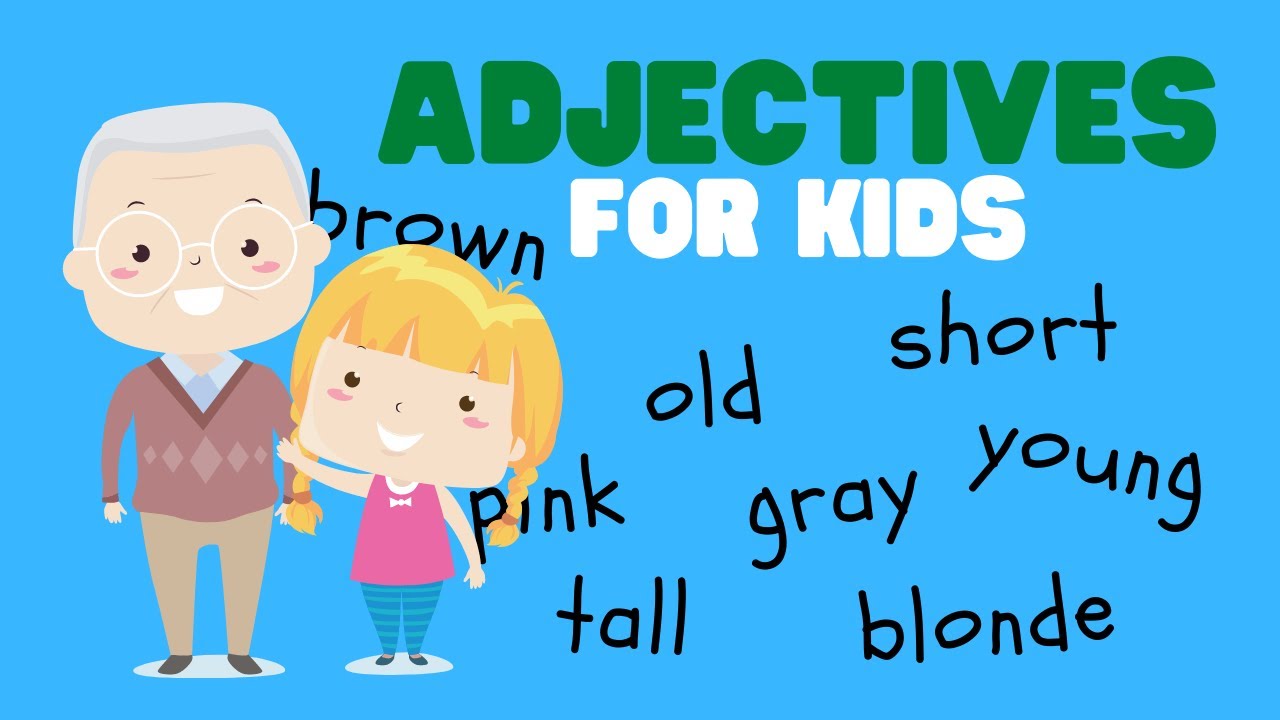
Have you ever asked "What is an adjective?" Well, look no further! In this video for kids we learn all about adjectives, what they are, and how to use them in sentences. When completed with our free lesson plan activities, Students will be able to define, identify, and correctly use adjectives. We hope you enjoy!
Looking for more Adjectives for Kids resources? Download our free comprehensive lesson plans here: https://learnbright.org/?s=adjectives
Check out some of our other videos related to parts of speech here:
Verbs: https://youtu.be/OEC0YpLKU_o
Nouns: https://youtu.be/lUJI6ZJggsY
Action and Being Verbs: https://youtu.be/iwfUZAYyqR0
Thank you for watching and learning with us! We’re constantly releasing new content and videos so click that “Subscribe” button and you’ll notified.
Find and Follow Us Online:
Facebook: https://www.facebook.com/LearnBright/
Instagram: https://instagram.com/LearnBrightEducation
Pinterest: https://pinterest.com/LearnBrightEducation
YouTube: https://www.youtube.com/LearnBright
Website: https://learnbright.org/
*Teachers and Parents! Did you know? In addition to these great videos, we have also created a library of high quality and engaging lessons for your elementary aged student(s). Visit us, sign up for a free account, and instantly you'll have access to thousands of lesson plans, learning materials, teaching instructions, activities, and assignments that your kids will really enjoy! We hope to see you soon!
Browse our entire collection of Language Arts lesson plans: https://learnbright.org/lessons/?filter_subject=language-arts
#Adjectives

WEBSITE: http://www.teachertube.com/math
Slope dude loves to ski. He teaches us by talking while he skis the course. We learn from him that uphill slopes are positive Downhill slopes are negative flat slopes are zero and vertical "slopes" are undefined. Thanks to high school math teacher Kim Hughey for concept of Slope Dude.

Did you know that millions of years ago, all the land on the earth was connected? Pangea for Kids explores the history of the earth. You will discover some pretty interesting facts about the planet we live on! So let's get into it. How and why doe the earth look the way it does today?
Pangea was a supercontinent, meaning that all the continents we know of today were part of the same land mass. Keep in mind, this was nearly 300 million years ago. Scientists have discovered that the continents today are like big puzzle pieces that all fit together. They realized the possibility of a supercontinent when they discovered fossils of certain dinosaurs in areas that are currently separated by oceans.
But how did the continents split? The earth is made up of several different sections called plates. These tectonic plates in the earth's crust move incredibly slowly over the mantle layer of the planet. The constant movement of the plates changed what the land looked like on the surface. Sometimes the plates bumped each other. Other times they moved apart. And they also slid side by side. Over time—millions and millions of years—the continents we know of today separated more and more.
We hope you and your student(s) enjoyed learning about Pangea! If you want to learn even more, head over to our website and download one of our many lesson plans, full of activities, worksheets, and more!
https://learnbright.org/lesson....s/social-studies/pan
Thank you for watching and learning with us! We’re constantly releasing new content and videos, so click that “Subscribe” button and you’ll get notified.
Find and Follow Us Online:
Facebook: https://www.facebook.com/LearnBright/
Instagram: https://instagram.com/LearnBrightEducation
Pinterest: https://pinterest.com/LearnBrightEducation
YouTube: @LearnBright
Website: https://learnbright.org/
*Teachers and Parents! Did you know? In addition to these great videos, we have also created a library of high-quality and engaging lessons for your elementary aged student(s). Visit us, sign up for a free account, and instantly you'll have access to thousands of lesson plans, learning materials, teaching instructions, activities, and assignments that your kids will really enjoy! We hope to see you soon!
Browse our entire collection of Science lesson plans: https://learnbright.org/lessons/?filter_subject=science
#Pangea
#PangeaForKids

WEBSITE: http://www.teachertube.com How to divide Root Rectangles into equal parts using GeoGebra

¡Hola estudiantes de español! 👋 En esta Parte 3 de nuestra serie, aprenderás los 50 verbos más importantes para principiantes, con ejemplos de la vida real que te ayudarán a usarlos con confianza. ¡Perfecto para ampliar tu vocabulario rápido!
📌 En este video aprenderás:
Verbos de acción (construir, conducir, volar).
Verbos de rutina (cocinar, limpiar, leer).
Verbos de interacción social (celebrar, cantar, bailar).
¡Y mucho más!
🔍 Ejemplos útiles incluidos:
"Sarah hornea un pastel de chocolate" (verbo: hornear).
"Celebramos el cumpleaños de Anna en el jardín" (verbo: celebrar).
"Laura sale a correr todos los días" (verbo: salir).
💬 ¡Practica en los comentarios!
Escribe una frase usando tu verbo favorito del video. ¿Es "soñar", "bailar" o "construir"? ¡Nos encantará leerte!
👇 ¿Te perdiste las Partes 1 y 2?
https://youtu.be/1xbBH34MiX0
https://youtu.be/2t-MFkyC1w4
🔔 ¡Suscríbete y activa la campanita!
Todos los domingos subimos videos nuevos para que aprendas español de manera fácil y divertida.

Courses on Khan Academy are always 100% free. Start practicing—and saving your progress—now: https://www.khanacademy.org/ma....th/algebra/x2f8bb115
This example of combining like terms in an expression gets a little hairy. Listen closely.
Practice this lesson yourself on KhanAcademy.org right now:
https://www.khanacademy.org/math/algebra/introduction-to-algebra/manipulating-expressions/e/combining_like_terms_1?utm_source=YT&utm_medium=Desc&utm_campaign=AlgebraI
Watch the next lesson: https://www.khanacademy.org/math/algebra/introduction-to-algebra/manipulating-expressions/v/combining-like-terms-and-the-distributive-property?utm_source=YT&utm_medium=Desc&utm_campaign=AlgebraI
Missed the previous lesson?
https://www.khanacademy.org/math/algebra/introduction-to-algebra/manipulating-expressions/v/combining-like-terms-2?utm_source=YT&utm_medium=Desc&utm_campaign=AlgebraI
Algebra I on Khan Academy: Algebra is the language through which we describe patterns. Think of it as a shorthand, of sorts. As opposed to having to do something over and over again, algebra gives you a simple way to express that repetitive process. It's also seen as a "gatekeeper" subject. Once you achieve an understanding of algebra, the higher-level math subjects become accessible to you. Without it, it's impossible to move forward. It's used by people with lots of different jobs, like carpentry, engineering, and fashion design. In these tutorials, we'll cover a lot of ground. Some of the topics include linear equations, linear inequalities, linear functions, systems of equations, factoring expressions, quadratic expressions, exponents, functions, and ratios.
About Khan Academy: Khan Academy offers practice exercises, instructional videos, and a personalized learning dashboard that empower learners to study at their own pace in and outside of the classroom. We tackle math, science, computer programming, history, art history, economics, and more. Our math missions guide learners from kindergarten to calculus using state-of-the-art, adaptive technology that identifies strengths and learning gaps. We've also partnered with institutions like NASA, The Museum of Modern Art, The California Academy of Sciences, and MIT to offer specialized content.
For free. For everyone. Forever. #YouCanLearnAnything
Subscribe to Khan Academy’s Algebra channel:
https://www.youtube.com/channe....l/UCYZrCV8PNENpJt36V
Subscribe to Khan Academy: https://www.youtube.com/subscr....iption_center?add_us

WEBSITE: http://www.teachertube.com closure property of addition

WEBSITE: http://www.teachertube.com Nofrills screen cast on simplifying 8/27 to the 2/3 power

WEBSITE: http://www.teachertube.com The video demonstrates how to use screen capture to copy and paste your work or content from CmapTools to Word.

Courses on Khan Academy are always 100% free. Start practicing—and saving your progress—now: https://www.khanacademy.org/ma....th/differential-calc
Differential calculus on Khan Academy: Limit introduction, squeeze theorem, and epsilon-delta definition of limits.
About Khan Academy: Khan Academy offers practice exercises, instructional videos, and a personalized learning dashboard that empower learners to study at their own pace in and outside of the classroom. We tackle math, science, computer programming, history, art history, economics, and more. Our math missions guide learners from kindergarten to calculus using state-of-the-art, adaptive technology that identifies strengths and learning gaps. We've also partnered with institutions like NASA, The Museum of Modern Art, The California Academy of Sciences, and MIT to offer specialized content.
For free. For everyone. Forever. #YouCanLearnAnything
Subscribe to KhanAcademy’s Differential Calculus channel:
https://www.youtube.com/channe....l/UCNLzjGl1HBdZrHXo4
Subscribe to KhanAcademy: https://www.youtube.com/subscr....iption_center?add_us

En este nuevo vídeo aprenderemos a pedir una cita para ver un apartamento y las típicas preguntas que se hacen sobre una propiedad antes de alquilarla o compararla.
Es un vídeo lleno de diálogos y de vocabulario relacionado con el alquiler de un piso.
Podrás practicar diálogos en español y aprender un montón de vocabulario.
Vocabulario sobre propiedades
Vocabulario para alquilar
Vocabulario para alquilar un apartamento
Vocabulario para pedir una cita
¿Cuándo tiene una cita libre?
Vocabulario para alquilar una propiedad
Diálogos con la inmobiliaria
Concertar una cita por teléfono
Clase 98
Suscríbete a nuestro canal🔔