Top videos
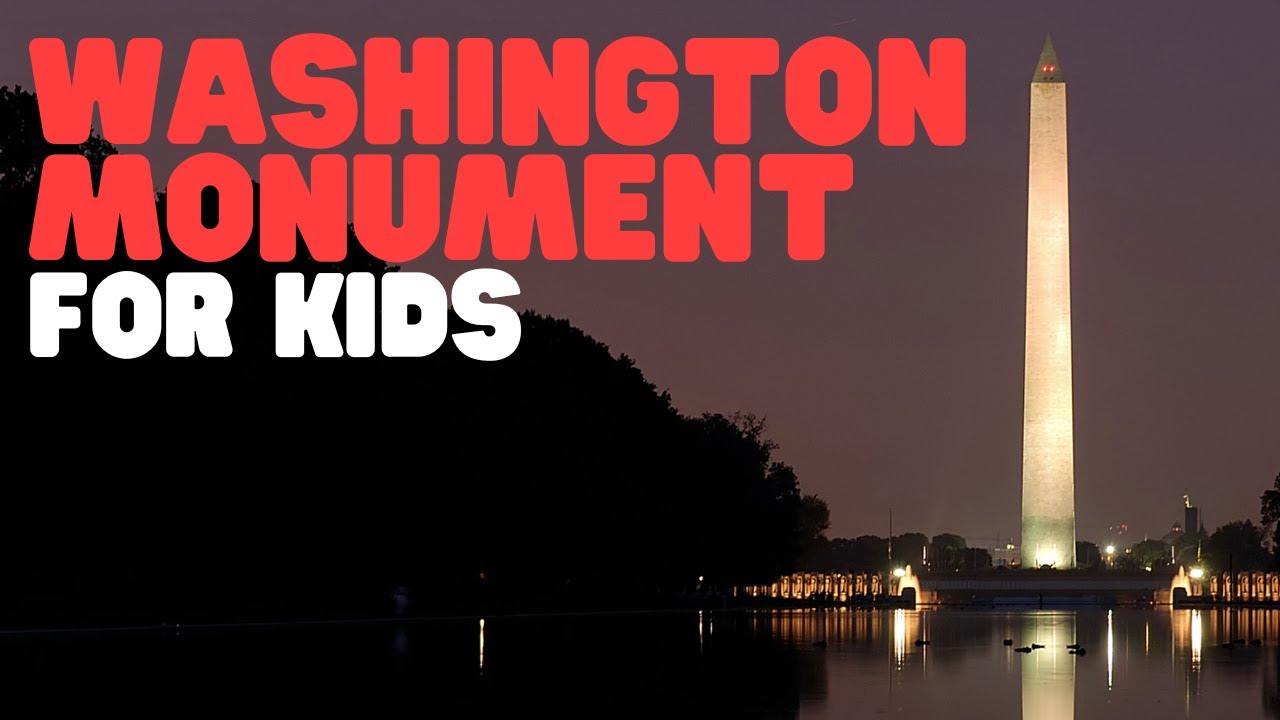
Have you ever seen, in person or in photographs, the giant obelisk in Washington, DC? This tall building at the opposite end of the reflection pool in front of the Lincoln Memorial has quite a bit of history behind it. Named after George Washington, the monument was designed by Robert Mills following a competition for designs held in 1836 by the Washington Monument Society.
The construction of the monument took place in two phases due to lack of funds, political turmoil, and uncertainty about the survival of the country. No construction took place between 1856 and 1876. During the first phase between 1848 and 1856, they constructed the first 150 feet of the monument, composed of a pile of bluestone gneiss unfinished rubble stones held together by mortar.
The remainder of the monument was constructed between 1876 and 1884. It was composed of finished marble surface stones and partially backed by finished granite stones. The difference in the shading of the monument can be seen where the construction was halted and later resumed with the marble from a different source.
Surrounding the monument on the outside perimeter are fifty American flags flying 24 hours a day on a large circle of flagpoles centered on the monument. In 2011, an earthquake in the area slightly damaged the monument with over 150 cracks. Most of the damage occurred in the pyramid section at the top. Speaking of the pyramid top, the monument was originally going to have a flat top instead.
We hope you and your student(s) enjoyed learning about George Washington Carver! If you want even more information, head over to our website and download one of our many free lesson plans, full of activities, worksheets, and more!
https://learnbright.org/lesson....s/social-studies/all
Thank you for watching and learning with us! We’re constantly releasing new content and videos, so click that “Subscribe” button and you’ll get notified.
What you will learn in this video:
0:00 Introduction to the monument
0:21 Interesting facts about the Washington Monument
1:24 History and construction of the obelisk structure
2:42 Internal and external features
3:30 What you can see from the top
4:06 Review of the facts
Find and Follow Us Online:
Facebook: https://www.facebook.com/LearnBright/
Instagram: https://instagram.com/LearnBrightEducation
Pinterest: https://pinterest.com/LearnBrightEducation
YouTube: @LearnBright
Website: https://learnbright.org/
*Teachers and Parents! Did you know? In addition to these great videos, we have also created a library of high quality and engaging lessons for your elementary aged student(s). Visit us and sign up for a free account, and you'll instantly have access to thousands of lesson plans, learning materials, teaching instructions, activities, and assignments that your kids will really enjoy! We hope to see you soon!
Browse our entire collection of Social Studies lesson plans: https://learnbright.org/lessons/?filter_subject=social-studies
#WashingtonMonument
#GeorgeWashington

Hent materialet her: https://anettekmatematik.com/s....adan-kender-jeg-tall
Sådan kender jeg tallet passer sammen med værkstederne “Byg tallet” og “Byg små tal”, som du også kan finde på min side.
I dette værksted skal eleverne kende tallene på mange forskellige måder. De bruger nummerbrikker, kortspil, snorlinger og terninger.
Alt sammen giver dem en masse forskellige repræsentationer af tallene, og der er basis for mange gode snakke med eleverne.
Værkstedet egner sig typisk til 0-1.klasse.
Følg mig gerne her:
https://facebook.com/anettekmatematik/
https://instagram.com/anettekmatematik/
https://www.youtube.com/channe....l/UCR8PqEuBE7OlORn2y
https://anettekmatematik.com/
#matematikhjælp #matematikiindskolingen #regnemetode
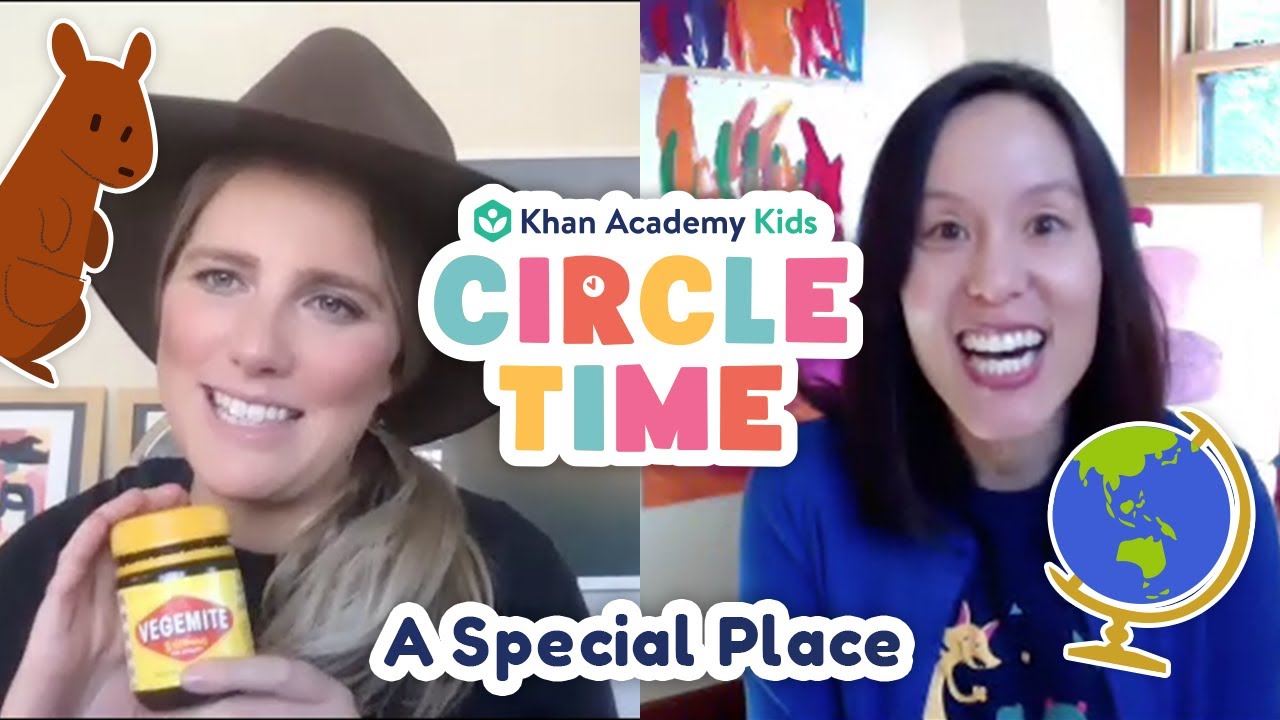
Join Caroline and Sophie for Circle Time as they read the book “A Special Place” by Cynthia Platt. In the story, Sandy describes her favorite photos, memories, and keepsakes that make her room special. Peck listens with interest about where Sandy is from, and together they make a plan to visit Australia someday. As kids read along, they can share their own stories about their favorite things and what makes them special.
Don’t miss our printable activities for hands-on fun after the show!
http://khan.co/KhanKids-Printables
Learn more about Khan Academy Kids, our free educational app for children ages 2-7 at http://www.khankids.org.
Available on Apple, Google Play, and Amazon app stores:
http://khan.co/KhanKids-YT-Apple
http://khan.co/KhanKids-YT-Google
http://khan.co/KhanKids-YT-Amazon
Subscribe to our channel so you don’t miss a single episode of Circle Time!
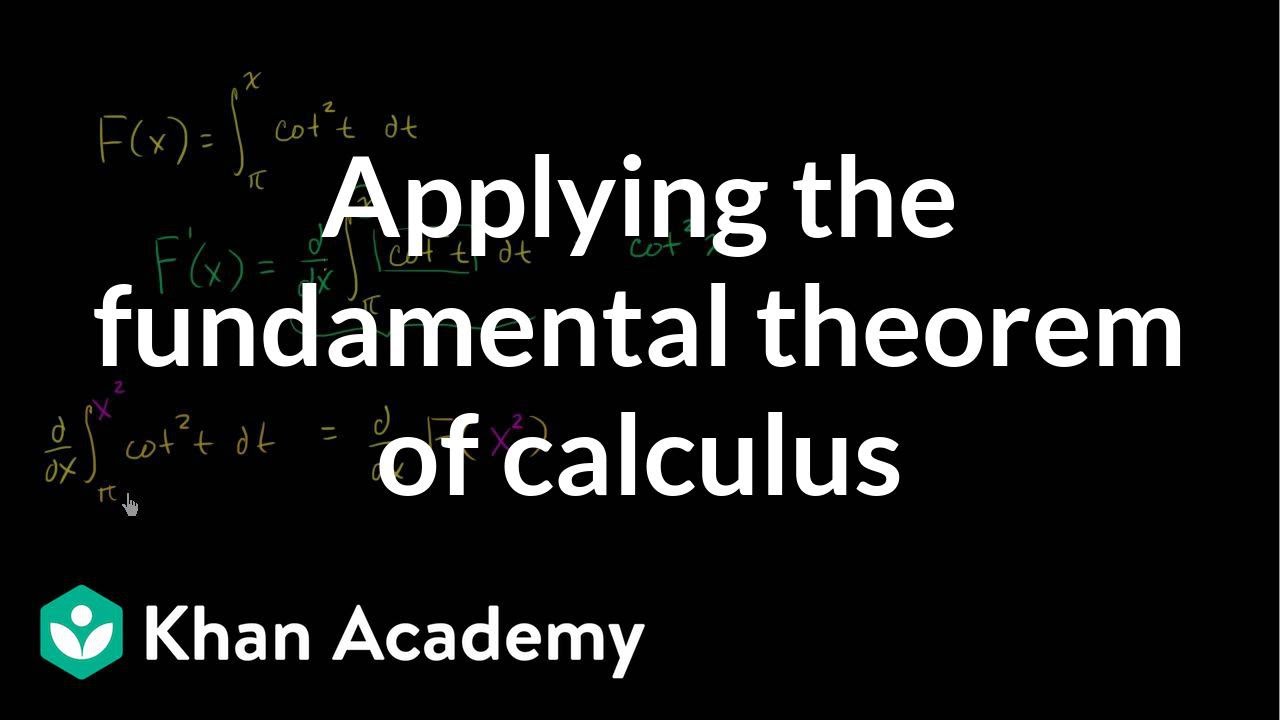
See what the fundamental theorem of calculus looks like in action. Created by Sal Khan.
Practice this lesson yourself on KhanAcademy.org right now: https://www.khanacademy.org/math/ap-calculus-ab/ab-antiderivatives-ftc/ab-fundamental-theorem-of-calc/e/the-fundamental-theorem-of-calculus?utm_source=YT&utm_medium=Desc&utm_campaign=APCalculusAB
Watch the next lesson: https://www.khanacademy.org/math/ap-calculus-ab/ab-antiderivatives-ftc/ab-fundamental-theorem-of-calc/v/swapping-the-bounds-for-definite-integral?utm_source=YT&utm_medium=Desc&utm_campaign=APCalculusAB
Missed the previous lesson? https://www.khanacademy.org/math/ap-calculus-ab/ab-antiderivatives-ftc/ab-fundamental-theorem-of-calc/v/connecting-the-first-and-second-fundamental-theorems-of-calculus?utm_source=YT&utm_medium=Desc&utm_campaign=APCalculusAB
AP Calculus AB on Khan Academy: Bill Scott uses Khan Academy to teach AP Calculus at Phillips Academy in Andover, Massachusetts, and heÕs part of the teaching team that helped develop Khan AcademyÕs AP lessons. Phillips Academy was one of the first schools to teach AP nearly 60 years ago.
About Khan Academy: Khan Academy is a nonprofit with a mission to provide a free, world-class education for anyone, anywhere. We believe learners of all ages should have unlimited access to free educational content they can master at their own pace. We use intelligent software, deep data analytics and intuitive user interfaces to help students and teachers around the world. Our resources cover preschool through early college education, including math, biology, chemistry, physics, economics, finance, history, grammar and more. We offer free personalized SAT test prep in partnership with the test developer, the College Board. Khan Academy has been translated into dozens of languages, and 100 million people use our platform worldwide every year. For more information, visit www.khanacademy.org, join us on Facebook or follow us on Twitter at @khanacademy. And remember, you can learn anything.
For free. For everyone. Forever. #YouCanLearnAnything
Subscribe to Khan AcademyÕs AP Calculus AB channel: https://www.youtube.com/channe....l/UCyoj0ZF4uw8VTFbml
Subscribe to Khan Academy: https://www.youtube.com/subscr....iption_center?add_us

Check out AppSumo lifetime deals on Krisspy! https://appsumo.8odi.net/19P1Ed
🚀 Become an AI Master – All-in-one AI Learning https://aimaster.me/pro
Description
In this video I will guide you through a complete breakdown of how “GPT-o1” differs from “GPT-4o,” reveal the pros and cons of each model, and share my best tips for prompting GPT-o1 to unlock powerful deep reasoning, coding, and research capabilities. You’ll also see how features like “Deep Research” can transform your workflow, whether you’re a developer, a student, a YouTuber, or just someone looking to tap into next-level AI. Plus, I’ll compare GPT-o1 to “o1 Pro,” show you how to handle data processing, and explore the speedy new “o3” models. If you’re curious about taking your AI skills to a whole new level, this video is for you!
Chapters:
0:00 - Intro
0:36 - GPT-o1 vs GPT-4o
2:33 - Drawbacks of the o1
5:17 - Deep Research Feature
6:49 - How to Prompt for GPT-o1
7:16 - Tip #1: Use phrases like “detailed report” or “in-depth analysis”
8:15 - Tip #2: Remember GPT-o1 isn’t web-connected without Deep Research
8:57 - Tip #3: Ask explicitly for step-by-step reasoning
9:36 - Tip #4: Ask for citations if you need authoritative sources
10:24 - Tip #5: Keep prompts clear and to the point
10:51 - Tip #6: Start prompts with “Find” when Deep Research is on
11:28 - Tip #7: Provide your own data and detailed context
13:33 - Tip #8: Spell out how you want your answer formatted (tables, bullet points)
14:03 - Tip #9: Use follow-up questions wisely; GPT-o1 can be slow
14:33 - Tip #10: Vet the sources found via Deep Research
15:04 - Tip #11: Assign a specific role for better context
16:06 - Tip #12: Leverage GPT-o1’s math and coding strengths
16:54 - Tip #13: Use image OCR for text or charts in GPT-o1
17:34 - Tip #14: Specify how many sources to “Collate” in Deep Research
17:54 - Tip #15: Ask ChatGPT to fact-check critical info with “Check if this is true”
18:18 - Tip #16: Break large tasks into steps in one prompt
18:58 - Tip #17: Model-switch “downward” if you need speed or a different angle
19:20 - Tip #18: Keep chats organized; start new chats for new topics
19:49 - Tip #19: Use “projects” to stay organized (naming each chat)
20:16 - Tip #20: Be patient and iterate on your prompts
20:34 - Data Processing with o1
20:57 - GPT-o1 vs o1 Pro
22:24 - GPT-o3 mini and GPT-o3-high
23:59 - Real-World Use Cases
29:39 - Finale

Unlock the mysteries and inner workings of the world through one of the most imaginative art forms ever -- mathematics -- with Roger Antonsen, as he explains how a slight change in perspective can reveal patterns, numbers and formulas as the gateways to empathy and understanding.
TEDTalks is a daily video podcast of the best talks and performances from the TED Conference, where the world's leading thinkers and doers give the talk of their lives in 18 minutes (or less). Look for talks on Technology, Entertainment and Design -- plus science, business, global issues, the arts and much more.
Find closed captions and translated subtitles in many languages at http://www.ted.com/translate
Follow TED news on Twitter: http://www.twitter.com/tednews
Like TED on Facebook: https://www.facebook.com/TED
Subscribe to our channel: http://www.youtube.com/user/TEDtalksDirector

Vocabulario para ir de compras en español
En este video veremos una escena típica de ir de compras, con muchísimo vocabulario y diálogos.
En el diálogo entre el vendedor y la clienta veremos los colores, descripción de los productos, distintos tipos de muebles, reformulación de frases, formas de envío, el precio de los productos, las condiciones de la garantía y muchísimo vocabulario más.
Aprende español con escenas de la vida cotidiana, con videos divertidos y llenos de diálogos.
Aprender español es fácil si te suscribes a nuestro canal. Un nuevo video todos los domingos. 🔔

Students are given a difficult challenge that requires they integrate what they have learned so far in the unit about wait blocks, loops and switches. They incorporate these tools into their programming of the LEGO® MINDSTORMS® robots to perform different tasks depending on input from two touch sensors. This activity helps students understand how similar logic is implemented for other every day device operations via computer programs. A PowerPoint® presentation, pre/post quizzes and worksheet are provided.
View the full activity at TeachEngineering:
https://www.teachengineering.o....rg/activities/view/u
TeachEngineering has over 1,500 FREE lessons and activities. Visit http://www.TeachEngineering.org for more!
Music: Hot Mess - Audionautix
Hot Mess by Audionautix is licensed under a Creative Commons Attribution license (https://creativecommons.org/licenses/by/4.0/)
Artist: http://audionautix.com/
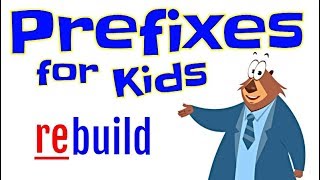
This is going to ROCK! Learn about prefixes in this language arts video for kids! You will learn what prefixes are, how they work and how to use them! Hint: you already use them, maybe without even realizing it!!
❤️ Homeschool Pop? Join our team and get tattoos here: http://homeschoolpop.com
Thanks for learning with us today! We hope to see you next video!
Homeschool Pop Team
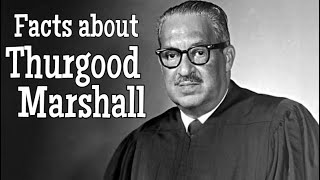
Learn facts about Thurgood Marshall in this biography for kids! In this classroom edition of our Thurgood Marshall video, kids will learn all about Thurgood Marshall, the first African-American Supreme Court Justice!
Homeschool Pop offers a unique, dynamic learning experience. We strive to have the right balance of silliness and learning to keep students engaged as we look at the life of Thurgood Marshall in this biography.
We hope you enjoyed the classroom edition of the Thurgood Marshall video! Thanks for watching, and we hope you will keep watching and learning. You are awesome!
Homeschool Pop Team
Facts about Thurgood Marshall
Discover hundreds of never-before-seen resources! Create your free account at https://my.happylearning.tv/ and start learning in the most entertaining way.
What are you waiting for? 🌟Twinkle Twinkle little star… But why do you twinkle so bright?
🌟Find out the science behind why stars shine every night above us 🌠🌃
👉SUBSCRIBE TO HAPPY LEARNING! http://bit.ly/HappyLearningTV
👉Web site: https://happylearning.tv/en/
👉Follow us on Facebook: https://www.facebook.com/HappyLearningTv
Recommended video: Lunar Eclipses: What is a blood moon?
https://youtu.be/bcrIGzQ1Ur4
-----
Hello friends! Welcome to a new Happy Learning video.
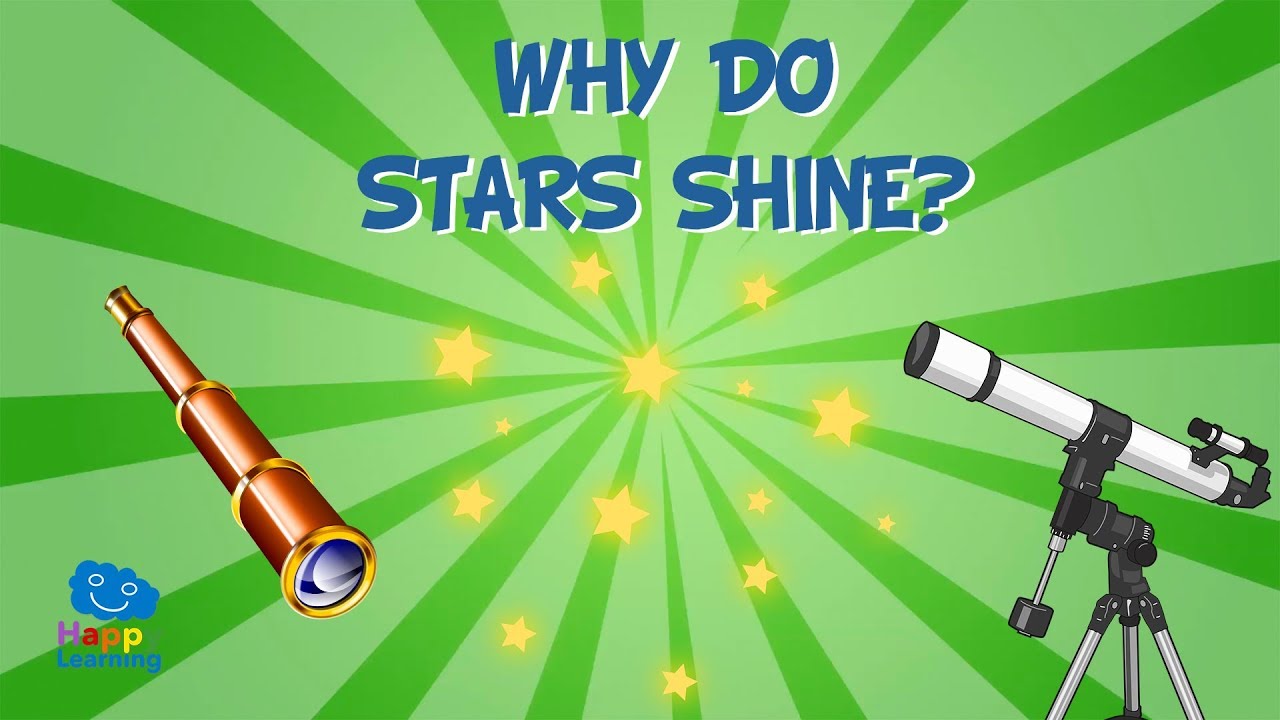
Today, we’re going to know why the stars, shine!
In summer, I love to watch the stars shine bright. They make me think and look back on many things…
Stars shine because they are gigantic burning hot gas spheres that release heat and light. They are so bright because there are atomic reactions inside them, that convert hydrogen into helium. Their temperature can reach 10.000 degrees centigrade. According to the colours they give off, astronomers know if they are hotter or cooler.
Our sun is a medium sized yellow star. Stars smaller than the sun are reddish and larger ones are blue.
Stars live for thousands of millions of years, but they always end up becoming extinguished.
When we look into the sky at night we can see hundreds and hundreds of stars. Some of them, either because they are very big or because they are closer to Earth, are very visible. Others, which are smaller or further away are tiny points that can hardly be seen.
At a glance from Earth, we can see about 2000 stars, but really, there are thousands and thousands of stars in the universe, but nobody knows exactly how many there are.
In the past, stars were very important for sailor’s orientation. Because of the Polar Star, the Ursa Major or Venus, sailors knew what directions to take and got to their destinations safe and sound. To see the stars better, they used devices such as the telescope.
The telescope is a gadget that works with light and is used to watch far away objects a lot clearer than by glance.
But… who was the inventor of the telescope?
The truth is we don’t know with certainty, but it was Galileo in 1609 who, using an invention by a Dutch man called Lippershey (Lipershy), built the first telescope that was used to look at the stars and because world famous.
Well, now we know why stars shine and the instrument so we can look at them. The truth is I love stars. What about you?
Goodbye friends! And don’t forget to subscribe to Happy Learning Tv!

https://www.patreon.com/homeschoolpop Learn all about Earth Day in this video! You'll learn why Earth Day is a holiday, how to participate, and more!
00:00 Introduction
0:17 When is Earth Day?
0:49 Why do we celebrate Earth Day?
1:53 Recycling explained for kids
3:32 Saving electricity
4:09 Planting trees
5:09 The history of Earth Day
6:19 Earth Day today
6:37 How to celebrate Earth Day
❤️ Homeschool Pop? Join our team and get tattoos here: http://homeschoolpop.com
Don't forget to follow us on Instagram:
https://www.instagram.com/homeschoolpop/?hl=en
Music credits:
Digital Lemonade by Kevin MacLeod
Link: https://incompetech.filmmusic.io
License: http://creativecommons.org/licenses/by/4.0/
Jellyfish in Space Kevin MacLeod
Link: https://incompetech.filmmusic.io
License: http://creativecommons.org/licenses/by/4.0/
Electrodoodle by Kevin MacLeod
Link: https://incompetech.filmmusic.io/song/3707-electrodoodle
License: https://filmmusic.io/standard-license
Rocket by Kevin MacLeod
Link: https://incompetech.filmmusic.io/song/3707-electrodoodle
License: https://filmmusic.io/standard-license
Sock Hop by Kevin MacLeod
Link: https://incompetech.filmmusic.io/song/3707-electrodoodle
License: https://filmmusic.io/standard-license
Thanks for watching!
We'll see you next video!
Discover hundreds of never-before-seen resources! Create your free account at https://my.happylearning.tv/ and start learning in the most entertaining way.

A collection of useful and funny videos for children from Nastya and dad. Enjoy watching kids)
Instagram https://instagram.com/likenastya
TikTok https://www.tiktok.com/@likenastya
Facebook https://www.facebook.com/likenastya
Generative AI tools are here to stay. There’s a debate around whether or not they should be embraced in spaces of learning. Recent reports suggest that the risks of using these tools might outweigh the benefits, threatening cognitive development by doing the thinking for their users. This is forcing educators into a dilemma: how do they make the most of AI’s potential, while also protecting students’ ability to think for themselves? In this episode, host Samantha Laine Perfas talks with cognitive scientist Tina Grotzer, applied mathematics professor Michael Brenner, and educator Ying Xu about how to use AI tools to enhance learning, rather than replace it.

Thousands of parents and educators are turning to the kids’ learning app that makes real learning truly fun. Try Kids Academy with
3-day FREE TRIAL! https://bit.ly/2GuGyL2
This engaging video features coins and dollars to strengthen money math knowledge, while an experienced teacher to guides your child through this critical Grade 1 skill! There’s no better way to learn this real-world concept than with the support and expertise of a real teacher guiding your child every step of the way!
As your child watches, he or she will practice:
• Understanding the value of coins and dollars
• Counting and comparing money amounts
• Using important math vocabulary, like “greater than”, “less than”, and “equal to”
Open in the app this useful money math worksheet and start watching to practice this important Grade 1 skill!
#TalentedAndGifted #LearnWithKidsAcademy
Kids Academy Talented and Gifted Program for kids aged 2-10:
App Store: https://smart.link/59833db06a6b8
Google Play: https://smart.link/597210af6eb83
*****
Subscribe to our channel: https://goo.gl/iG2Bdr
Connect with us on :
Our site: https://www.kidsacademy.mobi/
Facebook: https://www.facebook.com/KidsAcademyCompany
Twitter: https://twitter.com/KidsAcademyCo

Visit https://www.abcmouse.com/learn/youtube to learn more about our award-winning online learning program for children 2-8!
Celebrate friendship and creativity in this 1-hour compilation of fun and learning with ABCmouse! 💘 Kick things off with a glittery adventure in “My Funny Valentine” as ABC, 123, and DoReMi work together to make a surprise Valentine card. Then keep the fun going with more Backpack Adventures, creative thinking in Art with Violet, and toe-tapping Letter Song music videos! 🎒🎨🎶
This joyful mix of stories, songs, and silliness is perfect for preschoolers who love to learn while they play!
👉 Discover more fun learning songs and educational videos by subscribing to our YouTube channel at https://YouTube.com/ABCmouse.
And visit https://www.abcmouse.com/learn/youtube to find out more about our award-winning online learning program for children 2–8!

Pre-order our book YOU ARE AN ARTIST (which includes new assignments!) here: http://bit.ly/2kplj2h
This week we meet D.C. based artist Molly Springfield. Molly's graphite drawings transform texts into images, and her assignment for you asks you to consider how repeating a process can turn a copy into an original.
INSTRUCTIONS - Copy A Copy A Copy
1. Select a page from a book and make a photocopy of it
2. Make a photocopy of the photocopy and make changes, if you like, by enlarging, reducing, etc.
3. Repeat step #2 until the original has been transformed into a new image
4. Upload the final copy using #theartassignment (Extra credit if you make a work in a new medium!)
5. Fame and glory (Your work might be in a future episode)
Learn more about Molly's work:
https://mollyspringfield.com/home.html
We then discussed artists like Mel Bochner that used the photocopier in their conceptual art since its beginnings.
Find out more about The Art Assignment and how to submit your response: http://theartassignment.com/

Do you ever wonder what a coral reef really is? In this video we will learn all about coral reefs for kids. We will cover what makes up a coral reef like coral polyps and their exoskeletons, we will learn about famous coral reefs like the great barrier reef, we will also explore the various kinds of coral reefs.There Are Three Main Types Of Coral Reefs: Fringe Reef, Barrier Reef and Atoll Reef.
Fringe Reef grow close to the shorelines of continents and islands and can be attached to the shore, or there may be a narrow strip of water called a lagoon or channel between the land and the reef.
Barrier Reefs occur farther offshore, such as the Great Barrier Reef, often several miles from the shorelines of continents and islands. Las but not least, Atoll reefs which is a ring of coral surrounding a lagoon of water. It usually begins as a fringe reef around a volcanic island. As the coral expands and grows, the island sinks into the ocean leaving the ring of coral. Some are so big, people live on them.
If you want even more we didn't stop at this video! If you want even more activities and learning resources we invite you to download our free 12 page lesson plan, jam packed with more great coral reef information. Download here: https://learnbright.org/lesson....s/science/coral-reef
Thank you for watching and learning with us! We’re constantly releasing new content and videos, so click that “Subscribe” button and you’ll get notified.
Find and Follow Us Online:
Facebook: https://www.facebook.com/LearnBright/
Instagram: https://instagram.com/LearnBrightEducation
Pinterest: https://pinterest.com/LearnBrightEducation
YouTube: https://www.youtube.com/LearnBright
Website: https://learnbright.org/
*Teachers and Parents! Did you know? In addition to these great videos, we have also created a library of high quality and engaging lessons for your elementary aged student(s). Visit us, sign up for a free account, and instantly you'll have access to thousands of lesson plans, learning materials, teaching instructions, activities, and assignments that your kids will really enjoy! We hope to see you soon!
Browse our entire collection of Science lesson plans: https://learnbright.org/lessons/?filter_subject=science
#ASL
#CoralReefs
#TypesOfCoral