Top videos

In this activity, students explore the importance of charts to navigation on bodies of water. Using one worksheet, students learn to read the major map features found on a real nautical chart. Using another worksheet, students draw their own nautical chart using the symbols and identifying information learned.
View the full activity on TeachEngineering:
https://www.teachengineering.o....rg/activities/view/c
TeachEngineering has over 1,500 FREE lessons and activities. Visit https://www.teachengineering.org/ for more
Music: Rain - Santo Rico

A unique activity for young learners that combines engineering and biology, students design an optimal environment for red wiggler worms in a compost bin using the engineering design process. Students learn about living and non-living things, the habitat of red wigglers, how red wigglers help convert organic waste into soil, as well as composting in nature and as a sustainable practice.
View the full activity on TeachEngineering:
https://www.teachengineering.o....rg/activities/view/u
TeachEngineering has over 1,500 FREE lessons and activities. Visit https://www.teachengineering.org/ for more!
Music: Daily_Beetle -Kevin MacLeod

Students create large-scale models of microfluidic devices using a process similar to that of the PDMS and plasma bonding that is used in the creation of lab-on-a-chip devices. They use disposable foam plates, plastic bendable straws and gelatin dessert mix. After the molds have hardened overnight, they use plastic syringes to inject their model devices with colored fluid to test various flow rates. From what they learn, students are able to answer the challenge question presented in lesson 1 of this unit by writing individual explanation statements.
View the full activity at TeachEngineering: https://www.teachengineering.o....rg/activities/view/v
TeachEngineering has over 1,500 FREE lessons and activities. Visit http://www.TeachEngineering.org for more!
Music: Roger That- Silent Partner

Student teams create, test and improve oil spill cleanup kits, designing them to be inexpensive and accessible for homeowners to use or for big companies to give to individual workers to aid in personal home, community or corporate environmental oil cleanup. After deciding on a target user and scenario, teams conduct research and draw from an assortment of ordinary materials and supplies.
View the full activity at TeachEngineering:
https://www.teachengineering.o....rg/makerchallenges/v
TeachEngineering has over 1,500 FREE lessons and activities. Visit https://www.teachengineering.org/ for more!
Music: Trapped - Quincas Moreira
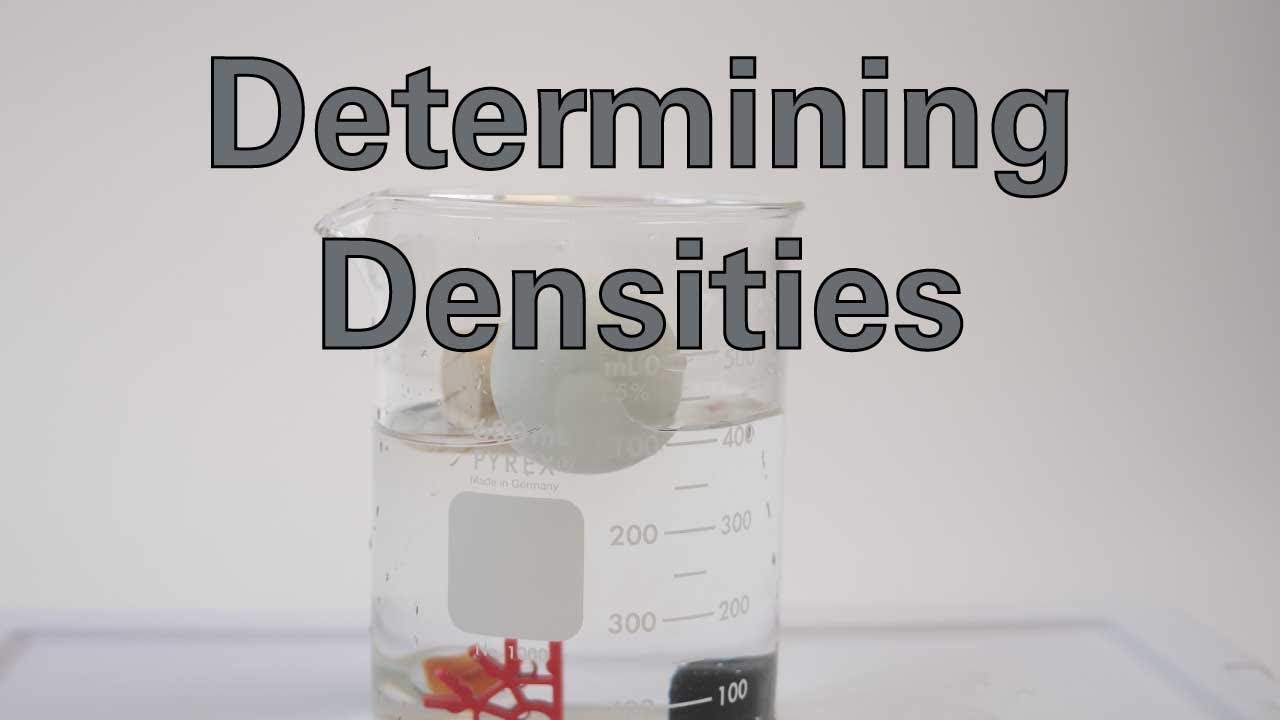
Students use two different methods to determine the densities of a variety of materials and objects. The first method involves direct measurement of the volumes of objects that have simple geometric shapes. The second is the water displacement method, used to determine the volumes of irregularly shaped objects. After the densities are determined, students create x-y scatter graphs of mass versus volume, which reveal that objects with densities less than water (floaters) lie above the graph's diagonal (representing the density of water), and those with densities greater than water (sinkers) lie below the diagonal.
View the full activity at TeachEngineering:
https://www.teachengineering.org/acti...
TeachEngineering has over 1,500 FREE lessons and activities.
Visit http://www.TeachEngineering.org for more!
Music: Toe Jam - Diamond Ortiz

Students design, build and test reflectors to measure the effect of solar reflectance on the efficiency of solar PV panels. They use a small PV panel, a multimeter, cardboard and foil to build and test their reflectors in preparation for a class competition. Then they graph and discuss their results with the class. Complete this activity as part of the Photovoltaic Efficiency unit and in conjunction with the Concentrated Solar Power lesson.
View the full activity at TeachEngineering:
https://www.teachengineering.o....rg/activities/view/c
TeachEngineering has over 1,500 FREE lessons and activities. Visit http://www.TeachEngineering.org for more!
Music: Sunday Spirit - Audioautix
Sunday Spirit by Audionautix is licensed under a Creative Commons Attribution license (https://creativecommons.org/licenses/by/4.0/)
Artist: http://audionautix.com/

Working individually or in groups, students explore the concept of stress (compression) through physical experience and math. They discover why it hurts more to poke themselves with mechanical pencil lead than with an eraser. Then they prove why this is so by using the basic equation for stress and applying the concepts to real engineering problems.
View the full activity on TeachEngineering:
https://www.teachengineering.o....rg/activities/view/w
TeachEngineering has over 1,500 FREE lessons and activities. Visit https://www.teachengineering.org/ for more
Music - Tyler Kimbell

Students learn the purpose of a fever in the body's immune system and how it protects the body against germs. The students continue to explore temperature by creating a model thermometer and completing a temperature conversion worksheet. They come to see how engineers are involved in designing helpful medical instruments such as thermometers.
View the full activity on TeachEngineering: https://www.teachengineering.o....rg/activities/view/c
TeachEngineering has over 1,500 FREE lessons and activities. Visit http://www.TeachEngineering.org for more!
Music: Jazzy Frenchy - Bensound.com
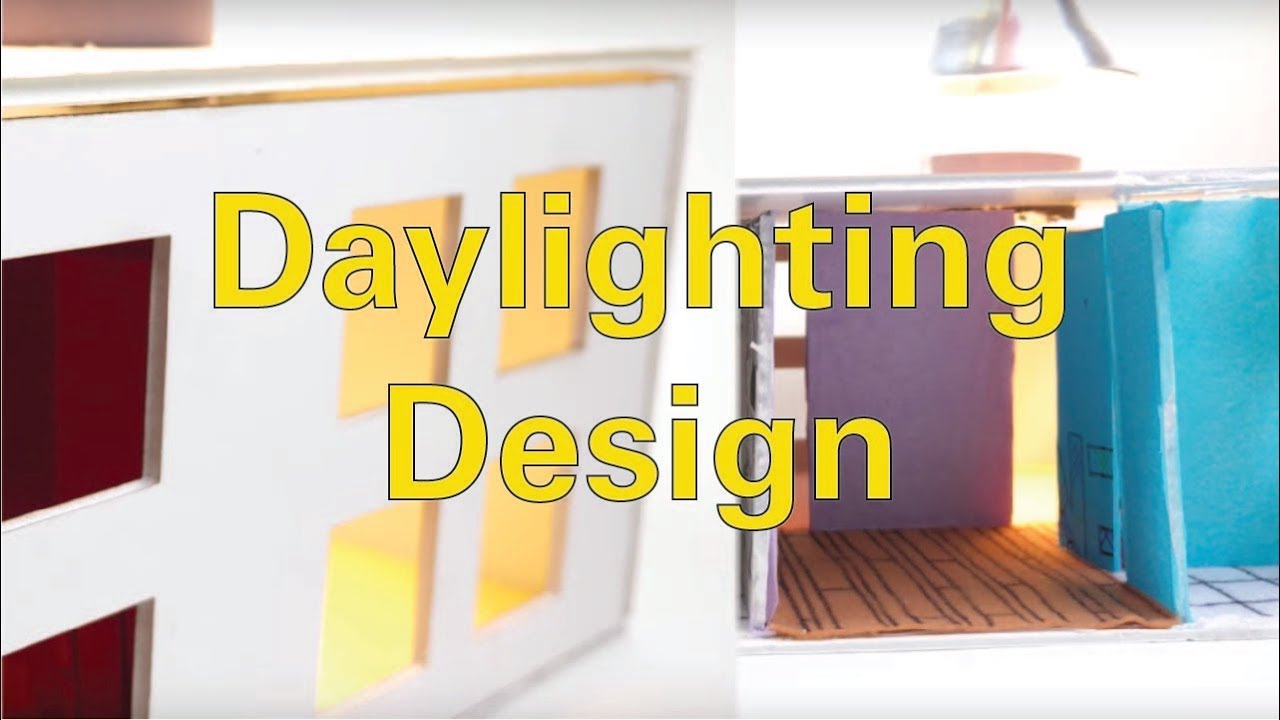
Students explore the many different ways that engineers provide natural lighting to interior spaces. They analyze various methods of daylighting by constructing model houses from foam core board and simulating the sun with a desk lamp. Teams design a daylighting system for their model houses based on their observations and calculations of the optimal use of available sunlight to their structure.
View the full activity on TeachEngineering:
https://www.teachengineering.o....rg/activities/view/c
TeachEngineering has over 1,500 FREE lessons and activities. Visit https://www.teachengineering.org/ for more!
Music: Fortunate Son - Silent Partner

Students investigate the simulated use of solid rocket fuel by using an antacid tablet. They observe the effect that surface area and temperature has on chemical reactions. They also compare the reaction time using two different reactants: water and vinegar. Finally, students report their results in bar graph format. In the continuing hypothetical scenario of this unit, what students learn builds their background knowledge towards designing the best rocket to get their cargo into space.
View the full activity on TeachEngineering:
https://www.teachengineering.o....rg/activities/view/c
TeachEngineering has over 1,500 FREE lessons and activities. Visit https://www.teachengineering.org/ for more
Music: Life of Riley - Kevin MacLeod

Student teams design insulated beverage bottles with the challenge to test them to determine which materials (and material thicknesses) work best at insulating hot water to keep it warm for as long as possible. Students test and compare their designs in still air and under a stream of moving air from a house fan.
View the full activity at TeachEngineering:
https://www.teachengineering.o....rg/activities/view/u
TeachEngineering has over 1,500 FREE lessons and activities. Visit http://www.TeachEngineering.org for more!
Music: Side Steppin

Students collect data and apply mathematical modeling, specifically linear approximation, to predict what will happen in a specific situation. In this activity, students collect data to determine the number of Jelly Belly jelly beans it takes to fill up the respective tube. Students plot their data, graph a linear approximation model, and write an equation representing their model. Students use their linear model to predict the number of Jelly Belly jelly beans that are in a similar cylindrical tube with a given height. Students discuss the accuracy of their results and limitations in their model and data collection process. They then apply their predictions to make suggestions to Jelly Belly for potential packaging of jelly beans based on quantity instead of net weight.
View the full lesson on TeachEngineering:
https://www.teachengineering.o....rg/activities/view/m
TeachEngineering has over 1,900 FREE lessons and activities. Visit https://www.teachengineering.org/ for more
Song: Double_Agent
by: Everet Almond

By studying how bees and flowers interact with one another, we can also understand engineering practices related to our environment! In this activity, students engineer a model of a flower to test different materials’ ability to pollinate another flower. In teams of two, students use the engineering design process to create a model of a flower out of construction paper and then test different materials by measuring and recording how much pollen is transferred. While discovering the most efficient material, students determine how the information they gain can help bees pollinate and they better understand the importance of bee conservation.
This engineering curriculum aligns to Next Generation Science Standards (NGSS).
View the full activity on TeachEngineering:
https://www.teachengineering.o....rg/activities/view/u
TeachEngineering has over 1,500 FREE lessons and activities. Visit https://www.teachengineering.org/ for more
music: Daily Beetle

In this activity, students act as environmental engineers involved with the clean up of a toxic spill. Using bioremediation as the process, students select which bacteria they will use to eat up the pollutant spilled. Students learn how engineers use bioremediation to make organism degrade harmful chemicals. Engineers must make sure bacteria have everything they need to live and degrade contaminants for bioremediation to happen. Students learn about the needs of living things by setting up an experiment with yeast. The scientific method is reinforced as students must design the experiment themselves making sure they include a control and complete parts of a formal lab report.
View the full activity on TeachEngineering:
https://www.teachengineering.o....rg/activities/view/c
TeachEngineering has over 1,500 FREE lessons and activities. Visit https://www.teachengineering.org/ for more!
Music: Sugar - Vibe Tracks

Students are introduced to the basic biology behind Pacific salmon migration and the many engineered Columbia River dam structures that aid in their passage through the river's hydroelectric dams. Students apply what they learn about the salmon life cycle as they think of devices and modifications that might be implemented at dams to permit the natural cycle of fish migration, and as they make (hypothetical) Splash Engineering presentations about their proposed fish mitigation solutions for Birdseye River's dam in Thirsty County.
View the full lesson on TeachEngineering:
https://www.teachengineering.o....rg/lessons/view/cub_
TeachEngineering has over 1,900 FREE lessons and activities. Visit http://www.TeachEngineering.org for more!

Students investigate the property dependence between liquid and solid interfaces and determine observable differences in how liquids react to different solid surfaces. They compare copper pennies and plastic "coins" as the two test surfaces. Using an eye dropper to deliver various fluids onto the surfaces, students determine the volume and mass of a liquid that can sit on the surface. They use rulers, scales, equations of volume and area, and other methods of approximation and observation, to make their own graphical interpretations of trends. They apply what they learned to design two super-surfaces (from provided surface treatment materials) that are capable of holding the most liquid by volume and by mass. Cost of materials is a parameter in their design decisions.
View the full activity at TeachEngineering:
https://www.teachengineering.o....rg/activities/view/w
TeachEngineering has over 1,500 FREE lessons and activities. Visit http://www.TeachEngineering.org for more!
Music: Coupe - The Grand Affair

During this activity, students learn how oil is formed and where in the Earth we find it. Students take a core sample to look for oil in a model of the Earth. They analyze their sample and make an informed decision as to whether or not they should "drill for oil" in a specific location.
View the full activity on TeachEngineering:
https://www.teachengineering.o....rg/activities/view/c
TeachEngineering has over 1,500 FREE lessons and activities. Visit https://www.teachengineering.org/ for more!
Music: Roger That - Silent Partner

In the presence of water, citric acid and sodium bicarbonate (aka baking soda) react to form sodium citrate, water, and carbon dioxide. Students investigate this endothermic reaction. They test a stoichiometric version of the reaction followed by testing various perturbations on the stoichiometric version in which each reactant (citric acid, sodium bicarbonate and water) is strategically doubled or halved to create a matrix of the effect on the reaction. By analyzing the test matrix data, they determine the optimum quantities to use in their own production companies to minimize material cost and maximize carbon dioxide production. They use their test data to "scale-up" the system from a quart-sized ziplock bag to a reaction tank equal to the volume of their classroom. They collect data on reaction temperature and carbon dioxide production. More advanced students are challenged to theoretically predict the results using stoichiometry.
View the full activity on TeachEngineering:
https://www.teachengineering.o....rg/activities/view/w
TeachEngineering has over 1,500 FREE lessons and activities. Visit https://www.teachengineering.org/ for more!
Music: Fun - Vibe Tracks

In past times, ocean navigators tossed a piece of wood over the side of their ships and noted how long until the ship passed the wood. They used this time measurement and the length of the ship to calculate their speed and estimate how far they had traveled. In this activity, students act the part of a GPS signal traveling to the receiver to learn how travel time is converted to distance.
View the full activity on TeachEngineering:
https://www.teachengineering.o....rg/activities/view/c
TeachEngineering has over 1,500 FREE lessons and activities. Visit https://www.teachengineering.org/ for more
Music: Cycles

Students find the volume and surface area of a rectangular cardboard box (such as a cereal box), and then figure out how to convert that box into a new, cubical box having the same volume as the original. As students construct new, cube-shaped boxes from the original box material, they discover that the cubical box has less surface area than the original, and thus, a cube is a more efficient way to package things.
View the full activity on TeachEngineering:
https://www.teachengineering.o....rg/activities/view/d
TeachEngineering has over 1,500 FREE lessons and activities. Visit https://www.teachengineering.org/ for more
Music: Educated Man - Max McFerren