

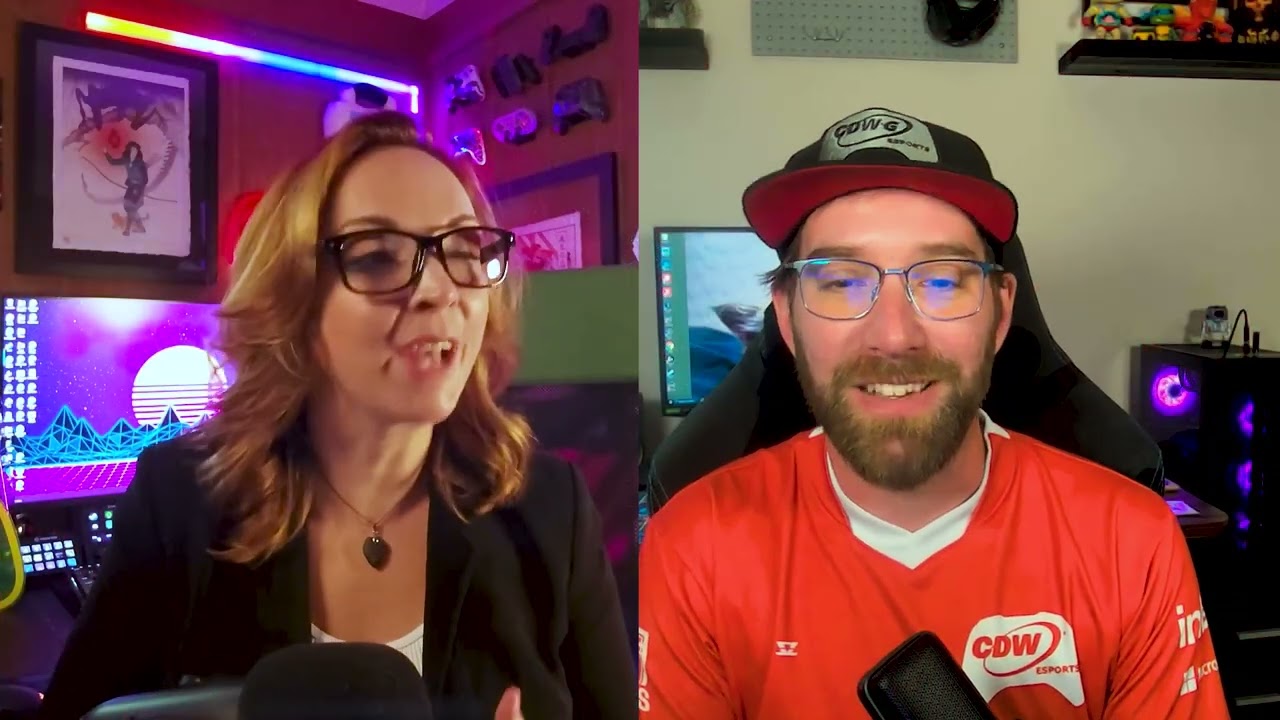


Does it really work? Evidence over hype in EdTech (with Ola Ozernov-Palchik)
Dr. Ola Ozernov-Palchik is a cognitive neuroscientist who studies how the brain learns to read and, more and more, how AI should (and shouldn't) be used to help it. She is a Research Scientist at MIT's McGovern Institute for Brain Research, a Research Assistant Professor at Boston University Wheelock College of Education & Human Development, and Associate Director of Translational Research in BU's AI & Education Initiative. She got her start in research almost by accident: as an international psychology student, she landed her first research job at the Institute for Reading Research at Southern Methodist University because she spoke Russian.
That job led her to cognitive neuroscience, a PhD in Cognitive Science at Tufts, and early work with Dr. Nadine Gaab at Boston Children's Hospital on some of the first studies to predict dyslexia from kindergarten, followed by a postdoc with John Gabrieli at MIT. She has published 30+ peer-reviewed papers, including a recent Nature Communications study showing the brain's language network is already adult-like by age 4. She received the International Dyslexia Association's Early Career Award, and she is President of New England Research on Dyslexia and Associate Editor of Scientific Studies of Reading.
She founded and directs the Evidence-Based AI in Learning (EVAL) Collaborative, a partnership between BU Wheelock and the Hariri Institute for Computing. EVAL holds AI learning tools to the evidence standard we'd expect of a medical intervention. Its first AI in Learning Challenge drew 35 companies and chose Amira Learning for a free, independent randomized controlled trial. She also co-built KIVA, an open-source AI reading companion that won a 2026 Tools Competition award.
In this episode, Ola talks with Svenia Busson about:
How the brain learns to read: repurposing circuits for vision and language, the "visual word form area," and why b and d are so hard to tell apart
What causes dyslexia: phonological processing, family history, and why reading ability sits on a continuum
Why decades of reading science still don't reach classrooms, with the US as a case study: only ~40% of fourth graders read proficiently on NAEP
Why no one checks edtech the way medicines are checked: schools buy tools based on user numbers rather than learning outcomes, and some districts are now banning AI outright
Inside the EVAL Collaborative: pre-registered, open-science RCTs published regardless of outcome, and the first EVAL AI in Learning Challenge
Can an 8-month trial prove learning? Measurement models, gated technical reviews (including how well speech recognition handles accents and dialects), and evidence that builds up over time
Advice for edtech founders: collect evidence from day one, and edtech's "5% problem"
KIVA, skeptical first graders, and the "AI penalty": teachers rated AI tutoring responses higher than human ones until they were told they came from AI