Latest videos

📍📍歡迎收看《English Speaking系列》📍📍
Talking about different festivals
👉https://youtu.be/7XWE_QB0qEk
Introduce your school
👉https://www.youtube.com/watch?v=DPfvjdEI7Dw
Back to school
👉https://www.youtube.com/watch?v=NSv5QyPmhpw
Good manners_actions
👉https://youtu.be/_Swu0JtZke0
Good manners
👉https://www.youtube.com/watch?v=HGME2UCt6-M&t=29s
Talking about daily routines
👉https://youtu.be/Np8mJ1uw8c8
📍📍歡迎收看《Grammar系列》📍📍
Lesson4_common mistakes
👉https://youtu.be/A7Yz6eEcYPs
Lesson3_irregular verbs_part2
👉https://youtu.be/vE6AnyrYDZQ
Lesson2_irregular verbs_part 1
👉https://youtu.be/C_p_r053MeQ
Lesson1_Opposite words
👉https://youtu.be/ftz3u46E0Zo
📍📍歡迎收看《Cooking系列》📍📍
Make fresh juice
👉https://www.youtube.com/watch?v=VFOo2RW_qoI
📍📍歡迎收看《Shorts系列》📍📍
Funny jokes 5
👉https://youtube.com/shorts/7Rq0v77lq3Q
Funny jokes 3
👉https://youtube.com/shorts/VJe4DCE9lLs
Funny joke 2
👉https://youtube.com/shorts/2ouEf37QtdQ
Funny joke 1
👉https://youtube.com/shorts/OJ2-YEfl2uw
Tongue twister_birdie vs turdie vs pie
👉https://youtube.com/shorts/yvOv4EVm6Xc
Tongue twister_scream vs ice cream
👉https://youtube.com/shorts/KBi79AOOPow
Tongue twister_fuzzy vs wuzzy
👉https://youtube.com/shorts/pwGPW_cWdxc
Tongue twister_whether vs weather
👉https://youtube.com/shorts/_3yjqCC4ASA
Read with me_Irregular verbs Part A
👉https://youtube.com/shorts/OfA0FlrxVy8
Read with me_Irregular verbs Part B
👉https://youtube.com/shorts/GV9iXpKMUAk
📍📍歡迎收看《Fun Games系列》📍📍
Make a guess
👉https://youtu.be/J0E2LF9_chU
Quiz Time
👉https://youtu.be/M4JrGzedjH0
Quiz Time
👉https://youtu.be/k7cTb77sh1Q
Quiz Time
👉https://www.youtube.com/watch?v=QGwhG4Mk_Ow&t=5s
Quiz Time
👉https://www.youtube.com/watch?v=xDUJPNRh3mA
📍📍歡迎收看《Basic conversation系列》📍📍
Lesson 13_Talking about location
👉https://youtu.be/0d3Zt_ezKbA
Lesson 12_How are you
👉https://youtu.be/0PPU7jyk30M
Lesson 11_In the shopping mall
👉https://youtu.be/bmM6fTPNHO4
Lesson 10_In a flower shop
👉https://youtu.be/j_ROyW4aNig
Lesson 9_How can I help you
👉https://youtu.be/6Nx1dXLeQMU
Lesson 8_Talking about your best friend
👉https://youtu.be/NknxeVxhP7A
Fun Lesson_Different languages
👉https://youtu.be/mCJPRD7pahw
Lesson 7_Apply for a library card and borrow books
👉https://www.youtube.com/watch?v=5XCmL9clkQY
Lesson 6_Ordering food
👉https://youtu.be/xaJKiHn6vuc
Lesson 5_Visiting friends
👉https://youtu.be/5TkeC8iirVA
Lesson 4_Making phone calls
👉https://youtu.be/B2CUxLSK5CU
Lesson 3_Types of weather
👉https://youtu.be/ivyo-t50qnw
Lesson 2_Days in a week
👉https://youtu.be/fAtrVak5qLo
Lesson 1_Greetings
👉https://youtu.be/hl_foOF6EjY
📍📍歡迎收看其他《Vocabulary詞匯系列》📍📍
Animals on land_陸地動物
👉https://youtu.be/XxZXjGkJkCQ
Animals in the sea_海洋動物
👉https://youtu.be/gN7GsS6cCeg
Parts of the body_身體部份名稱
👉https://youtu.be/GviCG650sng
Theme Park facilities_主題公園設施
👉https://youtu.be/RiP4etv1ANs
Famous Landmarks_國家名勝地標名稱
👉https://youtu.be/-_rRauEiDic
Colour_顏色
👉Part 2https://youtu.be/78xUTO1My_E
Furniture in the living room_客廳內傢俱名稱
👉https://www.youtube.com/watch?v=smN7hHwHL1g
2D shapes_平面形狀的名稱
👉https://www.youtube.com/watch?v=P4wT5wmqIRY
Jobs_職業名稱
👉https://www.youtube.com/watch?v=NYDTE...
Hairstyle_不同髮型的英文名稱
👉https://www.youtube.com/watch?v=PU_BB2Kvj_w
Solar System_太陽系
👉https://www.youtube.com/watch?v=Qwwczge-_ks
Tableware_餐具名稱
👉https://www.youtube.com/watch?v=rm4FNlRQZxE
Hats_帽子的名稱
👉https://www.youtube.com/watch?v=Pl3g8JgXeGc
Egg_蛋的不同煮法名稱
👉https://www.youtube.com/watch?v=alwVK7zoplc
National Flags_國家及國旗
👉https://youtu.be/tBwHd6XHfE0
The 12 Chinese Zodiac_12生肖
👉https://youtu.be/ii8djvnF-pk
Fruit_水果名稱
👉https://youtu.be/ozwI9sk-bo4
Stationery_文具名稱
👉https://youtu.be/jsjwHTaWfkg
Colour_顏色 Part 1
👉https://youtu.be/AiiGKUEuWx4
📍📍歡迎收看《停課不停學系列》 📍📍
Number 1-10
👉https://youtu.be/wVn_0fY5i1o
Fruit
👉https://youtu.be/C3jy63nGhgA
Transportation in HK
👉https://youtu.be/5qQX0ymwwqo
Vegetables
👉https://m.youtube.com/watch?v=iu1OnlmqRI4
Sports
👉https://youtu.be/eF_Dv6owlM8
Relaxing activities
👉https://www.youtube.com/watch?v=ROv7OlyXe0A
📍📍歡迎收看《Writing a composition系列》 📍📍
👉School Picnic Day
https://youtu.be/GNXyS84JrQo
At the beach
👉https://www.youtube.com/watch?v=WcERiNMpb9s
📍📍歡迎收看《小一叩門面試》系列 📍📍
👉School Interview_Part 1:Talking about yourself
https://www.youtube.com/watch?v=wWTwr2o4_uo
👉小一叩門:不能不看題目背後的真正意義
https://m.youtube.com/watch?v=msqXn02v8tw
👉小一叩門:面試陷阱
https://m.youtube.com/watch?v=OrTx4B_cnkw
-----------------------------------------------------------------------------------
Please SUBSCRIBE to our channel, LIKE, and SHARE to encourage us to share more useful and interesting knowledge.
請訂閱我們的頻道、點讚、分享,鼓勵我們分享更多有用又有趣的知識。
-----------------------------------------------------------------------------------
Welcome to watch our videos
歡迎觀看我們所創作的的其他影片
1)Basic Conversation 會話
https://www.youtube.com/playli....st?list=PLPoPxSDq_eP
2) Grammar 語法
https://www.youtube.com/playli....st?list=PLPoPxSDq_eP
3)English Speaking
https://www.youtube.com/playli....st?list=PLPoPxSDq_eP
4)Funny Jokes 笑話
https://www.youtube.com/playli....st?list=PLPoPxSDq_eP
5)Vocabulary 詞彙
https://www.youtube.com/playli....st?list=PLPoPxSDq_eP
6)English Idioms 英語成語
https://www.youtube.com/playli....st?list=PLPoPxSDq_eP
7)Revision Exercise 重温練習
https://www.youtube.com/playli....st?list=PLPoPxSDq_eP
8)Fun Games 趣遊戲味
https://www.youtube.com/playli....st?list=PLPoPxSDq_eP
9) Tongue Twister 繞口令
https://www.youtube.com/playli....st?list=PLPoPxSDq_eP
10)Writing a composition 作文
https://www.youtube.com/playli....st?list=PLPoPxSDq_eP
11) Story Telling 聽故事
https://youtube.com/playlist?l....ist=PLPoPxSDq_ePLrcK
-----------------------------------------------------------------------------------
Please SUBSCRIBE to our channel, LIKE, and SHARE to encourage us to share more useful and interesting knowledge.
請訂閱我們的頻道、點讚、分享,鼓勵我們分享更多有用又有趣的知識。
-----------------------------------------------------------------------------------
Welcome to watch our videos
歡迎觀看我們所創作的的其他影片
1)Basic Conversation 會話
https://www.youtube.com/playli....st?list=PLPoPxSDq_eP
2) Grammar 語法
https://www.youtube.com/playli....st?list=PLPoPxSDq_eP
3)English Speaking
https://www.youtube.com/playli....st?list=PLPoPxSDq_eP
4)Funny Jokes 笑話
https://www.youtube.com/playli....st?list=PLPoPxSDq_eP
5)Vocabulary 詞彙
https://www.youtube.com/playli....st?list=PLPoPxSDq_eP
6)English Idioms 英語成語
https://www.youtube.com/playli....st?list=PLPoPxSDq_eP
7)Revision Exercise 重温練習
https://www.youtube.com/playli....st?list=PLPoPxSDq_eP
8)Fun Games 趣遊戲味
https://www.youtube.com/playli....st?list=PLPoPxSDq_eP
9) Tongue Twister 繞口令
https://www.youtube.com/playli....st?list=PLPoPxSDq_eP
10)Writing a composition 作文
https://www.youtube.com/playli....st?list=PLPoPxSDq_eP
11) Story Telling 聽故事
https://youtube.com/playlist?l....ist=PLPoPxSDq_ePLrcK
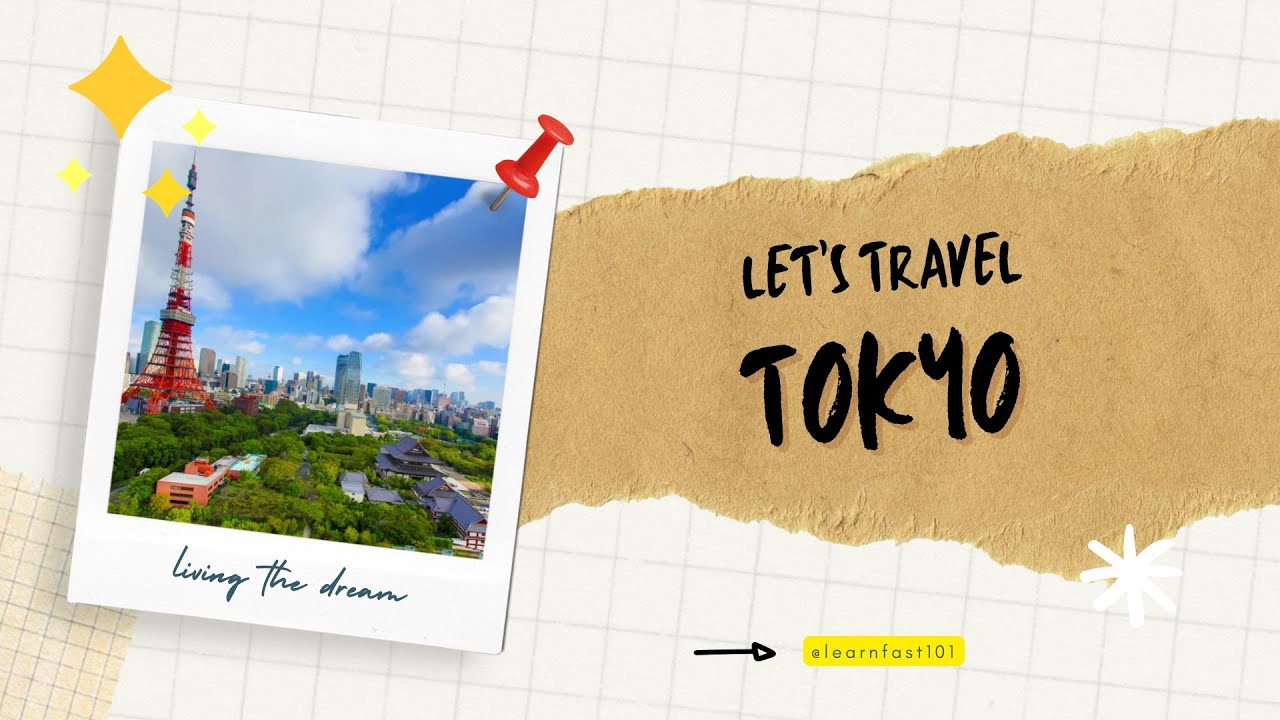
Have you ever been to an onsen? Sakura is introducing onsen (hot springs). Let's listen to what she has to say.
你有浸過日式温泉嗎? Sakura正在介紹有關日式温泉和浸浴前的注意事項。
https://youtube.com/shorts/bKc....VL1u-rpc?feature=sha
If you want to know more about Sakura. Here is her self introduction.
如果你想了解Sakura更多,請觀看她的自我介紹影片:
https://youtu.be/U28FL4p82Eo
-----------------------------------------------------------------------------------
Please SUBSCRIBE to our channel, LIKE, and SHARE to encourage us to share more useful and interesting knowledge.
請訂閱我們的頻道、點讚、分享,鼓勵我們分享更多有用又有趣的知識。
-----------------------------------------------------------------------------------
Welcome to watch our videos
歡迎觀看我們所創作的的其他影片
1)Basic Conversation 會話
https://www.youtube.com/playli....st?list=PLPoPxSDq_eP
2) Grammar 語法
https://www.youtube.com/playli....st?list=PLPoPxSDq_eP
3)English Speaking
https://www.youtube.com/playli....st?list=PLPoPxSDq_eP
4)Funny Jokes 笑話
https://www.youtube.com/playli....st?list=PLPoPxSDq_eP
5)Vocabulary 詞彙
https://www.youtube.com/playli....st?list=PLPoPxSDq_eP
6)English Idioms 英語成語
https://www.youtube.com/playli....st?list=PLPoPxSDq_eP
7)Revision Exercise 重温練習
https://www.youtube.com/playli....st?list=PLPoPxSDq_eP
8)Fun Games 趣遊戲味
https://www.youtube.com/playli....st?list=PLPoPxSDq_eP
9) Tongue Twister 繞口令
https://www.youtube.com/playli....st?list=PLPoPxSDq_eP
10)Writing a composition 作文
https://www.youtube.com/playli....st?list=PLPoPxSDq_eP

-----------------------------------------------------------------------------------
Please SUBSCRIBE to our channel, LIKE, and SHARE to encourage us to share more useful and interesting knowledge.
請訂閱我們的頻道、點讚、分享,鼓勵我們分享更多有用又有趣的知識。
-----------------------------------------------------------------------------------
📍📍Welcome to watch our videos📍📍
歡迎觀看我們所創作的的其他影片
1)Basic Conversation 會話
https://www.youtube.com/playli....st?list=PLPoPxSDq_eP
2) Grammar 語法
https://www.youtube.com/playli....st?list=PLPoPxSDq_eP
3)English Speaking
https://www.youtube.com/playli....st?list=PLPoPxSDq_eP
4)Funny Jokes 笑話
https://www.youtube.com/playli....st?list=PLPoPxSDq_eP
5)Vocabulary 詞彙
https://www.youtube.com/playli....st?list=PLPoPxSDq_eP
6)English Idioms 英語成語
https://www.youtube.com/playli....st?list=PLPoPxSDq_eP
7)Revision Exercise 重温練習
https://www.youtube.com/playli....st?list=PLPoPxSDq_eP
8)Fun Games 趣遊戲味
https://www.youtube.com/playli....st?list=PLPoPxSDq_eP
9) Tongue Twister 繞口令
https://www.youtube.com/playli....st?list=PLPoPxSDq_eP
10)Writing a composition 作文
https://www.youtube.com/playli....st?list=PLPoPxSDq_eP
-----------------------------------------------------------------------------------
Please SUBSCRIBE to our channel, LIKE, and SHARE to encourage us to share more useful and interesting knowledge.
請訂閱我們的頻道、點讚、分享,鼓勵我們分享更多有用又有趣的知識。
-----------------------------------------------------------------------------------
Welcome to watch our videos
歡迎觀看我們所創作的的其他影片
1)Basic Conversation 會話
https://www.youtube.com/playli....st?list=PLPoPxSDq_eP
2) Grammar 語法
https://www.youtube.com/playli....st?list=PLPoPxSDq_eP
3)English Speaking
https://www.youtube.com/playli....st?list=PLPoPxSDq_eP
4)Funny Jokes 笑話
https://www.youtube.com/playli....st?list=PLPoPxSDq_eP
5)Vocabulary 詞彙
https://www.youtube.com/playli....st?list=PLPoPxSDq_eP
6)English Idioms 英語成語
https://www.youtube.com/playli....st?list=PLPoPxSDq_eP
7)Revision Exercise 重温練習
https://www.youtube.com/playli....st?list=PLPoPxSDq_eP
8)Fun Games 趣遊戲味
https://www.youtube.com/playli....st?list=PLPoPxSDq_eP
9) Tongue Twister 繞口令
https://www.youtube.com/playli....st?list=PLPoPxSDq_eP
10)Writing a composition 作文
https://www.youtube.com/playli....st?list=PLPoPxSDq_eP
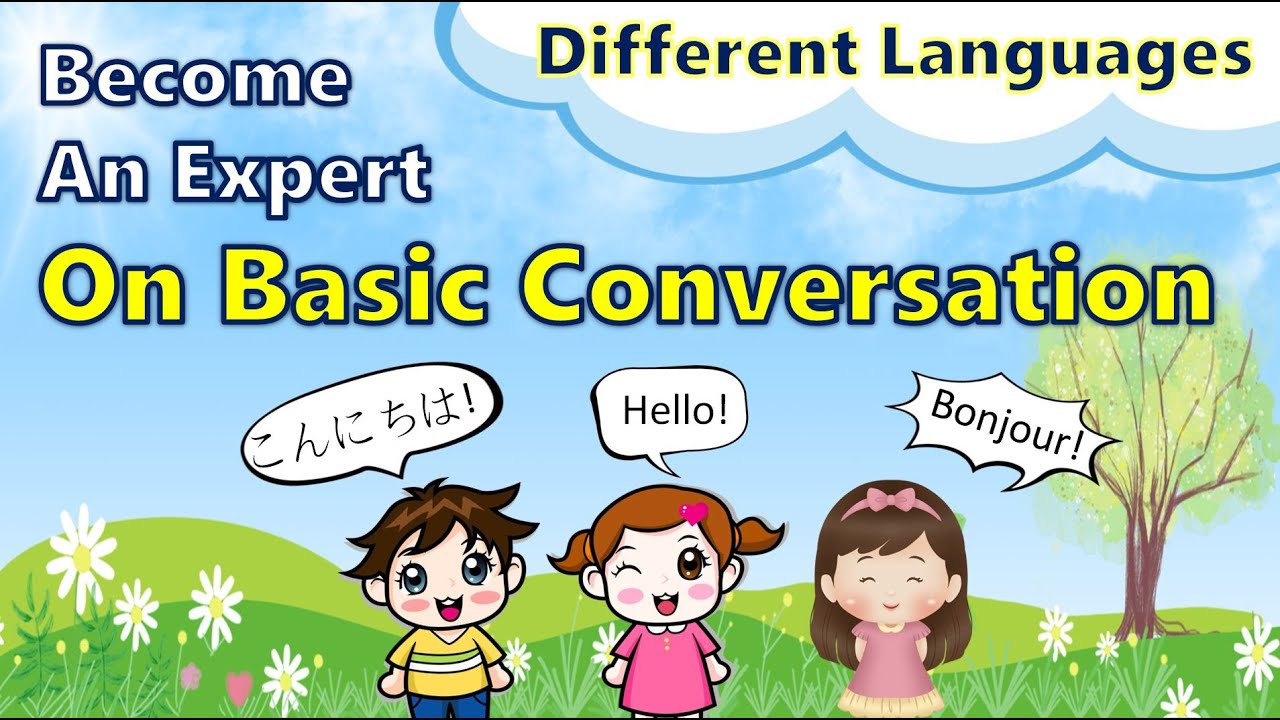
📍📍歡迎收看《English Speaking系列》📍📍
Talking about different festivals
👉https://youtu.be/7XWE_QB0qEk
Introduce your school
👉https://www.youtube.com/watch?v=DPfvjdEI7Dw
Back to school
👉https://www.youtube.com/watch?v=NSv5QyPmhpw
Good manners_actions
👉https://youtu.be/_Swu0JtZke0
Good manners
👉https://www.youtube.com/watch?v=HGME2UCt6-M&t=29s
Talking about daily routines
👉https://youtu.be/Np8mJ1uw8c8
📍📍歡迎收看《Grammar系列》📍📍
Lesson4_common mistakes
👉https://youtu.be/A7Yz6eEcYPs
Lesson3_irregular verbs_part2
👉https://youtu.be/vE6AnyrYDZQ
Lesson2_irregular verbs_part 1
👉https://youtu.be/C_p_r053MeQ
Lesson1_Opposite words
👉https://youtu.be/ftz3u46E0Zo
📍📍歡迎收看《Cooking系列》📍📍
Make fresh juice
👉https://www.youtube.com/watch?v=VFOo2RW_qoI
📍📍歡迎收看《Shorts系列》📍📍
Funny jokes 3
👉https://youtube.com/shorts/VJe4DCE9lLs
Funny joke 2
👉https://youtube.com/shorts/2ouEf37QtdQ
Funny joke 1
👉https://youtube.com/shorts/OJ2-YEfl2uw
Tongue twister_birdie vs turdie vs pie
👉https://youtube.com/shorts/yvOv4EVm6Xc
Tongue twister_scream vs ice cream
👉https://youtube.com/shorts/KBi79AOOPow
Tongue twister_fuzzy vs wuzzy
👉https://youtube.com/shorts/pwGPW_cWdxc
Tongue twister_whether vs weather
👉https://youtube.com/shorts/_3yjqCC4ASA
Read with me_Irregular verbs Part A
👉https://youtube.com/shorts/OfA0FlrxVy8
Read with me_Irregular verbs Part B
👉https://youtube.com/shorts/GV9iXpKMUAk
📍📍歡迎收看《Fun Games系列》📍📍
Make a guess
👉https://youtu.be/J0E2LF9_chU
Quiz Time
👉https://youtu.be/M4JrGzedjH0
Quiz Time
👉https://youtu.be/k7cTb77sh1Q
Quiz Time
👉https://www.youtube.com/watch?v=QGwhG4Mk_Ow&t=5s
Quiz Time
👉https://www.youtube.com/watch?v=xDUJPNRh3mA
📍📍歡迎收看《Basic conversation系列》📍📍
Basic conversation Lesson 8_Talking about your best friend
👉https://youtu.be/NknxeVxhP7A
Basic conversation Fun Lesson_Different languages
👉https://youtu.be/mCJPRD7pahw
Basic conversation Lesson 7_Apply for a library card and borrow books
👉https://www.youtube.com/watch?v=5XCmL9clkQY
Basic conversation Lesson 6_Ordering food
👉https://youtu.be/xaJKiHn6vuc
Basic conversation Lesson 5_Visiting friends
👉https://youtu.be/5TkeC8iirVA
Basic conversation Lesson 4_Making phone calls
👉https://youtu.be/B2CUxLSK5CU
Basic conversation Lesson 3_Types of weather
👉https://youtu.be/ivyo-t50qnw
Basic conversation Lesson 2_Days in a week
👉https://youtu.be/fAtrVak5qLo
Basic conversation Lesson 1_Greetings
👉https://youtu.be/hl_foOF6EjY
📍📍歡迎收看其他《Vocabulary詞匯系列》📍📍
Animals on land_陸地動物
👉https://youtu.be/XxZXjGkJkCQ
Animals in the sea_海洋動物
👉https://youtu.be/gN7GsS6cCeg
Parts of the body_身體部份名稱
👉https://youtu.be/GviCG650sng
Theme Park facilities_主題公園設施
👉https://youtu.be/RiP4etv1ANs
Famous Landmarks_國家名勝地標名稱
👉https://youtu.be/-_rRauEiDic
Colour_顏色
👉Part 2https://youtu.be/78xUTO1My_E
Furniture in the living room_客廳內傢俱名稱
👉https://www.youtube.com/watch?v=smN7hHwHL1g
2D shapes_平面形狀的名稱
👉https://www.youtube.com/watch?v=P4wT5wmqIRY
Jobs_職業名稱
👉https://www.youtube.com/watch?v=NYDTE...
Hairstyle_不同髮型的英文名稱
👉https://www.youtube.com/watch?v=PU_BB2Kvj_w
Solar System_太陽系
👉https://www.youtube.com/watch?v=Qwwczge-_ks
Tableware_餐具名稱
👉https://www.youtube.com/watch?v=rm4FNlRQZxE
Hats_帽子的名稱
👉https://www.youtube.com/watch?v=Pl3g8JgXeGc
Egg_蛋的不同煮法名稱
👉https://www.youtube.com/watch?v=alwVK7zoplc
National Flags_國家及國旗
👉https://youtu.be/tBwHd6XHfE0
The 12 Chinese Zodiac_12生肖
👉https://youtu.be/ii8djvnF-pk
Fruit_水果名稱
👉https://youtu.be/ozwI9sk-bo4
Stationery_文具名稱
👉https://youtu.be/jsjwHTaWfkg
Colour_顏色 Part 1
👉https://youtu.be/AiiGKUEuWx4
📍📍歡迎收看《停課不停學系列》 📍📍
Number 1-10
👉https://youtu.be/wVn_0fY5i1o
Fruit
👉https://youtu.be/C3jy63nGhgA
Transportation in HK
👉https://youtu.be/5qQX0ymwwqo
Vegetables
👉https://m.youtube.com/watch?v=iu1OnlmqRI4
Sports
👉https://youtu.be/eF_Dv6owlM8
Relaxing activities
👉https://www.youtube.com/watch?v=ROv7OlyXe0A
📍📍歡迎收看《Writing a composition系列》 📍📍
👉School Picnic Day
https://youtu.be/GNXyS84JrQo
At the beach
👉https://www.youtube.com/watch?v=WcERiNMpb9s
📍📍歡迎收看《小一叩門面試》系列 📍📍
👉School Interview_Part 1:Talking about yourself
https://www.youtube.com/watch?v=wWTwr2o4_uo
👉小一叩門:不能不看題目背後的真正意義
https://m.youtube.com/watch?v=msqXn02v8tw
👉小一叩門:面試陷阱
https://m.youtube.com/watch?v=OrTx4B_cnkw

Talking about Frozen | English Speaking | #englishlesson #frozen #sentences #冰雪奇緣 #Eliza #Anna #olaf
-----------------------------------------------------------------------------------
Please SUBSCRIBE to our channel, LIKE, and SHARE to encourage us to share more useful and interesting knowledge.
請訂閱我們的頻道、點讚、分享,鼓勵我們分享更多有用又有趣的知識。
-----------------------------------------------------------------------------------
Welcome to watch our videos
歡迎觀看我們所創作的的其他影片
1)Basic Conversation 會話
https://www.youtube.com/playli....st?list=PLPoPxSDq_eP
2) Grammar 語法
https://www.youtube.com/playli....st?list=PLPoPxSDq_eP
3)English Speaking
https://www.youtube.com/playli....st?list=PLPoPxSDq_eP
4)Funny Jokes 笑話
https://www.youtube.com/playli....st?list=PLPoPxSDq_eP
5)Vocabulary 詞彙
https://www.youtube.com/playli....st?list=PLPoPxSDq_eP
6)English Idioms 英語成語
https://www.youtube.com/playli....st?list=PLPoPxSDq_eP
7)Revision Exercise 重温練習
https://www.youtube.com/playli....st?list=PLPoPxSDq_eP
8)Fun Games 趣遊戲味
https://www.youtube.com/playli....st?list=PLPoPxSDq_eP
9) Tongue Twister 繞口令
https://www.youtube.com/playli....st?list=PLPoPxSDq_eP
10)Writing a composition 作文
https://www.youtube.com/playli....st?list=PLPoPxSDq_eP
11) Story Telling 聽故事
https://youtube.com/playlist?l....ist=PLPoPxSDq_ePLrcK
Words cannot express how much we appreciate Disney's hard work and dedication in creating such a beautiful movie. Thank you so much. And for more clips, please click the following links to explore more.
https://www.youtube.com/@DisneyUK

-----------------------------------------------------------------------------------
Please SUBSCRIBE to our channel, LIKE, and SHARE to encourage us to share more useful and interesting knowledge.
請訂閱我們的頻道、點讚、分享,鼓勵我們分享更多有用又有趣的知識。
-----------------------------------------------------------------------------------
Welcome to watch our videos
歡迎觀看我們所創作的的其他影片
1)Basic Conversation 會話
https://www.youtube.com/playli....st?list=PLPoPxSDq_eP
2) Grammar 語法
https://www.youtube.com/playli....st?list=PLPoPxSDq_eP
3)English Speaking
https://www.youtube.com/playli....st?list=PLPoPxSDq_eP
4)Funny Jokes 笑話
https://www.youtube.com/playli....st?list=PLPoPxSDq_eP
5)Vocabulary 詞彙
https://www.youtube.com/playli....st?list=PLPoPxSDq_eP
6)English Idioms 英語成語
https://www.youtube.com/playli....st?list=PLPoPxSDq_eP
7)Revision Exercise 重温練習
https://www.youtube.com/playli....st?list=PLPoPxSDq_eP
8)Fun Games 趣遊戲味
https://www.youtube.com/playli....st?list=PLPoPxSDq_eP
9) Tongue Twister 繞口令
https://www.youtube.com/playli....st?list=PLPoPxSDq_eP
10)Writing a composition 作文
https://www.youtube.com/playli....st?list=PLPoPxSDq_eP
-----------------------------------------------------------------------------------
Please SUBSCRIBE to our channel, LIKE, and SHARE to encourage us to share more useful and interesting knowledge.
請訂閱我們的頻道、點讚、分享,鼓勵我們分享更多有用又有趣的知識。
-----------------------------------------------------------------------------------

The 12 Chinese Zodiac
- The year of the Rat
- The year of the Ox
- The year of the Tiger
- The year of the Rabbit
- The year of the Dragon
- The year of the Snake
- The year of the Horse
- The year of the Goat
- The year of the Monkey
- The year of the Rooster
- The year of the Dog
- The year of the Pig
What year were you born in?
What is your Chinese zodiac?
Find it in the video.
📍📍歡迎收看《English Speaking系列》📍📍
Talking about different festivals
👉https://youtu.be/7XWE_QB0qEk
Introduce your school
👉https://www.youtube.com/watch?v=DPfvjdEI7Dw
Back to school
👉https://www.youtube.com/watch?v=NSv5QyPmhpw
Good manners_actions
👉https://youtu.be/_Swu0JtZke0
Good manners
👉https://www.youtube.com/watch?v=HGME2UCt6-M&t=29s
Talking about daily routines
👉https://youtu.be/Np8mJ1uw8c8
📍📍歡迎收看《Grammar系列》📍📍
Lesson4_common mistakes
👉https://youtu.be/A7Yz6eEcYPs
Lesson3_irregular verbs_part2
👉https://youtu.be/vE6AnyrYDZQ
Lesson2_irregular verbs_part 1
👉https://youtu.be/C_p_r053MeQ
Lesson1_Opposite words
👉https://youtu.be/ftz3u46E0Zo
📍📍歡迎收看《Cooking系列》📍📍
Make fresh juice
👉https://www.youtube.com/watch?v=VFOo2RW_qoI
📍📍歡迎收看《Shorts系列》📍📍
Funny jokes 3
👉https://youtube.com/shorts/VJe4DCE9lLs
Funny joke 2
👉https://youtube.com/shorts/2ouEf37QtdQ
Funny joke 1
👉https://youtube.com/shorts/OJ2-YEfl2uw
Tongue twister_birdie vs turdie vs pie
👉https://youtube.com/shorts/yvOv4EVm6Xc
Tongue twister_scream vs ice cream
👉https://youtube.com/shorts/KBi79AOOPow
Tongue twister_fuzzy vs wuzzy
👉https://youtube.com/shorts/pwGPW_cWdxc
Tongue twister_whether vs weather
👉https://youtube.com/shorts/_3yjqCC4ASA
Read with me_Irregular verbs Part A
👉https://youtube.com/shorts/OfA0FlrxVy8
Read with me_Irregular verbs Part B
👉https://youtube.com/shorts/GV9iXpKMUAk
📍📍歡迎收看《Fun Games系列》📍📍
Make a guess
👉https://youtu.be/J0E2LF9_chU
Quiz Time
👉https://youtu.be/M4JrGzedjH0
Quiz Time
👉https://youtu.be/k7cTb77sh1Q
Quiz Time
👉https://www.youtube.com/watch?v=QGwhG4Mk_Ow&t=5s
Quiz Time
👉https://www.youtube.com/watch?v=xDUJPNRh3mA
📍📍歡迎收看《Basic conversation系列》📍📍
Basic conversation Lesson 8_Talking about your best friend
👉https://youtu.be/NknxeVxhP7A
Basic conversation Fun Lesson_Different languages
👉https://youtu.be/mCJPRD7pahw
Basic conversation Lesson 7_Apply for a library card and borrow books
👉https://www.youtube.com/watch?v=5XCmL9clkQY
Basic conversation Lesson 6_Ordering food
👉https://youtu.be/xaJKiHn6vuc
Basic conversation Lesson 5_Visiting friends
👉https://youtu.be/5TkeC8iirVA
Basic conversation Lesson 4_Making phone calls
👉https://youtu.be/B2CUxLSK5CU
Basic conversation Lesson 3_Types of weather
👉https://youtu.be/ivyo-t50qnw
Basic conversation Lesson 2_Days in a week
👉https://youtu.be/fAtrVak5qLo
Basic conversation Lesson 1_Greetings
👉https://youtu.be/hl_foOF6EjY
📍📍歡迎收看其他《Vocabulary詞匯系列》📍📍
Animals on land_陸地動物
👉https://youtu.be/XxZXjGkJkCQ
Animals in the sea_海洋動物
👉https://youtu.be/gN7GsS6cCeg
Parts of the body_身體部份名稱
👉https://youtu.be/GviCG650sng
Theme Park facilities_主題公園設施
👉https://youtu.be/RiP4etv1ANs
Famous Landmarks_國家名勝地標名稱
👉https://youtu.be/-_rRauEiDic
Colour_顏色
👉Part 2https://youtu.be/78xUTO1My_E
Furniture in the living room_客廳內傢俱名稱
👉https://www.youtube.com/watch?v=smN7hHwHL1g
2D shapes_平面形狀的名稱
👉https://www.youtube.com/watch?v=P4wT5wmqIRY
Jobs_職業名稱
👉https://www.youtube.com/watch?v=NYDTE...
Hairstyle_不同髮型的英文名稱
👉https://www.youtube.com/watch?v=PU_BB2Kvj_w
Solar System_太陽系
👉https://www.youtube.com/watch?v=Qwwczge-_ks
Tableware_餐具名稱
👉https://www.youtube.com/watch?v=rm4FNlRQZxE
Hats_帽子的名稱
👉https://www.youtube.com/watch?v=Pl3g8JgXeGc
Egg_蛋的不同煮法名稱
👉https://www.youtube.com/watch?v=alwVK7zoplc
National Flags_國家及國旗
👉https://youtu.be/tBwHd6XHfE0
The 12 Chinese Zodiac_12生肖
👉https://youtu.be/ii8djvnF-pk
Fruit_水果名稱
👉https://youtu.be/ozwI9sk-bo4
Stationery_文具名稱
👉https://youtu.be/jsjwHTaWfkg
Colour_顏色 Part 1
👉https://youtu.be/AiiGKUEuWx4
📍📍歡迎收看《停課不停學系列》 📍📍
Number 1-10
👉https://youtu.be/wVn_0fY5i1o
Fruit
👉https://youtu.be/C3jy63nGhgA
Transportation in HK
👉https://youtu.be/5qQX0ymwwqo
Vegetables
👉https://m.youtube.com/watch?v=iu1OnlmqRI4
Sports
👉https://youtu.be/eF_Dv6owlM8
Relaxing activities
👉https://www.youtube.com/watch?v=ROv7OlyXe0A
📍📍歡迎收看《Writing a composition系列》 📍📍
👉School Picnic Day
https://youtu.be/GNXyS84JrQo
At the beach
👉https://www.youtube.com/watch?v=WcERiNMpb9s
📍📍歡迎收看《小一叩門面試》系列 📍📍
👉School Interview_Part 1:Talking about yourself
https://www.youtube.com/watch?v=wWTwr2o4_uo
👉小一叩門:不能不看題目背後的真正意義
https://m.youtube.com/watch?v=msqXn02v8tw
👉小一叩門:面試陷阱
https://m.youtube.com/watch?v=OrTx4B_cnkw

📍📍歡迎收看《English Speaking系列》📍📍
Talking about different festivals
👉https://youtu.be/7XWE_QB0qEk
Introduce your school
👉https://www.youtube.com/watch?v=DPfvjdEI7Dw
Back to school
👉https://www.youtube.com/watch?v=NSv5QyPmhpw
Good manners_actions
👉https://youtu.be/_Swu0JtZke0
Good manners
👉https://www.youtube.com/watch?v=HGME2UCt6-M&t=29s
Talking about daily routines
👉https://youtu.be/Np8mJ1uw8c8
📍📍歡迎收看《Grammar系列》📍📍
Lesson4_common mistakes
👉https://youtu.be/A7Yz6eEcYPs
Lesson3_irregular verbs_part2
👉https://youtu.be/vE6AnyrYDZQ
Lesson2_irregular verbs_part 1
👉https://youtu.be/C_p_r053MeQ
Lesson1_Opposite words
👉https://youtu.be/ftz3u46E0Zo
📍📍歡迎收看《Cooking系列》📍📍
Make fresh juice
👉https://www.youtube.com/watch?v=VFOo2RW_qoI
📍📍歡迎收看《Shorts系列》📍📍
Funny jokes 5
👉https://youtube.com/shorts/7Rq0v77lq3Q
Funny jokes 3
👉https://youtube.com/shorts/VJe4DCE9lLs
Funny joke 2
👉https://youtube.com/shorts/2ouEf37QtdQ
Funny joke 1
👉https://youtube.com/shorts/OJ2-YEfl2uw
Tongue twister_birdie vs turdie vs pie
👉https://youtube.com/shorts/yvOv4EVm6Xc
Tongue twister_scream vs ice cream
👉https://youtube.com/shorts/KBi79AOOPow
Tongue twister_fuzzy vs wuzzy
👉https://youtube.com/shorts/pwGPW_cWdxc
Tongue twister_whether vs weather
👉https://youtube.com/shorts/_3yjqCC4ASA
Read with me_Irregular verbs Part A
👉https://youtube.com/shorts/OfA0FlrxVy8
Read with me_Irregular verbs Part B
👉https://youtube.com/shorts/GV9iXpKMUAk
📍📍歡迎收看《Fun Games系列》📍📍
Make a guess
👉https://youtu.be/J0E2LF9_chU
Quiz Time
👉https://youtu.be/M4JrGzedjH0
Quiz Time
👉https://youtu.be/k7cTb77sh1Q
Quiz Time
👉https://www.youtube.com/watch?v=QGwhG4Mk_Ow&t=5s
Quiz Time
👉https://www.youtube.com/watch?v=xDUJPNRh3mA
📍📍歡迎收看《Basic conversation系列》📍📍
Basic conversation Lesson 9_How can I help you
👉https://youtu.be/6Nx1dXLeQMU
Basic conversation Lesson 8_Talking about your best friend
👉https://youtu.be/NknxeVxhP7A
Basic conversation Fun Lesson_Different languages
👉https://youtu.be/mCJPRD7pahw
Basic conversation Lesson 7_Apply for a library card and borrow books
👉https://www.youtube.com/watch?v=5XCmL9clkQY
Basic conversation Lesson 6_Ordering food
👉https://youtu.be/xaJKiHn6vuc
Basic conversation Lesson 5_Visiting friends
👉https://youtu.be/5TkeC8iirVA
Basic conversation Lesson 4_Making phone calls
👉https://youtu.be/B2CUxLSK5CU
Basic conversation Lesson 3_Types of weather
👉https://youtu.be/ivyo-t50qnw
Basic conversation Lesson 2_Days in a week
👉https://youtu.be/fAtrVak5qLo
Basic conversation Lesson 1_Greetings
👉https://youtu.be/hl_foOF6EjY
📍📍歡迎收看其他《Vocabulary詞匯系列》📍📍
Animals on land_陸地動物
👉https://youtu.be/XxZXjGkJkCQ
Animals in the sea_海洋動物
👉https://youtu.be/gN7GsS6cCeg
Parts of the body_身體部份名稱
👉https://youtu.be/GviCG650sng
Theme Park facilities_主題公園設施
👉https://youtu.be/RiP4etv1ANs
Famous Landmarks_國家名勝地標名稱
👉https://youtu.be/-_rRauEiDic
Colour_顏色
👉Part 2https://youtu.be/78xUTO1My_E
Furniture in the living room_客廳內傢俱名稱
👉https://www.youtube.com/watch?v=smN7hHwHL1g
2D shapes_平面形狀的名稱
👉https://www.youtube.com/watch?v=P4wT5wmqIRY
Jobs_職業名稱
👉https://www.youtube.com/watch?v=NYDTE...
Hairstyle_不同髮型的英文名稱
👉https://www.youtube.com/watch?v=PU_BB2Kvj_w
Solar System_太陽系
👉https://www.youtube.com/watch?v=Qwwczge-_ks
Tableware_餐具名稱
👉https://www.youtube.com/watch?v=rm4FNlRQZxE
Hats_帽子的名稱
👉https://www.youtube.com/watch?v=Pl3g8JgXeGc
Egg_蛋的不同煮法名稱
👉https://www.youtube.com/watch?v=alwVK7zoplc
National Flags_國家及國旗
👉https://youtu.be/tBwHd6XHfE0
The 12 Chinese Zodiac_12生肖
👉https://youtu.be/ii8djvnF-pk
Fruit_水果名稱
👉https://youtu.be/ozwI9sk-bo4
Stationery_文具名稱
👉https://youtu.be/jsjwHTaWfkg
Colour_顏色 Part 1
👉https://youtu.be/AiiGKUEuWx4
📍📍歡迎收看《停課不停學系列》 📍📍
Number 1-10
👉https://youtu.be/wVn_0fY5i1o
Fruit
👉https://youtu.be/C3jy63nGhgA
Transportation in HK
👉https://youtu.be/5qQX0ymwwqo
Vegetables
👉https://m.youtube.com/watch?v=iu1OnlmqRI4
Sports
👉https://youtu.be/eF_Dv6owlM8
Relaxing activities
👉https://www.youtube.com/watch?v=ROv7OlyXe0A
📍📍歡迎收看《Writing a composition系列》 📍📍
👉School Picnic Day
https://youtu.be/GNXyS84JrQo
At the beach
👉https://www.youtube.com/watch?v=WcERiNMpb9s
📍📍歡迎收看《小一叩門面試》系列 📍📍
👉School Interview_Part 1:Talking about yourself
https://www.youtube.com/watch?v=wWTwr2o4_uo
👉小一叩門:不能不看題目背後的真正意義
https://m.youtube.com/watch?v=msqXn02v8tw
👉小一叩門:面試陷阱
https://m.youtube.com/watch?v=OrTx4B_cnkw
-----------------------------------------------------------------------------------
Please SUBSCRIBE to our channel, LIKE, and SHARE to encourage us to share more useful and interesting knowledge.
請訂閱我們的頻道、點讚、分享,鼓勵我們分享更多有用又有趣的知識。
-----------------------------------------------------------------------------------
Welcome to watch our videos
歡迎觀看我們所創作的的其他影片
1)Basic Conversation 會話
https://www.youtube.com/playli....st?list=PLPoPxSDq_eP
2) Grammar 語法
https://www.youtube.com/playli....st?list=PLPoPxSDq_eP
3)English Speaking
https://www.youtube.com/playli....st?list=PLPoPxSDq_eP
4)Funny Jokes 笑話
https://www.youtube.com/playli....st?list=PLPoPxSDq_eP
5)Vocabulary 詞彙
https://www.youtube.com/playli....st?list=PLPoPxSDq_eP
6)English Idioms 英語成語
https://www.youtube.com/playli....st?list=PLPoPxSDq_eP
7)Revision Exercise 重温練習
https://www.youtube.com/playli....st?list=PLPoPxSDq_eP
8)Fun Games 趣遊戲味
https://www.youtube.com/playli....st?list=PLPoPxSDq_eP
9) Tongue Twister 繞口令
https://www.youtube.com/playli....st?list=PLPoPxSDq_eP
10)Writing a composition 作文
https://www.youtube.com/playli....st?list=PLPoPxSDq_eP
-----------------------------------------------------------------------------------
Please SUBSCRIBE to our channel, LIKE, and SHARE to encourage us to share more useful and interesting knowledge.
請訂閱我們的頻道、點讚、分享,鼓勵我們分享更多有用又有趣的知識。
-----------------------------------------------------------------------------------
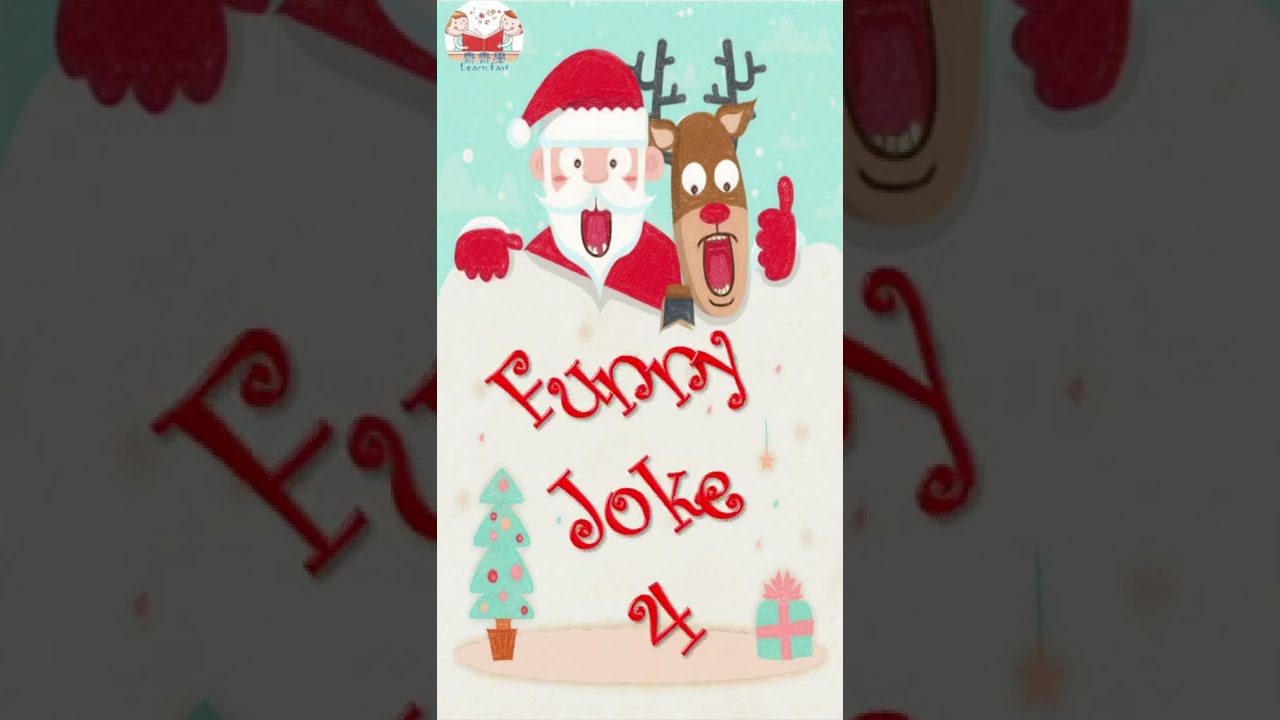
#funnyjokes #learnfast #shorts #Christmas #Santa #parking #slieigh #聖
誕老人 #聖誕
How much does it cost Santa to park his sleigh?
Have Fun !
📍📍歡迎收看《English Speaking系列》📍📍
Talking about your neighbourhood
👉https://youtu.be/pVZsqtQ2pMA
Talking about different festivals
👉https://youtu.be/7XWE_QB0qEk
Introduce your school
👉https://www.youtube.com/watch?v=DPfvjdEI7Dw
Back to school
👉https://www.youtube.com/watch?v=NSv5QyPmhpw
Good manners_actions
👉https://youtu.be/_Swu0JtZke0
Good manners
👉https://www.youtube.com/watch?v=HGME2UCt6-M&t=29s
Talking about daily routines
👉https://youtu.be/Np8mJ1uw8c8
📍📍歡迎收看《Grammar系列》📍📍
Lesson4_common mistakes
👉https://youtu.be/A7Yz6eEcYPs
Lesson3_irregular verbs_part2
👉https://youtu.be/vE6AnyrYDZQ
Lesson2_irregular verbs_part 1
👉https://youtu.be/C_p_r053MeQ
Lesson1_Opposite words
👉https://youtu.be/ftz3u46E0Zo
📍📍歡迎收看《Cooking系列》📍📍
Make fresh juice
👉https://www.youtube.com/watch?v=VFOo2RW_qoI
📍📍歡迎收看《Shorts系列》📍📍
Funny jokes 5
👉https://youtube.com/shorts/7Rq0v77lq3Q
Funny jokes 3
👉https://youtube.com/shorts/VJe4DCE9lLs
Funny joke 2
👉https://youtube.com/shorts/2ouEf37QtdQ
Funny joke 1
👉https://youtube.com/shorts/OJ2-YEfl2uw
Tongue twister_whose/shoes/choose
👉https://youtube.com/shorts/S9Rrw_scQ8o
Tongue twister_birdie vs turdie vs pie
👉https://youtube.com/shorts/yvOv4EVm6Xc
Tongue twister_scream vs ice cream
👉https://youtube.com/shorts/KBi79AOOPow
Tongue twister_fuzzy vs wuzzy
👉https://youtube.com/shorts/pwGPW_cWdxc
Tongue twister_whether vs weather
👉https://youtube.com/shorts/_3yjqCC4ASA
Read with me_Irregular verbs Part A
👉https://youtube.com/shorts/OfA0FlrxVy8
Read with me_Irregular verbs Part B
👉https://youtube.com/shorts/GV9iXpKMUAk
📍📍歡迎收看《Fun Games系列》📍📍
Make a guess
👉https://youtu.be/J0E2LF9_chU
Quiz Time
👉https://youtu.be/M4JrGzedjH0
Quiz Time
👉https://youtu.be/k7cTb77sh1Q
Quiz Time
👉https://www.youtube.com/watch?v=QGwhG4Mk_Ow&t=5s
Quiz Time
👉https://www.youtube.com/watch?v=xDUJPNRh3mA
📍📍歡迎收看《Basic conversation系列》📍📍
Lesson 13_Talking about location
👉https://youtu.be/0d3Zt_ezKbA
Lesson 12_How are you
👉https://youtu.be/0PPU7jyk30M
Lesson 11_In the shopping mall
👉https://youtu.be/bmM6fTPNHO4
Lesson 10_In a flower shop
👉https://youtu.be/j_ROyW4aNig
Lesson 9_How can I help you
👉https://youtu.be/6Nx1dXLeQMU
Lesson 8_Talking about your best friend
👉https://youtu.be/NknxeVxhP7A
Fun Lesson_Different languages
👉https://youtu.be/mCJPRD7pahw
Lesson 7_Apply for a library card and borrow books
👉https://www.youtube.com/watch?v=5XCmL9clkQY
Lesson 6_Ordering food
👉https://youtu.be/xaJKiHn6vuc
Lesson 5_Visiting friends
👉https://youtu.be/5TkeC8iirVA
Lesson 4_Making phone calls
👉https://youtu.be/B2CUxLSK5CU
Lesson 3_Types of weather
👉https://youtu.be/ivyo-t50qnw
Lesson 2_Days in a week
👉https://youtu.be/fAtrVak5qLo
Lesson 1_Greetings
👉https://youtu.be/hl_foOF6EjY
📍📍歡迎收看其他《Vocabulary詞匯系列》📍📍
Animals on land_陸地動物
👉https://youtu.be/XxZXjGkJkCQ
Animals in the sea_海洋動物
👉https://youtu.be/gN7GsS6cCeg
Parts of the body_身體部份名稱
👉https://youtu.be/GviCG650sng
Theme Park facilities_主題公園設施
👉https://youtu.be/RiP4etv1ANs
Famous Landmarks_國家名勝地標名稱
👉https://youtu.be/-_rRauEiDic
Colour_顏色
👉Part 2https://youtu.be/78xUTO1My_E
Furniture in the living room_客廳內傢俱名稱
👉https://www.youtube.com/watch?v=smN7hHwHL1g
2D shapes_平面形狀的名稱
👉https://www.youtube.com/watch?v=P4wT5wmqIRY
Jobs_職業名稱
👉https://www.youtube.com/watch?v=NYDTE...
Hairstyle_不同髮型的英文名稱
👉https://www.youtube.com/watch?v=PU_BB2Kvj_w
Solar System_太陽系
👉https://www.youtube.com/watch?v=Qwwczge-_ks
Tableware_餐具名稱
👉https://www.youtube.com/watch?v=rm4FNlRQZxE
Hats_帽子的名稱
👉https://www.youtube.com/watch?v=Pl3g8JgXeGc
Egg_蛋的不同煮法名稱
👉https://www.youtube.com/watch?v=alwVK7zoplc
National Flags_國家及國旗
👉https://youtu.be/tBwHd6XHfE0
The 12 Chinese Zodiac_12生肖
👉https://youtu.be/ii8djvnF-pk
Fruit_水果名稱
👉https://youtu.be/ozwI9sk-bo4
Stationery_文具名稱
👉https://youtu.be/jsjwHTaWfkg
Colour_顏色 Part 1
👉https://youtu.be/AiiGKUEuWx4
📍📍歡迎收看《停課不停學系列》 📍📍
Number 1-10
👉https://youtu.be/wVn_0fY5i1o
Fruit
👉https://youtu.be/C3jy63nGhgA
Transportation in HK
👉https://youtu.be/5qQX0ymwwqo
Vegetables
👉https://m.youtube.com/watch?v=iu1OnlmqRI4
Sports
👉https://youtu.be/eF_Dv6owlM8
Relaxing activities
👉https://www.youtube.com/watch?v=ROv7OlyXe0A
📍📍歡迎收看《Writing a composition系列》 📍📍
👉School Picnic Day
https://youtu.be/GNXyS84JrQo
At the beach
👉https://www.youtube.com/watch?v=WcERiNMpb9s
📍📍歡迎收看《小一叩門面試》系列 📍📍
👉School Interview_Part 1:Talking about yourself
https://www.youtube.com/watch?v=wWTwr2o4_uo
👉小一叩門:不能不看題目背後的真正意義
https://m.youtube.com/watch?v=msqXn02v8tw
👉小一叩門:面試陷阱
https://m.youtube.com/watch?v=OrTx4B_cnkw
Kevin MacLeod創作的「Ambiment - The Ambient」是依據 創用 CC (姓名標示) 4.0 授權使用。 https://creativecommons.org/licenses/by/4.0/
來源: http://incompetech.com/music/r....oyalty-free/index.ht
藝人: http://incompetech.com/

📍歡迎收看《Revision Exercise系列》📍
Exercise 3_Prepositions of place
👉https://youtu.be/ExYRxnoHzMs
Exercise 2_Question Words
👉https://youtu.be/jyBpWyIsObg
Exercise 1_Tenses
👉https://youtu.be/ScD4qTywcZw
📍歡迎收看《English Speaking系列》📍
Talking about your neighbourhood
👉https://youtu.be/pVZsqtQ2pMA
Talking about different festivals
👉https://youtu.be/7XWE_QB0qEk
Introduce your school
👉https://www.youtube.com/watch?v=DPfvjdEI7Dw
Back to school
👉https://www.youtube.com/watch?v=NSv5QyPmhpw
Good manners_actions
👉https://youtu.be/_Swu0JtZke0
Good manners
👉https://www.youtube.com/watch?v=HGME2UCt6-M&t=29s
Talking about daily routines
👉https://youtu.be/Np8mJ1uw8c8
📍歡迎收看《Grammar系列》📍
Lesson 8_irregular plural nouns_part 1
👉https://youtu.be/ReaCiBtGZ2M
Lesson 7_uncountable nouns with quantifiers
👉https://youtu.be/pFSxA4egs8o
Lesson 6_Opposite words
👉https://youtu.be/OqULbwKTVwk
Lesson 5_irregular verbs_part3
👉https://youtu.be/2gGmVYQW_0k
Lesson4_common mistakes
👉https://youtu.be/A7Yz6eEcYPs
Lesson3_irregular verbs_part2
👉https://youtu.be/vE6AnyrYDZQ
Lesson2_irregular verbs_part 1
👉https://youtu.be/C_p_r053MeQ
Lesson1_Opposite words
👉https://youtu.be/ftz3u46E0Zo
📍📍歡迎收看《Cooking系列》📍📍
Make fresh juice
👉https://www.youtube.com/watch?v=VFOo2RW_qoI
📍📍歡迎收看《Shorts系列》📍📍
Funny jokes 3
👉https://youtube.com/shorts/VJe4DCE9lLs
Funny joke 2
👉https://youtube.com/shorts/2ouEf37QtdQ
Funny joke 1
👉https://youtube.com/shorts/OJ2-YEfl2uw
Tongue twister_birdie vs turdie vs pie
👉https://youtube.com/shorts/yvOv4EVm6Xc
Tongue twister_scream vs ice cream
👉https://youtube.com/shorts/KBi79AOOPow
Tongue twister_fuzzy vs wuzzy
👉https://youtube.com/shorts/pwGPW_cWdxc
Tongue twister_whether vs weather
👉https://youtube.com/shorts/_3yjqCC4ASA
Read with me_Irregular verbs Part A
👉https://youtube.com/shorts/OfA0FlrxVy8
Read with me_Irregular verbs Part B
👉https://youtube.com/shorts/GV9iXpKMUAk
📍📍歡迎收看《Fun Games系列》📍📍
Make a guess
👉https://youtu.be/J0E2LF9_chU
Quiz Time
👉https://youtu.be/M4JrGzedjH0
Quiz Time
👉https://youtu.be/k7cTb77sh1Q
Quiz Time
👉https://www.youtube.com/watch?v=QGwhG4Mk_Ow&t=5s
Quiz Time
👉https://www.youtube.com/watch?v=xDUJPNRh3mA
📍📍歡迎收看《Basic conversation系列》📍📍
Basic conversation Lesson 8_Talking about your best friend
👉https://youtu.be/NknxeVxhP7A
Basic conversation Fun Lesson_Different languages
👉https://youtu.be/mCJPRD7pahw
Basic conversation Lesson 7_Apply for a library card and borrow books
👉https://www.youtube.com/watch?v=5XCmL9clkQY
Basic conversation Lesson 6_Ordering food
👉https://youtu.be/xaJKiHn6vuc
Basic conversation Lesson 5_Visiting friends
👉https://youtu.be/5TkeC8iirVA
Basic conversation Lesson 4_Making phone calls
👉https://youtu.be/B2CUxLSK5CU
Basic conversation Lesson 3_Types of weather
👉https://youtu.be/ivyo-t50qnw
Basic conversation Lesson 2_Days in a week
👉https://youtu.be/fAtrVak5qLo
Basic conversation Lesson 1_Greetings
👉https://youtu.be/hl_foOF6EjY
📍📍歡迎收看其他《Vocabulary詞匯系列》📍📍
Animals on land_陸地動物
👉https://youtu.be/XxZXjGkJkCQ
Animals in the sea_海洋動物
👉https://youtu.be/gN7GsS6cCeg
Parts of the body_身體部份名稱
👉https://youtu.be/GviCG650sng
Theme Park facilities_主題公園設施
👉https://youtu.be/RiP4etv1ANs
Famous Landmarks_國家名勝地標名稱
👉https://youtu.be/-_rRauEiDic
Colour_顏色
👉Part 2https://youtu.be/78xUTO1My_E
Furniture in the living room_客廳內傢俱名稱
👉https://www.youtube.com/watch?v=smN7hHwHL1g
2D shapes_平面形狀的名稱
👉https://www.youtube.com/watch?v=P4wT5wmqIRY
Jobs_職業名稱
👉https://www.youtube.com/watch?v=NYDTE...
Hairstyle_不同髮型的英文名稱
👉https://www.youtube.com/watch?v=PU_BB2Kvj_w
Solar System_太陽系
👉https://www.youtube.com/watch?v=Qwwczge-_ks
Tableware_餐具名稱
👉https://www.youtube.com/watch?v=rm4FNlRQZxE
Hats_帽子的名稱
👉https://www.youtube.com/watch?v=Pl3g8JgXeGc
Egg_蛋的不同煮法名稱
👉https://www.youtube.com/watch?v=alwVK7zoplc
National Flags_國家及國旗
👉https://youtu.be/tBwHd6XHfE0
The 12 Chinese Zodiac_12生肖
👉https://youtu.be/ii8djvnF-pk
Fruit_水果名稱
👉https://youtu.be/ozwI9sk-bo4
Stationery_文具名稱
👉https://youtu.be/jsjwHTaWfkg
Colour_顏色 Part 1
👉https://youtu.be/AiiGKUEuWx4
📍📍歡迎收看《停課不停學系列》 📍📍
Number 1-10
👉https://youtu.be/wVn_0fY5i1o
Fruit
👉https://youtu.be/C3jy63nGhgA
Transportation in HK
👉https://youtu.be/5qQX0ymwwqo
Vegetables
👉https://m.youtube.com/watch?v=iu1OnlmqRI4
Sports
👉https://youtu.be/eF_Dv6owlM8
Relaxing activities
👉https://www.youtube.com/watch?v=ROv7OlyXe0A
📍📍歡迎收看《Writing a composition系列》 📍📍
👉School Picnic Day
https://youtu.be/GNXyS84JrQo
At the beach
👉https://www.youtube.com/watch?v=WcERiNMpb9s
📍📍歡迎收看《小一叩門面試》系列 📍📍
👉School Interview_Part 1:Talking about yourself
https://www.youtube.com/watch?v=wWTwr2o4_uo
👉小一叩門:不能不看題目背後的真正意義
https://m.youtube.com/watch?v=msqXn02v8tw
👉小一叩門:面試陷阱
https://m.youtube.com/watch?v=OrTx4B_cnkw

Vocabulary | Egg | How do you like your eggs?
hard boiled egg #全熟水煮蛋
soft boiled egg #半熟水煮蛋
sunny-side-up egg #太陽蛋
over hard egg #全熟荷包蛋
over-easy egg / running egg #雙面半生熟荷包蛋
scrambled egg #炒蛋
poached egg #水波蛋
omelette #奄列
eggs benedict #班尼迪克蛋
egg roll #煎蛋卷
steamed eggs #蒸水蛋
egg tarts #蛋撻
egg waffle #雞蛋仔
tea egg #茶葉蛋
egg roll biscuit #蛋卷
📍📍歡迎收看《English Speaking系列》📍📍
Talking about different festivals
👉https://youtu.be/7XWE_QB0qEk
Introduce your school
👉https://www.youtube.com/watch?v=DPfvjdEI7Dw
Back to school
👉https://www.youtube.com/watch?v=NSv5QyPmhpw
Good manners_actions
👉https://youtu.be/_Swu0JtZke0
Good manners
👉https://www.youtube.com/watch?v=HGME2UCt6-M&t=29s
Talking about daily routines
👉https://youtu.be/Np8mJ1uw8c8
📍📍歡迎收看《Grammar系列》📍📍
Lesson4_common mistakes
👉https://youtu.be/A7Yz6eEcYPs
Lesson3_irregular verbs_part2
👉https://youtu.be/vE6AnyrYDZQ
Lesson2_irregular verbs_part 1
👉https://youtu.be/C_p_r053MeQ
Lesson1_Opposite words
👉https://youtu.be/ftz3u46E0Zo
📍📍歡迎收看《Cooking系列》📍📍
Make fresh juice
👉https://www.youtube.com/watch?v=VFOo2RW_qoI
📍📍歡迎收看《Shorts系列》📍📍
Funny jokes 3
👉https://youtube.com/shorts/VJe4DCE9lLs
Funny joke 2
👉https://youtube.com/shorts/2ouEf37QtdQ
Funny joke 1
👉https://youtube.com/shorts/OJ2-YEfl2uw
Tongue twister_birdie vs turdie vs pie
👉https://youtube.com/shorts/yvOv4EVm6Xc
Tongue twister_scream vs ice cream
👉https://youtube.com/shorts/KBi79AOOPow
Tongue twister_fuzzy vs wuzzy
👉https://youtube.com/shorts/pwGPW_cWdxc
Tongue twister_whether vs weather
👉https://youtube.com/shorts/_3yjqCC4ASA
Read with me_Irregular verbs Part A
👉https://youtube.com/shorts/OfA0FlrxVy8
Read with me_Irregular verbs Part B
👉https://youtube.com/shorts/GV9iXpKMUAk
📍📍歡迎收看《Fun Games系列》📍📍
Make a guess
👉https://youtu.be/J0E2LF9_chU
Quiz Time
👉https://youtu.be/M4JrGzedjH0
Quiz Time
👉https://youtu.be/k7cTb77sh1Q
Quiz Time
👉https://www.youtube.com/watch?v=QGwhG4Mk_Ow&t=5s
Quiz Time
👉https://www.youtube.com/watch?v=xDUJPNRh3mA
📍📍歡迎收看《Basic conversation系列》📍📍
Basic conversation Lesson 8_Talking about your best friend
👉https://youtu.be/NknxeVxhP7A
Basic conversation Fun Lesson_Different languages
👉https://youtu.be/mCJPRD7pahw
Basic conversation Lesson 7_Apply for a library card and borrow books
👉https://www.youtube.com/watch?v=5XCmL9clkQY
Basic conversation Lesson 6_Ordering food
👉https://youtu.be/xaJKiHn6vuc
Basic conversation Lesson 5_Visiting friends
👉https://youtu.be/5TkeC8iirVA
Basic conversation Lesson 4_Making phone calls
👉https://youtu.be/B2CUxLSK5CU
Basic conversation Lesson 3_Types of weather
👉https://youtu.be/ivyo-t50qnw
Basic conversation Lesson 2_Days in a week
👉https://youtu.be/fAtrVak5qLo
Basic conversation Lesson 1_Greetings
👉https://youtu.be/hl_foOF6EjY
📍📍歡迎收看其他《Vocabulary詞匯系列》📍📍
Animals on land_陸地動物
👉https://youtu.be/XxZXjGkJkCQ
Animals in the sea_海洋動物
👉https://youtu.be/gN7GsS6cCeg
Parts of the body_身體部份名稱
👉https://youtu.be/GviCG650sng
Theme Park facilities_主題公園設施
👉https://youtu.be/RiP4etv1ANs
Famous Landmarks_國家名勝地標名稱
👉https://youtu.be/-_rRauEiDic
Colour_顏色
👉Part 2https://youtu.be/78xUTO1My_E
Furniture in the living room_客廳內傢俱名稱
👉https://www.youtube.com/watch?v=smN7hHwHL1g
2D shapes_平面形狀的名稱
👉https://www.youtube.com/watch?v=P4wT5wmqIRY
Jobs_職業名稱
👉https://www.youtube.com/watch?v=NYDTE...
Hairstyle_不同髮型的英文名稱
👉https://www.youtube.com/watch?v=PU_BB2Kvj_w
Solar System_太陽系
👉https://www.youtube.com/watch?v=Qwwczge-_ks
Tableware_餐具名稱
👉https://www.youtube.com/watch?v=rm4FNlRQZxE
Hats_帽子的名稱
👉https://www.youtube.com/watch?v=Pl3g8JgXeGc
Egg_蛋的不同煮法名稱
👉https://www.youtube.com/watch?v=alwVK7zoplc
National Flags_國家及國旗
👉https://youtu.be/tBwHd6XHfE0
The 12 Chinese Zodiac_12生肖
👉https://youtu.be/ii8djvnF-pk
Fruit_水果名稱
👉https://youtu.be/ozwI9sk-bo4
Stationery_文具名稱
👉https://youtu.be/jsjwHTaWfkg
Colour_顏色 Part 1
👉https://youtu.be/AiiGKUEuWx4
📍📍歡迎收看《停課不停學系列》 📍📍
Number 1-10
👉https://youtu.be/wVn_0fY5i1o
Fruit
👉https://youtu.be/C3jy63nGhgA
Transportation in HK
👉https://youtu.be/5qQX0ymwwqo
Vegetables
👉https://m.youtube.com/watch?v=iu1OnlmqRI4
Sports
👉https://youtu.be/eF_Dv6owlM8
Relaxing activities
👉https://www.youtube.com/watch?v=ROv7OlyXe0A
📍📍歡迎收看《Writing a composition系列》 📍📍
👉School Picnic Day
https://youtu.be/GNXyS84JrQo
At the beach
👉https://www.youtube.com/watch?v=WcERiNMpb9s
📍📍歡迎收看《小一叩門面試》系列 📍📍
👉School Interview_Part 1:Talking about yourself
https://www.youtube.com/watch?v=wWTwr2o4_uo
👉小一叩門:不能不看題目背後的真正意義
https://m.youtube.com/watch?v=msqXn02v8tw
👉小一叩門:面試陷阱
https://m.youtube.com/watch?v=OrTx4B_cnkw

-----------------------------------------------------------------------------------
Please SUBSCRIBE to our channel, LIKE, and SHARE to encourage us to share more useful and interesting knowledge.
請訂閱我們的頻道、點讚、分享,鼓勵我們分享更多有用又有趣的知識。
-----------------------------------------------------------------------------------
📍📍Welcome to watch our videos📍📍
歡迎觀看我們所創作的的其他影片
1)Basic Conversation 會話
https://www.youtube.com/playli....st?list=PLPoPxSDq_eP
2) Grammar 語法
https://www.youtube.com/playli....st?list=PLPoPxSDq_eP
3)English Speaking
https://www.youtube.com/playli....st?list=PLPoPxSDq_eP
4)Funny Jokes 笑話
https://www.youtube.com/playli....st?list=PLPoPxSDq_eP
5)Vocabulary 詞彙
https://www.youtube.com/playli....st?list=PLPoPxSDq_eP
6)English Idioms 英語成語
https://www.youtube.com/playli....st?list=PLPoPxSDq_eP
7)Revision Exercise 重温練習
https://www.youtube.com/playli....st?list=PLPoPxSDq_eP
8)Fun Games 趣遊戲味
https://www.youtube.com/playli....st?list=PLPoPxSDq_eP
9) Tongue Twister 繞口令
https://www.youtube.com/playli....st?list=PLPoPxSDq_eP
10)Writing a composition 作文
https://www.youtube.com/playli....st?list=PLPoPxSDq_eP

📍📍歡迎收看《English Speaking系列》📍📍
Talking about different festivals
👉https://youtu.be/7XWE_QB0qEk
Introduce your school
👉https://www.youtube.com/watch?v=DPfvjdEI7Dw
Back to school
👉https://www.youtube.com/watch?v=NSv5QyPmhpw
Good manners_actions
👉https://youtu.be/_Swu0JtZke0
Good manners
👉https://www.youtube.com/watch?v=HGME2UCt6-M&t=29s
Talking about daily routines
👉https://youtu.be/Np8mJ1uw8c8
📍📍歡迎收看《Grammar系列》📍📍
Lesson4_common mistakes
👉https://youtu.be/A7Yz6eEcYPs
Lesson3_irregular verbs_part2
👉https://youtu.be/vE6AnyrYDZQ
Lesson2_irregular verbs_part 1
👉https://youtu.be/C_p_r053MeQ
Lesson1_Opposite words
👉https://youtu.be/ftz3u46E0Zo
📍📍歡迎收看《Cooking系列》📍📍
Make fresh juice
👉https://www.youtube.com/watch?v=VFOo2RW_qoI
📍📍歡迎收看《Shorts系列》📍📍
Funny jokes 3
👉https://youtube.com/shorts/VJe4DCE9lLs
Funny joke 2
👉https://youtube.com/shorts/2ouEf37QtdQ
Funny joke 1
👉https://youtube.com/shorts/OJ2-YEfl2uw
Tongue twister_birdie vs turdie vs pie
👉https://youtube.com/shorts/yvOv4EVm6Xc
Tongue twister_scream vs ice cream
👉https://youtube.com/shorts/KBi79AOOPow
Tongue twister_fuzzy vs wuzzy
👉https://youtube.com/shorts/pwGPW_cWdxc
Tongue twister_whether vs weather
👉https://youtube.com/shorts/_3yjqCC4ASA
Read with me_Irregular verbs Part A
👉https://youtube.com/shorts/OfA0FlrxVy8
Read with me_Irregular verbs Part B
👉https://youtube.com/shorts/GV9iXpKMUAk
📍📍歡迎收看《Fun Games系列》📍📍
Make a guess
👉https://youtu.be/J0E2LF9_chU
Quiz Time
👉https://youtu.be/M4JrGzedjH0
Quiz Time
👉https://youtu.be/k7cTb77sh1Q
Quiz Time
👉https://www.youtube.com/watch?v=QGwhG4Mk_Ow&t=5s
Quiz Time
👉https://www.youtube.com/watch?v=xDUJPNRh3mA
📍📍歡迎收看《Basic conversation系列》📍📍
Basic conversation Lesson 8_Talking about your best friend
👉https://youtu.be/NknxeVxhP7A
Basic conversation Fun Lesson_Different languages
👉https://youtu.be/mCJPRD7pahw
Basic conversation Lesson 7_Apply for a library card and borrow books
👉https://www.youtube.com/watch?v=5XCmL9clkQY
Basic conversation Lesson 6_Ordering food
👉https://youtu.be/xaJKiHn6vuc
Basic conversation Lesson 5_Visiting friends
👉https://youtu.be/5TkeC8iirVA
Basic conversation Lesson 4_Making phone calls
👉https://youtu.be/B2CUxLSK5CU
Basic conversation Lesson 3_Types of weather
👉https://youtu.be/ivyo-t50qnw
Basic conversation Lesson 2_Days in a week
👉https://youtu.be/fAtrVak5qLo
Basic conversation Lesson 1_Greetings
👉https://youtu.be/hl_foOF6EjY
📍📍歡迎收看其他《Vocabulary詞匯系列》📍📍
Animals on land_陸地動物
👉https://youtu.be/XxZXjGkJkCQ
Animals in the sea_海洋動物
👉https://youtu.be/gN7GsS6cCeg
Parts of the body_身體部份名稱
👉https://youtu.be/GviCG650sng
Theme Park facilities_主題公園設施
👉https://youtu.be/RiP4etv1ANs
Famous Landmarks_國家名勝地標名稱
👉https://youtu.be/-_rRauEiDic
Colour_顏色
👉Part 2https://youtu.be/78xUTO1My_E
Furniture in the living room_客廳內傢俱名稱
👉https://www.youtube.com/watch?v=smN7hHwHL1g
2D shapes_平面形狀的名稱
👉https://www.youtube.com/watch?v=P4wT5wmqIRY
Jobs_職業名稱
👉https://www.youtube.com/watch?v=NYDTE...
Hairstyle_不同髮型的英文名稱
👉https://www.youtube.com/watch?v=PU_BB2Kvj_w
Solar System_太陽系
👉https://www.youtube.com/watch?v=Qwwczge-_ks
Tableware_餐具名稱
👉https://www.youtube.com/watch?v=rm4FNlRQZxE
Hats_帽子的名稱
👉https://www.youtube.com/watch?v=Pl3g8JgXeGc
Egg_蛋的不同煮法名稱
👉https://www.youtube.com/watch?v=alwVK7zoplc
National Flags_國家及國旗
👉https://youtu.be/tBwHd6XHfE0
The 12 Chinese Zodiac_12生肖
👉https://youtu.be/ii8djvnF-pk
Fruit_水果名稱
👉https://youtu.be/ozwI9sk-bo4
Stationery_文具名稱
👉https://youtu.be/jsjwHTaWfkg
Colour_顏色 Part 1
👉https://youtu.be/AiiGKUEuWx4
📍📍歡迎收看《停課不停學系列》 📍📍
Number 1-10
👉https://youtu.be/wVn_0fY5i1o
Fruit
👉https://youtu.be/C3jy63nGhgA
Transportation in HK
👉https://youtu.be/5qQX0ymwwqo
Vegetables
👉https://m.youtube.com/watch?v=iu1OnlmqRI4
Sports
👉https://youtu.be/eF_Dv6owlM8
Relaxing activities
👉https://www.youtube.com/watch?v=ROv7OlyXe0A
📍📍歡迎收看《Writing a composition系列》 📍📍
👉School Picnic Day
https://youtu.be/GNXyS84JrQo
At the beach
👉https://www.youtube.com/watch?v=WcERiNMpb9s
📍📍歡迎收看《小一叩門面試》系列 📍📍
👉School Interview_Part 1:Talking about yourself
https://www.youtube.com/watch?v=wWTwr2o4_uo
👉小一叩門:不能不看題目背後的真正意義
https://m.youtube.com/watch?v=msqXn02v8tw
👉小一叩門:面試陷阱
https://m.youtube.com/watch?v=OrTx4B_cnkw

Talking about different festivals
#songkran #宋干節
#WaterFestival #潑水節
#startinganew #重新開始
#waterfights #水戰
#Kodomonohi #日本兒童節
#ChildrensDay #兒童節
#KashiwaMochi #柏餅 #日本兒童節
#diwali #排燈節
#lights #燈
#temple #寺廟
#fireworks #烟花
#rangoli #藍果麗
#oillamps #油燈
#ChineseNewYear #農曆新年 #春節
#redpaper #揮春
#flowermarket #花市
#reuniondinner #團年飯
#redpackets #紅包 #利是
📍📍歡迎收看《English Speaking系列》📍📍
Talking about different festivals
👉https://youtu.be/7XWE_QB0qEk
Introduce your school
👉https://www.youtube.com/watch?v=DPfvjdEI7Dw
Back to school
👉https://www.youtube.com/watch?v=NSv5QyPmhpw
Good manners_actions
👉https://youtu.be/_Swu0JtZke0
Good manners
👉https://www.youtube.com/watch?v=HGME2UCt6-M&t=29s
Talking about daily routines
👉https://youtu.be/Np8mJ1uw8c8
📍📍歡迎收看《Grammar系列》📍📍
Lesson4_common mistakes
👉https://youtu.be/A7Yz6eEcYPs
Lesson3_irregular verbs_part2
👉https://youtu.be/vE6AnyrYDZQ
Lesson2_irregular verbs_part 1
👉https://youtu.be/C_p_r053MeQ
Lesson1_Opposite words
👉https://youtu.be/ftz3u46E0Zo
📍📍歡迎收看《Cooking系列》📍📍
Make fresh juice
👉https://www.youtube.com/watch?v=VFOo2RW_qoI
📍📍歡迎收看《Shorts系列》📍📍
Funny jokes 3
👉https://youtube.com/shorts/VJe4DCE9lLs
Funny joke 2
👉https://youtube.com/shorts/2ouEf37QtdQ
Funny joke 1
👉https://youtube.com/shorts/OJ2-YEfl2uw
Tongue twister_birdie vs turdie vs pie
👉https://youtube.com/shorts/yvOv4EVm6Xc
Tongue twister_scream vs ice cream
👉https://youtube.com/shorts/KBi79AOOPow
Tongue twister_fuzzy vs wuzzy
👉https://youtube.com/shorts/pwGPW_cWdxc
Tongue twister_whether vs weather
👉https://youtube.com/shorts/_3yjqCC4ASA
Read with me_Irregular verbs Part A
👉https://youtube.com/shorts/OfA0FlrxVy8
Read with me_Irregular verbs Part B
👉https://youtube.com/shorts/GV9iXpKMUAk
📍📍歡迎收看《Fun Games系列》📍📍
Make a guess
👉https://youtu.be/J0E2LF9_chU
Quiz Time
👉https://youtu.be/M4JrGzedjH0
Quiz Time
👉https://youtu.be/k7cTb77sh1Q
Quiz Time
👉https://www.youtube.com/watch?v=QGwhG4Mk_Ow&t=5s
Quiz Time
👉https://www.youtube.com/watch?v=xDUJPNRh3mA
📍📍歡迎收看《Basic conversation系列》📍📍
Basic conversation Lesson 8_Talking about your best friend
👉https://youtu.be/NknxeVxhP7A
Basic conversation Fun Lesson_Different languages
👉https://youtu.be/mCJPRD7pahw
Basic conversation Lesson 7_Apply for a library card and borrow books
👉https://www.youtube.com/watch?v=5XCmL9clkQY
Basic conversation Lesson 6_Ordering food
👉https://youtu.be/xaJKiHn6vuc
Basic conversation Lesson 5_Visiting friends
👉https://youtu.be/5TkeC8iirVA
Basic conversation Lesson 4_Making phone calls
👉https://youtu.be/B2CUxLSK5CU
Basic conversation Lesson 3_Types of weather
👉https://youtu.be/ivyo-t50qnw
Basic conversation Lesson 2_Days in a week
👉https://youtu.be/fAtrVak5qLo
Basic conversation Lesson 1_Greetings
👉https://youtu.be/hl_foOF6EjY
📍📍歡迎收看其他《Vocabulary詞匯系列》📍📍
Animals on land_陸地動物
👉https://youtu.be/XxZXjGkJkCQ
Animals in the sea_海洋動物
👉https://youtu.be/gN7GsS6cCeg
Parts of the body_身體部份名稱
👉https://youtu.be/GviCG650sng
Theme Park facilities_主題公園設施
👉https://youtu.be/RiP4etv1ANs
Famous Landmarks_國家名勝地標名稱
👉https://youtu.be/-_rRauEiDic
Colour_顏色
👉Part 2https://youtu.be/78xUTO1My_E
Furniture in the living room_客廳內傢俱名稱
👉https://www.youtube.com/watch?v=smN7hHwHL1g
2D shapes_平面形狀的名稱
👉https://www.youtube.com/watch?v=P4wT5wmqIRY
Jobs_職業名稱
👉https://www.youtube.com/watch?v=NYDTE...
Hairstyle_不同髮型的英文名稱
👉https://www.youtube.com/watch?v=PU_BB2Kvj_w
Solar System_太陽系
👉https://www.youtube.com/watch?v=Qwwczge-_ks
Tableware_餐具名稱
👉https://www.youtube.com/watch?v=rm4FNlRQZxE
Hats_帽子的名稱
👉https://www.youtube.com/watch?v=Pl3g8JgXeGc
Egg_蛋的不同煮法名稱
👉https://www.youtube.com/watch?v=alwVK7zoplc
National Flags_國家及國旗
👉https://youtu.be/tBwHd6XHfE0
The 12 Chinese Zodiac_12生肖
👉https://youtu.be/ii8djvnF-pk
Fruit_水果名稱
👉https://youtu.be/ozwI9sk-bo4
Stationery_文具名稱
👉https://youtu.be/jsjwHTaWfkg
Colour_顏色 Part 1
👉https://youtu.be/AiiGKUEuWx4
📍📍歡迎收看《停課不停學系列》 📍📍
Number 1-10
👉https://youtu.be/wVn_0fY5i1o
Fruit
👉https://youtu.be/C3jy63nGhgA
Transportation in HK
👉https://youtu.be/5qQX0ymwwqo
Vegetables
👉https://m.youtube.com/watch?v=iu1OnlmqRI4
Sports
👉https://youtu.be/eF_Dv6owlM8
Relaxing activities
👉https://www.youtube.com/watch?v=ROv7OlyXe0A
📍📍歡迎收看《Writing a composition系列》 📍📍
👉School Picnic Day
https://youtu.be/GNXyS84JrQo
At the beach
👉https://www.youtube.com/watch?v=WcERiNMpb9s
📍📍歡迎收看《小一叩門面試》系列 📍📍
👉School Interview_Part 1:Talking about yourself
https://www.youtube.com/watch?v=wWTwr2o4_uo
👉小一叩門:不能不看題目背後的真正意義
https://m.youtube.com/watch?v=msqXn02v8tw
👉小一叩門:面試陷阱
https://m.youtube.com/watch?v=OrTx4B_cnkw

Funny Joke 10
Why did the banana go to the doctor?
Have Fun~
📍📍歡迎收看《English Speaking系列》📍📍
Talking about different festivals
👉https://youtu.be/7XWE_QB0qEk
Introduce your school
👉https://www.youtube.com/watch?v=DPfvjdEI7Dw
Back to school
👉https://www.youtube.com/watch?v=NSv5QyPmhpw
Good manners_actions
👉https://youtu.be/_Swu0JtZke0
Good manners
👉https://www.youtube.com/watch?v=HGME2UCt6-M&t=29s
Talking about daily routines
👉https://youtu.be/Np8mJ1uw8c8
📍📍歡迎收看《Grammar系列》📍📍
Lesson4_common mistakes
👉https://youtu.be/A7Yz6eEcYPs
Lesson3_irregular verbs_part2
👉https://youtu.be/vE6AnyrYDZQ
Lesson2_irregular verbs_part 1
👉https://youtu.be/C_p_r053MeQ
Lesson1_Opposite words
👉https://youtu.be/ftz3u46E0Zo
📍📍歡迎收看《Cooking系列》📍📍
Make fresh juice
👉https://www.youtube.com/watch?v=VFOo2RW_qoI
📍📍歡迎收看《Shorts系列》📍📍
Funny jokes 5
👉https://youtube.com/shorts/7Rq0v77lq3Q
Funny jokes 3
👉https://youtube.com/shorts/VJe4DCE9lLs
Funny joke 2
👉https://youtube.com/shorts/2ouEf37QtdQ
Funny joke 1
👉https://youtube.com/shorts/OJ2-YEfl2uw
Tongue twister_birdie vs turdie vs pie
👉https://youtube.com/shorts/yvOv4EVm6Xc
Tongue twister_scream vs ice cream
👉https://youtube.com/shorts/KBi79AOOPow
Tongue twister_fuzzy vs wuzzy
👉https://youtube.com/shorts/pwGPW_cWdxc
Tongue twister_whether vs weather
👉https://youtube.com/shorts/_3yjqCC4ASA
Read with me_Irregular verbs Part A
👉https://youtube.com/shorts/OfA0FlrxVy8
Read with me_Irregular verbs Part B
👉https://youtube.com/shorts/GV9iXpKMUAk
📍📍歡迎收看《Fun Games系列》📍📍
Make a guess
👉https://youtu.be/J0E2LF9_chU
Quiz Time
👉https://youtu.be/M4JrGzedjH0
Quiz Time
👉https://youtu.be/k7cTb77sh1Q
Quiz Time
👉https://www.youtube.com/watch?v=QGwhG4Mk_Ow&t=5s
Quiz Time
👉https://www.youtube.com/watch?v=xDUJPNRh3mA
📍📍歡迎收看《Basic conversation系列》📍📍
Basic conversation Lesson 9_How can I help you
👉https://youtu.be/6Nx1dXLeQMU
Basic conversation Lesson 8_Talking about your best friend
👉https://youtu.be/NknxeVxhP7A
Basic conversation Fun Lesson_Different languages
👉https://youtu.be/mCJPRD7pahw
Basic conversation Lesson 7_Apply for a library card and borrow books
👉https://www.youtube.com/watch?v=5XCmL9clkQY
Basic conversation Lesson 6_Ordering food
👉https://youtu.be/xaJKiHn6vuc
Basic conversation Lesson 5_Visiting friends
👉https://youtu.be/5TkeC8iirVA
Basic conversation Lesson 4_Making phone calls
👉https://youtu.be/B2CUxLSK5CU
Basic conversation Lesson 3_Types of weather
👉https://youtu.be/ivyo-t50qnw
Basic conversation Lesson 2_Days in a week
👉https://youtu.be/fAtrVak5qLo
Basic conversation Lesson 1_Greetings
👉https://youtu.be/hl_foOF6EjY
📍📍歡迎收看其他《Vocabulary詞匯系列》📍📍
Animals on land_陸地動物
👉https://youtu.be/XxZXjGkJkCQ
Animals in the sea_海洋動物
👉https://youtu.be/gN7GsS6cCeg
Parts of the body_身體部份名稱
👉https://youtu.be/GviCG650sng
Theme Park facilities_主題公園設施
👉https://youtu.be/RiP4etv1ANs
Famous Landmarks_國家名勝地標名稱
👉https://youtu.be/-_rRauEiDic
Colour_顏色
👉Part 2https://youtu.be/78xUTO1My_E
Furniture in the living room_客廳內傢俱名稱
👉https://www.youtube.com/watch?v=smN7hHwHL1g
2D shapes_平面形狀的名稱
👉https://www.youtube.com/watch?v=P4wT5wmqIRY
Jobs_職業名稱
👉https://www.youtube.com/watch?v=NYDTE...
Hairstyle_不同髮型的英文名稱
👉https://www.youtube.com/watch?v=PU_BB2Kvj_w
Solar System_太陽系
👉https://www.youtube.com/watch?v=Qwwczge-_ks
Tableware_餐具名稱
👉https://www.youtube.com/watch?v=rm4FNlRQZxE
Hats_帽子的名稱
👉https://www.youtube.com/watch?v=Pl3g8JgXeGc
Egg_蛋的不同煮法名稱
👉https://www.youtube.com/watch?v=alwVK7zoplc
National Flags_國家及國旗
👉https://youtu.be/tBwHd6XHfE0
The 12 Chinese Zodiac_12生肖
👉https://youtu.be/ii8djvnF-pk
Fruit_水果名稱
👉https://youtu.be/ozwI9sk-bo4
Stationery_文具名稱
👉https://youtu.be/jsjwHTaWfkg
Colour_顏色 Part 1
👉https://youtu.be/AiiGKUEuWx4
📍📍歡迎收看《停課不停學系列》 📍📍
Number 1-10
👉https://youtu.be/wVn_0fY5i1o
Fruit
👉https://youtu.be/C3jy63nGhgA
Transportation in HK
👉https://youtu.be/5qQX0ymwwqo
Vegetables
👉https://m.youtube.com/watch?v=iu1OnlmqRI4
Sports
👉https://youtu.be/eF_Dv6owlM8
Relaxing activities
👉https://www.youtube.com/watch?v=ROv7OlyXe0A
📍📍歡迎收看《Writing a composition系列》 📍📍
👉School Picnic Day
https://youtu.be/GNXyS84JrQo
At the beach
👉https://www.youtube.com/watch?v=WcERiNMpb9s
📍📍歡迎收看《小一叩門面試》系列 📍📍
👉School Interview_Part 1:Talking about yourself
https://www.youtube.com/watch?v=wWTwr2o4_uo
👉小一叩門:不能不看題目背後的真正意義
https://m.youtube.com/watch?v=msqXn02v8tw
👉小一叩門:面試陷阱
https://m.youtube.com/watch?v=OrTx4B_cnkw

-----------------------------------------------------------------------------------
Please SUBSCRIBE to our channel, LIKE, and SHARE to encourage us to share more useful and interesting knowledge.
請訂閱我們的頻道、點讚、分享,鼓勵我們分享更多有用又有趣的知識。
-----------------------------------------------------------------------------------
📍📍Welcome to watch our videos📍📍
歡迎觀看我們所創作的的其他影片
1)Basic Conversation 會話
https://www.youtube.com/playli....st?list=PLPoPxSDq_eP
2) Grammar 語法
https://www.youtube.com/playli....st?list=PLPoPxSDq_eP
3)English Speaking
https://www.youtube.com/playli....st?list=PLPoPxSDq_eP
4)Funny Jokes 笑話
https://www.youtube.com/playli....st?list=PLPoPxSDq_eP
5)Vocabulary 詞彙
https://www.youtube.com/playli....st?list=PLPoPxSDq_eP
6)English Idioms 英語成語
https://www.youtube.com/playli....st?list=PLPoPxSDq_eP
7)Revision Exercise 重温練習
https://www.youtube.com/playli....st?list=PLPoPxSDq_eP
8)Fun Games 趣遊戲味
https://www.youtube.com/playli....st?list=PLPoPxSDq_eP
9) Tongue Twister 繞口令
https://www.youtube.com/playli....st?list=PLPoPxSDq_eP
10)Writing a composition 作文
https://www.youtube.com/playli....st?list=PLPoPxSDq_eP

📍📍歡迎收看《English Speaking系列》📍📍
Talking about your neighbourhood
👉https://youtu.be/pVZsqtQ2pMA
Talking about different festivals
👉https://youtu.be/7XWE_QB0qEk
Introduce your school
👉https://www.youtube.com/watch?v=DPfvjdEI7Dw
Back to school
👉https://www.youtube.com/watch?v=NSv5QyPmhpw
Good manners_actions
👉https://youtu.be/_Swu0JtZke0
Good manners
👉https://www.youtube.com/watch?v=HGME2UCt6-M&t=29s
Talking about daily routines
👉https://youtu.be/Np8mJ1uw8c8
📍📍歡迎收看《Grammar系列》📍📍
Lesson4_common mistakes
👉https://youtu.be/A7Yz6eEcYPs
Lesson3_irregular verbs_part2
👉https://youtu.be/vE6AnyrYDZQ
Lesson2_irregular verbs_part 1
👉https://youtu.be/C_p_r053MeQ
Lesson1_Opposite words
👉https://youtu.be/ftz3u46E0Zo
📍📍歡迎收看《Cooking系列》📍📍
Make fresh juice
👉https://www.youtube.com/watch?v=VFOo2RW_qoI
📍📍歡迎收看《Shorts系列》📍📍
Funny jokes 5
👉https://youtube.com/shorts/7Rq0v77lq3Q
Funny jokes 3
👉https://youtube.com/shorts/VJe4DCE9lLs
Funny joke 2
👉https://youtube.com/shorts/2ouEf37QtdQ
Funny joke 1
👉https://youtube.com/shorts/OJ2-YEfl2uw
Tongue twister_whose/shoes/choose
👉https://youtube.com/shorts/S9Rrw_scQ8o
Tongue twister_birdie vs turdie vs pie
👉https://youtube.com/shorts/yvOv4EVm6Xc
Tongue twister_scream vs ice cream
👉https://youtube.com/shorts/KBi79AOOPow
Tongue twister_fuzzy vs wuzzy
👉https://youtube.com/shorts/pwGPW_cWdxc
Tongue twister_whether vs weather
👉https://youtube.com/shorts/_3yjqCC4ASA
Read with me_Irregular verbs Part A
👉https://youtube.com/shorts/OfA0FlrxVy8
Read with me_Irregular verbs Part B
👉https://youtube.com/shorts/GV9iXpKMUAk
📍📍歡迎收看《Fun Games系列》📍📍
Make a guess
👉https://youtu.be/J0E2LF9_chU
Quiz Time
👉https://youtu.be/M4JrGzedjH0
Quiz Time
👉https://youtu.be/k7cTb77sh1Q
Quiz Time
👉https://www.youtube.com/watch?v=QGwhG4Mk_Ow&t=5s
Quiz Time
👉https://www.youtube.com/watch?v=xDUJPNRh3mA
📍📍歡迎收看《Basic conversation系列》📍📍
Lesson 13_Talking about location
👉https://youtu.be/0d3Zt_ezKbA
Lesson 12_How are you
👉https://youtu.be/0PPU7jyk30M
Lesson 11_In the shopping mall
👉https://youtu.be/bmM6fTPNHO4
Lesson 10_In a flower shop
👉https://youtu.be/j_ROyW4aNig
Lesson 9_How can I help you
👉https://youtu.be/6Nx1dXLeQMU
Lesson 8_Talking about your best friend
👉https://youtu.be/NknxeVxhP7A
Fun Lesson_Different languages
👉https://youtu.be/mCJPRD7pahw
Lesson 7_Apply for a library card and borrow books
👉https://www.youtube.com/watch?v=5XCmL9clkQY
Lesson 6_Ordering food
👉https://youtu.be/xaJKiHn6vuc
Lesson 5_Visiting friends
👉https://youtu.be/5TkeC8iirVA
Lesson 4_Making phone calls
👉https://youtu.be/B2CUxLSK5CU
Lesson 3_Types of weather
👉https://youtu.be/ivyo-t50qnw
Lesson 2_Days in a week
👉https://youtu.be/fAtrVak5qLo
Lesson 1_Greetings
👉https://youtu.be/hl_foOF6EjY
📍📍歡迎收看其他《Vocabulary詞匯系列》📍📍
Animals on land_陸地動物
👉https://youtu.be/XxZXjGkJkCQ
Animals in the sea_海洋動物
👉https://youtu.be/gN7GsS6cCeg
Parts of the body_身體部份名稱
👉https://youtu.be/GviCG650sng
Theme Park facilities_主題公園設施
👉https://youtu.be/RiP4etv1ANs
Famous Landmarks_國家名勝地標名稱
👉https://youtu.be/-_rRauEiDic
Colour_顏色
👉Part 2https://youtu.be/78xUTO1My_E
Furniture in the living room_客廳內傢俱名稱
👉https://www.youtube.com/watch?v=smN7hHwHL1g
2D shapes_平面形狀的名稱
👉https://www.youtube.com/watch?v=P4wT5wmqIRY
Jobs_職業名稱
👉https://www.youtube.com/watch?v=NYDTE...
Hairstyle_不同髮型的英文名稱
👉https://www.youtube.com/watch?v=PU_BB2Kvj_w
Solar System_太陽系
👉https://www.youtube.com/watch?v=Qwwczge-_ks
Tableware_餐具名稱
👉https://www.youtube.com/watch?v=rm4FNlRQZxE
Hats_帽子的名稱
👉https://www.youtube.com/watch?v=Pl3g8JgXeGc
Egg_蛋的不同煮法名稱
👉https://www.youtube.com/watch?v=alwVK7zoplc
National Flags_國家及國旗
👉https://youtu.be/tBwHd6XHfE0
The 12 Chinese Zodiac_12生肖
👉https://youtu.be/ii8djvnF-pk
Fruit_水果名稱
👉https://youtu.be/ozwI9sk-bo4
Stationery_文具名稱
👉https://youtu.be/jsjwHTaWfkg
Colour_顏色 Part 1
👉https://youtu.be/AiiGKUEuWx4
📍📍歡迎收看《停課不停學系列》 📍📍
Number 1-10
👉https://youtu.be/wVn_0fY5i1o
Fruit
👉https://youtu.be/C3jy63nGhgA
Transportation in HK
👉https://youtu.be/5qQX0ymwwqo
Vegetables
👉https://m.youtube.com/watch?v=iu1OnlmqRI4
Sports
👉https://youtu.be/eF_Dv6owlM8
Relaxing activities
👉https://www.youtube.com/watch?v=ROv7OlyXe0A
📍📍歡迎收看《Writing a composition系列》 📍📍
👉School Picnic Day
https://youtu.be/GNXyS84JrQo
At the beach
👉https://www.youtube.com/watch?v=WcERiNMpb9s
📍📍歡迎收看《小一叩門面試》系列 📍📍
👉School Interview_Part 1:Talking about yourself
https://www.youtube.com/watch?v=wWTwr2o4_uo
👉小一叩門:不能不看題目背後的真正意義
https://m.youtube.com/watch?v=msqXn02v8tw
👉小一叩門:面試陷阱
https://m.youtube.com/watch?v=OrTx4B_cnkw
Kevin MacLeod創作的「Ambiment - The Ambient」是依據 創用 CC (姓名標示) 4.0 授權使用。 https://creativecommons.org/licenses/by/4.0/
來源: http://incompetech.com/music/r....oyalty-free/index.ht
藝人: http://incompetech.com/

#listening #study #dailyconversations #温習 #revision #學英文 #英語語法 #英語初學者 #刻意練習 #englishlearning #english #restaurant
-----------------------------------------------------------------------------------
💛Please SUBSCRIBE to our channel, LIKE, and SHARE: @learnfast101
💛歡迎訂閱我們的頻道、點讚、分享: @learnfast101
-----------------------------------------------------------------------------------
今天的頻道主要訓練聆聽在餐廳內的日常問與答。每天花10分鐘,循環不停學英文,讓你輕鬆溫習英文日常用語。你會發現英文聽、講能力會不知不覺間神速進步!
Welcome to watch our videos 歡迎觀看我們所創作的其他影片
👉🏻1) Basic Conversation 會話 https://www.youtube.com/playli....st?list=PLPoPxSDq_eP
👉🏻2) Grammar 語法 https://www.youtube.com/playli....st?list=PLPoPxSDq_eP
👉🏻3)English Speaking https://www.youtube.com/playli....st?list=PLPoPxSDq_eP
👉🏻4)Funny Jokes 笑話 https://www.youtube.com/playli....st?list=PLPoPxSDq_eP
👉🏻5)Vocabulary 詞彙 https://www.youtube.com/playli....st?list=PLPoPxSDq_eP
👉🏻6)English Idioms 英語成語 https://www.youtube.com/playli....st?list=PLPoPxSDq_eP
👉🏻7)Revision Exercise 重温練習 https://www.youtube.com/playli....st?list=PLPoPxSDq_eP
👉🏻8)Fun Games 趣遊戲味 https://www.youtube.com/playli....st?list=PLPoPxSDq_eP
👉🏻9) Tongue Twister 繞口令 https://www.youtube.com/playli....st?list=PLPoPxSDq_eP
👉🏻10)Writing a composition 作文 https://www.youtube.com/playli....st?list=PLPoPxSDq_eP
-----------------------------------------------------------------------------------
Here are some other videos talking about sports:
Back to school | English Speaking|https://youtu.be/NSv5QyPmhpw
Introduce your school | English Speaking|https://youtu.be/DPfvjdEI7Dw
Talking about their school Life| Basic Conversation Lesson 15 | https://youtu.be/qLDi6WEgI1I
Meet a new friend after school | Basic Conversation Lesson 16 | https://youtu.be/xDDjKglHZeY
-----------------------------------------------------------------------------------
Please SUBSCRIBE to our channel, LIKE, and SHARE to encourage us to share more useful and interesting knowledge.
請訂閱我們的頻道、點讚、分享,鼓勵我們分享更多有用又有趣的知識。
-----------------------------------------------------------------------------------
Welcome to watch our videos
歡迎觀看我們所創作的的其他影片
1)Basic Conversation 會話
https://www.youtube.com/playli....st?list=PLPoPxSDq_eP
2) Grammar 語法
https://www.youtube.com/playli....st?list=PLPoPxSDq_eP
3)English Speaking
https://www.youtube.com/playli....st?list=PLPoPxSDq_eP
4)Funny Jokes 笑話
https://www.youtube.com/playli....st?list=PLPoPxSDq_eP
5)Vocabulary 詞彙
https://www.youtube.com/playli....st?list=PLPoPxSDq_eP
6)English Idioms 英語成語
https://www.youtube.com/playli....st?list=PLPoPxSDq_eP
7)Revision Exercise 重温練習
https://www.youtube.com/playli....st?list=PLPoPxSDq_eP
8)Fun Games 趣遊戲味
https://www.youtube.com/playli....st?list=PLPoPxSDq_eP
9) Tongue Twister 繞口令
https://www.youtube.com/playli....st?list=PLPoPxSDq_eP
10)Writing a composition 作文
https://www.youtube.com/playli....st?list=PLPoPxSDq_eP
-----------------------------------------------------------------------------------
Please SUBSCRIBE to our channel, LIKE, and SHARE to encourage us to share more useful and interesting knowledge.
請訂閱我們的頻道、點讚、分享,鼓勵我們分享更多有用又有趣的知識。
-----------------------------------------------------------------------------------

-----------------------------------------------------------------------------------
Please SUBSCRIBE to our channel, LIKE, and SHARE to encourage us to share more useful and interesting knowledge.
請訂閱我們的頻道、點讚、分享,鼓勵我們分享更多有用又有趣的知識。
-----------------------------------------------------------------------------------
Welcome to watch our videos
歡迎觀看我們所創作的的其他影片
1)Basic Conversation 會話
https://www.youtube.com/playli....st?list=PLPoPxSDq_eP
2) Grammar 語法
https://www.youtube.com/playli....st?list=PLPoPxSDq_eP
3)English Speaking
https://www.youtube.com/playli....st?list=PLPoPxSDq_eP
4)Funny Jokes 笑話
https://www.youtube.com/playli....st?list=PLPoPxSDq_eP
5)Vocabulary 詞彙
https://www.youtube.com/playli....st?list=PLPoPxSDq_eP
6)English Idioms 英語成語
https://www.youtube.com/playli....st?list=PLPoPxSDq_eP
7)Revision Exercise 重温練習
https://www.youtube.com/playli....st?list=PLPoPxSDq_eP
8)Fun Games 趣遊戲味
https://www.youtube.com/playli....st?list=PLPoPxSDq_eP
9) Tongue Twister 繞口令
https://www.youtube.com/playli....st?list=PLPoPxSDq_eP
10)Writing a composition 作文
https://www.youtube.com/playli....st?list=PLPoPxSDq_eP
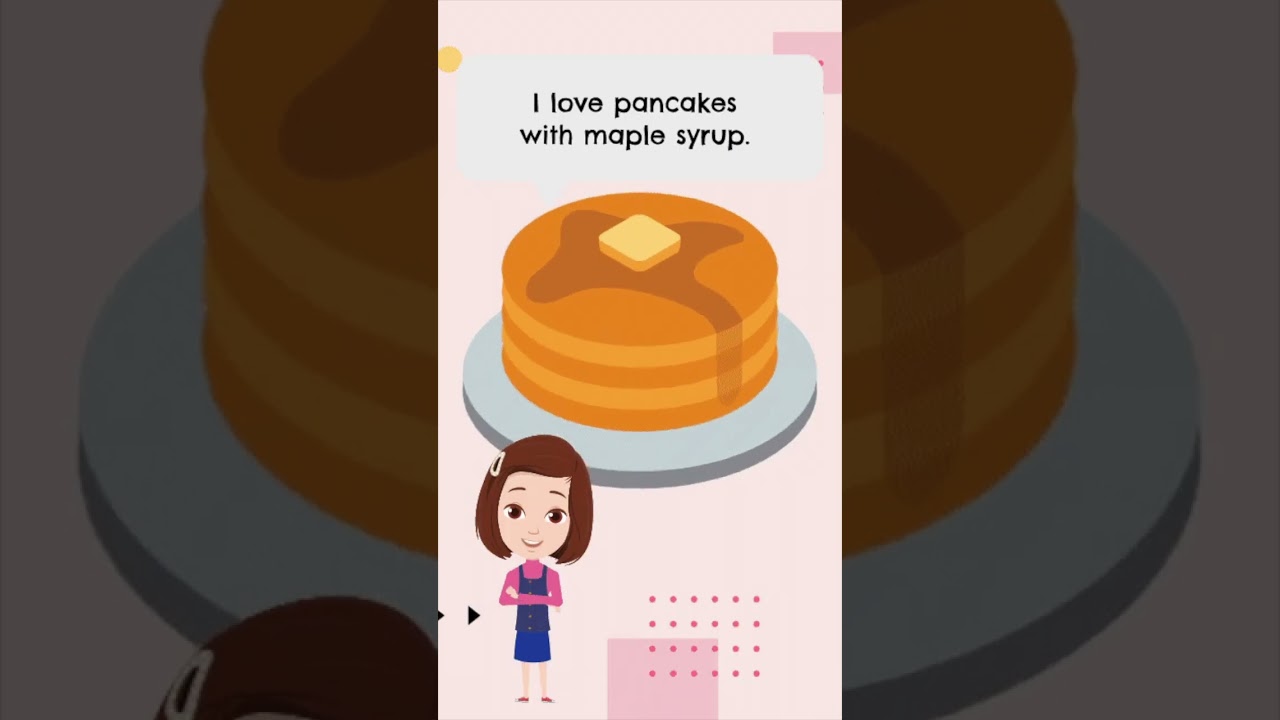
Here is a shorts showing you what you can have for breakfast.
https://youtube.com/shorts/aaz....3Udo1SuQ?feature=sha
-----------------------------------------------------------------------------------
Please SUBSCRIBE to our channel, LIKE, and SHARE to encourage us to share more useful and interesting knowledge.
請訂閱我們的頻道、點讚、分享,鼓勵我們分享更多有用又有趣的知識。
-----------------------------------------------------------------------------------
Welcome to watch our videos
歡迎觀看我們所創作的的其他影片
1)Basic Conversation 會話
https://www.youtube.com/playli....st?list=PLPoPxSDq_eP
2) Grammar 語法
https://www.youtube.com/playli....st?list=PLPoPxSDq_eP
3)English Speaking
https://www.youtube.com/playli....st?list=PLPoPxSDq_eP
4)Funny Jokes 笑話
https://www.youtube.com/playli....st?list=PLPoPxSDq_eP
5)Vocabulary 詞彙
https://www.youtube.com/playli....st?list=PLPoPxSDq_eP
6)English Idioms 英語成語
https://www.youtube.com/playli....st?list=PLPoPxSDq_eP
7)Revision Exercise 重温練習
https://www.youtube.com/playli....st?list=PLPoPxSDq_eP
8)Fun Games 趣遊戲味
https://www.youtube.com/playli....st?list=PLPoPxSDq_eP
9) Tongue Twister 繞口令
https://www.youtube.com/playli....st?list=PLPoPxSDq_eP
10)Writing a composition 作文
https://www.youtube.com/playli....st?list=PLPoPxSDq_eP
11) Story Telling 聽故事
https://youtube.com/playlist?l....ist=PLPoPxSDq_ePLrcK