Laatste video's

Cool facts about REPTILES | Happy Learning 🐉 🦎 🐍
"Welcome to Happy Learning! 🌟 In this fascinating video, we're going to dive into the world of reptiles and uncover amazing facts about these fascinating creatures. 🐍🦎 From their incredible diversity to their unique survival skills, you'll be amazed at everything you'll learn about these extraordinary animals. 🌿💡 Get ready to be thrilled and marvel at the incredible world of reptiles! 🌎🔍 Don't miss out and join us on this adventure full of discoveries. Let's explore together! 🌟 #ReptileCuriosities #DiscoverTheAnimalWorld 🐢🌟"
Discover hundreds of never-before-seen resources! Create your free account at https://my.happylearning.tv/ and start learning in the most entertaining way.
#reptiles
#snakes
#lizard
#happylearning

NEW VIDEOS https://www.youtube.com/playli....st?list=PLLF_mZmNqOn
MORE HISTORY https://www.youtube.com/playli....st?list=PLLF_mZmNqOn
🌎⛵ Did you know that in 1492 Christopher Columbus set out on a journey that changed world history? In this educational video for kids, you’ll discover how the Discovery of America happened, who Columbus was, why the Catholic Monarchs supported the expedition, and what the consequences were of the meeting between two worlds and two cultures.
History in Primary School allows children to learn about and understand the past in order to make sense of the present and build the future. From Prehistory, Ancient Egypt, and the Roman Empire to the Middle Ages, discoveries, and revolutions, each video is designed to make learning dynamic and exciting.
📖 SUBJECT PLAYLISTS
🦖⛰️🐅 NATURAL SCIENCES for Primary School: https://www.youtube.com/playli....st?list=PLLF_mZmNqOn
👨🏫 SOCIAL SCIENCES for Primary School: https://www.youtube.com/playli....st?list=PLLF_mZmNqOn
➕✖️ MATH for Primary School Children: https://www.youtube.com/playli....st?list=PLLF_mZmNqOn
🤴🏰 HISTORY for Primary School Children: https://www.youtube.com/playli....st?list=PLLF_mZmNqOn
🌍⛰️ GEOGRAPHY for Primary School Children: https://www.youtube.com/playli....st?list=PLLF_mZmNqOn
🤝😊 Values and Emotions for Primary School Children: https://www.youtube.com/playli....st?list=PLLF_mZmNqOn v=KkCIIQyevjo&list=PL_Y3qbepMRoY7gwuwniiq11oMo6Ofe724
🌍 THE HAPPY LEARNING UNIVERSE
✅ Learn more about Happy Learning and our educational platform: https://happylearning.tv/en/
✅ Discover our social mission: https://happylearning.tv/en/nemesio-diez-foundation/
✅ Download the Happy Learning App:
- iOS: https://apps.apple.com/es/app/....happy-learning-tv/id
- Android: https://play.google.com/store/apps/details?id=tv.happylearning.canal&pli=1
🎓 ABOUT HAPPY LEARNING
Happy Learning is a social enterprise created by the Nemesio Diez Foundation, working to improve people's quality of life through education, health, sports and culture.
As a social company, our mission is to educate all children in the world in values and knowledge, to promote their holistic development and their commitment to society and the planet.
We offer educational resources to families, schools, hospitals and NGOs to ensure that children everywhere have access to a high-quality, comprehensive education.
At Happy Learning, we turn learning into an exciting adventure for primary school children. 🚀
We offer over 2,000 educational resources that combine fun and learning through animated videos, reading materials, interactive games and real-world activities.
📺 HAPPY LEARNING YOUTUBE CHANNEL
Welcome to Happy Learning! 🚀📚
The educational channel where learning is an adventure. Our goal is to spark curiosity and a love for knowledge in primary school children through fun and dynamic educational videos.
Discover the fascinating world of science with videos on Dinosaurs, the Solar System, Invertebrate Animals, Arachnids and much more. Travel back in time with history videos covering Prehistory, the Discovery of America or Ancient Egypt. Learn geography with content about The Earth and Its Movements, the Water Cycle and Parts of the Earth. Strengthen math skills with videos on Multiplication, Subtraction and Matter and Its Properties, and improve Spanish language understanding with lessons on Nouns, Sentences and Subject and Predicate.
Happy Learning transforms education into an exciting experience through animated videos, clear explanations and interactive activities. Perfect for children, parents and teachers seeking high-quality educational content.
🌟 Join our community of explorers!
PREMIERES! 👉 https://www.youtube.com/playli....st?list=PLLF_mZmNqOn
Subscribe to Happy Learning: https://my.happylearning.tv/
More related videos:
Curiosities for kids:https://www.youtube.com/playli....st?list=PLLF_mZmNqOn
Discover hundreds of never-before-seen resources! Create your free account at https://my.happylearning.tv/ and start learning in the most entertaining way.
Road Safety for Kids: Let's Learn to Cross the Street! | Happy Learning 🚦👧🚸
In this Happy Learning video, we're going to discover all about road safety and learn how to move carefully on streets and roads. 🚦👀 Knowing how to cross the street correctly and understanding traffic signs is very important to stay safe. Did you know that we should always look both ways before crossing? 👈👉 It's also important to use crosswalks, those white stripes on the street, because that's where cars know they must stop. 🚗🚸
We’ll learn the meaning of the traffic light colors: red to stop, yellow to be cautious, and green to cross safely. 🚦🔴🟡🟢 Additionally, we’ll talk about how important it is to always walk on the sidewalk and pay attention to traffic. With these tips, you can move around safely and help your friends do the same! Let’s become road safety experts! 🚸💪
Discover hundreds of never-before-seen resources! Create your free account at https://my.happylearning.tv/ and learn in the most fun way.
#happylearning
#learning
#happy

PREMIERES! 👉 https://www.youtube.com/playli....st?list=PLLF_mZmNqOn
Discover hundreds of never-before-seen resources! Create your free account at https://my.happylearning.tv/ and start learning in the most entertaining way.
What are you waiting for? The digestive system and digestion
Hello friends, and welcome to a new Happy Learning video. Today we are going to learn about the digestive system and digestion.
So that our body can make the most of the food we eat, it must first transform it into a simpler substance called nutrients. These nutrients are then transported by our blood around our body to be used and converted into energy. This food transformation process is called digestion and is done by the digestive system.
The digestive system is a very long tube threw which food travels and is made up of the following parts:
The mouth; this is where the digestion journey begins. The teeth both chop and grin up the food we eat. Once it has been made into a ball, it is pushed down the food pipe, to the pharynx.
The pharynx is a cavity which shares the digestive system with the respiratory system. It is from the pharynx that the food goes to the esophagus.
The esophagus is a soft muscular tube that moves food further down to the stomach.
The stomach is a widening of the digestive tube. It creates a movement which allows food to mix with gastric fluids. Once this process has been done, it then travels to the small intestine.
The small intestine, is called small because of its width not its length. It's actually much longer than the large intestine, measuring up to 7 meters in length, almost as wide as a football goal from post to post. Well it is here, in the small intestine, were the food digestion journey ends. Now it is up to fluids processed by two glands, the liver and the pancreas, to finalize the transformation of food into nutrients.
Once the food is converted into nutrients, they then traverse the small intestines walls and filter into our blood where they are then made good use of, by all of our body´s cells. But what happens to all the food that our body doesn't need? All that, such a fiber, for example, is transferred to the large intestine.
The large intestine is a thick tube which accumulates substances which our organism cannot digest and is also where water from these substances is absorbed. These substances then form the fecal matter, or what we call poop, which comes out of the anus. Agghh, it sounds a little bit discussing but that's how our body works.
Anyway friends, I hope you found the digestion system and digestion as interesting as I did.
See you later, and don't forget to subscribe to Happy Learning.

Find out how these leaves survive throughout the year.

NEW VIDEOS https://www.youtube.com/playli....st?list=PLLF_mZmNqOn
MATHS FOR PRIMARY SCHOOL https://www.youtube.com/playli....st?list=PLLF_mZmNqOn
➗🍰 Did you know a fraction is a way to represent parts of a whole? In this educational math video for primary school kids, you’ll learn what fractions are, how to read and write them, and how they are used in daily life. Discover terms like numerator and denominator, and see clear examples with drawings and everyday objects. 📏🥧
In Primary School, the subject of Mathematics focuses on developing five key senses: the numerical sense, to work with numbers and operations; the measurement sense, to measure and compare magnitudes; the spatial sense, to understand geometric figures and their properties; the algebraic sense, to identify patterns and use symbols; and the stochastic sense, to interpret data and probabilities. Additionally, the socio-affective sense encourages a positive attitude toward mathematics.
📖 SUBJECT PLAYLISTS
🦖⛰️🐅 NATURAL SCIENCES for Primary School: https://www.youtube.com/playli....st?list=PLLF_mZmNqOn
👨🏫 SOCIAL SCIENCES for Primary School: https://www.youtube.com/playli....st?list=PLLF_mZmNqOn
➕✖️ MATH for Primary School Children: https://www.youtube.com/playli....st?list=PLLF_mZmNqOn
🤴🏰 HISTORY for Primary School Children: https://www.youtube.com/playli....st?list=PLLF_mZmNqOn
🌍⛰️ GEOGRAPHY for Primary School Children: https://www.youtube.com/playli....st?list=PLLF_mZmNqOn
🤝😊 Values and Emotions for Primary School Children: https://www.youtube.com/playli....st?list=PLLF_mZmNqOn v=KkCIIQyevjo&list=PL_Y3qbepMRoY7gwuwniiq11oMo6Ofe724
🌍 THE HAPPY LEARNING UNIVERSE
✅ Learn more about Happy Learning and our educational platform: https://happylearning.tv/en/
✅ Discover our social mission: https://happylearning.tv/en/nemesio-diez-foundation/
✅ Download the Happy Learning App:
- iOS: https://apps.apple.com/es/app/....happy-learning-tv/id
- Android: https://play.google.com/store/apps/details?id=tv.happylearning.canal&pli=1
🎓 ABOUT HAPPY LEARNING
Happy Learning is a social enterprise created by the Nemesio Diez Foundation, working to improve people's quality of life through education, health, sports and culture.
As a social company, our mission is to educate all children in the world in values and knowledge, to promote their holistic development and their commitment to society and the planet.
We offer educational resources to families, schools, hospitals and NGOs to ensure that children everywhere have access to a high-quality, comprehensive education.
At Happy Learning, we turn learning into an exciting adventure for primary school children. 🚀
We offer over 2,000 educational resources that combine fun and learning through animated videos, reading materials, interactive games and real-world activities.
📺 HAPPY LEARNING YOUTUBE CHANNEL
Welcome to Happy Learning! 🚀📚
The educational channel where learning is an adventure. Our goal is to spark curiosity and a love for knowledge in primary school children through fun and dynamic educational videos.
Discover the fascinating world of science with videos on Dinosaurs, the Solar System, Invertebrate Animals, Arachnids and much more. Travel back in time with history videos covering Prehistory, the Discovery of America or Ancient Egypt. Learn geography with content about The Earth and Its Movements, the Water Cycle and Parts of the Earth. Strengthen math skills with videos on Multiplication, Subtraction and Matter and Its Properties, and improve Spanish language understanding with lessons on Nouns, Sentences and Subject and Predicate.
Happy Learning transforms education into an exciting experience through animated videos, clear explanations and interactive activities. Perfect for children, parents and teachers seeking high-quality educational content.
🌟 Join our community of explorers!
PREMIERES! 👉 https://www.youtube.com/playli....st?list=PLLF_mZmNqOn
Discover hundreds of never-before-seen resources! Create your free account at https://my.happylearning.tv/ and start learning in the most entertaining way.

Discover hundreds of never-before-seen resources! Create your free account at https://my.happylearning.tv/ and start learning in the most entertaining way.
What are you waiting for? In this video we are going to learn the farm animals in spanish. Spanish vocabulary for children. vaca (cow), perro (dog), gato (cat), oveja (sheep), gallo (cock), cerdo (pig), caballo (horse), pato (duck), burro (donkey), gallina (chicken)
▶SUBSCRIBE TO HAPPY LEARNING! http://bit.ly/HappyLearningTV
▶Follow us on Twitter: https://twitter.com/HappyLearningTv
▶Follow us on Facebook: https://www.facebook.com/HappyLearningTv

PREMIERES! 👉 https://www.youtube.com/playli....st?list=PLLF_mZmNqOn
Discover hundreds of never-before-seen resources! Create your free account at https://my.happylearning.tv/ and start learning in the most entertaining way.
What are you waiting for? Hi kids, today we are going to meet the bear, a very special mammal, who is very cute.
As you can see in the video the majority of bears have a very big and chubby body, with short legs and a long snout.
Like most mammals, its body is covered in hair. A bear’s fur can vary a lot in colour. It can go from snow white like a polar bear, to Brown like this grizzly bear, or to White and black like these friendly panda bears.
Although bears are very heavy and big animals, they are very capable of climbing trees with a lot of agility, however this is not always the case. They are also very competent swimmers.
Bears are omnivorous animals; they eat meat and vegetables, like us humans, however they are much greedier. The panda bear, for example, spends twelve hours a day eating bamboo and we all know how much the majority of bears love honey. To obtain most of the food they eat, they use their very developed sense of smell, it’s even better than a dogs.
There is a very special characteristic that bears have that converts them into a very interesting animal.
When the cold arrives in the freezing winter the majority of bears hibernate. They spend every day sleeping, they don’t wake up, they don’t eat, they don’t sleep, they dot drink and they don’t even poo… They live of the fat they accumulated during spring, summer and autumn. That is why they are so greedy, because they have to eat enough during these seasons, so that they can sleep all Winter.
Like all mammals, bears are viviparous, that is to say they are born form their mothers womb and the baby bears are also born without hair, teeth and are blind.
Bears are hunted for their fur, as coats and carpets can be made from them, and this is why they are in danger of extinction. If we don’t take care of them they can completely disappear from the face of the earth or they would only be able to remain in zoos.
An ability that bears have that always catches everyone’s attention is that they can stand on their back legs. This can be a very terrifying show as they can appear huge when they do so.
The most common bear is the grizzly bear; they can measure up to approximately three meters and weigh about 1477 pounds. It’s a lot, isn’t it?
Well know you now a bit more a bout bears, and even though they are not very lovable, they are super interesting!
Bye children, and don’t forget to subscribe to Happy Learning.

VITAL FUNCTIONS https://youtu.be/SKy_C2cr63M
PREMIERES! 👉 https://www.youtube.com/playli....st?list=PLLF_mZmNqOn
THE ANIMAL KINGDOM https://www.youtube.com/playli....st?list=PLLF_mZmNqOn
Discover hundreds of never-before-seen resources! Create your free account at https://my.happylearning.tv/ and start learning in the most entertaining way.
What are you waiting for? Whats your favourite type of insect?
Comment below 😃
Did you know we are surrounded by insects? There are three in every four animals!
👉SUBSCRIBE TO HAPPY LEARNING! http://bit.ly/HappyLearningTV
👉Web site: https://happylearning.tv/en/
👉Follow us on Facebook: https://www.facebook.com/HappyLearningTv
Recommended video: Arachnids
https://youtu.be/6k-0yaLrJjI
-
Hello friends! Welcome to a new Happy Learning video.
Did you know, that for every four animals in the wild, three of them are insects? We calculate that for every human being, there are 200 million insects… We are surrounded by insects, so I think it’s important to to get to know them a little more.
Insects are invertebrate animals that have a share a number of characteristics:
Their body is divided into: head, thorax and abdomen, they have two antennae, six legs and they breathe through their traquea.
From the moment they are born, insects undergo a series of body changes called metamorphoses. Most insects are oviparous, and maggots are born from the eggs. As you can see in the images, they don’t look anything like their parents, they look like worms.
When they grow, they enclose themselves in a cocoon they make with a substance called silk. Inside the cocoon, they undergo an incredible change in their bodies and they exit as adult insects. This metamorphosis stage is called pupa, although when referring to butterflies we also call it chrysalis. This type of metamorphosis happens for 80% of the insects.
The large majority of insects have wings, in fact, they are the only group of invertebrates that can fly.
Another shared characteristic amongst insects is that they have almost perfect vision. They have compound eyes, it’s as if they had hundreds of tiny eyes in each eye, which provides excellent peripheral vision.
As we said before, there are so many insects, and there are also maaany types:
There are very annoying insects, like head lice, flies or mosquitos, interesting insects because of their shape, like stick insects, or leaf insects. Beautiful ones like butterflies or dragonflies, or singer insects like a grasshopper or cricket, that besides from singing is an excellent jumper! But… Do you know my favorite insect? It’s a bee! Because i love the honey they make!
Some insects, like ants or bees, live in highly organised societies, where they each have a job assigned. The Queen ant, for example, is in charge of laying eggs, drone ants protect the nest and worker ants are in charge of getting food and taking care of maggots.
The truth is, insects are incredible and although by their size they might seem unimportant, they are fundamental for nature’s balance. For example, they are in charge, along with some birdies, of pollination. Some insects, like my beloved bees, are constantly flying from flower to flower, transporting pollen from one flower to the next, fertilising them, which makes new amazing plants, come to life!
The truth is most insects, like most living things, are marvelous. Don’t you think?
Goodbye friends! See you next time! And don’t forget to subscribe to Happy Learning Tv!

PREMIERES! 👉 https://www.youtube.com/playli....st?list=PLLF_mZmNqOn
Discover hundreds of never-before-seen resources! Create your free account at https://my.happylearning.tv/ and start learning in the most entertaining way.
What are you waiting for? Happy Learning is channel for kids. Here they can find educational videos with which they can learn and have fun.
▶ SUBSCRIBE HAPPY LEARNING! http://bit.ly/HappyLearningTV
Today we are going to learn about the invertebrate animals
You all know that the animals are divided into two big groups, the vertebrates that have an internal skeleton formed by bones and the invertebrates that have no bones.
All the invertebrates are oviparous, and we classify them in 6 big groups:
Sponges, jellyfish, corals, worms, mollusks, echinoderms and arthropods
The sponges are aquatic animals, that are sac shaped and their body is full of pores. It is very easy to remember this group because many times we use them in the shower for our personal hygiene. Yes, many of the sponges we use in the shower are invertebrate animals.
The jellyfish are invertebrate animals that live in the ocean. Their bodies are gelatinous and have tentacles. The truth is that when they appear in the beach it is very annoying because their tentacles have small venomous stingers that produce very unpleasant bites.
Corals are tiny marine animals that produce limestone residue, which give rise to beautiful shapes.
Do you know this animal? Exactly, it’s a worm. Worms are soft and long invertebrate animals that move by dragging their body in the ground, because they have no feet. They can be aquatic or terrestrial. There are some worms that can be harmful and that is why we must be careful with them.
Can you see this snail? Well snails form part of the mollusk group.
Mollusks have a soft body, without legs and can also be aquatic or terrestrial.
Some, like this snail, this clam and mussels, protect their soft body with shells, but there are other mollusks that don’t have a shell to protect themselves like slugs or octopuses.
The echinoderms are exclusively aquatic animals. Their bodies have calcareous plates that form a shell.
Some echinoderms are balloon shaped and are covered in spikes that they use to defend themselves, like sea urchins.
Others are star shaped, and are of course called starfish.
The arthropods are the most abundant animals on the earth. Of every 100 animals that exist, 80 are arthropods.
These invertebrate animals have their body covered by an external skeleton called a cuticle.
The most common way to classify the arthropods is by the number of legs they have. This way we can classify them in four big groups.
Arthropods with 6 legs. In this group insects like ants and flies are present.
Arthropods with 8 legs, where for example the arachnids like spiders and scorpions are.
Arthropods with 10 legs include the crustaceans, like crabs and lobster.
Arthropods with more than 10 legs like this centipede that as you can see has much more than 100 legs are called myriapods.
Well now you know a bit more about the invertebrates.
Bye friends, and don’t forget to subscribe to the happy learning channel.

VITAL FUNCTIONS https://youtu.be/SKy_C2cr63M
PREMIERES! 👉 https://www.youtube.com/playli....st?list=PLLF_mZmNqOn
PLANT KINGDOM https://www.youtube.com/playli....st?list=PLLF_mZmNqOn
Discover hundreds of never-before-seen resources! Create your free account at https://my.happylearning.tv/ and start learning in the most entertaining way.
What are you waiting for? Did you know how plants eat 😋? It's not like you and me, take a look!
👉SUBSCRIBE TO HAPPY LEARNING! http://bit.ly/HappyLearningTV
👉Web site: https://happylearning.tv/en/
👉Follow us on Facebook: https://www.facebook.com/HappyLearningTv
Recommended video: Climate Change
https://www.youtube.com/watch?v=YsvABLmrpX4&t=2s
----
Hello friends! Welcome to a new Happy Learning video.
Have you ever wondered how plants feed? To answer this question, we need to understand photosynthesis!
Photosynthesis is a process in which plants make their own food to be able to grow and develop. In order to perform photosynthesis, they need various elements: sunlight, carbon dioxide, obtained from air and water. They also need chlorophyll, which is a green substance that all plants have, and is fundamental for performing photosynthesis, since it could not happen without it. By the way! chlorophyll is what gives all plants their green colour!
But how does photosynthesis take place?
Look at this plant. As you can see, its roots are anchored to the ground, and through them, the plant absorbs water and minerals in the soil.
Water with minerals are transported up the stem, reaching the leaves. The leaves are full of tiny pores, called stomata, which absorb carbon dioxide that air in their surrounding contains.
All this containing water, minerals and carbon dioxide is called raw sap.
Now it’s chlorophyll’s turn!
The chlorophyll in the leaves has all the necessary ingredients for photosynthesis to take place and when it receives sunlight, the process begins by transforming the raw sap into elaborated sap, which also circulates around the plant and works as food.
All plants feed from elaborated sap, and they store it in their roots, like a carrot. Or in their fruit, like an apple or a pear.
Now we know how photosynthesis takes place but…
Why is it so important?
Without plants, there would not be life on Earth, we wouldn't have oxygen to breathe or food to feed on. You already know that herbivores eat plants and carnivores, eat herbivores. Plants are fundamental for the food chain. And they are also fundamental for our respiration. Actually, when humans breathe, we turn oxygen into carbon dioxide, quite the opposite of when plants perform photosynthesis. A curious fact you need to know is that, at night, because plants don’t have sunlight to photosynthesise, they breathe like humans do. They take in oxygen and release carbon dioxide. Remember that!
And one last thing so you understand the importance of photosynthesis. When plants absorb dirty and contaminated gases, they transform them into pure air, into oxygen! This way, they clean the atmosphere and all nature. Plants are the best solution to fight against contamination, don’t you think?
Goodbye friends! And don’t forget to subscribe to Happy Learning Tv!
Discover hundreds of never-before-seen resources! Create your free account at https://my.happylearning.tv/ and start learning in the most entertaining way.
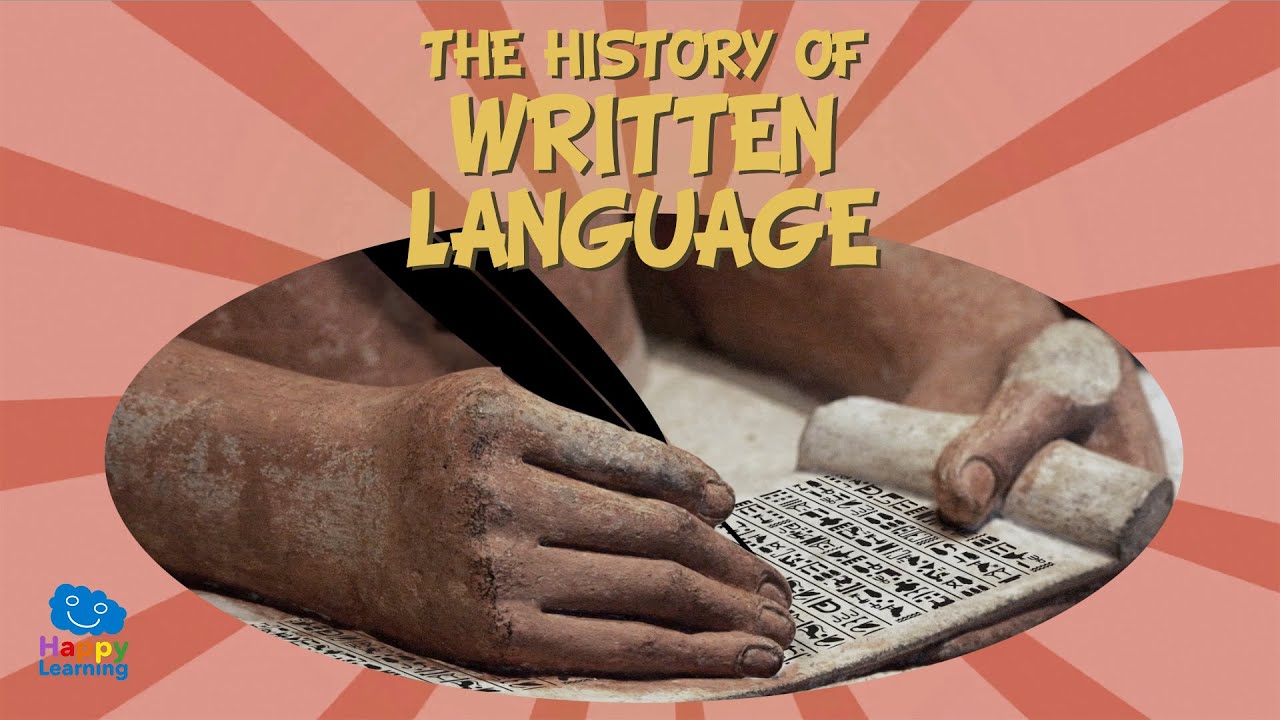
What are you waiting for? We all know how to read and write but... Did you know how it all started?
?? What was the first ever paper called?
?? Where did our ancestors write if they didn't have paper?
?? What does your favorite pen or pencil look like?
👉SUBSCRIBE TO HAPPY LEARNING! http://bit.ly/HappyLearningTV
👉Web site: https://happylearning.tv/en/
👉Follow us on Facebook: https://www.facebook.com/HappyLearningTv
Recommended video: Prehistory
https://youtu.be/rLFGra2TiTE
Subscribe to Happy Learning: https://my.happylearning.tv/
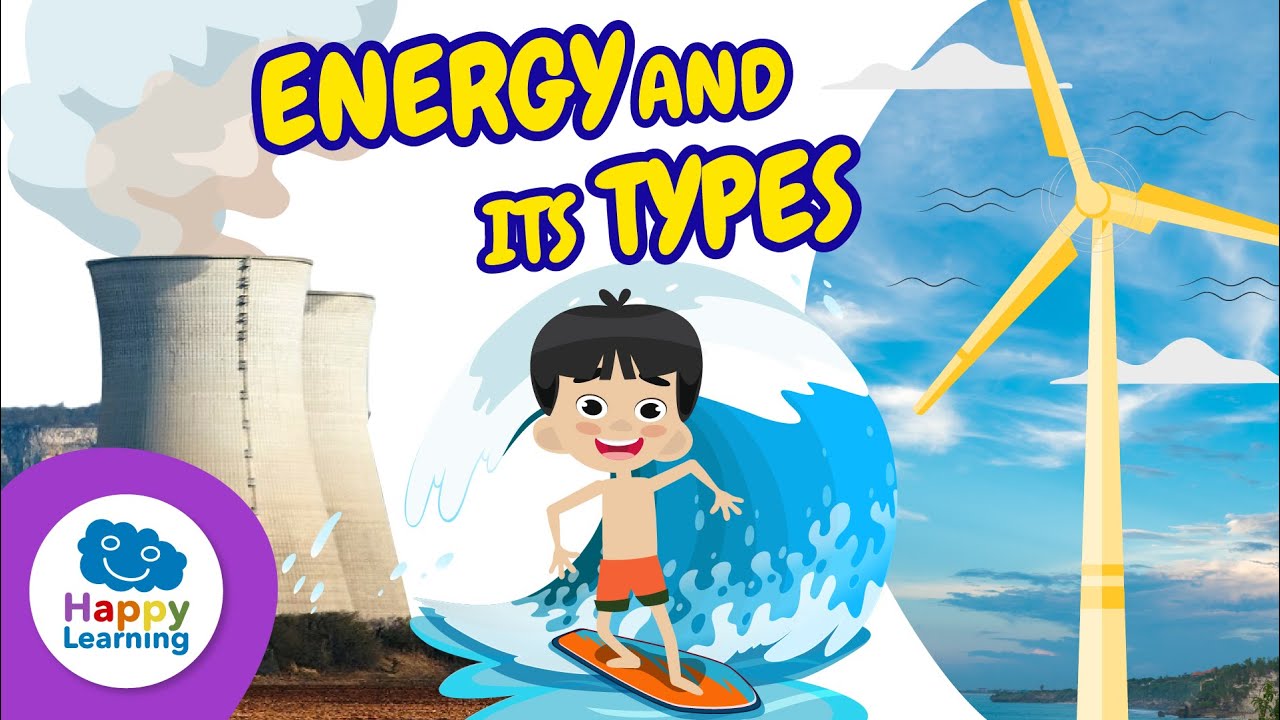
🔋 What is chemical energy? And what is kinetic energy? In this educational video, we’ll discover how energy is never destroyed but simply transformed from one form to another! ✨
With fun and easy-to-understand examples, you’ll learn how energy works all around you and why it’s so important in our daily lives. 🌍
👉 Want to learn more about science and energy? Subscribe to the Happy Learning channel and enjoy learning with us! 🌈
More related videos:
Curiosities for kids:https://www.youtube.com/playli....st?list=PLLF_mZmNqOn
Discover hundreds of never-before-seen resources! Create your free account at https://my.happylearning.tv/ and start learning in the most entertaining way.

Discover hundreds of never-before-seen resources! Create your free account at https://my.happylearning.tv/ and start learning in the most entertaining way.
What are you waiting for? Do you know what the difference is between seas and oceans? Did you know that at the bottom of the sea, there are volcanoes, and large plains?...
💭What is the most interesting fact you learnt today?
💭 Did you know any of these already?
👉SUBSCRIBE TO HAPPY LEARNING! http://bit.ly/HappyLearningTV
👉Web site: https://happylearning.tv/en/
👉Follow us on Facebook: https://www.facebook.com/HappyLearningTv
Recommended video: 5 things you didn’t know about eyes
https://www.youtube.com/watch?v=KsdYjtdpZtE&t=5s
-----------
1 - Do you know what the difference is between seas and oceans?
The most important difference between seas and oceans is that seas are a loot smaller. and they belong, to the oceans. actually, they are a part of them; the seas, are the part of the oceans, which are closest to land. We all know that on our planet we have, 5 oceans: Atlantic, Pacific, Indian, Arctic and Antarctic. But… do you know how many seas there are? Well there are 57. and the largest are the Arabian Sea, the South China Sea, Caribean Sea, Mediterranean Sea and the Bering Sea.
2- Did you know that at the bottom of the sea, there are volcanoes, and large plains?
Although a lot of people think that the bottom of the sea is flat, it’s not true. Actually, the bottom of the Sea is like land, it has mountains, volcanoes, caves, great planes and even waterfalls!!. It’s so deep and big, that although it may seem incredible, there are many places where humans have not reached yet. Actually, 95% of the sea, remains unexplored. There’s so much to discover!
3- Do you know that the Everest isn’t the largest mountain in the world?
Well no! The largest mountain on Earth is in the sea and it’s called Mauna Kea. This inactive volcano, located in a Hawaiian island, measures from the sea surface to its tip, 4207 meters. But if we measure it from its base, which is at the bottom of the ocean, it measures ten thousand meters high, and if we compare this to the 8 thousand 848 meters of the Everest, they turn the Mauna Kea into the largest mountain in the world. What is true, is that the Everest, is the highest point on Earth.
4- What do you think we know more about? Planet mars or the oceans?
Well, although it may seem incredible, we know Mars’ surface more and better than the bottom of the sea. Human beings know very little about species which habitat the oceans, and there are still many to be discovered. It’s probable that most of these species are very small organisms but scientists believe there are still fish, and mammals which have not been discovered yet. Each year we discover a mean of 2000 new species.
5- Did you know that the sea is the biggest rubbish dump in the universe?
Yes, sadly, the sea has been used for a long time, as a dump, without realising oceans are the lungs of our planet. More than 50% of the air we breathe is produced at sea. The Mediterranean Sea,, is the most contaminated in the world, but sadly, most oceans are at an alarming stage. Plastics, pesticides , chemical substances, oil… all affect the sea’s health and living things within it. More than 100 thousand marine animals like penguins, whales, dolphins, turtles, fish and birds... die every year, only because of the plastic in the sea…
Please respect and take care of nature, don’t throw rubbish to the sea or rivers and always recycle. If we take care of the water, if we take care of the sea, we will make all living things live in a better world, cleaner and happier.

Discover hundreds of never-before-seen resources! Create your free account at https://my.happylearning.tv/ and start learning in the most entertaining way.
What are you waiting for? Hello friends, we're very happy to present the second episode of our series "Children can make a WORLD of difference" in which our planet Earth will tell us some worrying things about the trees and how our everyday actions can help her alleviate this situation.
VITAL FUNCTIONS https://youtu.be/SKy_C2cr63M
PREMIERES! 👉 https://www.youtube.com/playli....st?list=PLLF_mZmNqOn
HEART and CIRCULATORY SYSTEM https://www.youtube.com/playli....st?list=PLLF_mZmNqOn
Discover hundreds of never-before-seen resources! Create your free account at https://my.happylearning.tv/ and start learning in the most entertaining way.
What are you waiting for? ♥️♥️ Let's keep our hearts nice and healthy!
The human body is FASCINATING and there's noting more important than the human heart... so let's get to know a little more about it!
💭 What is the most interesting fact you learnt today?
-
👉SUBSCRIBE TO HAPPY LEARNING! http://bit.ly/HappyLearningTV
👉Web site: https://happylearning.tv/en/
👉Follow us on Facebook: https://www.facebook.com/HappyLearningTv
Recommended video: Fun facts about the human heart
https://youtu.be/bJVcgROEJAo
-----------
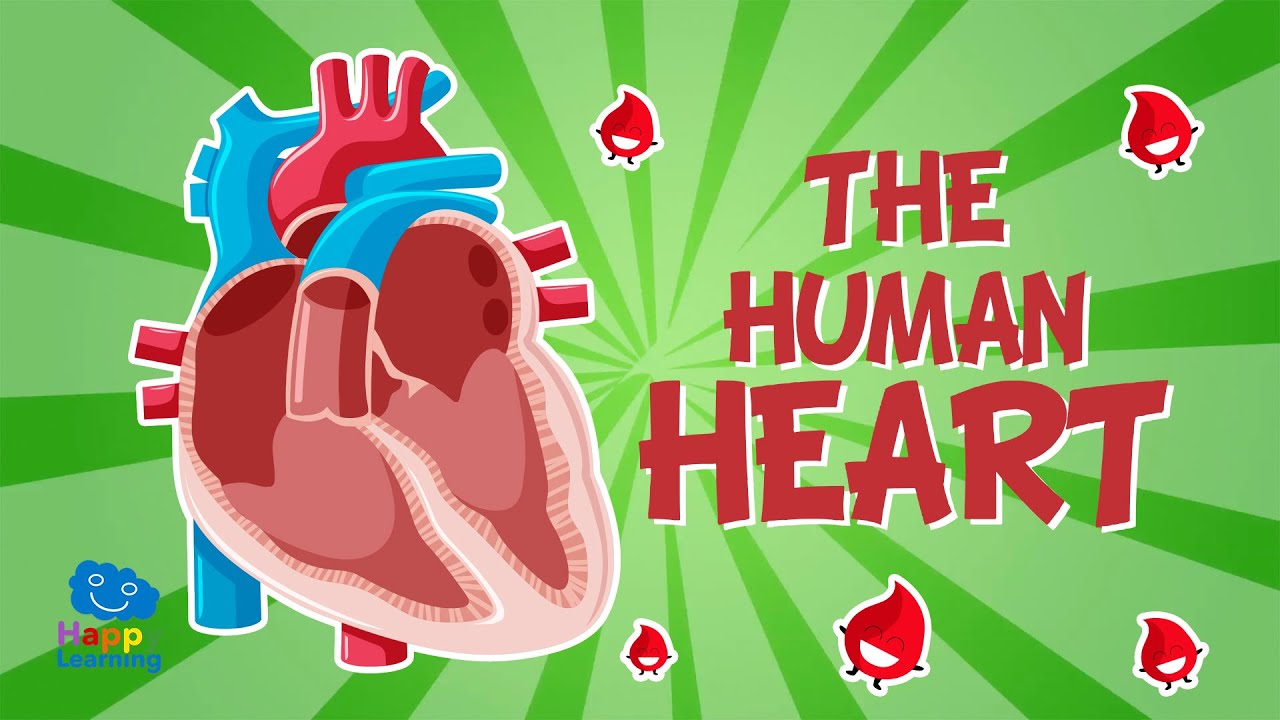
The Human Heart
Hello Friends, welcome to a new Happy Learning Video. Today, we’re going to get to know the engine in our body, today we’re going to get to know the human heart.
The heart is the most special muscle which we have. It’s situated a little to the left from the center of our chest, between our lungs and is in an oblique position, positioned diagonally.
We say that it’s very special because it sends blood all over our body. Blood delivers oxygen and nutrients we need to live to all of our cells.
Our heart is a type of pump, like the ones we use to inflate the wheels on our bikes, the only thing is, that instead of pumping air, it pumps blood.
The heart is divided into two parts. The right part and the left part, separated by a cellular wall, so they are not connected internally.
Each one of these parts has two chambers or cavities. The upper cavities are called right and left atrium. And the lower cavities are called right and left ventricle. The heart also has four kind of doors which are called valves. These valves open to let blood in and then they close so this blood can’t go back.
Now we’ve got to know the most important parts of the heart. But… Do you know how it works?
It all commences, in the right atrium, where the deoxygenated blood, meaning it has very little oxygen and nutrients, it enters the heart, then it goes past the first valve up to the right ventricle. Once it is here, the heart sends the blood directly to the lungs. And it’s in this moment, where the blood is oxygenated and is filled with oxygen and nutrients. When it is already oxygenated, it goes back to the heart reaching the left atrium, from where it will pass through the third valve until the last cavity, the left ventricle. Finally, the heart sends this now oxygenated blood through the fourth and last valve towards the rest of the body… and it starts again!!!
To understand how our heart beats, we only need to imagine that our hand is a heart and that when it opens up it fills up with blood, and when it’s closed it pumps that blood outwards.
When blood exits our heart, it flows through our whole body through blood vessels and there are three types: arteries, veins and capillary vessels.
Arteries deliver oxygen and nutrient rich blood to all organs in our body, veins take that blood, low in oxygen, back to the heart and the capillary vessels, which are very small, connect arteries with veins and cells.
Fun Fact! Do you know approximately how much a human heart weighs? Well it’s 450 grams, almost half a kilo.
The truth is that the heart is the engine in our circulatory system and is an incredibly strong muscle, it’s able to beat more than 100 thousand times a day. So cool!!!
We can’t say goodbye without giving you a tip! WE need to take care of our hear and that’s why we need to do physical exercise, we need to eat healthy foods, and please, never ever smoke, it’s the worst thing you can do to hurt your heart.
Goodbye Happy Friends! See you in the next Happy Learning Video!

NEW VIDEOS https://www.youtube.com/playli....st?list=PLLF_mZmNqOn
SOCIAL STUDIES FOR KIDS https://www.youtube.com/playli....st?list=PLLF_mZmNqOn
🌍🧭 Did you know that the Equator is an imaginary line that divides the Earth into two halves called the Northern Hemisphere and the Southern Hemisphere? In this educational video for kids, you’ll learn what the Equator is, where it is located, and how the hemispheres are represented on maps.
Geography in Primary Education allows children to understand the world around them, learning about landscapes, climates, continents, oceans, and the relationship between nature and human societies.
Through our educational videos, they will explore landforms, rivers, countries, capitals, and ecosystems, discovering how humans interact with their environment. At Happy Learning, we make geography fun and accessible, sparking children’s curiosity to explore and discover the planet. 🌍✨
📖 SUBJECT PLAYLISTS
🦖⛰️🐅 NATURAL SCIENCES for Primary School: https://www.youtube.com/playli....st?list=PLLF_mZmNqOn
👨🏫 SOCIAL SCIENCES for Primary School: https://www.youtube.com/playli....st?list=PLLF_mZmNqOn
➕✖️ MATH for Primary School Children: https://www.youtube.com/playli....st?list=PLLF_mZmNqOn
🤴🏰 HISTORY for Primary School Children: https://www.youtube.com/playli....st?list=PLLF_mZmNqOn
🌍⛰️ GEOGRAPHY for Primary School Children: https://www.youtube.com/playli....st?list=PLLF_mZmNqOn
🤝😊 Values and Emotions for Primary School Children: https://www.youtube.com/playli....st?list=PLLF_mZmNqOn v=KkCIIQyevjo&list=PL_Y3qbepMRoY7gwuwniiq11oMo6Ofe724
🌍 THE HAPPY LEARNING UNIVERSE
✅ Learn more about Happy Learning and our educational platform: https://happylearning.tv/en/
✅ Discover our social mission: https://happylearning.tv/en/nemesio-diez-foundation/
✅ Download the Happy Learning App:
- iOS: https://apps.apple.com/es/app/....happy-learning-tv/id
- Android: https://play.google.com/store/apps/details?id=tv.happylearning.canal&pli=1
🎓 ABOUT HAPPY LEARNING
Happy Learning is a social enterprise created by the Nemesio Diez Foundation, working to improve people's quality of life through education, health, sports and culture.
As a social company, our mission is to educate all children in the world in values and knowledge, to promote their holistic development and their commitment to society and the planet.
We offer educational resources to families, schools, hospitals and NGOs to ensure that children everywhere have access to a high-quality, comprehensive education.
At Happy Learning, we turn learning into an exciting adventure for primary school children. 🚀
We offer over 2,000 educational resources that combine fun and learning through animated videos, reading materials, interactive games and real-world activities.
📺 HAPPY LEARNING YOUTUBE CHANNEL
Welcome to Happy Learning! 🚀📚
The educational channel where learning is an adventure. Our goal is to spark curiosity and a love for knowledge in primary school children through fun and dynamic educational videos.
Discover the fascinating world of science with videos on Dinosaurs, the Solar System, Invertebrate Animals, Arachnids and much more. Travel back in time with history videos covering Prehistory, the Discovery of America or Ancient Egypt. Learn geography with content about The Earth and Its Movements, the Water Cycle and Parts of the Earth. Strengthen math skills with videos on Multiplication, Subtraction and Matter and Its Properties, and improve Spanish language understanding with lessons on Nouns, Sentences and Subject and Predicate.
Happy Learning transforms education into an exciting experience through animated videos, clear explanations and interactive activities. Perfect for children, parents and teachers seeking high-quality educational content.
🌟 Join our community of explorers!

THE DISCOVERY OF AMERICA | History for Kids | Happy Learning 🌎🗺️
Hello, little explorers! 🌟 In this exciting video from Happy Learning, we embark on an incredible adventure to discover how Christopher Columbus reached America. 🌎🚢
First, we'll get to know Columbus, a brave navigator who dreamed of finding new routes to the Indies. ✨🌠 Together, we'll board his three famous ships: the Niña, the Pinta, and the Santa María. ⛵⛵⛵ Did you know they set off on a journey full of mysteries and challenges? 🌊😲
Throughout this adventure, we'll explore the dangers they faced in the vast Atlantic Ocean, 🐋🌪️ and discover how, after many weeks of sailing, they finally reached a new and unknown continent: America! 🎉🎇
We'll also learn about the first encounters with the native inhabitants and how this discovery changed the world forever. 🌍🤝
This video is packed with curious facts, 🎤🧐 fun images, 📸 and many more surprises. 🎁 Not only will you learn about history, but you'll also have a lot of fun with us. 😄
Don't forget to like 👍, subscribe 🔔, and share this video with all your friends so they can also join this educational adventure. 👫👭 Let's learn and have fun together with Happy Learning! 🌈📚
#DiscoveryOfAmerica #ChristopherColumbus #HistoryForKids #HappyLearning #FunEducation #HistoricalAdventure #LearningIsFun
Discover hundreds of unseen resources! Create your free account at https://my.happylearning.tv/ and learn in the most fun way.
#happylearning
#learning
#happy

THINGS YOU DIDN'T KNOW ABOUT ASIA | GEOGRAPHY FOR KIDS | HAPPY LEARNING 🇨🇳 🇷🇺 🇲🇳 🇮🇳
Hello, Happy Learning explorers! 🌏 Are you ready to embark on an exciting adventure through the fascinating continent of Asia? 🐼🏯 In this special episode, we'll discover together the most surprising and fun secrets of this place full of magic and ancient traditions.
Did you know that in Asia you can find the longest wall in the world? It's so long that you could go around your house thousands and thousands of times! And what about pandas? Those adorable little bears that only live in China and make us smile with their antics.
But that's not all, Asia is full of wonders! From ancient temples to modern cities that shine like stars in the sky. And did you know that in Japan you can ride a train faster than a rocket!? It's crazy!
So grab your backpacks, get ready to fly on magic carpets, and join us on this incredible adventure through the largest and most amazing continent on the planet. Let's learn and have fun together discovering the curiosities of Asia! 🌟🎎 #HappyLearning #Asia #Curiosities #Adventure 🐉🎉
Discover hundreds of never-before-seen resources! Create your free account at https://my.happylearning.tv/ and learn in the most enjoyable way.
#happylearning
#learning
#happylearning
#asia
#geography

DEFORESTATION | Ways to Take Care of the Environment | Happy Learning ♻️🌴🐒
Hello, Happy Learners! 🎉🌳 Welcome to a new Happy Learning video. Today we are going to discover what **deforestation** is and learn how we can better take care of **nature**. ✨🌍 Yes, we are going to explore why it is important to protect our forests and how we can all help! 🌟
Did you know that deforestation is when many trees are cut down in forests and jungles? 🤔🌳💔 And that this can cause big problems for animals, plants, and also for us? 🌿💡 Join us on this educational adventure and learn how you can make a difference by taking care of the environment in a fun and easy-to-understand way. 🧠😊🎉
Don’t miss it! Give it a like 👍, subscribe 🔔, and share this video with all your friends. Let’s learn and take care of nature together! 🚀😊
#Deforestation #TakeCareOfNature #Education #LearnWhilePlaying #HappyLearning #Fun #LearningIsFun
Discover hundreds of never-before-seen resources! Create your free account at https://my.happylearning.tv/ and learn in the most fun way.
#happylearning #learning #happy
Discover hundreds of never-before-seen resources! Create your free account at https://my.happylearning.tv/ and learn in the most fun way.
#happylearning
#learning
#happy

Subscribe to Happy Learning: https://my.happylearning.tv/
More related videos: https://www.youtube.com/playli....st?list=PLLF_mZmNqOn
Curiosities for kids:https://www.youtube.com/playli....st?list=PLLF_mZmNqOn
THE NERVOUS SYSTEM | Educational Videos for Kids | Happy Learning
Hello, Happy Learners! 🎉🧠 In this new Happy Learning video, we're going to discover the fascinating nervous system. 🌟✨ Learn how this amazing system works, controlling all of our actions, from moving to thinking and feeling. You'll see how the nerves and brain work together to keep us active and moving! 🤔🔍
Did you know that the brain is like the "command center" of the human body? 🚀🧠 Join us on this educational adventure and find out how the nervous system works, with fun facts that will surprise you. It will be an experience full of learning and fun! 😄🎉
Don't forget to like 👍, subscribe 🔔, and share this video with all your friends. Let's learn together! 🚀😊
#NervousSystem #ScienceForKids #Curiosities #HappyLearning #LearningIsFun
Discover hundreds of never-before-seen resources! Create your free account at https://my.happylearning.tv/ and learn in the most fun way.
#happylearning #learning #happy
Discover hundreds of never-before-seen resources! Create your free account at https://my.happylearning.tv/ and start learning in the most entertaining way.

LIVING AND NON-LIVING THINGS | CURIOSITIES FOR KIDS | HAPPY LEARNING 🙉🌼 🤖🦾
Hello, Happy Learners! 🎉🌱 Welcome to a new video from Happy Learning. Today we are going to explore the differences between **living and non-living things**. 🌿✨ Yes, we are going to discover what makes something alive and what characteristics non-living objects have! 🌟😊
Did you know that living things can grow, reproduce, and respond to their environment? 🤔🌍🔍 Join us on this educational adventure and learn fascinating facts about the world around us. It will be a journey full of discoveries and fun! 😄🎉
Don't miss it! Give it a like 👍, subscribe 🔔, and share this video with all your friends. Let's learn and have fun together! 🚀😊
#LivingThings #NonLivingThings #EducationForKids #Curiosities #HappyLearning #LearningIsFun
Discover hundreds of unseen resources! Create your free account at https://my.happylearning.tv/ and learn in the most fun way.
#happylearning
#learning
#happy

WHAT IS THE CALENDAR FOR? | Fun Facts for Kids | Happy Learning 🗓️❓🕒
🌟 Hello, little learners! 📚 Have you ever wondered what the calendar is for? 🤔 In this fun episode of Happy Learning, we will discover together how the calendar helps us organize our days, months, and years 📆. We will learn to mark important dates, plan our activities, and much more! 🎉🎂📅
With super cool animations and easy-to-understand explanations, this video is perfect for all kids to learn the importance of the calendar in a very fun way 🌈✨. Don't miss it! 🚀🎈
Discover hundreds of never-before-seen resources! Create your free account at [Happy Learning TV](https://my.happylearning.tv/) and learn in the most enjoyable way.
#HappyLearning #Calendar #EducationForKids #FunAndLearning #Organization #Time #ImportantDates #KidsLearning #YouTubeKids
Discover hundreds of never-before-seen resources! Create your free account at https://my.happylearning.tv/ and learn in the most enjoyable way.
#happylearning
#learning
#happy

What Is The Big Bang Theory? I THE ORIGIN OF THE UNIVERSE | Educational Videos for Children
Join Happy Learning on an extraordinary journey to unravel the mysteries of the universe's origin! In this captivating video, we'll embark on a cosmic adventure to explore the Big Bang theory and how our vast universe came into existence. From the formation of stars and galaxies to the birth of planets, we'll discover awe-inspiring facts about the cosmos that will spark curiosity and wonder in young minds. Get ready for an out-of-this-world exploration filled with fascinating discoveries and captivating visuals. Subscribe to Happy Learning for more exciting educational content that brings the wonders of the universe to life!
Discover hundreds of never-before-seen resources! Create your free account at https://my.happylearning.tv/ and start learning in the most entertaining way.
#bigbang #curiosities #sciencefacts