Top videos

This physics video tutorial provides a basic introduction into the electron volt. The electron volt represents a unit of electric potential energy - it is equal to the product of electric potential in volts multiplied by the electric charge in terms of the number of electrons. This video explains how to convert electron volts to joules and joules to electron volts.
Physics 2 - Basic Introduction:
https://www.youtube.com/watch?v=rHgKLIYcZOI
Electric Charge - Physics:
https://www.youtube.com/watch?v=VD009jiZreo
Conservation of Electric Charge:
https://www.youtube.com/watch?v=OSUvXC1pACA
Coulomb's Law and Electric Force:
https://www.youtube.com/watch?v=kCp5yYjo9zE
Electric Fields:
https://www.youtube.com/watch?v=V9RLc9EX1so
________________________
Electric Dipole Moment:
https://www.youtube.com/watch?v=Mt9Rn2Ek0SU
Electric Flux:
https://www.youtube.com/watch?v=q1eor6oIuUo
Gauss Law Problems:
https://www.youtube.com/watch?v=IS1hyHBh3QQ
Electric Potential:
https://www.youtube.com/watch?v=LzKMQByFSLc
Equipotential Lines:
https://www.youtube.com/watch?v=j_Cy891cmIY
_______________________
Electric Potential Energy:
https://www.youtube.com/watch?v=KoZ61FujkRk
Parallel Plate Capacitor:
https://www.youtube.com/watch?v=7jJhHtegjto
Energy Stored In a Capacitor:
https://www.youtube.com/watch?v=PTyB6_Kt_5A
Physics PDF Worksheets:
https://www.video-tutor.net/ph....ysics-basic-introduc

This chemistry video tutorial explains how to balance nuclear equations in chemistry.
How To Balance Nuclear Equations: https://www.youtube.com/watch?v=8hnhhBQBQy4
Alpha, Beta, & Gamma Decay:
https://www.youtube.com/watch?v=zF5pn8FVlPI
Half Life Chemistry Problems:
https://www.youtube.com/watch?v=WTQvfvoOF3g
Carbon-14 Dating Problems:
https://www.youtube.com/watch?v=6aDswTVFGfs
___________________________________
Nuclear Binding Energy & Mass Defect:
https://www.youtube.com/watch?v=eLwraf_A80U
Nuclear Chemistry & Radioactive Decay:
https://www.youtube.com/watch?v=F3NSfTXTl7E
General Chemistry 2 Final Exam Review:
https://www.youtube.com/watch?v=lSmJN1_uVpI
SAT Chemistry Subject Test Review:
https://www.youtube.com/watch?v=ygpTfaSFqH8
____________________________________
Coordinate Covalent Bond:
https://www.youtube.com/watch?v=faEYK46zCh4
Complex Ions & Ligands:
https://www.youtube.com/watch?v=r4H5XjJPn58
Naming Coordination Compounds:
https://www.youtube.com/watch?v=yeNtqjE0dJw
Beer Lambert's Law:
https://www.youtube.com/watch?v=rllHziqWlgU
Crystal Field Theory:
https://www.youtube.com/watch?v=V1WSesBeURw
___________________________________
ACT Math Practice Test:
https://www.youtube.com/watch?v=SsA7rZ8kczM
Final Exams and Video Playlists:
https://www.video-tutor.net/
Full-Length Videos and Worksheets:
https://www.patreon.com/MathSc....ienceTutor/collectio
Chemistry PDF Worksheets:
https://www.video-tutor.net/chemistry-basic-introduction.html
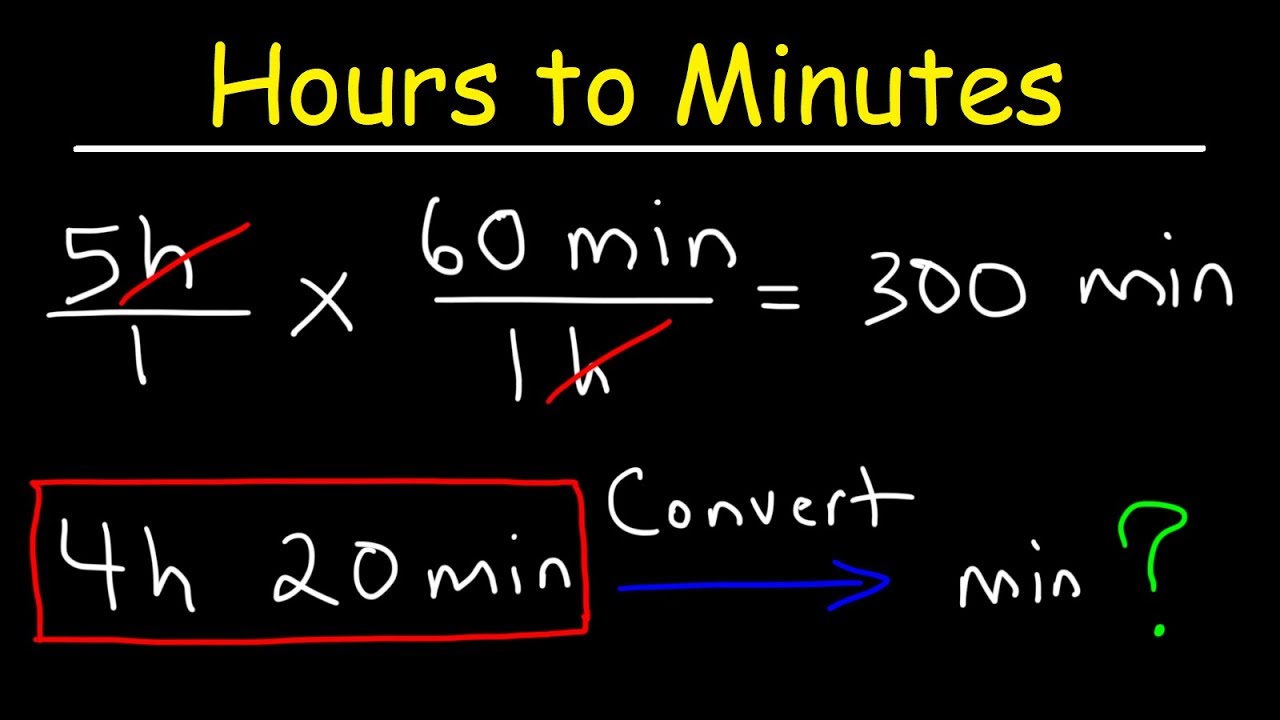
This video explains how to convert from hours to minutes and from minutes to hours. It contains plenty of examples and practice problems.
Converting Units - Master Review: https://www.youtube.com/watch?v=eK8gXP3pImU
_______________________________
Length -Meters to Centimeters:
https://www.youtube.com/watch?v=UCpfhl0avTg
Volume - mL to Liters:
https://www.youtube.com/watch?v=o-s4C6wrwEE
Mass - Kilograms to Grams:
https://www.youtube.com/watch?v=TjyqS2L6K7w
Speed - mph to m/s:
https://www.youtube.com/watch?v=jQHj1_q8fSw
Area - m^2 to ft^2:
https://www.youtube.com/watch?v=emjvTzpWB30
Volume - cm^3 to ft^3:
https://www.youtube.com/watch?v=ylehgnMC1gw
______________________________
Temperature - Fahrenheit to Celsius:
https://www.youtube.com/watch?v=4g2xYB3Kf_Q
Currency Conversion:
https://www.youtube.com/watch?v=JRf7_RKF3uA
Significant Figures:
https://www.youtube.com/watch?v=l2yuDvwYq5g
Scientific Notation:
https://www.youtube.com/watch?v=ZtB0vJMGve4
Density Practice Problems:
https://www.youtube.com/watch?v=9CKDQE35qXQ
_______________________________
Physics - Basic Introduction:
https://www.youtube.com/watch?v=b1t41Q3xRM8
Algebra For Beginners:
https://www.youtube.com/watch?v=MHeirBPOI6w
Trigonometry For Beginners:
https://www.youtube.com/watch?v=PUB0TaZ7bhA
Calculus 1 - Introduction
https://www.youtube.com/watch?v=GiCojsAWRj0
Chemistry - Basic Introduction:
https://www.youtube.com/watch?v=-KfG8kH-r3Y
Organic Chemistry:
https://www.youtube.com/watch?v=B_ketdzJtY8
_______________________________
SAT Math Test Prep:
https://www.youtube.com/watch?v=fTGuTEQCsZY
ACT Math Test Prep:
https://www.youtube.com/watch?v=SsA7rZ8kczM
GRE Math Test Prep:
https://www.youtube.com/watch?v=z6lbrzaCbdk
Final Exams and Video Playlists:
https://www.video-tutor.net/
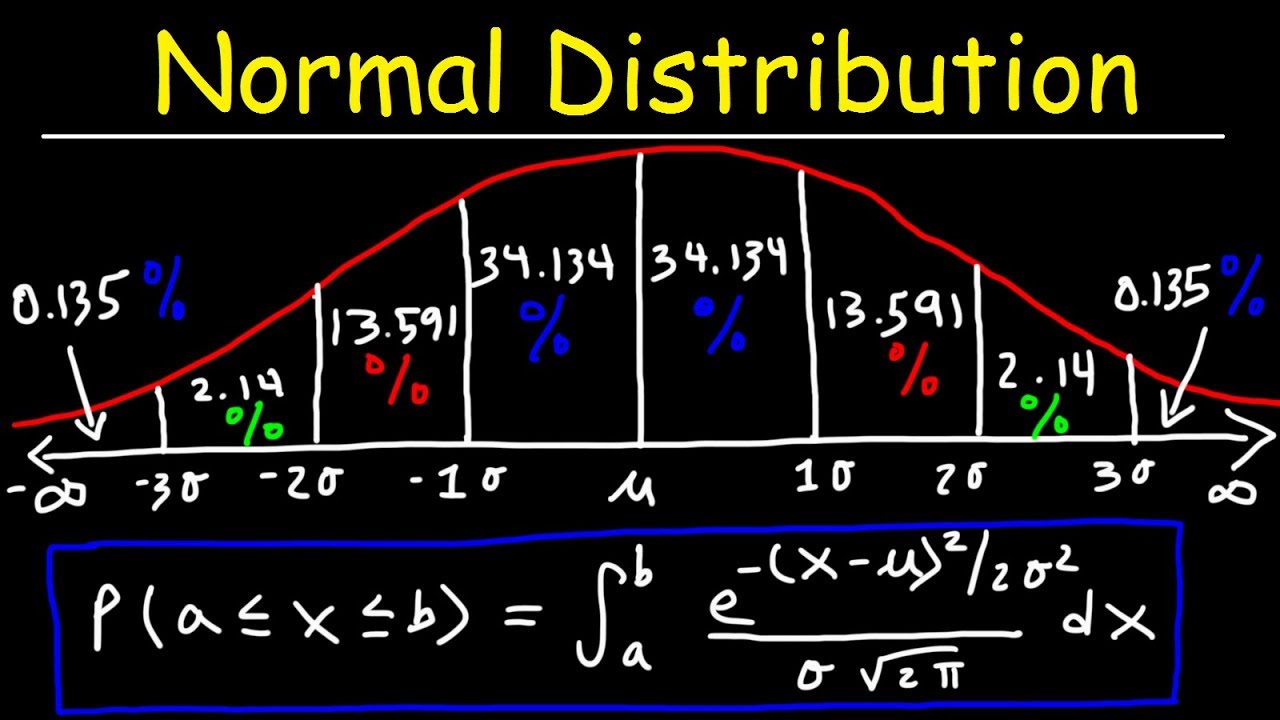
This calculus video tutorial provides a basic introduction into normal distribution and probability. It explains how to solve normal distribution problems using a simple chart and using calculus by evaluating the definite integral of the probability density function for a bell shaped curve or normal distribution curve. This video contains 1 practice problem in the form of a word problem with many parts giving you plenty of examples to master this topic. In this video, I explain how to evaluate the definite integral using wolfram's alpha online calculator for definite integrals. You need to determine the population mean mu and standard deviation sigma as well as the lower and upper limits of integration in order to determine the probability of an event occurring within a certain range of X values where X is a continuous random variable. You need to be familiar with the 68-95-99.7 rule. Approximately 68% of the population lies within 1 standard deviation of the population mean or average. 95% of the population lies within 2 standard deviations of the mean and 99.7% lies within 3 standard deviations of the mean.
Improper Integrals:
https://www.youtube.com/watch?v=ND9cEdfCFr0
Integration Into Inverse Trig:
https://www.youtube.com/watch?v=AE-0gXXx_j0
Integration of Rational Functions:
https://www.youtube.com/watch?v=4yJmhZBB40w
Integral of Logarithmic Functions:
https://www.youtube.com/watch?v=nrt37LoaSxM
Integrating Exponential Functions:
https://www.youtube.com/watch?v=D9dqdbCgJQM
Integration Formulas:
https://www.youtube.com/watch?v=_KJqeJDb8-I
________________________________
Integration By Tables:
https://www.youtube.com/watch?v=p7KwXMyJK9s
Reduction Formulas - Integration:
https://www.youtube.com/watch?v=LBZcfl97LwY
Center of Mass & Moments:
https://www.youtube.com/watch?v=JSGlBHAGvy4
Center of Mass & Centroid Problems:
https://www.youtube.com/watch?v=SWu_i-19Rn0
Hydrostatic Force Problems:
https://www.youtube.com/watch?v=3jG-hWgUJko
Probability Density Functions:
https://www.youtube.com/watch?v=QKA4HNEw3aY
_________________________________
Normal Distributions - Calculus:
https://www.youtube.com/watch?v=gHBL5Zau3NE
Homogeneous Differential Equations:
https://www.youtube.com/watch?v=ZEJVyybsiT4
1st Order Linear Differential Equations:
https://www.youtube.com/watch?v=gd1FYn86P0c
Bernoulli's Equation for Differential Equations:
https://www.youtube.com/watch?v=BoI_ej-T0V4
Slope Fields:
https://www.youtube.com/watch?v=Wr9VOum9Co0
___________________________________
Converging & Diverging Sequences:
https://www.youtube.com/watch?v=XdkoTb8PEG0
Monotonic & Bounded Sequences:
https://www.youtube.com/watch?v=tHy3TXmZpF0
Calculus Final Exam and Video Playlists:
https://www.video-tutor.net/
Full-Length Videos and Worksheets:
https://www.patreon.com/MathSc....ienceTutor/collectio
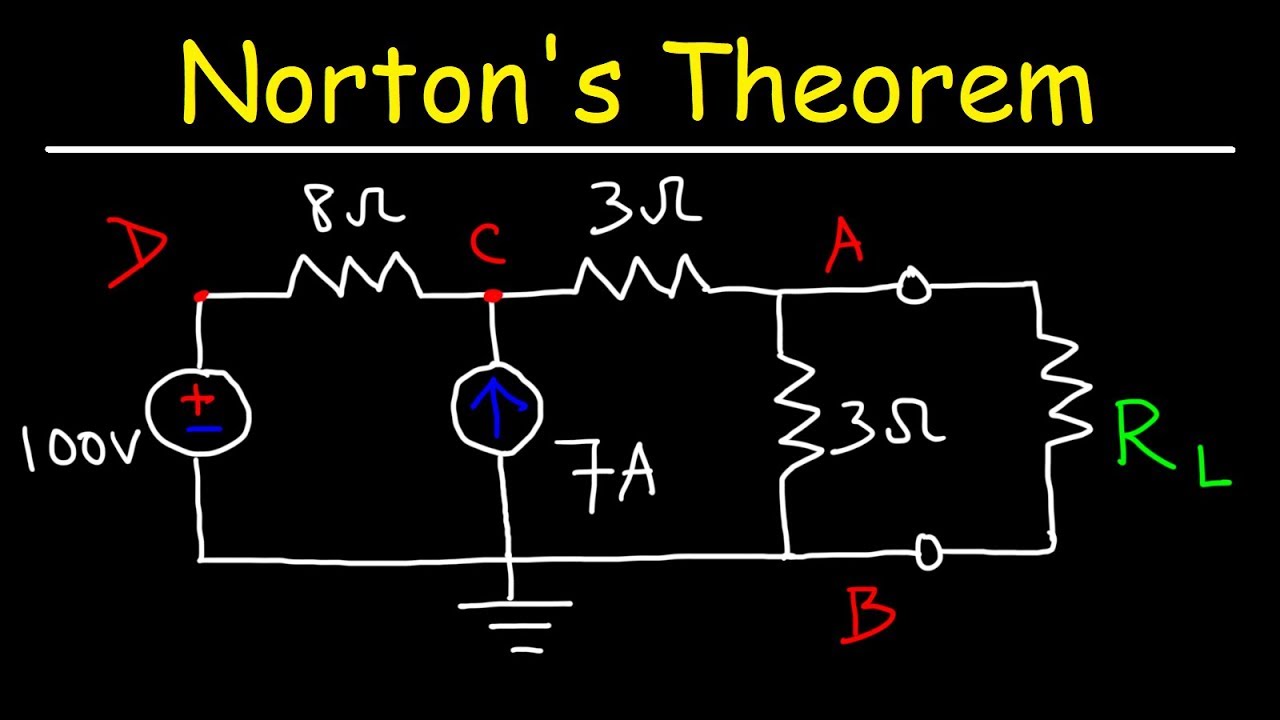
This electronics video tutorial on electrical circuit analysis provides a basic introduction into Norton's theorem and touches on Thevenin's theorem. It explains how to use Norton's theorem to calculate the current flowing through the load resistor in addition to using KVL nodal circuit analysis.
Schematic Diagrams & Symbols:
https://www.youtube.com/watch?v=Dl1gFBNa0Ik
Resistors In Series:
https://www.youtube.com/watch?v=9z53qVQjasU
Resistors In Parallel:
https://www.youtube.com/watch?v=SYrOiQs3X2U
Series and Parallel Circuits - Light Bulb Brightness:
https://www.youtube.com/watch?v=NjgxXcBfIII
Equivalent Resistance of Complex Circuits:
https://www.youtube.com/watch?v=kjW4H3fKi8o
How To Solve DC Circuits:
https://www.youtube.com/watch?v=eFlJy0cPbsY
_________________________
Voltage Divider Circuit:
https://www.youtube.com/watch?v=JGXdi7XcQi8
Current Dividers:
https://www.youtube.com/watch?v=PpfOH_uBKCw
Parallel Circuit Challenge Problem:
https://www.youtube.com/watch?v=y-gwr8LCHKo
Kirchhoff's Current Law:
https://www.youtube.com/watch?v=Q39xQUlTGew
Kirchhoff's Voltage Law:
https://www.youtube.com/watch?v=6F_rmZ1nXFQ
DC Circuits Review:
https://www.youtube.com/watch?v=wejz5s31Cts
____________________________
KCL and KVL Circuit Analysis:
https://www.youtube.com/watch?v=2Zu3ppq3n8I
Thevenin's Theorem - Circuit Analysis:
https://www.youtube.com/watch?v=zTDgziJC-q8
Superposition Theorem:
https://www.youtube.com/watch?v=EX52BuZxpQM
Maximum Power Transfer:
https://www.youtube.com/watch?v=8CA6ZNXgI-Y
Physics PDF Worksheets:
https://www.video-tutor.net/ph....ysics-basic-introduc

This video tutorial provides a basic introduction into summing amplifiers, a type of operational amplifier circuit where the output voltage is proportional to the sum of the input voltages.
Transistors - NPN & PNP: https://www.youtube.com/watch?v=AcxDiesy-nI
BJT Transistors - Electronic Switches:
https://www.youtube.com/watch?v=VJJuxQk5fTY
Night Activated LDR Sensor Circuit:
https://www.youtube.com/watch?v=X5jm9_nikd8
Finding The DC Load Line & Q-Point:
https://www.youtube.com/watch?v=qKIEyN_y3d4
Voltage Divider Bias Circuit:
https://www.youtube.com/watch?v=jPSIQDyKm90
Collector Feedback Bias Circuit:
https://www.youtube.com/watch?v=EzanqOFnCx4
__________________________________
Emitter Feedback Bias Circuit:
https://www.youtube.com/watch?v=V1zKogDwXyk
Common Emitter Amplifier:
https://www.youtube.com/watch?v=ZUXG9eZfSlw
Common Collector & Base Amplifier:
https://www.youtube.com/watch?v=SmsTQ7MVqRw
Darlington Pair & Beta Current Gain:
https://www.youtube.com/watch?v=t1YECnWPGbQ
Class A, AB, B, & C Amplifier Circuits:
https://www.youtube.com/watch?v=0e_OUyGCaBs
Voltage Gain of Transistor Amplifier:
https://www.youtube.com/watch?v=-MyVscG-Pew
_________________________________
Multistage Transistor Amplifier Circuit:
https://www.youtube.com/watch?v=LJrL9N9uhkE
Transistor Audio Mixer Circuit:
https://www.youtube.com/watch?v=CKaDxZrjaGA
Operational Amplifiers:
https://www.youtube.com/watch?v=idJEMYhrIfs
LM386 Audio Amplifier:
https://www.youtube.com/watch?v=MvTCROpv_jw
LC Oscillator Tank Circuit:
https://www.youtube.com/watch?v=nh4q7mIhLrY
_______________________________
Final Exams and Video Playlists:
https://www.video-tutor.net/
Full-Length Videos and Worksheets:
https://www.patreon.com/MathSc....ienceTutor/collectio

This calculus 2 video tutorial provides a basic introduction into the integral test for convergence and divergence of a series with improper integrals. To perform the integral test, let the sequence be equal to a function that is continuous, positive, and decreasing on the interval [1, infinity). If these conditions are met, then the infinite series will converge if the definite integral from 1 to infinity converges. If the integral test is divergent, then the series is divergent as well. Examples and practice problems include integration techniques such as u-substitution, power rule for integration, trigonometric substitution which leads to inverse tangent functions, and completing the square before integration. The divergent harmonic series is included in this video as well.
Improper Integrals:
https://www.youtube.com/watch?v=ND9cEdfCFr0
Converging & Diverging Sequences:
https://www.youtube.com/watch?v=XdkoTb8PEG0
Monotonic & Bounded Sequences:
https://www.youtube.com/watch?v=tHy3TXmZpF0
Absolute Value Theorem - Sequences:
https://www.youtube.com/watch?v=kH5Zqg5j-3M
Squeeze Theorem - Sequences:
https://www.youtube.com/watch?v=21loY9MBK3A
________________________________
Geometric Series & Sequences:
https://www.youtube.com/watch?v=zRKZ0-kOUZM
Introduction to Series - Convergence:
https://www.youtube.com/watch?v=zg9N2gAf6a4
Divergence Test For Series:
https://www.youtube.com/watch?v=nC_IU1IzzS4
Harmonic Series:
https://www.youtube.com/watch?v=OqBZCycIYfw
Telescoping Series:
https://www.youtube.com/watch?v=XVkdhU6nJbo
__________________________________
Integral Test For Divergence:
https://www.youtube.com/watch?v=f9SJz4-UaQQ
Remainder Estimate - Integral Test:
https://www.youtube.com/watch?v=vaU5DDcTfZk
P-Series:
https://www.youtube.com/watch?v=x621rtIwb_4
Direct Comparison Test:
https://www.youtube.com/watch?v=oZtAgihok5s
Limit Comparison Test:
https://www.youtube.com/watch?v=LBxYQ0TJxYM
___________________________________
Calculus Final Exam and Video Playlists:
https://www.video-tutor.net/
Full-Length Videos and Worksheets:
https://www.patreon.com/MathSc....ienceTutor/collectio
This algebra video tutorial explains how to simplify algebraic expressions with parentheses and variables by using the distributive property and by combining like terms.
Algebra For Beginners: https://www.youtube.com/watch?v=MHeirBPOI6w
How To Evaluate Algebraic Expressions:
https://www.youtube.com/watch?v=-VCUcRtQjx8
Combining Like Terms:
https://www.youtube.com/watch?v=BSCSNAF_aQg
How To Solve Linear Equations:
https://www.youtube.com/watch?v=7DPWeBszNSM
Linear Equations Review:
https://www.youtube.com/watch?v=Ft2_QtXAnh8
_______________________________________
Introduction to Exponents:
https://www.youtube.com/watch?v=ZtTO8uUGy2Y
Simplifying Exponents:
https://www.youtube.com/watch?v=Zt2fdy3zrZU
Negative Exponents:
https://www.youtube.com/watch?v=TKj8kEofbAw
Fractional Exponents:
https://www.youtube.com/watch?v=GipavLCnke0
Exponentiation and Tetration:
https://www.youtube.com/watch?v=S3s9cWWnZj0
______________________________________
Introduction to Polynomials:
https://www.youtube.com/watch?v=Rxx4HepHI_E
Adding & Multiplying Polynomials:
https://www.youtube.com/watch?v=ZvL9aDGNHqA
Dividing Polynomials By Monomials:
https://www.youtube.com/watch?v=KyHXWAp7UGo
Factoring Trinomials & Polynomials:
https://www.youtube.com/watch?v=9MUDAr1PnlE
Systems of Equations:
https://www.youtube.com/watch?v=oKqtgz2eo-Y
_______________________________________
Final Exams and Video Playlists:
https://www.video-tutor.net/

This physics video tutorial provides a basic introduction into relative velocity problems in one dimension. It explains the concept of the frame of reference and how it's used to determine the relative velocity of an object with another regardless if the two items are traveling in the same direction or in the opposite direction. This video contains a few examples of car and train problems traveling in the same direction and in the opposite direction toward each other. It provides all of the formulas and equations needed to calculate the relative velocity.
Full 55 Minute Video:
https://www.patreon.com/MathScienceTutor
Direct Link to The Full Video:
https://bit.ly/3jTERKn
PDF Worksheet - 7 Questions:
https://bit.ly/3X23fYE
Physics PDF Worksheets:
https://www.video-tutor.net/ph....ysics-basic-introduc
______________________________
Join The Program:
https://bit.ly/46xaQTR
Full Video on YouTube:
https://www.youtube.com/watch?v=DuyWdHMeY5g
Relative Velocity Formulas + Notes:
https://www.video-tutor.net/re....lative-velocity-phys
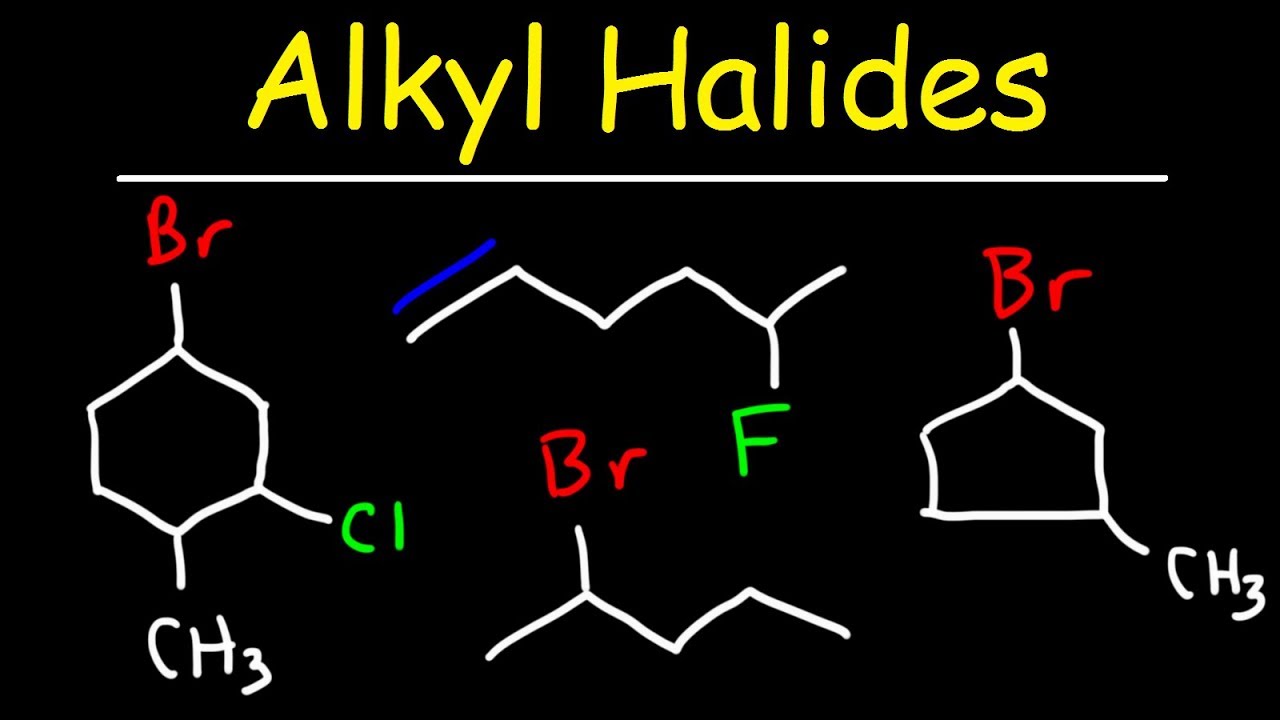
This organic chemistry video tutorial explains how to name alkyl halides with IUPAC Nomenclature.
Organic Chemistry - Basic Introduction: https://www.youtube.com/watch?v=B_ketdzJtY8
Acids and Bases - Basic Intro:
https://www.youtube.com/watch?v=owVZiKnnPME
Lewis Acids and Bases:
https://www.youtube.com/watch?v=rmaLsdFQ2KQ
Nucleophiles and Electrophiles:
https://www.youtube.com/watch?v=9QZj-F-5PV4
Hydrocarbons:
https://www.youtube.com/watch?v=z5hQ8iZZ8dU
Constitutional Isomers:
https://www.youtube.com/watch?v=48rsf1pOhfA
_______________________________
IUPAC Nomenclature of Alkanes:
https://www.youtube.com/watch?v=TYU_JluleME
Naming Cycloalkanes:
https://www.youtube.com/watch?v=vSxZm_91GT0
Naming Bicyclic Compounds:
https://www.youtube.com/watch?v=L8wEn7sD_SA
Naming Ethers:
https://www.youtube.com/watch?v=MZbgA0w2Ts4
Naming Alcohols:
https://www.youtube.com/watch?v=kggg1dqvxX8
________________________________
Naming Amines:
https://www.youtube.com/watch?v=Y6AzMr0Fn3Y
Van Der Waal Forces:
https://www.youtube.com/watch?v=c3g3maYegBk
Boiling Point of Organic Compounds:
https://www.youtube.com/watch?v=Qk_uPsq10TI
Organic Chemistry PDF Worksheets:
https://www.video-tutor.net/orgo-chem.html
Organic Chemistry Exam 1 Playlist:
https://bit.ly/3kJnNXU
Full-Length Videos and Worksheets:
https://www.patreon.com/MathSc....ienceTutor/collectio

This patreon video tutorial explains how you can quickly search for the full version of my videos that you see on youtube.
My Patreon Page:
https://www.patreon.com/MathScienceTutor/posts
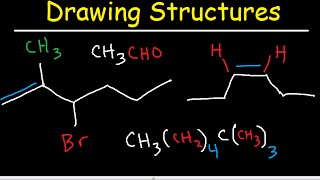
This organic chemistry video tutorial shows you how to draw lewis structures, bond line structures and skeletal structures including condensed structural formulas. It also shows you how to draw the lewis structures of functional groups such as alkanes, alkenes, alkynes, carboxylic acids, alcohols, ethers, esters, ketones, aldehydes, amides, nitriles, and amines. This video also helps you to draw cyclic structures as well cis and trans isomers. In addition, it helps you to easily identify substituents such as isopropyl, sec-butyl, isobutyl, isopentyl, and tert butyl as well as amino, hydroxy, ethoxy, methoxy, and oxo substituents.
Organic Chemistry - Basic Introduction:
https://www.youtube.com/watch?v=B_ketdzJtY8
Which Bond Is More Polar?
https://www.youtube.com/watch?v=o0-a5HzSzdE
How To Draw Lewis Structures:
https://www.youtube.com/watch?v=6unef5Hz6SU
Condensed Structures to Skeletal Structures:
https://www.youtube.com/watch?v=HRkvjKHFNDA
Functional Groups Review:
https://www.youtube.com/watch?v=m9jM8lWxrAE
Primary, Secondary, & Tertiary Functional Groups:
https://www.youtube.com/watch?v=r_Zhb0nQEvE
_________________________________
How To Calculate Formal Charge:
https://www.youtube.com/watch?v=C2l-76VP8s0
Finding Lone Pairs Using Formal Charge:
https://www.youtube.com/watch?v=jlCPY6iXQ1c
Dipole Moment & Electronegativity:
https://www.youtube.com/watch?v=bFAU1GMJmnI
Predicting Bond Angles:
https://www.youtube.com/watch?v=DPS7zdg8HzY
Valence Bond Theory:
https://www.youtube.com/watch?v=Vqx9a2aU99c
Hybridization of Atomic Orbitals:
https://www.youtube.com/watch?v=pdJeQUd2g_4
_______________________________
Bond Strength and Bond Length:
https://www.youtube.com/watch?v=SSRY95IAwF8
Orbital Overlap and Bond Length:
https://www.youtube.com/watch?v=BatJrR5sblA
Organic Chemistry PDF Worksheets:
https://www.video-tutor.net/orgo-chem.html
Organic Chemistry Exam 1 Playlist:
https://bit.ly/3kJnNXU
Full-Length Videos and Worksheets:
https://www.patreon.com/MathSc....ienceTutor/collectio
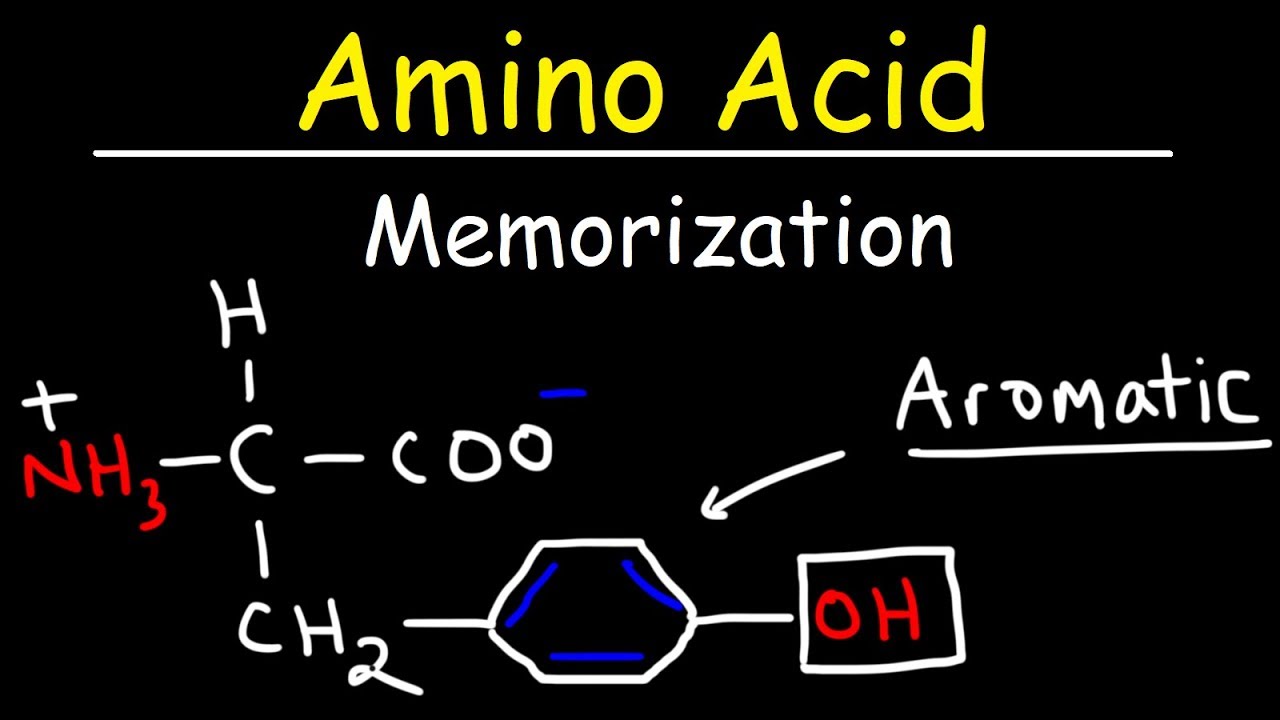
This biochemistry video tutorial explains how to memorize the 20 amino acids - the easy way.
My E-Book: https://amzn.to/3B9c08z
Video Playlists: https://www.video-tutor.net
Homework Help: https://bit.ly/Find-A-Tutor
Subscribe: https://bit.ly/37WGgXl
Support & Donations: https://www.patreon.com/MathScienceTutor
Youtube Membership: https://www.youtube.com/channe....l/UCEWpbFLzoYGPfuWUM
Here is a list of topics:
1. Nonpolar Amino Acids - Glycine, Alanine, Valine, Leucine and Isoleucine
2. Polar Amino Acids - Serine, Threonine, Asparagine, and Glutamine
3. Acidic Amino Acids - Aspartate and Glutamate
4. Basic Amino Acids - Lysine, Arginine, and Histidine
5. Aromatic Amino Acids - Phenylalanine, Tyrosine, and Tryptophan
6. Heterocyclic Amino Acids - Proline
7. Electrically Charged Amino Acids
Disclaimer: Some of the links associated with this video may generate affiliate commissions on my behalf. As an amazon associate, I earn from qualifying purchases that you may make through such affiliate links.
In this video, I'm going to explain how to get straight A's in school regardless if you're in high school or in college. It comes down to being disciplined and having good study habits.
Significant Figures - A Fast Review: https://www.youtube.com/watch?v=l2yuDvwYq5g
Scientific Notation - A Fast Review:
https://www.youtube.com/watch?v=ZtB0vJMGve4
Percent Uncertainty:
https://www.youtube.com/watch?v=b881nOem4vg
Unit Conversion Mega Review:
https://www.youtube.com/watch?v=eK8gXP3pImU
Temperature Conversions:
https://www.youtube.com/watch?v=G7sRfdAq4M8
__________________________________
Greek Alphabet Symbol List:
https://www.youtube.com/watch?v=_AWZZP3J5Nw
Top 50 Mathematical Symbols:
https://www.youtube.com/watch?v=SkhiZCtegXE
How To Calculate Your GPA:
https://www.youtube.com/watch?v=qYHsThZWydY
Student Loan Calculation:
https://www.youtube.com/watch?v=_KRBqpnR0xs
How To Save Money & Time In College:
https://www.youtube.com/watch?v=yNO02qfMSwI
____________________________________
How To Get Straight A's In School:
https://www.youtube.com/watch?v=oTqiryumeoA
Studying Tips - Next College Semester:
https://www.youtube.com/watch?v=AWnvUSWvARU
Feynman Technique For Studying:
https://www.youtube.com/watch?v=JmhfOjuAaew
SAT Math Part 1:
https://www.youtube.com/watch?v=fTGuTEQCsZY
ACT Math Test Prep:
https://www.youtube.com/watch?v=SsA7rZ8kczM
GRE Math Test Prep:
https://www.youtube.com/watch?v=z6lbrzaCbdk
_______________________________________
Final Exams and Video Playlists:
https://www.video-tutor.net/
Full-Length Videos and Worksheets:
https://www.patreon.com/MathSc....ienceTutor/collectio

Matrix addition and subtraction is possible when the two matrices you are attempting to add or subtract have the same number of rows and columns.
0:00 Introduction
0:12 Talk about rows and columns agreeing
0:47 Matrix Addition Example
2:10 Matrix Subtraction Example
2:57 Review of topic
#addmatrix
#subtractmatrix
#matrices
#joecmath
![+C, The Constant of Integration [What/Why]](https://i.ytimg.com/vi/ZXga-CncSXI/maxresdefault.jpg)
For an indefinite integral, the constant of integration is usually represented with +C. It represents the constant that can not be determined while completing an indefinite integral without extra information.
If we have a solution to the function we get when we take the integral, we can find the appropriate value of C for the given problem.
0:00 Intro
0:15 Demonstration of where +C comes from
2:23 Process for finding C value
#+C
#ConstantOfIntegration
#Calculus
#Integral
#Antiderivative
#JoeCMath

It's Kids Academy, and welcome back to our channel! In this educational video for kids, we will learn letters U, V, W, X. Your child can easily memorize letters I to L using our examples. It's ideal for preschool and kindergarten. Stay tuned!
Subscribe to our channel: https://goo.gl/iG2Bdr
#kidsacademy #LearnWithKidsAcademy
Connect with us on :
App Store: https://apps.apple.com/app/apple-store/id543851593
Google Play: https://play.google.com/store/....apps/details?id=air.
Our website: http://www.kidsacademy.mobi
Instagram: https://www.instagram.com/kidsacademyco
Facebook: https://www.facebook.com/KidsAcademyCompany
Thousands of parents and educators are turning to the kids’ learning app that makes real learning truly fun. Try Kids Academy with
3-day FREE TRIAL! https://bit.ly/2GuGyL2
Uppercase Letters - Learn the Alphabet | Kids Academy
Teaching alphabets sound easy but in reality, it’s one daunting task to decide what to teach the kids and where to start from. Especially when it comes to the uppercase and lowercase alphabets, the teachers themselves can get very confused about what to teach first. It’s not only the written alphabets that you have to teach to the children, in fact, you even have to teach the sounds. So, if you are facing some real-time confusion on deciding what to focus on first then don’t worry and just refer straight to the internet.
Honestly as far as our suggestion is concerned, well, it depends on your students and their learning caliber than what you should be teaching them first. If your kids are more drawn to visuals then yes, you should first teach them how to write the uppercase and lowercase alphabets but if the visuals aren’t necessary to the kids to learn each and everything that you tell them then yes, you can start with the sounds.
For those who don’t know, the uppercase letters are the letters that are written in capital and the lowercase ones are those that are written in small. For example, BOX contains all the uppercase letters and “box” contains all the lowercase letters. It’s one easy to teach and understand a thing so don’t worry because by using different fun activities and games, you can easily teach it all to your students.
Subscribe to our channel: https://goo.gl/iG2Bdr
#TalentedAndGifted #LearnWithKidsAcademy
Kids Academy Talented and Gifted Program for kids aged 2-10:
*****
Connect with us on :
App Store: https://smart.link/59833db06a6b8
Google Play: https://smart.link/597210af6eb83
Our website: http://www.kidsacademy.mobi
Facebook: https://www.facebook.com/KidsAcademyC...
Twitter: https://twitter.com/KidsAcademyCo

In this video, we will learn how to make fun and easy Easter craft for kids. Using simple materials like paper, glue, and paint, we will create an adorable Easter card. The step-by-step instructions are easy to follow and perfect for children of all ages.
So, let's get crafting and make some bunnies-citing Easter decorations!
Subscribe to our channel: https://goo.gl/iG2Bdr
#kidsacademy #LearnWithKidsAcademy
Connect with us on :
App Store: https://apps.apple.com/app/apple-store/id543851593
Google Play: https://play.google.com/store/....apps/details?id=air.
Our website: http://www.kidsacademy.mobi
Instagram: https://www.instagram.com/kidsacademyco
Facebook: https://www.facebook.com/KidsAcademyCompany

Hi, watch our new stories for kids about recycling, conservation, natural resources and being a good citizen on our beautiful planet. Little ones will learn how to recycle different types of materials, protect the environment and save the Earth's resources. This is an interesting video compilation for kids about ecology, responsible consumption and developing social skills and competence. Happy viewing! Let's protect and save our planet!
00:00 Start
00:38 Recycling for kids
05:03 Saving Earth's Resources
08:06 Human, Capital & Natural Resources for Kids
12:05 Good Citizenship & Social Skills for Kids
#kidsacademy #recyclingforkids #kidsvideos #storiesforkids
Connect with us on :
App Store: https://apps.apple.com/app/apple-store/id543851593
Google Play: https://play.google.com/store/....apps/details?id=air.
Our website: http://www.kidsacademy.mobi
Instagram: https://www.instagram.com/kidsacademyco
Twitter: https://twitter.com/KidsAcademyCo

Thousands of parents and educators are turning to the kids’ learning app that makes real learning truly fun. Try Kids Academy with
3-day FREE TRIAL! https://bit.ly/2GuGyL2
Geometry for 1st and 2nd grade - Geometry Review - Hexagon, Trapezoid, Pentagon and more
If your child needs a geometry review, look no further than this video tutorial from Kids Academy! Before your child studies angles and vertices, let’s review the basic shapes and patterns! Let our teacher count sides with your child to identify the shapes on the worksheet.
After watching, your child will gain:
Confidence in identifying shapes
Practice recognizing patterns involving shapes
In just a few minutes of learning and practice, your child can build confidence and independence in geometry. Help your child count sides and identify shapes with this helpful geometry review!
#TalentedAndGifted #LearnWithKidsAcademy
Kids Academy Talented and Gifted Program for kids aged 2-10:
App Store: https://smart.link/59833db06a6b8
Google Play: https://smart.link/597210af6eb83
*****
Subscribe to our channel: https://goo.gl/iG2Bdr
Connect with us on :
Our site: https://www.kidsacademy.mobi/
Facebook: https://www.facebook.com/KidsAcademyCompany
Twitter: https://twitter.com/KidsAcademyCo
Thousands of parents and educators are turning to the kids’ learning app that makes real learning truly fun. Try Kids Academy with
3-day FREE TRIAL! https://bit.ly/2GuGyL2
Learn to Play Chess | What is Stalemate? | Kids Academy
As you learn to play chess you should know that stalemate is another way of ending a game, apart from checkmate, it is a type of tie which means that the game will be the draw. No one wins. A stalemate happens when a player’s king is safe, and that player doesn’t have any moves to make.
It simply means that even if you can’t play any moves and your king is surrounded still the king is in such a position that it is safe from any attacks.
The opponent cannot attack your king and there is no way of capturing it. This brings the game to a draw condition. Neither of the players can make any move to win the game. This is called a stalemate, and it is one type of draw in chess. So that’s an easy way of learning how to play chess.
Subscribe to our channel: https://goo.gl/iG2Bdr
#TalentedAndGifted #LearnWithKidsAcademy
Kids Academy Talented and Gifted Program for kids aged 2-10:
*****
Connect with us on :
App Store: https://smart.link/59833db06a6b8
Google Play: https://smart.link/597210af6eb83
Our website: http://www.kidsacademy.mobi
Facebook: https://www.facebook.com/KidsAcademyC...
Twitter: https://twitter.com/KidsAcademyCo

Thousands of parents and educators are turning to the kids’ learning app that makes real learning truly fun. Try Kids Academy with
3-day FREE TRIAL! https://bit.ly/2GuGyL2
Old MacDonald Had a Farm is a popular nursery rhymes and kids favourite song about the farmer who keeps different animals on his farm.
Old MacDonald song includes 5-6 verses, each related to a specific animal and its respective noise. Kids will be delighted to imitate sounds, while learning all the farm animals with this fun, lively Old MacDonald video.
Subscribe to our channel: https://goo.gl/iG2Bdr
*****
Lyrics:
Old MacDonald had a farm, ee-i-ee-i-o,
And on his farm he had a duck, ee-i-ee-i-o.
With a quack quack here and a quack quack there,
Here a quack, there a quack, everywhere a quack quack.
Old MacDonald had a farm, ee-i-ee-i-o.
Old MacDonald had a farm, ee-i-ee-i-o,
And on his farm he had a cow, ee-i-ee-i-o.
With a moo moo here and a moo moo there,
Here a moo, there a moo, everywhere a moo moo.
Old MacDonald had a farm, ee-i-ee-i-o.
Old MacDonald had a farm, ee-i-ee-i-o,
And on his farm he had a sheep, ee-i-ee-i-o.
With a baa baa here and a baa baa there,
Here a baa, there a baa, everywhere a baa baa.
Old MacDonald had a farm, ee-i-ee-i-o.
Old MacDonald had a farm, ee-i-ee-i-o,
And on his farm he had a horse, ee-i-ee-i-o.
With a neh neh here and a neh neh there,
Here a neh, there a neh, everywhere a neh neh.
Old MacDonald had a farm, ee-i-ee-i-o.
Old MacDonald had a farm, ee-i-ee-i-o,
And on his farm he had some chickens, ee-i-ee-i-o.
With a cluck cluck here and a cluck cluck there,
Here a cluck, there a cluck, everywhere a cluck cluck.
Old MacDonald had a farm, ee-i-ee-i-o.
*****
Connect with us on :
Our website: http://www.kidsacademy.mobi
Facebook: https://www.facebook.com/KidsAcademyCompany
Twitter: https://twitter.com/KidsAcademyCo

What is International Women's Day? What do Sally Ride, Elizabeth Blackwell, Marie Curie, Barbara McClintock, Maria Beasley, and Hedy Lamarr have in common? All of them are women scientists who made outstanding contributions to science and helped make our lives better. Watch this video to find out more about these prominent women and their impact on the world. Kids Academy hopes that their example will inspire girls to realize that they can choose any career and become whatever they want!
00:00 - Start
00:45 - Sally Ride
01:20 - Elizabeth Blackwell
01:48 - Marie Curie
02:38 - Barbara McClintock
03:18 - Maria Beasley
04:02 - Hedy Lamarr
Women scientists keep doing remarkable scientific work and making incredible discoveries and inventions. We hope their example will encourage young girls to dream big and aspire to become whatever they choose, including renowned scientists who change our world!
Subscribe to our channel: https://goo.gl/iG2Bdr
#kidsacademy #LearnWithKidsAcademy
Connect with us on :
App Store: https://apps.apple.com/app/apple-store/id543851593
Google Play: https://play.google.com/store/....apps/details?id=air.
Our website: http://www.kidsacademy.mobi
Instagram: https://www.instagram.com/kidsacademyco
Facebook: https://www.facebook.com/KidsAcademyCompany

Thousands of parents and educators are turning to the kids’ learning app that makes real learning truly fun. Try Kids Academy with
3-day FREE TRIAL! https://bit.ly/2GuGyL2
Today you will learn about the amazing animals called penguins. Did you know that penguins are birds? Like all birds, penguins are warm-blooded, have beaks and feathers, and lay eggs. However, penguins cannot fly. Instead of wings, they have flippers, which makes them excellent swimmers.
There are many types of penguins, and they differ in size and by the black and white patterns on their heads. Some species of penguins are the Little Penguin, the Rockhopper Penguin, the Adelie Penguin, the African Penguin, the King Penguin, and the Emperor Penguin.
Penguins are hunters. They hunt in the ocean, and their main food is fish. They can also eat krill, squid, and other small ocean creatures. Penguins’ enemies at sea are larger predators – such as sharks, orcas, and seals.
Penguins live only in the southern hemisphere. Most of them live in Antarctica which is an icy continent at the South Pole. You can also see penguins on the coasts of Africa, Australia, and South America.
Penguins have a thick layer of fat and tightly packed feathers which makes it possible for them to live in very cold climates. When on the ground, they hop or waddle on their hind feet. Penguins can also lie on their stomachs and slide quickly on ice and snow. Usually, penguins live in huge colonies, up to several thousand animals in one place. This helps them protect themselves and their babies against predators and keep warm in low temperatures. Penguins form pairs to lay eggs and take care of the chicks. The mother penguin lays one or two eggs, and the two parents sit on the eggs in turns to keep them warm.
Penguins are very friendly and curious animals. They have no fear of people and eagerly approach them.
#kidsacademy #LearnWithKidsAcademy
Connect with us on :
App Store: https://apps.apple.com/app/apple-store/id543851593
Google Play: https://play.google.com/store/....apps/details?id=air.
Our website: http://www.kidsacademy.mobi
Instagram: https://www.instagram.com/kidsacademyco
Facebook: https://www.facebook.com/KidsAcademyCompany