Top videos

ഇംഗ്ലീഷ് സംസാരിച്ച് പഠിക്കാൻ ഒരു partner ഇല്ലാതെ ബുദ്ധിമുട്ടുന്നോ? Google Gemini എന്ന ഫ്രീ AI ടൂൾ ഉപയോഗിച്ച് എങ്ങനെ ഒരു പേർസണൽ AI English Language Partner-നെ സ്വന്തമാക്കാമെന്ന് ഈ വീഡിയോയിൽ ഞാൻ കാണിച്ചുതരാം.
ഈ വിഡിയോയിൽ, നിങ്ങളുടെ മൊബൈലിലെ Gemini AI-യെ ഒരു ലാംഗ്വേജ് ഇൻസ്ട്രക്ടർ ആക്കി മാറ്റി നിങ്ങളുടെ സംശയങ്ങൾ ചോദിക്കാനും തെറ്റുകൾ തിരുത്താനും എങ്ങനെ ഉപയോഗിക്കാമെന്ന് നമ്മൾ പഠിക്കും. ഇത് കൂടാതെ, ഒരു ജോലി ഇന്റർവ്യൂ അല്ലെങ്കിൽ ഒരു ഷോപ്പിലെ സംഭാഷണം പോലുള്ള പലതരം സാഹചര്യങ്ങൾ (situations) ഉണ്ടാക്കി, പേടിയില്ലാതെ ഇംഗ്ലീഷ് പ്രാക്റ്റീസ് ചെയ്യാനുള്ള വഴികളും ഞാൻ വിശദീകരിക്കുന്നുണ്ട്. ഈ ഒരൊറ്റ ടൂൾ ഉപയോഗിച്ച് നിങ്ങളുടെ Spoken English അടുത്ത ലെവലിലേക്ക് കൊണ്ടുപോകാം.
Topics Covered in This Video:
How to make Gemini your personal English Language Partner.
How to turn Gemini into a Language Instructor to correct your mistakes.
Asking Gemini your grammar and vocabulary doubts.
How to create real-life situations for daily English practice.
Tips to improve spoken English using this free AI tool.
ഈ ചാനൽ നിങ്ങളെ സ്വയം ഇംഗ്ലീഷ് പഠിക്കാൻ സഹായിക്കുന്ന AI ടൂളുകളെപ്പറ്റി പഠിപ്പിക്കുന്നു. കൂടുതൽ വീഡിയോകൾക്കായി ഇപ്പോൾ തന്നെ Subscribe ചെയ്യൂ!
Google Gemini: https://play.google.com/store/....apps/details?id=com.
00:00 - Intro: English പഠിക്കാൻ ഇനി ആരും വേണ്ട! (No one else needed to learn English!)
01:14 - What is Gemini AI?: നിങ്ങളുടെ പുതിയ English ഫ്രണ്ടിനെ പരിചയപ്പെടാം.
01:38 - Make Gemini Your Language Partner: എങ്ങനെ സംഭാഷണം തുടങ്ങാം?
04:23 - Gemini as Your Language Instructor: തെറ്റുകൾ AI തിരുത്തി തരും! (AI will correct mistakes!)
05:18 - Asking Doubts: ഏത് സംശയവും Gemini യോട് ചോദിക്കാം.
05:57 - Create Practice Situations: Job Interview & Shopping Practice with AI.
06:40 - How to make AI mentor : ഈ കാര്യങ്ങൾ ഉറപ്പായും ശ്രദ്ധിക്കുക (Important final tips).
#LearnEnglishMalayalam #SpokenEnglishMalayalam #AIEnglish #GeminiForEnglish #GoogleGemini #LearnEnglishWithAI #FreeEnglishClass #AIEnglishTeacher #Malayalam #EnglishPractice #SpokenEnglish #SelfLearning #LanguageLearning #AITools #kerala

Visit https://www.abcmouse.com/learn/youtube to learn more about our award-winning online learning program for children 2-8!
🎶 Join us at ABCmouse for a delicious musical adventure during Hungry, Hungry Time! 🍴 Explore the exciting tastes of spicy 🌶️, sour 🍋, and sweet 🍭 foods through a catchy song perfect for kids. What's your favorite flavor? Dive into a world of yummy choices and sing along with us!
👉 Discover more fun learning songs and educational videos by subscribing to our YouTube channel at: https://YouTube.com/ABCmouse
And visit https://www.abcmouse.com/learn/youtube to find out more about our award-winning online learning program for children 2–8!
© Age of Learning, Inc. All rights reserved.
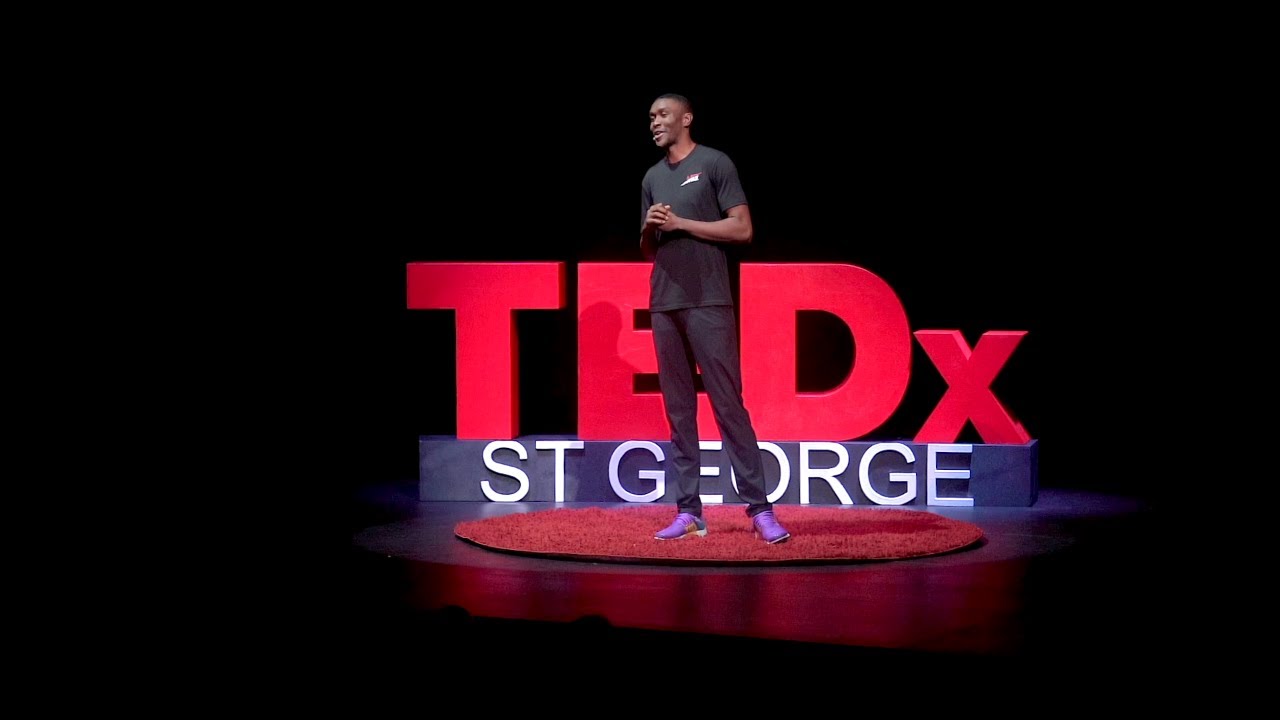
We’ve all heard the stories of athletes going bankrupt and losing all their money. Deven Osborne shares the unique financial challenges faced by college athletes as well as himself during his playing career, his organization Team Money Good empowers college athletes to not only learn but teach financial literacy skills that will set them up for success both on and off the field. Follow @teammoneygood and teammoneygood.org to see their teachings & all the cool stuff they do! #TEDx #TEDTalk #TEDxStGeorge #Money #Athletes #Students Deven revised and approved 3-23-2023: Deven Osborne, born and raised in L.A. , moved to Utah in 2017 to attend Utah Tech University and play football. He recently graduated with two bachelor's degrees in Business and Recreation Sports Management, having played Wide Out for the football team from 2017-2022. Deven plans to pursue a master's degree in real estate and development at the University of Utah. In 2021, he founded Team Money Good, a financial literacy organization for college athletes. The program teaches budgeting, saving, and investing to improve the financial mindset of college athletes.Team Money Good also runs a financial literacy program at Freedom Prep Academy and local high schools. Learn more at teammoneygood.org This talk was given at a TEDx event using the TED conference format but independently organized by a local community. Learn more at https://www.ted.com/tedx

AI Teaches itself to Climb Up and Down Stairs!
https://brilliant.org/AIWarehouse/
If you want to learn more about AI and deep reinforcement learning (how Albert is trained), there are amazing courses teaching those exact concepts on Brilliant! You can use my link to get a free 30 day trial with 20% off! I've personally gone through the course "Introduction to Neural Networks", and it's one of the best courses on Neural Networks I've ever seen. They're paying us to promote them, but they're genuinely a great service, I've had a Brilliant account for over 5 years and can't recommend it enough :)
In this video an AI Warehouse agent named Albert learns how to walk up and down stairs and get through other obstacles to escape. The AI was trained using Deep Reinforcement Learning, a method of Machine Learning which involves rewarding the agent for doing something correctly, and punishing it for doing anything incorrectly. Albert's actions are controlled by a Neural Network that's updated after each attempt in order to try to give Albert more rewards and less punishments over time. Check the pinned comment for more information on how the AI was trained!
Current Subscribers: 305,109
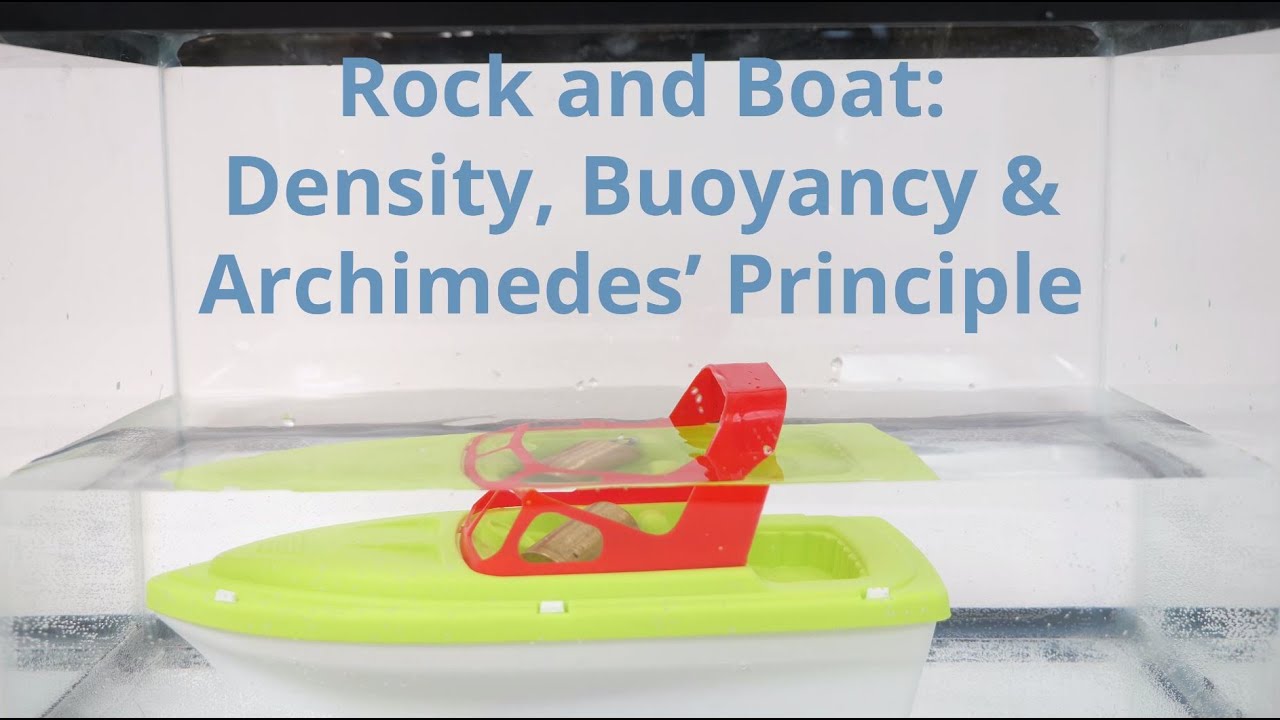
Students are presented with a challenge question that they must answer with scientific and mathematical reasoning. The challenge question is: "You have a large rock on a boat that is floating in a pond. You throw the rock overboard and it sinks to the bottom of the pond. Does the water level in the pond rise, drop or remain the same?" Students observe Archimedes' principle in action in this model recreation of the challenge question when a toy boat is placed in a container of water and a rock is placed on the floating boat. Students use terminology learned in the classroom as well as critical thinking skills to derive equations needed to answer this question.
View the full activity at TeachEngineering:
https://www.teachengineering.o....rg/activities/view/u
TeachEngineering has over 1,500 FREE lessons and activities. Visit http://www.TeachEngineering.org for more!
Music: Roger That - Silent Partner

¿Cansado de los mapas mentales aburridos de NotebookLM? 🧠 Descubre cómo usar Google Gemini para transformarlos en diagramas visuales, detallados y profesionales en solo 2 minutos. En este tutorial, te enseño 3 métodos infalibles para mejorar tu productividad y estudio con IA. 🚀
Lo que aprenderás:
Cómo añadir iconos y descripciones visuales a tus mapas.
El truco para usar Gemini y NotebookLM juntos sin salir de la interfaz.
Cómo evitar alucinaciones de la IA y obtener datos 100% precisos.
Mejora tus flujos de trabajo con inteligencia artificial hoy mismo.
#inteligenciaartificial #notebooklm #geminiai #ia
ENLACES:
Gemini: https://gemini.google.com/app
NotebookLM: https://notebooklm.google.com/
👉 MI WEB
https://formaia.com/
📧 PEDIR INFORMACIÓN SOBRE MIS SERVICIOS:
joaquin@horizonweb.es
👉 SÍGUEME EN INSTAGRAM
https://www.instagram.com/joaquin_barbera_aledo
00:00 Introducción
00:30 Problema Mapas mentales NotebookLM
01:07 Método 01
05:34 Método 02
07:34 Método 03
11:20 Más NotebookLM y Gemini
Link to the Live: https://www.youtube.com/live/q....UeIUtj-gmg?si=ucJ_Mt
On this episode of Impact Theory with Tom Bilyeu, things get deep and a little unsettling as Tom Bilyeu and co-host Drew tackle the shadowy world of power, influence, and information control. The conversation kicks off with Drew referencing Colombia’s President Petro and his bombshell claims about meeting with Trump and knowing the real kingpins behind drug trafficking—figures hidden in elite global networks, far from the stereotypical cartel images.
Tom Bilyeu then pulls back the curtain even further, reflecting on how webs of connections—sometimes involving well-known elites—shape the world behind the scenes. He questions who really sits at the top of these networks, pondering if there are even higher powers than notorious figures like Jeffrey Epstein, and explores the chilling reality that true influence often comes from those who are best at building connections and keeping secrets.
But it doesn't stop there. The episode takes an even more intriguing turn as Tom Bilyeu dives into his recent experience with AI—how modern technology, designed to answer our questions, often refuses to discuss certain “malinformation”: truths that are widely acknowledged but somehow still off-limits. The discussion weaves through censorship, the power of artificial intelligence to influence narratives, and the dangers lurking in the webs of connections that most of us never see.
Get ready for a thought-provoking ride into conspiracies, elite networks, forbidden topics, and the future of information—as only Impact Theory can deliver.
drug trafficking, Colombia, Petro, Trump, oligarchy, James Burnham, web of connections, Jeffrey Epstein, Epstein files, wealth, power, Miami, Dubai, Madrid, US agencies, bosses of bosses, conglomerates, Clinton, conspiracy theories, suicide, AI, Gemini, Department of Justice (DOJ), MAL information, public record, classified information, atom bombs, physicists, paranoia, deep dive, approved narrative

Ordinal Numbers by Jack Hartmann is an ordinal number song. In this version we use the calendar and students repeat the ordinal number after Jack. Follow the exercise for each set to build body and brain connections. Let's learn the ordinal numbers in this ordinal numbers for kindergarten video. Ordinal numbers for kids song.
Lyrics
Let's learn the ordinal numbers as we all work out
Let's learn the ordinal numbers repeat after me out loud
Ordinal numbers help us learn in many ways
They tell us the exact position or place
Stretch your arms the best you can and say the ordinal numbers after me
From 1st to 10th
1st
2nd
3rd
4th
5th
6th
7th
8th
9th
10th
Do leg squats the best you can and say the ordinal numbers after me
From 11th to 20th
11th
12th
13th
14th
15th
16th
17th
18th
19th
20th
Twist your body the best you can and say the ordinal numbers after me
From 21st to 31st
21st
22nd
23rd
24th
25th
26th
27th
28th
29th
30th
31st
Ordinal numbers help us learn in many ways
They tell us the exact position or place
Let's learn the ordinal numbers
Help support us on Patreon!
https://www.patreon.com/jackhartmann
Jack Hartmann's website: https://jackhartmann.com
Subscribe to our YouTube Channel: https://goo.gl/ogaW1i
Remember to connect with Jack Hartmann on his Social Networks:
Facebook: https://facebook.com/hop2itmusic
Pinterest: https://pinterest.com/jackhartmann
Twitter: https://twitter.com/Jack_Hartmann
You can find Jack Hartmann's Music on:
Jack Hartmann Website: https://jackhartmann.com
iTunes: https://goo.gl/GeDJeJ
Amazon: https://goo.gl/Ei8C6B
Google Play: https://goo.gl/doZpfS
CD Baby: https://cdbaby.com/Artist/JackHartmann
Words and Music by Jack Hartmann
Copyright 2021
Jack Hartmann's Hop 2 It Music
Ever felt stuck planning an online course? This video introduces the Thinkific AI Outline Generator, a free tool for educators to quickly create course structures. It's designed to streamline your "online course creation" process by generating a logical learning path for your "online courses", helping you "how to outline an online course" efficiently. This tool simplifies the "outline course" process, acting as a powerful "course builder" and leveraging "ai content creation" to save time, making it ideal for new course creators looking to sell their knowledge online.

FUN!!! In this social studies learning videos for kids compilation you will learn exciting concepts like producers and consumers, the three types of areas, goods and services, the purpose of government and much more!!
00:00 Producers and consumers
5:38 Urban, suburban and rural areas
15:15 The purpose of government
22:00 Goods and services
26:55 Continents of the world
41:19 Oceans of the world
❤️ Homeschool Pop? Join our team and get tattoos here: http://homeschoolpop.com
Thanks for learning with us today! We hope to see you next video!
Homeschool Pop Team

In this video, we are going to learn how to construct a rhombus using GeoGebra. In this video, we will learn how to use the slider, segment with a given length, and the rotate about point tool.
Visit our Facebook page: https://www.facebook.com/geogebraist/

Discover hundreds of never-before-seen resources! Create your free account at https://my.happylearning.tv/ and start learning in the most entertaining way.
What are you waiting for? Let's discover what is happing above us... it's much more than just clouds and blue skies 🌞☔
👉SUBSCRIBE TO HAPPY LEARNING! http://bit.ly/HappyLearningTV
👉Web site: https://happylearning.tv/en/
👉Follow us on Facebook: https://www.facebook.com/HappyLearningTv
Recommended video: The Earth and its layers
https://youtu.be/bXdFBAk6MBM
-----
Hello friends! Welcome to a new Happy Learning video.
Today, we’re going to learn about The earth's atmosphere!
The layer of gas surrounding the Earth is called the atmosphere and is an essential element for life on Earth to exist!
It makes all living things be able to breathe, it protects us from rays originating from both the Sun and space, and it also prevents large changes in temperature during day and night.
The atmosphere isn’t homogenous, instead, it changes its composition according to its height, it becomes less and less dense, with less and less air.
Because of those differences, we divide the atmosphere in 5 layers called the troposphere, stratosphere, mesosphere, thermosphere and exosphere. We’re going to know more about each one of them!
The troposphere is the interior layer, the closest one to the earth’s surface. It reaches 12km in height and within it, is where the phenomenon we call the weather happens, the climate.
The stratosphere reaches an average height of 50km, although in some points it reaches 70!
Inside the stratosphere, we can find the ozone layer, which is essential fot life beacause it filters Ultraviolet Light coming from the sun. If it didn’t exist, these rays would end life on our planet.
The mesosphere is situated between 50 and 80 km over the earth’s surface. It’s the coldest layer in the atmosphere, it can reach less than 90 degrees below 0! It’s so cold!!!
The thermosphere, also called ionosphere, reaches 400 km! Within it, space shuttles travel around the earth and it’s also where the mysterious northen lights. They’re beautiful aren’t they??
The exosphere is the last layer in the atmosphere and is at a height between 400 and 2000
km! After this, no more gases exist, only the emptyness of space.
Now we know all about the atmosphere and its layers, but we can’t say goodbye without talking about pollution.
Human activity releases many gases that contaminate our atmosphere. Smoke from factories, cars, lots of the daily activities we do, are creating changes in the atmosphere’s composition. All this produces climate change, floods, acid rain that terminates woods… A polluted atmosphere puts the planet’s, and all living things’ health in danger. We need to take the necesary measures so we pollute as little as possible and take care of our planet and the atmosphere so we can carry on enjoying all of nature’s wonders.
Goodbye friends! And don’t forget to subscribe to Happy Learning, Tv.

Learn more about William & Mary Center for Gifted Education Language Arts program.

#math #mixednumbers #homeschool #mathematics #fractions
This video walks through 4 examples of comparing mixed numbers to improper fractions. The key to comparing is to make sure that the fractions are stated in the same format. I have 2 examples that we convert to mixed numbers and 2 examples where we convert to improper fractions.
🔴 Subscribe for more free YouTube tips: https://www.youtube.com/c/ImprovedMath
🔴 Share this video with a friend: https://youtu.be/gN5PH1cIaDU
🔴 Check out this playlist:
✅ For business inquiries contact me at improvedmath@gmail.com
✅ Let's connect:
https://www.youtube.com/c/ImprovedMath
https://www.tiktok.com/@improvedmath1?
https://www.pinterest.com/improvedmath/
Improved math is a channel created to provide additional instruction on essential math concepts. I’m passionate about math and I know first-hand how important math concepts are in the real world.
Teachers, parents, guardians, homeschoolers, and students can use these videos to help reinforce math skills. These math videos are designed to help teach yourself math or provide self-study math tools to assist when additional instruction is needed. Teaching math and learning math has changed the way many students learn in this virtual environment. Having on-demand math videos can provide math tutoring needed when children are not able to get help from their teachers after school hours or when trying to do math at home.
The library of math tutorials that I create can also be used as supplemental instructional material for homeschool math. Each full-length video comes with a subsequent knowledge check or math practice problems which serve as a virtual math topic worksheet to test your understanding of each skill. These videos can be paused to work out the problems on your own, then unpaused to check your answers. All of these videos can be found under the Knowledge Check playlist.
I also have a library of shorter videos (less than 1 minute in length - shorts) that are quick math tips and tricks on basic math topics. Some of these short math help videos include problems that you can work on yourself and submit your answers in the comments. They are all listed under my Math Tips and Tricks playlist.
Improved math is creating more videos every day to cover topics from 4th grade, 5th grade, 6th grade, and 7th-grade math. The videos focus on fractions, basic math operations, geometry, and ratios but more topics are being added all the time. If there is a specific topic you would like to see covered, drop me a comment in one of my videos and let me know!
Free math help videos will be posted every Thursday and Friday. For additional math resources, check out my math help website at improvedmath.com where I post math worksheets and answers along with additional context on math basics.
Thanks for watching my channel.

Bedtime for Batman (DC Super Heroes)
by Michael Dahl
Illustrated by Ethen Beavers
Read by Let's Read Stories
When a dark night comes to the big city, one little super hero prepares for a great adventure . . . bedtime! Award-winning author Michael Dahl (Goodnight Baseball, Goodnight Football, and Goodnight Hockey) and illustrator Ethen Beavers (DC Super Friends) team up to bring you the ultimate bedtime board book. Bedtime for Batman is the perfect way to say goodnight to your own little super hero.
Bedtime stories read aloud can help your child relax and build confidence in their literacy skills. Hearing and reading along with english sight words and sentences can help to develop vocabulary and pronunciation abilities. Thank you for listening!
Click here to purchase Bedtime for Batman: https://www.amazon.com/Bedtime....-Batman-DC-Super-Her
Get The Cheapest iPhones Here: https://amzn.to/3JTnWAr
Get The Cheapest Androids Here: https://amzn.to/3r2k1st
Wallpapers I Use In My Videos Here: https://bit.ly/39S4cQi
Follow Me On Twitter: http://www.Twitter.com/SimpleAlpaca
GEAR I USE IN MY VIDEOS!: https://amzn.to/3qSr3Qi
Instagram: https://www.instagram.com/simplealpaca/
Snapchat: SimpleAlpaca
Cheap Prices For iPhones:
Get The iPhone 14 Pro Here: https://amzn.to/3Qa20o1
Get The iPhone 14 Here: https://amzn.to/3QaT81G
Get The iPhone 13 Here: https://amzn.to/39ERRv3
Get The iPhone 13 Pro Here: https://amzn.to/3o6DMPz
Get The iPhone 13 Mini Here: https://amzn.to/3AJwVPs
Get The iPhone 13 Pro Max Here: https://amzn.to/2XZn367
Get The iPhone 12 Here: https://amzn.to/3kYGNPR
Get The iPhone 12 Pro Here: https://amzn.to/3zWGN7f
Get The iPhone 11 Pro Max Here: https://amzn.to/3nRHvww
Get The iPhone 11 Pro Here: https://amzn.to/3spJNqe
Get The iPhone 11 Here: https://amzn.to/3qoIMNq
Get The iPhone XS Here: https://amzn.to/3bKQ0Y7
Get The iPhone XR Here: https://amzn.to/2XMEuTW
Cheap Prices For Androids:
Get The Google Pixel 7 Here: https://amzn.to/3icJ1MZ
Get The Samsung Galaxy S22 Here: https://amzn.to/3Gzo1cA
Get The Google Pixel 6A Here: https://amzn.to/3Z1f0R1
Get The Google Pixel 6 Here: https://amzn.to/3Fd9uzK
Get The Samsung Galaxy S21 Here: https://amzn.to/31CuySh
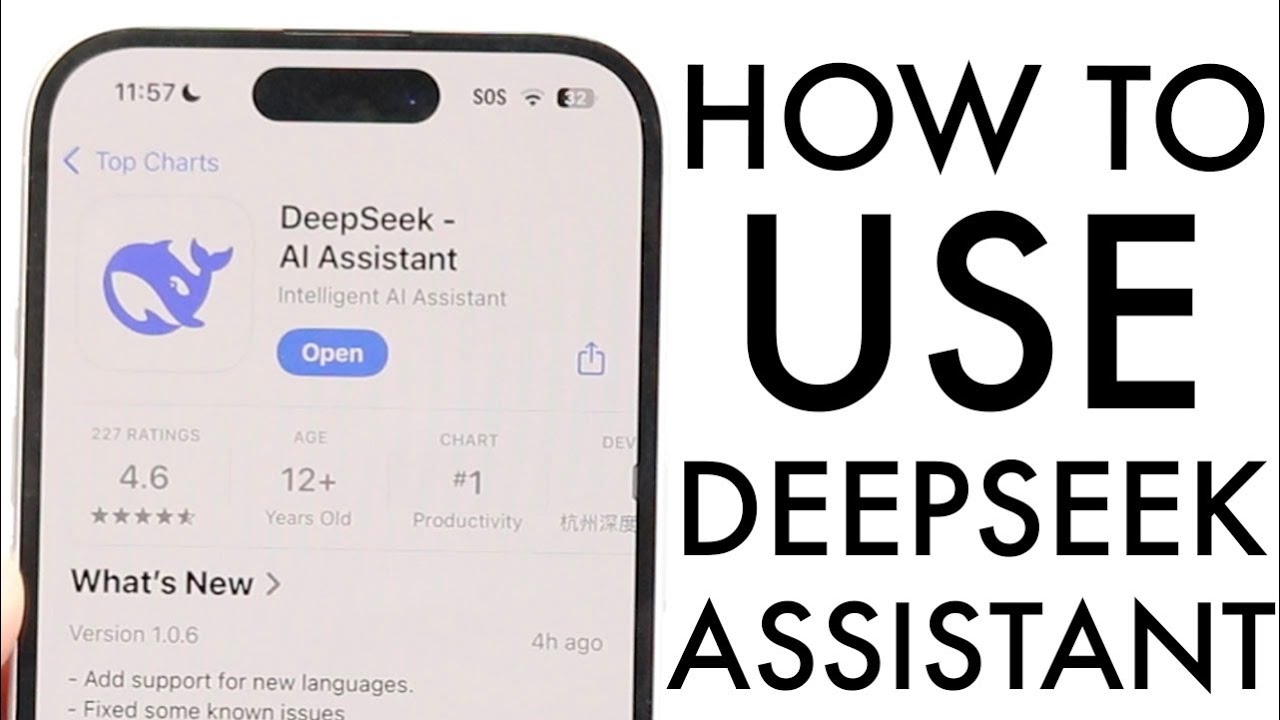
Here is exactly How To Use Deepseek AI! (Complete Beginners Guide)
Should You Buy an iPhone 6S In 2021: https://www.youtube.com/watch?v=6VCWLO-x5kY
Samsung Galaxy S8 In 2021: https://www.youtube.com/watch?v=IXQCiSb36eA
Nintendo Switch In 2021: https://www.youtube.com/watch?v=OoHSZ_CcUHY
iPhone X In 2021: https://www.youtube.com/watch?v=f9wl8jRzyKY
Samsung Galaxy S10 In 2021: https://www.youtube.com/watch?v=mrB8HW_Mqbk
This video is for educational purposes only
All links here Are affiliate links that help the channel!

In this video, Grammar Hero works out a practice test question that requires you to subtract and then convert fractions to a percent. This question should closely mirror what you should expect to see in the Arithmetic Reasoning (AR) subtest of the Armed Services Vocational Aptitude Battery (ASVAB) as well as the Pre-screening internet-delivered Computer Adaptive Test (PiCAT).
#grammarhero #ASVAB #AceTheASVAB #ASVABVersion #PiCAT #algebra #geometry #afqt #asvabexam #asvabtest #asvabmath #asvabmathknowledge #asvabmathprep #asvabtutoring #asvabmathhelp #arithmeticreasoning

A concave mirror curves inward in the center. In this video, I use a laser to demonstrate ray of incidence, the ray of reflection,focal point,center of curvature, and the vertex

Practice Your Spanish With Chateo - a Spanish-speaking chatbot! | Get a discount off your first 6 months with code CHATEOBOT | Sign up at: https://www.senorjordan.com/chat
~~~~~~~~~~~~~~~~~~~~~~~~~~~~~~
SUBSCRIBE for more Spanish videos: http://bit.ly/XGe7we
and make sure to click the notification bell!
Follow me on Facebook: https://www.facebook.com/srjordanspanish
Tweet me: https://twitter.com/senorjordan
Check out my website: http://www.senorjordan.com
Follow me on Instagram: @senorjordanvideos
Listen to my music on Soundcloud:
https://soundcloud.com/senorjordanspanish
Listen to my music on Spotify:
https://open.spotify.com/artis....t/2nyJ9GgLNMckXCuBHU
Buy my songs on iTunes:
https://music.apple.com/us/artist/1621526948
Buy my songs on Amazon:
https://www.amazon.com/music/p....layer/artists/B09Z35
Donate to my video-making project:
https://paypal.me/srjordanvideos?country.x=US&locale.x=en_US
~~~~~~~~~~~~~~~~~~~~~~~~~~~~~~
¡Hola! In this video lesson we'll be talking about verbs that have a little change in the middle. We call these stem-changing verbs. This is a video on the third type of three.
Please "Like" this video if it was helpful.
Click the link below for word bank as well as charts:
http://www.senorjordan.com/2012/07/01-present-tense-stem-changing-verbs-e-i/
Thanks for watching!
*this is a re-do of a previous video because I had to correct a mistake

*Note: We now offer a free Course Sampler, which includes a selection of some of our most popular micro-courses. Sign up for free at https://nextgenerationteacher.com
Enroll in our ChatGPT courses:
ChatGPT 101: https://nextgenerationteacher.com/courses/chatgpt101
AI Bias, Stereotyping, and Hallucinations: https://www.nextgenerationteac....her.com/courses/chat
=======================================
Get started with our award-winning micro-courses for free at https://nextgenerationteacher.com
Become a member of this channel to support our work!
https://www.youtube.com/channe....l/UCd6vizTYlSgpR6zJ8
For tips, ideas, and resources for how to use education technology to increase engagement, rigor, and creativity in your classroom, visit: https://www.newedtechclassroom.com
Follow New EdTech Classroom on Twitter: https://twitter.com/newedtechclass
Facebook: https://www.facebook.com/NewEdTechClassroom
Instagram: https://www.instagram.com/newedtechclass/
TikTok: https://www.tiktok.com/@newedtechclass
LinkedIn: https://www.linkedin.com/compa....ny/the-new-edtech-cl