Top videos

Transform boring NotebookLM mind maps into visual masterpieces using Google Gemini.
NotebookLM's mind maps are text-heavy and boring. You can't even choose which topic to visualize. But combine NotebookLM with Google Gemini, and you get visually rich mind maps with icons and descriptions, in under 2 minutes.
Let me show you three methods to add icons, descriptions, and rich visuals to your mind map
👍 If this tutorial helped you, please consider leaving a comment and a like
Chapters:
00:00 - 00:29 NotebookLM Mindmaps are boring
00:30 - 02:24 Method A
02:25 - 03:38 Method B
03:39 Method C

Unlock a better version of Google Gemini with this serious upgrade.
In this video, I walk you through how to create Custom Gems inside Gemini, and more importantly, why you’d want to.
From curriculum-aligned planning tools to report-writing assistants, I’ll show you how you can tailor Gemini’s AI to become a true teaching companion, or anything you need it to be!
In this walkthrough, I cover:
What are Custom Gems?
Real examples from the UK National Curriculum
Using the RODES AI prompting framework for better AI results
Uploading files, testing responses, and saving Gems
Ideas for classroom, leadership, and admin use
Perfect for teachers, school leaders, and anyone looking to bring more intentionality to AI use in education. Let's go beyond the hype and build smart.
🔗 Subscribe for more weekly EdTech tips & tutorials
💬 Early access + extras on Patreon: https://www.patreon.com/eduflip
Chapters:
0:00 - Why Custom Gems Matter
0:42 - What is a Custom Gem in Gemini?
1:19 - Exploring Existing Gems
1:36 - Creating a New Gem
2:03 - Using the ROADS Prompting Framework
4:31 - Uploading Curriculum Docs
5:16 - Testing Your Custom Gem
7:09 - Launching the Custom Chat
8:15 - Final Thoughts & Ideas
💚💚💚
Thank you all our Channel members! If you'd like to become a member as well follow this link:
https://www.youtube.com/channe....l/UC_Mv2BsvWR03-s7S5
And if you'd like to connect with me personally and support the channel even more, the Patreon link is ere: https://www.patreon.com/eduflip
You can also join our Facebook Community here: https://www.facebook.com/groups/538644703169584
💚💚💚
SERVICES AND SOFTWARE I USE DAILY:
Video editing: https://sethideclercq.com/camtasia
Amazing screenshots: https://sethideclercq/Snagit
Website hosting: https://sethideclercq.com/bluehost
Screenshots and GIFs: https://sethideclercq.com/snagit
Courses: https://sethideclercq.com/teachable
Email lists and newsletter: https://sethideclercq.com/convertkit
Website building: https://sethideclercq.com/wix
GEAR AND RESOURCES:
https://www.amazon.com/shop/fl....ippedclassroomtutori
https://kit.co/FlippedTutorials
My TPT Store: https://www.teacherspayteachers.com/store/eduflip
Disclaimer: Some of these links are affiliate links where I'll earn a small commission if you make a purchase at no additional cost to you. These videos have been made for educational purposes and all views or opinions expressed are my own.

If you want some extra practice on comparing mixed numbers to improper fractions, you have come to the right place. This video is a virtual math worksheet for comparing fractions and includes 4 problems where you can work through them yourself, and then check your answers against mine.
In this video we cover:
How to convert mixed numbers to improper fractions
How to convert improper fractions to mixed numbers
How to use cross multiplication to compare mixed numbers and improper fractions
🔴 Subscribe for more free YouTube tips: https://www.youtube.com/c/ImprovedMath
🔴 Share this video with a friend: https://youtu.be/Ijv-sJgaKRw
✅ For business inquiries contact me at improvedmath@gmail.com
✅ Let's connect:
https://www.youtube.com/c/ImprovedMath
https://www.tiktok.com/@improvedmath1?
https://www.pinterest.com/improvedmath/
Improved math is a channel created to provide additional instruction on essential math concepts. I’m passionate about math and I know first-hand how important math concepts are in the real world.
Teachers, parents, guardians, homeschoolers, and students can use these videos to help reinforce math skills. These math videos are designed to help teach yourself math or provide self-study math tools to assist when additional instruction is needed. Teaching math and learning math has changed the way many students learn in this virtual environment and during the pandemic. Having on-demand math videos can provide math tutoring needed when children are not able to get help from their teachers after school hours or when trying to do math at home.
The library of math tutorials that I create can also be used as supplemental instructional material for homeschool math. Each full-length video comes with a subsequent knowledge check or math practice problems which serve as a virtual math topic worksheet to test your understanding of each skill. These videos can be paused to work out the problems on your own, then unpaused to check your answers. All of these videos can be found under the Knowledge Check playlist.
I also have a library of shorter videos (less than 1 minute in length - shorts) that are quick math tips and tricks on basic math topics. Some of these short math help videos include problems that you can work on yourself and submit your answers in the comments. They are all listed under my Math Tips and Tricks playlist.
Improved math is creating more videos every day to cover topics from 4th grade, 5th grade, 6th grade, and 7th-grade math. The videos focus on fractions, basic math operations, geometry, and ratios but more topics are being added all the time. If there is a specific topic you would like to see covered, drop me a comment in one of my videos and let me know!
Free math help videos will be posted every Thursday and Friday. For additional math resources, check out my math help website at improvedmath.com where I post math worksheets and answers along with additional context on math basics.
Thanks for watching my channel.
#mathworksheetonline
#mathpracticeproblems
#fractions
#comparingfractions
#mathhelpvideos
#homeschoolmath
#selfstudymath

=================================================
More Animated Bible Stories here https://ouo.io/QRLcnJ
=================================================
BUY YourvOwn Bible @ ALIEXPRESS http://ivononic.com/5EY7
FREE Math Videos for Toddlers
http://vismuene.com/6b7a
Buy your own multi-purpose learning module https://invol.co/cl18o24
Buy Rosary here https://invol.co/cl18kr6
Click this link to buy bible https://invol.co/cl14yim Download my Math Interactive Whiteboard Lessons and flash games here: http://iwb-resources.blogspot.com
Lesson Title: Dividing Decimals
File: Interactive Math PowerPoint presentation
Grade: 6
Things to Do in Dividing a Decimal by a Whole Number
1. Place the decimal point in the quotient directly above the decimal point in the dividend.
2. Divide as you normally would (DMSBR)
Divide
Multiply
Subtract
Bring down
Repeat or Remainder
Dividing a Decimal by a Decimal
1. Move the decimal point in the divisor to the right, until you get to the end of the digits.
2. Count how many places you moved that decimal.
3. Move the decimal point in the dividend the same number of places to the right that you moved the decimal point in the divisor.

Learn about Davy Crockett in this biography for kids! Kids will learn all about Davy Crockett and his times. Learn why he was one of the most influential men of his time, and how he became the stuff of legend long after his death.
Homeschool Pop offers a unique, dynamic learning experience. We strive to have the right balance of silliness and learning to keep students engaged as we look at the life of Davy Crockett in this biography.
We hope you enjoyed the classroom edition of the Davy Crockett video! Thanks for watching, and we hope you will keep watching and learning. You are awesome!
Davy Crockett Biography For Kids | Classroom Edition
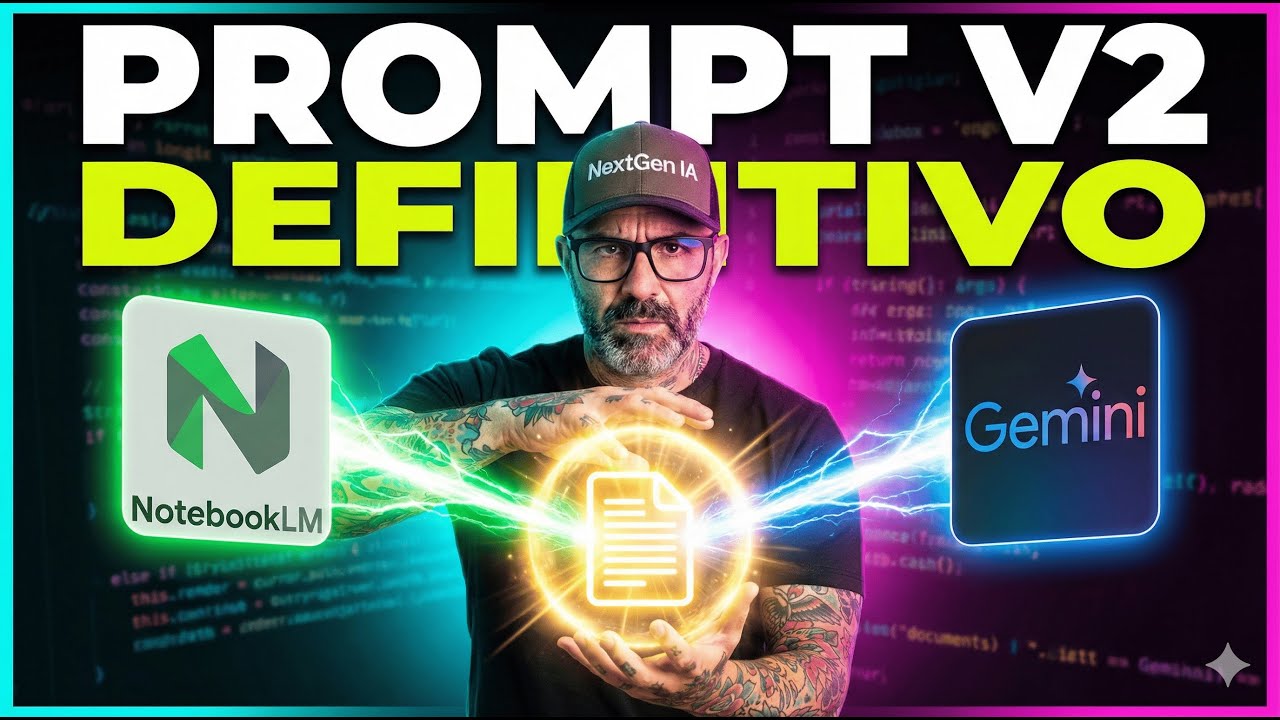
¡Bienvenidos a NextGen IA! 🚀
En este tutorial de Prompt Engineering avanzado, actualizamos nuestra herramienta definitiva para traeros el Monster Prompt V2. Si quieres dominar la inteligencia artificial, necesitas dejar de escribir prompts básicos y empezar a construir sistemas expertos.
Hoy aprenderás a fusionar la capacidad de análisis de fuentes de Google NotebookLM con los nuevos Gems de Gemini para crear un asistente personalizado que redacta prompts perfectos automáticamente. Esta técnica aprovecha la "Cadena de Pensamiento" (Chain of Thought) para eliminar alucinaciones y mejorar la precisión.
👇 Lo que aprenderás en esta guía paso a paso:
✅ Cómo buscar fuentes fiables sobre prompting para alimentar a la IA.
✅ Configuración de un cuaderno maestro en NotebookLM para estructurar el conocimiento.
✅ Cómo crear y configurar un Gem personalizado en Google Gemini (Instrucciones del sistema).
✅ El truco definitivo: Integrar el cuaderno de NotebookLM directamente en el chat de Gemini.
✅ Caso práctico: Generación de una imagen fotorrealista de una "chica skater" con calidad cinematográfica.
Esta estrategia es ideal tanto para generar imágenes (tipo Midjourney o DALL-E 3) como para redacción de textos complejos, guiones de YouTube o código. ¡Convierte a la IA en un experto de nivel dios!
🔗 Herramientas Gratuitas de Google utilizadas:
🔹 Google Gemini: https://gemini.google.com/
🔹 NotebookLM: https://notebooklm.google.com/
🎁 MATERIAL DE REGALO:
Intrucciones para la creacion de este MONSTER PROMPT V2.
⚠️ IMPORTANTE: Este no es un prompt normal. Para que funcione a "Nivel Dios", es imprescindible que veas en el vídeo cómo conectarlo con NotebookLM (minuto 05:06), de lo contrario Gemini no entenderá la estructura y el resultado será básico.
⏱️ Capítulos del video:
00:00 Introducción: Actualizando el Monster Prompt a V2
00:42 Configuración inicial y búsqueda de fuentes en NotebookLM
01:45 Creando la "Arquitectura del Prompt" perfecta
03:06 Cómo crear un nuevo GEM en Google Gemini
05:06 EL TRUCO MAESTRO: Integrar NotebookLM en Gemini
06:20 Demo en vivo: Testeando el Monster Prompt V2
08:34 Chain of Thought (CoT): Cómo la IA razona el diseño
10:36 Generación de Imagen Final con Gemini (Nanobanana)
11:20 Análisis de resultados: Calidad fotorrealista y detalles
12:22 Conclusiones y regalo del Prompt para la comunidad
¿Tienes una idea o truco de IA? Comenta usando #DavidNextGenIA y lo destaco en próximos vídeos
🔔 Suscríbete para más contenido sobre IA: https://www.youtube.com/@NextG....en_IA_YT?sub_confirm
👉 Mi lista de reproducción: https://www.youtube.com/@NextGen_IA_YT/playlists
EMAIL COLABORACIONES:
📩 nextgeniahub@gmail.com
📩 hammer31_73@gmail.com
#PromptEngineering #GoogleGemini #NotebookLM #InteligenciaArtificial #MonsterPrompt #TutorialIA #GoogleAI #DavidNextGenIA

Google just merged NotebookLM and Gemini — and it completely changes how you use both tools. I'll show you the new notebooks feature, how the memory system works, and how I built an AI sales researcher using it.
For hands-on demos, tools, workflows, and dev-focused content, check out World of AI, our channel dedicated to building with these models: @intheworldofai
🔗 My Links:
📩 Sponsor a Video or Feature Your Product: intheuniverseofaiz@gmail.com
🔥 Become a Patron (Private Discord): /worldofai
🧠 Follow me on Twitter: https://x.com/UniverseofAIz
🌐 Website: https://www.worldzofai.com
👩🏻🏫 Learn to code with Scrimba – from fullstack to AI https://scrimba.com/?via=UniverseofAIz (20% OFF)
🚨 Subscribe To The FREE AI Newsletter For Regular AI Updates: https://universe-of-ai.beehiiv.com/
NotebookLM,Gemini,NotebookLM update,Gemini update,Google AI,NotebookLM Gemini merge,Gemini notebooks,AI research tool,NotebookLM tutorial,Gemini tutorial,Google NotebookLM,AI productivity,NotebookLM new features,Gemini new features,AI workspace,NotebookLM 2026,Gemini 2026,AI sales tool,AI tools,Google AI update,NotebookLM memory,Gemini projects,Google Gemini,artificial intelligence,AI note taking,AI organization,NotebookLM sources,AI workflow
#notebooklm #gemini #googleai
0:00 - Intro
1:14 - NEW Features!
8:14 - Workflow DEMO!
10:58 - Outro

Special thanks to Vanessa from BrainCraft for help with this video!
Check out her channel: https://www.youtube.com/braincraft
↓↓↓ More info and sources below ↓↓↓
Until the early 20th century, Tasmania was home to a very weird wolf-like creature. Except that it wasn’t a wolf. Even though it looked like a wolf. How did that happen? Here’s the science of convergent evolution!
Want to see more of my interview with Rob? Click here: https://www.youtube.com/watch?v=hsek8JxUS7M
Special thanks to:
Rob Voss - American Museum of Natural History, New York City
Vanessa Hill from BrainCraft!
References:
Quammen, D. (2012). The song of the dodo: island biogeography in an age of extinctions. Random House.
Feigin, C. Y., Newton, A. H., Doronina, L., Schmitz, J., Hipsley, C. A., Mitchell, K. J., ... & Menzies, B. R. (2018). Genome of the Tasmanian tiger provides insights into the evolution and demography of an extinct marsupial carnivore. Nature ecology & evolution, 2(1), 182.
Newton, A. H., Spoutil, F., Prochazka, J., Black, J. R., Medlock, K., Paddle, R. N., ... & Pask, A. J. (2018). Letting the ‘cat’out of the bag: pouch young development of the extinct Tasmanian tiger revealed by X-ray computed tomography. Royal Society open science, 5(2), 171914.
-----------
FOLLOW US:
Twitter: @DrJoeHanson @okaytobesmart
Instagram: @DrJoeHanson
Merch: https://store.dftba.com/collec....tions/its-okay-to-be
Facebook: http://www.facebook.com/itsokaytobesmart
BOOKS WE’VE FEATURED:
http://smart-books.tumblr.com/
-----------
It’s Okay To Be Smart is hosted by Joe Hanson, Ph.D.
Director: Joe Nicolosi
Writer: Stephanie Keep
Creative Director: David Schulte
Editor/animator: Karl Boettcher and Derek Borsheim
Producers: Stephanie Noone and Amanda Fox
Produced by PBS Digital Studios
Music via APM
Stock images from Shutterstock http://www.shutterstock.com

This episode is Sponsored by Wix! Support the Simple History channel by going to: https://www.wix.com/go/simplehistory
What did soldiers eat throughout history, we explore army rations and logistics from the ancient era up until modern times.
Become a Simple History member: https://www.youtube.com/simplehistory/join
Support us on Patreon: https://www.patreon.com/simplehistory
Copyright: DO NOT translate and re-upload our content on Youtube or other social media.
SIMPLE HISTORY MERCHANDISE
Get the Simple History books on Amazon:
https://www.amazon.com/Daniel-....Turner-%60/e/B00H5TY
T-Shirts
https://teespring.com/stores/s....imple-history-offici
Simple history gives you the facts, simple!
See the book collection here:
Amazon USA
http://www.amazon.com/Daniel-Turner/e/B00H5TYLAE/
Amazon UK
http://www.amazon.co.uk/Daniel....-Turner/e/B00H5TYLAE
https://www.facebook.com/Simpl....e-History-5494376751
https://twitter.com/SimpleHistoryYT
Credit:
Created by Daniel Turner
Narrator:
Christian H. Miles
www.christianhmiles.co.uk
Music Credit:
'Juniper', 'Enchanted Journey' by Kevin MacLeod is licensed under a Creative Commons Attribution licence (https://creativecommons.org/licenses/by/4.0/)
Source: http://incompetech.com/music/r....oyalty-free/index.ht
Artist: http://incompetech.com/
Sources:
Barber, R. 1978. Edward Prince of Wales and Aquitaine: A Biography of the Black Prince. Woodbridge: The Boydell Press
Cole, T. 2015. Henry V: The Life of the Warrior King and the Battle of Agincourt 1415. Stroud: Amberley Publishing
Coss, J. Edward. 2013. All for the King's Shilling: The British Soldier Under Wellington, 1808-1814. Norman: University of Oklahoma Press.
Dio, C. 1925. Roman History, Volume VIII: Books 61-70. Translated by Earnest Cary, Herbert B. Foster. Loeb Classical Library 176. Cambridge, MA: Harvard University Press
Gabriel, A. Richard. 2007. Soldier’s Lives Through History: The Ancient World. Wesport: Greenwood Press
Hardy, R. 1992. Longbow. Bois d'Arc Press
Martyris, N. 2015. Appetite For War: What Napoleon And His Men Ate On The March. https://www.npr.org/sections/t....hesalt/2015/06/18/41
Morkot, Robert. 2003. The A to Z of Ancient Egyptian Warfare. Lanham: The Scarecrow Press Inc.
Phillips, Colonel Dwight E. 1995. Napoleon: Grandfather of the MRE. Army Logistician. U.S. Army Logistics Management Center
Roth, P. Jonathan. 1999. The Logistics of the Roman Army at War: 264 B.C. - A.D. 235. Leiden: Brill
Rupp, R. 2015. When Feeding the Troops, Flavor is Rarely on the Menu.
https://www.nationalgeographic.....com/people-and-cult
Sekunda, N. (2002). Greek Military Cuisine
Wellesley, A. 1868. Despatches, Correspondence, and Memoranda of Field Marshal Arthur Duke of Wellington (Vol. III), K.G. London: W. Clowes and Sons
https://www.95th-rifles.co.uk/research/rations/
Daly, G. (2013). The British Soldier in the Peninsular War: Encounters with Spain and Portugal, 1808-1814 (War, Culture and Society, 1750-1850)
The Art of Warfare in the Age of Napoleon
By Gunther E. Rothenberg
https://www.95th-rifles.co.uk/research/rations/

Kindergarten teacher Deborah Nation gives tips on teaching strategies that help her run small group rotations so that she can differentiate instruction with her moderate/severe special education students. She and her aides use visual schedules, first-then incentive cards, as well as a sensory room as part of the daily small group rotation routine.
Teacher: Deborah.Nation@sbcusd.k12.ca.us
Consultant: Sarah.Batarseh@sbcusd.k12.ca.us
Videography: SethFreehling@gmail.com

Learn how chatbots work and how to build one for your business in this case study.
AI Casefile Playlist: https://www.youtube.com/watch?v=zKGhV-I250o&list=PL5oju95YSpTV69RmprRJV_YUswBJo2799
AI chatbots aren’t just for tech experts anymore. With the right tools and guidance, anyone can build a chatbot that answers questions, automates tasks, and improves customer experience.
Looking for an easy way to get started with AI education and build your own chatbot—without needing to code? You’re in the right place. In this video, we follow Olivia, a customer service professional, as she explores how AI chatbots can transform everyday work and help her grow her career. Whether you’re working in retail, freelancing, or just curious about automation, this AI education chatbot tutorial is the perfect entry point.
Olivia learns step-by-step how to create a chatbot using IBM Watsonx Assistant—no coding required. This AI education chatbot journey shows you how to go from complete beginner to confident chatbot builder.
If you've ever searched for “how to make money with AI”, “AI tools for work,” or “chatbot training tutorial,” this video is for you. We break it down in clear, simple steps so you can start your own AI education chatbot project today. Stick around to learn how to deploy your bot on websites, mobile apps, and even Facebook Messenger.
Meet Olivia, a 25-year-old working in customer service and bookkeeping at a small flower shop that serves customers both in-store and online. She’s sharp, organized, and well-liked—but like many, she’s hearing the buzz: “AI is coming for your job.”
Instead of panicking, Olivia gets curious.
She starts with the basics: What is a chatbot? A chatbot is a digital assistant that simulates human conversation. It can answer FAQs, provide information, and even help customers choose the perfect bouquet. By automating these repetitive tasks, Olivia realizes she can save time, reduce errors, and focus on meaningful parts of her job.
But Olivia doesn’t stop at basic replies. She discovers action workflows—smart sequences that let her chatbot guide users through tasks like finding store hours or making product suggestions. These workflows are driven by action variables (temporary data used during a task) and session variables (data that persists across conversations). This combo creates more intelligent and user-friendly interactions.
As she dives deeper, Olivia learns about decision-tree bots (structured and predictable) vs. generative AI bots (flexible and conversational). By blending both, she designs a hybrid assistant that feels responsive and personal.
Using IBM Watsonx Assistant, Olivia builds, tests, and deploys her chatbot across web, mobile, and messaging apps. With no need to code, she customizes the design, integrates APIs, and even installs the chatbot on her shop’s WordPress blog. Now, her assistant handles orders, answers questions 24/7, and improves customer satisfaction.
Along the way, Olivia answers key questions many people ask:
How do chatbots actually work?
Do I need to be a developer to use one?
Can chatbots help me at my job or business?
How can I earn or save money with AI?
The answer? Yes. Olivia’s story shows that chatbots aren’t job-stealers—they’re power tools. Whether you work in retail, support, freelancing, or run a side hustle, a well-trained chatbot can save hours, scale your service, and increase earnings.
#NoCodeAI
#aichatbots
#officework
#worksmarterwithai
#aieducation #learnai
#aiforbusiness #casestudy

Learn about the US Constitution for a better score on GED social studies!
Bald eagle image from thumbnail attribution:
:Andy Morffew [CC BY 2.0 (https://creativecommons.org/licenses/by/2.0)].
https://upload.wikimedia.org/w....ikipedia/commons/1/1
-Removed background around the eagle in photo.

How scientifically accurate is your favorite sci-fi space battle?
Viewers like you help make PBS (Thank you 😃) . Support your local PBS Member Station here: https://to.pbs.org/PBSDSDonate
Subscribe to It's Okay To Be Smart: http://bit.ly/iotbs_sub
Joseph Shoer has several extensive, in-depth articles on the physics of space warfare:
http://josephshoer.com/blog/20....09/12/thoughts-on-sp
http://josephshoer.com/blog/20....10/07/projecting-spa
Space warfare: Almost everything you know is probably wrong http://www.escapistmagazine.co....m/forums/read/18.100
Is space warfare really practical? http://www.escapistmagazine.co....m/forums/read/18.846
Zero-g dogfighting for dummies: http://www.citizenstarnews.com..../news/zero-g-dogfigh
Projectile weapons vs. directed energy weapons: http://forum.gateworld.net/thr....eads/17263-Projectil
Nukes in space: http://www.projectrho.com/publ....ic_html/rocket/space
Effects of radiation weapons in space: http://www.projectrho.com/publ....ic_html/rocket/radia
Could the Death Star really destroy a planet? http://www.universetoday.com/9....2746/could-a-death-s
"Sir Isaac Newton is the deadliest son of a b***h in space" https://www.youtube.com/watch?v=hLpgxry542M
Produced for PBS Digital Studios
Joe Hanson - Host and writer
Joe Nicolosi - Director
Amanda Fox - Producer, Spotzen IncKate Eads - Associate Producer
Katie Graham - Director of Photography
Editing/Motion Graphics - Andrew Matthews/Kirby Conn
Gaffers - John Knudsen/Philip Sheldon
Post-production intern - Dalton Allen
Theme music:
"Ouroboros" by Kevin MacLeod
Stock images via Shutterstock
-----------
Join us on Patreon!
https://patreon.com/itsokaytobesmart
Twitter
http://www.twitter.com/DrJoeHanson
http://www.twitter.com/okaytobesmart
Instagram
http://www.instagram.com/DrJoeHanson
http://www.instagram.com/okaytobesmart
Merch
https://store.dftba.com/collec....tions/its-okay-to-be
Facebook
https://www.facebook.com/itsokaytobesmartpbs/

=================================================
More Animated Bible Stories here https://ouo.io/QRLcnJ
=================================================
BUY YourvOwn Bible @ ALIEXPRESS http://ivononic.com/5EY7
FREE Math Videos for Toddlers
http://vismuene.com/6b7a
Buy your own multi-purpose learning module https://invol.co/cl18o24
Buy Rosary here https://invol.co/cl18kr6
Click this link to buy bible https://invol.co/cl14yim Objectives: From ratio and proportion for groups of objects/numbers
1.1 Visualize the meaning of proportion
1.2 Tell whether two ratios make a proportion
1.3 Find a missing term in a proportion
This video is compatible with Interactive Whiteboard
Download my Math Interactive Whiteboard Lessons and flash games here: http://iwb-resources.blogspot.com
Unlock a better version of Google Gemini with this serious upgrade.
In this video, I walk you through how to create Custom Gems inside Gemini, and more importantly, why you’d want to.
From curriculum-aligned planning tools to report-writing assistants, I’ll show you how you can tailor Gemini’s AI to become a true teaching companion, or anything you need it to be!
In this walkthrough, I cover:
What are Custom Gems?
Real examples from the UK National Curriculum
Using the RODES AI prompting framework for better AI results
Uploading files, testing responses, and saving Gems
Ideas for classroom, leadership, and admin use
Perfect for teachers, school leaders, and anyone looking to bring more intentionality to AI use in education. Let's go beyond the hype and build smart.
🔗 Subscribe for more weekly EdTech tips & tutorials
💬 Early access + extras on Patreon: https://www.patreon.com/eduflip
Chapters:
0:00 - Why Custom Gems Matter
0:42 - What is a Custom Gem in Gemini?
1:19 - Exploring Existing Gems
1:36 - Creating a New Gem
2:03 - Using the ROADS Prompting Framework
4:31 - Uploading Curriculum Docs
5:16 - Testing Your Custom Gem
7:09 - Launching the Custom Chat
8:15 - Final Thoughts & Ideas
💚💚💚
Thank you all our Channel members! If you'd like to become a member as well follow this link:
https://www.youtube.com/channe....l/UC_Mv2BsvWR03-s7S5
And if you'd like to connect with me personally and support the channel even more, the Patreon link is ere: https://www.patreon.com/eduflip
You can also join our Facebook Community here: https://www.facebook.com/groups/538644703169584
💚💚💚
SERVICES AND SOFTWARE I USE DAILY:
Video editing: https://sethideclercq.com/camtasia
Amazing screenshots: https://sethideclercq/Snagit
Website hosting: https://sethideclercq.com/bluehost
Screenshots and GIFs: https://sethideclercq.com/snagit
Courses: https://sethideclercq.com/teachable
Email lists and newsletter: https://sethideclercq.com/convertkit
Website building: https://sethideclercq.com/wix
GEAR AND RESOURCES:
https://www.amazon.com/shop/fl....ippedclassroomtutori
https://kit.co/FlippedTutorials
My TPT Store: https://www.teacherspayteachers.com/store/eduflip
Disclaimer: Some of these links are affiliate links where I'll earn a small commission if you make a purchase at no additional cost to you. These videos have been made for educational purposes and all views or opinions expressed are my own.

এই ভিডিওতে দেখানো হয়েছে কিভাবে Google Gemini ব্যবহার করে AI দিয়ে Handwritten Study Notes তৈরি করা যায় খুব সহজে। Students, teachers এবং competitive exam aspirants দের জন্য এটা একটি game-changer tool
🔥Copy Prompts: https://docs.google.com/docume....nt/d/17xSusXXSUbGH7V
🎁 ৯৯৯ টাকায় AI Course Bundle (FREE BONUS - Digital Marketing Course Bundle)
╰┈➤ https://bongiyo.com/ai
📌 এই ভিডিওতে আপনি শিখবেন:
Google Gemini কী এবং এটা কিভাবে কাজ করে
PDF/ বই / class material থেকে handwritten style notes বানানো
Study notes কে exam-friendly ও revision-ready করার কৌশল
Time বাঁচিয়ে smart study করার best AI method
🎯 Perfect for:
School & College Students
University Exam Preparation
SSC / HSC / Competitive Exam Aspirants
যারা neat & organized handwritten notes চায়
👉 ভিডিওটি ভালো লাগলে Like, Share & Subscribe করুন
📩 আপনার প্রশ্ন কমেন্টে লিখুন — আমি অবশ্যই reply দেবো
Keep going! Check out the next lesson and practice what you’re learning:
https://www.khanacademy.org/sc....ience/ap-chemistry-b
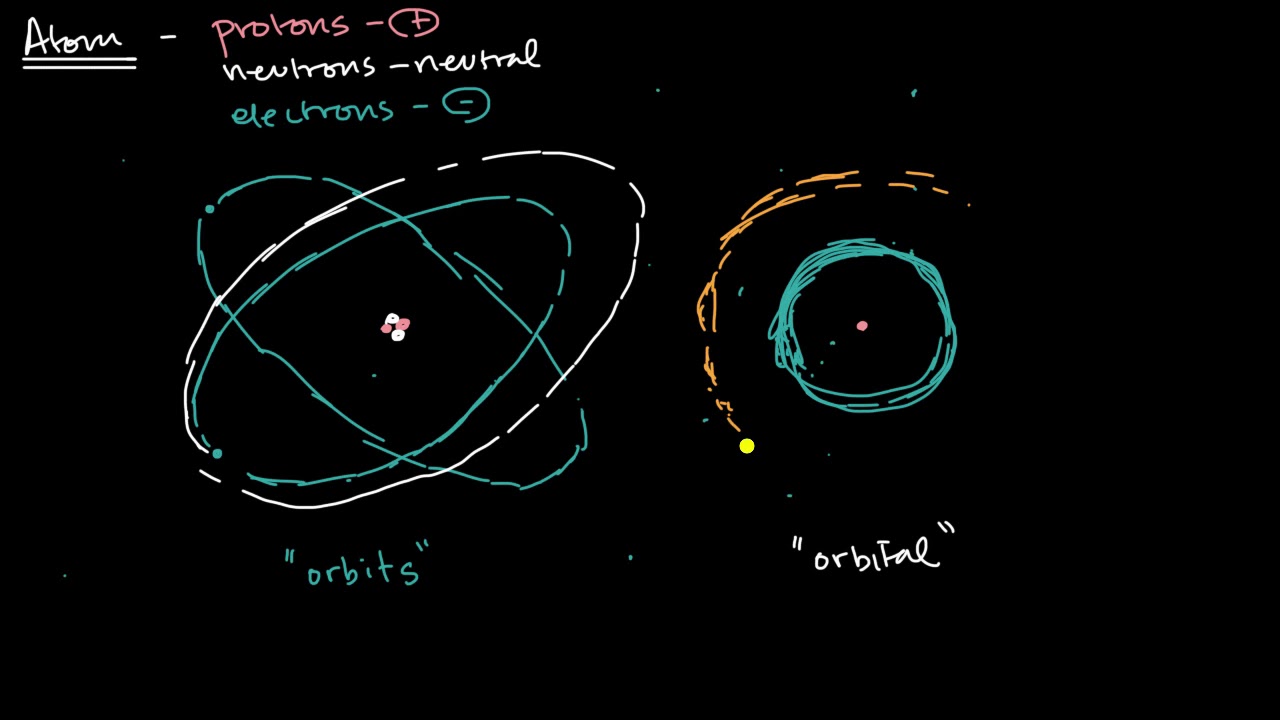
The electrons in an atom are arranged in shells that surround the nucleus, with each successive shell being farther from the nucleus. Electron shells consist of one or more subshells, and subshells consist of one or more atomic orbitals. Electrons in the same subshell have the same energy, while electrons in different shells or subshells have different energies. View more lessons or practice this subject at https://www.khanacademy.org/sc....ience/ap-chemistry-b
Khan Academy is a nonprofit organization with the mission of providing a free, world-class education for anyone, anywhere. We offer quizzes, questions, instructional videos, and articles on a range of academic subjects, including math, biology, chemistry, physics, history, economics, finance, grammar, preschool learning, and more. We provide teachers with tools and data so they can help their students develop the skills, habits, and mindsets for success in school and beyond. Khan Academy has been translated into dozens of languages, and 15 million people around the globe learn on Khan Academy every month. As a 501(c)(3) nonprofit organization, we would love your help!
Donate or volunteer today! Donate here: https://www.khanacademy.org/donate?utm_source=youtube&utm_medium=desc
Volunteer here: https://www.khanacademy.org/contribute?utm_source=youtube&utm_medium=desc
#basicsentencesforgrade1
#readingenglishgrade1
#readingenglishkinder
#readingenglishsentences
#practicereadingenglish
#englishfortoddlers
#englishforkids
#practicereadingenglishforbeginners
#readingsimplesentences
#sentencesstartingwithIhave
#grade1English
#KinderEnglish
#Grade2English
#practicereadingenglishsentences
#BasicEnglishsentences
#TeacherAyasreadinglesson

In this episode of our Writing & AI series, we tackle the critical topic of teaching AI literacy in K-12 education. The ESUCC welcomes Vera Cubero from the North Carolina Department of Public Instruction to join us for this important conversation on the importance of AI literacy in preparing students for the future.
Vera shares insights from North Carolina’s state-level guidance on AI literacy, which has been recognized as a leading framework in the U.S. Together, we break down AI literacy into three key components: understanding, using, and evaluating AI. We also explore how educators can help students critically engage with AI, focusing on ethical use, responsible participation, and the growing need for AI skills in the workforce.
As AI continues to evolve rapidly, this discussion highlights both the challenges and opportunities that come with integrating AI literacy into the classroom. From preparing students for AI-driven careers to teaching them how to navigate a world of synthetic media, this conversation provides practical guidance for educators seeking to develop proficiency in AI literacy.

Download Free Notes Here:-
https://www.theiscale.com/Data....Analytics/a-i-full-c
🚀 The wait is over!
Welcome to the Complete Artificial Intelligence Course (Free) — your step-by-step guide to learning AI from scratch.
In this beginner-friendly course, you’ll explore how Artificial Intelligence works, understand key AI concepts, and learn to use the latest AI tools like ChatGPT, Gemini, DeepSeek, NotebookLM, and AI Agents to build real-world projects.
📘 What You’ll Learn:
. What is Artificial Intelligence & how it works
. Machine Learning vs Deep Learning
. AI Tools for productivity, content creation & coding
. AI Agents & Automation basics
. Real-world AI applications & projects
. Future of AI and career opportunities
Time Stamp
00:00 - Introduction
03:30 - AI Operators & AI Builders
07:00 - AI tools
07:02 - Note book LM
07:55 - Generating interview questions with AI
14:21 - Generating Social Media content
17:16 - Converting text data to video data
18:48 - Google Gemini
20:20 - Converting reports to insights
23:25 - Data Visualization through AI
27:48 - Using chat gpt as data analyst
30:54 - Data processing with AI
33:45 - Transforming data to graph
37:27 - Prompt writing technique for better output
41:50 - Manus AI
42:00 - Difference between Chat gpt and Manus AI
48:12 - Making Website through AI Agent
55:17 - Deepseek AI
58:39 - Deep Seek advantage over chat gpt
58:26 - Model training behind deepseek
01:11:02 - Deepseek for writing codes
01:11:42 - Introduction to Generative & Agentic AI
01:13:48 - Generative AI growth in tech
01:15:20 - Prompt engineering in Gen AI
01:20:48 - Limitations of Gen AI
01:21:02 - Agentic AI
01:24:00 - Automation and Autonomous Workflows
01:25:22 - Agentic AI Systems
01:27:42 - chat gpt vs world's first AI agent Manus
01:32:30 - LLM, AI Workflows & AI Agents
01:36:24 - LLM Model Training
01:37:44 - Introduction to AI Workflow
01:42:08 - Architecture of AI Agents
01:58:41 - Working of AI workflows
02:00:14 - Types of AI Agent
02:01:08 - Single AI Agent
02:04:35 - Multi AI Agent
02:06:10 - Sequential Pattern
02:08:40 - Hierarchical Pattern
02:11:35 - Hybrid Pattern
02:12:32 - Parallel Pattern
02:13:19 - Asynchronous Pattern
02:14:25 - Types of AI Agents
02:15:27 - Simple Reflex AI Agent
02:16:36 - Model Based Reflex AI Agent
02:17:24 - Goal Based AI Agent
02:19:19 - Utility Based AI Agent
02:22:13 - Learning Based AI Agent
02:26:05 - Coding Assistant Agent:
02:27:15 - E-commerce and Product Research AI
02:28:49 - Healthcare Assistant
02:30:21 - Agentic applications
02:31:00 - Final Project for Building AI Agent for free
02:51:56 - Conclusion of AI course
🧠 Who This Course is For:
. Complete beginners who want to start with AI
. Students & professionals exploring new career paths
. Content creators, coders & entrepreneurs
🎯 Whether you want to build your first AI project or understand how AI tools can boost your career — this free course is your ultimate starting point!
✨ Kickstart your career in a Data Analyst. Apply today! - https://www.theiscale.com/Data....Analytics/data-analy
❇️ Explore our Job Oriented Courses: https://www.theiscale.com/explore-course
➖➖➖➖➖➖
📱 For Any Further Query or Doubts? Contact- 7880-113-112 (Student Helpline Number)
For any query connect in WhatsApp with us: https://wa.me/917880113112
➖➖➖➖➖➖
✳️ Join Telegram Channel- https://t.me/TheiScale
✳️ Join WhatsApp Channel- https://whatsapp.com/channel/0....029VaB5ekEKQuJQV572v
➖➖➖➖➖➖➖
🔗 Download App
Google Play : https://play.google.com/store/apps/details?id=com.logixhunt.ihhpet&pli=1