Top videos

Pre-order our book YOU ARE AN ARTIST (which includes new assignments!) here: http://bit.ly/2kplj2h
We meet up with photographer Tanja Hollander in North Adams, MA, on her epic journey around the world to visit and take formal portraits of ALL of her 626 facebook friends. She challenges you to take a formal photographic portrait of a friend, and to tell us what a real friend is.
INSTRUCTIONS - Photo a Friend
1. Find a friend (define friend however you want)
2. Take a formal photographic portrait of them
3. Upload to your social media platform of choice using #theartassignment
4. Fame & glory (your work might be featured in a future episode)
5. Extra credit: Also upload a pic of a post-it saying what a real friend is and then send it to Tanja: PO Box 805, Lewiston, ME 04243-805
Find out more about The Art Assignment and how to submit your response: http://theartassignment.com/

Pre-order our book YOU ARE AN ARTIST (which includes new assignments!) here: http://bit.ly/2kplj2h
The Art Assignment furthers their exploration of New Orleans to visit artist Bob Snead. He's the Executive Director of Press Street, an organization that promotes art and literature in the community through events, publications and arts education. Snead embraces the collaborative nature of art-making and gives us the assignment to produce an Assembly Line.
John and Sarah Green then discuss the controversy in contemporary art of using assistants and others to make the art and not the artist. Sarah shows how this has been a common practice and gives a prime example, Leonardo Da Vinci.
INSTRUCTIONS - Assembly Line
1. Make an object
2. Make a template for how to recreate that object
3. Invite friends over and produce an assembly line to recreate that object
4. Document the process and upload with #theartassignment
5. Fame and glory (your work might be featured in a future episode)
Find out more about The Art Assignment and how to submit your response: http://theartassignment.com/

Viewers like you help make PBS (Thank you 😃) . Support your local PBS Member Station here: https://to.pbs.org/PBSDSDonate
We've got T-SHIRTS! http://dftba.com/besmart
Don’t miss our next video! SUBSCRIBE! ►► http://bit.ly/iotbs_sub
↓ More info and sources below ↓
Why does fire burn? What's the chemistry and physics of a flame? This week, learn about the beautiful science happening inside a flame!
Michael Faraday's Christmas lectures on candle chemistry:
http://blogs.scientificamerica....n.com/cocktail-party
http://www.bartleby.com/30/7.html
Flames in space:
http://science.nasa.gov/scienc....e-news/science-at-na
Richard Feynman talking about fire:
http://www.itsokaytobesmart.co....m/post/27299255757/f
Have an idea for an episode or an amazing science question you want answered? Leave a comment or check us out at the links below!
Follow on Twitter: http://twitter.com/okaytobesmart
http://twitter.com/jtotheizzoe
Follow on Tumblr: http://www.itsokaytobesmart.com
Follow on Instagram: http://instagram.com/jtotheizzoe
-----------------
It's Okay To Be Smart is written and hosted by Joe Hanson, Ph.DFollow me on Twitter: @jtotheizzoe
Email me: itsokaytobesmart AT gmail DOT com
Facebook: http://www.facebook.com/itsokaytobesmart
Google+ https://plus.google.com/+itsokaytobesmart
For more awesome science, check out: http://www.itsokaytobesmart.com
Produced by PBS Digital Studios: http://www.youtube.com/user/pbsdigitalstudios
Joe Hanson - Creator/Host/Writer
Joe Nicolosi - Director
Amanda Fox - Producer, Spotzen IncKate Eads - Producer
Andrew Matthews - Editing/Motion Graphics/Animation
Katie Graham - Camera
John Knudsen - Gaffer
Theme music: "Ouroboros" by Kevin MacLeod
Other music via APM
Stock images from Shutterstock, stock footage from Videoblocks
-----------------
More videos:
Why Does February Have 28 Days? https://www.youtube.com/watch?v=AgKaHTh-_Gs
Why Vaccines Work https://www.youtube.com/watch?v=3aNhzLUL2ys
Why Are Some People Left-Handed? https://www.youtube.com/watch?v=NPvMUpcxPSA
Where Does the Smell of Rain Come From? https://www.youtube.com/watch?v=lGcE5x8s0B8
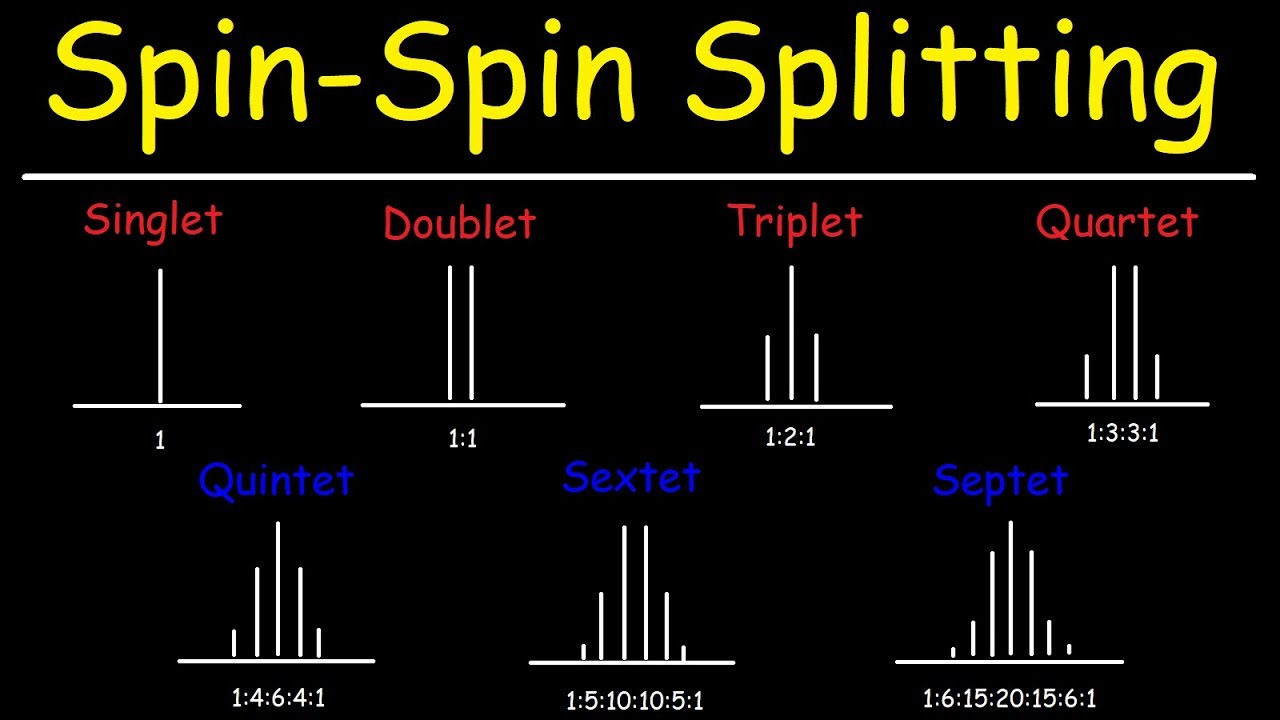
This organic chemistry video tutorial provides a basic introduction into spin spin splitting / coupling as it relates to proton NMR spectroscopy. It explains how to use the N+1 rule to determine the multiplicity of a H NMR signal. It also discusses the intensity ratio of singlets, doublets, triplets, quartets, quintets, sextets, and septets using pascal's triangle. It also provides an intro into complex splitting by using a triplet of quartets and a quartet of triplets signal as an example which can be simply referred to as a multiplet.
Alcohol Reactions - HBr, PBr3, & SOCl2:
https://www.youtube.com/watch?v=4PDs3ygNsv4
Free Radical Reactions:
https://www.youtube.com/watch?v=w9RAULFkqKQ
Reactions Summary:
https://www.youtube.com/watch?v=nkh0egRNQz0
Organic Chemistry 1 Final Exam Review:
https://www.youtube.com/watch?v=ej2pSWw6U3w
IR Spectroscopy:
https://www.youtube.com/watch?v=WTmj_9VT5oE
Mass Spectrometry:
https://www.youtube.com/watch?v=VUIPYnWLSDE
______________________________
Proton NMR Spectroscopy:
https://www.youtube.com/watch?v=vejKDb1dBn8
Carbon-13 NMR Spectroscopy:
https://www.youtube.com/watch?v=QUVTATcXE9Y
Ethers and Epoxides:
https://www.youtube.com/watch?v=BxRLJhHjqMc
Diels Alder Reaction:
https://www.youtube.com/watch?v=sBmoP6KwK-8
Organic Chemistry 2 Final Exam Review:
https://www.youtube.com/watch?v=T5NaUdVfAOc

This is a replay of Education Week's webinar, "English-Learners and the Common Core: New Instructional Strategies." Veteran teachers Larry Ferlazzo and Katie Hull Sypnieski offer guidance on integrating the common-core standards into ELL instruction. ____________________
Want more stories about schools across the nation, including the latest news and unique perspectives on education issues? Visit www.edweek.org.
About Education Week:
Education Week is America’s most trusted source of independent K-12 education news, analysis, and opinion. Our work serves to raise the level of understanding and discourse about education among school and district leaders, policymakers, researchers, teachers, and the public. Published by the nonprofit organization Editorial Projects in Education, Education Week has been providing award-winning coverage of the field for over 35 years.
Follow Education Week:
- Subscribe to our Channel: http://www.youtube.com/subscri....ption_center?add_use
- On Facebook at https://www.facebook.com/edweek/
- On Twitter at https://twitter.com/educationweek/
- On LinkedIn at https://www.linkedin.com/company/education-week
To license video footage from Editorial Projects in Education please contact the Education Week Library at library@epe.org.

Special thanks to Vanessa from BrainCraft for help with this video!
Check out her channel: https://www.youtube.com/braincraft
↓↓↓ More info and sources below ↓↓↓
Until the early 20th century, Tasmania was home to a very weird wolf-like creature. Except that it wasn’t a wolf. Even though it looked like a wolf. How did that happen? Here’s the science of convergent evolution!
Want to see more of my interview with Rob? Click here: https://www.youtube.com/watch?v=hsek8JxUS7M
Special thanks to:
Rob Voss - American Museum of Natural History, New York City
Vanessa Hill from BrainCraft!
References:
Quammen, D. (2012). The song of the dodo: island biogeography in an age of extinctions. Random House.
Feigin, C. Y., Newton, A. H., Doronina, L., Schmitz, J., Hipsley, C. A., Mitchell, K. J., ... & Menzies, B. R. (2018). Genome of the Tasmanian tiger provides insights into the evolution and demography of an extinct marsupial carnivore. Nature ecology & evolution, 2(1), 182.
Newton, A. H., Spoutil, F., Prochazka, J., Black, J. R., Medlock, K., Paddle, R. N., ... & Pask, A. J. (2018). Letting the ‘cat’out of the bag: pouch young development of the extinct Tasmanian tiger revealed by X-ray computed tomography. Royal Society open science, 5(2), 171914.
-----------
FOLLOW US:
Twitter: @DrJoeHanson @okaytobesmart
Instagram: @DrJoeHanson
Merch: https://store.dftba.com/collec....tions/its-okay-to-be
Facebook: http://www.facebook.com/itsokaytobesmart
BOOKS WE’VE FEATURED:
http://smart-books.tumblr.com/
-----------
It’s Okay To Be Smart is hosted by Joe Hanson, Ph.D.
Director: Joe Nicolosi
Writer: Stephanie Keep
Creative Director: David Schulte
Editor/animator: Karl Boettcher and Derek Borsheim
Producers: Stephanie Noone and Amanda Fox
Produced by PBS Digital Studios
Music via APM
Stock images from Shutterstock http://www.shutterstock.com
SUSCRIBETE AQUÍ: https://bit.ly/3B8CNXP
🎁 En estas Navidades, encuentra los productos de La Granja de Zenón en Amazon Store 🎁
Peluches ▶️ https://rebrand.ly/AmazonMXPeluchesMusicalesLGDZ
Sábanas y Mantas ▶️ https://rebrand.ly/AmazonMXJuegoDeCamaLDGZ
🛜 Las Aventuras de Bartolito en Internet https://www.youtube.com/playli....st?list=PL2KQv6-I8Mw
Letra
Un gallo se enamoró perdidamente
de una pata que nadaba en la laguna
y ese gallo que era muy inteligente
a la pata le cantaba con la luna.
Pero el pato que se había puesto celoso
se coló por el corral de las gallinas
y decía "este pato me las paga"
y con todas las gallinas solito se quedó.
El gallo aprendió a nadar
y la pata a cacarear
El gallo aprendió a nadar
y la pata a cacarear
Lara lararaila ♫
Cuack cuack ♫
Lara lararaila ♫
Cuack cuack ♫
Lara lararaila ♫
Cuack cuack ♫
Lara lararaila ♫
Cuack cuack ♫
Un gallo se enamoró perdidamente
de una pata que nadaba en la laguna
y ese gallo que era muy inteligente
a la pata le cantaba con la luna.
Pero el pato que se había puesto celoso
se coló por el corral de las gallinas
y decía "este pato me las paga"
y con todas las gallinas solito se quedó.
El gallo aprendió a nadar
y la pata a cacarear.
El gallo aprendió a nadar
y la pata a cacarear.
Lara lararaila ♫
Cuack cuack ♫
Lara lararaila ♫
Cuack cuack ♫
Lara lararaila ♫
Cuack cuack ♫
Lara lararaila ♫
Cuack cuack ♫
Lara lararaila
Cuack cuack... ♫
Suscríbete ► http://bit.ly/SuscribeteElReinoInfantil
Síguenos/Follow us:
Facebook ► https://www.facebook.com/ElReinoInfantil
Instagram► https://www.instagram.com/reino_infantil/
Twitter ► https://twitter.com/Reino_Infantil
¡Encuentra todos nuestros productos exclusivos aquí!
►http://bit.ly/ElReinoInfantilWEB
El Gallo y la Pata - Canciones de la Granja de Zenón 2
Título original: El Gallo y la Pata
Autor/Compositor: Osorio López, Henry - Anderle Petri, Oscar
Intérprete: Riki Maravilla

Testing ChatGPT (4o) vs Google Gemini (2.5 Pro) vs Perplexity Pro vs Grok 3 - which is the best AI chatbot that you should be paying for? Go to https://surfshark.com/boss or use code BOSS at checkout to get 4 extra months of Surfshark VPN!
I spend a LOT of time trying to make my videos as concise, polished and useful as possible for you - if you would like to support me on that mission then consider subscribing to the channel - you'd make my day 😁
For my tech hot takes: http://twitter.com/Mrwhosetheboss
For my Personal Posts: http://instagram.com/mrwhosetheboss
For quick tech videos: https://www.tiktok.com/@mrwhosetheboss
Does anyone still use this anymore?: https://facebook.com/mrwhosetheboss
Amazon Affiliate links (if you buy anything through these it will support the channel and allow us to buy better gear!):
Amazon US: https://amzn.to/3mFix9d
Amazon UK: https://amzn.to/3GMPPtM
My Browser: https://opr.as/Opera-browser-Mr-Whose-the-Boss
My Filming Gear: https://bit.ly/35CuxwI
Music is from Epidemic sound:
http://share.epidemicsound.com/pHDFT

This has been done before 2 other times, but not very well.
Italian Yakko video: https://www.youtube.com/watch?v=f-AqA
Dawson video: https://www.youtube.com/watch?v=4RUOgvBtQio

6th Grade English Vocabulary TEST on the Part 3 word list | public and homeschool | learning lessons
Test for the 6th Grade Vocabulary part 3 word list in English. Definitions appear and are read aloud. Breaks in the video with a PAUSE button allow the student enough time to react to each definition. Kids will love the interesting format and the less stressful learning. Mr. Pencil hosts your public and homeschool classroom learning lessons. _____ Welcome to the Complete K12 Essentials Youtube channel! ____
__________________________________________________________________________
_____ Please “LIKE” and “SUBSCRIBE” to this channel.______ New videos posted every Tuesday. _____ https://youtube.com/channel/UC...._XYRUNkxt9636TWXdgJ9 _________________
___________________________________________________________________________
_____ 6th Grade English Vocabulary Test on the Part 3 word list in the online public school classroom
___________________________________________________________________________
_____ NEW : We have introduced interactive worksheets, puzzles, and quizzes on www.CompleteK12Essentials.com We have quick links to seamlessly move from our website to our Youtube channel.
#homeschool
#SCHOOLDAY
#SchoolDay
#homeschoolcomplete
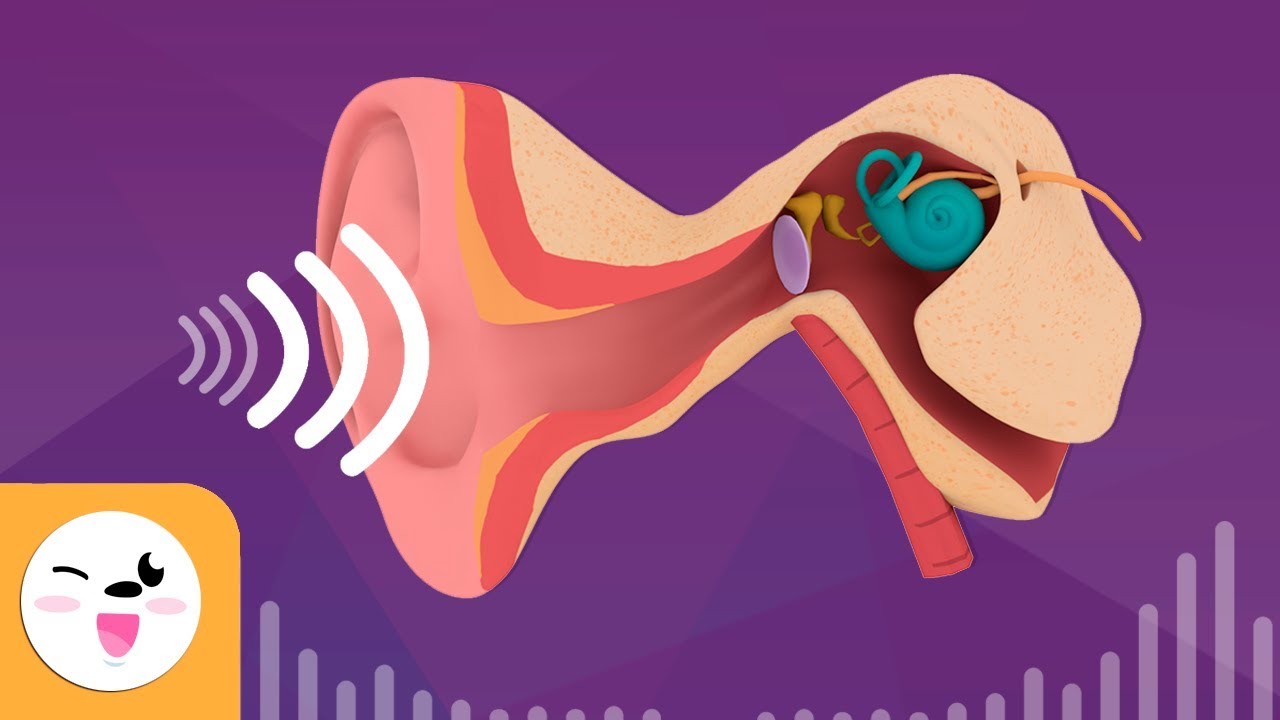
Educational video for children to learn how the human ear works. Learn where the three tiny bones are and what is the function of the cochlea. We're also going to give to give you lots of practical ear-care tips! This video belongs to a larger collection of Science videos for children to learn in a fun way. Excellent resource for elementary education.
Thanks for visiting us! If you want your children to smile and learn, subscribe! :D
We only upload our own content, designed by educators so that children smile and learn while watching a video.
All of our content reinforces educational values, encouraging the use of multiple intelligences and language learning.
If you like our videos, download “The Smart Library” now. You’ll discover more than 70 interactive games and stories for children designed by educators. The stories are based on VALUES like friendship, respect, and generosity, and our games cover all of the MULTIPLE INTELLIGENCES. All our content is in SPANISH, ENGLISH, FRENCH, ITALIAN and PORTUGUESE.

Part 3 in our series of webinar for K12 teachers!
For more content like this visit our dedicated K12 website:
https://www.ngl-emea.com/k12

World Friends Facebook
👉https://www.facebook.com/peopl....e/World-Friends/1000
Do you think Southeast Asian words are similar?
Do they have similar languages?
Hope you enjoy the video
Also, please follow our panels!
🇻🇳 Minji @choo_minji
🇮🇩 Violin @notyourmusicalinstrument
🇹🇭 Temmie @1.59gk
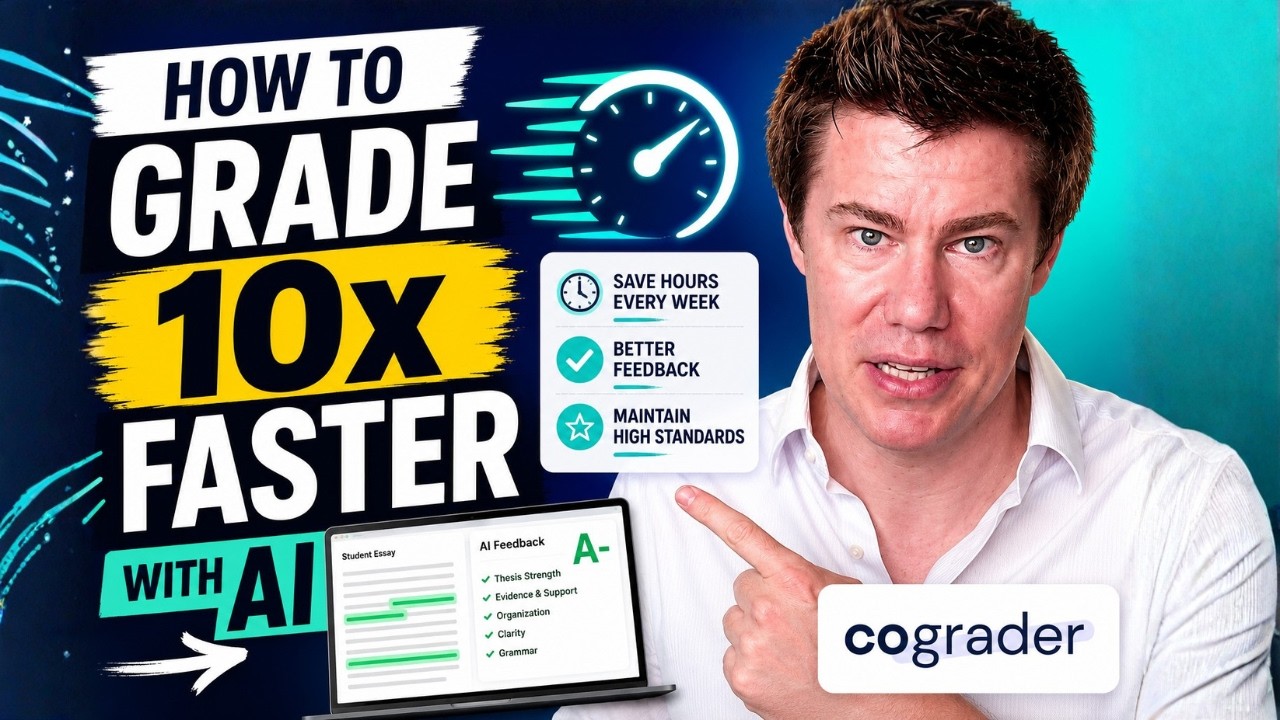
Conquering repetitive time-consuming work is not the only benefit of using a teacher-dedicated AI tool for grading student's work. It generates actionable feedback on both individual and class-level. It has AI detection and Plagiarism checks. It importantly maintains consistency in evaluation regardless of the volume of work and time involved. It generates feedback based on the teacher's rubric, yet leaves final comments, adjustment in the teacher's hand. It provides class-wide assessments, suggests reteach recommendations but also enrichment activities for smart students. It generates lesson plans based on results and much more.
"Think of this as a highly dedicated teacher's assistant."
Discover how this teacher-dedicated AI helps to save time, reduce burnout, and focus more on teaching instead of paperwork.
1:00: The problems with Traditional Grading
1:43: How AI changes the grading process
2:11: Personalize the rubric
2:21: Step 1: Upload students' work
2:44: Step 2: Setting the rubric
3:10: Step 3: Glow and Grow Feedback
3:55: Step 4: Inline highlights and comments
4:25: Step 5: Teacher's review
4:48: Step 6: AI detector and Plagiarism check
5:11: Step 7: Class-wide analytics
5:52: Step 8: Reteach recommendations
6:17: Step 9: Enrichment activities
6:36: Step 10: Generate lessons and instruction suggestions based on feedback
6:50: Step 11: Identify learning gaps.
6:59: Conclude: The biggest benefit.
🧠 Need an AI Grading Tool for Teachers?
Try Co Grader: https://cograder.com/?utm_source=youtube&utm_medium=organic_social&utm_campaign=eric_ugc&utm_content=video_description
#AITools #Teachers #EdTech
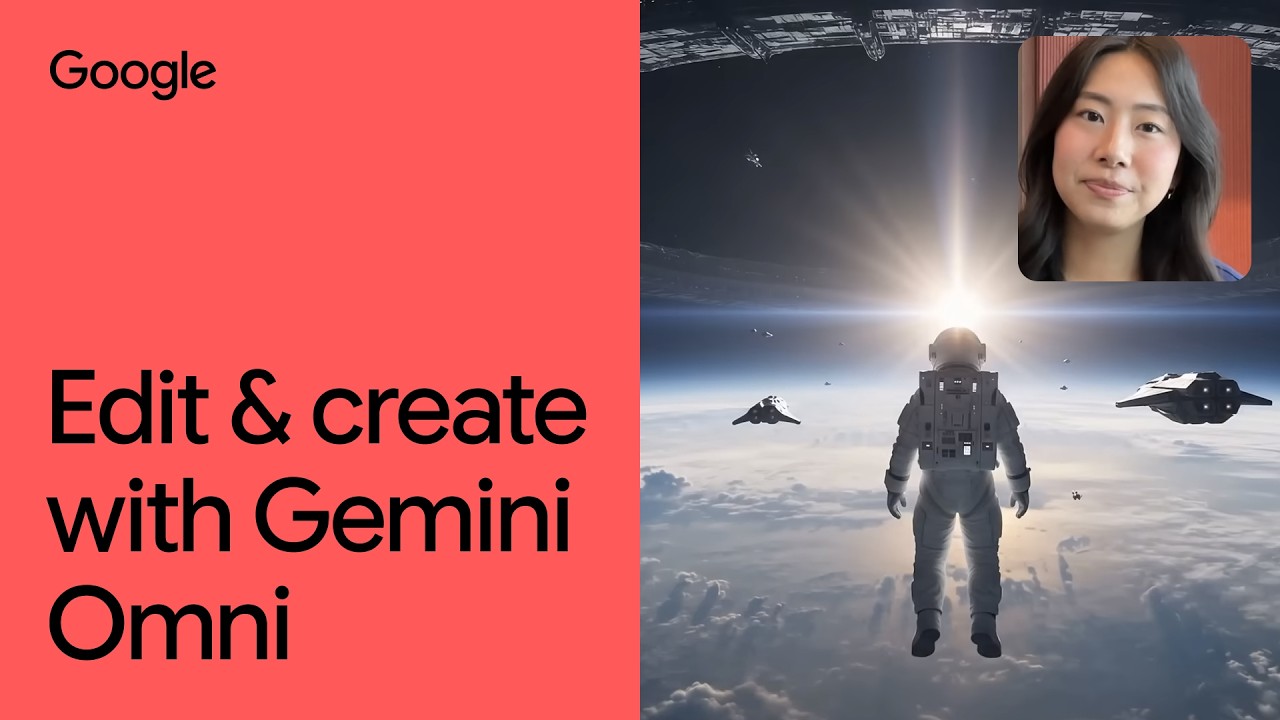
Our Gemini Omni model will transform your existing content into something extraordinary. With just your imagination and natural language, Omni can create anything from any input, starting with video.
In this video, you'll see how Gemini Omni can:
Maintain visual consistency: Watch how Omni transforms a simple biking video while keeping the original footage and lighting consistent.
Reasoning in action: Omni analyzes a skateboarding clip and perfectly times effects when the skater lands a trick, without having to be directed to
Apply real-world physics: Discover how the model adds a realistic, interactive glass orb to a video of a moving hand, accurately rendering lighting, checkerboard reflections, and physics
📝 Prompt Guide
We built this Gemini Omni prompt guide to help you get started on your next masterpiece. Check it out: https://bit.ly/3RWWLNi
Don't forget to like, subscribe, and hit the bell icon to stay up to date with the latest AI updates and feature launches from Google.
🌐 Surface Availability
Gemini Omni Flash is the first model in the Omni series, and it’s rolling out to all Google AI Plus, Pro and Ultra subscribers globally through the Gemini app and Google Flow. It’s also launching in YouTube Shorts and in the YouTube Create App soon, at no cost.
#GeminiOmni #GoogleAI #GoogleGemini #VideoEditing
Subscribe to our Channel: https://www.youtube.com/google
Find us on X: https://twitter.com/google
Watch us on TikTok: https://tiktok.com/@google
Follow us on Instagram: https://www.instagram.com/google
Join us on Facebook: https://www.facebook.com/Google

This video is brought to you by Aloud. Learn more about the video translation tool that’s breaking the language barrier: https://aloud.area120.google.com/?utm_source=youtube&utm_medium=creator&utm_campaign=kg
The Kings and Generals animated historical documentary series on the ancient civilizations continues with a video on the evolution of the Indo-European Languages, as we give a summary of how this language family formed and how the languages belonging to each are still connected to each other:
Arabia Before Islam: Religion, Society, Culture: https://youtu.be/07OsSSt0ytc
Vandals: https://youtu.be/-IpbeEW6I9Y
How Rome Conquered Greece: https://youtu.be/v5q1rerf-qw
Did the Trojan War Really Happen: https://youtu.be/12eHJL2yRtk
Demosthenes: https://youtu.be/ABS1iepXG0U
Ancient Greek Politics and Diplomacy: https://youtu.be/MVnp4NilDLI
Pyrrhic Wars: https://youtu.be/2QBA6ZPmj3Q
Ancient Macedonia before Alexander the Great and Philip II: https://youtu.be/FXX1FVYysjQ
Diplomatic Genius of Philip of Macedon: https://youtu.be/yVTrkESkuTw
Etruscans: https://youtu.be/FkySjRwUteE
Bosporan Kingdom: https://youtu.be/ltikjXUiAC4
Ancient Greek State in Bactria: https://youtu.be/IQATsepKoLE
The Greco-Chinese War Over the Heavenly Horses: https://youtu.be/g6Rphg_lwwM
Ancient Greek Kingdom in India: https://youtu.be/ZxJk4KHZxi8
Ghaznavids: https://youtu.be/yJ91rv0xdWM
Huns: https://youtu.be/bFpQjWtpHcM
White Huns: https://youtu.be/JJWddbCUZLQ
Gokturks: https://youtu.be/BChpoa_IuQs
Yuezhi: https://youtu.be/2KdM6AlyLUY
Seljuks: https://youtu.be/P79ECnISamo
Support us on Patreon: http://www.patreon.com/KingsandGenerals or Paypal: http://paypal.me/kingsandgenerals or by joining the youtube membership: https://www.youtube.com/channe....l/UCMmaBzfCCwZ2KqaBJ We are grateful to our patrons and sponsors, who made this video possible: https://docs.google.com/docume....nt/d/1ooKPbpq0z8ciEj
The video was made by Arb Paninken, while the script was developed by Georgi Kolev. This video was narrated by Officially Devin (https://www.youtube.com/channe....l/UCU0-VII-V376zFxiR & https://www.youtube.com/channe....l/UC79s7EdN9uXX77-Ly
✔ Merch store ► https://teespring.com/stores/kingsandgenerals
✔ Patreon ► https://www.patreon.com/KingsandGenerals
✔ Podcast ► https://kingsandgenerals.libsyn.com/ iTunes: https://apple.co/2QTuMNG
✔ PayPal ► http://paypal.me/kingsandgenerals
✔ Twitter ► https://twitter.com/KingsGenerals
✔ Discord ►https://discord.gg/DpuRAMa75V
✔ Facebook ► https://www.facebook.com/KingsGenerals
✔ Instagram ►http://www.instagram.com/Kings_Generals
Production Music courtesy of Epidemic Sound: http://www.epidemicsound.com
#Documentary #DubbedWithAloud #Civilization

Napoleon wasn't that short after all, but we offer this short song for those of you who asked.
(original remake of the instrumental) HD VERSION: https://youtu.be/Ce8wJyGhEL0

Yummy Yummy Pizza! What's JJ's favorite pizza toppings? Join CoComelon and sing along to this fun kids song!
Subscribe for new videos every week: https://www.youtube.com/c/CoCo....melon?sub_confirmati
Lyrics:
Let’s all have some pizza
You want to “eat za pizza?”
Then let’s all make some pizza
Si! Mama Mia!
Start to knead the dough
Then we toss toss toss
Yummy yummy pizza
For our fam~i~lia!
Let’s all grab a cup
Then we cut cut cut
Yummy yummy pizza
For our fam~i~lia!
Next, we spread the sauce
With a swirl swirl swirl
Yummy yummy pizza
For our fam~i~lia!
LOTS of toppings
We can try! try! try!
Yummy Yummy pizza
For our fam~i~lia!
Cheese!
Pepperoni
Olives
Cheese!
Mushrooms
Basil
Cheese!
Pop it in the oven
Then we bake bake bake
Yummy yummy pizza
For our fam~i~lia!
We made a yummy pizza
Now we “eat za pizza!”
So let’s all eat our pizza!
Si! Mama-mia!
🍉Spotify: https://open.spotify.com/artis....t/6SXTTUJxIVwMbc1POr
🍉Apple Music: https://music.apple.com/…/coco....melon-kids-hits-vo…/
Watch our playlists:
Family Fun
https://www.youtube.com/watch?v=jbBbRjs_niM&list=PLT1rvk7Trkw7odS3
Kids Songs by CoComelon
https://www.youtube.com/watch?v=4t5WI5RF67Y&list=PLT1rvk7Trkw6-eCetnOs60kLGdmcHhyj0tPR-3vMf8CuMJN5gP
JJ & Friends
https://www.youtube.com/watch?v=4t5WI5RF67Y&list=PLT1rvk7Trkw4QbgqgSEJjJz3HIewomqdS
Nursery Rhymes in 3D
https://www.youtube.com/watch?v=z3-Tm_aS3N0&list=PLT1rvk7Trkw55UcI5ijZ_4QmsKqYSSXEq
About CoComelon:
Where kids can be happy and smart!
CoComelon’s 3D animation and songs create a world that centers on the everyday experiences of young children.
In addition to helping preschoolers learn letters, numbers, animal sounds, colors, and more, the videos impart prosocial life lessons, providing parents with an opportunity to teach and play with their children as they watch together.
WEBSITE: http://www.CoComelon.com
FACEBOOK: https://www.facebook.com/CoComelonkids
TWITTER: https://www.twitter.com/CoComelonkids
Copyright Treasure Studio, Inc. All Rights Reserved.

Download Cambly and use code 'tcc999' to get 60% off- http://bit.ly/3Ix14a4
Once, British ruled over one fourth area of the world. It was said that the sun never sets on the british empire. That is why, English became a global language.
In this video, we explore the fascinating history of how English became a global language. From the British Empire to modern-day pop culture, we examine the reasons behind the language's worldwide prevalence. We also delve into the statistics of English speakers in India and beyond, and ultimately, stress the importance of speaking and listening in language learning.
More such Interesting Videos: https://tinyurl.com/2p8w7n2w
Interesting Shorts: https://tinyurl.com/tccshorts
Follow on Instagram: Instagram.com/thecuriouscobra
Follow on Facebook: facebook.com/thecuriouscobra
_________________________
#english #tccshorts

Pre-order our book YOU ARE AN ARTIST (which includes new assignments!) here: http://bit.ly/2kplj2h
We meet up with artist Jamal Cyrus in his hometown of Houston, Texas, where we broach the topic of "postmodernism" and are challenged to summon an impossible sound.
INSTRUCTIONS - Brain Sounds
1. Think of a sound you've never heard before or an unlikely combination of performer and venue, et al.
2. Represent this sound visually, taking any form you like
3. Share your representation using #theartassignment
Learn more about Jamal and his work:
https://inmangallery.com/artis....ts/cyrus_jamal/bio.h
Find out more about The Art Assignment and how to submit your response: http://theartassignment.com/