Top videos

Welcome to Order of Operations with Exponents with Mr. J! Need help with order of operations with exponents and parentheses? You're in the right place!
Whether you're just starting out, or need a quick refresher, this is the video for you if you need help with PEMDAS with exponents problems. Mr. J will go through PEMDAS examples and explain how solve order of operation problems step by step.
About Math with Mr. J: This channel offers instructional videos that are directly aligned with math standards. Teachers, parents/guardians, and students from around the world have used this channel to help with math content in many different ways. All material is absolutely free.
Click Here to Subscribe to the Greatest Math Channel On Earth: https://goo.gl/XHTrfY
Follow Mr. J on Twitter: @MrJMath5
Email: math5.mrj@gmail.com
Music: https://www.bensound.com/royalty-free-music
Hopefully this video is what you're looking for when it comes to solving order of operation problems with exponents.
Have a great rest of your day and thanks again for watching!
✅ Thanks to Aloud, this video has been dubbed into Spanish and Portuguese. #DubbedWithAloud
English
This video has been dubbed into Spanish (United States) and Portuguese (Brazil) using an artificial voice via https://aloud.area120.google.com to increase accessibility. You can change the audio track language in the Settings menu.
Spanish
Este video ha sido doblado al español con voz artificial con https://aloud.area120.google.com para aumentar la accesibilidad. Puede cambiar el idioma de la pista de audio en el menú Configuración.
Portuguese
Este vídeo foi dublado para o português usando uma voz artificial via https://aloud.area120.google.com para melhorar sua acessibilidade. Você pode alterar o idioma do áudio no menu Configurações.

► Follow me:
instagram | http://instagram.com/mathwithjanine
tiktok | http://tiktok.com/@mathwithjanine
twitter | http://twitter.com/mathwithjanine
soundcloud | http://soundcloud.com/mathwithjanine
Music by Epidemic Sounds

🤔How to divide fractions quickly?? Division of Fractions Tricks #shorts #artikipathshala #shortsfeed
🤔How to divide fractions quickly?? Division of Fractions Tricks/ divide Fractions Quickly/ Fraction Simplification Tricks/ Simplification of Fractions/ simplification tricks for fractions/simplify fractions/fraction tricks/simplifying fractions/fraction math/fraction tricks for competitive exams /fraction division/mathematics/ maths tricks for fast calculation/math tricks/maths tricks/fast and easy math tricks/ Fast and Easy Trick to divide fractions/ Trick to divide Fractions/Maths Tricks /division fractions/division of fractions/division of two fractions/fraction divide #shortsfeed @VidyaConnection
Guys , In this YouTube shorts you will learn that how to divide fractions within seconds very easily by using the trick given by Arti mam.
It is a fraction simplification trick/ Basic math/Mental math/ Mind trick that every student should know. And by using this trick you can save your precious time in exams and score better marks.
YOUR QURIES :
How to divide fractions?
How to divide two fractions?
How do you divide fractions step by step?
How do you divide fractions with different denominators?
How do divide fractions quickly?
How do you simplify dividing fractions?
How do I solve dividing fractions?
What is the rule to divide fractions?
What is method for division of fractions?
ARTI KI PATHSHALA PROVIDES YOU :
Mathematical reasoning
Competition exam tricks
Coding decoding reasoning tricks
Easy mathematic tricks
Exam easy tricks
Learning mathematics
Easy way of learning maths
Easy trick for faster calculation
Important math's information
Short tricks
Easy tricks
Trending maths shorts
Reasoning tricks
Counting figures reasoning tricks
Times table tricks
Addition tricks
Subtraction tricks
Division tricks
Multiplication tricks
simplification tricks
Algebra tricks
Geometry tricks
Profit and loss tricks
Arithmetic tricks
Maths tricks
Fraction tricks
Math facts
Unit conversion
Math's magic
Railway exam tricks
Banking exam tricks
Maths magic
Math shorts
competition exam tricks
Math quizzes
Math puzzles
Basic concepts of maths
Basic maths
Math problem's solutions
Math hacks
Basic calculation
Maths video
Missing number reasoning
Missing number questions
Find missing number
Missing number tricks
Triangle counting tricks
Counting triangle tricks in Hindi
missing number tricks in Hindi
Reasoning short tricks in Hindi
ssc reasoning
ntpc reasoning
Calendar reasoning tricks
dice reasoning tricks
Clock reasoning
Reasoning series
ssc cgl reasoning
Railway group d reasoning
rrb ntpc reasoning
ctet exam tricks
upsssc reasoning tricks
upsi reasoning
upsc reasoning
Trending math videos
triangle counting reasoning
figure counting reasoning
math tricks for fast calculation
logical reasoning
blood relation reasoning tricks
puzzle reasoning
analogy reasoning tricks
venn diagram reasoning
seating arrangement reasoning tricks
sitting arrangement in reasoning shortcuts
syllogism reasoning tricks
reasoning questions
reasoning classes
number system
WATCH NEXT :
👉🏻Maths Quizzes and Puzzles~ Shorts playlist : https://youtube.com/playlist?l....ist=PL0E-HIiBHSf_DFd
👉🏻Reasoning Tricks~ Shorts playlist : https://youtube.com/playlist?l....ist=PL0E-HIiBHSf-4v1
👉🏻Calculation Short Tricks~ Shorts playlist : https://youtube.com/playlist?l....ist=PL0E-HIiBHSf_jZj
👉🏻Basic Concepts~ Shorts playlist : https://youtube.com/playlist?l....ist=PL0E-HIiBHSf-WHs
👉🏻Math Facts~ Shorts playlist : https://youtube.com/playlist?l....ist=PL0E-HIiBHSf_zPd
👉🏻Algebra Tricks~ Shorts playlist : https://youtube.com/playlist?l....ist=PL0E-HIiBHSf-9Oh
👉🏻Fraction Tricks~ Shorts playlist : https://youtube.com/playlist?l....ist=PL0E-HIiBHSf8lrZ
👉🏻Shorts by Arti mam on VidyaSaa : https://youtube.com/playlist?l....ist=PLbLE1i5deSxIf9N
👉🏻Maths Videos by Arti mam on VidyaSaa : https://youtube.com/playlist?l....ist=PLbLE1i5deSxIxPs
============================================================================
Follow me on other social platforms :
============================================================================
Follow me on Instagram : https://www.instagram.com/arti_ki_pathshala/
Follow me on Facebook : https://www.facebook.com/Artikipathshala
#vidyasaa #youtubeshorts #reasoning #mathspuzzle #mathsshorts #mathematics #learnmaths #trendingshorts #viralshorts #shortvideo #competitionexamtricks #youtubeindia #youtubeshortvideos #creatingforindia #brainteasers #artikipathshala
If you like the video Please Do Subscribe My Channel 🔔.
Keep Supporting me so I can Continue to provide you with free content each day !! 🙋🏻♀️😇
________________________________________________________________________
Thanks For Watching The Video
________________________________________________________________________
Please write all your questions and topics so that we can help you further.
For Contact : artikipathshala@gmail.com

► Follow me:
instagram | http://instagram.com/mathwithjanine
tiktok | http://tiktok.com/@mathwithjanine
twitter | http://twitter.com/mathwithjanine
soundcloud | http://soundcloud.com/mathwithjanine
Music by Epidemic Sounds

Do you know the names of America's Founding Fathers? In Who Are the Founding Fathers?, you and your kids will learn that answer to that question! This video discusses some of the facts about these important individuals. It also talks about some other people who are often considered founding fathers or mothers because of their own contributions to the founding of this nation.
George Washington is referred to as the Father of His Country because he was a great leader. He led the revolutionary army against the British in their war for freedom. He became the president of the United States after a unanimous vote! In fact, four of the seven Founding Fathers became presidents.
This video also describes some of Benjamin Franklin's contributions. Aside from being a politician, he was a scientist and inventor. Did you know he invented bifocal glasses? He and the other Founding Fathers collaborated on several important documents that helped unite the colonists of the country. These include the Declaration of Independence, The Federalist Papers, and the Treaty of Paris. This video also reminds us that these men were not perfect and made many mistakes in their lives.
We hope you and your student(s) enjoyed learning about the Founding Fathers of this nation! If you want even more information, head over to our website and download one of our many free lesson plans, full of activities, worksheets, and more!
https://learnbright.org/lesson....s/social-studies/ame
What you will learn in Who Are the Founding Fathers?:
0:00 Introduction to the Founding Fathers
0:51 Why people use the term "founding father"
1:50 Facts about George Washington
3:03 Governmental roles of other Founding Fathers
3:55 Facts about Benjamin Franklin
4:33 Documents that helped unite colonists
6:06 Other individuals listed as Founding Fathers
6:54 Review of information
Thank you for watching and learning with us! We’re constantly releasing new content and videos, so click that “Subscribe” button and you’ll get notified.
Find and Follow Us Online:
Facebook: https://www.facebook.com/LearnBright/
Instagram: https://instagram.com/LearnBrightEducation
Pinterest: https://pinterest.com/LearnBrightEducation
YouTube: @LearnBright
Website: https://learnbright.org/
*Teachers and Parents! Did you know? In addition to these great videos, we have also created a library of high-quality and engaging lessons for your elementary aged student(s). Visit us and sign up for a free account, and you'll instantly have access to thousands of lesson plans, learning materials, teaching instructions, activities, and assignments that your kids will really enjoy! We hope to see you soon!
Browse our entire collection of Social Studies lesson plans: https://learnbright.org/lessons/?filter_subject=social-studies
#WhoAreTheFoundingFathers
#FoundingFathersForKids

Do you know what an alluvial fan is? How about a plateau? In this video for kids, you will learn all about lots of different types of landforms. These natural features include mountains, hills, valleys, alluvial fans, and plateaus, and so many more. Keep watching to see how much you know and how much you can learn!
Let's start with an alluvial fan. This is a fan-shaped mass of alluvial, a type of clay sediment that forms as the flow of a river slows down. Similarly, other landforms are shaped by nature, too. Sometimes it can take thousands or millions of years for a landform to develop. And landforms comprise lots of different types of materials. Fossils, sediments, and lava from volcanoes all contribute to the creation of various landforms.
There are around 10 main types of landforms on Earth. These include mountains, valleys, islands, coasts, deserts, rivers, and oceans. This video goes into each of these types. Mountains, for instance, all have peaks at the top. The Himalayas are the highest mountain range, and they are home to the tallest mountain in the world—Mount Everest. Valleys are the low-lying areas that tend of sit between mountains. The most well-known valley in the U.S. is Death Valley, which is the lowest, hottest, and driest area in all of North America.
We hope you and your student(s) enjoyed learning about these four different landforms! If you want to learn even more, head over to our website and download one of our many free lesson plans about landforms, full of activities, worksheets, and more!
https://learnbright.org/lessons/science/landforms/
https://learnbright.org/lesson....s/science/landforms-
https://learnbright.org/lesson....s/science/lakes-rive
https://learnbright.org/lessons/science/deserts/
https://learnbright.org/lesson....s/social-studies/des
What you will learn in Types of Landforms:
0:00 What are landforms?
1:25 Materials that make up a landform
3:18 Mountains and Valleys
4:48 Plains
5:27 Plateaus
6:06 Islands
7:06 Lakes and oceans
8:27 Coasts
9:04 Deserts
10:01 Rivers
Check out some of our other landform-related videos here:
Weathering and Erosion: https://youtu.be/QJUs4e2X5Uo
Weathering: https://youtu.be/mQAOe-0vxdc
Rocks: https://youtu.be/xsHPA2GNF9Q
Thank you for watching and learning with us! We’re constantly releasing new content and videos, so click that “Subscribe” button and you’ll get notified.
Find and Follow Us Online:
Facebook: https://www.facebook.com/LearnBright/
Instagram: https://instagram.com/LearnBrightEducation
Pinterest: https://pinterest.com/LearnBrightEducation
YouTube: @LearnBright
Website: https://learnbright.org/
*Teachers and Parents! Did you know? In addition to these great videos, we have also created a library of high quality and engaging lessons for your elementary aged student(s). Visit us, sign up for a free account, and instantly you'll have access to thousands of lesson plans, learning materials, teaching instructions, activities, and assignments that your kids will really enjoy! We hope to see you soon!
Browse our entire collection of Science lesson plans: https://learnbright.org/lessons/?filter_subject=science
#ASL
#Landforms
#TypesOfLandforms
How many countries make up North America? A lot of people think of Canada, the USA, and Mexico. In All about North America for Kids, you and your students will learn that this continent actually includes 23 countries! These include Costa Rica, Honduras, Panama, Grenada, Saint Vincent, Cuba, and Haiti.
North America is the third largest continent in the world, behind Asia and Africa, and covers 16.5% of the earth's land area. It was named after the Italian explorer Amerigo Vespucci. The continent borders the Pacific and Atlantic Oceans, the Caribbean Sea, and South America. It also includes all the major biomes or habitats, such as tundra, coral reef, and desert. The geography of the countries of North American vary as much as its wildlife. There are around 965 different mammal species that call different parts of the continent home.
You will also learn a lot about the history of the continent. Scientists believe the Paleo-Indians from Eurasia used a land bridge between modern-day Siberia and Alaska to travel to North America to settle. They developed organized societies, and some ancient civilizations even built temples and created writing systems and calendars. Eventually colonizers from Europe traveled to the continent, which often displaced the native peoples of North America and settling on their lands.
There is so much more to learn about this continent. The video includes information on famous landmarks, such as Niagara Falls and the Great Pyramid of Tenochtitlan. These are only a few of the many attractions that millions of people visit every year.
We hope you and your student(s) enjoyed learning about the continent of North America! If you want even more information, head over to our website and download one of our many free lesson plans, full of activities, worksheets, and more!
https://learnbright.org/lesson....s/social-studies/all
https://learnbright.org/lesson....s/social-studies/the
What you will learn in All about North America for Kids:
0:00 Introduction to the North American continent
1:10 Geography of North America
1:46 Animals that live in North America
2:17 History of the continent
3:04 Countries, territories, and most common languages
4:02 Noteworthy facts about North America
5:00 Natural and manmade attractions
6:28 Review of the facts
Check out some of our other videos related to North America here:
Mount Rushmore: https://youtu.be/ExiE76ig0d8
Lewis and Clark: https://youtu.be/91IbDuiJNdM
Types of Communities: https://youtu.be/04lO0ISBT40
Thank you for watching and learning with us! We’re constantly releasing new content and videos, so click that “Subscribe” button and you’ll get notified.
Find and Follow Us Online:
Facebook: https://www.facebook.com/LearnBright/
Instagram: https://instagram.com/LearnBrightEducation
Pinterest: https://pinterest.com/LearnBrightEducation
YouTube: @LearnBright
Website: https://learnbright.org/
*Teachers and Parents! Did you know? In addition to these great videos, we have also created a library of high-quality and engaging lessons for your elementary aged student(s). Visit us and sign up for a free account, and you'll instantly have access to thousands of lesson plans, learning materials, teaching instructions, activities, and assignments that your kids will really enjoy! We hope to see you soon!
Browse our entire collection of Social Studies lesson plans: https://learnbright.org/lessons/?filter_subject=social-studies
#NorthAmerica
#NorthAmericaForKids

Have you ever wondered what a republican really is or what they believe in? In this video, we will explore all about that party and what makes up a republican. Be sure to watch our "What is a Democrat" video to help you compare and contrast these two most popular parties: https://www.youtube.com/watch?v=wHLiqCGZmcY
https://learnbright.org/lesson....s/social-studies/rep
Thank you for watching and learning with us! We’re constantly releasing new content and videos so click that “Subscribe” button and you’ll notified.
Find and Follow Us Online:
Facebook: https://www.facebook.com/LearnBright/
Instagram: https://instagram.com/LearnBrightEducation
Pinterest: https://pinterest.com/LearnBrightEducation
YouTube: https://www.youtube.com/LearnBright
Website: https://learnbright.org/
*Teachers and Parents! Did you know? In addition to these great videos, we have also created a library of high quality and engaging lessons for your elementary aged student(s). Visit us, sign up for a free account, and instantly you'll have access to thousands of lesson plans, learning materials, teaching instructions, activities, and assignments that your kids will really enjoy! We hope to see you soon!
Browse our entire collection of Social Studies lesson plans: https://learnbright.org/lessons/?filter_subject=social-studies
#ASL
#Republican
#Democracy
Have you ever wondered what a republican really is or what they believe in? In this video, we will explore all about that party and what makes up a republican. Be sure to watch our "What is a Democrat" video to help you compare and contrast these two most popular parties: https://www.youtube.com/watch?v=wHLiqCGZmcY
https://learnbright.org/lesson....s/social-studies/rep
Thank you for watching and learning with us! We’re constantly releasing new content and videos so click that “Subscribe” button and you’ll notified.
Find and Follow Us Online:
Facebook: https://www.facebook.com/LearnBright/
Instagram: https://instagram.com/LearnBrightEducation
Pinterest: https://pinterest.com/LearnBrightEducation
YouTube: https://www.youtube.com/LearnBright
Website: https://learnbright.org/
*Teachers and Parents! Did you know? In addition to these great videos, we have also created a library of high quality and engaging lessons for your elementary aged student(s). Visit us, sign up for a free account, and instantly you'll have access to thousands of lesson plans, learning materials, teaching instructions, activities, and assignments that your kids will really enjoy! We hope to see you soon!
Browse our entire collection of Social Studies lesson plans: https://learnbright.org/lessons/?filter_subject=social-studies
#ASL
#Republican
#Democracy

What is Alzheimer's Disease and what causes it? In this video designed for elementary learning we explore those questions and help gain a deeper understanding of this disease. Many of us know someone who has been affected by dementia or Alzheimers and if not many of us might in the future. We hope this video helps students gain a better understanding of the disease, its causes, symptoms, and some prevention techniques.
Alzheimer's Disease is a type of dementia that causes problems with memory, thinking, and behavior. Dementia is a set of symptoms that may include memory loss and difficulties with thinking, problem-solving, or language. Alzheimer’s Disease is the most common cause of dementia.
Alzheimer's Symptoms: As a person ages, they may forget things. It is normal. However, one of the symptoms of AD is consistent memory loss, especially of recent events and new information. This is the most noticeable trait of Alzheimer’s, it usually occurs gradually at first, but gets worse over time.
Alzheimer's Prevention Ideas: As you learn, your brain is constantly making connections, and one way that might help prevent Alzheimer’s as you get older is to produce new connections. You can do this by staying active, mentally and physically. This also apples to adult family members or friends who do not have AD. Encourage them to be active too.
Do you want to learn more about Alzheimer's Disease? Download our free comprehensive lesson plan here: https://learnbright.org/lesson....s/science/alzheimers This lesson has extra content, worksheets, classroom activities and more!
Thank you for watching and learning with us! We’re constantly releasing new content and videos, so click that “Subscribe” button and you’ll get notified.
Find and Follow Us Online:
Facebook: https://www.facebook.com/LearnBright/
Instagram: https://instagram.com/LearnBrightEducation
Pinterest: https://pinterest.com/LearnBrightEducation
YouTube: https://www.youtube.com/LearnBright
Website: https://learnbright.org/
*Teachers and Parents! Did you know? In addition to these great videos, we have also created a library of high quality and engaging lessons for your elementary aged student(s). Visit us, sign up for a free account, and instantly you'll have access to thousands of lesson plans, learning materials, teaching instructions, activities, and assignments that your kids will really enjoy! We hope to see you soon!
Browse our entire collection of Science lesson plans: https://learnbright.org/lessons/?filter_subject=science
#ASL
#AlzheimersDiseaseForKids
#WhatIsAlzheimersDisease

The history of the Boston Tea Party is important for kids to understand. In this video we answer questions such as "What is the Boston Tea Party?" and "Why did the Boston Tea Party Happen?". We help students to learn all about this important historical event and everything that came from it. This video provides a solid introduction in a fun and engaging way. Should you wish to learn or practice more we invite you to download our free Boston tea party lesson plan that is full of more interesting content, worksheets, activities and more.
You can access it here: https://learnbright.org/lesson....s/social-studies/bos
Thank you for watching and learning with us! We’re constantly releasing new content and videos so click that “Subscribe” button and you’ll notified.
Find and Follow Us Online:
Facebook: https://www.facebook.com/LearnBright/
Instagram: https://instagram.com/LearnBrightEducation
Pinterest: https://pinterest.com/LearnBrightEducation
YouTube: https://www.youtube.com/LearnBright
Website: https://learnbright.org/
*Teachers and Parents! Did you know? In addition to these great videos, we have also created a library of high quality and engaging lessons for your elementary aged student(s). Visit us, sign up for a free account, and instantly you'll have access to thousands of lesson plans, learning materials, teaching instructions, activities, and assignments that your kids will really enjoy! We hope to see you soon!
Browse our entire collection of Social Studies lesson plans: https://learnbright.org/lessons/?filter_subject=social-studies
#ASL
#BostonTeaParty
In this video about animal behavior we will learn all about the different kinds of behavior including, innate behaviors, reflex behaviors, learned behaviors, imprinting and more! Birds build nests. Dogs sit roll over, chase sticks, and may do other tricks. Spiders build intricate webs. People blink, read books, talk to each other. Bees do special dances. What does each of the actions have in common? You are correct if you said they are behaviors.
A behavior is a way in which an animal or person acts in response to a situation or stimulus. Behaviors are the ways animals interact with other animals or with their environment. However, not all behaviors are attained in the same manner. For example, you had to learn how to read, but you did not learn how to blink. A dog was taught to sit up or roll over, but a dog did not learn how to dig a hole in the ground. Some behaviors animals may be learned, and other behaviors are a part of the animal at birth, and they do not need to learn them. They are born with already knowing how to
perform certain behaviors. You had to learn how to talk, read, and write. Your parents or teachers have taught you to do things, or you may have learned on your own, like playing a favorite game. Other behaviors, like blinking and grasping, are called reflexes; you were born with those behaviors.
The two types of behaviors are called innate behaviors and learned behaviors and in this video we will learn all about these different kinds of animal behaviors.
After finishing the video, we invite you to download our free 12 page lesson plan with more activities, worksheets and learning opportunities about animal behavior. It can be downloaded here: https://learnbright.org/lesson....s/science/animal-beh
Thank you for watching and learning with us! We’re constantly releasing new content and videos, so click that “Subscribe” button and you’ll get notified.
Find and Follow Us Online:
Facebook: https://www.facebook.com/LearnBright/
Instagram: https://instagram.com/LearnBrightEducation
Pinterest: https://pinterest.com/LearnBrightEducation
YouTube: https://www.youtube.com/LearnBright
Website: https://learnbright.org/
*Teachers and Parents! Did you know? In addition to these great videos, we have also created a library of high quality and engaging lessons for your elementary aged student(s). Visit us, sign up for a free account, and instantly you'll have access to thousands of lesson plans, learning materials, teaching instructions, activities, and assignments that your kids will really enjoy! We hope to see you soon!
Browse our entire collection of Science lesson plans: https://learnbright.org/lessons/?filter_subject=science
#AnimalBehaviorForKids

Have you ever wondered "What is Biofuel?" or "What is Biomass?" The need for energy is ever growing and biofuels and biomass are different materials that can be used for energy. Biomass and Biofuel are considered renewable energy because it mostly comes from plants that can be replanted and replaced when used for energy. In this video we will discuss all kinds of energy and the advantages and disadvantages to biomass or biofuel vs fossil fuels.
We also invite you to download our free biofuel and biomass lesson plan here: https://learnbright.org/lesson....s/science/biomass-an in this lesson and video students learn about specific examples of both biomass and biofuel and learn the advantages and disadvantages of using them through engaging content, worksheets, activities and more! Check it out!
Thank you for watching and learning with us! We’re constantly releasing new content and videos, so click that “Subscribe” button and you’ll get notified.
Find and Follow Us Online:
Facebook: https://www.facebook.com/LearnBright/
Instagram: https://instagram.com/LearnBrightEducation
Pinterest: https://pinterest.com/LearnBrightEducation
YouTube: https://www.youtube.com/LearnBright
Website: https://learnbright.org/
*Teachers and Parents! Did you know? In addition to these great videos, we have also created a library of high quality and engaging lessons for your elementary aged student(s). Visit us, sign up for a free account, and instantly you'll have access to thousands of lesson plans, learning materials, teaching instructions, activities, and assignments that your kids will really enjoy! We hope to see you soon!
Browse our entire collection of Science lesson plans: https://learnbright.org/lessons/?filter_subject=science
#ASL
#WhatIsBiofuel

Dinosaurs for Kids is a fun and comprehensive look at dinosaur history. In this video we highlight the various kinds of dinosaurs, talk about how they receive their names, famous dinosaur fossils, and we talk about the people who find dinosaur fossils: Paleontologists.
We think that one of the most fascinating creatures to ever roam the Earth was the dinosaur. You most likely have heard of dinosaurs, seen pictures of them on TV or the Internet, or may have seen their bones in a museum. Dinosaurs are an interesting group of animals that no longer exist, meaning they are extinct. Dinosaurs evolved, meaning they changed, over millions of years.
In this dinosaur for kids video we also talk about how the dinosaurs’ extinction took place about 66 million years ago and 75% of all life on Earth died. There are many theories or guesses as to what may have happened leading to the extinction. They include worldwide volcanic eruptions, changes in the Earth’s climate, or perhaps a meteorite from space smashing into the Earth.
If you're looking for more Dinosaur resources check out our FREE comprehensive lesson plan complete with fun activities, worksheets, quizzes and more! The free dinosaur lesson can be found at: https://learnbright.org/lessons/science/dinosaurs/
Check out some of our other dinosaur-related videos here:
Extinction: https://youtu.be/ogLFEq1X0RM
Dinosaur Facts: https://youtu.be/Q5z5C1MFmT8
T-Rex Facts: https://youtu.be/wOulvIK-brM
Fossils: https://youtu.be/tyOjxjFHW-c
Extinct and Endangered Animals: https://youtu.be/E5cVr3HdLa4
Thank you for watching and learning with us! We’re constantly releasing new content and videos, so click that “Subscribe” button and you’ll get notified.
Find and Follow Us Online:
Facebook: https://www.facebook.com/LearnBright/
Instagram: https://instagram.com/LearnBrightEducation
Pinterest: https://pinterest.com/LearnBrightEducation
YouTube: https://www.youtube.com/LearnBright
Website: https://learnbright.org/
*Teachers and Parents! Did you know? In addition to these great videos, we have also created a library of high quality and engaging lessons for your elementary aged student(s). Visit us, sign up for a free account, and instantly you'll have access to thousands of lesson plans, learning materials, teaching instructions, activities, and assignments that your kids will really enjoy! We hope to see you soon!
Browse our entire collection of Science lesson plans: https://learnbright.org/lessons/?filter_subject=science
#ASL
#Dinosaurs

Después de ver este video sobre la historia de las líneas de ensamblaje y completar nuestro plan de clase gratuito, tus estudiantes podrán definir la línea de ensamblaje, discutir su historia (incluyendo todo sobre las piezas intercambiables) y explicar el uso y la influencia que tuvo en el fabricación de productos en América.
Descargue el plan de clase gratuito de 10 páginas aquí: https://learnbright.org/lesson....s/social-studies/ass
Thank you for watching! Share your thoughts in the comments below and be sure to subscribe!
¡Gracias por ver este video! Comparte tus ideas en los comentarios a continuación y asegúrate de suscribirte!
Follow us across the web!
Facebook: https://www.facebook.com/LearnBright/
Instagram: https://instagram.com/LearnBrightEducation
Pinterest: https://pinterest.com/LearnBrightEducation
YouTube: https://www.youtube.com/learnbright
Website: https://learnbright.org/
¿Eres maestro o maestra de Kinder o primaria? ¿Buscas más recursos didácticos? No solo proporcionamos contenido de video, sino también planes de clase de alta calidad. ¡100% gratis con folletos, hojas de trabajo, actividades para el aula y más!
#LíneaDeEnsamblaje
¡Descarga otros planes de lecciones gratis hoy!
Estudios sociales: https://learnbright.org/lessons/?filter_subject=social-studies
* Nota: Nuestros materiales impresos están todos en inglés. En este momento, solo nuestros videos han sido traducidos al español.

Have you ever asked What is Christmas? Why did it start? In our video "The History of Christmas" we will answer all of those questions and more. We will cover the most important religious aspects of Christmas as the celebration of the birth of Jesus Christ, the savior of the world and we will also talk about the more secular versions of the holiday including Santa Clause, Christmas Trees, mistletoe and more!
We hope you enjoy learning more about the origins and history of Christmas and you have a wonderful holiday season.
Looking for more Christmas resources? Download our free comprehensive lesson plan here: https://learnbright.org/lesson....s/social-studies/wha
Thank you for watching and learning with us! We’re constantly releasing new content and videos so click that “Subscribe” button and you’ll notified.
Find and Follow Us Online:
Facebook: https://www.facebook.com/LearnBright/
Instagram: https://instagram.com/LearnBrightEducation
Pinterest: https://pinterest.com/LearnBrightEducation
YouTube: https://www.youtube.com/LearnBright
Website: https://learnbright.org/
*Teachers and Parents! Did you know? In addition to these great videos, we have also created a library of high quality and engaging lessons for your elementary aged student(s). Visit us, sign up for a free account, and instantly you'll have access to thousands of lesson plans, learning materials, teaching instructions, activities, and assignments that your kids will really enjoy! We hope to see you soon!
Browse our entire collection of Social Studies lesson plans: https://learnbright.org/lessons/?filter_subject=social-studies
#ASL
#Christmas
#ChristmasFacts

Photosynthesis for Kids is a great science video aimed to teach 1st to 3rd grade students learn about Photosynthesis and how plants are able to make their own food!
In this video we teach that plants and animals are living things. Both need the food and energy to live. Animals get their energy from the plants and animals they eat. Plants, however, do not have a mouth and cannot eat like animals.
The food-making process for plants is called photosynthesis. It might be a big word, but photosynthesis is used by plants to make their own food as well as produce oxygen for other living creatures.
Without plants making their own food through photosynthesis, living things could not survive. People and animals eat the food that comes from plants, but also take in the oxygen released by the plants. The air you breathe in has oxygen which came from plants.
So we learn that Photosynthesis is important not only for plants but for all living things! Come learn more in the video!
If you're looking for more photosynthesis resources check out our 100% FREE comprehensive lesson plans complete with activities, worksheets, assignments and more! The free lesson can be found at: https://learnbright.org/lesson....s/science/photosynth
Thank you for watching and learning with us! We’re constantly releasing new content and videos, so click that “Subscribe” button and you’ll get notified.
Find and Follow Us Online:
Facebook: https://www.facebook.com/LearnBright/
Instagram: https://instagram.com/LearnBrightEducation
Pinterest: https://pinterest.com/LearnBrightEducation
YouTube: https://www.youtube.com/LearnBright
Website: https://learnbright.org/
*Teachers and Parents! Did you know? In addition to these great videos, we have also created a library of high quality and engaging lessons for your elementary aged student(s). Visit us, sign up for a free account, and instantly you'll have access to thousands of lesson plans, learning materials, teaching instructions, activities, and assignments that your kids will really enjoy! We hope to see you soon!
Browse our entire collection of Science lesson plans: https://learnbright.org/lessons/?filter_subject=science
#ASL
#Photosynthesis

In this video we learn all about the planets of our solar system. Our solar system so so large and vast and these enormous planets all orbiting around the sun are so amazing to look and and learn about. We will learn interesting things about each planet, including their size, orbit times, and other facts that are fun to know. After this video you will be able to recite the planets in order and share something unique about each planet.
After watching the video, head over to our website and download our Free comprehensive lesson plan about Planets and our Solar System. This lesson is packed with more engaging content, hands on activities, worksheets and more. Get your download here: https://learnbright.org/lesson....s/science/the-solar-
Timestamps:
0:00 Introductory Story about our Solar System
1:52 What is a Galaxy?
2:34 Our Solar System.
3:10 What is a Planet?
5:34 Planets Rotation and Spin
7:50 Closer Look at Each of Our 8 Planets
15:14 Learning the Names of the Planets in Order
15:48 Why is Pluto not a Planet Anymore?
16:45 Recap Planets Quiz / Activity
Thank you for watching and learning with us! We’re constantly releasing new content and videos, so click that “Subscribe” button and you’ll get notified.
Follow us across the web!
Facebook: https://www.facebook.com/LearnBright/
Instagram: https://instagram.com/LearnBrightEducation
Pinterest: https://pinterest.com/LearnBrightEducation
YouTube: https://www.youtube.com/learnbright
Website: https://learnbright.org/
*Teachers and Parents! Did you know? In addition to these great videos, we have also created a library of high quality and engaging lessons for your elementary aged student(s). Visit us, sign up for a free account, and instantly you'll have access to thousands of lesson plans, learning materials, teaching instructions, activities, and assignments that your kids will really enjoy! We hope to see you soon!
Browse our entire collection of Science lesson plans: https://learnbright.org/lessons/?filter_subject=science
#ASL
#PlanetsOfOurSolarSystem
#PlanetsForKids

What is your favorite season in the year? The Four Seasons for Kids explores why we have these distinct periods throughout the year. You will learn a lot about spring, summer, fall, and winter. Did you know that the seasons depend on the rotation of the earth around the sun? Believe it or not, your location plays a part in the weather you experience outside.
As the earth rotates around the sun, different parts of the planet face the sun. For half the year, the Northern Hemisphere is leaning toward the sun, making the months warmer. During the other half, the Souther Hemisphere leans toward the sun. That means that when it's summer in the Northern Hemisphere, it's winter in the Southern Hemisphere! If you live in the United State and have a friend who lives in Australia, your winter is their summer and vice versa.
During the spring, flowers and plants bloom or blossom. In most parts of the United States, this season occurs during March, April, and May. Summer is next and occurs during June, July, and August. The temperatures warm up even more, sometimes getting very hot! In the fall, the weather starts to cool down, and the leaves of many trees change colors.
A lot of people refer to fall as autumn. During autumn, animals start to gather food to prepare for the winter months. And this is period is also when farmers harvest their crops. Fall happens from September to November, which leaves December through February for winter! Winter brings the coldest weather, but there are lots of fun activities to do outside during the winter, such as skiing and ice skating.
Not all places experience the four seasons. Some places, such as the North and South Poles, always face away from the sun, making them cold year around. Similarly, places closest to the Equator are always facing the sun, making them warm year around. You might live somewhere that doesn't change very much or seem to have distinct weather changes from season to season. But you probably still feel a little cooler in winter and warmer in summer, even if the changes aren't very drastic.
We hope you and your student(s) enjoyed learning about these four seasons and what makes each one unique! If you want to learn even more, head over to our website and download one of our many free lesson plans, full of activities, worksheets, and more!
https://learnbright.org/lesson....s/science/four-seaso
What you will learn in The Four Seasons for Kids:
0:00 Introduction to seasons
0:33 What seasons involve and why we have them
1:28 How seasons relate to the earth's rotation
2:41 Spring and summer
3:26 Fall (autumn) and winter
4:54 Review of the facts
Thank you for watching and learning with us! We’re constantly releasing new content and videos, so click that “Subscribe” button and you’ll get notified.
Find and Follow Us Online:
Facebook: https://www.facebook.com/LearnBright/
Instagram: https://instagram.com/LearnBrightEducation
Pinterest: https://pinterest.com/LearnBrightEducation
YouTube: @LearnBright
Website: https://learnbright.org/
*Teachers and Parents! Did you know? In addition to these great videos, we have also created a library of high-quality and engaging lessons for your elementary aged student(s). Visit us, sign up for a free account, and instantly you'll have access to thousands of lesson plans, learning materials, teaching instructions, activities, and assignments that your kids will really enjoy! We hope to see you soon!
Browse our entire collection of Science lesson plans: https://learnbright.org/lessons/?filter_subject=science
#ASL
#FourSeasonsForKids
#Seasons

Are you wondering how to calculate perimeter? You've found the right video. Calculating perimeter can be quite easy! In this introduction video we learn how to find the perimeter of many different objects. We also discuss and learn the difference between perimeter and area! This video is designed to be a classroom resource for elementary students and when used in conjunction with our free lesson plan students will be able to find the perimeter of many objects and understand its real world uses.
Download our free comprehensive lesson plans here: https://learnbright.org/?s=perimeter
Thank you for watching and learning with us! We’re constantly releasing new content and videos so click that “Subscribe” button and you’ll notified.
Find and Follow Us Online:
Facebook: https://www.facebook.com/LearnBright/
Instagram: https://instagram.com/LearnBrightEducation
Pinterest: https://pinterest.com/LearnBrightEducation
YouTube: https://www.youtube.com/LearnBright
Website: https://learnbright.org/
*Teachers and Parents! Did you know? In addition to these great videos, we have also created a library of high quality and engaging lessons for your elementary aged student(s). Visit us, sign up for a free account, and instantly you'll have access to thousands of lesson plans, learning materials, teaching instructions, activities, and assignments that your kids will really enjoy! We hope to see you soon!
Browse our entire collection of Math lesson plans:
https://learnbright.org/lessons/?filter_subject=math
#CalculatingPerimeter
Telling time for kids is a fun way to help your children learn how to tell the time on both digital and analog clocks. It is important to know what time of day it is and it is really easy to learn how to read our clocks. Together we will learn how to tell the time to the half hour and even to the minute. We will walk through examples on analog clocks and learn to tell the time on digital clocks as well. We explore the difference between AM and PM and talk about why we say "o'clock". We hope you enjoy.
In addition to this video we recommend you download our free 9 page lesson plan to help your kids learn to tell time with worksheets, activities and more teaching ideas. https://learnbright.org/lessons/math/time/
Thank you for watching and learning with us! We’re constantly releasing new content and videos so click that “Subscribe” button and you’ll notified.
Find and Follow Us Online:
Facebook: https://www.facebook.com/LearnBright/
Instagram: https://instagram.com/LearnBrightEducation
Pinterest: https://pinterest.com/LearnBrightEducation
YouTube: https://www.youtube.com/LearnBright
Website: https://learnbright.org/
*Teachers and Parents! Did you know? In addition to these great videos, we have also created a library of high quality and engaging lessons for your elementary aged student(s). Visit us, sign up for a free account, and instantly you'll have access to thousands of lesson plans, learning materials, teaching instructions, activities, and assignments that your kids will really enjoy! We hope to see you soon!
Browse our entire collection of Math lesson plans:
https://learnbright.org/lessons/?filter_subject=math
#TellingTime

Action words are all around us and in this video we learn what they are and how to identify them. Your kids will learn that action words are VERBS! It is important for kids to understand verbs and by the time they are done with this video they should be able to identify and use verbs in sentences. So... get ready to have some fun with your kids as we run in place, sing, talk and learn all about verbs in this fun introductory video.
All sentences have verbs and subjects. A subject is the part of a sentence that contains a person or a thing which performs an action or verb. In the video your kids will practice samples like:
“James runs down the street.”
In this sentence James is the subject. He is the person performing the action. Remember that verbs are action words. What action is James performing in this sentence, or what is the verb in this sentence? The action word or verb is: Runs
There are many other practice opportunities in the video and in our free comprehensive lesson plan that can be downloaded here: https://learnbright.org/lesson....s/language-arts/intr
Thank you for watching! Share your thoughts in the comments below and be sure to subscribe!
Find and Follow us Online:
Facebook: https://www.facebook.com/LearnBright/
Instagram: https://instagram.com/LearnBrightEducation
Pinterest: https://pinterest.com/LearnBrightEducation
YouTube: https://www.youtube.com/LearnBright
Website: https://learnbright.org/
Are you a K-6 grade teacher looking for more teaching resources? We don’t only provide video content but high quality lesson plans as well. 100% free with handouts, worksheets, classroom activities and more!
Browse our collection of other Language Arts lesson plans: https://learnbright.org/lessons/?filter_subject=language-arts
#WhatIsAVerb
#VerbsForKids

Did you know that mammals, reptiles, birds, fish, and amphibians all have quite a few traits in common? In this video for kids, you and your students will learn all about the different animals that belong to a group we call vertebrates. When you think of vertebrates, you probably think of the presence of a backbone. But there are even more common traits among these unique animals.
There are five key characteristics that distinguish vertebrates from other animals. They have backbones, skulls, endoskeletons, bilateral symmetry, and two pairs of appendages. These traits allow their muscles to attach to points that can be used for movement. All vertebrates also have a heart and kidneys.
Vertebrates further classify into seven classes based on their anatomical features. These classes are mammals, birds, reptiles, amphibians, bony fish, cartilaginous fish, and jawless fish. Mammals are endothermic so they can regulate their body temperature. Birds have feathers and toothless beaks. They also lay hard-shelled eggs. Reptiles also lay eggs. Reptiles include snakes and crocodiles. Amphibians are a little unique in that they undergo metamorphosis as they go from birth to adulthood.
The fish group divides into three classes: bony fish, cartilaginous fish, and jawless fish. Bony fish, like seahorses, have a skeleton made of bone rather than cartilage. Bony fish is the largest class of vertebrates. Sharks and rays are examples of cartilaginous fish. Primitive fish like hagfish belong to the jawless fish category.
We hope you and your student(s) enjoyed learning about this small group of animals! If you want to learn even more, head over to our website and download one of our many lesson plans about different kinds of animals, full of activities, worksheets, and more!
https://learnbright.org/lesson....s/science/phyla-vert
https://learnbright.org/lesson....s/science/vertebrate
https://learnbright.org/lesson....s/science/phyla-arth
https://learnbright.org/lesson....s/science/phyla-plat
https://learnbright.org/lesson....s/science/phyla-pori
https://learnbright.org/lesson....s/science/phyla-moll
Thank you for watching and learning with us! We’re constantly releasing new content and videos, so click that “Subscribe” button and you’ll get notified.
What you will learn in What Is a Vertebrate?:
0:00 Introduction to backboned animals
0:36 Characteristics of vertebrates
1:35 Mammals, birds, and reptiles
2:41 Amphibians and fish
3:46 Review of the facts
Find and Follow Us Online:
Facebook: https://www.facebook.com/LearnBright/
Instagram: https://instagram.com/LearnBrightEducation
Pinterest: https://pinterest.com/LearnBrightEducation
YouTube: @LearnBright
Website: https://learnbright.org/
*Teachers and Parents! Did you know? In addition to these great videos, we have also created a library of high-quality and engaging lessons for your elementary aged student(s). Visit us, sign up for a free account, and instantly you'll have access to thousands of lesson plans, learning materials, teaching instructions, activities, and assignments that your kids will really enjoy! We hope to see you soon!
Browse our entire collection of Science lesson plans: https://learnbright.org/lessons/?filter_subject=science
#WhatIsAVertebrate
#Vertebrates
#Animals
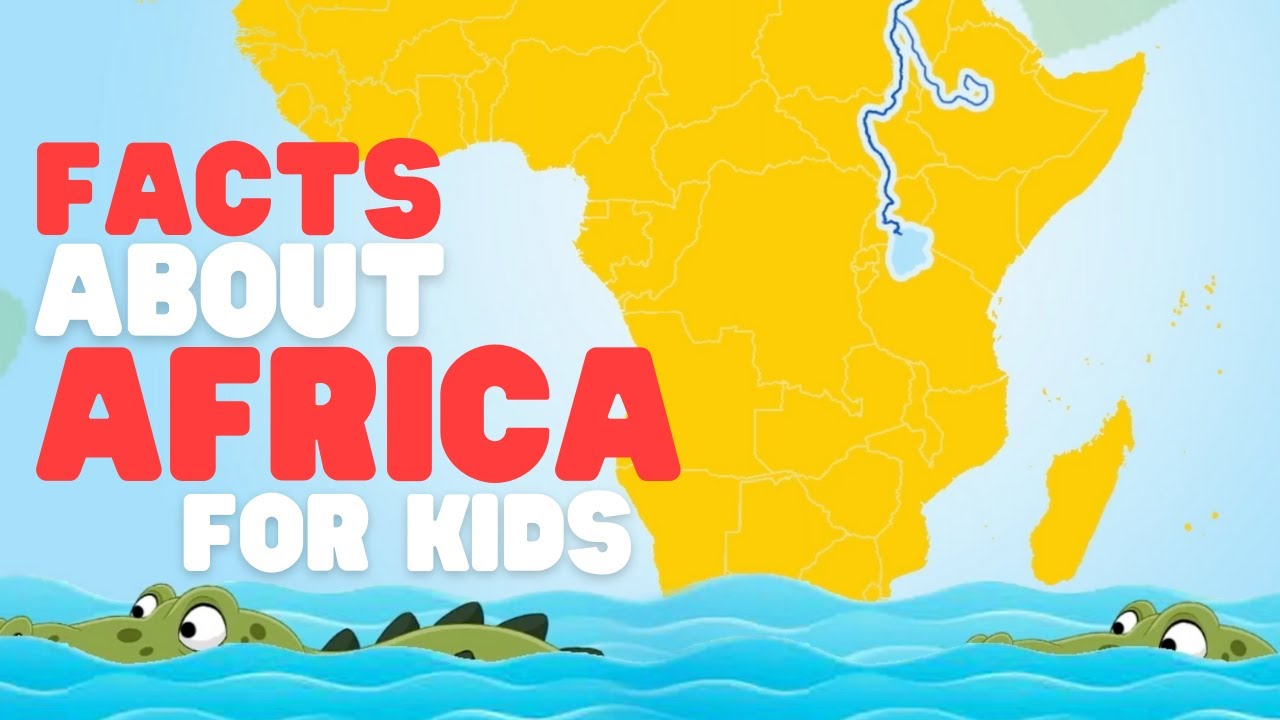
What do you know about the many African countries? Have you ever visited any of the famous landmarks? Learn all about this beautiful continent in Facts about Africa for Kids. You and your students will discover just how amazing Africa is.
Almost right off the bat, you and your kids will learn that Africa is considered the Mother Continent or Cradle of Mankind. The reason is that Africa is the oldest inhabited continent on the earth. In fact, scientists have found fossils of humans and their ancestors through every stage of evolution. Africa is divided into 54 countries, which is the most of any continent. It is home to over 3,000 indigenous peoples, over 1,000 languages, and has a total population of 1.1 billion people.
Africa is surrounded by water, and its landmass is divided almost equally in half by the equator. The terrain includes a variety of habitats, including mountains, tropical rainforests, savannahs, and deserts. With such a variety of terrain, it's no wonder there is also a lot of different animals as well. These include lions, elephants, hippopotamuses, and zebras. But it also includes gorillas, snakes, and other tropical animals. You may be surprised to learn that the most dangerous animal toward humans is not a lion or crocodile. It's actually the hippo! Hippos are the most likely animal to attack a human.
We hope you and your student(s) enjoyed learning about the countries of Africa! If you want to learn even more, head over to our website and download one of our many free lesson plans about this cool continent, full of activities, worksheets, and more!
https://learnbright.org/lesson....s/social-studies/all
https://learnbright.org/lesson....s/social-studies/the
What you will learn in Facts about Africa for Kids:
0:00 Introduction to Africa
0:32 Cradle of Mankind and Mother Continent
1:38 Geography of Africa
2:13 Where is Africa and what does it look like?
3:11 The countries in Africa
4:14 The Nile River and other famous geographical features
5:09 The Pyramids of Giza and other attractions
6:13 African animals
7:06 Review of the facts
Thank you for watching and learning with us! We’re constantly releasing new content and videos, so click that “Subscribe” button and you’ll get notified.
Find and Follow Us Online:
Facebook: https://www.facebook.com/LearnBright/
Instagram: https://instagram.com/LearnBrightEducation
Pinterest: https://pinterest.com/LearnBrightEducation
YouTube: @LearnBright
Website: https://learnbright.org/
*Teachers and Parents! Did you know? In addition to these great videos, we have also created a library of high-quality and engaging lessons for your elementary aged student(s). Visit us and sign up for a free account, and you'll instantly have access to thousands of lesson plans, learning materials, teaching instructions, activities, and assignments that your kids will really enjoy! We hope to see you soon!
Browse our entire collection of Social Studies lesson plans: https://learnbright.org/lessons/?filter_subject=social-studies
#FactsAboutAfricaForKids
#ContinentOfAfrica

In this video, we will learn about the real name for shooting stars: meteors! Your student(s) will learn all about these fiery rocks. More specifically, they will learn that meteors have a few different names depending on where they are on their journey to the earth's surface. They start out as meteoroids. Meteoroids are pieces of metal or rock that break off comets or asteroids when they crash into each other in space. They are not actually called meteors until they begin to fall toward Earth's atmosphere! Then, if they make it through, they get a new name again once they've landed somewhere on the earth: meteorites.
Your student(s) will learn about the both the biggest and oldest meteorites that have been discovered. The largest meteorite is named Hoba, which means gift, located in Namibia, Africa. It weighs 60 tons, which is 120,000 pounds! And the oldest meteorite is named the Fukang Meteorite. It was discovered near Fukang, China, and is believed to be about 4.5 billion years old. That means that it is about the same age, or even older, than our planet!
Children will also love learning about meteor showers. Meteor showers can be predicted throughout the year. It looks like hundreds or even thousands of shooting stars falling from the sky.
Your student(s) will love showing off their new knowledge about meteors. Would you like even more fun learning opportunities about Meteors? Visit us at learnbright.org and download our free 10-page comprehensive meteor lesson plan. It's full of fun, hands-on activities that will get your student(s) excited about space.
https://learnbright.org/lesson....s/science/asteroids-
What you will learn in this video:
0:00 Introduction to meteors
0:25 What is a meteor?
0:45 Meteoroids and meteorites
2:39 What are meteors made of?
3:16 The largest and oldest meteorites on Earth
4:25 What is a meteor shower?
5:09 Quiz on meteors
Thank you for watching and learning with us! We’re constantly releasing new content and videos, so click that “Subscribe” button and you’ll get notified.
Find and Follow Us Online:
Facebook: https://www.facebook.com/LearnBright/
Instagram: https://instagram.com/LearnBrightEducation
Pinterest: https://pinterest.com/LearnBrightEducation
YouTube: @LearnBright
Website: https://learnbright.org/
*Teachers and Parents! Did you know? In addition to these great videos, we have also created a library of high-quality and engaging lessons for your elementary aged student(s). Visit us, sign up for a free account, and instantly gain access to thousands of lesson plans, learning materials, teaching instructions, activities, and assignments that your kids will really enjoy! We hope to see you soon!
Browse our entire collection of Science lesson plans: https://learnbright.org/lessons/?filter_subject=science
#Meteors
#WhatIsAMeteor