Top videos

Math is part of the STEAM system - Science, Technology, Engineering, Art, and Mathematics! It is essential to teach all five of them. And the best way to engage with children is to turn lessons into a game. Leave a comment down below which part of STEAM your children are the most excited about!
⭕️ Math can be a hands-on activity! When we make it more tactile, it makes it easier for kids to learn. Filling up rubber gloves with rice, we make a new set of hands that the kids can count on. This is a great way to introduce addition and counting because the answer is visual. It’s also great for subtraction!
⭕️ Pin it Down. This addition game is a great start to doing sums in the head. All the answers are right there- you just have to do the work to find the right one! It’s really satisfying when you pin the equation to the right answer.
⭕️ Math Garage. I love this addition game because it shows how many different answers there can be to the same question. This is great for kids that are active and love to solve puzzles, or just love cars!
⭕️ Is it time to pick apples yet? This addition activity shows a whole math formula altogether. The apples on our math tree also help count, so you can double-check the answer you came up with. This one is also great for getting fast sums.
⭕️ The Addition Machine. Do you like my addition machine? I find because you can write your own numbers, this one is the most versatile of the bunch.
#TheDadLab #playandlearn #preschool #montessoriathome #montessorikids #learningthroughplay #learningisfun #preschoolteacher #preschoolactivities #preschooler #kindergarten #homeschool
=====================================================
➜ TheDadLab on Facebook: https://www.facebook.com/thedadlab/
➜ TheDadLab on Instagram: https://www.instagram.com/thedadlab/
➜ TheDadLab on Twitter: https://twitter.com/thedadlab
➜ TheDadLab on Pinterest: https://pinterest.com/thedadlab/
➜ Website: https://thedadlab.com/
=====================================================
Please subscribe to see more upcoming videos http://bit.ly/ThedadlabOnYoutube

Here is a quick and easy Vedic math trick called "line addition" to add many single-digit numbers together. This is a very neat and quick trick that saves a lot of time, so please subscribe to my channel for more tricks and tips!
#Mathtricks #LineAddtitionTrick #VedicMath
Answers to the homework:
7 + 6 + 8 + 6 + 3 = 30
8 + 9 + 4 + 1 + 8 + 1 + 7 = 38
3 + 2 + 5 + 8 + 6 + 9 + 8 + 7 + 2 + 5 = 55

As seen on CBeebies! Watch Numberblocks full episodes on BBC iPlayer: https://bbc.in/2ZHvNtl
Subscribe for more Numberblocks: https://goo.gl/rF32S8
Join the Numberblocks for this special compilation, including all the sums from the series. Learn how to add and subtract with increasingly difficult addition and subtraction.
We are the Numberblocks! Little blocks with big ideas, having a ton of number fun. Learn how to add, subtract and count the fun and educational way! In this educational CBeebies cartoon for kids, children can learn how to count with basic maths sums, using addition and subtraction with singular blocks that join together to make increasingly bigger numbers.
#Numberblocks #LearnToCount
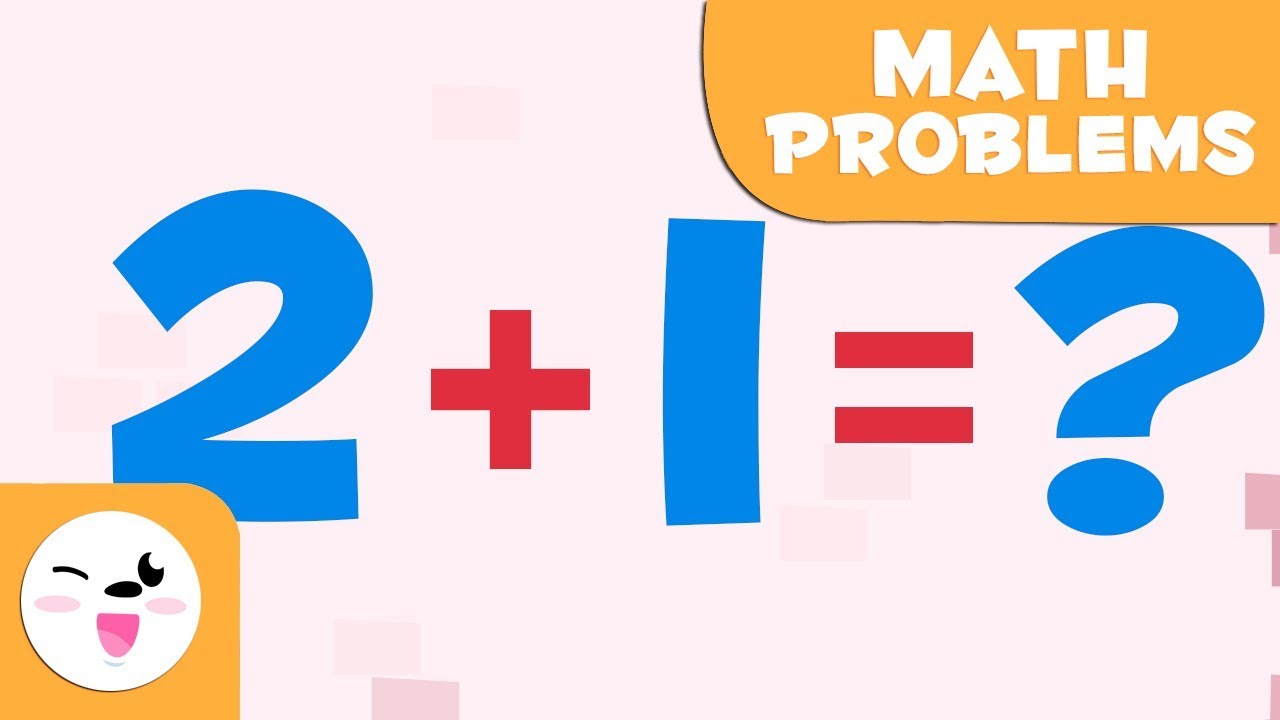
We have a new video with our favourite monsters! Ready for a little bit of maths? Today we'll learn more about addition and substraction in a funny and easy way. This video belongs to a collection to learn maths and improve their logical skills.
Thanks for visiting us! If you want your children to smile and learn, subscribe! :D
We only upload our own content, designed by educators so that children smile and learn while watching a video.
All of our content reinforces educational values, encouraging the use of multiple intelligences and language learning.
If you like our videos, download “The Smart Library” now. You’ll discover more than 70 interactive games and stories for children designed by educators. The stories are based on VALUES like friendship, respect, and generosity, and our games cover all of the MULTIPLE INTELLIGENCES. All our content is in SPANISH, ENGLISH, FRENCH, ITALIAN and PORTUGUESE.
The perfect tool to use in and out of school.
Download it today!
-Apple Store: https://itunes.apple.com/us/ap....p/smart-edutainment-
-Google Play: https://play.google.com/store/....apps/details?id=net.
www.smileandlearn.com
Thank you for trusting us with your children's education!

Want to know how to solve simultaneous equations by substitution? Look no further! In this video we learn how to solve simultaneous equations using the substitution method. I hope you find this video helpful in one way or another!

Learn 5 Methods for solving quadratic equations in this video math tutorial by Mario's Math Tutoring. We discuss the graphing, factoring, quadratic formula, completing the square, and the taking square roots methods and go through 1 example of each type in this video.
Related Videos to Help You Succeed!:
Graphing Parabolas:
https://youtu.be/HBVevKX0_5w
Solving a Quadratic Equation by Completing the Square
https://youtu.be/w7NqpGqyq5Q
Quadratic Formula
https://youtu.be/OmxdT5RzMq0
Take Your Learning to the Next Level with Me!:
Firstly, If you like my teaching style Subscribe to the Channel
http://bit.ly/SubscribeToMyChannelHere
Get my Learn Algebra 2 Video Course (Preview 13 free video lessons & learn more)
https://mariosmathtutoring.tea....chable.com/p/algebra
Learn Algebra 1 Video Course
https://mariosmathtutoring.tea....chable.com/p/learn-a
Looking to raise your math score on the ACT and new SAT?
Check out my Huge ACT Math Video Course and my Huge SAT Math Video Course for sale at
https://mariosmathtutoring.teachable.com
* Organized List of My Video Lessons to Help You Raise Your Scores & Pass Your Class. Videos Arranged by Math Subject as well as by Chapter/Topic. (Bookmark the Link Below)
https://www.mariosmathtutoring.....com/free-math-video

👉To solve a system of equations means to obtain a common x-value and a common y-value that makes the each of the equation in the system true. To solve a system of equations by graphing means to obtain the point of intersection (if any) of the graphs of each of the equation that make up the system. To graph a linear equation, we set the equation in the slope-intercept form and then graph the intercept and obtain the line using the slope.
The point of intersection of the graphs of the equations that make up the system is the solution to the system of equations.
✅ Solve a System by Substitution - https://youtu.be/-mZZ6iPwQpE
Timestamps:
0:00 Intro
0:44 Start of Problem
Corrections:
4:09 I graphed it incorrectly. Intersection point is at (-2, -5)
👏SUBSCRIBE to my channel here: https://www.youtube.com/user/m....rbrianmclogan?sub_co
❤️Support my channel by becoming a member: https://www.youtube.com/channe....l/UCQv3dpUXUWvDFQarH
🙋♂️Have questions? Ask here: https://forms.gle/dfR9HbCu6qpWbJdo7
🎉Upcoming Livestreams: https://www.youtube.com/user/M....rBrianMcLogan/commun
Organized Videos:
✅Solve a System of Equations by Graphing
https://www.youtube.com/playli....st?list=PL0G-Nd0V5ZM
✅Solve a System of Equations by Graphing | Learn About
https://www.youtube.com/playli....st?list=PL0G-Nd0V5ZM
✅Solve a System of Equations by Graphing | Mixed Forms
https://www.youtube.com/playli....st?list=PL0G-Nd0V5ZM
✅Solve a System of Equations by Graphing | Standard Form
https://www.youtube.com/playli....st?list=PL0G-Nd0V5ZM
✅Solve a System of Equations by Graphing | Slope Intercept
https://www.youtube.com/playli....st?list=PL0G-Nd0V5ZM
🗂️ Organized playlists by classes here: https://www.youtube.com/user/M....rBrianMcLogan/playli
🌐 My Website - http://www.freemathvideos.com
Connect with me:
⚡️Facebook - https://www.facebook.com/freemathvideos
⚡️Instagram - https://www.instagram.com/brianmclogan/
⚡️Twitter - https://twitter.com/mrbrianmclogan
⚡️Linkedin - https://www.linkedin.com/in/br....ian-mclogan-16b43623
👨🏫 Current Courses on Udemy: https://www.udemy.com/user/brianmclogan2/
👨👩👧👧 About Me: I make short, to-the-point online math tutorials. I struggled with math growing up and have been able to use those experiences to help students improve in math through practical applications and tips. Find more here: https://www.freemathvideos.com/about-me/
#systemofequations #graphing #brianmclogan

Follow me on my social media accounts:
Facebook:https://www.facebook.com/MathT....utorialsforFree?mibe
Tiktok:https://vt.tiktok.com/ZSdHt9Nt3/
Youtube:https://youtube.com/@UCVVBKkqhy3c2L26RrfRB2kw
#mathteachergon
#quadraticequation
#grade9math

GCSE Maths revision tutorial video.
For the full list of videos and more revision resources visit https://www.mathsgenie.co.uk
Courses on Khan Academy are always 100% free. Start practicing—and saving your progress—now: https://www.khanacademy.org/ma....th/algebra-home/alg-
Solving for a Variable
Practice this lesson yourself on KhanAcademy.org right now:
https://www.khanacademy.org/math/algebra/solving-linear-equations-and-inequalities/solving_for_variable/e/solving_for_a_variable?utm_source=YT&utm_medium=Desc&utm_campaign=AlgebraI
Watch the next lesson: https://www.khanacademy.org/math/algebra/solving-linear-equations-and-inequalities/solving_for_variable/v/solving-for-a-variable-2?utm_source=YT&utm_medium=Desc&utm_campaign=AlgebraI
Missed the previous lesson?
https://www.khanacademy.org/math/algebra/solving-linear-equations-and-inequalities/solving_for_variable/v/rearrange-formulas-to-isolate-specific-variables?utm_source=YT&utm_medium=Desc&utm_campaign=AlgebraI
Algebra I on Khan Academy: Algebra is the language through which we describe patterns. Think of it as a shorthand, of sorts. As opposed to having to do something over and over again, algebra gives you a simple way to express that repetitive process. It's also seen as a "gatekeeper" subject. Once you achieve an understanding of algebra, the higher-level math subjects become accessible to you. Without it, it's impossible to move forward. It's used by people with lots of different jobs, like carpentry, engineering, and fashion design. In these tutorials, we'll cover a lot of ground. Some of the topics include linear equations, linear inequalities, linear functions, systems of equations, factoring expressions, quadratic expressions, exponents, functions, and ratios.
About Khan Academy: Khan Academy offers practice exercises, instructional videos, and a personalized learning dashboard that empower learners to study at their own pace in and outside of the classroom. We tackle math, science, computer programming, history, art history, economics, and more. Our math missions guide learners from kindergarten to calculus using state-of-the-art, adaptive technology that identifies strengths and learning gaps. We've also partnered with institutions like NASA, The Museum of Modern Art, The California Academy of Sciences, and MIT to offer specialized content.
For free. For everyone. Forever. #YouCanLearnAnything
Subscribe to Khan Academy’s Algebra channel:
https://www.youtube.com/channe....l/UCYZrCV8PNENpJt36V
Subscribe to Khan Academy: https://www.youtube.com/subscr....iption_center?add_us
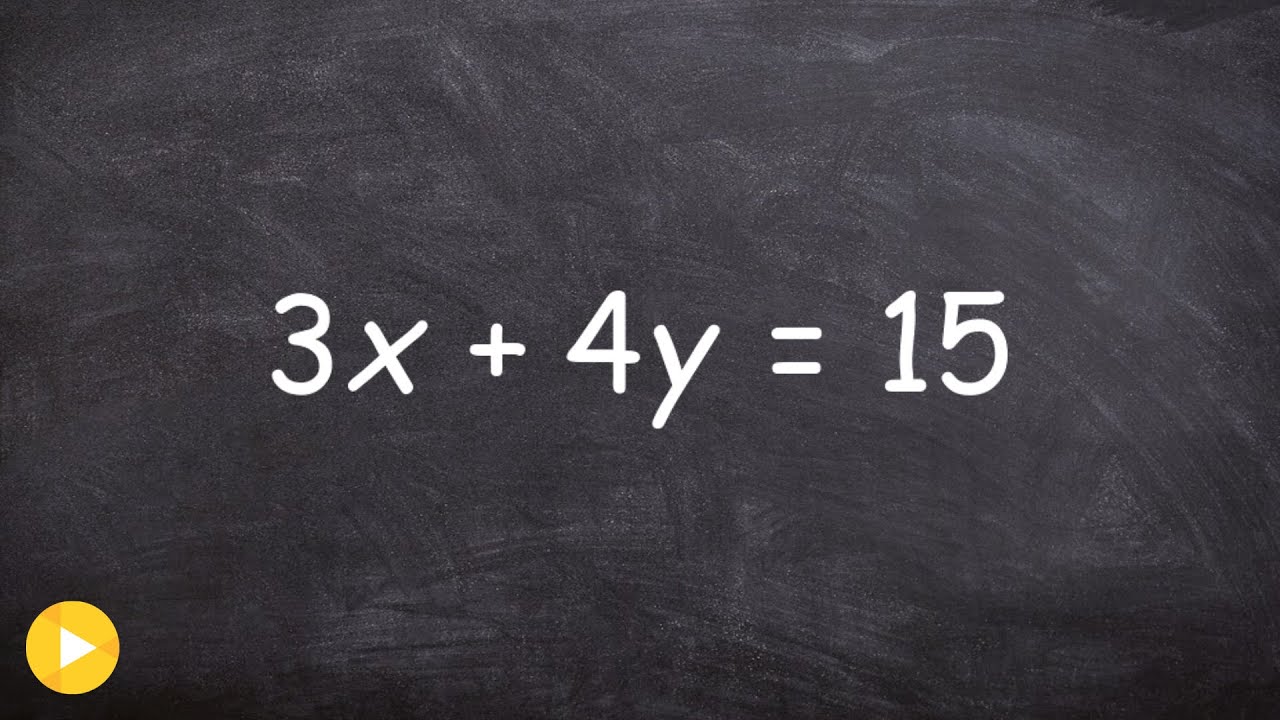
👉 Learn how to solve literal equations. A literal equation is an equation where the unknown values are represented by variables. To solve a literal equation means to make one of the variables the subject of the formula. To do this, we use the simple algebraic process of undoing all the algebraic operations related to the variable we want to solve for.
👏SUBSCRIBE to my channel here: https://www.youtube.com/user/m....rbrianmclogan?sub_co
❤️Support my channel by becoming a member: https://www.youtube.com/channe....l/UCQv3dpUXUWvDFQarH
🙋♂️Have questions? Ask here: https://forms.gle/dfR9HbCu6qpWbJdo7
🎉Follow the Community: https://www.youtube.com/user/M....rBrianMcLogan/commun
Organized Videos:
✅How to Solve Literal Equations
https://www.youtube.com/playli....st?list=PL0G-Nd0V5ZM
✅How to Solve Literal Equations for x
https://www.youtube.com/playli....st?list=PL0G-Nd0V5ZM
✅How to Solve Literal Equations with Fractions
https://www.youtube.com/playli....st?list=PL0G-Nd0V5ZM
✅How to Solve Literal Equations and Formulas
https://www.youtube.com/playli....st?list=PL0G-Nd0V5ZM
🗂️ Organized playlists by classes here: https://www.youtube.com/user/M....rBrianMcLogan/playli
🌐 My Website - http://www.freemathvideos.com
🎯Survive Math Class Checklist: Ten Steps to a Better Year: https://www.brianmclogan.com/e....mail-capture-fdea604
Connect with me:
⚡️Facebook - https://www.facebook.com/freemathvideos
⚡️Instagram - https://www.instagram.com/brianmclogan/
⚡️Twitter - https://twitter.com/mrbrianmclogan
⚡️Linkedin - https://www.linkedin.com/in/br....ian-mclogan-16b43623
👨🏫 Current Courses on Udemy: https://www.udemy.com/user/brianmclogan2/
👨👩👧👧 About Me: I make short, to-the-point online math tutorials. I struggled with math growing up and have been able to use those experiences to help students improve in math through practical applications and tips. Find more here: https://www.freemathvideos.com/about-me/
#solveliteralequations #solveequations #brianmclogan

How to Solve Linear Equations in One Variable - Finding the Solution of an Equation
#linearequations
#solvingequations
#mathteachergon

Matte 1P: Likninger (17.08.13)
Learn more at http://www.cfchildren.org/soci....al-emotional-learnin
What is SEL? Social-emotional learning (SEL) is the process of developing the self-awareness, self-control, and interpersonal skills that are vital for school, work, and life success. The creators of Second Step® programs show what social-emotional skills are and the important role they play throughout our lives.
© 2016 Committee for Children


5 Educational Technology Trends in 2024 | Future with eLearning | Digital learning in 2024 | Trends in Educational Technology | Online Education
| Trends in Education | Area of New Education | Futureyan
About the Video:
0:00 Importance Of Technology In Education
1:09 1. Learning Outside the Classroom Environment
2:02 2. Gamification
3:05 3. Collaborative Learning
4:15 4. Immersive Learning with Augmented Reality and Virtual Reality
5:52 5. Virtual Learning
Technology has become a key part of every sector because of this we can say “Technology is everywhere”. When we talk about 21st-century students who are more interested in technical things this is an important reason that technology covers the education sector.
Technology in education creates an amazing opportunity for a teacher to use in the classroom to make teaching and learning more effective. Technology is everywhere and when talking about students survive in post-secondary education and the business world, they must know technology.
Other Social Links-
Instagram = https://www.instagram.com/futureyan1/
Facebook = https://www.facebook.com/FUTUREYAN
EducationalTechnologyTrendsin2021 #EducationalTechnology #EducationalTechnologyTrends #eLearning #FuturewitheLearning #Digitallearningin2021 #TrendsinEducation #VirtualLearning #LearningwithAugmentedReality #OnlineEducation #Digitallearning #Technologyineducation #futureyan

This short video defines the term ‘arts integration’.
View this video with audio description at: https://youtu.be/iMBO672YtCM
ArtsWA’s Creative Start program is focused on increasing arts integration teaching and learning in preschool to 3rd grade classrooms across the state.
Project collaborators:
Clyde Petersen - Animator
Meredith Arena – Script Collaborator
Eli McCalmont – Voice Over Actor
Kate Myre - Vocal Coach/ Jack Straw Cultural Center
Daniel Guenther – Sound Engineer/ Jack Straw Cultural Center
Joan Rabinowitz – Executive Director / Jack Straw Cultural Center
Levi Fuller – Administrative Coordinator / Jack Straw Cultural Center
Tomo Nakayama - Music
Elliat Graney-Saucke – Production Supervisor
Music: City Won't Sleep by Tomo Nakayama

We compare some of the most popular languages in the world, what are the odds and probability of speaking certain language, which language has the most alphabets. Which language has the most words? How many words does English, Spanish, Arabic or Hindi have? What is the most difficult language to learn? What are the major languages of the world? We visualize the animated scale of alphabets, characters and words.
Disclaimer:
Only words of languages with over 20 million speakers are included otherwise the video would get too long. The only exceptions are the top 5. Thus apologies if your language is not included.
Only Alphabets with a usage of above 50 million, according to World Atlas, are included, with some exceptions. Video makes no distinction between speech, dialect and literacy.
Number referenced for words tend to be the largest dictionary that can be found online. Dictionary referenced in video. There may be bigger dictionaries though.
Usage or number of words may be outdated, but are often after 2010. More info in references.
There is difficulty researching between different formal definition of letters, diacritics and circumflexes, whichever probability and number given for the Alphabets are stated in the sources. There may be unintentional mistake, kindly comment if spotted.
Sources and References: https://pastebin.com/Ahx6TT0B
Music: Adventure by Alexander Nakarada (www.serpentsoundstudios.com)
Licensed under Creative Commons BY Attribution 4.0 License
http://creativecommons.org/licenses/by/4.0/
List of Languages and Words featured:
Arabic, Azerbaijani, Bengali, Chinese, Dutch, English, Finnish, French, German, Greek, Gujarati, Hindi, Icelandic, Indonesian, Italian, Japanese, Javanese, Korean, Latin, Malay, Marathi, Persian, Polish, Portuguese, Romanian, Russian, Serbo-Croatian, Swahili, Swedish, Tagalog, Tamil, Telugu, Thai, Turkish, Ukrainian, Urdu, Vietnamese.
List of Alphabets and Scripts featured:
Arabic Alphabet, Armenian Alphabet, Bengali Alphabet, Burmese Alphabet, Chinese Characters, Cyrillic Alphabet, Danish Alphabet, Devanagari Alphabet, Dutch Alphabet, Filipino Alphabet, Finnish Alphabet, French Alphabet, German Alphabet, Greek Alphabet, Hebrew Alphabet, Hungarian Alphabet, Icelandic Alphabet, Italian Alphabet, Japanese Kana, Japanese Kanji, Kangxi Radicals, Khmer Alphabet, Hangul Alphabet, Kurdish Alphabet, Latin Alphabet, Lithuanian Alphabet, Polish Alphabet, Portuguese Alphabet, Spanish Alphabet, Swedish Alphabet, Tamil Alphabet, Telugu Alphabet, Thai Alphabet,Turkish Alphabet, Vietnamese Alphabet, Welsh Alphabet.

Country wise Language Name List : Here you will get a list of 12 languages name by country.
✅ Thank you so much for watching this video. Please don't forget to thumbs up, give your feedback, and share it with your friends and family.
If you want to do online classes one to one (privately) with me, feel free to contact me for learning English. I usually take the online classes using Zoom or Google Meet. : eslteachersayed@gmail.com
Watch all the prepositions videos:
01. https://www.youtube.com/watch?v=EVW1ye1p4zo
02. https://www.youtube.com/watch?v=LTIZJaPbXcE
03. https://www.youtube.com/watch?v=-5637p_8Hx0
✅ Make Sure you subscribe my channel & press the bell icon to get the notifications of my new videos: https://www.youtube.com/MdSayedAli
✅Get Connected with me on ...
👉 Instagram https:https://www.instagram.com/mdsayedali2
👉 Facebook https:https://www.facebook.com/MdSayedAli2/
👉 Facebook https:https://twitter.com/MdSayedAliBD
Basic Rules of Narration | Direct Speech and Indirect Speech | Narration Series Video Step#01
01. https://www.youtube.com/watch?v=cXlTJIv7FzU
02. https://www.youtube.com/watch?v=dQeRThPzoXI
03. https://www.youtube.com/watch?v=t5hpKeqVn7s
04. https://www.youtube.com/watch?v=FvMefL8fOdw
05. https://www.youtube.com/watch?v=ZTnp2JxuYcA
06. https://www.youtube.com/watch?v=HkCZZPYqSaA
07. https://www.youtube.com/watch?v=mv5DZMcpUJ4
08. https://www.youtube.com/watch?v=hMu-S_OEAXc
09. https://www.youtube.com/watch?v=Kvz4h-XT3ws
10. https://www.youtube.com/watch?v=da8nBtERGAQ
11 https://www.youtube.com/watch?v=C9qtJUrfpJY
12. https://www.youtube.com/watch?v=w8V-fJkbRIE
13. https://www.youtube.com/watch?v=AnBUbPOfIeM
14. https://www.youtube.com/watch?v=aea-6aXsl9Q
15. https://www.youtube.com/watch?v=PzLd5Oyi2Hk
16. https://www.youtube.com/watch?v=1odI-1OWfHw
17. https://www.youtube.com/watch?v=p-9RGgGL7x0
18. https://www.youtube.com/watch?v=AwVgjrwoi-I
19. https://www.youtube.com/watch?v=o5rkMa4_x1w
19. https://www.youtube.com/watch?v=o5rkMa4_x1w
20. https://www.youtube.com/watch?v=n4R0rTJGvik
21. https://www.youtube.com/watch?v=AEw1qydkyT0
22.https://www.youtube.com/watch?v=lwQA32t2o_E
23. https://www.youtube.com/watch?v=pNvUZoPYkok
24. https://www.youtube.com/watch?v=73bhWiXJsPU
25. https://www.youtube.com/watch?v=5r7PSUB8SwA
Basic Rules of Narration | Direct Speech and Indirect Speech | Narration for JSC | SSC | HSC |
Playlist of Narration Series Video
✅ Sentence Narration Step#01 to Step #14 : https://bit.ly/3jXTBma
✅ Passage Narration Step#15 to Step #25 : https://bit.ly/2F7YA51
English Learning Online First Batch of All Total 20 Classes
Please watch the all 20 videos of English Online Class 1st Batch in this playlist: https://bit.ly/2TdDDK6
You can watch one after one video from the list of First Batch English Online Class:
Class No #01 : https://www.youtube.com/watch?v=GvkSuIikCRU
Class No #02 : https://www.youtube.com/watch?v=28zB4jY7Sh8
Class No #03 : https://www.youtube.com/watch?v=Ow_cFxhnG3I
Class No #04 : https://www.youtube.com/watch?v=DjenVO7juBo
Class No #05 : https://www.youtube.com/watch?v=4pRjNxqIoHo
Class No #06 : https://www.youtube.com/watch?v=vqLEA6wqUm0
Class No #07 : https://www.youtube.com/watch?v=QEuZkdckZ14
Class No #08 : https://www.youtube.com/watch?v=xwh_DAaERDU
Class No #09 : https://www.youtube.com/watch?v=UKmZCY9YOiY
Class No #10 : https://www.youtube.com/watch?v=kUVkml-Cn_g
Class No #11 : https://www.youtube.com/watch?v=8kwnTK-xI04
Class No #12 : https://www.youtube.com/watch?v=Epeb3720uI4
Class No #13 : https://www.youtube.com/watch?v=3L_ew1LOmdU
Class No #13 : https://www.youtube.com/watch?v=3L_ew1LOmdU
Class No #14 : https://www.youtube.com/watch?v=lCOs0i8NABY
Class No #15 : https://www.youtube.com/watch?v=-IP76XehnPE
Class No #16 : https://www.youtube.com/watch?v=YvxSX4_rRvA
Class No #17 : https://www.youtube.com/watch?v=Q1TsF-cnm-w
Class No #18 : https://www.youtube.com/watch?v=vZc78Yl7xY4
Class No #19 : https://www.youtube.com/watch?v=SQIqHIA8AAM
Class No #20 : https://www.youtube.com/watch?v=n_navh5w70Y
Please don’t forget to share this playlist or any video if you like and it helps you to learn English Language.
We are Social:
Facebook: https://www.facebook.com/EnglishGrammarBD
Twitter: https://www.twitter.com/EnglishGrammarZ
Instagram: https://www.instagram.com/englishgrammarbd/
Website: https://englishgrammarbd.com/
Please Subscribe to my channel »
https://bit.ly/2DVYa0T
- It’s free
- You don’t miss any future video
See you soon. Take care.
Md Sayed Ali
✅ For Sponsorship, Collaboration, or for business inquiries, feel free to contact us: sayeddigital3@gmail.com
Disclaimer: This Channel does not promote any illegal content, and it does not encourage any kind of illegal activity. All contents provided by this channel is meant for EDUCATIONAL purpose only.

This video explores how English became the global lingua franca.
Support Langfocus on Patreon http://patreon.com/langfocus
My current Patrons include these fantastic people:
Brandon Gonzalez, Pomax, Eric Garland, Andres Resendez Borgia, Adam Fitch, ShadowCrossZero, Zhiyuan 'George' Shi, Michael Arbagi, Trevor Lawrence, Felix, Felixx Ravestein, John Moffat, Auguste Fields, Guillermo Jimenez, Bennett Seacrist, Sidney Frattini Jr, Ruben Sanchez, Michael Cuomo, Brian Michalowski, Sebastian Langshaw, Lorraine Inez Lil, Don Sawyer, Scott Russell, Florian Breitwieser, Fiona de Visser, Raymond Thomas, divad, Justin Faist, Adam Vanderpluym, , Theosophagous, Rui Rizzi, Mike Forster, Christian Langreiter, Shawn MacIntyre, Dmitry Stillerman, Kristoffer Karlsson, Henri Saussure, James Lillis, Edmund McFarlane, Steely Dan Rather, Jens Aksel Takle, yasmine jaafar, Tryggurhavn, Benham Esfahbod, JC Edwards, Ashley Dieroff, Steve Decina, Thomas Mitchell, Mahmoud Hashemi, fatimahl, Kevin Law, David LeCount, Carl saloga, Edward Wilson, Mohammed A. Abahussain, Peter Nikitin, Fred, JL Bumgarner, Rob Hoskins, Thomas McCloud, Ian Smith, Nicholas Gentry, Brent Warner, Kevin J. Baron, Maurice Chou, Matthew C, Caio Fernandes, Suzanne Jacobs, Johann Goergen, Leo Barudi, Piotr Chmielowski, Rich Gerritzen, Mark Kemp, Éric Martin, Marco Antonio Barcellos Junior, Simon Blanchet, Sergios Tsakatikas, Bruno Filippi, Jeff Miller, Ulrike Baumann, Joel Mills, Alex Hanselka, Panot, Don Ross, Carl Bergquist, James and Amanda Sodering, and Robert (Bob) Dobbin.
Music: "Marxist Arrow" by Twin Musicom.
Outro music: "Gimme Five" by Twin Musicom.

#matematikbulmacası
#mathpuzzle
#mathpuzzleforbeginners
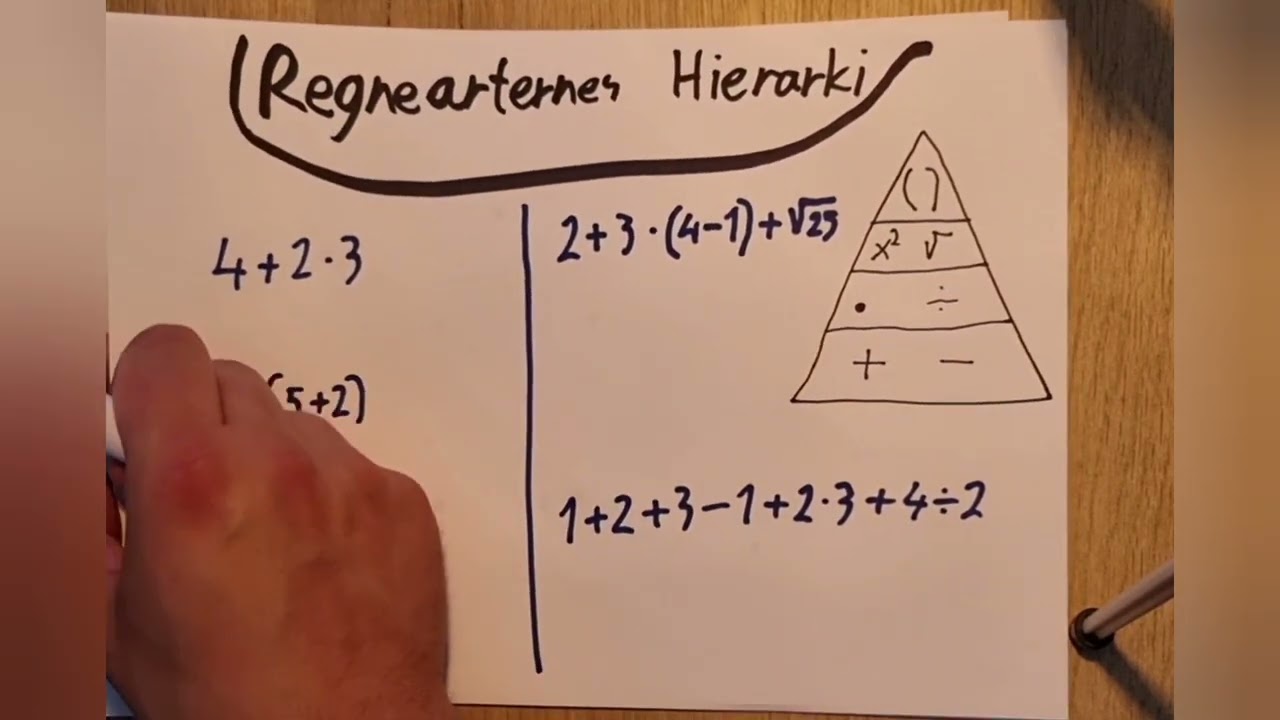
Regnearternes hierarki - Regner man plus eller gange først? Få det svar og en del flere her :)
Let og hurtig introduktion til at udregne længe regnestykker med mange forskellige regnetegn (Plus, minus, gange, division, parenteser, potenser og kvadratrod).
Lær hvordan man regner med regnearternes hierarki.
Folkeskolematematik
3. Klasse matematik
4. Klasse matematik
5. Klasse matematik
6. Klasse matematik
7. Klasse matematik
8. Klasse matematik
9. Klasse matematik
10. Klasse matematik
*HJEMMESIDER OM MATEMATIK* 😃 (Video med en kort præsentation af de enkelte sider her: https://www.youtube.com/watch?v=nHfq43oEgxg )
👉 https://mattip.dk/ - Gratis opgaver og kopiark.
👉 https://matematikbogen.dk/ - Print let opgaver om plus, minus, gange og dividerer gratis.
👉 https://www.gratisskole.dk/ - Masser af gratis skolerelevante opgaver.
👉 https://www.legoglektie.dk/ - Hjemmeside med skolematerialer til børn fra 2-13 år. Gratis at bruge for private.
👉https://www.matematikbanken.dk/side/kompendier/ - Blandet opgaver målrettet 9-10 klasse.
👉https://www.opgaveskyen.dk/ - Opgaver til mange af folkeskolens fag. Klar til print.
👉https://undervisningsforlob.dk/matematik - Matematikopgaver og små spil klar til print. Målgruppe 5-12 år.
👉https://www.printland.dk/sjov-med-tal.aspx - Print opgaver til de helt små børn (børnehave og tidlig indskoling).
*BUTIKKER*
👉 *Reklamelink* - https://www.partner-ads.com/dk/klikbanner.php?partnerid=46683&bannerid=69642 - Online-butik hvor man kan købe *piktogrammer,* læringsspil, opgaver, tavler, legetøj og læringscirkler. *Stort udvalg*
👉 *Reklamelink* - https://www.partner-ads.com/dk/klikbanner.php?partnerid=46683&bannerid=64474&htmlurl=https://www.laerlet.dk/butik/ - Online-butik med materialer der via leg og læring træner tal og bogstaver.
*APPS*
👉 *Reklamelink* - https://track.adtraction.com/t/t?a=1646486406&as=1772625203&t=2&tk=1 - *SUPER GOD matematikapp* til de mindste. Gratis prøveperiode.
*LEKTIEHJÆLP*
👉 *Reklamelink* - https://www.partner-ads.com/dk/klikbanner.php?partnerid=46683&bannerid=95261 - *LEKTIEHJÆLP* både til folkeskole og gymnasie niveau - *Prøv gratis 👩🎓*
👉 *Reklamelink* - https://www.partner-ads.com/dk/klikbanner.php?partnerid=46683&bannerid=76792 - BOOST dine matematikevner med et matematikforløb eller lektiehjælp.
*LÆRINGSCAMP*
👉https://www.dincamp.dk/camps/matematikcamp/ - Tag på camp i din ferie: Et sjovt fagligt boost i matematik (eller andre fag)
#Matematik #RegnearternesHierarki #HierarkiMatematik #Folkeskolen #Lektier #Lektiehjælp #3klasse #4klasse #5klasse #6klasse #7klasse #8klasse #9klasse #10Klasse #PotensKvadratrod #LærLetMatematik #FørstParanteser #Regneregler #HvadRegnerManFørst #Regnetegn #MatematiHvadErStærkest #Hierarki #LangeRegnestykker #UNIKSkole


Division af brøker med et tal, er let. Man ganger nævner med det tal man dividere med og lader tælleren stå.
Øvelses opgaver :
http://matematikerlet.dk/opgav....er/brøker/brøk-divid
Facit ark til opgaverne:
http://matematikerlet.dk/opgav....er/brøker/brøk-divid
Hvordan forlænger man en brøk: https://youtu.be/LuI-jpjM_Ks
#matematikerlet
#hjælptilmatematik
#gratismatematikopgaver
#brøkregning
#brøker

Fractions are one of the most challenging topics in math, but they are also critical for students to understand to be successful in algebra. One way to help students understand fractions and feel comfortable adding them is by using manipulatives. Sarah Powell from UT shows how you can use area model manipulatives to teach students how to add fractions that have like denominators.
This video is one of 30 videos all targeting teaching fractions. This video is also part of Project STAIR, a research-based resource for parents and teachers who have children that are struggling in math.
If you have ideas about how we can improve the videos, or if you know of something you would like us to make a video about, please complete our survey here:
https://utexas.qualtrics.com/j....fe/form/SV_exPGEJZ0s
If you liked the video or have more questions, please like the video and subscribe for more math videos.