Mga nangungunang video

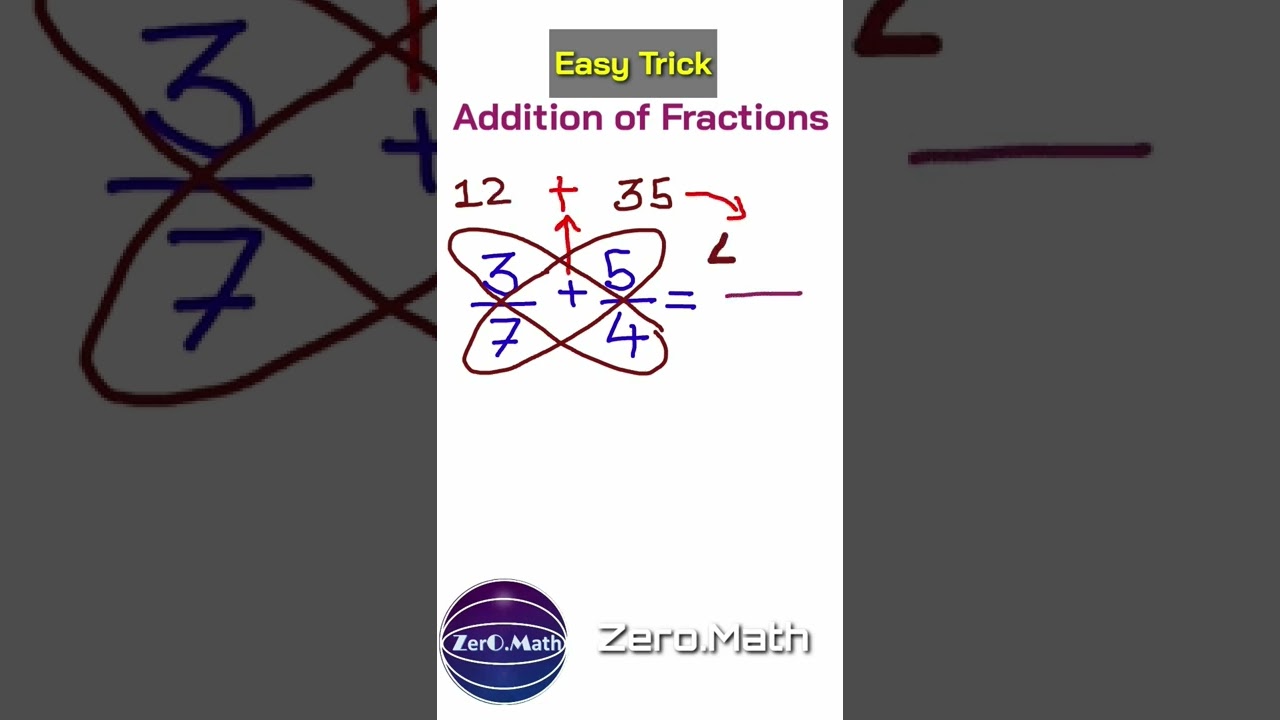
🤔How to divide fractions quickly?? Division of Fractions Tricks #shorts #artikipathshala #shortsfeed
🤔How to divide fractions quickly?? Division of Fractions Tricks #shorts #artikipathshala #shortsfeed Teacherflix 7 Mga view • 2 taon kanina

🤔How to divide fractions quickly?? Division of Fractions Tricks/ divide Fractions Quickly/ Fraction Simplification Tricks/ Simplification of Fractions/ simplification tricks for fractions/simplify fractions/fraction tricks/simplifying fractions/fraction math/fraction tricks for competitive exams /fraction division/mathematics/ maths tricks for fast calculation/math tricks/maths tricks/fast and easy math tricks/ Fast and Easy Trick to divide fractions/ Trick to divide Fractions/Maths Tricks /division fractions/division of fractions/division of two fractions/fraction divide #shortsfeed @VidyaConnection


Guys , In this YouTube shorts you will learn that how to divide fractions within seconds very easily by using the trick given by Arti mam.

It is a fraction simplification trick/ Basic math/Mental math/ Mind trick that every student should know. And by using this trick you can save your precious time in exams and score better marks.


YOUR QURIES :

How to divide fractions?
How to divide two fractions?
How do you divide fractions step by step?
How do you divide fractions with different denominators?
How do divide fractions quickly?
How do you simplify dividing fractions?
How do I solve dividing fractions?
What is the rule to divide fractions?
What is method for division of fractions?


ARTI KI PATHSHALA PROVIDES YOU :

Mathematical reasoning
Competition exam tricks
Coding decoding reasoning tricks
Easy mathematic tricks
Exam easy tricks
Learning mathematics
Easy way of learning maths
Easy trick for faster calculation
Important math's information
Short tricks
Easy tricks
Trending maths shorts
Reasoning tricks
Counting figures reasoning tricks
Times table tricks
Addition tricks
Subtraction tricks
Division tricks
Multiplication tricks
simplification tricks
Algebra tricks
Geometry tricks
Profit and loss tricks
Arithmetic tricks
Maths tricks
Fraction tricks
Math facts
Unit conversion
Math's magic
Railway exam tricks
Banking exam tricks
Maths magic
Math shorts
competition exam tricks
Math quizzes
Math puzzles
Basic concepts of maths
Basic maths
Math problem's solutions
Math hacks
Basic calculation
Maths video
Missing number reasoning
Missing number questions
Find missing number
Missing number tricks
Triangle counting tricks
Counting triangle tricks in Hindi
missing number tricks in Hindi
Reasoning short tricks in Hindi
ssc reasoning
ntpc reasoning
Calendar reasoning tricks
dice reasoning tricks
Clock reasoning
Reasoning series
ssc cgl reasoning
Railway group d reasoning
rrb ntpc reasoning
ctet exam tricks
upsssc reasoning tricks
upsi reasoning
upsc reasoning
Trending math videos
triangle counting reasoning
figure counting reasoning
math tricks for fast calculation
logical reasoning
blood relation reasoning tricks
puzzle reasoning
analogy reasoning tricks
venn diagram reasoning
seating arrangement reasoning tricks
sitting arrangement in reasoning shortcuts
syllogism reasoning tricks
reasoning questions
reasoning classes
number system


WATCH NEXT :

👉🏻Maths Quizzes and Puzzles~ Shorts playlist :
https://youtube.com/playlist?l....ist=PL0E-HIiBHSf_DFd

👉🏻Reasoning Tricks~ Shorts playlist : https://youtube.com/playlist?l....ist=PL0E-HIiBHSf-4v1

👉🏻Calculation Short Tricks~ Shorts playlist : https://youtube.com/playlist?l....ist=PL0E-HIiBHSf_jZj

👉🏻Basic Concepts~ Shorts playlist : https://youtube.com/playlist?l....ist=PL0E-HIiBHSf-WHs

👉🏻Math Facts~ Shorts playlist : https://youtube.com/playlist?l....ist=PL0E-HIiBHSf_zPd

👉🏻Algebra Tricks~ Shorts playlist : https://youtube.com/playlist?l....ist=PL0E-HIiBHSf-9Oh

👉🏻Fraction Tricks~ Shorts playlist : https://youtube.com/playlist?l....ist=PL0E-HIiBHSf8lrZ

👉🏻Shorts by Arti mam on VidyaSaa : https://youtube.com/playlist?l....ist=PLbLE1i5deSxIf9N

👉🏻Maths Videos by Arti mam on VidyaSaa : https://youtube.com/playlist?l....ist=PLbLE1i5deSxIxPs


============================================================================
Follow me on other social platforms :
============================================================================

Follow me on Instagram : https://www.instagram.com/arti_ki_pathshala/

Follow me on Facebook : https://www.facebook.com/Artikipathshala

#vidyasaa #youtubeshorts #reasoning #mathspuzzle #mathsshorts #mathematics #learnmaths #trendingshorts #viralshorts #shortvideo #competitionexamtricks #youtubeindia #youtubeshortvideos #creatingforindia #brainteasers #artikipathshala


If you like the video Please Do Subscribe My Channel 🔔.
Keep Supporting me so I can Continue to provide you with free content each day !! 🙋🏻‍♀️😇

________________________________________________________________________
Thanks For Watching The Video
________________________________________________________________________


Please write all your questions and topics so that we can help you further.
For Contact : artikipathshala@gmail.com

Comets, Asteroids, and Meteors | Learn all about what they are made of and how they differ
Comets, Asteroids, and Meteors | Learn all about what they are made of and how they differ Teacherflix 7 Mga view • 2 taon kanina

Comets Asteroids and Meteors are all over the solar system. But did you know that each are quite different? You may be wondering "What is a comet?", "What is an asteroid made of?", or "Where does a meteor come from?" Well, sit tight because in this video we will answer all of your questions!

We first take a closer look at asteroids for kids. Asteroids are the largest of the space rocks, but may also
include metal substances. Most of them go around the Sun
between the orbits of Mars and Jupiter. The area of orbit is
called the Asteroid Belt, which includes an inner and an outer
region. The inner region is made up of asteroids that mostly
contain metal (Gold, Iron, Platinum, and Nickel). The outer region contains asteroids mostly made
up of rocks.

We then explain what a comet is. You can think of a comet
as a large snowball filled with or covered by dust, metal, and debris. They have an icy core, covered by a
layer of black dust. The center is mainly composed of water and gases, frozen and mixed together with bits
of rock and metal. A comet in the outer parts of the Solar System is too small to be seen from Earth. We then talk about the difference between short and long period comets.

Lastly, we explore Meteors, meteoroids, and meteorites. Meteors are sometimes called falling or shooting stars, and they begin
as meteoroids traveling through the Earth’s atmosphere. They are not
stars. They are small pieces of rock or metal originating from a comet or
asteroid. They form from colliding asteroids of debris from comets. A meteorite is a meteoroid that does not burn
up in the Earth’s atmosphere, but instead, falls to
the Earth’s surface.

Video Chapters:
0:00 Introduction to the "3 space rocks"
0:57 Asteroids
1:45 Ceres and Other "Dwarf Planets"
3:46 Comets
4:58 2 Types of Comets [Short Period and Long Period]
5:55 Meteors
6:09 Meteoroids
7:00 Meteorite

We hope you enjoyed this video and had fun learning about Asteroids, Comets, and Meteors. If you'd like even more resources on this topic we invite you to download our free lesson plan that is complete with more activities, worksheets and more all about how comets, meteor, and asteroids. You can download that lesson here:
https://learnbright.org/lesson....s/science/asteroids-

Thank you for watching and learning with us! We’re constantly releasing new content and videos, so click that “Subscribe” button and you’ll get notified.

Find and Follow Us Online:
Facebook: https://www.facebook.com/LearnBright/
Instagram: https://instagram.com/LearnBrightEducation
Pinterest: https://pinterest.com/LearnBrightEducation
YouTube: https://www.youtube.com/LearnBright
Website: https://learnbright.org/

*Teachers and Parents! Did you know? In addition to these great videos, we have also created a library of high quality and engaging lessons for your elementary aged student(s). Visit us, sign up for a free account, and instantly you'll have access to thousands of lesson plans, learning materials, teaching instructions, activities, and assignments that your kids will really enjoy! We hope to see you soon!

Browse our entire collection of Science lesson plans: https://learnbright.org/lessons/?filter_subject=science

#CometsAsteroidsAndMeteors
#Comets
#Asteroids
#Meteors

Electricity for Kids | What is Electricity? Where does Electricity come from?
Electricity for Kids | What is Electricity? Where does Electricity come from? Teacherflix 7 Mga view • 2 taon kanina

NOTE: We would like to correct an error in this video. Birds do not get electrocuted when resting on power lines because there is no path to ground. Electricity has to flow from a place of high potential to low potential to electrocute. If a bird were to touch the line and some grounded metal of some kind, they could be shocked.

Hello Teachers and Parents! In this video we will learn all about electricity. Your student(s) will learn about lightning, power plants, Direct Current (DC) and Alternating Current (AC). We even talk about when electricity was discovered and go over topics like conductors and insulators. By the time you are done watching this video your child will have a much better understanding of what electricity is, where it comes from, and the amazing things it can do.

We know that electricity can be a tricky topic to cover so throughout the video we provide really good examples and break down the complex ideas. We also have a complete lesson plan full of worksheets and activities that will help your student practice what they are learning. You can download for free here:
https://learnbright.org/lesson....s/science/electricit

In this video we will learn:
0:00 What is Electricity?
1:38 What is a Direct Current?
4:13 What is an Alternating Current?
5:55 How do Power Plants produce Electricity?
6:51 How do Magnets create Electricity?
7:33 What is Static Electricity?
8:35 What is a Conductor?
9:08 What is an Insulator?
10:21 When was Electricity Discovered?
11:31 Learning Activity | Can you solve the Electricity Riddle?

Check out some of our other electricity-related videos here:
Magnets: https://youtu.be/7HHs98PBgk0

Thank you for watching and learning with us! We’re constantly releasing new content and videos, so click that “Subscribe” button and you’ll get notified.

Find and Follow Us Online:
Facebook: https://www.facebook.com/LearnBright/
Instagram: https://instagram.com/LearnBrightEducation
Pinterest: https://pinterest.com/LearnBrightEducation
YouTube: @LearnBright
Website: https://learnbright.org/

*Teachers and Parents! Did you know? In addition to these great videos, we have also created a library of high quality and engaging lessons for your elementary aged student(s). Visit us, sign up for a free account, and instantly you'll have access to thousands of lesson plans, learning materials, teaching instructions, activities, and assignments that your kids will really enjoy! We hope to see you soon!

Browse our entire collection of Science lesson plans: https://learnbright.org/lessons/?filter_subject=science

#ElectricityForKids
#WhatIsElectricity

All about North America for Kids | Learn about the countries of the North American Continent
All about North America for Kids | Learn about the countries of the North American Continent Teacherflix 7 Mga view • 2 taon kanina

How many countries make up North America? A lot of people think of Canada, the USA, and Mexico. In All about North America for Kids, you and your students will learn that this continent actually includes 23 countries! These include Costa Rica, Honduras, Panama, Grenada, Saint Vincent, Cuba, and Haiti.

North America is the third largest continent in the world, behind Asia and Africa, and covers 16.5% of the earth's land area. It was named after the Italian explorer Amerigo Vespucci. The continent borders the Pacific and Atlantic Oceans, the Caribbean Sea, and South America. It also includes all the major biomes or habitats, such as tundra, coral reef, and desert. The geography of the countries of North American vary as much as its wildlife. There are around 965 different mammal species that call different parts of the continent home.

You will also learn a lot about the history of the continent. Scientists believe the Paleo-Indians from Eurasia used a land bridge between modern-day Siberia and Alaska to travel to North America to settle. They developed organized societies, and some ancient civilizations even built temples and created writing systems and calendars. Eventually colonizers from Europe traveled to the continent, which often displaced the native peoples of North America and settling on their lands.

There is so much more to learn about this continent. The video includes information on famous landmarks, such as Niagara Falls and the Great Pyramid of Tenochtitlan. These are only a few of the many attractions that millions of people visit every year.

We hope you and your student(s) enjoyed learning about the continent of North America! If you want even more information, head over to our website and download one of our many free lesson plans, full of activities, worksheets, and more!

https://learnbright.org/lesson....s/social-studies/all
https://learnbright.org/lesson....s/social-studies/the

What you will learn in All about North America for Kids:
0:00 Introduction to the North American continent
1:10 Geography of North America
1:46 Animals that live in North America
2:17 History of the continent
3:04 Countries, territories, and most common languages
4:02 Noteworthy facts about North America
5:00 Natural and manmade attractions
6:28 Review of the facts

Check out some of our other videos related to North America here:
Mount Rushmore: https://youtu.be/ExiE76ig0d8
Lewis and Clark: https://youtu.be/91IbDuiJNdM
Types of Communities: https://youtu.be/04lO0ISBT40

Thank you for watching and learning with us! We’re constantly releasing new content and videos, so click that “Subscribe” button and you’ll get notified.

Find and Follow Us Online:
Facebook: https://www.facebook.com/LearnBright/
Instagram: https://instagram.com/LearnBrightEducation
Pinterest: https://pinterest.com/LearnBrightEducation
YouTube: @LearnBright
Website: https://learnbright.org/

*Teachers and Parents! Did you know? In addition to these great videos, we have also created a library of high-quality and engaging lessons for your elementary aged student(s). Visit us and sign up for a free account, and you'll instantly have access to thousands of lesson plans, learning materials, teaching instructions, activities, and assignments that your kids will really enjoy! We hope to see you soon!

Browse our entire collection of Social Studies lesson plans: https://learnbright.org/lessons/?filter_subject=social-studies

#NorthAmerica
#NorthAmericaForKids

ASL Alzheimers Disease for Kids
ASL Alzheimers Disease for Kids Teacherflix 7 Mga view • 2 taon kanina

What is Alzheimer's Disease and what causes it? In this video designed for elementary learning we explore those questions and help gain a deeper understanding of this disease. Many of us know someone who has been affected by dementia or Alzheimers and if not many of us might in the future. We hope this video helps students gain a better understanding of the disease, its causes, symptoms, and some prevention techniques.

Alzheimer's Disease is a type of dementia that causes problems with memory, thinking, and behavior. Dementia is a set of symptoms that may include memory loss and difficulties with thinking, problem-solving, or language. Alzheimer’s Disease is the most common cause of dementia.

Alzheimer's Symptoms: As a person ages, they may forget things. It is normal. However, one of the symptoms of AD is consistent memory loss, especially of recent events and new information. This is the most noticeable trait of Alzheimer’s, it usually occurs gradually at first, but gets worse over time.

Alzheimer's Prevention Ideas: As you learn, your brain is constantly making connections, and one way that might help prevent Alzheimer’s as you get older is to produce new connections. You can do this by staying active, mentally and physically. This also apples to adult family members or friends who do not have AD. Encourage them to be active too.

Do you want to learn more about Alzheimer's Disease? Download our free comprehensive lesson plan here:
https://learnbright.org/lesson....s/science/alzheimers This lesson has extra content, worksheets, classroom activities and more!

Thank you for watching and learning with us! We’re constantly releasing new content and videos, so click that “Subscribe” button and you’ll get notified.

Find and Follow Us Online:
Facebook: https://www.facebook.com/LearnBright/
Instagram: https://instagram.com/LearnBrightEducation
Pinterest: https://pinterest.com/LearnBrightEducation
YouTube: https://www.youtube.com/LearnBright
Website: https://learnbright.org/

*Teachers and Parents! Did you know? In addition to these great videos, we have also created a library of high quality and engaging lessons for your elementary aged student(s). Visit us, sign up for a free account, and instantly you'll have access to thousands of lesson plans, learning materials, teaching instructions, activities, and assignments that your kids will really enjoy! We hope to see you soon!

Browse our entire collection of Science lesson plans: https://learnbright.org/lessons/?filter_subject=science

#ASL
#AlzheimersDiseaseForKids
#WhatIsAlzheimersDisease

Women's History Month | Learn about women throughout history and why we celebrate them in March
Women's History Month | Learn about women throughout history and why we celebrate them in March Teacherflix 7 Mga view • 2 taon kanina

Why do we celebrate Women's History Month? In this video, you and your kids will learn about the significance of women's history. For much of world history, only males wrote and published stories about the past. This was because women were not treated equally to men for much of U.S. and world history. For example, in colonial America, women could not own property or vote in elections.

Except for a few places, females did not go to school. If they were at private academies, women were not taught the same subjects as men. While men learned to read, write Latin, world history, and math, women were taught what was known as "domestic arts," or how to manage a household. It was thought that a woman didn't need education because she was supposed to work at home. Can you imagine that in modern times?

The reason we dedicate an entire month to women’s history is that women have worked tirelessly, without recognition, and frequently at significant risk, to build the country we know today. For example, you probably know the names of Abigail Adams and Harriet Tubman. But have you ever heard of Eleanor Dare? How about Mary Chilton?

In 1980, President Jimmy Carter proclaimed the week of March 8 National Women's History Week. One year later, Congress joined with the president by passing a resolution declaring the week of March 8 as the official start of National Women's History Week. Seven years later, Congress passed a law authorizing the president to proclaim March as Women's History Month, and it has been celebrated ever since.

We hope you and your student(s) enjoyed learning about why we celebrate women throughout history! If you want even more information, head over to our website and download one of our many lesson plans, full of activities, worksheets, and more!

What you will learn in Women's History Month:
0:00 March is Women's History Month
0:23 Famous women throughout history
1:13 Treatment of women v. men
2:13 Patriarchy in society or government
3:00 How Women's History Month started
4:05 Words of President Jimmy Carter

Thank you for watching and learning with us! We’re constantly releasing new content and videos, so click that “Subscribe” button and you’ll get notified.

Find and Follow Us Online:
Facebook:
https://www.facebook.com/LearnBright/
Instagram: https://instagram.com/LearnBrightEducation
Pinterest: https://pinterest.com/LearnBrightEducation
YouTube: @LearnBright
Website: https://learnbright.org/

*Teachers and Parents! Did you know? In addition to these great videos, we have also created a library of high-quality and engaging lessons for your elementary aged student(s). Visit us and sign up for a free account, and you'll instantly have access to thousands of lesson plans, learning materials, teaching instructions, activities, and assignments that your kids will really enjoy! We hope to see you soon!

Browse our entire collection of Social Studies lesson plans: https://learnbright.org/lessons/?filter_subject=social-studies

#WomensHistoryMonth
#WomensHistory

History of ASL for Kids | #shorts
History of ASL for Kids | #shorts Teacherflix 7 Mga view • 2 taon kanina

What do you know about the history of American Sign Language? Did you know that the man who created it used some French signs? Dr. Thomas Hopkins Gallaudet traveled to France to work with three Frenchmen to develop the signs in an effort to help his neighbor's deaf-mute daughter, Alice. Today, hundreds of thousands of people around the world claim sign language as their primary language!

We hope you and your student(s) enjoyed learning about American Sign Language! If you want even more information, head over to our website and download one of our many lesson plans, full of activities, worksheets, and more!

https://learnbright.org/lesson....s/social-studies/hel

Thank you for watching and learning with us! We’re constantly releasing new content and videos, so click that “Subscribe” button and you’ll get notified.

Find and Follow Us Online:
Facebook: https://www.facebook.com/LearnBright/
Instagram: https://instagram.com/LearnBrightEducation
Pinterest: https://pinterest.com/LearnBrightEducation
YouTube: @LearnBright
Website: https://learnbright.org/

*Teachers and Parents! Did you know? In addition to these great videos, we have also created a library of high-quality and engaging lessons for your elementary aged student(s). Visit us and sign up for a free account, and you'll instantly have access to thousands of lesson plans, learning materials, teaching instructions, activities, and assignments that your kids will really enjoy! We hope to see you soon!

Browse our entire collection of Social Studies lesson plans: https://learnbright.org/lessons/?filter_subject=social-studies

#ASL
#AmericanSignLanguage

ASL King Tut for Kids
ASL King Tut for Kids Teacherflix 7 Mga view • 2 taon kanina

What would it be like to be a king or queen as a kid? That's what life was like for King Tutankhamun, or King Tut! He was a pharaoh of ancient Egypt in the 1300s BCE. Historians believe he became the pharaoh, or king, of Egypt around the age of nine. And his reign was pretty short, lasting only about 10 years.

The ancient Egyptians were very religious and believed their pharaohs were earthly gods who communicated with the other gods. Their beliefs focused a lot on the afterlife, and the people believed people passed through to the afterlife in the same form as when they were alive. They developed burial processes to preserve the body for its afterlife. This process is known as mummification.

King Tut was mummified and buried in a beautiful tomb like any other pharaoh. Tombs included other items the pharaoh might need in addition to just the body, such as food, jewelry, weapons, art, and even pets. The reason we know so much about King Tut specifically is that archaeologists who discovered his tomb in 1922 found the tomb completely untouched. There were over 5,000 artifacts! Because the items included in a tomb were personal items, the archaeologists studied the artifacts to recreate King Tut's life!

The boy king died pretty young at about 18 or 19 years old. There are several theories. Some historians believe he was murdered by his advisors who wanted to seize his power. Others think his own family killed him. Thanks to modern DNA testing and physical evidence, however, most scientists believe that the young pharaoh died because of poor health.

We hope you and your student(s) enjoyed learning about George Washington Carver! If you want even more information, head over to our website and download one of our many free lesson plans, full of activities, worksheets, and more!

https://learnbright.org/lesson....s/social-studies/kin

What you will learn in King Tut for Kids:
0:00 Introduction to the "boy king"
0:44 King Tut is pharaoh of Egypt in 1300s BCE
1:02 The reign of King Tut
2:22 Afterlife and mummification
3:15 Reason we know so much about King Tut
4:33 Why King Tut died so young
5:22 Review of the facts

Thank you for watching and learning with us! We’re constantly releasing new content and videos, so click that “Subscribe” button and you’ll get notified.

Find and Follow Us Online:
Facebook: https://www.facebook.com/LearnBright/
Instagram: https://instagram.com/LearnBrightEducation
Pinterest: https://pinterest.com/LearnBrightEducation
YouTube: @LearnBright
Website: https://learnbright.org/

*Teachers and Parents! Did you know? In addition to these great videos, we have also created a library of high-quality and engaging lessons for your elementary aged student(s). Visit us and sign up for a free account, and you'll instantly have access to thousands of lesson plans, learning materials, teaching instructions, activities, and assignments that your kids will really enjoy! We hope to see you soon!

Browse our entire collection of Social Studies lesson plans: https://learnbright.org/lessons/?filter_subject=social-studies

#ASL
#Tutankhamun
#Pharaoh

ASL Herbivores Carnivores and Omnivores for Kids
ASL Herbivores Carnivores and Omnivores for Kids Teacherflix 7 Mga view • 2 taon kanina

Do you know the difference between herbivores, carnivores, and omnivores? Do you know which one you are? In this video for kids, you will learn all about the three diets that animals (and even a few plants!) follow. You will also learn what exactly these three words mean.

One of the main characteristics that distinguishes the type of diet an animal will follow is the teeth. Herbivores only eat plants. These animals tend to have dull or no canine teeth and big, flat side and back teeth. They use their molars to crush and grind the plants they consume. Examples include sheep, cows, giraffes, rats, and grasshoppers. You could consider herbivores vegetarians!

Carnivores, on the other hand, only eat meat. They have long and sharp canine teeth next to their front teeth. They also have sharp cheek teeth called carnassials that help them cut up meat in their mouths. Carnivorous animals include lions, spiders, sharks, wolves, dragonflies, and the Venus fly-trap (which is actually a plant).

Finally, that leaves us with omnivores, which eat both plants and animals. Humans are omnivores because we consume both types of food. Omnivores have a combination of flat teeth and sharp teeth because they eat both plants and animals. Apart from humans, other omnivores include lizards, turtles, apes, catfish, and bears.

We hope you and your student(s) enjoyed learning about the diets of different animals! If you want to learn even more, head over to our website and download one of our many free lesson plans, full of activities, worksheets, and more!

https://learnbright.org/lesson....s/science/herbivores
https://learnbright.org/lesson....s/science/food-chain

What you will learn in Herbivores, Carnivores, and Omnivores for Kids:
0:00 Introduction to the three diets
1:10 What the suffix -vore means and what herbi-, carni-, and omni- mean
2:09 Traits of herbivores
3:27 Examples of herbivores
3:48 Traits of carnivores
5:06 Examples of carnivores
5:35 Traits of omnivores
6:39 Examples of omnivores
7:04 Quiz time

Thank you for watching and learning with us! We’re constantly releasing new content and videos, so click that “Subscribe” button and you’ll get notified.

Find and Follow Us Online:
Facebook: https://www.facebook.com/LearnBright/
Instagram: https://instagram.com/LearnBrightEducation
Pinterest: https://pinterest.com/LearnBrightEducation
YouTube: @LearnBright
Website: https://learnbright.org/

*Teachers and Parents! Did you know? In addition to these great videos, we have also created a library of high-quality and engaging lessons for your elementary aged student(s). Visit us, sign up for a free account, and instantly you'll have access to thousands of lesson plans, learning materials, teaching instructions, activities, and assignments that your kids will really enjoy! We hope to see you soon!

Browse our entire collection of Science lesson plans: https://learnbright.org/lessons/?filter_subject=science

#ASL
#herbivores
#carnivores
#omnivores

ASL Animal Camouflage
ASL Animal Camouflage Teacherflix 7 Mga view • 2 taon kanina

What is camouflage? Why do animals need to use it? Well, in Animal Camouflage, your kids and students will learn the answers to these questions! First off, there are many different kinds of camouflage, and we will discuss four of the main kinds that apply to animals in this video. Did you know that there is actually more than one reason that animals use camouflage?

A lot of animals use camouflage to hide from predators. The colors of their skin or fur helps them blend into the environment around them. Some animals, though, use camouflage to hunt. For the same reason that camouflage helps some animals hide to avoid predators, other animals blend into their surroundings to catch their prey unaware! In addition to hiding and hunting, a few animals use their coloring to communicate. Take the chameleon, for example. Most people think chameleons use color changing to fool predators. But that's not actually true! Chameleons change colors to communicate to other chameleons! They change color to communicate danger, to attract a mate, or simply to signal a change of environment.

These animals are so cool! You and your kids will discover just how many different types of animals take advantage of this amazing characteristic. And maybe you just might stumble upon one of these incredible creatures!

We hope you and your student(s) enjoyed learning about all these amazing and colorful animals! If you want to learn more, head over to our website and download our free lesson plan about animal camouflage, which is full of activities, worksheets, and more!

https://learnbright.org/lesson....s/science/animal-cam

What you will learn in this video:
0:00 Animal camouflage
0:31 Why animals use camouflage
1:09 4 types of camouflage
1:34 Concealing coloration camouflage
2:18 Disruptive coloration (patterning) camouflage
4:05 Disguise camouflage
5:23 Mimicry camouflage
6:45 Other reasons animals use camouflage
8:04 Review quiz

Thank you for watching and learning with us! We’re constantly releasing new content and videos, so click that “Subscribe” button and you’ll get notified.

Find and Follow Us Online:
Facebook: https://www.facebook.com/LearnBright/
Instagram: https://instagram.com/LearnBrightEducation
Pinterest: https://pinterest.com/LearnBrightEducation
YouTube: @LearnBright
Website: https://learnbright.org/

*Teachers and Parents! Did you know? In addition to these great videos, we have also created a library of high quality and engaging lessons for your elementary aged student(s). Visit us and sign up for a free account, and instantly you'll have access to thousands of lesson plans, learning materials, teaching instructions, activities, and assignments that your kids will really enjoy! We hope to see you soon!

Browse our entire collection of Science lesson plans: https://learnbright.org/lessons/?filter_subject=science

#ASL
#animalcamouflage
#camouflageforkids

What Is the Electoral College? | Electoral college explained for kids
What Is the Electoral College? | Electoral college explained for kids Teacherflix 7 Mga view • 2 taon kanina

Our What Is the Electoral College video will explain and answer many questions regarding the electoral college and how it is used to determine our new president. This video is geared for kids and provides a basic overview of this important part of our government and election process. Come and learn all about the history of the electoral college and how it will impact the upcoming elections. We hope you enjoy.

Looking for more Electoral College resources? Download our free comprehensive lesson plan here:
https://learnbright.org/lesson....s/social-studies/ele

Thank you for watching and learning with us! We’re constantly releasing new content and videos so click that “Subscribe” button and you’ll notified.

Find and Follow Us Online:
Facebook: https://www.facebook.com/LearnBright/
Instagram: https://instagram.com/LearnBrightEducation
Pinterest: https://pinterest.com/LearnBrightEducation
YouTube: https://www.youtube.com/LearnBright
Website: https://learnbright.org/

*Teachers and Parents! Did you know? In addition to these great videos, we have also created a library of high quality and engaging lessons for your elementary aged student(s). Visit us, sign up for a free account, and instantly you'll have access to thousands of lesson plans, learning materials, teaching instructions, activities, and assignments that your kids will really enjoy! We hope to see you soon!

Browse our entire collection of Social Studies lesson plans: https://learnbright.org/lessons/?filter_subject=social-studies

#ElectoralCollege

Niagara Falls for Kids | Learn about one of the world's most famous waterfalls
Niagara Falls for Kids | Learn about one of the world's most famous waterfalls Teacherflix 7 Mga view • 2 taon kanina

Niagara Falls is one of the most famous waterfalls in the world. There are some pretty good reasons that it is such a popular natural landform. Located on the Niagara River, which creates a natural border between the U.S. and Canada, Niagara Falls is actually made of three separate waterfalls. Two are on the U.S. side—Victoria Falls and Bridal Veil Falls. The third and largest one is Horseshoe Falls, which is on the Canadian side.

Niagara Falls is a cataract waterfall, meaning that it is incredibly large and powerful. In fact, a total of 80,000 cubic feet of water flows over the edge every second. That equates to just over 598 thousand gallons of water every single second! This also means that Niagara Falls is an excellent source of hydroelectric power.

Scientists believe the falls started forming around 10 to 12 thousand ago because of melting glaciers. They have changed shape over time due to erosion. The unique green color of Niagara Falls comes from the dissolved salts and rocks in the water that have eroded. Scientists also estimate that over 60 tons of minerals sweep over the falls every minute.

Niagara Falls has attracted many tourists, including dare devils who either went over the edge in a barrel or walked across on a tight rope. The first person to challenge the falls was a 63-year-old teacher named Annie Taylor. She and her cat both got in a barrel and fell over the edge. While they were okay, many others who tried were not so lucky. Jean François Gravelet was the first to walk across on a tight rope, and he did it nine times in one year!

We hope you and your student(s) enjoyed learning about George Washington Carver! If you want even more information, head over to our website and download one of our many free lesson plans, full of activities, worksheets, and more!

https://learnbright.org/lesson....s/social-studies/all

What you will learn in Niagara Falls for Kids:
0:00 Introduction to the waterfall
0:28 Where is Niagara Falls located?
1:05 What sets Niagara Falls apart from others
2:17 Interesting history of the falls
3:22 Tourist attraction to daredevils
4:04 Walking across on a tight rope
4:40 Review of the facts

Thank you for watching and learning with us! We’re constantly releasing new content and videos, so click that “Subscribe” button and you’ll get notified.

Find and Follow Us Online:
Facebook: https://www.facebook.com/LearnBright/
Instagram: https://instagram.com/LearnBrightEducation
Pinterest: https://pinterest.com/LearnBrightEducation
YouTube: @LearnBright
Website: https://learnbright.org/

*Teachers and Parents! Did you know? In addition to these great videos, we have also created a library of high-quality and engaging lessons for your elementary aged student(s). Visit us and sign up for a free account, and you'll instantly have access to thousands of lesson plans, learning materials, teaching instructions, activities, and assignments that your kids will really enjoy! We hope to see you soon!

Browse our entire collection of Social Studies lesson plans: https://learnbright.org/lessons/?filter_subject=social-studies

#NiagaraFalls
#Waterfalls

Civil War History | Learn some facts about the Civil War
Civil War History | Learn some facts about the Civil War Teacherflix 7 Mga view • 2 taon kanina

What do you know about the American Civil War? In Civil War History, you will learn why the states in the North and South fought each other so fiercely. You will discover some interesting facts, and some very sad facts, about the war and its participants. The entire conflict revolved around the concept of slavery and whether or not the country should be able to practice it.

There were 11 states in the southern region of the country that wanted to continue enslaving Africans to work their tobacco and cotton fields. The states wanted to secede from the union and govern themselves in order to continue practicing slavery. When the government refused, the South attacked the North in the Battle of Fort Sumter and began the war.

You will learn who some of the leaders involved in the conflict were, including Ulysses S. Grant and Robert E. Lee. President Abraham Lincoln gave the Emancipation Proclamation some time before the end of the war, but it was not immediately followed by the South. Near the end of the same year, President Lincoln gave his Gettysburg Address in November of 1863, and it is considered one of the most powerful oratories given by any U.S. president. On April 9, 1865, Grant defeated Lee and finally ended the war. Only six days later, Abraham Lincoln was assassinated by John Wilkes Booth.

We hope you and your student(s) enjoyed learning about the Civil War. If you want even more information, head over to our website and download one of our many free lesson plans, full of activities, worksheets, and more!

https://learnbright.org/lesson....s/social-studies/the
https://learnbright.org/lesson....s/social-studies/ema
https://learnbright.org/lesson....s/social-studies/und
https://learnbright.org/lesson....s/social-studies/sla

What you will learn in Civil War History:
0:00 Introduction to Confederate states and slavery
0:55 Conflict between northern and southern states
1:22 Civil War begins with Battle of Fort Sumter
2:33 Leaders of the North and South
3:47 Some of the major conflicts
4:24 Abraham Lincoln issues "Emancipation Proclamation"
5:23 Final battle on April 9, 1865

Thank you for watching and learning with us! We’re constantly releasing new content and videos, so click that “Subscribe” button and you’ll get notified.

Find and Follow Us Online:
Facebook: https://www.facebook.com/LearnBright/
Instagram: https://instagram.com/LearnBrightEducation
Pinterest: https://pinterest.com/LearnBrightEducation
YouTube: @LearnBright
Website: https://learnbright.org/

*Teachers and Parents! Did you know? In addition to these great videos, we have also created a library of high-quality and engaging lessons for your elementary aged student(s). Visit us and sign up for a free account, and you'll instantly have access to thousands of lesson plans, learning materials, teaching instructions, activities, and assignments that your kids will really enjoy! We hope to see you soon!

Browse our entire collection of Social Studies lesson plans: https://learnbright.org/lessons/?filter_subject=social-studies

#CivilWarHistory
#CivilWar

Financial Literacy—Debit and Credit | Learn the difference and when to use which
Financial Literacy—Debit and Credit | Learn the difference and when to use which Teacherflix 7 Mga view • 2 taon kanina

So what's with those small, plastic cards that adults use to buy stuff? In Financial Literacy—Debit and Credit, your students will discover the answer to that question. They will also realize that credit cards and debit cards are different, and each one can be helpful in different ways.

Credit cards and debit cards are both small, hard, plastic cards. But apart from that, they are quite difference. Credit cards, for instance, are not linked to a bank account, but debit cards are. That means you can use debit cards to pay for things with money you already have. Generally speaking, a debit card is directly linked to a checking account. Credit cards use money that is loaned. You can use it to buy something and pay for it later.

Credit card companies issue credit cards, and it's like a type of loan. You can pay back the loan according to the credit company's schedule. You usually have to make a minimum payment each month to reduce your debt. They can also charge interest if it takes you longer to pay the money back or if you don't pay the full amount back every month. However, if you pay your credit card bills in full every month, you won't be charged any interest.

We hope you and your student(s) enjoyed learning about these important skills! If you want even more information, head over to our website and download one of our many free lesson plans, full of activities, worksheets, and more!

https://learnbright.org/lesson....s/math/financial-lit
https://learnbright.org/lesson....s/math/introduction-

Thank you for watching and learning with us! We’re constantly releasing new content and videos, so click that “Subscribe” button and you’ll get notified.

What you will learn in Financial Literacy—Debit and Credit:
0:00 Introduction
1:11 Difference between debit and credit cards
2:11 How credit cards work
3:04 Example with Frankie Finance—credit card
4:13 Example—debit card

Find and Follow Us Online:
Facebook: https://www.facebook.com/LearnBright/
Instagram: https://instagram.com/LearnBrightEducation
Pinterest: https://pinterest.com/LearnBrightEducation
YouTube: @LearnBright
Website: https://learnbright.org/

*Teachers and Parents! Did you know? In addition to these great videos, we have also created a library of high-quality and engaging lessons for your elementary aged student(s). Visit us and sign up for a free account, and you'll instantly have access to thousands of lesson plans, learning materials, teaching instructions, activities, and assignments that your kids will really enjoy! We hope to see you soon!

Browse our entire collection of Math lesson plans:
https://learnbright.org/lessons/?filter_subject=math

#FinancialLiteracy
#FinancialLiteracyForKids
#Credit
#DebitCard

ASL Rainforests for Kids
ASL Rainforests for Kids Teacherflix 7 Mga view • 2 taon kanina

Rainforests for Kids explores the world of these dense, wet regions of the world. There are two kinds of rainforests—temperate and tropical. Despite covering less than 3% of the earth's surface, rainforests are home to more than half the world's animal species! They are essential to life on earth because they help maintain the fresh water supply and provide oxygen to the atmosphere. The world's climate depends on rainforests!

When you compare temperate and tropical rainforests, you will find a few differences. Tropical rainforests are closer to the equator and are thus a little warmer and have more rainfall. Temperate ones are found in cooler coastal areas. You can find a rainforest in every continent except for Antarctica. The largest rainforest in the world is the Amazon rainforest. Over 20% of the earth's oxygen is produced by the vegetation there!

There are four layers to a rainforest: emergent, canopy, understory, and forest floor. Different animals live in different layers. Small monkeys and snakes, for instance, live at the top. At the bottom, you would find leopards, elephants, and gorillas. The video describes some interesting facts about three cool animals in particular. Keep watching to learn more!

We hope you and your student(s) enjoyed learning about these amazing forests! If you want to learn even more, head over to our website and download one of our many free lesson plans about rainforests, full of activities, worksheets, and more!

https://learnbright.org/lesson....s/science/rainforest

What you will learn in Rainforests for Kids:
0:00 Introduction to rainforests
0:53 Two kinds of rainforests: temperate and tropical
1:41 The Amazon rainforest is world's largest rainforest
2:22 Emergent and canopy layers
3:09 Understory and forest floor layers
4:00 What lives in a rainforest?
5:31 Humans in the rainforest
6:09 Why rainforests are important
7:26 Review of the facts

Thank you for watching and learning with us! We’re constantly releasing new content and videos, so click that “Subscribe” button and you’ll get notified.

Find and Follow Us Online:
Facebook: https://www.facebook.com/LearnBright/
Instagram: https://instagram.com/LearnBrightEducation
Pinterest: https://pinterest.com/LearnBrightEducation
YouTube: @LearnBright
Website: https://learnbright.org/

*Teachers and Parents! Did you know? In addition to these great videos, we have also created a library of high-quality and engaging lessons for your elementary aged student(s). Visit us, sign up for a free account, and instantly you'll have access to thousands of lesson plans, learning materials, teaching instructions, activities, and assignments that your kids will really enjoy! We hope to see you soon!

Browse our entire collection of Science lesson plans: https://learnbright.org/lessons/?filter_subject=science

#ASL
#RainforestsForKids
#Rainforest

ASL Mammals for Kids
ASL Mammals for Kids Teacherflix 7 Mga view • 2 taon kanina

Mammals for kids is a fun engaging video that will help students learn all about the characteristics of mammals and what mammals really are! We quickly introduce animal classification and the difference between the types of animals but we mostly focus on what makes mammals unique in this video. From being warm blooded, to giving birth to live offspring we cover it all!

When you are done watching the video we invite you to come and download our free lesson plans about mammals that will help cement the learning. We have lesson plans that will help students from 1st grade to 3rd grade learn about animal classifications and how to identify the different kinds of animals. Check them out below:

Mammals and Reptiles Lesson plan (adaptable for 1st, 2nd, and 3rd Grade):
https://learnbright.org/lesson....s/science/reptiles-a

Identify Animals lesson plan (2nd and 3rd Grade):
https://learnbright.org/lesson....s/science/identify-a

Thank you for watching and learning with us! We’re constantly releasing new content and videos, so click that “Subscribe” button and you’ll get notified.

Find and Follow Us Online:
Facebook: https://www.facebook.com/LearnBright/
Instagram: https://instagram.com/LearnBrightEducation
Pinterest: https://pinterest.com/LearnBrightEducation
YouTube: https://www.youtube.com/LearnBright
Website: https://learnbright.org/

*Teachers and Parents! Did you know? In addition to these great videos, we have also created a library of high quality and engaging lessons for your elementary aged student(s). Visit us, sign up for a free account, and instantly you'll have access to thousands of lesson plans, learning materials, teaching instructions, activities, and assignments that your kids will really enjoy! We hope to see you soon!

Browse our entire collection of Science lesson plans: https://learnbright.org/lessons/?filter_subject=science

#ASL
#Mammals

ASL Thanksgiving for Kids
ASL Thanksgiving for Kids Teacherflix 7 Mga view • 2 taon kanina

In our video Thanksgiving for Kids, you will learn about the history of our very first "Thanksgiving" and how the holiday as we know it today became official.

The story of the first Thanksgiving is quite different from the holiday we celebrate today. When you hear the word Thanksgiving the first thing you may think about is turkey, or maybe the Fall or football, or perhaps you look forward to a couple of days off from school. In the 1600s, the first Thanksgiving had nothing to do with turkey, football, or school. It did take place during the Fall, and there was a feast shared by many people.

Thanksgiving is an annual celebration and a national holiday which commemorates a harvest festival celebrated by the Pilgrims in 1621. In the United States, it is held on the fourth Thursday in November. It is often remembered by religious observances
and a traditional meal, which today includes turkey. The present Thanksgiving holiday did not become official until 1863.

Before that time, three different presidents beginning with Washington tried to make it a national holiday, but it was limited to state observances and celebrations. However, many people believed that Thanksgiving should become a national holiday. Sarah Josepha Hale, an editor of a popular women’s magazine campaigned to make it a national holiday again. Finally, in 1863 President Abraham Lincoln declared Thanksgiving as a holiday to give thanks for “general blessings”.

Since that time America has celebrated Thanksgiving every year with a traditional meal, often with family and friends, and giving thanks for their blessings.

Thank you for watching and learning with us! We’re constantly releasing new content and videos so click that “Subscribe” button and you’ll notified.

Find and Follow Us Online:
Facebook:
https://www.facebook.com/LearnBright/
Instagram: https://instagram.com/LearnBrightEducation
Pinterest: https://pinterest.com/LearnBrightEducation
YouTube: https://www.youtube.com/LearnBright
Website: https://learnbright.org/

*Teachers and Parents! Did you know? In addition to these great videos, we have also created a library of high quality and engaging lessons for your elementary aged student(s). Visit us, sign up for a free account, and instantly you'll have access to thousands of lesson plans, learning materials, teaching instructions, activities, and assignments that your kids will really enjoy! We hope to see you soon!

Browse our entire collection of Social Studies lesson plans: https://learnbright.org/lessons/?filter_subject=social-studies

ASL
#ThanksgivingForKids
#FirstThanksgiving

ASL Punctuation for Kids
ASL Punctuation for Kids Teacherflix 7 Mga view • 2 taon kanina

In this video for kids we learn all about Punctuation! From Commas to exclamation points we will learn about all the various types of punctuation marks that can be used and which sentence types they are used in. We hope you enjoy this comprehensive intro to punctuation for kids.

Looking for more punctuation resources? Download our free comprehensive lesson plan here:
https://learnbright.org/?s=punctuation

Thank you for watching and learning with us! We’re constantly releasing new content and videos so click that “Subscribe” button and you’ll notified.

Find and Follow Us Online:
Facebook: https://www.facebook.com/LearnBright/
Instagram: https://instagram.com/LearnBrightEducation
Pinterest: https://pinterest.com/LearnBrightEducation
YouTube: https://www.youtube.com/LearnBright
Website: https://learnbright.org/

*Teachers and Parents! Did you know? In addition to these great videos, we have also created a library of high quality and engaging lessons for your elementary aged student(s). Visit us, sign up for a free account, and instantly you'll have access to thousands of lesson plans, learning materials, teaching instructions, activities, and assignments that your kids will really enjoy! We hope to see you soon!

Browse our entire collection of Language Arts lesson plans: https://learnbright.org/lessons/?filter_subject=language-arts

#ASL
#PunctuationForKids

ASL Fact and Opinion for Kids
ASL Fact and Opinion for Kids Teacherflix 7 Mga view • 2 taon kanina

What is a fact? What is an opinion? And what is the difference between the two? In Fact and Opinion for Kids, you and your student(s) will learn how to tell the difference between a statement of fact and one that is simply a person's opinion.

This video starts out with a great example that demonstrates opinions. Andrew loves pizza, his mom loves ice cream, and his dad loves apples. None of these foods are the best food in the world to everyone, so each person's favorite food choice is their opinion. Facts are statements that can be proven. The sun is yellow. The sky is blue. These are facts that people can prove quite easily. Summer is the best time of year. Soccer is the most fun sport to play. These statements cannot be proven. They are opinions because people prefer different things. Some people may believe summer to be the best time of year. Others, though, might prefer autumn or winter weather even more.

Some opinions can be supported by facts. While they are still opinions, they can be considered widely accepted because of the facts that support them. There are two reasons to know the difference between facts and opinions. One reason is that listening to others' opinions help you better understand them and know them better. The other reason is that knowing the facts about something helps you make important decisions.

We hope you and your student(s) enjoyed learning how to differentiate between a fact and an opinion! If you want even more practice, head over to our website and download one of our many free lesson plans, full of activities, worksheets, and more!

https://learnbright.org/lesson....s/social-studies/fac
https://learnbright.org/lesson....s/language-arts/supp
https://learnbright.org/lesson....s/reading/evaluating
https://learnbright.org/lesson....s/language-arts/opin

What you will learn in this video:
0:00 Introduction to facts and opinions and example story
1:26 Tell the difference between facts and opinions
2:38 What is an opinion? What is a fact?
3:17 Listen and identify the facts and opinions
4:44 Opinions supported with facts
5:14 Confusing facts with opinions
6:15 Two reasons to know the difference between facts and opinions

Thank you for watching and learning with us! We’re constantly releasing new content and videos, so click that “Subscribe” button to get notified of any new content.

Find and Follow Us Online:
Facebook: https://www.facebook.com/LearnBright/
Instagram: https://instagram.com/LearnBrightEducation
Pinterest: https://pinterest.com/LearnBrightEducation
YouTube: @LearnBright
Website: https://learnbright.org/

*Teachers and Parents! Did you know? In addition to these great videos, we have also created a library of high-quality and engaging lessons for your elementary aged student(s). Visit us and sign up for a free account, and you will instantly have access to thousands of lesson plans, learning materials, teaching instructions, activities, and assignments that your kids will really enjoy! We hope to see you soon!

Browse our entire collection of Reading lesson plans: https://learnbright.org/lessons/?filter_subject=reading

#ASL
#FactAndOpinionForKids
#FactsAndOpinions

ASL Galileo Galilei for Kids
ASL Galileo Galilei for Kids Teacherflix 7 Mga view • 2 taon kanina

When you hear the name Galileo, what do you think about? Galileo Galilei is often associated with telescopes, the universe, and being imprisoned for his discoveries. In Galileo Galilei for Kids, you will learn a lot more about this amazing scientist and mathematician and his inventions and scientific discoveries.

Galileo was the oldest of six kids. Galileo studied medicine in college and later switched to mathematics. However, he ran out of money and had to drop out. This setback didn't stop him from continuing to study on his own time. He supported himself by teaching math and art to others.

Around the year 1609, Galileo learned about the telescope. Some people think he invented the tool, but that is not true. He was simply the first to use it (or use the one he built and improved) to study the stars. He discovered that Venus had phases, and he discovered four moons that revolve around Jupiter. These moons are now known as the Galilean Satellites in his honor.

Galileo also studied Copernicus's theory that the sun was the center of the universe, and even had evidence to support his theory. This led to his arrest and imprisonment by the Roman Catholic church. The church still taught that Earth was the center of the universe, which Galileo discovered wasn't the case. Despite being told not to teach Copernicus's ideas or beliefs anymore, Galileo continued to do so and was branded a heretic. He was sentenced to life in prison. The church officially apologized for arresting Galileo in 1992, which is 392 years after Galileo's death!

We hope you and your student(s) enjoyed learning about Galileo! If you want even more information, head over to our website and download one of our many free lesson plans, full of activities, worksheets, and more!

https://learnbright.org/lesson....s/social-studies/gal

What you will learn in Galileo Galilei for Kids:
0:00 Introduction to the scientist
0:41 Early life and schooling of Galileo
1:35 Studying forces of motion and developing the law of pendulum
2:16 Galileo and the telescope
3:46 Conflicts with the Roman Catholic church
4:29 Catholic church officially apologizes
5:03 Review of the facts

Thank you for watching and learning with us! We’re constantly releasing new content and videos, so click that “Subscribe” button and you’ll get notified.

Find and Follow Us Online:
Facebook: https://www.facebook.com/LearnBright/
Instagram: https://instagram.com/LearnBrightEducation
Pinterest: https://pinterest.com/LearnBrightEducation
YouTube: @LearnBright
Website: https://learnbright.org/

*Teachers and Parents! Did you know? In addition to these great videos, we have also created a library of high-quality and engaging lessons for your elementary aged student(s). Visit us and sign up for a free account, and you'll instantly have access to thousands of lesson plans, learning materials, teaching instructions, activities, and assignments that your kids will really enjoy! We hope to see you soon!

Browse our entire collection of Social Studies lesson plans: https://learnbright.org/lessons/?filter_subject=social-studies

#ASL
#Galileo
#GalileoGalilei

ASL Dinosaur Facts for Kids
ASL Dinosaur Facts for Kids Teacherflix 7 Mga view • 2 taon kanina

What do you know about dinosaurs? In Dinosaur Facts for Kids, you will learn cool facts about many of these ancient animals. They lived during the Mesozoic era millions of years ago, which is divided into three smaller periods: Triassic, Jurassic, and Cretaceous. To this day, scientists still debate about the cause of their extinction. Was it because lots of volcanoes erupted at the same time? Or was it because a meteor crashed into Earth and caused a ton of damage?

Regardless, we can learn a lot about dinosaurs by studying their fossils. The first dinosaur bones ever found were found in China. The people originally thought they were the bones of giant dragons! The word dinosaur means “terrible lizard,” which works because most dinosaurs are classified as reptiles. Because of the work of paleontologists, we know that some dinosaurs walked on two legs while other walked on four. We also know that these terrible lizards varied greatly in size. Some were as small as chickens while others were bigger than a school bus!

The types of food that dinosaurs ate varied as well. Dinosaurs were either herbivores, carnivores, or omnivores, just like the animals of today. There are also some dinosaurs that are considered the ancient ancestors of birds!

We hope you and your student(s) enjoyed learning about these four different dinosaurs! If you want to learn even more, head over to our website and download one of our many free lesson plans about dinosaurs, full of activities, worksheets, and more!

https://learnbright.org/lessons/science/dinosaurs/
https://learnbright.org/lessons/science/fossils/
https://learnbright.org/lesson....s/science/extinct-en
https://learnbright.org/lesson....s/science/extinction

What you will learn in Dinosaur Facts for Kids:
0:00 Introduction to dinosaurs and the Mesozoic Era
0:58 What caused the extinction of dinosaurs
2:01 Chinese found first dinosaur bones
2:46 Paleontology and what we can learn
3:29 Facts about specific dinosaurs
4:26 Dinosaurs related to birds
5:05 Review of the facts

Thank you for watching and learning with us! We’re constantly releasing new content and videos, so click that “Subscribe” button and you’ll get notified.

Find and Follow Us Online:
Facebook: https://www.facebook.com/LearnBright/
Instagram: https://instagram.com/LearnBrightEducation
Pinterest: https://pinterest.com/LearnBrightEducation
YouTube: @LearnBright
Website: https://learnbright.org/

*Teachers and Parents! Did you know? In addition to these great videos, we have also created a library of high-quality and engaging lessons for your elementary aged student(s). Visit us, sign up for a free account, and instantly you'll have access to thousands of lesson plans, learning materials, teaching instructions, activities, and assignments that your kids will really enjoy! We hope to see you soon!

Browse our entire collection of Science lesson plans: https://learnbright.org/lessons/?filter_subject=science

#ASL
#DinosaurFactsForKids
#Dinosaurs

ASL Weather for Kids
ASL Weather for Kids Teacherflix 7 Mga view • 2 taon kanina

You probably know about weather, but do you know what it actually is, how it works, and why it changes depending on where you are in the world? In Weather for Kids, you will learn that there are a number of factors that affect the weather outside. It's not just about how hot or cold it is. Think about what it feels and looks apart from hot or cold, such as wet or dry, clear or cloudy, and calm or stormy. This video discusses what causes all of these effects.

You can use a thermometer to figure out how hot or cold it is outside quite easily. Should you weather a coat? Or is it time for a swim and a swimming suit would be more appropriate? Temperature is only one factor that affects the weather. Have you ever heard of humidity? The amount of water vapor in the air determines the humidity levels. Humidity refers to how wet or dry it is outside. The weather in hot desert likely has a very low humidity level, if any at all. However, in a tropical rainforest, even if it's warm as well, it may be very wet instead of dry.

Another factor is air pressure. What air pressure affects is the presence of clouds. Basically, places that experience high pressure will show clear skies. Areas with low pressure have lots of clouds. To measure air pressure, you would need a barometer. Finally, there is the factor of wind. Wind and wind speed relate to storms. If it's calm outside, it is likely that there isn't much wind. Or if there is, it's not very quick; it's a light breeze. On the other hand, storms imply a lot of fast wind. Have you ever noticed that when it's stormy, you also tend to feel the wind?

We hope you and your student(s) enjoyed learning about these four different landforms! If you want to learn even more, head over to our website and download one of our many free lesson plans about landforms, full of activities, worksheets, and more!

https://learnbright.org/lesson....s/science/introducti

What you will learn in Weather for Kids:
0:00 Introduction to weather and what it is
1:06 Factors that affect the weather
1:54 How meteorologists study and predict the weather
2:30 Temperature: hot or cold
3:19 Humidity: wet or dry
4:08 Air (atmospheric) pressure: clear or cloudy
5:15 Wind presence and speed: calm or stormy
6:13 Review of the facts

Thank you for watching and learning with us! We’re constantly releasing new content and videos, so click that “Subscribe” button and you’ll get notified.

Find and Follow Us Online:
Facebook: https://www.facebook.com/LearnBright/
Instagram: https://instagram.com/LearnBrightEducation
Pinterest: https://pinterest.com/LearnBrightEducation
YouTube: @LearnBright
Website: https://learnbright.org/

*Teachers and Parents! Did you know? In addition to these great videos, we have also created a library of high-quality and engaging lessons for your elementary aged student(s). Visit us, sign up for a free account, and instantly you'll have access to thousands of lesson plans, learning materials, teaching instructions, activities, and assignments that your kids will really enjoy! We hope to see you soon!

Browse our entire collection of Science lesson plans: https://learnbright.org/lessons/?filter_subject=science

#ASL
#WeatherForKids
#WhatIsWeather

Equal Parts for Kids | Teach your kids how to divide equally
Equal Parts for Kids | Teach your kids how to divide equally Teacherflix 7 Mga view • 2 taon kanina

Equal Parts: Teaching elementary students how to divide equally is a brief and entertaining video that helps kids understand what equal parts mean and how to find them in everyday life.

Many things that we see every day can be broken up equally, especially PIZZA! After watching this video your student(s) will be able to recognize ways they can make things become equal in halves, thirds or quarters.

Use this in conjunction with our Equal Parts Lesson Plan found on our website here:
https://learnbright.org/lessons/math/equal-parts/

Thank you for watching and learning with us! We’re constantly releasing new content and videos so click that “Subscribe” button and you’ll notified.

Find and Follow Us Online:
Facebook: https://www.facebook.com/LearnBright/
Instagram: https://instagram.com/LearnBrightEducation
Pinterest: https://pinterest.com/LearnBrightEducation
YouTube: https://www.youtube.com/LearnBright
Website: https://learnbright.org/

*Teachers and Parents! Did you know? In addition to these great videos, we have also created a library of high quality and engaging lessons for your elementary aged student(s). Visit us, sign up for a free account, and instantly you'll have access to thousands of lesson plans, learning materials, teaching instructions, activities, and assignments that your kids will really enjoy! We hope to see you soon!

Browse our entire collection of Math lesson plans:
https://learnbright.org/lessons/?filter_subject=math

#EqualParts

Showing 203 out of 204