Top videos

#math #multiplication #mathtips #homeschoolmath
Hi! Welcome to Improved Math!
If you want to learn to multiply multi-digit numbers, then this video is for you.
Understanding basic math isn’t just about crunching numbers; it's about fine tuning problem-solving abilities, making informed decisions, and gaining deeper insight into the world around us. From everyday tasks to complex situations, math plays a pivotal role.
Just as important is cultivating critical thinking skills. Learning how to analyze and evaluate information is needed to arrive at well-informed conclusions. Discover why these skills are the cornerstone of innovation, creativity and rational decision-making.
Math isn’t just confined to the classroom but is essential in all aspects of life from personal finance and career success to daily decision-making and creative endeavors.
Thank you so much for watching!
💡 Subscribe for more free YouTube tips: https://www.youtube.com/c/ImprovedMath
💡Share this video with a friend:
✅ Let's connect:
For email inquiries: improvedmath@gmail.com
https://www.youtube.com/c/ImprovedMath
https://www.tiktok.com/@improvedmath1?
https://www.pinterest.com/improvedmath/

In this REALLY IMPORTANT EPISODE of Crash Course Psychology, Hank talks about how we remember and forget things, why our memories are fallible, and the dangers that can pose.
Want more videos about psychology? Check out our sister channel SciShow Psych at https://www.youtube.com/scishowpsych!
--
Chapters:
Introduction: The Banana Thief 00:00
How Memories are Stored 1:12
Memory Retrieval Cues 1:58
Priming & Context-Dependent Memory 2:45
State-Dependent & Mood-Congruent Memory 3:31
Serial Position, Primacy, & Recency Effects 3:52
How Information is Forgotten 4:43
Interference & Misinformation 6:21
Issues with Eyewitness Accounts 7:02
Review & Credits 9:25
--
Crash Course is on Patreon! You can support us directly by signing up at http://www.patreon.com/crashcourse
Want to find Crash Course elsewhere on the internet?
Facebook - http://www.facebook.com/YouTubeCrashCourse
Twitter - http://www.twitter.com/TheCrashCourse
Instagram - https://www.instagram.com/thecrashcourse/
CC Kids: http://www.youtube.com/crashcoursekids
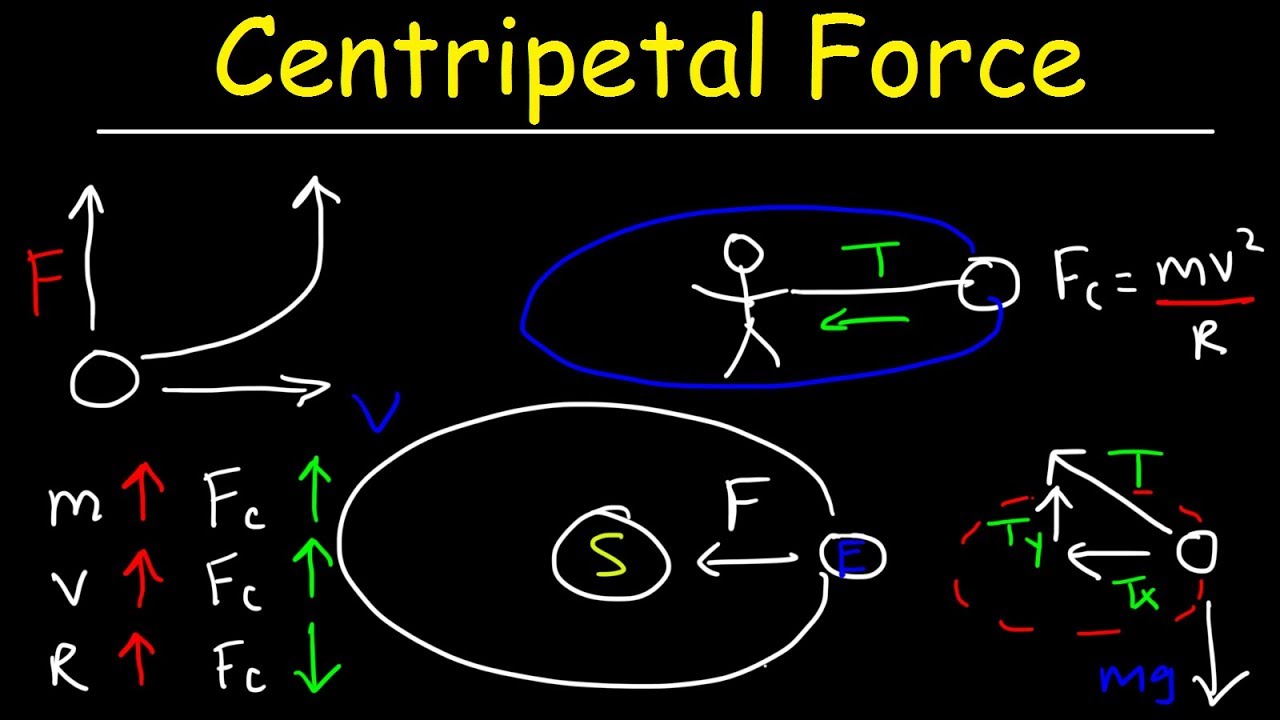
This physics video tutorial explains how to solve many centripetal force problems that cover topics such as the tension force in a horizontal circle or the maximum speed of a ball that a rope can support without breaking. This video only contains examples and practice problems on uniform circular motion where the speed of an object is constant while traveling in a circle.
Centripetal Acceleration:
https://www.youtube.com/watch?v=ZbLirQuT9uU
What Is a Centripetal Force?
https://www.youtube.com/watch?v=SQX22VVmRPs
Centripetal Force Physics Problems:
https://www.youtube.com/watch?v=ZZx3mYNk2wg
Tetherball Physics Problems:
https://www.youtube.com/watch?v=G0RikmNonoU
Tension Force - Vertical Circle:
https://www.youtube.com/watch?v=K9zIjUeI32k
_______________________________
Static Friction & Centripetal Force:
https://www.youtube.com/watch?v=dMgyy95uJUg
Normal Force on a Hill:
https://www.youtube.com/watch?v=Ec6btKP4qfg
Banked Turn Physics Problems:
https://www.youtube.com/watch?v=FWXT-IzgbP0
Non-Uniform Circular Motion:
https://www.youtube.com/watch?v=XlvD5_0FVSc
Gravitational Force:
https://www.youtube.com/watch?v=Ep1jIhHdf2A
______________________________
Circular Motion Review:
https://www.youtube.com/watch?v=_psIWtPBHzA
Kinetic Energy and Potential Energy:
https://www.youtube.com/watch?v=DyaVgHGssos
Work, Energy, and Power:
https://www.youtube.com/watch?v=_MR1Dp8-F8w
Full-Length Videos and Worksheets:
https://www.patreon.com/MathSc....ienceTutor/collectio
Physics PDF Worksheets:
https://www.video-tutor.net/ph....ysics-basic-introduc

Educational video for children in which they will learn the /j/ or "y" sound sound, like in the word "yo-yo." Little ones will discover how to pronounce one of the sounds of the letter Y through a fun song and numerous examples alongside our favorite seal, Feli. Phonics is a very successful method used to teach reading through letter sounds. In this simple video for children who are beginning to read, we work on phonemic awareness and phonological awareness, two important skills for early readers and young children who are developing reading skills. It is an interactive video that asks viewers to participate by singing and repeating the sounds along with Feli.
This video is a very useful and interesting resource for children to learn the sounds of the English language. It is an excellent video for preschool, primary, and bilingual education.
Thanks for visiting us! If you want your children to smile and learn, subscribe! :D
If you like our videos, download Smile and Learn now. You’ll discover thousands of activities for children aged 3 to 12 years, all designed by educators. We have hundreds of games, interactive stories and videos in five languages: English, Spanish, Portuguese, Italian, Turkish and French. Try a month for free and start the adventure!
www.smileandlearn.com

Pythagoras theorem states that, the sum of the squares on the legs of a right triangle is equal to the square on the hypotenuse (the side opposite the right angle)
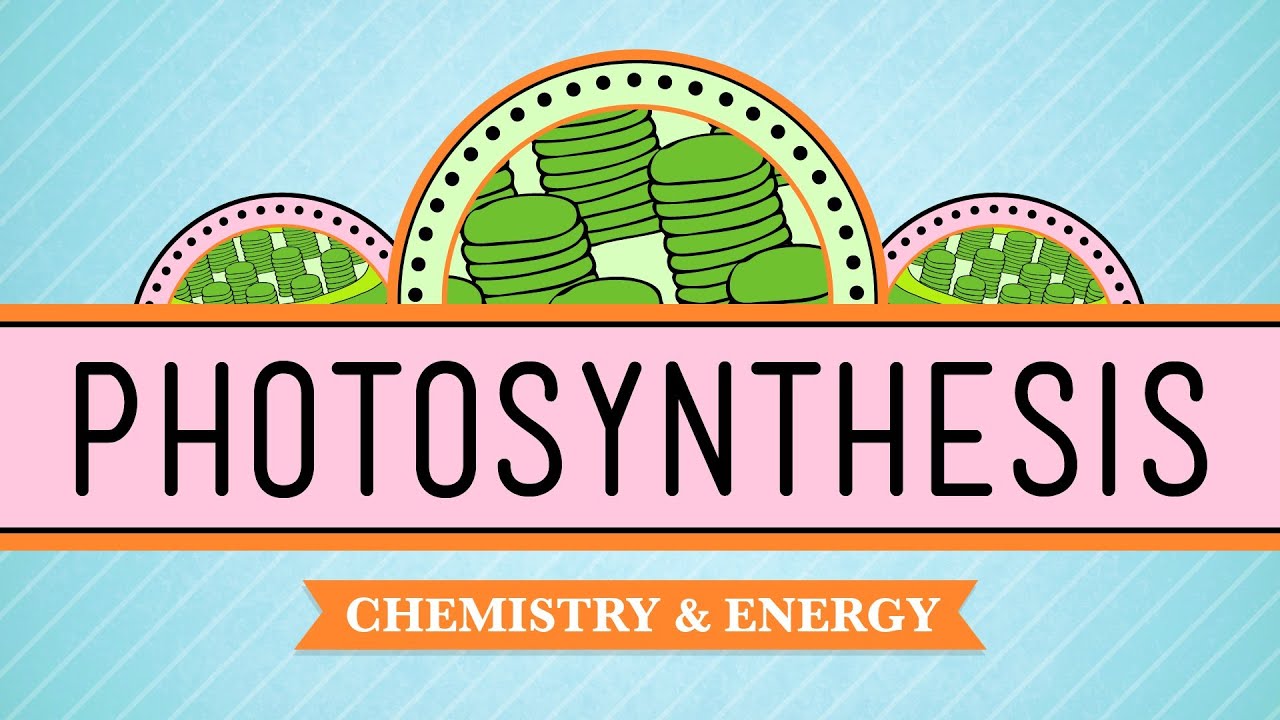
Hank explains the extremely complex series of reactions whereby plants feed themselves on sunlight, carbon dioxide and water, and also create some by products we're pretty fond of as well.
This video uses sounds from Freesound.org.
Citations:
http://biology.about.com/od/pl....antbiology/a/aa05060
http://www.rsc.org/Education/T....eachers/Resources/cf
http://www.ncbi.nlm.nih.gov/books/NBK21598/
http://www.life.illinois.edu/g....ovindjee/paper/gov.h
http://scienceaid.co.uk/biolog....y/biochemistry/photo
http://www.biology-innovation.....co.uk/pages/plant-bi
http://chemistry.about.com/od/....lecturenotesl3/a/pho
http://www.bio.umass.edu/biolo....gy/conn.river/calvin
http://www.talkorigins.org/faq....s/thermo/probability
Table of Contents:
1) Water 1:16
2) Carbon Dioxide 1:32
3) Sunlight/Photons 1:43
4) Chloroplasts 1:57
5) Light Reaction/Light-Dependent 2:42
a. Photosystem II 3:33
b. Cytochrome Complex 5:54
c. ATP Synthase 6:16
d. Photosystem I 7:06
6) Dark Reactions/Light-Independent 7:55
a. Phase 1 - Carbon Fixation 8:50
b. Phase 2 - Reduction 11:31
c. Phase 3 - Regeneration 12:02
Crash Course is on Patreon! You can support us directly by signing up at http://www.patreon.com/crashcourse
Want to find Crash Course elsewhere on the internet?
Facebook - http://www.facebook.com/YouTubeCrashCourse
Twitter - http://www.twitter.com/TheCrashCourse
Instagram - https://www.instagram.com/thecrashcourse/
CC Kids: http://www.youtube.com/crashcoursekids

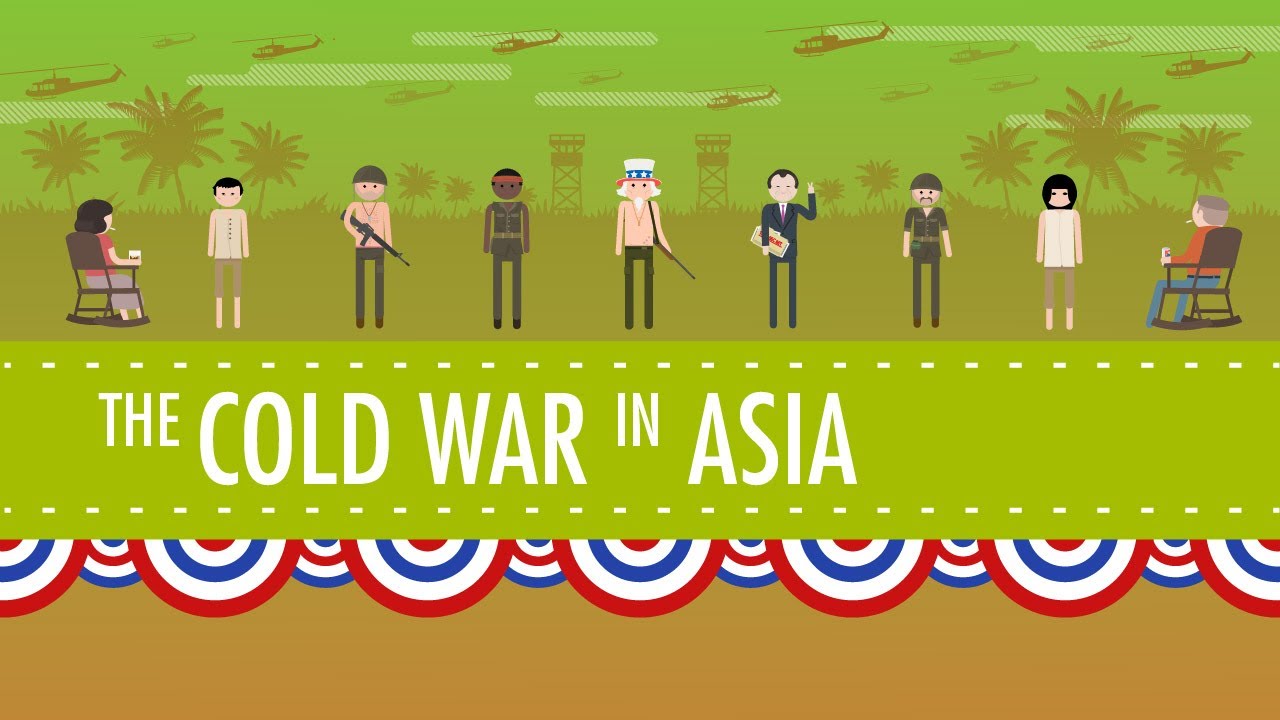
In which John Green teaches you about the Cold War as it unfolded in Asia. As John pointed out last week, the Cold War was occasionally hot, and a lot of that heat was generated in Asia. This is starting to sound weird with the hot/cold thing, so let's just say that the United States' struggle against communist expansion escalated to a full-blown, boots-on-the-ground war in Korea and Vietnam. In both of these cases, the United States sent soldiers to intervene in civil wars that it looked like communists might win. That's a bit of a simplification, but John will explain it all to you.
Hey teachers and students - Check out CommonLit's free collection of reading passages and curriculum resources to learn more about the events of this episode. While The Vietnam War was happening very far away from home, it had a major impact on American soldiers and civilians: https://www.commonlit.org/text....s/introduction-to-th
Americans with televisions had the war broadcasted right into their living rooms, leading to an immense Vietnam War resistance effort: https://www.commonlit.org/text....s/resistance-to-the-
Want to learn more about the Cold War? Check out these other videos from Crash Course:
USA vs USSR Fight! The Cold War: Crash Course World History #39:
https://www.youtube.com/watch?v=y9HjvHZfCUI
The Cold War: Crash Course US History #37:
https://www.youtube.com/watch?v=9C72ISMF_D0
George HW Bush and the End of the Cold War: Crash Course US History #44:
https://www.youtube.com/watch?v=L-K19rVDxoM
The Cold War and Consumerism: Crash Course Computer Science #24:
https://www.youtube.com/watch?v=m8i38Yq1wX4
Post-War Rebuilding and the Cold War: Crash Course European History #41:
https://www.youtube.com/watch?v=-rkIqtV07HE
Chapters:
Introduction: The Cold War in Asia 00:00
The Korean War 0:28
Eisenhower's Election 3:05
Cost of the Korean War 3:20
Mystery Document 4:18
Ho Chi Minh 5:19
American Involvement in Vietnam 5:55
The Gulf of Tonkin Incident 7:02
Operation Rolling Thunder 8:13
Fighting in Vietnam 8:41
Public Opinion and the Vietnam War 9:38
Nixon's Plan to Leave Vietnam 10:34
Anti-War Sentiments 11:19
The End of the Vietnam War 11:52
Credits 13:09
--
Crash Course is on Patreon! You can support us directly by signing up at http://www.patreon.com/crashcourse
Want to find Crash Course elsewhere on the internet?
Facebook - http://www.facebook.com/YouTubeCrashCourse
Twitter - http://www.twitter.com/TheCrashCourse
Instagram - https://www.instagram.com/thecrashcourse/
CC Kids: http://www.youtube.com/crashcoursekids

Nesta aula iremos descobrir como visualizar equações e inequações no plano cartesiano, utilizando o Geogebra.
Aula de inequação modular citada no vídeo:
https://youtu.be/oOP32rNcOLg
Aula Anterior (Aula 02 - Como construir Gráficos):
https://youtu.be/GrdcTUrCIcw
Próxima Aula (Aula 04 - Função Inversa com o Geogebra):
https://youtu.be/qmYbOT4JPtg
Site:
https://professordouglasmaioli.com.br/
💻📱 Playlists do Canal:
Pré-Cálculo:
https://www.youtube.com/playli....st?list=PLrOyM49ctTx
Cálculo I:
https://www.youtube.com/playli....st?list=PLrOyM49ctTx
Análise Combinatória:
https://youtube.com/playlist?l....ist=PLrOyM49ctTx-RnT
Matemática Básica:
https://www.youtube.com/playli....st?list=PLrOyM49ctTx
Fundamentos Matemáticos para Computação (Matemática Discreta):
https://www.youtube.com/playli....st?list=PLrOyM49ctTx
Teoria dos Grafos (Com implementações em Python)
https://youtube.com/playlist?l....ist=PLrOyM49ctTx-xty
Introdução ao C++:
https://youtube.com/playlist?l....ist=PLrOyM49ctTx9ZSF
Estruturas de Dados:
https://youtube.com/playlist?l....ist=PLrOyM49ctTx_AMg
Seja um padrinho/madrinha desse Canal e ajude esse projeto crescer, levando ensino gratuito de qualidade cada vez mais longe:
https://www.padrim.com.br/Cana....lProfessorDouglasMai
Instagram: @professordouglasmaioli

The Chupacabra Ate the Candelabra
by Marc Tyler Nobleman
Illustrated by Ana Aranda
Read by Let's Read Stories
"The monster of ancient lore gets a cute makeover in a colorful picture book full of word play and laugh-out-loud twists." - Seira Wilson, Amazon Editor
With its hilarious dialogue, trio of bumbling goats, and fantastically zany villain, this unique, laugh-out-loud story based on a legendary monster is sure to crack up kids and grown-ups alike.
Like most goats, Jayna, Bumsie, and Pep’s greatest fear is being eaten for dinner by the legendary chupacabra—it’s common knowledge that goats are a chupacabra’s favorite food! One night, tired of living in fear, the impetuous goats whip out their trusty candelabra and head off to find the beast and scare it away before it can find them. Little do they know that candelabras are the chupacabra’s third-favorite food . . . and he isn’t about to stop there. This chupacabra has quite the appetite, and the goats are in for a big surprise!
Click here to purchase The Chupacabra Ate the Candelabra: https://www.amazon.com/Chupaca....bra-Candelabra-Marc-

Arrhenius definition of acids and bases
Watch the next lesson: https://www.khanacademy.org/science/biology/water-acids-and-bases/acids-bases-and-ph/v/bronsted-lowry-definition-of-acids-and-bases?utm_source=YT&utm_medium=Desc&utm_campaign=biology
Missed the previous lesson? https://www.khanacademy.org/science/biology/water-acids-and-bases/acids-bases-and-ph/v/autoionization-water?utm_source=YT&utm_medium=Desc&utm_campaign=biology
Biology on Khan Academy: Life is beautiful! From atoms to cells, from genes to proteins, from populations to ecosystems, biology is the study of the fascinating and intricate systems that make life possible. Dive in to learn more about the many branches of biology and why they are exciting and important. Covers topics seen in a high school or first-year college biology course.
About Khan Academy: Khan Academy offers practice exercises, instructional videos, and a personalized learning dashboard that empower learners to study at their own pace in and outside of the classroom. We tackle math, science, computer programming, history, art history, economics, and more. Our math missions guide learners from kindergarten to calculus using state-of-the-art, adaptive technology that identifies strengths and learning gaps. We've also partnered with institutions like NASA, The Museum of Modern Art, The California Academy of Sciences, and MIT to offer specialized content.
For free. For everyone. Forever. #YouCanLearnAnything
Subscribe to Khan Academy's Biology channel: https://www.youtube.com/channe....l/UC82qE46vcTn7lP4tK
Subscribe to Khan Academy: https://www.youtube.com/subscr....iption_center?add_us

¡Bienvenidos a un nuevo video de nuestro canal para aprender español! Hoy exploraremos cómo usar preposiciones y estructuras esenciales en español para comunicar ideas de manera más completa y precisa.
00:02 1️⃣ Preposiciones Comunes y su Uso
Las preposiciones son palabras clave para conectar ideas y expresar relaciones en español. En esta sección, aprenderemos a utilizar preposiciones de lugar, tiempo y medio. Observa los ejemplos prácticos que te ayudarán a usarlas en tus conversaciones.
Ejemplos:
¿Cómo vas al trabajo?
"🚲 Voy en bici."
"🚇 Él va en metro."
¿De quién es esta carta?
"📬 La carta es de mi amigo."
"👵👴 La carta es de mis abuelos."
Consejo: Practica con preposiciones como en, de, con, por, ante y frente a para expresar relaciones de lugar y pertenencia.
01:04 2️⃣ Verbos con Complemento Indirecto
En español, algunos verbos necesitan un complemento indirecto (me, te, le, nos, os, les) para indicar a quién va dirigida la acción. Esto es fundamental para expresar quién recibe o se beneficia de la acción en la oración.
Ejemplos:
"❓ ¿Me puedes explicar cómo funciona esto?"
"🎉 Te felicito por tu nuevo trabajo."
Consejo: Recuerda que estos complementos indirectos se usan para señalar la persona que recibe o beneficia de la acción.
01:54 3️⃣ Verbos con Dos Objetos (Directo e Indirecto)
Algunos verbos requieren tanto un objeto directo como un objeto indirecto. En estos casos, el complemento indirecto suele colocarse primero. Es una estructura útil para indicar qué persona recibe el objeto directo de la acción.
Ejemplos:
"📲 Te envié un mensaje" → mensaje = objeto directo, te = objeto indirecto
"📚 Dame el libro" → libro = objeto directo, me = objeto indirecto
Consejo: En español, usa me, te, le, nos, os, les como complementos indirectos para clarificar quién recibe la acción en frases con dos objetos.
03:43 4️⃣ Preguntas de “¿Dónde?” y Preposiciones de Lugar
Las preposiciones de lugar son esenciales para describir ubicaciones y responder a preguntas sobre el lugar. Aprender estas estructuras te ayudará a hablar de ubicaciones en español.
Ejemplos:
"¿Dónde está el perro? 🐶"
"Duerme 🛏️ debajo de la mesa."
"Está de pie frente a la 🔥 chimenea."
Consejo: Practica preposiciones de lugar como debajo de, frente a, al lado de para ubicar objetos o personas.
03:45 5️⃣ Preguntas de “¿Cuándo?” y Expresiones de Tiempo
Las expresiones de tiempo son importantes para indicar cuándo ocurren las acciones. Responder a preguntas de “¿cuándo?” es crucial para organizar eventos y rutinas.
Ejemplos:
"⏰ ¿Cuándo vuelves a casa?"
"Estaré allí en una hora."
"El 🚌 bus sale en 15 minutos."
Otros ejemplos:
"🏃♂️ Antes del desayuno, siempre salgo a correr."
"🎿 En invierno, voy a esquiar."
Consejo: Utiliza en, antes de, después de y días de la semana para hablar de momentos específicos.
04:35 🔄 Resumen
Hoy hemos repasado:
📍 Preposiciones comunes para expresar lugar y pertenencia.
👤 Complementos indirectos en verbos.
🗺️ Preposiciones de lugar para responder preguntas de “¿dónde?”.
🕒 Expresiones de tiempo para responder preguntas de “¿cuándo?”.
Practicad estas estructuras para mejorar vuestro español y construir frases más complejas y precisas.
¡No olvides suscribirte y activar la campanita 🔔 para no perderte nuevos videos!
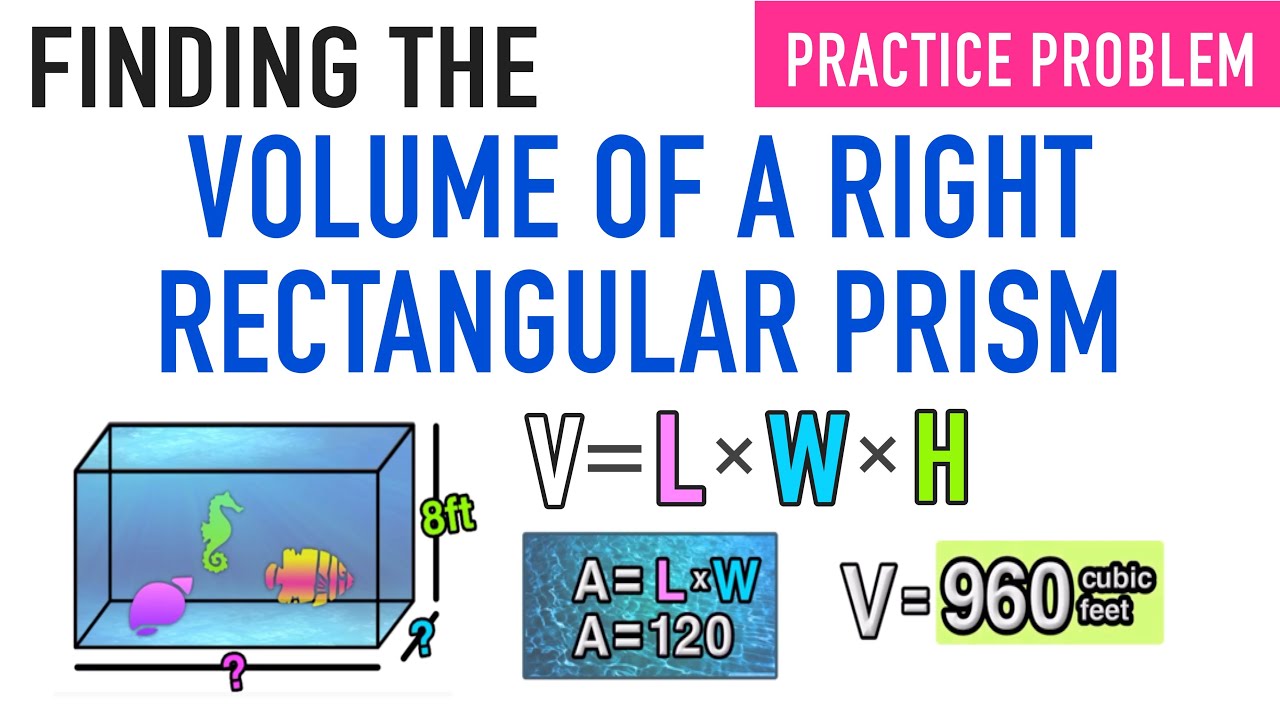
On this lesson, we will work through a finding the volume of a right rectangular prism example using the volume of a rectangular prism formula.
Join us on this flipped math lesson for CCLS 5.MD.C.5.B where we work through a problem that was inspired by a released common core exam item where we gain apply our understanding of volume and right rectangular prisms to a real world situation.
This lesson answers the question: What is a right rectangular prism? How do I find volume? What is the volume in cubic feet? What is the formula for finding volume of a fish tank? What is length, width, and height? How do I measure volume? How do I find volume if I know the area?
Our lessons are perfect for flipped classroom math teachers and students and for warm-up and exit ticket activities . This lesson is aligned with the 6th grade common core math learning standards for math and the SAT math curriculum as well.
Be sure to join our mailing list at http://www.mashupmath.com

Courses on Khan Academy are always 100% free. Start practicing—and saving your progress—now: https://www.khanacademy.org/sc....ience/physics/work-a
Introduction to simple machines, mechanical advantage and moments. Created by Sal Khan.
Watch the next lesson: https://www.khanacademy.org/science/physics/work-and-energy/mechanical-advantage/v/mechanical-advantage-part-2?utm_source=YT&utm_medium=Desc&utm_campaign=physics
Missed the previous lesson? https://www.khanacademy.org/science/physics/work-and-energy/hookes-law/v/vertical-springs-and-energy-conservation?utm_source=YT&utm_medium=Desc&utm_campaign=physics
Physics on Khan Academy: Physics is the study of the basic principles that govern the physical world around us. We'll start by looking at motion itself. Then, we'll learn about forces, momentum, energy, and other concepts in lots of different physical situations. To get the most out of physics, you'll need a solid understanding of algebra and a basic understanding of trigonometry.
About Khan Academy: Khan Academy offers practice exercises, instructional videos, and a personalized learning dashboard that empower learners to study at their own pace in and outside of the classroom. We tackle math, science, computer programming, history, art history, economics, and more. Our math missions guide learners from kindergarten to calculus using state-of-the-art, adaptive technology that identifies strengths and learning gaps. We've also partnered with institutions like NASA, The Museum of Modern Art, The California Academy of Sciences, and MIT to offer specialized content.
For free. For everyone. Forever. #YouCanLearnAnything
Subscribe to Khan Academy’s Physics channel: https://www.youtube.com/channe....l/UC0oGarQW2lE5PxhGo
Subscribe to Khan Academy: https://www.youtube.com/subscr....iption_center?add_us
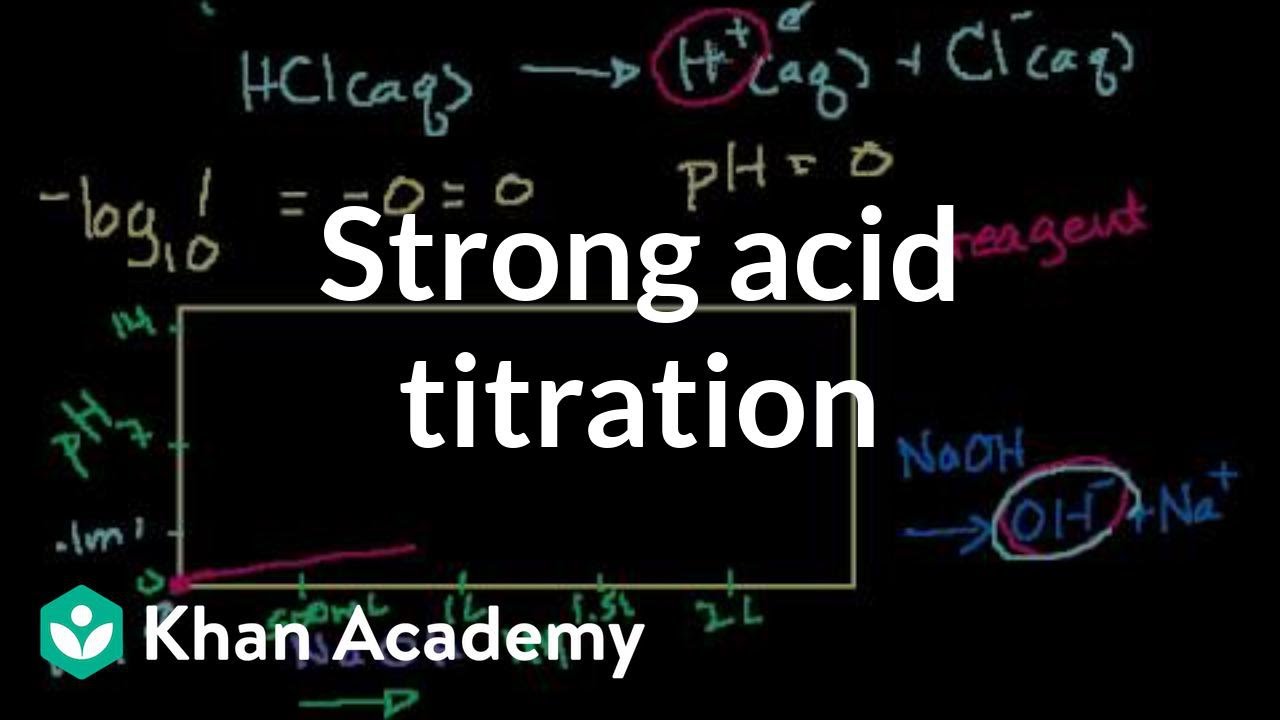
Strong acid titration and equivalence point
More free lessons at: http://www.khanacademy.org/video?v=299o6c-Fkz4

Summer professional development is a fixture for educators and school districts, but there’s consensus that it shouldn’t be business as usual after a pandemic-disrupted school year. Education Week talked to teachers and principals about how they think this year’s PD can address crucial issues like students’ social-emotional learning needs, academics, and how to make sure teachers have a hand in shaping their training.
_________________________________________
Want more stories about schools across the nation, including the latest news, analysis, and unique perspectives on education issues? Visit www.edweek.org.
About Education Week:
Education Week is America’s most trusted source of independent K-12 education news, analysis, and opinion. Our comprehensive coverage of education policy takes the form of articles, photography, and video journalism.
Published by the nonprofit organization Editorial Projects in Education, Education Week has been providing award-winning coverage of the field for over 35 years.
Follow Education Week:
- Subscribe to our channel: https://www.youtube.com/user/e....ducationweek?sub_con
- Facebook: https://www.facebook.com/edweek
- Twitter: https://twitter.com/educationweek
- LinkedIn: https://www.linkedin.com/company/edweek/
- Instagram: https://www.instagram.com/educationweek/
To license video footage from Editorial Projects in Education, please contact Education Week Library at reprints@educationweek.org

Students explore the phenomenon of electricity as they learn about current electricity and necessary conditions for the existence of an electric current. To make sense of this phenomenon, students construct a simple electric circuit and galvanic cell to help them understand voltage, current, and resistance. They also use the disciplinary core ideas of energy and electric current to better understand the crosscutting concept of energy transfer.
View the full lesson on TeachEngineering:
https://www.teachengineering.o....rg/lessons/view/cub_
TeachEngineering has over 1,500 FREE lessons and activities. Visit http://www.TeachEngineering.org for more!

Many of today's popular sports, like soccer, basketball, and tennis, involve using balls, but each ball is unique in its own way. These balls are carefully created with special features to make playing each sport a fun and exciting experience. Students explore the concept of reverse engineering to understand how and why engineers use it. Then, students investigate how different balls bounce by dropping them from various heights and create graphs to show their findings. Through their investigation and analysis, they are able to reverse-engineer different characteristics of several types of balls.
View the full lesson on TeachEngineering:
https://www.teachengineering.o....rg/activities/view/b
TeachEngineering has over 1,500 FREE lessons and activities. Visit https://www.teachengineering.org/ for more
Music - EDM Detection Mode By Kevin MacLeod

Welcome to "How to Solve One-Step Equations (Addition and Subtraction)" with Mr. J! Need help with solving one-step equations? You're in the right place!
Whether you're just starting out, or need a quick refresher, this is the video for you if you're looking for help with addition and subtraction one-step equations. Mr. J will go through one-step equation examples and explain the steps of solving one-step equations.
✅ Multiplication and Division One-Step Equations:
https://youtu.be/XhBlKqxFu08
✅ One-Step Equations (Addition, Subtraction, Multiplication, and Division):
https://youtu.be/L0_K89UJfJY
✅ Two-Step Equations:
https://youtu.be/AP5MbH88cdo
✅ Need help with another topic?... Just search what topic you are looking for + "with Mr. J" (for example, "adding fractions with Mr. J".
About Math with Mr. J: This channel offers instructional videos that are directly aligned with math standards. Teachers, parents/guardians, and students from around the world have used this channel to help with math content in many different ways. All material is absolutely free.
Click Here to Subscribe to the Greatest Math Channel On Earth: https://goo.gl/XHTrfY
Follow Mr. J on Twitter: @MrJMath5
Email: math5.mrj@gmail.com
Music: https://www.bensound.com/royalty-free-music
Hopefully this video is what you're looking for when it comes to addition and subtraction one-step equations.

For this maker challenge, students become biomedical engineers who design, create, and test a medical device that measures a patient’s pulse using a microcontroller, LED, and light sensor. Students use data collected from the device they build to determine how to best visualize the results, so that a doctor can view the patient’s pulse on the computer screen. During the challenge, students learn about basic coding, the capabilities of microcontrollers, how sensors gather data, how the human circulatory system works, and how to plot real data. Finally, students are challenged to make their systems portable so that they create wearable health technology. This is a great project for a high school senior design team project.
View the full activity at TeachEngineering:
https://www.teachengineering.o....rg/makerchallenges/v
TeachEngineering has over 1,500 FREE lessons and activities. Visit http://www.TeachEngineering.org for more!
Music: Komputo - Francis Preve