Top videos

Sponsered by https://www.youtube.com/c/GeeklyEDU
Multiply by drawing lines!
This might be vedic math from India.
Maybe from Japan.
Who knows - let me know in the comments!
This is a great visual way of seeing multiplication - and because it does not use any multiplication tables, it makes it accessible to all learners.
See more great math tricks here: https://www.youtube.com/user/tecmath
To donate to the tecmath channel:https://paypal.me/tecmath
To support tecmath on Patreon: https://www.patreon.com/tecmath
To buy tecmath mechandise: https://teespring.com/stores/tecmath-store

The clock calculator light bulb problem - can you solve this math problem?
The clock calculator light bulb problem - can you solve this math problem?
To donate to the tecmath channel:https://paypal.me/tecmathlocale.x=en_AU
To support tecmath on Patreon: https://www.patreon.com/tecmath
To buy tecmath mechandise: teespring.com/stores/tecmath-store
#mathproblems
#mathriddles
#mathsforfun

This video looks at speed, distance and time questions as seen at the following website:
http://www.speeddistancetime.info/test
To support free math by tecmath on Patreon (thankyou): https://www.patreon.com/tecmath
BTW....my best time is under one minute! You can beat me!
The trick to getting these types of speed distance time calculations is to think of the times used as fractions, and then apply the time formula (time = distance/speed).
Other questions can be solved using basic logic. To donate to the tecmath channel: https://paypal.me/tecmath?locale.x=en_AU To donate to the tecmath channel: https://paypal.me/tecmath?locale.x=en_AU
To support tecmath on Patreon: https://www.patreon.com/tecmath
To buy tecmath mechandise: https://teespring.com/stores/tecmath-store

Working out percentage discounts is easy, just use one or two of the tricks suggested in this math lesson.
To work out the discount subtract from one hundred percent, then use a mental break up technique to calculate the percentage discount. To donate to the tecmath channel: https://paypal.me/tecmath?locale.x=en_AU To donate to the tecmath channel: https://paypal.me/tecmath?locale.x=en_AU
To support tecmath on Patreon: https://www.patreon.com/tecmath
To buy tecmath mechandise: https://teespring.com/stores/tecmath-store

Being able to add two numbers quickly is an important maths skill.
This lesson shows how to add quickly in your head, from left to right (the way you would say the answer), through carrying numbers forward.
Mental computation - practice it - especially addition, as this is the most common use of maths used in society.
To donate to the tecmath channel:https://paypal.me/tecmath
To support tecmath on Patreon: https://www.patreon.com/tecmath
To buy tecmath mechandise: https://teespring.com/stores/tecmath-store
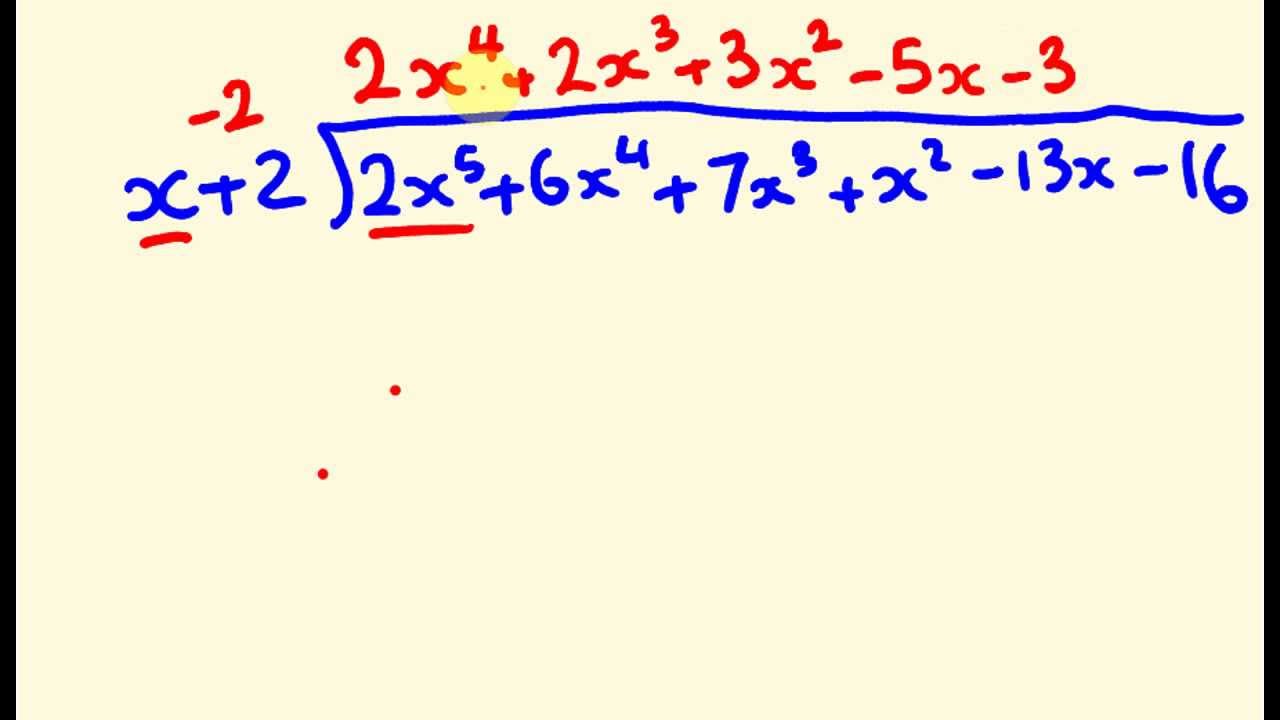
Direct division of Polynomials To donate to the tecmath channel: https://paypal.me/tecmath?locale.x=en_AU To donate to the tecmath channel: https://paypal.me/tecmath?locale.x=en_AU
To support tecmath on Patreon: https://www.patreon.com/tecmath
To buy tecmath mechandise: https://teespring.com/stores/tecmath-store

mm, cm, m, km. How to convert between these!
To donate to the tecmath channel:https://paypal.me/tecmath
To support tecmath on Patreon: https://www.patreon.com/tecmath
To buy tecmath mechandise: https://teespring.com/stores/tecmath-store
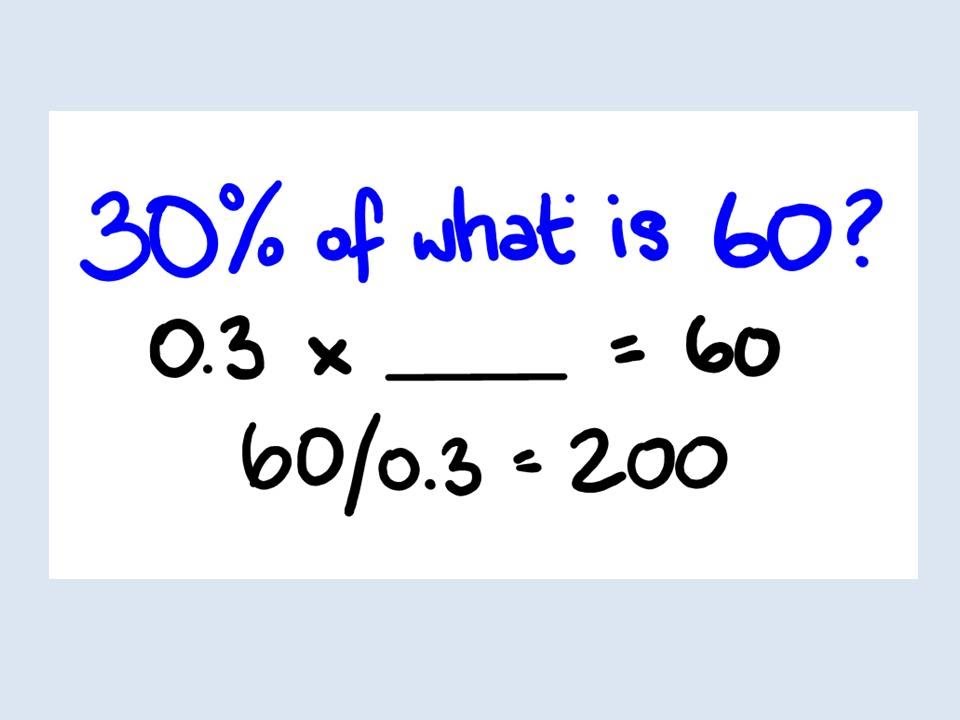
Work out percent problems of an unknown amount with this fast math lesson.
This video shows how to easily solve percentage problems and looks at how to convert percentages to fractions and percentages and fractions to decimals.
This lesson shows two methods for working out the problems -- enabling learners to work with the method that works best for them. These strategies are both easy for students to learn and for teachers to teach -- and give a greater understanding of the relationship between percent, decimals and fractions when describing parts of an amount.
The first method explored uses the fraction of the percent (putting the number out of 100), and then easily and instantly converting this to a decimal. Then using some simple equation juggling we solve the equation to get the answer. This type of method is good for those who can follow simple steps and are capable when shifting around numbers in an equation to get an answer.
Using the second method we look at where we can solve the problem by changing the value to one percent then 100 percent.
This is another video from the tecmath channel made in response to a question from a viewer -- so the other lesson you can learn is this -- if you have any mathematical questions and you need them answered -- then let me know -- I'd be glad to help! Even better if we can find a math trick or two along the way!
To donate to the tecmath channel:https://paypal.me/tecmath
To support tecmath on Patreon: https://www.patreon.com/tecmath
To buy tecmath mechandise: https://teespring.com/stores/tecmath-store

How Many Faces, Edges And Vertices Does A Rectangular Prism Have?
Here we’ll look at how to work out the faces, edges and vertices of a rectangular prism.
We’ll start by counting the faces, these are the flat surfaces. A rectangular prism has 6 faces altogether - all rectangular in shape.
Next we’ll work out how many edges the rectangular prism has, which are where two faces meet. A rectangular proven has 12 edges.
Next we’ll count the corners of the rectangular prism (the corners). Altogether it has 8.
For the full playlist for the faces, edges and Vertices of a whole lot of 3D shapes go to https://www.youtube.com/playli....st?list=PLjbxBzUM6SL
To donate to the tecmath channel: https://paypal.me/tecmath?locale.x=en_AU
To support tecmath on Patreon: https://www.patreon.com/tecmath
To buy tecmath mechandise: https://teespring.com/stores/tecmath-store
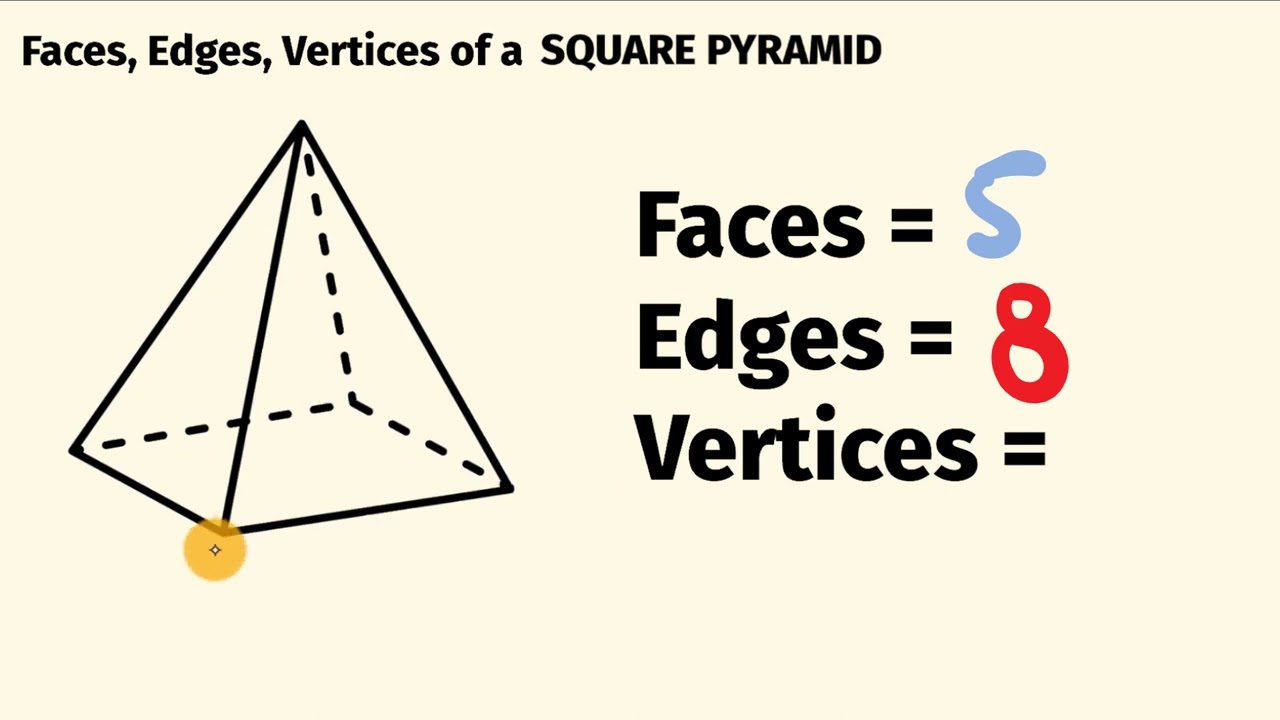
How Many Faces, Edges And Vertices Does A Square Pyramid Have?
Here we’ll look at how to work out the faces, edges and vertices of a square pyramid.
We’ll start by counting the faces, these are the flat surfaces that make the pyramid. A square pyramid has 5 faces altogether - 4 triangular faces, as well as 1 rectangular face.
Next we’ll work out how many edges the pyramid has, which are where two faces meet. A square pyramid has 8 edges.
Next we’ll count the corners of the pyramid (the corners). A square pyramid has 5 vertices.
For the full playlist for the faces, edges and Vertices of a whole lot of 3D shapes go to https://www.youtube.com/playli....st?list=PLjbxBzUM6SL
To donate to the tecmath channel: https://paypal.me/tecmath?locale.x=en_AU
To support tecmath on Patreon: https://www.patreon.com/tecmath
To buy tecmath mechandise: https://teespring.com/stores/tecmath-store
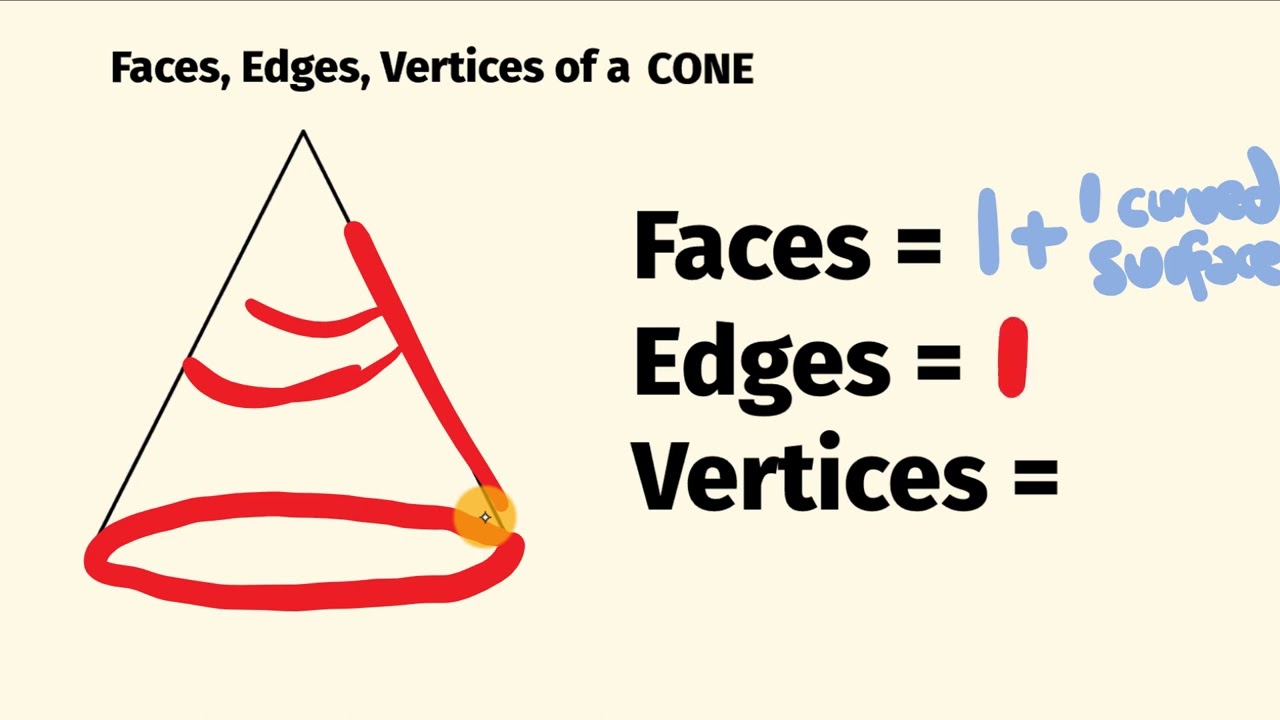
How Many Faces, Edges And Vertices Does A Cone Have?
Here we’ll look at how to work out the faces, edges and vertices of a cone.
We’ll start by counting the faces, these are the flat surfaces that make the cone. A cone has 1 face altogether - 1 circular base, as well as 1 curved surface.
Next we’ll work out how many edges the cone has, which are where two faces meet. A cone has 1 edge.
Next we’ll count the corners of the cone (the corners). No surprises, a cone does not have any vertices.
For the full playlist for the faces, edges and Vertices of a whole lot of 3D shapes go to https://www.youtube.com/playli....st?list=PLjbxBzUM6SL
To donate to the tecmath channel: https://paypal.me/tecmath?locale.x=en_AU
To support tecmath on Patreon: https://www.patreon.com/tecmath
To buy tecmath mechandise: https://teespring.com/stores/tecmath-store

Forget finding common denominators when adding dissimilar fractions - this way is much faster and easier. This video also looks at how to deal with mixed numbers and simplification.
To donate to the tecmath channel:https://paypal.me/tecmath
To support tecmath on Patreon: https://www.patreon.com/tecmath
To buy tecmath mechandise: https://teespring.com/stores/tecmath-store

How to convert binary to decimal.
Here's the more detailed explanation:
https://www.youtube.com/watch?v=64bXbK104qk
Support us on Patreon:
https://www.patreon.com/join/tecmath To donate to the tecmath channel: https://paypal.me/tecmath?locale.x=en_AU
To support tecmath on Patreon: https://www.patreon.com/tecmath
To buy tecmath mechandise: https://teespring.com/stores/tecmath-store
#convertbinary
#binary
#binarydecimal

How Many Faces, Edges And Vertices Does A Cube Have?
Here we’ll look at how to work out the faces, edges and vertices of a cube.
We’ll start by counting the faces, these are the flat surfaces that make the cube. A cube has 6 faces altogether - all square in shape.
Next we’ll work out how many edges the cube has, which are where two faces meet. A cube has 12 edges.
Next we’ll count the corners of the cube (the corners). Do that and you'll get 8.
For the full playlist for the faces, edges and Vertices of a whole lot of 3D shapes go to https://www.youtube.com/playli....st?list=PLjbxBzUM6SL
To donate to the tecmath channel: https://paypal.me/tecmath?locale.x=en_AU
To support tecmath on Patreon: https://www.patreon.com/tecmath
To buy tecmath mechandise: https://teespring.com/stores/tecmath-store

Adding large numbers in your head? No problem - just go left to right using this easy math trick!
Youtube and tecmath has your back - with this, the easiest addition trick ever!
How to instantly add large sets of three digit numbers mentally.
Using this mental math method you will be able to add any number of three digit numbers with each other - faster than a calculator! Become a math genius in no time using this trick!
To donate to the tecmath channel:https://paypal.me/tecmath
To support tecmath on Patreon: https://www.patreon.com/tecmath
To buy tecmath mechandise: teespring.com/stores/tecmath-store

Pete the Cat Valentine's Day is Cool - Children's Stories Read Aloud for Kids
by James Dean
Click here to purchase Pete the Cat Valentine's Day is Cool: https://www.amazon.com/Pete-Ca....t-Valentines-Day-Coo
New York Times bestselling author and artist James Dean takes us on an awesome trip with Pete the Cat as he discovers just how special Valentine's Day can be!
At first, Pete thinks Valentine's Day isn't cool...until he realizes all the special cats there are in his life. Pete the Cat: Valentine’s Day Is Cool comes complete with a poster, stickers, and twelve punch-out Valentine’s Day cards.
Once Pete the Cat realizes how much fun Valentine’s Day can be, he decides to make valentine cards for his family and friends. But what happens when he realizes he's forgotten to make a card for a very important cat?

The Chupacabra Ate the Candelabra
by Marc Tyler Nobleman
Illustrated by Ana Aranda
Read by Let's Read Stories
"The monster of ancient lore gets a cute makeover in a colorful picture book full of word play and laugh-out-loud twists." - Seira Wilson, Amazon Editor
With its hilarious dialogue, trio of bumbling goats, and fantastically zany villain, this unique, laugh-out-loud story based on a legendary monster is sure to crack up kids and grown-ups alike.
Like most goats, Jayna, Bumsie, and Pep’s greatest fear is being eaten for dinner by the legendary chupacabra—it’s common knowledge that goats are a chupacabra’s favorite food! One night, tired of living in fear, the impetuous goats whip out their trusty candelabra and head off to find the beast and scare it away before it can find them. Little do they know that candelabras are the chupacabra’s third-favorite food . . . and he isn’t about to stop there. This chupacabra has quite the appetite, and the goats are in for a big surprise!
Click here to purchase The Chupacabra Ate the Candelabra: https://www.amazon.com/Chupaca....bra-Candelabra-Marc-

Charlotte the Scientist Is Squished
by Camille Andros
Illustrated by Brianne Farley
Read by Let's Read Stories
Charlotte is a serious scientist. She solves important problems by following the scientific method. She has all the right equipment: protective glasses, a lab coat, a clipboard, and a magnifying glass. What she doesn’t have is space. She has so many brothers and sisters (she is a rabbit, after all) that she is too squished to work on her experiments! Can she use science to solve her problem? This funny, satisfying story is a playful introduction to the scientific method and perfect for sparking an interest in STEM subjects.
Click here to purchase Charlotte the Scientist Is Squished: https://www.amazon.com/Charlot....te-Scientist-Squishe

We’ve heard from so many teachers and students who are using Crash Course videos to help with learning amid all this uncertainty, and we are very grateful. Here is some widely applicable, evidence-based public health advice that we put together with the help of our friends at Operation Outbreak and the Sabeti Lab at Harvard.
This video is supported by the Gordon and Betty Moore Foundation through Operation Outbreak and the Sabeti Lab at Harvard University and at Broad Institute of MIT and Harvard.
Complexly also has other great channels like Healthcare Triage with Dr. Aaron Carroll and SciShow that are providing in-depth updates on COVID-19.
SciShow: https://www.youtube.com/c/SciShow
Healthcare Triage: https://www.youtube.com/playli....st?list=PLkfBg8ML-gI
Watch our videos and review your learning with the Crash Course App!
Download here for Apple Devices: https://apple.co/3d4eyZo
Download here for Android Devices: https://bit.ly/2SrDulJ
Crash Course is on Patreon! You can support us directly by signing up at http://www.patreon.com/crashcourse
Thanks to the following patrons for their generous monthly contributions that help keep Crash Course free for everyone forever:
Catherine Conroy, Patty Laqua, Leonora Rossé Muñoz, Stephen Saar, John Lee, Phil Simmons, Alexander Thomson, Mark & Susan Billian, Junrong Eric Zhu, Alan Bridgeman, Jennifer Smith, Matt Curls, Tim Kwist, Ron Lin, Jonathan Zbikowski. Jennifer Killen, Sarah & Nathan Catchings, Brandon Westmoreland, team dorsey, Trevin Beattie, Eric Prestemon, Sam Ferguson, Yasenia Cruz, Eric Koslow, Indika Siriwardena, Khaled El Shalakany, Shawn Arnold, Tom Trval, Siobhán, Ken Penttinen, Nathan Taylor, William McGraw, Justin Zingsheim, Andrei Krishkevich, Jirat, Brian Thomas Gossett, SR Foxley, Ian Dundore, Jason A Saslow, Jessica Wode, Mark, Caleb Weeks, Sam Buck
--
Want to find Crash Course elsewhere on the internet?
Facebook - http://www.facebook.com/YouTubeCrashCourse
Twitter - http://www.twitter.com/TheCrashCourse
Tumblr - http://thecrashcourse.tumblr.com
Support Crash Course on Patreon: http://patreon.com/crashcourse
CC Kids: http://www.youtube.com/crashcoursekids
#crashcourse #covid-19 #reopening

We interrupt your normally scheduled Crash Course content to bring a new and exciting project we're calling 'Recess'! These short, fully animated episodes are going to pop up a few times a year and will shed light on amazing stories from past or current Crash Course subjects that for one reason or another didn't make it into the shows. We're hoping they inspire you to get back into a series you may have drifted away from, or spark an interest in a subject you didn't even know you found cool! So kick back, relax, and enjoy some Recess time.
Crash Course is on Patreon! You can support us directly by signing up at http://www.patreon.com/crashcourse
Thanks to the following Patrons for their generous monthly contributions that help keep Crash Course free for everyone forever:
Mark Brouwer, Nickie Miskell Jr., Jessica Wode, Eric Prestemon, Kathrin Benoit, Tom Trval, Jason Saslow, Nathan Taylor, Divonne Holmes à Court, Brian Thomas Gossett, Khaled El Shalakany, Indika Siriwardena, Robert Kunz, SR Foxley, Sam Ferguson, Yasenia Cruz, Daniel Baulig, Eric Koslow, Caleb Weeks, Tim Curwick, Evren Türkmenoğlu, Alexander Tamas, Justin Zingsheim, D.A. Noe, Shawn Arnold, mark austin, Ruth Perez, Malcolm Callis, Ken Penttinen, Advait Shinde, Cody Carpenter, Annamaria Herrera, William McGraw, Bader AlGhamdi, Vaso, Melissa Briski, Joey Quek, Andrei Krishkevich, Rachel Bright, Alex S, Mayumi Maeda, Kathy & Tim Philip, Montather, Jirat, Eric Kitchen, Moritz Schmidt, Ian Dundore, Chris Peters, Sandra Aft, Steve Marshall
--
Want to find Crash Course elsewhere on the internet?
Facebook - http://www.facebook.com/YouTubeCrashCourse
Twitter - http://www.twitter.com/TheCrashCourse
Tumblr - http://thecrashcourse.tumblr.com
Support Crash Course on Patreon: http://patreon.com/crashcourse
CC Kids: http://www.youtube.com/crashcoursekids

Would you like to play a game, Dr. Falken? Actually, this episode isn't really about games, or Matthew Broderick, or Thermonuclear War. But enough with the long references to 1983's best movie, War Games. Today Jacob and Adriene are going to teach you about Oligopolies, which are kind of like the monopolies that we talked about last week, except with more companies involved. Then we'll get to the games, or rather, the game theory. Which is all about how companies try to compete with each other in the real world.
Crash Course is on Patreon! You can support us directly by signing up at http://www.patreon.com/crashcourse
Thanks to the following Patrons for their generous monthly contributions that help keep Crash Course free for everyone forever:
Mark, Eric Kitchen, Jessica Wode, Jeffrey Thompson, Steve Marshall, Moritz Schmidt, Robert Kunz, Tim Curwick, Jason A Saslow, SR Foxley, Elliot Beter, Jacob Ash, Christian, Jan Schmid, Jirat, Christy Huddleston, Daniel Baulig, Chris Peters, Anna-Ester Volozh, Ian Dundore, Caleb Weeks
--
Want to find Crash Course elsewhere on the internet?
Facebook - http://www.facebook.com/YouTubeCrashCourse
Twitter - http://www.twitter.com/TheCrashCourse
Tumblr - http://thecrashcourse.tumblr.com
Support Crash Course on Patreon: http://patreon.com/crashcourse
CC Kids: http://www.youtube.com/crashcoursekids
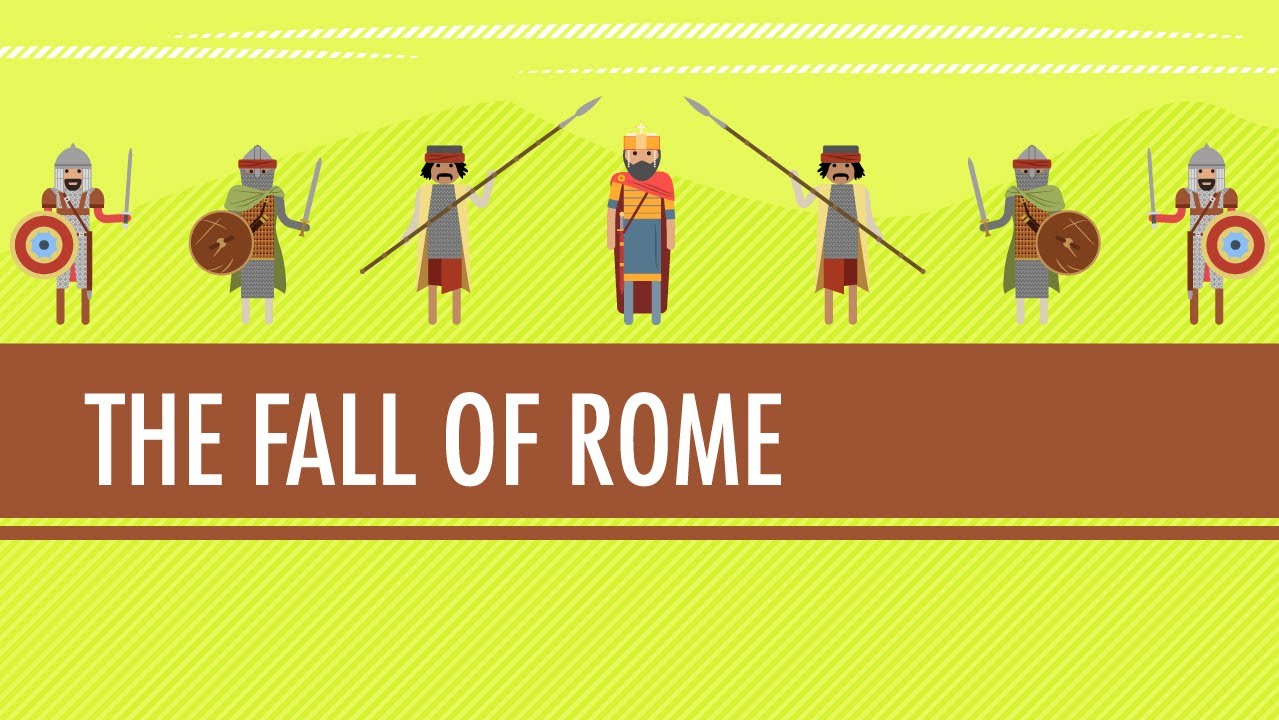
In which John Green teaches you about the fall of the Roman Empire, which happened considerably later than you may have been told. While the Western Roman Empire fell to barbarians in 476 CE, the Byzantines in Constantinople continued the Eastern Empire nicely, calling themselves Romans for a further 1000 years. Find out what Justinian and the rest of the Byzantine emperors were up to over there, and how the Roman Empire dragged out its famous Decline well into medieval times. In addition to all this, you'll learn about ancient sports riots and hipster barbarians, too.
Chapters:
Introduction: The Fall of Rome 00:00
Why Did the Roman Empire Fall? Barbarians at the Gates 0:30
Why Did the Roman Empire Fall? Barbarians Inside the Gates 2:07
An Open Letter to Pants 4:10
Constantine and the Eastern Roman (Byzantine) Empire 5:10
Comparing the Eastern & Western Roman Empires 6:57
Emperor Justinian 8:08
The Orthodox and Catholic Churches Split 10:38
Credits 12:06
Crash Course is on Patreon! You can support us directly by signing up at http://www.patreon.com/crashcourse
Want to find Crash Course elsewhere on the internet?
Facebook - http://www.facebook.com/YouTubeCrashCourse
Twitter - http://www.twitter.com/TheCrashCourse
Instagram - https://www.instagram.com/thecrashcourse/
CC Kids: http://www.youtube.com/crashcoursekids
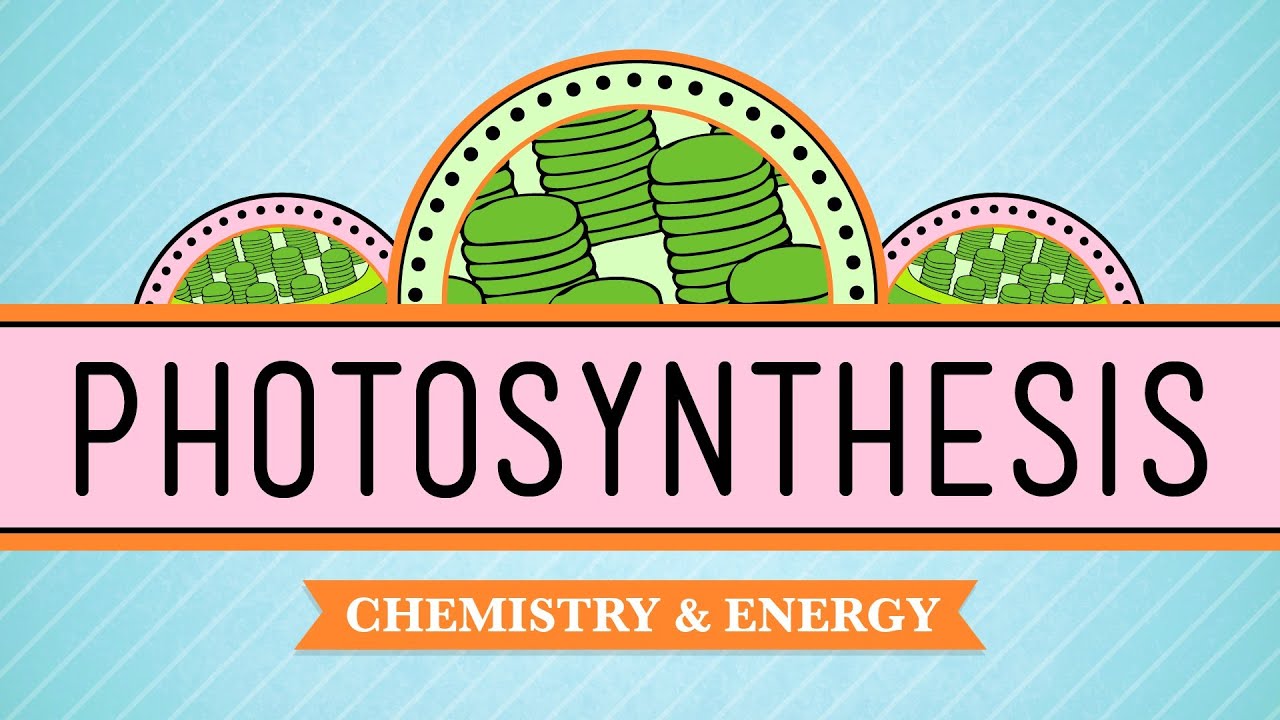
Hank explains the extremely complex series of reactions whereby plants feed themselves on sunlight, carbon dioxide and water, and also create some by products we're pretty fond of as well.
This video uses sounds from Freesound.org.
Citations:
http://biology.about.com/od/pl....antbiology/a/aa05060
http://www.rsc.org/Education/T....eachers/Resources/cf
http://www.ncbi.nlm.nih.gov/books/NBK21598/
http://www.life.illinois.edu/g....ovindjee/paper/gov.h
http://scienceaid.co.uk/biolog....y/biochemistry/photo
http://www.biology-innovation.....co.uk/pages/plant-bi
http://chemistry.about.com/od/....lecturenotesl3/a/pho
http://www.bio.umass.edu/biolo....gy/conn.river/calvin
http://www.talkorigins.org/faq....s/thermo/probability
Table of Contents:
1) Water 1:16
2) Carbon Dioxide 1:32
3) Sunlight/Photons 1:43
4) Chloroplasts 1:57
5) Light Reaction/Light-Dependent 2:42
a. Photosystem II 3:33
b. Cytochrome Complex 5:54
c. ATP Synthase 6:16
d. Photosystem I 7:06
6) Dark Reactions/Light-Independent 7:55
a. Phase 1 - Carbon Fixation 8:50
b. Phase 2 - Reduction 11:31
c. Phase 3 - Regeneration 12:02
Crash Course is on Patreon! You can support us directly by signing up at http://www.patreon.com/crashcourse
Want to find Crash Course elsewhere on the internet?
Facebook - http://www.facebook.com/YouTubeCrashCourse
Twitter - http://www.twitter.com/TheCrashCourse
Instagram - https://www.instagram.com/thecrashcourse/
CC Kids: http://www.youtube.com/crashcoursekids

In which John Green teaches you about the beginnings of the American Revolution in a video titled The Seven Years War. Confusing? Maybe. John argues that the Seven Years' War, which is often called the French and Indian War in the US, laid a lot of the groundwork for the Revolution. More confusing? Why does this war have two names? Why were the French and Indians fighting each other? The Seven Years' war was actually a global war that went on for nine years. I think I'm having trouble making this clear. Anyway, the part of this global war that happened in North America was the French and Indian War. The French and Indian tribes were the force opposing the British, so that's the name that stuck. Let's get away from this war, as it makes my head hurt. Other stuff was going on in the colonies in the 18th century that primed the people for revolution. One was the Great Awakening. A religious revival was sweeping the country, introducing new ideas about religion and how it should be practiced. At the same time, thinkers like John Locke were rethinking the relationship between rulers and the ruled. So in this highly charged atmosphere, you can just imagine what would happen if the crown started trying to exert more control over the colonies. The colonists would probably just rise up, right? We'll see what happens next week.
Read the Mystery Document in its entirety in the Minutes of the Provincial Province of Pennsylvania Vol. IX: https://bit.ly/3jxHcrc
Hey teachers and students - Check out CommonLit's free collection of reading passages and curriculum resources to learn more about the events of this episode. Learn about how the European struggle for dominance throughout the French and Indian War impacted natives in North America: https://www.commonlit.org/text....s/french-and-indian-
Still curious? Watch this other Crash Course video!
The Seven Years War: Crash Course World History #26 https://www.youtube.com/watch?v=j0qbzNHmfW0
Chapters:
Introduction: The Seven Years War 00:00
Causes of the Seven Years War 0:32
Mercantilism in the American Colonies 1:14
Slave Labor in the American Colonies 1:46
French vs British Tensions Rise 2:09
The Battles of the Seven Years War 3:27
Outcomes of the Seven Years War 4:43
Mystery Document 5:35
Pontiac's Rebellion and the Proclamation Line 6:57
Republicanism & Liberalism in the American Colonies 7:42
The Great Awakening 8:37
Anti-Authority Sentiments in the American Colonies 9:44
Credits 10:11
Crash Course is on Patreon! You can support us directly by signing up at http://www.patreon.com/crashcourse
Want to find Crash Course elsewhere on the internet?
Facebook - http://www.facebook.com/YouTubeCrashCourse
Twitter - http://www.twitter.com/TheCrashCourse
Instagram - https://www.instagram.com/thecrashcourse/
CC Kids: http://www.youtube.com/crashcoursekids

In which John compares and contrasts Greek civilization and the Persian Empire. Of course, we're glad that Greek civilization spawned modern western civilization, right? Maybe not. From Socrates and Plato to Darius and Xerxes, John explains two of the great powers of the ancient world, all WITHOUT the use of footage from 300.
Chapters:
Introduction 00:00
The Persian Empire 0:39
An Open Letter to Aristophanes 3:33
Ionian Greek City-States 5:04
The Persian Wars 5:44
The Peloponnesian War 7:21
Did the Right Side Win the Persian Wars? 9:09
Credits 11:09
Resources:
The Histories of Herodotus: http://goo.gl/I1TM9u
Plato: http://goo.gl/GEcfWX
Plays of Aristophanes: http://goo.gl/xzb9Ff
Crash Course is on Patreon! You can support us directly by signing up at http://www.patreon.com/crashcourse
Want to find Crash Course elsewhere on the internet?
Facebook - http://www.facebook.com/YouTubeCrashCourse
Twitter - http://www.twitter.com/TheCrashCourse
Instagram - https://www.instagram.com/thecrashcourse/
CC Kids: http://www.youtube.com/crashcoursekids