Top videos
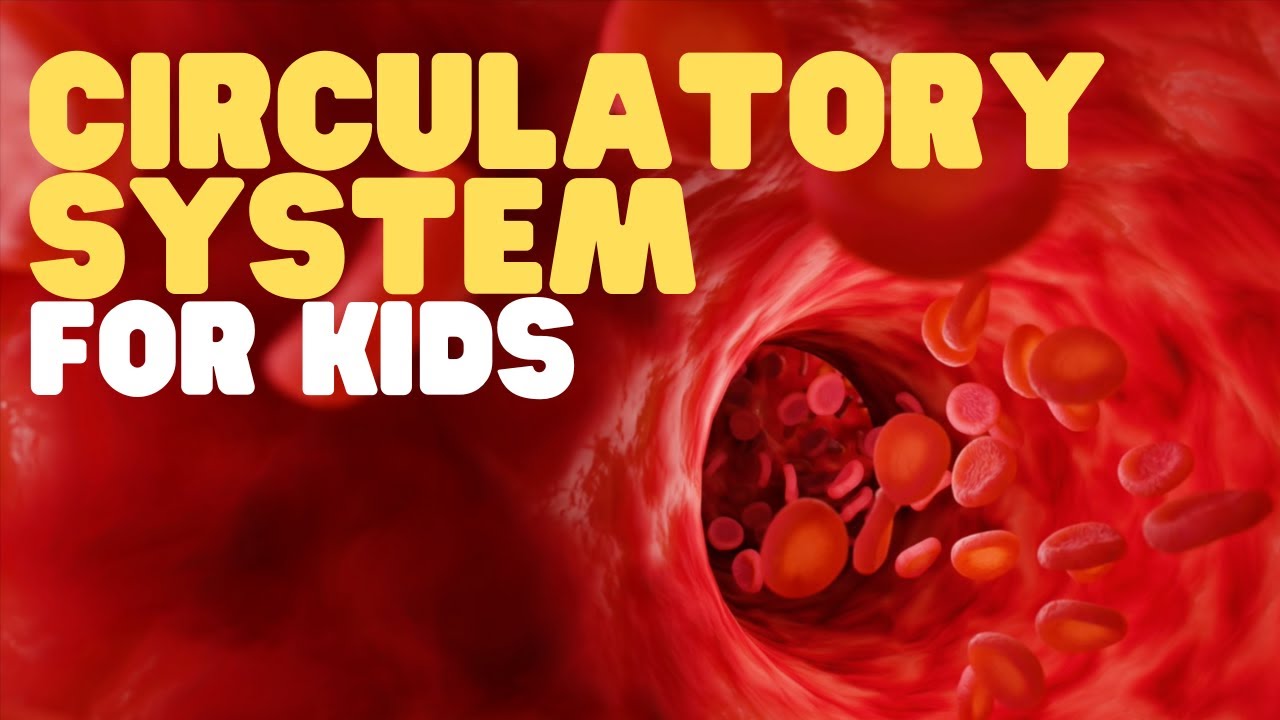
Did you know that the circulatory system in your body stretches for more than 60,000 miles? In this video for kids, you will learn that this is the most important system in our bodies. It is responsible for bringing blood, nutrients, and oxygen to all parts of the body, as well as for healing wounds. You can see why this is such an important process!
There are two parts that make up the circulatory system: the heart and blood vessels. Blood vessels include arteries, veins, and capillaries. The heart has four chambers total—two ventricles and two atria. The left and right ventricles of the heart are located at the bottom. These chambers pump blood out of the heart. The left and right atria at the top of the heart receive blood into the heart. Every time your heart beats, these four chambers are doing their job!
The other part is the collection of blood vessels. Arteries carry blood away from the heart, veins carry blood to the heart, and capillaries connect arteries and veins. Because blood contains the nutrients and oxygen we need, our blood vessels are responsible for getting those important things to all parts of the body.
As you now know, blood contains several important things. Besides nutrients and oxygen, blood also carries plasma, which is a yellowish liquid. This liquid is responsible for carrying proteins, nutrients, and hormones to the rest of the body. It is made of mostly water that comes from the food and water we consume. Plasma also carries away waste from the cells.
We hope you and your student(s) enjoyed learning about these four different landforms! If you want to learn even more, head over to our website and download one of our many free lesson plans about landforms, full of activities, worksheets, and more!
https://learnbright.org/lesson....s/science/the-circul
https://learnbright.org/lesson....s/science/human-hear
What you will learn in Circulatory System for Kids:
0:00 Introduction
0:29 What the circulatory system does
1:54 Two parts of the system: heart
2:43 Different chambers of the heart
3:44 Two part of the system: blood vessels
4:57 What's inside the blood
5:39 A little about white blood cells
6:58 Review of the Facts
Thank you for watching and learning with us! We’re constantly releasing new content and videos, so click that “Subscribe” button and you’ll get notified.
Find and Follow Us Online:
Facebook: https://www.facebook.com/LearnBright/
Instagram: https://instagram.com/LearnBrightEducation
Pinterest: https://pinterest.com/LearnBrightEducation
YouTube: @LearnBright
Website: https://learnbright.org/
*Teachers and Parents! Did you know? In addition to these great videos, we have also created a library of high-quality and engaging lessons for your elementary aged student(s). Visit us, sign up for a free account, and instantly you'll have access to thousands of lesson plans, learning materials, teaching instructions, activities, and assignments that your kids will really enjoy! We hope to see you soon!
Browse our entire collection of Science lesson plans: https://learnbright.org/lessons/?filter_subject=science
#Heart
#CirculatorySystem

NOTE: We would like to correct an error in this video. Birds do not get electrocuted when resting on power lines because there is no path to ground. Electricity has to flow from a place of high potential to low potential to electrocute. If a bird were to touch the line and some grounded metal of some kind, they could be shocked.
Hello Teachers and Parents! In this video we will learn all about electricity. Your student(s) will learn about lightning, power plants, Direct Current (DC) and Alternating Current (AC). We even talk about when electricity was discovered and go over topics like conductors and insulators. By the time you are done watching this video your child will have a much better understanding of what electricity is, where it comes from, and the amazing things it can do.
We know that electricity can be a tricky topic to cover so throughout the video we provide really good examples and break down the complex ideas. We also have a complete lesson plan full of worksheets and activities that will help your student practice what they are learning. You can download for free here: https://learnbright.org/lesson....s/science/electricit
In this video we will learn:
0:00 What is Electricity?
1:38 What is a Direct Current?
4:13 What is an Alternating Current?
5:55 How do Power Plants produce Electricity?
6:51 How do Magnets create Electricity?
7:33 What is Static Electricity?
8:35 What is a Conductor?
9:08 What is an Insulator?
10:21 When was Electricity Discovered?
11:31 Learning Activity | Can you solve the Electricity Riddle?
Check out some of our other electricity-related videos here:
Magnets: https://youtu.be/7HHs98PBgk0
Thank you for watching and learning with us! We’re constantly releasing new content and videos, so click that “Subscribe” button and you’ll get notified.
Find and Follow Us Online:
Facebook: https://www.facebook.com/LearnBright/
Instagram: https://instagram.com/LearnBrightEducation
Pinterest: https://pinterest.com/LearnBrightEducation
YouTube: @LearnBright
Website: https://learnbright.org/
*Teachers and Parents! Did you know? In addition to these great videos, we have also created a library of high quality and engaging lessons for your elementary aged student(s). Visit us, sign up for a free account, and instantly you'll have access to thousands of lesson plans, learning materials, teaching instructions, activities, and assignments that your kids will really enjoy! We hope to see you soon!
Browse our entire collection of Science lesson plans: https://learnbright.org/lessons/?filter_subject=science
#ElectricityForKids
#WhatIsElectricity

What goes up must come down! Have you ever heard this phrase before? This refers to the concept of gravity. In Gravity for Kids, you will learn about gravitational force and how it works in the universe. Gravity is a force of attraction between objects. Several things affect the strength of an object's gravitational pull.
Did you know that every single object in the universe has a gravitational force? Even you! This is because objects have mass. The greater an object's mass, the greater its gravitational force. This is why the gravity on Earth is way stronger than your own gravitational force. It's also the reason you end up falling back toward the earth when you jump in the air.
Sir Isaac Newton and Albert Einstein are the two most famous scientists when it comes to studying the concept of gravitational force. Newton discovered that the rate of the gravitational force of the earth will be the same for every object regardless of its weight. If you dropped a brick and an apple off a building at the same time, they would hit the ground at the same time.
Albert Einstein discovered that gravity effects light as well, even though it has no mass. Light turns more and more red as gravity pulls on it. Human eyes cannot detect the change, but scientists have been able to use special instruments to measure light's color. Black holes have more mass than anything in the universe. Because of this, even light gets sucked in and stuck!
We hope you and your student(s) enjoyed learning about this cool natural force! If you want to learn even more, head over to our website and download one of our many free lesson plans about gravity and related topics, full of activities, worksheets, and more!
https://learnbright.org/lesson....s/science/gravity-st
What you will learn in Gravity for Kids:
0:00 Introduction to gravitational force
0:55 Difference between mass and weight
1:33 How we exert gravitational force
2:04 Greater mass equals greater gravitational force
4:12 Sir Isaac Newton’s contribution to the concept of gravity
5:08 Gravity depends on mass and distance
6:09 Albert Einstein’s contribution to the concept of gravity
6:58 Review of the facts
Thank you for watching and learning with us! We’re constantly releasing new content and videos, so click that “Subscribe” button and you’ll get notified.
Find and Follow Us Online:
Facebook: https://www.facebook.com/LearnBright/
Instagram: https://instagram.com/LearnBrightEducation
Pinterest: https://pinterest.com/LearnBrightEducation
YouTube: @LearnBright
Website: https://learnbright.org/
*Teachers and Parents! Did you know? In addition to these great videos, we have also created a library of high-quality and engaging lessons for your elementary aged student(s). Visit us, sign up for a free account, and instantly you'll have access to thousands of lesson plans, learning materials, teaching instructions, activities, and assignments that your kids will really enjoy! We hope to see you soon!
Browse our entire collection of Science lesson plans: https://learnbright.org/lessons/?filter_subject=science
#Gravity
#GravitationalForce

What is camouflage? Why do animals need to use it? Well, in Animal Camouflage, your kids and students will learn the answers to these questions! First off, there are many different kinds of camouflage, and we will discuss four of the main kinds that apply to animals in this video. Did you know that there is actually more than one reason that animals use camouflage?
A lot of animals use camouflage to hide from predators. The colors of their skin or fur helps them blend into the environment around them. Some animals, though, use camouflage to hunt. For the same reason that camouflage helps some animals hide to avoid predators, other animals blend into their surroundings to catch their prey unaware! In addition to hiding and hunting, a few animals use their coloring to communicate. Take the chameleon, for example. Most people think chameleons use color changing to fool predators. But that's not actually true! Chameleons change colors to communicate to other chameleons! They change color to communicate danger, to attract a mate, or simply to signal a change of environment.
These animals are so cool! You and your kids will discover just how many different types of animals take advantage of this amazing characteristic. And maybe you just might stumble upon one of these incredible creatures!
We hope you and your student(s) enjoyed learning about all these amazing and colorful animals! If you want to learn more, head over to our website and download our free lesson plan about animal camouflage, which is full of activities, worksheets, and more!
https://learnbright.org/lesson....s/science/animal-cam
What you will learn in this video:
0:00 Animal camouflage
0:31 Why animals use camouflage
1:09 4 types of camouflage
1:34 Concealing coloration camouflage
2:18 Disruptive coloration (patterning) camouflage
4:05 Disguise camouflage
5:23 Mimicry camouflage
6:45 Other reasons animals use camouflage
8:04 Review quiz
Thank you for watching and learning with us! We’re constantly releasing new content and videos, so click that “Subscribe” button and you’ll get notified.
Find and Follow Us Online:
Facebook: https://www.facebook.com/LearnBright/
Instagram: https://instagram.com/LearnBrightEducation
Pinterest: https://pinterest.com/LearnBrightEducation
YouTube: @LearnBright
Website: https://learnbright.org/
*Teachers and Parents! Did you know? In addition to these great videos, we have also created a library of high quality and engaging lessons for your elementary aged student(s). Visit us and sign up for a free account, and instantly you'll have access to thousands of lesson plans, learning materials, teaching instructions, activities, and assignments that your kids will really enjoy! We hope to see you soon!
Browse our entire collection of Science lesson plans: https://learnbright.org/lessons/?filter_subject=science
#animalcamouflage
#camouflageforkids

Did you know that Antarctica, the coldest place on Earth, is a desert? Not only that, it's the largest desert in the world! In this video for kids, you will learn this and other fun facts about Antarctica, the only continent on which people don't live (except for scientists).
Antarctica is an amazing and unique place. Located at the bottom of the earth, it is almost completely covered in ice. Only 2% of it isn't. It is considered a desert because it receives such a small amount of rain every year. So why is there so much snow? It's because the snow that does fall never melts; it's just too cold. Instead, the snow just builds and builds and builds. As a result, it has become one giant piece of ice.
It's far too cold for humans to live comfortably, but it's just right for some animals. The creatures who call this place home include penguins, leopard and weddell seals, killer whales (orca), fish, and krill. The plant life that thrive there include moss, non-marine algae, and many fungi and bacteria.
Perhaps one of the most interesting facts about Antarctica is that the season of winter yields no sunlight! There are only two seasons here: winter and summer. That means that for six months, the sun doesn't shine! It goes down in March and doesn't come up again until the beginning of October! It is dark 24 hours a day for six whole months.
We hope you and your student(s) enjoyed learning about this cold continent! If you want to learn even more, head over to our website and download one of our many free lesson plans about continents, full of activities, worksheets, and more!
https://learnbright.org/lesson....s/social-studies/all
https://learnbright.org/lesson....s/social-studies/the
What you will learn in Antarctica:
0:00 Introduction to and facts about Antarctica
1:12 Animal and plant life
2:16 Largest desert in the world
3:15 Antarctica's temperature
4:16 Two seasons in Antarctica
4:40 Explorers of the continent
5:34 Sites you would see in Antarctica
6:45 Review of the facts
7:33 Antarctica belongs to everyone
Thank you for watching and learning with us! We’re constantly releasing new content and videos so click that “Subscribe” button and you’ll notified.
Find and Follow Us Online:
Facebook: https://www.facebook.com/LearnBright/
Instagram: https://instagram.com/LearnBrightEducation
Pinterest: https://pinterest.com/LearnBrightEducation
YouTube: @LearnBright
Website: https://learnbright.org/
*Teachers and Parents! Did you know? In addition to these great videos, we have also created a library of high-quality and engaging lessons for your elementary aged student(s). Visit us, sign up for a free account, and instantly you'll have access to thousands of lesson plans, learning materials, teaching instructions, activities, and assignments that your kids will really enjoy! We hope to see you soon!
Browse our entire collection of Social Studies lesson plans: https://learnbright.org/lessons/?filter_subject=social-studies
#Antarctica
#AllAboutAntarctica

Time to learn about King Tut in a different way! In fact, this fun, educational rap "raps" up everything we know about the Boy King of ancient Egypt in under a minute. Let's see if you can keep up! If you want even more information, head over to our website and download one of our many free lesson plans, full of activities, worksheets, and more!
https://learnbright.org/lesson....s/social-studies/kin
Thank you for watching and learning with us! We’re constantly releasing new content and videos, so click that “Subscribe” button and you’ll get notified.
Find and Follow Us Online:
Facebook: https://www.facebook.com/LearnBright/
Instagram: https://instagram.com/LearnBrightEducation
Pinterest: https://pinterest.com/LearnBrightEducation
YouTube: @LearnBright
Website: https://learnbright.org/
*Teachers and Parents! Did you know? In addition to these great videos, we have also created a library of high-quality and engaging lessons for your elementary aged student(s). Visit us and sign up for a free account, and you'll instantly have access to thousands of lesson plans, learning materials, teaching instructions, activities, and assignments that your kids will really enjoy! We hope to see you soon!
Browse our entire collection of Social Studies lesson plans: https://learnbright.org/lessons/?filter_subject=social-studies
#shorts
#Tutankhamun
#Pharaoh

Martin Luther King Jr for Kids is a short documentary and overview about the great civil rights leader. Together we will learn about the monumental impact he had and still has throughout the world.
MLK – They are three letters representing the Civil Rights movement in America during the 1950s and 1960s. Of course, the letters belong to the name- Martin Luther King Jr. Nearly everyone has heard of this Civil Rights leader, but many people do not know the journey of his life.
They see him as the person honored on the 3rd Monday in January
each year, giving a day off from school or work. However, there is much more to be known about this great leader, including his early life, education, religious background, civil rights activities, and much more.
To download an accompanying FREE lesson plan about Martin Luther King Jr please visit us at:
https://learnbright.org/lesson....s/social-studies/mar
We hope you enjoy!
Thank you for watching and learning with us! We’re constantly releasing new content and videos so click that “Subscribe” button and you’ll notified.
Find and Follow Us Online:
Facebook: https://www.facebook.com/LearnBright/
Instagram: https://instagram.com/LearnBrightEducation
Pinterest: https://pinterest.com/LearnBrightEducation
YouTube: https://www.youtube.com/LearnBright
Website: https://learnbright.org/
*Teachers and Parents! Did you know? In addition to these great videos, we have also created a library of high quality and engaging lessons for your elementary aged student(s). Visit us, sign up for a free account, and instantly you'll have access to thousands of lesson plans, learning materials, teaching instructions, activities, and assignments that your kids will really enjoy! We hope to see you soon!
Browse our entire collection of Social Studies lesson plans: https://learnbright.org/lessons/?filter_subject=social-studies
#MartinLutherKingJr
#MLK

Have you ever seen a duck-billed platypus? This video for kids talks all about one of the most curious mammals in the world. With a duck bill, beaver tail, and otter foot, the platypus is quite strange. Despite being a mammal, it actually lays eggs instead of experiencing live births. They lay their eggs in underground burrows near water that hatch around two weeks later. The young stay with their mother for only about four weeks before swimming off to forage on its own.
While its features are odd, they all have their use. The duck bill is flexible and soft and has thousands of receptors to help them find food in the dark. Their webbed feet push through water quickly. And their tails act like rudders on a ship. They steer the platypuses where they want to go. Additionally, a platypus can remain under water for nearly two minutes before coming up for air!
Believe it or not, a platypus doesn't have any teeth. When it shovels mud and silt into its bill, it also captures gravel. It uses the gravel to chew and grind food. These shy creatures are also very small. Adults weight only around three pounds. That makes them pretty easy prey. However, male platypuses have venomous stingers on their rear feet that can deliver a poisonous sting to attackers.
We hope you and your student(s) enjoyed learning about this interesting creature! If you want to learn even more, head over to our website and download one of our many lesson plans about animals, full of activities, worksheets, and more!
https://learnbright.org/lesson....s/science/duck-bille
https://learnbright.org/lesson....s/science/reptiles-a
Thank you for watching and learning with us! We’re constantly releasing new content and videos, so click that “Subscribe” button and you’ll get notified.
Find and Follow Us Online:
Facebook: https://www.facebook.com/LearnBright/
Instagram: https://instagram.com/LearnBrightEducation
Pinterest: https://pinterest.com/LearnBrightEducation
YouTube: @LearnBright
Website: https://learnbright.org/
*Teachers and Parents! Did you know? In addition to these great videos, we have also created a library of high-quality and engaging lessons for your elementary aged student(s). Visit us, sign up for a free account, and instantly you'll have access to thousands of lesson plans, learning materials, teaching instructions, activities, and assignments that your kids will really enjoy! We hope to see you soon!
Browse our entire collection of Science lesson plans: https://learnbright.org/lessons/?filter_subject=science
#Platypus
#Mammals
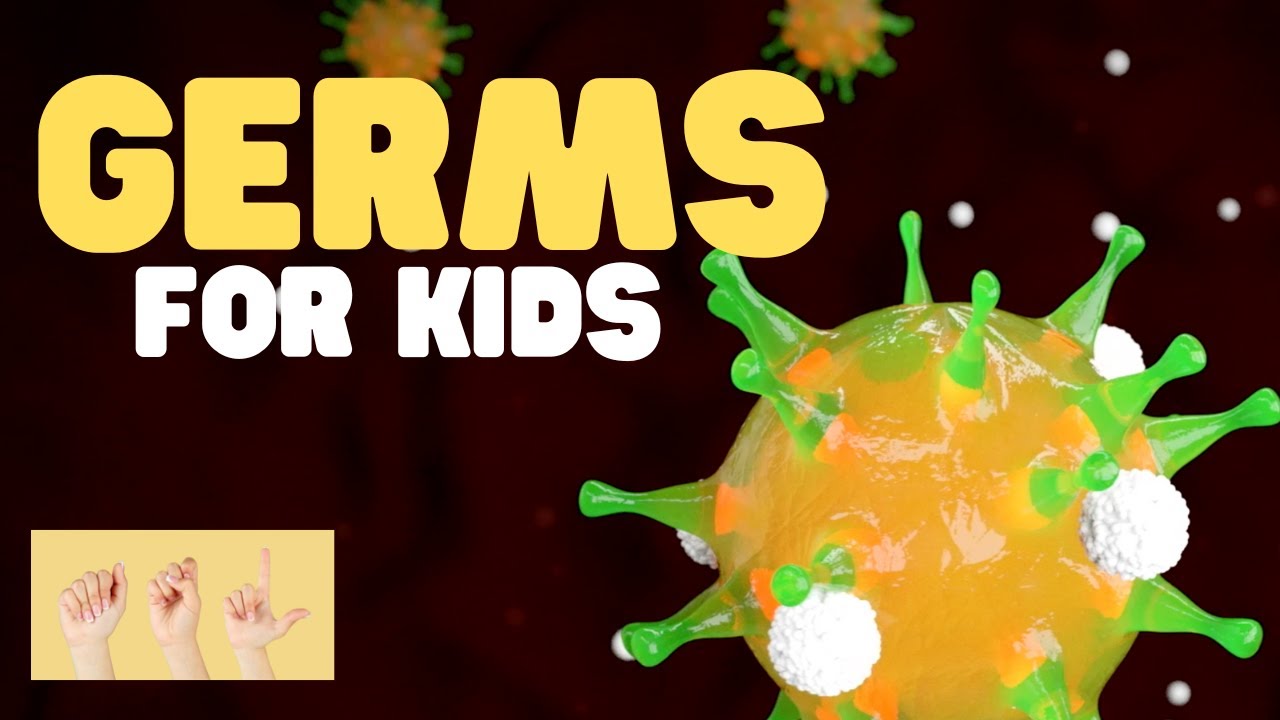
Germs are everywhere. They are often responsible for making people sick. They're so small, you can only see them with a microscope. In Germs for Kids, you and will learn all about the four types of germs that exist in the word: bacteria, viruses, fungi, and protozoa. Let's see what you already know and what you will learn throughout the video!
The first type is bacteria. Bacteria are single-celled organisms that live inside and outside of you body. They can cause ear infections, sore throats, cavities, and more. Not all bacteria are bad, though. In fact, there is lots of good bacteria in some of the food we eat, and our bodies need good germs to help use up the nutrients we ingest. Doctors even use good bacteria to create medicines and vaccines.
Viruses, on the other hand, are all bad. Some examples include chicken pox, the flu, and the measles. Viruses like to invade healthy cells and multiply as the host cell multiplies. Because our bodies have so many cells, there are lots of places for viruses to invade. When we get sick from a virus, we can get what's called a vaccine or immunization to help fight it.
The next type of germ is fungi. A fungus is like a plant and actually consists of many cells rather than just one. Fungi like to live in warm and wet places, such as between a person’s toes. Many fungi don’t cause problems for healthy people. Examples include athlete’s foot, skin infections, and other rashes. Some fungal infections are contagious and can pass from one person to another.
The last type of germ is a protozoa. Like fungi, protozoa live in wet places. And like bacteria and viruses, they also have only one cell. Many live in the water, which is how they spread diseases and infections. Water that is not safe to drink may contain protozoa. These germs can lead to stomach aches, diarrhea, and nausea. The video explains lots of ways to help stop the spread of germs. Keep watching to find out!
We hope you and your student(s) enjoyed learning about these different kinds of germs! If you want to learn even more, head over to our website and download one of our many free lesson plans about this topic, full of activities, worksheets, and more!
https://learnbright.org/lessons/science/germs/
https://learnbright.org/lesson....s/science/bacteria-a
https://learnbright.org/lesson....s/science/influenza-
https://learnbright.org/lesson....s/science/immune-sys
What you will learn in this video:
0:00 Introduction to what germs are
0:33 Scenario about viruses
1:05 Why we get sick
1:58 Facts about bacteria
3:17 Facts about viruses
4:31 Facts about fungi
5:23 Facts about protozoa
6:14 Ways to stay healthy
8:10 Review of the facts
Thank you for watching and learning with us! We’re constantly releasing new content and videos, so click that “Subscribe” button and you’ll get notified.
Find and Follow Us Online:
Facebook: https://www.facebook.com/LearnBright/
Instagram: https://instagram.com/LearnBrightEducation
Pinterest: https://pinterest.com/LearnBrightEducation
YouTube: @LearnBright
Website: https://learnbright.org/
*Teachers and Parents! Did you know? In addition to these great videos, we have also created a library of high-quality and engaging lessons for your elementary aged student(s). Visit us, sign up for a free account, and instantly you'll have access to thousands of lesson plans, learning materials, teaching instructions, activities, and assignments that your kids will really enjoy! We hope to see you soon!
Browse our entire collection of Science lesson plans: https://learnbright.org/lessons/?filter_subject=science
#ASL
#Germs
#bacteria #Virus

Have you ever asked "How did the Great Depression start?" Well, we have the answer. In this video we talk about the history of the great depression and help students learn about all of the factors that went into play and the major impact it had on the worldwide economy.
Use this video in conjunction with our FREE Great Depression Lesson plan. You can download it here:
https://learnbright.org/lesson....s/social-studies/gre
Thank you for watching and learning with us! We’re constantly releasing new content and videos so click that “Subscribe” button and you’ll notified.
Find and Follow Us Online:
Facebook: https://www.facebook.com/LearnBright/
Instagram: https://instagram.com/LearnBrightEducation
Pinterest: https://pinterest.com/LearnBrightEducation
YouTube: https://www.youtube.com/LearnBright
Website: https://learnbright.org/
*Teachers and Parents! Did you know? In addition to these great videos, we have also created a library of high quality and engaging lessons for your elementary aged student(s). Visit us, sign up for a free account, and instantly you'll have access to thousands of lesson plans, learning materials, teaching instructions, activities, and assignments that your kids will really enjoy! We hope to see you soon!
Browse our entire collection of Social Studies lesson plans: https://learnbright.org/lessons/?filter_subject=social-studies
#ASL
#GreatDepression

Come along with us as we travel to Europe in this fun introduction to the European Continent for Kids. We will explore some of the most famous countries and landmarks in Europe and learn some important facts and history about this amazing place. Your students will learn that Europe is
the second smallest continent on Earth (Australia is the smallest), but third most populous with over 742
million people living in 50 countries! Thats amazing!
Europe truly is a beautiful place. Many call it home and many visit each year. We hope that this video gives you a small glimpse into the Beauty of Europe and a broader understanding of the world around us. If you'd like to learn even more about the Europe download our free lesson plan here: https://learnbright.org/lesson....s/social-studies/all the lesson is built for grades 3 - 6 and is packed with more fun content, activities, worksheets, and more!
Thank you for watching! Share your thoughts in the comments below and be sure to subscribe!
Find and Follow us Online:
Facebook: https://www.facebook.com/LearnBright/
Instagram: https://instagram.com/LearnBrightEducation
Pinterest: https://pinterest.com/LearnBrightEducation
YouTube: https://www.youtube.com/LearnBright
Website: https://learnbright.org/
Are you a K-6 grade teacher looking for more teaching resources? We don’t only provide video content but high quality lesson plans as well. 100% free with handouts, worksheets, classroom activities and more!
Browse our entire collection of Social Studies lesson plans: https://learnbright.org/lessons/?filter_subject=social-studies
#ASL
#Europe
#EuropeForKids
Germs are everywhere. They are often responsible for making people sick. They're so small, you can only see them with a microscope. In Germs for Kids, you and will learn all about the four types of germs that exist in the word: bacteria, viruses, fungi, and protozoa. Let's see what you already know and what you will learn throughout the video!
The first type is bacteria. Bacteria are single-celled organisms that live inside and outside of you body. They can cause ear infections, sore throats, cavities, and more. Not all bacteria are bad, though. In fact, there is lots of good bacteria in some of the food we eat, and our bodies need good germs to help use up the nutrients we ingest. Doctors even use good bacteria to create medicines and vaccines.
Viruses, on the other hand, are all bad. Some examples include chicken pox, the flu, and the measles. Viruses like to invade healthy cells and multiply as the host cell multiplies. Because our bodies have so many cells, there are lots of places for viruses to invade. When we get sick from a virus, we can get what's called a vaccine or immunization to help fight it.
The next type of germ is fungi. A fungus is like a plant and actually consists of many cells rather than just one. Fungi like to live in warm and wet places, such as between a person’s toes. Many fungi don’t cause problems for healthy people. Examples include athlete’s foot, skin infections, and other rashes. Some fungal infections are contagious and can pass from one person to another.
The last type of germ is a protozoa. Like fungi, protozoa live in wet places. And like bacteria and viruses, they also have only one cell. Many live in the water, which is how they spread diseases and infections. Water that is not safe to drink may contain protozoa. These germs can lead to stomach aches, diarrhea, and nausea. The video explains lots of ways to help stop the spread of germs. Keep watching to find out!
We hope you and your student(s) enjoyed learning about these different kinds of germs! If you want to learn even more, head over to our website and download one of our many free lesson plans about this topic, full of activities, worksheets, and more!
https://learnbright.org/lessons/science/germs/
https://learnbright.org/lesson....s/science/bacteria-a
https://learnbright.org/lesson....s/science/influenza-
https://learnbright.org/lesson....s/science/immune-sys
What you will learn in this video:
0:00 Introduction to what germs are
0:33 Scenario about viruses
1:05 Why we get sick
1:58 Facts about bacteria
3:17 Facts about viruses
4:31 Facts about fungi
5:23 Facts about protozoa
6:14 Ways to stay healthy
8:10 Review of the facts
Thank you for watching and learning with us! We’re constantly releasing new content and videos, so click that “Subscribe” button and you’ll get notified.
Find and Follow Us Online:
Facebook: https://www.facebook.com/LearnBright/
Instagram: https://instagram.com/LearnBrightEducation
Pinterest: https://pinterest.com/LearnBrightEducation
YouTube: @LearnBright
Website: https://learnbright.org/
*Teachers and Parents! Did you know? In addition to these great videos, we have also created a library of high-quality and engaging lessons for your elementary aged student(s). Visit us, sign up for a free account, and instantly you'll have access to thousands of lesson plans, learning materials, teaching instructions, activities, and assignments that your kids will really enjoy! We hope to see you soon!
Browse our entire collection of Science lesson plans: https://learnbright.org/lessons/?filter_subject=science
#ASL
#Germs
#bacteria #Virus

In our Cultures of the world video we will learn about what culture means and how cultures can be very different around the world. We will learn how to appreciate the differences and how they influence our own identities. We will explore the American culture, French, Chinese, and many other cultures around the world.
Looking for more Cultures of the World resources? Download our free comprehensive lesson plan here: https://learnbright.org/lesson....s/social-studies/cul
Check out some of our other culture-related videos here:
Europe: https://youtu.be/XZtZRw7zrqI
Asia: https://youtu.be/1pNBDTNVhCw
Africa: https://youtu.be/KcNVNsvyFfA
Australia: https://youtu.be/zmon5Tv6bYU
China: https://youtu.be/q7JK5Vxf_VQ
North America: https://youtu.be/JZk6_dgA9uQ
South America: https://youtu.be/Z4iwEMbal24
Mexico: https://youtu.be/hmhLgM9uGN0
Thank you for watching and learning with us! We’re constantly releasing new content and videos so click that “Subscribe” button and you’ll notified.
Find and Follow Us Online:
Facebook: https://www.facebook.com/LearnBright/
Instagram: https://instagram.com/LearnBrightEducation
Pinterest: https://pinterest.com/LearnBrightEducation
YouTube: https://www.youtube.com/LearnBright
Website: https://learnbright.org/
*Teachers and Parents! Did you know? In addition to these great videos, we have also created a library of high quality and engaging lessons for your elementary aged student(s). Visit us, sign up for a free account, and instantly you'll have access to thousands of lesson plans, learning materials, teaching instructions, activities, and assignments that your kids will really enjoy! We hope to see you soon!
Browse our entire collection of Social Studies lesson plans: https://learnbright.org/lessons/?filter_subject=social-studies
#ASL
#WorldCulture
#Cultures

Have you ever wondered "What is an Antagonist?" Or, when you are reading a story, do you sometimes find it difficult to know who is the protagonist and who is the antagonist? Well, we've got you covered. In this video we learn all about antagonists in stories and plays and go through many examples in popular stories.
If you're looking for even more practice or activities download our FREE comprehensive Antagonist lesson plan here: https://learnbright.org/lesson....s/reading/antagonist
Thank you for watching and learning with us! We’re constantly releasing new content and videos so click that “Subscribe” button and you’ll notified.
Find and Follow Us Online:
Facebook: https://www.facebook.com/LearnBright/
Instagram: https://instagram.com/LearnBrightEducation
Pinterest: https://pinterest.com/LearnBrightEducation
YouTube: https://www.youtube.com/LearnBright
Website: https://learnbright.org/
*Teachers and Parents! Did you know? In addition to these great videos, we have also created a library of high quality and engaging lessons for your elementary aged student(s). Visit us, sign up for a free account, and instantly you'll have access to thousands of lesson plans, learning materials, teaching instructions, activities, and assignments that your kids will really enjoy! We hope to see you soon!
Browse our entire collection of Reading lesson plans: https://learnbright.org/lessons/?filter_subject=reading
#WhatIsAnAntagonist
#Antagonists
When a child is learning to read it can be difficult to identify the main idea. In this video we help your kid learn all about the main idea in stories and books. We will learn how to identify what the main idea of a story or book is, tricks on figuring it out, and throughout the video we provide practice opportunities with sample stories that your student can try.
As you know the main idea is the most important meaning of a sentence, paragraph, story, or even a picture. The main idea is sometimes called the topic. The main idea sentence could be at the beginning, middle, or end of a paragraph. When a child is able to identify the main idea and it's supporting details their reading comprehension and enjoyment goes way up!
After (or before) watching the video, we invite you to download our complete main idea lesson plan. This lesson gives you even more instruction, teaching ideas, activities and worksheets that will help your child/student finally learn how to identify the main idea. (Also, its 100% FREE): https://learnbright.org/?s=main+idea
Thank you for watching and learning with us! We’re constantly releasing new content and videos so click that “Subscribe” button and you’ll notified.
Find and Follow Us Online:
Facebook: https://www.facebook.com/LearnBright/
Instagram: https://instagram.com/LearnBrightEducation
Pinterest: https://pinterest.com/LearnBrightEducation
YouTube: https://www.youtube.com/LearnBright
Website: https://learnbright.org/
Are you a K-6 grade teacher looking for more teaching resources? We don’t only provide video content but high quality lesson plans as well. 100% free with handouts, worksheets, classroom activities and more!
Browse our entire collection of Reading lesson plans: https://learnbright.org/lessons/?filter_subject=reading
#ASL
#MainIdea
#Reading

What do you know about the history of American Sign Language? Did you know that the man who created it used some French signs? Dr. Thomas Hopkins Gallaudet traveled to France to work with three Frenchmen to develop the signs in an effort to help his neighbor's deaf-mute daughter, Alice. Today, hundreds of thousands of people around the world claim sign language as their primary language!
We hope you and your student(s) enjoyed learning about American Sign Language! If you want even more information, head over to our website and download one of our many lesson plans, full of activities, worksheets, and more!
https://learnbright.org/lesson....s/social-studies/hel
Thank you for watching and learning with us! We’re constantly releasing new content and videos, so click that “Subscribe” button and you’ll get notified.
Find and Follow Us Online:
Facebook: https://www.facebook.com/LearnBright/
Instagram: https://instagram.com/LearnBrightEducation
Pinterest: https://pinterest.com/LearnBrightEducation
YouTube: @LearnBright
Website: https://learnbright.org/
*Teachers and Parents! Did you know? In addition to these great videos, we have also created a library of high-quality and engaging lessons for your elementary aged student(s). Visit us and sign up for a free account, and you'll instantly have access to thousands of lesson plans, learning materials, teaching instructions, activities, and assignments that your kids will really enjoy! We hope to see you soon!
Browse our entire collection of Social Studies lesson plans: https://learnbright.org/lessons/?filter_subject=social-studies
#ASL
#AmericanSignLanguage

Adages and proverbs are short, simple statements of wisdom or advice. They are often used in conversation. You might also hear them used in songs, movies, books, and TV shows. In this video we will help you kids learn to recognize different proverbs and adages and break down their meaning. Some fun proverbs and adages that we cover are: A cat has nine lives, A chain is only as strong as its weakest link, Actions speak louder than words, and The pen is mightier than the sword.
Of course there are many others and if you'd like to give your student even more practice then we invite you to download our free Proverbs and Adages lesson plan. This lesson is build for grades 4-6 and come complete with more content, worksheets, in class or at home activities and more! Download here: https://learnbright.org/lesson....s/language-arts/idio
Thank you for watching! Share your thoughts in the comments below and be sure to subscribe!
Follow us across the web!
Facebook: https://www.facebook.com/LearnBright/
Instagram: https://instagram.com/LearnBrightEducation
Pinterest: https://pinterest.com/LearnBrightEducation
YouTube: https://www.youtube.com/learnbright
Website: https://learnbright.org/
Are you a K-6 grade teacher looking for more teaching resources? We don’t only provide video content but high quality lesson plans as well. 100% free with handouts, worksheets, classroom activities and more!
Download other free Language Arts lessons here: https://learnbright.org/lessons/?filter_subject=language-arts

Our 13 Original Colonies for Kids video is a fun and engaging way to introduce the history of the first 13 colonies to kids. We learn about the colonies, how they were found, formed, the people who settled there, food they grew and much more! After the video be sure to download our free comprehensive lesson plan about the colonies here: https://learnbright.org/lesson....s/social-studies/13-
What is something that you learned about the 13 colonies that you didn't know before?
Thank you for watching and learning with us! We’re constantly releasing new content and videos so click that “Subscribe” button and you’ll notified.
Find and Follow Us Online:
Facebook: https://www.facebook.com/LearnBright/
Instagram: https://instagram.com/LearnBrightEducation
Pinterest: https://pinterest.com/LearnBrightEducation
YouTube: https://www.youtube.com/LearnBright
Website: https://learnbright.org/
*Teachers and Parents! Did you know? In addition to these great videos, we have also created a library of high quality and engaging lessons for your elementary aged student(s). Visit us, sign up for a free account, and instantly you'll have access to thousands of lesson plans, learning materials, teaching instructions, activities, and assignments that your kids will really enjoy! We hope to see you soon!
Browse our entire collection of Social Studies lesson plans: https://learnbright.org/lessons/?filter_subject=social-studies
#13Colonies

Our Bones for Kids video will take students on a tour of the skeletal system. We will learn about all kinds of bones in the body including: Compact vs Spongy Bone, Bone Marrow and its purpose, Long bones vs short bones and so much more. Not only do we have this video resource but we also have a few comprehensive lesson plans about bones and the human skeleton available for FREE that come packed with worksheets, activities, and more resources! You can browse and download them here: https://learnbright.org/?s=bones
Check out some of our other videos related to the human body here:
DNA: https://youtu.be/921XdtoRAoo
Cells: https://youtu.be/kcG1F88KQA0
The Brain: https://youtu.be/rVDZYQOoeHw
Human Heart: https://youtu.be/rnIUFrx0DjI
Thank you for watching and learning with us! We’re constantly releasing new content and videos, so click that “Subscribe” button and you’ll get notified.
Find and Follow Us Online:
Facebook: https://www.facebook.com/LearnBright/
Instagram: https://instagram.com/LearnBrightEducation
Pinterest: https://pinterest.com/LearnBrightEducation
YouTube: https://www.youtube.com/LearnBright
Website: https://learnbright.org/
*Teachers and Parents! Did you know? In addition to these great videos, we have also created a library of high quality and engaging lessons for your elementary aged student(s). Visit us, sign up for a free account, and instantly you'll have access to thousands of lesson plans, learning materials, teaching instructions, activities, and assignments that your kids will really enjoy! We hope to see you soon!
Browse our entire collection of Science lesson plans: https://learnbright.org/lessons/?filter_subject=science
#Bones
#Skeleton

What do you know about the American Civil War? In Civil War History, you will learn why the states in the North and South fought each other so fiercely. You will discover some interesting facts, and some very sad facts, about the war and its participants. The entire conflict revolved around the concept of slavery and whether or not the country should be able to practice it.
There were 11 states in the southern region of the country that wanted to continue enslaving Africans to work their tobacco and cotton fields. The states wanted to secede from the union and govern themselves in order to continue practicing slavery. When the government refused, the South attacked the North in the Battle of Fort Sumter and began the war.
You will learn who some of the leaders involved in the conflict were, including Ulysses S. Grant and Robert E. Lee. President Abraham Lincoln gave the Emancipation Proclamation some time before the end of the war, but it was not immediately followed by the South. Near the end of the same year, President Lincoln gave his Gettysburg Address in November of 1863, and it is considered one of the most powerful oratories given by any U.S. president. On April 9, 1865, Grant defeated Lee and finally ended the war. Only six days later, Abraham Lincoln was assassinated by John Wilkes Booth.
We hope you and your student(s) enjoyed learning about the Civil War. If you want even more information, head over to our website and download one of our many free lesson plans, full of activities, worksheets, and more!
https://learnbright.org/lesson....s/social-studies/the
https://learnbright.org/lesson....s/social-studies/ema
https://learnbright.org/lesson....s/social-studies/und
https://learnbright.org/lesson....s/social-studies/sla
What you will learn in Civil War History:
0:00 Introduction to Confederate states and slavery
0:55 Conflict between northern and southern states
1:22 Civil War begins with Battle of Fort Sumter
2:33 Leaders of the North and South
3:47 Some of the major conflicts
4:24 Abraham Lincoln issues "Emancipation Proclamation"
5:23 Final battle on April 9, 1865
Thank you for watching and learning with us! We’re constantly releasing new content and videos, so click that “Subscribe” button and you’ll get notified.
Find and Follow Us Online:
Facebook: https://www.facebook.com/LearnBright/
Instagram: https://instagram.com/LearnBrightEducation
Pinterest: https://pinterest.com/LearnBrightEducation
YouTube: @LearnBright
Website: https://learnbright.org/
*Teachers and Parents! Did you know? In addition to these great videos, we have also created a library of high-quality and engaging lessons for your elementary aged student(s). Visit us and sign up for a free account, and you'll instantly have access to thousands of lesson plans, learning materials, teaching instructions, activities, and assignments that your kids will really enjoy! We hope to see you soon!
Browse our entire collection of Social Studies lesson plans: https://learnbright.org/lessons/?filter_subject=social-studies
#CivilWarHistory
#CivilWar

Do you like green eggs and ham? In this video about one of the world's most beloved children's book authors, you will learn many facts about both the author and his cherished books. While he was not really a doctor, he healed many hearts through his fun world of make-believe characters and places.
Theodore Seuss Geisel wrote over 60 books, and he illustrated them too! Before he made writing his full-time job, he would write and draw advertisements for various companies. He also created political cartoons and made some animated films. In fact, he even helped the U.S. government by creating posters and films that they used during World War II!
Despite his talent, his first book was turned down 27 times! He never gave up, and finally, it was published in 1937. After many years of writing these wonderful books, Dr. Seuss died in September of 1991. A special event since he died has been held in his honor every year on March 2 (his birthday) called Read Across America Day. This is a day to focus on the importance of reading.
We hope you and your student(s) enjoyed learning about Dr. Seuss! If you want even more practice, head over to our website and download one of our many free lesson plans about reading, full of activities, worksheets, and more!
https://learnbright.org/lessons/reading/dr-seuss/
What you will learn in this video:
0:00 Introduction to and history of Dr. Seuss
1:18 Dartmouth college and the Jack'o'Lantern
2:00 First time Theodore used "Dr. Seuss" moniker
2:43 The first book Dr. Seuss published
3:21 Three things you might not know about his books
4:36 How many books Dr. Seuss wrote and illustrated
5:35 Poem to honor Dr. Seuss
Thank you for watching and learning with us! We’re constantly releasing new content and videos, so click that “Subscribe” button to get notified of any new content.
Find and Follow Us Online:
Facebook: https://www.facebook.com/LearnBright/
Instagram: https://instagram.com/LearnBrightEducation
Pinterest: https://pinterest.com/LearnBrightEducation
YouTube: @LearnBright
Website: https://learnbright.org/
*Teachers and Parents! Did you know? In addition to these great videos, we have also created a library of high-quality and engaging lessons for your elementary aged student(s). Visit us and sign up for a free account, and you will instantly have access to thousands of lesson plans, learning materials, teaching instructions, activities, and assignments that your kids will really enjoy! We hope to see you soon!
Browse our entire collection of Reading lesson plans: https://learnbright.org/lessons/?filter_subject=reading
#ASL
#DrSeussForKids
#DrSeuss

In this video about maps for kids we will learn how to read a map, how to make a map, and many other useful skills. We introduce things like the key, map landmarks, cardinal directions, the history of maps (and how google maps or Siri help us now), and many other things.
Don't just stop with this video! Download our free 10 page comprehensive lesson plan all about maps here: https://learnbright.org/lesson....s/social-studies/int
After watching the video and completing the lesson plan your students will be able to define a map and its parts, use cardinal directions, read a map, and create a simple map using provided supplies.
Thank you for watching and learning with us! We’re constantly releasing new content and videos so click that “Subscribe” button and you’ll notified.
Find and Follow Us Online:
Facebook: https://www.facebook.com/LearnBright/
Instagram: https://instagram.com/LearnBrightEducation
Pinterest: https://pinterest.com/LearnBrightEducation
YouTube: https://www.youtube.com/LearnBright
Website: https://learnbright.org/
*Teachers and Parents! Did you know? In addition to these great videos, we have also created a library of high quality and engaging lessons for your elementary aged student(s). Visit us, sign up for a free account, and instantly you'll have access to thousands of lesson plans, learning materials, teaching instructions, activities, and assignments that your kids will really enjoy! We hope to see you soon!
Browse our entire collection of Social Studies lesson plans: https://learnbright.org/lessons/?filter_subject=social-studies
#ASL
#MapsForKids
#ReadingMaps

Decoding words can be hard to do when you are just starting out readings. In this video we give you some great ideas and examples of decoding words. We will learn 5 steps in learning new words including sounding out words and breaking the words into chunks.
We don't just stop at the video. Visit our website to download our free 11 page decoding word lesson plan that is packed full of ideas, more content, decoding word worksheets, activities and more!
You can download the lesson plan here: https://learnbright.org/?s=decoding+words
After watching the video and completing the lesson plan students will be able to know and apply
grade-level phonics and word analysis in decoding words. This video is designed for 1st Grand and 2nd Grade but can be adapted for other grade levels as needed.
Thank you for watching and learning with us! We’re constantly releasing new content and videos so click that “Subscribe” button and you’ll notified.
Find and Follow Us Online:
Facebook: https://www.facebook.com/LearnBright/
Instagram: https://instagram.com/LearnBrightEducation
Pinterest: https://pinterest.com/LearnBrightEducation
YouTube: https://www.youtube.com/LearnBright
Website: https://learnbright.org/
*Teachers and Parents! Did you know? In addition to these great videos, we have also created a library of high quality and engaging lessons for your elementary aged student(s). Visit us, sign up for a free account, and instantly you'll have access to thousands of lesson plans, learning materials, teaching instructions, activities, and assignments that your kids will really enjoy! We hope to see you soon!
Browse our entire collection of Reading lesson plans: https://learnbright.org/lessons/?filter_subject=reading
#DecodingWords
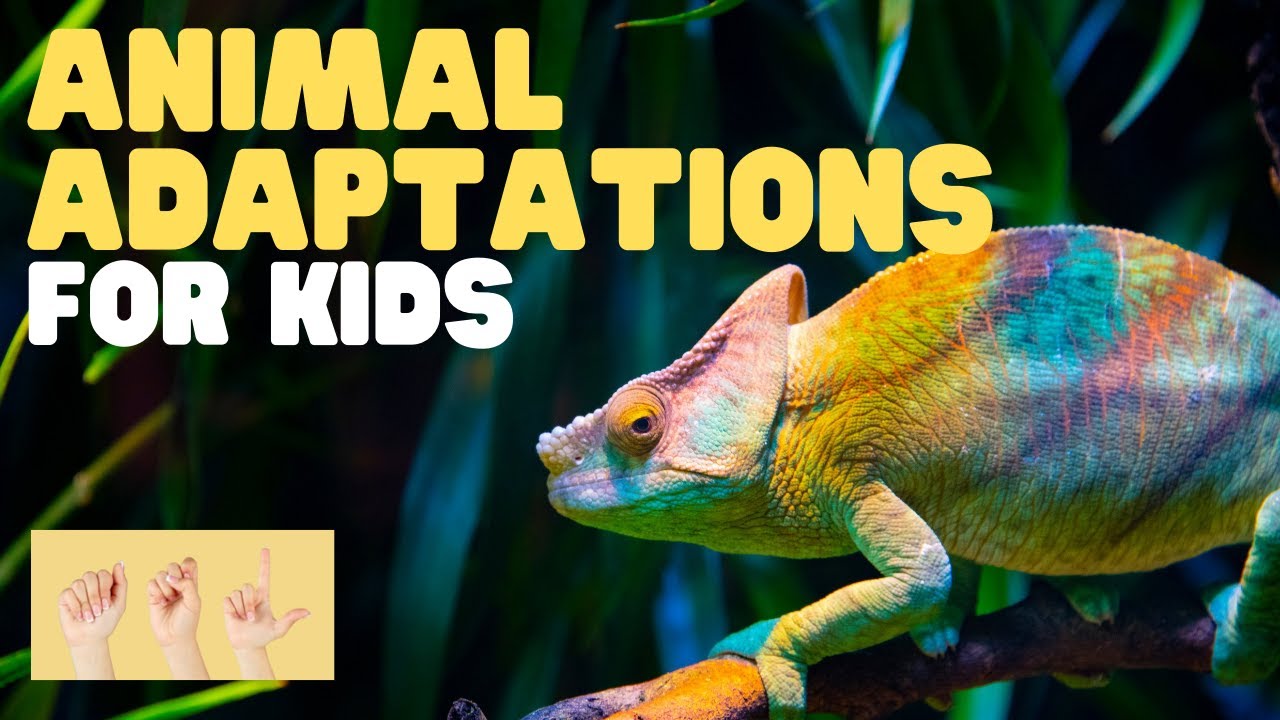
Animal adaptations for kids is a video that explores the different ways that animals can adapt to their environments. There is a number of ways that different animals do this, from Migration or Hibernation, to Body Structures and even changing their colors and in this video we will explore them all. There are different kind of animal adaptions Behavioral Adaptions, Physical Adaptions, and Life Cycle Adaptions each animal might use a different technique but ultimately they are adapting to survive in their environment.
After viewing this video we invite you to download and go through our free Animal Adaptations lesson plan with more activities, learning content, worksheets and more! When completed your students will be able to identify and describe various
animal adaptations used for survival in the environment.
You can download the lesson plan here: https://learnbright.org/lesson....s/science/animal-ada
Check out some of our other animal-related videos here:
Animal Camouflage: https://youtu.be/F-vRzYreZXY
Food Chain: https://youtu.be/aesKZR7J2nI
Animal Behavior: https://youtu.be/j2AbMH14IBo
Extinction: https://youtu.be/ogLFEq1X0RM
Extinct and Endangered Animals: https://youtu.be/E5cVr3HdLa4
Thank you for watching and learning with us! We’re constantly releasing new content and videos, so click that “Subscribe” button and you’ll get notified.
Find and Follow Us Online:
Facebook: https://www.facebook.com/LearnBright/
Instagram: https://instagram.com/LearnBrightEducation
Pinterest: https://pinterest.com/LearnBrightEducation
YouTube: https://www.youtube.com/LearnBright
Website: https://learnbright.org/
*Teachers and Parents! Did you know? In addition to these great videos, we have also created a library of high quality and engaging lessons for your elementary aged student(s). Visit us, sign up for a free account, and instantly you'll have access to thousands of lesson plans, learning materials, teaching instructions, activities, and assignments that your kids will really enjoy! We hope to see you soon!
Browse our entire collection of Science lesson plans: https://learnbright.org/lessons/?filter_subject=science
#ASL
#Animals
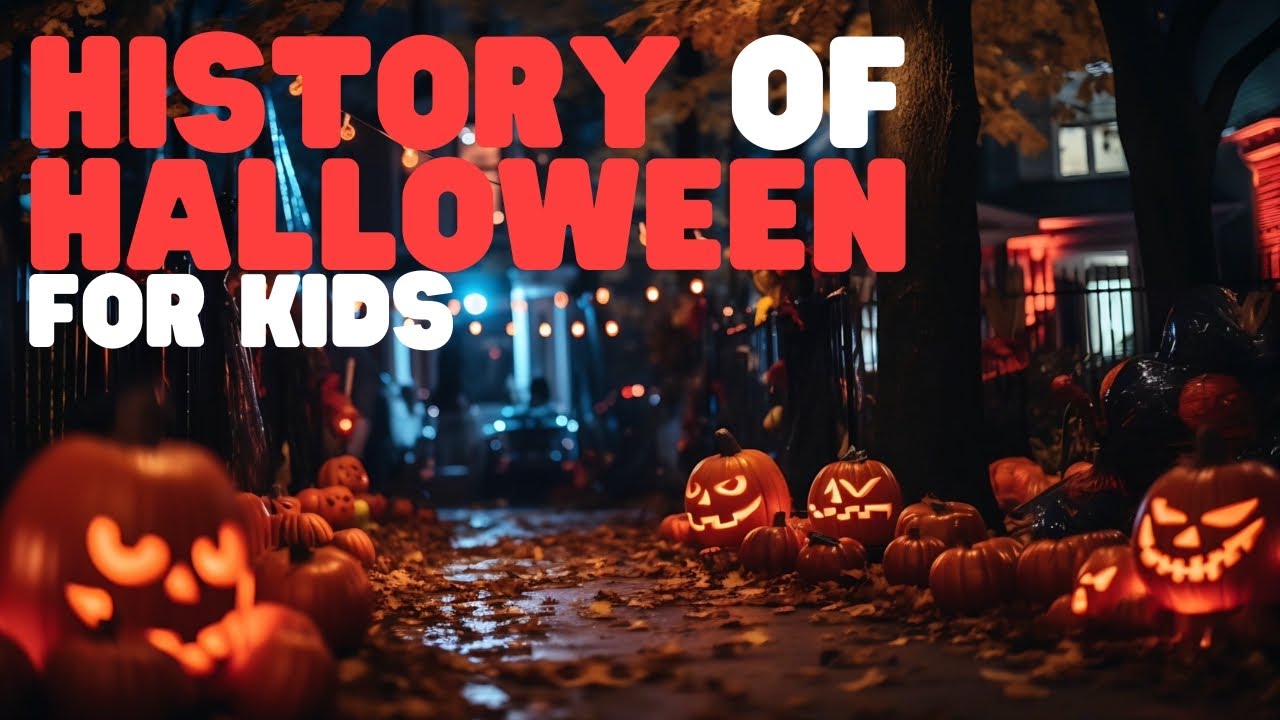
When you think of Halloween, do you ever think of Ireland? Well, turns out, most of our Halloween traditions, including the name, come from the Celts! Dressing up in disguises is all thanks to the Samhein festival. Even our tradition of pumpkin carving originated from an Irish folk tale.
Halloween is one of the oldest traditions in world history and comes from the Celts. It marked the end of summer and beginning of fall/winter season. That's why it's celebrated in the fall. The Celts passed down their history and culture orally, meaning they didn't write any of it down. Druids, or Celtic priests, were the ones responsible for passing it on to the next generation.
The Celts believed people transitions from physically living on Earth to living in a spiritual world when they died. During the Samhein festival, the Celts would stock up on supplies for the winter and welcome guests from the afterlife. If spirits appeared that had been wronged by a living person, the living person would disguise themselves with masks or with ashes from a fire. This was called guising, and it's where the word disguise comes from! Keep watching to learn more, and follow along with the lesson plan!
https://learnbright.org/lesson....s/social-studies/his
We hope you and your student(s) enjoyed learning about where this fun holiday actually came from! If you want even more information on other holidays, head over to our website and download one of our many free lesson plans, full of activities, worksheets, and more!
https://learnbright.org/lesson....s/social-studies/wha
https://learnbright.org/lesson....s/social-studies/wha
https://learnbright.org/lesson....s/social-studies/wha
https://learnbright.org/lesson....s/social-studies/wha
https://learnbright.org/lesson....s/social-studies/tha
Thank you for watching and learning with us! We’re constantly releasing new content and videos, so click that “Subscribe” button and you’ll get notified.
Find and Follow Us Online:
Facebook: https://www.facebook.com/LearnBright/
Instagram: https://instagram.com/LearnBrightEducation
Pinterest: https://pinterest.com/LearnBrightEducation
YouTube: @LearnBright
Website: https://learnbright.org/
*Teachers and Parents! Did you know? In addition to these great videos, we have also created a library of high-quality and engaging lessons for your elementary aged student(s). Visit us and sign up for a free account, and you'll instantly have access to thousands of lesson plans, learning materials, teaching instructions, activities, and assignments that your kids will really enjoy! We hope to see you soon!
Browse our entire collection of Social Studies lesson plans: https://learnbright.org/lessons/?filter_subject=social-studies
#Halloween
#HalloweenHistory