Top videos

Do you ever wonder what a coral reef really is? In this video we will learn all about coral reefs for kids. We will cover what makes up a coral reef like coral polyps and their exoskeletons, we will learn about famous coral reefs like the great barrier reef, we will also explore the various kinds of coral reefs.There Are Three Main Types Of Coral Reefs: Fringe Reef, Barrier Reef and Atoll Reef.
Fringe Reef grow close to the shorelines of continents and islands and can be attached to the shore, or there may be a narrow strip of water called a lagoon or channel between the land and the reef.
Barrier Reefs occur farther offshore, such as the Great Barrier Reef, often several miles from the shorelines of continents and islands. Las but not least, Atoll reefs which is a ring of coral surrounding a lagoon of water. It usually begins as a fringe reef around a volcanic island. As the coral expands and grows, the island sinks into the ocean leaving the ring of coral. Some are so big, people live on them.
If you want even more we didn't stop at this video! If you want even more activities and learning resources we invite you to download our free 12 page lesson plan, jam packed with more great coral reef information. Download here: https://learnbright.org/lesson....s/science/coral-reef
Thank you for watching and learning with us! We’re constantly releasing new content and videos, so click that “Subscribe” button and you’ll get notified.
Find and Follow Us Online:
Facebook: https://www.facebook.com/LearnBright/
Instagram: https://instagram.com/LearnBrightEducation
Pinterest: https://pinterest.com/LearnBrightEducation
YouTube: https://www.youtube.com/LearnBright
Website: https://learnbright.org/
*Teachers and Parents! Did you know? In addition to these great videos, we have also created a library of high quality and engaging lessons for your elementary aged student(s). Visit us, sign up for a free account, and instantly you'll have access to thousands of lesson plans, learning materials, teaching instructions, activities, and assignments that your kids will really enjoy! We hope to see you soon!
Browse our entire collection of Science lesson plans: https://learnbright.org/lessons/?filter_subject=science
#ASL
#CoralReefs
#TypesOfCoral

What is the difference between a rule and a law? What would life be like if neither rules nor laws existed? In Laws and Rules for Kids, you will discover the answer to these and other questions you have about these concepts. They have similarities, such as the fact that both exist to keep people safe. But they are also different in a few ways. For instance, if you break a law, it may have more serious consequences than breaking a rule does.
A law is created by the government, and the public enforces these laws. A rule relates to behaviors that we should follow in certain situations or places. Breaking a law and breaking a rule both lead to consequences. If you litter, which is breaking the law, you might have to pay a fine. If you throw a ball inside your house even though there is a rule not to, you might break something and get in trouble.
In general, rules are used by smaller groups, like families, schools, teams, and business. Laws are used in much larger groups, like cities, states, and countries. Individuals create rules for different places and situations, such as parents in a family or teachers in a classroom. On the other hand, laws must be voted on by people in government offices or by the citizens.
Again, the consequences or punishments for breaking rules are not as severe as those for breaking laws. If you break rules at school, you might have to skip recess or miss out on certain activities or privileges. If you break a law, you could pay a fine, go to court, do community service, or even serve jail time! Watch the video to see if you can tell the difference between a rule and a law.
We hope you and your student(s) enjoyed learning about the difference between a rule and a law! If you want even more information, head over to our website and download one of our many free lesson plans, full of activities, worksheets, and more!
https://learnbright.org/lesson....s/social-studies/law
What you will learn in Laws and Rules for Kids:
0:00 Introduction to laws and rules
0:40 Why laws and rules are important
1:49 Differences between rules and laws
2:57 Differences in consequences or effects from breaking rules versus laws
3:38 Quiz: Can you tell the difference between a rule and a law?
4:56 Why you should try to follow the rules and laws
5:48 Rules and laws can differ depending on various factors
Check out some of our other videos related to laws and rules here:
Rules and Responsibilities: https://youtu.be/FWwEMFSY1r0
Thank you for watching and learning with us! We’re constantly releasing new content and videos, so click that “Subscribe” button and you’ll get notified.
Find and Follow Us Online:
Facebook: https://www.facebook.com/LearnBright/
Instagram: https://instagram.com/LearnBrightEducation
Pinterest: https://pinterest.com/LearnBrightEducation
YouTube: @LearnBright
Website: https://learnbright.org/
*Teachers and Parents! Did you know? In addition to these great videos, we have also created a library of high-quality and engaging lessons for your elementary aged student(s). Visit us and sign up for a free account, and you'll instantly have access to thousands of lesson plans, learning materials, teaching instructions, activities, and assignments that your kids will really enjoy! We hope to see you soon!
Browse our entire collection of Social Studies lesson plans: https://learnbright.org/lessons/?filter_subject=social-studies
#ASL
#LawsAndRules
#Laws
#Rules

#basicsentencesforgrade1
#readingenglishgrade1
#readingenglishkinder
#readingenglishsentences
#practicereadingenglish
#englishfortoddlers
#englishforkids
#practicereadingenglishforbeginners
#readingsimplesentences
#sentencesstartingwithIhave
#grade1English
#KinderEnglish
#Grade2English
#practicereadingenglishsentences
#BasicEnglishsentences

Have you ever wondered why there are no dinosaurs anymore? In Extinction for Kids, you will learn why dinosaurs no longer roam the planet. You will also learn about some other species that likewise died off. Believe it or not, plants can become extinct too, and the process happens more quickly than it does for animals.
Most of the time, extinction happens over a long period of time. When certain animals can no longer reproduce, they begin to die off. Or when animals can't adapt to their changing environment, this can also lead them to extinction. In cases of mass extinction, many species of plants and animals die out very quickly. Many scientists believe that this is what happened to the dinosaurs and other plants and animals that were on the planet millions of years ago. An asteroid may have collided with the surface of the earth and caused these species to die.
Humans can also contribute to the possibility of extinction for various species through things like overhunting, destroying habitats, or introducing nonnative species to areas where they are not usually found. In fact, have you ever heard of the dodo bird? When animals like pigs and cats were introduced to the dodo bird's environment, the bird became prey to the pigs and cats. As a result, they eventually became extinct because they could not adapt quickly enough to survive.
We hope you and your student(s) enjoyed learning about how animals and plants become extinct! If you want to learn even more, head over to our website and download one of our many free lesson plans about extinction, full of activities, worksheets, and more!
https://learnbright.org/lesson....s/science/extinct-an
https://learnbright.org/lesson....s/science/extinction
https://learnbright.org/lessons/science/dinosaurs/
https://learnbright.org/lessons/science/fossils/
What you will learn in Extinction for Kids:
0:00 Introduction to extinction and why species go extinct
1:17 What happened to the dinosaurs and other reasons species die out
1:56 How humans can cause extinction
3:11 Animals in danger of becoming extinct
3:38 Ways to help prevent extinction
4:01 Review of the facts
Thank you for watching and learning with us! We’re constantly releasing new content and videos, so click that “Subscribe” button and you’ll get notified.
Find and Follow Us Online:
Facebook: https://www.facebook.com/LearnBright/
Instagram: https://instagram.com/LearnBrightEducation
Pinterest: https://pinterest.com/LearnBrightEducation
YouTube: @LearnBright
Website: https://learnbright.org/
*Teachers and Parents! Did you know? In addition to these great videos, we have also created a library of high-quality and engaging lessons for your elementary aged student(s). Visit us, sign up for a free account, and instantly you'll have access to thousands of lesson plans, learning materials, teaching instructions, activities, and assignments that your kids will really enjoy! We hope to see you soon!
Browse our entire collection of Science lesson plans: https://learnbright.org/lessons/?filter_subject=science
#ASL
#ExtinctionForKids
#Extinction

The 7 continents of the world are so fascinating and massive and are home for all of the human population on the world. In this video we will cover all seven continents which are: Asia, Africa, South America, Antarctica, Europe, and Australia. We will learn about what makes these continents unique and who / what lives on each.
If you want to add even more to your learning, download a free 7 continents of the world lesson plan with activities, worksheets and more!
https://learnbright.org/lesson....s/social-studies/sev
Check out some of our other continent-related videos here:
Asia: https://youtu.be/1pNBDTNVhCw
Africa: https://youtu.be/KcNVNsvyFfA
North America: https://youtu.be/JZk6_dgA9uQ
South America: https://youtu.be/Z4iwEMbal24
Antarctica: https://youtu.be/go1Vg6mik24
Europe: https://youtu.be/XZtZRw7zrqI
Australia: https://youtu.be/zmon5Tv6bYU
Thank you for watching and learning with us! We’re constantly releasing new content and videos so click that “Subscribe” button and you’ll notified.
Find and Follow Us Online:
Facebook: https://www.facebook.com/LearnBright/
Instagram: https://instagram.com/LearnBrightEducation
Pinterest: https://pinterest.com/LearnBrightEducation
YouTube: https://www.youtube.com/LearnBright
Website: https://learnbright.org/
*Teachers and Parents! Did you know? In addition to these great videos, we have also created a library of high quality and engaging lessons for your elementary aged student(s). Visit us, sign up for a free account, and instantly you'll have access to thousands of lesson plans, learning materials, teaching instructions, activities, and assignments that your kids will really enjoy! We hope to see you soon!
Browse our entire collection of Social Studies lesson plans: https://learnbright.org/lessons/?filter_subject=social-studies
#ASL
#7ContinentsOfTheWorld
#SevenContinents

Which beverage would you rather drink: milk, soda, water, or orange juice? Each one of these liquids tastes very different. Why? Because they all have different levels of chemicals called acids and bases. In this video for kids, you will learn why liquids, and even the foods you eat, taste a certain way.
Acids tend to be on the sour side. In fact, the more acidic something is, the more sour it will taste. Bases, on the other hand, taste bitter. The more basic (or alkaline) a substance, the more bitter it will be. Lemon juice is a great example of a very acidic liquid. Almond milk is a great example of a basic liquid.
When something is acidic, the molecules split apart and release hydrogen ions. Molecules of basic substances split apart and release hydroxide ions and reduce the number of hydrogen ions. A higher number of hydrogen ions yields a more acidic solution while a higher number of hydroxide ions yields a more basic or alkaline solution.
Examples of acids and bases are everywhere. Apart from the liquids we drink, acids are also found in car batteries, and bases are often found in household cleaning products. In addition, our bodies contain both acids and bases. The stomach has hydrochloric acid to help digest food and kill bad bacteria. The pancreas contains a base that helps with digestion as well.
You will also learn about the pH scale and about indicators. The pH scale measures the level of acidity or base, or number of hydrogen ions, in a specific substance. The scale goes from 0 to 14, with numbers between 0–7 indicating acids and between 7–14 indicating bases. Litmus paper is one of the most common indicators. When put in a solution, it will turn red to indicate an acid or blue to indicate a base.
We hope you and your student(s) enjoyed learning about these interesting chemicals! If you want to learn even more, head over to our website and download one of our many free lesson plans, full of activities, worksheets, and more!
https://learnbright.org/lesson....s/science/acids-and-
What you will learn in Acids and Bases for Kids:
0:00 Introduction to acids and bases
0:51 Comparing lemon juice to almond milk
1:45 Examples of acids and what acid means
3:13 Examples of bases and what a base is
4:27 The pH scale
5:57 How acids and bases can neutralize each other
6:39 What is an indicator?
7:22 Using litmus paper to test lemon juice and almond milk
7:56 Review of the facts
Thank you for watching and learning with us! We’re constantly releasing new content and videos, so click that “Subscribe” button and you’ll get notified.
Find and Follow Us Online:
Facebook: https://www.facebook.com/LearnBright/
Instagram: https://instagram.com/LearnBrightEducation
Pinterest: https://pinterest.com/LearnBrightEducation
YouTube: @LearnBright
Website: https://learnbright.org/
*Teachers and Parents! Did you know? In addition to these great videos, we have also created a library of high-quality and engaging lessons for your elementary aged student(s). Visit us, sign up for a free account, and instantly you'll have access to thousands of lesson plans, learning materials, teaching instructions, activities, and assignments that your kids will really enjoy! We hope to see you soon!
Browse our entire collection of Science lesson plans: https://learnbright.org/lessons/?filter_subject=science
#ASL
#AcidsAndBases
#pHScale

In our video Thanksgiving for Kids, you will learn about the history of our very first "Thanksgiving" and how the holiday as we know it today became official.
The story of the first Thanksgiving is quite different from the holiday we celebrate today. When you hear the word Thanksgiving the first thing you may think about is turkey, or maybe the Fall or football, or perhaps you look forward to a couple of days off from school. In the 1600s, the first Thanksgiving had nothing to do with turkey, football, or school. It did take place during the Fall, and there was a feast shared by many people.
Thanksgiving is an annual celebration and a national holiday which commemorates a harvest festival celebrated by the Pilgrims in 1621. In the United States, it is held on the fourth Thursday in November. It is often remembered by religious observances
and a traditional meal, which today includes turkey. The present Thanksgiving holiday did not become official until 1863.
Before that time, three different presidents beginning with Washington tried to make it a national holiday, but it was limited to state observances and celebrations. However, many people believed that Thanksgiving should become a national holiday. Sarah Josepha Hale, an editor of a popular women’s magazine campaigned to make it a national holiday again. Finally, in 1863 President Abraham Lincoln declared Thanksgiving as a holiday to give thanks for “general blessings”.
Since that time America has celebrated Thanksgiving every year with a traditional meal, often with family and friends, and giving thanks for their blessings.
Thank you for watching and learning with us! We’re constantly releasing new content and videos so click that “Subscribe” button and you’ll notified.
Find and Follow Us Online:
Facebook: https://www.facebook.com/LearnBright/
Instagram: https://instagram.com/LearnBrightEducation
Pinterest: https://pinterest.com/LearnBrightEducation
YouTube: https://www.youtube.com/LearnBright
Website: https://learnbright.org/
*Teachers and Parents! Did you know? In addition to these great videos, we have also created a library of high quality and engaging lessons for your elementary aged student(s). Visit us, sign up for a free account, and instantly you'll have access to thousands of lesson plans, learning materials, teaching instructions, activities, and assignments that your kids will really enjoy! We hope to see you soon!
Browse our entire collection of Social Studies lesson plans: https://learnbright.org/lessons/?filter_subject=social-studies
ASL
#ThanksgivingForKids
#FirstThanksgiving

Equal Parts: Teaching elementary students how to divide equally is a brief and entertaining video that helps kids understand what equal parts mean and how to find them in everyday life.
Many things that we see every day can be broken up equally, especially PIZZA! After watching this video your student(s) will be able to recognize ways they can make things become equal in halves, thirds or quarters.
Use this in conjunction with our Equal Parts Lesson Plan found on our website here: https://learnbright.org/lessons/math/equal-parts/
Thank you for watching and learning with us! We’re constantly releasing new content and videos so click that “Subscribe” button and you’ll notified.
Find and Follow Us Online:
Facebook: https://www.facebook.com/LearnBright/
Instagram: https://instagram.com/LearnBrightEducation
Pinterest: https://pinterest.com/LearnBrightEducation
YouTube: https://www.youtube.com/LearnBright
Website: https://learnbright.org/
*Teachers and Parents! Did you know? In addition to these great videos, we have also created a library of high quality and engaging lessons for your elementary aged student(s). Visit us, sign up for a free account, and instantly you'll have access to thousands of lesson plans, learning materials, teaching instructions, activities, and assignments that your kids will really enjoy! We hope to see you soon!
Browse our entire collection of Math lesson plans:
https://learnbright.org/lessons/?filter_subject=math
#EqualParts
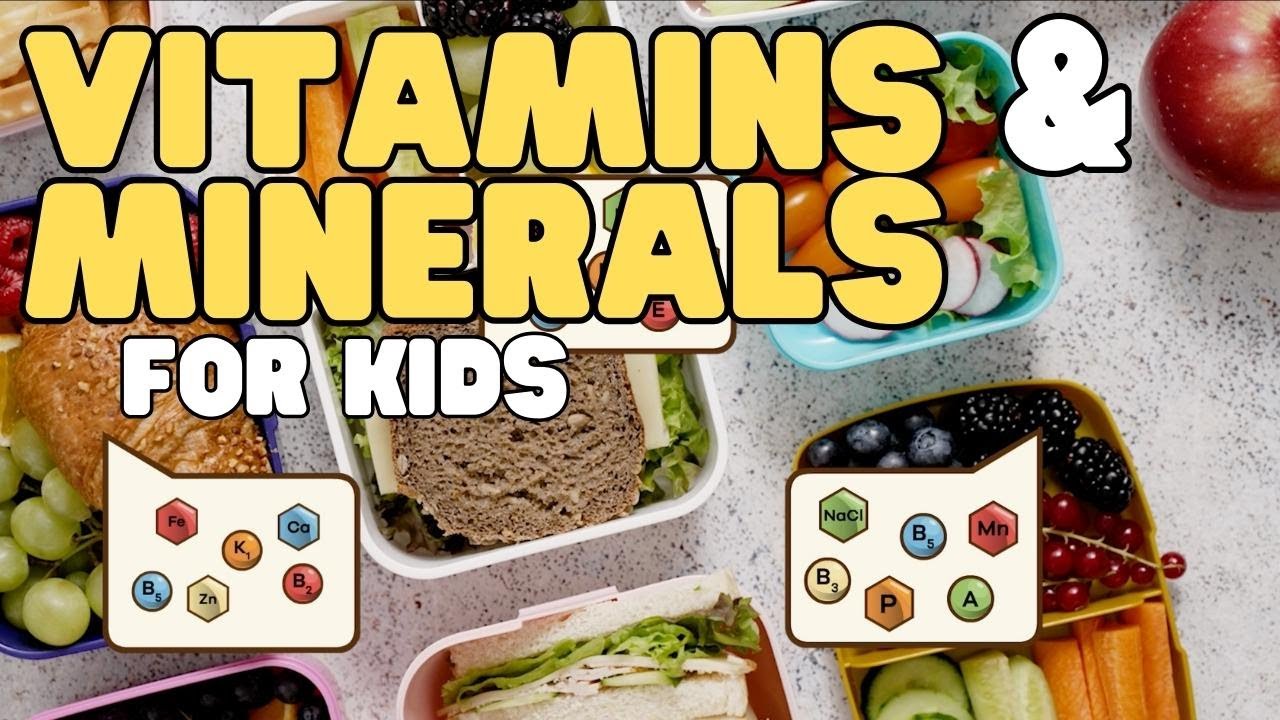
What exactly are vitamins and minerals? Many people think these two substances are the same, but they are not. But they are both important to keep our bodies strong and healthy. Vitamins are organic substances, meaning that plants and animals produce them. Minerals are inorganic and come from the soil and water. Then they are absorbed by plants or eaten by animals.
Vitamins are divided into two categories—fat soluble or water soluble. Which category a vitamin falls into depends on whether it dissolves best in fats or in water. The fat-soluble vitamins can be stored in the body, but the water-soluble vitamins need to dissolve in water before the body can absorb them. In addition, the body can’t store water-soluble vitamins. For this reason, we need a fresh supply of water-soluble vitamins each day.
When it comes to minerals, our bodies cannot break down or change them. Minerals can, however, form part of the structure of bones, teeth, nails, muscles, and red blood cells. There are several minerals the body needs. Calcium is one of the most common minerals. Our bodies need calcium to build and protect bones and teeth, support our muscles, and help with blood clots and nerves.
We hope you and your student(s) enjoyed learning about these essential nutrients! If you want to learn even more, head over to our website and download one of our many lesson plans about health, full of activities, worksheets, and more!
https://learnbright.org/lesson....s/science/vitamins-a
https://learnbright.org/lesson....s/science/food-group
https://learnbright.org/lesson....s/science/food-label
https://learnbright.org/lesson....s/science/the-digest
Thank you for watching and learning with us! We’re constantly releasing new content and videos, so click that “Subscribe” button and you’ll get notified.
What you will learn in Vitamins and Minerals for Kids:
0:00 Introduction
0:29 What the body needs to function properly
1:13 What vitamins and minerals do for you
2:06 Fat-soluble and water-soluble vitamins
3:00 Which vitamins do what for your body
4:27 Minerals (microminerals)
5:26 Review of the facts
Find and Follow Us Online:
Facebook: https://www.facebook.com/LearnBright/
Instagram: https://instagram.com/LearnBrightEducation
Pinterest: https://pinterest.com/LearnBrightEducation
YouTube: @LearnBright
Website: https://learnbright.org/
*Teachers and Parents! Did you know? In addition to these great videos, we have also created a library of high-quality and engaging lessons for your elementary aged student(s). Visit us, sign up for a free account, and instantly you'll have access to thousands of lesson plans, learning materials, teaching instructions, activities, and assignments that your kids will really enjoy! We hope to see you soon!
Browse our entire collection of Science lesson plans: https://learnbright.org/lessons/?filter_subject=science
#VitaminsAndMinerals
#Vitamins
#Minerals

Can you name five natural disasters? How about ten? Twenty? Natural Disasters for Kids discusses quite a few of these crazy storms. It specifically discusses ten of the most common and what causes them to occur. In addition, you'll learn a few things you can do to get ready for a natural disaster in your area.
The most common type of natural disaster in the U.S. is flooding. Nearly 90% of all disasters actually involve flooding in some way. Floods can result from tropical storms, hurricanes, extreme rains, or even thawing snow. On the opposite end of the spectrum is a drought. When an area experiences a drought, it means that there is intense heat and an extreme lack of precipitation. Droughts can kill plants and reduce freshwater supply.
Another common natural disaster is the tsunami. Tsunamis are rare in the United States. These large ocean waves that form after an earthquake happens end up flooding coastal land. Hurricanes similarly produce excessive rainfall and often a lot of flooding. Wind speeds during a hurricane can reach up to 150 miles an hour! Still, the worst wind storm would be a tornado, with speeds up to 300 miles per hour.
Luckily, there are things we can do to help get ready for these storms. These are the three Ps: plan, prepare, and practice. It always helps to have a plan that outlines what you should do in case a natural disaster occurs. Then it's important to prepare by gathering necessary supplies. And like practicing for a fire drill at school, it's a good idea to practice the plan you made and ensure it works.
We hope you and your student(s) enjoyed learning about these common storms! If you want to learn even more, head over to our website and download one of our many lesson plans about natural disasters, full of activities, worksheets, and more!
https://learnbright.org/lesson....s/science/natural-di
https://learnbright.org/lesson....s/science/tsunamis-s
https://learnbright.org/lesson....s/science/storms-tor
https://learnbright.org/lesson....s/science/hurricanes
https://learnbright.org/lessons/science/droughts/
https://learnbright.org/lesson....s/science/earthquake
https://learnbright.org/lesson....s/science/earthquake
What you will learn in Natural Disasters for Kids:
0:00 Introduction
0:37 What a natural disaster is
1:26 Preparation and prediction of disasters
2:24 Blizzards, droughts, and earthquakes
3:17 Floods and heat waves
4:19 Hurricanes and thunderstorms
5:10 Tornados, tsunamis, and wildfires
6:23 Other natural disasters
6:48 What to do to get ready for a natural disaster
8:25 Review of the facts
Thank you for watching and learning with us! We’re constantly releasing new content and videos, so click that “Subscribe” button and you’ll get notified.
Find and Follow Us Online:
Facebook: https://www.facebook.com/LearnBright/
Instagram: https://instagram.com/LearnBrightEducation
Pinterest: https://pinterest.com/LearnBrightEducation
YouTube: @LearnBright
Website: https://learnbright.org/
*Teachers and Parents! Did you know? In addition to these great videos, we have also created a library of high-quality and engaging lessons for your elementary aged student(s). Visit us, sign up for a free account, and instantly you'll have access to thousands of lesson plans, learning materials, teaching instructions, activities, and assignments that your kids will really enjoy! We hope to see you soon!
Browse our entire collection of Science lesson plans: https://learnbright.org/lessons/?filter_subject=science
#naturaldisasters
#storm

Phases of the Moon is a great introduction to the moon for kids. In this video we will learn all about the moon, the effects that it has on the earth, and how it orbits. We also talk about the first people who landed on the moon (Neil Armstrong and Buzz Aldrin). Last but not least we will learn all about and explain the different phases of the moon, including: New Moon, First Quarter Moon, Last Quarter Moon, Full Moon, Gibbous Moon, and Crescent Moon.
After finishing the video, head over to our site and download our free 9 page moon lesson plan. This lesson plan is build for 1st - 3rd grade and comes complete with instruction pages, activities, worksheets and more! Download here: https://learnbright.org/lessons/science/the-moon/
Thank you for watching and learning with us! We’re constantly releasing new content and videos, so click that “Subscribe” button and you’ll get notified.
Find and Follow Us Online:
Facebook: https://www.facebook.com/LearnBright/
Instagram: https://instagram.com/LearnBrightEducation
Pinterest: https://pinterest.com/LearnBrightEducation
YouTube: https://www.youtube.com/LearnBright
Website: https://learnbright.org/
*Teachers and Parents! Did you know? In addition to these great videos, we have also created a library of high quality and engaging lessons for your elementary aged student(s). Visit us, sign up for a free account, and instantly you'll have access to thousands of lesson plans, learning materials, teaching instructions, activities, and assignments that your kids will really enjoy! We hope to see you soon!
Browse our entire collection of Science lesson plans: https://learnbright.org/lessons/?filter_subject=science
#PhasesOfTheMoon
#MoonForKids
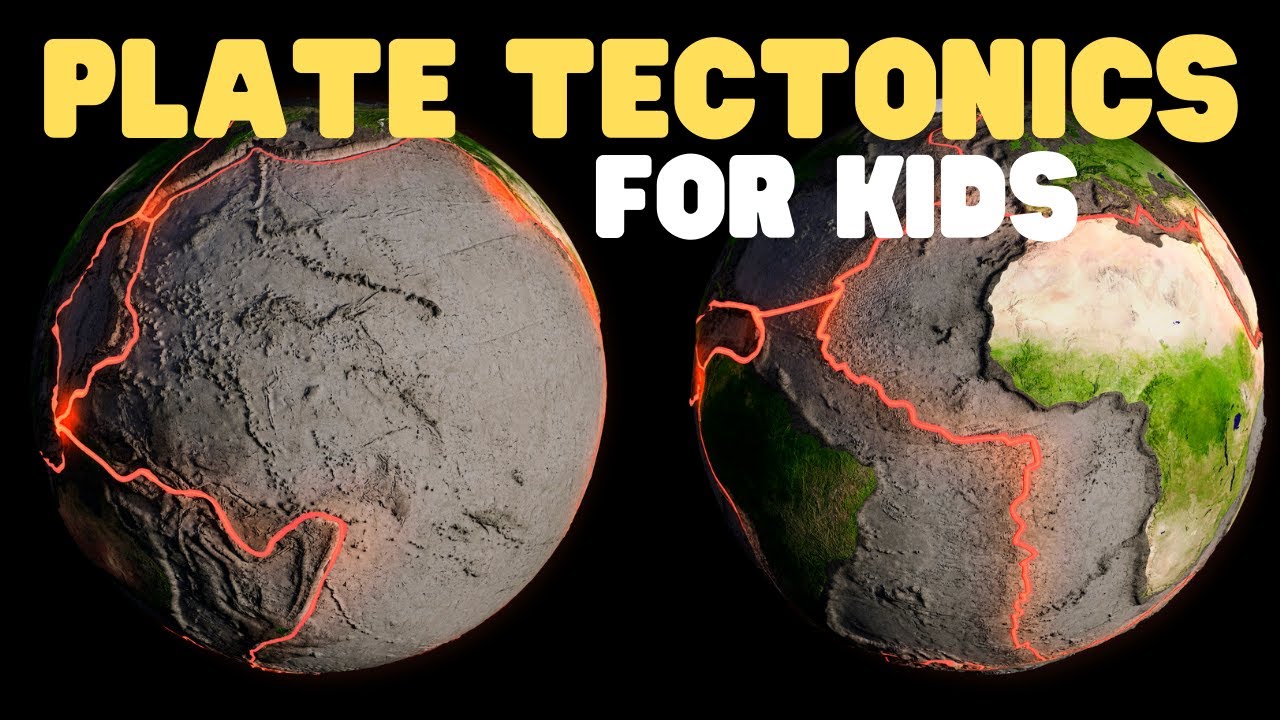
In this video we will explain plate tectonics for kids! Together we will learn about the two main types of tectonic plates, Oceanic and Continental. We also cover the 3 kinds of boundaries which are: Convergent, Divergent, and Transform. This helps us understand exactly how the plate tectonics move AND what happens when they do. We will also learn about Pangaea and how all of the plates were once together and over millions the plate tectonics have cause the continents to separate.
Don't just stop with this video. Visit us at https://learnbright.org/lesson....s/science/plate-tect and download your free 12 page lesson plane with more plate tectonics worksheets, activities and more!
Check out some of our other videos related to plate tectonics here:
Volcanoes: https://youtu.be/3Jxeh-yAXek
Earthquakes & Tsunamis: https://youtu.be/Q-v-G1iL67w
Thank you for watching and learning with us! We’re constantly releasing new content and videos, so click that “Subscribe” button and you’ll get notified.
Find and Follow Us Online:
Facebook: https://www.facebook.com/LearnBright/
Instagram: https://instagram.com/LearnBrightEducation
Pinterest: https://pinterest.com/LearnBrightEducation
YouTube: https://www.youtube.com/LearnBright
Website: https://learnbright.org/
*Teachers and Parents! Did you know? In addition to these great videos, we have also created a library of high quality and engaging lessons for your elementary aged student(s). Visit us, sign up for a free account, and instantly you'll have access to thousands of lesson plans, learning materials, teaching instructions, activities, and assignments that your kids will really enjoy! We hope to see you soon!
Browse our entire collection of Science lesson plans: https://learnbright.org/lessons/?filter_subject=science
#PlateTectonicsForKids
#TectonicPlates

Using adverbs in sentences is a great way to add description and detail. In What Is an Adverb? for Kids, you and your students will learn all about the role adverbs play in our language. Similar to advertisements that hype up a product, adverbs hype up sentences and give them a little extra kick.
Adverbs describe verbs in more detail, providing information on when, where, how, how much, or how often the action takes place. For instance, if you want to sell lemonade in your neighborhood, you might create a banner with the word "LEMONADE" across it. But you are likely to get more customers if you explain the kind of lemonade you are selling. Putting "freshly squeezed lemonade" is more accurate, and more appealing! The word "freshly" is the adverb that describes how you prepared your refreshing drink.
As another example, let's look at this sentence: I will read my book. That is a pretty vague statement. When will you read the book? Now let's take a look at this sentence: I will read my book tomorrow. Adding the adverb "tomorrow" provides more detail, makes the statement much more informative. That being said, keep in mind that adverbs can be vague (I will meet up with you later!) as well as specific (I will see you at 3 o'clock tonight!).
We hope you and your student(s) enjoyed learning how to identify adverbs in sentences! If you want even more practice, head over to our website and download one of our many lesson plans about adverbs, full of activities, worksheets, and more!
https://learnbright.org/?s=adverbs&post_type=product
What you will learn in What Is an Adverb? for Kids:
0:00 Adverbs are like advertisements
0:33 Example of how adverbs "hype up" sentences
1:54 Role of adverbs in sentences
2:24 Adverbs describe when
3:17 Adverbs describe where
4:02 Adverbs describe how
5:08 Adverbs tell how much/how often
Thank you for watching and learning with us! We’re constantly releasing new content and videos, so click that “Subscribe” button to get notified of any new content.
Find and Follow Us Online:
Facebook: https://www.facebook.com/LearnBright/
Instagram: https://instagram.com/LearnBrightEducation
Pinterest: https://pinterest.com/LearnBrightEducation
YouTube: @LearnBright
Website: https://learnbright.org/
*Teachers and Parents! Did you know? In addition to these great videos, we have also created a library of high-quality and engaging lessons for your elementary aged student(s). Visit us and sign up for a free account, and you will instantly have access to thousands of lesson plans, learning materials, teaching instructions, activities, and assignments that your kids will really enjoy! We hope to see you soon!
Browse our entire collection of Language Arts lesson plans: https://learnbright.org/lessons/?filter_subject=language-arts
#Adverbs
#WhatIsAnAdverb

What weighs about three pounds, uses electrical impulses, and stores unlimited amounts of information or data? Your brain! In this video for kids, you will learn a lot more about this fascinating organ of the human body that is almost like a computer. As the main part of the central nervous system, the brain has lot of important functions. This video will teach you about six parts of the brain and what they do.
The cerebrum is the biggest part of the brain. It makes up about 85% of the brain's weight. It allows us to control voluntary muscles so they can do things like kick a ball, walk down the street, or jump in the air. It also allows us to think. We depend on this important part of the brain when it comes to remembering things as well.
The brain stem, which connects the brain to the spinal cord, is responsible for things like breathing, digesting food, and circulating blood throughout the body. It controls involuntary muscles, which are the muscles that work on their own. For instance, the brain stem tells the heart to pump blood or the stomach muscles to break food down. It is below the cerebrum and in front of the cerebellum. Speaking of the cerebellum, this part of the brain controls balance, movement, and coordination. Without it, you would have trouble moving around.
The other three parts are the pituitary gland, the hypothalamus, and the amygdala. The pituitary gland controls how the body grows by producing and releasing hormones. Without it, you would never grow as you age. The hypothalamus controls the temperature of your body. When it's hot, it tells your body to sweat, and it tells your body to shiver when it's cold. And the amygdala is like the control center for feelings and is responsible for your emotions.
We hope you and your student(s) enjoyed learning about how the brain works! If you want to learn even more, head over to our website and download one of our many free lesson plans about the human body, full of activities, worksheets, and more!
https://learnbright.org/lessons/science/the-brain/
What you will learn in The Brain for Kids:
0:00 Introduction to the human brain
0:36 The brain as part of the central nervous system
1:16 Six parts of the brain and brain mapping
2:03 Cerebrum
3:19 Brain stem and cerebellum
4:17 Pituitary gland, Hypothalamus, and Amygdala
5:21 Review of the facts
Thank you for watching and learning with us! We’re constantly releasing new content and videos, so click that “Subscribe” button and you’ll get notified.
Find and Follow Us Online:
Facebook: https://www.facebook.com/LearnBright/
Instagram: https://instagram.com/LearnBrightEducation
Pinterest: https://pinterest.com/LearnBrightEducation
YouTube: @LearnBright
Website: https://learnbright.org/
*Teachers and Parents! Did you know? In addition to these great videos, we have also created a library of high-quality and engaging lessons for your elementary aged student(s). Visit us, sign up for a free account, and instantly you'll have access to thousands of lesson plans, learning materials, teaching instructions, activities, and assignments that your kids will really enjoy! We hope to see you soon!
Browse our entire collection of Science lesson plans: https://learnbright.org/lessons/?filter_subject=science
#TheBrain
#HumanBrain
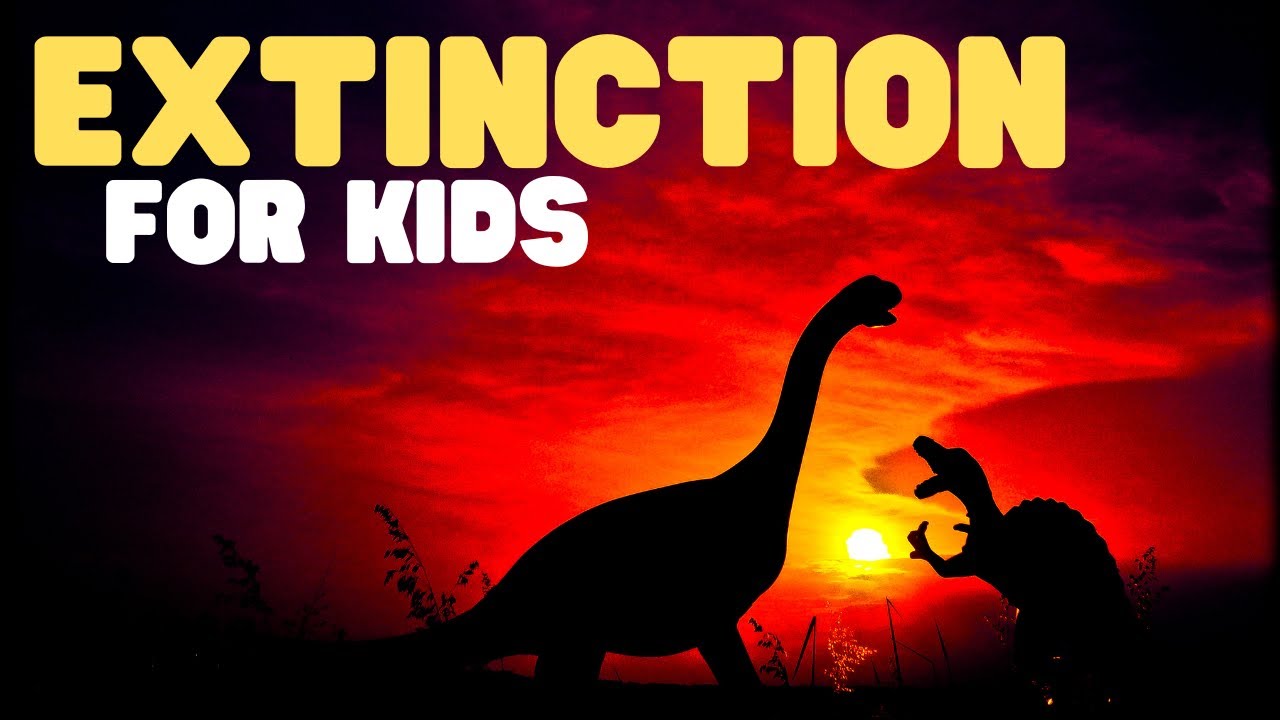
Have you ever wondered why there are no dinosaurs anymore? In Extinction for Kids, you will learn why dinosaurs no longer roam the planet. You will also learn about some other species that likewise died off. Believe it or not, plants can become extinct too, and the process happens more quickly than it does for animals.
Most of the time, extinction happens over a long period of time. When certain animals can no longer reproduce, they begin to die off. Or when animals can't adapt to their changing environment, this can also lead them to extinction. In cases of mass extinction, many species of plants and animals die out very quickly. Many scientists believe that this is what happened to the dinosaurs and other plants and animals that were on the planet millions of years ago. An asteroid may have collided with the surface of the earth and caused these species to die.
Humans can also contribute to the possibility of extinction for various species through things like overhunting, destroying habitats, or introducing nonnative species to areas where they are not usually found. In fact, have you ever heard of the dodo bird? When animals like pigs and cats were introduced to the dodo bird's environment, the bird became prey to the pigs and cats. As a result, they eventually became extinct because they could not adapt quickly enough to survive.
We hope you and your student(s) enjoyed learning about how animals and plants become extinct! If you want to learn even more, head over to our website and download one of our many free lesson plans about extinction, full of activities, worksheets, and more!
https://learnbright.org/lesson....s/science/extinct-an
https://learnbright.org/lesson....s/science/extinction
https://learnbright.org/lessons/science/dinosaurs/
https://learnbright.org/lessons/science/fossils/
What you will learn in Extinction for Kids:
0:00 Introduction to extinction and why species go extinct
1:17 What happened to the dinosaurs and other reasons species die out
1:56 How humans can cause extinction
3:11 Animals in danger of becoming extinct
3:38 Ways to help prevent extinction
4:01 Review of the facts
Thank you for watching and learning with us! We’re constantly releasing new content and videos, so click that “Subscribe” button and you’ll get notified.
Find and Follow Us Online:
Facebook: https://www.facebook.com/LearnBright/
Instagram: https://instagram.com/LearnBrightEducation
Pinterest: https://pinterest.com/LearnBrightEducation
YouTube: @LearnBright
Website: https://learnbright.org/
*Teachers and Parents! Did you know? In addition to these great videos, we have also created a library of high-quality and engaging lessons for your elementary aged student(s). Visit us, sign up for a free account, and instantly you'll have access to thousands of lesson plans, learning materials, teaching instructions, activities, and assignments that your kids will really enjoy! We hope to see you soon!
Browse our entire collection of Science lesson plans: https://learnbright.org/lessons/?filter_subject=science
#ExtinctionForKids
#Extinction

Mammals for kids is a fun engaging video that will help students learn all about the characteristics of mammals and what mammals really are! We quickly introduce animal classification and the difference between the types of animals but we mostly focus on what makes mammals unique in this video. From being warm blooded, to giving birth to live offspring we cover it all!
When you are done watching the video we invite you to come and download our free lesson plans about mammals that will help cement the learning. We have lesson plans that will help students from 1st grade to 3rd grade learn about animal classifications and how to identify the different kinds of animals. Check them out below:
Mammals and Reptiles Lesson plan (adaptable for 1st, 2nd, and 3rd Grade): https://learnbright.org/lesson....s/science/reptiles-a
Identify Animals lesson plan (2nd and 3rd Grade):
https://learnbright.org/lesson....s/science/identify-a
Thank you for watching and learning with us! We’re constantly releasing new content and videos, so click that “Subscribe” button and you’ll get notified.
Find and Follow Us Online:
Facebook: https://www.facebook.com/LearnBright/
Instagram: https://instagram.com/LearnBrightEducation
Pinterest: https://pinterest.com/LearnBrightEducation
YouTube: https://www.youtube.com/LearnBright
Website: https://learnbright.org/
*Teachers and Parents! Did you know? In addition to these great videos, we have also created a library of high quality and engaging lessons for your elementary aged student(s). Visit us, sign up for a free account, and instantly you'll have access to thousands of lesson plans, learning materials, teaching instructions, activities, and assignments that your kids will really enjoy! We hope to see you soon!
Browse our entire collection of Science lesson plans: https://learnbright.org/lessons/?filter_subject=science
#MammalsForKids
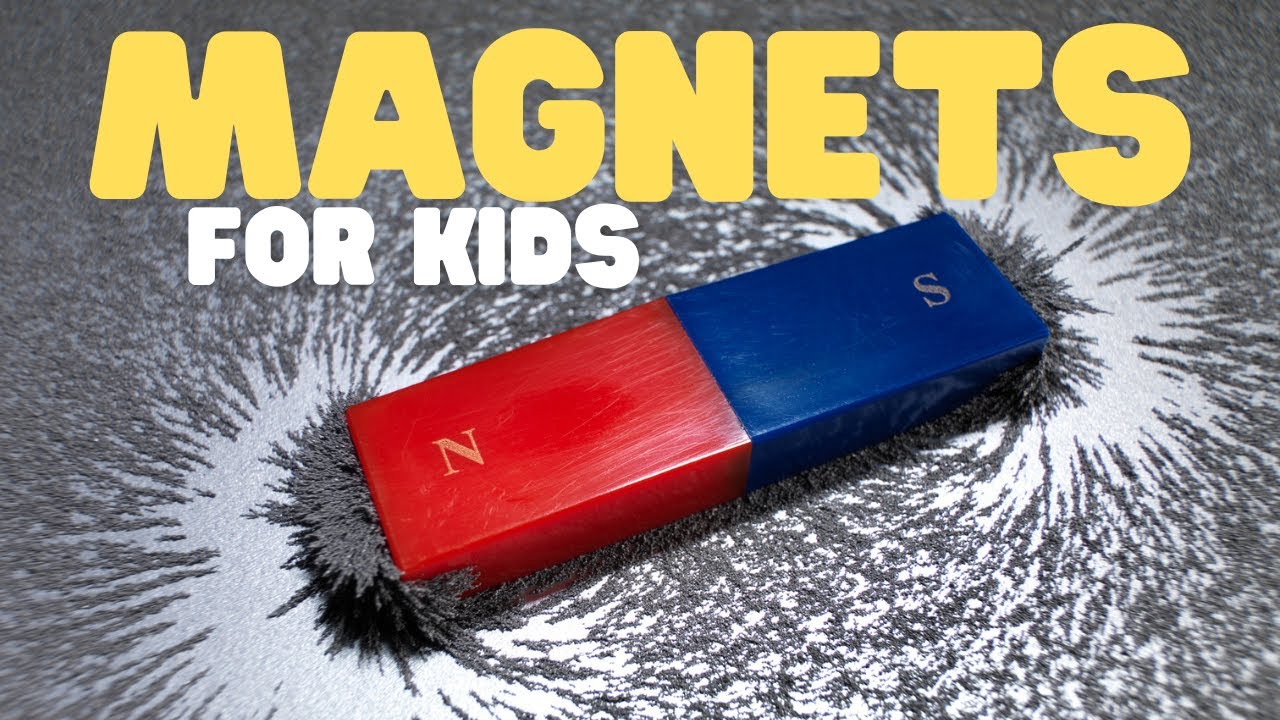
What do you know about magnets or magnetism? Magnets for Kids teaches you about magnets and how and why they work. People use magnets for more than just hanging up artwork and grocery lists on their refrigerators. In fact, the very center of the earth is made of two metals that cause a giant magnetic field! A magnetic field is the area surrounding a magnet. Let's see what else you learn!
Every magnet has a north pole and a south pole. A north and south pole will always pull toward each other, or attract to each other. If you try to take two magnets and face the north poles toward each other, they will repel. The same is true of the south poles.
There are a few types of magnets: temporary, permanent, and electromagnet. Temporary magnets become magnetized when a magnetic field is present. But they lose their magnetism when that magnetic field goes away. Permanent magnets, on the other hand, are made of materials like iron or nickel that are already magnetized and have their own magnetic field. In fact, the earth's core is made of iron and nickel, which is why it is magnetic.
Electromagnets are the last type. These magnets are created by running an electrical current through a coil with a metal core. The energized core creates a magnetic field. It stops working as soon as the electric current turns off. An MRI machine at a hospital is an example of an electromagnet. Other things with magnets in them include telephones, door bells, motors, and compasses.
We hope you and your student(s) enjoyed learning about magnetism and how magnets work! If you want to learn even more, head over to our website and download one of our many free lesson plans about magnets, full of activities, worksheets, and more!
https://learnbright.org/lessons/science/magnets/
What you will learn in Magnets for Kids:
0:00 Introduction to magnets
0:27 What is a magnet?
1:06 North and south poles of magnets
2:06 Three types of magnets—temporary, permanent, electromagnet
3:13 Where are magnets used?
4:04 Review of the facts
Thank you for watching and learning with us! We’re constantly releasing new content and videos, so click that “Subscribe” button and you’ll get notified.
Find and Follow Us Online:
Facebook: https://www.facebook.com/LearnBright/
Instagram: https://instagram.com/LearnBrightEducation
Pinterest: https://pinterest.com/LearnBrightEducation
YouTube: @LearnBright
Website: https://learnbright.org/
*Teachers and Parents! Did you know? In addition to these great videos, we have also created a library of high-quality and engaging lessons for your elementary aged student(s). Visit us, sign up for a free account, and instantly you'll have access to thousands of lesson plans, learning materials, teaching instructions, activities, and assignments that your kids will really enjoy! We hope to see you soon!
Browse our entire collection of Science lesson plans: https://learnbright.org/lessons/?filter_subject=science
#Magnets
#WhatIsAMagnet

In this video we run through the 50 States of America and give a history of the how the 50 U.S. States came to be. We talk about the 13 original colonies, the Louisiana purchase, acquisition of Florida, treaty of Guadalupe hidalgo, the Oregon Treaty and more!
To learn more download our 50 States of America Lesson Plan here: https://learnbright.org/lesson....s/social-studies/50-
The United States did not always have 50 states. A long time ago in the 1700s the country did not yet exist. The land was here, but there were no states until 1787. During that time, the first pieces of land, which are called states today, were called territories or colonies. Colonies were formed in America when people from England came and lived in different places on the East coast. There were 13 original colonies, which were also the first states of America. They are shown on the map to the left.
As time passed more and more states joined together and the United States was formed with a total of 50 states. The first state of America was Delaware and the last state to become part of America was Hawaii. It is important to learn the different names of the 50 states of America. When you hear the news, read a book, or do school work, the different names of the states may be said. The more you read about the different states, and see the names of each state, you will start to remember them.
Thank you for watching and learning with us! We’re constantly releasing new content and videos so click that “Subscribe” button and you’ll notified.
Find and Follow Us Online:
Facebook: https://www.facebook.com/LearnBright/
Instagram: https://instagram.com/LearnBrightEducation
Pinterest: https://pinterest.com/LearnBrightEducation
YouTube: https://www.youtube.com/LearnBright
Website: https://learnbright.org/
*Teachers and Parents! Did you know? In addition to these great videos, we have also created a library of high quality and engaging lessons for your elementary aged student(s). Visit us, sign up for a free account, and instantly you'll have access to thousands of lesson plans, learning materials, teaching instructions, activities, and assignments that your kids will really enjoy! We hope to see you soon!
Browse our entire collection of Social Studies lesson plans: https://learnbright.org/lessons/?filter_subject=social-studies
#50StatesOfAmerica
Learn More at mathantics.com
Visit http://www.mathantics.com for more Free math videos and additional subscription based content!

Learn More at mathantics.com
Visit http://www.mathantics.com for Free math videos and additional subscription based content!
Learn More at mathantics.com
Visit http://www.mathantics.com for Free math videos and additional subscription based content!
Learn More at mathantics.com
Visit http://www.mathantics.com for more Free math videos and additional subscription based content!
Learn More at mathantics.com
Visit http://www.mathantics.com for more Free math videos and additional subscription based content!

Learn More at mathantics.com
Visit http://www.mathantics.com for more Free math videos and additional subscription based content!

Learn More at mathantics.com
Visit http://www.mathantics.com for more Free math videos and additional subscription based content!