Top videos

This 3D animation explains the hormonal changes during the menstrual cycle. The menstrual cycle begins with menstrual bleeding, marking the follicular phase’s first day. When the follicular phase begins, levels of estrogen and progesterone are low. As a result, the top layers of the uterus’s thickened lining break down and are shed, and menstrual bleeding occurs.
About this time, the pituitary gland starts sending follicle-stimulating hormone to your ovaries, stimulating the development of 5 to 20 follicles in the ovaries. Each follicle contains an immature egg and produces estrogen. One follicle will soon begin to grow faster than others. This is called the dominant follicle. As the follicle grows, the levels of estrogen in the blood rise significantly. This increase in estrogen begins to inhibit the secretion of the follicle-stimulating hormone. The fall in follicle-stimulating hormone allows smaller follicles to die off. They are, in effect, "starved" of follicle-stimulating hormone.
The increasing amount of estrogen in your body also ensures that the lining of your womb thickens with nutrients and blood. This is so that if you do get pregnant, the fertilized egg will have everything it needs to grow.
The ovulatory phase begins with a rise in the levels of luteinizing hormone and follicle-stimulating hormone. The surge in the luteinizing hormone triggers one of the most prominent follicles to pop open and release its egg, which heads into the fallopian tube and starts its journey toward the uterus. Ovulation usually occurs 16 to 32 hours after the beginning of the surge, around day 14 of the menstrual cycle.
During the luteal phase, the levels of the luteinizing hormone and follicle-stimulating hormone decrease. The ruptured follicle closes after releasing the egg and forms a corpus luteum, which produces estrogen and progesterone, which cause the lining of the uterus to thicken even more. If an egg is fertilized, progesterone supports early pregnancy. But if no fertilization occurs, the corpus luteum will break down between 9 and 11 days after ovulation. This results in a drop in estrogen and progesterone levels, bringing us back to the first stage of menstruation if no pregnancy has occurred.
Timecodes:
0:00 Menstrual Bleeding
0:07 Follicular Phase
0:36 Dominant Follicle
1:12 Ovulation
1:37 Luteal Phase
1:46 Corpus Luteum
0:54 Implantation
1:04 Next video
#Menstruation #Menstrualcycle #animation
Nouns Part 3: Singular & Plural Nouns
What are singular and plural nouns? Learn how to make a singular noun into plural noun through many examples.
To go to "Nouns Part 4" click the link below :)
"Part 4: Irregular Plural Nouns"
https://youtu.be/sG10HhMpans
If you've missed Part 1 & Part 2 in "Nouns" click the links below!!
"Part 1: What is a Noun"
https://youtu.be/fnCh8UexntQ
"Part 2: Common & Proper Nouns"
https://youtu.be/ppNtch3wRJ4
For the "Noun Series" click the link below :)
https://www.youtube.com/playli....st?list=PLGIhw0VkiEN
For the entire "Verbs Series" click the link below :)
https://www.youtube.com/playli....st?list=PLGIhw0VkiEN
For the "Adjectives Series" click the link below :)
https://www.youtube.com/playli....st?list=PLGIhw0VkiEN
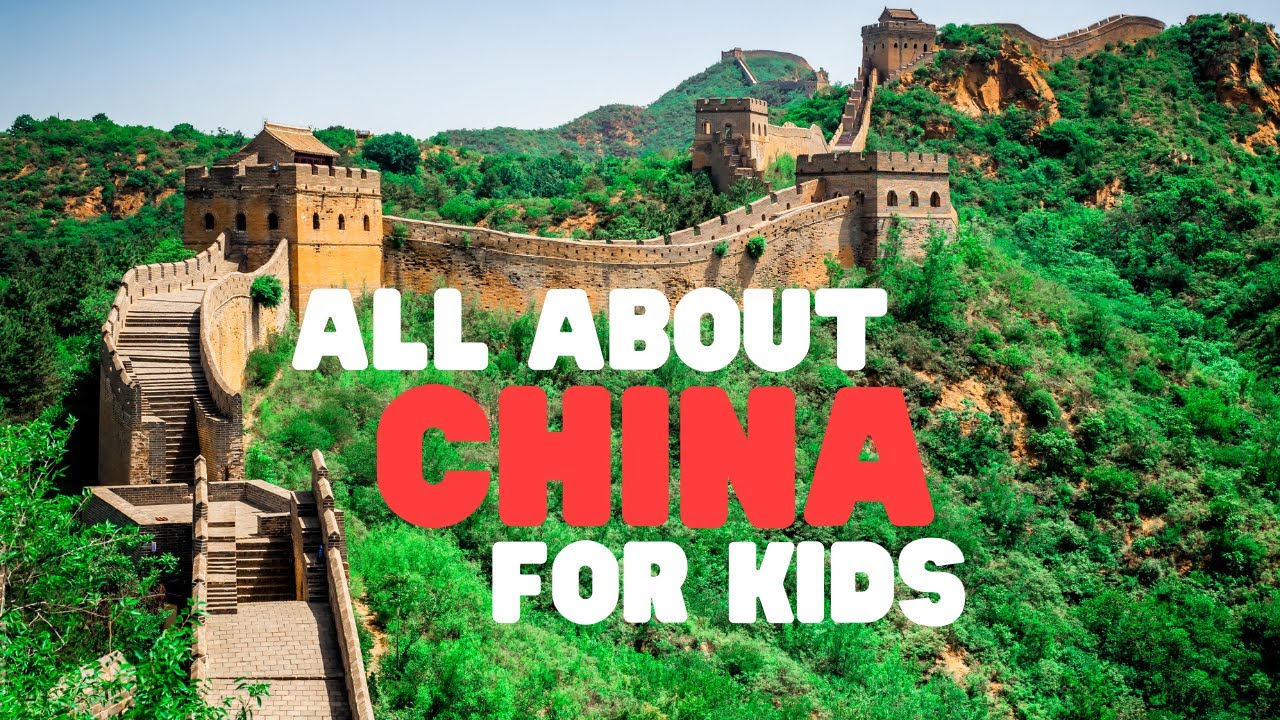
What do you know about the country of China? In All about China for Kids, you will learn a lot of cool facts about this incredible country. For instance, it is the most populated country in the whole world at 1.4 BILLION people! That is four times as many people as live in the USA. In addition, the official name of the country is the People's Republic of China. It is also the fourth largest country and borders a lot of other countries.
Because of China's big size, it boasts lots of different landscapes, like deserts, forests, mountains, and plateaus. In fact, a whole third of the country is covered in mountains. There are thousands of rivers, including the Yangtze and Yellow Rivers, throughout the country. And there is also a lot of wildlife all over the various regions, such as the Giant Panda, which is actually an endangered species. There are only around 2,000 pandas alive today!
China is home to one of the world's oldest civilizations. The history of China splits into periods of time called dynasties, the first one being the Xia Dynasty (pronounced like shaw) over 4000 years ago. And during the Qin Dynasty, the Great Wall of China was built, and the people developed advanced technology in mathematics and infrastructure. The last emperor was overthrown in 1912, and the country became a republic. But then in 1949, the current communist government overthrew the republic following a civil war.
There are so many cool attractions and landmarks to visit in China. Besides the Great Wall of China, there is the site of the terracotta army, a series of statues that represent Chinese warriors. They were buried under ground for more than 2,000 years! The Forbidden City is another great attraction, a place that was home to 24 of China's emperors. It was built around 1420 AD. Can you guess why it's called the forbidden city?
We hope you and your student(s) enjoyed learning about the amazing country of China! If you want even more information, head over to our website and download one of our many free lesson plans, full of activities, worksheets, and more!
https://learnbright.org/lesson....s/social-studies/all
https://learnbright.org/lesson....s/social-studies/gre
https://learnbright.org/lesson....s/social-studies/all
What you will learn in All about China for Kids:
0:00 Introduction to China
0:33 Location and geography of China
1:49 China's regions and government
2:46 Significant cities and economy
3:28 Chinese history and dynasties
4:26 Advanced in many fields and important inventions from China
5:31 Landmarks and other attractions
6:28 Significant wildlife of China
6:50 Review of the facts
Thank you for watching and learning with us! We’re constantly releasing new content and videos, so click that “Subscribe” button and you’ll get notified.
Find and Follow Us Online:
Facebook: https://www.facebook.com/LearnBright/
Instagram: https://instagram.com/LearnBrightEducation
Pinterest: https://pinterest.com/LearnBrightEducation
YouTube: @LearnBright
Website: https://learnbright.org/
*Teachers and Parents! Did you know? In addition to these great videos, we have also created a library of high-quality and engaging lessons for your elementary aged student(s). Visit us and sign up for a free account, and you'll instantly have access to thousands of lesson plans, learning materials, teaching instructions, activities, and assignments that your kids will really enjoy! We hope to see you soon!
Browse our entire collection of Social Studies lesson plans: https://learnbright.org/lessons/?filter_subject=social-studies
#AllAboutChinaForKids
#ChineseCulture
Alumni return to tackle burning questions from our Brighton Montessori preschoolers
Free Slides Download: https://purelypersistent.gumroad.com/l/fjygf
Here's another PRACTICE TEST to help you prepare for the GED social studies test or the HiSET social studies test.
Subscribe: https://bit.ly/2Uy4Msh
📹 Watch next to HELP YOU PASS 📹
New to GED/HiSET- Start Here - https://bit.ly/36gkEYT
HiSET/GED Math - https://bit.ly/36BWfww
HiSET/GED Social Studies - https://bit.ly/36wmHrx
HiSET/GED Science - https://bit.ly/37GwgVj
HiSET/GED Language Arts Reading - https://bit.ly/3CZIUuj
HiSET/GED Writing & Essay - https://bit.ly/3ttDKDQ
How to Study for Tests - https://bit.ly/3ipfYCu
Life Hacks - https://bit.ly/3JtcCud
📚 Beneficial Materials to Help You Study! 📚
My Favorite & Most Effective-
Essential Education Online Program - https://bit.ly/2WTbPPV
Others-
Kaplan GED Prep Book 2022 - https://amzn.to/3ofRqx6
Official Guide to HiSET Exam - https://amzn.to/38cpB2X
McGraw Hill TASC Prep - https://amzn.to/3nee5sl
Connect with me!
➡️ Blog: http://www.purelypersistent.com
➡️ YouTube: https://www.youtube.com/c/purelypersistent
➡️ Facebook: https://www.facebook.com/purelypersistent
➡️ Instagram: https://www.instagram.com/purelypersistent/
Be patient with yourself; believe in yourself; and go be PURELY PERSISTENT! 😃
➡️ My Baking Channel: https://www.youtube.com/c/sweetwatercakes
Welcome to Purely Persistent! I’m Michelle, and I am a teacher with a determination to help my students and others reach their full potential. My goal of this YouTube channel is to help you achieve your education (high school, GED, HiSET, TASC), develop a satisfying career and ultimately achieve the happiness that you deserve.
Note that product links in the description may be affiliate links which costs you nothing extra, but helps my channel grow by giving us a small commission of the sale.

What is the difference between a rule and a law? What would life be like if neither rules nor laws existed? In Laws and Rules for Kids, you will discover the answer to these and other questions you have about these concepts. They have similarities, such as the fact that both exist to keep people safe. But they are also different in a few ways. For instance, if you break a law, it may have more serious consequences than breaking a rule does.
A law is created by the government, and the public enforces these laws. A rule relates to behaviors that we should follow in certain situations or places. Breaking a law and breaking a rule both lead to consequences. If you litter, which is breaking the law, you might have to pay a fine. If you throw a ball inside your house even though there is a rule not to, you might break something and get in trouble.
In general, rules are used by smaller groups, like families, schools, teams, and business. Laws are used in much larger groups, like cities, states, and countries. Individuals create rules for different places and situations, such as parents in a family or teachers in a classroom. On the other hand, laws must be voted on by people in government offices or by the citizens.
Again, the consequences or punishments for breaking rules are not as severe as those for breaking laws. If you break rules at school, you might have to skip recess or miss out on certain activities or privileges. If you break a law, you could pay a fine, go to court, do community service, or even serve jail time! Watch the video to see if you can tell the difference between a rule and a law.
We hope you and your student(s) enjoyed learning about the difference between a rule and a law! If you want even more information, head over to our website and download one of our many free lesson plans, full of activities, worksheets, and more!
https://learnbright.org/lesson....s/social-studies/law
What you will learn in Laws and Rules for Kids:
0:00 Introduction to laws and rules
0:40 Why laws and rules are important
1:49 Differences between rules and laws
2:57 Differences in consequences or effects from breaking rules versus laws
3:38 Quiz: Can you tell the difference between a rule and a law?
4:56 Why you should try to follow the rules and laws
5:48 Rules and laws can differ depending on various factors
Check out some of our other videos related to laws and rules here:
Rules and Responsibilities: https://youtu.be/FWwEMFSY1r0
Thank you for watching and learning with us! We’re constantly releasing new content and videos, so click that “Subscribe” button and you’ll get notified.
Find and Follow Us Online:
Facebook: https://www.facebook.com/LearnBright/
Instagram: https://instagram.com/LearnBrightEducation
Pinterest: https://pinterest.com/LearnBrightEducation
YouTube: @LearnBright
Website: https://learnbright.org/
*Teachers and Parents! Did you know? In addition to these great videos, we have also created a library of high-quality and engaging lessons for your elementary aged student(s). Visit us and sign up for a free account, and you'll instantly have access to thousands of lesson plans, learning materials, teaching instructions, activities, and assignments that your kids will really enjoy! We hope to see you soon!
Browse our entire collection of Social Studies lesson plans: https://learnbright.org/lessons/?filter_subject=social-studies
#LawsAndRules
#Laws
#Rules
Want to rank #1 and get more leads, traffic & sales? → https://go.juliangoldie.com/backlink-portal
Get a FREE SEO Strategy Session here → https://go.juliangoldie.com/st....rategy-session?utm=j
Join the AI Success Lab for FREE AI SEO training + 50 FREE AI SEO Tools → https://www.skool.com/seo-mastermind-2356/about
Want to make money and save time with AI? Get AI Coaching, Support & Courses 👉 https://juliangoldieai.com/07L1kg
Get a FREE AI Course + 1000 NEW AI Agents 👉 https://juliangoldieai.com/5iUeBR
Want to know how I make videos like these? Join the AI Profit Boardroom → https://juliangoldieai.com/07L1kg
Notebook LM + Gemini: The Ultimate AI SEO Workflow
Discover how to integrate Notebook LM and Gemini to revolutionize your SEO strategy and content production. This tutorial walks you through a seamless workflow to transform deep research into high-ranking blog posts and landing pages.
00:00 - Intro
00:34 - The Notebook LM & Gemini Integration
01:44 - Step 1: Deep Research with Discover
03:01 - Organizing Your Research Insights
04:30 - Moving Research into Gemini
05:08 - Generating SEO-Optimized Blog Posts
06:15 - Building High-Converting Landing Pages
07:28 - Efficiency & Scale for Content Creators
![Google Notebook LM Tutorial - [Become A Power User in 15 min]](https://i.ytimg.com/vi/UG0DP6nVnrc/maxresdefault.jpg)
In this video, I will show you how to use the new free Google Notebook LM platform with 13 unique tips.
Start here: https://notebooklm.google.com
🧠 The world's leading AI newsletter: https://neuralfrontier.beehiiv.com/subscribe
🏦 Form your LLC: https://santrelmedia.com/incfile
⏰ Double your productivity with this software: https://santrelmedia.com/Productivity
Follow us on Instagram:
Nate: https://www.instagram.com/nateobrienn/
Mike: https://www.instagram.com/mikeobrienn/
SUBSCRIBE: www.youtube.com/santrelmedia
DISCLAIMER: This video and description contains affiliate links, which means that if you click on one of the product links, I’ll receive a small commission. This helps support the channel and allows us to continue to make videos like this. Thank you for the support! Everything in this video is based on information we learned from online resources, our own experience, and books we have read. Please do your own research before making any important decisions. You and only you are responsible for any and all digital marketing decisions you make. Thank you for watching!
TIMESTAMPS:
0:00 What is NotebookLM?
0:40 Getting Started
1:56 Tip 12
2:41 Tip 11 (making a podcast)
3:50 Tip 10
5:29 Tip 9
6:48 Tip 8
7:25 Tip 7 (make a study guide)
8:30 Tip 6 (make a timeline)
9:20 Tip 5 (make a briefing doc)
9:58 Tip 4
10:29 Tip 3
11:00 Tip 2
11:11 WOAH! UPDATES FROM GOOGLE!!
11:53 Tip 1 (using NotebookLM to read journal entries)
12:38 A word of caution

Looking for the best AI grading tools for teachers? In this video, we compare Edcafe AI, Gradescope, and CoGrader to help you choose the right tool for faster, smarter grading.
🔔 Subscribe to stay updated: ► www.youtube.com/@ClassPoint
Read the blog: ► https://www.classpoint.io/blog..../ai-grading-tools-fo
🔗 Links
~~~~~~
Learn more about ClassPoint: ► https://www.classpoint.io/
Learn more about Edcafe AI: ► https://www.edcafe.ai/
~~~~~~
*** Related Videos ***
🎬 How to Create an AI-Generated Interactive Quiz [with Edcafe AI] ► https://youtu.be/5qLxPD6SDuU
🎬 15 AI Time-Saving Tips for Teachers ► https://youtu.be/pDk90s_ifCo
🎬 11 of the Best AI Tools for Teachers ► https://youtu.be/KG4_CYbVpTo
⌚ Timestamps:
[ 0:00 ] - Intro
[ 0:21 ] - What to Look for in an AI Grading Tool
[ 0:59 ] - Edcafe AI
[ 2:32 ] - Gradescope
[ 3:50 ] - CoGrader
[ 4:56 ] - Which AI Grading Tool Is Best for You?
#aigrading #gradewithai #aiforteachers
🚩 ClassPoint on Social Media:
YouTube: 👉🏻 https://www.youtube.com/c/ClassPoint
TikTok: 👉🏻 https://www.tiktok.com/@classpoint.io
Facebook: 👉🏻 https://www.facebook.com/classpoint.io
Facebook: 👉🏻 https://www.facebook.com/groups/edcafeai
Twitter: 👉🏻 https://twitter.com/ClassPointIo
Twitter: 👉🏻 https://x.com/edcafeai
📢 📢 About This Channel
_________________________________
ClassPoint (https://classpoint.io) seamlessly integrates with Microsoft PowerPoint to turn presentations into interactive lessons, enhancing engagement through live student response tools.
In this channel, we provide tutorials on ClassPoint, but also tutorials to help teachers use technology in their classrooms to engage students.
We aim to be a welcoming community for teachers around the world to learn and ask questions about different EdTech solutions.
SUBSCRIBE and tap the BELL for videos on learning to use technology to help you better connect and engage with your students. Plus, check out Edcafe AI - EdCafe (https://edcafe.ai) is our AI-driven platform built specifically for teachers, offering advanced tools for lesson planning, personalized learning, and student interaction.

Alpha School’s co-founder MacKenzie Price joined Stanford's Graduate School of Education Dean Dan Schwartz on May 15, 2025 for an insightful conversation about AI's role in transforming education. They discussed how AI enables true 1-to-1 personalized learning, empowers students as creators rather than passive consumers, and provides real-time insights into student progress instead of waiting for report cards every eight weeks.
Schwartz emphasized that while AI can help automate outdated teaching methods, the real opportunity lies in helping students create — like writing songs to learn history or building architectural plans they can virtually experience. Most importantly, students still need foundational knowledge to interpret and appreciate AI's outputs, but they can learn more efficiently through AI-powered personalization.
Learn more about the Stanford Accelerator for Learning
https://acceleratelearning.stanford.edu/
Read The ABCs of How We Learn: 26 Scientifically Proven Approaches, How They Work, and When to Use Them
https://www.amazon.com/ABCs-Ho....w-Learn-Scientifical
Learn more about Alpha School https://alpha.school/
Follow MacKenzie Price and subscribe to the Future of Learning Podcast https://linktr.ee/2hourlearning
#learningwithai #futureofeducation #alphaschool #stanfordgraduateschoolofeducation
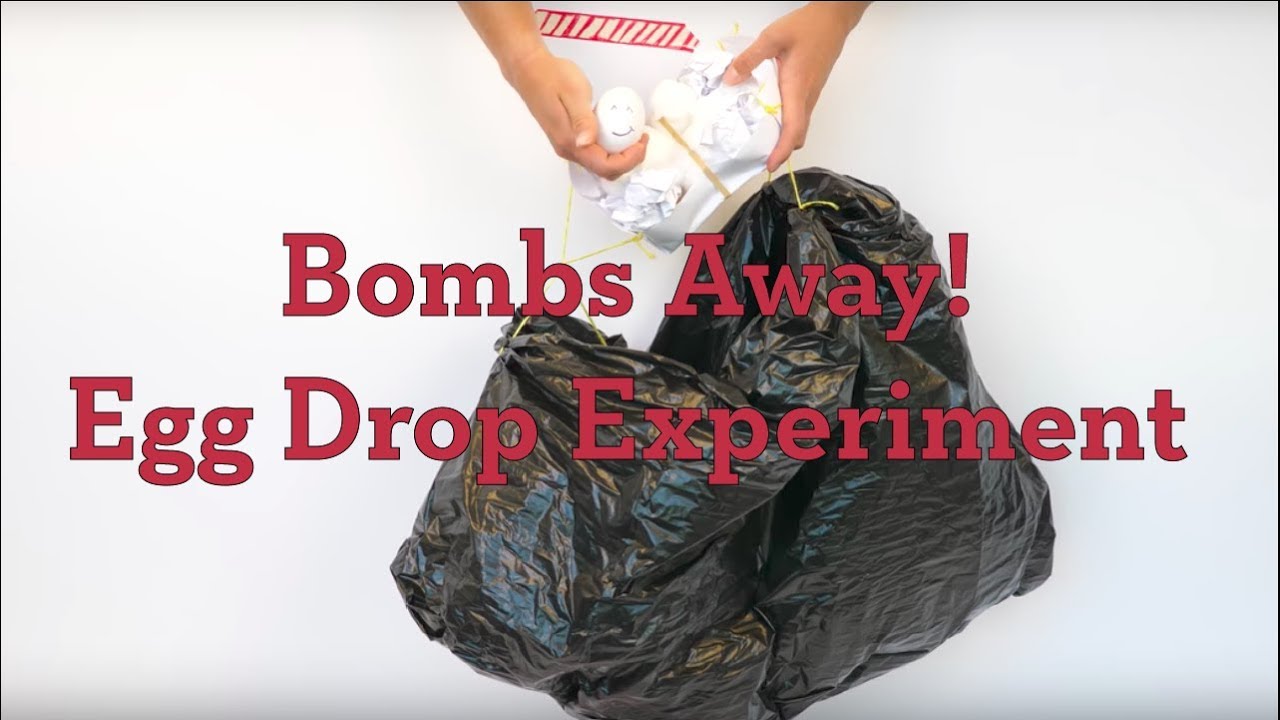
Students design and build devices to protect and accurately deliver dropped eggs. The devices and their contents represent care packages that must be safely delivered to people in a disaster area with no road access. Similar to engineering design teams, students design their devices using a number of requirements and constraints such as limited supplies and time. The activity emphasizes the change from potential energy to kinetic energy of the devices and their contents and the energy transfer that occurs on impact. Students enjoy this competitive challenge as they attain a deeper understanding of mechanical energy concepts.
View the full activity on TeachEngineering:
https://www.teachengineering.o....rg/activities/view/d
TeachEngineering has over 1,500 FREE lessons and activities. Visit http://www.TeachEngineering.org for more!
Music: Little Idea - Bensound.com

Students explore the basics of DC circuits, analyzing the light from light bulbs when connected in series and parallel circuits. Ohm's law and the equation for power dissipated by a circuit are the two primary equations used to explore circuits connected in series and parallel. Students measure and see the effect of power dissipation from the light bulbs. Kirchhoff's voltage law is used to show how two resistor elements add in series, while Kirchhoff's current law is used to explain how two resistor elements add when in parallel. Students also learn how electrical engineers apply this knowledge to solve problems. Power dissipation is particularly important with the introduction of LED bulbs and claims of energy efficiency, and understanding how power dissipation is calculated helps when evaluating these types of claims. This activity is designed to introduce students to the concepts needed to understand how circuits can be reduced algebraically.
View the full lesson on TeachEngineering:
https://www.teachengineering.o....rg/activities/view/w
TeachEngineering has over 1,500 FREE lessons and activities. Visit https://www.teachengineering.org/ for more
Music: Life_of_Riley
Artist: Kevin MacLeod

Unlock the beauty of Conic Sections with GeoGebra! ✨
In this tutorial, you will learn how to construct and explore Parabola, Ellipse, Hyperbola, and Circle step by step using GeoGebra’s interactive tools.
🔹 What you’ll learn in this video:
✔️ Drawing conic sections using definitions
✔️ Exploring standard equations and properties
✔️ Visualizing focus, directrix, and eccentricity
✔️ Interactive demonstrations for classroom teaching
👩🏫 Perfect for teachers, students, and math enthusiasts who want to make learning more visual and engaging.
💡 Try these activities in your classroom and make math fun with GeoGebra!
#ConicSections #GeoGebra #MathVisualization #Parabola #Ellipse #Hyperbola #Circle #kumaravelu #kumaravelugeogebra
#ConicSections #GeoGebra #MathsVisualization #Parabola #Ellipse #Hyperbola #Circle #GeoGebraTutorial #MathsMadeEasy #InteractiveMath #Class11Maths #Class12Maths #MathsTeaching #STEMEducation #GeoGebraTamil #கோணவியல் #ஜியோஜிப்ரா #கணிதம் #கல்வி

😴 Do you have trouble getting your toddler to sleep? ✨This baby lullaby song will help them relax and drift off to dreamland. With its gentle melody and calming music, this is the perfect bedtime music for kids or toddler. And because it stars 🦁 Lucas and friends, the entire family will love it. 🤩
🌝 This well-known lullaby baby song music will assist your children in falling asleep soundly. 🎶 Its 3 hours of blissful babies lullabies music; perfect for toddlers, babies, and kids of all ages. Parents and infants may rest easy with this lovely lullaby playing in the background. 🛏️ Even newborns will relax while listening to this beautiful melody.
👉 Most parents know that lullabies (baby sleep music) are a great way to help children fall asleep. But did you know that there is scientific evidence to support this? Studies have shown that lullabies can help calm and relax infants, which in turn helps babies to go to sleep more easily. In fact, some studies have found that lullabies can be even more effective than medication at helping newborns get the rest they need. 🌕
🎵 Play this lullaby song at a low volume and help your kid sleep soundly. It may be just what they need to drift off into dreamland. 😴
⭐ RV AppStudios is thrilled to add our newest song for kids to our collection, and one we're sure your kids will love singing along-to! 👍 As always, be sure to LIKE and SHARE this kids song to show more families that it can be easy and fun to learn 🔔 And don't forget to SUBSCRIBE for more free animated sing-along songs and nursery rhymes for kids by RV Kids! 🔥
📢 Coloring pages for kids and much more - https://www.rvappstudios.com
🔥🔥🔥 Checkout Our Brand New ABC Tracing Workbook on Amazon For Toddlers & Kids Ages 3 to 5 Years Old - https://www.amazon.com/dp/B0B8BRNGXS 💥💥💥
🎯 Try our FREE Educational Apps for Babies & Toddlers:
🟡 Google Play: https://play.google.com/store/....apps/dev?id=74300059
🟣 iOS: https://apps.apple.com/develop....er/rv-appstudios-llc
🟢 RV AppStudios: https://www.rvappstudios.com/kidsapp.html
🌟 Fun educational videos & rhymes for toddlers by RV AppStudios:
✏️ ABC Song, Learn Colors, Count Numbers & Animals for Kids - https://youtu.be/Hv0s85XFVZc
✨ Twinkle Twinkle Little Star, Color Song & Rain Rain Go Away - https://youtu.be/JLFhgCyLUVg
🚌 Wheels on the bus + More Kids Songs - https://youtu.be/oHyhv6ny7tA
Copyright © RV AppStudios
#Lullaby #MusicForSleep #Lullabies

Pre-order our book YOU ARE AN ARTIST (which includes new assignments!) here: http://bit.ly/2kplj2h
This week we meet with Jon Rubin, a Pittsburgh based artist whose practice often focuses on cultural exchange, pushing us to imagine other people and their lives more complexly. For his assignment, he asks you to do the same by bridging the gap between you and your neighbor.
INSTRUCTIONS - HERETHERE
1. Tell a neighbor that you’re participating in an art project and that you want to film one of their rooms
2. Record (in landscape!) through that room from left to right, being as slow and stable as possible.
3. Make sure to have an object or wall in the foreground of the in point and out point
4. Upload your best take using #theartassignment
5. Fame and glory (your work might be in a future episode)
Find out more about The Art Assignment and how to submit your response: http://theartassignment.com/

In this episode, we are focusing on how to use generative AI in the educational sector for creating interactive quizzes, personalized learning activities, and simplified explanations of complex topics.
Stay tuned for more episodes in the 'Mastering Prompts: Crafting AI's Creative Genius' playlist @GenAIExplainedSimply


The Languages in the K-12 Programs
Video #1
By: Emerald May A. Francisco
III-CC2

#ReadingLessonForBeginners
#ReadingTutorialforBeginners
#readinglessonforkids
#teacherayaonlinetutor
#practicereadingenglish
#practicereadingenglish
#learnhowtoread
#LearningIsFun
#englishgrade1
#EnglishReadingLessonGrade1
#EnglishReadingLessonGrade3
#EnglishReadingLessonKinder
#CVC
#CVCsentences
#OnlineReadingLesson
#Poems
#PoemsforKids

#basicsentencesforgrade1
#readingenglishgrade1
#readingenglishkinder
#readingenglishsentences
#practicereadingenglish
#englishfortoddlers
#englishforkids
#practicereadingenglishforbeginners
#readingsimplesentences
#sentencesstartingwithIhave
#grade1English
#KinderEnglish
#Grade2English
#practicereadingenglishsentences
#BasicEnglishsentences

Courses on Khan Academy are always 100% free. Start practicing—and saving your progress—now: https://www.khanacademy.org/ma....th/linear-algebra/al
Determining the eigenvalues of a 3x3 matrix
Watch the next lesson: https://www.khanacademy.org/math/linear-algebra/alternate_bases/eigen_everything/v/linear-algebra-eigenvectors-and-eigenspaces-for-a-3x3-matrix?utm_source=YT&utm_medium=Desc&utm_campaign=LinearAlgebra
Missed the previous lesson?
https://www.khanacademy.org/math/linear-algebra/alternate_bases/eigen_everything/v/linear-algebra-finding-eigenvectors-and-eigenspaces-example?utm_source=YT&utm_medium=Desc&utm_campaign=LinearAlgebra
Linear Algebra on Khan Academy: Have you ever wondered what the difference is between speed and velocity? Ever try to visualize in four dimensions or six or seven? Linear algebra describes things in two dimensions, but many of the concepts can be extended into three, four or more. Linear algebra implies two dimensional reasoning, however, the concepts covered in linear algebra provide the basis for multi-dimensional representations of mathematical reasoning. Matrices, vectors, vector spaces, transformations, eigenvectors/values all help us to visualize and understand multi dimensional concepts. This is an advanced course normally taken by science or engineering majors after taking at least two semesters of calculus (although calculus really isn't a prereq) so don't confuse this with regular high school algebra.
About Khan Academy: Khan Academy offers practice exercises, instructional videos, and a personalized learning dashboard that empower learners to study at their own pace in and outside of the classroom. We tackle math, science, computer programming, history, art history, economics, and more. Our math missions guide learners from kindergarten to calculus using state-of-the-art, adaptive technology that identifies strengths and learning gaps. We've also partnered with institutions like NASA, The Museum of Modern Art, The California Academy of Sciences, and MIT to offer specialized content.
For free. For everyone. Forever. #YouCanLearnAnything
Subscribe to KhanAcademy’s Linear Algebra channel: https://www.youtube.com/channe....l/UCGYSKl6e3HM0PP7QR
Subscribe to KhanAcademy: https://www.youtube.com/subscr....iption_center?add_us
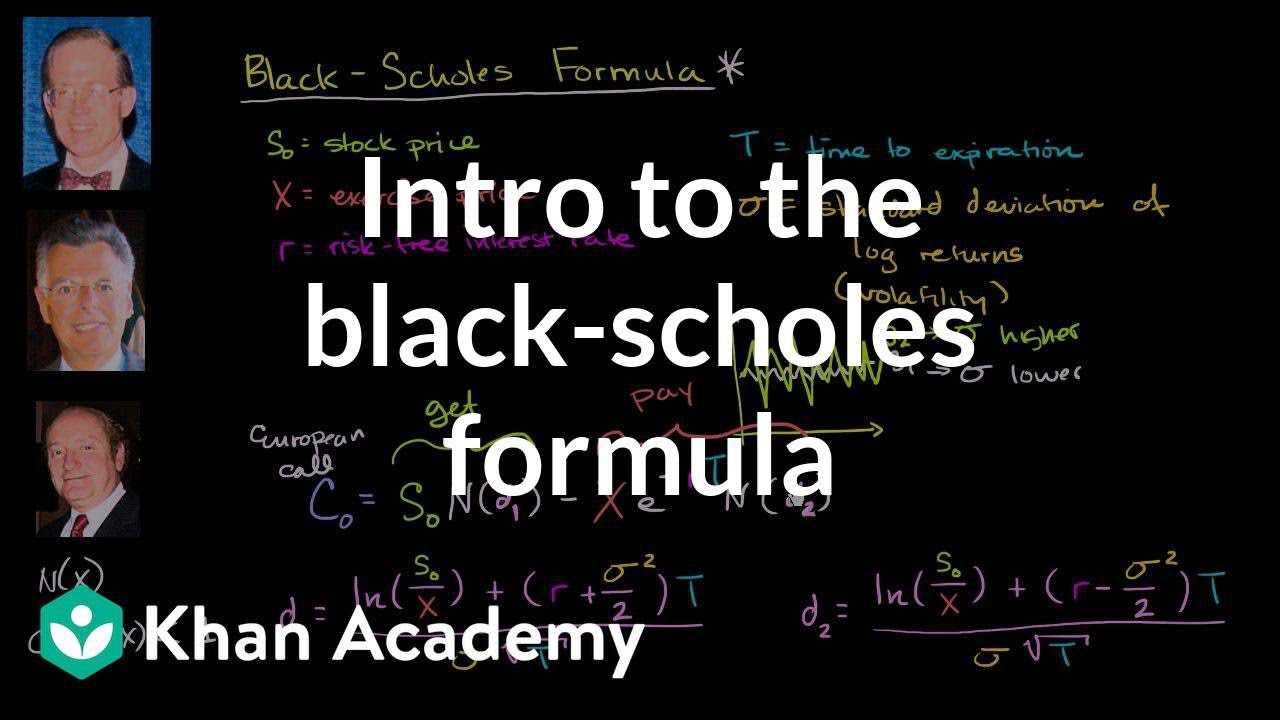
Created by Sal Khan.
Watch the next lesson:
https://www.khanacademy.org/economics-finance-domain/core-finance/derivative-securities/black-scholes/v/implied-volatility?utm_source=YT&utm_medium=Desc&utm_campaign=financeandcapitalmarkets
Missed the previous lesson? Watch here:
https://www.khanacademy.org/economics-finance-domain/core-finance/derivative-securities/interest-rate-swaps-tut/v/interest-rate-swap-2?utm_source=YT&utm_medium=Desc&utm_campaign=financeandcapitalmarkets
Finance and capital markets on Khan Academy: Interest is the basis of modern capital markets. Depending on whether you are lending or borrowing, it can be viewed as a return on an asset (lending) or the cost of capital (borrowing). This tutorial gives an introduction to this fundamental concept, including what it means to compound. It also gives a rule of thumb that might make it easy to do some rough interest calculations in your head.
About Khan Academy: Khan Academy offers practice exercises, instructional videos, and a personalized learning dashboard that empower learners to study at their own pace in and outside of the classroom. We tackle math, science, computer programming, history, art history, economics, and more. Our math missions guide learners from kindergarten to calculus using state-of-the-art, adaptive technology that identifies strengths and learning gaps. We've also partnered with institutions like NASA, The Museum of Modern Art, The California Academy of Sciences, and MIT to offer specialized content.
For free. For everyone. Forever. #YouCanLearnAnything
Subscribe to Khan Academy’s Finance and Capital Markets channel: https://www.youtube.com/channe....l/UCQ1Rt02HirUvBK2D2
Subscribe to Khan Academy: https://www.youtube.com/subscr....iption_center?add_us
⚓Join us in World of Warships Legends🌊 now for free here: https://wo.ws/2QR1FMg
Become a Simple History member: https://www.youtube.com/simplehistory/join
Support us on Patreon: https://www.patreon.com/simplehistory
Copyright: DO NOT translate and re-upload our content on Youtube or other social media.
SIMPLE HISTORY MERCHANDISE
Get the Simple History books on Amazon:
https://www.amazon.com/Daniel-....Turner-%60/e/B00H5TY
T-Shirts
https://teespring.com/stores/s....imple-history-offici
Simple history gives you the facts, simple!
See the book collection here:
Amazon USA
http://www.amazon.com/Daniel-Turner/e/B00H5TYLAE/
Amazon UK
http://www.amazon.co.uk/Daniel....-Turner/e/B00H5TYLAE
https://www.facebook.com/Simpl....e-History-5494376751
https://twitter.com/SimpleHistoryYT
Credit:
Created by Daniel Turner (B.A. (Hons) in History, University College London)
Script: Conan White
Narrator:
Chris Kane
https://vocalforge.com/
Music Credit:
Failing Defense Kevin MacLeod (incompetech.com)
Licensed under Creative Commons: By Attribution 3.0 License
http://creativecommons.org/licenses/by/3.0/
Sources:
The Battleship Book
By Robert M. Farley
Submarine Torpedo Tactics: An American History
By Edward Monroe Jones, Shawn S. Roderick
World War I: A Student Encyclopedia
By Spencer Tucker
Jane's Battleships of the 20th Century by Bernard Ireland

Thank you to MPL for sponsoring this video. Download the MPL App now for a $5 sign-up bonus - https://mpl.onelink.me/xNXA/SimpleHistory
Disclaimer: Terms & Conditions Apply; 18+ years only
Follow MPL - @playmplusa #mpl #playgames #playMPL
https://www.facebook.com/playmplusa
https://www.instagram.com/playmplusa
Stories from The Vietnam War
Brave men need no particular time or place to show their courage. In battle, it’s simply who they are, and where they are, whether they’re stone-cold sober, fueled by adrenaline, or even high on marijuana. That was precisely the case with Sergeant Peter Lemon of the U.S. Army. On April 1st, 1970, he helped defend his base against the attacking North Vietnamese soldiers even though he was under the influence of marijuana. Lemon fought them with a machine gun, an assault rifle, hand grenades, and with his bare hands. He fought so hard and bravely that he was awarded the highest decoration that could be given to an American soldier, the Medal of Honor.
Become a Simple History member: https://www.youtube.com/simplehistory/join
Support us on Patreon: https://www.patreon.com/simplehistory
Copyright: DO NOT translate and re-upload our content on Youtube or other social media.
SIMPLE HISTORY MERCHANDISE
Get the Simple History books on Amazon:
https://www.amazon.com/Daniel-....Turner-%60/e/B00H5TY
T-Shirts
https://teespring.com/stores/s....imple-history-offici
Simple history gives you the facts, simple!
See the book collection here:
Amazon USA
http://www.amazon.com/Daniel-Turner/e/B00H5TYLAE/
Amazon UK
http://www.amazon.co.uk/Daniel....-Turner/e/B00H5TYLAE
https://www.facebook.com/Simpl....e-History-5494376751
https://twitter.com/SimpleHistoryYT
Credit:
Created by Daniel Turner (B.A. (Hons) in History, University College London)
Script: Dejan Milivojevic
Narrator:
Chris Kane
https://vocalforge.com/
Sources:
Lemon, Peter C. Beyond the Medal: A Journey from Their Hearts to Yours. Fulcrum Pub., 1997.
Above and Beyond: A History of the Medal of Honor from the Civil War to Vietnam. 1985.
Foster, Randy E. M. Vietnam Firebases: 1965-73: American and Australian Forces. Osprey, 2007.

Thousands of parents and educators are turning to the kids’ learning app that makes real learning truly fun. Try Kids Academy with
3-day FREE TRIAL! https://bit.ly/2GuGyL2
Matching colors have never been funnier with this interactive learning activity! Learn colors, recognize patterns, develop imagination and creative thinking – all in a playful manner with funny characters! Add some color to your kids’ learning with our educational videos!
Visit our site to get more free printable worksheets for preschool and kindergarten http://www.kidsacademy.mobi/fr....ee-preschool-kinderg
Subscribe to our channel: https://goo.gl/iG2Bdr
Connect with us on :
Our website: http://www.kidsacademy.mobi
Facebook: https://www.facebook.com/KidsAcademyCompany
Twitter: https://twitter.com/KidsAcademyCo
Our Apps at App Store: https://itunes.apple.com/us/ar....tist/kids-academy-co
Our Apps at Google Play: https://play.google.com/store/....apps/developer?id=Pr