Top videos

Pre-order our book YOU ARE AN ARTIST (which includes new assignments!) here: http://bit.ly/2kplj2h We visited New Orleans for the Prospect.3 exhibition and saw some fantastic art by Carrie Mae Weems, Camille Henrot, Shigeru Ban, Kerry James Marshall, and Tavares Strachan. Let's talk about it!
More information on Prospect.3 New Orleans: http://www.prospectneworleans.....org/exhibition-descr
Sources:
https://sites.google.com/view/sourcesquarkstars
Inside neutron stars we can find the weirdest and most dangerous substance in the universe: Strange matter. What is strange matter, how dangerous is it and what can it tell us about the origin of the universe?
OUR CHANNELS
▀▀▀▀▀▀▀▀▀▀▀▀▀▀▀▀▀▀▀▀▀▀▀▀▀▀
German Channel: https://kgs.link/youtubeDE
Spanish Channel: https://kgs.link/youtubeES
HOW CAN YOU SUPPORT US?
▀▀▀▀▀▀▀▀▀▀▀▀▀▀▀▀▀▀▀▀▀▀▀▀▀▀
This is how we make our living and it would be a pleasure if you support us!
Get Merch designed with ❤ from https://kgs.link/shop
Join the Patreon Bird Army 🐧 https://kgs.link/patreon
DISCUSSIONS & SOCIAL MEDIA
▀▀▀▀▀▀▀▀▀▀▀▀▀▀▀▀▀▀▀▀▀▀▀▀▀▀
Reddit: https://kgs.link/reddit
Instagram: https://kgs.link/instagram
Twitter: https://kgs.link/twitter
Facebook: https://kgs.link/facebook
Discord: https://kgs.link/discord
Newsletter: https://kgs.link/newsletter
OUR VOICE
▀▀▀▀▀▀▀▀▀▀▀▀▀▀▀▀▀▀▀▀▀▀▀▀▀▀
The Kurzgesagt voice is from
Steve Taylor: https://kgs.link/youtube-voice
OUR MUSIC ♬♪
▀▀▀▀▀▀▀▀▀▀▀▀▀▀▀▀▀▀▀▀▀▀▀▀▀▀
700+ minutes of Kurzgesagt Soundtracks by Epic Mountain:
Spotify: https://kgs.link/music-spotify
Soundcloud: https://kgs.link/music-soundcloud
Bandcamp: https://kgs.link/music-bandcamp
Youtube: https://kgs.link/music-youtube
Facebook: https://kgs.link/music-facebook
The Soundtrack of this video:
Soundcloud: https://bit.ly/2v23fNu
Bandcamp: https://bit.ly/2v2xEek
Youtube: https://bit.ly/2CZ6PeN
Facebook: http://bit.ly/2qW6bY4
🐦🐧🐤 PATREON BIRD ARMY 🐤🐧🐦
▀▀▀▀▀▀▀▀▀▀▀▀▀▀▀▀▀▀▀▀▀▀▀▀▀▀
Many Thanks to our wonderful Patreons from http://kgs.link/patreon who support us every month and made this video possible:
Hamza, Philippe Hébert, Evan Brydon, Małgorzata Szweda, Patrick Holt, Rashed Talukder, Erlend Rullestad, Goddess_By_Night, Simon Herbert, Nadia, Michael Coates, Rodney Griffin, Mario Rubio, Jason Nelson, Meet Shah, Paul Bartos, TeeJay Kalra, Yaron Blinder, Haku, Joe Cervantes, Silvina S., nobunee, Luna, MATTHEW SUPPLE, Brandon Hawkins, Peter Waller, Evan Mishkin, Nassim Jahnke, Kolin Din, Josh Sweeney, Thomas, Miguel Gonzalez,Brandon Williams, Vasileios, Denver Harward, ahmad albaghli, Gary Ares, Deepak Unni, Edward Chang, René Schulz, Dongyun Shin, Brian Peterson, sharl, JayBiesh, Gaël Romero-Poesen, Callum Haywood, Sean Muir, Ting Sun, Christopher Barback, Amir Ashtari, Domokos Sándor, Xavier Barton, gaurdianaq, Jelizaveta Chern, botbot94, Thomas Burns, GOTY8, Chris, EO, renzoz, SnowCascade, Stefan Ackermann, Peter Seel, Giovanni Balduzzi, Jens Knutson, Sucha Smanchat, Tarvo Reinpalu, Ryan Halsey, Justin Gries, Luke Ratzlaff, Matthew Fontana, Mert Ozalasar, Luna, Sami Kolari, Andrew Diamond, Joe Verstraete, Eskel, Fernmyth, Robert Winkler, Andre Schreder, Gabriela Kownacka, Ben Marsh, Francois Weber, andi smithers, Thomas Thibault, Yann, Mattia Thibault, Zxios, Daniel Henry, Frank, Nicolas Baert, Chandler Westfall, Giovanni Lopez, Andres Sepulveda, Kevin Young, Christof Stanits, Daniel, Yining Chen, Andreas Barth, Matthias Humt, Daniel Ramirez, Chatchavan Wacharamanotham, Mateusz K, Paul Maree, Pouja Nikray, Joe Snaza, Garrett F, Thawsitt, Danielle George, TK Tang, Bren_Flnt, Sara Clayton, Max Wong, Ju-Fang Hsu, Ali Shaikh, Felipe Oliveira, Sygmei, Travis Foudray, Kyle Ratliff, Nymaas, Kaelan Aubin-Déry, Kyrian, Alex Malinovich, Tom Smakman, ahmad muzakki, Gary So, Paul Matteo, Matt Lloyd, Simon Biller, Bausti, Jess Sevilla, France Lipuzic, Tucker Nielson, Nicholas Rabuck, John DiMartino, Justin McBride, Jonathan Cole, Prade, Sahiti Seemakurti, Chuck Badger, Ryan Halbig, Justinroiland, Pedro Ribeiro, Monica Frøystad, Martin Breiner, Ken Nagai, Maxim Therrien, Fabio Nukui, Daniel Gustafsson, Ruud, Charles Simmons, Harkoni, Kevin Konings, CaptainSunshine, Jeremy Patton, Никита Чижов, Mike Cox, Ken Klavonic, Dan Desilets, edward wang, Davor Kirbiš, Genji Lim, twosack, Lugia Seagull, Tien Nguyen, Aseef Ismail, Justin Comins, Ilias Koulalis, Jonathan Perrelli, Kelvin Koh, Cellhawk, Mike Rapin, Spencer Tseng, Nicholas Jervis, Zach Pope, Michael Yotive, Jan-Maarten Tromp, Luke Dickinson, Tyler VanZuilen, Alexander Yu, Li Ding, Cakemeister, Hudson Akridge, Kaloyan Simeonov, Rareș Mirică, Michal Klik, Puddlewhite, Adriaan Jansen, Ouros, Maddox Mayo, Blank, Willy, Brian Kale, Gordan Šegon, Daniel Steinberg, Patrick Tardif, John Oneal, River James, Lukas Kurz, John Logoyda, Kenn, Jonathan Massuchetti, Brian Hu, Philip Alexander, Artemil, Lucas Schleicher, Teyloll Z, Patrick Neary, Tim Andreev, Lily Lau, Chris Shefler, Peter Lindeberg, Peter Davis, Triet Lieu
Help us caption & translate this video!https://www.youtube.com/timedtext_cs_panel?c=UCsXVk37bltHxD1rDPwtNM8Q&tab=2
Created with TechSmith Snagit for Google Chrome™
http://goo.gl/ySDBPJ

Kristin Gray leads this webinar focused on what amazing K–12 math collaboration looks like. Watch to get more information about student and teacher math resources!
Connect with us!
Website: https://amplify.com/desmos-math
Twitter: https://twitter.com/desmosclassroom
Support: edsupport@amplify.com
Check out our webinar library for more Amplify Desmos Math: https://amplify.com/webinar-library?subject=math&topics=&grades=&e_credit=false
Key moments:
4:35 Why is collaboration important
29:10 How can we support teacher collaboration
39:27 Q & A

Here's my first impressions of Deepseek R1. We check out the web interface, as well as running some local models with Ollama.
https://www.deepseek.com/
https://ollama.com/library/deepseek-r1
00:00 Introduction
01:10 First Simple Prompt
01:52 Write a Poem
02:50 Write some Python Code
04:49 Translate English to Spanish
05:18 Summarize an Article
07:28 Write Hello World in Assembler
08:41 Build Hello World app from DeepSeek Code
10:25 Write a short story
11:41 Tell me what to pack for a hike
14:59 Run models locally with Ollama
15:37 Run 70B parameter model - Ollama
17:13 What should I pack - Ollama
17:34 70B Results - Ollama
18:59 Run 32B parameter model - Ollama
19:44 32B Results - Ollama
21:00 Run 1.5B parameter model - Ollama
22:25 Conclusion
DeepSeek has released DeepSeek-R1, an open-source AI model that matches the performance of OpenAI's o1 in reasoning, math, and coding tasks. This model, under an MIT license, allows for free use, modification, and commercialization, significantly reducing costs by using pure reinforcement learning. DeepSeek-R1 has shown competitive or superior results in benchmarks like MMLU, Codeforces, and GPQA. The release has sparked discussions on the implications for AI regulation, the economic impact on proprietary models, and the potential for open-source AI to advance rapidly. It's now integrated into platforms like OpenRouter and available for public evaluation, highlighting its practical applications and community engagement.
---
Follow my live streams on Twitch: https://www.twitch.tv/jeremymorgan
Follow me on YouTube: https://www.youtube.com/jeremy....morgan?sub_confirmat
Yell at me on Twitter: https://twitter.com/jeremycmorgan
Check out my Blog: https://www.jeremymorgan.com

Newswatch 16's Claire Alfree spoke to educators about how artificial intelligence is influencing their lesson plans as students head back to school.

Looking for activities to promote oral language in your kindergarten, first, or second grade classroom?! In this video, I share 3 easy-to-implement ideas for helping your students with their expressive language so they can further develop their vocabulary and their writing skills! Just click play to watch,
Games Mentioned:
Guess in 10: https://amzn.to/3DquzZq
Train of Thought: https://amzn.to/3Rk7wVA
Vocabulary Quick Tasks from the NEPS: https://assets.gov.ie/41293/bc....f545d544824a4696104d
Sentence videos:
How to Write a Sentence: https://youtu.be/0ltCaD73txg
Expanding Sentences: https://youtu.be/RazGKrlqQyQ
Vocabulary videos:
How I Teach Vocabulary in K-2: https://youtu.be/i3OgosvU0pI
Vocabulary Ideas & Activities for K-2: https://youtu.be/wD_P146WR90
Explicitly Introducing New Vocab: https://youtu.be/ztW-vXuO6bo
Get 3 months of Reading.com for the price of 1: https://bit.ly/SJTReading
SJT LITERACY CLUB: https://sjtclub.mykajabi.com/sjt-literacy-club
SJT WRITING CLUB: https://sjtclub.mykajabi.com/SJT-writing-club
SJT MATH CLUB: https://sjtclub.mykajabi.com/SJT-math-club
Join my FB group: https://www.facebook.com/groups/1666817543386771
If you happen to use any of these ideas at home or in your classroom, leave a comment below and let me know how they go! :) Also, if you share any of the games from Susan's Sunday Spotlight, please tag me on Instagram @susanjonesteaching so I can see!! You can also use the hashtag: #susanssundayspotlight
**SIGN UP FOR MY EMAIL LIST FOR THE LATEST UPDATES, TIPS, and FREEBIES!**
http://bit.ly/SJTnewsletter
Be sure to subscribe and click the bell to see all my future videos.
Happy teaching,
Susan Jones
MY BLOG:
http://susanjonesteaching.com/
MY STORE:
https://www.teacherspayteacher....s.com/Store/Susan-Jo
You can see tons of other games for first-grade students below!
Math: http://bit.ly/SJTMathGames
Phonics: http://bit.ly/SJTphonicsgames
Sight Words: http://bit.ly/SJTsightwordgames
Full disclosure: Amazon links in my descriptions are usually affiliate links which means if you purchase through that link, I receive a very small percentage of the sale.
CONTACT: susanjonesteaching@gmail.com

How to integrate Social Studies and English Language Arts
Welcome to the Arizona Department of Education’s video on integrating social studies and ELA. In 2018 the Arizona State Board of Education adopted new social studies standards and gave time recommendations for elementary classrooms. With the push for extended ELA and math time this leaves little extra time for social studies. This video will show ways in which you can integrate social studies with ELA to maximize student learning and meet the time recommendations.
MAKE YOUR OWN WHITEBOARD ANIMATIONS. CLICK THE LINK!
http://tidd.ly/69da8562 .
This is an affiliate link. I earn commission from any sales, so Please Use!
SUPPORT THIS CHANNEL:
Help keep me going with a tip or contribution
https://paypal.me/frankavella?locale.x=en_US
TEACHERSPAYTEACHERS STORE
Classroom Posters, Courses, Lessons, Presentations, and More
https://www.teacherspayteacher....s.com/Store/Teaching
TEESPRING IN EDUCATiON
Stickers, Dress Down Gear, Phone Cases, Coffee Mugs, and More
https://teespring.com/stores/t....eespring-in-educatio
FOR PROFESSIONAL DEVELOPMENT & ON-SITE TRAININGS
CONTACT:
midtownavella@gmail.com
SOCIAL MEDIA
https://www.linkedin.com/in/frank-avella-404b59b5/
https://twitter.com/frank_avella
Here is a sample lesson pan template at my TPT store https://www.teacherspayteacher....s.com/Product/Lesson
Lesson planning is broken down into twelve different components that all school administrators, and state quality assurance for school will require. Most of these components you will already have in your lesson plans. Some of the categories that are required for teachers to have in their lesson plans begin with having a title and date for all of the lesson plans that are being submitted. Other required components for a teacher's lesson are including differentiated instruction for students with disabilities, and ell students. it also should include technology standards, state standards and cross-curriculum standards when they apply to the lesson. This video is part of a teachings in education playlist designed to help educators answer some of the many questions that teachers have throughout the school year. Other videos include teacher interview questions, blooms taxonomy, formative assessment, positive behavior intervention and supports, school climate and school culture, special education background knowledge, and many more. Teachers looking to add a little bit more to their classroom lesson planning can find a lot and really improve their practice through these videos. Remember, lesson planning is one of the most important components of teachings, yet many teachers don't put enough time into planning their lessons.

Reading tutorial video compilation of Teacher Aya Online Tutor.

#cvcwords
#consonantvowelconsonantwords
#learntoread
#learnhowtoread
#practiceREADINGatHOME
#EnglishWORDS
#EnglishGRADE1
#ENGLISHgrade2
#BASICenglishWORDS
#PracticeREADINGenglish
#TutorsaPAGBASA
#ReadingVideoTutorial
#Learn how to read English
#EnglishforKinder
#EnglishforGrade1

Practice this lesson yourself on KhanAcademy.org right now:
https://www.khanacademy.org/math/trigonometry/less-basic-trigonometry/angle-addition-formula-proofs/e/understanding-angle-addition-formulas?utm_source=YT&utm_medium=Desc&utm_campaign=Trigonometry
Watch the next lesson: https://www.khanacademy.org/math/trigonometry/less-basic-trigonometry/angle-addition-formula-proofs/v/proof-angle-addition-cosine?utm_source=YT&utm_medium=Desc&utm_campaign=Trigonometry
Missed the previous lesson?
https://www.khanacademy.org/math/trigonometry/less-basic-trigonometry/angle-addition-formulas-trig/v/double-angle-formula-for-cosine-example-c?utm_source=YT&utm_medium=Desc&utm_campaign=Trigonometry
Trigonometry on Khan Academy: Big, fancy word, right? Don't be fooled. Looking at the prefix, tri-, you could probably assume that trigonometry ("trig" as it's sometimes called) has something to do with triangles. You would be right! Trig is the study of the properties of triangles. Why is it important? It's used in measuring precise distances, particularly in industries like satellite systems and sciences like astronomy. It's not only space, however. Trig is present in architecture and music, too. Now you may wonder...how is knowing the measurement and properties of triangles relevant to music?? THAT is a great question. Maybe you'll learn the answer from us in these tutorials!
About Khan Academy: Khan Academy offers practice exercises, instructional videos, and a personalized learning dashboard that empower learners to study at their own pace in and outside of the classroom. We tackle math, science, computer programming, history, art history, economics, and more. Our math missions guide learners from kindergarten to calculus using state-of-the-art, adaptive technology that identifies strengths and learning gaps. We've also partnered with institutions like NASA, The Museum of Modern Art, The California Academy of Sciences, and MIT to offer specialized content.
For free. For everyone. Forever. #YouCanLearnAnything
Subscribe to Khan Academy’s Trigonometry channel:
https://www.youtube.com/channe....l/UCYQSs1lFJZKpyqNQQ
Subscribe to Khan Academy: https://www.youtube.com/subscr....iption_center?add_us

Courses on Khan Academy are always 100% free. Start practicing—and saving your progress—now: https://www.khanacademy.org/sc....ience/physics/work-a
A spring, a frozen loop-d-loop and more! (See if you can find the mistake I made and get the right answer!). Created by Sal Khan.
Watch the next lesson: https://www.khanacademy.org/science/physics/work-and-energy/hookes-law/v/lol-diagrams?utm_source=YT&utm_medium=Desc&utm_campaign=physics
Missed the previous lesson? https://www.khanacademy.org/science/physics/work-and-energy/hookes-law/v/potential-energy-stored-in-a-spring?utm_source=YT&utm_medium=Desc&utm_campaign=physics
Physics on Khan Academy: Physics is the study of the basic principles that govern the physical world around us. We'll start by looking at motion itself. Then, we'll learn about forces, momentum, energy, and other concepts in lots of different physical situations. To get the most out of physics, you'll need a solid understanding of algebra and a basic understanding of trigonometry.
About Khan Academy: Khan Academy offers practice exercises, instructional videos, and a personalized learning dashboard that empower learners to study at their own pace in and outside of the classroom. We tackle math, science, computer programming, history, art history, economics, and more. Our math missions guide learners from kindergarten to calculus using state-of-the-art, adaptive technology that identifies strengths and learning gaps. We've also partnered with institutions like NASA, The Museum of Modern Art, The California Academy of Sciences, and MIT to offer specialized content.
For free. For everyone. Forever. #YouCanLearnAnything
Subscribe to Khan Academy’s Physics channel: https://www.youtube.com/channe....l/UC0oGarQW2lE5PxhGo
Subscribe to Khan Academy: https://www.youtube.com/subscr....iption_center?add_us
Courses on Khan Academy are always 100% free. Start practicing—and saving your progress—now: https://www.khanacademy.org/hu....manities/world-histo
Thinking about how the Industrial Revolution(s) and capitalism helped catalyze far-flung imperialism during the 1800s.
World History on Khan Academy: From prehistory to today, this course covers the human events that have shaped our planet.
About Khan Academy: Khan Academy offers practice exercises, instructional videos, and a personalized learning dashboard that empower learners to study at their own pace in and outside of the classroom. We tackle math, science, computer programming, history, art history, economics, and more. Our math missions guide learners from kindergarten to calculus using state-of-the-art, adaptive technology that identifies strengths and learning gaps. We've also partnered with institutions like NASA, The Museum of Modern Art, The California Academy of Sciences, and MIT to offer specialized content.
For free. For everyone. Forever. #YouCanLearnAnything
Subscribe to KhanAcademy: https://www.youtube.com/subscr....iption_center?add_us

Read this book and hundreds of other books in the FREE Khan Academy Kids app: https://go.learn.khanacademy.o....rg/khanacademy/YouTu
Snuggle up for a charming winter tale from your friends at Khan Academy Kids! We're delighted to present our latest edition of Story Time, featuring the book Glide on Ice. This touching tale stars Kodi the bear and Ollo the elephant as they venture into uncharted territory, demonstrating resilience and the remarkable strength of friendship. So join us, and let's explore their icy adventure together!
If our story sparked joy, show us some love with a thumbs up and share it with your friends. Don't forget to subscribe to our channel for more engaging tales. Thank you for being part of our vibrant community!
Questions? Reach our team at khankids@khanacademy.org

Get ready for Circle Time with Khan Academy Kids! Join our friends Caroline and Sophie as they read the book “Harvest Time” by Cynthia Platt. In the story, kids can travel along with Sandy and Peck as they visit a farm, meet a scarecrow, and pull vegetables from the garden. Learn new words like barn, farm, and corn, and then use these words to make a sentence!
Check out our printable activities for hands-on fun!
http://khan.co/KhanKids-Printables
Learn more about Khan Academy Kids, our free educational app for children ages 2-7 at http://www.khankids.org.
Available on Apple, Google Play, and Amazon app stores:
http://khan.co/KhanKids-YT-Apple
http://khan.co/KhanKids-YT-Google
http://khan.co/KhanKids-YT-Amazon
Subscribe to our channel so you don’t miss a single episode of Circle Time!
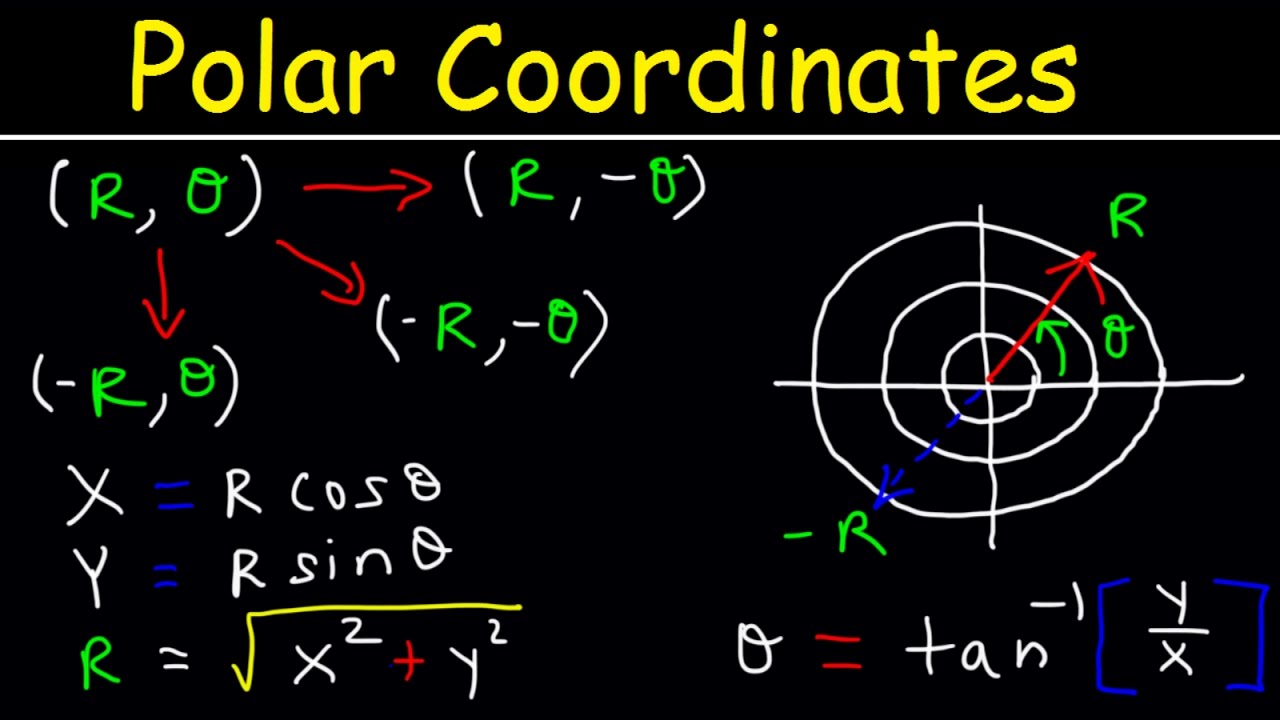
Polar Coordinates Basic Introduction, Conversion to Rectangular, How to Plot Points, Negative R Valu
This Precalculus video tutorial provides a basic introduction into polar coordinates. It explains how to convert polar coordinates to rectangular coordinates and how to graph polar coordinates by plotting points using the radius of a circle and the angle measured counter clockwise from the positive x axis. In addition, it explains how to convert rectangular coordinates to polar coordinates and how to provide multiple representation of polar coordinates using negative r values / radius and negative angles. This video contains plenty of examples and practice problems.
Solving Trig Equations - Finding All Solutions:
https://www.youtube.com/watch?v=kEcbxiLeGTc
Solving Trig Equations With Multiple Angles:
https://www.youtube.com/watch?v=eZPEW2hVUd0
Solving Trig Equations With Double Angles:
https://www.youtube.com/watch?v=-R7394Dn854
Law of Sines:
https://www.youtube.com/watch?v=8qezAG2r0sk
More Examples - Law of Sines:
https://www.youtube.com/watch?v=9fS0uA4iLxI
Area of an Oblique Triangle:
https://www.youtube.com/watch?v=vPt6j5e_uhE
______________________________
The Height of a Triangle - Heron's Formula:
https://www.youtube.com/watch?v=a1PR9O1Va84
Law of Cosines:
https://www.youtube.com/watch?v=9CGY0s-uCUE
Polar Equations to Rectangular Equations:
https://www.youtube.com/watch?v=flTz_pSzVFI
Rectangular Equations to Polar Equations:
https://www.youtube.com/watch?v=fTBkr27r3pw
How To Graph Polar Equations:
https://www.youtube.com/watch?v=jO4lwddfeDA
_________________________________
Complex Numbers - De Moivre's Theorem:
https://www.youtube.com/watch?v=J6TnZxUUzqU
Dot Product of Two Vectors:
https://www.youtube.com/watch?v=VzX8KJKFhlM
Trigonometry Final Exam Review:
https://www.youtube.com/watch?v=OAsbx4TEnL0
Final Exams and Video Playlists:
https://www.video-tutor.net/
Full-Length Videos and Worksheets:
https://www.patreon.com/MathSc....ienceTutor/collectio
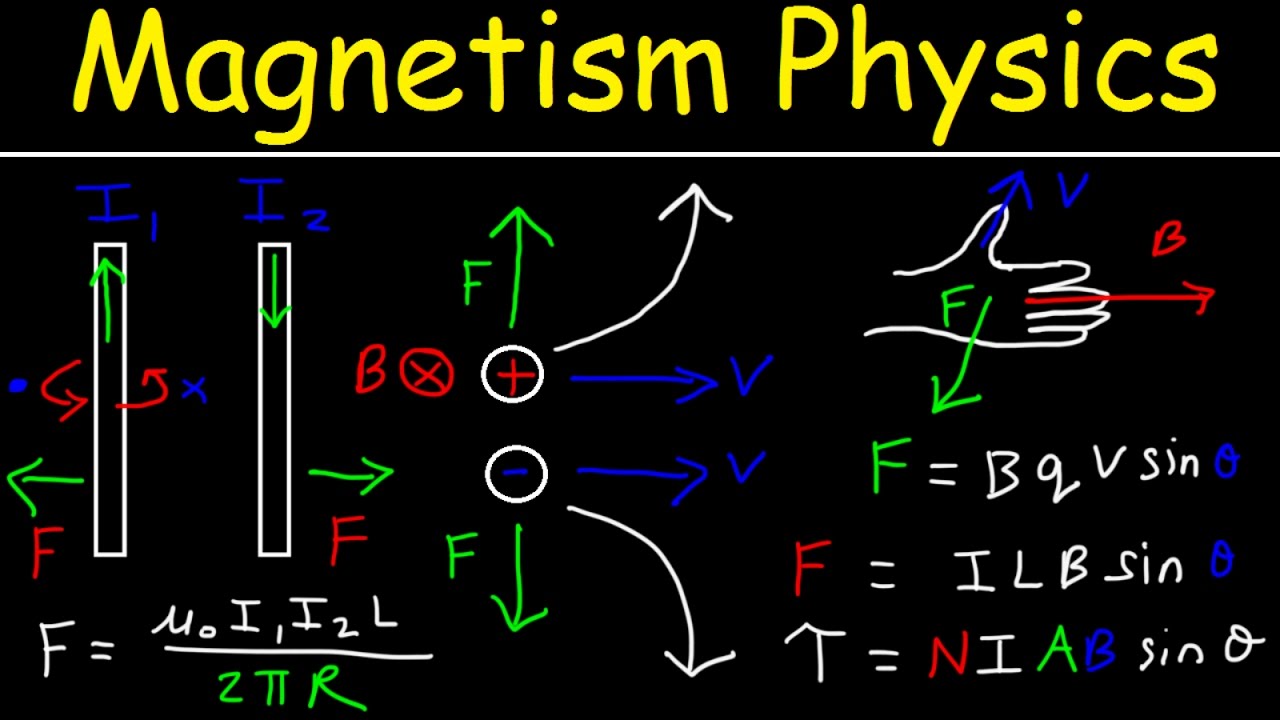
This physics video tutorial focuses on topics related to magnetism such as magnetic fields & force. It explains how to use the right hand rule to determine the direction of the magnetic force on a moving charge particle and how to use ampere's law to derive the formula of a solenoid. This video contains plenty of examples and practice problems.
Magnetic Force on a Current Carrying Wire:
https://www.youtube.com/watch?v=nv28Cp-ILJ0
Magnetic Force on a Moving Charge:
https://www.youtube.com/watch?v=7MBawzone30
The Homopolar Motor:
https://www.youtube.com/watch?v=6Oj4qvCR6ow
The Lorentz Force:
https://www.youtube.com/watch?v=6ThH8IpsqAA
Magnetic Field of a Current Carrying Wire:
https://www.youtube.com/watch?v=wZlHLHnZSRg
___________________________________
Magnetic Sensors - The Reed Switch:
https://www.youtube.com/watch?v=pw9_xmbFi6E
Magnetic Force Between Two Parallel Wires:
https://www.youtube.com/watch?v=8T_dP7Oq620
Ampere's Law - Magnetic Field of a Solenoid:
https://www.youtube.com/watch?v=lLQQjwuqdeg
Magnetic Field of a Toroidal Solenoid:
https://www.youtube.com/watch?v=XWtscd-IoDU
Magnetic Field of a Moving Charge:
https://www.youtube.com/watch?v=CXChim2gOzs
____________________________________
Torque on a Loop - Magnetic Dipole Moment:
https://www.youtube.com/watch?v=-l-aajUS_Ik
The Hall Effect:
https://www.youtube.com/watch?v=pnbRXo1q-nE
Magnetic Flux:
https://www.youtube.com/watch?v=y30ATrKpwpU
Faraday's Law of Electromagnetic Induction:
https://www.youtube.com/watch?v=LDOa7UdfcMQ
Lenz's Law - Induced Current:
https://www.youtube.com/watch?v=HhFZfWLl-P0
_______________________________________
Final Exams and Video Playlists:
https://www.video-tutor.net/
Full-Length Videos and Worksheets:
https://www.patreon.com/MathSc....ienceTutor/collectio
Here is a list of topics:
1. Magnetism - Bar Magnets, North & South Pole
2. Forces of Attraction and Repulsion
3. Magnetic Field Due to a Straight Current-Carrying Wire
4. Magnetic Field Right Hand Rule
5. Magnetic Force on a Current Carrying Wire
6. Magnetic Force on a Moving Charge
7. Magnetic Force Between Two Parallel Conductors
8. Magnetic Force on a Wire
9. Magnetic Field of a Solenoid
10. Ampere's Law - Solenoid & Magnetic Field of a Straight Wire
11. Torque on a Current Loop in a Uniform Magnetic Field
12. Magnetic Force on a Proton and Electron
13. Electron's Path in a Uniform Magnetic Field
14. Radius of Curvature & Kinetic Energy
15. Energy of Electron in eV or Electron Volts
16. Converting Joules to eV
17. Unit of Magnetic Field - Tesla
18. Centripetal Force & Magnetic Fields
19. Permeability of Free Space Constant
20. Magnetic Dipole Moment

📍📍歡迎收看《小一叩門面試》系列 📍📍
👉School Interview_Part 1:Talking about yourself
https://www.youtube.com/watch?v=wWTwr2o4_uo
👉小一叩門:不能不看題目背後的真正意義
https://m.youtube.com/watch?v=msqXn02v8tw
👉小一叩門:面試陷阱
https://m.youtube.com/watch?v=OrTx4B_cnkw
📍📍歡迎收看《English Speaking系列》📍📍
Talking about different festivals
👉https://youtu.be/7XWE_QB0qEk
Introduce your school
👉https://www.youtube.com/watch?v=DPfvjdEI7Dw
Back to school
👉https://www.youtube.com/watch?v=NSv5QyPmhpw
Good manners_actions
👉https://youtu.be/_Swu0JtZke0
Good manners
👉https://www.youtube.com/watch?v=HGME2UCt6-M&t=29s
Talking about daily routines
👉https://youtu.be/Np8mJ1uw8c8
📍📍歡迎收看《Grammar系列》📍📍
Lesson4_common mistakes
👉https://youtu.be/A7Yz6eEcYPs
Lesson3_irregular verbs_part2
👉https://youtu.be/vE6AnyrYDZQ
Lesson2_irregular verbs_part 1
👉https://youtu.be/C_p_r053MeQ
Lesson1_Opposite words
👉https://youtu.be/ftz3u46E0Zo
📍📍歡迎收看《Cooking系列》📍📍
Make fresh juice
👉https://www.youtube.com/watch?v=VFOo2RW_qoI
📍📍歡迎收看《Shorts系列》📍📍
Funny jokes 3
👉https://youtube.com/shorts/VJe4DCE9lLs
Funny joke 2
👉https://youtube.com/shorts/2ouEf37QtdQ
Funny joke 1
👉https://youtube.com/shorts/OJ2-YEfl2uw
Tongue twister_birdie vs turdie vs pie
👉https://youtube.com/shorts/yvOv4EVm6Xc
Tongue twister_scream vs ice cream
👉https://youtube.com/shorts/KBi79AOOPow
Tongue twister_fuzzy vs wuzzy
👉https://youtube.com/shorts/pwGPW_cWdxc
Tongue twister_whether vs weather
👉https://youtube.com/shorts/_3yjqCC4ASA
Read with me_Irregular verbs Part A
👉https://youtube.com/shorts/OfA0FlrxVy8
Read with me_Irregular verbs Part B
👉https://youtube.com/shorts/GV9iXpKMUAk
📍📍歡迎收看《Fun Games系列》📍📍
Make a guess
👉https://youtu.be/J0E2LF9_chU
Quiz Time
👉https://youtu.be/M4JrGzedjH0
Quiz Time
👉https://youtu.be/k7cTb77sh1Q
Quiz Time
👉https://www.youtube.com/watch?v=QGwhG4Mk_Ow&t=5s
Quiz Time
👉https://www.youtube.com/watch?v=xDUJPNRh3mA
📍📍歡迎收看《Basic conversation系列》📍📍
Basic conversation Lesson 8_Talking about your best friend
👉https://youtu.be/NknxeVxhP7A
Basic conversation Fun Lesson_Different languages
👉https://youtu.be/mCJPRD7pahw
Basic conversation Lesson 7_Apply for a library card and borrow books
👉https://www.youtube.com/watch?v=5XCmL9clkQY
Basic conversation Lesson 6_Ordering food
👉https://youtu.be/xaJKiHn6vuc
Basic conversation Lesson 5_Visiting friends
👉https://youtu.be/5TkeC8iirVA
Basic conversation Lesson 4_Making phone calls
👉https://youtu.be/B2CUxLSK5CU
Basic conversation Lesson 3_Types of weather
👉https://youtu.be/ivyo-t50qnw
Basic conversation Lesson 2_Days in a week
👉https://youtu.be/fAtrVak5qLo
Basic conversation Lesson 1_Greetings
👉https://youtu.be/hl_foOF6EjY
📍📍歡迎收看其他《Vocabulary詞匯系列》📍📍
Animals on land_陸地動物
👉https://youtu.be/XxZXjGkJkCQ
Animals in the sea_海洋動物
👉https://youtu.be/gN7GsS6cCeg
Parts of the body_身體部份名稱
👉https://youtu.be/GviCG650sng
Theme Park facilities_主題公園設施
👉https://youtu.be/RiP4etv1ANs
Famous Landmarks_國家名勝地標名稱
👉https://youtu.be/-_rRauEiDic
Colour_顏色
👉Part 2https://youtu.be/78xUTO1My_E
Furniture in the living room_客廳內傢俱名稱
👉https://www.youtube.com/watch?v=smN7hHwHL1g
2D shapes_平面形狀的名稱
👉https://www.youtube.com/watch?v=P4wT5wmqIRY
Jobs_職業名稱
👉https://www.youtube.com/watch?v=NYDTE...
Hairstyle_不同髮型的英文名稱
👉https://www.youtube.com/watch?v=PU_BB2Kvj_w
Solar System_太陽系
👉https://www.youtube.com/watch?v=Qwwczge-_ks
Tableware_餐具名稱
👉https://www.youtube.com/watch?v=rm4FNlRQZxE
Hats_帽子的名稱
👉https://www.youtube.com/watch?v=Pl3g8JgXeGc
Egg_蛋的不同煮法名稱
👉https://www.youtube.com/watch?v=alwVK7zoplc
National Flags_國家及國旗
👉https://youtu.be/tBwHd6XHfE0
The 12 Chinese Zodiac_12生肖
👉https://youtu.be/ii8djvnF-pk
Fruit_水果名稱
👉https://youtu.be/ozwI9sk-bo4
Stationery_文具名稱
👉https://youtu.be/jsjwHTaWfkg
Colour_顏色 Part 1
👉https://youtu.be/AiiGKUEuWx4
📍📍歡迎收看《停課不停學系列》 📍📍
Number 1-10
👉https://youtu.be/wVn_0fY5i1o
Fruit
👉https://youtu.be/C3jy63nGhgA
Transportation in HK
👉https://youtu.be/5qQX0ymwwqo
Vegetables
👉https://m.youtube.com/watch?v=iu1OnlmqRI4
Sports
👉https://youtu.be/eF_Dv6owlM8
Relaxing activities
👉https://www.youtube.com/watch?v=ROv7OlyXe0A
📍📍歡迎收看《Writing a composition系列》 📍📍
👉School Picnic Day
https://youtu.be/GNXyS84JrQo
At the beach
👉https://www.youtube.com/watch?v=WcERiNMpb9s
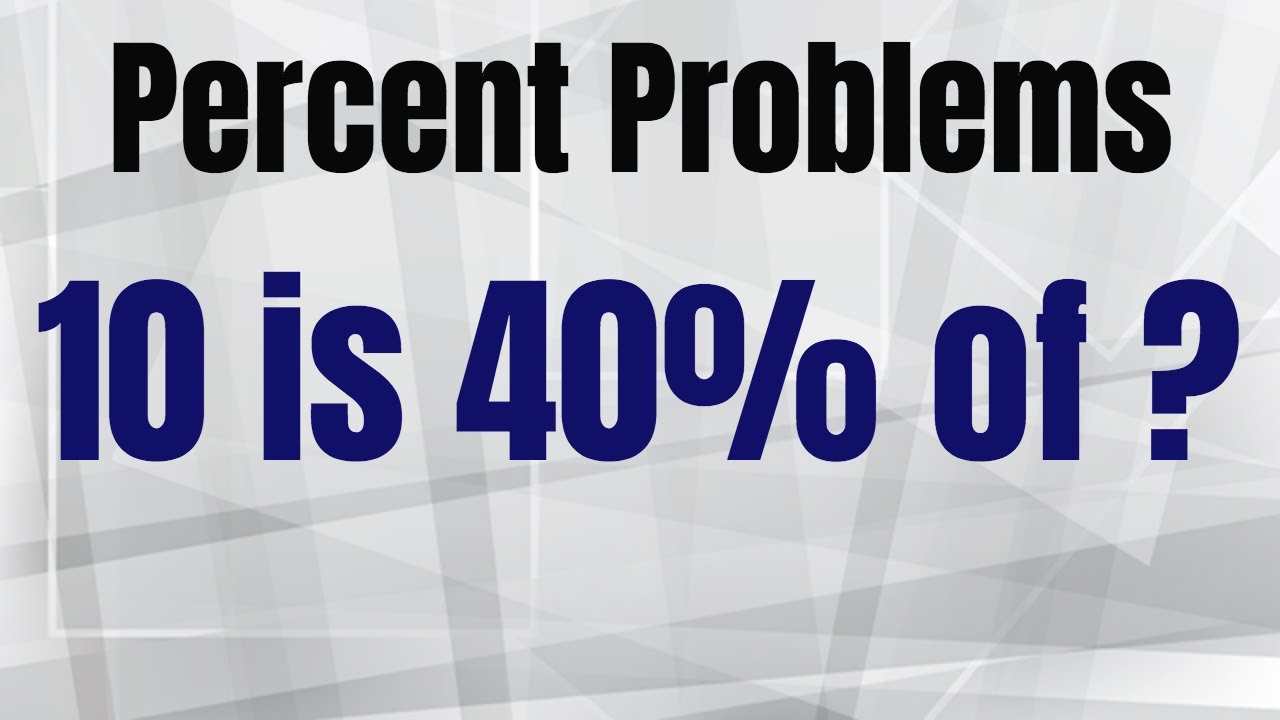
Learn how to solve a percent of problems. In the video, I solve 10 is 40% of what number?
The formula is over equals percent over 100
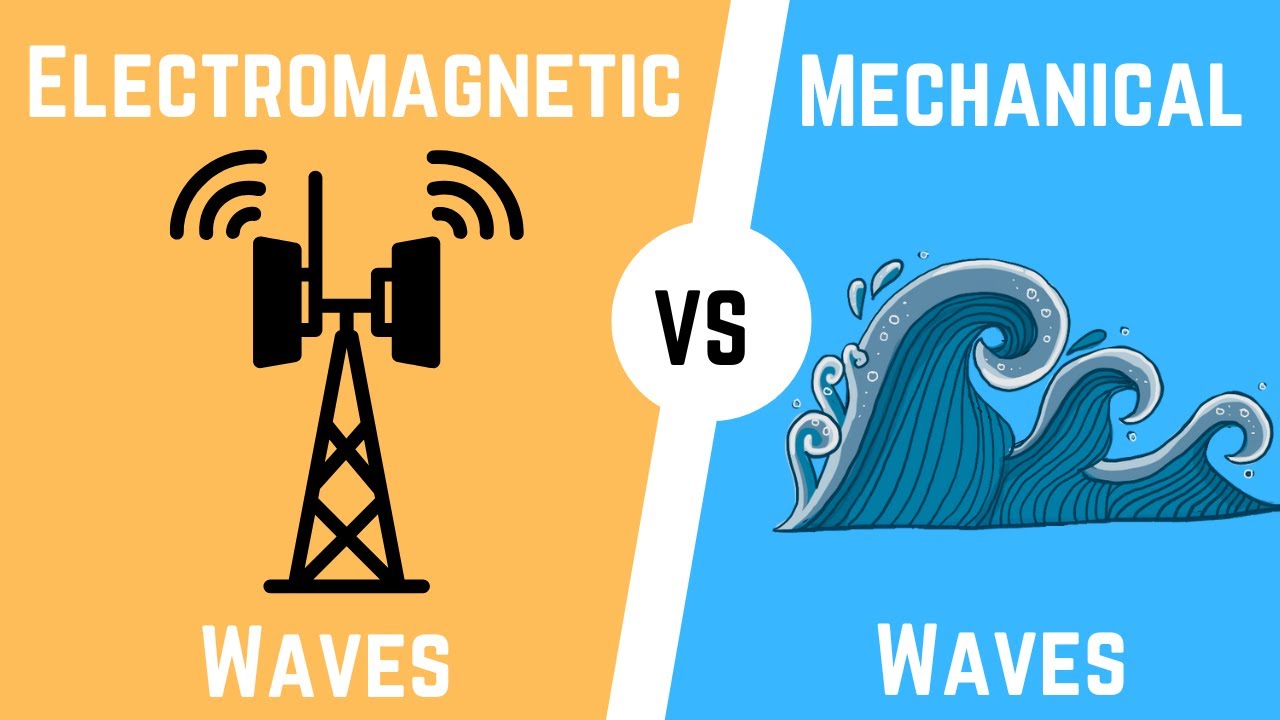
In this video, I cover the difference between mechanical waves and electromagnetic waves. Mechanical waves need a medium in order to transport energy and electromagnetic do not.
English
This video has been dubbed using an artificial voice via https://aloud.area120.google.com to increase accessibility. You can change the audio track language in the Settings menu.
Spanish
Este video ha sido doblado al español con voz artificial con https://aloud.area120.google.com para aumentar la accesibilidad. Puede cambiar el idioma de la pista de audio en el menú Configuración.
Portuguese
Este vídeo foi dublado para o português usando uma voz artificial via https://aloud.area120.google.com para melhorar sua acessibilidade. Você pode alterar o idioma do áudio no menu Configurações.
For more Math help visit our website
http://www.moomoomath.com/
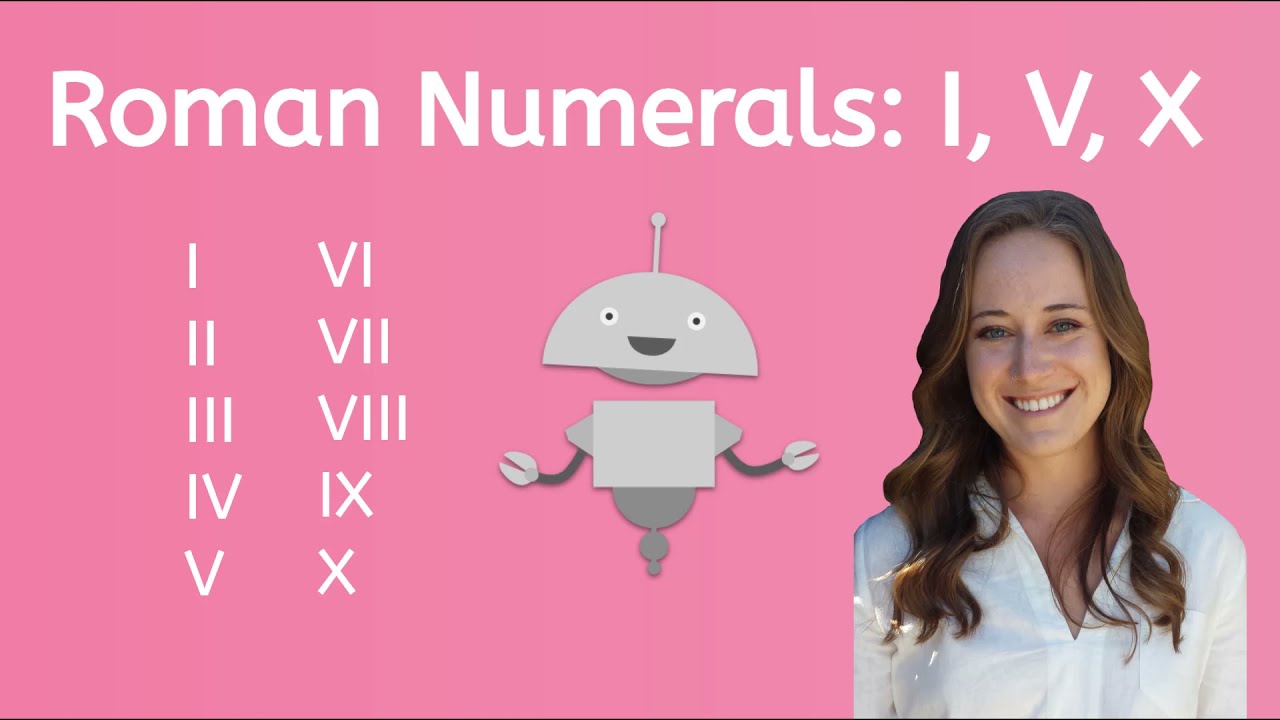
In this video, you will learn about the Roman Numerals I, V, & X.
We hope you are enjoying this video! For more in-depth learning, check out Miacademy.co (https://www.parents.miacademy.co/), an online learning platform with lessons and practice games that go along with our videos. Use coupon code VIDEOSPECIAL for a discount. Good for homeschoolers, Parents, Teachers, or anyone with kids in grades K-8.
Miacademy also offers many hands-on learning activities including a business simulation, writing in the Miacademy weekly, and creating artwork. Teaching social skills is also one of the key values at Miacademy. On the site, kids can interact safely in a moderated environment and share their artwork, videos, and ideas with each other.
#geogebratutorial #mathematics #geometry #transformation
"EXPERIENCE THE POWER OF GEOMETRIC TRANSFORMATION AS SHAPES AND FIGURES COME TO LIFE IN THIS MESMERIZING VIDEO!"
Part-2 : https://youtu.be/dhgOnfpt8vc
Part-3: https://youtu.be/PqpYpZ8dtdY
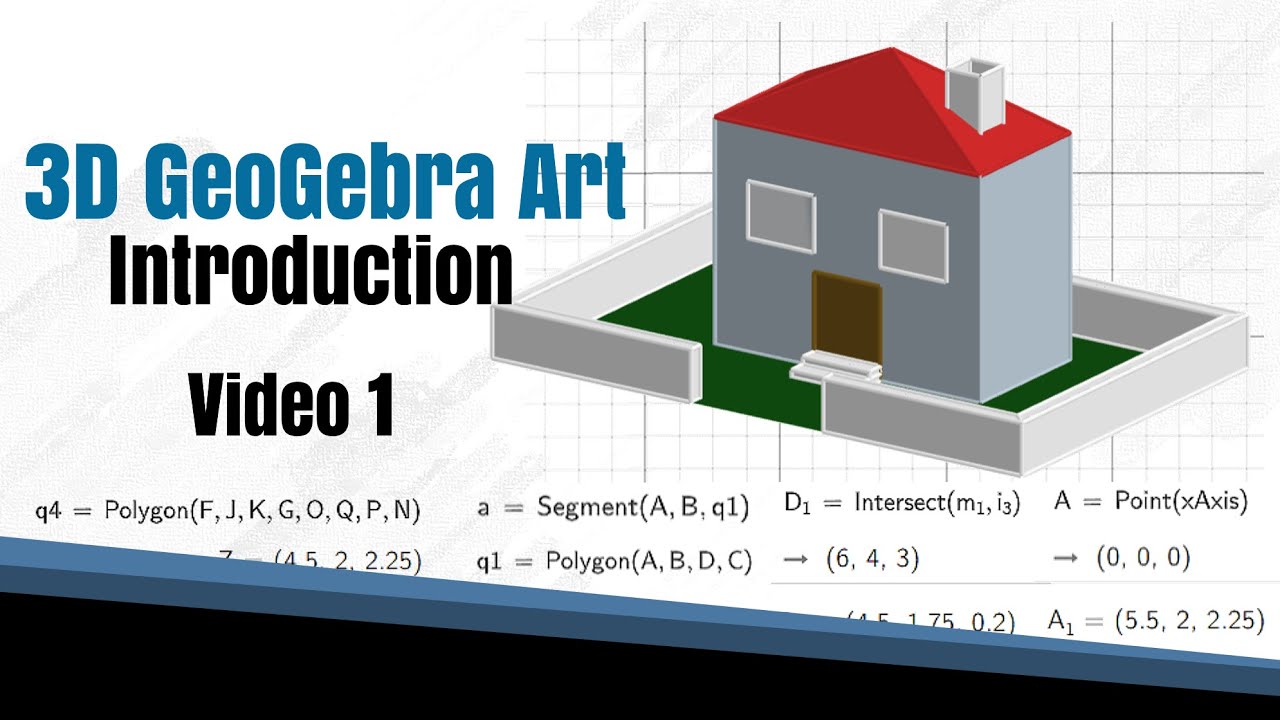
In this video, you will see how you can do 3D Objects by using Geogebra 3D Calculator. GeoGebra 3D graphing calculator is a great tool for anyone who wants to study three-dimensional geometry. Watch the video and see how you can create 3D Math Art on GeoGebra. This is the first video, I will record more videos and share them soon.
Geogebra 3D Calculator: https://www.geogebra.org/3d
3D House Link: https://www.geogebra.org/3d/eeff7hae
MICROPHONE I AM USING:
FIFINE T669
Amazon US: https://amzn.to/3eZIpDD
Amazon CA: https://amzn.to/2VJ4fnv
Amazon UK: https://amzn.to/2NSruqH
Amazon DE: https://amzn.to/31J3KxA
Amazon ES: https://amzn.to/3iCPht0 (similar one)
Amazon FR: https://amzn.to/2Ctm3vU
Amazon IT: https://amzn.to/32NnRuK
Amazon JP: https://amzn.to/2E9z5PX
My Video Studio And Screen Recorder:
COREL VIDEO STUDIO
Amazon US: https://amzn.to/2Kp9VNa
Amazon CA: https://amzn.to/3eIUXPW
Amazon UK: https://amzn.to/2KkiGrQ
Amazon DE: https://amzn.to/3cCUsoQ
Amazon FR: https://amzn.to/2OTADjb
Amazon ES: https://amzn.to/3eTnvp2
Amazon IT: https://amzn.to/2P4nYu9
Amazon JP: https://amzn.to/2WPRqIt
-----------------------SOCIAL---------------------------
Subscribe for more videos► https://www.youtube.com/mathmathx
Twitter! ► https://www.twitter.com/mathmathx
Patreon! ► https://www.patreon.com/mathmathxcom
Facebook! ► https://www.facebook.com/mathmathxcom
Instagram! ► https://www.instagram.com/mathmathxcom
Amazon Store! ► https://www.amazon.com/shop/mathmathx
---------------------------------------------------------------
My Website: https://mathmathx.com
---------------------------------------------------------------
#geogebra #mathart #3dmathart

In this lesson, you will learn how to fill out a multiplication table (also known as a multiplication chart or a times table chart).
▶ Free PDF Guide: https://bit.ly/3ncTwPG
Tags: multiplication table, multiplication chart, times table chart, 8 times table, 7 times table, 6 times table, 12 times table, 4 times table, multiplication chart printable, multiplication chart 1 to 100, times times tables
#MashupMath
★ Want more FREE weekly math videos? Subscribe Now: http://bit.ly/1OVJnyh
★★ Why Math? Download YOUR Free eBook and sign-up for our FREE weekly newsletter: http://www.mashupmath.com/resources/