Top videos

Could you draw the water cycle blindfolded? Let’s see if K12 teacher Matt can pass the test and teach us more about science.
In this episode of Can You Teach Us—the gameshow that puts teachers on the spot and in the spotlight—Matt gets quizzed on his science smarts on topics from photosynthesis to black holes. But this isn’t a simple multiple-choice kind of test. There are acting challenges, bonus points about Pluto, the former planet, and limited time on the clock!
Can You Teach Us takes K12 teachers out of their virtual classroom comfort zone and onto an in-person set for rapid-fire, knowledge-testing games in their subject area. They’ll need their expertise, speed, and lots of creativity to earn points. Plus, it’s a lot of fun, and teachers deserve to have a good time, too.
Make sure to subscribe to be the first to know about future episodes and remember to stay curious!
#K12 #StayCurious #CanYouTeachUs
Connect with K12!
Find a school: K12.com
Facebook: facebook.com/StrideK12
Instagram: instagram.com/k12learn
TikTok: tiktok.com/@stridek12

When students are given a seat at the table, they rise to the occasion. 💪 Jerome wraps up his summer as K12’s first Chief Student Officer by reflecting on the lessons, challenges, and growth that came with the role.
If you’ve ever thought about taking a leap, this is your sign to go for it! 🚀 #K12 #chiefstudentofficer #onlinelearning #studentleaders #onlineschool #shorts

In this episode of Kids Teach, K12 CEO James Rhyu tees up with student, entrepreneur, and golf phenom Carter Bonas for some lessons on the green. While James improves his drive, they share insights about what drives each of them to excel. They talk about their shared passion for providing education solutions: James through his leadership role at K12, and Carter through his non-profit start-up, Spectrum Golf.
Through the course of their discussion, it’s clear that, despite Carter’s youth, his teaching is on par with the best! James also offers some executive mentorship in exchange.
This is just one example of how rewarding a knowledge exchange between learners of any age can be. Throughout the Kids Teach series, we’ll highlight talented students teaching adults some new skills. Follow along and learn with us!
Connect with K12!
Find a school: K12.com
Facebook: facebook.com/StrideK12
Instagram: instagram.com/k12learn
TikTok: tiktok.com/@stridek12

Join Aliyah in the kitchen to witness her passion and joy for food and family. Then, gather at the table to hear about the benefits of K12-powered online school.
Aliyah loves doing her schoolwork from home and at her own pace. Aliyah’s parents appreciate that K12-powered school is preparing her for the future with a forward-thinking approach. And it’s clear they all enjoy the family vibes and culinary results.
As K12 celebrates 25 years of providing online school options for families, we’re savoring all the success K12-powered students have found through personalized, online learning. We can’t wait to see what the next 25 years will bring. Learn more at: https://bit.ly/4hEkJVY
Connect with K12!
Find a school: K12.com
Facebook: facebook.com/StrideK12
Instagram: instagram.com/k12learn
TikTok: tiktok.com/@stridek12

Students explore the phenomenon of electricity as they learn about current electricity and necessary conditions for the existence of an electric current. To make sense of this phenomenon, students construct a simple electric circuit and galvanic cell to help them understand voltage, current, and resistance. They also use the disciplinary core ideas of energy and electric current to better understand the crosscutting concept of energy transfer.
View the full lesson on TeachEngineering:
https://www.teachengineering.o....rg/lessons/view/cub_
TeachEngineering has over 1,500 FREE lessons and activities. Visit http://www.TeachEngineering.org for more!

Students come to understand the basics of engineering associated with the use, selection, and properties of fabrics. A wide variety of natural and synthetic fibers are used in our clothing, home furnishings and in our travel and sports equipment. The specific material chosen for each application depends on how closely the properties of the material match the design needs. This activity focuses on the different characteristics of fabrics and shows students how natural and synthetic fabrics differ from one another. Students weigh the advantages and disadvantages of fabrics when considering the appropriate fabric to be used.
View the full activity on TeachEngineering:
https://www.teachengineering.o....rg/activities/view/f
TeachEngineering has over 1,500 FREE lessons and activities. Visit https://www.teachengineering.org/ for more
Music - Thingamajig by Audionautix

Students combine art, gaming culture and engineering by fabricating light-up patches to increase youngsters’ visibility at night. The open-ended project is presented as a hypothetical design challenge: Students are engineers who have been asked by a group of parents whose children go out Pokémon hunting at night to create glowing patches that they adhere to clothing or backpacks to help vehicle drivers see the kids in the dark. Student pairs create Pokémon character stencil designs cut from iron-on fabric patches, adding transparent layers for color. Placed over an EL (electroluminescent) panel that is connected to a battery pack, the stencils create glowing designs. Each team creates a circuit, which includes lengthening the EL panel wiring to make it easier to wear. Then they sew/adhere the patches onto hoodies, messenger bags, hats, pockets or other applications they dream up. The project concludes with team presentations as if to an audience of project clients. Keep the project simple by hand cutting and ironing/sewing, or use cutting machines, laser cutters and sewing machines, if available.
View the full activity at TeachEngineering:
https://www.teachengineering.o....rg/activities/view/s
TeachEngineering has over 1,500 FREE lessons and activities. Visit http://www.TeachEngineering.org for more!
Music: Fig Leaf Rag - Kevin MacLeod
Fig Leaf Rag by Kevin MacLeod is licensed under a Creative Commons Attribution license (https://creativecommons.org/licenses/by/4.0/)
Source: http://incompetech.com/music/r....oyalty-free/index.ht
Artist: http://incompetech.com/

Students are tasked with designing a special type of hockey stick for a sled hockey team—a sport designed for individuals with physical disabilities to play ice hockey. Using the engineering design process, students act as material engineers to create durable hockey sticks using a variety of materials. The stick designs will contain different interior structures that can hold up during flexure (or bending) tests. Following flexure testing, the students can use their results to iterate upon their design and create a second stick.
This engineering curriculum aligns to Next Generation Science Standards (NGSS).
View the full activity on TeachEngineering:
https://www.teachengineering.o....rg/activities/view/u
TeachEngineering has over 1,500 FREE lessons and activities. Visit https://www.teachengineering.org/ for more
Music: Cold Funk Funkorama

Students see how potential energy (stored energy) can be converted into kinetic energy (motion). Acting as if they were engineers designing vehicles, they use rubber bands, pencils and spools to explore how elastic potential energy from twisted rubber bands can roll the spools. They brainstorm, prototype, modify, test and redesign variations to the basic spool racer design in order to meet different design criteria, ultimately facing off in a race competition. These simple-to-make devices store potential energy in twisted rubber bands and then convert the potential energy to kinetic energy upon release.
View the full activity on TeachEngineering:
https://www.teachengineering.o....rg/activities/view/u
TeachEngineering has over 1,500 FREE lessons and activities. Visit https://www.teachengineering.org/ for more!
Music: Double Agent - Everet Almond
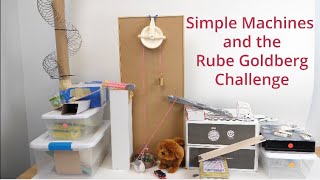
Students research simple machines and other mechanisms as they learn about and make Rube Goldberg machines. Working in teams, students design and build their own Rube Goldberg devices with 10 separate steps, including at least six simple machines. In addition to the use of readily available classroom craft supplies, 3D printers may be used (if available) to design and print one or more device mechanisms. Students love this open-ended, team-building project with great potential for creativity and humor.
View the full activity at TeachEngineering:
https://www.teachengineering.o....rg/makerchallenges/v
TeachEngineering has over 1,500 FREE lessons and activities. Visit http://www.TeachEngineering.org for more!
Music: Roger That - Silent Partner

Can you communicate without electricity? In this activity, students explore a problem in which a school’s power has gone out and they need to deliver an important message to a neighboring first grade classroom. However, they must stay within the following constraints: they cannot use cell phones and they have to stay in their classroom while doing so. Students research and use a variety of tools and materials to build, test, and retest a device that communicates sound the most clearly while learning about and demonstrating how sound causes vibrations.
This engineering curriculum aligns to Next Generation Science Standards (NGSS).
View the full activity on TeachEngineering:
https://www.teachengineering.o....rg/activities/view/u
TeachEngineering has over 1,500 FREE lessons and activities. Visit https://www.teachengineering.org/ for more
Music:

For this maker challenge, students become biomedical engineers who design, create, and test a medical device that measures a patient’s pulse using a microcontroller, LED, and light sensor. Students use data collected from the device they build to determine how to best visualize the results, so that a doctor can view the patient’s pulse on the computer screen. During the challenge, students learn about basic coding, the capabilities of microcontrollers, how sensors gather data, how the human circulatory system works, and how to plot real data. Finally, students are challenged to make their systems portable so that they create wearable health technology. This is a great project for a high school senior design team project.
View the full activity at TeachEngineering:
https://www.teachengineering.o....rg/makerchallenges/v
TeachEngineering has over 1,500 FREE lessons and activities. Visit http://www.TeachEngineering.org for more!
Music: Komputo - Francis Preve

In the culminating activity of the unit, students explore and apply their knowledge of forces, friction, acceleration and gravity in a two-part experiment. First, student groups measure the average acceleration of a textbook pulled along a table by varying weights (with optional extensions, such as with the addition of a pulley or an inclined plane). Then, with a simple modification to the same experimental setup, teams test different surfaces for the effects of friction, graphing and analyzing their results. Students also consider the real-world applications for high- and low-friction surfaces for different situations and purposes, seeing how forces play a role in engineering design and material choices.
View the full activity on TeachEngineering:
https://www.teachengineering.o....rg/activities/view/u
TeachEngineering has over 1,500 FREE lessons and activities. Visit https://www.teachengineering.org/ for more
Music - Brightly Fancy Oddities

Students use a spring scale to drag an object such as a ceramic coffee cup along a table top or the floor. The spring scale allows them to measure the frictional force that exists between the moving cup and the surface it slides on. By modifying the bottom surface of the cup, students find out what kinds of surfaces generate more or less friction.
View the full lesson on TeachEngineering:
https://www.teachengineering.o....rg/activities/view/d
TeachEngineering has over 1,500 FREE lessons and activities. Visit https://www.teachengineering.org/ for more
Music: Coffee Stains, Riot

Students learn about engineering applications in artistic venues by designing and creating eye masks that each contain three LEDs. They explore parallel circuits with their LEDs, and sew with conductive thread to create light-up displays on their masks, gaining hands-on experience in using engineering technologies as well as custom product design and assembly.
View the full activity on TeachEngineering:
https://www.teachengineering.o....rg/activities/view/s
TeachEngineering has over 1,500 FREE lessons and activities. Visit http://www.TeachEngineering.org for more!
Music: Moose - bensound.com
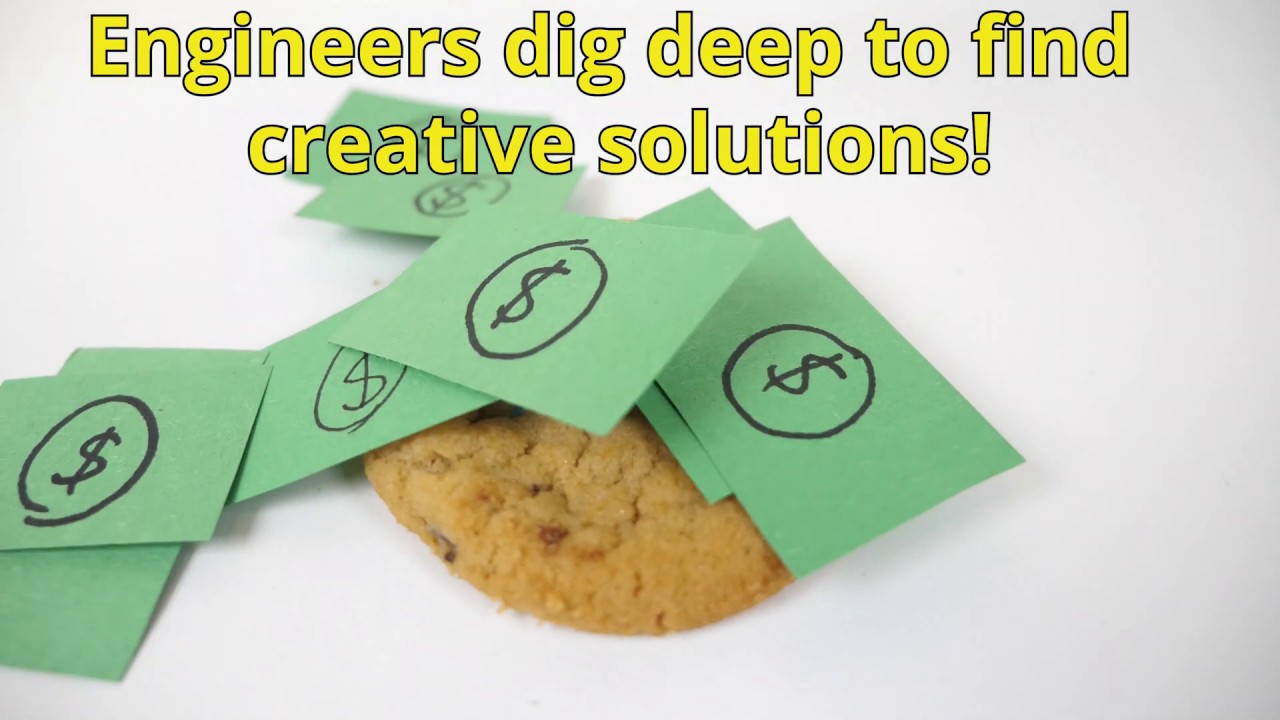
Students act as mining engineers and simulate ore mining production by using chocolate chip cookies. They focus on the cost-benefit analysis of the chocolate ore production throughout the simulation, which helps them understand the cost of production. As students “mine” with tools such as paperclips and toothpicks, they keep records of their costs—land (cookie), equipment used, cookie size before and after production, and time spent. While the goal is to make as much profit as possible, other costs and goals are taken into consideration—as in real-world mining engineering. For example, mining engineers also consider the resulting amount of destruction to the lithosphere when deciding the best method to obtain ore. Thus, a line item for land reclamation cost is included from the beginning. A provided worksheet serves as a profit and loss statement.
View the full activity at TeachEngineering:
https://www.teachengineering.o....rg/activities/view/n
TeachEngineering has over 1,500 FREE lessons and activities. Visit http://www.TeachEngineering.org for more!
Music: Inevitable - Diamond Ortiz

The Teach Engineering Digital Library is an educational resource featuring standards-aligned, design-rich curricula to help educators foster design thinking.
Put the ‘E’ in STEM by making applied science, technology, and math come alive through engineering design and design thinking.
Students are introduced to the futuristic concept of the moon as a place people can inhabit. They brainstorm what people would need to live on the moon and then design a fantastic Moon colony and decide how to power it. Students use the engineering design process, which includes researching various types of energy sources and evaluating which would be best for their moon colonies.
View the full activity at TeachEngineering:
https://www.teachengineering.o....rg/activities/view/c
TeachEngineering has over 1,500 FREE lessons and activities. Visit http://www.TeachEngineering.org for more!
Music: Sophomore Makeout - Silent Partner

Students learn how engineers transform wind energy into electrical energy by building their own miniature wind turbines and measuring the electrical current they produce. They explore how design and position affect the electrical energy production.
View the full activity on TeachEngineering: https://www.teachengineering.o....rg/activities/view/c
TeachEngineering has over 1,500 FREE lessons and activities. Visit http://www.TeachEngineering.org for more!
Music: Happy Rock - Bensound.com

In this lesson, students learn about work as defined by physical science and see that work is made easier through the use of simple machines. Already encountering simple machines everyday, students will learn about their widespread uses in improving everyday life. This lesson serves as the starting point for the Simple Machines Unit.
View the full lesson on TeachEngineering:
https://www.teachengineering.o....rg/lessons/view/cub_
TeachEngineering has over 1,500 FREE lessons and activities. Visit https://www.teachengineering.org/ for more

Students engineer a working pair of shin guards for soccer or similar contact sport from everyday materials. Since many factors go into the design of a shin guard, students follow the Engineering Design Process to create a prototype. Along the way, students keep a notebook documenting each stage of the process and reflect on what they learned during the design.
View the full activity at TeachEngineering:
https://www.teachengineering.o....rg/makerchallenges/v
TeachEngineering has over 1,500 FREE lessons and activities.
Visit http://www.TeachEngineering.org for more!
Music: Safety Net- Riot

Students learn how paper is made. Working together, student teams make their own paper. This activity introduces students to recycling; what it is, its value and benefits, and how it affects their lives.
View the full activity at TeachEngineering:
https://www.teachengineering.o....rg/activities/view/m
TeachEngineering has over 1,500 FREE lessons and activities. Visit http://www.TeachEngineering.org for more!
Music: Coffee Stains - Riot

In this activity, students will experience echolocation themselves. They actually try echolocation by wearing blindfolds while another student makes snapping noises in front of, behind, or to the side of them.
View the full activity on TeachEngineering:
https://www.teachengineering.o....rg/activities/view/c
TeachEngineering has over 1,500 FREE lessons and activities. Visit https://www.teachengineering.org/ for more
Music: Stuck In The Air - The Tower of Light

Students work in teams of two to discover the relative positions of the Earth, Sun and Moon that produce the different phases of the Moon. Groups are each given a Styrofoam ball that they attach to a pencil so that it looks like a lollipop. In this acting-out model exercise, this ball on a stick represents the Moon, the students represent the Earth and a hanging lightbulb serves as the Sun. Students move the "Moon" around them to discover the different phases. They fill in the position of the Moon and its corresponding phase in a worksheet.
View the full activity on TeachEngineering:
https://www.teachengineering.o....rg/activities/view/d
TeachEngineering has over 1,500 FREE lessons and activities. Visit https://www.teachengineering.org/ for more
music - cosmos
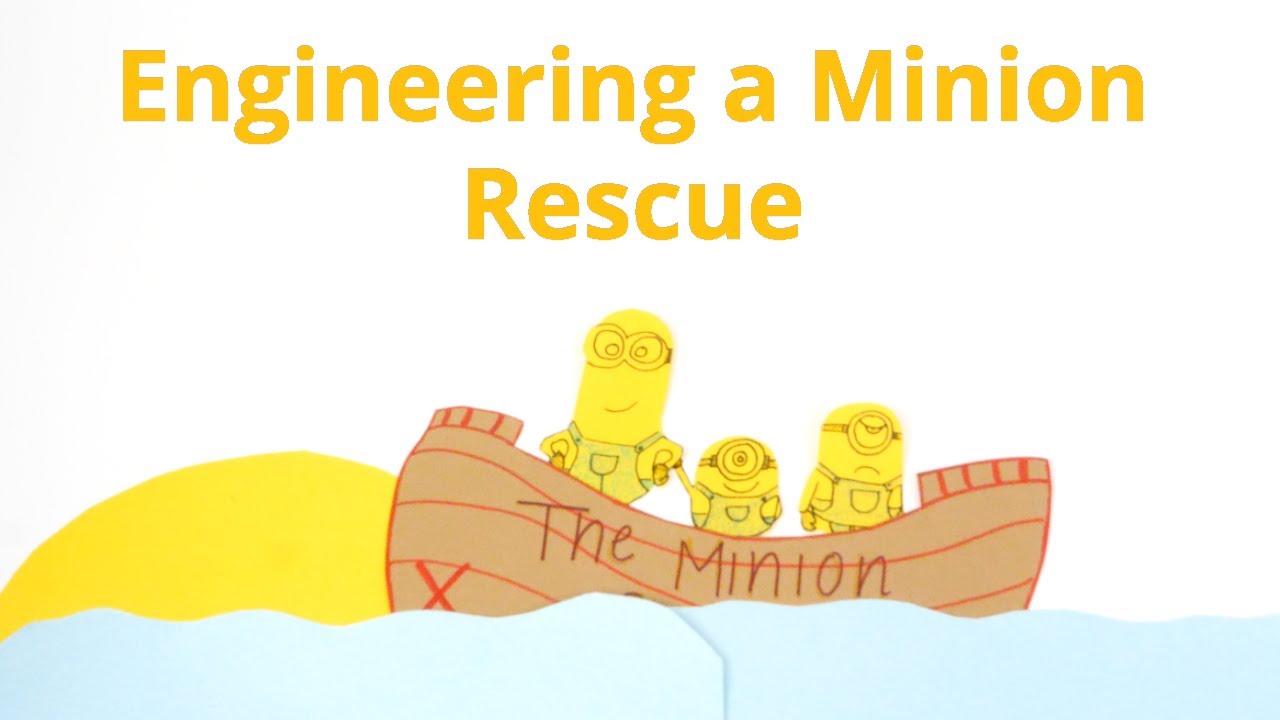
The minions are stuck on a deserted island! Students use the engineering design process to research, design, create and test boats that can rescue the minions. They learn about the physical properties of matter as well as the construction of boats and buoyancy while they engineer a minion rescue.
View the full activity on TeachEngineering:
https://www.teachengineering.o....rg/activities/view/u
TeachEngineering has over 1,500 FREE lessons and activities. Visit https://www.teachengineering.org/ for more
Music - Arriba Mami by Jingle Punks