Top videos
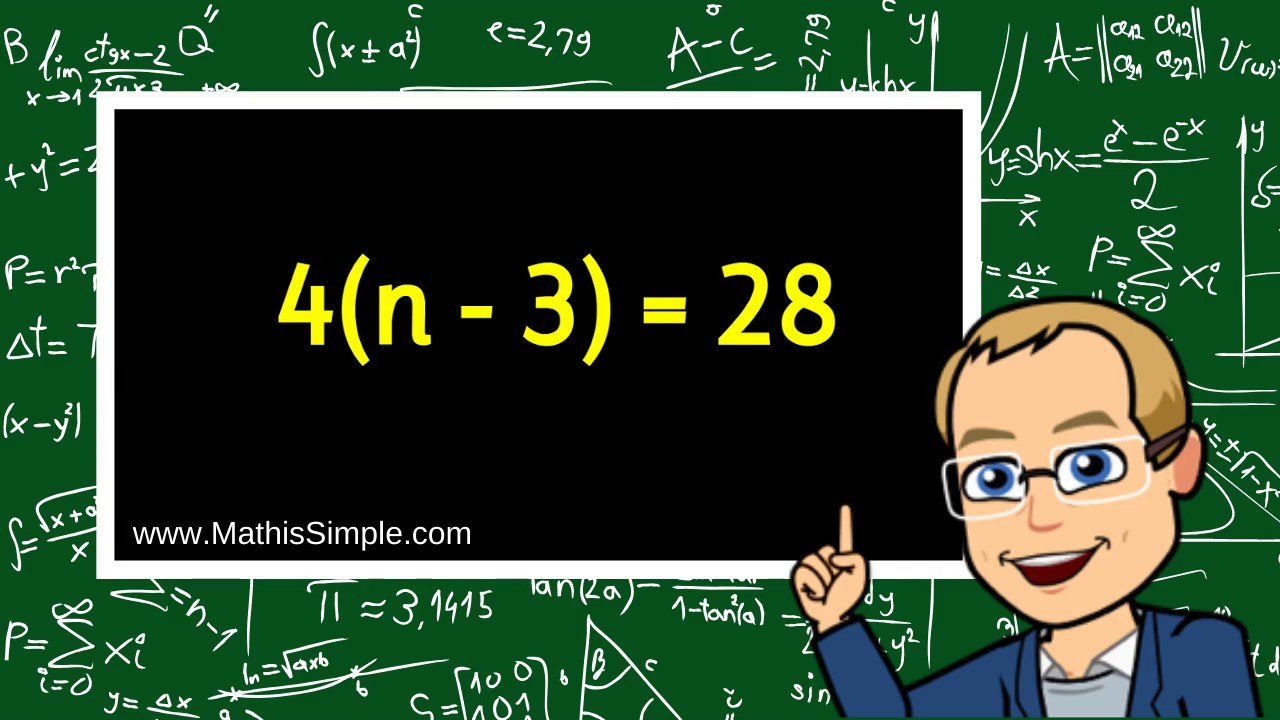
#MathIsSimple #Grade8 #Equations #Algebra
Solving Equations with Distributive Property | Expressions & Equations | Grade 8
Like to learn more math problems from Middle School to Algebra on Math is Simple!, SUBSCRIBE! https://www.youtube.com/channe....l/UCDiq57azrogGN7gFa
Visit the Math is Simple! website: www.mathissimple.com
Like us on Facebook: https://www.facebook.com/MathI....sSimpleToo/?ref=book
Follow us on Instagram: https://www.instagram.com/making_math_simple/
Teacher Resources: https://www.teacherspayteacher....s.com/Store/Math-Is-
Background Music Provided by: I Feel Like Partying Right Now, YouTube Audio Library
#8EEC7 #8EEC7b #twostepequations #math #takingthepainoutofmath

GCSE Maths revision tutorial video.
For the full list of videos and more revision resources visit www.mathsgenie.co.uk.
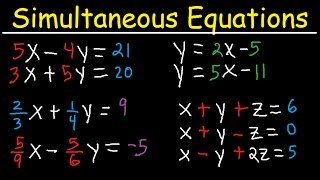
This algebra video tutorial shows you how to solve simultaneous equations using the substitution method, the elimination method, graphical method, systems of equations with 3 variables and with fractions. This video contains plenty of examples and practice problems including word problems.
Use Excel To Solve Systems of Linear Equations:
https://www.youtube.com/watch?v=NhClXOI0ieo
Solving Systems of Equations With Cramer's Rule:
https://www.youtube.com/watch?v=vXqlIOX2itM
Here is a list of topics:
1. Simultaneous Equations with 2 variables
2. Elimination Method vs Substitution Method
3. Linear Equations With Fractions
4. Solving Simultaneous Equations Using Graphs and Finding the point of intersection
5. Systems of Equations With 3 Variables
6. Word Problems - Nickels, Quarters & Dimes
7. Sum and Difference of Two Numbers Word Problem
8. Two Investment / Savings Account Simple Interest Word Problem
9. Simultaneous Equations With Decimals

👉Learn how to solve a system of equations by substitution. To solve a system of equations means to obtain a common values of the variables that makes the each of the equation in the system true. To solve a system of equations by substitution, we solve for one of the variables in one of the equations and then substitute for the variable in the other equation and then solve for the other variable. Next we plug in the obtained value of the other variable into the equation for the initial variable we solved for to obtain the value of the variable.
The value of the two variables obtained is the solution to the system of equations.
👏SUBSCRIBE to my channel here: https://www.youtube.com/user/m....rbrianmclogan?sub_co
❤️Support my channel by becoming a member: https://www.youtube.com/channe....l/UCQv3dpUXUWvDFQarH
🙋♂️Have questions? Ask here: https://forms.gle/dfR9HbCu6qpWbJdo7
🎉Upcoming Livestreams: https://www.youtube.com/user/M....rBrianMcLogan/commun
Organized Videos:
✅Solve a System of Equations Algebraically
https://www.youtube.com/playli....st?list=PL0G-Nd0V5ZM
✅Solve a System of Equations Using Substitution | Easy
https://www.youtube.com/playli....st?list=PL0G-Nd0V5ZM
✅Solve a System of Equations Using Substitution | Hard
https://www.youtube.com/playli....st?list=PL0G-Nd0V5ZM
✅Solve a System of Equations Using Substitution | Learn About
https://www.youtube.com/playli....st?list=PL0G-Nd0V5ZM
✅Solve a System of Equations Using Elimination | Learn About
https://www.youtube.com/playli....st?list=PL0G-Nd0V5ZM
✅Solve a System of Equations Using Elimination | Easy
https://www.youtube.com/playli....st?list=PL0G-Nd0V5ZM
✅Solve a System of Equations Using Elimination | Medium
https://www.youtube.com/playli....st?list=PL0G-Nd0V5ZM
✅Solve a System of Equations Using Elimination | Hard
https://www.youtube.com/playli....st?list=PL0G-Nd0V5ZM
✅Solve a System of Equations Word Problem
https://www.youtube.com/playli....st?list=PL0G-Nd0V5ZM
✅Solve a System of Equations With Three Variables
https://www.youtube.com/playli....st?list=PL0G-Nd0V5ZM
🗂️ Organized playlists by classes here: https://www.youtube.com/user/M....rBrianMcLogan/playli
🌐 My Website - http://www.freemathvideos.com
Connect with me:
⚡️Facebook - https://www.facebook.com/freemathvideos
⚡️Instagram - https://www.instagram.com/brianmclogan/
⚡️Twitter - https://twitter.com/mrbrianmclogan
⚡️Linkedin - https://www.linkedin.com/in/br....ian-mclogan-16b43623
👨🏫 Current Courses on Udemy: https://www.udemy.com/user/brianmclogan2/
👨👩👧👧 About Me: I make short, to-the-point online math tutorials. I struggled with math growing up and have been able to use those experiences to help students improve in math through practical applications and tips. Find more here: https://www.freemathvideos.com/about-me/
#Systemofequations #Algebraically #brianmclogan

Thousands of parents and educators are turning to the kids’ learning app that makes real learning truly fun. Try Kids Academy with
3-day FREE TRIAL! https://bit.ly/2GuGyL2
Watch the educational video by Kids Academy to learn math easily and effortlessly. Penguin Gwen needs to count little penguins before they all go home. Introduce your little ones to the concept of addition from 1 to 10. Kids Academy offers a great variety of easy yet useful and inspiring activities for learning math. For more educational apps and worksheets visit our site: https://www.kidsacademy.mobi/
#TalentedAndGifted #LearnWithKidsAcademy
Subscribe to our channel: https://goo.gl/iG2Bdr
*****
Connect with us on :
App Store: https://smart.link/59833db06a6b8
Google Play: https://smart.link/597210af6eb83
Our website: http://www.kidsacademy.mobi
Facebook: https://www.facebook.com/KidsAcademyCompany
Twitter: https://twitter.com/KidsAcademyCo

Thousands of parents and educators are turning to the kids’ learning app that makes real learning truly fun. Try Kids Academy with
3-day FREE TRIAL! https://bit.ly/2GuGyL2
Welcome our new video: Sorting and Matching Games | What Is A Difference | Preschool Learning Videos
#TalentedAndGifted #LearnWithKidsAcademy
Kids Academy Talented and Gifted Program for kids aged 2-10:
Subscribe to our channel: https://goo.gl/iG2Bdr
*****
Connect with us on :
App Store: https://smart.link/59833db06a6b8
Google Play: https://smart.link/597210af6eb83
Our website: http://www.kidsacademy.mobi
Facebook: https://www.facebook.com/KidsAcademyCompany
Twitter: https://twitter.com/KidsAcademyCo
Multiple everyday things required in the child's overall physical and psychological development. One of the most essential parts of your child's mental/psychological development is the sorting and matching games. These games are one of those vital games that are necessary to give your child the keen observation skills that he/she will require in the future.
So what is in the game?
The game is entirely based on boosting the observation of the kids to the next level. In this game several entirely same objects are shown but not wholly the same, they have a pinch of difference, either one object from many has a different or more. For example, if there are three balls of precisely the same size, structure and overall look but one of the balls has a different color. However, the kids with poor observational behavior before in their preschool will say that they are all exactly the same, but the fact is one of the balls has an entirely different colors. This is what they will teach at Preschool, to point out each and every bit of difference in the almost identical objects.
The verdict
By proper sorting and matching games, your kid's observation powers will get a substantial boost up, and he/she will observe each and everything deeper than they do right now. Moreover, sorting for preschool play a vital role in a child's everyday learning, understanding and observation skills from every perspective of life. Matching for preschool is exceptionally significant for your very young child to learn as this will help her/him in their future lives. Because most of the times the things may not seem exactly how they look at first sight and that's what you did not learn from the beginning, let your child learn to sort for preschool so he/she can be a better student and a better conscious person eventually.
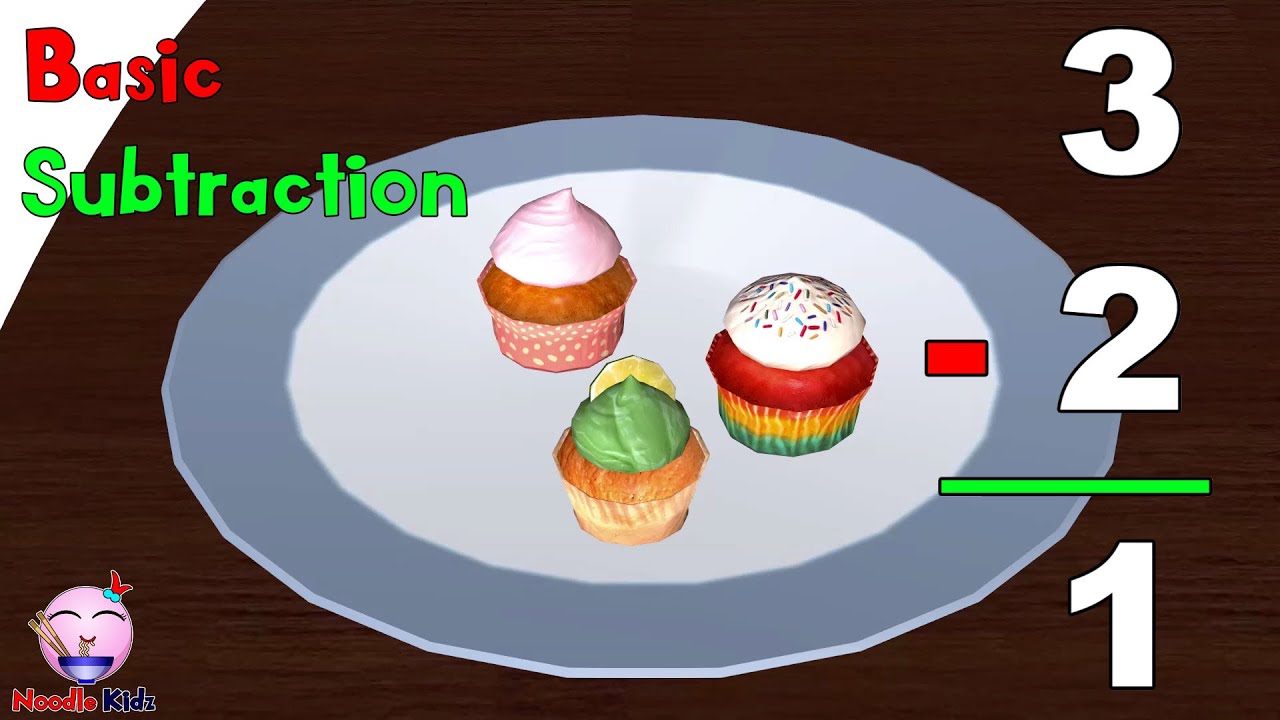
Let's learn some basic subtraction with Noodle Kidz. In this video, we will learn about the easy way to learn subtraction.
Don't forget to subscribe to Noodle Kidz channel: http://youtube.com/c/NoodleKidz
Check out our apps and merchandise via our website: https://www.NoodleKidz.com

FREE TRIAL LINK: https://numberock.com/sign-up-packages/
Thank you for watching our addition math facts song and learning to add with us!

Educational video for kids to practice Mathematics and learn how to subtract with Dino, the dinosaur. They will find out how the minus sign is used in subtractions.
This video is part of a Math videos collection for kids to learn basic concepts and to sparkle their interest in this school subject. Recommended for Preschool Education.
Thanks for visiting us! If you want your children to smile and learn, subscribe! :D
We only upload our own content, designed by educators so that children smile and learn while watching a video.
All of our content reinforces educational values, encouraging the use of multiple intelligences and language learning.
If you like our videos, download “The Smart Library” now. You’ll discover more than 70 interactive games and stories for children designed by educators. The stories are based on VALUES like friendship, respect, and generosity, and our games cover all of the MULTIPLE INTELLIGENCES. All our content is in SPANISH, ENGLISH, FRENCH, ITALIAN and PORTUGUESE.

Let's have fun dividing with the Numberblocks!
For more, download the official Numberblocks apps;
https://www.learningblocks.tv/numberblocks/apps
Official website;
https://www.learningblocks.tv/numberblocks/home
As seen on CBeebies! Watch Numberblocks full episodes on BBC iPlayer: https://bbc.in/2ZHvNtl
Subscribe for more Numberblocks: https://goo.gl/rF32S8
Visit the Numberblocks on;
Twitter: @numberblocks
Facebook: facebook.com/numberblocks/
Instagram: @numberblocks
We are the Numberblocks! Little blocks with big ideas, having a ton of number fun. Learn how to add, subtract and count the fun and educational way! In this educational CBeebies cartoon for kids, children can learn how to count with basic maths sums, using addition and subtraction with singular blocks that join together to make increasingly bigger numbers.
#Numberblocks #LearnToCount

This primary math lesson video is about data and practices data collection, data organization, data visualization and data analysis... wow! There is a is also a section that fully explains tally marks! Whether it's a tally chart or pictograph, this is a great video for learning about representing data and understanding charts and graphs for kids.
00:00 - Introduction
00:29 - Introducing Data
00:58 - Collecting & Visualizing Data Through Observation
01:56 - Tally Marks Explanation
03:38 - Collecting & Visualizing Data by Asking Questions
05:49 - Representing & Analyzing Data with Pictographs
07:51 - Outro
Mini Math Movies is a new mathematics educational series from Scratch Garden full of in depth math lessons for kids! Check out the full playlist here: https://tinyurl.com/minimathmovies
Scratch Garden makes entertaining educational videos for people that like to laugh and learn! Please Subscribe to see more great fun learning videos from Scratch Garden! https://goo.gl/1biPjA
Website: https://www.scratchgarden.com
Instagram: https://www.instagram.com/scratchgarden
Facebook: https://www.facebook.com/scratchgarden
#minimathmovies #data #mathlessonsforkids

addition on a number line | बच्चों के जोड़ | addition | math for class 1 grade 1| kids maths | ganit
addition on a number line | बच्चों के जोड़ | addition | math for class 1 grade 1| kids maths | ganit
1 anko ka jod
addition on a number line 2nd grade
addition on number line grade 1
addition on house
addition on a number line 1st grade
addition on abacus
addition on a number line 3rd grade
addition on a number line
kindergarten
addition
maths
jojas basic maths
bacho ki ganit
easy math
sadharan jod
jod
jod ghatav
jod ghatana
jod ghatav guna bhag
math for Nursery kids
kindergarten Study
table
जोड़
#maths #kids #jojasbasicmaths

We would like to share this video to you, homeschoolers like us. For the parents who are looking for video materials to aid them in homeschooling their children, as well as for the children so that they may find an alternative way to enjoy studying and learning.
In this video, we are excited to present to you the basic shapes. We included some exercises for you to check how well you know the shapes. Enjoy!

Educational video for children to learn how to multiply and divide. In the multiplications video, they will practice multiplication by grouping many hats and wands with the help of a friendly wizard. Thanks to many examples, children will understand how easy it is to multiply. They will also learn about the two parts of multiplication: factor and product. In the divisions video, they will learn how to divide with the help of some friendly monkeys. This video belongs to a Math Collection videos and is an excellent resource for elementary school.
Thanks for visiting us! If you want your children to smile and learn, subscribe! :D
We only upload our own content, designed by educators so that children smile and learn while watching a video.
All of our content reinforces educational values, encouraging the use of multiple intelligences and language learning.
If you like our videos, download Smile and Learn now. You’ll discover more than 5.000 activities for children aged 3 to 12 yeards, all designed by educators. We have 250 games and interactive stories and over 280 videos in five languages: English, Spanish, Portuguese, Italian and French. Try a month for free and start the adventure!

In this video, the children will learn about the basic concepts in Subtraction. They will learn about the different ways on how to do it properly. They will also learn about the different techniques on finding the difference the easier and faster way.
With this, I do hope, that kids will love Math at their early age.
- Teacher Ira
Powerpoint Download Link:
https://drive.google.com/file/....d/1Y6vKOuAnt-QsYQ7i_
Edited by
Raniel Cura
Ig: @rsimon_c
Yt channel: StrivingSimon
All pictures/clipart is not mine.
#TeacherIra #OnlineClass #Preschool #Kindergarten
#KinderMath #Pattern #LearningPatterns #Sequencing #Arranging #OddEven #GroupsOfNumbers #Addition #BasicAddition #BasicSubtraction #KinderAddition #Arithmetic #Numbers #Solving

Quiz Link - https://www.aatoonskids.com/en....glish-quiz-for-kids-
Topic - English Quiz for Kids | Quiz Time | English Trivia for Kids | @AAtoonsKids
_______________________________________________________________
AAtoons Kids
play N learn
Website - http://www.aatoonskids.com
Facebook Page - https://www.facebook.com/aatoonskids1
Twitter - https://twitter.com/aatoonskids
_______________________________________________________________
Related Videos
English Preposition Quiz - https://youtu.be/HGcoUW74qmo
Identify Image - https://youtu.be/mRkn3J0tpno
Articles Quiz - https://youtu.be/l0BCnetMiRw
Jumble Words - https://youtu.be/QZ91buR8ucE
Eight Parts of Speech - https://youtu.be/VURYK1t1Wf0
Sight Words - https://youtu.be/1DHaAC_vonw
Pair Words - https://youtu.be/2Al1MGBs4NU
Compound Words - https://youtu.be/jpi6tiizhVQ
Math Quiz - https://youtu.be/5sVe4m2lc0A
_______________________________________________________________
#quiztime
#english_for_kids
#english_quiz_for_kids
#english_trivia
#trivia_question
#learnenglish
#AAtoonsKids
____________________

Gifted and Lit is a unique educational program that uses hip hop music, nursery rhymes, and kids songs to teach kids about important skills and concepts in a fun and engaging way. In this video, Gifted and Lit combines nursery rhymes and kids songs with hip hop beats to teach kids about important math concepts.
From addition and subtraction to multiplication and division, Gifted and Lit's nursery rhymes and kids songs make learning math fun and accessible for kids of all ages. And because the songs are set to catchy hip hop beats, kids will be singing and dancing along while they learn!
In addition to being fun and engaging, Gifted and Lit's nursery rhymes and kids songs are also educational. The songs cover a wide range of math topics, from basic arithmetic to early geometry and measurement. This makes them a great way for kids to learn and practice important math skills.
If you are looking for a fun and educational way to help your child learn math, Gifted and Lit is the perfect program for you. With its catchy beats and engaging songs, Gifted and Lit will make learning math a joy for your child.
Looking for educational videos for your children to become excited about learning? Needing a fun alternative to education for your kids to stay engaged?
➡️ If any of these questions are related to you then you have come to the perfect destination for all your culturally responsive education needs.
Subscribe to Gifted & Lit and make sure to hit that bell icon to never miss a new video. Our YouTube channel comes with some great programs so please make sure to check those out as well 🔔
✅ Follow Gifted & Lit on social media:
Facebook ▶️ https://www.facebook.com/giftedandlit
Twitter ▶️ https://twitter.com/giftedandlit
Instagram ▶️ https://www.instagram.com/giftedandlit/
Vimeo ▶️ https://vimeo.com/ondemand/giftedandlit
💯 Order our AMAZING bundle packages at: https://www.giftedandlit.com
#GiftedAndLit #CulturallyResponsiveTeaching #GiftedandLit #NurseryRhymes #KidsSongs #HipHopMath #EducationalMath #KidsLearning #CulturallyRelevantTeaching

Kids Learning Videos - Preschool and Kindergarten | Subtraction for Kids - Part 2 | Smarteez
The ducklings split into teams to play a worm-picking game, and they follow their mother to the pond to play with the fishes in separate groups, teaching the concept of subtraction basics. Let's learn basic subtraction.
Click here to subscribe & Watch kids learning videos : https://www.youtube.com/c/Smar....teezTVFunLearningfor
Follow our Social Media :
🔻 Facebook ➡️ https://www.facebook.com/smarteeztv
🔻 Twitter➡️ https://twitter.com/SmarteezTV
🔻 Instagram ➡️ https://www.instagram.com/smarteeztv
🔻 Pinterest ➡️ https://www.pinterest.com/smarteeztv
#basicmaths #mathsforkids #smarteez
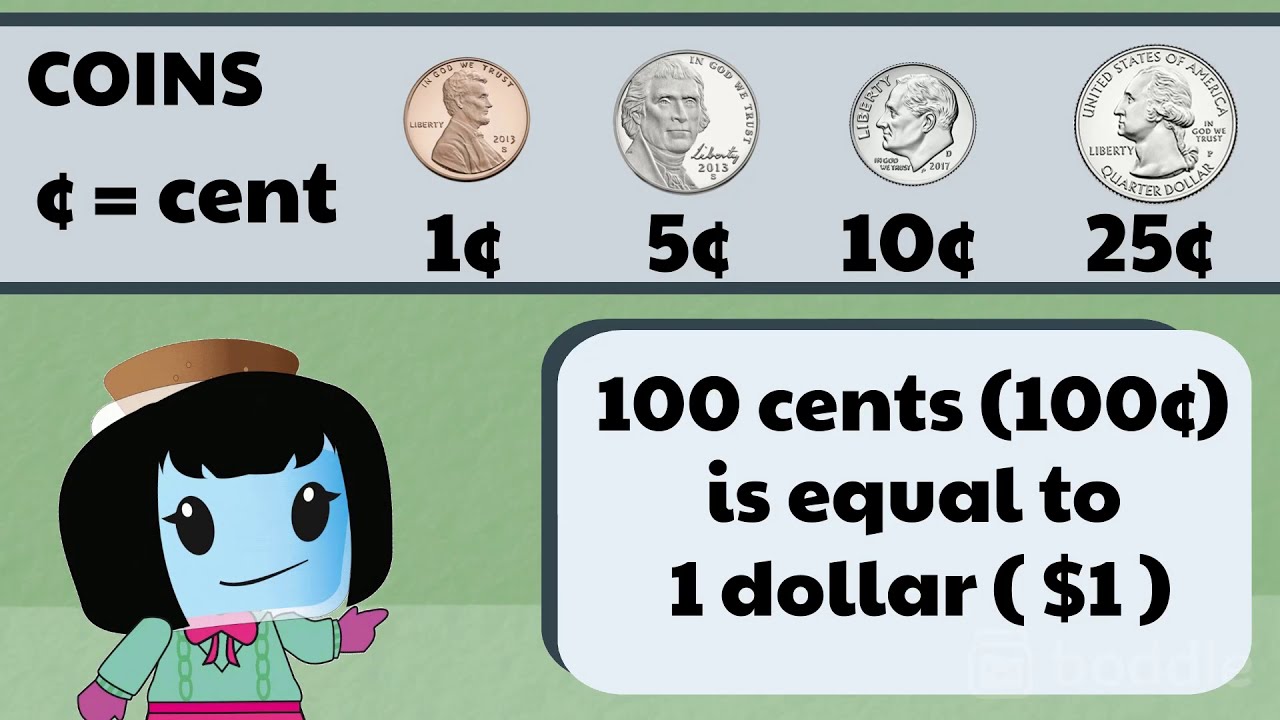
In this video we will learn how to use $ and ¢ symbols appropriately. For more fun math visit www.boddlelearning.com

cm and mm math | math for kids
Hi kids! In this video you will learn how to easily convert cm to mm and the other way around. So if you still have math problems, in particular with concerting cm and mm in math, than this video is for you.
learn math
learn mathematics
math for kids
cm and mm grade 1
cm and mm grade 2
cm and mm grade 3

Download our videos for ad-free, offline viewing at: http://www.braincandytv.ca/shop/
Learning math has never been so much fun! In this fun educational video for kids, we'll learn about adding and subtracting with some super fun vehicles as they smash through giant bowling pins in the city. Featuring a tiny Smart Car, a shiny yellow bulldozer, a cool monster truck, a fire truck with flashing lights and a giant dump truck. We'll use adding as a quick way to count objects and we'll use subtracting to figure out which vehicle knocks down the most bowling pins. We'll also learn about sizes - small, medium and large.
If you and your children enjoy this video, I'd love to hear from you in the comments. Even if they don't like it, I welcome any feedback so I can make my videos more engaging and educational in the future.
Thanks for watching!
Brain Candy TV is dedicated to producing fun and engaging educational videos that your kids will love. You can view our channel here: https://www.youtube.com/user/braincandytelevision or subscribe using the following link: http://www.youtube.com/subscri....ption_center?add_use
You can also follow us on:
Facebook: https://www.facebook.com/braincandytv
Twitter: https://twitter.com/braincandytv
This video is transcribed for the hearing impaired and for translation into any language - perfect for learning English and for ESL students.
Rendered with help from http://GarageFarm.NET render farm

Meet Plussy, the Plus sign, on THE MATH PLANET!
This video contains useful Math tips & tricks for mental math addition.
The following strategies are explained with examples:
1. Breaking apart addends into hundreds, tens & ones
2. Breaking apart one addend to make a 10.
3. Breaking apart one addend to make a 100.
This is Lessons 4: Mental Math: Addition.
Textbook: Grade 3 enVisionmath, SCOTT FORESMAN.
Topic 8: Use Strategies and Properties to Add and Subtract.
#grade3, #mathTricks, #mentalMath,
📺Subscribe To THE MATH PLANET and watch more lessons: https://www.youtube.com/channe....l/UC_c6gFKLYdePDJwVO


This Math Shorts episode explains the term "reflection", and provides several examples that demonstrate the concept.
This video was made for the PBS Learning Media library, thanks to a generous grant from the Corporation for Public Broadcasting. It was produced in collaboration with Utah Education Network.
Common Core State Standards:
CCSS.Math.Cont.8.G.A.4 ( Grade 8 ): Understand that a two-dimensional figure is similar to another if the second can be obtained from the first by a sequence of rotations, reflections, translations, and dilations; given two similar two-dimensional figures, describe a sequence that exhibits the similarity between them.
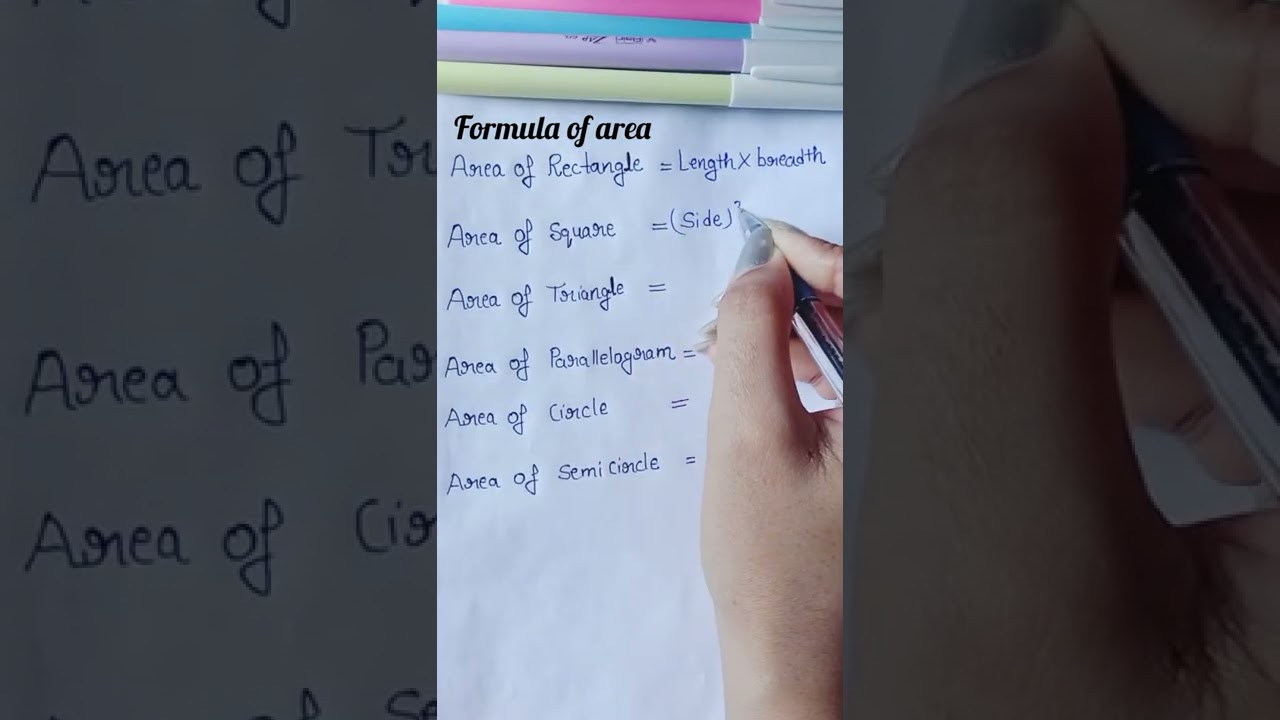
Formula of area Basic geometry Formula #Basic Math #YouTube shorts