Video teratas

https://www.patreon.com/homeschoolpop In this addition math lesson video for kindergarten and first graders we will learn about adding zero. What happens to a number when you add zero to it?
00:00 What does adding mean?
1:13 How do we add zero?
2:51 Examples of adding zero
❤️ Homeschool Pop? Join our team and get tattoos here: http://homeschoolpop.com
Thanks for learning with us today! We hope to see you next video!
Homeschool Pop Team

WOW! In this place value learning video for kids you will learn about what digits are and how to find the value of a number based on where it is in the number. Perfect video for the classroom or home. Let's learn!
Homeschool Pop offers a unique, dynamic learning experience. We strive to have the right balance of silliness and learning to keep students and children engaged as we look at place values!
We hope you enjoyed the classroom edition of the place value video! Thanks for watching, and we hope you will keep watching and learning. You are awesome!
Place Value Learning Video | Classroom Edition for Kids
https://www.patreon.com/homeschoolpop Learn all about common and proper nouns in this fun English grammar video for kids! In this language arts video we will learn what a noun is, and the two main types!! Let's have some fun!
Love Homeschool Pop? Join my team and get tattoos here: http://homeschoolpop.com
Thanks for watching! I hope to see you next video!!
Daniel
"Homeschool Pop"
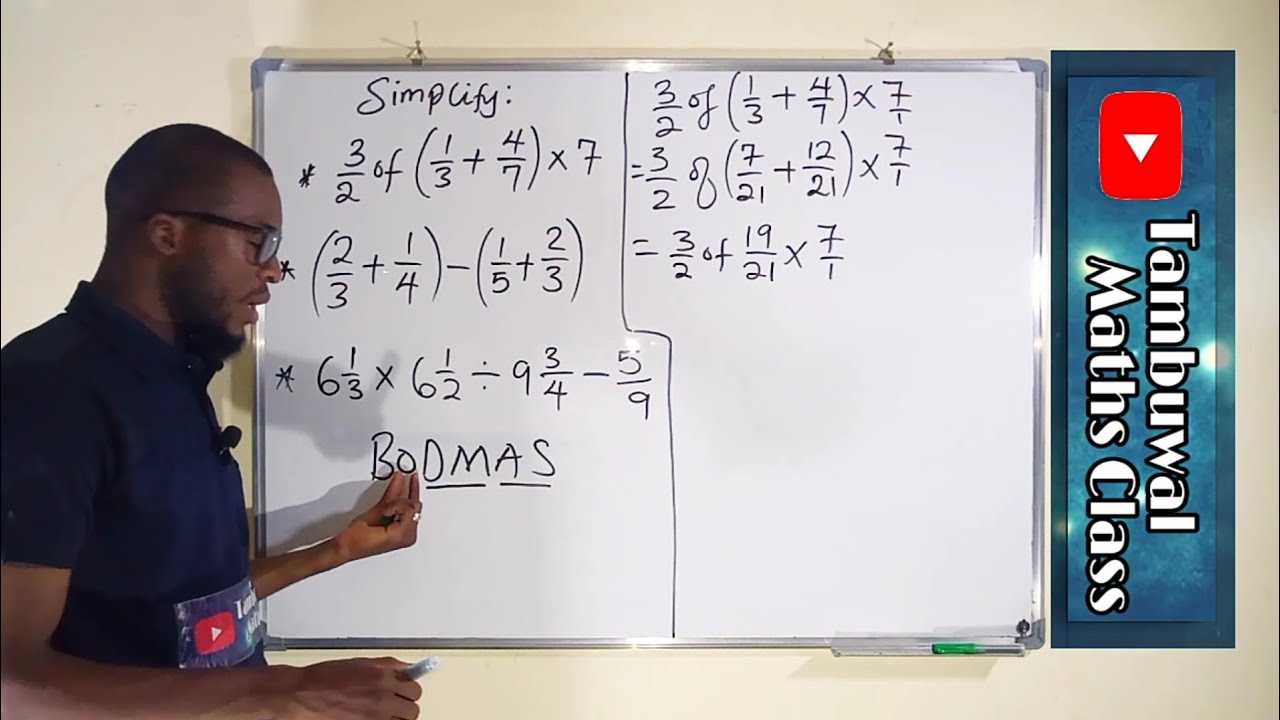
If you find this video interesting, kindly subscribe to my channel for more exciting Maths tutorials.
Subscribe link: http://bit.ly/lhussaini
Facebook: http://fb.com/lhtambuwal
Instagram: http://bit.ly/lhussaini3
Linkedin: https://linkedin.com/in/lhussaini
Blog: https://lhussaini.blogspot.com

This video explains how to solve a multi-step linear equation in one variable with parentheses and fractions and variables on both sides.
http://mathispower4u.com

Learn how to solve equations that involve decimals and fractions. The equations shown in this video are called "two-step" equations because they each take two steps to solve.
Practice this lesson yourself on KhanAcademy.org right now: https://www.khanacademy.org/math/cc-seventh-grade-math/cc-7th-variables-expressions/cc-8th-two-step-equations-dec-frac/e/two-step-equations-with-decimals-and-fractions?utm_source=YT&utm_medium=Desc&utm_campaign=7thgrade
Watch the next lesson: https://www.khanacademy.org/math/cc-seventh-grade-math/cc-7th-variables-expressions/cc-8th-two-step-equations-dec-frac/v/two-step-equations?utm_source=YT&utm_medium=Desc&utm_campaign=7thgrade
Missed the previous lesson?
https://www.khanacademy.org/math/cc-seventh-grade-math/cc-7th-variables-expressions/cc-7th-2-step-equations-intro/v/solving-equations-1?utm_source=YT&utm_medium=Desc&utm_campaign=7thgrade
Grade 7th on Khan Academy: 7th grade takes much of what you learned in 6th grade to an entirely new level. In particular, you'll now learn to do everything with negative numbers (we're talking everything--adding, subtracting, multiplying, dividing, fractions, decimals... everything!). You'll also take your algebraic skills to new heights by tackling two-step equations. 7th grade is also when you start thinking about probability (which is super important for realizing that casinos and lotteries are really just ways of taking money away from people who don't know probability) and dig deeper into the world of data and statistics. Onward! (Content was selected for this grade level based on a typical curriculum in the United States.)
About Khan Academy: Khan Academy offers practice exercises, instructional videos, and a personalized learning dashboard that empower learners to study at their own pace in and outside of the classroom. We tackle math, science, computer programming, history, art history, economics, and more. Our math missions guide learners from kindergarten to calculus using state-of-the-art, adaptive technology that identifies strengths and learning gaps. We've also partnered with institutions like NASA, The Museum of Modern Art, The California Academy of Sciences, and MIT to offer specialized content.
For free. For everyone. Forever. #YouCanLearnAnything
Subscribe to Khan AcademyÂês 7th grade channel:
https://www.youtube.com/channe....l/UCzKsXcrLSLDG7VN1L
Subscribe to Khan Academy: https://www.youtube.com/subscr....iption_center?add_us
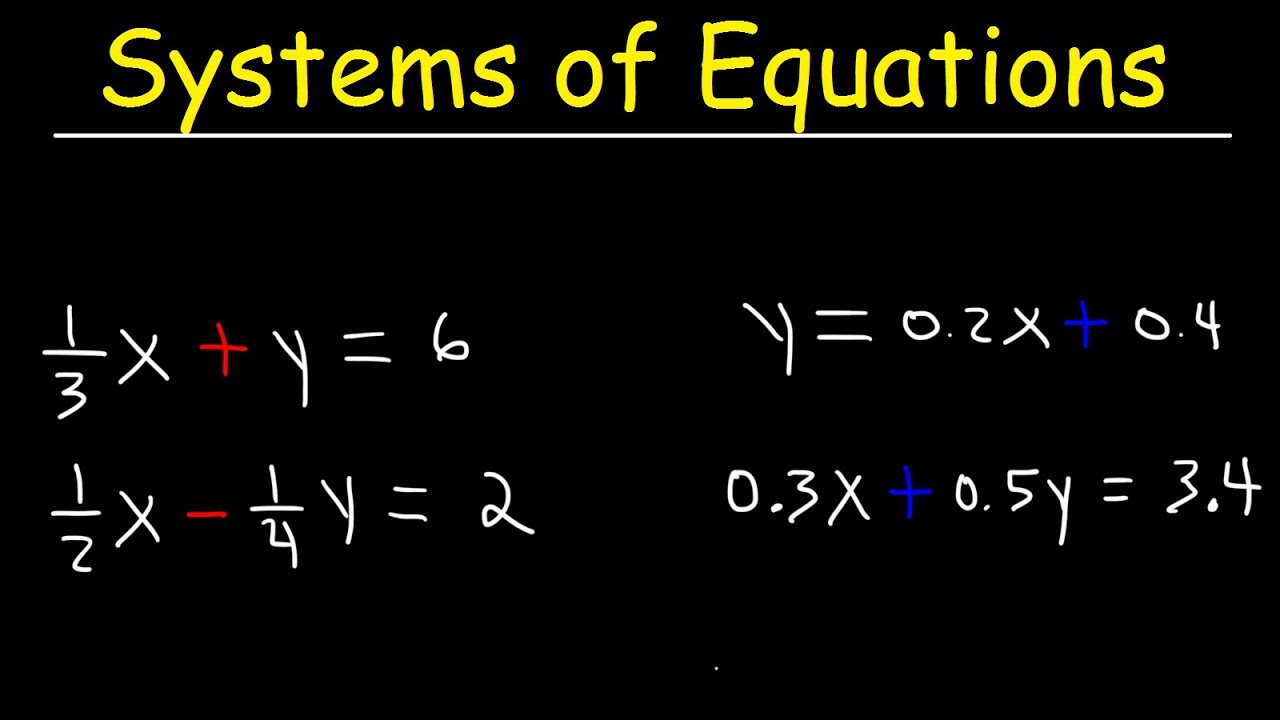
This algebra video explains how to solve systems of equations with fractions and decimals. Examples include solving system of equations with 2 variables using substitution and elimination.
Systems of Linear Equations - 2 Variables: https://www.youtube.com/watch?v=oKqtgz2eo-Y
Systems of Equations - Fractions & Decimals:
https://www.youtube.com/watch?v=jlddJQ1qYDU
One Solution, No Solution or Many Solutions?
https://www.youtube.com/watch?v=bq5gDsEdN3Q
Systems of Equations - Substitution Method:
https://www.youtube.com/watch?v=cblHUeq3bkE
Solving Systems of Equations By Graphing:
https://www.youtube.com/watch?v=Pd4hwS8qHms
________________________________________
Systems of Linear Equations - 3 Variables:
https://www.youtube.com/watch?v=0JQeo0yC9OQ
Systems of Equations - Word Problems:
https://www.youtube.com/watch?v=YgtidDkjJ9M
Systems of Quadratic Equations:
https://www.youtube.com/watch?v=rq5AjFs95qw
Systems of Nonlinear Equations:
https://www.youtube.com/watch?v=JPdLEaxlnZQ
________________________________________
Final Exams and Video Playlists:
https://www.video-tutor.net/
Full-Length Videos and Worksheets:
https://www.patreon.com/MathSc....ienceTutor/collectio

Welcome to Fractions with Exponents with Mr. J! Need help with how to solve a fraction with an exponent? You're in the right place!
Whether you're just starting out, or need a quick refresher, this is the video for you if you need help with powers of fractions. Mr. J will go through fractions with exponent examples and explain the steps to solving powers of fractions.
About Math with Mr. J: This channel offers instructional videos that are directly aligned with math standards. Teachers, parents/guardians, and students from around the world have used this channel to help with math content in many different ways. All material is absolutely free.
Click Here to Subscribe to the Greatest Math Channel On Earth: https://goo.gl/XHTrfY
Follow Mr. J on Twitter: @MrJMath5
Email: math5.mrj@gmail.com
Music: https://www.bensound.com/royalty-free-music
Hopefully this video is what you're looking for when it comes to solving fractions with exponents.
Have a great rest of your day and thanks again for watching!


Improper fractions to mixed numbers, step by step, example. For all free math videos visit http://Mathmeeting.com.

This video explains how to solve a multi-step linear equation in one variable with parentheses and fractions.
http://mathispower4u.com

∼∼ KTC Classes By Kapildeo Sir ∼∼
🔷 A𝐩𝐩𝐥𝐢𝐜𝐚𝐭𝐢𝐨𝐧 𝐃𝐨𝐰𝐧𝐥𝐨𝐚𝐝 𝐧𝐨𝐰
👇KTC Classes
https://bit.ly/2p5Mnpr
🔷 pdf के लिए Join करें
My Telegram Channel
👇KTC Pdf By Kapildeo Sir
https://t.me/kapildeosir
🔷 👇Twitter
https://twitter.com/kapildeosirmath
🔷 Follow Our Whatsapp Channel
👇 KTC Classes By Kapildeo Sir
https://shorturl.at/crtK7
🔷 मेरा नया Youtube Channel
👇 'KTC 2.0 By Kapildeo Sir'
https://shorturl.at/enzHX
👇 'ExamHub'
https://shorturl.at/ghmBQ #shorts
In this Lecture, Comparing fraction concept is explained in detail. It is explained how to find if a fraction is greater or smaller.
Comparing Fractions - Which is greater? Which is smaller? Fraction Problems | Learn about Fractions
Smallest and Largest Fraction Trick | how to compare fraction faster | maths trick
How to Compare Fractions if their Denominators are Different?
How to Compare Fractions in Seconds - Solve Fraction Comparison in Seconds!
Faster Calculation Skills-1 भिन्नों की तुलना Comparison of fractions for SSC CGL,CAT, Bank, Railways
---------------------
#shorts
#math
#ktcclasses
#numbersystem
#mathtricks
#tricks
#landga bhinn
best fraction tricks in one second
math best tricks calculation
satat bhinm
continued fraction tricks

Welcome to Adding Fractions Word Problems with Mr. J! Need help with adding fractions story problems? You're in the right place!
Whether you're just starting out, or need a quick refresher, this is the video for you if you're looking for how to solve fraction word problems. Mr. J will go through examples and explain how to solve fraction story problems.
Links to other types of word problems are below.
Multiplying Fractions Word Problems: https://youtu.be/ZRHvs5S_Z0A
Subtracting Fractions Word Problems: https://youtu.be/KofyGPXoCzQ
Dividing Fractions Word Problems: https://youtu.be/BOHmREWwu-Q
About Math with Mr. J: This channel offers instructional videos that are directly aligned with math standards. Teachers, parents/guardians, and students from around the world have used this channel to help with math content in many different ways. All material is absolutely free.
Click Here to Subscribe to the Greatest Math Channel On Earth: https://goo.gl/XHTrfY
Follow Mr. J on Twitter: @MrJMath5
Email: math5.mrj@gmail.com
Music: https://www.bensound.com/royalty-free-music
Hopefully this video is what you're looking for when it comes to adding fractions story problems.
Have a great rest of your day and thanks again for watching!


👉Learn how to solve a system (of equations) by elimination. A system of equations is a set of equations which are collectively satisfied by one solution of the variables. The elimination method of solving a system of equations involves making the coefficient of one of the variables to be equal in all the equations that make up the system, in order to eliminate the variable using subtraction (or addition as the case may be). The coefficients can be made equal by multiplying the entire equation with a number which when multiplied to the coefficient of the variable to be eliminated gives the LCM of the coefficients of the variable to be eliminated in all the equations. Then we solve for the remaining variable(s).
After we have obtained the solution{s} for the remaining variable(s), we substitute the obtained solution into any of the original equations to obtain the solution of the eliminated variable.
Timestamps:
0:00 Intro
0:20 Start of Problem
Corrections:
2:33 Made a mistake. 4 times 12 is 48, not 36.
👏SUBSCRIBE to my channel here: https://www.youtube.com/user/m....rbrianmclogan?sub_co
❤️Support my channel by becoming a member: https://www.youtube.com/channe....l/UCQv3dpUXUWvDFQarH
🙋♂️Have questions? Ask here: https://forms.gle/dfR9HbCu6qpWbJdo7
🎉Upcoming Livestreams: https://www.youtube.com/user/M....rBrianMcLogan/commun
Organized Videos:
✅Solve a System of Equations Algebraically
https://www.youtube.com/playli....st?list=PL0G-Nd0V5ZM
✅Solve a System of Equations Using Substitution | Easy
https://www.youtube.com/playli....st?list=PL0G-Nd0V5ZM
✅Solve a System of Equations Using Substitution | Hard
https://www.youtube.com/playli....st?list=PL0G-Nd0V5ZM
✅Solve a System of Equations Using Substitution | Learn About
https://www.youtube.com/playli....st?list=PL0G-Nd0V5ZM
✅Solve a System of Equations Using Elimination | Learn About
https://www.youtube.com/playli....st?list=PL0G-Nd0V5ZM
✅Solve a System of Equations Using Elimination | Easy
https://www.youtube.com/playli....st?list=PL0G-Nd0V5ZM
✅Solve a System of Equations Using Elimination | Medium
https://www.youtube.com/playli....st?list=PL0G-Nd0V5ZM
✅Solve a System of Equations Using Elimination | Hard
https://www.youtube.com/playli....st?list=PL0G-Nd0V5ZM
✅Solve a System of Equations Word Problem
https://www.youtube.com/playli....st?list=PL0G-Nd0V5ZM
✅Solve a System of Equations With Three Variables
https://www.youtube.com/playli....st?list=PL0G-Nd0V5ZM
🗂️ Organized playlists by classes here: https://www.youtube.com/user/M....rBrianMcLogan/playli
🌐 My Website - http://www.freemathvideos.com
Connect with me:
⚡️Facebook - https://www.facebook.com/freemathvideos
⚡️Instagram - https://www.instagram.com/brianmclogan/
⚡️Twitter - https://twitter.com/mrbrianmclogan
⚡️Linkedin - https://www.linkedin.com/in/br....ian-mclogan-16b43623
👨🏫 Current Courses on Udemy: https://www.udemy.com/user/brianmclogan2/
👨👩👧👧 About Me: I make short, to-the-point online math tutorials. I struggled with math growing up and have been able to use those experiences to help students improve in math through practical applications and tips. Find more here: https://www.freemathvideos.com/about-me/
#Systemofequations #Algebraically #brianmclogan

How To Add Fractions With Unlike Denominators | Addition Of Fractions | भिन्न का जोड़ कैसे करें
Doston is video me humne three fractions ke addition ko explain kiya he, kaise aapko fractions ko lcm krke Fractions ka Addition krna he is video me bahut easy concept ke sath bataya gaya he. Ab aapko bhinn ke jod me koi difficulties nahi aayegi. Isme humne Unlike fractions and like fraction dono hi type ke Fractions ka Addition kiya he. Bhinn ko jodna ghatana guna bhag krna ho to aap hamare channel par or bhi Fractions ke related videos dekh sakte he.
Agar aap ko Video achcha laga to like kre and hamare channel ko subscribe kre hum aaise hi mathematics content apne chennel pe aapke liye late rahte he.
Thank you.
Like | Share | Subscribe |
Follow me on
Telegram -
https://telegram.me/Explain_4u
Instagram -
https://www.instagram.com/hemant_patil97/
Facebook Page - https://m.facebook.com/Explain4u/
Facebook -
https://www.facebook.com/patil.sahab.376
More Videos Links
1) Class 10th Introduction to Trigonometry
https://youtu.be/F0OJ0unf-m8
2) Class 10th Ex 4.3 Q 4 | 3 वर्ष पूर्व रहमान की आयु का व्युत्क्रम | Maths Live Class 10
https://youtu.be/95q9MCn6jgc
3) बहुपदों का भाग करना |
https://youtu.be/WvcdFZ1zkVU
4) How to Multiply Two Square Roots
https://youtu.be/XLBdYA0gfT4
5) भाग करने की सबसे आसान विधि |
https://youtu.be/lWiC3h3VoYI
6) Simplification fractions in hindi
https://youtu.be/PAwKqrDJJCw
7) How To Solve Simple Equations
https://youtu.be/kn2sXQPwrrg
8) Divide And Multiply Of Fractions
https://youtu.be/e0j8jor5US8
About this video :-
1) adding three fractions
2) how to add fractions in hindi
3) how to solve fractions maths questions
5) how to add fractions with unlike denominators
6) addition of fractions in hindi
7) fractions in hindi
8) how to add three fractions
9) bhinn ka jod kaise kare
#Explain4u
#fractions
#mixedfractions
#additionoffractions
#bhinnkajod
#bhinnkajodh

#MathIsSimple #Grade7 #Expressions #Equations
Solving One-Step Equations with Decimals & Fractions | Expressions & Equations | Grade 7
Like to learn more math problems from Middle School to Algebra on Math is Simple!, SUBSCRIBE! https://www.youtube.com/channel/UCDiq...
Visit the Math is Simple! website: www.mathissimple.com
Like us on Facebook: https://www.facebook.com/MathIsSimple...
Follow us on Instagram: https://www.instagram.com/making_math...
Teacher Resources: https://www.teacherspayteachers.com/S...
Background Music Provided by: I Feel Like Partying Right Now, YouTube Audio Library
#Decimals #Fractions #Simplify #math #algebra #takingthepainoutofmath

#shorts #fractions #exponents #mathhelp #mathvideos #homeschool
This video shows you how to solve for fractions with exponents. If there are parentheses, then the exponent follows both the numerator and denominator. If there are no parentheses, then it just follows the variable it is next to.
🔴 Subscribe for more free YouTube tips: https://www.youtube.com/c/ImprovedMath
🔴 Share this video with a friend: https://youtu.be/k0RpmlUXfR0
🔴 Check out this playlist with all of my shorts content: https://www.youtube.com/playli....st?list=PLx1wd_6h4Ma
✅ For business inquiries contact me at improvedmath@gmail.com
✅ Let's connect:
https://www.youtube.com/c/ImprovedMath
https://www.tiktok.com/@improvedmath1?
https://www.pinterest.com/improvedmath/
Improved math is a channel created to provide additional instruction on essential math concepts. I’m passionate about math and I know first-hand how important math concepts are in the real world.
Teachers, parents, guardians, homeschoolers, and students can use these videos to help reinforce math skills. These math videos are designed to help teach yourself math or provide self-study math tools to assist when additional instruction is needed. Teaching math and learning math has changed the way many students learn in this virtual environment and during the pandemic. Having on-demand math videos can provide math tutoring needed when children are not able to get help from their teachers after school hours or when trying to do math at home.
The library of math tutorials that I create can also be used as supplemental instructional material for homeschool math. Each full-length video comes with a subsequent knowledge check or math practice problems which serve as a virtual math topic worksheet to test your understanding of each skill. These videos can be paused to work out the problems on your own, then unpaused to check your answers. All of these videos can be found under the Knowledge Check playlist.
I also have a library of shorter videos (less than 1 minute in length - shorts) that are quick math tips and tricks on basic math topics. Some of these short math help videos include problems that you can work on yourself and submit your answers in the comments. They are all listed under my Math Tips and Tricks playlist.
Improved math is creating more videos every day to cover topics from 4th grade, 5th grade, 6th grade, and 7th-grade math. The videos focus on fractions, basic math operations, geometry and ratios but more topics are being added all the time. If there is a specific topic you would like to see covered, drop me a comment in one of my videos and let me know!
Free math help videos will be posted every Thursday and Friday. For additional math resources, check out my math help website at improvedmath.com where I post math worksheets and answers along with additional context on math basics.
Thanks for watching my channel.

Learn how to solve Maths problems on Fractions with the scientific calculator FX-991ES and its equivalents.
You can unleash the power of your scientific calculator as this video will show you how to use your calculator to solve fraction problems including proper fractions, improper fractions and mixed numbers. This will make your work easier as you can easily check the validity of your answer when answering questions in an exam.
Click here to subscribe for more videos like this: https://www.youtube.com/channe....l/UCcLhxdEMLiUsrNv9B

#shorts #equivalentfractions #fractions #solveforx
This quick tutorial shows you how to find a missing variable when trying to make equivalent fractions. You can perform cross-multiplication of the numerator from the first fraction to the denominator of the second fraction. Then divide that product by the other known variable.
For more videos on math topics, check out my other videos on YouTube.
For additional math resources including free printable worksheets and answers, check out my website at improvedmath.com.
Thanks for watching and don't forget to subscribe.
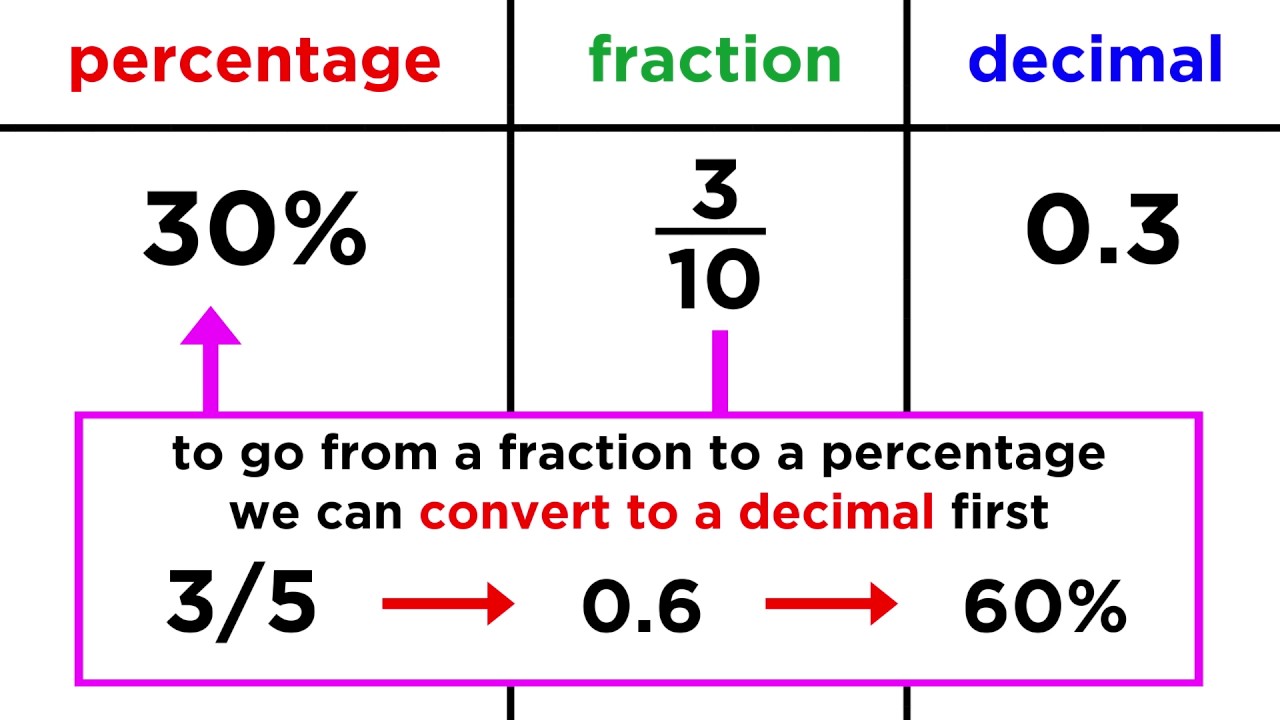
Alright, so we've mastered fractions, decimals, and percentages, so let's quickly learn how to convert between them. This is important if you want to do calculations where you apply some percentage to a value, or a million other every day scenarios. Don't worry, it's easy!
Watch the whole Mathematics playlist: http://bit.ly/ProfDaveMath
Classical Physics Tutorials: http://bit.ly/ProfDavePhysics1
Modern Physics Tutorials: http://bit.ly/ProfDavePhysics2
General Chemistry Tutorials: http://bit.ly/ProfDaveGenChem
Organic Chemistry Tutorials: http://bit.ly/ProfDaveOrgChem
Biochemistry Tutorials: http://bit.ly/ProfDaveBiochem
Biology Tutorials: http://bit.ly/ProfDaveBio
EMAIL► ProfessorDaveExplains@gmail.com
PATREON► http://patreon.com/ProfessorDaveExplains
Check out "Is This Wi-Fi Organic?", my book on disarming pseudoscience!
Amazon: https://amzn.to/2HtNpVH
Bookshop: https://bit.ly/39cKADM
Barnes and Noble: https://bit.ly/3pUjmrn
Book Depository: http://bit.ly/3aOVDlT
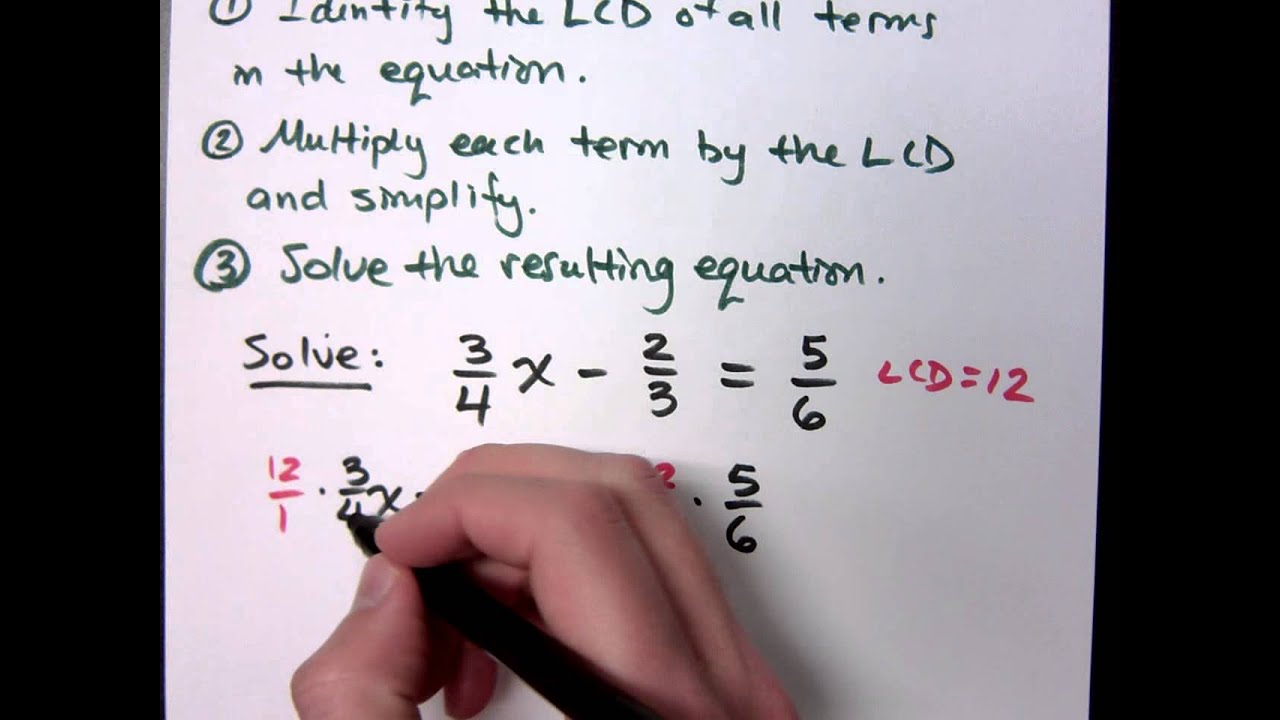
Solve 3/4 x - 2/3 = 5/6
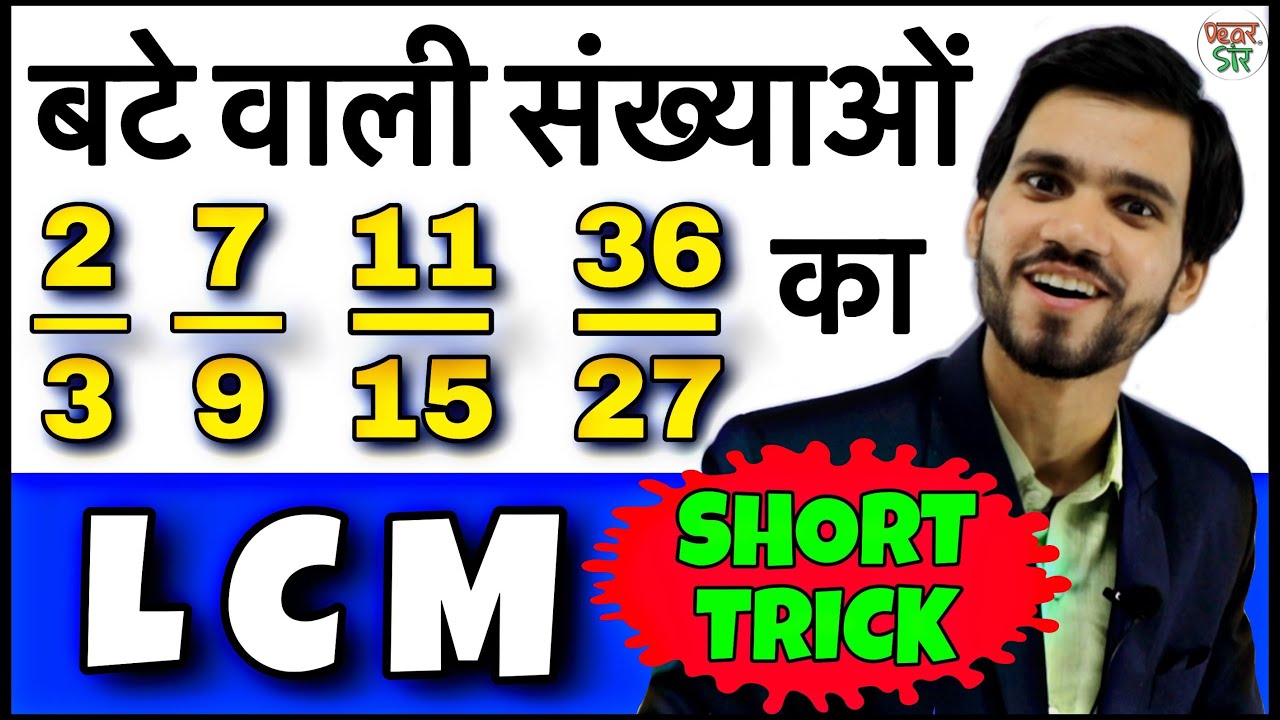
Hi,
In this video, we are going to learn how to find LCM of Fractions with a short trick. We have seen in exams that students face problems while calculating LCM of Fractions, just because they don't know the right way to solve it.
What we have covered,
- What is LCM of Fractions
- Types of questions covered
- Short Trick to solve LCM of Fraction
- The solution of Questions Bases on LCM of fractions
Join us at Telegram :- https://t.me/officialdearsir
Support us :- https://www.youtube.com/dearsir/join
- Learn Tricky Math With Short Trick:- https://www.youtube.com/playlist?list...
- Profit and Loss Short Trick Playlist:- https://www.youtube.com/playlist?list...
- Average Short Tricks in Hindi:- https://www.youtube.com/playlist?list...
Time and Work Short Trick:- https://www.youtube.com/playlist?list...
Follow us at:-
1. Facebook:- https://www.facebook.com/officialdearsir
2. Instagram:-
Dear Sir:- @dearsirofficial or click the link (https://www.instagram.com/dearsiroffi... )
Maths:- @yaroon_ki_yaatra
Business:- @vaunterofficial
English:- @kaishy_cool
3. Twitter:- https://twitter.com/officialdearsir
4. Google + :- https://plus.google.com/1126392149936...
Support us by donating little amount:- www.youtube.com/dearsir/join
Don’t forget to suggest our channel to someone who needs it:- https://www.youtube.com/dearsir
Here are Key Moments of the video 👇
00:00 Intro of the Video
00:32 Types of Questions
01:42 Concept
02:28 Trick
04:32 Question 1
06:25 Question 2
09:28 Outro
-----Thank You for Watching-----
Team “Dear Sir"
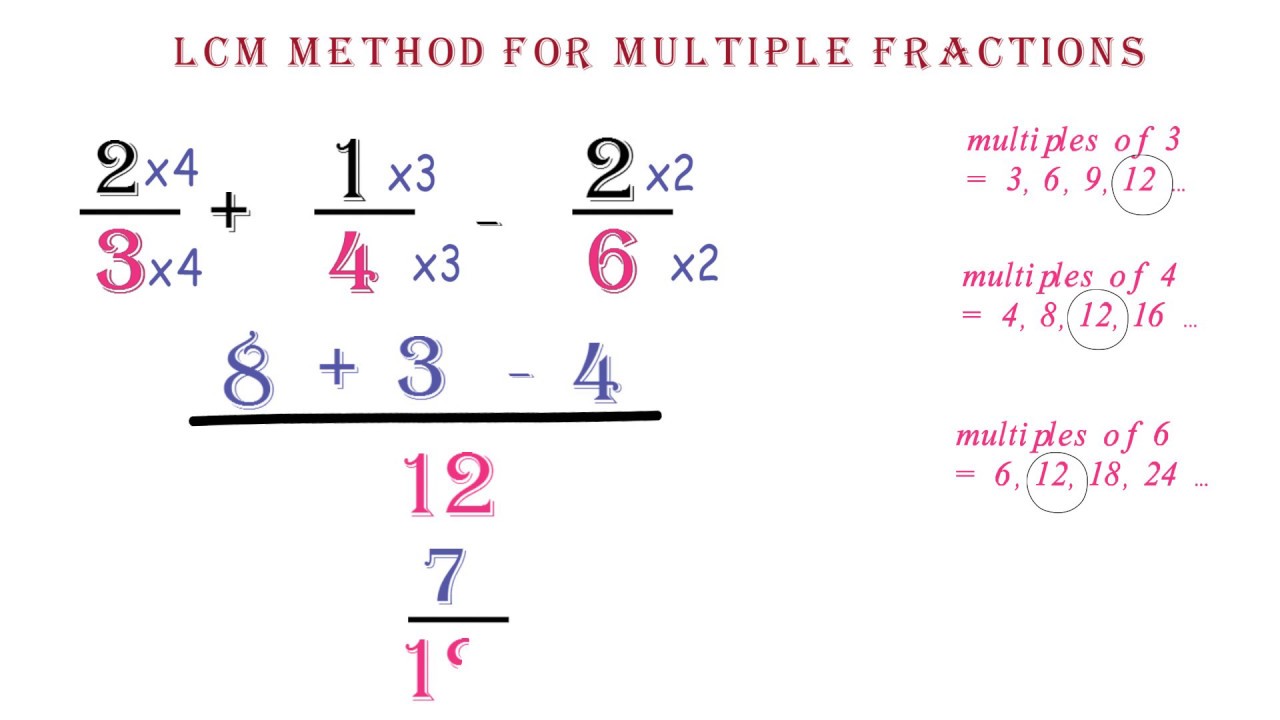
This video is part of our Fraction videos from http://ultimate-algebra.com. Get the full course Today
#UltimateAlgebraFractions #UltimateAlgebra

👉 Learn how to solve two step linear equations. A linear equation is an equation whose highest exponent on its variable(s) is 1. To solve for a variable in a two step linear equation, we first isolate the variable by using inverse operations (addition or subtraction) to move like terms to different sides of the equality sign. After evaluating like terms we then also use inverse operations (multiplication or division) to remove any multiple (or fraction) to the variable.
👏SUBSCRIBE to my channel here: https://www.youtube.com/user/m....rbrianmclogan?sub_co
❤️Support my channel by becoming a member: https://www.youtube.com/channe....l/UCQv3dpUXUWvDFQarH
🙋♂️Have questions? Ask here: https://forms.gle/dfR9HbCu6qpWbJdo7
🎉Follow the Community: https://www.youtube.com/user/M....rBrianMcLogan/commun
Organized Videos:
✅Solve One and Two Step Equations
https://www.youtube.com/playli....st?list=PL0G-Nd0V5ZM
✅Solve Linear Equations | Learn About
https://www.youtube.com/playli....st?list=PL0G-Nd0V5ZM
✅How to Solve One Step Equations with Addition
https://www.youtube.com/playli....st?list=PL0G-Nd0V5ZM
✅How to Sove One Step Equations with Multiplication
https://www.youtube.com/playli....st?list=PL0G-Nd0V5ZM
✅How to Solve One Step Equations with Decimals
https://www.youtube.com/playli....st?list=PL0G-Nd0V5ZM
✅Solve Two Step Equations
https://www.youtube.com/playli....st?list=PL0G-Nd0V5ZM
✅Solve Two Step Equations with Fractions
https://www.youtube.com/playli....st?list=PL0G-Nd0V5ZM
✅Solve Two Step Equations with Two Variables
https://www.youtube.com/playli....st?list=PL0G-Nd0V5ZM
✅Solve Two Step Equations with a Fraction
https://www.youtube.com/playli....st?list=PL0G-Nd0V5ZM
✅Solve Two Step Equations with Fractions
https://www.youtube.com/playli....st?list=PL0G-Nd0V5ZM
✅Solve Two Step Equations with a Rational Fraction
https://www.youtube.com/playli....st?list=PL0G-Nd0V5ZM
🗂️ Organized playlists by classes here: https://www.youtube.com/user/M....rBrianMcLogan/playli
🌐 My Website - http://www.freemathvideos.com
🎯Survive Math Class Checklist: Ten Steps to a Better Year: https://www.brianmclogan.com/e....mail-capture-fdea604
Connect with me:
⚡️Facebook - https://www.facebook.com/freemathvideos
⚡️Instagram - https://www.instagram.com/brianmclogan/
⚡️Twitter - https://twitter.com/mrbrianmclogan
⚡️Linkedin - https://www.linkedin.com/in/br....ian-mclogan-16b43623
👨🏫 Current Courses on Udemy: https://www.udemy.com/user/brianmclogan2/
👨👩👧👧 About Me: I make short, to-the-point online math tutorials. I struggled with math growing up and have been able to use those experiences to help students improve in math through practical applications and tips. Find more here: https://www.freemathvideos.com/about-me/
#LinearEquations #SolvelinearEquations #Brianmclogan