سرفہرست ویڈیوز

In our Easter Facts for Kids video we provide an overview of both the Christian and Non-Christian story of Easter. Easter is a wonderful spring holiday that has a lot of meaning for Christians. The death and resurrection of Jesus Christ is considered the pinnacle moment in all of history. Easter is a celebration of his life, death and resurrection and provides hope for many across the globe.
For those who are not Christian Easter is a time to celebrate the new life of spring. This is done by spending time with family, meals, and who can forget Easter Egg hunts! We provide a overview and fun facts about Easter appropriate to share with anyone!
For more Easter fun, download our free lesson plan:
https://learnbright.org/lesson....s/social-studies/wha
Thank you for watching and learning with us! We’re constantly releasing new content and videos so click that “Subscribe” button and you’ll notified.
Find and Follow Us Online:
Facebook: https://www.facebook.com/LearnBright/
Instagram: https://instagram.com/LearnBrightEducation
Pinterest: https://pinterest.com/LearnBrightEducation
YouTube: https://www.youtube.com/LearnBright
Website: https://learnbright.org/
*Teachers and Parents! Did you know? In addition to these great videos, we have also created a library of high quality and engaging lessons for your elementary aged student(s). Visit us, sign up for a free account, and instantly you'll have access to thousands of lesson plans, learning materials, teaching instructions, activities, and assignments that your kids will really enjoy! We hope to see you soon!
Browse our entire collection of Social Studies lesson plans: https://learnbright.org/lessons/?filter_subject=social-studies
#HistoryOfEaster
TeacherTube User: Kkroberts
TeacherTube URL: http://www.teachertube.com/vie....wVideo.php?video_id=
This is a math video lesson to help you with new math, math tricks, and or simple math questions you may have.
An adapted version of the popular childrens story quotThe Three Little Pigsquot. It has been modified to introduce an Algebra lesson on Logical Reasoning.

This video gives a quick overview of how parents can get started with using Khan Academy with their children. It is meant for parents who have kids who are 13 or older. If you have kids who are 12 or younger, please see this video: https://www.youtube.com/watch?v=KABB4Kr7WhU
To start using Khan Academy with your children, visit www.khanacademy.org.
Get free resources to keep your kids learning during school closures:
https://keeplearning.khanacademy.org/

Practice Your Spanish With Chateo - a Spanish-speaking chatbot! | Get a discount off your first 6 months with code CHATEOBOT | Sign up at: https://www.senorjordan.com/chat
~~~~~~~~~~~~~~~~~~~~~~~~~~~~~~
SUBSCRIBE for more Spanish videos: http://bit.ly/XGe7we
and make sure to click the notification bell!
Follow me on Facebook: https://www.facebook.com/srjordanspanish
Tweet me: https://twitter.com/senorjordan
Check out my website: http://www.senorjordan.com
Follow me on Instagram: @senorjordanvideos
Listen to my music on Soundcloud:
https://soundcloud.com/senorjordanspanish
Listen to my music on Spotify:
https://open.spotify.com/artis....t/2nyJ9GgLNMckXCuBHU
Buy my songs on iTunes:
https://music.apple.com/us/artist/1621526948
Buy my songs on Amazon:
https://www.amazon.com/music/p....layer/artists/B09Z35
Donate to my video-making project:
https://paypal.me/srjordanvideos?country.x=US&locale.x=en_US
~~~~~~~~~~~~~~~~~~~~~~~~~~~~~~
Hola. Sorry about the late upload. My computer kept going to sleep mode, interrupting the process and ruining the transfer!
But here it is. Mejor tarde que nunca. :-)

WEBSITE: http://www.teachertube.com A resource for homebased learning. Introduction on recognising the coins and notes in Singapore. Suitable for K2 Math pupils.

What is Alzheimer's Disease and what causes it? In this video designed for elementary learning we explore those questions and help gain a deeper understanding of this disease. Many of us know someone who has been affected by dementia or Alzheimers and if not many of us might in the future. We hope this video helps students gain a better understanding of the disease, its causes, symptoms, and some prevention techniques.
Alzheimer's Disease is a type of dementia that causes problems with memory, thinking, and behavior. Dementia is a set of symptoms that may include memory loss and difficulties with thinking, problem-solving, or language. Alzheimer’s Disease is the most common cause of dementia.
Alzheimer's Symptoms: As a person ages, they may forget things. It is normal. However, one of the symptoms of AD is consistent memory loss, especially of recent events and new information. This is the most noticeable trait of Alzheimer’s, it usually occurs gradually at first, but gets worse over time.
Alzheimer's Prevention Ideas: As you learn, your brain is constantly making connections, and one way that might help prevent Alzheimer’s as you get older is to produce new connections. You can do this by staying active, mentally and physically. This also apples to adult family members or friends who do not have AD. Encourage them to be active too.
Do you want to learn more about Alzheimer's Disease? Download our free comprehensive lesson plan here: https://learnbright.org/lesson....s/science/alzheimers This lesson has extra content, worksheets, classroom activities and more!
Thank you for watching and learning with us! We’re constantly releasing new content and videos, so click that “Subscribe” button and you’ll get notified.
Find and Follow Us Online:
Facebook: https://www.facebook.com/LearnBright/
Instagram: https://instagram.com/LearnBrightEducation
Pinterest: https://pinterest.com/LearnBrightEducation
YouTube: https://www.youtube.com/LearnBright
Website: https://learnbright.org/
*Teachers and Parents! Did you know? In addition to these great videos, we have also created a library of high quality and engaging lessons for your elementary aged student(s). Visit us, sign up for a free account, and instantly you'll have access to thousands of lesson plans, learning materials, teaching instructions, activities, and assignments that your kids will really enjoy! We hope to see you soon!
Browse our entire collection of Science lesson plans: https://learnbright.org/lessons/?filter_subject=science
#AlzheimersDiseaseForKids
#WhatIsAlzheimersDisease
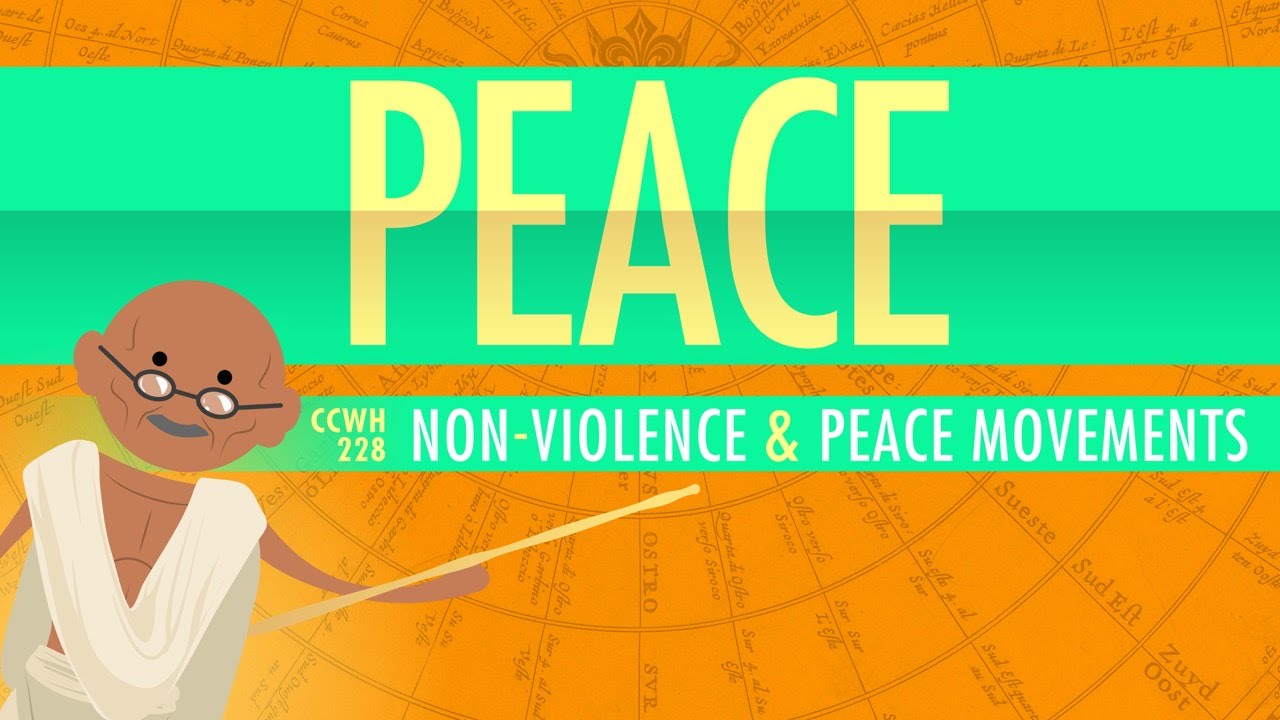
In which John Green teaches you about nonviolence and peace movements in the 20th century. What is nonviolence? What is a peace movement? Well. traditionally, humans often resort to violence when they come into conflict. In the 20th century, it became much more common for people to enact change by means of nonviolence, and there was a common thread of connection between many of the most notable advocates of peaceful change. Crash Course will take you from Gandhi to Gregg to Bayard Rustin to Martin Luther King, Jr, to the Cold War to Arab Spring along a path of nonviolent resistance and peaceful change. It's pretty great.
Citation 1: King, Martin Luther, Jr., Farewell Statement for All India Radio, 9 March 1959.
Crash Course is on Patreon! You can support us directly by signing up at http://www.patreon.com/crashcourse
Want to find Crash Course elsewhere on the internet?
Facebook - http://www.facebook.com/YouTubeCrashCourse
Twitter - http://www.twitter.com/TheCrashCourse
Instagram - https://www.instagram.com/thecrashcourse/
CC Kids: http://www.youtube.com/crashcoursekids

Practice Your Spanish With Chateo - a Spanish-speaking chatbot! | Get a discount off your first 6 months with code CHATEOBOT | Sign up at: https://www.senorjordan.com/chat
~~~~~~~~~~~~~~~~~~~~~~~~~~~~~~
SUBSCRIBE for more Spanish videos: http://bit.ly/XGe7we
and make sure to click the notification bell!
Follow me on Facebook: https://www.facebook.com/srjordanspanish
Tweet me: https://twitter.com/senorjordan
Check out my website: http://www.senorjordan.com
Follow me on Instagram: @senorjordanvideos
Listen to my music on Soundcloud:
https://soundcloud.com/senorjordanspanish
Listen to my music on Spotify:
https://open.spotify.com/artis....t/2nyJ9GgLNMckXCuBHU
Buy my songs on iTunes:
https://music.apple.com/us/artist/1621526948
Buy my songs on Amazon:
https://www.amazon.com/music/p....layer/artists/B09Z35
Donate to my video-making project:
https://paypal.me/srjordanvideos?country.x=US&locale.x=en_US
~~~~~~~~~~~~~~~~~~~~~~~~~~~~~~
Here's another requested phrase. I hope you are glad to hear it!

Here's a LOOP version of one of my most popular videos. It is a song I learned in High School Spanish to help with irregular verbs in the preterite.
Explanation video here:
https://www.youtube.com/watch?v=MXsivRHsvas&t=11s&ab_channel=SenorJordan
~~~~~~~~~~~~~~~~~~~~~~~~~~~~~~
*I am providing this version as people have given me trouble for the line "haber hube", since "hubo" (there was/were) is the most common form of the verb in the preterite.
I have changed the line "no acentos" to "no hay acentos" as it still fits ok and is better grammar in Spanish.
~~~~~~~~~~~~~~~~~~~~~~~~~~~
👍Please share this video with others and like it to help me get the word out on my videos!
And let me know about other troublesome topics you’d like in bite-sized form.
🔔 Subscribe for more Spanish lessons: http://bit.ly/XGe7we
🤖Practice Your Spanish with Chateo! Get a discount off your first 6 months with code CHATEOBOT! Sign up at: https://www.senorjordan.com/chat
Social Media:
* YouTube: https://www.youtube.com/SeñorJordan
* Find “señor jordan videos” on Facebook, Twitter, Instagram, and TikTok
* Soundcloud: senorjordanspanish
Enjoying the content? Consider buying me a taco!
https://ko-fi.com/senorjordan
🌐 Private Lessons Available:
Interested in improving your Spanish conversational skills? Contact me: www.senorjordan.com/clases
📚 Practice Your Spanish with My Books!
https://www.tprsbooks.com/shop/?_product_type=novel&_author=jeremy-senor-jordan&_product_language_filter=spanish
Special thanks to Natalia Lauman for the background art!
@namilauman
Special thanks to Ely Saúl García for making the music sound way better and adding an additional voice or two!
@levitasrec/
And thanks TO ALL OF YOU for watching my videos over the years! Who knew I would still be making them so many years later!
~~~~~~~~~~~~~~~~~~~~~~~~~~~~~~
And are you still reading this far down?
Write aardvark in the comments so I know! :-)

DomanMom.com Learn basic numbers with counting forwards & backwards, quantity recognition of random dots (subitizing), numerals, number words, and row counting. Colorful & brief to capture your young child's attention.
Numbers 0-10: http://youtu.be/eAR7ip9rdlY
Numbers 10-20: http://youtu.be/jn-2zTp3cvU
Numbers 20-30: http://youtu.be/v3D0jWpvJpo
Numbers 30-40: http://youtu.be/tQlRcTO4Ca8
Numbers 40-50: http://youtu.be/DvbqW2ZeBKo
Numbers 50-60: http://youtu.be/SxmYa-SXODc
Numbers 60-70: http://youtu.be/23GDcH04O3Y
Numbers 70-80: http://youtu.be/QlV1sZLLTMk
Numbers 80-90: http://youtu.be/icyA2QtB1VQ
Numbers 90-100: http://youtu.be/H1q0LrsNA2c
Counting from 1-100 with Colorful Dots: http://youtu.be/c01QRs7LepI

Hi Friends, Enjoy this non stop back to back learning episodes on the topic " HOW DO YOUR BODY PARTS WORK". Dr. Binocs presents you with a 43min Compilation of all the knowledge regarding all your body parts. DO SHARE IT WITH YOUR FRIENDS TO ENJOY TOGETHER. LIKE and SUBSCRIBE to PEEKABOO KIDZ for more fun learning videos :D
TOPICS LIST-
1) How does your heart work - 00:45
2) How does your Brain work - 03:50
3) How does your Skin work - 08:00
4) How your Urinary System works - 12:25
5) How your Nose works - 15:30
6) How your Hair works - 19:50
7) How your Nails works - 23:25
8) How your Ears work - 27:25
9) How your Teeth Works - 31:00
10) How your Tongue works - 36:00
11) How your Muscles work - 39:59
* SUBSCRIBE to Peekaboo Kidz : http://bit.ly/SubscribeTo-Peekabookidz
* Catch Dr.Binocs At - https://goo.gl/SXhLmc
* To Watch More Popular Nursery Rhymes Go To -
https://goo.gl/CV0Xoo
* To Watch Alphabet Rhymes Go To - https://goo.gl/qmIRLv
* To Watch Compilations Go To - https://goo.gl/nW3kw9
* Catch More Lyricals At - https://goo.gl/A7kEmO
* Like our Facebook page: https://www.facebook.com/peekabootv

ABC lesson for kids
ALPHABET for kids
Teacher Aya Online Tutor

Think fast — the clock’s ticking and these riddles don’t play fair. Can you beat the timer and outsmart puzzles that twist logic, hide tricks, and sneak up on your assumptions? Test your wits with quick-fire brainteasers, clever traps, and one-true-answer moments that’ll make you say “ohhh” — or “no way!” Ready to prove you’ve still got it? Hit play and don’t blink. 🧠⏳ (No calculators allowed — we mean it.)
Animation is created by Bright Side.
----------------------------------------------------------------------------------------
Music from TheSoul Sound: https://thesoul-sound.com/
Check our Bright Side podcast on Spotify and leave a positive review! https://open.spotify.com/show/....0hUkPxD34jRLrMrJux4V
Subscribe to Bright Side: https://goo.gl/rQTJZz
----------------------------------------------------------------------------------------
Our Social Media:
Facebook: https://www.facebook.com/brightplanet/
Instagram: https://www.instagram.com/brightside.official
TikTok: https://www.tiktok.com/@bright....side.official?lang=e
Stock materials (photos, footages and other):
https://www.depositphotos.com
https://www.shutterstock.com
https://www.eastnews.ru
----------------------------------------------------------------------------------------
For more videos and articles visit: http://www.brightside.me
----------------------------------------------------------------------------------------
This video is made for entertainment purposes. We do not make any warranties about the completeness, safety and reliability. Any action you take upon the information in this video is strictly at your own risk, and we will not be liable for any damages or losses. It is the viewer's responsibility to use judgement, care and precaution if you plan to replicate.

Here, we quickly demonstrate how to create a #GeoGebra Class from any Illustrative Mathematics 6-8 lesson found on our website. See from both teacher and student perspective1 Explore the curriculum here: https://www.geogebra.org/m/ckm3ffqh
#RemoteLearning

"Visit http://www.educationgalaxy.com to learn more.
Education Galaxy provides online assessment, instruction, and practice for elementary students. Education Galaxy helps students master their state standards and prepare for state testing. Education Galaxy's Topic Overviews and question feedback help explain each question for the student after incorrect answers."

#readingbasicsentences
#practicereading
#practicereadingathome
#practicereadingenglish
#readingtutorialforgrade1
#readingtutorialforGrade2
#readingtutorialforgrade3
#bestreadingtutorial
#bestvideoforpracticereading
#onlinetutorforreading
#tutorforreading
#besttutorforreading
#Englishgrade1
#englishgrade2
#englishgrade3
#readingtutorialforkids
#learnhowtoread
#learntoread
#teachhowtoread

Experience everything NUMBEROCK has to offer with a complete Addition with Regrouping Lesson that comes with a board game, lesson plan, Google Classroom activity, many printables, an HD Video Download and more: https://learnmore.numberock.com/free-ar3.
Video: Addition with Regrouping | 3 Digit Addition
Grade Levels: 2nd Grade - 3rd Grade
»»-------------¤-------------««»»-------------¤-------------««
Q. Does Numberock drive real results in the classroom?
A. I knew I found the secret sauce when not only were my students retaining the concepts longer, they were singing the songs outside of the classroom during recess and at home with their parents during dinnertime. The songs were so catchy, my students couldn't get the math songs out of their head!
During testing, I often found my students humming the melodies in order to jostle their memory of a rule or problem solving process. As we've all experienced, there is something about the power of music that allows us to retain information easier and for longer periods of time. Without getting into the finer details of multi-sensory learning and how it often helps the students who most need the help, the power of a catchy song is hard to deny.
»»-------------¤-------------««»»-------------¤-------------««
Newly Available for Website Subscribers:
1. Number Notes | Highly-visual math worksheets that integrate drawing and creative processes that make problem-solving and note-taking way more fun.
Research has shown that resources like these worksheets help students to integrate their artistic side with the mathematical side of their brain and as a result aides with long-term memory retention.
Our own research has shown us that teachers who try these activities love them! It seems to be a natural extension beyond song and video and into additional visual learning tools that when used in concert with our videos, cater to the many different types of learners that in your classroom - especially those non-mathy types.
Hope to see you at https://learnmore.numberock.com/free-ar3.

In this video we will learn about Subtraction with base 5 numbers.
Access eLearn’s Digital content/ videos on mobile. Download eLearn App from Google play store.
Android App:
http://bit.ly/2RBzptk
For More Information:
Website:
https://elearn.gov.pk/
Web App:
https://elearn.gov.pk/onlineApp/indexx.php
E-MAIL:
elearn@punjab.gov.pk
eLearn is the official repository of digitized textbooks of Punjab. Each book has been augmented with Video Lectures, Illustrations, Animations, Simulations and Interactive Assessments. Through this website, you can access 30 Science and Maths textbooks for Grade 4-12 which have been augmented with 13,047 Video Lectures, 592 Simulations, 2100 Audio minutes and 1,830Animations. eLearn is developed by Punjab Information Technology Board in collaboration with Punjab Curriculum & Textbook Board and the School Education Department.

SUSCRIBETE AQUÍ: https://bit.ly/3B8CNXP
Suscríbete ► http://bit.ly/SuscribeteElReinoInfantil
Síguenos/Follow us:
Facebook ► https://www.facebook.com/ElReinoInfantil
Instagram► https://www.instagram.com/reino_infantil/
Twitter ► https://twitter.com/Reino_Infantil
¡Encuentra todos nuestros productos exclusivos aquí!
►http://bit.ly/ElReinoInfantilWEB
Estaba el señor Don Gato - Michi-guau | El Reino Infantil

WWW.HARRYKINDERGARTENMUSIC.COM
...or find me on Teachers Pay Teachers!
www.teacherspayteachers.com/St....ore/Harry-Kinder
HARRY KINDERGARTEN MUSIC, LLC
Hip educational songs & videos for the K-2 Classroom!
Song: DOUBLES! DOUBLES! (1-10 VERSION)
Educational Content: Practicing "doubles" addition; This version has both the "small doubles" and the "big doubles" in one song, whereas my previous versions repeated one or the other in both verses.
1+1=2
2+2=4
3+3=6
4+4=8
5+5=10
6+6=12
7+7=14
8+8=16
9+9=18
10+10=20
Buy! *www.harrykindergartenmusic.com
Buy! *www.teacherspayteachers.com/St....ore/Harry-Kinder
Watch! *youtube.com/harrykindergarten
Discuss! * facebook.com/groups/harrykindergarten
Tweet! * twitter.com/harrykmusic
Logo Merchandise! * cafepress.com/harrykindergarten
Pledge! *patreon.com/harrykindergarten
Email! *pete@harrykindergartenmusic.com
HARRY KINDERGARTEN MUSIC FREEBIES:
This song is a FREEBIE. You can stream it for free on YouTube, but also buy it at my website. I am already offering 60+ of my hip educational songs/videos on YouTube FOR FREE at youtube.com/harrykindergarten. Enjoy them, utilize them, and share them! I am a current full-time Kindergarten teacher so I know what it's like to be looking around for quality content in my classroom! You can ALSO purchase the raw video file and/or audio file of those 60+ songs at my website (if you need them for some reason) or at Teachers Pay Teachers. I will continue to make freebie videos (ones you can just stream on YouTube for free) periodically, so continue to check back to see if I've posted any.
*Please DO NOT rip any of my videos off of YouTube and upload them to your YouTube channel. I want the Harry Kindergarten Music channel to be the hotspot for these videos, not random teachers' channels who happened to illegally take them off of mine. If you really want to have a playlist of them, create a playlist from MY channel or purchase them on my website so you have the raw files. THANKS FOR UNDERSTANDING!
Q: Do you speak at conferences?
A: Yes! My ability to speak at teacher conferences during the school year is "tight" because I am currently a classroom teacher and only have a set number of personal days. However, the SUMMER time is wide-open and I'd love to come to your conference and do a session/seminar! Some of the topics I've typically spoken to teachers about include music and technology in the classroom, classroom management, running a creative morning meeting, and utilizing YouTube in the early childhood classroom. Email me at pete@harrykindergartenmusic.com to make a speaking request.
Q: Can my class perform a "Harry Kindergarten song" for an audience?
A: If you desire to have your class or group of students perform one of my “Harry Kindergarten” songs for an audience, please note that there is a $6.00 PERFORMANCE FEE.
Here are some hypothetical examples of performance groups:
* Students perform a song for an audience during a graduation ceremony.
* Students perform a song for an audience during a school or community talent show.
* Students perform a song for an audience during a school assembly.
If you are unsure if you need to purchase a performance license or not, please inquire at: pete@harrykindergartenmusic.com. If you want more details about using a song multiple years or multiple classes, etc., e-mail me for a detailed PDF file.
$6.00 can be sent to:
Harry Kindergarten Music, LLC
508 Stewart Street
Bellwood, PA 16617