Top videos

AMAZING CURIOSITIES ABOUT FISHES | Happy Learning 🐟🐡🐠
Hello, little marine explorers! 🐠🌊 At Happy Learning, we dive into the fascinating world of fish 🐟 to uncover curious and amazing facts about these ocean inhabitants. Did you know that some fish can change color or that there are species that can "breathe" outside of water? 😲💦 Join us on this exciting underwater adventure as we explore the diversity and wonders of the aquatic world. 🌏💙 Get ready to dive into an ocean of knowledge and fun! 🚀🐬 #HappyLearning #ExploringTheSea #FishCuriosities 🌈🐙
Discover hundreds of never-before-seen resources! Create your free account at https://my.happylearning.tv/ and start learning in the most entertaining way.
#fishing
#happylearning
#fish
#shark
#sea

The first 200 people to sign up at https://brilliant.org/stevemould/ will get 20% off an annual subscription that gives you access to the full archive of Daily Challenges and every single course
Moles (in chemistry) are really clever and useful. The definition involves a really big number called Avogadro's Number and on its own is really unhelpful when trying to understand what the Mole is actually for! The best way to get your head around this unit (Mol) is to look at the problem that is solves. Along the way you'll find out about Atomic Mass Units, isotopes and some dodgy chemical equations!
You can support me on Patreon here:
https://www.patreon.com/stevemould
just like these amazing people:
Joseph Galliera
Nathan Williams
Matthew Cocke
Glenn Watson
Mark Brouwer
Joseph Rocca
Joël van der Loo
Doug Peterson
Yuh Saito
Rashid Al M
Andrew Reeder
You can buy my books here:
https://stevemould.com/books
Twitter: http://twitter.com/moulds
Instagram: https://www.instagram.com/stevemouldscience/
Facebook: https://www.facebook.com/stevemouldscience/
Buy nerdy maths things: http://mathsgear.co.uk

This US States learning video for kids explores facts about Idaho! The state of Idaho is also called the Land of Famous Potatoes and the Gem State. This is going to be fun!
❤ Homeschool Pop? Join our team and get tattoos here: http://homeschoolpop.com
☃ You are SO cool! Say hello below, we would love to hear from you!
Thanks for watching this Homeschool Pop US States learning video on the state of Idaho!
Thanks again and we hope to see you on the next US States video!
Idaho for Kids | US States Learning Video
=================================================
More Animated Bible Stories here https://ouo.io/QRLcnJ
=================================================
BUY YourvOwn Bible @ ALIEXPRESS http://ivononic.com/5EY7
FREE Math Videos for Toddlers
http://vismuene.com/6b7a
Buy your own multi-purpose learning module https://invol.co/cl18o24
Buy Rosary here https://invol.co/cl18kr6
Click this link to buy bible https://invol.co/cl14yim Download my Math Interactive Whiteboard Lessons and flash games here: http://iwb-resources.blogspot.com
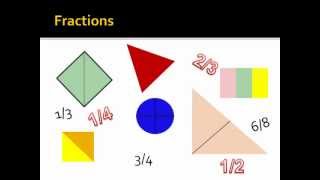
Lesson Title: Fraction Illustration
File: Interactive Math PowerPoint presentation
Grades: 2-3

For Free Practice Go To: http://[a]www.ilearn.com%2Ffractions[/a]
iLearn provides professionally designed math instruction for all markets, including home, K-12, and college. Our instructional programs combine the best scientifically-designed curriculum with state-of-the art delivery systems. Our specialty is providing easy-to-use, highly effective support, for students who have difficulty learning math. It’s the easiest and fastest way to understand math and master math procedures.
This video is one of over 800 similar lessons from iLearn on math topics ranging from kindergarten through high school math.
• Subscribe to our channel and have access to all of our lessons here on YouTube.
• Share this video with your friends via your favorite social site.
For free access to unlimited online practice and tests, along with free access to these lessons, go to:
http://[a]www.ilearn.com%2Ffractions[/a]
For more information, contact us at: www.ilearn.com
1-877-789-2088 ext. 128 (toll free)
If you prefer to read, rather than watch this video, here’s the transcript:
Title: Comparing Fractions to 1 - Fast And Easy Math Learning Videos
In this lesson, you will learn when a fraction is less than one whole unit, equal to one whole unit, or more than one whole unit. A fraction equals one whole unit when the numerator and denominator are the same. This example shows us that two-thirds does not equal one. The numerator and denominator are not the same.
Here's another example of a fraction that does not equal one. Five-thirds does not equal one. The numerator and denominator are not the same.
Now let's look at a fraction that does equal one whole unit. Three-thirds equals one. The numerator and denominator are the same.
Here's another example of a fraction that is equal to one. Six-sixths equals one. The numerator and denominator are the same.
Now let's take look at fractions that are less than one and more than one. Four-sixths is less than one. A fraction is less than one when the numerator is less than the denominator.
Here's an example of a fraction that is more than one. Fifteen-sixths is more than one. A fraction is more than one when the numerator is more than the denominator.
Now try a few problems on your own. To solve this problem, you must click on the correct answer, like this.
The correct answer is less than. One-third is less than 1. For the problems that follow, click on the correct answer.
http://[a]www.ilearn.com%2Ffractions[/a]
https://youtu.be/XyrKD_-KUC8

Go here for Free Practice: http://www.iLearn.com/fractions
iLearn provides professionally designed math instruction for all markets, including home, K-12, and college. Our instructional programs combine the best scientifically-designed curriculum with state-of-the art delivery systems. Our specialty is providing easy-to-use, highly effective support, for students who have difficulty learning math. It’s the easiest and fastest way to understand math and master math procedures.
This video is one of over 800 similar lessons from iLearn on math topics ranging from kindergarten through high school math.
• Subscribe to our channel and have access to all of our lessons here on YouTube.
• Share this video with your friends via your favorite social site.
For free access to unlimited online practice and tests, along with free access to these lessons, go to:
http://[a]www.ilearn.com%2Ffractions[/a]
For more information, contact us at: www.ilearn.com
1-877-789-2088 ext. 128 (toll free)
If you prefer to read, rather than watch this video, here’s the transcript:
Title: Dividing Fractions
You know that the multiplication of both whole numbers and fractions can be represented using an array that looks like this. This example shows four-fifths multiplied by two-thirds.
The product of multiplying the fractions is eight-fifteenths.
You also know that division is just another way of writing multiplication when one of the factors is unknown. That’s easy to see using this array. Let’s assume that you know the total size of the array, which is eight-fifteenths, and you know one of the factors in the multiplication, four-fifths.
But you don’t know the other factor, which we’ll now call X.
X is the number you need to multiply by four-fifths to get eight-fifteenths.
We can represent this situation with two different number sentences.
The first number sentence is written as multiplication. We know that four-fifths is multiplied by some number on this side called X.
And the result is eight-fifteenths.
We can also describe exactly the same situation with a division number sentence like this.
We know that we have eight-fifteenths, which is divided by four-fifths.
But we don’t know the length of this side of the array, which is the value for X.
So, these equations tell us exactly the same thing because they represent the same situation shown by the array.
The X in both equations represents the same number – it’s the missing value for the length of one side of the array.
While this array is helpful in seeing what a division problem represents, it’s not very helpful in finding out the number we need on this side, because we don’t know how many parts to divide each whole unit into. So how do we find this number? The best way is to use what we know about algebraic reasoning, using these two equations to describe the array.
We’ll start by finding the value of X in the multiplication equation.
This will help us later in understanding how to solve the division equation.
You know that you can multiply both sides of an equation by the same number and it doesn’t change the equation. We can use this to our advantage if we choose the right number to multiply by. We want a number that will give us one X instead of four-fifths X on the left side of the equation.
You know that multiplying any number by its reciprocal gives you 1. Let’s multiply fourth-fifths by its reciprocal like this.
Five-fourths times four-fifths is one, so the left side of the equation now becomes 1 times X, which we write as just X. You also know that if you multiply one side of an equation by a number you have to multiply the other side by the same number.
So, we multiply the right side of the equation by five-fourths.
When we multiply, we get forty-sixtieths.
We can divide both terms by 20, to see that X equals two thirds.
When we compare this to the multiplication problem we started with, we see that two-thirds is the correct answer, because two-thirds times fourth-fifths is indeed eight-fifteenths.
But how does this help us understand how to divide fractions? It’s actually very simple. Let’s look at these two statements from the equations.
Remember that X represents the same number in both equations. It’s the length of this line in the aray.
The equation on the right says you can find X by dividing eight-fifteenths by four-fifths. The eqution on the left says you can find X by multiplying eight-fifteenths by the reciprocal of four-fifths.
Using what you already know about algebra, you can prove that this same approach always works, but we won’t go through that proof here. It means that dividing any number by a fraction and multiplying that number by its reciprocal gives you the same result.
We’ll just look at a couple of examples to verify that this works.
We’ll start with this multiplication statement. Three-fourths times five-eighths equals fifteen-thirty-seconds.
http://www.iLearn.com/fractions
https://youtu.be/ncad2bziX5s

Division af brøker med et tal, er let. Man ganger nævner med det tal man dividere med og lader tælleren stå.
Øvelses opgaver :
http://matematikerlet.dk/opgav....er/brøker/brøk-divid
Facit ark til opgaverne:
http://matematikerlet.dk/opgav....er/brøker/brøk-divid
Hvordan forlænger man en brøk: https://youtu.be/LuI-jpjM_Ks
#matematikerlet
#hjælptilmatematik
#gratismatematikopgaver
#brøkregning
#brøker
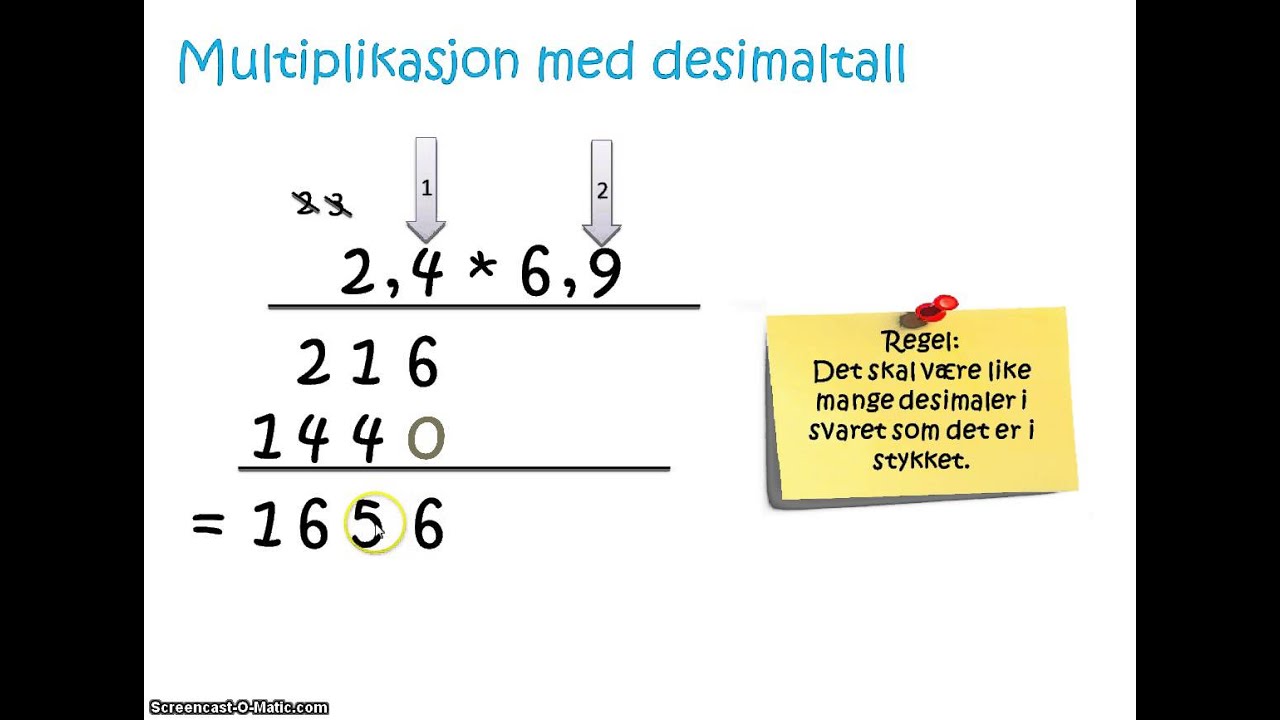
Her kan du lære å multiplisere og dividere med desimaltall, og lære en regel som forteller hvor mange desimaler som skal vere i svaret.

Hvordan minusser man en brøk med en brøk.
2/3-1/3, hvordan gør man. Hvordan trækker man en brøk fra en brøk.
Gratis matematik opgaver til video'en med facit liste:
https://indd.adobe.com/view/e3....6669cc-9c0f-4194-a51
#matematikerlet
#hjælptilmatematik
#gratismatematikopgaver
#brøkregning
#brøker

More info: http://lnk.to/IkOrdinaer
Video made by Hej Matematik.
Thanks to everyone who participated.

I'm so excited about this! My big announcement is that I am now on Instagram! Find me @homeschoolpop
I hope to see you there!
Daniel
"Homeschool Pop"

In this math lesson, you will learn how to tell time on an analog clock. In this lesson, we will focus on reading the short or hour hand and the long minute hand.
We will learn three easy steps to tell time.
Start at the small hand
Write two dots
Read the large hand.

Alfred Wegener developed the theory of Continental Drift. It states that at one time the continents were at one time one large land mass that broke apart and the continents drifted away from one another. The continents move away at a rate of about 10 cm per year.
Playlist and summary of all Science Facts
http://www.moomoomathblog.com/....2023/02/science-fact

The endomembrane system of eukaryotic cells is a transportation system inside plant and animal cells.
It consists of the nuclear membrane, rough and smooth ER the Golgi apparatus, and vesicles.
Ribosomes which are protein factories of the cell can be found on the rough er these ribosomes create proteins and then transfer these proteins into the ER where they undergo modifications, such as folding. These modified proteins may be absorbed into the membrane of the Er or packaged into a vesicle that may travel to the Golgi apparatus.

Lær at løse ligninger

Learn how to create a dichotomous key. A dichotomous key is a method to identify objects like animals, rocks, trees, plants, and many other objects. In this video, I use monsters in order to show you how to create a simple dichotomous key. Dichotomous means two parts so the key uses two questions at each step. There are different types of dichotomous keys but in this video I show you how to make a simple key.
Transcript
http://www.moomoomathblog.com/....2021/04/how-to-make-

The physics behind Kelvin's Thunderstorm explained. No, it is not a practical way of generating electricity, which is why we use turbines at hydro stations.
This video goes into more detail about the phenomenon demonstrated in this Hunger Games collab video: http://youtu.be/Rwa26CXG1fc

How to Solve Linear Equations in One Variable - Finding the Solution of an Equation
#linearequations
#solvingequations
#mathteachergon

#MathIsSimple #Grade 7 #Expressions #Equations
Solving Two-Step Equations | Expressions & Equations | Grade 7
Like to learn more math problems from Middle School to Algebra on Math is Simple!, SUBSCRIBE! https://www.youtube.com/channe....l/UCDiq57azrogGN7gFa
Visit the Math is Simple! website: www.mathissimple.com
Like us on Facebook: https://www.facebook.com/MathI....sSimpleToo/?ref=book
Follow us on Instagram: https://www.instagram.com/making_math_simple/
Teacher Resources: https://www.teacherspayteacher....s.com/Store/Math-Is-
Background Music Provided by: I Feel Like Partying Right Now, YouTube Audio Library
#7EEB4 #twostepequations #math #algebra #takingthepainoutofmath

Learn how to solve 1 step and 2 step equations with examples in this free math video tutorial by Mario's Math Tutoring.
0:19 Example 1 x + 7 = 12
0:29 Explanation of How to Solve Equations
1:25 How to Check Your Work
1:45 Example 2 y/3=-4
2:18 Example 3 2y=18
2:44 Example 4 d-7=-5
3:15 Tip For Adding Horizontally Instead of Vertically
3:34 Tips for Solving 2 Step Equations
3:45 Example 5 2x-5=15
4:29 Example 6 x/2 - 3 = -9
4:58 Explanation of Subtraction and Negative, Addition and Positive
5:38 Example 7 -x + 2 = -8
Related Videos:
Solving Multi-Step Equations
https://youtu.be/YpLSZdhOhtU
Learn Algebra 1 Lesson by Lesson in my "Learn Algebra 1" video course for sale here:
https://mariosmathtutoring.tea....chable.com/p/learn-a
* Organized List of My Video Lessons to Help You Raise Your Scores & Pass Your Class. Videos Arranged by Math Subject as well as by Chapter/Topic. (Bookmark the Link Below)
http://www.mariosmathtutoring.....com/free-math-videos