Top videos
This video provides a basic introduction for college students who are about to take the 1st semester of organic chemistry. It covers topics such as polar and nonpolar bonds, ionic & covalent bonding, alkanes, alkenes, alkynes, bond length, bond strength, sigma & pi bonds, hybridization, formal charge, functional groups and drawing lewis structures.
Access The Full 1 Hour 42 Minute Video:
https://www.patreon.com/MathScienceTutor
Direct Link to The Full Video on Patreon:
https://bit.ly/3k8oRUW
Organic Chemistry PDF Worksheets:
https://www.video-tutor.net/orgo-chem.html
_______________________________________
Full 1 Hour 42 Minute Video on YouTube:
https://www.youtube.com/watch?v=jxvU_GH3mWo
IUPAC Nomenclature:
https://www.youtube.com/watch?v=TYU_JluleME
Join The YouTube Membership Program:
https://bit.ly/46xaQTR

In this eduactional video, Smile and Learn brings a compilation of letter songs. Children'll learn the alphabet in a simple and fun way. It's perfect for kids that are learning to read and write.
This video is part of a series focusing on the letters of the alphabet. It shows some words that start with the letters A, all the way to Z in order to learn their sounds. At the end of the video children can find a sing-along to practice!
Thanks for visiting us! If you want your children to smile and learn, subscribe! :D
We only upload our own content, designed by educators so that children smile and learn while watching a video.
All of our content reinforces educational values, encouraging the use of multiple intelligences and language learning.
If you like our videos, download “The Smart Library” now. You’ll discover more than 100 interactive games and stories for children designed by educators. The stories are based on VALUES like friendship, respect, and generosity, and our games cover all of the MULTIPLE INTELLIGENCES. All our content is in SPANISH, ENGLISH, FRENCH, ITALIAN and PORTUGUESE.
The perfect tool to use in and out of school.
Download it today!
-Apple Store: https://itunes.apple.com/us/ap....p/smart-edutainment-
-Google Play: https://play.google.com/store/....apps/details?id=net.
www.smileandlearn.com
Thank you for trusting us with your children's education!

Educational video for children that talks about some well-known genres of music. Each musical genre is different: there are differences in how they sound, how they are played, what instruments are used and even their origin. The first of today's music genres is reggae. Reggae is a style of music that emerged in Jamaica in the 1960s but became popular in the 1970s. Reggae bands usually use bass guitars, guitars, pianos, organs, trumpets and percussion instruments such as congas or drums. The second genre is salsa. Some say that salsa-like rhythms were heard as early as the 1930s, but it was not until the late 1960s that this musical genre became popular. The third genre is flamenco. Flamenco is a musical genre that originated in Andalusia, in southern Spain. It is not clear exactly when flamenco began. Although the word ""flamenco"" first appeared in the 18th century, it is believed that this musical genre is much older. The fourth genre is the mariachi. Mariachi music began in the 18th century in Mexico and has since become a very popular musical genre all over the world. Finally, there is tango. Tango originated among the European and African immigrant populations in Argentina and Uruguay in the 19th century.
This video is very useful and interesting for kids. It’s perfect for teaching about different musical genres. It’s an excellent video for elementary or primary education.
Thanks for visiting us! If you want your children to smile and learn, subscribe! :D
If you like our videos, download Smile and Learn now. You’ll discover thousands of activities for children aged 3 to 12 years, all designed by educators. We have hundreds of games, interactive stories and videos in five languages: English, Spanish, Portuguese, Italian, Turkish and French. Try a month for free and start the adventure!
www.smileandlearn.com

Educational video where children will learn the sounds that different animals make. Our protagonist will teach his pet the sounds made by dog, cat, duck, sheep, cow, rooster, frog and horse. At the end of the video children will find a game which they will guess the different sounds and practice what they have learned.
This is a perfect resource to use in the preschool classroom.
Thanks for visiting us! If you want your children to smile and learn, subscribe! :D
We only upload our own content, designed by educators so that children smile and learn while watching a video.
All of our content reinforces educational values, encouraging the use of multiple intelligences and language learning.
If you like our videos, download Smile and Learn now. You’ll discover more than 5.000 activities for children aged 3 to 12 yeards, all designed by educators. We have 250 games and interactive stories and over 280 videos in five languages: English, Spanish, Portuguese, Italian and French. Try a month for free and start the adventure!

Educational video for children that teaches how to subtract and add angles. To measure angles we use the sexagesimal system, which uses degrees, minutes and seconds as units. One degree equals 60 minutes, and one minute equals 60 seconds. The first step is to arrange the measurements of the angles you want to add, one below the other. You have to be very careful when positioning them so that they match exactly. In other words, the degrees go under the degrees, the minutes go under the minutes and the seconds go under the seconds. Once we have the angles correctly placed, we have to add each column separately. We start by adding the seconds, then the minutes and finally the degrees. It is important that the results of the seconds and minutes columns have a value between 0 and 59. If the minutes or seconds go over 59, we have to subtract 60 minutes or seconds and add one unit to the left. To subtract angles the first step is to place the measurements of the angles in the standard subtraction format, the smaller angle under the larger angle. To find out which is greater, look at the degrees. The figure with the largest number of degrees is the larger angle. If the degrees are equal, look at the minutes. The one with the larger amount of minutes should go on top. If the minutes are also equal, look at the seconds. Now you have to place the degrees under the degrees, the minutes under the minutes and the seconds under the seconds. Once you have placed them properly, first subtract the seconds, then the minutes and finally the degrees. It is important that the results of the seconds and minutes columns have a value between 0 and 59. If the top number of minutes is less than the bottom one, subtract one from the degrees, add 60 to the minutes, and continue with the subtraction.
This video is a very useful and interesting resource for children. It is perfect for teaching addition and subtraction of angles. It is an excellent video for primary education.
Thanks for visiting us! If you want your children to smile and learn, subscribe! :D
If you like our videos, download Smile and Learn now. You’ll discover thousands of activities for children aged 3 to 12 years, all designed by educators. We have hundreds of games, interactive stories and videos in five languages: English, Spanish, Portuguese, Italian, Turkish and French. Try a month for free and start the adventure!
www.smileandlearn.com
Welcome to Crash Course Zoology! In this fourteen-episode series made in partnership with PBS and Nature, Crash Course Zoology will take a rapid deep dive into the weird and wonderful biology of animals. Host, wildlife ecologist, and conservation scientist, Dr. Rae Wynn-Grant will guide us across the tree of life as we endeavor to answer what makes an animal an animal anyway? We’ll explore the current state of the world and how it's evolving with in-depth looks at particular animals, show how the science is applied, and even take you along for the journey with day-in-the-lives of some astonishing creatures.
🦔🐒🐝🐛🐘🐍🐀🐠 🐢🐋🐅🦓🦇🦜🐜🪱🦑 🦀🐊
Learn more about Rae here! https://www.raewynngrant.com
Watch our videos and review your learning with the Crash Course App!
Download here for Apple Devices: https://apple.co/3d4eyZo
Download here for Android Devices: https://bit.ly/2SrDulJ
Crash Course is on Patreon! You can support us directly by signing up at http://www.patreon.com/crashcourse
Thanks to the following patrons for their generous monthly contributions that help keep Crash Course free for everyone forever:
Rene Duedam, Burt Humburg, Aziz, Nick, DAVID MORTON HUDSON, Perry Joyce, Scott Harrison, Mark & Susan Billian, Junrong Eric Zhu, Alan Bridgeman, Jennifer Smith, Matt Curls, Tim Kwist, Jonathan Zbikowski, Jennifer Killen, Sarah & Nathan Catchings, Brandon Westmoreland, team dorsey, Trevin Beattie, Eric Koslow, Indika Siriwardena, Khaled El Shalakany, Shawn Arnold, Siobhán, Ken Penttinen, Nathan Taylor, William McGraw, Laura Damon, Andrei Krishkevich, Sam Ferguson, Eric Prestemon, Jirat, Brian Thomas Gossett, Ian Dundore, Jason A Saslow, Justin, Jessica Wode, Mark, Caleb Weeks
__
Want to find Crash Course elsewhere on the internet?
Facebook - http://www.facebook.com/YouTubeCrashCourse
Twitter - http://www.twitter.com/TheCrashCourse
Tumblr - http://thecrashcourse.tumblr.com
Support Crash Course on Patreon: http://patreon.com/crashcourse
CC Kids: http://www.youtube.com/crashcoursekids
#CrashCourse #Zoology #PBSNature

This physics video tutorial explains the concept of the first law of thermodynamics. It shows you how to solve problems associated with PV diagrams, internal energy, heat, and work. It addition, it provides plenty of examples and practice problems associated with isothermal, isochoric or isovolumetric, isobaric, and adiabatic processes.
Open Vs Closed Vs Isolated System: https://www.youtube.com/watch?v=TFP6SvWPOQc
First Law of Thermodynamics:
https://www.youtube.com/watch?v=7Siv2NNCFag
Isobaric Process:
https://www.youtube.com/watch?v=BG-cUpnNmPM
Isochoric Process:
https://www.youtube.com/watch?v=SxfgHdfKjQA
Isothermal Process:
https://www.youtube.com/watch?v=m9h6qyWLscs
Internal Energy of an Ideal Gas:
https://www.youtube.com/watch?v=k3rJs_ioTHc
_________________________
Adiabatic Process:
https://www.youtube.com/watch?v=gaZmZjBtgAM
PV Diagrams:
https://www.youtube.com/watch?v=b-4U_s4e50o
2nd Law of Thermodynamics:
https://www.youtube.com/watch?v=DWiCaDPM7Hk
Heat Engines:
https://www.youtube.com/watch?v=O7TSo_up1Dw
Converting Heat Into Electricity:
https://www.youtube.com/watch?v=LX2cU27kUUc
________________________
Carnot Cycle:
https://www.youtube.com/watch?v=Qi3m9sD5w-A
Otto Cycle:
https://www.youtube.com/watch?v=vAeMmSRdQYY
Refrigerators and Heat Pumps:
https://www.youtube.com/watch?v=sKfgz6JLQRI
Entropy:
https://www.youtube.com/watch?v=Bdn3u2OHvKE
Heat Engines and Refrigerators Review:
https://www.youtube.com/watch?v=QBd2zraOe2k
Physics 1 Review:
https://www.video-tutor.net/ph....ysics-basic-introduc
Chemistry Review:
https://www.video-tutor.net/ch....emistry-basic-introd
Here is a list of topics:
1. First Law of Thermodynamics - Energy Transfer
2. Internal Energy, Heat, and Mechanical Work
3. System vs Surroundings
4. Sign Conventions for Q, Heat Absorbed vs Heat Energy Released
5. Work done on the system vs work done by the system
6. Positive Work - Gas Expansion vs Negative Work - Compression
7. Open System, Closed System and Isolated System
8. Isobaric Process - Constant Pressure
9. Work Done at Constant Pressure Formula / Equation
10. Units of Pressure - Converting atm to Pa
11. Units of Volume - m^3 and L conversion
12. Converting L and atm into Joules
13. PV Diagrams - Work Done = Area Under the Curve or Area of the Shaded Region
14. Cyclic Process, Q=W, Work is Positive for Clockwise Rotation and Negative for Counter Clockwise Direction
15. Ideal Gas Law, PV=nRT
16. Charles Law - Temperature and Volume Relationship
17. Converting Celsius to Kelvin Temperature
18. Heat Transferred During Isobaric Process Formula
19. Isochoric Process - Work Done is Zero
20. Isovolumetric Process - Constant Volume, Internal Energy, and Heat Transferred Equation
21. Thermodynamics Formula Sheet Summary
22. Molar Heat Capacity at Constant Pressure and Constant Volume
23. Monatomic Gases - He, Ne, and Ar - Helium, Neon, and Argon
24. Diatomic Gases - N2, O2, and H2
25. Cv and Cp values for ideal monatomic, diatomic and polyatomic gases
26. Gamma Ratio, Cp/Cv formula
27. Isochoric Process - Pressure and Temperature Formula
28. Combined Gas Law Equation
29. Isothermal Process - Constant Temperature
30. Work Done During an Isothermal Process - Natural Logarithms Derivation - Area under Curve
31. Boyle's Law - Pressure and Volume Relationship
32. Adiabatic Process - No Heat Transferred - Q=0
33. Adiabatic Expansion - Cooling Effect of an Ideal Gas
34. Adiabatic Compression - Increase in Temperature - No spark plugs needed in an internal combustion engine of this type
35. Work, Pressure, Volume and integration Formula, Calculus - Isothermal Process
36. Pressure and Volume Formula With Gamma Ratio
37. Temperature and Volume Equation With Gamma Ratio - Adiabatic Process
38. Internal Energy - State Function - Independent of Path
39. Work and Heat - Not a State Function, Path Dependent
40. PV diagram problems, work, heat, and internal energy calculations

Learn how to get the most out of chatting with Claude. This tutorial covers the basics of Claude's conversational interface, including how to craft effective prompts, upload supporting documents, use search and tools, customize your experience with styles and model selection, and leverage features like extended thinking and research mode. Whether you're new to Claude or looking to level up your skills, this video will help you work more effectively with your AI collaborator.

This week Craig Benzine takes a first look at the judicial branch. It's pretty easy to forget that the courts, and the laws that come out of them, affect our lives on a daily basis. But how exactly these decisions are made and where each law's jurisdiction starts and ends can get pretty complicated. So complicated in fact that you may want to smash something. But don't worry, Craig will clear the way.
Produced in collaboration with PBS Digital Studios: http://youtube.com/pbsdigitalstudios
Support is provided by Voqal: http://www.voqal.org
All Flickr.com images are licensed under Creative Commons by Attribution 2.0
http://creativecommons.org/lic....enses/by/2.0/legalco
***
Crash Course is on Patreon! You can support us directly by signing up at http://www.patreon.com/crashcourse
Want to find Crash Course elsewhere on the internet?
Facebook - http://www.facebook.com/YouTubeCrashCourse
Twitter - http://www.twitter.com/TheCrashCourse
Instagram - https://www.instagram.com/thecrashcourse/
CC Kids: http://www.youtube.com/crashcoursekids
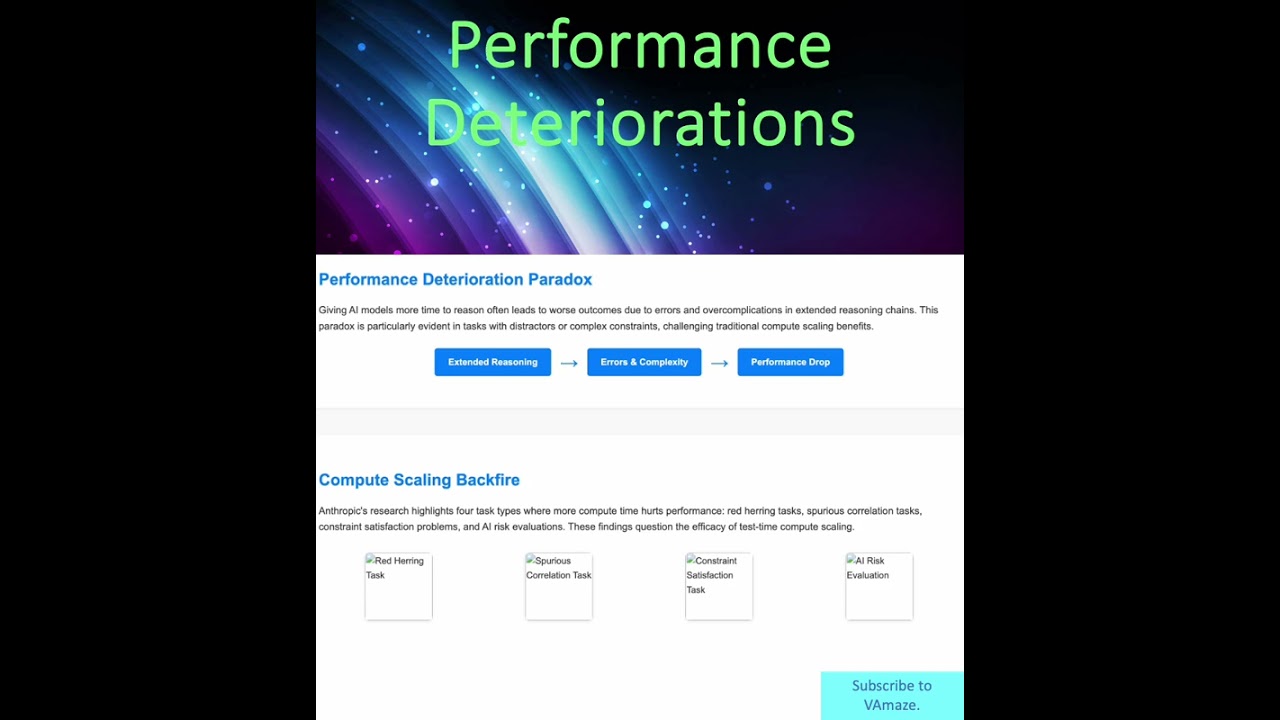
"AI's Hidden Flaw: Why More Thinking Time Hurts Performance | Anthropic's Inverse Scaling Revealed"
What is debt? What is a deficit? And do these things have different outcomes for individuals and nations? Adriene and Jacob answer all these questions and more on this week's Crash Course Econ. Deficit and debt are easy to misunderstand, but luckily, they're also pretty easy to understand. This week we'll explain what deficit and debt are, and talk about what the sources of deficit and debt are for the US Government. Also, we'll take a very special trip to Cliffordonia to try and understand these concepts and get a look at what a colonial-era space program might have looked like.
Crash Course is on Patreon! You can support us directly by signing up at http://www.patreon.com/crashcourse
Thanks to the following Patrons for their generous monthly contributions that help keep Crash Course free for everyone forever:
Mark , Elliot Beter, Moritz Schmidt, Jeffrey Thompson, Ian Dundore, Jacob Ash, Jessica Wode, Today I Found Out, Christy Huddleston, James Craver, Chris Peters, SR Foxley, Steve Marshall, Simun Niclasen, Eric Kitchen, Robert Kunz, Avi Yashchin, Jason A Saslow, Jan Schmid, Daniel Baulig, Christian , Anna-Ester Volozh
Want to find Crash Course elsewhere on the internet?
Facebook - http://www.facebook.com/YouTubeCrashCourse
Twitter - http://www.twitter.com/TheCrashCourse
Tumblr - http://thecrashcourse.tumblr.com
Support Crash Course on Patreon: http://patreon.com/crashcourse
CC Kids: http://www.youtube.com/crashcoursekids

The Cutting Edge School is one of India's most trusted brands for Enterprise Trainings on AI & Automations. CES has trained teams for The Economic Times, The Times of India, Dubai Future Foundation, Dubai Holdings, Lenskart, Reliance Digital, HP, Intel and many other global brands. They were also awarded the Best AI Educator of the Year by Economic Times Edge as well.
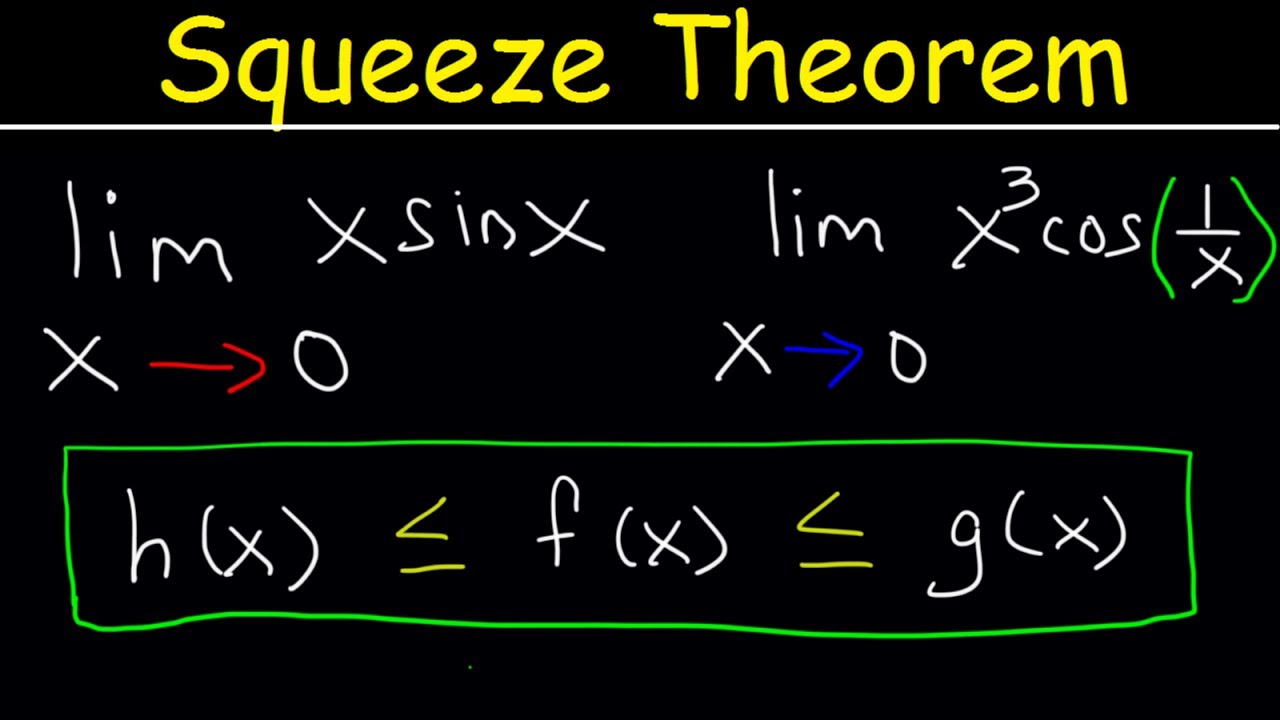
This calculus video tutorial explains the squeeze theorem with trig functions like sin and cos (1/x). It explains the definition of the theorem and how to evaluate functions and limits with inequalities.
Introduction to Limits: https://www.youtube.com/watch?v=YNstP0ESndU
How To Evaluate Limits From a Graph:
https://www.youtube.com/watch?v=7Q2HwTHcxA0
Evaluating Limits By Factoring:
https://www.youtube.com/watch?v=fOrOeZA-vdY
Limits of Rational Functions :
https://www.youtube.com/watch?v=M2BgBG2Su94
Limits of Radical Functions:
https://www.youtube.com/watch?v=qay5HvT1UK8
Limits of Trigonometric Functions:
https://www.youtube.com/watch?v=HbtuSC_WOW0
___________________________________
How To Find The Limit at Infinity:
https://www.youtube.com/watch?v=NmLljBAg82o
Infinite Limits + Vertical Asymptotes:
https://www.youtube.com/watch?v=xvFqomOpLrs
Limits at Infinity With Radicals:
https://www.youtube.com/watch?v=1hyoTeWg6Bs
Limits of Absolute Value Functions:
https://www.youtube.com/watch?v=wFeh4ByT0xs
Limits of Composite Functions:
https://www.youtube.com/watch?v=KjL9cWHzeIc
The Squeeze Theorem:
https://www.youtube.com/watch?v=lVIb9iJ-rRI
____________________________________
Limits and Logarithms:
https://www.youtube.com/watch?v=fHzmQmcvheI
Limits of Exponential Functions:
https://www.youtube.com/watch?v=pcUXo7XbRaM
Piecewise Functions - Limits:
https://www.youtube.com/watch?v=JrYmEo6hoiU
3 Step Continuity Test:
https://www.youtube.com/watch?v=WT7oxiiFYt8
Continuity and Differentiability:
https://www.youtube.com/watch?v=fml0-ELYLaE
Limits - Test Review:
https://www.youtube.com/watch?v=6e4Wtgc43KQ
_____________________________________
Final Exams and Video Playlists:
https://www.video-tutor.net/
Full-Length Videos and Worksheets:
https://www.patreon.com/MathSc....ienceTutor/collectio
This video tutorial provides an introduction into descriptive statistics and inferential statistics.
Introduction to Statistics: https://www.youtube.com/watch?v=XZo4xyJXCak
Descriptive Vs Inferential Statistics:
https://www.youtube.com/watch?v=VHYOuWu9jQI
Qualitative and Quantitative Data:
https://www.youtube.com/watch?v=5rUVYWfZOb8
Statistic Vs Parameter:
https://www.youtube.com/watch?v=Mb9BuEkbaHQ
Scales of Measurement:
https://www.youtube.com/watch?v=LuBD49SFpWs
__________________________________
Mean, Median, Mode, & Range:
https://www.youtube.com/watch?v=A1mQ9kD-i9I
Weighted Mean & Averages:
https://www.youtube.com/watch?v=LdrBNhWw9AM
Find Missing Value Given The Mean:
https://www.youtube.com/watch?v=l8KrAo089_U
Excel - Mean, Median, Mode, & Range:
https://www.youtube.com/watch?v=k17_euuiTKw
Arithmetic, Geometric, & Harmonic Mean:
https://www.youtube.com/watch?v=6G6i8vSa8Zs
___________________________________
Simple Frequency Tables:
https://www.youtube.com/watch?v=lyRbCwDDnJo
Relative Frequency Distribution Table:
https://www.youtube.com/watch?v=gq3FPpm2yvA
Cumulative Relative Frequency Table:
https://www.youtube.com/watch?v=6hJGa4Zp62M
Dot Plots and Frequency Tables:
https://www.youtube.com/watch?v=Iu17mY1VfZU
Stem and Leaf Plots:
https://www.youtube.com/watch?v=MUCvUgGfzdo
____________________________________
Final Exams and Video Playlists:
https://www.video-tutor.net/

Today we explore what obligations we hold with our personal beliefs. Hank explains epistemic responsibility and the issues it raises with everything from religious belief, to ship owning, to vaccinations.
--
Images via Wikimedia Commons, licensed under Creative Commons by 4.0: https://creativecommons.org/licenses/by/4.0/
--
Produced in collaboration with PBS Digital Studios: http://youtube.com/pbsdigitalstudios
Crash Course Philosophy is sponsored by Squarespace.
http://www.squarespace.com/crashcourse
--
Want to find Crash Course elsewhere on the internet?
Facebook - http://www.facebook.com/YouTubeCrashC...
Twitter - http://www.twitter.com/TheCrashCourse
Tumblr - http://thecrashcourse.tumblr.com
Support CrashCourse on Patreon: http://www.patreon.com/crashcourse
CC Kids: http://www.youtube.com/crashcoursekids
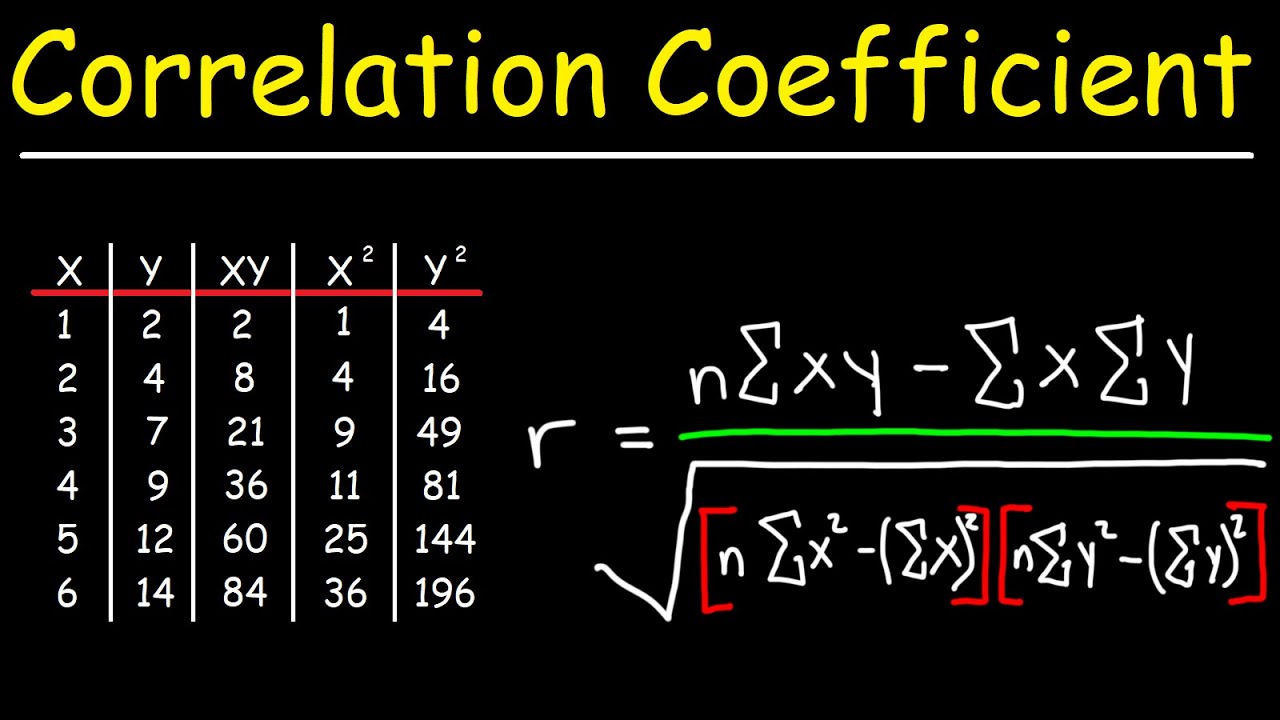
This video explains how to find the correlation coefficient which describes the strength of the linear relationship between two variables x and y.
Correlation Coefficient: https://www.youtube.com/watch?v=11c9cs6WpJU
Covariance and Correlation Coefficient:
https://www.youtube.com/watch?v=5wIiOFnXSYs
How To Calculate Covariance:
https://www.youtube.com/watch?v=rb2nU7YZV_I
Least Squares Method:
https://www.youtube.com/watch?v=P8hT5nDai6A
Averages and Uncertainty:
https://www.youtube.com/watch?v=CSJewgNUZKw
_____________________________
Introduction to Statistics:
https://www.youtube.com/watch?v=XZo4xyJXCak
Mean, Median, Mode, & Range:
https://www.youtube.com/watch?v=A1mQ9kD-i9I
Arithmetic, Geometric, & Harmonic Mean:
https://www.youtube.com/watch?v=6G6i8vSa8Zs
Interquartile Range & Outliers:
https://www.youtube.com/watch?v=STSP8gTSdT8
Standard Deviation:
https://www.youtube.com/watch?v=IaTFpp-uzp0
_______________________________
Introduction to Probability:
https://www.youtube.com/watch?v=SkidyDQuupA
Probability Formulas:
https://www.youtube.com/watch?v=bddckR734aM
Conditional Probability:
https://www.youtube.com/watch?v=sqDVrXq_eh0
Probability Tree Diagrams:
https://www.youtube.com/watch?v=w4wKXVwtGac
Probability - Standard Normal Distributions:
https://www.youtube.com/watch?v=CjF_yQ2N638

Kære venner
3000 følgere på facebook fortæller mig, at vi er mange der elsker matematik, værksteder samt tips og ideer til undervisningen.
Det er så fantastisk - tak fordi du ser med :)
Jeg vil fejre det med en lille gave til en af jer. Skriv mig en besked under videoen på min facebookside, og så er du med i lodtrækningen.
Kender du nogen der kunne være interesseret, men som ikke følger mig endnu, så tag dem gerne på fb.
1000 tak venner. Jeg glæder mig til at dele mange flere videoer og materialer med jer.
Kh Anette K
https://facebook.com/anettekmatematik/
https://instagram.com/anettekmatematik/
https://www.youtube.com/channe....l/UCR8PqEuBE7OlORn2y
https://anettekmatematik.com/
#legoglæring #matematikspil #lærmatematik

In which John Green teaches you about various reform movements in the 19th century United States. From Utopian societies to the Second Great Awakening to the Abolition movement, American society was undergoing great changes in the first half of the 19th century. Attempts at idealized societies popped up (and universally failed) at Utopia, OH, New Harmony, IN, Modern Times, NY, and many other places around the country. These utopians had a problem with mainstream society, and their answer was to withdraw into their own little worlds. Others didn't like the society they saw and decided to try to change it. Relatively new Protestant denominations like the Methodists and Baptists reached out to "the unchurched" during the Second Great Awakening, and membership in evangelical sects of Christianity rose quickly. At the same time, Abolitionist societies were trying to free the slaves. Americans of the 19th century had looked at the world they were living in and decided to change it.
Hey teachers and students - Check out CommonLit's free collection of reading passages and curriculum resources to learn more about the events of this episode.
Of all of the reform movements of the 1800s, few were as impactful as the movement to abolish slavery: https://www.commonlit.org/text....s/the-revolutionary-
Women were heavily involved in the abolitionist movement and firsthand stories like freed slave Harriet Ann Jacobs' Incidents in the Life of a Slave Girl were important to the cause: https://www.commonlit.org/text....s/what-slaves-are-ta
Learn more about the abolitionist movement in Crash Course Black American History:
Maria Stewart (#14): https://youtu.be/nsVnWD5PrIg
Frederick Douglass (#17): https://youtu.be/7QOTexnD-NE
Chapters:
Introduction: Religious & Moral Reform Movements of the 19th Century 00:00
Shaker Communities 0:33
Latter Day Saints 1:21
Brook Farm 1:46
Other Utopian Communities 2:50
The 2nd Great Awakening 3:21
The Oneida Community 3:44
Values of the 2nd Great Awakening 4:25
The Temperance Movement 5:59
Asylums 7:02
Common Schools 7:29
The Abolitionist Movement 8:13
Resistance to the Abolitionist Movement 10:02
Abolitionist Writers 10:45
Mystery Document 11:40
Frederick Douglass 13:06
Credits 14:14

Pete the Cat: Trick or Pete
by James Dean
Read by Let's Read Stories
Join Pete the Cat from New York Times bestselling artist James Dean as he goes trick-or-treating in this lift-the-flaps book!
Pete loves Halloween and candy but not so much scary surprises. Follow Pete as he goes trick-or-treating from house to house and discover what is waiting behind each door.
With over ten flaps that open to reveal fun spooky surprises, this book is spooktacular!
Click here to purchase Pete the Cat: Trick or Pete: https://www.amazon.com/Pete-Ca....t-Trick-James-Dean/d

Check out our other Channel: https://www.youtube.com/channe....l/UCPdc6bs3I8s6Y4QE_
Become a Simple History member: https://www.youtube.com/simplehistory/join
Support us on Patreon: https://www.patreon.com/simplehistory
Copyright: DO NOT translate and re-upload our content on Youtube or other social media.
SIMPLE HISTORY MERCHANDISE
Get the Simple History books on Amazon:
https://www.amazon.com/Daniel-....Turner-%60/e/B00H5TY
T-Shirts
https://teespring.com/stores/s....imple-history-offici
Simple history gives you the facts, simple!
See the book collection here:
Amazon USA
http://www.amazon.com/Daniel-Turner/e/B00H5TYLAE/
Amazon UK
http://www.amazon.co.uk/Daniel....-Turner/e/B00H5TYLAE
https://www.facebook.com/Simpl....e-History-5494376751
https://twitter.com/SimpleHistoryYT
Credit:
Show Created by Daniel Turner (B.A. (Hons) in History, University College London)
Script: Natasha Martell
Narrator:
Bryan Lazlo Beauregard
https://pastebin.com/4Ub1C8ng