Top videos
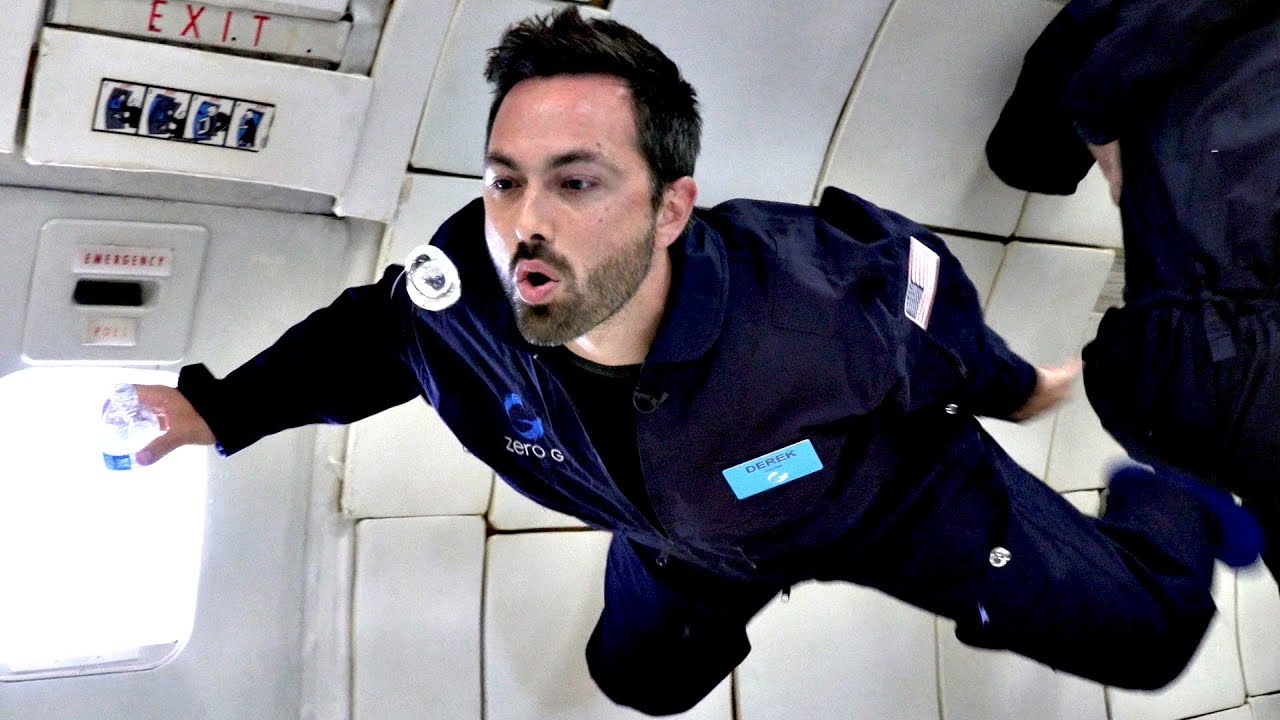
A trip to #Mars involves radiation, muscle and bone loss, intermediate axis theorem and liquids.
Check out Mars on National Geographic, Monday Nov 12 at 9/8c
#sponsored
When I got offered the chance to fly in another #zeroG plane, I jumped at the chance. Do you know how hard it is when you are thrust into low-gravity, like the 37% of Earth's gravity of Mars, and you have to remember what you were going to say in a 30 second window as blood floods your head? It's pretty hard. It would be even harder to actually travel to Mars. It would take about 8 months in microgravity during which time your muscles and bones would weaken substantially, even if you exercise for hours a day like the astronauts on the space station. And your heart is a muscle too so it weakens as well. Before I contemplated these rates of muscle and bone loss, I thought the major challenge with a round trip journey to Mars would be the logistics of spacecraft and having enough fuel to get back. But with the weakening of the human body, it's an open question whether anyone would really want to come back.
Filmed by Steve Boxall
Music from Epidemic Sound: http://epidemicsound.com
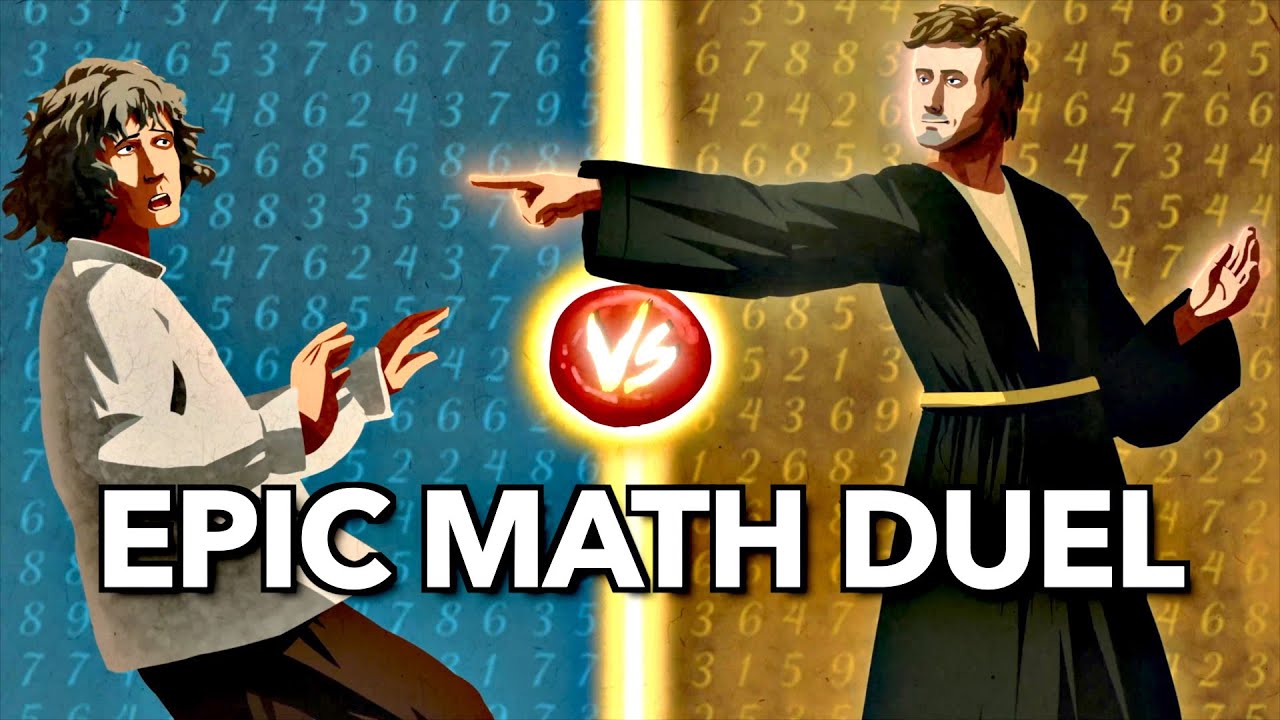
A general solution to the cubic equation was long considered impossible, until we gave up the requirement that math reflect reality. This video is sponsored by Brilliant. The first 200 people to sign up via https://brilliant.org/veritasium get 20% off a yearly subscription.
Thanks to Dr Amir Alexander, Dr Alexander Kontorovich, Dr Chris Ferrie, and Dr Adam Becker for the helpful advice and feedback on the earlier versions of the script.
▀▀▀
References:
Some great videos about the cubic:
500 years of not teaching the cubic formula. -- https://youtu.be/N-KXStupwsc
Imaginary Numbers are Real -- https://youtu.be/T647CGsuOVU
Dunham, W. (1990). Journey through genius: The great theorems of mathematics. New York. -- https://ve42.co/Dunham90
Toscano, F. (2020). The Secret Formula. Princeton University Press. -- https://ve42.co/Toscano2020
Bochner, S. (1963). The significance of some basic mathematical conceptions for physics. Isis, 54(2), 179-205. -- https://ve42.co/Bochner63
Muroi, K. (2019). Cubic equations of Babylonian mathematics. arXiv preprint arXiv:1905.08034. -- https://ve42.co/Murio21
Branson, W. Solving the cubic with Cardano, -- https://ve42.co/Branson2014
Rothman, T. (2013). Cardano v Tartaglia: The Great Feud Goes Supernatural. arXiv preprint arXiv:1308.2181. -- https://ve42.co/Rothman
Vali Siadat, M., & Tholen, A. (2021). Omar Khayyam: Geometric Algebra and Cubic Equations. Math Horizons, 28(1), 12-15. -- https://ve42.co/Siadat21
Merino, O. (2006). A short history of complex numbers. University of Rhode Island. -- https://ve42.co/Merino2006
Cardano, G (1545), Ars magna or The Rules of Algebra, Dover (published 1993), ISBN 0-486-67811-3
Bombelli, R (1579) L’Algebra https://ve42.co/Bombelli
The Manim Community Developers. (2021). Manim – Mathematical Animation Framework (Version v0.13.1) [Computer software]. https://www.manim.community/
▀▀▀
Special thanks to Patreon supporters: Luis Felipe, Anton Ragin, Paul Peijzel, S S, Benedikt Heinen, Diffbot, Micah Mangione, Juan Benet, Ruslan Khroma, Richard Sundvall, Lee Redden, Sam Lutfi, MJP, Gnare, Nick DiCandilo, Dave Kircher, Edward Larsen, Burt Humburg, Blake Byers, Dumky, Mike Tung, Evgeny Skvortsov, Meekay, Ismail Öncü Usta, Crated Comments, Anna, Mac Malkawi, Michael Schneider, Oleksii Leonov, Jim Osmun, Tyson McDowell, Ludovic Robillard, Jim buckmaster, fanime96, Ruslan Khroma, Robert Blum, Vincent, Marinus Kuivenhoven, Alfred Wallace, Arjun Chakroborty, Joar Wandborg, Clayton Greenwell, Pindex, Michael Krugman, Cy 'kkm' K'Nelson,Ron Neal
Executive Producer: Derek Muller
Writers: Derek Muller, Alex Kontorovich, Stephen Welch, Petr Lebedev
Animators: Fabio Albertelli, Jakub Misiek, Ivy Tello, Jesús Rascón
SFX: Shaun Clifford
Camerapeople: Derek Muller, Emily Zhang
Editors: Derek Muller, Petr Lebedev
Producers: Derek Muller, Petr Lebedev, Emily Zhang
Additional video supplied by Getty Images
Music from Epidemic Sound and Jonny Hyman

Panem finds power in the radiance of the sun, and the water which rains down upon us! District 5’s Chief Energy Researcher Derek Muller takes CapitolTV on a tour of our nation's cutting edge renewable technologies, and demonstrates one of the largest ‘Kelvin’s Thunderstorm’ experiments ever built to date… all for a brighter and more efficient Panem.
Sanctioned by the Capitol Ministry of Information, DISTRICT VOICES was made with friends from Google - http://artcopycode.com/campaign/lionsgate
For more of Panem’s finest programming, and to register for updates, visit http://CapitolTV.pn
#CapitolTV - #DistrictVoices
The Hunger Games: Mockingjay Part 1 – In theaters November 21
http://TheHungerGamesExplorer.com
#Mockingjay

Evidence Facebook's revenue is based on fake likes.
My first vid on the problem with Facebook: http://bit.ly/1dXudqY
I know first-hand that Facebook's advertising model is deeply flawed. When I paid to promote my page I gained 80,000 followers in developing countries who didn't care about Veritasium (but I wasn't aware of this at the time). They drove my reach and engagement numbers down, basically rendering the page useless. I am not the only one who has experienced this. Rory Cellan-Jones had the same luck with Virtual Bagel: http://www.bbc.co.uk/news/technology-18819338
The US Department of State spent $630,000 to acquire 2 million page likes and then realized only 2% were engaged. http://wapo.st/1glcyZo
I thought I would demonstrate that the same thing is still happening now by creating Virtual Cat (http://www.facebook.com/MyVirtualCat). I was surprised to discover something worse - false likes are coming from everywhere, including Canada, the US, the UK, and Australia. So even those carefully targeting their campaigns are likely being duped into spending real money on fake followers. Then when they try to reach their followers they have to pay again.
And it's possible to be a victim of fake likes without even advertising. Pages that end up on Facebook's "International Suggested Pages" are also easy targets for click-farms seeking to diversify their likes. http://tnw.co/NsflrC
Thanks to Henry, Grey, and Nessy for feedback on earlier drafts of this video.

If you drop a heavy object and a light object simultaneously, which one will reach the ground first? A lot of people will say the heavy object, but what about those who know both will land at the same time? What do they think? Some believe both objects have the same gravitational pull on them and/or both fall to the ground with the same constant speed. Neither of these things is true, however. The force is greater on the heavy object and both objects accelerate at the same rate as they approach the earth, i.e. they both speed up but at the same rate.

Well an atom's made of protons, neutrons, and electrons
the first two in the nucleus, the third around it
it's mostly empty space, but it feels solid in any case
The elements are all the different types of atoms
they differ by the number of protons in the middle.
Hydrogen has only one, but Uranium has a ton
It's just chemistry that you and me are made of these atoms
Well atoms bond together to form molecules
Most of what's surrounding me and you
Water, sugar, things yet undreamed of of of of
Look around you, see the combinations in a eucalypt tree
Mendeleev's periodicity
gives us sand and water and the air above ove ove ove ove
It's just chemistry that you and me are made of these atoms:
Hydrogen, Oxygen, Carbon, Nitrogen, make up the world's life forms
Do do do you, do do do do
but do you wonder how
matter forms something strange
when there's a chemical change?
Where did these atoms come from? They were fused in stars
Light elements combine releasing light from afar
Fusion in the sun, creates Helium
I guess what I be saying is you gotta use your reason
To open up your mind and see the cause of the seasons
-How do we know what's true? The scientific method shows you
It's just chemistry that you and me are made of these atoms
Atoms bond together to form molecules
Most of what's surrounding me and you
Water, sugar, sand and you'll find things undreamed of
So Argon, Neon, Xenon
There's no need to overstate
'Cause we are of course
This, of this, of this, we're made: atoms
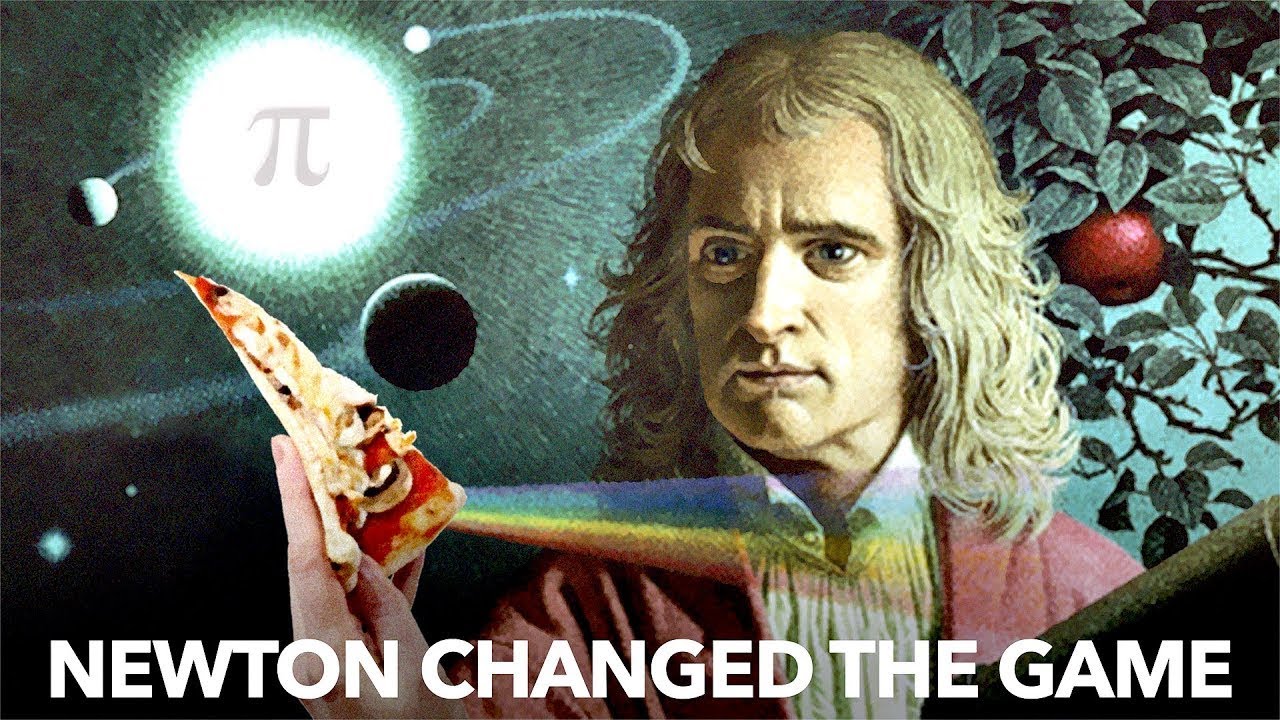
For thousands of years, mathematicians were calculating Pi the obvious but numerically inefficient way. Then Newton came along and changed the game. This video is sponsored by Brilliant. The first 314 people to sign up via https://brilliant.org/veritasium get 20% off a yearly subscription.
Happy Pi Day!
References:
Arndt, J., & Haenel, C. (2001). Pi-unleashed. Springer Science & Business Media — https://ve42.co/Arndt2001
Dunham, W. (1990). Journey through genius: The great theorems of mathematics. Wiley — https://ve42.co/Dunham1990
Borwein, J. M. (2014). The Life of π: From Archimedes to ENIAC and Beyond. In From Alexandria, Through Baghdad (pp. 531-561). Springer, Berlin, Heidelberg — https://ve42.co/Borwein2012
Special thanks to Alex Kontorovich, Professor of Mathematics at Rutgers University, and Distinguished Visiting Professor for the Public Dissemination of Mathematics National Museum of Mathematics MoMath for being part of this Pi Day video.
Special thanks to Patreon supporters: Jim Osmun, Tyson McDowell, Ludovic Robillard, jim buckmaster, fanime96, Juan Benet, Ruslan Khroma, Robert Blum, Richard Sundvall, Lee Redden, Vincent, Lyvann Ferrusca, Alfred Wallace, Arjun Chakroborty, Joar Wandborg, Clayton Greenwell, Pindex, Michael Krugman, Cy 'kkm' K'Nelson, Sam Lutfi, Ron Neal
Written by Derek Muller and Alex Kontorovich
Animation by Ivy Tello
Filmed by Derek Muller and Raquel Nuno
Edited by Derek Muller
Music by Jonny Hyman and Petr Lebedev
Additional Music from https://epidemicsound.com "Particle Emission", "Into the Forest", "Stavselet", "Face of the Earth", "Firefly in a Fairytale"
Thumbnail by Gianmarco Malandra and Karri Denise

Aerogels are the world's lightest (least dense) solids. They are also excellent thermal insulators and have been used in numerous Mars missions and the Stardust comet particle-return mission. The focus of this video is silica aerogels, though graphene aerogels are now technically the lightest.
At one point Dr. Steven Jones literally held the Guinness World Record for making the lightest aerogel and therefore lightest solid. If you're interested in learning more about aerogels, let me know in the comments as there is a potential trilogy in the works...
Huge thanks to Dr. Stephen Steiner and the crew at Aerogel Technologies. To find out more or buy your own aerogel sample, check out: http://www.aerogeltechnologies.com/
Thanks to Dr. Steven Jones and Dr. Mihail Petkov at NASA's Jet Propulsion Laboratory
And thanks to FLIR for loaning us the awesome high definition thermal camera. The footage is amazing! https://www.flir.com
Special thanks to Patreon supporters:
Donal Botkin, Michael Krugman, Ron Neal, Stan Presolski, Terrance Shepherd, Penward Rhyme and everyone who provided feedback on an early draft of this video.
Filming by Raquel Nuno
Animations by Maria Raykova
Drawings by Mariel Solsberg
Music From http://epidemicsound.com "Seaweed" "Swagger Stagger"

Dr Ken Libbrecht is the world expert on snowflakes, designer of custom snowflakes, snowflake consultant for the movie Frozen - his photos appear on postage stamps all over the world. This video is sponsored by Brilliant. The first 200 people to sign up via https://brilliant.org/veritasium get 20% off a yearly subscription.
Thanks to Dr Ken Libbrecht for showing us how to grow designer snowflakes. Obviously, this video would not have been possible without his help and his expertise. His website is full of information about snowflakes http://snowcrystals.com. His new book is also available to purchase from here -- https://ve42.co/SnowCrystalsBook
▀▀▀
References:
Libbrecht, K. G. (2019). A Quantitative Physical Model of the Snow Crystal Morphology Diagram. arXiv preprint arXiv:1910.09067. -- https://ve42.co/Libbrecht2019
▀▀▀
Special thanks to Patreon supporters: Luis Felipe, Anton Ragin, Paul Peijzel, S S, Benedikt Heinen, Diffbot, Micah Mangione, Juan Benet, Ruslan Khroma, Richard Sundvall, Lee Redden, Sam Lutfi, MJP, Gnare, Nick DiCandilo, Dave Kircher, Edward Larsen, Burt Humburg, Blake Byers, Dumky, Mike Tung, Evgeny Skvortsov, Meekay, Ismail Öncü Usta, Crated Comments, Anna, Mac Malkawi, Michael Schneider, Oleksii Leonov, Jim Osmun, Tyson McDowell, Ludovic Robillard, Jim buckmaster, fanime96, Ruslan Khroma, Robert Blum, Vincent, Marinus Kuivenhoven, Alfred Wallace, Arjun Chakroborty, Joar Wandborg, Clayton Greenwell, Michael Krugman, Cy 'kkm' K'Nelson, Ron Neal
Written by Derek Muller
Filmed by Derek Muller, Raquel Nuno, Trenton Oliver and Emily Zhang
Edited by Trenton Oliver
Animations by Ivy Tello and Trenton Oliver
Additional video supplied by Getty Images
Music from Epidemic Sound
Produced by Derek Muller, Petr Lebedev and Emily Zhang

Most people recognize that atoms are the fundamental building blocks of all matter around us. An atom itself is composed of protons, neutrons and electrons. The simplest atom is the hydrogen atom because it consists of only one proton and one electron. If a neutron is added to the nucleus, the atom is still hydrogen, just a more massive version. Atoms of the same element (i.e. those with the same number of protons) but different numbers of neutrons are called isotopes.

When we touch something that is hot or cold, what are we actually sensing? Is it the temperature of the object, or the rate at which heat flows between the object and our hand?
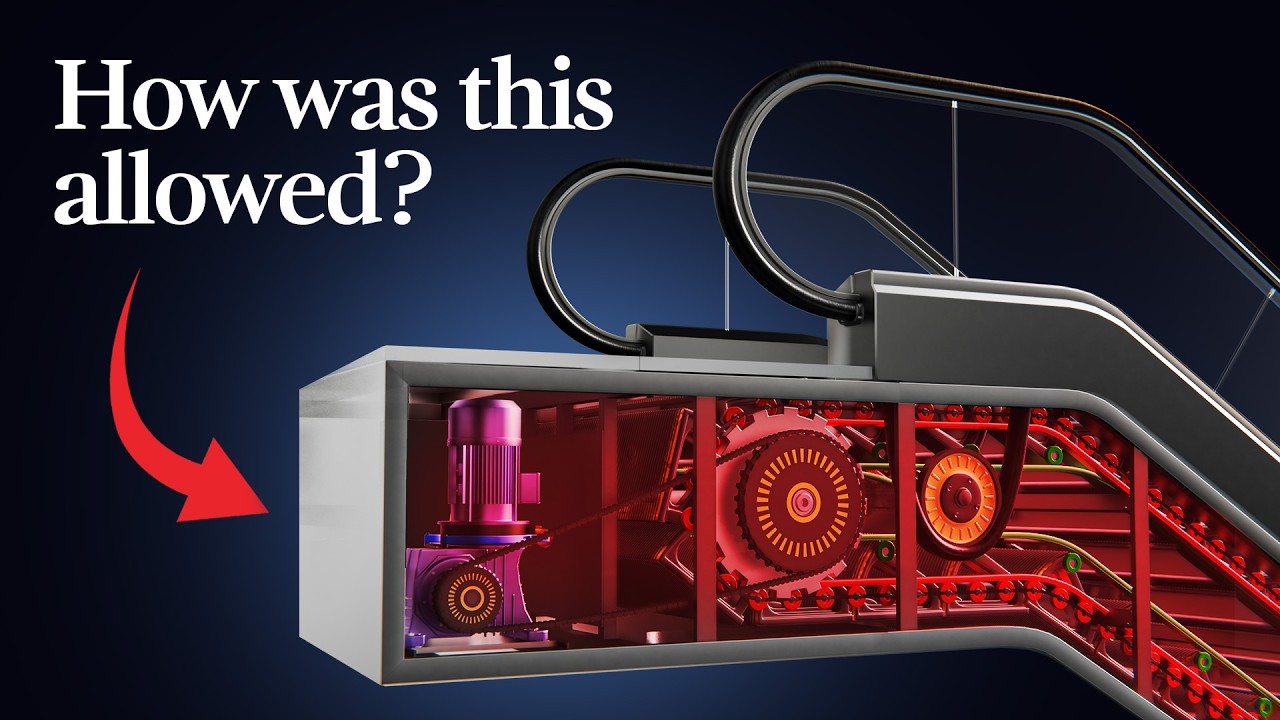
The surprising science of escalators. Sponsored by Brilliant - check out https://brilliant.org/veritasium to start learning for free.
Plus, our viewers get 20% off an annual Premium subscription for unlimited daily access to all Brilliant courses.
If you’re looking for a molecular modelling kit, try Snatoms, a kit I invented where the atoms snap together magnetically - https://ve42.co/SnatomsV
▀▀▀
A massive thank you to Emily Zhang for suggesting this idea and helping shape it.
A huge thanks to the team at OTIS, especially Ed Jacovino, Gregory Sefcik and Dirk Winkelhake, for their time and expertise.
Thank you also to Professor Gero Gschwendtner, Professor Michael Fu, and Dr. Peter Kauffmann for all their help on the project.
▀▀▀
0:00 When escalators go wrong
2:43 The first escalator
5:01 How does an escalator work?
8:35 Why do escalators have grooves?
10:05 Why do escalators have brushes?
10:21 The hand rail moves faster than the steps
12:05 You generate electricity on escalators
14:09 How does an escalator break?
18:47 How safe are escalators really?
▀▀▀
References: https://ve42.co/EscalatorRefs
Images & Video: https://ve42.co/EscalatorImgRefs
▀▀▀
Special thanks to our Patreon supporters:
Alex Porter, Alexander Tamas, Anton Ragin, Anupam Banerjee, Gnare, Ibby Hadeed, Jon Jamison, Juan Benet, Lee Redden, Meekay, Orlando Bassotto, Paul Peijzel, Richard Sundvall, Sam Lutfi, Ubiquity Ventures, Adam Foreman, Albert Wenger, armedtoe, Balkrishna Heroor, Bertrand Serlet, Blake Byers, Bruce, Dave Kircher, David Johnston, David Tseng, Evgeny Skvortsov, Garrett Mueller, gpoly, Jeromy Johnson, JT, Justin Waters, KeyWestr, Kyi, Marinus Kuivenhoven, Matthias Wrobel, meg noah, Michael Bush, Michael Krugman, Robert Oliveira, Tj Steyn, wolfee.
▀▀▀
Writers - Darius Garewal, Casper Mebius, Emily Zhang & Derek Muller
Presenters - Derek Muller & Latif Nasser
Producer & Director - Darius Garewal
Editor - Spencer Wright
Camera Operators - Derek Muller, Darius Garewal & Gregory Sefcik
Animators - Mike Radjabov, Fabio Albertelli, Saif Javed, Andrew Neet & Rokas Viksraitis
Illustrators - Jakub Misiek & Nataly Zhuk
Additional Editors - James Stuart, James Horsley, Peter Nelson & Kyle Rossiter
Researchers - HyoJeong Choi, Callum Cuttle & Gabe Strong
Thumbnail Designers - Ren Hurley, Ben Powell & Abdallah Rabah
Production Team - Nicola Griffiths, Josh Pitt, Rob Beasley Spence & Casper Mebius
Executive Producers - Casper Mebius & Derek Muller
Additional video/photos supplied by Getty Images, Pond5 & StoryBlocks
Music from Epidemic Sound

The number 37 is on your mind more than you think. Head to https://brilliant.org/veritasium to start your free 30-day trial and get 20% off an annual premium subscription.
Huge thanks to Tom Magliery for sharing his 37 collection with us. Support http://thirty-seven.org by sharing your own 37 sightings to tom@thirty-seven.org!
Thanks to Dr. Todd Landman, the Academic Magician, for sharing his footage of the 37 Force. - https://www.todd-landman.com/
▀▀▀
Special thanks to our Patreon supporters! Join the community to help us keep our videos free, forever: https://ve42.co/PatreonDE
Sam Lutfi, Lee Redden, Juan Benet, Richard Sundvall, Paul Peijzel, Gnare, Michael Krugman, Meekay, Ubiquity Ventures, Marinus Kuivenhoven, Bill Linder, Evgeny Skvortsov, Burt Humburg, Dave Kircher, Diffbot, john kiehl, Blake Byers, Stephen Wilcox, John H. Austin, Jr., Josh Hibschman, TTST, Orlando Bassotto, Anton Ragin, David Johnston, KeyWestr, Tj Steyn, meg noah, Chris Harper, Adam Foreman, Max Paladino, Balkrishna Heroor, I. H., Garrett Mueller, Bertrand Serlet, Kyi, wolfee, Matthias Wrobel
If you’re looking for a molecular modeling kit, try Snatoms, a kit I invented where the atoms snap together magnetically - https://ve42.co/SnatomsV
▀▀▀
References:
Simon, W. E. (1972). “Blue Seven Phenomenon” in Elementary and Jr. High Children. Psychological Reports - https://ve42.co/Simon1972
Trueman, J. (1979). Existence & Robustness of Blue Seven Phenomena. The Journal of General Psychology - https://ve42.co/Trueman1979
Saito, M. (1999). “Blue and Seven Phenomena” in Japanese Students. Perceptual & Motor Skills - https://ve42.co/Saito1999
Philbrick, J. L. (1976). Blue seven in East Africa: Preliminary report. Perceptual & Motor Skills - https://ve42.co/Philbrick1976
Hargreaves, S. (2009). The psychology of randomness. - https://ve42.co/Hargreaves2009
The 37 Force via The Magician’s Forum - https://ve42.co/37Force1
Fulves, K. (1979) Self-Working Mental Magic. Dover Publications, Inc. - https://ve42.co/Fulves1979
Random numbers via The Jargon File at catb.org - https://ve42.co/Jargon
Random Number Survey by MahoganyForest via Reddit - https://ve42.co/RedditRndm
Prime number theorem via Wikipedia - https://ve42.co/WikiPNT
Grossack, C. (2023). A truly incredible fact about the number 37. Grossack.site - https://ve42.co/Grossack2023
Least prime factor of n via oeis.org - https://ve42.co/LeastPrime
Fry, H. (2017). When should you settle down? ideas.ted.com - https://ve42.co/Fry2017
Choosing Toilets by Numberphile - https://www.youtube.com/watch?v=XIOoCKO-ybQ
Seaton, R. (2014). The Secretary Problem Explained: Dating Mathematically. rs.io - https://ve42.co/Seaton2014
Images & Video:
Just 37 by Tom Magliery - https://ve42.co/Just37
R4000 Processor via Molecular Expressions - https://ve42.co/micro37
The “37” Cluster by Noel Carboni - https://ve42.co/NGC2169
Charles Fleischer via Wikimedia - https://ve42.co/Fleischer
▀▀▀
Directed by Emily Zhang
Written by Emily Zhang and Derek Muller
Edited by Peter Nelson
Asst edited by Luke Molloy
Animated by Fabio Albertelli, Ivy Tello, and Leigh Williamson
Illustrated by Jakub Misiek
Filmed by Emily Zhang, Casper Mebius, Derek Muller, Michael Cimpher, and David Szasz
Additional research by Gregor Čavlović
Produced by Emily Zhang, Giovanna Utichi, Han Evans, and Emily Taylor
Thumbnail contributions by Ignat Berbeci, Ren Hurley, and Peter Sheppard
Additional video/photos supplied by Getty Images and Storyblocks
Music from Epidemic Sound
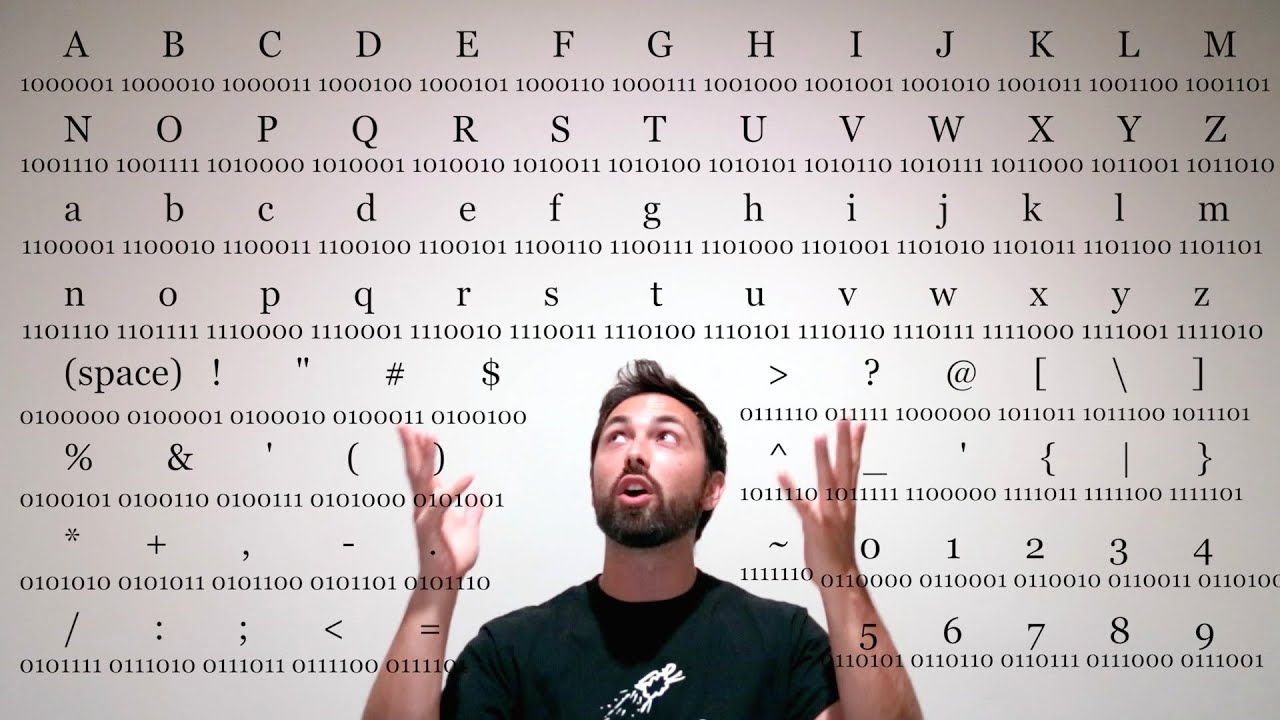
How much information is there in Spanish vs English, you vs the world? Check out Audible: http://bit.ly/AudibleVe
Huge thanks to all the amazing people who made this possible:
Christina Ochoa - Spanish https://twitter.com/christina_ochoa
Vanessa Hill - Filming https://www.youtube.com/braincraftvideo
Henry Reich - Filming, cameo http://youtube.com/minutephysics
Cara Santa Maria - Set design http://carasantamaria.com
Michael Stevens - cameo http://youtube.com/vsauce
Crystal Dilworth - consultation https://twitter.com/PolycrystalhD
Thanks also to MinutePhysics for wardrobe and lending the use of the amazing "Things to do when it's really cold outside" video: https://www.youtube.com/watch?v=j3Gs6tyiNX4
More on this theme to come in the main collaboration with Vsauce.

How do you make infinite choices? 👉 To try everything Brilliant has to offer for free for a full 30 days, visit http://brilliant.org/veritasium. You’ll also get 20% off an annual premium subscription.
Try Snatoms! A molecular modelling kit I invented where the atoms snap together.
https://ve42.co/SnatomsV
Sign up to the Veritasium newsletter for weekly science updates - https://ve42.co/Newsletter
▀▀▀
A huge thank you to Dr Asaf Karagila, Prof. Alex Kontorovich, Prof. Joel David Hamkins, Prof. Andrew Marks, Prof. Gabriel Goldberg and Prof. Elliot Glazer for their invaluable expertise and contributions to this video.
Head over and sign up to our Patreon for some exclusive behind the scenes footage, showing how the animations and illustrations for this video were made - https://www.patreon.com/posts/patreon-behind-126443880?utm_medium=clipboard_copy&utm_source=copyLink&utm_campaign=postshare_creator&utm_content=join_link
▀▀▀
0:00 What comes after one?
2:42 Some infinities are bigger than others
6:17 The Well Ordering Principle
10:32 Zermelo And The Axiom Of Choice
17:22 Why is the axiom of choice controversial?
23:16 The Banach–Tarski Paradox
27:53 Obviously True, Obviously False
29:58 Your Proof Your Choice
▀▀▀
References:
Up and Atom - https://www.youtube.com/watch?v=X56zst79Xjg
Minutephysics - https://www.youtube.com/watch?v=A-QoutHCu4o
PBS Infinite Series - https://www.youtube.com/watch?v=hcRZadc5KpI&t=125s
Vsauce - https://www.youtube.com/watch?v=s86-Z-CbaHA&t=474s
Ernst Zermelo via Wikipedia - https://ve42.co/zermeloBio
Axiom of choice via Wikipedia - https://ve42.co/choiceAxiom
Georg Cantor via Wikipedia - https://ve42.co/cantorMath
Gregory H. Moore (2013). Consequences of the Axiom of Choice. Dover Publications - https://ve42.co/choiceBook
Georg Cantor (1874). On a property of the class of all real algebraic numbers. Journal für die Reine und Angewandte Mathematik - https://ve42.co/MeyerCantor1874
Heinz-Dieter Ebbinghaus (Dec 2012). Zermelo and the Heidelberg Congress 1904. Historia Mathematica - https://ve42.co/SciDirect1904
Herbert B. Enderton (1977). Elements of Set Theory. - https://ve42.co/SciDirectGCH
Additional References - https://ve42.co/AoCAdRefs
Images & Video:
Foundations of a general theory of sets by Georg Cantor via ViaLibri - https://ve42.co/grundlagen
Alfred Tarski by George Bergman via Wikimedia Commons - https://ve42.co/tarski
Alfred Tarski Offprint Group by Alfred Tarski via Bonhams - https://ve42.co/tarskipaper
La mission strasbourgeoise de Maurice Fréchet by Laurent Mazliak via Images des mathematiques - https://ve42.co/frechet
Kurt Gödel by Alfred Eisenstaedt via New Yorker - https://ve42.co/godel
Leopold Kronecker by Granger via Fine Art America - https://ve42.co/kronecker
Lashi Bandara (2006). Zermelo-Frankel Set Theory and Well Orderings. ResearchGate - https://ve42.co/zermelofrankel
Heidelberg, Germany 1936 by Wagner & Debes via Ward Maps - https://ve42.co/heidelberg
Pythagoras by J. Augustus Knapp via the marginalian - https://ve42.co/pythag
Paul Cohen by C. J. Mozzochi via C. J. Mozzochi - https://ve42.co/paulcohen
Instituto de Matemática Pura e Aplicada. Lecture 01: Introduction: a non-measurable set via Youtube - https://www.youtube.com/watch?v=llnNaRzuvd4&t=834s
Simons Foundation. Fields Medal: James Maynard. Youtube https://www.youtube.com/watch?v=un-z8kgOrV0&t=8s
▀▀▀
Special thanks to our Patreon supporters:
Adam Foreman, Albert Wenger, Alex Porter, Alexander Tamas, Anton Ragin, Autodidactic Studios, Balkrishna Heroor, Bertrand Serlet, Blake Byers, Bruce, Dave Kircher, David Johnston, David Tseng, Evgeny Skvortsov, Garrett Mueller, Gnare, gpoly, Greg Scopel, HydrochloRick, Jon Jamison, Juan Benet, Keith England, KeyWestr, Kyi, Lee Redden, Marinus Kuivenhoven, Matthias Wrobel, Meekay, meg noah, Michael Krugman, Orlando Bassotto, Paul Peijzel, Richard Sundvall, Sam Lutfi, Tj Steyn, TTST, Ubiquity Ventures, wolfee
▀▀▀
Directed by Kaela Albert
Written by Kaela Albert and Emily Zhang
Edited by Jack Saxon and Luke Molloy
Assistant Edited by James Stuart
Animated by Fabio Albertelli, Andrew Neet, Alex Zepharin, Mike Radjabov, Emma Wright and Ivy Tello
Illustrations by Jakub Misiek, Maria Gusakovich, Cainejan Esperanza, Tommy A. Steven and Emma Wright
Additional research by Emilia Gyles, Gabe Bean, Geeta Thakur and Vincent Cheng
Produced by Kaela Albert, Casper Mebius, Derek Muller, Emily Zhang, Zoe Heron, Rob Beasley Spence, and Tori Brittain
Additional Editing by Luke Molloy and James Stuart
Thumbnail contributions by Ben Powell, Peter Sheppard and Ren Hurley
Additional video/photos supplied by Getty Images and Storyblocks
Music from Epidemic Sound
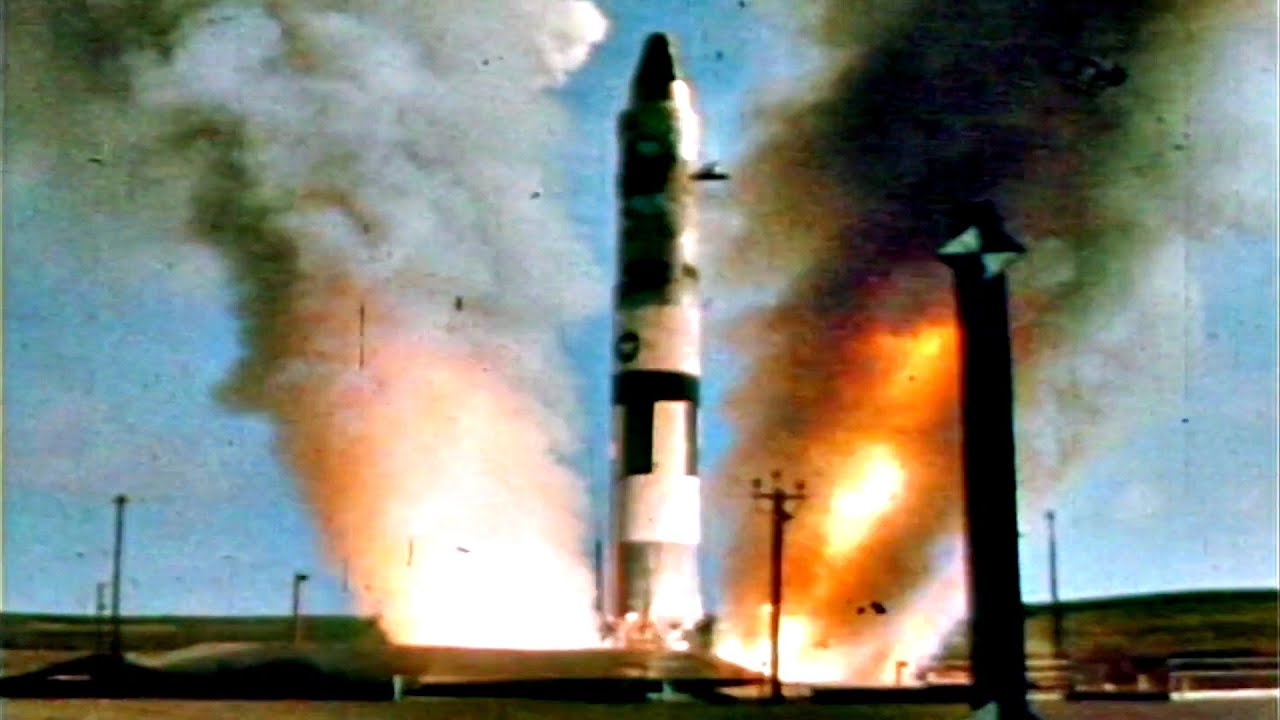
What was the procedure to launch a nuclear missile?
Uranium premieres: July 28 & 29 on PBS at 10pm ET/ 9pm Central
France and Germany: July 31 at 10pm on ZDF/arte
Norway: August 5 & 6 at 21:30 on NRK2
Australia: August 9, 16, 23 at 8:30pm on SBS
Sweden: TBD
Middle East: TBD
For more information on other screenings go to
https://www.facebook.com/uraniumtwistingthedragon
www.genepoolproductions.com
A big thank you to The Titan Missile Museum, Yvonne and Chuck.
http://www.titanmissilemuseum.org/
Space footage courtesy of NASA

The US Navy has an indoor ocean that can simulate any wave in the world. This video is sponsored by Brilliant. You can get started for free, or the first 200 people to sign up via https://brilliant.org/veritasium get 20% off a yearly subscription.
Special thanks to our Patreon supporters! Join the community to help us keep our videos free, forever:
https://ve42.co/PatreonDEB
▀▀▀
Thanks to Kelley Stirling and the Naval Surface Warfare Center, Carderock Division for the visit.
Thanks to Miguel Quintero and Capt. Todd E. Hutchison for talking to us about the important work going on in the Maneuvering and Seakeeping Basin.
Thanks to Dr. Georgy Manucharyan at the University of Washington for his help in understanding ocean waves.
▀▀▀
References:
Webb, P. (2017). Introduction to Oceanography. Chapter 10: Waves. Online OER textbook. – https://ve42.co/Webb2017
Stewart, R. (2008). Introduction to Physical Oceanography. – https://ve42.co/Stewart2008
van den Bremer, T. S. & Breivik, Ø. (2018). Stokes drift. Phil. Trans. R. Soc. A. – https://ve42.co/Bremer2017
Monismith, S. (2020). Stokes drift: Theory and experiments. Journal of Fluid Mechanics, 884, F1. – https://ve42.co/Monismith2020
Young, I. R. (1999). Wind Generated Ocean Waves. Elsevier. p. 83. – https://ve42.co/Young1999
Wright, P. Island Physics. 4.2 Formation of Waves – https://ve42.co/IslandPhysics
American Bureau of Shipping. (2016). Guidance Notes on Selecting Design Wave by Long Term Stochastic Method. – https://ve42.co/ABS2016
James, S. & Stull, R. (2019). Wave Characteristics. UBC ATSC 113 - Weather for Sailing, Flying & Snow Sports. – https://ve42.co/James2019
Garrison, T. (2009). Oceanography: An Invitation to Marine Science (7th ed). – https://ve42.co/Garrison2009
▀▀▀
Special thanks to our Patreon supporters:
James Sanger, Louis Lebbos, Elliot Miller, Brian Busbee, Jerome Barakos M.D., Amadeo Bee, TTST, Balkrishna Heroor, Chris LaClair, John H. Austin Jr., OnlineBookClub.org, Matthew Gonzalez, Eric Sexton, John Kiehl, Diffbot, Gnare, Dave Kircher, Burt Humburg, Blake Byers, Evgeny Skvortsov, Meekay, Bill Linder, Paul Peijzel, Josh Hibschman, Mac Malkawi, Mike Schneider, John Bauer, Jim Buckmaster, Juan Benet, Sunil Nagaraj, Richard Sundvall, Lee Redden, Stephen Wilcox, Marinus Kuivenhoven, Michael Krugman, Cy 'kkm' K'Nelson, Sam Lutfi
▀▀▀
Written by Derek Muller & Emily Zhang
Edited by Fabio Albertelli
Animation by Ivy Tello & Mike Radjabov
Filmed by Derek Muller & Emily Zhang
Additional video/photos supplied by Pond5 & Getty Images
Music from Epidemic Sound
Produced by Derek Muller, Petr Lebedev, and Emily Zhang

The Mars Helicopter, Ingenuity aims to make the first powered flight on another planet when it takes off on Mars. It has now landed and safely checked in with the rover. It should detach and fly within the first 30-60 days of the mission. I learned a lot getting to visit the drone right before it was mounted on the rover at NASA Jet Propulsion Laboratory in Pasadena.
How do you fly in 1% of Earth's atmosphere:
Have large rotors (they are 1.2m in diameter) and spin them very fast, around 2500 RPM (5x the speed of a helicopter on Earth).
Plus the aircraft has to be light:
The Mars helicopter weighs in at 1.8kg or around the same as a laptop. Every piece had to be stripped down for weight. Instead of using aerogel for insulation, the craft makes use of CO2 gaps between components. Even aerogel was too heavy!
One of the major challenges is surviving the Martian night:
Temperatures plunge to -80C to -100C so two thirds of the craft's power is actually used to keep its electronics warm. Only one third is used for flying. The estimated flight time is 90 seconds.
The craft can't be driven remotely, it will have to fly autonomously, using its own sensor suite to determine how to fly. The round trip 20 minute delay with Earth means steering the craft from mission control would be impossible.
Huge Thanks to Patreon Supporters:
Philipp Volgger, Chris Vargas, Ron Neal, Alfred Wallace, Colin Bellmore, Michael Krugman, James Knight, Donal Botkin, Sam Lutfi, Mohammed Al Sahaf, Kevin Beavers, Chuck Lauer Vose, Bryan Baker, James Wong, kkm, Manuel Zürcher, Tige Thorman, Jasper Xin, Leah Howard, Daniel Milum, Mathias Göransson, Stan Presolski, Lyvann Ferrusca, Arjun Chakroborty, June Kang, Listen Money Matters, Pindex, Joar Wandborg, DALE HORNE, Parker Linn, Roberto Rezende
Jonny Hyman was a legend in editing, animation, filming, and sound design for this video.

How an SAT question became a mathematical paradox. Head to https://brilliant.org/veritasium to start your free 30-day trial, and the first 200 people get 20% off an annual premium subscription.
Special thanks to our Patreon supporters! Join this list to help us keep our videos free, forever:
https://ve42.co/PatreonDEB
I invented Snatoms, a molecule modeling kit where the atoms snap together magnetically. Try it at https://ve42.co/SnatomsV
Huge thanks to Dr. Doug Jungreis for taking the time to speak with us about this SAT question.
Thanks to Stellarium, a wonderful free astronomy simulator – https://ve42.co/Stellarium
Thanks to Newspapers.com, a database of historical newspapers – https://ve42.co/Newspapers
▀▀▀
References:
Summary of this problem by MindYourDecisions – https://www.youtube.com/watch?v=kN3AOMrnEUs
More cool math about this problem by Kyle Hill – https://www.youtube.com/watch?v=_zCDbB9wvrc
Discussion of a solar day by MinutePhysics – https://www.youtube.com/watch?v=nZMMuv0Ltyo
Murtagh, J. (2023). The SAT Problem That Everybody Got Wrong. Scientific American – https://ve42.co/SATSciAm
United Press International (1982). Error Found in S.A.T. Question. New York Times – https://ve42.co/SAT-NYT
Yang (2020). What's the hardest SAT math problem that you've seen? Quora – https://ve42.co/SATQuora
Coin rotation paradox via Wikipedia – https://ve42.co/CoinParadox
Simmons, B. (2015). Circle revolutions rolling around another circle. MathStackExchange. – https://ve42.co/CircleRoll
Sidereal time via Wikipedia – https://ve42.co/SiderealWiki
Solar Time vs. Sidereal Time via Las Cumbres Observatory – https://ve42.co/SiderealLCO
Images & Video:
Zotti, G., et al. (2021). The Simulated Sky: Stellarium for Cultural Astronomy Research - https://ve42.co/Stellarium
Newspapers from 1980s - 1990s via Newspapers.com – https://ve42.co/Newspapers
SAT Practice Test via the College Board – https://ve42.co/PracticeSAT
Revolution Definition via NASA – https://ve42.co/RevolutionNASA
Revolution Definition via Merriam-Webster – https://ve42.co/RevolutionWebster
Earth motion animation via NASA – https://ve42.co/OrbitNASA
Satellite animation via NASA – https://ve42.co/SatNASA
▀▀▀
Special thanks to our Patreon supporters:
Adam Foreman, Anton Ragin, Balkrishna Heroor, Bernard McGee, Bill Linder, Burt Humburg, Chris Harper, Dave Kircher, Diffbot, Evgeny Skvortsov, Gnare, John H. Austin, Jr., john kiehl, Josh Hibschman, Juan Benet, KeyWestr, Lee Redden, Marinus Kuivenhoven, Max Paladino, Meekay, meg noah, Michael Krugman, Orlando Bassotto, Paul Peijzel, Richard Sundvall, Sam Lutfi, Stephen Wilcox, Tj Steyn, TTST, Ubiquity Ventures
▀▀▀
Directed by Emily Zhang
Written by Emily Zhang and Gregor Čavlović
Edited by Peter Nelson
Animated by Ivy Tello and Fabio Albertelli
Filmed by Derek Muller
Produced by Emily Zhang, Han Evans, Gregor Čavlović, and Derek Muller
Thumbnail by Ren Hurley
Additional video/photos supplied by Getty Images and Pond5
Music from Epidemic Sound

On a stream of water you can levitate light balls of all sizes and even disks and cylinders. The mechanism is not the Bernoulli effect...
Want to make this at home? https://youtu.be/BppcHF2EdAY
My friend Blake from InnoVinci emailed me with a cool idea for a video and footage of levitating balls in water streams. Initially it was tough to explain the physics of what was going on. The standard Bernoulli effect relies on the object being completely immersed in the upward-flowing fluid. But in this case the water seems to form a single stream around the object and it's deflected away and down from the stream. By Newton's third law, the force on the water by the ball is equal and opposite to the force of the water back on the ball, pushing it up into the stream. There is a stable equilibrium position because if the ball moves into the stream, it "cuts off" the water going over the ball so it drifts out. If it drifts out too far, then lots of water passes over the ball, pushing it back into the stream.
Special thanks to Patreon Supporters:
Tony Fadell, Donal Botkin, Jeff Straathof, Zach Mueller, Ron Neal, Nathan Hansen
Support Veritasium on Patreon: http://ve42.co/patreon
Filmed by Raquel Nuno
Slow motion by Hollywood Special Ops http://hollywoodspecialops.com
Music from Epidemic Sound http://epidemicsound.com "Colored Spirals 3" "Magnified X 3" "In Orbit 2" "ExperiMental 1"

Space junk is a real problem. NASA now tracks around 20,000 pieces of debris orbiting Earth, most of them larger than 10cm across. Since the average speed of a collision between orbiting objects is 10 km/s these pieces of trash can cause a lot of damage despite their small size.
Scientists in Switzerland have a plan to clean up space junk - it involves creating a 'Janitor Satellite' that will seek out pieces of space junk to drag back into the atmosphere causing them to burn up.
This video was created for the Aussie science show Catalyst on the ABC: http://www.abc.net.au/catalyst

The atmosphere applies a pressure of about 100 000 N to every square metre on Earth's surface. We take this pressure for granted because we have the same amount of pressure pushing out. But what happens when the pressure of the atmosphere is applied to an object with no outward pressure? It implodes. In spectacular fashion.

Right: https://www.youtube.com/watch?v=AS9OXzSRBMQ
Left: http://www.youtube.com/watch?v=FWQ-HJ4oGKQ
It Depends: https://www.youtube.com/watch?v=R3GHiMOHEy8
What happens when nylon rope is wound around a spool and pulled horizontally to the right? Will the spool go to the right, to the left, or does it depend on how the rope is pulled?

Or almost any garage - it's particularly good with fixed code gates and garages. Samy proposes other weaknesses with rolling codes.
This video was sponsored by LastPass: http://bit.ly/2oscAe9
I don't condone malicious hacking of gates, garages or other property. The point of this video was to discuss how it could be done using fairly basic technology like this toy that was originally intended as an instant messaging device. I learned a lot in making this video about how codes are sent and received, how they are encrypted or not encrypted. I found out how hard it is to execute in practice something which in principle doesn't seem that difficult.
Special thanks to Samy! His original videos on using the IM ME to open radio frequency garages and gates can be found here: https://www.youtube.com/user/s4myk
He's got a really cool channel so be sure to subscribe if you're interested in this stuff.
Music from http://epidemicsound.com "Critical thinking 2" "I think I was there" "Magnified X 3"
And music by Kevin MacLeod http://incompetech.com "Marty Gots a Plan"

Everything is not as it first appears. This simple plastic ball looks purple until you swing it in a circle and reveal its true nature. Inside are three light emitting diodes (LEDs), which are red, green and blue. They turn on and off in sequence very quickly. When still, the ball appears purple because your eyes and brain don't 'refresh' quickly enough to perceive the changing colours. However, when swung in a circle, the ball changes colours at different locations so the colours don't merge with each other and the ball's true nature is revealed. Now let's not think too carefully about how this illusion is conveyed through video (because the camera doesn't refresh quickly enough to perceive the colours changing either - so you have no hope of seeing it on YouTube even frame by frame).