סרטונים מובילים
Over the next few episodes we’re going to talk about the history of video games. Today, we’re going to start with the first re-programmable computers in the 1940’s. Now, these computers were serious tools. They were for codebreaking and calculating artillery tables during World War II - but like most tools we human use, we eventually looked for ways to make them playthings. And over the next three decades the advances of computer technology and the tentative curiosity of many engineers and programmers would inspire a new culture and eventually the first true coin-operated video game in 1971.
You can play SpaceWar! yourself here:
http://www.masswerk.at/spacewar/
Crash Course is on Patreon! You can support us directly by signing up at http://www.patreon.com/crashcourse
Thanks to the following Patrons for their generous monthly contributions that help keep Crash Course free for everyone forever:
Alyssa Nolden, Mark, SR Foxley, Kristina Lavoie, Sandra Aft, Eric Kitchen, Simun Niclasen, Eric Knight, Ian Dundore, Brian Thomas Gossett, Nicholas Bury, Daniel Baulig, Jessica Wode, Moritz Schmidt, Caleb Weeks, Tim Curwick, Alex S, Brian Roberds, Mayumi Maeda, Jeffrey Thompson, Montather, Noora Althani, Steve Marshall, Kathy & Tim philip, Robert Kunz, Jason A Saslow, Jirat, Jacob Ash, Christy Huddleston, and Chris Peters.
Want to find Crash Course elsewhere on the internet?
Facebook - http://www.facebook.com/YouTubeCrashC...
Twitter - http://www.twitter.com/TheCrashCourse
Tumblr - http://thecrashcourse.tumblr.com
Support Crash Course on Patreon: http://patreon.com/crashcourse
CC Kids: http://www.youtube.com/crashcoursekids

Last week we talked about language and meaning. Today, Hank explores some of the things that complicate meaning and how we get around that. We’ll explain conversational implicature, the cooperative principle, and the four main maxims of successful communication, as laid out by Paul Grice, as well as performative utterances.
--
This video uses "Hammond Tonewheel Organ" from Freesound.org user MrAuralization: http://freesound.org/people/MrAuralization/
--
Produced in collaboration with PBS Digital Studios: http://youtube.com/pbsdigitalstudios
Crash Course Philosophy is sponsored by Squarespace.
http://www.squarespace.com/crashcourse
--
Want to find Crash Course elsewhere on the internet?
Facebook - http://www.facebook.com/YouTubeCrashC...
Twitter - http://www.twitter.com/TheCrashCourse
Tumblr - http://thecrashcourse.tumblr.com
Support CrashCourse on Patreon: http://www.patreon.com/crashcourse
CC Kids: http://www.youtube.com/crashcoursekids
In which Craig Benzine teaches you about the US Governments Separation of powers and the system of checks and balances. In theory, the Legislative Branch, the Executive Branch, and the Judicial Brach are designed to keep each other in check and to keep any branch from becoming too powerful. In reality, the system was designed to keep the President from becoming some kind of autocrat. For the most part, it has worked. Craig will call in the clones to explain which powers belong to which branches and to reveal some secret perks that the Supreme Court justices enjoy.
Produced in collaboration with PBS Digital Studios: http://youtube.com/pbsdigitalstudios
Support is provided by Voqal: http://www.voqal.org
Chapters:
Introduction 00:00
Separation of Powers 0:25
Checks & Balances 2:28
Legislative Branch powers over the Executive Branch 2:58
Legislative Branch powers over the Judiciary Branch 3:39
Executive Branch powers over the Legislative Branch 4:37
Executive Branch powers over the Judiciary Branch 4:59
Judiciary Branch powers over the Legislative & Executive Branches 5:20
Why do we have checks & balances? 6:22
Credits 7:58
Crash Course is on Patreon! You can support us directly by signing up at http://www.patreon.com/crashcourse
Want to find Crash Course elsewhere on the internet?
Facebook - http://www.facebook.com/YouTubeCrashCourse
Twitter - http://www.twitter.com/TheCrashCourse
Instagram - https://www.instagram.com/thecrashcourse/
CC Kids: http://www.youtube.com/crashcoursekids

As we learn more about electricity, we have to talk about fields. Electric fields may seem complicated, but they're really fascinating and a crucial part of physics. In this episode of Crash Course Physics, Shini chats about capacitors, conductors, electric field lines, and how objects with net charge generate electric fields.
--
Produced in collaboration with PBS Digital Studios: http://youtube.com/pbsdigitalstudios
--
Want to find Crash Course elsewhere on the internet?
Facebook - http://www.facebook.com/YouTubeCrashC...
Twitter - http://www.twitter.com/TheCrashCourse
Tumblr - http://thecrashcourse.tumblr.com
Support CrashCourse on Patreon: http://www.patreon.com/crashcourse
CC Kids: http://www.youtube.com/crashcoursekids

Today we’re talking about how we actually DO sociology. Nicole explains the research method: form a question and a hypothesis, collect data, and analyze that data to contribute to our theories about society.
Crash Course is made with Adobe Creative Cloud. Get a free trial here: https://www.adobe.com/creativecloud.html
***
The Dress via Wired: https://www.wired.com/2015/02/....science-one-agrees-c
Original: http://swiked.tumblr.com/post/....112073818575/guys-pl
***
Crash Course is on Patreon! You can support us directly by signing up at http://www.patreon.com/crashcourse
Thanks to the following Patrons for their generous monthly contributions that help keep Crash Course free for everyone forever:
Mark, Les Aker, Robert Kunz, William McGraw, Jeffrey Thompson, Jason A Saslow, Rizwan Kassim, Eric Prestemon, Malcolm Callis, Steve Marshall, Advait Shinde, Rachel Bright, Kyle Anderson, Ian Dundore, Tim Curwick, Ken Penttinen, Caleb Weeks, Kathrin Janßen, Nathan Taylor, Yana Leonor, Andrei Krishkevich, Brian Thomas Gossett, Chris Peters, Kathy & Tim Philip, Mayumi Maeda, Eric Kitchen, SR Foxley, Justin Zingsheim, Andrea Bareis, Moritz Schmidt, Bader AlGhamdi, Jessica Wode, Daniel Baulig, Jirat
--
Want to find Crash Course elsewhere on the internet?
Facebook - http://www.facebook.com/YouTubeCrashCourse
Twitter - http://www.twitter.com/TheCrashCourse
Tumblr - http://thecrashcourse.tumblr.com
Support Crash Course on Patreon: http://patreon.com/crashcourse
CC Kids: http://www.youtube.com/crashcoursekids
In this episode of Crash Course Psychology, Hank tackles some difficult topics dealing with prejudice, stereotyping, and discrimination.
There's a lot here, so let's get started.
Here's a link to the Implicit Association Test we mentioned in this episode: https://implicit.harvard.edu/implicit/
Want more videos about psychology? Check out our sister channel SciShow Psych at https://www.youtube.com/scishowpsych!
--
Chapters:
Introduction: Amadou Diallo 00:00
Implicit Bias 1:11
Prejudice, Stereotyping, & Discrimination 2:03
Dual-Process Theory 3:59
Implicit Association Test (IAT) 4:25
Discrimination Studies 6:04
Just-World Phenomenon 7:07
In-Group/Out-Group Phenomenon 7:29
Review & Credits 8:52
--
Crash Course is on Patreon! You can support us directly by signing up at http://www.patreon.com/crashcourse
Want to find Crash Course elsewhere on the internet?
Facebook - http://www.facebook.com/YouTubeCrashCourse
Twitter - http://www.twitter.com/TheCrashCourse
Instagram - https://www.instagram.com/thecrashcourse/
CC Kids: http://www.youtube.com/crashcoursekids
So how do we apply the scientific method to psychological research? Lots of ways, but today Hank talks about case studies, naturalistic observation, surveys and interviews, and experimentation. Also, he covers different kinds of bias in experimentation and how research practices help us avoid them.
Want more videos about psychology? Check out our sister channel SciShow Psych at https://www.youtube.com/scishowpsych!
--
Chapters:
Introduction: Intuition & Hindsight Bias 00:00
The Scientific Method 2:05
Case Studies 3:05
Naturalistic Observation 3:48
Surveys and Interviews 4:15
Drawing Conclusions 5:26
Experimentation 6:35
Experiment Time! 7:48
Review 9:54
--
Crash Course is on Patreon! You can support us directly by signing up at http://www.patreon.com/crashcourse
Want to find Crash Course elsewhere on the internet?
Facebook - http://www.facebook.com/YouTubeCrashCourse
Twitter - http://www.twitter.com/TheCrashCourse
Instagram - https://www.instagram.com/thecrashcourse/
CC Kids: http://www.youtube.com/crashcoursekids
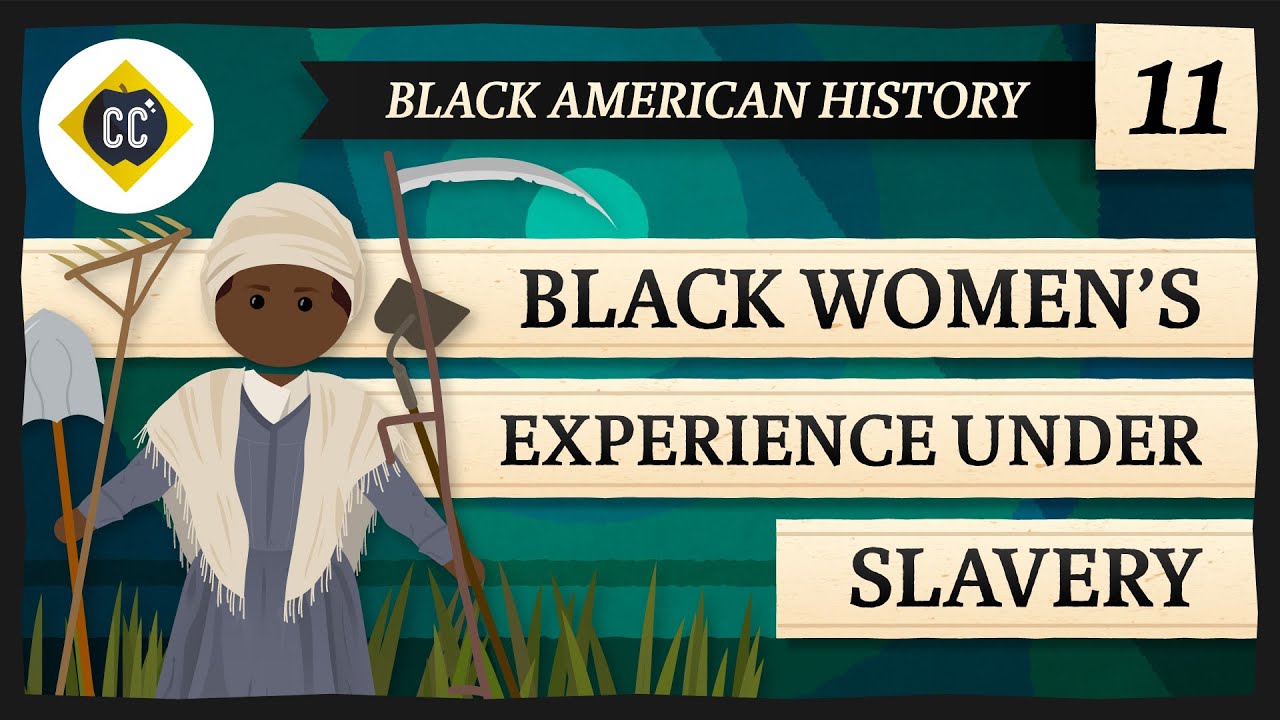
Slavery was inherently cruel and unjust, and it was cruel and unjust to different people in different ways. Today, Clint Smith teaches you about the experience of enslaved women, and how their experience of slavery was different than men. Women had a unique vantage point to understand slavery, and were particularly vulnerable to some terrible abuses under the institution.
Clint's book, How the Word is Passed is available now! https://bookshop.org/a/3859/9780316492935
SOURCES
- Samuel H. Williamson & Louis Cain, "Measuring Slavery in 2016 dollars," MeasuringWorth, 2020.
-"A Prelude to War: The 1850s." African American Lives: The Struggle for Freedom, by Clayborne Carson et al., Pearson Longman, 2005, pp. 221-222.
-Modern History Sourcebook: Sojourner Truth: "Ain't I a Woman?", December 1851
-Quoted in Deborah Gray White, Ar' n't I a Woman? Female Slaves in the Plantation South, rev. ed. (New York: Norton, 1999), 102.
Watch our videos and review your learning with the Crash Course App!
Download here for Apple Devices: https://apple.co/3d4eyZo
Download here for Android Devices: https://bit.ly/2SrDulJ
Crash Course is on Patreon! You can support us directly by signing up at http://www.patreon.com/crashcourse
Thanks to the following patrons for their generous monthly contributions that help keep Crash Course free for everyone forever:
Michael M. Varughese, Ben Follows, Kyle & Katherine Callahan, Laurel A Stevens, Chris Routh, Evan Lawrence Henderson, Vincent, Emilee Murphy, Michael Wang, Jordan willis, Krystle Young, Michael Dowling, Alexis B, Rene Duedam, Burt Humburg, Aziz, Nick, DAVID MORTON HUDSON, Perry Joyce, Scott Harrison, Mark & Susan Billian, Junrong Eric Zhu, Alan Bridgeman, Rachel Creager, Jennifer Smith, Matt Curls, Tim Kwist, Jonathan Zbikowski, Jennifer Killen, Sarah & Nathan Catchings, Brandon Westmoreland, team dorsey, Trevin Beattie, Divonne Holmes à Court, Eric Koslow, Indika Siriwardena, Khaled El Shalakany, Jason Rostoker, Shawn Arnold, Siobhán, Ken Penttinen, Nathan Taylor, William McGraw, Andrei Krishkevich, ThatAmericanClare, Rizwan Kassim, Sam Ferguson, Alex Hackman, Eric Prestemon, Jirat, Katie Dean, TheDaemonCatJr, Wai Jack Sin, Ian Dundore, Matthew, Jason A Saslow, Justin, Jessica Wode, Mark, Caleb Weeks
__
Want to find Crash Course elsewhere on the internet?
Facebook - http://www.facebook.com/YouTubeCrashCourse
Twitter - http://www.twitter.com/TheCrashCourse
Tumblr - http://thecrashcourse.tumblr.com
Support Crash Course on Patreon: http://patreon.com/crashcourse
CC Kids: http://www.youtube.com/crashcoursekids
#crashcourse #history #blackhistory
How would you measure a personality? What, exactly, is the self? Well, as you've come to expect, it's not that easy to nail down an answer to those questions. Whether you're into blood, bile, earth, wind, fire, or those Buzzfeed questionnaires, there are LOTS of ways to get at who we are and why.
Want more videos about psychology? Check out our sister channel SciShow Psych at https://www.youtube.com/scishowpsych!
--
Chapters:
Introduction: Personality Types 00:00
Trait Theory of Personality 1:35
The Big 5: Conscientiousness, Agreeableness, Neuroticism, Openness, & Extraversion 3:15
Social Cognitive Perspective of Personality 4:46
Internal vs. External Locus of Control 5:54
Testing & Measuring Personality 6:15
Thematic Apperception Test 6:51
Personality Trait Inventories 7:31
Minnesota Multiphasic Personality Inventory 8:05
Social Cognitive Personality Assessments 8:24
Humanistic Self-Concept Evaluations 9:01
Who or what is the self? 9:22
Review & Credits 10:17
--
Crash Course is on Patreon! You can support us directly by signing up at http://www.patreon.com/crashcourse
Want to find Crash Course elsewhere on the internet?
Facebook - http://www.facebook.com/YouTubeCrashCourse
Twitter - http://www.twitter.com/TheCrashCourse
Instagram - https://www.instagram.com/thecrashcourse/
CC Kids: http://www.youtube.com/crashcoursekids

Hank brings us to the next level of ecological study with ecosystem ecology, which looks at how energy, nutrients, and materials are getting shuffled around within an ecosystem (a collection of living and nonliving things interacting in a specific place), and which basically comes down to who is eating who.
Table of Contents
1) Defining Ecosystems 0:49:1
2) Trophic Structure 4:44:1
a) Primary Producers 5:27
b) Primary Consumers 5:41
c) Secondary Consumers 5:49:1
d) Tertiary Consumers 5:58:2
e) Detrivores 6:08:1
3) Bioaccumulation 8:47
Crash Course is on Patreon! You can support us directly by signing up at http://www.patreon.com/crashcourse
Want to find Crash Course elsewhere on the internet?
Facebook - http://www.facebook.com/YouTubeCrashCourse
Twitter - http://www.twitter.com/TheCrashCourse
Instagram - https://www.instagram.com/thecrashcourse/
CC Kids: http://www.youtube.com/crashcoursekids

We’ve covered a lot of incredible stuff, but this week we’re talking about the weirdest objects in space: BLACK HOLES. Stellar-mass black holes form when a very massive star dies, and its core collapses. The core has to be more than about 2.8 times the Sun’s mass to form a black hole. Black holes come in different sizes, but for all of them, the escape velocity is greater than the speed of light, so nothing can escape, not matter or light. They don’t wander the Universe gobbling everything down around them; their gravity is only really intense very close to them. Tides near a stellar mass black hole will spaghettify you, and time slows down when you get near a black hole — not that this helps much if you’re falling in.
Check out the Crash Course Astronomy solar system poster here: http://store.dftba.com/product....s/crashcourse-astron
--
Chapters:
Introduction 00:00
How Black Holes Are Formed 1:03
Misconceptions About Black Holes 3:05
Stellar Mass Black Holes 5:03
Spaghettification 5:50
Black Holes Warp Space-Time 8:00
Review 11:07
--
PBS Digital Studios: http://youtube.com/pbsdigitalstudios
Follow Phil on Twitter: https://twitter.com/badastronomer
Want to find Crash Course elsewhere on the internet?
Facebook - http://www.facebook.com/YouTubeCrashCourse
Twitter - http://www.twitter.com/TheCrashCourse
Tumblr - http://thecrashcourse.tumblr.com
Support CrashCourse on Patreon: http://www.patreon.com/crashcourse
--
PHOTOS/VIDEOS
White Dwarf Pulses Like a Pulsar http://www.nasa.gov/centers/go....ddard/news/topstory/ [credit: NASA, Casey Reed]
Swift Reveals New Phenomenon in a Neutron Star http://www.nasa.gov/mission_pa....ges/swift/bursts/new [credit: NASA's Goddard Space Flight Center]
Black Holes - Monsters in Space https://en.wikipedia.org/wiki/....File:Black_Holes_-_M [credit: NASA/JPL-Caltech, Wikimedia Commons]
What if the Sun became a black hole? (artist's impression) http://www.spacetelescope.org/....videos/hubblecast43g [credit: ESA/Hubble (M. Kornmesser)]
Black Hole Animation http://chandra.harvard.edu/pho....to/2003/0203long/ani [credit: NASA/SAO/CXC/D.Berry]
Star Destroyer http://svs.gsfc.nasa.gov/cgi-b....in/details.cgi?aid=1 [credit: Space Telescope Science Institute (STScI) and NASA's Goddard Space Flight Center]
Black hole deforms space http://www.spacetelescope.org/....videos/hst15_blackho [credit: ESA/Hubble (M. Kornmesser & L. L. Christensen)]
Black hole close-up (artist's impression) http://www.spacetelescope.org/videos/heic0211c/ [credit: European Space Agency, NASA and Felix Mirabel (the French Atomic Energy Commission & the Institute for Astronomy and Space Physics/Conicet of Argentina)]
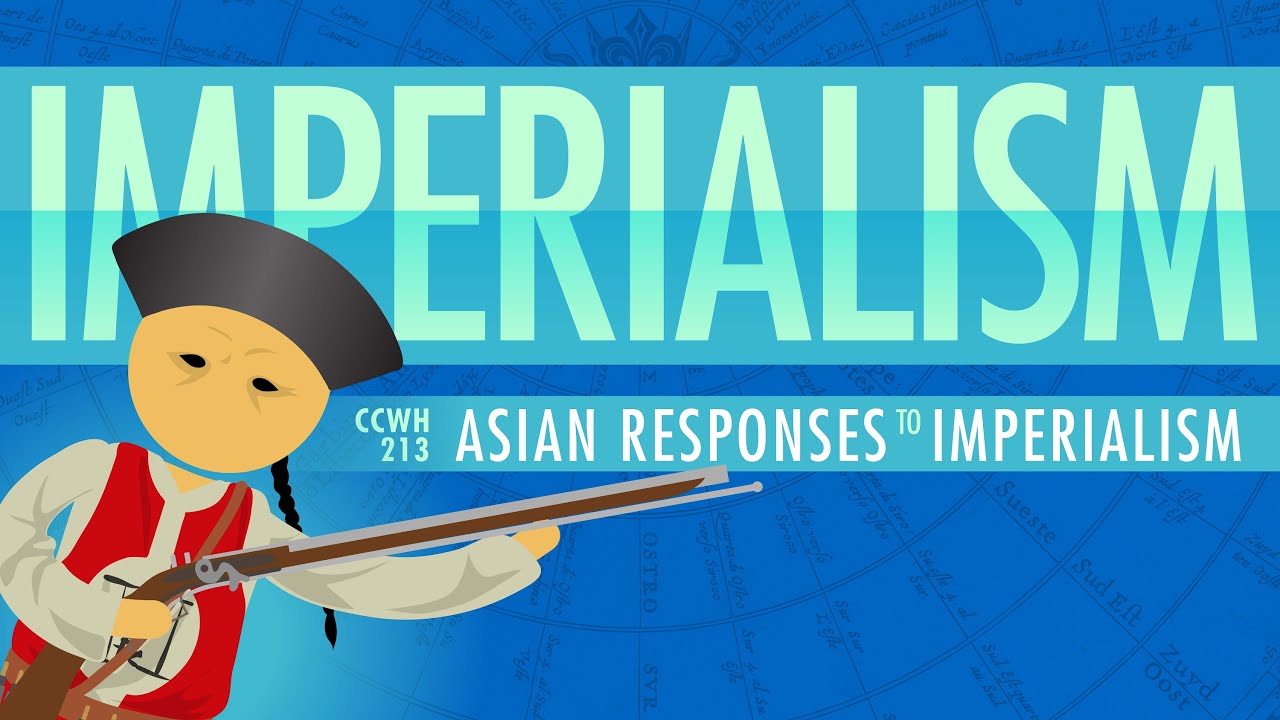
In which John Green teaches you about Imperialism, but not from the perspective of the colonizers. This week John looks at some Asian perspectives on Imperialism; specifically, writers from countries that were colonized by European powers. We'll look at the writings of Sayyid Jamal ad-Din al-Afghani from the Middle East, Liang Qichao from China, and Rabindranath Tagore from India. these voices from the countries that were colonized give us a sense of how conquered people saw their conquerors, and give an insight into what these nations learned from being dominated by Europe. It's pretty interesting, OK? A lot of this episode is drawn from a fascinating book by Pankaj Mishra called The Ruins of Empire: The Revolt Against the West and the Remaking of Asia. You should read it.
Crash Course is on Patreon! You can support us directly by signing up at http://www.patreon.com/crashcourse
Want to find Crash Course elsewhere on the internet?
Facebook - http://www.facebook.com/YouTubeCrashCourse
Twitter - http://www.twitter.com/TheCrashCourse
Instagram - https://www.instagram.com/thecrashcourse/
CC Kids: http://www.youtube.com/crashcoursekids
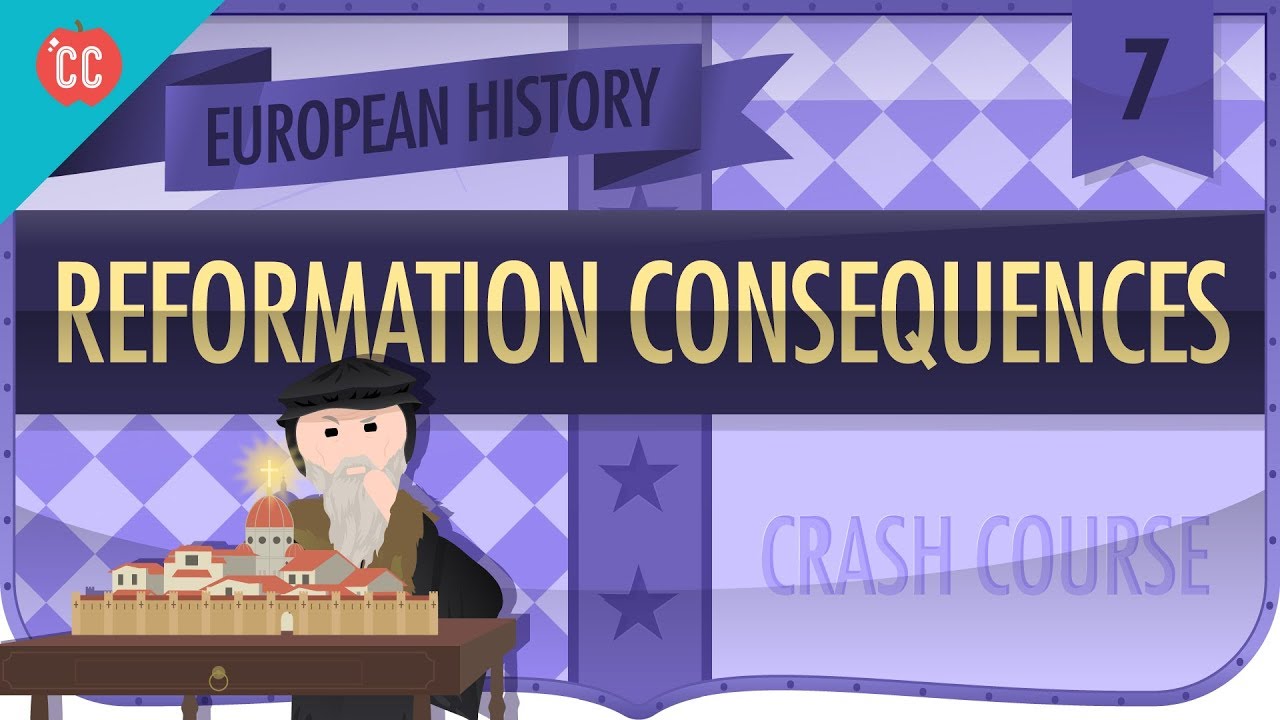
The Protestant Reformation didn't exactly begin with Martin Luther, and it didn't end with him either. Reformers and monarchs changed the ways that religious and state power were organized throughout the 16th and early 17th centuries. Jean Calvin in France and Switzerland, the Tudors in England, and the Hugenots in France also made major contributions to the Reformation.
Sources
Hunt, Lynn. Making of the West: Peoples and Cultures. Boston: Bedford St. Martins, 2019. Ch. 14.
Kelley, Donald R. The Beginning of Ideology: Consciousness and Society in the French Reformation. New York: Cambridge University Press, 1981.
Lindberg, Carter. The European Reformations. 2nd ed. New York: Wiley Blackwell, 2010.
Crash Course is on Patreon! You can support us directly by signing up at http://www.patreon.com/crashcourse
Thanks to the following patrons for their generous monthly contributions that help keep Crash Course free for everyone forever:
Eric Prestemon, Sam Buck, Mark Brouwer, Jonathan Zbikowski, Siobhan Sabino, Zach Van Stanley, Bob Doye, Jennifer Killen, Naman Goel, Nathan Catchings, Brandon Westmoreland, dorsey, Indika Siriwardena, Kenneth F Penttinen, Trevin Beattie, Erika & Alexa Saur, Glenn Elliott, Justin Zingsheim, Jessica Wode, Tom Trval, Jason Saslow, Nathan Taylor, Brian Thomas Gossett, Khaled El Shalakany, SR Foxley, Sam Ferguson, Yasenia Cruz, Eric Koslow, Caleb Weeks, Tim Curwick, D.A. Noe, Shawn Arnold, Malcolm Callis, William McGraw, Andrei Krishkevich, Rachel Bright, Jirat, Ian Dundore
--
Want to find Crash Course elsewhere on the internet?
Facebook - http://www.facebook.com/YouTubeCrashCourse
Twitter - http://www.twitter.com/TheCrashCourse
Tumblr - http://thecrashcourse.tumblr.com
Support Crash Course on Patreon: http://patreon.com/crashcourse
CC Kids: http://www.youtube.com/crashcoursekids
#history #crashcourse #europeanhistory
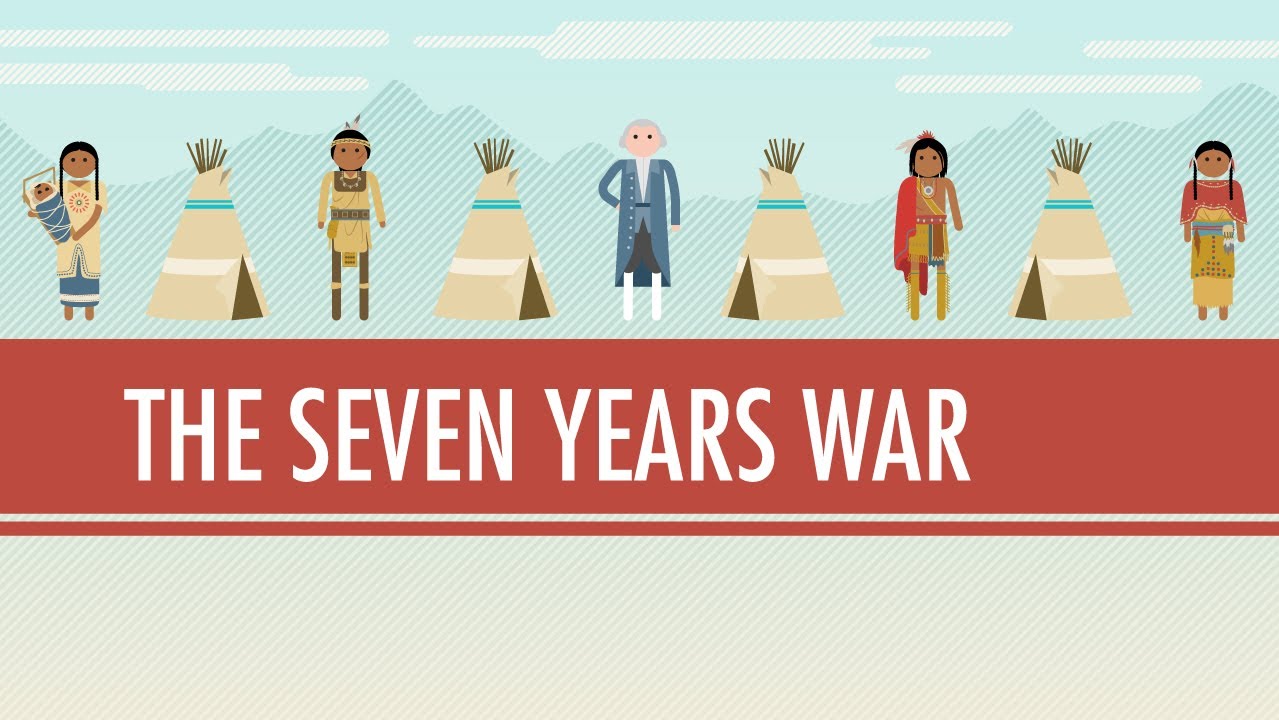
In which John teaches you about the Seven Years' War, which may have lasted nine years. Or as many as 23. It was a very confusing war. The Seven Years War was a global war, fought on five continents, which is kind of a lot. John focuses on the war as it happened in the Americas, Asia, and Africa. the "great" European powers were the primary combatants, but they fought just about everywhere. Of course, this being a history course, the outcomes of this war still resonate in our lives today. The Seven Years' war determined the direction of the British Empire and led pretty directly to the subject of Episode 28, the American Revolution.
Chapters:
Introduction: War 00:00
The Seven Years War: When, Where, and Why 1:43
The British vs. the French 2:52
Native American Participation in The Seven Years War 4:04
Fighting in the Caribbean, West Africa, and India 6:16
An Open Letter to Robert Clive 8:30
The Outcome of the Seven Years War 9:47
Credits 11:29
Crash Course is on Patreon! You can support us directly by signing up at http://www.patreon.com/crashcourse
Want to find Crash Course elsewhere on the internet?
Facebook - http://www.facebook.com/YouTubeCrashCourse
Twitter - http://www.twitter.com/TheCrashCourse
Instagram - https://www.instagram.com/thecrashcourse/
CC Kids: http://www.youtube.com/crashcoursekids
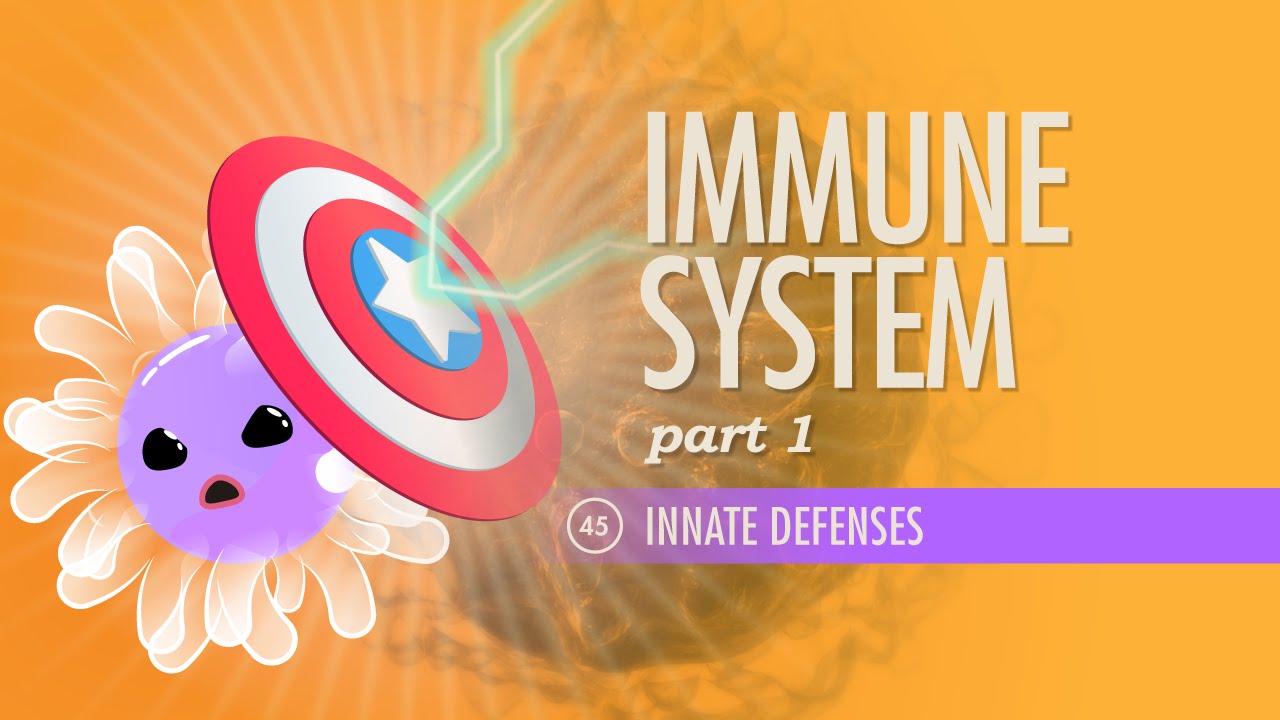
Our final episodes of Anatomy & Physiology explore the way your body keeps all that complex, intricate stuff alive and healthy -- your immune system. The immune system’s responses begin with physical barriers like skin and mucous membranes, and when they’re not enough, there are phagocytes -- the neutrophils and macrophages. It also features the awesomely named natural killer cells and the inflammatory response, and we'll explain how all of these elements work together to save the day if you happen to slip on a banana peel.
Pssst... we made flashcards to help you review the content in this episode! Find them on the free Crash Course App!
Download it here for Apple Devices: https://apple.co/3d4eyZo
Download it here for Android Devices: https://bit.ly/2SrDulJ
Chapters:
Introduction: Immune System 00:00
Skin as a Physical Barrier 1:47
Mucous Membranes 2:25
Phagocytes: Neutrophils and Macrophages 3:17
Natural Killer Cells 4:29
Inflammatory Response 5:16
Review 8:03
***
"Reformat" Kevin MacLeod (incompetech.com)
Licensed under Creative Commons: By Attribution 3.0 License
http://creativecommons.org/licenses/by/3.0/
***
Crash Course is on Patreon! You can support us directly by signing up at http://www.patreon.com/crashcourse
Thanks to the following Patrons for their generous monthly contributions that help keep Crash Course free for everyone forever:
Mark, Eric Kitchen, Jessica Wode, Jeffrey Thompson, Steve Marshall, Moritz Schmidt, Robert Kunz, Tim Curwick, Jason A Saslow, SR Foxley, Elliot Beter, Jacob Ash, Christian, Jan Schmid, Jirat, Christy Huddleston, Daniel Baulig, Chris Peters, Anna-Ester Volozh, Ian Dundore, Caleb Weeks
--
Want to find Crash Course elsewhere on the internet?
Facebook - http://www.facebook.com/YouTubeCrashCourse
Twitter - http://www.twitter.com/TheCrashCourse
Tumblr - http://thecrashcourse.tumblr.com
Support Crash Course on Patreon: http://patreon.com/crashcourse
CC Kids: http://www.youtube.com/crashcoursekids
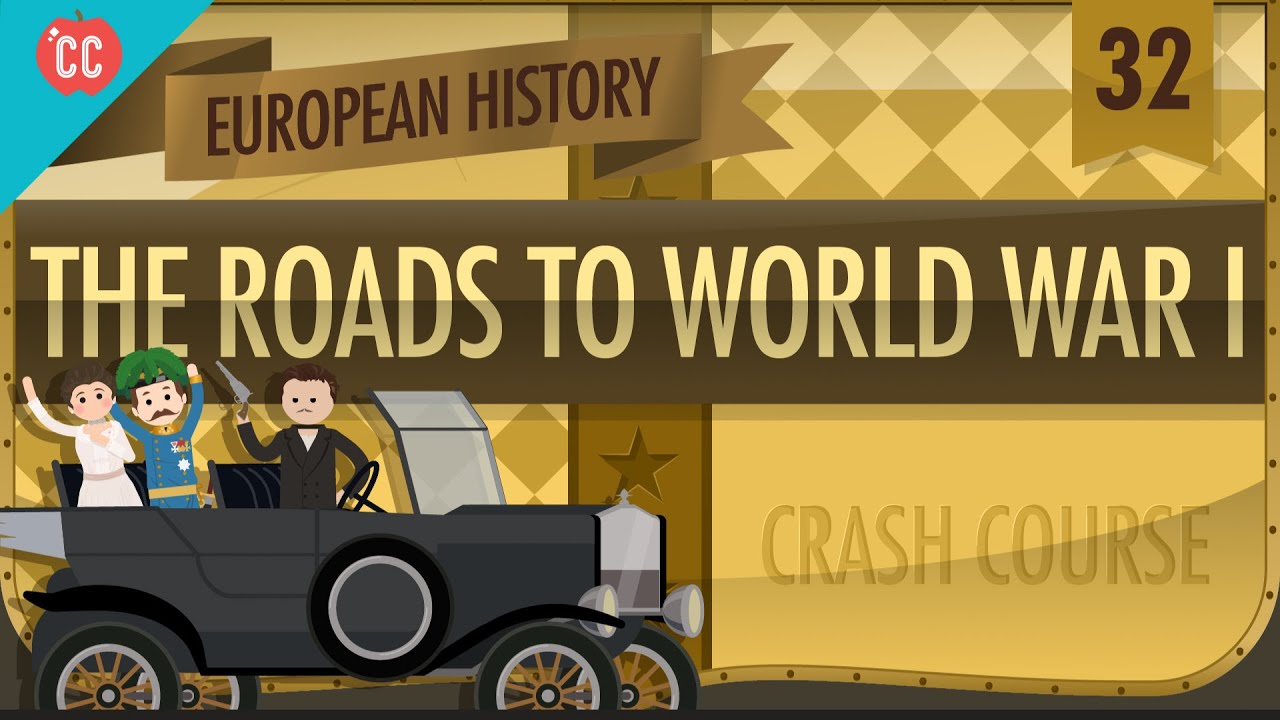
Much has been written about what exactly caused World War I. As befits a true global war, the reality is that there isn't a single cause. There aren't even three causes. There are a vast array of causes. Today we'll get into just a few of those causes, including the complex system of alliances in Europe, the myriad military conflicts that played out in the years and decades leading up to the war, and the event that many point to as the beginning: the assassination of Archduke Franz Ferdinand.
Sources
-Hunt, Lynn. Making of the West: Peoples and Cultures. Boston: Bedford St. Martins, 2019.
-Smith, Bonnie G. Europe in the Contemporary World Since 1900. 2nd ed. London; Bloomsbury, 2020.
Crash Course is on Patreon! You can support us directly by signing up at http://www.patreon.com/crashcourse
Thanks to the following patrons for their generous monthly contributions that help keep Crash Course free for everyone forever:
Eric Prestemon, Sam Buck, Mark Brouwer, Efrain R. Pedroza, Matthew Curls, Indika Siriwardena, Avi Yashchin, Timothy J Kwist, Brian Thomas Gossett, Haixiang N/A Liu, Jonathan Zbikowski, Siobhan Sabino, Jennifer Killen, Nathan Catchings, Brandon Westmoreland, dorsey, Kenneth F Penttinen, Trevin Beattie, Erika & Alexa Saur, Justin Zingsheim, Jessica Wode, Tom Trval, Jason Saslow, Nathan Taylor, Khaled El Shalakany, SR Foxley, Sam Ferguson, Yasenia Cruz, Eric Koslow, Caleb Weeks, Tim Curwick, David Noe, Shawn Arnold, William McGraw, Andrei Krishkevich, Rachel Bright, Jirat, Ian Dundore
--
Want to find Crash Course elsewhere on the internet?
Facebook - http://www.facebook.com/YouTubeCrashCourse
Twitter - http://www.twitter.com/TheCrashCourse
Tumblr - http://thecrashcourse.tumblr.com
Support Crash Course on Patreon: http://patreon.com/crashcourse
CC Kids: http://www.youtube.com/crashcoursekids

Only a couple of decades after the end of the First World War--which was supposed to be the War that Ended All Wars--another, bigger, farther-flung, more destructive, and deadlier war began. Today, you'll learn about how the war in Europe progressed, from the Molotov-Ribbentrop pact and the invasion of Poland, to the Western and Eastern fronts, to VE Day and the atom bombs used in Japan.
Sources
-Hunt, Lynn et al. Making of the West: Peoples and Cultures. 6th ed. Boston: Bedford St. Martin’s, 2019.
-Kotkin, Stephen. Stalin: Waiting for Hitler, 1929-1941. New York: Penguin, 2017.
-Mazower, Mark. Hitler’s Empire: How the Nazis Ruled Europe. New York: Penguin, 2008.
-Overy, Richard. Russia’s War: A History of the Soviet Effort, 1941-1945. New York: Penguin, 1998.
-Smith, Bonnie G. Europe in the Contemporary World, 1900 to the Present, 2nd ed. London: Bloomsbury, 2020.
-Snyder, Timothy. Bloodlands: Hitler between Hitler and Stalin. New York: Basic Books, 2010.
Crash Course is on Patreon! You can support us directly by signing up at http://www.patreon.com/crashcourse
Thanks to the following patrons for their generous monthly contributions that help keep Crash Course free for everyone forever:
Eric Prestemon, Sam Buck, Mark Brouwer, William McGraw, Siobhan Sabino, Jason Saslow, Jennifer Killen, Jon & Jennifer Smith, David Noe, Jonathan Zbikowski, Shawn Arnold, Trevin Beattie, Matthew Curls, Rachel Bright, Khaled El Shalakany, Efrain R. Pedroza, Ian Dundore, Kenneth F Penttinen, Eric Koslow, Timothy J Kwist, Indika Siriwardena, Caleb Weeks, Haixiang N/A Liu, Nathan Taylor, Avi Yashchin, Andrei Krishkevich, Sam Ferguson, Brian Thomas Gossett, SR Foxley, Tom Trval, Justin Zingsheim, Brandon, Westmoreland, dorsey, Jessica Wode, Nathan Catchings, Yasenia Cruz, Jirat
--
Want to find Crash Course elsewhere on the internet?
Facebook - http://www.facebook.com/YouTubeCrashCourse
Twitter - http://www.twitter.com/TheCrashCourse
Tumblr - http://thecrashcourse.tumblr.com
Support Crash Course on Patreon: http://patreon.com/crashcourse
CC Kids: http://www.youtube.com/crashcoursekids
#crashcourse #europeanhistory #worldwarii

Books That Drive Kids CRAZY!: This Book Is Red
by Beck and Matt Stanton
Read by Let’s Read Stories
This clever companion to This Is a Ball and Did You Take the B from My _ook? is the perfect read-aloud for the giggling masses who love Hervé Tullet's Press Here, Lane Smith's It's a Book!, and BJ Novak's The Book With No Pictures.
The Books That Drive Kids CRAZY! series offers parents, teachers, and storytellers a hilarious script for fun reading time with children. In book 3, This Book Is Red, something is clearly bonkers when the narrator insists that frogs and penguins are obviously the same color as lobsters--and the claims get more outrageous from there. What is up with this nonsense? Kids will demand to know--and all readers will be howling with laughter all along the way. With strikingly simple text and art, Books That Drive Kids CRAZY! are ideal picks for emergent readers.
Click here to purchase This Book is Red: https://www.amazon.com/Books-T....hat-Drive-Kids-CRAZY

The Night Before St. Patrick's Day - Children's Stories Read Aloud - St. Patrick's Day Kids Books
by Natasha Wing
Illustrated by Amy Wummer
Click here to purchase The Night Before St. Patrick's Day: https://www.amazon.com/Night-B....efore-St-Patricks-Da
Natasha Wing puts an Irish twist on a Christmas classic. It's the night before St. Patrick's Day, and Tim and Maureen are wide awake setting traps to catch a leprechaun! When they wake the next morning to the sound of their dad playing the bagpipes and the smell of their mom cooking green eggs, they're shocked to find that they've actually caught a leprechaun. But will they be able to find his pot of gold?

These algebra shortcuts are essential if you want to speed through your math work and still get the right answers.
To donate to the tecmath channel:https://paypal.me/tecmath
To support tecmath on Patreon: https://www.patreon.com/tecmath
To buy tecmath mechandise: https://teespring.com/stores/tecmath-store

This US States learning video for kids explores facts about New York! The State of New York is also called the Empire State. Learn about New York City, Albany, some history and more!
❤ Homeschool Pop? Join our team and get tattoos here: http://homeschoolpop.com
☃ You are SO cool! Say hello below, we would love to hear from you!
Thanks for watching this Homeschool Pop US States learning video on New York!
Thanks again and we hope to see you on the next US States video!
New York for Kids | US States Learning Video

The simple process of how to simplify ratios.
To donate to the tecmath channel:https://paypal.me/tecmath
To support tecmath on Patreon: https://www.patreon.com/tecmath
To buy tecmath mechandise: https://teespring.com/stores/tecmath-store

Discover how to easily find the bearings from a diagram with random angles. The bearings looked In this math lesson are true bearings and conventional bearings.
To work out true bearings, start at north and count the number of degrees in a clockwise direction until you get to the bearing you want.
To work out conventional bearings, start by facing north or south, and count how many degrees to need to go east or west until you get to the desired bearing.
To support tecmath on Patreon (thank you): https://www.patreon.com/tecmath To donate to the tecmath channel: https://paypal.me/tecmath?locale.x=en_AU To donate to the tecmath channel: https://paypal.me/tecmath?locale.x=en_AU
To support tecmath on Patreon: https://www.patreon.com/tecmath
To buy tecmath mechandise: https://teespring.com/stores/tecmath-store

Adding and Subtracting Mixed Numbers
This video is part of a playlist:
https://www.youtube.com/playli....st?list=PLjbxBzUM6SL
To support tecmath making new math videos on Patreon:
https://www.patreon.com/tecmath To donate to the tecmath channel: https://paypal.me/tecmath?locale.x=en_AU
To support tecmath on Patreon: https://www.patreon.com/tecmath
To buy tecmath mechandise: https://teespring.com/stores/tecmath-store
#fractions
#fraction
#fractionsmath

This has been described as the world's toughest math problem - but it really is not! Can you solve it?
To join tecmath on Patreon:
https://www.patreon.com/tecmath
For the playlist of math problems:
https://www.youtube.com/playli....st?list=PLjbxBzUM6SL
To donate to the tecmath channel:https://paypal.me/tecmath
To support tecmath on Patreon: https://www.patreon.com/tecmath
To buy tecmath mechandise: https://teespring.com/stores/tecmath-store
#mathproblems
#mathriddles
#mathsforfun