Top videos

High-energy rechargeable batteries seemed impossible, until we made them. Sponsored by CodeRabbit. Cut code review time and bugs in half. Try CodeRabbit at https://coderabbit.link/veritasium
If you’re looking for a molecular modelling kit, try Snatoms, a kit I invented where the atoms snap together magnetically - https://ve42.co/SnatomsV
▀▀▀
0:00 What’s inside a battery?
4:11 How does a battery work?
7:15 How did we increase battery power?
11:13 The first rechargeable lithium battery
13:29 The Tiny Needles That Kill Batteries
16:06 Goodenough? We can do better
20:07 The birth of the lithium-ion battery
27:10 Why do batteries explode?
29:31 Blowing up a battery
▀▀▀
A massive thank you to Dr Billy Wu, Dr Sam Cooper, Dr Derek Sui, Professor Magda Titirici, Dr Jingyu Feng, Dr Monica Marinescu, Li Ren Thow, Genlin Liu and Sam Riley; and to Professor Guillermo Rein, Dr Harry Mitchell, Hanna Berry, and Dr Nick Kalogeropoulos at Imperial College London for their invaluable contributions to this video. And a big thank you to Conrad Duncan for all his help in pulling everything together.
We’re incredibly grateful to Kurt Kelty and the team at General Motors for their time and expertise.
Thanks also go to Dr Yuzhang Li and Prof Jay Morton Turner for all their help on the project.
▀▀▀
References: https://ve42.co/RefsBatteries
Image References: https://ve42.co/ImgRefsBatt
▀▀▀
Special thanks to our Patreon supporters:
Adam Foreman, Albert Wenger, Alex Porter, Alexander Tamas, Anton Ragin, armedtoe, Balkrishna Heroor, Bertrand Serlet, Blake Byers, Bruce, Dave Kircher, David Johnston, David Tseng, Evgeny Skvortsov, Garrett Mueller, Gnare, gpoly, Ibby Hadeed, JT, Jeromy Johnson, Jon Jamison, Juan Benet, Keith England, KeyWestr, Kyi, Lee Redden, Marinus Kuivenhoven, Matthias Wrobel, Meekay, meg noah, Michael Bush, Michael Krugman, Orlando Bassotto, Paul Peijzel, Richard Sundvall, Robert Oliveira, Sam Lutfi, Tj Steyn, Ubiquity Ventures, Walter Flinn, wolfee
▀▀▀
Writers: Emilia Gyles, Casper Mebius, Gregor Čavlović & Derek Muller
Producer & Director: Emilia Gyles
Editor: Trenton Oliver
Camera Operators: Tas Underwood, Emilia Gyles, Gregor Čavlović & Derek Muller
Animators: Andrew Neet, Emma Wright, Fabio Albertelli, Mike Radjabov & Rokas Viksraitis
Illustrators: Jakub Misiek, Maria Gusakovich, Isaac McRee, Nataly Zhuk & Kaitlyn Chille
Assistant Editor: James Stuart
Researchers: HyoJeong Choi, Aakash Singh Bagga & Gabe Strong
Thumbnail Designers: Ren Hurley, Ben Powell & Abdallah Rabah
Production Team: Rob Beasley Spence & Josh Pitt
Executive Producers: Derek Muller & Casper Mebius
Additional video/photos supplied by Getty Images, Pond5
Music from Epidemic Sound
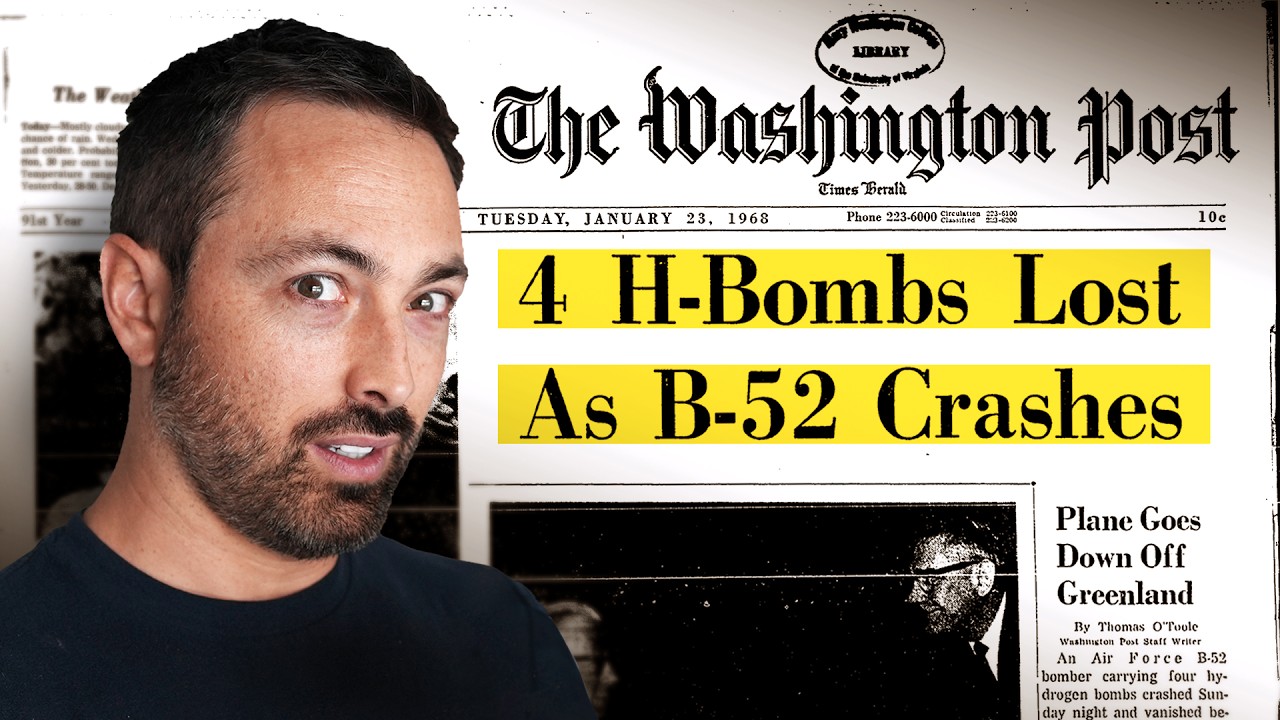
Earth has been closer to Nuclear War more times than you’d think. Head over to
https://hensonshaving.com/veritasium and enter code 'Veritasium' for 100 free blades with the purchase of a razor. Make sure to add both the razor and the blades to your cart for the code to take effect.
▀▀▀
References:
List of Broken Arrows -- https://ve42.co/AtomicArchive https://ve42.co/BrokenArrowsReport
Declassified Goldsboro Report -- https://ve42.co/Goldsboro
Operation ChromeDome -- https://ve42.co/OperationChromeDome
CIA website -- https://ve42.co/CIA
Cataclysmic cargo: The hunt for four missing nuclear bombs after a B-52 crash -- https://ve42.co/WoPo
THE LAST FLIGHT OF HOBO 28 -- https://ve42.co/lastflight
The Voice of Larry Messinger is from this documentary -- https://ve42.co/Messinger
Even Without Detonation, 4 Hydrogen Bombs From ’66 Scar Spanish Village -- https://ve42.co/NYTPalomares
Decades Later, Sickness Among Airmen After a Hydrogen Bomb Accident -- https://ve42.co/NYTPalomares2
Picture of ReVelle -- https://ve42.co/JackReVelle1
Great NPR where the audio of ReVelle is from -- https://ve42.co/JackReVelle2
CIA Website -- https://ve42.co/CIA
▀▀▀
Special thanks to our Patreon supporters:
Anton Ragin, Balkrishna Heroor, Bernard McGee, Bill Linder, Burt Humburg, Dave Kircher, Diffbot, Evgeny Skvortsov, Gnare, Jesse Brandsoy, John H. Austin, Jr., john kiehl, Josh Hibschman, Juan Benet, KeyWestr, Lee Redden, Marinus Kuivenhoven, Mario Bottion, MaxPal, Meekay, meg noah, Michael Krugman, Orlando Bassotto, Paul Peijzel, Richard Sundvall, Sam Lutfi, Stephen Wilcox, Tj Steyn, TTST, Ubiquity Ventures
▀▀▀
Directed by Petr Lebedev
Written by Petr Lebedev and Derek Muller
Edited by Peter Nelson
Animated by Fabio Albertelli, Jakub Misiek, Ivy Tello and Mike Radjabov
Filmed by Derek Muller
Produced by Petr Lebedev, Han Evans, and Derek Muller
Additional video/photos supplied by Getty Images and Pond5
Music from Epidemic Sound

The kilogram, mole, kelvin, and ampere will be redefined by physical constants. For a limited time, get 3 months of Audible for just $6.95 a month: http://audible.com/VERITASIUM or text VERITASIUM to 500500
Will this be the last video I make about SI units? Quite possibly. There's something about being so precise and defining the systems within which science works. When we can more accurately and routinely measure a kilogram, a mole, a kelvin and an ampere, then we can make better observations, we can better detect anomalies and improve our theories. That is why this is so important to me.
Special thanks to Patreon supporters:
Donal Botkin, Michael Krugman, Ron Neal, Nathan Hansen, James M Nicholson, Terrance Shepherd, Stan Presolski
Special thanks to NIST: http://nist.gov
Additional graphics by Ignat Berbeci
Music from http://epidemicsound.com "Experimental1"

Are all people on Earth really connected through just six steps?
There's much more science in this than I initially expected. It turns out ordered networks with a small degree of randomness become small-work networks. This is why your acquaintances turn out to be more important in job searches and finding new opportunities than close friends.
DON'T SEND ME AN EMAIL anymore...
1. Do not send it directly to me unless you know me.
2. Send the email to someone you have met IN PERSON and know on a first name basis AND THEY KNOW YOU.
3. Make the subject line 'Six Degrees of Veritasium'
4. Explain that you're trying to get this email to me and ask them to forward it on to me (only if they know me IRL) or someone they know who might know me.
5. If your email reaches me by Sept. 1, 2015 I will email you back and ask for your address so I can send you a postcard.
Animations in this video by The Lyosacks: https://www.youtube.com/user/TheLyosacks
There are some great books on this topic:
Duncan Watts, Six Degrees: The Science of a Connected Age
Albert-Laszlo Barabasi, Linkds: How Everything is Connected to Everything Else
And here are articles I referred to:
Milgram's small world experiment: http://www.uvm.edu/~pdodds/fil....es/papers/others/196
http://snap.stanford.edu/class..../cs224w-readings/mil
Granovetter, Strength of Weak Ties:
https://sociology.stanford.edu..../sites/default/files

Even the GOAT Tom Brady can’t throw a perfect spiral. Here’s why. 🌏 Get exclusive NordVPN deal here ➵ https://NordVPN.com/veritasium It’s risk free with Nord’s 30 day money-back guarantee!✌
If you’re looking for a molecular modelling kit, try Snatoms, a kit I invented where the atoms snap together magnetically - https://ve42.co/SnatomsV
Sign up to the Veritasium newsletter for weekly science updates - https://ve42.co/Newsletter
▀▀▀
A huge thank you to Tom Brady for coming and throwing some footballs with us and letting us analyse his throw. You can check out his channel here: https://www.youtube.com/@tombrady
Also thank you to Kevin Bonner and the team at Shadow Lion for helping make this happen!
A big thanks to Daniel Hare and Wilson for all their help collecting and analyzing the data.
A massive thank you to Prof. Philip Ansell, David Attig, Matt Brotnow, Sam Hince and Derrick Wiberg at the University of Illinois at Urbana-Champaign for all their work testing out footballs in their wind tunnel (more of that to come in our second video).
We’d also like to shout out Stewart Bible, Ryan Sayko and the rest of the team at Resolved Analytics for all their work on the CFD models - https://www.resolvedanalytics.com/
Thank you to Mike Lopez and Tom Bliss from the Football Data and Analytics at the NFL for sharing data and insights from across NFL history.
We’re incredibly grateful to Prof. Richard Price and Major Brett Gibbons for their invaluable contributions to this video.
Thank you to Prof. Chad Orzel, Prof. John Eric Goff, Dr Ainissa Ramirez, Prof. Tony Schmitz & Jonathan Ferguson for all their help on the project.
Also thanks to Chris Anstis for his help as a stand-in QB!
▀▀▀
0:00 How Tom Brady Throws a Football
2:51 Why do you spin a football to throw it?
5:36 How does rifling affect a projectile?
9:09 The Turnover Paradox
11:15 How fast can Tom Brady throw?
14:31 Analysing Brady’s Throw
16:38 Gyroscopic Procession
19:47 It’s impossible to throw straight
23:17 Outdoor vs Dome Stadiums
24:31 Why Tom Brady is the GOAT
▀▀▀
References:
References can be found here - https://ve42.co/BradyReferences
Images & Video:
Image and video references can be found here - https://ve42.co/BradyVisuals
▀▀▀
Special thanks to our Patreon supporters:
Adam Foreman, Albert Wenger, Alex Porter, Alexander Tamas, Anton Ragin, armedtoe, Balkrishna Heroor, Bertrand Serlet, Blake Byers, Bruce, Charles Ian Norman Venn, Dave Kircher, David Johnston, David Tseng, Evgeny Skvortsov, Garrett Mueller, Gnare, gpoly, iRick, Jeromy Johnson, Jon Jamison, JT, Juan Benet, Keith England, KeyWestr, Kyi, Lee Redden, Marinus Kuivenhoven, Matthias Wrobel, Meekay, meg noah, Michael Krugman, Orlando Bassotto, Paul Peijzel, Richard Sundvall, Robert Oliveira, Sam Lutfi, Tj Steyn, TTST, Ubiquity Ventures, wolfee
▀▀▀
Producer & Director: Henry van Dyck
Writing: Henry van Dyck & Derek Muller
Editor: Trenton Oliver
Animators: Mike Radjabov & Fabio Albetelli
Illustrator: Jakub Misiek
Researchers: Emilia Gyles & Gabe Strong
Field Producer: Katy Savage
Camera Operators: John Nicholls, Trenton Oliver, Melkwych Pierre-Louis & Scott Wellington
Drone Operators: Nathan Taupez Scinto, Angelo Fiorini
Sound Recordist: Vlady Garcia
Production Assistant: Leah Jiji
Media Manager: Gabriel C. Rodriguez
Assistant Editor: James Stuart
Thumbnail Designers: Ren Hurley & Ben Powell
Production Team: Josh Pitt, Rob Beasley Spence, Tori Brittain & Barbara Abraul
Executive Producers: Derek Muller & Zoe Heron
Additional video/photos supplied by Getty Images
Music from Epidemic Sound
http://www.abc.net.au/catalyst/team/default.htm
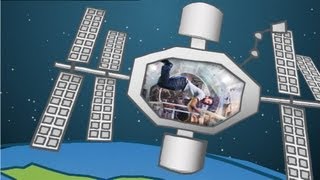
I have been working with Catalyst on ABC1 to bring some Veritasium to Australian TV. In this segment I ask why astronauts in the space station are weightless. The most common answer is because there is no gravity in space. But of course there is gravity in space, especially where the space station is located (only about 400km from Earth's surface). So astronauts still experience a gravitational pull - it's just that they and the space station are in free fall so they are accelerating together towards the Earth. The space station doesn't crash into the Earth because of its orbital velocity - it's going 28,000 km/h so as it falls, the Earth curves away from it.

The nutrient content of food is declining. Is it because of soil depletion, selective breeding, or... something else?
Watch my new documentary, VITAMANIA: http://ve42.co/vita
I came across this story as I was making the film Vitamania. When you ask sellers of vitamins why you should take vitamin supplements even if you eat a healthy diet, they will say because our food doesn't contain all the nutrients it once did. This is supposedly due to soil depletion, cold storage, food ripening off the vine, and global transport of out-of-season foods. And to an extent this is true. Foods contain the greatest amount of nutrients if they are eaten soon after they are harvested. An unexpected source of nutrient decline is the increasing amount of carbon dioxide in the atmosphere. It causes plants to grow faster and bulk up on carbs but at the expense of other nutrients, so in percentage terms the amount of nutrients are actually declining. For now this decline is modest so supplementing with vitamin pills is probably unnecessary for most people with a healthy diet but it may be a concern in future.
Thanks to Kate Pappas & Chris Kamen for writing, producing and filming this video with me
Edited by Lucy McCallum
Sound mix by Wayne Hyett
Fact Checking by Calvin Lee and Claire Smith
Thanks to the Collingwood Children’s Farm and Glenn Fitzgerald from the University of Melbourne & Agriculture Victoria
Further Reading:
https://www.sciencedirect.com/....science/article/pii/
https://www.ncbi.nlm.nih.gov/p....ubmed/15637215/?ncbi
http://soils.wisc.edu/facstaff..../barak/poster_galler
https://www.politico.com/agend....a/story/2017/09/13/f
http://www.abc.net.au/news/201....8-05-24/scientists-w
Scientists are being inspired by nature to design the next generation of security devices. Arrays of nanoscale holes create beautiful reflected colours that are almost impossible to forge. This video was supported by TechNyou - check out their series on logical fallacies: http://bit.ly/WBsD31
Soon these nanoscale security devices could replace holograms. They are many times more reflective than holograms, and although the structures are smaller scale, they are lower aspect ratio and therefore easy to manufacture in bulk.
The electron wiggle simulation is from PhET, the best physics simulations ever: http://phet.colorado.edu
Special thanks to Thomas from Copenhagen who showed me around the city including the science museum where he assisted with the soap bubble demonstration.
Clint Landrock is the Chief Technology Officer for Nanotech Securities: http://www.nanosecurity.ca
Music is "Firefly in a Fairytale" by Gareth Coker

Visit https://brilliant.org/Veritasium/ to get started learning STEM for free, and the first 200 people will get 20% off their annual premium subscription. Digital computers have served us well for decades, but the rise of artificial intelligence demands a totally new kind of computer: analog.
Thanks to Mike Henry and everyone at Mythic for the analog computing tour! https://www.mythic-ai.com/
Thanks to Dr. Bernd Ulmann, who created The Analog Thing and taught us how to use it. https://the-analog-thing.org
Moore’s Law was filmed at the Computer History Museum in Mountain View, CA.
Welch Labs’ ALVINN video: https://www.youtube.com/watch?v=H0igiP6Hg1k
▀▀▀
References:
Crevier, D. (1993). AI: The Tumultuous History Of The Search For Artificial Intelligence. Basic Books. – https://ve42.co/Crevier1993
Valiant, L. (2013). Probably Approximately Correct. HarperCollins. – https://ve42.co/Valiant2013
Rosenblatt, F. (1958). The Perceptron: A Probabilistic Model for Information Storage and Organization in the Brain. Psychological Review, 65(6), 386-408. – https://ve42.co/Rosenblatt1958
NEW NAVY DEVICE LEARNS BY DOING; Psychologist Shows Embryo of Computer Designed to Read and Grow Wiser (1958). The New York Times, p. 25. – https://ve42.co/NYT1958
Mason, H., Stewart, D., and Gill, B. (1958). Rival. The New Yorker, p. 45. – https://ve42.co/Mason1958
Alvinn driving NavLab footage – https://ve42.co/NavLab
Pomerleau, D. (1989). ALVINN: An Autonomous Land Vehicle In a Neural Network. NeurIPS, (2)1, 305-313. – https://ve42.co/Pomerleau1989
ImageNet website – https://ve42.co/ImageNet
Russakovsky, O., Deng, J. et al. (2015). ImageNet Large Scale Visual Recognition Challenge. – https://ve42.co/ImageNetChallenge
AlexNet Paper: Krizhevsky, A., Sutskever, I., Hinton, G. (2012). ImageNet Classification with Deep Convolutional Neural Networks. NeurIPS, (25)1, 1097-1105. – https://ve42.co/AlexNet
Karpathy, A. (2014). Blog post: What I learned from competing against a ConvNet on ImageNet. – https://ve42.co/Karpathy2014
Fick, D. (2018). Blog post: Mythic @ Hot Chips 2018. – https://ve42.co/MythicBlog
Jin, Y. & Lee, B. (2019). 2.2 Basic operations of flash memory. Advances in Computers, 114, 1-69. – https://ve42.co/Jin2019
Demler, M. (2018). Mythic Multiplies in a Flash. The Microprocessor Report. – https://ve42.co/Demler2018
Aspinity (2021). Blog post: 5 Myths About AnalogML. – https://ve42.co/Aspinity
Wright, L. et al. (2022). Deep physical neural networks trained with backpropagation. Nature, 601, 49–555. – https://ve42.co/Wright2022
Waldrop, M. M. (2016). The chips are down for Moore’s law. Nature, 530, 144–147. – https://ve42.co/Waldrop2016
▀▀▀
Special thanks to Patreon supporters: Kelly Snook, TTST, Ross McCawley, Balkrishna Heroor, 65square.com, Chris LaClair, Avi Yashchin, John H. Austin, Jr., OnlineBookClub.org, Dmitry Kuzmichev, Matthew Gonzalez, Eric Sexton, john kiehl, Anton Ragin, Benedikt Heinen, Diffbot, Micah Mangione, MJP, Gnare, Dave Kircher, Burt Humburg, Blake Byers, Dumky, Evgeny Skvortsov, Meekay, Bill Linder, Paul Peijzel, Josh Hibschman, Mac Malkawi, Michael Schneider, jim buckmaster, Juan Benet, Ruslan Khroma, Robert Blum, Richard Sundvall, Lee Redden, Vincent, Stephen Wilcox, Marinus Kuivenhoven, Clayton Greenwell, Michael Krugman, Cy 'kkm' K'Nelson, Sam Lutfi, Ron Neal
▀▀▀
Written by Derek Muller, Stephen Welch, and Emily Zhang
Filmed by Derek Muller, Petr Lebedev, and Emily Zhang
Animation by Ivy Tello, Mike Radjabov, and Stephen Welch
Edited by Derek Muller
Additional video/photos supplied by Getty Images and Pond5
Music from Epidemic Sound
Produced by Derek Muller, Petr Lebedev, and Emily Zhang
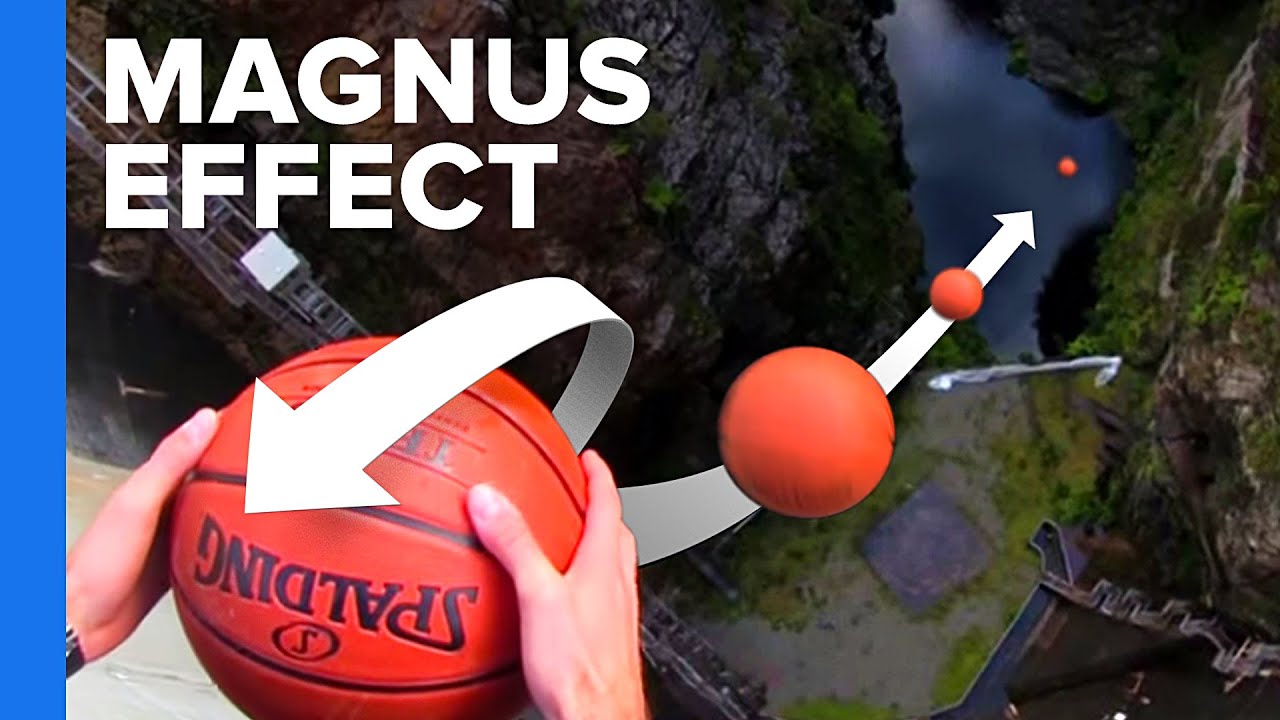
How far would a basketball with backspin go?
Rotor wing experimental aircraft: https://youtu.be/Ra8y6gGotwY
E-ship 1: https://youtu.be/qJ7haGqXs_E
Corner kick by Kyle: https://youtu.be/YIPO3W081Hw
How Ridiculous World Record Basket: https://youtu.be/H9SF2YIKRY8

Longyearbyen on Svalbard is the northernmost settlement with over 1000 residents
My trip to Norway was funded by Screen Australia, Film Victoria and Genepool Productions as part of a new project. More information soon.
More info on Svalbard: http://wke.lt/w/s/yiYNC
Music licensed from www.cuesongs.com "After Catalunya"
Spotify page: https://play.spotify.com/artis....t/2JnQ2AxkaRjlGCNmfk
iTunes: https://itunes.apple.com/gb/ar....tist/emphemetry/id41
Captions:
Come take a walk with me around Longyearbyen, the largest town on the Norwegian islands of Svalbard.
Parts of it look familiar, but make no mistake, this place is different.
At 78 degrees North, it lies just 800 miles or 1300 kilometres from the North Pole. And with over 2,000 permanent inhabitants it is the Northernmost real town on Earth.
There are only 50km of road, including the small streets between houses, so people get around the island mainly on snowmobile.
In fact there are more registered snowmobiles than residents.
Anyone leaving town is required to travel with a gun and someone who knows how to use it because the islands are also home to polar bears.
The average daytime high is below freezing for all but four months of the year, and from the end of October to mid-February the sun doesn’t rise at all. This is the long polar night.
Living here is tough. This past December an avalanche in town destroyed 10 homes, which used to be here, killing two people.
So how did this cold, remote, ice-covered archipelago come to be inhabited?
The hills around town are rich in coal deposits that have been mined for over 100 years.
The coal was transported to the port via a series of aerial tramways some of which remain today, though they are no longer operational.
Coal is a reminder that Svalbard was not always an Arctic ice world. 360 million years ago it was actually in the tropics North of the equator. A swampy area, it was covered with the precursors to modern ferns, which were much larger than they are today, reaching 10-30 metres in height.
This vegetation was then covered in mud and sand and submerged under the sea. Over time it turned into the coal deposits that in the 20th century brought miners from Norway, Russia, and the US.
Most of the coal mines have now closed and the economy is gradually shifting towards tourism, education and research.
Tourists take trips on snowmobiles and dog sleds.
There is a university centre in Svalbard, which offers semester courses in biology, physics and geology.
And up on the side of a mountain is the Svalbard Global seed vault… but that’s a story for another time.
The locals tell me that interest in the region from different nations is increasing.
As the globe warms and Arctic ice shrinks, trade routes are opening up across the North. And Svalbard is strategically placed between North America, Asia and Europe.
One day in the future Svalbard may no longer be as cold or remote as it once was.
But for now it is a reminder of how through our ingenuity people can live in the most inhospitable of places.
Shot with a DJI Phantom 4 drone
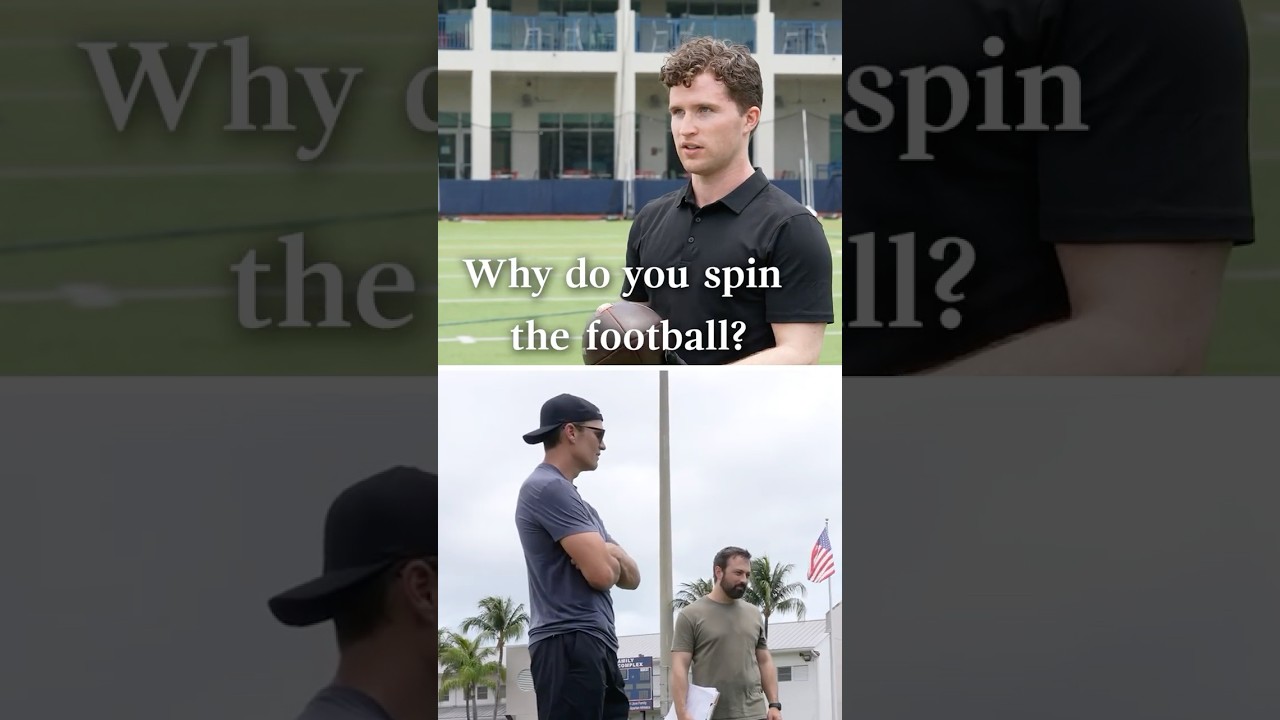
The real impact of spin on a football—explained with @tombrady.

Evidence Facebook's revenue is based on fake likes.
My first vid on the problem with Facebook: http://bit.ly/1dXudqY
I know first-hand that Facebook's advertising model is deeply flawed. When I paid to promote my page I gained 80,000 followers in developing countries who didn't care about Veritasium (but I wasn't aware of this at the time). They drove my reach and engagement numbers down, basically rendering the page useless. I am not the only one who has experienced this. Rory Cellan-Jones had the same luck with Virtual Bagel: http://www.bbc.co.uk/news/technology-18819338
The US Department of State spent $630,000 to acquire 2 million page likes and then realized only 2% were engaged. http://wapo.st/1glcyZo
I thought I would demonstrate that the same thing is still happening now by creating Virtual Cat (http://www.facebook.com/MyVirtualCat). I was surprised to discover something worse - false likes are coming from everywhere, including Canada, the US, the UK, and Australia. So even those carefully targeting their campaigns are likely being duped into spending real money on fake followers. Then when they try to reach their followers they have to pay again.
And it's possible to be a victim of fake likes without even advertising. Pages that end up on Facebook's "International Suggested Pages" are also easy targets for click-farms seeking to diversify their likes. http://tnw.co/NsflrC
Thanks to Henry, Grey, and Nessy for feedback on earlier drafts of this video.
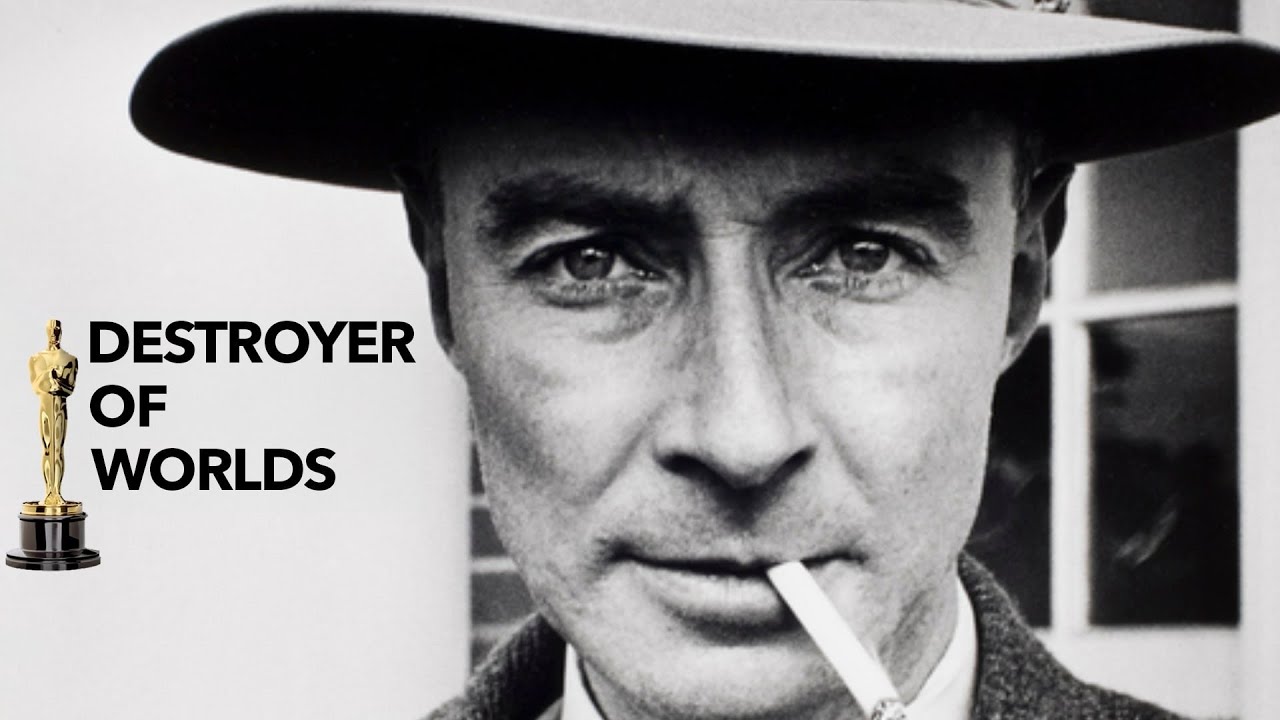
J. Robert Oppenheimer forever changed the course of history. He may be the most important physicist to have ever lived. Part of this video is sponsored by Wren. Offset your carbon footprint on Wren: https://www.wren.co/start/veritasium1 For the first 100 people who sign up, I will personally pay for the first month of your subscription!
If you want to learn more about Oppenheimer, I strongly recommend the book “American Prometheus” By Kai Bird and Martin Sherwin. It was the inspiration for Christopher Nolan's 2023 film "Oppenheimer", which won multiple awards, including Oscars in 2024 for Best Picture and Best Actor (Cillian Murphy).
If you’re looking for a molecular modeling kit, try Snatoms – a kit I invented where the atoms snap together magnetically – https://ve42.co/SnatomsV
▀▀▀
A huge thank you to Dr. Martin Rohde and Dr. Antonia Denkova from the TU Delft for proofreading the script and providing valuable feedback.
▀▀▀
References:
Bird, K., & Sherwin, M. J. (2021). American Prometheus: the triumph and tragedy of J. Robert Oppenheimer. Atlantic Books.
Smith, A. K., & Weiner, C. (1980). Robert Oppenheimer: letters and recollections. Bulletin of the Atomic Scientists, 36(5), 19-27. - https://ve42.co/Smith1980
Combes, J. M., Duclos, P., & Seiler, R. (1981). The born-oppenheimer approximation. Rigorous atomic and molecular physics, 185-213. - https://ve42.co/Combes1981
Rhodes, R. (2012). The making of the atomic bomb. Simon and Schuster.
Oppenheimer, J. R., & Volkoff, G. M. (1939). On massive neutron cores. Physical Review, 55(4), 374. - https://ve42.co/Oppenheimer1939b
Oppenheimer, J. R. (1927). Bemerkung zur Zerstreuung der α-Teilchen. Zeitschrift für Physik, 43(5-6), 413-415. - https://ve42.co/Oppenheimer1927
Oppenheimer, J. R. (1927). Zur quantenmechanik der richtungsentartung. Zeitschrift für Physik, 43(1-2), 27-46. - https://ve42.co/Oppenheimer1927b
Born, M., & Oppenheimer, R. (1927). Zur Quantentheorie der Molekeln Annalen der Physik, v. 84. - https://ve42.co/Born1927
Oppenheimer, J. R. (1928). Three notes on the quantum theory of aperiodic effects. Physical review, 31(1), 66.
Oppenheimer, J. R. (1928). On the quantum theory of the capture of electrons. Physical review, 31(3), 349.
Oppenheimer, J. R. (1931). Note on light quanta and the electromagnetic field. Physical Review, 38(4), 725.
Furry, W. H., & Oppenheimer, J. R. (1934). On the theory of the electron and positive. Physical Review, 45(4), 245. - https://ve42.co/Oppenheimer1934
Oppenheimer, J. R. (1935). Note on charge and field fluctuations. Physical Review, 47(2), 144. - https://ve42.co/Oppenheimer1935
Oppenheimer, J. R., & Snyder, H. (1939). On continued gravitational contraction. Physical Review, 56(5), 455. - https://ve42.co/Oppenheimer1939
Oppenheimer, J. R., & Phillips, M. (1935). Note on the transmutation function for deuterons. Physical Review, 48(6), 500. - https://ve42.co/Oppenheimer1935b
Malik, J. (1985). Yields of the Hiroshima and Nagasaki nuclear explosions (No. LA-8819). Los Alamos National Lab.(LANL), Los Alamos, NM (United States). - https://ve42.co/Malik1985
Ignition of the atmosphere with nuclear bombs -- https://ve42.co/Konopinski46
▀▀▀
Special thanks to our Patreon supporters:
Adam Foreman, Amadeo Bee, Anton Ragin, Balkrishna Heroor, Benedikt Heinen, Bernard McGee, Bill Linder, Blake Byers, Burt Humburg, Dave Kircher, Diffbot, Evgeny Skvortsov, Gnare, John H. Austin, Jr., john kiehl, Josh Hibschman, Juan Benet, KeyWestr, Lee Redden, Marinus Kuivenhoven, Meekay, meg noah, Michael Krugman, Orlando Bassotto, Paul Peijzel, Richard Sundvall, Sam Lutfi, Stephen Wilcox, Tj Steyn, TTST, Ubiquity Ventures
▀▀▀
Directed by Petr Lebedev
Written by Petr Lebedev & Derek Muller
Produced by Petr Lebedev, Han Evans and Derek Muller
Edited by Trenton Oliver & Katrina Jackson
Filmed by Derek Muller
Animation by Fabio Albertelli, Ivy Tello, & Mike Radjabov
Illustration by Jakub Misiek and Celia Bode
Additional video/photos supplied by Getty Images & Pond5
Music from Epidemic Sound

Go to our sponsor https://betterhelp.com/veritasium to get matched with a professional therapist who will listen and help.
▀▀▀
Huge thanks to the Australian Reptile Park for having us over to film – special thanks to Jake Meney for showing us the spiders and Caitlin Vine for organizing the shoot. https://www.reptilepark.com.au
Huge thanks to Dr Timothy Jackson with his help and answering our questions.
Thanks to Seqirus Australia for providing B-roll footage of the antivenom production process.
▀▀▀
References:
Pineda, S. S., Sollod, B. L., Wilson, D., Darling, A., Sunagar, K., Undheim, E. A., ... & King, G. F. (2014). Diversification of a single ancestral gene into a successful toxin superfamily in highly venomous Australian funnel-web spiders. BMC genomics, 15(1), 1-16 - https://ve42.co/Pineda2014
Isbister, G. K., Gray, M. R., Balit, C. R., Raven, R. J., Stokes, B. J., Porges, K., ... & Fisher, M. M. (2005). Funnel-web spider bite: a systematic review of recorded clinical cases. Medical journal of Australia, 182(8), 407-411 - https://ve42.co/Isbister2005
Herzig, V., Sunagar, K., Wilson, D. T., Pineda, S. S., Israel, M. R., Dutertre, S., ... & Fry, B. G. (2020). Australian funnel-web spiders evolved human-lethal δ-hexatoxins for defense against vertebrate predators. Proceedings of the National Academy of Sciences, 117(40), 24920-24928 - https://ve42.co/Herzig2020
Nicholson, G. M., & Graudins, A. (2002). Spiders of medical importance in the Asia–Pacific: Atracotoxin, latrotoxin and related spider neurotoxins. Clinical and experimental pharmacology and physiology, 29(9), 785-794 - https://ve42.co/Nicholson2002
Fletcher, J. I., Chapman, B. E., Mackay, J. P., Howden, M. E., & King, G. F. (1997). The structure of versutoxin (δ-atracotoxin-Hv1) provides insights into the binding of site 3 neurotoxins to the voltage-gated sodium channel. Structure, 5(11), 1525-1535 - https://ve42.co/Fletcher1997
Australian Reptile Park. (2022). Snake and Spider First Aid - https://ve42.co/ARPFirstAid
The Australian Museum. (20 ). Spider facts - https://ve42.co/SpiderFacts
▀▀▀
Special thanks to our Patreon supporters:
Orlando Bassotto, Tj Steyn, meg noah, Bernard McGee, KeyWestr, Amadeo Bee, TTST, Balkrishna Heroor, John H. Austin, Jr., john kiehl, Anton Ragin, Benedikt Heinen, Diffbot, Gnare, Dave Kircher, Burt Humburg, Blake Byers, Evgeny Skvortsov, Meekay, Bill Linder, Paul Peijzel, Josh Hibschman, Mac Malkawi, Juan Benet, Ubiquity Ventures, Richard Sundvall, Lee Redden, Stephen Wilcox, Marinus Kuivenhoven, Michael Krugman, and Sam Lutfi
▀▀▀
Written by Katie Barnshaw & Derek Muller
Edited by Trenton Oliver
Filmed by Petr Lebedev, Derek Muller and Jason Tran
Animation by Ivy Tello, Jakub Misiek and Fabio Albertelli
Neuron animation by Reciprocal Space – https://www.reciprocal.space
Additional video/photos supplied from Getty Images, Pond5
B-roll supplied by Seqirus Australia
Music from Epidemic Sound
Produced by Derek Muller, Petr Lebedev, Emily Zhang & Katie Barnshaw

Bowling has been reinvented many times over the past seven thousand years but especially in the last 30. This is the fascinating physics of balls, oil, lane and pins. A portion of this video was sponsored by Salesforce. Go to https://salesforce.com/veritasium to learn more.
Huge thanks to Steve Kloempken and all of Storm Bowling for letting us visit and get a glimpse into the crazy world of bowling.
Huge thanks to legends Chris Barnes and Pete Weber for taking the time to bowl with us.
Huge thanks to Creative Electron for their help with getting the bowling balls X-rayed. Check out their work here: https://creativeelectron.com/
Thanks to Ron Hatfield and James Freeman for their help with research. Check out their great book, Bowling Beyond the Basics: https://ve42.co/HatfieldFreeman
Thanks to the United States Bowling Congress (USBC) and Professional Bowlers Association (PBA) for their help with accessing archival data and footage.
Special thanks to Rod Cross for physics consultation.
Thanks to Bill Guszczo for giving us the idea to make this video in the first place.
▀▀▀▀▀▀▀▀▀▀▀▀▀▀▀▀▀▀▀▀▀▀▀▀▀▀▀▀▀▀▀▀▀▀▀▀▀
References:
Freeman, James, and Ron Hatfield. Bowling beyond the Basics: What's Really Happening on the Lanes, and What You Can Do about It. BowlSmart, 2018. -- https://ve42.co/HatfieldFreeman
N. Stremmel, P. Ridenour and S. Sterbenz. “Identifying the Critical Factors That Contribute to Bowling Ball Motion on a Bowling Lane.” United States Bowling Congress, 2008. -- https://ve42.co/BallMotionASQ
USBC Equipment Specifications and Certification Team. “Ball Motion Study: Phase I and II Final Report.” United States Bowling Congress, 2008. -- https://ve42.co/USBCBallMotion
Brettingen, Patrick, and Nicki Mours. “USBC static weight limits remain relevant.” United States Bowling Congress, 2011. -- https://ve42.co/USBCStaticWeight
Article on lane oil origins -- https://ve42.co/OilOrigins
Luna, Richard. “Bruce Pluckhahn says there's a little bit of bowling…” United Press International Archives, 1984. -- https://ve42.co/BowlingHistory
Johnson, Brody D. “The Physics of Bowling: How good bowlers stay off the straight and narrow.” St. Louis University. -- https://ve42.co/JohnsonPhysicsPpt
Talamo, Jim. “The Physics of Bowling Balls.” -- https://ve42.co/TalamoPhysicsPpt
Thompson, Ted. “Breakdown and Carrydown - Then and Now.” Kegel. 2012. -- https://ve42.co/ThompsonKegel
Frohlich, Cliff. “What Makes Bowling Balls Hook?” American Journal of Physics, vol. 72, no. 9, 2004, pp. 1170–1177., https://doi.org/10.1119/1.1767099. -- https://ve42.co/FrohlichHook
Article on bowling’s ranking in participatory sports -- https://ve42.co/BowlingRank
Speranza, Dan, and Dave Nestor. “Initial Oil Absorption Results.” United States Bowling Congress, 2016. -- https://ve42.co/USBCOilAbsorption
D. Benner, N. Mours, and P. Ridenour. “Pin Carry Study: Bowl Expo 2009.” United States Bowling Congress, 2009. -- https://ve42.co/USBCPinCarry
Hopkins, D. C., and J. D. Patterson. “Bowling Frames: Paths of a Bowling Ball.” American Journal of Physics, vol. 45, no. 3, 1977, pp. 263–266., https://doi.org/10.1119/1.11005. -- https://ve42.co/HopkinsPath
Normani, Franco. “The Physics of Bowling.” Real World Physics Problems. -- https://ve42.co/NormaniPhysics
Horaczek, Stan. “The insides of pro bowling balls will make your head spin.” Popular Science, 2020. -- https://ve42.co/HoraczekSpin
House shot oil pattern -- https://ve42.co/HouseOil. Licensed under Creative Commons: By Attribution 4.0.
▀▀▀▀▀▀▀▀▀▀▀▀▀▀▀▀▀▀▀▀▀▀▀▀▀▀▀▀▀▀▀▀▀▀▀▀▀
Special thanks to Patreon supporters: Andrew, Diffbot, Micah Mangione, MJP, Gnare, Nick DiCandilo, Dave Kircher, Edward Larsen, Burt Humburg, Blake Byers, Dumky, Evgeny Skvortsov, Meekay, Bill Linder, Paul Peijzel, Mac Malkawi, Michael Schneider, Big Badaboom, Ludovic Robillard, Jim buckmaster, fanime96, Juan Benet, Ruslan Khroma, Robert Blum, Richard Sundvall, Lee Redden, Vincent, Marinus Kuivenhoven, Alfred Wallace, Clayton Greenwell, Michael Krugman, Cy 'kkm' K'Nelson, Sam Lutfi, Ron Neal
Written by Derek Muller and Emily Zhang
Animations by Mike Radjabov and Ivy Tello
Filmed by Derek Muller, Trenton Oliver, and Emily Zhang
Edited by Trenton Oliver
SFX by Shaun Clifford
Additional video supplied by Getty Images
Music from Epidemic Sounds
Produced by Derek Muller, Petr Lebedev, and Emily Zhang
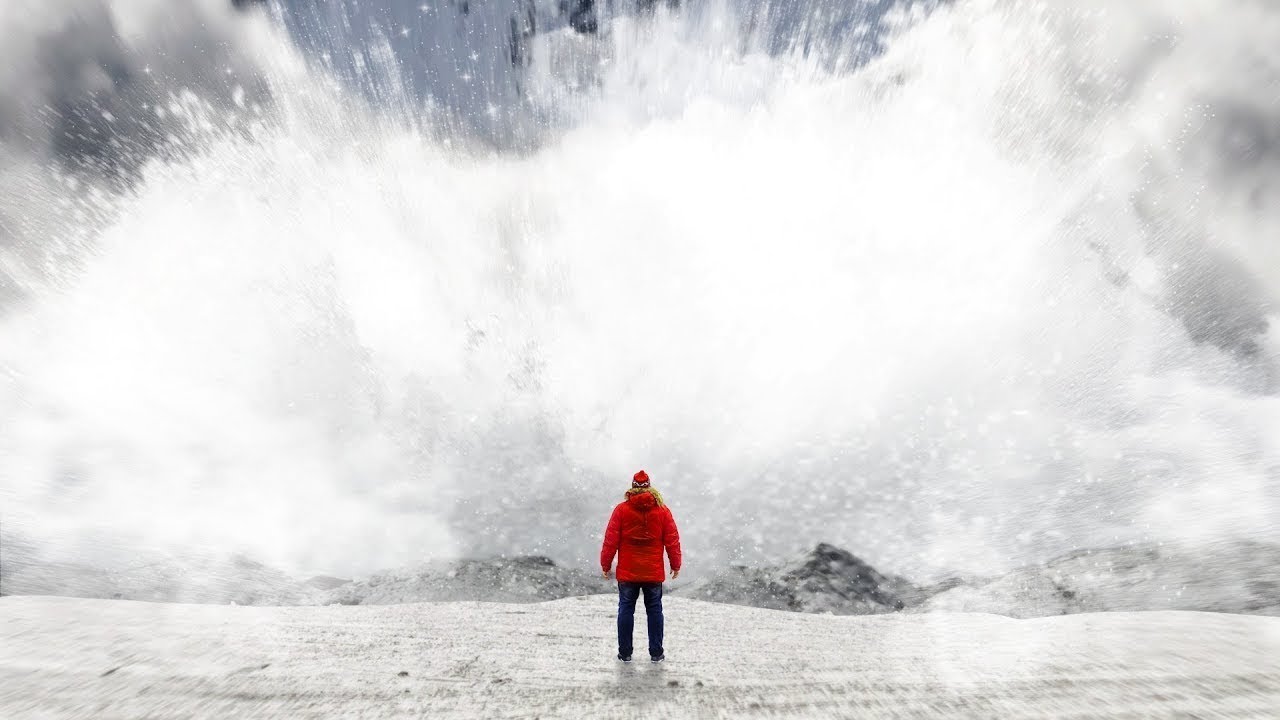
Avalanches are beautiful, majestic, and completely terrifying – this is a video all about the science of avalanches. Head to https://brilliant.org/veritasium to start your free 30-day trial, and get 20% off an annual premium subscription.
A massive thank you to everyone at Whistler Blackcomb for making this shoot happen – Dane Gergovich, David Iles, Alastair Collis, Erin Taylor, and everyone else on the ski patrol team. Thank you for keeping us safe!
A massive thank you to Bruce Tremper, Niko Schirmer, and Mark Smiley for their expertise and help with this video. We are truly grateful for your time and expertise.
Check out Niko's channel here -- it's easily some of the best skiing content on YouTube. https://www.youtube.com/@Nikolai_Schirmer
If you have any intention of going into the backcountry, you have to read Bruce’s book – Staying Alive in Avalanche Terrain. It’s the Bible for this stuff, and the book that inspired us to make this video.
▀▀▀
Special thanks to our Patreon supporters! Join the community to help us keep our videos free, forever: https://ve42.co/PatreonDE
Adam Foreman, Anton Ragin, Balkrishna Heroor, Bertrand Serlet, Bill Linder, Blake Byers, Burt Humburg, Chris Harper, Dave Kircher, David Johnston, Evgeny Skvortsov, Garrett Mueller, Gnare, gpoly, I. H., John H. Austin, Jr., john kiehl, Josh Hibschman, Juan Benet, KeyWestr, Kyi, Lee Redden, Marinus Kuivenhoven, Martin, Matthias Wrobel, Max Paladino, Meekay, meg noah, Michael Krugman, Orlando Bassotto, Paul Peijzel, Richard Sundvall, Sam Lutfi, Stephen Wilcox, Tj Steyn, Toni , TTST, Ubiquity Ventures, wolfee
If you’re looking for a molecular modeling kit, try Snatoms, a kit I invented where the atoms snap together magnetically - https://ve42.co/SnatomsV
▀▀▀
References:
Tremper, B. (2001). Staying Alive in Avalanche Terrain. Mountaineers Books. - https://ve42.co/Tremper2001
McClung, D. & Schaerer, P. (2006). The Avalanche Handbook. Mountaineers Books. - https://ve42.co/McClung2006
Hopfinger, E. J. (1983). Snow Avalanche Motion and Related Phenomena. Annual Review of Fluid Mechanics. - https://ve42.co/Hopfinger1983
Schweizer, J. et al. (2003). Snow avalanche formation. Reviews of Geophysics. - https://ve42.co/Schweizer2003
Schweizer, J. et al. (2008). Review of spatial variability of snowpack properties and its importance for avalanche formation. Cold Regions Science and Technology. - https://ve42.co/Schweizer2008
Jamieson, B. (2006). Formation of refrozen snowpack layers and their role in slab avalanche release. Reviews of Geophysics. - https://ve42.co/Jamieson2006
Schweizer, J. et al. (2016). Avalance release 101. International Snow Science Workshop Proceeding. - https://ve42.co/Schweizer2016
Schweizer, J. (2008). Snow avalanche formation and dynamics. Cold Regions Science and Technology. - https://ve42.co/Schweizer2008-2
Images & Video:
Skiing and snowboarding footage by Niko Schirmer - https://ve42.co/NikoYT
World's Biggest Avalanche (c)Thom Goddard/All Star Films Ltd 2015. Thank you to the Thom Goddard Channel for use - https://ve42.co/ThomGoddard
Newspaper clippings via Newspapers.com – https://ve42.co/Newspapers
Video of a snow slab avalanche via Trottet, B. et al. (2022). Transition from sub-Rayleigh anticrack to supershear crack propagation in snow avalanches. Nature Physics. - https://ve42.co/Trottet2022
Remote Triggered Avalanche via Henry’s Avalanche Talk - Remote Triggering of an Avalanche
WW1 images via Brugnara, Y. et al. (2016). December 1916: Deadly Wartime Weather. Geographica Bernensia - https://ve42.co/Brugnara2016
Major Avalanches via Geomorphological Hazards - https://ve42.co/MajorAvi
White Friday avalanche illustration via Avalanches WIllow - https://ve42.co/WhiteFriday
White Friday aftermath via Lost In History - https://ve42.co/AviGraves
Field mass on Marmolada via Austrian National Library - https://ve42.co/AviMass
Yungay disaster via NOAA - https://ve42.co/Yungay
Yungay aftermath via AMC Museum - https://ve42.co/YungayAMC
Bruce Tremper Image via utavy - https://ve42.co/BruceTPic
Snowpack via SnowStudies.org - https://ve42.co/SnowStudies
Snowpack via Avalanche.org - https://ve42.co/SnowPackAvi
Snow crystals via Reiweger, I. (2011). Failure of weak snow layers. ETH. - https://ve42.co/Reiweger2011
▀▀▀
Directed by Petr Lebedev
Written by Petr Lebedev and Derek Muller
Edited by Peter Nelson (Additional editing by James Horsley)
Animated by Jakub Misiek, Fabio Albertelli, Alex Zepherin, and Alex Drakoulis
Additional Research by Gregor Čavloviċ
Filmed by Petr Lebedev and Ryan Regehr
FPV Drone by Mitch Winton
Produced by Petr Lebedev, Derek Muller, Han Evans, Giovanna Utichi, Rob Beasley Spence, Emily Taylor and Gregor Čavloviċ
Thumbnail by Ren Hurley and Peter Sheppard
Additional video/photos supplied by Getty Images and Pond5
Music from Epidemic Sound

The Fast Fourier Transform is used everywhere but it has a fascinating origin story that could have ended the nuclear arms race. This video is sponsored by 80,000 Hours. Head to http://80000hours.org/veritasium to sign up for their newsletter and get sent a free copy of their in-depth career guide.
A huge thank you to Dr. Richard Garwin for taking the time to speak with us.
Thanks to Dr. Steve Brunton of the University of Washington for his help with understanding the Fast Fourier Transform.
Thanks to Dr. Cliff Thurber of the University of Wisconsin-Madison, Dr. Paul Richards of Columbia University, and Dr. Steven Gibbons of the Norwegian Geotechnical Institute for their expertise.
Thanks to Grant Sanderson of 3Blue1Brown for his helpful feedback on the script. His great video on the Fourier Transform is here - https://youtu.be/spUNpyF58BY
▀▀▀
References:
Kristensen, H.M., Korda, M. (2022). Status of World Nuclear Forces. Federation of American Scientists (FAS). https://ve42.co/Stockpile2022
Barth, K. H. (1998). Science and politics in early nuclear test ban negotiations. Physics Today, 51(3), 34-39. - https://ve42.co/Barth1998
Schmalberger, T. (1991). In pursuit of a nuclear test ban treaty - https://ve42.co/Schmalberger1991
Bowers, D., & Selby, N. D. (2009). Forensic seismology and the comprehensive nuclear-test-ban treaty. Annual Review of Earth and Planetary Sciences, 37, 209-236 - https://ve42.co/Bowers2009
Incorporated Research Institutions for Seismology (IRIS). (2022). How Often Do Earthquakes Occur? https://ve42.co/IRIS2022
Kimball, D. (2022). The Nuclear Testing Tally. Arms Control Association. https://ve42.co/TestTally2022
Kværna, T., & Ringdal, F. (2013). Detection capability of the seismic network of the International Monitoring System for the Comprehensive Nuclear Test Ban Treaty. Bulletin of the Seismological Society of America, 103(2A), 759-772 - https://ve42.co/Kvrna2013
Sykes, L. R., & Evernden, J. F. (1982). The verification of a comprehensive nuclear test ban. Scientific American, 247(4), 47-55 - https://ve42.co/Sykes1982
Peterson, J., & Hutt, C. R. (2014). World-wide standardized seismograph network: a data users guide (p. 82). US Department of the Interior, US Geological Survey. - https://ve42.co/Peterson2014
Richards, P. G., & Kim, W. Y. (2009). Monitoring for nuclear explosions. Scientific American, 300(3), 70-77 - https://ve42.co/Richards2009
Jacobsen, L. L., Fedorova, I., & Lajus, J. (2021). The seismograph as a diplomatic object: The Soviet–American exchange of instruments, 1958–1964. Centaurus, 63(2), 277-295 - https://ve42.co/Jacobsen2021
Schwartz S. I. (1998). The Hidden Costs Of Our Nuclear Arsenal: Overview Of Project Findings. The Brookings Institution - https://ve42.co/Schwartz1998
Ricón, J.L. (2016). The Soviet Union: Military Spending. Nintil - https://ve42.co/Nintil2016
Heideman, M. T., Johnson, D. H., & Burrus, C. S. (1985). Gauss and the history of the fast Fourier transform. Archive for history of exact sciences, 265-277 - https://ve42.co/Heideman1985
Ford, D. (2004). Richard Garwin - Session IV. American Institute of Physics (AIP). - https://ve42.co/Ford2004
Aaserud, F. (1986). Richard Garwin - Session I. American Institute of Physics (AIP). - https://ve42.co/Aaserud1986
Goldstein, A. (1997). James W. Cooley, an oral history. IEEE History Center, Piscataway, NJ, USA - https://ve42.co/Goldstein1997
Cooley, J., Garwin, R., Rader, C., Bogert, B., & Stockham, T. (1969). The 1968 Arden House workshop on fast Fourier transform processing. IEEE Transactions on Audio and Electroacoustics, 17(2), 66-76 - https://ve42.co/Cooley1969
▀▀▀
Special thanks to Patreon supporters:
Louis Lebbos, Elliot MIller, RayJ Johnson, Brian Busbee, Jerome Barakos M.D., Amadeo Bee, TTST, Balkrishna Heroor, Chris LaClair, John H. Austin, Jr., OnlineBookClub.org, Matthew Gonzalez, Eric Sexton, John Kiehl, Diffbot, Gnare, Dave Kircher, Burt Humburg, Blake Byers, Dumky, Evgeny Skvortsov, Meekay, Bill Linder, Paul Peijzel, Josh Hibschman, Mac Malkawi, Mike Schneider, John Bauer, jim buckmaster, Juan Benet, Sunil Nagaraj, Richard Sundvall, Lee Redden, Stephen Wilcox, Marinus Kuivenhoven, Michael Krugman, Cy 'kkm' K'Nelson, Sam Lutfi, Ron Neal
▀▀▀
Written by Derek Muller & Felicity Nelson
Filmed by Derek Muller & Raquel Nuno
Animation by Ivy Tello, Jakub Misiek, Alex Drakoulis, and Fabio Albertelli
Edited by Albert Leung & Derek Muller
Research Assistant: Katie Barnshaw
Additional video/photos supplied by Pond5 and Getty Images
Music from Epidemic Sound
Produced by Derek Muller, Petr Lebedev, and Emily Zhang
If you've seen footage from the International Space Station or any of the space shuttle missions, you know that astronauts float around as they orbit the Earth. Why is that? Is it because the gravitational force on them is zero in space? (Or nearly zero?) The truth is that the strength of the gravitational attraction is only slightly less than it is on Earth's surface. So how are they able to float? Well, they aren't floating - they're falling, along with the space station. They don't crash into the Earth because they have a huge orbital velocity. So as they accelerate towards the Earth, the Earth curves away beneath them and they never get any closer. Since the astronauts have the same acceleration as the space station, they feel weightless. It's like being in a free-falling elevator (without the disastrous landing).
Director of Photography: Stefan Smith
Camera Assistant: Raa Perajeev
Boom Operator: Maha Sivalingam
Production Coordinator: Adrian Tan
Production Assistants: James Peniata, Pratheep Ramachandran

How jumping spiders reveal an entire secret world of colors. Let BetterHelp connect you to a therapist who can support you - all from the comfort of your own home. Visit https://betterhelp.com/veritasium and enjoy a special discount on your first month.
A massive thank you to everyone at Day’s Edge Productions for making this documentary happen. Check them out at https://daysedge.com/.
You can watch the full-length documentary “Spider Vision: Decoding Color” on Curiosity Stream - coming soon.
▀▀▀
Special thanks to our Patreon supporters! Join the community to help us keep our videos free, forever: https://ve42.co/PatreonDE
Adam Foreman, Anton Ragin, Balkrishna Heroor, Bertrand Serlet, Bill Linder, Blake Byers, Bruce, Burt Humburg, Chris Harper, Dave Kircher, David Johnston, Evgeny Skvortsov, Garrett Mueller, Gnare, gpoly, I. H., John H. Austin, Jr., john kiehl, Josh Hibschman, Juan Benet, KeyWestr, Kyi, Lee Redden, Marinus Kuivenhoven, Martin, Matthias Wrobel, Max Paladino, Meekay, meg noah, Michael Krugman, Orlando Bassotto, Paul Peijzel, Richard Sundvall, Sam Lutfi, Stephen Wilcox, Tj Steyn, Toni, TTST, Ubiquity Ventures, wolfee
If you’re looking for a molecular modeling kit, try Snatoms, a kit I invented where the atoms snap together magnetically - https://ve42.co/SnatomsV
Production by Day's Edge fully funded by National Science Foundation (Grant #IOS 1831767)
Featuring: Dr. Nathan Morehouse (University of Cincinnati); Olivia Harris (University of Cincinnati), Dr. Megan Porter (University of Hawaii); Dr. Lisa Taylor (University of Florida); Dr. Wayne Maddison (University of British Columbia); and Dr. Emma Alexander (Northwestern University)
▀▀▀
Directed by Neil Losin
Written by Neil Losin
Edited by Neil Losin, Andy Laub, and Alan Saunders
Animated by Root House Studio and David Hutchinson
Filmed by Neil Losin, Nate Dappen, Alex Wiles, Andy Laub, and Barend van der Watt
Produced by Day’s Edge Productions
Repurposed for YouTube by Derek Muller, Casper Mebius, Petr Lebedev, Peter Nelson, Trenton Oliver, Emily Zhang, Giovanna Utichi, Rob Beasley Spence, Emily Taylor, and Gregor Čavlović
Thumbnail contributions by Ren Hurley and Peter Sheppard
Video/photos supplied by Day’s Edge Productions and Storyblocks
Music by Adrian Younge, PBS, Epidemic Sound, and Jonny Hyman
Check out 2Veritasium! https://ve42.co/2Ve
MinutePhysics has a great video on Milkman, vomiting levitator: http://dft.ba/-vomphysics
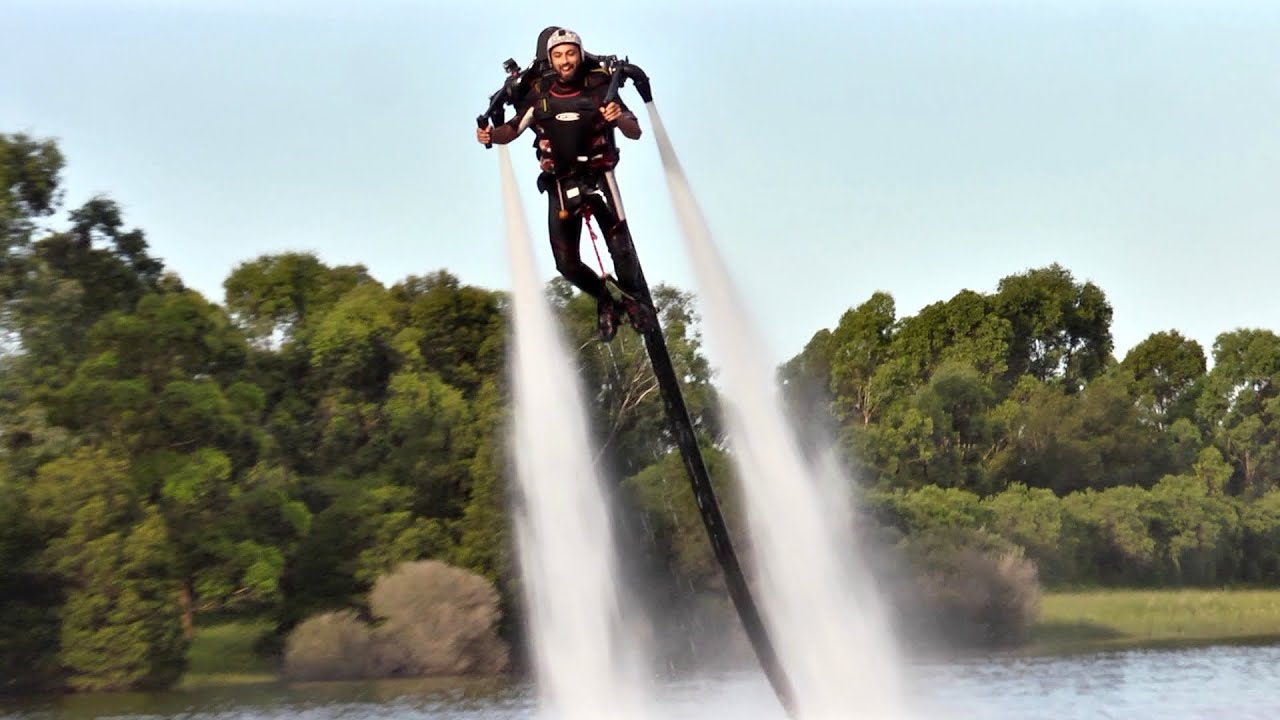
Jetpacking was awesome fun! Despite the fat lip I had a great time. I think knowing a bit about physics actually helps fly the jetpack. It works on the same principle as a rocket (Newton's 3rd law) but unlike the shuttle, you don't carry your own propellant with you. Instead, water is pumped out of the lake by the jetski at up to 60 litres a second. It is then fired out of the nozzles at around 15 m/s creating 1800 N of force, the equivalent of about 150 fire extinguishers. On me this can produce acceleration of about 1.5g's.
Music by Kevin McLeod (http://incompetech.com) Silly Fun, Also Sprach Zarathustra
Supported by Science Alert: http://on.fb.me/14ehuxA
Slow motion filming by Questacon: http://bit.ly/ZoWFGR

A story is worth a thousand data points.
My second channel: http://bit.ly/2veritasium
More info on this topic: http://wke.lt/w/s/TzNC0
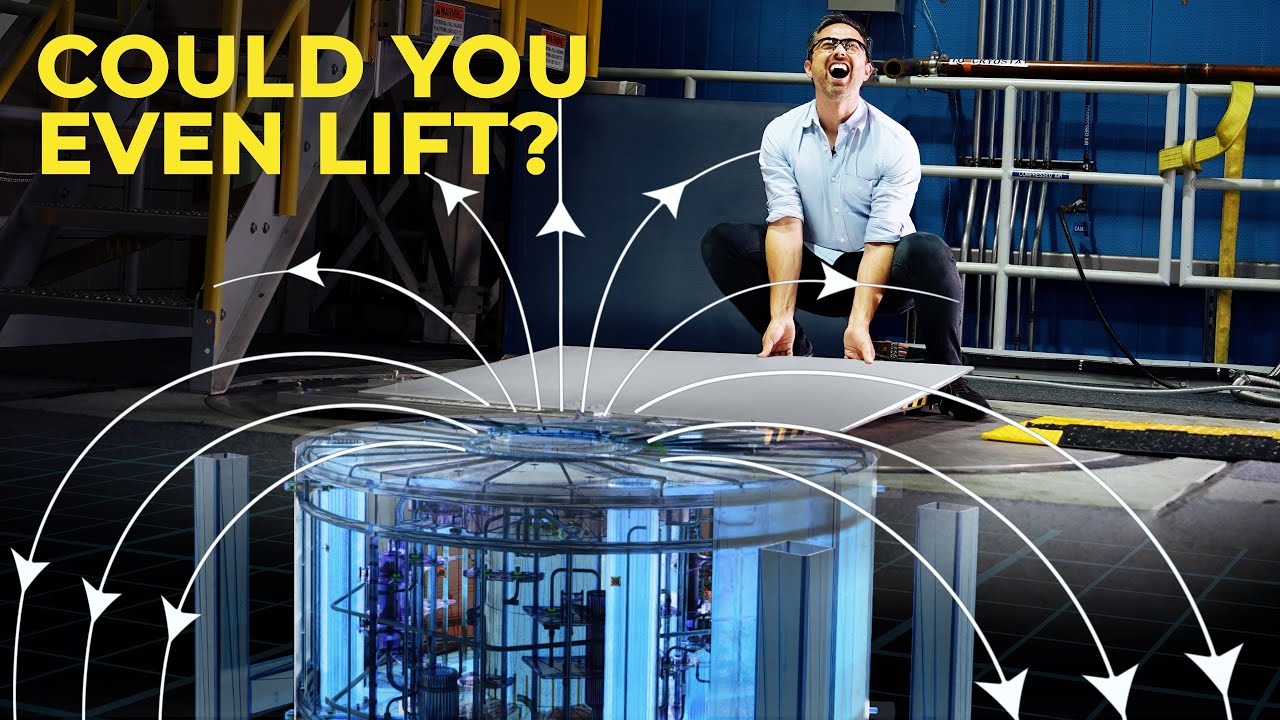
The world's strongest magnet is a million times stronger than Earth's magnetic field. Learn more about sustainability and Google’s efforts at sustainability.google. Part of this video was sponsored by Google.
Trends insights for the past year are based on Google Trends data from 2/10/2022 - 2/10/2023, U.S.
▀▀▀
Thanks to the entire NHMFL team - especially Tim, Stephen, Caroline, Kristin, Sam, Lance, and everyone who helped with the demos - for the great visit.
The NHMFL is funded by the National Science Foundation and the State of Florida.
Special thanks to Henry from Minutephysics for lending his magnet animations from our magnet collaboration: https://youtu.be/hFAOXdXZ5TM
▀▀▀
References:
Liu, Y., Zhu, D. M., Strayer, D. M., & Israelsson, U. E. (2010). Magnetic levitation of large water droplets and mice. Advances in Space Research, 45(1), 208-213.
Simon, M. D., & Geim, A. K. (2000). Diamagnetic levitation: Flying frogs and floating magnets. Journal of applied physics, 87(9), 6200-6204.
Berry, M. V., & Geim, A. K. (1997). Of flying frogs and levitrons. European Journal of Physics, 18(4), 307.
▀▀▀
Special thanks to our Patreon supporters:
Tj Steyn, Meg Noah, Bernard McGee, James Sanger, Elliot Miller, Jerome Barakos M.D., Amadeo Bee, TTST, Balkrishna Heroor, Chris LaClair, John H. Austin Jr., Eric Sexton, John Kiehl, Anton Ragin, Diffbot, Gnare, Dave Kircher, Burt Humburg, Blake Byers, Evgeny Skvortsov, Meekay, Bill Linder, Paul Peijzel, Josh Hibschman, Mac Malkawi, Juan Benet, Sunil Nagaraj, Richard Sundvall, Lee Redden, Stephen Wilcox, Marinus Kuivenhoven, Michael Krugman, Cy 'kkm' K'Nelson, Sam Lutfi
▀▀▀
Written by Derek Muller
Edited and Motion Graphics by Trenton Oliver
Coordinated by Emily Zhang and Derek Muller
Filmed by Derek Muller, Trenton Oliver, Raquel Nuno and Emily Zhang
Additional video/photos supplied by Pond5 & Getty Images
Music from Epidemic Sound
Thumbnail by Ignat Berbeci
Produced by Derek Muller, Petr Lebedev, and Emily Zhang

How the brain works, how we learn, and why we sometimes make stupid mistakes.
Submit ideas: http://ve42.co/GotIdeas
Apply to work with me: http://ve42.co/JoinUs
Thanks to Patreon supporters:
Nathan Hansen, Donal Botkin, Tony Fadell, Zach Mueller, Ron Neal
Support Veritasium on Patreon: http://bit.ly/VePatreon
This video was inspired by the book Thinking Fast and Slow by Daniel Kahneman
Harpist: Lara Somogyi http://ve42.co/Lara
Animator: Jesse Agar http://ve42.co/ThisPlace
Filmed by Raquel Nuno
Music by Kevin MacLeod, http://incompetech.com "Sneaky Adventure" "Harlequin"
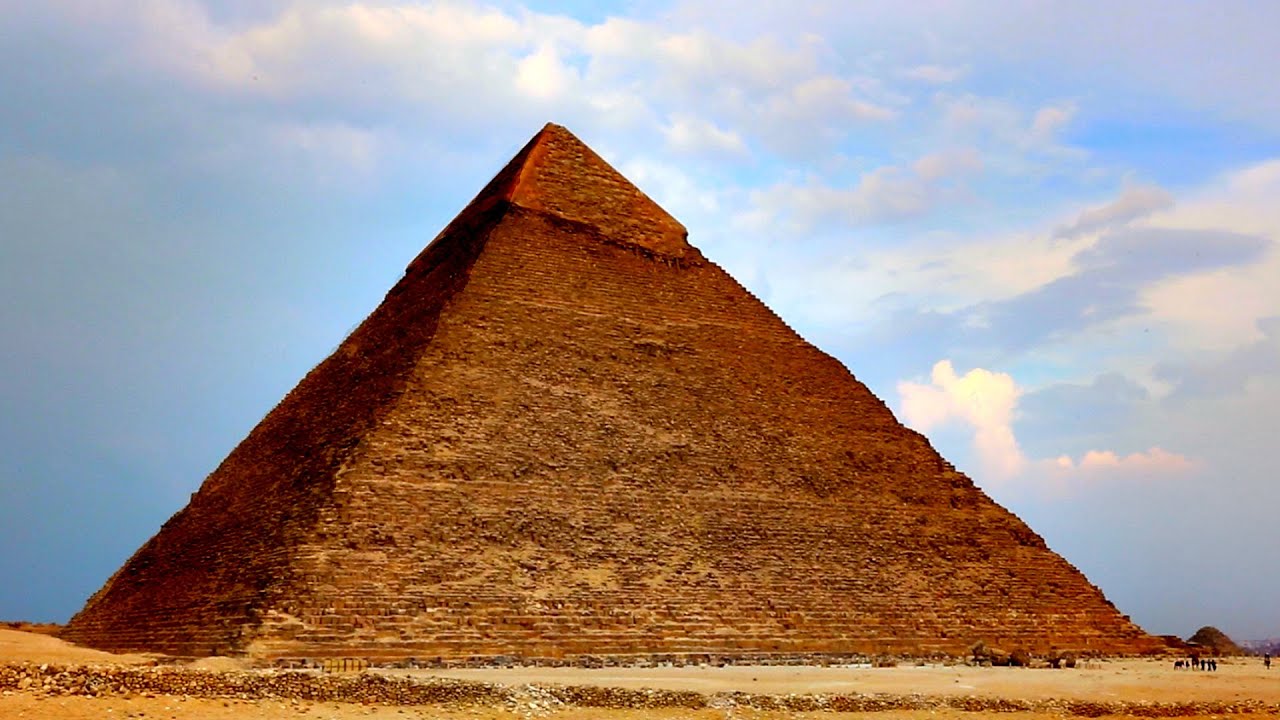
Key aspects of pyramid construction from quarry to completion.
Check out Audible: http://bit.ly/AudibleVe
Live show in Alabama: http://bit.ly/VeRAOI
The most common misconception about the pyramids is that they were built by slaves. Recent archeological evidence suggests they were instead constructed by paid workers. Some may have performed this work as a form of tax payment for several months of the year. Skilled engineers would have planned and orchestrated the building. An estimated 10,000-20,000 people would have been working on a pyramid at any one point in time. They were well fed and provided with shelter near the pyramids. Plus their burial sites close by indicate they were respected and were not slaves.
Much of the limestone was quarried from the Giza plateau itself, meaning the stones did not need to be transported far. The granite casing of Menkaure's pyramid, on the other hand, was transported from Aswan, around 600 miles, or 1000 km up the Nile.
Editing assistance by Dustin Chow
Music by Kevin MacLeod, Incompetech.com "Desert City" and "Ibn Al-Noor"