Top videos
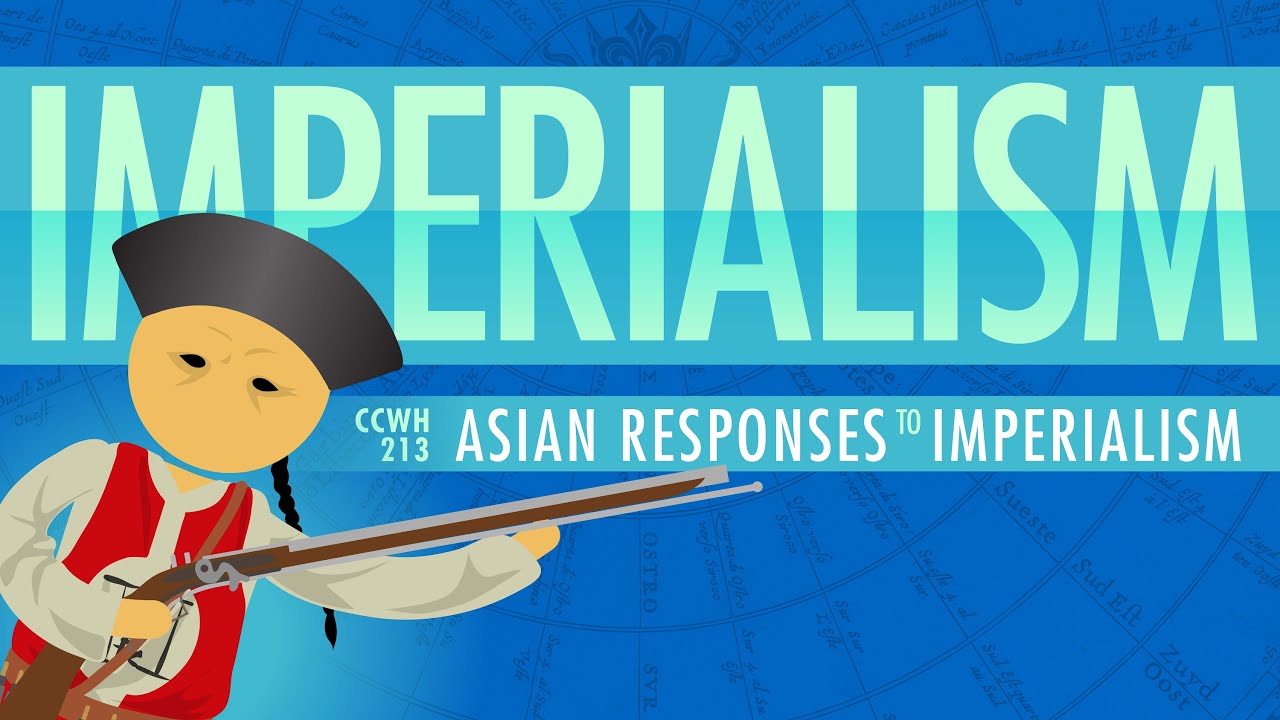
In which John Green teaches you about Imperialism, but not from the perspective of the colonizers. This week John looks at some Asian perspectives on Imperialism; specifically, writers from countries that were colonized by European powers. We'll look at the writings of Sayyid Jamal ad-Din al-Afghani from the Middle East, Liang Qichao from China, and Rabindranath Tagore from India. these voices from the countries that were colonized give us a sense of how conquered people saw their conquerors, and give an insight into what these nations learned from being dominated by Europe. It's pretty interesting, OK? A lot of this episode is drawn from a fascinating book by Pankaj Mishra called The Ruins of Empire: The Revolt Against the West and the Remaking of Asia. You should read it.
Crash Course is on Patreon! You can support us directly by signing up at http://www.patreon.com/crashcourse
Want to find Crash Course elsewhere on the internet?
Facebook - http://www.facebook.com/YouTubeCrashCourse
Twitter - http://www.twitter.com/TheCrashCourse
Instagram - https://www.instagram.com/thecrashcourse/
CC Kids: http://www.youtube.com/crashcoursekids
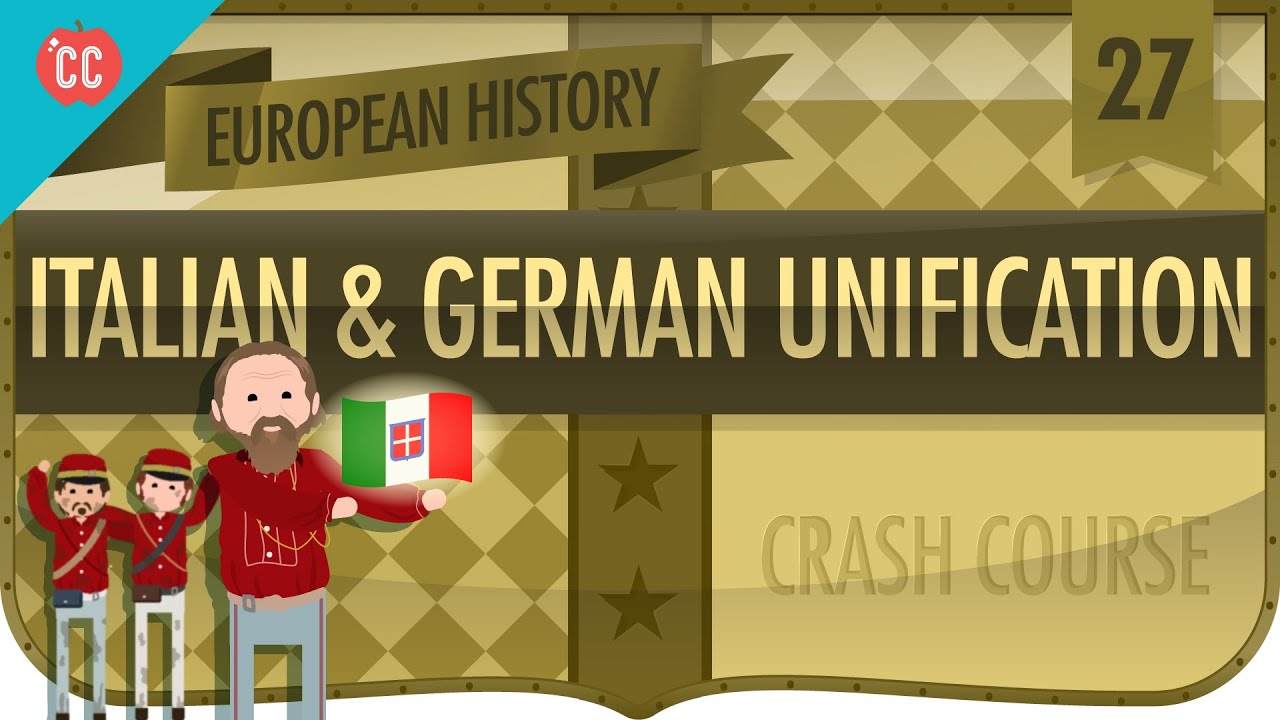
So, we haven't talked much about Italy and Germany so far in Crash Course Euro, and that's because prior to the mid-19th century, those two nation-states weren't really a thing. Today we'll look at how Italy and Germany pulled it together in the second half of the 1800s. You'll learn about Guisseppe Garibaldi, Victor Emmanuelle, Otto von Bismarck, Wilhelm I, and a whole heck of a lot about the development of modern politics.
Sources
-Hunt, Lynn. The Making of the West: Peoples and Cultures. 6th ed. Boston: Bedford St. Martins, 2019.
-Lerman, Katharine Anne. Bismarck. London: Routledge, 2004.
Crash Course is on Patreon! You can support us directly by signing up at http://www.patreon.com/crashcourse
Thanks to the following patrons for their generous monthly contributions that help keep Crash Course free for everyone forever:
Eric Prestemon, Sam Buck, Mark Brouwer, Indika Siriwardena, Avi Yashchin, Timothy J Kwist, Brian Thomas Gossett, Haixiang N/A Liu, Jonathan Zbikowski, Siobhan Sabino, Zach Van Stanley, Jennifer Killen, Nathan Catchings, Brandon Westmoreland, dorsey, Kenneth F Penttinen, Trevin Beattie, Erika & Alexa Saur, Justin Zingsheim, Jessica Wode, Tom Trval, Jason Saslow, Nathan Taylor, Khaled El Shalakany, SR Foxley, Sam Ferguson, Yasenia Cruz, Eric Koslow, Tim Curwick, David Noe, Shawn Arnold, William McGraw, Andrei Krishkevich, Rachel Bright, Jirat, Ian Dundore
--
Want to find Crash Course elsewhere on the internet?
Facebook - http://www.facebook.com/YouTubeCrashCourse
Twitter - http://www.twitter.com/TheCrashCourse
Tumblr - http://thecrashcourse.tumblr.com
Support Crash Course on Patreon: http://patreon.com/crashcourse
CC Kids: http://www.youtube.com/crashcoursekids
#crashcourse #history #europeanhistory

Today we work on following directions and we talk about how to ask friends to play!
Featuring Simon Says by Patty Shukla https://www.youtube.com/channe....l/UC1J5R-2zsrrICAYmk
And a Dance Party by our favorite duo, Koo Koo Kangaroo!
http://kookookangaroo.com/
https://www.youtube.com/kookookangaroo

Permutations and Combinations tell us the number of different arrangements of items or numbers that can occur. In this lesson we look at the counting principle - a fast method of counting the number of various arrangements through multiplication.
In this video we also use combinations and permutation counting principles to answer some of the big questions of life - how many different outfit combinations do you have, how many lotto permutations are there, why do they call the tecmath the Count?
https://www.youtube.com/playli....st?list=PLjbxBzUM6SL To support free math on Patreon (thank you): https://www.patreon.com/tecmath To donate to the tecmath channel: https://paypal.me/tecmath?locale.x=en_AU To donate to the tecmath channel: https://paypal.me/tecmath?locale.x=en_AU
To support tecmath on Patreon: https://www.patreon.com/tecmath
To buy tecmath mechandise: https://teespring.com/stores/tecmath-store

🕵️Listen up, Check out Empire of Sin with our link: https://play.empireofsingame.com/SimpleHistory
Thanks Paradox for sponsoring🍸
Become a Simple History member: https://www.youtube.com/simplehistory/join
Support us on Patreon: https://www.patreon.com/simplehistory
Copyright: DO NOT translate and re-upload our content on Youtube or other social media.
SIMPLE HISTORY MERCHANDISE
Get the Simple History books on Amazon:
https://www.amazon.com/Daniel-....Turner-%60/e/B00H5TY
T-Shirts
https://teespring.com/stores/s....imple-history-offici
Simple history gives you the facts, simple!
See the book collection here:
Amazon USA
http://www.amazon.com/Daniel-Turner/e/B00H5TYLAE/
Amazon UK
http://www.amazon.co.uk/Daniel....-Turner/e/B00H5TYLAE
https://www.facebook.com/Simpl....e-History-5494376751
https://twitter.com/SimpleHistoryYT
Credit:
Created by Daniel Turner
Script: Dejan Milivojevic
Narrator:
Chris Kane
https://vocalforge.com/
Music Credit:
Dances and Dames by Kevin MacLeod is licensed under a Creative Commons Attribution 4.0 licence. https://creativecommons.org/licenses/by/4.0/
Source: http://incompetech.com/music/r....oyalty-free/index.ht
Artist: http://incompetech.com/
Sources:
Campbell, Rodney. The Luciano Project: The Secret Wartime Collaboration of the Mafia and the U.S. Navy. McGraw-Hill, 1977.
Newark, Timothy. The Mafia at War: Allied Collusion with the Mob. Frontline, 2012.
Pantaleone, Michele. The Mafia and Politics. Chatto & Windus, 1966.
Lupo, Salvatore. History of the Mafia. Columbia University Press, 2009.
Lupo, Salvatore. The Two Mafias: A Transatlantic History, 1888-2008. Palgrave Macmillan, 2015.

En esta nueva clase de español aprenderemos vocabulario y gramática relacionado con las diferentes profesiones.
Aprende a decir en Español lo que haces y a qué te dedicas.
Además veremos el masculino y el femenino de montones de profesiones.
Y tu... ¿A qué te dedicas? ¿Cuál es el trabajo de tus sueños?
Suscribirse:https://www.youtube.com/Aprend....erespañolonline?sub_ 🔔
✅ Curso de español para principiantes: https://youtube.com/playlist?l....ist=PLyhXDeW_WjhBv8b
✅ Español nivel intermedio: https://youtube.com/playlist?l....ist=PLyhXDeW_WjhAlQR
✅ Verbos en español: https://youtube.com/playlist?l....ist=PLyhXDeW_WjhDyOv

En este nuevo video para aprender español, acompañamos a Max en una mañana llena de imprevistos y situaciones inesperadas.
Aprenderemos vocabulario y expresiones útiles para describir acciones cotidianas, personas y diálogos en español.
Resumen de Aprendizaje
✅ Vocabulario: Aprendemos palabras relacionadas con la rutina diaria, transporte y situaciones inesperadas.
✅ Expresiones clave: Frases útiles para describir acciones, personas y diálogos en español.
✅ Tiempos verbales: Practicamos el presente simple, pretérito indefinido y futuro simple.
Preguntas para Practicar:
¿Qué haces tú por la mañana antes de ir al trabajo o al estudio?
¿Alguna vez has perdido el autobús o tren? ¿Qué hiciste?
¿Cómo describirías a un nuevo amigo o amiga en español?
🎥 ¡No te pierdas nuestros próximos videos!
👉 Si te gustó este video y quieres seguir aprendiendo español de una manera divertida y fácil, ¡suscríbete a nuestro canal y activa la campanita de notificaciones! 🔔 Así estarás al tanto de todos nuestros nuevos contenidos.
🌟 ¿Por qué suscribirte?
Aprenderás nuevo vocabulario y expresiones útiles.
Mejorarás tu comprensión auditiva y pronunciación.
¡Y lo más importante! Te divertirás mientras aprendes.
💬 ¡Nos encanta leer tus comentarios!
Déjanos un comentario contándonos qué parte del video te gustó más o qué temas te gustaría ver en el futuro. ¡Tu opinión es muy importante para nosotros!
🚀 ¡Únete a nuestra comunidad de estudiantes de español!
Juntos podemos hacer que aprender español sea una experiencia increíble. ¡Nos vemos en el próximo video! 😊

Hemos comenzado un nuevo año lleno de buenas intenciones y propósitos.
En este nuevo vídeo para aprender español veremos algunos ejemplos de propósitos para el nuevo año.
Buenas intenciones que solemos tener al iniciar un nueva etapa.
¿Cuáles son tus propósitos para este nuevo año? Déjalo en los comentarios.
Suscribirse:https://www.youtube.com/Aprend....erespañolonline?sub_ 🔔
✅ Curso de español para principiantes: https://youtube.com/playlist?l....ist=PLyhXDeW_WjhBv8b
✅ Español nivel intermedio: https://youtube.com/playlist?l....ist=PLyhXDeW_WjhAlQR
✅ Verbos en español: https://youtube.com/playlist?l....ist=PLyhXDeW_WjhDyOv

Practice Your Spanish With Chateo - a Spanish-speaking chatbot! | Get a discount off your first 6 months with code CHATEOBOT | Sign up at: https://www.senorjordan.com/chat
~~~~~~~~~~~~~~~~~~~~~~~~~~~~~~
SUBSCRIBE for more Spanish videos: http://bit.ly/XGe7we
and make sure to click the notification bell!
Follow me on Facebook: https://www.facebook.com/srjordanspanish
Tweet me: https://twitter.com/senorjordan
Check out my website: http://www.senorjordan.com
Follow me on Instagram: @senorjordanvideos
Listen to my music on Soundcloud:
https://soundcloud.com/senorjordanspanish
Listen to my music on Spotify:
https://open.spotify.com/artis....t/2nyJ9GgLNMckXCuBHU
Buy my songs on iTunes:
https://music.apple.com/us/artist/1621526948
Buy my songs on Amazon:
https://www.amazon.com/music/p....layer/artists/B09Z35
Donate to my video-making project:
https://paypal.me/srjordanvideos?country.x=US&locale.x=en_US
~~~~~~~~~~~~~~~~~~~~~~~~~~~~~~
See explanation on Ojalá here:
https://www.youtube.com/watch?v=dEJdxXMpoTY
Word bank coming soon!
Courses on Khan Academy are always 100% free. Start practicing—and saving your progress—now: https://www.khanacademy.org/sc....ience/physics/two-di
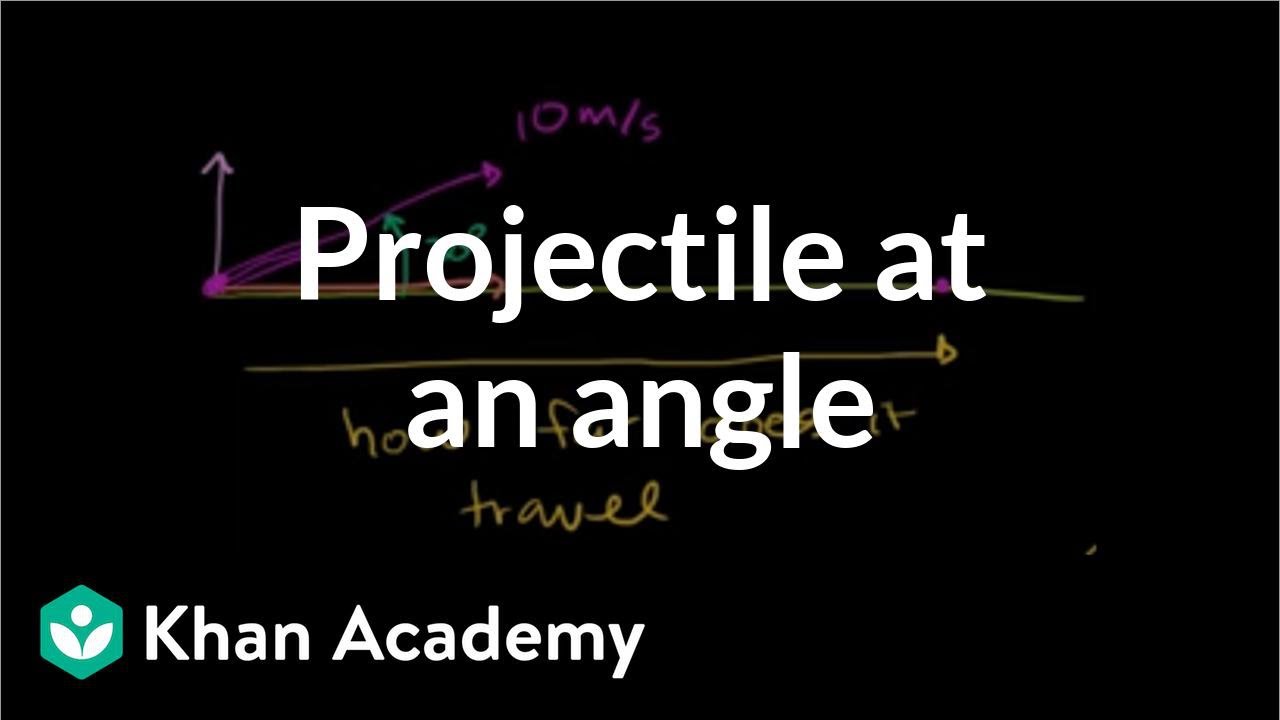
Figuring out the horizontal displacement for a projectile launched at an angle. Created by Sal Khan.
Watch the next lesson: https://www.khanacademy.org/science/physics/two-dimensional-motion/two-dimensional-projectile-mot/v/different-way-to-determine-time-in-air?utm_source=YT&utm_medium=Desc&utm_campaign=physics
Missed the previous lesson? https://www.khanacademy.org/science/physics/two-dimensional-motion/two-dimensional-projectile-mot/v/visualizing-vectors-in-2-dimensions?utm_source=YT&utm_medium=Desc&utm_campaign=physics
Physics on Khan Academy: Physics is the study of the basic principles that govern the physical world around us. We'll start by looking at motion itself. Then, we'll learn about forces, momentum, energy, and other concepts in lots of different physical situations. To get the most out of physics, you'll need a solid understanding of algebra and a basic understanding of trigonometry.
About Khan Academy: Khan Academy offers practice exercises, instructional videos, and a personalized learning dashboard that empower learners to study at their own pace in and outside of the classroom. We tackle math, science, computer programming, history, art history, economics, and more. Our math missions guide learners from kindergarten to calculus using state-of-the-art, adaptive technology that identifies strengths and learning gaps. We've also partnered with institutions like NASA, The Museum of Modern Art, The California Academy of Sciences, and MIT to offer specialized content.
For free. For everyone. Forever. #YouCanLearnAnything
Subscribe to Khan Academy’s Physics channel: https://www.youtube.com/channe....l/UC0oGarQW2lE5PxhGo
Subscribe to Khan Academy: https://www.youtube.com/subscr....iption_center?add_us
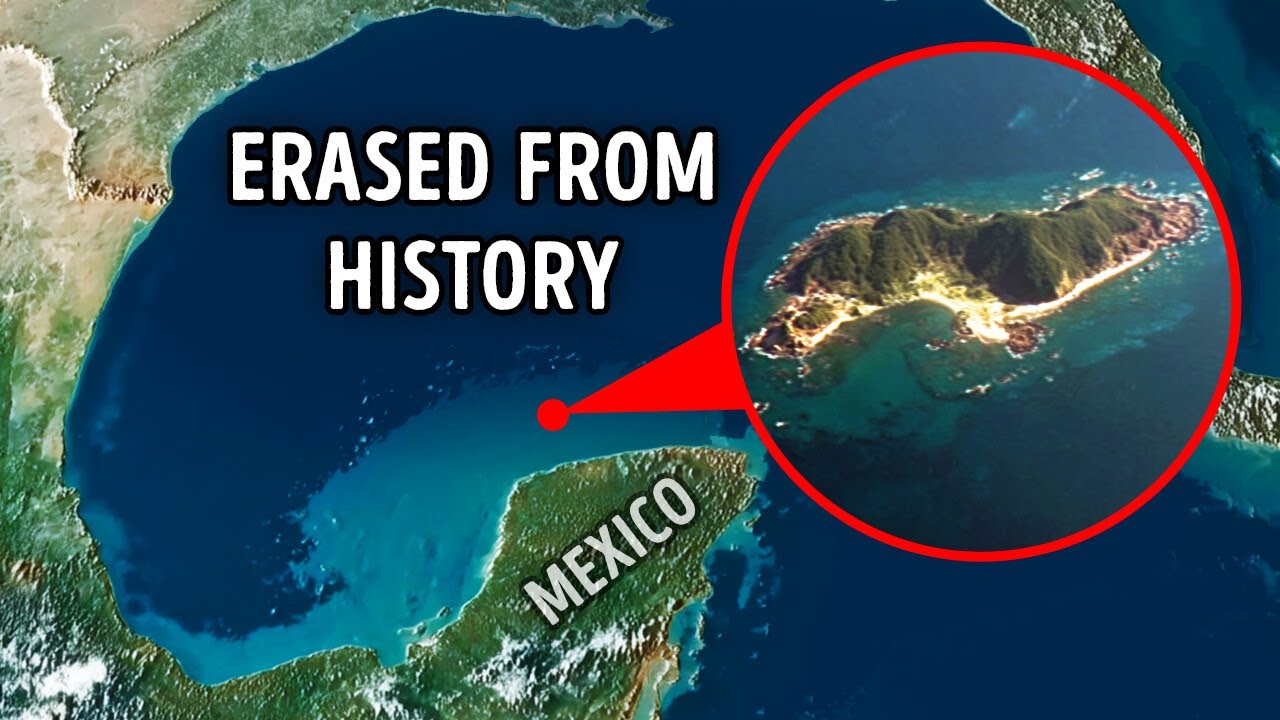
An island once marked on every map simply vanished without a trace. Bermeja Island in the Gulf of Mexico was there for centuries - until it wasn’t. Did it sink, get destroyed, or never exist at all? Let’s dive into the strange world of disappearing islands, forbidden lands, and mysterious places science still can’t fully explain.
Animation is created by Bright Side.
----------------------------------------------------------------------------------------
Music from TheSoul Sound: https://thesoul-sound.com/
Check our Bright Side podcast on Spotify and leave a positive review! https://open.spotify.com/show/....0hUkPxD34jRLrMrJux4V
Subscribe to Bright Side: https://goo.gl/rQTJZz
----------------------------------------------------------------------------------------
Our Social Media:
Facebook: https://www.facebook.com/brightplanet/
Instagram: https://www.instagram.com/brightside.official
TikTok: https://www.tiktok.com/@bright....side.official?lang=e
Stock materials (photos, footages and other):
https://www.depositphotos.com
https://www.shutterstock.com
https://www.eastnews.ru
----------------------------------------------------------------------------------------
For more videos and articles visit: http://www.brightside.me
----------------------------------------------------------------------------------------
This video is made for entertainment purposes. We do not make any warranties about the completeness, safety and reliability. Any action you take upon the information in this video is strictly at your own risk, and we will not be liable for any damages or losses. It is the viewer's responsibility to use judgement, care and precaution if you plan to replicate.
Courses on Khan Academy are always 100% free. Start practicing—and saving your progress—now: https://www.khanacademy.org/ma....th/ap-calculus-bc/bc
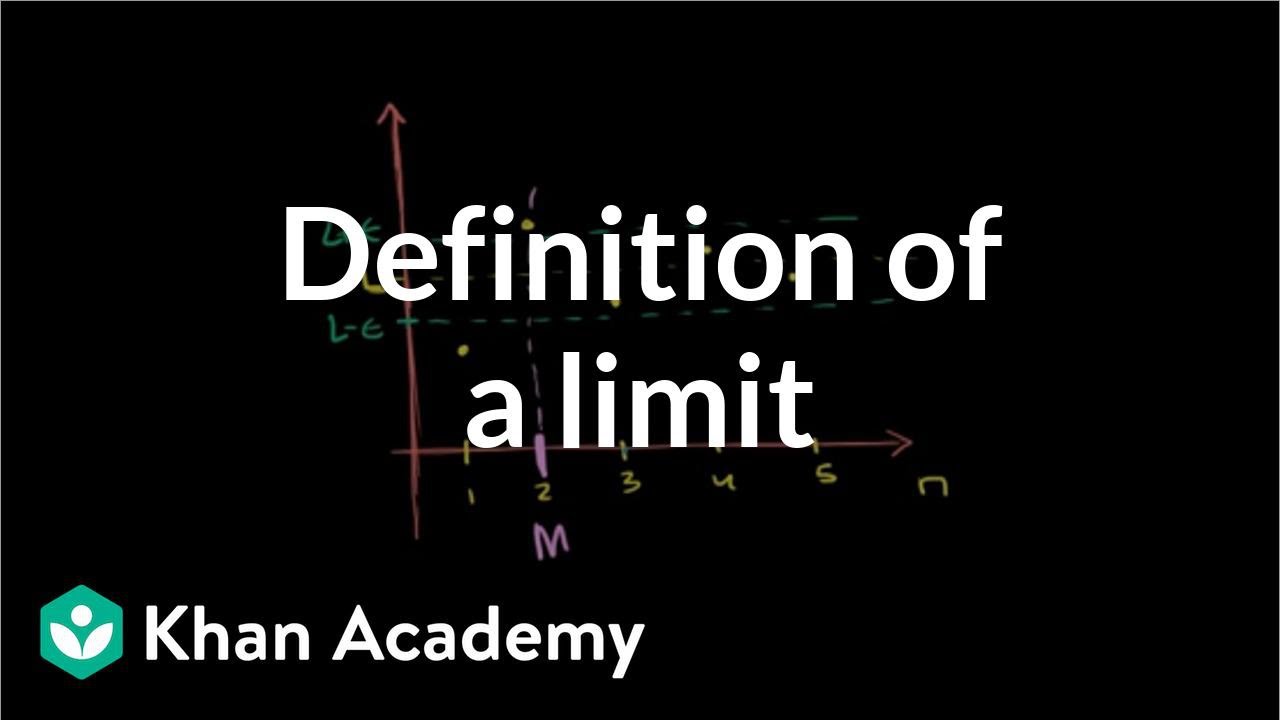
A sequence is "converging" if its terms approach a specific value at infinity. This video is a more formal definition of what it means for a sequence to converge. Created by Sal Khan.
Watch the next lesson: https://www.khanacademy.org/math/ap-calculus-bc/bc-series/bc-series-opt-vids/v/proving-a-sequence-converges?utm_source=YT&utm_medium=Desc&utm_campaign=APCalculusBC
Missed the previous lesson? https://www.khanacademy.org/math/ap-calculus-bc/bc-series/bc-power-series/v/finding-function-from-series-by-integrating?utm_source=YT&utm_medium=Desc&utm_campaign=APCalculusBC
AP Calculus BC on Khan Academy: Learn AP Calculus BC - everything from AP Calculus AB plus a few extra goodies, such as Taylor series, to prepare you for the AP Test
About Khan Academy: Khan Academy is a nonprofit with a mission to provide a free, world-class education for anyone, anywhere. We believe learners of all ages should have unlimited access to free educational content they can master at their own pace. We use intelligent software, deep data analytics and intuitive user interfaces to help students and teachers around the world. Our resources cover preschool through early college education, including math, biology, chemistry, physics, economics, finance, history, grammar and more. We offer free personalized SAT test prep in partnership with the test developer, the College Board. Khan Academy has been translated into dozens of languages, and 100 million people use our platform worldwide every year. For more information, visit www.khanacademy.org, join us on Facebook or follow us on Twitter at @khanacademy. And remember, you can learn anything.
For free. For everyone. Forever. #YouCanLearnAnything
Subscribe to Khan Academy's AP Calculus BC channel: https://www.youtube.com/channe....l/UC5A2DBjjUVNz8axD-
Subscribe to Khan Academy: https://www.youtube.com/subscr....iption_center?add_us

In our Easter Facts for Kids video we provide an overview of both the Christian and Non-Christian story of Easter. Easter is a wonderful spring holiday that has a lot of meaning for Christians. The death and resurrection of Jesus Christ is considered the pinnacle moment in all of history. Easter is a celebration of his life, death and resurrection and provides hope for many across the globe.
For those who are not Christian Easter is a time to celebrate the new life of spring. This is done by spending time with family, meals, and who can forget Easter Egg hunts! We provide a overview and fun facts about Easter appropriate to share with anyone!
For more Easter fun, download our free lesson plan:
https://learnbright.org/lesson....s/social-studies/wha
Thank you for watching and learning with us! We’re constantly releasing new content and videos so click that “Subscribe” button and you’ll notified.
Find and Follow Us Online:
Facebook: https://www.facebook.com/LearnBright/
Instagram: https://instagram.com/LearnBrightEducation
Pinterest: https://pinterest.com/LearnBrightEducation
YouTube: https://www.youtube.com/LearnBright
Website: https://learnbright.org/
*Teachers and Parents! Did you know? In addition to these great videos, we have also created a library of high quality and engaging lessons for your elementary aged student(s). Visit us, sign up for a free account, and instantly you'll have access to thousands of lesson plans, learning materials, teaching instructions, activities, and assignments that your kids will really enjoy! We hope to see you soon!
Browse our entire collection of Social Studies lesson plans: https://learnbright.org/lessons/?filter_subject=social-studies
#ASL
#HistoryOfEaster

Did you know that different parts of the world are called different things according to the areas properties and wildlife? In this video, you and your kids will learn about several types of habitats that are found all around the globe. You'll learn about the driest places, the wettest places, the coldest places, the tallest places, and more!
First up is grasslands. These areas are full of tall grass and not a lot of trees. You can find them on every continent except Antarctica. Types of grasslands include prairies and savannas. Deserts are next. Even though most people think deserts are always hot, this isn't actually true. Some are very cold. These places are defined as having very little rain or being incredibly dry. Not a lot of animals or plants can survive the desert habitat.
Next you'll learn about a few types of forests: rainforests, temperate forests, and coniferous forests. Rainforests receive rain all year around and are home to more animals than all the other habitats combined!. Temperate forests are ones with trees that lose their leaves in the winter or remain green all year around. Coniferous forests are the forests that have the tallest trees in the world. They can survive extremely cold temperatures.
Speaking of cold, mountain habitats are much cooler because they are so high up. They receive less oxygen. Polar regions are likewise extremely cold. In fact, they're the coldest places on Earth. There are only two polar regions—the Arctic at the top of the globe and the Antarctic at the bottom. Very few types of animals can live here, such as polar bears and whales.
Water habitats exist as well, both freshwater and saltwater bodies are home to habitats like coral reefs and oceans. Freshwater habitats can be found nearly anywhere in the world. Coral reefs are usually around tropical areas of the globe. The ocean is the largest animal habitat in the world. I bet you can guess why! And believe it or not, cities and farms are their own habitats as well.
We hope you and your student(s) enjoyed learning about several types of habitats that we have on Earth! If you want to learn even more, head over to our website and download one of our many free lesson plans about habitats, full of activities, worksheets, and more!
https://learnbright.org/lessons/science/habitats/
https://learnbright.org/lessons/science/forests/
https://learnbright.org/lesson....s/science/rainforest
https://learnbright.org/lessons/science/deserts/
https://learnbright.org/lesson....s/science/coral-reef
https://learnbright.org/lesson....s/science/what-lives
What you will learn in Habitats for Kids:
0:00 Introduction to habitats and what they are
1:29 Grasslands
2:09 Deserts
2:48 Tropical forests
3:46 Temperate and coniferous forest habitats
4:55 Mountain and polar region habitats
5:54 Freshwater and saltwater habitats
6:58 Cities and farms
7:34 Review of the facts
Thank you for watching and learning with us! We’re constantly releasing new content and videos, so click that “Subscribe” button and you’ll get notified.
Find and Follow Us Online:
Facebook: https://www.facebook.com/LearnBright/
Instagram: https://instagram.com/LearnBrightEducation
Pinterest: https://pinterest.com/LearnBrightEducation
YouTube: @LearnBright
Website: https://learnbright.org/
*Teachers and Parents! Did you know? In addition to these great videos, we have also created a library of high-quality and engaging lessons for your elementary aged student(s). Visit us, sign up for a free account, and instantly you'll have access to thousands of lesson plans, learning materials, teaching instructions, activities, and assignments that your kids will really enjoy! We hope to see you soon!
Browse our entire collection of Science lesson plans: https://learnbright.org/lessons/?filter_subject=science
#HabitatsForKids
#Habitats


Practice Reading
Reading tutorial for kids
Reading is fun
Reading lesson for beginners
Sight Words
Basic sentences

You have found a read-aloud for the K12 / Stride Kindergarten Literature lesson of Insects of The Rain Forest, published by a WAVA Learning Coach.
Please click the "LIKE" button and "SUBSCRIBE" to our channel to be notified when we post more K12 / Stride Curriculum read-aloud videos as well as other read-aloud videos.

Lesson 11. Review: Counting 10 to 19 | Kindergarten Math | Math For Kids
Watch more lessons at: https://bitly.com.vn/dqlw27
-----------------------------------------------------------------------------------------------------
This is a review lesson where kids will recall all the numbers from 10 to 19, which they have learned. Therefore, they will be able to count 10 to 19 in forward sequence.

TPK Learning is a digital platform designed to help students, parents, and teachers make learning easier and more accessible, anywhere and for everyone. We are using technology the way it should be used - as a valuable tool for positive change.
Like our page on Facebook! www.facebook.com/tpklearning
Visit our website to view more videos! https://tpklearning.com

In this video, we dive deep into Deepseek v3, the revolutionary AI model that's free and open source.Build
We'll explore some of its amazing features and conduct a comprehensive test of its capabilities.
This full guide will showcase everything you need to know about Deepseek v3!
00:00 Overview and Interface Description
02:32 Reasoning Ability
04:04 Build a Quiz
05:52 Generating Code
06:53 Websearch Capability
08:28 Writing
09:30 Creative Writing
10:05 Uploading and Summarizing
11:34 Reading Images
#DeepseekV3, #DeepseekGuide, #DeepseekTutorial #AIModelFeatures
#DeepseekWalkthrough, #DeepseekTech, #NextGenAI, #DeepseekTips