Top videos

Can you think of some things that are green? How about a hose and a pear! earn about secondary colors green, orange, and purple with Sandy the Dingo from Khan Academy Kids.
Visit us at http://www.khankids.org to learn more about Khan Academy Kids, a free educational app for preschool through 2nd grade.
Available on Google Play, Apple, and Amazon app stores:
➡️ http://khan.co/KhanKids-YT-Google
➡️ http://khan.co/KhanKids-YT-Apple
➡️ http://khan.co/KhanKids-YT-Amazon
You can also access other color videos on our Colors playlist here: http://khan.co/KhanKids-Colors.
Subscribe to our channel for more videos like this.

Welcome to Circle Time with Khan Academy Kids! Today, our friends Caroline and Sophie read the book “Sidewalk Chalk” by Cynthia Platt. Read along as Peck dives into imaginary play with his chalk, his camp, and his amazing friends. What could you make with a piece of chalk today? Let your imagination soar!
Check out our printable activities for hands-on fun!
http://khan.co/KhanKids-Printables
Learn more about Khan Academy Kids, our free educational app for children ages 2-7 at http://www.khankids.org.
Available on Apple, Google Play, and Amazon app stores:
http://khan.co/KhanKids-YT-Apple
http://khan.co/KhanKids-YT-Google
http://khan.co/KhanKids-YT-Amazon
Subscribe to our channel so you don’t miss a single episode of Circle Time!

Join Caroline and Sophie from Khan Academy Kids in their winter gear as they talk about snow! Read the book Snow Day by Cynthia Platt about Ollo, Reya, and their sledding adventures. Learn the words snow, sled, and snowman. Listen to kids describe their favorite holiday celebrations including St. Nick’s Day, Hanukkah, and New Year.
We’ll be bringing you a new Circle Time every other week. Remember to subscribe and hit the notification button for reminders!
If you or your child would like to be a guest on Circle Time, please send your submissions to our team here. We love sharing artwork, photos, and videos during Show & Tell on Circle Time! http://khan.co/KhanKids-SubmitYourArt
Learn more about Khan Academy Kids, our free educational app for children ages 2-7, at http://www.khankids.org.
Available on Apple, Google Play, and Amazon app stores:
http://khan.co/KhanKids-YT-Apple
http://khan.co/KhanKids-YT-Google
http://khan.co/KhanKids-YT-Amazon
Subscribe to our channel so you don’t miss a single resource from Khan Academy Kids, and access all of our Circle Time videos on our Circle Time Playlist! http://khan.co/KhanKids-CircleTimePlaylist.
Questions or ideas for Circle Time? Reach our team at khankids@khanacademy.org.
Stock media provided by Barbara Neveu/Pond5 and Brent Hofacker/Pond5.
2nd Channel: https://www.youtube.com/@simplehistory2
Become a Simple History member: https://www.youtube.com/simplehistory/join
Support us on Patreon: https://www.patreon.com/simplehistory
Copyright: DO NOT translate and re-upload our content on Youtube or other social media.
SIMPLE HISTORY MERCHANDISE
Get the Simple History books on Amazon:
https://www.amazon.com/Daniel-....Turner-%60/e/B00H5TY
T-Shirts
https://teespring.com/stores/s....imple-history-offici
Simple history gives you the facts, simple!
See the book collection here:
Amazon USA
http://www.amazon.com/Daniel-Turner/e/B00H5TYLAE/
Amazon UK
http://www.amazon.co.uk/Daniel....-Turner/e/B00H5TYLAE
https://www.facebook.com/Simpl....e-History-5494376751
https://twitter.com/SimpleHistoryYT
Credit:
Show Created by Daniel Turner (B.A. (Hons) in History, University College London)
Get your free trial of MagellanTV here: https://try.magellantv.com/simplehistory. It's an exclusive offer for our viewers: an extended, month-long trial, FREE. MagellanTV is a new kind of streaming service run by filmmakers with 3,000+ documentaries! Check out our personal recommendation and MagellanTV’s exclusive playlists: https://www.magellantv.com/explore/history
Become a Simple History member:
https://www.youtube.com/simplehistory/join
Support us on Patreon: https://www.patreon.com/simplehistory
Copyright: DO NOT translate and re-upload our content on Youtube or other social media.
SIMPLE HISTORY MERCHANDISE
Get the Simple History books on Amazon:
https://www.amazon.com/Daniel-....Turner-%60/e/B00H5TY
T-Shirts
https://teespring.com/stores/s....imple-history-offici
Simple history gives you the facts, simple!
See the book collection here:
Amazon USA
http://www.amazon.com/Daniel-Turner/e/B00H5TYLAE/
Amazon UK
http://www.amazon.co.uk/Daniel....-Turner/e/B00H5TYLAE
https://www.facebook.com/Simpl....e-History-5494376751
https://twitter.com/SimpleHistoryYT
Credit:
Created by Daniel Turner
Script: Conan White
Narrator:
Chris Kane
https://vocalforge.com/

DOWNLOAD Dragon city for FREE here: https://spons.org/SimpleDragon
A Big Thanks to Dragon City for sponsoring this video and supporting the Simple History Channel!
Teddy Roosevelt had no time to let a bullet to the chest ruin his speech..
Become a Simple History member: https://www.youtube.com/simplehistory/join
Support us on Patreon: https://www.patreon.com/simplehistory
Copyright: DO NOT translate and re-upload our content on Youtube or other social media.
SIMPLE HISTORY MERCHANDISE
Get the Simple History books on Amazon:
https://www.amazon.com/Daniel-....Turner-%60/e/B00H5TY
T-Shirts
https://teespring.com/stores/s....imple-history-offici
Simple history gives you the facts, simple!
See the book collection here:
Amazon USA
http://www.amazon.com/Daniel-Turner/e/B00H5TYLAE/
Amazon UK
http://www.amazon.co.uk/Daniel....-Turner/e/B00H5TYLAE
https://www.facebook.com/Simpl....e-History-5494376751
https://twitter.com/SimpleHistoryYT
Credit:
Created by Daniel Turner
Narrator:
Chris Kane
https://vocalforge.com/
Script:
Conan White
Sources:
https://pastebin.com/pEqY3pBd
Get your free trial of MagellanTV here: https://try.magellantv.com/simplehistory It's an exclusive offer for our viewers: an extended, month-long trial, FREE. MagellanTV is a new kind of streaming service run by filmmakers with 2,000+ documentaries! Check out our personal recommendation and MagellanTV’s exclusive playlists: https://www.magellantv.com/explore/history
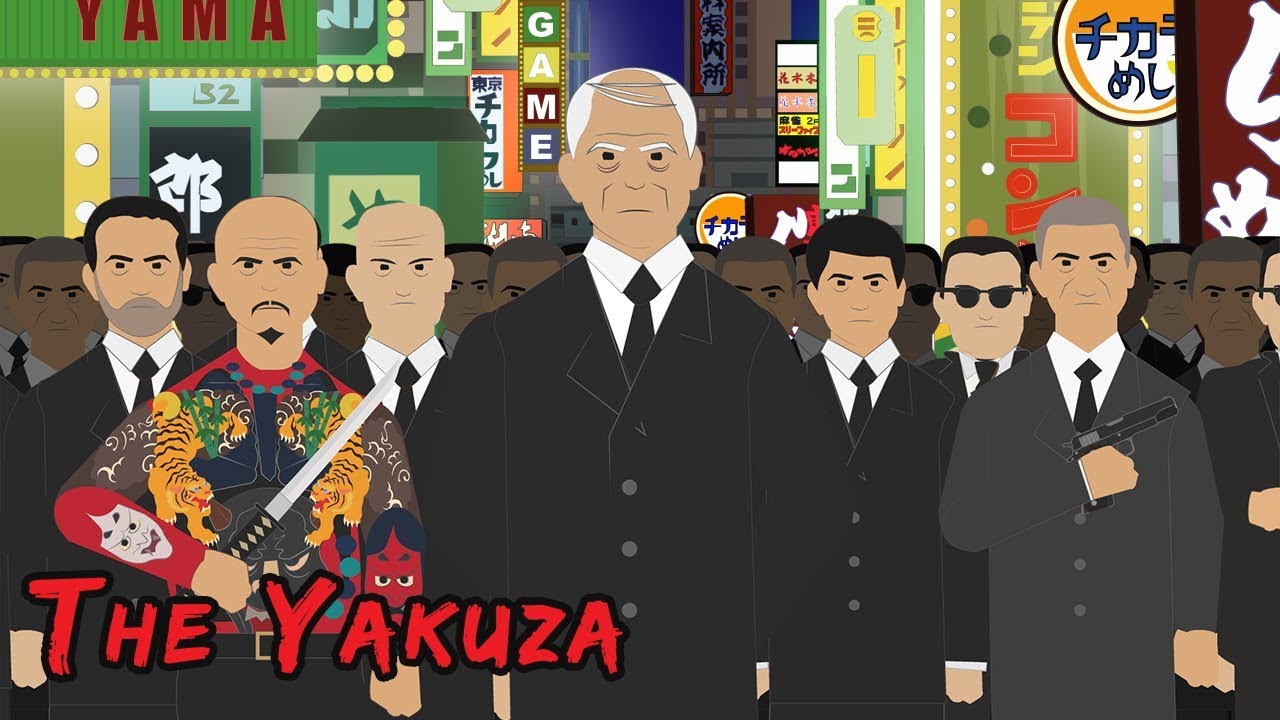
The Yakuza are members of a Japanese crime syndicate that were founded back in the 17th Century, during the mid-Edo period.
They very much see themselves as a Ninkyo Dantai, a ‘Chivalrous Organization’, that prides itself on tradition, family and maintaining a strict code of conduct.
Become a Simple History member: https://www.youtube.com/simplehistory/join
Support us on Patreon: https://www.patreon.com/simplehistory
Copyright: DO NOT translate and re-upload our content on Youtube or other social media.
SIMPLE HISTORY MERCHANDISE
Get the Simple History books on Amazon:
https://www.amazon.com/Daniel-....Turner-%60/e/B00H5TY
T-Shirts
https://teespring.com/stores/s....imple-history-offici
Simple history gives you the facts, simple!
See the book collection here:
Amazon USA
http://www.amazon.com/Daniel-Turner/e/B00H5TYLAE/
Amazon UK
http://www.amazon.co.uk/Daniel....-Turner/e/B00H5TYLAE
https://www.facebook.com/Simpl....e-History-5494376751
https://twitter.com/SimpleHistoryYT
Credit:
Created by Daniel Turner
Script: Conan White
Narrator:
Chris Kane
https://vocalforge.com/
Music Credit
Blue Sizzle - Madness Paranoia by Kevin MacLeod is licensed under a Creative Commons Attribution licence (https://creativecommons.org/licenses/by/4.0/)
Source: http://incompetech.com/music/r....oyalty-free/index.ht
Artist: http://incompetech.com/
Eastern Thought by Kevin MacLeod is licensed under a Creative Commons Attribution licence (https://creativecommons.org/licenses/by/4.0/)
Source: http://incompetech.com/music/royalty-free/index.html?isrc=USUAN1100682
Artist: http://incompetech.com/
Echoes of Time v2 by Kevin MacLeod is licensed under a Creative Commons Attribution licence (https://creativecommons.org/licenses/by/4.0/)
Source: http://incompetech.com/music/royalty-free/index.html?isrc=USUAN1300030
Artist: http://incompetech.com/
Sources:
Ruffians, Yakuza, Nationalists: The Violent Politics of Modern Japan, 1860–1960
By Eiko Maruko Siniawer
An Economic History of Organized Crime: A National and Transnational Approach
By Dennis M. P. McCarthy
Understanding Organized Crime
By Stephen L. Mallory
Organized Crime
By Howard Abadinsky
Yakuza: Japan's Criminal Underworld
By David E. Kaplan, Alec Dubro

Get 20% OFF + Free Shipping @Manscaped with code SIMPLEHISTORY at → https://mnscpd.com/simplehistory #teammanscaped
While Alexander Fleming’s antibiotics and the practice of vaccinations often get the limelight, the banal everyday habit of personal hygiene is just as vital to our health, regardless if you are wrapped up warm in blankets at home or covered in less warm blankets of mud on the battlefield. Here we take a look at the essentials often preached to U.S. soldiers in the present day. While hygiene has been discussed since people cared about how they looked, the methods of staying clean and healthy have varied dramatically throughout time. Learn of modern soldiers’ responsibilities, daily routines, their focus on sanitation, all of which have been meticulously detailed to keep fighters on the field instead of under them.
2nd Channel: https://www.youtube.com/channe....l/UCPdc6bs3I8s6Y4QE_
Become a Simple History member: https://www.youtube.com/simplehistory/join
Support us on Patreon: https://www.patreon.com/simplehistory
Copyright: DO NOT translate and re-upload our content on Youtube or other social media.
SIMPLE HISTORY MERCHANDISE
Get the Simple History books on Amazon:
https://www.amazon.com/Daniel-....Turner-%60/e/B00H5TY
T-Shirts
https://teespring.com/stores/s....imple-history-offici
Simple history gives you the facts, simple!
See the book collection here:
Amazon USA
http://www.amazon.com/Daniel-Turner/e/B00H5TYLAE/
Amazon UK
http://www.amazon.co.uk/Daniel....-Turner/e/B00H5TYLAE
https://www.facebook.com/Simpl....e-History-5494376751
https://twitter.com/SimpleHistoryYT
Created by Daniel Turner (B.A. (Hons) in History, University College London)
Script Writer:
Luke Ursone
Narrator:
Bryan 'Lazlo' Beauregard
Bibliography
Boardman, John. Alexander the Great: From His Death to the Present Day. Princeton: Princeton University Press, 2019.
Odierno, Raymond T, and Gerald B O'Keefe. “Field Hygiene and Sanitation - United States Army.” Field Hygiene and Sanitation. Headquarters, Department of the Army, May 2015.
Oldstone-Moore, Christopher. “Why Alexander the Great Told His Men to Shave off Their Beards.” The Atlantic. Atlantic Media Company, February 9, 2016.
Parker, Geoffrey, and Simon Adams. The Thirty Years' War. London: Routledge, 2007.

This calculus video tutorial explains how to find the integral of lnx using integration by parts.
Calculus 1 Final Exam Review: https://www.youtube.com/watch?v=WmBzmHru78w
Full-Length Exam Videos: https://www.patreon.com/MathScienceTutor
Calculus Video Playlists: https://www.video-tutor.net/
_______________________________________________________________________________________
Integration & Antiderivatives: https://www.youtube.com/watch?v=6WUjbJEeJwM
Calculus 1 - Derivatives: https://www.youtube.com/watch?v=5yfh5cf4-0w
Integral of 1/Sqrt(x): https://www.youtube.com/watch?v=bdeCv9fhIAo
Integral of |x|: https://www.youtube.com/watch?v=X2OYT2vByPQ
Integral of Cos(2x): https://www.youtube.com/watch?v=cCdj0uy0v80
Integral of Cos^2(x): https://www.youtube.com/watch?v=Qjq5Yg39ZAs
Integral of Sin^2(x): https://www.youtube.com/watch?v=CZz41N9yuMg
Integral of Sin^4(x): https://www.youtube.com/watch?v=mm5dWsivGUI
Integral of Tan^2(x): https://www.youtube.com/watch?v=FcNNM0jTC5g
_____________________________________________________________________________________
U-Substitution Integration: https://www.youtube.com/watch?v=sdYdnpYn-1o
Integral of 1/e^x: https://www.youtube.com/watch?v=LZf8mMxE3l4
Integral of ln(x)/x: https://www.youtube.com/watch?v=4oqOz2Q_zPQ
Integral of 1/(1+e^x): https://www.youtube.com/watch?v=b2--C4XoENg
Integral of Tan(x): https://www.youtube.com/watch?v=8TOEBQE0zvo
Integral of Sec(x): https://www.youtube.com/watch?v=JqLLL3CV910
Integral of Sin(x)Cos(x): https://www.youtube.com/watch?v=4kFA1B5rqfk
Integral of x/sqrt(1-x^2): https://www.youtube.com/watch?v=PFapCTLX4C4
Integral of x/sqrt(x+1): https://www.youtube.com/watch?v=gthCxSrFdds
______________________________________________________________________________________
Integration By Parts Technique: https://www.youtube.com/watch?v=sWSLLO3DS1I
Integral of xe^x: https://www.youtube.com/watch?v=kUlK-ZIloeI
Integral of e^x Sinx: https://www.youtube.com/watch?v=2JKPTCBaI4w
Integral of ln(x): https://www.youtube.com/watch?v=M_fWpxC2x8M
Integral of (lnx)^2: https://www.youtube.com/watch?v=Jmb91aClK8E
Integral of ln(x)/x^2: https://www.youtube.com/watch?v=h0ClXW2GlDI
Integral of ArcSin(x): https://www.youtube.com/watch?v=qwHhwdvTGdY
Integral of e^[sqrt(x)]: https://www.youtube.com/watch?v=9XBL54j-3Eg
Integral of Sin(lnx): https://www.youtube.com/watch?v=r2zyTfXyYMc
Integral of Sec^3(x): https://www.youtube.com/watch?v=BtXLwxBygV0
_____________________________________________________________________________________
Trigonometric Integrals: https://www.youtube.com/watch?v=3pXALn2ovIE
Integral of Sin^3(x): https://www.youtube.com/watch?v=AaEip3kJ5Gc
Integral of Sin^5(x): https://www.youtube.com/watch?v=HKVbd9S5Tug
Integral of Tan^3(x): https://www.youtube.com/watch?v=uSckYspuqUg
Integral of Tan^4(x): https://www.youtube.com/watch?v=WowgFePtPOk
Integral of Tan^5(x): https://www.youtube.com/watch?v=-2Q7MSyYo70
Integral of Cos^3(x): https://www.youtube.com/watch?v=Pf7gQVhGCE0
_____________________________________________________________________________________
Trigonometric Substitution: https://www.youtube.com/watch?v=ocgjfF2AboA
Integral of 1/(1+x^2): https://www.youtube.com/watch?v=b7kePAuqU3I
Integral of x^2/(x^2 + 1): https://www.youtube.com/watch?v=INuNfCW9ZPo
Integral of 1/sqrt(1-x^2): https://www.youtube.com/watch?v=9AvyXgfNN9E

This thermodynamics / physics video tutorial provides a basic introduction into the carnot cycle and carnot heat engines. It explains how to calculate the maximum efficiency of heat engine which is equivalent to the thermal efficiency of an ideal carnot heat engine. This video contains energy flow diagrams that will help you to visualize the transfer of heat energy from the hot reservoir into the heat engine and then to the cold reservoir. This tutorial also discusses how to calculate the mechanical work generated by a carnot engine. It also covers the four steps of the carnot cycle which consists of an isothermal expansion, adiabatic expansion, isothermal compression and adiabatic compression. This thermodynamics contains all of the formulas and equations needed to solve the practice problems presented in this tutorial.
Open Vs Closed Vs Isolated System: https://www.youtube.com/watch?v=TFP6SvWPOQc
First Law of Thermodynamics:
https://www.youtube.com/watch?v=7Siv2NNCFag
Isobaric Process:
https://www.youtube.com/watch?v=BG-cUpnNmPM
Isochoric Process:
https://www.youtube.com/watch?v=SxfgHdfKjQA
Isothermal Process:
https://www.youtube.com/watch?v=m9h6qyWLscs
Internal Energy of an Ideal Gas:
https://www.youtube.com/watch?v=k3rJs_ioTHc
_________________________
Adiabatic Process:
https://www.youtube.com/watch?v=gaZmZjBtgAM
PV Diagrams:
https://www.youtube.com/watch?v=b-4U_s4e50o
Thermodynamics Review:
https://www.youtube.com/watch?v=TnDCxw0y6YM
2nd Law of Thermodynamics:
https://www.youtube.com/watch?v=DWiCaDPM7Hk
Heat Engines:
https://www.youtube.com/watch?v=O7TSo_up1Dw
Converting Heat Into Electricity:
https://www.youtube.com/watch?v=LX2cU27kUUc
________________________
Otto Cycle:
https://www.youtube.com/watch?v=vAeMmSRdQYY
Refrigerators and Heat Pumps:
https://www.youtube.com/watch?v=sKfgz6JLQRI
Entropy:
https://www.youtube.com/watch?v=Bdn3u2OHvKE
Heat Engines and Refrigerators Review:
https://www.youtube.com/watch?v=QBd2zraOe2k
Physics PDF Worksheets:
https://www.video-tutor.net/ph....ysics-basic-introduc
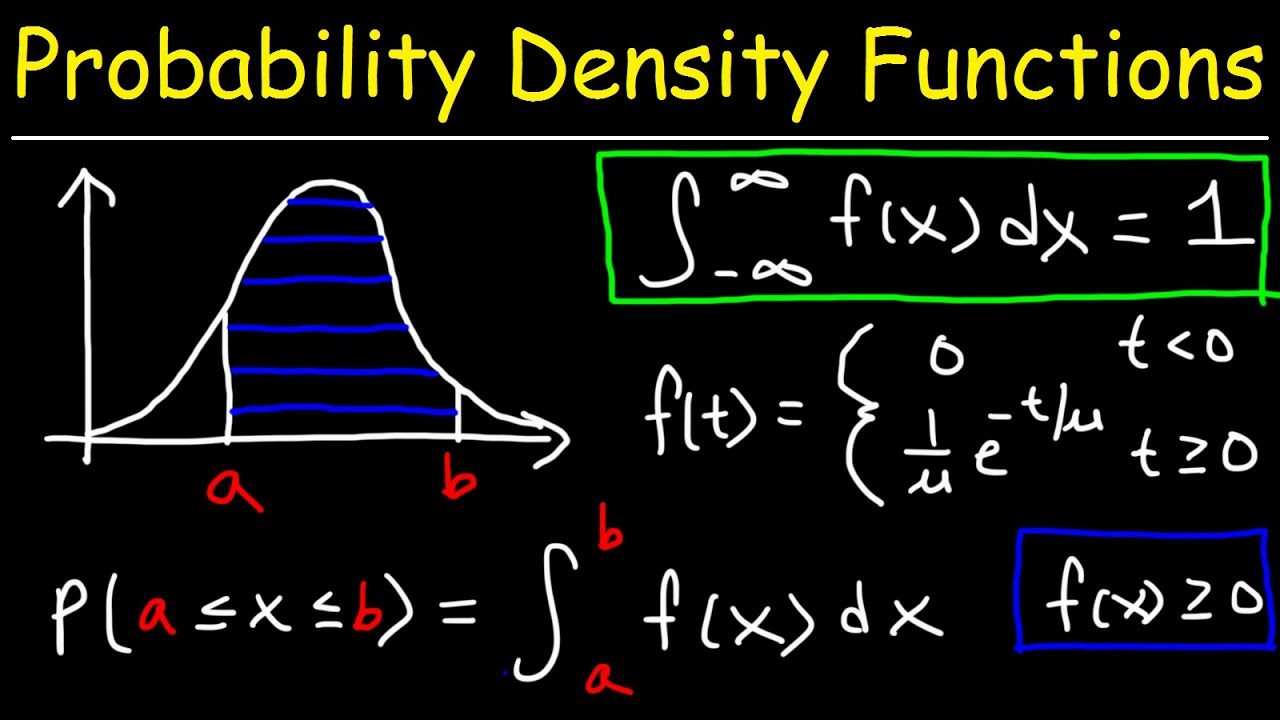
This calculus 2 video tutorial provides a basic introduction into probability density functions. It explains how to find the probability that a continuous random variable such as x in somewhere between two values by evaluating the definite integral from a to b. The probability is equivalent to the area under the curve. This video also contains an example problem with an exponential density function involving the mean u which represents the average wait time for a customer in the example problem.
Improper Integrals:
https://www.youtube.com/watch?v=ND9cEdfCFr0
Integration Into Inverse Trig:
https://www.youtube.com/watch?v=AE-0gXXx_j0
Integration of Rational Functions:
https://www.youtube.com/watch?v=4yJmhZBB40w
Integral of Logarithmic Functions:
https://www.youtube.com/watch?v=nrt37LoaSxM
Integrating Exponential Functions:
https://www.youtube.com/watch?v=D9dqdbCgJQM
Integration Formulas:
https://www.youtube.com/watch?v=_KJqeJDb8-I
________________________________
Integration By Tables:
https://www.youtube.com/watch?v=p7KwXMyJK9s
Reduction Formulas - Integration:
https://www.youtube.com/watch?v=LBZcfl97LwY
Center of Mass & Moments:
https://www.youtube.com/watch?v=JSGlBHAGvy4
Center of Mass & Centroid Problems:
https://www.youtube.com/watch?v=SWu_i-19Rn0
Hydrostatic Force Problems:
https://www.youtube.com/watch?v=3jG-hWgUJko
Probability Density Functions:
https://www.youtube.com/watch?v=QKA4HNEw3aY
_________________________________
Normal Distributions - Calculus:
https://www.youtube.com/watch?v=gHBL5Zau3NE
Homogeneous Differential Equations:
https://www.youtube.com/watch?v=ZEJVyybsiT4
1st Order Linear Differential Equations:
https://www.youtube.com/watch?v=gd1FYn86P0c
Bernoulli's Equation for Differential Equations:
https://www.youtube.com/watch?v=BoI_ej-T0V4
Slope Fields:
https://www.youtube.com/watch?v=Wr9VOum9Co0
___________________________________
Converging & Diverging Sequences:
https://www.youtube.com/watch?v=XdkoTb8PEG0
Monotonic & Bounded Sequences:
https://www.youtube.com/watch?v=tHy3TXmZpF0
Calculus Final Exam and Video Playlists:
https://www.video-tutor.net/
Full-Length Videos and Worksheets:
https://www.patreon.com/MathSc....ienceTutor/collectio

This Calculus 2 video tutorial explains how to find the area of a polar curve in polar coordinates. It provides resources on how to graph a polar equation and how to find the area of the shaded region. It contains plenty of examples and practice problems on how to find the area of one loop or of one petal and how to find the area of the inner loop as well.
Area of Parametric Curves: https://www.youtube.com/watch?v=riEx7TcLfzk
Area of Polar Curves:
https://www.youtube.com/watch?v=GQ6cDvY8K9g
Area Between Polar Curves:
https://www.youtube.com/watch?v=TwKxDApaxVo
Arc Length of Polar Curves:
https://www.youtube.com/watch?v=bxswSV1utxg
Surface Area of Polar Curves:
https://www.youtube.com/watch?v=n-Zg7WgRzjA
_____________________________
Writing Equations of Ellipses:
https://www.youtube.com/watch?v=OPSCKXXvWiM
Eccentricity of an Ellipse:
https://www.youtube.com/watch?v=9hyQksn80ug
Area of an Ellipse:
https://www.youtube.com/watch?v=Mw3MeDLL8d4
Circumference of an Ellipse:
https://www.youtube.com/watch?v=r5pl_stL4c0
Hyperbolas - Conic Sections:
https://www.youtube.com/watch?v=Iu-4-fizlD4
______________________________
Parabolas - Conic Sections:
https://www.youtube.com/watch?v=KYgmOTLbuqE
Polar Equations of Conic Sections:
https://www.youtube.com/watch?v=rnvCG_BZcL4
Calculus 3 - Intro to Vectors:
https://www.youtube.com/watch?v=2_21erD-nBg
Final Exams and Video Playlists:
https://www.video-tutor.net/
Full-Length Videos and Worksheets:
https://www.patreon.com/MathSc....ienceTutor/collectio
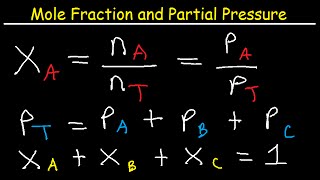
This chemistry video tutorial focuses on mole fraction and partial pressure. It contains the equations and formulas you need for this topic including notes and concepts. Mole fraction is the decimal form of mole percent. This video also discusses dalton's law of partial pressure. It contains plenty of examples and practice problems for you to work on.
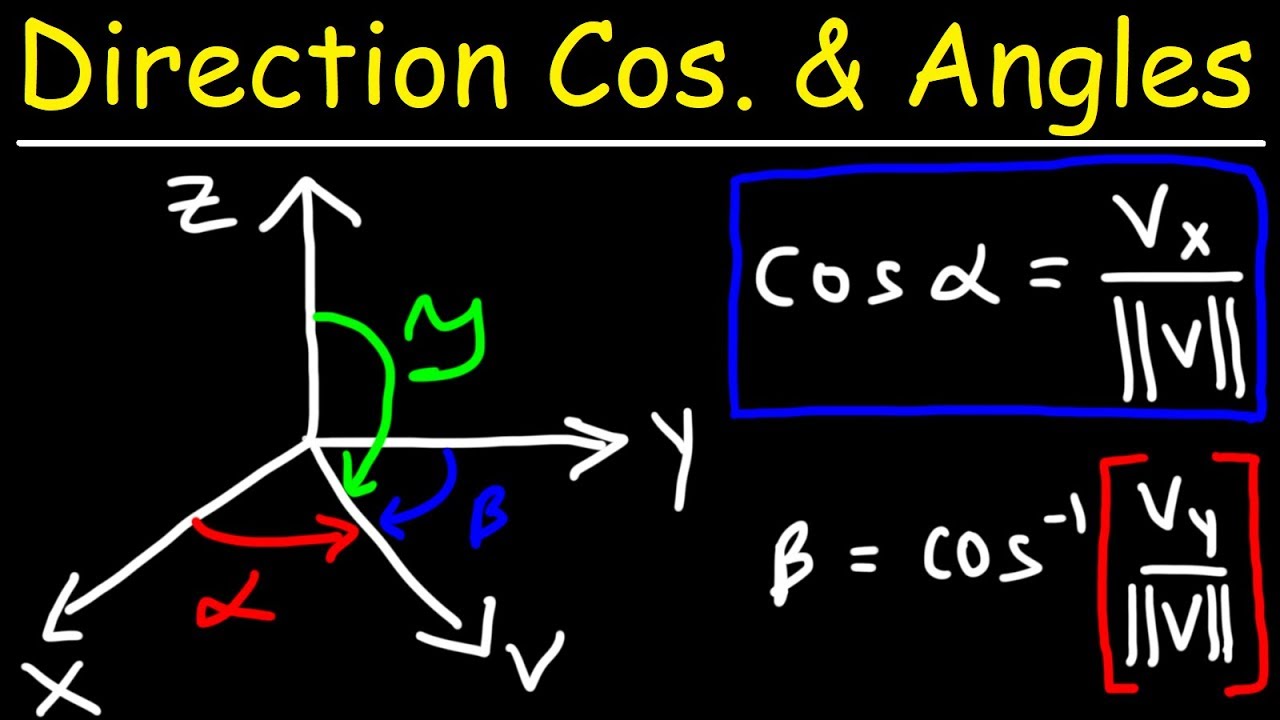
This calculus 3 video tutorial explains how to find the direction cosines of a vector as well as the direction angles of a vector.
3D Coordinate System: https://www.youtube.com/watch?v=EzJP9uwV3ms
3D Distance Formula:
https://www.youtube.com/watch?v=0c6cP2zLC2c
Equation of a 3D Sphere:
https://www.youtube.com/watch?v=9DyPyJb2N9g
Calculus 3 - Intro to Vectors:
https://www.youtube.com/watch?v=2_21erD-nBg
Calculus 3 - The Dot Product:
https://www.youtube.com/watch?v=Te8eL5r7aJs
_______________________________
Angle Between Two Vectors:
https://www.youtube.com/watch?v=dYPRYO8QhxU
Parallel & Orthogonal Vectors:
https://www.youtube.com/watch?v=8fIZ2v-33xw
Direction Cosines and Vectors:
https://www.youtube.com/watch?v=ZoCxUV893fo
Calculus 3 - Vector Projections:
https://www.youtube.com/watch?v=Rw70zkvqEiE
Cross Product of 2 Vectors:
https://www.youtube.com/watch?v=pWbOisq1MJU
_______________________________
Area - Vector Cross Product:
https://www.youtube.com/watch?v=YbZmAqGUkqc
Triple Scalar Product:
https://www.youtube.com/watch?v=6NeAK0rJwlk
Vector Equations of Lines:
https://www.youtube.com/watch?v=MkjazYnvNP8
The Equation of a Plane:
https://www.youtube.com/watch?v=2sZKZHyaQJ8
Planar Equation - 3 Points:
https://www.youtube.com/watch?v=rL9UXzZYYo4
________________________________
Final Exams and Video Playlists:
https://www.video-tutor.net/
Full-Length Videos and Worksheets:
https://www.patreon.com/MathSc....ienceTutor/collectio
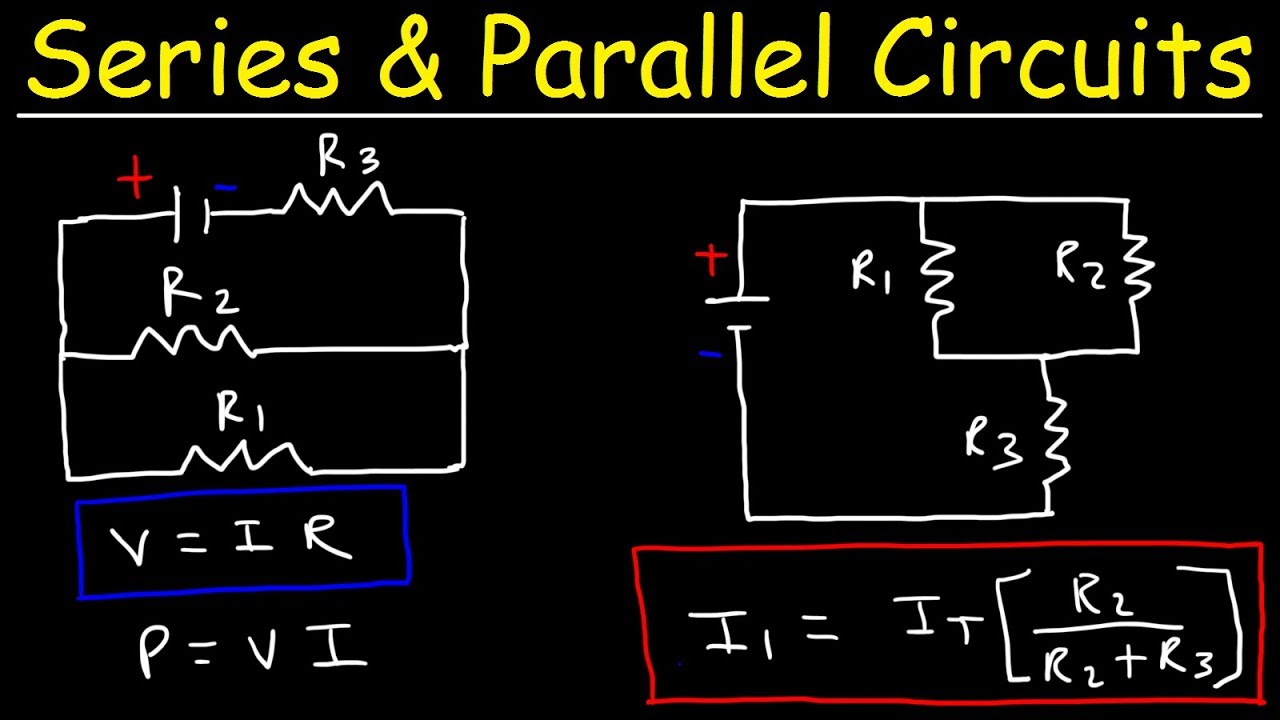
This physics video tutorial explains how to solve series and parallel circuits. It explains how to calculate the current in amps through each resistor and the voltage in volts across each resistor with three resistors in series and parallel combination using a few simple formulas including ohm's law. Parallel resistors form a current division circuit and series resistors form a voltage division circuit. This video also explains how to calculate the electric power delivered by the battery in watts and the power absorbed by the resistors.
Resistors In Series:
https://www.youtube.com/watch?v=9z53qVQjasU
Resistors In Parallel:
https://www.youtube.com/watch?v=SYrOiQs3X2U
Series and Parallel Circuits - Light Bulb Brightness:
https://www.youtube.com/watch?v=NjgxXcBfIII
Equivalent Resistance of Complex Circuits:
https://www.youtube.com/watch?v=kjW4H3fKi8o
How To Solve DC Circuits:
https://www.youtube.com/watch?v=eFlJy0cPbsY
_________________________
Voltage Divider Circuit:
https://www.youtube.com/watch?v=JGXdi7XcQi8
Current Dividers:
https://www.youtube.com/watch?v=PpfOH_uBKCw
Parallel Circuit Challenge Problem:
https://www.youtube.com/watch?v=y-gwr8LCHKo
Kirchhoff's Current Law:
https://www.youtube.com/watch?v=Q39xQUlTGew
Kirchhoff's Voltage Law:
https://www.youtube.com/watch?v=6F_rmZ1nXFQ
DC Circuits Review:
https://www.youtube.com/watch?v=wejz5s31Cts
____________________________
KCL and KVL Circuit Analysis:
https://www.youtube.com/watch?v=2Zu3ppq3n8I
Thevenin's Theorem - Circuit Analysis:
https://www.youtube.com/watch?v=zTDgziJC-q8
Norton's Theorem - Circuit Analysis:
https://www.youtube.com/watch?v=-kkvqr1wSwA
Superposition Theorem:
https://www.youtube.com/watch?v=EX52BuZxpQM
Maximum Power Transfer:
https://www.youtube.com/watch?v=8CA6ZNXgI-Y
Physics PDF Worksheets:
https://www.video-tutor.net/ph....ysics-basic-introduc
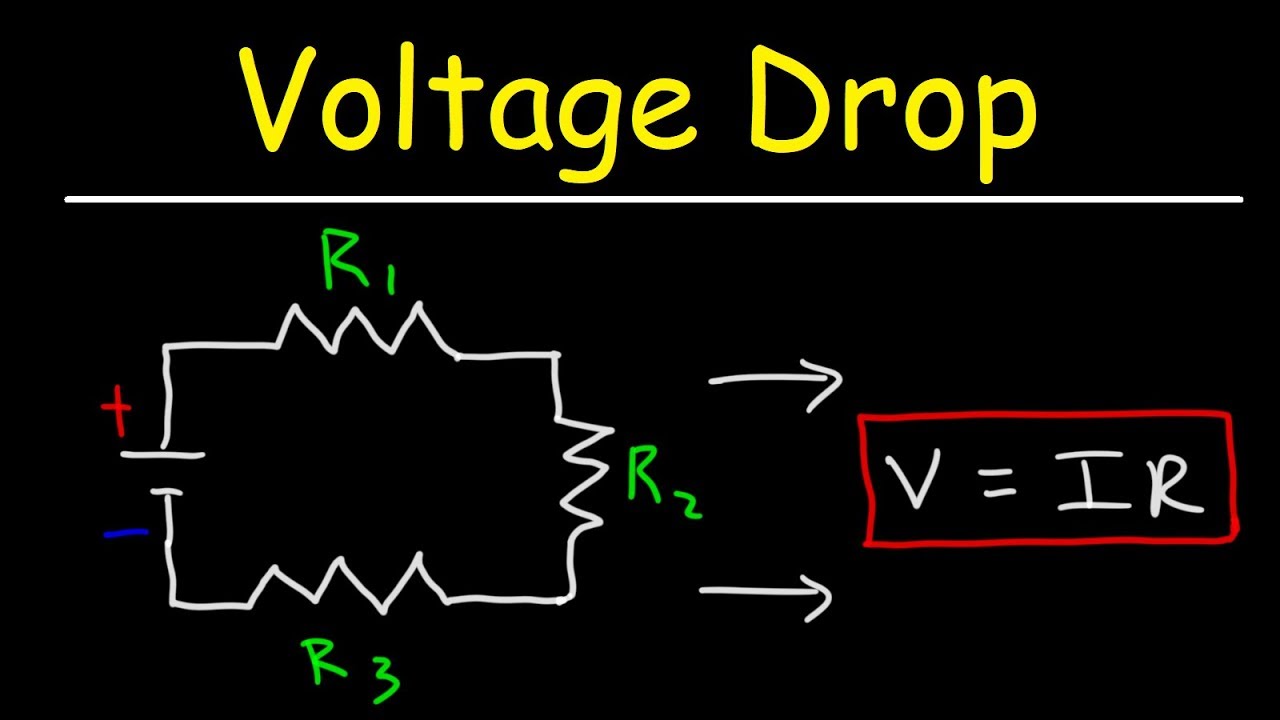
This electronics video tutorial explains how to calculate the voltage drop across a resistor using ohm's law. It contains a few examples and practice problems.
Basic Electronics For Beginners: https://www.youtube.com/watch?v=uXr4lXYjXuU
Electrical Formulas:
https://www.youtube.com/watch?v=Pv_-OU4Dluo
Electric Current & Circuits:
https://www.youtube.com/watch?v=r-SCyD7f_zI
Internal Resistance of a Battery:
https://www.youtube.com/watch?v=R1QN_0fcZ_8
Resistors In Series:
https://www.youtube.com/watch?v=9z53qVQjasU
Resistor Color Code:
https://www.youtube.com/watch?v=G1mZutobxDU
______________________________
The Voltage Drop:
https://www.youtube.com/watch?v=YYSKRU1kDt4
Kirchhoff's Voltage Law:
https://www.youtube.com/watch?v=6F_rmZ1nXFQ
Kirchhoff's Current Law:
https://www.youtube.com/watch?v=Q39xQUlTGew
Resistors In Parallel:
https://www.youtube.com/watch?v=SYrOiQs3X2U
Ohm's Law - Practice Problems:
https://www.youtube.com/watch?v=_rSHqvjDksg
Voltage Dividers:
https://www.youtube.com/watch?v=JGXdi7XcQi8
_______________________________
Current Dividers:
https://www.youtube.com/watch?v=PpfOH_uBKCw
Current Divider With 3 Parallel Resistors:
https://www.youtube.com/watch?v=y-gwr8LCHKo
Series and Parallel Circuits - Mega Review:
https://www.youtube.com/watch?v=wejz5s31Cts
Equivalent Resistance of Complex Circuits:
https://www.youtube.com/watch?v=kjW4H3fKi8o
Solving Equivalent Resistance Circuits:
https://www.youtube.com/watch?v=dEuBykX5_B4
__________________________________
Final Exams and Video Playlists:
https://www.video-tutor.net/
Full-Length Videos and Worksheets:
https://www.patreon.com/MathSc....ienceTutor/collectio
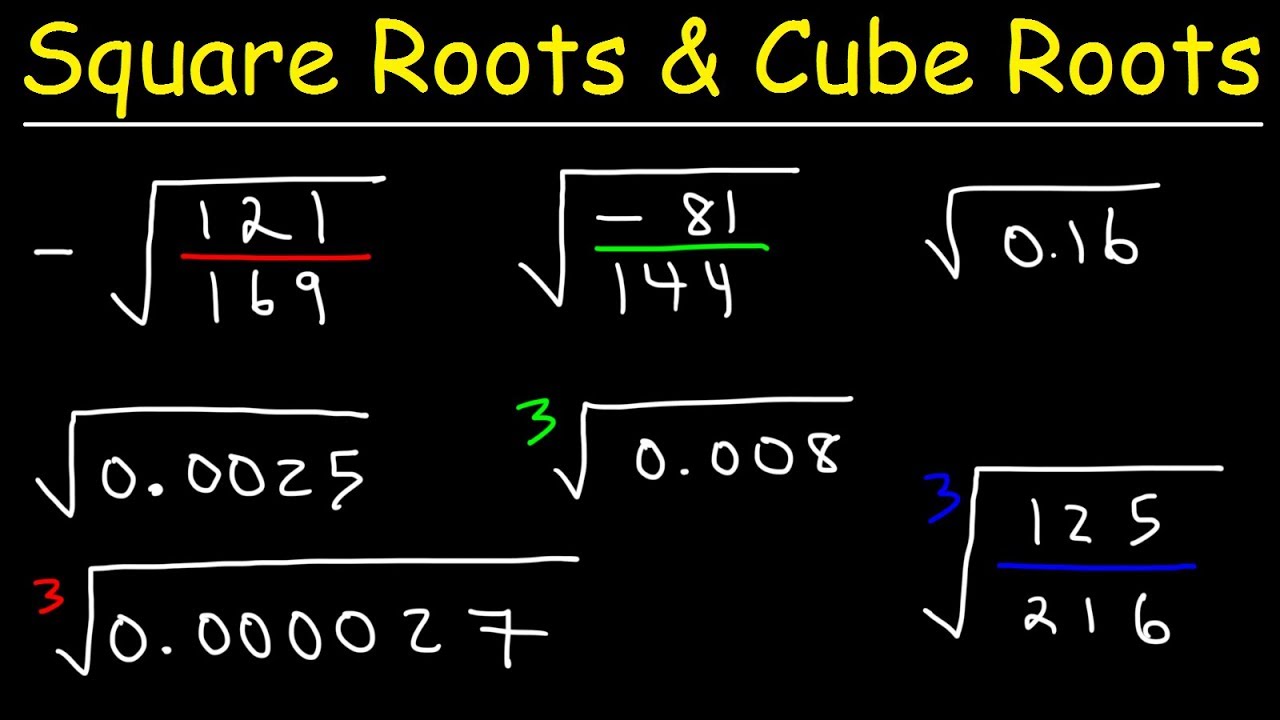
This algebra video tutorial provides a basic introduction into square roots and cube roots. It explains how to determine the square roots of negative numbers, and imaginary numbers. It also explains how to determine the cube root of positive and negative numbers as well. In addition, it mentions how to calculate the square root and cube root of certain decimal numbers. This algebra video tutorial contains plenty of examples and practice problems.
Square Roots and Cube Roots:
https://www.youtube.com/watch?v=IWzPle0KDPo
Simplifying Radical Expressions:
https://www.youtube.com/watch?v=U7AXF75rC00
Multiplying Radical Expressions:
https://www.youtube.com/watch?v=i0TMNeOwpSg
Adding & Subtracting Radicals:
https://www.youtube.com/watch?v=83wXAgwcWH0
Simplifying Cube Root Expressions:
https://www.youtube.com/watch?v=VdUNTsf14qs
__________________________________
Rationalizing The Denominator:
https://www.youtube.com/watch?v=5j8a75aHaSE
Multiplying Radicals With Different Indices:
https://www.youtube.com/watch?v=onOQMAcnj8U
How To Solve Radical Equations:
https://www.youtube.com/watch?v=0gicD4STzpg
Solving Equations With Cube Roots:
https://www.youtube.com/watch?v=mg8aS58vsN8
Solving Complex Radical Equations:
https://www.youtube.com/watch?v=laEeUSZr83s
____________________________________
How To Graph Radical Functions:
https://www.youtube.com/watch?v=8t9_IXFzH_M
Domain of Radical Functions:
https://www.youtube.com/watch?v=fOlon31vEU4
How To Graph Cube Root Functions:
https://www.youtube.com/watch?v=qxR6p_xDnho
Radical Expressions - Test Review:
https://www.youtube.com/watch?v=wOcc5EoOojE
____________________________________
Final Exams and Video Playlists:
https://www.video-tutor.net/
Full-Length Videos and Worksheets:
https://www.patreon.com/MathSc....ienceTutor/collectio

This chemistry and physics video tutorial focuses on electromagnetic waves. It shows you how to calculate the wavelength, period, frequency, and amplitude of a wave directly from sinusoidal or sine wave graph. This video contains plenty of notes, equations / formulas, examples, and practice problems.
My E-Book: https://amzn.to/3B9c08z
Video Playlists: https://www.video-tutor.net
Homework Help: https://bit.ly/Find-A-Tutor
Subscribe: https://bit.ly/37WGgXl
Support & Donations: https://www.patreon.com/MathScienceTutor
Youtube Membership: https://www.youtube.com/channe....l/UCEWpbFLzoYGPfuWUM
Here is a list of topics:
1. How to calculate the wavelength of a wave in meters using a graph
2. Inverse relationship of period and frequency
3. Wavelength - the length of a cycle
4. Period is the time it takes a wave to complete a single cycle
5. Frequency is the number of cycles that a wave completes in a single second
6. Units of Frequency - Hz
7. Determining the Amplitude Using the Maximum and Minimum points of a graph.
8. Trough vs Crest of a wave
9. Speed of light Formula of a EM wave in a vacuum and in a material such as water, glass, or diamond
10. Index of refraction, speed of light, and wavelength
11. Frequency of light remains the same
12. Energy of a photon, frequency and planck's constant formula
13. Converting Joules of Energy into Electron Volts eV
14. Electromagnetic Spectrum Chart
15. Infrared, Radio waves, microwaves, roygbiv, ultraviolet UV radiation, x-rays, gamma rays, and cosmic radiation
16. Longest to Shortest Wavelength - Radiowaves to Cosmic Rays
17. EM Spectrum in order of increasing energy and frequency
18. Visible light spectrum wavelength range - color chart diagram - 400nm to 700nm
19. Red, Orange, Yellow, Green, Blue, Indigo, and Violet.
Disclaimer: Some of the links associated with this video may generate affiliate commissions on my behalf. As an amazon associate, I earn from qualifying purchases that you may make through such affiliate links.

This organic chemistry video tutorial provides a basic introduction into naming alcohols using IUPAC Nomenclature. It includes alcohols with alkyl halides, alkenes, and cycloalkanes.
Organic Chemistry - Basic Introduction: https://www.youtube.com/watch?v=B_ketdzJtY8
Acids and Bases - Basic Intro:
https://www.youtube.com/watch?v=owVZiKnnPME
Lewis Acids and Bases:
https://www.youtube.com/watch?v=rmaLsdFQ2KQ
Nucleophiles and Electrophiles:
https://www.youtube.com/watch?v=9QZj-F-5PV4
Hydrocarbons:
https://www.youtube.com/watch?v=z5hQ8iZZ8dU
Constitutional Isomers:
https://www.youtube.com/watch?v=48rsf1pOhfA
_______________________________
IUPAC Nomenclature of Alkanes:
https://www.youtube.com/watch?v=TYU_JluleME
Naming Cycloalkanes:
https://www.youtube.com/watch?v=vSxZm_91GT0
Naming Bicyclic Compounds:
https://www.youtube.com/watch?v=L8wEn7sD_SA
Naming Ethers:
https://www.youtube.com/watch?v=MZbgA0w2Ts4
Naming Alkyl Halides:
https://www.youtube.com/watch?v=595ENX3iqEE
________________________________
Naming Amines:
https://www.youtube.com/watch?v=Y6AzMr0Fn3Y
Van Der Waal Forces:
https://www.youtube.com/watch?v=c3g3maYegBk
Boiling Point of Organic Compounds:
https://www.youtube.com/watch?v=Qk_uPsq10TI
Organic Chemistry PDF Worksheets:
https://www.video-tutor.net/orgo-chem.html
Organic Chemistry Exam 1 Playlist:
https://bit.ly/3kJnNXU
Full-Length Videos and Worksheets:
https://www.patreon.com/MathSc....ienceTutor/collectio
This algebra 2 introduction / basic review lesson video tutorial covers topics such as solving linear equations, absolute value equations, inequalities, and quadratic equations. It shows you how to factor trinomials and polynomials in addition to simplify rational and radical expressions. This video contains a ton of examples and practice problems.
Geometry:
https://www.youtube.com/watch?v=302eJ3TzJQU
Trigonometry:
https://www.youtube.com/watch?v=PUB0TaZ7bhA
PreCalculus:
https://www.youtube.com/watch?v=JrWJnwCMlP0
Statistics:
https://www.youtube.com/watch?v=XZo4xyJXCak
Probability:
https://www.youtube.com/watch?v=SkidyDQuupA
____________________________________
General Chemistry 1:
https://www.youtube.com/watch?v=-KfG8kH-r3Y
Organic Chemistry 1:
https://www.youtube.com/watch?v=B_ketdzJtY8
General Physics 1:
https://www.youtube.com/watch?v=b1t41Q3xRM8
General Physics 2:
https://www.youtube.com/watch?v=rHgKLIYcZOI
Basic Electronics:
https://www.youtube.com/watch?v=uXr4lXYjXuU
_____________________________________
GPA Calculator:
https://www.youtube.com/watch?v=qYHsThZWydY
Save Money In College:
https://www.youtube.com/watch?v=yNO02qfMSwI
SAT Test Prep:
https://www.youtube.com/watch?v=fTGuTEQCsZY
ACT Test Prep:
https://www.youtube.com/watch?v=SsA7rZ8kczM
GRE Math Test Prep:
https://www.youtube.com/watch?v=z6lbrzaCbdk
_______________________________________
Final Exams and Video Playlists:
https://www.video-tutor.net/

🍀✨ Hey there, curious crew! Ready to dive into a world of shamrocks, leprechauns, and all things green? 🍀 Join us on a magical journey to discover the fun and excitement of St. Patrick's Day! 🌈
Did you know that St. Patrick wasn't actually Irish? Or that Chicago dyes its river green for St. Patrick's Day? 🏙️🟢
00:00 - Start
00:22 - When is St. Patrick's Day celebrated?
00:36 - Story of St. Patrick's
01:29 - St. Patrick's Day Traditions
01:35 - Wearing Green
01:59 - Parades
02:27 - Irish Food
02:42 - Irish Music & Dance
02:55 - Leprechaun Legends
03:31 - Fun Facts About St. Patrick’s Day
03:35 - Fact 1 - Where was Saint Patrick born?
03:48 - Fact 2 - The original color of St. Patrick's Day
04:00 - Fact 3 - Chicago dyes its river green every year for St. Patrick's Day
04:08 - Fact 4 - Where do most people of Irish descent live?
04:21 - Fact 5 - St. Patrick's Day Parade
04:32 - Fact 6 - Which city has the biggest parade?
04:43 - Fact 7 - St. Patrick's Day in space!
04:58 - Fact 8 - American-Irish tradition
05:14 - Final
Whether you're dressing up in your best green outfit, hunting for leprechaun gold, or enjoying a tasty Irish treat, this holiday is all about celebrating Irish culture, having fun with loved ones, and maybe even finding a bit of your own leprechaun luck. 🎉💚
👍 Don't forget to like, subscribe, and share this video with your lucky friends! And stay tuned for more exciting adventures with us! 🚀
#StPatricksDay #Leprechauns #IrishCulture #FunFactsForKids #CelebrateTogether
Subscribe to our channel: https://goo.gl/iG2Bdr
#kidsacademy #LearnWithKidsAcademy
Connect with us on :
App Store: https://apps.apple.com/app/apple-store/id543851593
Google Play: https://play.google.com/store/....apps/details?id=air.
Our website: http://www.kidsacademy.mobi
Instagram: https://www.instagram.com/kidsacademyco
Facebook: https://www.facebook.com/KidsAcademyCompany

Thousands of parents and educators are turning to the kids’ learning app that makes real learning truly fun. Try Kids Academy with 3-day FREE TRIAL! https://bit.ly/2GuGyL2
It's Kids Academy and welcome back to our channel! Singing Christmas carols is a tradition that many enjoy doing each Christmas. Children especially enjoy singing the songs of the holiday season. One of the first Christmas songs for kids that children learn to sing is the Jingle Bells song. This timeless song has a fun melody and easy lyrics. Children and adults of all ages enjoy singing this holiday tune.
Singing Christmas carols is not only fun but educational as well. When children sing and participate in musical activities the part of the brain that controls language and reasoning activates. Listening skills improve and children express their creativity as well. For young children, there is the opportunity to learn new vocabulary and young learners feel a sense of accomplishment when they learn the Jingle Bells song and can share it with friends and family.
The video opens with the cheerful music of Jingle Bells and children being pulled across the snow-covered scene by a horse and sleigh. The children arrive at the center of their town where there is a Christmas tree. A star magically falls from the sky and lands perfectly on the top of the tree. Snowflakes fall from the sky and turn into decorations for the tree. As the music plays, the lyrics to the song appear at the top of the screen making it easy to read and sing along. Once the tree is decorated, Santa himself flies in the sky over the picturesque Christmas scene. The video captures the magic of the holiday season and delights viewers of all ages.
Teach the Jingle Bells song to your students and children in the school or home classroom with this video. Whether you plan on singing this song in a school program or around the Christmas tree with family, this video enables children to learn the words and melody in a fun and easy way.
Subscribe to our channel: https://goo.gl/iG2Bdr
#TalentedAndGifted #LearnWithKidsAcademy
Kids Academy Talented and Gifted Program for kids aged 2-10:
*****
Connect with us on :
App Store: https://smart.link/59833db06a6b8
Google Play: https://smart.link/597210af6eb83
Our website: https://www.kidsacademy.mobi
Facebook: https://www.facebook.com/KidsAcademyC...
Twitter: https://twitter.com/KidsAcademyCo

This is Kids Academy presenting you our new compilation video with popular kids songs including Hickory Dickory Dock, Easter Song, Old MacDonald, Finger Family, Bath Song and other nursery rhymes. It's a great collection of tunes to sing and dance along to with your toddler! We hope you'll enjoy the viewing. And don't forget to hit the subscribe button!
00:00 - Start
00:08 - Easter Song
01:55 - Hickory Dickory Dock
03:48 - Colors Song
05:16 - Old MacDonald Had A Farm
07:43 - Bath Song
09:04 - Finger Family
10:31 - Dancing like an animal
Subscribe to our channel: https://goo.gl/iG2Bdr
#kidsacademy #LearnWithKidsAcademy
Connect with us on :
App Store: https://apps.apple.com/app/apple-store/id543851593
Google Play: https://play.google.com/store/....apps/details?id=air.
Our website: http://www.kidsacademy.mobi
Instagram: https://www.instagram.com/kidsacademyco
Facebook: https://www.facebook.com/KidsAcademyCompany

Thousands of parents and educators are turning to the kids’ learning app that makes real learning truly fun. Try Kids Academy with
3-day FREE TRIAL! https://bit.ly/2GuGyL2
Learn to Play Chess | What is Pins? | Chess Tactics
What are the pins? The pin is amongst most common chess tactics. Pins happen when we are attacking a piece and a more valuable piece s revealed behind it.
Pins only happen in a straight line and for long-range pieces which means rooks, bishops and queens can make this move. Pawns, knights and kings can unfortunately not make this move.
It mostly happens when you attack a piece like a knight by a rook, but there is king behind this knight.
So, the knight is now pinned between a rook and the king. It cannot be moved because if the knight moves the king, which is the most valuable piece in chess, will be captured and it will be checkmate. So instantly you lose the game.
However, you need to play this move very carefully because you end up losing more points because when you capture through a pin you can put yourself in a threat by some other piece lying just there in position to capture your piece. So if you are teaching chess for kids beginners teach them to always be alert in chess.
Subscribe to our channel: https://goo.gl/iG2Bdr
#TalentedAndGifted #LearnWithKidsAcademy
Kids Academy Talented and Gifted Program for kids aged 2-10:
*****
Connect with us on :
App Store: https://smart.link/59833db06a6b8
Google Play: https://smart.link/597210af6eb83
Our website: http://www.kidsacademy.mobi
Facebook: https://www.facebook.com/KidsAcademyC...
Twitter: https://twitter.com/KidsAcademyCo

Thousands of parents and educators are turning to the kids’ learning app that makes real learning truly fun. Try Kids Academy with
3-day FREE TRIAL! https://bit.ly/2GuGyL2
Learn to Play Chess - Getting out of Check | Kids Academy
We believe that the sooner you start to learn to play chess, the quicker you will master it. We help to learn how to play chess for kids, and we teach them the fundamentals of Getting Out of Check to improve their understanding at the game.
We teach them chess to stimulate their analytical and logical skills.
Kids are quick learners and they are more likely to grasp the concept of playing chess at a young age. It teaches them discipline and it sharpens up their minds.
We make it so much fun for the kids to learn about the game at a young age, and we make sure that the kids do not get bored when learning how to play chess for kids.
Getting out of check is an interesting part of the game. It focuses on learning the guiding principles of the game to move one step further to the completion of the game.
Subscribe to our channel: https://goo.gl/iG2Bdr
#TalentedAndGifted #LearnWithKidsAcademy
Kids Academy Talented and Gifted Program for kids aged 2-10:
*****
Connect with us on :
App Store: https://smart.link/59833db06a6b8
Google Play: https://smart.link/597210af6eb83
Our website: http://www.kidsacademy.mobi
Facebook: https://www.facebook.com/KidsAcademyC...
Twitter: https://twitter.com/KidsAcademyCo