Science



To understand how fossils are formed, students model the process of fossilization by making fossils using small toy figures and melted chocolate. They extend their knowledge to the many ways that engineers aid in the study of fossils, including the development of tools and technologies for determining the physical and chemical properties of fossilized organisms, and how those properties tell a story of our changing world.
View the full activity on TeachEngineering:
https://www.teachengineering.o....rg/activities/view/c
TeachEngineering has over 1,500 FREE lessons and activities. Visit https://www.teachengineering.org/ for more!
Music: Straighty Baby- Audionautix

Students develop their understanding of air convection currents and temperature inversions by constructing and observing simple models. Engineers study temperature inversions and convection currents to understand why pollution levels may be higher in some areas than in others. They use this information to reduce pollution levels and determine new pollution prevention programs. They also study convection currents inside buildings to help improve indoor air quality that may be poor due to smoking or fumes from cleaning supplies. Convection currents help to circulate these pollutants, sending them outside of the building.
View the full activity on TeachEngineering:
https://www.teachengineering.o....rg/activities/view/c
TeachEngineering has over 1,500 FREE lessons and activities. Visit http://www.TeachEngineering.org for more!
Music: Daily Beetle- Kevin MacLeod

Students are introduced to Newton's third law of motion: For every action, there is an equal and opposite reaction. They practice identifying action-reaction force pairs for a variety of real-world examples, and draw and explain simplified free-body diagram vectors (arrows) of force, velocity and acceleration for them. They also learn that engineers apply Newton's third law and an understanding of reaction forces when designing a wide range of creations, from rockets and aircraft to door knobs, rifles and medicine delivery systems. This lesson is the third in a series of three lessons intended to be taught prior to a culminating associated activity to complete the unit.
View the full lesson on TeachEngineering:
https://www.teachengineering.o....rg/lessons/view/ucd_
TeachEngineering has over 1,500 FREE lessons and activities. Visit https://www.teachengineering.org/ for more
Music: Awaken

Students learn about one-axis rotations, and specifically how to rotate objects both physically and mentally to understand the concept. They practice drawing one-axis rotations through a group exercise using cube blocks to create shapes and then drawing those shapes from various x-, y- and z-axis rotation perspectives on triangle-dot paper (isometric paper). They learn the right-hand rule to explore rotations of objects. A worksheet is provided. This activity is part of a multi-activity series towards improving spatial visualization skills.
View the full activity on TeachEngineering:
https://www.teachengineering.o....rg/activities/view/c
TeachEngineering has over 1,500 FREE lessons and activities. Visit https://www.teachengineering.org/ for more
Music: Sky Scraper - Geographer

Students imagine they are stranded on an island and must create the brightest light possible with the meager supplies they have on hand in order to gain the attention of a rescue airplane. In small groups, students create circuits using items in their "survival kits" to create maximum voltage, measured with a multimeter and two LED lights. To complete the activity, students act as engineers by using the given materials to create circuits that produces the highest voltage and light up the most LED lights. They apply their knowledge of how voltage differs in a series circuit and a parallel circuit to design their solutions.
View the full activity at TeachEngineering:
https://www.teachengineering.o....rg/activities/view/c
TeachEngineering has over 1,500 FREE lessons and activities. Visit http://www.TeachEngineering.org for more!
Music: Awaken - Anno Domini Beats

Students design, build and test reflectors to measure the effect of solar reflectance on the efficiency of solar PV panels. They use a small PV panel, a multimeter, cardboard and foil to build and test their reflectors in preparation for a class competition. Then they graph and discuss their results with the class. Complete this activity as part of the Photovoltaic Efficiency unit and in conjunction with the Concentrated Solar Power lesson.
View the full activity at TeachEngineering:
https://www.teachengineering.o....rg/activities/view/c
TeachEngineering has over 1,500 FREE lessons and activities. Visit http://www.TeachEngineering.org for more!
Music: Sunday Spirit - Audioautix
Sunday Spirit by Audionautix is licensed under a Creative Commons Attribution license (https://creativecommons.org/licenses/by/4.0/)
Artist: http://audionautix.com/

Students learn about Pascal's law, an important concept behind the engineering of dam and lock systems, such as the one that Thirsty County wants Splash Engineering to design for the Birdseye River (an ongoing hypothetical engineering scenario). Students observe the behavior of water in plastic water bottles spilling through holes punctured at different heights, seeing the distance water spurts from the holes, learning how water at a given depth exerts equal pressure in all directions, and how water at increasing depths is under increasing pressure.
View the full lesson on TeachEngineering:
https://www.teachengineering.o....rg/activities/view/c
TeachEngineering has over 1,500 FREE lessons and activities. Visit https://www.teachengineering.org/ for more
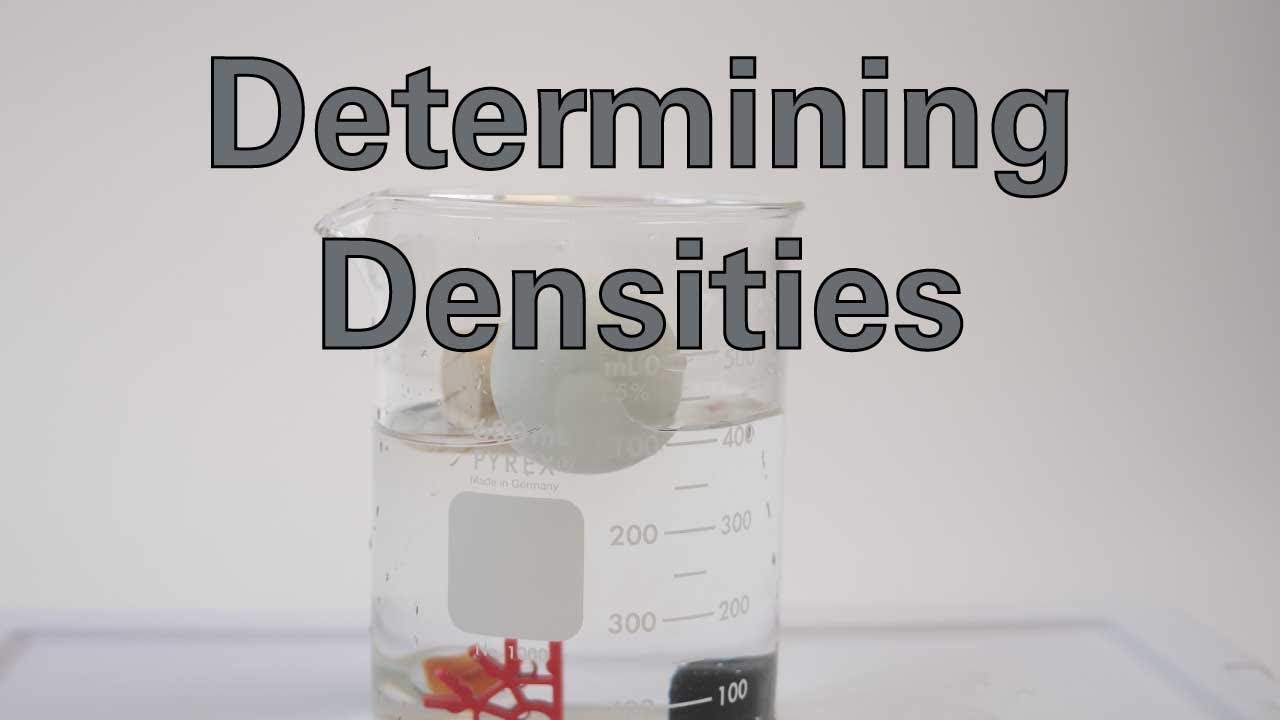
Students use two different methods to determine the densities of a variety of materials and objects. The first method involves direct measurement of the volumes of objects that have simple geometric shapes. The second is the water displacement method, used to determine the volumes of irregularly shaped objects. After the densities are determined, students create x-y scatter graphs of mass versus volume, which reveal that objects with densities less than water (floaters) lie above the graph's diagonal (representing the density of water), and those with densities greater than water (sinkers) lie below the diagonal.
View the full activity at TeachEngineering:
https://www.teachengineering.org/acti...
TeachEngineering has over 1,500 FREE lessons and activities.
Visit http://www.TeachEngineering.org for more!
Music: Toe Jam - Diamond Ortiz

Students are introduced to servos and the flex sensor as they create simple, one-jointed, finger robots controlled by Arduino. Servos are motors with feedback and are extensively used in industrial and consumer applications—from large industrial car-manufacturing robots that use servos to hold heavy metal and precisely weld components together, to prosthetic hands that rely on servos to provide fine motor control. Students use Arduino microcontrollers and flex sensors to read finger flexes, which they process to send angle information to the servos. Students create working circuits; use the constrain, map and smoothing commands; learn what is meant by library and abstraction in a coding context; and may even combine team finger designs to create a complete prosthetic hand of bendable fingers.
View the full activity at TeachEngineering:
https://www.teachengineering.o....rg/makerchallenges/v
TeachEngineering has over 1,500 FREE lessons and activities. Visit http://www.TeachEngineering.org for more!
Music: Aimless Amos

Why do some objects float while others sink? Students make sense of this phenomenon by engaging in the science and engineering practices of asking questions and defining problems, using models, and designing solutions. Students then apply what they discover to solve everyday situations, such as preventing a car from sinking. In this activity, students build a road out of Jell-O that is sturdy enough to drive a toy car across without getting sinking. Using the full engineering design process, students research and choose available ingredients that will support their car. After research, students investigate which ingredients will help make their Jell-O as strong as possible to protect their car from sinking in the “mud”. They test their prototype to see if the toy car will be able to drive across the Jell-O without sinking. The teams evaluate the process, improve the design, and recreate if needed. Students discuss their design, data, and final results in front of the class.
View the full activity on TeachEngineering: https://www.teachengineering.o....rg/activities/view/u
TeachEngineering has over 1,500 FREE lessons and activities. Visit http://www.TeachEngineering.org for more!
music - Bicycle Reunited

Student teams create, test and improve oil spill cleanup kits, designing them to be inexpensive and accessible for homeowners to use or for big companies to give to individual workers to aid in personal home, community or corporate environmental oil cleanup. After deciding on a target user and scenario, teams conduct research and draw from an assortment of ordinary materials and supplies.
View the full activity at TeachEngineering:
https://www.teachengineering.o....rg/makerchallenges/v
TeachEngineering has over 1,500 FREE lessons and activities. Visit https://www.teachengineering.org/ for more!
Music: Trapped - Quincas Moreira
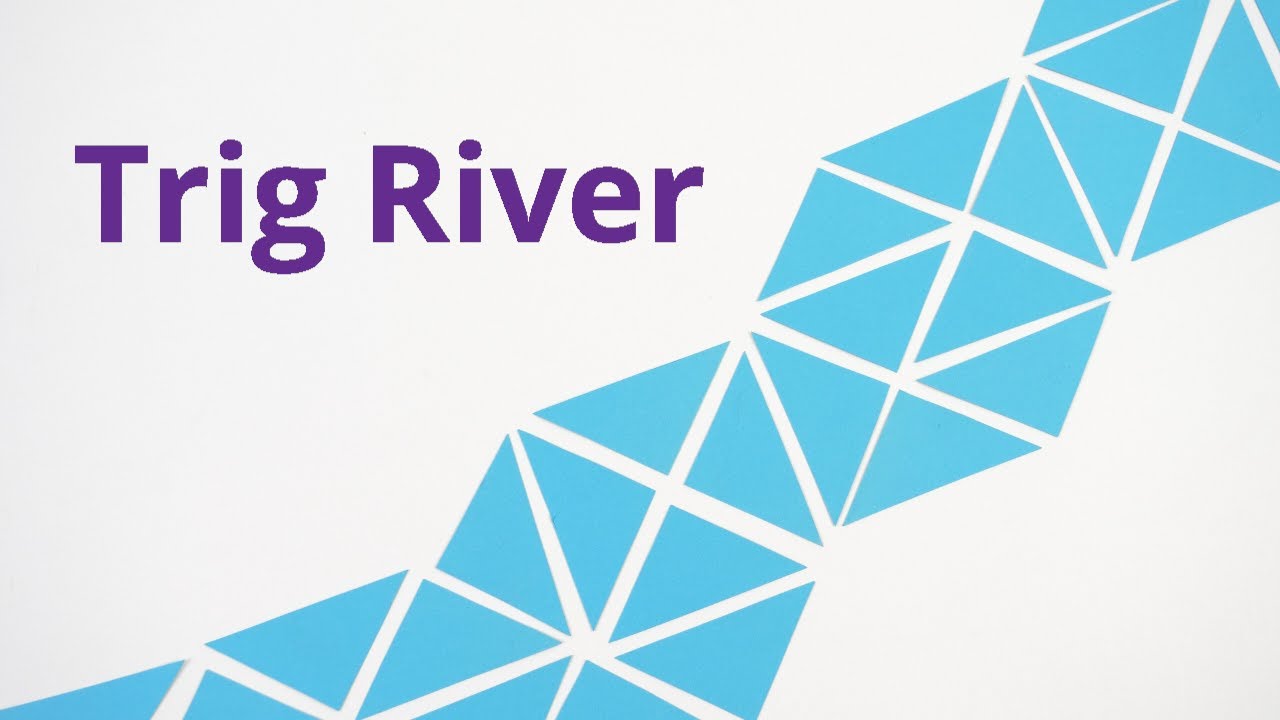
Students learn about and use a right triangle to determine the width of a "pretend" river. Working in teams, they estimate of the width of the river, measure it and compare their results with classmates.
View the full activity on TeachEngineering:
https://www.teachengineering.o....rg/activities/view/c
TeachEngineering has over 1,500 FREE lessons and activities. Visit https://www.teachengineering.org/ for more
Music: Jazz Apricot

Students are introduced to the concept of a dam and its potential benefits, which include water supply, electricity generation, flood control, recreation and irrigation. This lesson begins an ongoing classroom scenario in which student engineering teams working for the Splash Engineering firm design dams for a fictitious client, Thirsty County.
View the full lesson on TeachEngineering:
https://www.teachengineering.o....rg/lessons/view/cub_
TeachEngineering has over 1,500 FREE lessons and activities. Visit https://www.teachengineering.org/ for more

Students see and learn how crystallization and inhibition occur by making sugar crystals with and without additives in a supersaturation solution, testing to see how the additives may alter crystallization, such as by improving crystal growth by more or larger crystals. After three days, students analyze the differences between the control crystals and those grown with additives, researching and attempting to deduce why certain additives blocked crystallization, showed no change or improved growth. Students relate what they learn from the rock candy experimentation to engineering drug researchers who design medicines for targeted purposes in the human body.
View the full activity at TeachEngineering:
https://www.teachengineering.o....rg/activities/view/u
TeachEngineering has over 1,500 FREE lessons and activities. Visit http://www.TeachEngineering.org for more!
Music: Valerie Plain - Rondo Brothers

Student teams act as engineers and brainstorm, design, create and test their ideas for packaging to protect a raw egg shipped in a 9 x 12-in envelope. They follow the steps of the engineering design process and aim for a successful solution with no breakage, low weight, minimal materials and recycled/reused materials. Students come to understand the multi-faceted engineering considerations associated with the packaging of items to preserve, market and safely transport goods.
View the full activity on TeachEngineering:
https://www.teachengineering.o....rg/activities/view/d
TeachEngineering has over 1,500 FREE lessons and activities. Visit https://www.teachengineering.org/ for more
Music: Santo Rico

Students explore the phenomenon of electricity as they learn about current electricity and necessary conditions for the existence of an electric current. To make sense of this phenomenon, students construct a simple electric circuit and galvanic cell to help them understand voltage, current, and resistance. They also use the disciplinary core ideas of energy and electric current to better understand the crosscutting concept of energy transfer.
View the full lesson on TeachEngineering:
https://www.teachengineering.o....rg/lessons/view/cub_
TeachEngineering has over 1,500 FREE lessons and activities. Visit http://www.TeachEngineering.org for more!

Students learn a simple technique for quantifying the amount of photosynthesis that occurs in a given period of time, using a common water plant (Elodea). They use this technique to compare the amounts of photosynthesis that occur under conditions of low and high light levels. Before they begin the experiment, however, students must come up with a well-worded hypothesis to be tested. After running the experiment, students pool their data to get a large sample size, determine the measures of central tendency of the class data, and then graph and interpret the results.
View the full activity on TeachEngineering:
https://www.teachengineering.o....rg/activities/view/d
TeachEngineering has over 1,500 FREE lessons and activities. Visit https://www.teachengineering.org/ for more!
Music: Jessica- Joey Pecoraro

The application of engineering principles is explored in the creation of mobiles. As students create their own mobiles, they take into consideration the forces of gravity and convection air currents. They learn how an understanding of balancing forces is important in both art and engineering design.
View the full activity at TeachEngineering:
https://www.teachengineering.o....rg/activities/view/c
TeachEngineering has over 1,500 FREE lessons and activities.
Visit http://www.TeachEngineering.org for more!
Music: Cold Funk Funkorama


Student teams act as engineers and learn about systems thinking and scale by reassembling the separated pages of the engaging picture book, “Zoom,” by Istvan Banyai. The book is a series of 31 wordless pictures that start very close-up and then zoom out—from a rooster’s comb to outer space. Like a movie camera, each subsequent page pulls back to reveal the context of the previous scene as something different than what you originally thought. When the 31 un-numbered pages are jumbled, it is a surprising challenge for teams to figure out how the pictures connect. The task prompts students to pause and look closer so as to adjust to new points of view and problem solve to find a logical sequence. It requires them to step back and take a broader view. Students learn that engineers work together as teams and look at things very closely so that they see different things and come up with more than one solution when problem solving. To conclude, students go outside and practice their skills by imagining and then drawing their own Zoom-like small booklet stories inspired by items found in nature. The classic duck/rabbit ambiguous drawing is provided as a kickoff visual aid.
This engineering curriculum aligns to Next Generation Science Standards (NGSS).
View the full activity on TeachEngineering:
https://www.teachengineering.o....rg/activities/view/u
TeachEngineering has over 1,500 FREE lessons and activities. Visit https://www.teachengineering.org/ for more
Music: Aimless Amos

Students create large-scale models of microfluidic devices using a process similar to that of the PDMS and plasma bonding that is used in the creation of lab-on-a-chip devices. They use disposable foam plates, plastic bendable straws and gelatin dessert mix. After the molds have hardened overnight, they use plastic syringes to inject their model devices with colored fluid to test various flow rates. From what they learn, students are able to answer the challenge question presented in lesson 1 of this unit by writing individual explanation statements.
View the full activity at TeachEngineering: https://www.teachengineering.o....rg/activities/view/v
TeachEngineering has over 1,500 FREE lessons and activities. Visit http://www.TeachEngineering.org for more!
Music: Roger That- Silent Partner
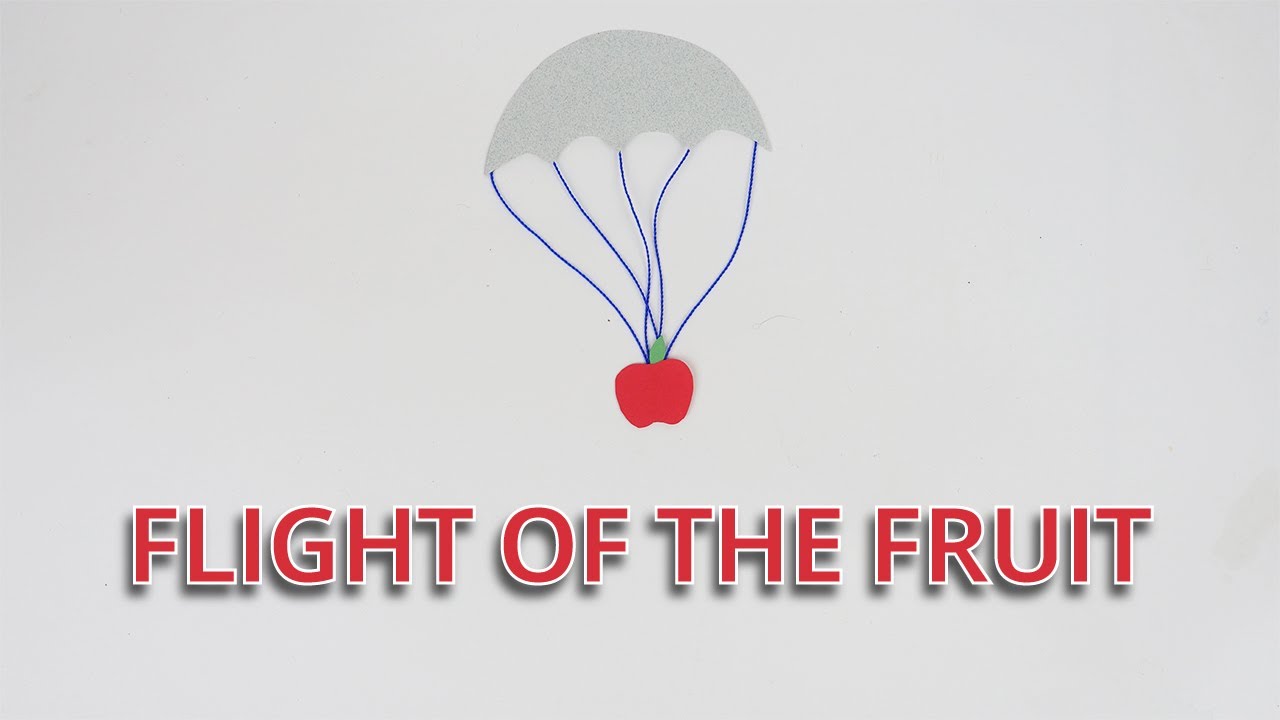
Testing a model parachute can tell us many things and help us learn about a variety of concepts, such as proportionate size and scale, gravity, air resistance, weight relationships. In this freeform activity about preventing free-falling, students design their own model parachutes while considering factors in their test drops such as distance, weight, and time.
View the full activity on TeachEngineering:
https://www.teachengineering.o....rg/activities/view/u
TeachEngineering has over 1,500 FREE lessons and activities. Visit https://www.teachengineering.org/ for more!
Music: Hyperfun - Kevin MacLeod

A unique activity for young learners that combines engineering and biology, students design an optimal environment for red wiggler worms in a compost bin using the engineering design process. Students learn about living and non-living things, the habitat of red wigglers, how red wigglers help convert organic waste into soil, as well as composting in nature and as a sustainable practice.
View the full activity on TeachEngineering:
https://www.teachengineering.o....rg/activities/view/u
TeachEngineering has over 1,500 FREE lessons and activities. Visit https://www.teachengineering.org/ for more!
Music: Daily_Beetle -Kevin MacLeod