סרטונים אחרונים
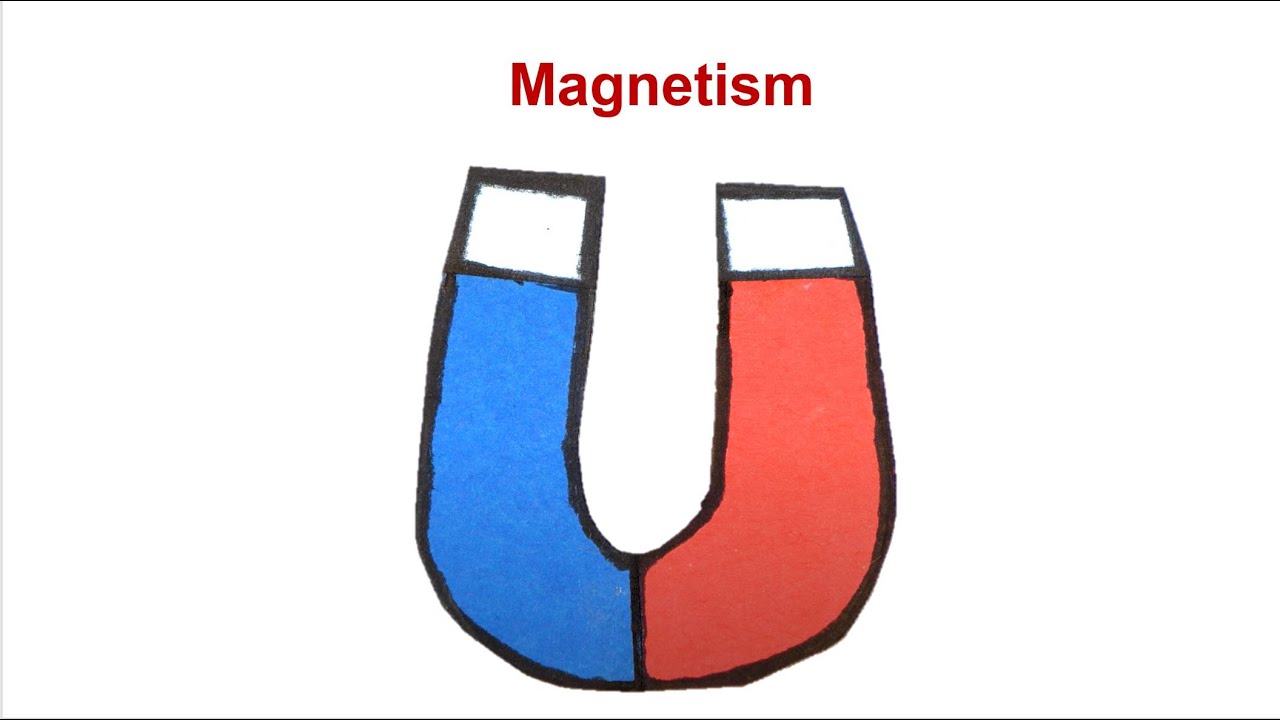
What is magnetism? How do we see the phenomenon of magnetism in our daily lives? How do engineers leverage magnetism to help design and create devices we use? TeachEngineering delves into the different types of magnets and how they show up in our world today!
https://www.teachengineering.o....rg/populartopics/mag
Music: Blue Macaw

Students drop water from different heights to demonstrate the conversion of water's potential energy to kinetic energy. They see how varying the height from which water is dropped affects the splash size. They follow good experiment protocol, take measurements, calculate averages and graph results. In seeing how falling water can be used to do work, they also learn how this energy transformation figures into the engineering design and construction of hydroelectric power plants, dams and reservoirs.
View the full activity at TeachEngineering:
https://www.teachengineering.o....rg/activities/view/c
TeachEngineering has over 1,500 FREE lessons and activities. Visit http://www.TeachEngineering.org for more!
Music: Rank and File - Silent Partner

This unique engineering activity explores helping animals that cannot help themselves. Students perform research and design prosthetic prototypes for an animal to use for its survival. First, students choose an animal from a set of task cards. These cards have descriptions of animals that have injuries that keep them from getting what they need in the wild. Next, students work in pairs to research these animals and their habitats. They then create habitats for their animals to live and model 3D prosthetics for the animals to use with modeling clay. Finally, students share their habitats with their peers.
View the full activity on TeachEngineering:
https://www.teachengineering.o....rg/activities/view/u
TeachEngineering has over 1,500 FREE lessons and activities. Visit https://www.teachengineering.org/ for more!
Music: Believer - Silent Partner

Students construct paper recombinant plasmids to simulate the methods genetic engineers use to create modified bacteria. They learn what role enzymes, DNA and genes play in the modification of organisms. For the particular model they work on, they isolate a mammal insulin gene and combine it with a bacteria's gene sequence (plasmid DNA) for production of the protein insulin.
View the full activity at TeachEngineering:
https://www.teachengineering.o....rg/activities/view/u
TeachEngineering has over 1,500 FREE lessons and activities. Visit http://www.TeachEngineering.org for more!
Music: How We Like It - Dan Lebowitz

Student pairs are given 10 minutes to create the biggest box possible using one piece of construction paper. Teams use only scissors and tape to each construct a box and determine how much puffed rice it can hold. Then, to meet the challenge, they improve their designs to create bigger boxes. They plot the class data, comparing measured to calculated volumes for each box, seeing the mathematical relationship. They discuss how the concepts of volume and design iteration are important for engineers. Making 3-D shapes also supports the development of spatial visualization skills. This activity and its associated lesson and activity all employ volume and geometry to cultivate seeing patterns and understanding scale models, practices used in engineering design to analyze the effectiveness of proposed design solutions.
View the full activity at TeachEngineering: https://www.teachengineering.o....rg/activities/view/c
TeachEngineering has over 1,500 FREE lessons and activities. Visit http://www.TeachEngineering.org for more!
Music: Milos - Eveningland

Students explore how different materials (sand, gravel, lava rock) with different water contents on different slopes result in landslides of different severity. They measure the severity by how far the landslide debris extends into model houses placed in the flood plain. This activity is a small-scale model of a debris chute currently being used by engineers and scientists to study landslide characteristics. Much of this activity setup is the same as for the Survive That Tsunami activity in Lesson 5 of the Natural Disasters unit.
View the full activity at TeachEngineering:
https://www.teachengineering.o....rg/activities/view/c
TeachEngineering has over 1,500 FREE lessons and activities. Visit http://www.TeachEngineering.org for more!
Music: Sky Scraper - Geographer

Students learn the different airplane parts, including wing, flap, aileron, fuselage, cockpit, propeller, spinner, engine, tail, rudder, elevator. Then they each build one of four different (provided) paper airplane (really, glider) designs with instructions, which they test in three trials, measuring flight distance and time. Then they design and build (fold, cut) a second paper airplane design of their own creation, which they also test for flight distance and time. They graph the collected class data. Analysis of these experiments with "model" airplanes and their results help them see and figure out what makes airplanes fly and what can be changed to influence the flying characteristics and performance of airplanes.
View the full activity at TeachEngineering:
https://www.teachengineering.o....rg/activities/view/c
TeachEngineering has over 1,500 FREE lessons and activities. Visit https://www.teachengineering.org/ for more!
Music: Dumb as a Box - Dan Lebowitz

Use this board game to introduce the concepts of energy use in our lives and the very real impact that personal choices can have on our energy consumption, energy bills and fuel supply. The game begins as students select cards that define their modes of transportation and home design. The players roll dice and move around the board, landing on "choice" or "situation" blocks and selecting cards that describe consumer choices and real-life events that impact their energy consumption and annual energy bills. As the players pass gasoline stations or energy bill gates, they must pay annual expenses as defined by their original cards, with amounts altered by the choices they've made along the way. Gasoline cards are collected to represent total consumption. Too many gas-guzzling vehicles can result in total depletion of their gasoline supply – at which point everyone must walk or ride the bus. At the end of the game, the players count their remaining dollars to determine the winner. Discussion questions probe the students to interpret what choices they made and which situations they encountered had the most impact on their energy consumption and energy bills. All game board, card and money files are available online free of charge.
This engineering curriculum aligns to Next Generation Science Standards (NGSS).
View the full activity on TeachEngineering:
https://www.teachengineering.o....rg/activities/view/c
TeachEngineering has over 1,500 FREE lessons and activities. Visit https://www.teachengineering.org/ for more
Music: Bicycle Reunited

Students investigate circuits and their components by building a basic thermostat. They learn why key parts are necessary for the circuit to function, and alter the circuit to optimize the thermostat temperature range. They also gain an awareness of how electrical engineers design circuits for the countless electronic products in our world.
View the full activity at TeachEngineering:
https://www.teachengineering.o....rg/activities/view/c
TeachEngineering has over 1,500 FREE lessons and activities.
Visit http://www.TeachEngineering.org for more!
Music: Electrodoodle- Kevin MacLeod

Students are introduced to the role of electricity and magnetism as they build speakers. They also explore the properties of magnets, create electromagnets, and determine the directions of magnetic fields. They conduct a scientific experiment and show cause-effect relationships by monitoring changes in the speaker's movement as the amount or the direction of the current change.
View the full activity on TeachEngineering:
https://www.teachengineering.org/acti...
TeachEngineering has over 1,500 FREE lessons and activities. Visit https://www.teachengineering.org/ for more!
Music: Rollanddrop - Jingle Punks
Santo Rico - Twin Musicom
You’re free to use this song in any of your videos, but you must include the following in your video description:
Santo Rico by Twin Musicom is licensed under a Creative Commons Attribution license (https://creativecommons.org/licenses/...)
Artist: http://www.twinmusicom.org/
In a hands-on way, students explore light's properties of absorption, reflection, transmission and refraction through various experimental stations within the classroom. To understand absorption, reflection and transmission, they shine flashlights on a number of provided objects. To understand refraction, students create indoor rainbows. An understanding of the fundamental properties of light is essential to designing an invisible laser security system, the ongoing objective in this unit.
View the full activity at TeachEngineering:
https://www.teachengineering.o....rg/activities/view/v
TeachEngineering has over 1,500 FREE lessons and activities. Visit https://www.teachengineering.org/ for more!
Music: New Land - ALBIS

Students use water balloons and a length of string to understand how the force of gravity between two objects and the velocity of a spacecraft can balance to form an orbit. They see that when the velocity becomes too great for gravity to hold the spacecraft in orbit, the object escapes the orbit and travels further away from the planet.
View the full activity on TeachEngineering:
https://www.teachengineering.o....rg/activities/view/c
TeachEngineering has over 1,500 FREE lessons and activities. Visit https://www.teachengineering.org/ for more!
Music: Above and Beyond - Silent Partner

Students learn about the role engineers and mathematicians play in developing the perfect bungee cord length by simulating and experimenting with bungee jumping using washers and rubber bands. Working as if they are engineers for a (hypothetical) amusement park, students are challenged to develop a show-stopping bungee jumping ride that is safe. To do this, they must find the maximum length of the bungee cord that permits jumpers (such as brave Washy!) to get as close to the ground as possible without going "splat"! This requires them to learn about force and displacement and run an experiment. Student teams collect and plot displacement data and calculate the slope, linear equation of the line of best fit and spring constant using Hooke's law. Students make hypotheses, interpret scatter plots looking for correlations, and consider possible sources of error. An activity worksheet, pre/post quizzes and a PowerPoint® presentation are included.
View the full activity on TeachEngineering:
https://www.teachengineering.o....rg/activities/view/n
TeachEngineering has over 1,500 FREE lessons and activities. Visit https://www.teachengineering.org/ for more
Music: Morning Mist - Quincas Moreira

Students use a table-top-sized tsunami generator to observe the formation and devastation of a tsunami. They see how a tsunami moves across the ocean and what happens when it reaches the continental shelf. Students make villages of model houses and buildings to test how different material types are impacted by the huge waves. They further discuss how engineers design buildings to survive tsunamis. Much of this activity setup is the same as for the Mini-Landscape activity in Lesson 4 of the Natural Disasters unit.
View the full activity on TeachEngineering:
https://www.teachengineering.o....rg/activities/view/c
TeachEngineering has over 1,500 FREE lessons and activities. Visit https://www.teachengineering.org/ for more
Music - Daily_Beetle
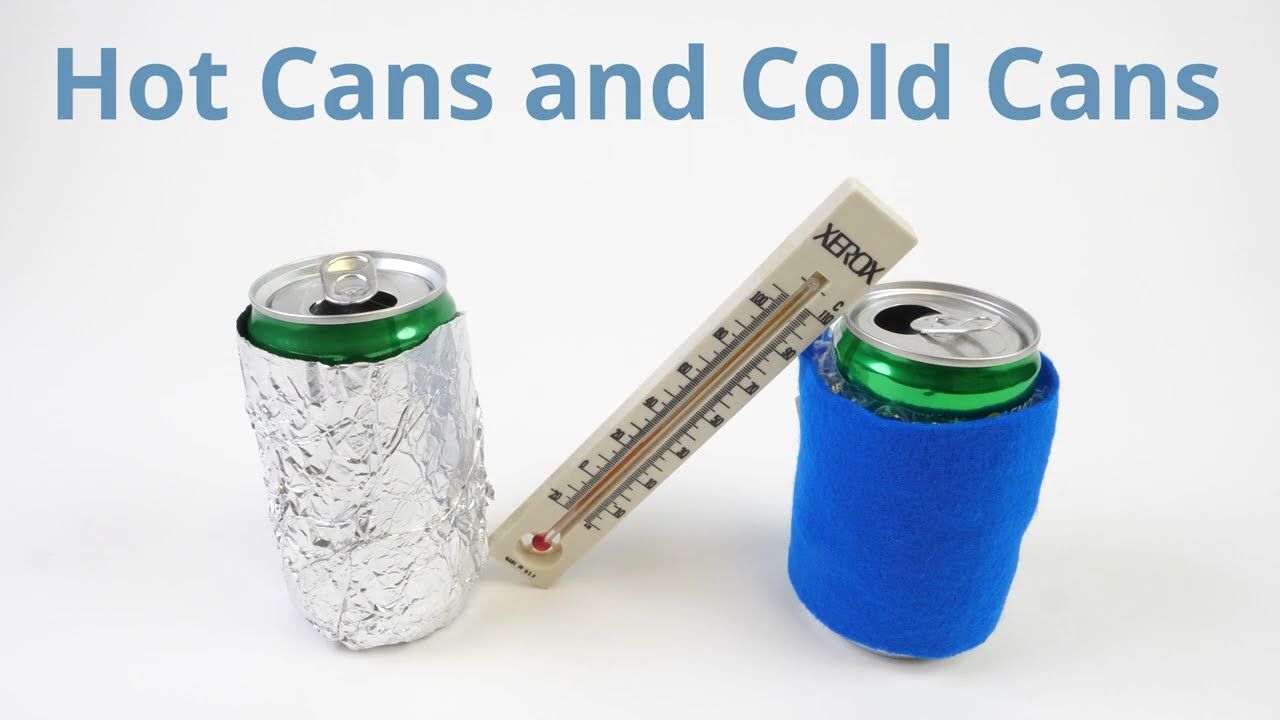
Students apply the concepts of conduction, convection, and radiation as they work in teams to solve two challenges. One problem requires that they maintain the warm temperature of one soda can filled with water at approximately human body temperature, and the other problem is to cause an identical soda can of warm water to cool as much as possible during the same 30-minute time period. Students design their engineering solutions using only common everyday materials, and test their devices by recording the water temperatures in their two soda cans every five minutes.
This engineering curriculum aligns to Next Generation Science Standards (NGSS).
View the full activity on TeachEngineering:
https://www.teachengineering.o....rg/activities/view/d
TeachEngineering has over 1,500 FREE lessons and activities. Visit https://www.teachengineering.org/ for more
Music - Aimless Amos

Student teams design and then create small-size models of working filter systems to simulate multi-stage wastewater treatment plants. Drawing from assorted provided materials (gravel, pebbles, sand, activated charcoal, algae, coffee filters, cloth) and staying within a (hypothetical) budget, teams create filter systems within 2-liter plastic bottles to clean the teacher-made simulated wastewater (soap, oil, sand, fertilizer, coffee grounds, beads). They aim to remove the water contaminants while reclaiming the waste material as valuable resources. They design and build the filtering systems, redesigning for improvement, and then measuring and comparing results (across teams): reclaimed quantities, water quality tests, costs, experiences and best practices. They conduct common water quality tests (such as turbidity, pH, etc., as determined by the teacher) to check the water quality before and after treatment.
View the full activity at TeachEngineering:
https://www.teachengineering.o....rg/activities/view/u
TeachEngineering has over 1,500 FREE lessons and activities. Visit https://www.teachengineering.org/ for more!
Music: Awaken - Anno Domini Beats
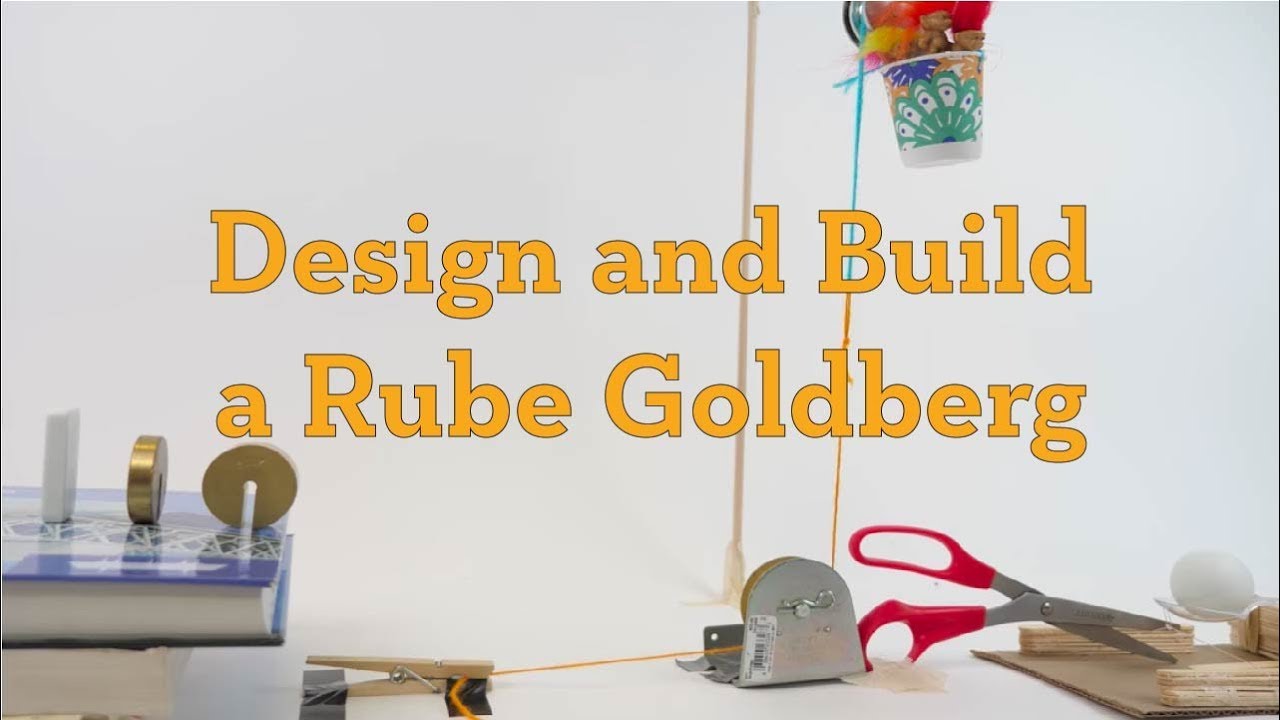
In this two-part activity, students design and build Rube Goldberg machines. This open-ended challenge employs the engineering design process and may have a pre-determined purpose, such as rolling a marble into a cup from a distance, or let students decide the purposes.
View the full activity on TeachEngineering: https://www.teachengineering.o....rg/activities/view/c
TeachEngineering has over 1,500 FREE lessons and activities. Visit http://www.TeachEngineering.org for more!
Music: Deep Hat - Vibe Tracks
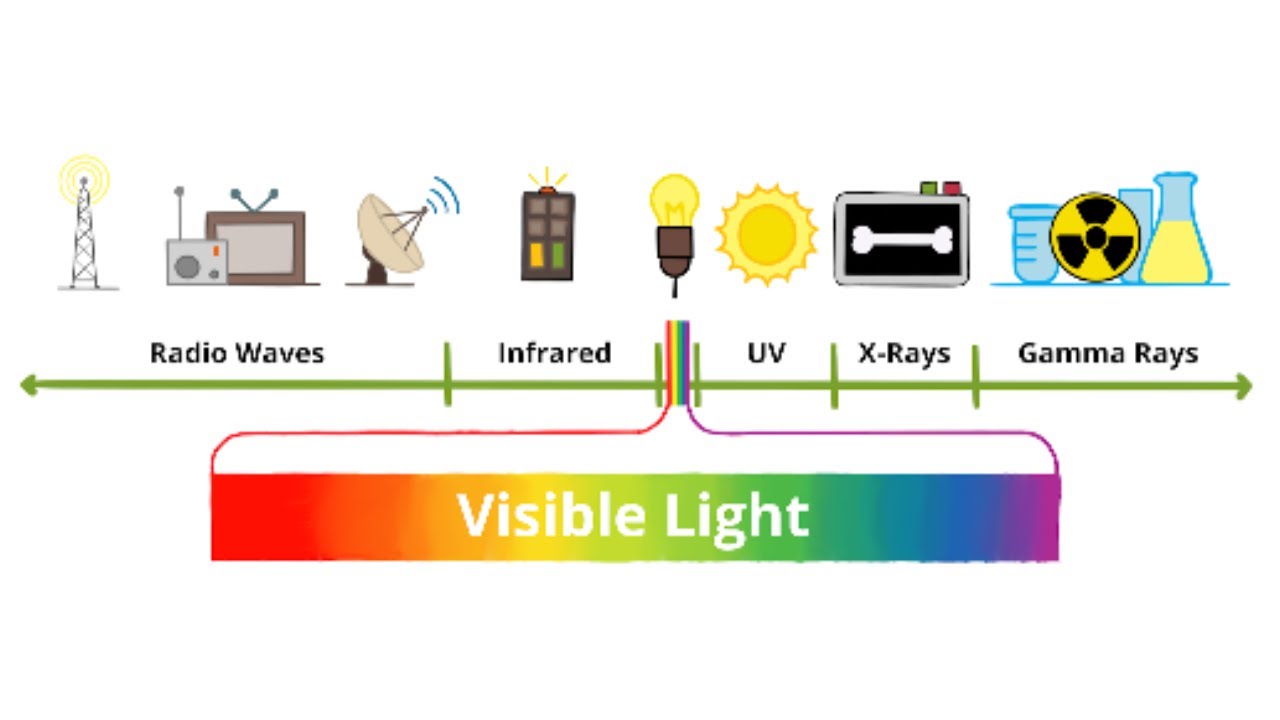
Students learn the basics of the electromagnetic spectrum and how various types of electromagnetic waves are related in terms of wavelength and energy. In addition, they are introduced to the various types of waves that make up the electromagnetic spectrum including, radio waves, ultraviolet waves, visible light and infrared waves. These topics help inform students before they turn to designing solutions to an overarching engineering challenge question.
View the full lesson on TeachEngineering:
https://www.teachengineering.o....rg/lessons/view/clem
TeachEngineering has over 1,500 FREE lessons and activities. Visit https://www.teachengineering.org/ for more

Students learn about oil spills and their environmental and economic effects. They experience the steps of the engineering design process, starting by brainstorming potential methods for oil spill cleanup. They model small-size oil spills in plastic bins, and then design, build and re-design oil booms to prevent the spread of oil spills. Oil booms are like floating fences on the water surface to help contain and collect spilled oil. During a reflective session after cleaning up their oil booms, students come up with ideas on how to reduce oil consumption to prevent future oil spills. A PowerPoint presentation is provided.
View the full activity at TeachEngineering:
https://www.teachengineering.o....rg/activities/view/c
TeachEngineering has over 1,500 FREE lessons and activities. Visit http://www.TeachEngineering.org for more!
Music: Milos - Eveningland

Algorithms are one of the foundations of our technological world, and are driven by the scientists and engineers behind the scenes that write all of these different algorithms. This lesson is intended to get students interested in the inner workings of algorithms and the capabilities associated with them. We start by engaging students with very simple examples of algorithms which they can associate with. We then discuss Google’s PageRank algorithm for ranking the importance of websites based on the other websites that link to them, and play a fun game that can be used to find the same results as the PageRank algorithm.
View the full lesson on TeachEngineering:
https://www.teachengineering.o....rg/lessons/view/csm-
TeachEngineering has over 1,900 FREE lessons and activities. Visit http://www.TeachEngineering.org for more!

Students use the engineering design process to solve a real-world problem—shoe engineering! Working in small teams, they design, build and test a pair of wearable platform or high-heeled shoes, taking into consideration the stress and strain forces that it will encounter from the shoe wearer. They conclude the activity with a "walk-off" to test the shoe designs and discuss the design process.
View the full activity at TeachEngineering:
https://www.teachengineering.o....rg/activities/view/c
TeachEngineering has over 1,500 FREE lessons and activities. Visit http://www.TeachEngineering.org for more!
Music: Toe Jam - Diamond Ortiz
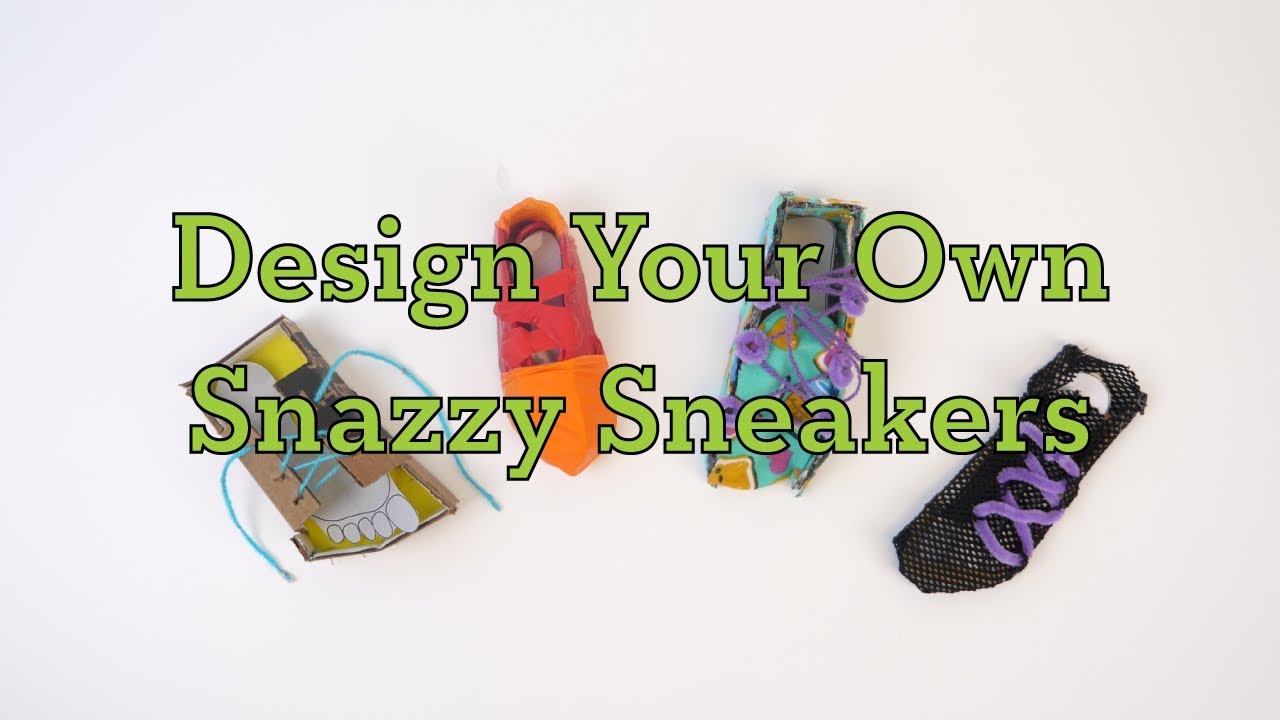
For this maker challenge, students decide on specific design requirements (such as good traction or deep cushioning), sketch their plans, and then use a variety of materials to build prototype shoes that meet the design criteria. The bottoms (soles) of sneakers provide support, cushioning, flexibility and traction as makes sense for the sport or activity. In addition, some sneakers are intended to be fashionable with cool colors, materials or added height. Sneakers are engineered products that use a mix of materials to create highly functional, useful shoes.
View the full activity at TeachEngineering:
https://www.teachengineering.o....rg/makerchallenges/v
TeachEngineering has over 1,500 FREE lessons and activities. Visit https://www.teachengineering.org/ for more!
Music: Venice Beach - Topher Mohr and Alex Elena

Engineers design methods of removing particulate matter from industrial sources to minimize negative effects of air pollution. In this activity, students undertake a similar engineering challenge as they design and build a filter to remove pepper from an air stream without blocking more than 50% of the air.
View the full activity at TeachEngineering:
https://www.teachengineering.o....rg/activities/view/c
TeachEngineering has over 1,500 FREE lessons and activities. Visit http://www.TeachEngineering.org for more!
Music: Dream of A Day - Density & Time

Students explore the physics exploited by engineers in designing today's roller coasters, including potential and kinetic energy, friction and gravity. First, they learn that all true roller coasters are completely driven by the force of gravity and that the conversion between potential and kinetic energy is essential to all roller coasters. Second, they consider the role of friction in slowing down cars in roller coasters. Finally, they examine the acceleration of roller coaster cars as they travel around the track. During the associated activity, students design, build and analyze model roller coasters they make using foam tubing and marbles (as the cars).
View the full lesson on Teach Engineering:
https://www.teachengineering.o....rg/lessons/view/duk_
Teach Engineering has over 1,500 FREE lessons and activities. Visit https://www.teachengineering.org/ for more

Students investigate the idea of linear approximation. Students apply mathematical modeling, specifically linear approximation, to an already collected data set to make a prediction. In this lesson, students first engage in a warm-up that is not a perfectly linear data set, being exposed to this for the first time. Students take on the role as a packaging engineer to learn the process to apply linear approximation modeling: collecting data, creating a graph, drawing a line-of-fit, creating a model in the form of an equation, defining the model’s variables, and evaluating with the model. Students ultimately use their linear model to predict the net weight of cereal in grams contained by 260 square inches of cardboard packaging.
View the full activity on TeachEngineering:
https://www.teachengineering.o....rg/lessons/view/mis-
TeachEngineering has over 1,900 FREE lessons and activities. Visit https://www.teachengineering.org/ for more