Top videos

Learn More at mathantics.com
Visit http://www.mathantics.com for more Free math videos and additional subscription based content!

Division 3 with Chinese Numerals, Math, Algebra, Factoring Expressions, with Jerry Mortensen, Mortensen Math manipulative blocks, Kids Montessori K-12 Homeschooling Pre-school Kindergarten mathematics tutorial video.\
Math, Calculus, Trigonometry, Fractions, Algebra, Addition, Subtraction, Multiplication, Factoring
Algebra visualization with Mortensen Math.com manipulative colored blocks to visualizing algebraic expressions, visualizing mathematics, Montessori Homeschool k-12 preschool online curriculum on line video.
CONTACT US:
Toll Free USA Tel: 800+4plus4=8! [800-475-8748]
http://www.mortensenmathdirect.com

Anthropic just released their comprehensive prompt engineering course completely FREE - the same skills that are making developers highly sought after in the AI job market 🚀 Learn how to: Master prompt structure from basic to advanced techniques Troubleshoot common prompt failures with proven methods Leverage Claude's strengths for optimal business results Build complex prompts from scratch for any industry This interactive course covers 9 chapters with hands-on exercises, available both as Jupyter notebooks and Google Sheets. No technical setup required! Ready to develop the most in-demand skill in AI? Get access using link below:
https://tinyurl.com/3u8vhren
Start your prompt engineering journey today! #PromptEngineering #AI #ArtificialIntelligence #Anthropic #Claude #Developers #TechSkills #FreeEducation 🤖💡📚

In this short video, we provide a quick update on:
✅ OpenAI’s new FREE ChatGPT accounts for schools
✅ Google Gemini 3 and what it means for Google Workspace districts
✅ How Microsoft and Google are racing to bring AI deeper into your school’s tech stack
✅ Why context engineering is the real game-changer — and how Let’s Go Learn is leading the way
📌 Learn how Let’s Go Learn powers AI with real assessment data to instantly create PLAAFPs and SMART goals for special education and MTSS.
🔗 More on Let’s Go Learn: https://info.letsgolearn.com/info-on-ai_linkedin
👇 Got questions or thoughts? Drop them in the comments or reach out!
#AIinEducation #EdTech #ChatGPT #GoogleGemini #SpecialEducation #PLAAFP #SMARTgoals #LetsGoLearn #K12Leadership #MTSS #TeacherTools

Build a custom AI Tutor with Google Gems to protect the "struggle" of learning.
🎓 Learn how to design pedagogical AI that asks questions instead of just giving answers.
AI doesn't have to ruin critical thinking in the classroom. In this video, I’ll show you exactly how to use GoogleGems to build a custom AI coach that aligns with your teaching philosophy. For any subject at any level, you can "architect" a tool that scaffolds challenges and guides students toward owning their own learning.
📥 RESOURCES MENTIONED:
The 4 Pillars of AI Design (PDF Guide): https://thetownsquare.org/resources
Try the "Supportive Math Coach" for Algebra 2: https://gemini.google.com/gem/....10Dqk_TDzjZgyBdx3BAe
Try the "Supportive Math Coach" for Pre-Calculus: https://gemini.google.com/gem/....1-LCD2VGQALMHlR-M1ld
Math Coach System Instructions: https://thetownsquare.org/resource-library
Watch: Prompt Engineering for Teachers: https://youtu.be/GxlOoKI0zxg
📍 TIMESTAMPS:
----------
0:00 Intro
0:54 Demo (math AI)
2:33 Demo (English & Language Arts)
4:22 How to Build Your Own AI
5:28 Use Gemini to write instructions
6:32 Pillars to guide your build
8:01 Finalize the build
6:45 What to Expect in this Series
8:27 Most important concept
----------
💡 WHAT YOU’LL LEARN:
How to turn Gemini into an "eager student teacher" with specific guardrails.
The difference between a "helpful" AI and a Socratic tutor.
Strategic "Chain-of-Thought" prompting to improve AI responses.
💬 JOIN THE TOWN SQUARE COMMUNITY:
www.thetownsquare.org
What is the #1 friction point in your classroom that a Custom Gem could solve? Drop your ideas in the comments—I’d love to help you brainstorm your instructions!
🔔 SUBSCRIBE for more AI tools, tips, and tricks designed specifically for educators

Unlock the power of Google Gemini AI Educator Hub with this easy step-by-step tutorial! 🚀 Whether you’re a teacher, student, or education enthusiast, this guide will show you how to use Gemini AI tools to make teaching and learning more engaging, efficient, and creative.
In this video, you’ll learn:
✅ What the Google Gemini AI Educator Hub is all about
✅ How to access and navigate the platform
✅ Practical ways teachers can use Gemini AI in the classroom
✅ Tips to maximize AI for smarter learning experiences
With Gemini AI, you can create lesson plans, spark creativity, and bring innovation into your classroom. Don’t miss out on this future of education!
💡 Perfect for: Teachers, educators, students, and anyone interested in AI in education.
If you found this video helpful, make sure to LIKE 👍, SHARE 🔄, and SUBSCRIBE 🔔 to Beautyedutech for more tutorials on AI tools, EdTech, and digital learning hacks.
📌 Stay connected:
#GoogleGemini #GeminiAI #EdTech #AIinEducation #TeacherTools

Learn how to create effective listening tasks using AI tools in minutes.
In this tutorial, I show a step-by-step workflow to design a grammar interpretation listening lesson using Claude, Gemini, and ElevenLabs. The focus is on helping students notice patterns, interpret meaning, and learn grammar inductively through listening.
You will see how to:
Generate natural, level-appropriate audio scripts with AI
Design listening tasks that promote guided discovery
Use AI voices to create engaging classroom audio
Build a complete TALI-style lesson (meaning → noticing → interpretation)
This approach is practical, time-saving, and directly applicable to ESL classrooms.

What if your school used an AI smarter than your topper friend?
Meet Gemini 2.0 – Google’s most advanced AI that’s redefining education as we know it. From personalized learning to superhuman teachers and accessibility tools that level the playing field, Gemini is transforming classrooms across the world.
In this video, we break down the Top 5 ways Gemini 2.0 is revolutionizing learning, share Sara’s real-life transformation, and explore how AI is empowering both students and teachers.
Attention educators, students, and edtech entrepreneurs—this is not just the future. It’s already here.
Timestamps:
0:01 – Introduction
0:16 – The Problem: Why We Need This
0:41 – Storytime: Meet Sara
1:01 – #1: Learning Tailored to Your Brain
1:27 – #2: Understands Everything, Not Just Text
1:58 – #3: Teachers Become Superhuman
2:23 – #4: Makes Learning Fair for Everyone
2:55 – #5: It’s Smart, But Also Safe
3:40 – Sara’s Transformation
4:00 – Conclusion + What You Can Do Next
Drop your thoughts in the comments:
Would you trust an AI like Gemini to help you learn?
Let us know, and don’t forget to like, share, and subscribe for more future-of-learning content!
#Gemini2 #AIinEducation #EdTech #FutureOfLearning #GoogleGemini #EducationReform #AIRevolution #SmartClassrooms #TechForGood #StudentLife #TeachersOfTomorrow #PersonalizedLearning #AIinSchools #DigitalLearning #GeminiAI
The Education Magazine is one of the best digital platforms in the education sector that cater to the needs of 21st-century students by partnering with the largest universities and bringing forth the most innovative education courses for students. Over the years, it has lived up to its commitment to acquainting students with the best academic and career growth opportunities with its neatly depicted magazine issues.
Move beyond traditional lesson plans and discover how to use Gemini to create dynamic, visually-rich content for your classroom. This hands-on session will demonstrate how to leverage Gemini's image generation feature to produce custom visuals for presentations, worksheets, and class projects. You'll then explore the Canvas feature, transforming your text and images into engaging, interactive materials like custom websites, infographics, and study guides. Walk away with practical skills to integrate AI tools into your daily workflow, saving you time and empowering your students with creative, digital-first learning experiences.

In the 5th edition of our AI in 30 series we explore Gems in Google Classroom. Learn how to create Gems right in Google Classroom and attach Gems to assignments.

You can STOP using complicated photo software! Learn the complete, practical workflow for using Google Gemini (and its integrated Nano Banana AI model) to generate, edit, and transform your images with simple text prompts. This isn't just a fun trick; it's a powerful, time-saving tool for teachers, students, and professionals who need fast, impressive visuals for presentations, reports, and classroom materials. This is the simplest, fastest way to achieve stunning, professional visuals without complexity.
Join this channel to get access to perks:
https://www.youtube.com/channe....l/UCYUPLUCkMiUgiyVul
***Consider supporting Technology for Teachers and Students on Patreon***: https://www.patreon.com/techno....logyforteachersandst Here's my entire playlist of Google tutorials: https://bit.ly/thegoogleplaylist Please say "Thanks" by clicking the Thanks button below the video. #googlestudents #google #googletutorial #docs #googledrive #googleworkspace #gsuite #googledocs #googlevideo #googleai #ai #artificialintelligence #aiineducation#microsoftexcel #aiphotoediting #aiphotos

Agar tum boring PPT slides aur weak notes se thak chuke ho, to ye video tumhara game change karega.
Is video me main ek complete AI system dikhata hoon jisme sirf ONE PROMPT se beautiful PPT slides, smart notes aur teaching-ready content generate hota hai.
Bonus me, main ye bhi bataya hai kaise in slides ko editable format me convert karke income bhi generate ki ja sakti hai.
TIME STAMPS
Introduction to AI for Notes and PPTs (0:00-0:32)
Generating Attractive PPT Slides with ChatGPT (0:33-1:55)
Opening ChatGPT and Using the Prompt (0:58-1:20)
Ensuring Accuracy with Detailed Input (1:20-1:28)
Reviewing Generated Slides (1:28-1:55)
Generating Handwritten Notes with Google Gemini (2:01-3:13)
Importance for Students and Teachers (2:01-2:19)
Opening Google Gemini and Using the Prompt (2:32-2:54)
Reviewing Generated Notes (2:55-3:10)
Bonus Tip: Monetizing AI-Generated Content (3:14-4:09)
Market Opportunity for AI Bundles (3:20-3:40)
Pricing and Income Potential (3:40-4:09)
Call to Action (4:10-4:22)
What you will learn
In this video, you will learn:
• How to generate beautiful teaching PPT slides using AI prompts
• How to convert handwritten/text notes into smart digital notes
• How to structure slides for teaching and explanation
• The one-prompt AI system for multiple outputs
• How to create editable PPT templates
• How students and teachers can monetize PPT slides
• How to build a study + teaching workflow using AI
Who this video is for
This video is for:
• Students who want smart visual notes and presentations
• Teachers who want teaching-ready PPT slides
• Creators who want AI-based content systems
• Anyone who wants to use AI as a system, not just a tool
join Our Telegram Group :- https://t.me/ZenGeducation
Bundle Google form link 🔗 - [ https://forms.gle/P4b6G7WUdAo64aUG6 ]
Infographic PPT Slides prompt link 🔗
[ https://drive.google.com/file/....d/1xUSuHaB0-IgGfY9Ja ]
Handwritten notes prompt link 🔗
[ https://drive.google.com/file/....d/1wEGjEIfKdOzhgqMqD ]
YOUR QUERIES:-
ai se ppt slides kaise banaye
beautiful ppt slides using ai
ai se notes kaise banaye
one prompt ai system
ai workflow for students
ai tools for ppt making
ai tools for teachers
notes to ppt ai
editable ppt templates ai
ai study system
ai education system
ai notes generator
ai infographic notes
ai content system for students
#AIPPT
#AIForStudents
#AIForTeachers
#SmartNotes
#AIStudySystem
#AIEducation
#PromptEngineering
#AIWorkflow
#StudentProductivity
#DigitalLearning

Welcome to the Gemini Quiz using Canvas AI 🎉
In this video, we explore how you can create interactive and engaging quizzes with the power of Gemini + Canvas AI. Perfect for teachers, students, and anyone who wants to make learning fun and dynamic.
👉 What you’ll see in this video:
✔️ How Gemini AI works with Canvas
✔️ Creating a quiz step by step
✔️ Tips to make quizzes more interactive
✔️ A live demo of a Gemini-powered quiz
If you’re an educator or learner looking to transform the classroom experience with AI tools, this video is for you! 🚀
Don’t forget to like, share, and subscribe for more AI in education content.
#GeminiAI #CanvasAI #AIinEducation #QuizWithAI #InteractiveLearning
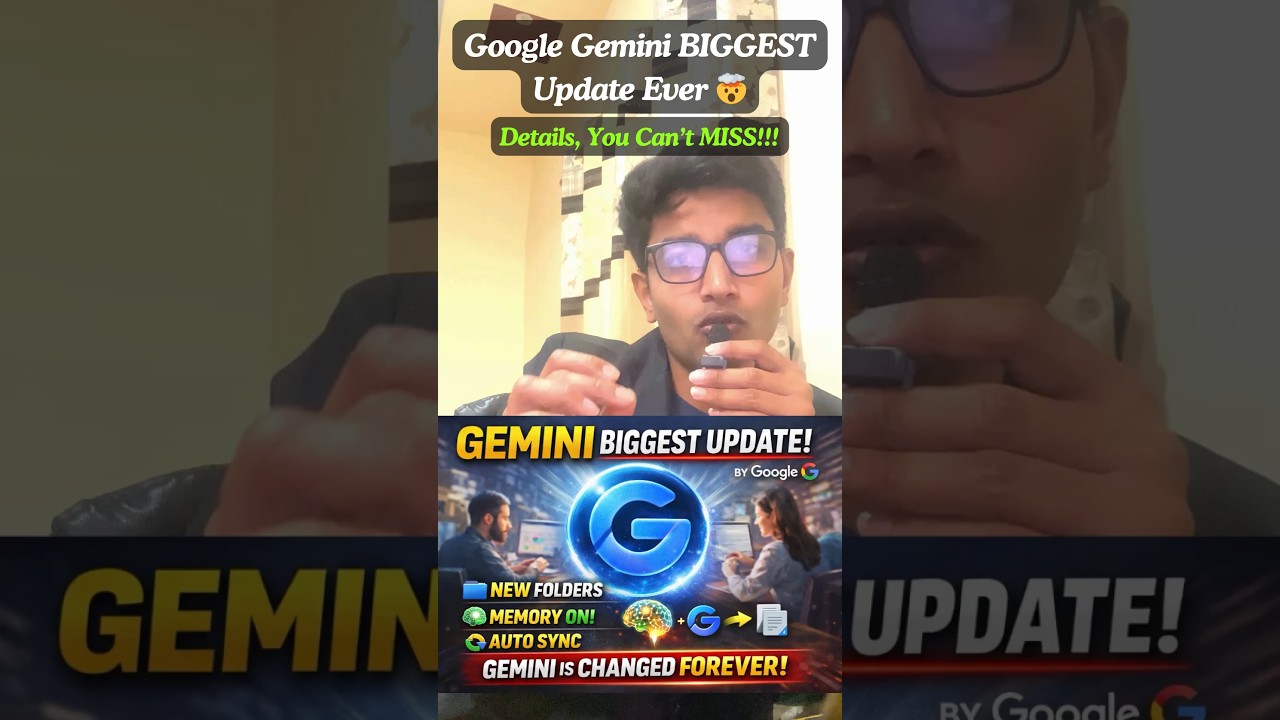
Google ne apna sabse bada AI update launch kar diya hai — aur ab Gemini sirf ek chatbot nahi raha! 🚀
Is naye update me Folders, Memory System aur Auto Sync jaise powerful features add ho gaye hain jo aapke AI experience ko completely transform kar denge.
Ab Gemini aapki conversations ko organize karega, aapki preferences yaad rakhega, aur automatically NotebookLM ke saath sync bhi karega — matlab ek complete AI workspace ready hai!
Is video me aap jaanoge:
✔ Gemini ke naye features kaise kaam karte hain
✔ Memory system kya hota hai (simple explanation)
✔ NotebookLM aur Gemini ka integration kya change karega
✔ Aur ye update aapki productivity kaise boost karega
Agar aap AI tools use karte ho ya future me karna chahte ho — ye update aap miss nahi kar sakte!
#GoogleGemini #AIUpdate #ArtificialIntelligence #GeminiAI #TechNews #AIRevolution #FutureOfAI #NotebookLM #AITools #ProductivityHacks #TechExplained #AIIndia #TrendingTech #DigitalFuture #Automation

How to Use Notebook LM (Google’s Most Powerful AI Tool)
🔴 🚀 Join the Advanced AI Marketing Bootcamp
Master AI tools, automation, funnels & more!
👉 Apply Now — https://www.wscubetech.com/advanced-ai-marketing-bootcamp?utm_source=YouTube&utm_medium=YT_Video&utm_campaign=AAMB_Cohort1_12_Jan_26&utm_channel=WsCubeTech&utm_post_id=WsFeb2026_04
👉 Join our Official WhatsApp Channel for daily Digital Marketing updates, job alerts & hacks: https://tinyurl.com/marketing-geeks-yt
-------------------
Google’s NotebookLM is one of the most powerful AI tools right now — but most people have no idea how to use it properly 🤯
In this video, you’ll learn How to Use NotebookLM step by step and see why it’s becoming Google’s go-to AI tool for deep research, study, and content creation.
Whether you’re a student, professional, creator, researcher, or AI enthusiast, this NotebookLM tutorial will completely change how you read, analyze, and understand information using AI.
🔥 What You’ll Learn in This Video:
- What NotebookLM is and how it works
- How to use Google NotebookLM effectively
- Real-world NotebookLM use cases
- How to do deep research with NotebookLM
- How NotebookLM is different from ChatGPT
- Best practices to get accurate, reliable answers
- Common mistakes people make with NotebookLM
-------------------
WsCube Tech is a Vernacular Upskilling platform revolutionizing the way you learn and develop your career skills.🚀
WsCube Tech stands out as a leading EdTech platform, offering comprehensive education in Digital Marketing, Digital Advertising, and various Social Media Marketing skills. Our approach involves both online and classroom training, featuring hands-on projects delivered practically by seasoned industry experts.
With WsCube Tech, you'll gain hands-on skills that make you globally competitive. Our courses are designed to prepare over 100 million career aspirants for the 'Bharat' of the future. 😊
👉 Want to learn and acquire skills in English? Visit WsCube Tech English channel: https://bit.ly/2M3oYOs
📌 𝗩𝗼𝘁𝗲 𝗳𝗼𝗿 𝗼𝘂𝗿 𝗻𝗲𝘅𝘁 𝘃𝗶𝗱𝗲𝗼: https://bit.ly/share-topic-ideas
Watch Now our Trending Digital Marketing Playlist & Videos:
👉 Learn Digital Marketing in One Video - https://www.youtube.com/watch?v=G6DmDqYLWL8
👉 Google Ads Full Course - https://www.youtube.com/watch?v=FuOmpoZjZ2s
👉 Complete SEO Course (Beginners to Advanced)
https://www.youtube.com/watch?v=CjxQTvq_kRo
👉 Blogging Full Course [FREE]
https://www.youtube.com/watch?v=7_HKv2wZntg
For any queries, call us on: +91-9352976305
✅ CONNECT WITH THE FOUNDER (Mr. Kushagra Bhatia) -
👉 Instagram - https://www.instagram.com/kushagrabhatiaofficial
👉 LinkedIn - https://www.linkedin.com/in/kushagra-bhatia
👉 Facebook - https://www.facebook.com/kushagrawscubetech
Connect with WsCube Tech on social media for the latest offers, promos, job vacancies, and much more:
😄 Facebook: https://www.facebook.com/wscubetech.india
🐦 Twitter: https://twitter.com/wscubetechindia
📱 Instagram: https://www.instagram.com/wscubetechindia/
👨🏻💻 LinkedIn: https://www.linkedin.com/company/wscubetechindia/
🔺 Youtube: http://bit.ly/wscubechannel
🌐 Website: http://wscubetech.com
--------------------------------------| Thanks |---------------------------
#notebooklm #notebooklmtips #googleai


「NotebookLMフル活用プロンプト」をもらいたい方はこちら
↓↓ ※キーワードは「リサーチ」の4文字
https://lin.ee/jckcnkw
◆━━━━━━━━━━━━━━━━━━◆
①法人の方
・AIを使った業務効率化を進めたい
・会社にAIを導入したいけど、何から始めればいいかわからない
といった会社様向けに無料相談をしています。
LINE公式からお申し込みください。
◆LINE公式
https://lin.ee/jckcnkw
◆━━━━━━━━━━━━━━━━━━◆
②会社員/フリーランスの方
・AIを使って社内でキャリアアップしたい
・AIで業務効率化をしたい
・社外でのキャリアアップも図りたい
といった個人の方向けにAIキャリアアップスクールを開講しております。
興味ある方はLINEからお問い合わせください。
◆LINE公式
https://lin.ee/jckcnkw
◆━━━━━━━━━━━━━━━━━━◆
#notebooklm
#Google
#gemini

Want to make money and save time with AI? Get AI Coaching, Support & Courses 👉 https://juliangoldieai.com/07L1kg
Get a FREE AI Course + 1000 NEW AI Agents 👉 https://juliangoldieai.com/5iUeBR
Want to know how I make videos like these? Join the AI Profit Boardroom → https://juliangoldieai.com/07L1kg
Build Full Apps with Notebook LM & Gemini (No Coding Required)
Transform your notes and documents into interactive apps, landing pages, and dashboards using the new Notebook LM and Gemini integration. This guide shows you the exact prompts and workflow to build custom no-code tools for your business in minutes.
00:00 - Intro: The Notebook LM Game-Changer
00:45 - Connecting Notebook LM to Gemini
01:34 - Building Dashboards & Onboarding Tools
02:17 - Creating Sales & Training Apps
03:32 - Pro Prompts for Better App Outputs
05:10 - Combining Multiple Notebooks
06:07 - Your 30-Day Mastery Plan
07:35 - How to Share and Embed Your Apps

✅ Grab HubSpot’s NotebookLM guide: https://clickhubspot.com/414d85
#NotebookLM just got a massive wave of updates and is now more popular than #Gemini itself. In this full walkthrough, I break down the three-column layout, rank every Studio panel tool into Tier 1 (must-use) and Tier 2 (situational), and share the exact prompt templates and workflows I use to turn raw sources into finished reports, presentations, and social-ready visuals.
*TIMESTAMPS*
00:00 NotebookLM Full Tutorial
00:21 NotebookLM’s Core Advantage
02:05 NotebookLM: Sources Panel
05:17 NotebookLM: Chat Panel
07:51 Studio Panel: Tier 1 Tools
08:21 Tool #1: Reports
09:46 Tool #2: Slide Decks
12:53 Tool #3: Infographics
13:56 Tool #4: Mind Maps
15:07 Studio Panel: Tier 2 Tools
15:15 Tool #5: Data Tables
16:09 Tool #6: Video Overviews
17:02 Bonus Tool: Cinematic Video Overviews
17:29 Tool #7: Quiz
17:52 Tool #8: Flashcards
18:28 Tool #9: Audio Overviews
19:14 Lightening Round: NotebookLM Use Cases
19:50 Advanced NotebookLM Workflows
*RESOURCES MENTIONED*
Prompt Templates: https://www.jeffsu.org/noteboo....klm-changed-complete
Workspace Essentials Newsletter: https://www.jeffsu.org/newsletter/?utm_source=youtube&utm_medium=video&utm_campaign=201
Watch my Gemini tutorial next: https://youtu.be/bTLmt9BKGVc
*BUILD A POWERFUL WORKFLOW*
🦾 AI Systems Academy - https://systemsacademy.ai/?utm_source=youtube&utm_medium=video&utm_campaign=201
📈 The Workspace Academy - https://academy.jeffsu.org/workspace-academy?utm_source=youtube&utm_medium=video&utm_campaign=201
✍️ My Notion Command Center - https://www.pressplay.cc/link/s/DE1C4C50
*BE MY FRIEND:*
📧 Subscribe to my newsletter - https://www.jeffsu.org/newsletter/?utm_source=youtube&utm_medium=video&utm_campaign=description
📸 Instagram - https://instagram.com/j.sushie
🤝 LinkedIn - https://www.linkedin.com/in/jsu05/
*MY FAVORITE GEAR*
🎬 My YouTube Gear - https://www.jeffsu.org/yt-gear/
🎒 Everyday Carry - https://www.jeffsu.org/my-edc/
#ai
Try i10x: https://i10x.ai?fpr=paul53
Save 15% with code "PJL15"
Google just dropped major updates to NotebookLM, Pomelli, and Gemini inside Google Drive — here's everything new and why that last one might be a game changer.
Heads up, these updates may not be available worldwide yet. Just because I have access to them doesn't mean you will yet.
🔗 This video is sponsored. Some product links are affiliate links which means if you buy something we'll receive a small commission.
0:00 Intro
0:18 NotebookLM Updates
3:29 Pomelli Photo Shoot
4:25 i10X Sponsor
5:49 Gemini in Drive
6:45 Gemini in Docs
8:53 Gemini in Sheets & Slides
10:43 Availability
11:14 Outro

Interested in getting credit for this lesson? Take the full AI Boost Bootcamp course on Google Skills and earn your badge → https://goo.gle/4ccw2mH
Go from AI basics to advanced proficiency in under 50 minutes with AI Boost Bootcamp. Based on Google’s own proven internal training, this lesson focuses on the "Strategy & Planning" phase of your workflow. Move from a blank page to a full project plan in minutes.
🕒 Timestamps:
0:00 – Introduction to AI project management and planning: Master the start of any project by leveraging Gemini's strategic and organizational capabilities.
00:28 – Organize any project in NotebookLM: Use NotebookLM to analyze source materials and structure your project's knowledge base.
3:05 – Draft proposals instantly in Google Docs: Move from idea to documentation by generating full project proposals and briefings in seconds.
5:08 – Auto-build budget trackers in Google Sheets: Create complex tracking spreadsheets and budgets without the manual setup.
7:10 – Recap: Review the core strategy and planning techniques covered in this session.
What is Google Workspace → https://goo.gle/45BsE1W
Set up Google Workspace → https://goo.gle/4q8r3t1
Subscribe to Google Workspace → https://goo.gle/GoogleWorkspace
Try Google Workspace with Gemini → https://goo.gle/45FrVNh
Follow Google Workspace on X → https://goo.gle/3YpmHS0
Follow Google Workspace on Facebook → https://goo.gle/4q8cZja
Follow Google Workspace on LinkedIn → https://goo.gle/49Eqjpw
Follow Google Workspace on Instagram → https://goo.gle/44Xs4eL
Follow Google Workspace on TikTok → https://goo.gle/4qijGio
Follow Google Workspace on Threads → https://goo.gle/4so5XYS
#GoogleWorkspace
#GoogleWorkspaceWithGemini

नमस्ते साथियों! ✨
स्वागत है आपका एआई एजुकेशन बॉट चैनल पर। क्या आप इतिहास को कहानियों के माध्यम से हमेशा के लिए याद करना चाहते हैं? इस "Master One Shot" वीडियो में हमने NCERT कक्षा 7 इतिहास (हमारे अतीत-II) की पूरी किताब को एक ही क्लास में कवर किया है।
यह वीडियो स्कूली परीक्षाओं के साथ-साथ UPSC, State PCS, SSC CGL, Railway और CTET जैसी सभी प्रतियोगी परीक्षाओं के लिए NCERT + Standard स्तर की तैयारी सुनिश्चित करेगा।
📚 NCERT HISTORY में हम क्या-क्या देखेंगे?
🟢 Chapter 1: प्रारंभिक कथन: हज़ार वर्षों के दौरान हुए परिवर्तनों की पड़ताल
इतिहास के नक्शों में बदलाव, नई और पुरानी शब्दावली, अभिलेखागार (Archives) और मध्यकाल में आए बड़े सामाजिक परिवर्तनों का अध्ययन।
🟢 Chapter 2: नये राजा और उनके राज्य
सातवीं सदी के बाद नए राजवंशों का उदय, चोल साम्राज्य का प्रशासन, उनकी भव्य मूर्तियाँ और विश्व प्रसिद्ध मंदिर स्थापत्य।
🟢 Chapter 3: दिल्ली: बारहवीं से पंद्रहवीं शताब्दी
दिल्ली के सुल्तानों का उदय, रज़िया सुल्तान का शासन, खिलजी और तुगलक वंश का विस्तार और उनकी प्रशासनिक चुनौतियां।
🟢 Chapter 4: मुगल: सोलहवीं से सत्रहवीं शताब्दी
मुगल साम्राज्य की स्थापना, अकबर की 'सुलह-ए-कुल' नीति, मनसबदारी व्यवस्था और औरंगजेब के समय तक साम्राज्य का विस्तार।
🟢 Chapter 5: जनजातियाँ, खानाबदोश और एक जगह बसे हुए समुदाय
जनजातीय समाजों का इतिहास, गोंड और अहोम राज्यों की शासन व्यवस्था और उनके समाज का क्रमिक विकास।
🟢 Chapter 6: ईश्वर से अनुराग
भक्ति आंदोलन की लहर (नयनार और अलवार), सूफी मत का प्रभाव और कबीर, बाबा गुरु नानक व मीराबाई जैसी महान विभूतियों की शिक्षाएं।
🟢 Chapter 7: क्षेत्रीय संस्कृतियों का निर्माण
क्षेत्रीय भाषाओं का विकास (मलयालम), जगन्नाथी संप्रदाय, राजपूतों की वीरता, कत्थक नृत्य और चित्रकला की विभिन्न शैलियाँ।
🟢 Chapter 8: अठारहवीं शताब्दी में नए राजनीतिक गठन
मुगल साम्राज्य का पतन और नए क्षेत्रीय राज्यों (मराठा, सिख, जाट, अवध, बंगाल और हैदराबाद) का उदय।
⏳ NCERT CHAPTERS TIMESTAMPS:
📍 00:00 - परिचय (Intro)
📍 00:19 - 🟢 Chapter 1: प्रारंभिक कथन: हज़ार वर्षों के दौरान हुए परिवर्तनों की पड़ताल
📍 12:12 - 🟢 Chapter 2: नये राजा और उनके राज्य
📍 24:54 - 🟢 Chapter 3: दिल्ली: बारहवीं से पंद्रहवीं शताब्दी
📍 37:56 - 🟢 Chapter 4: मुगल: सोलहवीं से सत्रहवीं शताब्दी
📍 50:00 - 🟢 Chapter 5: जनजातियाँ, खानाबदोश और एक जगह बसे हुए समुदाय
📍 01:00:35 - 🟢 Chapter 6: ईश्वर से अनुराग
📍 01:14:32 - 🟢 Chapter 7: क्षेत्रीय संस्कृतियों का निर्माण
📍 01:27:20 - 🟢 Chapter 8: अठारहवीं शताब्दी में नए राजनीतिक गठन
🔍 Your queries:-
NCERT Class 7 History Full Course One Shot Revision 2026
Medieval History of India for UPSC Prelims
Complete Delhi Sultanate and Mughal Empire in Hindi
Chola Empire Administration and Art NCERT
Bhakti and Sufi Movement Principles and Philosophy
Rise of Maratha, Sikh and Jat Powers NCERT
Regional Cultures and Language Development
Class 7 History All Chapters Marathon Revision
UPSC Foundation History NCERT Class 7
Medieval India One Shot for SSC CGL and Railway
CTET Paper 2 Social Science History Preparation
History Syllabus for State PSC Foundation
Ncert History Class 7 Complete in One shot
ncert History marathons 2026
Madhyakalin Bharat ka Itihas Full Video
AI Education Bot History Series
🔗 Important Links
📌 Free PDF & Study Material (Telegram): https://t.me/AiEducationBot2
📌 Instagram : https://www.instagram.com/aied....ucationbot?igsh=MXcx
📌 NCERT History class 6 Video Link 🔗👇:
https://youtu.be/Y_OnpPyJ3Zo?si=TFm4PhjPZp_yQPJ9
#NCERTClass7 #OurPasts2 #History #UPSC #MedievalIndia #OneShot #Education #MughalEmpire #DelhiSultanate #BhaktiMovement #CholaEmpire #AIEducationBot #IAS #HistoryInHindi #ncertclass7Completemarathon #SSC #CTET #2026Exams
🔔 Subscribe करें और हमारे साथ इतिहास को आसान बनाएं!
👍 वीडियो पसंद आए तो Like और Share जरूर करें।
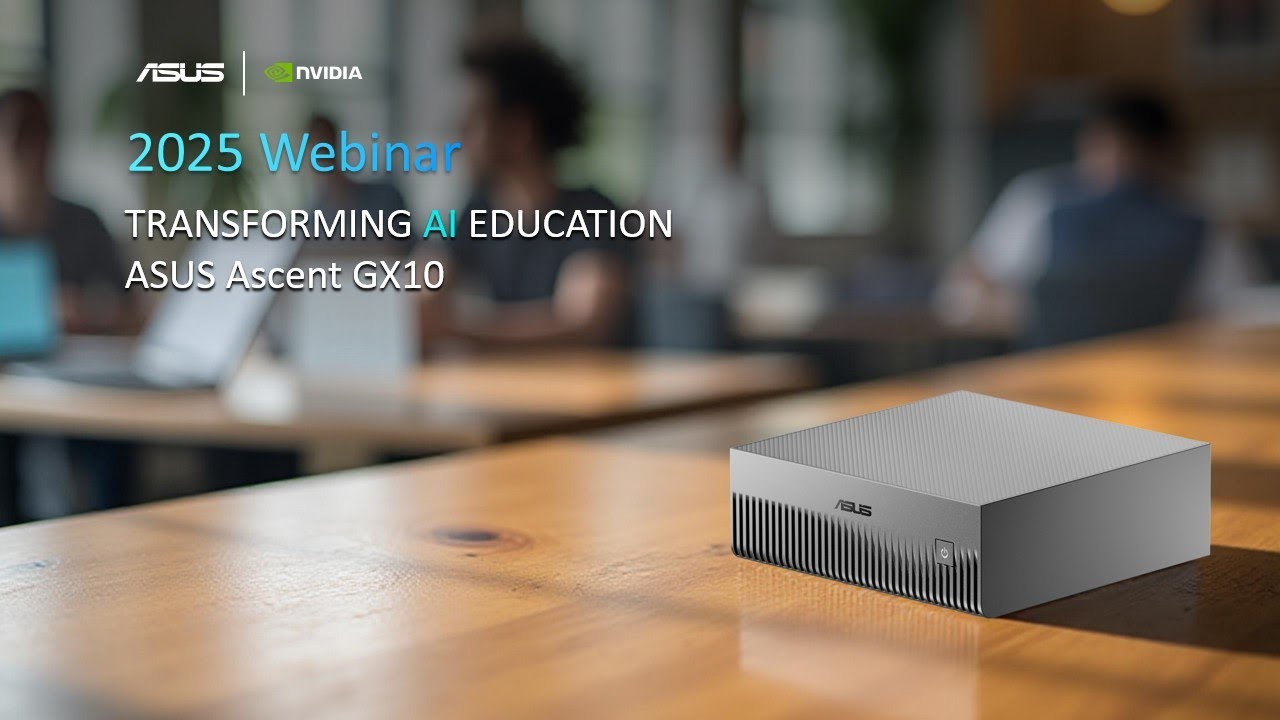
Discover how ASUS and NVIDIA are advancing desktop AI computing and empowering educators, researchers, and students to drive scalable innovation from classroom and lab environments to the cloud.
00:00 Intro
01:19 Meet Sunita, University of Delaware
13:22 Meet Sama, NVIDIA
33:07 ASUS Ascent GX10
Learn more about the ASUS Ascent GX10: https://www.asus.com/us/networ....king-iot-servers/des
Where to buy the ASUS Ascent GX10 (USA):
CDW: https://www.cdw.com/product/as....us-ascent-gx10-perso
TD Synnex: https://partnerfirst.us.tdsynn....ex.com/commerce/part
ASI: https://www.asipartner.com/par....tners/asus/asus-asce
D&H: https://www.dandh.com/v4/view?pageReq=MProductDetail&item=ASCENTGX10
Ma Labs: https://www.malabs.com/media/l....anding_page/asus/gx1
Newegg: https://www.newegg.com/asus-as....cent-gx10-mini-pc/p/
Central Computers: https://www.centralcomputer.co....m/asus-ascent-gx10-p
Where to buy the ASUS Ascent GX10 (Canada):
CDW: https://www.cdw.ca/product/asu....s-ascent-gx10-gb10-1
INSO: https://www2.inso.ca/en/asusgx10en/
TD Synnex: https://www.tdsynnex.com/na/ca/
ASI: https://www.asipartner.com/canada/302075/
Canada Computers: https://www.canadacomputers.co....m/en/workstations/28
For more information head over to:
► ASUS Website: http://www.asus.com/
► ROG Website: https://rog.asus.com/us/
► LinkedIn: https://www.linkedin.com/company/asus
► Facebook
ASUS: https://www.facebook.com/asus.n.america
ROG: https://www.facebook.com/rog.n.america
► Instagram
ASUS: http://instagram.com/asususa
ROG: https://www.instagram.com/rog_usa/
► Twitter
ASUS: https://twitter.com/ASUSUSA
ROG: https://twitter.com/ASUS_ROGNA
► TikTok: https://www.tiktok.com/@asus.usa
► Join ROG Elite Rewards: http://us.rog.gg/rewardsYT
► ROG Twitch: https://go.twitch.tv/asusrog

#artificialintelligence #ai #essaywriting
Role of Artificial Intelligence (AI) in Education | 15 lines on Artificial Intelligence
Your queries:-
role of artificial intelligence in education essay writing
Role of Artificial intelligence
Role of Artificial intelligence in education
15 lines on role of Artificial intelligence in education
importance of artificial intelligence in education essay
importance of artificial intelligence in education
Use of artificial intelligence in education
15 lines
10 lines essay
15 lines on role of Artificial intelligence in education in English
#english
#ai
#1to10education
#handwriting
#englishessays
#artificialintelligence
#15linesessay

What if every student had a personal tutor who understood exactly how they learned best? This isn't a distant dream—it's the future of education, and it's being built today. In this comprehensive Future Vision Talks deep dive, we explore the groundbreaking conversation between Freakonomics' Steve Levitt and Google's Chief Learning Technologist Ben Gomes, expanding it into a full research-backed analysis of the coming educational transformation.
We go beyond the soundbites to deliver an 8000-word, evidence-based exploration of how Artificial Intelligence is set to dismantle our centuries-old industrial education model. Forget standardized tests and one-size-fits-all curricula; the future is personalized, adaptive, and focused on fostering genuine curiosity and critical thinking.
#FutureOfEducation
#AIinEducation
#PersonalizedLearning
#EdTech
#FutureVisionTalks
#SteveLevitt
#BenGomes
#GoogleAI
#LearnLM
#LevittLab
#EducationRevolution
#K12
#LifelongLearning
#AITutor
#MasteryLearning
#JustInTimeLearning
#SchoolOfTheFuture
#LearningScience
#CriticalThinking
#StudentCenteredLearning