Top videos

Viewers like you help make PBS (Thank you 😃) . Support your local PBS Member Station here: https://to.pbs.org/PBSDSDonate
Get your #ididascience shirt here! http://dftba.com/besmart
↓ More info and sources below ↓
Vintage arcade footage courtesy of: http://patrickscottpatterson.com/
Special thanks to Dreamhack Austin 2016: http://dreamhackaustin.com/
Thank you to our commentators:
@Totalbiscuit https://www.youtube.com/cynicalbrit
@EGiNcontroL https://www.facebook.com/GeoffRobinsoniNcontroL
References:
Thompson, Joseph J., Mark R. Blair, and Andrew J. Henrey. "Over the hill at 24: persistent age-related cognitive-motor decline in reaction times in an ecologically valid video game task begins in early adulthood." PloS one 9.4 (2014): e94215.
Thompson, Joseph J., et al. "Video game telemetry as a critical tool in the study of complex skill learning." PloS one 8.9 (2013): e75129.
Lewis, Joshua M., Patrick Trinh, and David Kirsh. "A corpus analysis of strategy video game play in starcraft: Brood war." Proceedings of the 33rd annual conference of the cognitive science society. 2011.
ESA Essential Facts About the Computer and Video Game Industry 2016 http://essentialfacts.theesa.com/
----
Have an idea for an episode or an amazing science question you want answered? Leave a comment or check us out at the links below!
Like us on Facebook: http://www.facebook.com/itsokaytobesmart
Follow on Twitter: http://twitter.com/okaytobesmart
http://twitter.com/jtotheizzoe
Follow on Tumblr: http://www.itsokaytobesmart.com
Follow on Instagram: http://instagram.com/jtotheizzoe
Follow on Snapchat: YoDrJoe
-----------------
It’s Okay To Be Smart is written and hosted by Joe Hanson, Ph.D.
Follow me on Twitter: @jtotheizzoe
Produced by PBS Digital Studios: http://www.youtube.com/user/pbsdigitalstudios
Music via APM
Stock images from SciencePhoto http://www.sciencephoto.com/ and Shutterstock http://www.shutterstock.com
Stock footage from Videoblocks (unless otherwise noted) http://www.videoblocks.com

Check out What Do I Do With This? from @NinePBS and our full Earth Month playlist here: https://www.youtube.com/watch?v=SL_gYWba5NM&list=PLnNZYWyBGJ1F8ofFm4H9UTrHxqU8zngK4&index=6
↓↓↓ More info and sources below ↓↓↓
Plants eat sunlight and air to make life. But the key enzyme behind it all, called rubisco, isn’t actually all that great at its job. Let’s talk about how photosynthesis really works, why oxygen isn’t coming from where you think, and whether we can fix the biggest flaw in one of Earth’s most essential processes.
References and further reading: https://sites.google.com/view/....fixing-photosynthesi
-----------
High fives to all our Brain Trust Patrons:
Marcus Pingel
Olivia Ruiz
Mike and Patty Loftis
Ed Eyden
Jennifer Burton
Holly, Brett, and Ashe Bullion
Jaap Westera
Barbora Bei
dani bowman
David Johnston
Baerbel Winkler
Eric Meer
Karen Haskell
SUBSCRIBE so you don’t miss a video! ►► http://bit.ly/iotbs_sub
Join us on Patreon!
https://patreon.com/itsokaytobesmart
Instagram
http://www.instagram.com/DrJoeHanson
http://www.instagram.com/okaytobesmart
Facebook
https://www.facebook.com/itsokaytobesmartpbs/
Merch
https://store.dftba.com/collec....tions/its-okay-to-be
Try Skillshare at http://skl.sh/besmart
Help us build something great and SUBSCRIBE! ►► http://bit.ly/iotbs_sub
↓↓↓More info and sources below ↓↓↓
You asked for it, so here’s the follow-up!
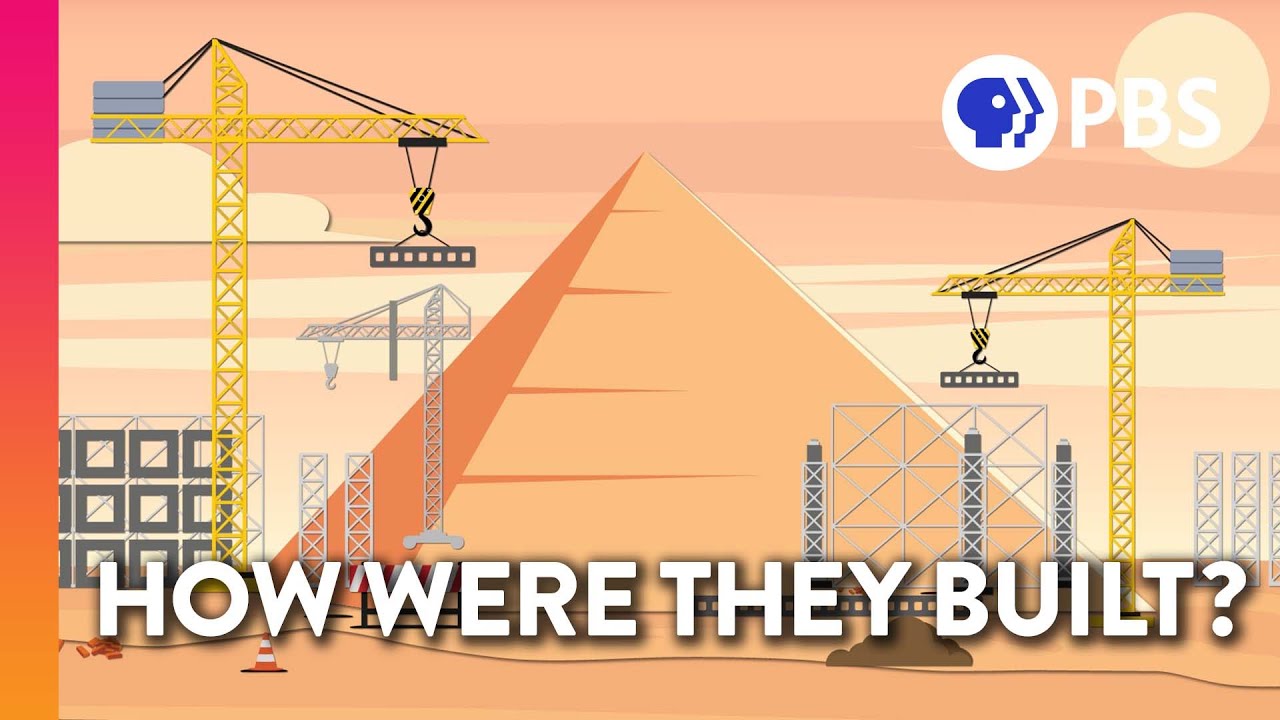
Just because something is difficult doesn’t mean it’s impossible. Over the past centuries, archaeologists, historians, and engineers have reconstructed a great deal of the technology and science used to build the Egyptian pyramids. This week we look at ancient Egyptian mathematics, building techniques, tools, and culture to reconstruct the Great Pyramid’s construction.
REFERENCES:
Fall, Abdoulaye, et al. "Sliding friction on wet and dry sand." Physical review letters 112.17 (2014): 175502.
Lehner, M. (1997). The complete pyramids. Thames and Hudson.
Parry, D. (2005). Engineering the pyramids. The History Press.
Smith, Craig B., Zahi Hawass, and Mark Lehner. How the great pyramid was built. Harper Collins, 2006.
Verner, M. (2003). The pyramids: their archaeology and history. Atlantic.
Verner, M. (2007). The Pyramids: The Mystery, Culture, and Science of Egypt's Great Monuments. Grove/Atlantic, Inc..
-----------
FOLLOW US:
Merch: https://store.dftba.com/collec....tions/its-okay-to-be
Facebook: http://www.facebook.com/itsokaytobesmart
Twitter/Instagram: @okaytobesmart @DrJoeHanson
Tumblr: http://www.itsokaytobesmart.com
-----------
It’s Okay To Be Smart is hosted by Joe Hanson, Ph.D.
Director: Joe Nicolosi
Writer: Joe Hanson
Producer/editor/animator: Andrew Orsak
Producer: Stephanie Noone and Amanda Fox
Produced by PBS Digital Studios
Music via APM
Stock images from Shutterstock http://www.shutterstock.com
------

Another YouTube #shorts from Dr. Joe! Subscribe for more fun science stories.
Join us on Patreon!
https://patreon.com/itsokaytobesmart
Instagram
http://www.instagram.com/DrJoeHanson
http://www.instagram.com/okaytobesmart
Facebook
https://www.facebook.com/itsokaytobesmartpbs/

Viewers like you help make PBS (Thank you 😃) . Support your local PBS Member Station here: https://to.pbs.org/PBSDSDonate
Ready to untangle the branches of the human family tree?
Part 1 of our special series on Human Ancestry. Watch it all: http://bit.ly/OKTBSHuman
↓↓↓More info and sources below ↓↓↓
In part 1 of our special series on human ancestry, we tour through our family tree to meet our ancestors and distant cousins, and to find out what made us human along the way.
The story of human ancestry is not a simple progression from primitive apes to us, with all the ape/human intermediates in between. The real human story is much richer and more complex, full of branches, gaps, and shadowy parts. A century and a half of fossil finds tells us perhaps two dozen human species lived on Earth between now and the time when our ancestors split from chimpanzee ancestors. The new era of DNA and genetics is upending that story yet again.
-----------
REFERENCES:
Stringer, Chris. “Lone survivors: How we came to be the only humans on earth.” Macmillan, 2012. http://amzn.to/2oIFg3q (Library: http://www.worldcat.org/oclc/855581724)
Stringer, Chris, and Peter Andrews. “The complete world of human evolution.” London: Thames & Hudson, 2005. http://amzn.to/2opOrlN (Library: http://www.worldcat.org/oclc/953422224)
Tattersall, Ian. “Masters of the planet: the search for our human origins.” Macmillan, 2012. http://amzn.to/2pOZrKS (Library: http://www.worldcat.org/oclc/733231407)
Walter, Chip. “Last ape standing: the seven-million-year story of how and why we survived.” Bloomsbury Publishing USA, 2013. http://amzn.to/2pP2liy (Library: http://www.worldcat.org/oclc/872121723)
“Evolution: The Human Saga.” Scientific American 311.3 (2014): 4-100.
Strait, David, Frederick E. Grine, and John G. Fleagle. "Analyzing Hominin Hominin Phylogeny: Cladistic Approach." Handbook of paleoanthropology. Springer Berlin Heidelberg, 2015. 1989-2014.
Wood, Bernard, and Eve K Boyle. "Hominin taxic diversity: Fact or fantasy?." American journal of physical anthropology 159.S61 (2016): S37-S78.
-----------
FOLLOW US:
Merch: https://store.dftba.com/collec....tions/its-okay-to-be
Facebook: http://www.facebook.com/itsokaytobesmart
Twitter: @okaytobesmart @DrJoeHanson
Tumblr: http://www.itsokaytobesmart.com
Instagram: @DrJoeHanson
Snapchat: YoDrJoe
-----------
It’s Okay To Be Smart is hosted by Joe Hanson, Ph.D.
Director: Joe Nicolosi
Writer: Joe Hanson
Producer/editor/animator: Andrew Matthews
Producer: Stephanie Noone and Amanda Fox
Produced by PBS Digital Studios
Music via APM
Stock images from Shutterstock http://www.shutterstock.com

Artists have abandoned artworks for many reasons throughout history. Guest host John Green shares some of his favorite unfinished artworks and explains why they resonate with him so deeply. Featuring work by Michelangelo, Leonardo da Vinci, Edgar Degas, Alice Neel, Kerry James Marshall, and very many presidential portraits.
Thanks to our Grandmasters of the Arts Divide By Zero Collection and David Golden, and to all of our patrons, especially Anthony Chivetta, Rich Clarey, Iain Eudailey, Tom Forwood, Patrick Hanna, Andrew Huynh, Eve Leonard, Audrey Mak Tung, David Moore, Jane Quale, Gabriel Civita Ramirez, Andrew Sheeler, Boris Silantiev, Josh Thomas, Constance Urist, and Roberta Zaphiriou.
To support our channel, visit: http://www.patreon.com/artassignment.
Subscribe for new episodes of The Art Assignment every other Thursday.

Pre-order our book YOU ARE AN ARTIST (which includes new assignments!) here: http://bit.ly/2kplj2h
We introduce you to the talented and amazing JooYoung Choi, who shares tales of her fictional realm The Cosmic Womb and beckons us to create our own IMAGINARY FRIEND.
INSTRUCTIONS - Imaginary Friend
1. Make an imaginary friend using any medium you like
2. Introduce that friend to others
3. Share your friend with us using #theartassignment
4. Fame and glory (your work might be in a future episode)
Learn more about JooYoung's work:
http://www.anyatishgallery.com..../content/jooyoung-ch
Find out more about The Art Assignment and how to submit your response: http://theartassignment.com/

Dorothea Lange captured this iconic photo known as Migrant Mother in 1936. But who was the woman pictured? And how did she and her family feel about its existence in the world? Guest host John Green introduces you to Florence Owens Thompson, her family, and her story. #migrantmother #dorothealange #photography
Thanks to our Grandmasters of the Arts Vincent Apa and Ernest Wolfe, and all of our patrons, especially Iain Eudaily, Patrick Hanna, Nichole Hicks, Eve Leonard, David Moore, Frame Monster Design Laboratory, Jane Quale, Constance Urist, and Nicholas Xu. To support our channel, visit: http://www.patreon.com/artassignment.
Follow us elsewhere for the full Art Assignment experience:
Twitter: http://twitter.com/artassignment
Instagram: http://instagram.com/theartassignment/
Facebook group: https://www.facebook.com/group....s/artassignmentextra

Pre-order our book YOU ARE AN ARTIST (which includes new assignments!) here: http://bit.ly/2kplj2h
The Art Assignment travels to New Orleans to meet with Tameka Norris, who makes art in a variety of media and often uses her body in her work. She challenges YOU to become someone else.
Sarah then highlights Adrian Piper, who created an altar ego for herself (The Mythic Being) and performed this ego both in private and in public.
INSTRUCTIONS - Become Someone Else
1. Take a selfie
2. Change one thing about you
3. Go out into the world
4. Take another selfie
5. Upload both photos using #theartassignment
6. Fame and glory (your work might be in a future episode)
Find out more about The Art Assignment and how to submit your response: http://theartassignment.com/

Pre-order our book YOU ARE AN ARTIST (which includes new assignments!) here: http://bit.ly/2kplj2h
David Rathman’s paintings pair atmospheric landscapes with carefully selected phrases, playing with the relationship between text and image. This week, he created a painting for you to caption.
INSTRUCTIONS - CAPTION CONTEST
1. Add text, preferably handwritten, to Rathman's painting
2. Print out the image below and write on it, or create your writing separately, scan it and add it to the image digitally
3. Document your text and image combination and share it with us using #theartassignment
4. Fame and glory (your work might be in a future episode)
Save the painting for the caption here: http://www.theartassignment.co....m/assignments/captio
Find out more about The Art Assignment and how to submit your response: http://theartassignment.com/

Visit https://ABCmouse.com/LearnMore to find out more about our award-winning online learning program for children 2–8!
Watch more video testimonials and preview our site/app content by subscribing to our YouTube channel: https://YouTube.com/ABCmouse.
© Age of Learning, Inc. All rights reserved.

https://www.abcmouse.com/learn/youtube
Ham with Jam? - ABCmouse.com Beginning Reader Series
Introducing the --am word family!
Pam likes jam and dislikes ham, while Sam likes ham and dislikes jam. This quirky story about a sister and brother who find an unlikely compromise is based on the book, 'Ham with Jam?' which is part of ABCmouse.com's Beginning Reader Series. This animated video introduces young learners to words in the --am word family (a word family is a group of words with the same ending sound and letters, such as Pam, Sam, and jam).
About Us:
ABCmouse.com is an award-winning website that uses a variety of activities, including these songs, to help children build a strong foundation for future academic success. ABCmouse.com Early Learning Academy provides a full online curriculum from preschool through 2nd grade, with more than 10,000 interactive learning activities that teach the subjects of reading, math, science, social studies, art, and music.
Parents, learn more about ABCmouse.com at https://www.abcmouse.com/learn/youtube
Website: https://www.abcmouse.com/learn/youtube
YouTube Channel: http://youtube.com/ABCmouse
© Age of Learning, Inc. All rights reserved.
https://www.abcmouse.com/learn/youtube
Ham with Jam? - ABCmouse.com Beginning Reader Series
Introducing the --am word family!
Pam likes jam and dislikes ham, while Sam likes ham and dislikes jam. This quirky story about a sister and brother who find an unlikely compromise is based on the book, 'Ham with Jam?' which is part of ABCmouse.com's Beginning Reader Series. This animated video introduces young learners to words in the --am word family (a word family is a group of words with the same ending sound and letters, such as Pam, Sam, and jam).
About Us:
ABCmouse.com is an award-winning website that uses a variety of activities, including these songs, to help children build a strong foundation for future academic success. ABCmouse.com Early Learning Academy provides a full online curriculum from preschool through 2nd grade, with more than 10,000 interactive learning activities that teach the subjects of reading, math, science, social studies, art, and music.
Parents, learn more about ABCmouse.com at https://www.abcmouse.com/learn/youtube
Website: https://www.abcmouse.com/learn/youtube
YouTube Channel: http://youtube.com/ABCmouse
© Age of Learning, Inc. All rights reserved.

Visit https://www.abcmouse.com/learn/youtube to learn more about our award-winning online learning program for children 2-8!
🎉🍰 Join Violet the Paintbrush on a magical adventure as she saves the day with her creative cake drawing! When Pink forgets the party essentials, Violet steps in to help by drawing plates, sandwiches, and a perfect cake to bring the celebration to life. This fun-filled video teaches kids about problem-solving, creativity, and the joy of art. Perfect for preschoolers who love to draw and imagine! 🎂🎨
👉 Discover more fun learning songs and educational videos by subscribing to our YouTube channel at https://YouTube.com/ABCmouse.
And visit https://www.abcmouse.com/learn/youtube to find out more about our award-winning online learning program for children 2–8!
© Age of Learning, Inc. All rights reserved.

Modern life would be impossible without plastic – but we have long since lost control over our invention. Why has plastic turned into a problem and what do we know about its dangers?
This video is a collaboration with UN Environment and their Clean Seas campaign, If you want to take action to turn the tide on plastics, go to http://www.cleanseas.org and make your pledge.
We also partnered with askscience on reddit – on https://bit.ly/2tVU68d you can talk to experts and ask questions about about plastic pollution today!
Sources used in the video: https://sites.google.com/view/....sourcesplasticpollut
OUR CHANNELS
▀▀▀▀▀▀▀▀▀▀▀▀▀▀▀▀▀▀▀▀▀▀▀▀▀▀
German Channel: https://kgs.link/youtubeDE
Spanish Channel: https://kgs.link/youtubeES
HOW CAN YOU SUPPORT US?
▀▀▀▀▀▀▀▀▀▀▀▀▀▀▀▀▀▀▀▀▀▀▀▀▀▀
This is how we make our living and it would be a pleasure if you support us!
Get Merch designed with ❤ from https://kgs.link/shop
Join the Patreon Bird Army 🐧 https://kgs.link/patreon
DISCUSSIONS & SOCIAL MEDIA
▀▀▀▀▀▀▀▀▀▀▀▀▀▀▀▀▀▀▀▀▀▀▀▀▀▀
Reddit: https://kgs.link/reddit
Instagram: https://kgs.link/instagram
Twitter: https://kgs.link/twitter
Facebook: https://kgs.link/facebook
Discord: https://kgs.link/discord
Newsletter: https://kgs.link/newsletter
OUR VOICE
▀▀▀▀▀▀▀▀▀▀▀▀▀▀▀▀▀▀▀▀▀▀▀▀▀▀
The Kurzgesagt voice is from
Steve Taylor: https://kgs.link/youtube-voice
OUR MUSIC ♬♪
▀▀▀▀▀▀▀▀▀▀▀▀▀▀▀▀▀▀▀▀▀▀▀▀▀▀
700+ minutes of Kurzgesagt Soundtracks by Epic Mountain:
Spotify: https://kgs.link/music-spotify
Soundcloud: https://kgs.link/music-soundcloud
Bandcamp: https://kgs.link/music-bandcamp
Youtube: https://kgs.link/music-youtube
Facebook: https://kgs.link/music-facebook
The Soundtrack of this video:
Soundcloud: https://bit.ly/2lImPJY
Bandcamp: https://bit.ly/2KFW97C
Facebook: https://bit.ly/2GIoZlH
🐦🐧🐤 PATREON BIRD ARMY 🐤🐧🐦
▀▀▀▀▀▀▀▀▀▀▀▀▀▀▀▀▀▀▀▀▀▀▀▀▀▀
Many Thanks to our wonderful Patreons from http://kgs.link/patreon who support us every month and made this video possible:
Jérémy Carrara, Jeffrey Hearn, israel , Brian Yim, Gregory Tripp, Charanjit Singh, Meris Williams, wls rainfarm, Eusden Shing, Rick Bijkerk, Ash Joy, Derek Farder, Lisa Wright, Collin Bruce, Anatoly Zabelin, Renars Liepins, Josh Blumhagen, Gregory Crawley, Stephen, James Beaumont, Oisin Hurley, John M, Serial88, Simone Zecchi, José Hernández, David Medellin, Tarish Kadam, Christian Tigges, Gavin Stenhouse, Elliot Bailey, Wuggletoes, Josef Citrine, Herman Karlsson, André Beaudoin, Busterdrag, Jhiro Molina, Talynn Gray, Zach, David Epstein, Mark Sierra, Xellos, Daniel Prater, Jacky Kheang, Wesley Gardner, Giovanni Casarini, Cameron MacDonald, Brendan Ashton-Collins, Aramayis Grigoryan, Kevin, Deraek, Michael Vowles, Guinevere Fullerton, Douglas Pennant, David Blinder, Ethan Bloxham, Luud Janssen, Evan Stevenson, Dylan Pidcock, Michael Brice, Sir Bigglesworth, Martin Esser, Alvarin_IL, Adam Lewis, Amy Robinson, Philipp Wenzelburger, Trevor Netzer, Bruno Dellavega, Shawn Mullins, Diego Laboy, Pablo Pasquin, David Ha, Tiger, Jonathan Davies, Niklas Gehlen, Cauri Jaye, Simon Que, Rodney Chupp, Tate Demaray, Jonathan Lindgren, Stanislav S., Michael Rauh, Bryn Sedlacek, Hayden Vandenbrink, Nathan Cox, patricia stewart, Tanya Degurechaff, Whangam, Justin Bull
Help us caption & translate this video!
http://www.youtube.com/timedtext_cs_p...

Sources: https://sites.google.com/view/....sources-argentine-an
In nearly every corner of the Earth, ants wage war against each other. Their weapons are what nature gave them. Some have strong armour, deadly stingers or sharp mandibles. And then there is this tiny, and not very impressive ant. But it rules the biggest empire any ant has ever built. A colony spanning continents and fighting wars that leave millions of casualties. Let’s take a look at this unlikely warrioress: Linepithema humile, the Argentine ant.
OUR CHANNELS
▀▀▀▀▀▀▀▀▀▀▀▀▀▀▀▀▀▀▀▀▀▀▀▀▀▀
German Channel: https://kgs.link/youtubeDE
Spanish Channel: https://kgs.link/youtubeES
HOW CAN YOU SUPPORT US?
▀▀▀▀▀▀▀▀▀▀▀▀▀▀▀▀▀▀▀▀▀▀▀▀▀▀
This is how we make our living and it would be a pleasure if you support us!
Get Merch designed with ❤ from https://kgs.link/shop
Join the Patreon Bird Army 🐧 https://kgs.link/patreon
DISCUSSIONS & SOCIAL MEDIA
▀▀▀▀▀▀▀▀▀▀▀▀▀▀▀▀▀▀▀▀▀▀▀▀▀▀
Reddit: https://kgs.link/reddit
Instagram: https://kgs.link/instagram
Twitter: https://kgs.link/twitter
Facebook: https://kgs.link/facebook
Discord: https://kgs.link/discord
Newsletter: https://kgs.link/newsletter
OUR VOICE
▀▀▀▀▀▀▀▀▀▀▀▀▀▀▀▀▀▀▀▀▀▀▀▀▀▀
The Kurzgesagt voice is from
Steve Taylor: https://kgs.link/youtube-voice
OUR MUSIC ♬♪
▀▀▀▀▀▀▀▀▀▀▀▀▀▀▀▀▀▀▀▀▀▀▀▀▀▀
700+ minutes of Kurzgesagt Soundtracks by Epic Mountain:
Spotify: https://kgs.link/music-spotify
Soundcloud: https://kgs.link/music-soundcloud
Bandcamp: https://kgs.link/music-bandcamp
Youtube: https://kgs.link/music-youtube
Facebook: https://kgs.link/music-facebook
The Soundtrack of this video:
Soundcloud: https://bit.ly/2MdkGFc
Bandcamp: https://bit.ly/2MaYtYr
Youtube: https://bit.ly/2CZ6PeN
Facebook: http://bit.ly/2qW6bY4
🐦🐧🐤 PATREON BIRD ARMY 🐤🐧🐦
▀▀▀▀▀▀▀▀▀▀▀▀▀▀▀▀▀▀▀▀▀▀▀▀▀▀
Many Thanks to our wonderful Patreons from http://kgs.link/patreon who support us every month and made this video possible:
Levay Zeegers, Pierce Simmerman, Jose Payan, Volodymyr Feskov, Shelby Clair, David Waller, TimeLord, CompanionCraft, simmy, Cindy Mooney, Meredith Rendell, Mike Garrison, Jamie Buclaw, Matas, Artem Ruslanovich, Henrique Janikian, Elie Crespin, Eric Schwinger-Fresz, Tristan, Asche Whelsky, Andreas Viktorsson, Isaac True, Nikolay Dyulgerov, Yiwei Cao, supor88, Christoffer O'Nyhus, Nicolas Opal, Ratt Élite, Mališa Stanojević, Zachary Fishman, matt Mcmahon, Bryce Carr, ToWe, Thomas Ivans, Stephan Jaborek, Vic, Eduard Vasilache, zjbxwbmn, Olivia, Cassandra Whitty, Martin, Eric Wong, Ben Murphy, Arata Kaku, Nikola, Alexandre Karaziwan, Shaoju Chen, Peter Varner-Howland, Aaron Horne, Mikkel Kringelbach, Joseph Hoffman, Akhil, Rayn Fluner, Jonathan Gaffers, Jesper Mølgaard, Oven Ott, Volodymyr, Lucille Tail, Aaron Giles, Ben Imadali, Erebus Etherie, jimi, Gabriela Maeda, Dale levasseur, Avi Yashchin, Jackson Chang, William Northern, Christoph Matt, Chommie, Cristian Stanca, Ivan Bakhtin, Lamadesbois
Go ‘beyond the nutshell’ at https://brilliant.org/nutshell/ and dive deeper into these topics and more with a free 30-day trial!
This video was sponsored by Brilliant. Thanks a lot for the support!
Sources & further reading:
https://sites.google.com/view/....sources-impossible-m
You are cells. Your muscles, organs, skin and hair. They are in your blood and in your bones.
Cells are biological robots. They don’t want anything, they don’t feel anything. They are never sad or happy. They just are, right here, right now. They are as conscious as a stone or a chair or a neutron star. Cells just follow their programming that has been evolving and changing for billions of years, molded by natural selection.
They are impossible machines and yet, here they are, driven entirely by the fundamental forces of the universe. The smallest unit of life, right at the border where physics becomes biology.
Sometimes, to get a truer understanding of how amazing something is, you need to hold your breath and dive in really deep. So, what are cells and how do they work?
OUR CHANNELS
▀▀▀▀▀▀▀▀▀▀▀▀▀▀▀▀▀▀▀▀▀▀▀▀▀▀
German: https://kgs.link/youtubeDE
Spanish: https://kgs.link/youtubeES
French: https://kgs.link/youtubeFR
Portuguese: https://kgs.link/youtubePT
Arabic: https://kgs.link/youtubeAR
Hindi: https://kgs.link/youtubeHI
Japanese: https://kgs.link/youtubeJA
Korean: https://kgs.link/youtubeKO
HOW CAN YOU SUPPORT US?
▀▀▀▀▀▀▀▀▀▀▀▀▀▀▀▀▀▀▀▀▀▀▀▀▀▀
This is how we make our living and it would be a pleasure if you support us!
Get Prodcuts designed with ❤ https://kgs.link/shop-173
Join the Patreon Bird Army 🐧 https://kgs.link/patreon
DISCUSSIONS & SOCIAL MEDIA
▀▀▀▀▀▀▀▀▀▀▀▀▀▀▀▀▀▀▀▀▀▀▀▀▀▀
TikTok: https://kgs.link/tiktok
Reddit: https://kgs.link/reddit
Instagram: https://kgs.link/instagram
Twitter: https://kgs.link/twitter
Facebook: https://kgs.link/facebook
Discord: https://kgs.link/discord
Newsletter: https://kgs.link/newsletter
OUR VOICE
▀▀▀▀▀▀▀▀▀▀▀▀▀▀▀▀▀▀▀▀▀▀▀▀▀▀
The Kurzgesagt voice is from
Steve Taylor: https://kgs.link/youtube-voice
OUR MUSIC ♬♪
▀▀▀▀▀▀▀▀▀▀▀▀▀▀▀▀▀▀▀▀▀▀▀▀▀▀
700+ minutes of Kurzgesagt Soundtracks by Epic Mountain:
Spotify: https://kgs.link/music-spotify
Soundcloud: https://kgs.link/music-soundcloud
Bandcamp: https://kgs.link/music-bandcamp
Youtube: https://kgs.link/music-youtube
Facebook: https://kgs.link/music-facebook
The Soundtrack of this video:
Soundcloud: http://bit.ly/40SPhef
Bandcamp: https://bit.ly/3jSgMnF
If you want to help us caption this video, please send subtitles to subtitle@kurzgesagt.org
You can find info on what subtitle files work on YouTube here:
https://support.google.com/youtube/answer/2734698?hl=en-GB&ref_topic=7296214
Thank you!
🐦🐧🐤 PATREON BIRD ARMY 🐤🐧🐦
▀▀▀▀▀▀▀▀▀▀▀▀▀▀▀▀▀▀▀▀▀▀▀▀▀▀
Many Thanks to our wonderful Patreons (from http://kgs.link/patreon) who support us every month and made this video possible:
Mads Egedal Kirchhoff, HARUKI SATO, Ian Roberts, Chris Sloan, Joe Cowman, Ben Douglas, Eric Kimbrel, Robin Ellenbroek, Leslie Andrew Ridings, Alaskarina Haze, Joss Wright, Kerstin Borggrewe, Brian Stanke, Justaperson102, Nick Alvarez, Tony Spears, William Parker, matrop, Vilena5, Ian Sénéchal, Simon Fischer, Paul Aqua, Joey Button, Joshua, Rigers Qeraj, Hamza S, Matthias Foss, Andy D, Tetsuro Kiyooka, Biljana, richardpoulson, Bonzai Garden, Diego Dias Ribeiro da Silva, Kaefersam, Johnny, CookieEroy, Cheesecake King, GHOST96, Patrick Zollondz, Rhys McGauran, Philipp G, Dennis Hippe, TakatukaUltra95, Niggl, Nivek, Earnur 5, Rex Vanhoff, gaetan thoraval, Christian Harshbarger, PANZER KAT, Kelley Green, Kenny Lin, JHD, Michal Hoblík, Millennial Glacier, CuratorViper, James Gill, 4bstr, Fabian Maurer, Michael Willis, Jacob Ord

Go to https://ground.news/nutshell to get 40% off unlimited access to Ground News so you can compare coverage and think critically about the news you read.
Sign up to the Birb’s Nest newsletter → https://shop.kgs.link/birb-nest
Get exclusive freebies, early access, and much more from the kurzgesagt universe.
Sources & further reading:
https://sites.google.com/view/....sources-surviveheatd
Can we survive the heat death of the universe? One day, the last star will die, galaxies will dissolve, and black holes will evaporate. The universe becomes a cold, empty void where nothing happens.
Forever. But there might be a loophole that lets life keep going.
OUR CHANNELS
▀▀▀▀▀▀▀▀▀▀▀▀▀▀▀▀▀▀▀▀▀▀▀▀▀▀
German: https://kgs.link/youtubeDE
Spanish: https://kgs.link/youtubeES
French: https://kgs.link/youtubeFR
Portuguese: https://kgs.link/youtubePT
Arabic: https://kgs.link/youtubeAR
Hindi: https://kgs.link/youtubeHI
Japanese: https://kgs.link/youtubeJA
Korean: https://kgs.link/youtubeKO
HOW CAN YOU SUPPORT US?
▀▀▀▀▀▀▀▀▀▀▀▀▀▀▀▀▀▀▀▀▀▀▀▀▀▀
This is how we make our living and it would be a pleasure if you support us!
Get Products designed with ❤️ https://shop.kgs.link
Join the Patreon Bird Army 🐧 https://kgs.link/patreon
DISCUSSIONS & SOCIAL MEDIA
▀▀▀▀▀▀▀▀▀▀▀▀▀▀▀▀▀▀▀▀▀▀▀▀▀▀
Instagram: https://kgs.link/instagram
TikTok: https://kgs.link/tiktok
Reddit: https://kgs.link/reddit
Discord: https://kgs.link/discord
Twitter: https://kgs.link/twitter
Bluesky: https://kgs.link/bluesky
Facebook: https://kgs.link/facebook
Newsletter: https://kgs.link/newsletter
OUR VOICE
▀▀▀▀▀▀▀▀▀▀▀▀▀▀▀▀▀▀▀▀▀▀▀▀▀▀
The kurzgesagt voice is from
Steve Taylor: https://kgs.link/youtube-voice
OUR MUSIC ♬♪
▀▀▀▀▀▀▀▀▀▀▀▀▀▀▀▀▀▀▀▀▀▀▀▀▀▀
700+ minutes of kurzgesagt soundtracks by Epic Mountain:
Spotify: https://kgs.link/music-spotify
Soundcloud: https://kgs.link/music-soundcloud
Bandcamp: https://kgs.link/music-bandcamp
Youtube: https://kgs.link/music-youtube
Facebook: https://kgs.link/music-facebook
The soundtrack of this video:
SoundCloud: https://bit.ly/4pMcMCn
Bandcamp: https://bit.ly/46Ik9SJ
If you want to help us caption this video, please send subtitles to subtitle@kurzgesagt.org
You can find info on what subtitle files work on YouTube here:
https://support.google.com/youtube/answer/2734698?hl=en-GB&ref_topic=7296214
Thank you!
🐦🐧🐤 PATREON BIRD ARMY 🐤🐧🐦
▀▀▀▀▀▀▀▀▀▀▀▀▀▀▀▀▀▀▀▀▀▀▀▀▀▀
Many thanks to our wonderful Patreons (from http://kgs.link/patreon) who support us every month and made this video possible:
Anna Moser, Christian, Cody Merhoff, Elesvan JL, Eric Bodo, Ernest Burs, Gerard Sworn, Michał Zasępa, Romar Heesen, Viz

Are GMOs bad for your health? Or is this fear unfounded?
OUR CHANNELS
▀▀▀▀▀▀▀▀▀▀▀▀▀▀▀▀▀▀▀▀▀▀▀▀▀▀
German Channel: https://kgs.link/youtubeDE
Spanish Channel: https://kgs.link/youtubeES
HOW CAN YOU SUPPORT US?
▀▀▀▀▀▀▀▀▀▀▀▀▀▀▀▀▀▀▀▀▀▀▀▀▀▀
This is how we make our living and it would be a pleasure if you support us!
Get Merch designed with ❤ from https://kgs.link/shop
Join the Patreon Bird Army 🐧 https://kgs.link/patreon
DISCUSSIONS & SOCIAL MEDIA
▀▀▀▀▀▀▀▀▀▀▀▀▀▀▀▀▀▀▀▀▀▀▀▀▀▀
Reddit: https://kgs.link/reddit
Instagram: https://kgs.link/instagram
Twitter: https://kgs.link/twitter
Facebook: https://kgs.link/facebook
Discord: https://kgs.link/discord
Newsletter: https://kgs.link/newsletter
OUR VOICE
▀▀▀▀▀▀▀▀▀▀▀▀▀▀▀▀▀▀▀▀▀▀▀▀▀▀
The Kurzgesagt voice is from
Steve Taylor: https://kgs.link/youtube-voice
OUR MUSIC ♬♪
▀▀▀▀▀▀▀▀▀▀▀▀▀▀▀▀▀▀▀▀▀▀▀▀▀▀
700+ minutes of Kurzgesagt Soundtracks by Epic Mountain:
Spotify: https://kgs.link/music-spotify
Soundcloud: https://kgs.link/music-soundcloud
Bandcamp: https://kgs.link/music-bandcamp
Youtube: https://kgs.link/music-youtube
Facebook: https://kgs.link/music-facebook
The Soundtrack of this video:
Soundcloud: http://bit.ly/2okalIy
Bandcamp: http://bit.ly/2nCOQnR
Facebook: https://www.facebook.com/epic-mountain-music
🐦🐧🐤 PATREON BIRD ARMY 🐤🐧🐦
▀▀▀▀▀▀▀▀▀▀▀▀▀▀▀▀▀▀▀▀▀▀▀▀▀▀
Many Thanks to our wonderful Patreons from http://kgs.link/patreon who support us every month and made this video possible:
Richard Martinez, Festive Madman, Christopher Jimenez, William Robertson, Peter, Christin Paul, Sitong Li, Noah T Blanchard, conquesttintin, Lukas Schopphoff, Vivian Wagner, Leon Klang, Max Wahrhaftig, Adrià, Vila Ruaix, Christian Fiedler, Adam Martin, Benjamin Bethea, Robert Smith, Stif, Alexandria Walters, Jack Neubauer, Gabriele Simeone, ComradKing, Michael Malocha, Paul Rozs, Mark Provan, oskars, Dar, Daria Blednova, Joshua Smith, Ke2theKe, Constantin-Marius Jaeck, Christopher Davidson, DK DK, Jon, Richter, Nova Kane, Someone, David Joseph, nsa smith, Husita, Robert Arnaud, SG2 Infinity, Jawnan, Dan Lukas Lundh, Jose Retana, Jake wirtanen, Abdulaziz Al-Kuwari, Roy Malamud, Krishna Yogi, Gonçalo Marques, Duke spork, itamar steigrad, I3aneFuL, Georg Kranz, Shiro Kawa, Janet Kim, Santina Lin, Chris Serdaris, Occam, Radek Starý, Abraham Callahan, Brent Charles, Emil Kampp, Scott Chamberlin-Wibbeke, Sebastian Gemal Vitting, Ray Jobbins, Jacques Quail, Scott Yanos, Tim Preuß, Attila Bögözi, Tarot, Noah Fechter-Dickson, Bogdan Bucur, James Bell, Jarek, Noah T-Blanchard, Adriana Vila
SOURCES
▀▀▀▀▀▀▀▀▀▀▀▀▀▀▀▀▀▀▀▀▀▀▀▀▀▀
#What is natural:
GM insulin:
http://bit.ly/2ncHaW5
Genetic engineering for thousands of years:
http://bit.ly/2eCHKfi
http://bit.ly/2mLCvPm
CRISPR:
http://bit.ly/2ncI2uN
# Are GMOs bad for your health
GMOs and gene flow:
http://bit.ly/2bKauBe
terminator seeds:
http://n.pr/2o0ADSZ
http://bit.ly/2obZ9NS
Plants that are destined to be eaten are evaluated by different agencies
http://bit.ly/2mLbU5g
http://bit.ly/2nGPtNy
http://bit.ly/2ncMXf0
GMOs are safe– various studies and reports by respected authorities:
National Academies of Science, Engineering and Medicine:
http://bit.ly/2o0IT55
An overview of the last 10 years of genetically engineered crop safety research:
http://bit.ly/2ot8tfH
Letter of 110 Nobel laureates vouching for GMOs:
http://bit.ly/295Nvg1
WHO:
http://bit.ly/1slbfSV
Various others:
http://bit.ly/1pEOq9T
http://bit.ly/1xq9iGn
http://bit.ly/14XU8yl
http://pewrsr.ch/1LqMLAe
http://bit.ly/2nduCOV
http://bit.ly/20BHOsU
Bt crops:
http://bit.ly/2nd9rg8
herbicide-resistant crops:
http://bit.ly/2o5kdJk
http://bit.ly/2o5nSGQ
# What good GMOs can do
Bt eggplants:
http://bit.ly/2nHbdsW
http://bit.ly/2nvmg89
Gm papaya:
http://bit.ly/2nbN0ab
http://bit.ly/2nvl6cz
http://bit.ly/2ndxPy0
# Look in the crystal ball:
drought-resistant crops:
http://bit.ly/2mLmnxf
plants that produce more nutrients:
http://bbc.in/1WxsfnJ
vitamin-fortified banana:
http://bit.ly/1MKS0sJ
nitrogen-fixing crops:
http://bit.ly/2mLN9Wn
http://bit.ly/2nc9mrZ
Chestnut tree:
http://bit.ly/1VqkL2D
Potential for landsparing:
http://go.nature.com/2oc18Sp
http://bit.ly/1T1J2NX
# Further reading:
Bt cotton in India:
http://bit.ly/2nH5AdZ
http://bit.ly/1JQKG1u
Article on popular science:
http://bit.ly/2o5oVqp
Blog series on GMOs:
http://bit.ly/2o18w5X
Ecomodernist manifesto:
http://bit.ly/1PSVE6n
Help us caption & translate this video!
http://www.youtube.com/timedtext_cs_panel?c=UCsXVk37bltHxD1rDPwtNM8Q&tab=2
Are GMOs Good or Bad? Genetic Engineering & Our Food
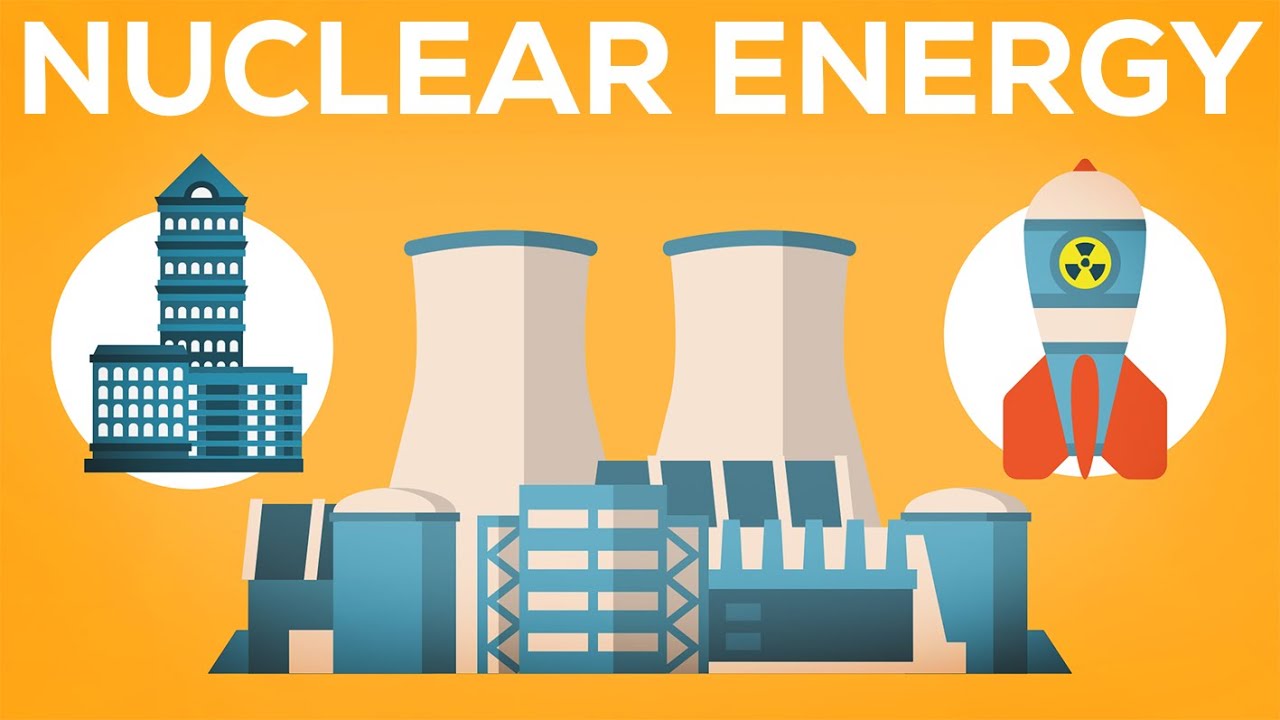
Nuclear Energy Explained: How does it work?
Nuclear Energy is a controversial subject. The pro- and anti-nuclear lobbies fight furiously, and it's difficult to decide who is right. So we're trying to clear up the issue - in this video we discuss how we got to where we are today, as the basis for discussion. Next week we'll be looking at the arguments for and against nuclear power in detail.
To get a free audiobook and support our channel, go to audible.com/nutshell - thanks! : )
PRO VIDEO: https://www.youtube.com/watch?v=pVbLlnmxIbY
CONTRA VIDEO: https://www.youtube.com/watch?v=HEYbgyL5n1g
OUR CHANNELS
▀▀▀▀▀▀▀▀▀▀▀▀▀▀▀▀▀▀▀▀▀▀▀▀▀▀
German Channel: https://kgs.link/youtubeDE
Spanish Channel: https://kgs.link/youtubeES
HOW CAN YOU SUPPORT US?
▀▀▀▀▀▀▀▀▀▀▀▀▀▀▀▀▀▀▀▀▀▀▀▀▀▀
This is how we make our living and it would be a pleasure if you support us!
Get Merch designed with ❤ from https://kgs.link/shop
Join the Patreon Bird Army 🐧 https://kgs.link/patreon
DISCUSSIONS & SOCIAL MEDIA
▀▀▀▀▀▀▀▀▀▀▀▀▀▀▀▀▀▀▀▀▀▀▀▀▀▀
Reddit: https://kgs.link/reddit
Instagram: https://kgs.link/instagram
Twitter: https://kgs.link/twitter
Facebook: https://kgs.link/facebook
Discord: https://kgs.link/discord
Newsletter: https://kgs.link/newsletter
OUR VOICE
▀▀▀▀▀▀▀▀▀▀▀▀▀▀▀▀▀▀▀▀▀▀▀▀▀▀
The Kurzgesagt voice is from
Steve Taylor: https://kgs.link/youtube-voice
OUR MUSIC ♬♪
▀▀▀▀▀▀▀▀▀▀▀▀▀▀▀▀▀▀▀▀▀▀▀▀▀▀
700+ minutes of Kurzgesagt Soundtracks by Epic Mountain:
Spotify: https://kgs.link/music-spotify
Soundcloud: https://kgs.link/music-soundcloud
Bandcamp: https://kgs.link/music-bandcamp
Youtube: https://kgs.link/music-youtube
Facebook: https://kgs.link/music-facebook
The Soundtrack of this video:
https://soundcloud.com/epicmountain/nuclear-1
https://epicmountainmusic.band....camp.com/track/nucle
http://www.epic-mountain.com
🐦🐧🐤 PATREON BIRD ARMY 🐤🐧🐦
▀▀▀▀▀▀▀▀▀▀▀▀▀▀▀▀▀▀▀▀▀▀▀▀▀▀
Many Thanks to our wonderful Patreons from http://kgs.link/patreon who support us every month and made this video possible:
Stephen Bassett, Raphael Hviding, Sam Elitzer, Andrzej Rejman, OpenGG, Andrew Jagasothy, jordan gardner, AgentK, Mehmet Sevil, Carly Tawse, K A I, Kevin Dam, Charlie, Christopher Lang, Nat Ryall, Jeff Le, Nicholas Holtz, Devir Islas, Arnas Valeika, Kirstie, Francesca Monteiro, James Craver, Broderick, Duncan Cheong, Derek, Juan Manuel Corredor, Osric Lord-Williams, Scott Zell, Jeroen Koerts, Patrick Eyrich, tekbit, Chris Linardos, Tony Morley, Jónatan Nilsson, Nat Thomas Golder, Zr4g0n, Cody, Michal, Caroline Andrewes, Alex Kaplan, Tom Alexander Kutil, Vincent, Okan, Sasha C, KokLiang Lim, Marcelo, Mikel De Uranga, Dean Herbert, Anton Efimenko, trefmanic, Adam Smith, David Garcia Quintas, Gaëtan Duvaux, Eduardo Barbosa, maarten ligtenberg, Ghitea Andrei Paul, Ozan, Ryan, Larry Bunyard, Josh Maleszewski, Volodymyr Khomenko, Sebastian Laiseca, Chase, Michael Slade, Scarlet Barton, Matthew Gill, Aaron, Alexander Heavens, Alexander Ahn, Arrngrim, Fluffy19, Adam Primaeros, Jan Schmid, Sara Shah,
Gard Fredrik Skuland, Veselin Kostadinov, Jonathan Velazquez Gore, Daniel, Philly Cashion, Seona Tea, Clayton Fussell, Daniel Gonzalez, Stephen Joseph DCruz, Morten, Dan Q, Thomas Lee, Finn Edwards, David Taylor, Corbin, Fabricio Godoy, Charles Kuang, Alan Feyaerts, Maximilian Ritter, Jesse MacLean, Matt Collins, Yousif, Jesse Powell, Dan Treasure, nga⁴, 冠瑋 陳, Wei Wong, Praveen Muthu, Jon Davis, Bahjat, Mike Mintz, Jem Arnold, Steffen Weng, Igor Benicio de Mesquita, Lars Vas Dias, Greeny Liu, Tibor Schiemann, dante harper, Bünyamin Tetik, Eli Fisker, Joe Pond, Jørgen Smalås, Gustavo, Tommi Mansikka, Dario Wünsch, Matthew Macomber, Daniel McCouid-Carr, Neelfyn, Muath, Edgar Duarte Ortega, Stephen Chen, Alipasha Sadri, Kevin P, Steven Ratner, Theo Alves Monteiro, Brucelow, José, Tony Montuori, Philipp Weber, Brad Wardell, David Davenport-Firth, Alexander Scheffer, Eric, Austin, Enrico, Hamad, Andrew Connor, Ignacio Flores, Tom Langford, Vaelohs, Peter Schuller, Bear, Brandy Alexander, Mark Govea, Alexander Kosenkov, Eric, Wesley Sheridan Montgomery, Artem Anchugov, Brandon Liu, Erven, varinder singh bal, Scott Laing, Philip Freeman, Gizem Gürkan, George Chearswat, Tim, Victor, Martin Fink-Jensen, Josh Allen, oscar gautama, Karl Snickars, Jennifer Hiller, Bruno Araújo, Maarten Bremer, Daniel OCL, Carlos Bohorquez, Elchus, RobPT, Hugo, Lethargicpanda, Amdrew, Minghan Ko, Mark Scheurwater, David Harbinson, Rikard Nyberg, Collin Banko, Florian Guitton, Jezariael Demos, Ajay Shekhar, Nick Yonge, Jon Moroney, Eugene Cham, Renaud Savignard, James, Viktor Asklund, Ryan, somersault18:24, Ben Shackman, Pranab Shenoy, Terry Lipstein, Tim Carll, Javier de la Garza, Rory Bennett, Jan Berdel, Sieglinde Geisel, Jeff Churchill
Nuclear Energy Explained: How does it work?
Help us caption & translate this video!
http://www.youtube.com/timedtext_cs_panel?c=UCsXVk37bltHxD1rDPwtNM8Q&tab=2

The robots of our future may look nothing like humans at all. Head to https://brilliant.org/veritasium to start your free 30-day trial and get 20% off an annual premium subscription.
Huge thanks to Dr. Elliot Hawkes for giving us the updates on his robots, and for showing them to us over the years!
Our videos in this supercut:
https://www.youtube.com/watch?v=qevIIQHrJZg
https://www.youtube.com/watch?v=daaDuC1kbds
https://www.youtube.com/watch?v=ZMQbHMgK2rw
https://www.youtube.com/watch?v=97t7Xj_iBv0
https://www.youtube.com/watch?v=058hRtaCWC0
0:00 - Intro
2:04 - Unstoppable Vine Robot
15:13 - Update on Vine Robot!
20:24 - Highest Jumping Robot
32:15 - Update on the Jumper!
38:26 - Micromouse Competition
1:02:15 - Benefit of non-humanoid robots
1:02:48 - Brilliant
1:04:24 - Bendy Machines
1:16:26 - Soft Robots
1:25:55 - Conclusion
▀▀▀
Special thanks to our Patreon supporters! Join the community to help us keep our videos free, forever: https://ve42.co/PatreonDE
Adam Foreman, Anton Ragin, Balkrishna Heroor, Bertrand Serlet, Bill Linder, Blake Byers, Bruce, Burt Humburg, Dave Kircher, David Johnston, Evgeny Skvortsov, Garrett Mueller, Gnare, gpoly, I. H., John H. Austin, Jr., john kiehl, Josh Hibschman, Juan Benet, KeyWestr, Kyi, Lee Redden, Marinus Kuivenhoven, Matthias Wrobel, Meekay, meg noah, Michael Krugman, Orlando Bassotto, Paul Peijzel, Richard Sundvall, Tj Steyn, TTST, Ubiquity Ventures, wolfee, and Yar
If you’re looking for a molecular modeling kit, try Snatoms, a kit I invented where the atoms snap together magnetically - https://ve42.co/SnatomsV
▀▀▀
Images & Video:
All New Atlas via Boston Dynamics on YouTube - https://ve42.co/NewAtlas
Farewell to HD Atlas via Boston Dynamics on YouTube - https://ve42.co/HDAtlas
C-3PO via Cinemax on YouTube - https://ve42.co/C3PO
I, Robot via Movieclips on YouTube - https://ve42.co/iRobot
I, Robot No via ukery on YouTube - https://ve42.co/iRobotNo
Big Hero 6 via Flick Society on YouTube - https://ve42.co/BH6
Big Hero 6 via 茶茶君 on YouTube - https://ve42.co/2ndBH6
Roomba via iRobot on YouTube - https://ve42.co/Roomba
▀▀▀
Filmed by Derek Muller
Edited by Trenton Oliver and Peter Nelson
Produced by Emily Zhang, Gregor Čavlović, Rob Beasley Spence, and Emily Taylor
Thumbnail contributions by Ignat Berbeci, Ren Hurley, and Peter Sheppard
Additional video/photos supplied by Getty Images
Music from Epidemic Sound

Electric cars are now ready to take over thanks to advances in battery technology and their inherent benefits: torque, handling, maintenance. This video was sponsored by BMW: https://www.bmwusa.com/
Full disclosure: I drive an #electric #car. I think electric cars are the future, not mainly because they're better for the environment (which they are if you drive the car for any reasonable length of time) but because they are just better cars. The have better torque and acceleration, better handling, they're more efficient, quieter, they don't smell, they're cheaper to run and best of all you never have to visit a gas station - this appeals to me. I never have to worry about being low on gas because every morning my car is charged and ready to go - just like my phone and laptop. And if you're worried about range, don't. Almost all trips can already be done in an electric car with modest battery pack. And fast chargers along the way make it possible to do longer road trips if necessary. You have to make rest stops anyway, just time them with the charging. And consider that battery tech is getting dramatically cheaper, smaller, lighter. All these reasons are why I see the #future of cars as electric.
Writing & Research
Derek Muller
Jonny Hyman
Matthew Shribman https://ve42.co/sciencebath
Editing, Animation, Audio, & Music:
Jonny Hyman
Camerawork:
Raquel Nuno
Jonny Hyman
1890s Music "National fantasie" by William Paris Chambers, archived in Library of Congress
#BMWUSA #NEXTGen #BMWPartner #ad
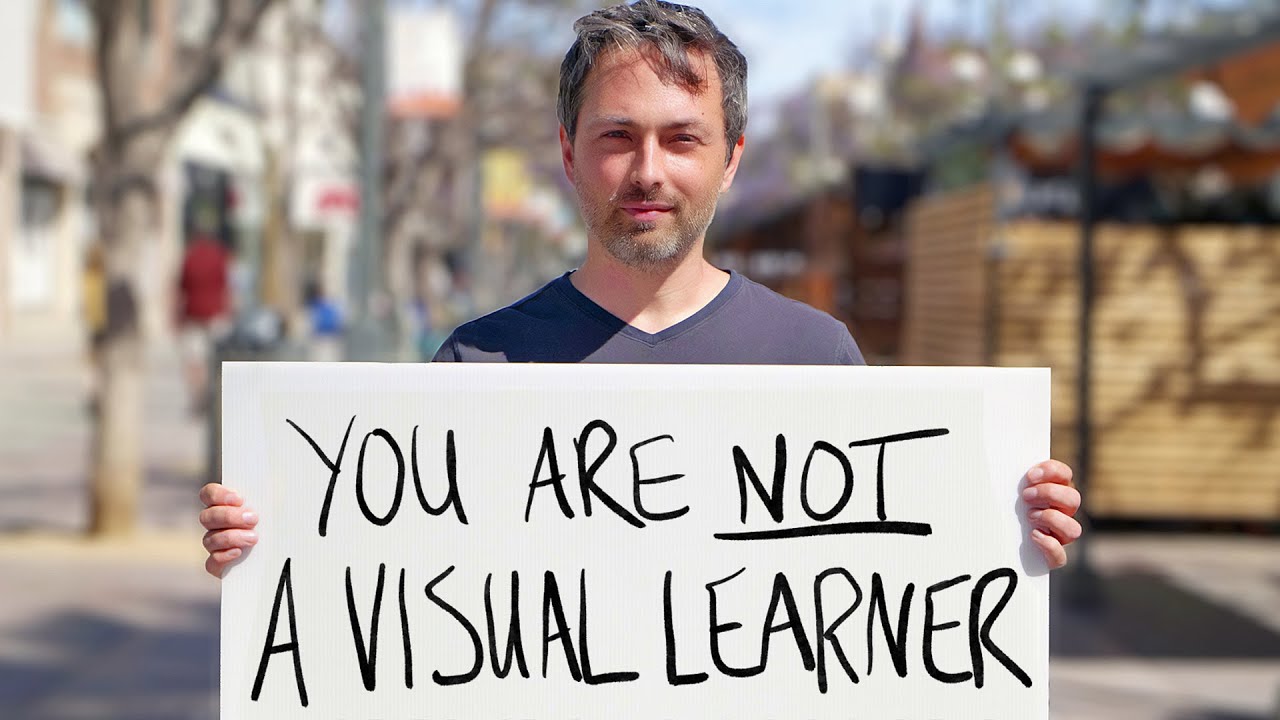
You are not a visual learner — learning styles are a stubborn myth. Part of this video is sponsored by Google Search.
Special thanks to Prof. Daniel Willingham for the interview and being part of this video.
Special thanks to Dr Helen Georigou for reviewing the script and helping with the scientific literature.
Special thanks to Jennifer Borgioli Binis for consulting on the script.
MinutePhysics video on a better way to picture atoms -- https://ve42.co/Atom
▀▀▀▀▀▀▀▀▀▀▀▀▀▀▀▀▀▀▀▀▀▀▀▀▀▀
References:
Pashler, H., McDaniel, M., Rohrer, D., & Bjork, R. (2008). Learning styles: Concepts and evidence. Psychological science in the public interest, 9(3), 105-119. — https://ve42.co/Pashler2008
Willingham, D. T., Hughes, E. M., & Dobolyi, D. G. (2015). The scientific status of learning styles theories. Teaching of Psychology, 42(3), 266-271. — https://ve42.co/Willingham
Massa, L. J., & Mayer, R. E. (2006). Testing the ATI hypothesis: Should multimedia instruction accommodate verbalizer-visualizer cognitive style?. Learning and Individual Differences, 16(4), 321-335. — https://ve42.co/Massa2006
Riener, C., & Willingham, D. (2010). The myth of learning styles. Change: The magazine of higher learning, 42(5), 32-35.— https://ve42.co/Riener2010
Husmann, P. R., & O'Loughlin, V. D. (2019). Another nail in the coffin for learning styles? Disparities among undergraduate anatomy students’ study strategies, class performance, and reported VARK learning styles. Anatomical sciences education, 12(1), 6-19. — https://ve42.co/Husmann2019
Snider, V. E., & Roehl, R. (2007). Teachers’ beliefs about pedagogy and related issues. Psychology in the Schools, 44, 873–886. doi:10.1002/pits.20272 — https://ve42.co/Snider2007
Fleming, N., & Baume, D. (2006). Learning Styles Again: VARKing up the right tree!. Educational developments, 7(4), 4. — https://ve42.co/Fleming2006
Rogowsky, B. A., Calhoun, B. M., & Tallal, P. (2015). Matching learning style to instructional method: Effects on comprehension. Journal of educational psychology, 107(1), 64. — https://ve42.co/Rogowskyetal
Coffield, Frank; Moseley, David; Hall, Elaine; Ecclestone, Kathryn (2004). — https://ve42.co/Coffield2004
Furey, W. (2020). THE STUBBORN MYTH OF LEARNING STYLES. Education Next, 20(3), 8-13. — https://ve42.co/Furey2020
Dunn, R., Beaudry, J. S., & Klavas, A. (2002). Survey of research on learning styles. California Journal of Science Education II (2). — https://ve42.co/Dunn2002
▀▀▀▀▀▀▀▀▀▀▀▀▀▀▀▀▀▀▀▀▀▀▀▀▀▀
Special thanks to Patreon supporters: Mike Tung, Evgeny Skvortsov, Meekay, Ismail Öncü Usta, Paul Peijzel, Crated Comments, Anna, Mac Malkawi, Michael Schneider, Oleksii Leonov, Jim Osmun, Tyson McDowell, Ludovic Robillard, Jim buckmaster, fanime96, Juan Benet, Ruslan Khroma, Robert Blum, Richard Sundvall, Lee Redden, Vincent, Marinus Kuivenhoven, Alfred Wallace, Arjun Chakroborty, Joar Wandborg, Clayton Greenwell, Pindex, Michael Krugman, Cy 'kkm' K'Nelson, Sam Lutfi, Ron Neal
▀▀▀▀▀▀▀▀▀▀▀▀▀▀▀▀▀▀▀▀▀▀▀▀▀▀
Research and Writing by Derek Muller and Petr Lebedev
Animation by Ivy Tello
Filmed by Emily Zhang and Trenton Oliver
Edited by Trenton Oliver
Music by Epidemic Sound https://epidemicsound.com
Additional video supplied by Getty Images
▀▀▀▀▀▀▀▀▀▀▀▀▀▀▀▀▀▀▀▀▀▀▀▀▀▀

The misconception is that electrons carry potential energy around a complete conducting loop, transferring their energy to the load. This video was sponsored by Caséta by Lutron. Learn more at https://Lutron.com/veritasium
Further analysis of the large circuit is available here: https://ve42.co/bigcircuit
Special thanks to Dr Geraint Lewis for bringing up this question in the first place and discussing it with us. Check out his and Dr Chris Ferrie’s new book here: https://ve42.co/Universe2021
Special thanks to Dr Robert Olsen for his expertise. He quite literally wrote the book on transmission lines, which you can find here: https://ve42.co/Olsen2018
Special thanks to Dr Richard Abbott for running a real-life experiment to test the model.
Huge thanks to all of the experts we talked to for this video -- Dr Karl Berggren, Dr Bruce Hunt, Dr Paul Stanley, Dr Joe Steinmeyer, Ian Sefton, and Dr David G Vallancourt.
▀▀▀
References:
A great video about the Poynting vector by the Science Asylum: https://youtu.be/C7tQJ42nGno
Sefton, I. M. (2002). Understanding electricity and circuits: What the text books don’t tell you. In Science Teachers’ Workshop. -- https://ve42.co/Sefton
Feynman, R. P., Leighton, R. B., & Sands, M. (1965). The feynman lectures on physics; vol. Ii, chapter 27. American Journal of Physics, 33(9), 750-752. -- https://ve42.co/Feynman27
Hunt, B. J. (2005). The Maxwellians. Cornell University Press.
Müller, R. (2012). A semiquantitative treatment of surface charges in DC circuits. American Journal of Physics, 80(9), 782-788. -- https://ve42.co/Muller2012
Galili, I., & Goihbarg, E. (2005). Energy transfer in electrical circuits: A qualitative account. American journal of physics, 73(2), 141-144. -- https://ve42.co/Galili2004
Deno, D. W. (1976). Transmission line fields. IEEE Transactions on Power Apparatus and Systems, 95(5), 1600-1611. -- https://ve42.co/Deno76
▀▀▀
Special thanks to Patreon supporters: Luis Felipe, Anton Ragin, Paul Peijzel, S S, Benedikt Heinen, Diffbot, Micah Mangione, Juan Benet, Ruslan Khroma, Richard Sundvall, Lee Redden, Sam Lutfi, MJP, Gnare, Nick DiCandilo, Dave Kircher, Edward Larsen, Burt Humburg, Blake Byers, Dumky, Mike Tung, Evgeny Skvortsov, Meekay, Ismail Öncü Usta, Crated Comments, Anna, Mac Malkawi, Michael Schneider, Oleksii Leonov, Jim Osmun, Tyson McDowell, Ludovic Robillard, Jim buckmaster, fanime96, Ruslan Khroma, Robert Blum, Vincent, Marinus Kuivenhoven, Alfred Wallace, Arjun Chakroborty, Joar Wandborg, Clayton Greenwell, Michael Krugman, Cy 'kkm' K'Nelson,Ron Neal
Written by Derek Muller and Petr Lebedev
Animation by Mike Radjabov and Ivy Tello
Filmed by Derek Muller and Emily Zhang
Footage of the sun by Raquel Nuno
Edited by Derek Muller
Additional video supplied by Getty Images
Music from Epidemic Sound
Produced by Derek Muller, Petr Lebedev and Emily Zhang

How a feud in Russia led to modern prediction algorithms.
👉 To try everything Brilliant has to offer for free for a full 30 days, visit https://brilliant.org/veritasium. You’ll also get 20% off an annual premium subscription.
If you’re looking for a molecular modeling kit, try Snatoms, a kit I invented where the atoms snap together magnetically - https://ve42.co/SnatomsV
Sign up to the Veritasium newsletter for weekly science updates - https://ve42.co/Newsletter
▀▀▀
A huge thank you to Brian Hayes, David Aldous, Geoff Engelstein, Jeffrey Rosenthal, Jimmy He, Mark Priestley, Michael Choi, Peter Norvig, Sam Power, and Thomas Haigh for their invaluable expertise and contributions to this video.
And a special thank you to Madeline Johnson for her excellent fact-checking.
▀▀▀
0:00 The Law of Large Numbers
4:37 What is a Markov Chain?
9:43 Ulam and Solitaire
12:21 Nuclear Fission
15:46 The Monte Carlo Method
16:32 The first search engines
19:07 Google is born
25:16 How does predictive text work?
27:10 Are Markov chains memoryless?
29:41 How to perfectly shuffle a deck of cards
▀▀▀
References:
https://ve42.co/RefsMarkov
Images & Video:
https://ve42.co/7Z
▀▀▀
Special thanks to our Patreon supporters:
Adam Foreman, Albert Wenger, Alex Porter, Alexander Tamas, Anton Ragin, armedtoe, Balkrishna Heroor, Bertrand Serlet, Blake Byers, Bruce, Dave Kircher, David Johnston, David Tseng, Evgeny Skvortsov, Garrett Mueller, Gnare, gpoly, Ibby Hadeed, JT, Jeromy Johnson, Jon Jamison, Juan Benet, Keith England, KeyWestr, Kyi, Lee Redden, Meekay, Marinus Kuivenhoven, Matthias Wrobel, Meekay, meg noah, Michael Bush, Michael Krugman, Orlando Bassotto, Paul Peijzel, Richard Sundvall, Robert Oliveira, Sam Lutfi, TTST, Tj Steyn, Ubiquity Ventures, wolfee
▀▀▀
Writers: Kaela Albert, Casper Mebius & Derek Muller
Producer & Director: Kaela Albert
Editors: Peter Nelson & Jack Saxon
Camera Operators: Gabe Strong, Gregor Cavlovic & Derek Muller
Animator: Andrew neet, Emma Wright, Fabio Albertelli & Ivy Trello
Illustrator: Caine Esperanzo, Jakub Misiek & Maria Gustanovich
Assistant Editor: James Stuart
Researchers: Darius Garewal, Gabe Strong & Emilia Gyles
Thumbnail Designers: Ren Hurley & Ben Powell
Production Team: Rob Beasley Spence, Casper Mebius, Sulli Yost and Henry Van Dyck
Executive Producers: Derek Muller & Casper Mebius
Additional video/photos supplied by Getty Images, Pond5 and Storyblocks
Music from Epidemic Sound